

祈愿88
88 Posts

祈愿88
Report
Block User
🔥crypto小白成长日记。自研ai辅助调研、决策、交易、写作系统。

Top traders by profit in 30D
Open Trade
Frequent Trader
2.6 Years
17 Following
51 Followers
95 Liked
1 Badges
Posts
Portfolio
·
--
$NEAR 被黑的消息一出,一小时跌 7%:丢了 380 万,市值却蒸发 4 亿多
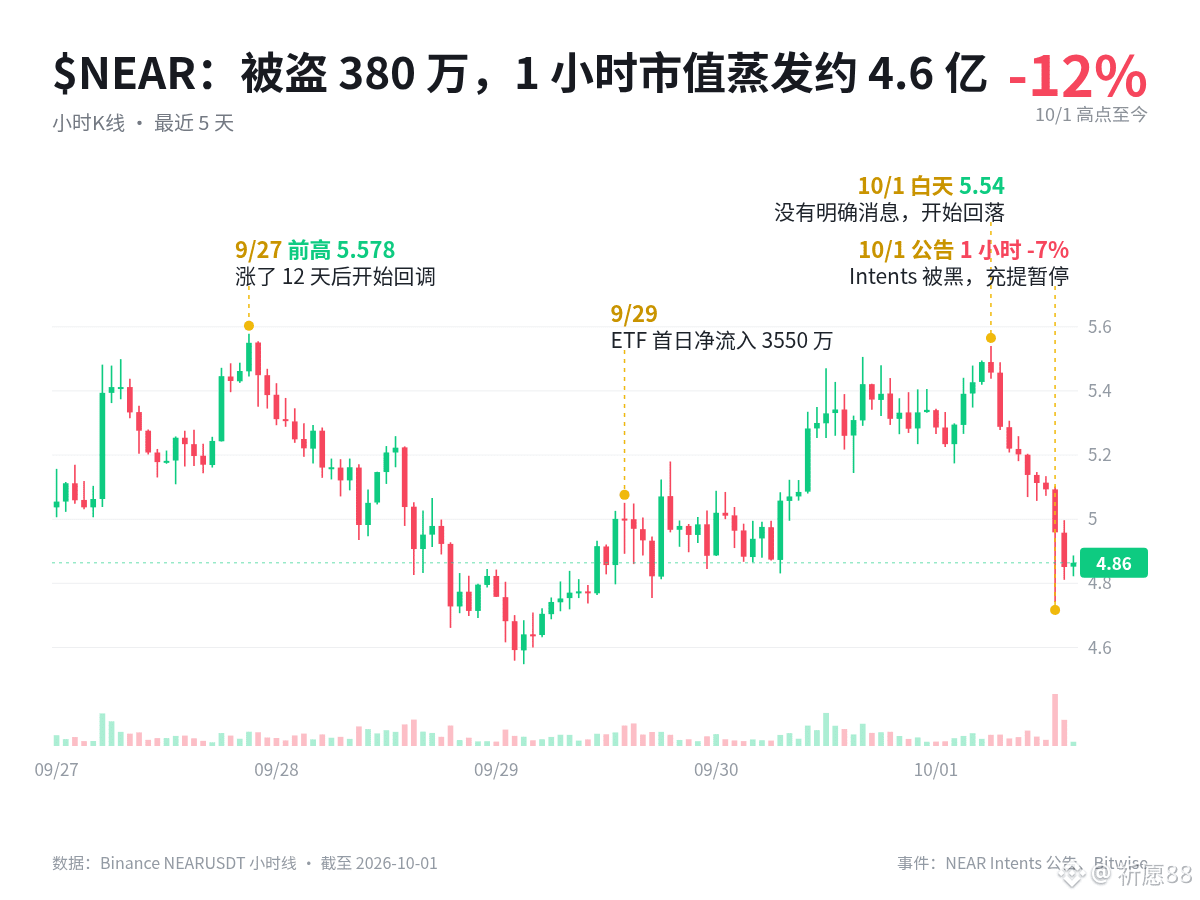
$NEAR 10月1日白天一度摸到 5.54,离前高只差一点;晚上 NEAR Intents 发公告承认被攻击,一小时内跌到 4.74,从当天高点算跌了 14%。
上次写 NEAR,我说它翻身靠的是 Intents 这家"店":一个账户就能在 30 多条链上买卖,收的手续费拿去买 NEAR。这次出事的,正是这家店。
先说清楚被黑的是什么:
不是 NEAR 公链被黑,是 Intents 的跨链充提系统。
官方说法:Omni 充提系统和合约的交互有漏洞,BSC 上的热钱包被转走超过 380 万美元,钱经 KuCoin 转去了比特币网络(链上侦探 ZachXBT 追踪)。
漏洞已修,官方承诺全额赔偿;BSC、Polygon、TON 等多条链的充提暂停约 12 小时。
1️⃣ 丢 380 万,为什么市值掉了 4 亿多?
NEAR 市值约 65 亿美元,380 万不算大钱。但公告那一小时(看图最右边那根长阴线),NEAR 从 5.1 跌到 4.74,市值少了约 4.6 亿,是被盗金额的 100 多倍。
市场怕的不是这笔钱,是"店"的信誉:NEAR 这轮涨,买的就是越来越多人在 Intents 上交易。而用户最在乎的,就是钱放进去安不安全。
2️⃣ 380 万,等于店里两个月的收入
DefiLlama 数据:Intents 9月整月协议收入约 185 万美元。这次被盗 380 万,相当于两个多月白干。赔偿的钱从哪出、会不会影响拿收入买 NEAR,官方还没说。
3️⃣ 时间点最尴尬
上周 Bitget 被盗约 3.9 亿美元,黑客想通过 Intents 换币洗钱,被 Intents 的风控拦下 5000 多万美元。一周后,自己家先被撬了。
另外要说明:公告前 NEAR 白天已经从 5.54 回落到 5.1 左右,当时大盘没怎么动,也没有明确消息。被黑是压上去的最后一根稻草,不是全部原因。
📅 接下来盯什么
· 充提能不能按时恢复、赔偿能不能到位:决定用户还敢不敢把钱放进来。
· ETF 资金:9月29日首日净流入 3550 万美元,第二天 1320 万。被黑后如果转成流出,说明机构也动摇了。
· Intents 交易量:这几天掉不掉,比 K 线更能说明问题。
我的看法:丢的钱不多,修复和赔偿也算快,这事本身伤不了 $NEAR 的筋骨。但它 9月中旬以来翻了一倍,买的就是"店越开越好",现在店门口出了事故。接下来一周的交易量和 ETF 资金流,比价格更值得看。
你还敢在 Intents 上换币吗?评论区聊聊👇
#NEAR
以上内容仅为信息分享,不构成投资建议。
$NEAR 被黑的消息一出,一小时跌 7%:丢了 380 万,市值却蒸发 4 亿多
$NEAR 10月1日白天一度摸到 5.54,离前高只差一点;晚上 NEAR Intents 发公告承认被攻击,一小时内跌到 4.74,从当天高点算跌了 14%。
上次写 NEAR,我说它翻身靠的是 Intents 这家"店":一个账户就能在 30 多条链上买卖,收的手续费拿去买 NEAR。这次出事的,正是这家店。
先说清楚被黑的是什么:
不是 NEAR 公链被黑,是 Intents 的跨链充提系统。
官方说法:Omni 充提系统和合约的交互有漏洞,BSC 上的热钱包被转走超过 380 万美元,钱经 KuCoin 转去了比特币网络(链上侦探 ZachXBT 追踪)。
漏洞已修,官方承诺全额赔偿;BSC、Polygon、TON 等多条链的充提暂停约 12 小时。
1️⃣ 丢 380 万,为什么市值掉了 4 亿多?
NEAR 市值约 65 亿美元,380 万不算大钱。但公告那一小时(看图最右边那根长阴线),NEAR 从 5.1 跌到 4.74,市值少了约 4.6 亿,是被盗金额的 100 多倍。
市场怕的不是这笔钱,是"店"的信誉:NEAR 这轮涨,买的就是越来越多人在 Intents 上交易。而用户最在乎的,就是钱放进去安不安全。
2️⃣ 380 万,等于店里两个月的收入
DefiLlama 数据:Intents 9月整月协议收入约 185 万美元。这次被盗 380 万,相当于两个多月白干。赔偿的钱从哪出、会不会影响拿收入买 NEAR,官方还没说。
3️⃣ 时间点最尴尬
上周 Bitget 被盗约 3.9 亿美元,黑客想通过 Intents 换币洗钱,被 Intents 的风控拦下 5000 多万美元。一周后,自己家先被撬了。
另外要说明:公告前 NEAR 白天已经从 5.54 回落到 5.1 左右,当时大盘没怎么动,也没有明确消息。被黑是压上去的最后一根稻草,不是全部原因。
📅 接下来盯什么
· 充提能不能按时恢复、赔偿能不能到位:决定用户还敢不敢把钱放进来。
· ETF 资金:9月29日首日净流入 3550 万美元,第二天 1320 万。被黑后如果转成流出,说明机构也动摇了。
· Intents 交易量:这几天掉不掉,比 K 线更能说明问题。
我的看法:丢的钱不多,修复和赔偿也算快,这事本身伤不了 $NEAR 的筋骨。但它 9月中旬以来翻了一倍,买的就是"店越开越好",现在店门口出了事故。接下来一周的交易量和 ETF 资金流,比价格更值得看。
你还敢在 Intents 上换币吗?评论区聊聊👇
#NEAR
以上内容仅为信息分享,不构成投资建议。
$NEAR 10月1日白天一度摸到 5.54,离前高只差一点;晚上 NEAR Intents 发公告承认被攻击,一小时内跌到 4.74,从当天高点算跌了 14%。
上次写 NEAR,我说它翻身靠的是 Intents 这家"店":一个账户就能在 30 多条链上买卖,收的手续费拿去买 NEAR。这次出事的,正是这家店。
先说清楚被黑的是什么:
不是 NEAR 公链被黑,是 Intents 的跨链充提系统。
官方说法:Omni 充提系统和合约的交互有漏洞,BSC 上的热钱包被转走超过 380 万美元,钱经 KuCoin 转去了比特币网络(链上侦探 ZachXBT 追踪)。
漏洞已修,官方承诺全额赔偿;BSC、Polygon、TON 等多条链的充提暂停约 12 小时。
1️⃣ 丢 380 万,为什么市值掉了 4 亿多?
NEAR 市值约 65 亿美元,380 万不算大钱。但公告那一小时(看图最右边那根长阴线),NEAR 从 5.1 跌到 4.74,市值少了约 4.6 亿,是被盗金额的 100 多倍。
市场怕的不是这笔钱,是"店"的信誉:NEAR 这轮涨,买的就是越来越多人在 Intents 上交易。而用户最在乎的,就是钱放进去安不安全。
2️⃣ 380 万,等于店里两个月的收入
DefiLlama 数据:Intents 9月整月协议收入约 185 万美元。这次被盗 380 万,相当于两个多月白干。赔偿的钱从哪出、会不会影响拿收入买 NEAR,官方还没说。
3️⃣ 时间点最尴尬
上周 Bitget 被盗约 3.9 亿美元,黑客想通过 Intents 换币洗钱,被 Intents 的风控拦下 5000 多万美元。一周后,自己家先被撬了。
另外要说明:公告前 NEAR 白天已经从 5.54 回落到 5.1 左右,当时大盘没怎么动,也没有明确消息。被黑是压上去的最后一根稻草,不是全部原因。
📅 接下来盯什么
· 充提能不能按时恢复、赔偿能不能到位:决定用户还敢不敢把钱放进来。
· ETF 资金:9月29日首日净流入 3550 万美元,第二天 1320 万。被黑后如果转成流出,说明机构也动摇了。
· Intents 交易量:这几天掉不掉,比 K 线更能说明问题。
我的看法:丢的钱不多,修复和赔偿也算快,这事本身伤不了 $NEAR 的筋骨。但它 9月中旬以来翻了一倍,买的就是"店越开越好",现在店门口出了事故。接下来一周的交易量和 ETF 资金流,比价格更值得看。
你还敢在 Intents 上换币吗?评论区聊聊👇
#NEAR
以上内容仅为信息分享,不构成投资建议。
1
312
·
--
Verified
$QNT 6 surges nearly 6 times in 6 days: 25 major US banks are building an "on-chain UnionPay," and this task has been given to this coin.
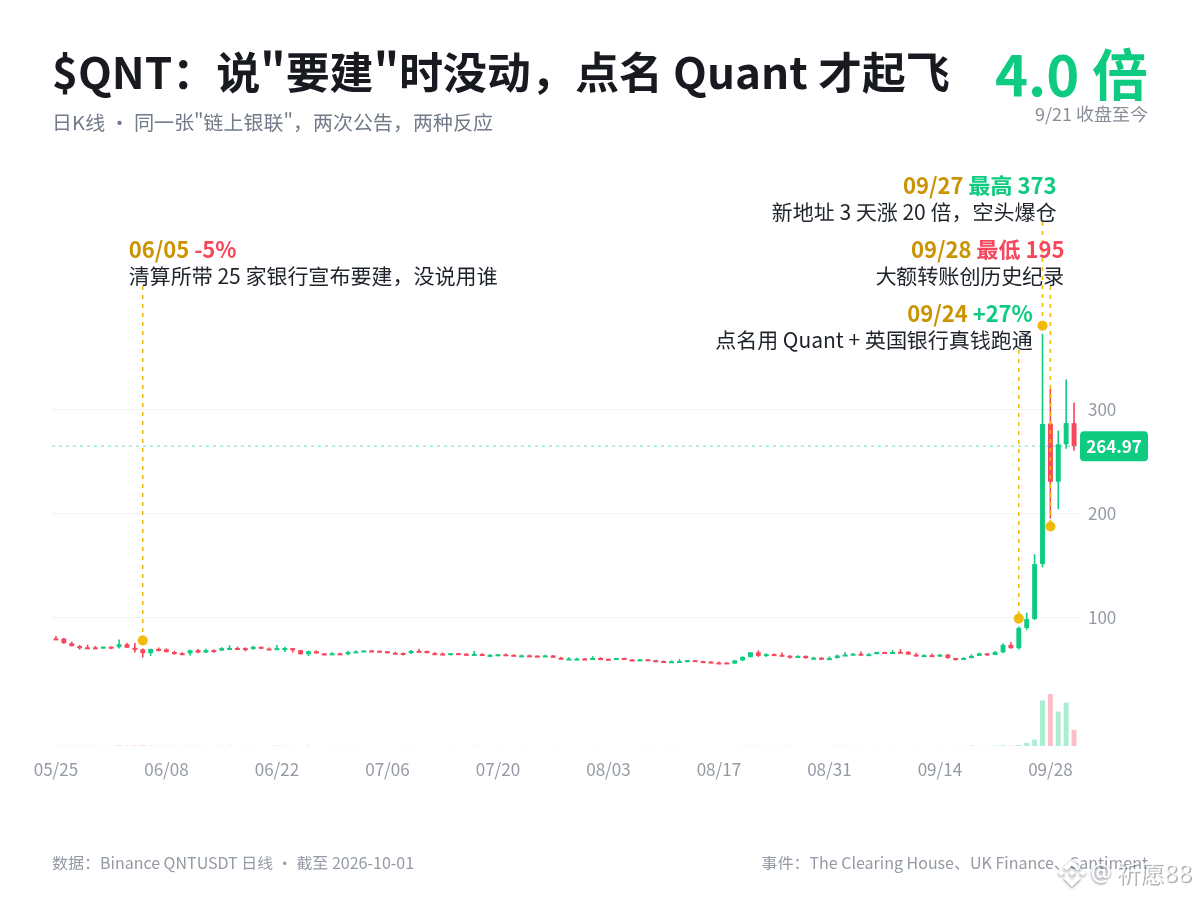
QNT was at $65 on September 21st, and surged to a high of $373 on September 27th, a nearly 6-fold increase in 6 days. It's now back around $270.
QNT reached a high of $427 in 2021, then fell for over four years, reaching a low of $54 this year. Its cooperation with central banks and major banks has been ongoing, yet the price remained stagnant. Why is this time different?
Let's understand the background: Last year, the US stablecoin bill passed, and banks feared their deposits would be withdrawn: The CEO of Bank of America warned that if stablecoins could pay interest, up to $6 trillion in deposits could flow out.
The banks' countermeasure was to go on-chain themselves: turning deposits into "tokenized deposits," with instant 24-hour transfers, keeping the money in the bank.
JPMorgan Chase issues its own token, and Citibank issues its own, but they can't transfer funds between each other, just like every bank has a payment app, but no UnionPay exists.
Quant acts as the middle layer of this "UnionPay": enabling reconciliation and settlement between systems of different banks and different blockchains. QNT is its token; using its software requires a licensing fee, which is ultimately converted into locked QNT.
1️⃣ September 24: The US's "on-chain UnionPay" chooses Quant. The Clearing House is jointly owned by major US banks, and its network clears over $2 trillion daily. On June 5, it announced with 25 major banks that it would build this network. On September 24, it announced that the core interoperability layer would be handed over to Quant, with an opening date in the first half of 2027.
See the chart: On June 5, only "to build" was mentioned, without specifying who would use it, and QNT dropped 5% that day; on September 24, the announcement of "using Quant" caused it to soar. The market wasn't buying the "banks on-chain" story; it was buying Quant securing the contract. 2️⃣ In the same week: UK banks successfully implemented a tokenized pound sterling platform.
Last September, six major UK banks selected Quant to build a "tokenized pound" platform. QNT only rose for one day, then plummeted from 100 to 54 within a year. This time, seven banks, including Barclays and HSBC, completed their first batch of real customer transactions (mortgage refinancing, online shopping).
US selection + UK successful implementation with real money – for the first time, the market believed: this wasn't just a PowerPoint presentation.
3️⃣ Small market capitalization, retail investors and short sellers pushed it up together.
Before the surge, Binance QNT's daily spot trading volume was only a few hundred thousand to a little over a million US dollars; on September 27th, it exceeded 200 million. The number of new on-chain addresses increased from 351 to 7516 in three days, with retail investors flooding in.Short sellers were liquidated and forced to buy back (approximately $17 million in short selling in one day), adding fuel to the fire.
📅 What to watch next
• Large investors are active: A record-breaking large transfer occurred on September 28th, with the price dropping to a low of 195 that day; a wallet associated with the founder, inactive for 7 years, transferred out 26,000 coins on September 30th. Watch whether these coins flow into exchanges.
• After the new address falls, can the price hold?
My opinion: This is the strongest positive factor for $QNT in four years; major banks are indeed using it. However, banks using Quant's software doesn't equate to buying QNT: the licensing fee is calculated in fiat currency, and whether the converted QNT is from the market or Quant's own inventory is unclear. In short, buying your software doesn't mean buying your company's stock. The network won't launch until next year; a 6-fold increase in 6 days is essentially pushing forward what will happen a year later.
Do you think the "UnionPay on the blockchain" story is worth 6x? Let's discuss in the comments section 👇
#QNTThe above content is for informational purposes only and does not constitute investment advice.
$QNT 6 surges nearly 6 times in 6 days: 25 major US banks are building an "on-chain UnionPay," and this task has been given to this coin.
QNT was at $65 on September 21st, and surged to a high of $373 on September 27th, a nearly 6-fold increase in 6 days. It's now back around $270.
QNT reached a high of $427 in 2021, then fell for over four years, reaching a low of $54 this year. Its cooperation with central banks and major banks has been ongoing, yet the price remained stagnant. Why is this time different?
Let's understand the background: Last year, the US stablecoin bill passed, and banks feared their deposits would be withdrawn: The CEO of Bank of America warned that if stablecoins could pay interest, up to $6 trillion in deposits could flow out.
The banks' countermeasure was to go on-chain themselves: turning deposits into "tokenized deposits," with instant 24-hour transfers, keeping the money in the bank.
JPMorgan Chase issues its own token, and Citibank issues its own, but they can't transfer funds between each other, just like every bank has a payment app, but no UnionPay exists.
Quant acts as the middle layer of this "UnionPay": enabling reconciliation and settlement between systems of different banks and different blockchains. QNT is its token; using its software requires a licensing fee, which is ultimately converted into locked QNT.
1️⃣ September 24: The US's "on-chain UnionPay" chooses Quant. The Clearing House is jointly owned by major US banks, and its network clears over $2 trillion daily. On June 5, it announced with 25 major banks that it would build this network. On September 24, it announced that the core interoperability layer would be handed over to Quant, with an opening date in the first half of 2027.
See the chart: On June 5, only "to build" was mentioned, without specifying who would use it, and QNT dropped 5% that day; on September 24, the announcement of "using Quant" caused it to soar. The market wasn't buying the "banks on-chain" story; it was buying Quant securing the contract. 2️⃣ In the same week: UK banks successfully implemented a tokenized pound sterling platform.
Last September, six major UK banks selected Quant to build a "tokenized pound" platform. QNT only rose for one day, then plummeted from 100 to 54 within a year. This time, seven banks, including Barclays and HSBC, completed their first batch of real customer transactions (mortgage refinancing, online shopping).
US selection + UK successful implementation with real money – for the first time, the market believed: this wasn't just a PowerPoint presentation.
3️⃣ Small market capitalization, retail investors and short sellers pushed it up together.
Before the surge, Binance QNT's daily spot trading volume was only a few hundred thousand to a little over a million US dollars; on September 27th, it exceeded 200 million. The number of new on-chain addresses increased from 351 to 7516 in three days, with retail investors flooding in.Short sellers were liquidated and forced to buy back (approximately $17 million in short selling in one day), adding fuel to the fire.
📅 What to watch next
• Large investors are active: A record-breaking large transfer occurred on September 28th, with the price dropping to a low of 195 that day; a wallet associated with the founder, inactive for 7 years, transferred out 26,000 coins on September 30th. Watch whether these coins flow into exchanges.
• After the new address falls, can the price hold?
My opinion: This is the strongest positive factor for $QNT in four years; major banks are indeed using it. However, banks using Quant's software doesn't equate to buying QNT: the licensing fee is calculated in fiat currency, and whether the converted QNT is from the market or Quant's own inventory is unclear. In short, buying your software doesn't mean buying your company's stock. The network won't launch until next year; a 6-fold increase in 6 days is essentially pushing forward what will happen a year later.
Do you think the "UnionPay on the blockchain" story is worth 6x? Let's discuss in the comments section 👇
#QNTThe above content is for informational purposes only and does not constitute investment advice.
QNT was at $65 on September 21st, and surged to a high of $373 on September 27th, a nearly 6-fold increase in 6 days. It's now back around $270.
QNT reached a high of $427 in 2021, then fell for over four years, reaching a low of $54 this year. Its cooperation with central banks and major banks has been ongoing, yet the price remained stagnant. Why is this time different?
Let's understand the background: Last year, the US stablecoin bill passed, and banks feared their deposits would be withdrawn: The CEO of Bank of America warned that if stablecoins could pay interest, up to $6 trillion in deposits could flow out.
The banks' countermeasure was to go on-chain themselves: turning deposits into "tokenized deposits," with instant 24-hour transfers, keeping the money in the bank.
JPMorgan Chase issues its own token, and Citibank issues its own, but they can't transfer funds between each other, just like every bank has a payment app, but no UnionPay exists.
Quant acts as the middle layer of this "UnionPay": enabling reconciliation and settlement between systems of different banks and different blockchains. QNT is its token; using its software requires a licensing fee, which is ultimately converted into locked QNT.
1️⃣ September 24: The US's "on-chain UnionPay" chooses Quant. The Clearing House is jointly owned by major US banks, and its network clears over $2 trillion daily. On June 5, it announced with 25 major banks that it would build this network. On September 24, it announced that the core interoperability layer would be handed over to Quant, with an opening date in the first half of 2027.
See the chart: On June 5, only "to build" was mentioned, without specifying who would use it, and QNT dropped 5% that day; on September 24, the announcement of "using Quant" caused it to soar. The market wasn't buying the "banks on-chain" story; it was buying Quant securing the contract. 2️⃣ In the same week: UK banks successfully implemented a tokenized pound sterling platform.
Last September, six major UK banks selected Quant to build a "tokenized pound" platform. QNT only rose for one day, then plummeted from 100 to 54 within a year. This time, seven banks, including Barclays and HSBC, completed their first batch of real customer transactions (mortgage refinancing, online shopping).
US selection + UK successful implementation with real money – for the first time, the market believed: this wasn't just a PowerPoint presentation.
3️⃣ Small market capitalization, retail investors and short sellers pushed it up together.
Before the surge, Binance QNT's daily spot trading volume was only a few hundred thousand to a little over a million US dollars; on September 27th, it exceeded 200 million. The number of new on-chain addresses increased from 351 to 7516 in three days, with retail investors flooding in.Short sellers were liquidated and forced to buy back (approximately $17 million in short selling in one day), adding fuel to the fire.
📅 What to watch next
• Large investors are active: A record-breaking large transfer occurred on September 28th, with the price dropping to a low of 195 that day; a wallet associated with the founder, inactive for 7 years, transferred out 26,000 coins on September 30th. Watch whether these coins flow into exchanges.
• After the new address falls, can the price hold?
My opinion: This is the strongest positive factor for $QNT in four years; major banks are indeed using it. However, banks using Quant's software doesn't equate to buying QNT: the licensing fee is calculated in fiat currency, and whether the converted QNT is from the market or Quant's own inventory is unclear. In short, buying your software doesn't mean buying your company's stock. The network won't launch until next year; a 6-fold increase in 6 days is essentially pushing forward what will happen a year later.
Do you think the "UnionPay on the blockchain" story is worth 6x? Let's discuss in the comments section 👇
#QNTThe above content is for informational purposes only and does not constitute investment advice.
768
·
--
Bullish
GM,everybody。
made bsc great again !$BNB $币安人生
{spot}(BNBUSDT)
GM,everybody。
made bsc great again !$BNB $币安人生
made bsc great again !$BNB $币安人生

299
·
--
Bullish
People in China who can fly are already getting crowded; even stray cats and dogs have come to reflect. This is the classic: when it goes up it’s bullish, and when it goes down it’s bearish. When it dropped to 330k yesterday, why didn’t you show up then? You dogs—using your mouth to farm clicks, huh?
People in China who can fly are already getting crowded; even stray cats and dogs have come to reflect. This is the classic: when it goes up it’s bullish, and when it goes down it’s bearish. When it dropped to 330k yesterday, why didn’t you show up then? You dogs—using your mouth to farm clicks, huh?
642
·
--
You’ve definitely seen this line in the comments on social media. Someone asks, “Is that reasonable?” And there are always people replying, “Chinese people can fly.”
On September 21, a BSC meme coin called “Chinese people can fly” just opened, and I saw it on my feed.
Back then, I didn’t even know where this meme came from. But you know that feeling—you see it the first time, and your hand is already reaching for your wallet.
I paste the contract, don’t even look at the price, hit swap. It’s like a lottery ticket that could possibly change the course of someone’s life.
And it really flew.
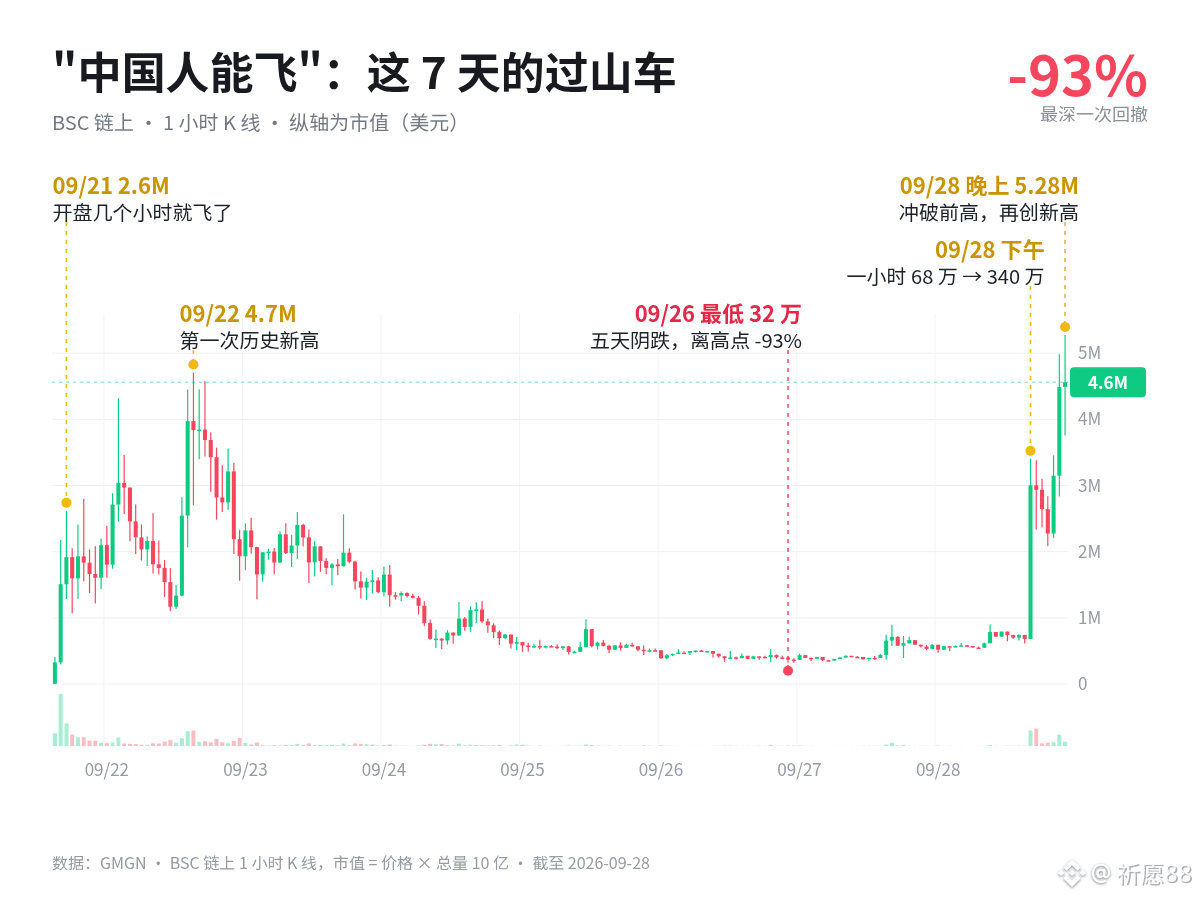
In just a few hours it surged to 2.6M. I kept refreshing, and in my head I was already seeing it listed on Binance spot.
The next day at noon, a massive red candle slammed down and wiped out more than half. My palms were drenched in sweat, but I didn’t move.
In the afternoon, it hit 4.7M, a new all-time high. In that moment, I genuinely felt like fate was about to turn.
Then, it started to go downhill.
Not a crash—more like the most torturous kind of slow bleed downward. Every time I opened my wallet, it was a little less than the time before. The number of people holding coins dropped day by day. At its coldest, only a few thousand dollars’ worth traded in an hour, and the candlestick chart went flat like an ECG that’s flatlined.
On the evening of September 26, it was 320K. Down 93% from the peak.
The money I’d already mentally spent started coming back to me bit by bit.
The hardest part wasn’t the loss—it was starting to doubt myself.
I asked myself: “Chinese people… can’t fly anymore?”
Those days, I went to check where this meme actually came from.
It comes from a rapper named Lan Lao. This past July, on a US radio station, he performed an impromptu segment—Hebei accent, repeating over and over: “Chinese people can fly, yellow skin should be able to, speak Chinese and fly.” While singing, he even burst into laughter mid-performance.
Netizens extracted a whole “Flying School” theory from the lyrics: Minions are yellow-skinned, so they can fly; Luo Tianyi speaks Chinese, so they can fly; Hatsune Miku—no, not her.
Later, a defense news outlet used it for rocket background music, getting over 10 million plays in five days. The official MV on Douyin got over 9 million likes; even foreigners who couldn’t understand it still followed along with the lip-sync.
By the end, I was stunned: the day I bought it, an event called “Movie Typhoon” announced it would use users’ photos to make the five characters “Chinese people can fly,” and paint them on a real rocket that was actually going to be launched.
A meme, going to the sky.
And at that moment, I suddenly wasn’t panicked anymore.
Chinese people can fly. Chinese people must be able to fly.
I never thought about escaping the top, and I never thought about cutting. It’s not that I don’t feel pain—it’s that I’m unwilling to give up.
If it just died like that, it wouldn’t be that I got it wrong. It’s that the market still hasn’t figured it out. The money I didn’t take away at the high point—let it be the price of paying for my own judgment.
Before, on MEME, I held on and died with it, and I’ve sold and cut, and lost many times. This time, I want to place a bet on my own eyesight.
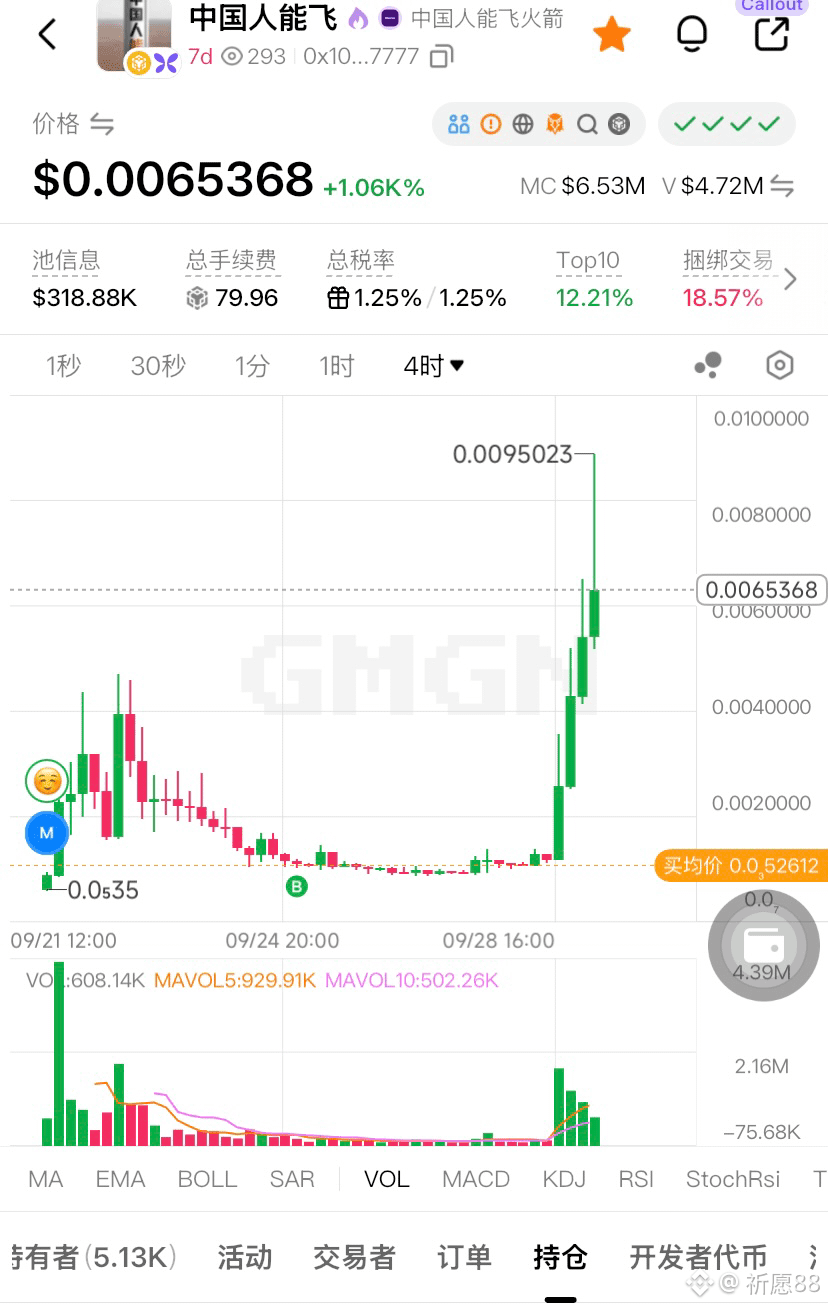
This afternoon, it woke up. In one hour, it jumped from 680K to 3.4M.
By night, it broke through the previous high of 4.7M, topping out at 5.28M. Among the holders, more than 300 new people piled in within a little over an hour.
I watched the screen—no cheering, just let out a long breath.
And I was still holding it, not moving a single coin.
Someone asked me why I didn’t sell.
Chinese people can fly.
What about you? Is there a coin you clung to in the bottom with gritted teeth, refusing to let go? Where is it now? Tell me in the comments👇
Disclaimer: I hold “Chinese people can fly.” After buying, I didn’t do any operations. Meme coin price volatility is extremely high, and it could go to zero at any time. This article is only a personal experience to share and does not constitute investment advice.
You’ve definitely seen this line in the comments on social media. Someone asks, “Is that reasonable?” And there are always people replying, “Chinese people can fly.”
On September 21, a BSC meme coin called “Chinese people can fly” just opened, and I saw it on my feed.
Back then, I didn’t even know where this meme came from. But you know that feeling—you see it the first time, and your hand is already reaching for your wallet.
I paste the contract, don’t even look at the price, hit swap. It’s like a lottery ticket that could possibly change the course of someone’s life.
And it really flew.
In just a few hours it surged to 2.6M. I kept refreshing, and in my head I was already seeing it listed on Binance spot.
The next day at noon, a massive red candle slammed down and wiped out more than half. My palms were drenched in sweat, but I didn’t move.
In the afternoon, it hit 4.7M, a new all-time high. In that moment, I genuinely felt like fate was about to turn.
Then, it started to go downhill.
Not a crash—more like the most torturous kind of slow bleed downward. Every time I opened my wallet, it was a little less than the time before. The number of people holding coins dropped day by day. At its coldest, only a few thousand dollars’ worth traded in an hour, and the candlestick chart went flat like an ECG that’s flatlined.
On the evening of September 26, it was 320K. Down 93% from the peak.
The money I’d already mentally spent started coming back to me bit by bit.
The hardest part wasn’t the loss—it was starting to doubt myself.
I asked myself: “Chinese people… can’t fly anymore?”
Those days, I went to check where this meme actually came from.
It comes from a rapper named Lan Lao. This past July, on a US radio station, he performed an impromptu segment—Hebei accent, repeating over and over: “Chinese people can fly, yellow skin should be able to, speak Chinese and fly.” While singing, he even burst into laughter mid-performance.
Netizens extracted a whole “Flying School” theory from the lyrics: Minions are yellow-skinned, so they can fly; Luo Tianyi speaks Chinese, so they can fly; Hatsune Miku—no, not her.
Later, a defense news outlet used it for rocket background music, getting over 10 million plays in five days. The official MV on Douyin got over 9 million likes; even foreigners who couldn’t understand it still followed along with the lip-sync.
By the end, I was stunned: the day I bought it, an event called “Movie Typhoon” announced it would use users’ photos to make the five characters “Chinese people can fly,” and paint them on a real rocket that was actually going to be launched.
A meme, going to the sky.
And at that moment, I suddenly wasn’t panicked anymore.
Chinese people can fly. Chinese people must be able to fly.
I never thought about escaping the top, and I never thought about cutting. It’s not that I don’t feel pain—it’s that I’m unwilling to give up.
If it just died like that, it wouldn’t be that I got it wrong. It’s that the market still hasn’t figured it out. The money I didn’t take away at the high point—let it be the price of paying for my own judgment.
Before, on MEME, I held on and died with it, and I’ve sold and cut, and lost many times. This time, I want to place a bet on my own eyesight.
This afternoon, it woke up. In one hour, it jumped from 680K to 3.4M.
By night, it broke through the previous high of 4.7M, topping out at 5.28M. Among the holders, more than 300 new people piled in within a little over an hour.
I watched the screen—no cheering, just let out a long breath.
And I was still holding it, not moving a single coin.
Someone asked me why I didn’t sell.
Chinese people can fly.
What about you? Is there a coin you clung to in the bottom with gritted teeth, refusing to let go? Where is it now? Tell me in the comments👇
Disclaimer: I hold “Chinese people can fly.” After buying, I didn’t do any operations. Meme coin price volatility is extremely high, and it could go to zero at any time. This article is only a personal experience to share and does not constitute investment advice.
On September 21, a BSC meme coin called “Chinese people can fly” just opened, and I saw it on my feed.
Back then, I didn’t even know where this meme came from. But you know that feeling—you see it the first time, and your hand is already reaching for your wallet.
I paste the contract, don’t even look at the price, hit swap. It’s like a lottery ticket that could possibly change the course of someone’s life.
And it really flew.
In just a few hours it surged to 2.6M. I kept refreshing, and in my head I was already seeing it listed on Binance spot.
The next day at noon, a massive red candle slammed down and wiped out more than half. My palms were drenched in sweat, but I didn’t move.
In the afternoon, it hit 4.7M, a new all-time high. In that moment, I genuinely felt like fate was about to turn.
Then, it started to go downhill.
Not a crash—more like the most torturous kind of slow bleed downward. Every time I opened my wallet, it was a little less than the time before. The number of people holding coins dropped day by day. At its coldest, only a few thousand dollars’ worth traded in an hour, and the candlestick chart went flat like an ECG that’s flatlined.
On the evening of September 26, it was 320K. Down 93% from the peak.
The money I’d already mentally spent started coming back to me bit by bit.
The hardest part wasn’t the loss—it was starting to doubt myself.
I asked myself: “Chinese people… can’t fly anymore?”
Those days, I went to check where this meme actually came from.
It comes from a rapper named Lan Lao. This past July, on a US radio station, he performed an impromptu segment—Hebei accent, repeating over and over: “Chinese people can fly, yellow skin should be able to, speak Chinese and fly.” While singing, he even burst into laughter mid-performance.
Netizens extracted a whole “Flying School” theory from the lyrics: Minions are yellow-skinned, so they can fly; Luo Tianyi speaks Chinese, so they can fly; Hatsune Miku—no, not her.
Later, a defense news outlet used it for rocket background music, getting over 10 million plays in five days. The official MV on Douyin got over 9 million likes; even foreigners who couldn’t understand it still followed along with the lip-sync.
By the end, I was stunned: the day I bought it, an event called “Movie Typhoon” announced it would use users’ photos to make the five characters “Chinese people can fly,” and paint them on a real rocket that was actually going to be launched.
A meme, going to the sky.
And at that moment, I suddenly wasn’t panicked anymore.
Chinese people can fly. Chinese people must be able to fly.
I never thought about escaping the top, and I never thought about cutting. It’s not that I don’t feel pain—it’s that I’m unwilling to give up.
If it just died like that, it wouldn’t be that I got it wrong. It’s that the market still hasn’t figured it out. The money I didn’t take away at the high point—let it be the price of paying for my own judgment.
Before, on MEME, I held on and died with it, and I’ve sold and cut, and lost many times. This time, I want to place a bet on my own eyesight.
This afternoon, it woke up. In one hour, it jumped from 680K to 3.4M.
By night, it broke through the previous high of 4.7M, topping out at 5.28M. Among the holders, more than 300 new people piled in within a little over an hour.
I watched the screen—no cheering, just let out a long breath.
And I was still holding it, not moving a single coin.
Someone asked me why I didn’t sell.
Chinese people can fly.
What about you? Is there a coin you clung to in the bottom with gritted teeth, refusing to let go? Where is it now? Tell me in the comments👇
Disclaimer: I hold “Chinese people can fly.” After buying, I didn’t do any operations. Meme coin price volatility is extremely high, and it could go to zero at any time. This article is only a personal experience to share and does not constitute investment advice.
2
2
15
·
--
Verified
What does “reviving an outdated public-chain” mean? Why did $NEAR jump from 0.84 to 5 yuan?
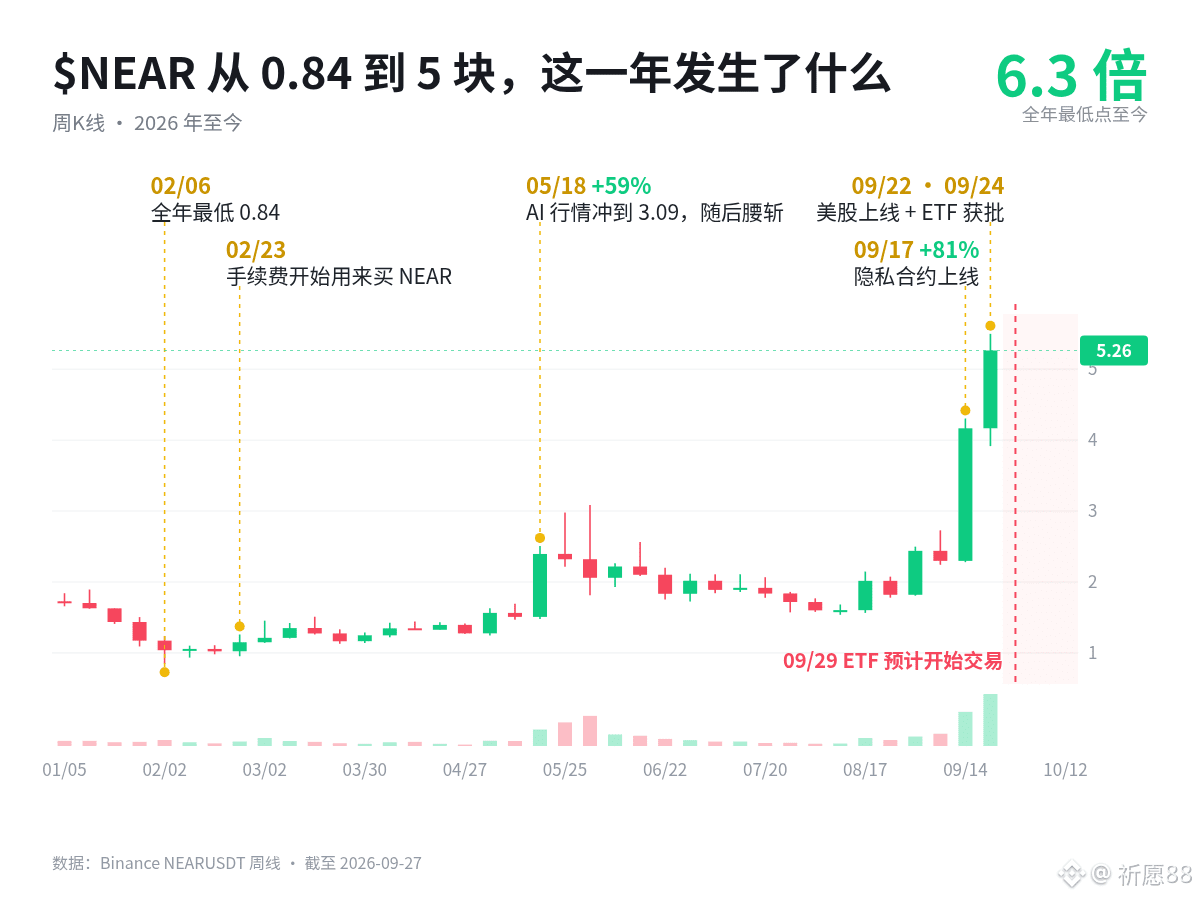
NEAR has risen from about $0.84 in February this year to around $5.2 now—more than 6 times back then. Just since September 16, in these 12 days, it has doubled.
NEAR’s all-time high was $20, but later it kept sliding to below $1, long considered an “outdated public-chain.” So how did it suddenly come back to life?
First, understand what has changed with NEAR:
Previously NEAR sold the idea of a “public chain”: fast speed, low fees, but not many people using it. Now it pushes near.com instead: with a single account, you can buy and sell various assets across more than 30 chains. The underlying layer is called NEAR Intents.
The key point is: the fees Intents collects are used to buy NEAR in the market.
In plain terms: before, it was like building a road with no cars running on it. Now it has opened a shop right by the roadside—and the shop’s profits are used to buy NEAR.
From 0.84 to 5 yuan, it basically comes in three phases:
· On February 23, the “shop’s money” started being used to buy NEAR. Around that time the price bottomed out, then slowly climbed to 1.3.
· In May, it surged along with the AI sector to 3.09, but based only on the concept—it fell by half in just a bit over two months (see the middle section of the chart).
· The real breakout is these 12 days, when the shop connected to 3 new “items” 👇
1️⃣ September 17: Privacy contracts
Hyperliquid is the hottest on-chain derivatives contracts platform, but you can see everyone’s positions—who opened what, including big players. Once a whale opens a position, everyone watches, copies, and they can even intentionally push the price to liquidate them at their liquidation price—commonly called “being hunted.”
On near.com, a privacy version went live: the underlying is still Hyperliquid, but no one can tell whose positions they are. On launch day, the liquidity pool exceeded $70 million. NEAR then rose for two straight days, gaining about 20% each day.
2️⃣ September 22: US stocks
Ondo’s tokenized US stocks were launched on near.com. You can buy Tesla, Nvidia, and more directly.
The data followed as well: Intents’ weekly trading volume rose from more than $400 million in late July to $1.28 billion, and the September trading volume hit a historical high.
3️⃣ September 24: ETF approval
Bitwise’s NEAR spot ETF received approval for listing on the NYSE, with trading starting as early as September 29.
⚠️ But when ETFs launch, it’s often “good news priced in.”
After the SOL and XRP ETFs launched last year, within one month their coin prices fell by 29% and 15%, respectively. The overall market was also declining then, so it can’t all be blamed on the ETF.
But there’s one difference: in the two weeks before SOL and XRP launched, those coins basically hadn’t risen. NEAR had already doubled in advance. The more it rises ahead of time, the greater the pressure to “cash out” later.
My view: this time is different from the May wave. Back then it was only a concept; this time there are truly people using it. But Intents’ protocol revenue in one month is only $1.65 million—still small compared with a $6.8 billion market cap. The price is already running ahead of the fundamentals. The net inflow on the ETF’s first day on September 29 is the most critical signal going forward.
Do you think NEAR’s ETF will be the starting point or the peak? Let’s discuss in the comments 👇
#NEAR #ETF #Hyperliquid
The content above is for information sharing only and does not constitute investment advice.
What does “reviving an outdated public-chain” mean? Why did $NEAR jump from 0.84 to 5 yuan?
NEAR has risen from about $0.84 in February this year to around $5.2 now—more than 6 times back then. Just since September 16, in these 12 days, it has doubled.
NEAR’s all-time high was $20, but later it kept sliding to below $1, long considered an “outdated public-chain.” So how did it suddenly come back to life?
First, understand what has changed with NEAR:
Previously NEAR sold the idea of a “public chain”: fast speed, low fees, but not many people using it. Now it pushes near.com instead: with a single account, you can buy and sell various assets across more than 30 chains. The underlying layer is called NEAR Intents.
The key point is: the fees Intents collects are used to buy NEAR in the market.
In plain terms: before, it was like building a road with no cars running on it. Now it has opened a shop right by the roadside—and the shop’s profits are used to buy NEAR.
From 0.84 to 5 yuan, it basically comes in three phases:
· On February 23, the “shop’s money” started being used to buy NEAR. Around that time the price bottomed out, then slowly climbed to 1.3.
· In May, it surged along with the AI sector to 3.09, but based only on the concept—it fell by half in just a bit over two months (see the middle section of the chart).
· The real breakout is these 12 days, when the shop connected to 3 new “items” 👇
1️⃣ September 17: Privacy contracts
Hyperliquid is the hottest on-chain derivatives contracts platform, but you can see everyone’s positions—who opened what, including big players. Once a whale opens a position, everyone watches, copies, and they can even intentionally push the price to liquidate them at their liquidation price—commonly called “being hunted.”
On near.com, a privacy version went live: the underlying is still Hyperliquid, but no one can tell whose positions they are. On launch day, the liquidity pool exceeded $70 million. NEAR then rose for two straight days, gaining about 20% each day.
2️⃣ September 22: US stocks
Ondo’s tokenized US stocks were launched on near.com. You can buy Tesla, Nvidia, and more directly.
The data followed as well: Intents’ weekly trading volume rose from more than $400 million in late July to $1.28 billion, and the September trading volume hit a historical high.
3️⃣ September 24: ETF approval
Bitwise’s NEAR spot ETF received approval for listing on the NYSE, with trading starting as early as September 29.
⚠️ But when ETFs launch, it’s often “good news priced in.”
After the SOL and XRP ETFs launched last year, within one month their coin prices fell by 29% and 15%, respectively. The overall market was also declining then, so it can’t all be blamed on the ETF.
But there’s one difference: in the two weeks before SOL and XRP launched, those coins basically hadn’t risen. NEAR had already doubled in advance. The more it rises ahead of time, the greater the pressure to “cash out” later.
My view: this time is different from the May wave. Back then it was only a concept; this time there are truly people using it. But Intents’ protocol revenue in one month is only $1.65 million—still small compared with a $6.8 billion market cap. The price is already running ahead of the fundamentals. The net inflow on the ETF’s first day on September 29 is the most critical signal going forward.
Do you think NEAR’s ETF will be the starting point or the peak? Let’s discuss in the comments 👇
#NEAR #ETF #Hyperliquid
The content above is for information sharing only and does not constitute investment advice.
NEAR has risen from about $0.84 in February this year to around $5.2 now—more than 6 times back then. Just since September 16, in these 12 days, it has doubled.
NEAR’s all-time high was $20, but later it kept sliding to below $1, long considered an “outdated public-chain.” So how did it suddenly come back to life?
First, understand what has changed with NEAR:
Previously NEAR sold the idea of a “public chain”: fast speed, low fees, but not many people using it. Now it pushes near.com instead: with a single account, you can buy and sell various assets across more than 30 chains. The underlying layer is called NEAR Intents.
The key point is: the fees Intents collects are used to buy NEAR in the market.
In plain terms: before, it was like building a road with no cars running on it. Now it has opened a shop right by the roadside—and the shop’s profits are used to buy NEAR.
From 0.84 to 5 yuan, it basically comes in three phases:
· On February 23, the “shop’s money” started being used to buy NEAR. Around that time the price bottomed out, then slowly climbed to 1.3.
· In May, it surged along with the AI sector to 3.09, but based only on the concept—it fell by half in just a bit over two months (see the middle section of the chart).
· The real breakout is these 12 days, when the shop connected to 3 new “items” 👇
1️⃣ September 17: Privacy contracts
Hyperliquid is the hottest on-chain derivatives contracts platform, but you can see everyone’s positions—who opened what, including big players. Once a whale opens a position, everyone watches, copies, and they can even intentionally push the price to liquidate them at their liquidation price—commonly called “being hunted.”
On near.com, a privacy version went live: the underlying is still Hyperliquid, but no one can tell whose positions they are. On launch day, the liquidity pool exceeded $70 million. NEAR then rose for two straight days, gaining about 20% each day.
2️⃣ September 22: US stocks
Ondo’s tokenized US stocks were launched on near.com. You can buy Tesla, Nvidia, and more directly.
The data followed as well: Intents’ weekly trading volume rose from more than $400 million in late July to $1.28 billion, and the September trading volume hit a historical high.
3️⃣ September 24: ETF approval
Bitwise’s NEAR spot ETF received approval for listing on the NYSE, with trading starting as early as September 29.
⚠️ But when ETFs launch, it’s often “good news priced in.”
After the SOL and XRP ETFs launched last year, within one month their coin prices fell by 29% and 15%, respectively. The overall market was also declining then, so it can’t all be blamed on the ETF.
But there’s one difference: in the two weeks before SOL and XRP launched, those coins basically hadn’t risen. NEAR had already doubled in advance. The more it rises ahead of time, the greater the pressure to “cash out” later.
My view: this time is different from the May wave. Back then it was only a concept; this time there are truly people using it. But Intents’ protocol revenue in one month is only $1.65 million—still small compared with a $6.8 billion market cap. The price is already running ahead of the fundamentals. The net inflow on the ETF’s first day on September 29 is the most critical signal going forward.
Do you think NEAR’s ETF will be the starting point or the peak? Let’s discuss in the comments 👇
#NEAR #ETF #Hyperliquid
The content above is for information sharing only and does not constitute investment advice.
556
·
--

Article
ENA jumped 80% in 10 days—what exactly happened?$ENA From Sept 17, when it was $0.149, it has risen to about $0.27 now. In 10 days it jumped about 80%, and on Sept 25 alone it surged 19%.
(Binance spot, as of 02:00 Beijing time on Sept 27)
ENA has been getting criticized for almost a year: the project is very profitable, yet the token price has been stuck down. Why has it suddenly been moving up this time?
First, figure out what ENA is:
Ethena issued a stablecoin called USDe. How it makes money is this: it buys spot assets like ETH, while simultaneously opening short positions in the same amount—so that gains and losses offset each other exactly when the market moves up or down. When the market is favorable, there are more long positions, and longs have to pay the shorts a "funding fee". This money is USDe’s profit. ENA is the project’s token.
ENA jumped 80% in 10 days—what exactly happened?
$ENA From Sept 17, when it was $0.149, it has risen to about $0.27 now. In 10 days it jumped about 80%, and on Sept 25 alone it surged 19%.
(Binance spot, as of 02:00 Beijing time on Sept 27)
ENA has been getting criticized for almost a year: the project is very profitable, yet the token price has been stuck down. Why has it suddenly been moving up this time?
First, figure out what ENA is:
Ethena issued a stablecoin called USDe. How it makes money is this: it buys spot assets like ETH, while simultaneously opening short positions in the same amount—so that gains and losses offset each other exactly when the market moves up or down. When the market is favorable, there are more long positions, and longs have to pay the shorts a "funding fee". This money is USDe’s profit. ENA is the project’s token.
(Binance spot, as of 02:00 Beijing time on Sept 27)
ENA has been getting criticized for almost a year: the project is very profitable, yet the token price has been stuck down. Why has it suddenly been moving up this time?
First, figure out what ENA is:
Ethena issued a stablecoin called USDe. How it makes money is this: it buys spot assets like ETH, while simultaneously opening short positions in the same amount—so that gains and losses offset each other exactly when the market moves up or down. When the market is favorable, there are more long positions, and longs have to pay the shorts a "funding fee". This money is USDe’s profit. ENA is the project’s token.
74
·
--
Verified
$ENA 10The price jumped 80%—what exactly happened?
ENA rose from about $0.149 on September 17 to around $0.27 now. In 10 days it climbed about 80%, and on just September 25 it was up 19%.
*(Binance spot, as of 02:00 Beijing time on September 27)*
For almost a year, ENA has been getting criticized: the project is making money, but the coin price has just been stuck. Why did it suddenly turn around this time?
First, let’s get clear on what ENA is:
Ethena issues a stablecoin called USDe. Its way of earning is: while buying spot assets like ETH, it simultaneously opens an equal amount of short positions. Price movements cancel each other out. When market conditions are good, there are more longs, so the long side has to pay the short side a “funding fee.” That money is USDe’s profit. ENA is the token of this project.
There are 3 reasons behind this surge👇
1️⃣ ENA is finally going to distribute profits
Ethena has accumulated over $1 billion in earnings, but most of the money goes to people who hold USDe. ENA holders don’t receive a share—basically: the company is very profitable, but shareholders aren’t paid dividends.
In early September, a community vote passed a “fee switch”: once the USDe size reaches $7.5 billion, the protocol revenue will be used to buy ENA in the market. As long as people keep buying, the price has support—so everyone ran ahead to get in early.
⚠️ But USDe is currently about $4.9 billion, and buybacks haven’t started yet.
2️⃣ It’s been connected to US stocks—fixing USDe’s old shortcoming
USDe’s yield relies entirely on crypto funding fees. When crypto market sentiment cools, yields drop; people redeem, and the scale shrinks. In 2025, USDe peaked at about $15 billion, then kept shrinking—by the end of August it was down to around $4 billion.
On September 25, Ethena announced it would also add tokenized US stocks and US stock futures from Binance, using the same “spot + short” approach to earn from the stock market. With more earning channels, it’s easier for USDe to grow—bringing it closer to the $7.5 billion buyback threshold. That day, ENA jumped 19%.
3️⃣ People who kept dumping the market have been cleared out
Since around October last year, a group of early investors started selling as soon as their tokens unlocked, and ENA has been suppressed so it couldn’t rise. By late August, the foundation directly bought back the tokens in that group that hadn’t unlocked yet—so from then on, they would have no tokens left to sell.
On top of that, around September 19, BTC broke above $80,000 and the broader market rebounded—ENA took off along with it.
Next, watch 2 things:
📅 October 5: the remaining investors’ tokens will fully unlock all at once. However, this group previously refused to buy at full price when the foundation offered to purchase—suggesting they’re not in a hurry to sell, but you still need to be careful.
📈 USDe scale: it rose from about $4 billion last month to $4.9 billion now, and only when it reaches $7.5 billion will buybacks truly begin.
My take: this move isn’t just pure emotion. “ENA can finally get paid” + “the dumpers are gone” + “a new US-stock story” all makes logical sense. But since buybacks haven’t truly started yet, and the October 5 unlock is right around the corner, the next ups and downs likely won’t be very gentle.
How far do you think ENA can still run this time? Let’s discuss in the comments👇
#ENA #Ethena #USDe
The above content is for information sharing only and does not constitute investment advice.
$ENA 10The price jumped 80%—what exactly happened?
ENA rose from about $0.149 on September 17 to around $0.27 now. In 10 days it climbed about 80%, and on just September 25 it was up 19%.
*(Binance spot, as of 02:00 Beijing time on September 27)*
For almost a year, ENA has been getting criticized: the project is making money, but the coin price has just been stuck. Why did it suddenly turn around this time?
First, let’s get clear on what ENA is:
Ethena issues a stablecoin called USDe. Its way of earning is: while buying spot assets like ETH, it simultaneously opens an equal amount of short positions. Price movements cancel each other out. When market conditions are good, there are more longs, so the long side has to pay the short side a “funding fee.” That money is USDe’s profit. ENA is the token of this project.
There are 3 reasons behind this surge👇
1️⃣ ENA is finally going to distribute profits
Ethena has accumulated over $1 billion in earnings, but most of the money goes to people who hold USDe. ENA holders don’t receive a share—basically: the company is very profitable, but shareholders aren’t paid dividends.
In early September, a community vote passed a “fee switch”: once the USDe size reaches $7.5 billion, the protocol revenue will be used to buy ENA in the market. As long as people keep buying, the price has support—so everyone ran ahead to get in early.
⚠️ But USDe is currently about $4.9 billion, and buybacks haven’t started yet.
2️⃣ It’s been connected to US stocks—fixing USDe’s old shortcoming
USDe’s yield relies entirely on crypto funding fees. When crypto market sentiment cools, yields drop; people redeem, and the scale shrinks. In 2025, USDe peaked at about $15 billion, then kept shrinking—by the end of August it was down to around $4 billion.
On September 25, Ethena announced it would also add tokenized US stocks and US stock futures from Binance, using the same “spot + short” approach to earn from the stock market. With more earning channels, it’s easier for USDe to grow—bringing it closer to the $7.5 billion buyback threshold. That day, ENA jumped 19%.
3️⃣ People who kept dumping the market have been cleared out
Since around October last year, a group of early investors started selling as soon as their tokens unlocked, and ENA has been suppressed so it couldn’t rise. By late August, the foundation directly bought back the tokens in that group that hadn’t unlocked yet—so from then on, they would have no tokens left to sell.
On top of that, around September 19, BTC broke above $80,000 and the broader market rebounded—ENA took off along with it.
Next, watch 2 things:
📅 October 5: the remaining investors’ tokens will fully unlock all at once. However, this group previously refused to buy at full price when the foundation offered to purchase—suggesting they’re not in a hurry to sell, but you still need to be careful.
📈 USDe scale: it rose from about $4 billion last month to $4.9 billion now, and only when it reaches $7.5 billion will buybacks truly begin.
My take: this move isn’t just pure emotion. “ENA can finally get paid” + “the dumpers are gone” + “a new US-stock story” all makes logical sense. But since buybacks haven’t truly started yet, and the October 5 unlock is right around the corner, the next ups and downs likely won’t be very gentle.
How far do you think ENA can still run this time? Let’s discuss in the comments👇
#ENA #Ethena #USDe
The above content is for information sharing only and does not constitute investment advice.
ENA rose from about $0.149 on September 17 to around $0.27 now. In 10 days it climbed about 80%, and on just September 25 it was up 19%.
*(Binance spot, as of 02:00 Beijing time on September 27)*
For almost a year, ENA has been getting criticized: the project is making money, but the coin price has just been stuck. Why did it suddenly turn around this time?
First, let’s get clear on what ENA is:
Ethena issues a stablecoin called USDe. Its way of earning is: while buying spot assets like ETH, it simultaneously opens an equal amount of short positions. Price movements cancel each other out. When market conditions are good, there are more longs, so the long side has to pay the short side a “funding fee.” That money is USDe’s profit. ENA is the token of this project.
There are 3 reasons behind this surge👇
1️⃣ ENA is finally going to distribute profits
Ethena has accumulated over $1 billion in earnings, but most of the money goes to people who hold USDe. ENA holders don’t receive a share—basically: the company is very profitable, but shareholders aren’t paid dividends.
In early September, a community vote passed a “fee switch”: once the USDe size reaches $7.5 billion, the protocol revenue will be used to buy ENA in the market. As long as people keep buying, the price has support—so everyone ran ahead to get in early.
⚠️ But USDe is currently about $4.9 billion, and buybacks haven’t started yet.
2️⃣ It’s been connected to US stocks—fixing USDe’s old shortcoming
USDe’s yield relies entirely on crypto funding fees. When crypto market sentiment cools, yields drop; people redeem, and the scale shrinks. In 2025, USDe peaked at about $15 billion, then kept shrinking—by the end of August it was down to around $4 billion.
On September 25, Ethena announced it would also add tokenized US stocks and US stock futures from Binance, using the same “spot + short” approach to earn from the stock market. With more earning channels, it’s easier for USDe to grow—bringing it closer to the $7.5 billion buyback threshold. That day, ENA jumped 19%.
3️⃣ People who kept dumping the market have been cleared out
Since around October last year, a group of early investors started selling as soon as their tokens unlocked, and ENA has been suppressed so it couldn’t rise. By late August, the foundation directly bought back the tokens in that group that hadn’t unlocked yet—so from then on, they would have no tokens left to sell.
On top of that, around September 19, BTC broke above $80,000 and the broader market rebounded—ENA took off along with it.
Next, watch 2 things:
📅 October 5: the remaining investors’ tokens will fully unlock all at once. However, this group previously refused to buy at full price when the foundation offered to purchase—suggesting they’re not in a hurry to sell, but you still need to be careful.
📈 USDe scale: it rose from about $4 billion last month to $4.9 billion now, and only when it reaches $7.5 billion will buybacks truly begin.
My take: this move isn’t just pure emotion. “ENA can finally get paid” + “the dumpers are gone” + “a new US-stock story” all makes logical sense. But since buybacks haven’t truly started yet, and the October 5 unlock is right around the corner, the next ups and downs likely won’t be very gentle.
How far do you think ENA can still run this time? Let’s discuss in the comments👇
#ENA #Ethena #USDe
The above content is for information sharing only and does not constitute investment advice.
2
240
·
--
Binance finally lets you buy $HYPE spot—are they about to dump it to us? 😂😂😂
Binance finally lets you buy $HYPE spot—are they about to dump it to us? 😂😂😂
126
·
--
Bullish
$AR ready, initiate, target breakthrough 5.3
$AR ready, initiate, target breakthrough 5.3
1
316
·
--
I finally held on until I got my money back, but unfortunately I didn’t keep adding to my position. This time it was just to verify my trading ability. CL is really brainless long in over 90—when it keeps rising, you should keep adding; there shouldn’t be any hesitation.😭😭😭
I finally held on until I got my money back, but unfortunately I didn’t keep adding to my position. This time it was just to verify my trading ability. CL is really brainless long in over 90—when it keeps rising, you should keep adding; there shouldn’t be any hesitation.😭😭😭
266
·
--
Can the big monster from the last bull market $AR rise again and wreak havoc?
Can the big monster from the last bull market $AR rise again and wreak havoc?
2
2.1k
·
--

Article
VVV’s market cap exceeds Venice’s prior round equity valuation—it’s being traded like an “on-chain AI stock”After it set a new all-time high today, I didn’t keep researching how much higher it could go. Instead, I recalculated this share buyback-and-burn model from scratch. My conclusion is this: the market is treating VVV as a “shadow equity” position in the Venice chain, but the value the token is actually capturing right now is far smaller than all the revenue the company itself generates. At roughly $23.5 per token, VVV’s circulating market cap is already about $1.13 billion, with a fully diluted valuation close to $2.7 billion. For comparison, when Venice completed its $65 million Series A round this July, the company’s valuation was $1 billion. This comparison isn’t meant to simply conclude that “VVV is overpriced.” Equity and tokens are not the same kind of asset in the first place, but it reveals how the market currently understands VVV: investors are no longer satisfied with viewing it as a tool to pay for AI inference fees. They are pre-pricing Venice’s future business growth, revenue, and cash flow.
The issue is right here. VVV holders don’t own Venice equity, and they don’t have any right to receive company profit distributions. The path for Venice’s business growth to flow into VVV is fairly direct—primarily paid subscriptions and API credits triggering buybacks and burns in the market, plus DIEM needing to lock up staked VVV. If the company earns one dollar, it doesn’t mean that dollar will all flow to the token. Today’s just-completed monthly burn very clearly illustrates this difference. In this round, a total of 16,563 VVV were burned. Based on 1,207 TWAP trades before that, the estimated inflow was about $311,000 USDC. It’s real demand, and it’s real burning—but the purchases happened in the prior month; they weren’t a single, suddenly placed order for hundreds of thousands of dollars into the market tonight.
What’s even more worth watching is the claim that “it’s already deflationary.” VVV’s current annualized emissions are about 2.5 million tokens, and the plan for October is to reduce that further to 2 million. Using the recent 24-hour subscription and API programmatic buyback speed, plus a rough annualization based on the historical monthly buyback average, I estimate the observable buyback size is roughly $7.2 million per year. $7.2 million sounds like a lot, but at a token price of $23.5, it can only buy back about 307,000 VVV—roughly 12% of the current annualized emissions. Even if business growth increases buybacks further, this order of magnitude still suggests VVV is currently in a “reducing inflation” phase, not already achieving net deflation.
There’s also a reflexivity problem: buybacks are denominated in dollars. The higher the coin price, the fewer VVV can be burned for the same amount of business revenue. Price increases will strengthen market confidence in buybacks, but they also reduce the token-supply impact of each dollar spent on buybacks. To maintain the same burn efficiency, Venice’s revenue growth must outpace VVV’s price growth.
Why is VVV still rising so hard? Because it has at least three things that most AI tokens don’t: a real AI product that is actually used, a clear pathway for revenue to enter buybacks and burns, and less than 30% of the supply that is freely circulating. The market doesn’t need to instantly buy up millions of VVV; as long as marginal demand suddenly jumps, limited liquidity is enough to drive a fast repricing.
So my mid-term view on VVV remains somewhat bullish. But the reason isn’t that “it has become a deflationary asset.” Instead, it may be turning into one of the few AI tokens with a real value-capture experiment. Today’s historic high shows the market is willing to pay in advance for this expectation. Next, it will be up to business growth and actual burn results to prove whether that close-to-$2.7 billion fully diluted valuation is discovering real value early—or has already priced in too much of the future.
VVV’s market cap exceeds Venice’s prior round equity valuation—it’s being traded like an “on-chain AI stock”
After it set a new all-time high today, I didn’t keep researching how much higher it could go. Instead, I recalculated this share buyback-and-burn model from scratch. My conclusion is this: the market is treating VVV as a “shadow equity” position in the Venice chain, but the value the token is actually capturing right now is far smaller than all the revenue the company itself generates. At roughly $23.5 per token, VVV’s circulating market cap is already about $1.13 billion, with a fully diluted valuation close to $2.7 billion. For comparison, when Venice completed its $65 million Series A round this July, the company’s valuation was $1 billion. This comparison isn’t meant to simply conclude that “VVV is overpriced.” Equity and tokens are not the same kind of asset in the first place, but it reveals how the market currently understands VVV: investors are no longer satisfied with viewing it as a tool to pay for AI inference fees. They are pre-pricing Venice’s future business growth, revenue, and cash flow.
The issue is right here. VVV holders don’t own Venice equity, and they don’t have any right to receive company profit distributions. The path for Venice’s business growth to flow into VVV is fairly direct—primarily paid subscriptions and API credits triggering buybacks and burns in the market, plus DIEM needing to lock up staked VVV. If the company earns one dollar, it doesn’t mean that dollar will all flow to the token. Today’s just-completed monthly burn very clearly illustrates this difference. In this round, a total of 16,563 VVV were burned. Based on 1,207 TWAP trades before that, the estimated inflow was about $311,000 USDC. It’s real demand, and it’s real burning—but the purchases happened in the prior month; they weren’t a single, suddenly placed order for hundreds of thousands of dollars into the market tonight.
What’s even more worth watching is the claim that “it’s already deflationary.” VVV’s current annualized emissions are about 2.5 million tokens, and the plan for October is to reduce that further to 2 million. Using the recent 24-hour subscription and API programmatic buyback speed, plus a rough annualization based on the historical monthly buyback average, I estimate the observable buyback size is roughly $7.2 million per year. $7.2 million sounds like a lot, but at a token price of $23.5, it can only buy back about 307,000 VVV—roughly 12% of the current annualized emissions. Even if business growth increases buybacks further, this order of magnitude still suggests VVV is currently in a “reducing inflation” phase, not already achieving net deflation.
There’s also a reflexivity problem: buybacks are denominated in dollars. The higher the coin price, the fewer VVV can be burned for the same amount of business revenue. Price increases will strengthen market confidence in buybacks, but they also reduce the token-supply impact of each dollar spent on buybacks. To maintain the same burn efficiency, Venice’s revenue growth must outpace VVV’s price growth.
Why is VVV still rising so hard? Because it has at least three things that most AI tokens don’t: a real AI product that is actually used, a clear pathway for revenue to enter buybacks and burns, and less than 30% of the supply that is freely circulating. The market doesn’t need to instantly buy up millions of VVV; as long as marginal demand suddenly jumps, limited liquidity is enough to drive a fast repricing.
So my mid-term view on VVV remains somewhat bullish. But the reason isn’t that “it has become a deflationary asset.” Instead, it may be turning into one of the few AI tokens with a real value-capture experiment. Today’s historic high shows the market is willing to pay in advance for this expectation. Next, it will be up to business growth and actual burn results to prove whether that close-to-$2.7 billion fully diluted valuation is discovering real value early—or has already priced in too much of the future.
The issue is right here. VVV holders don’t own Venice equity, and they don’t have any right to receive company profit distributions. The path for Venice’s business growth to flow into VVV is fairly direct—primarily paid subscriptions and API credits triggering buybacks and burns in the market, plus DIEM needing to lock up staked VVV. If the company earns one dollar, it doesn’t mean that dollar will all flow to the token. Today’s just-completed monthly burn very clearly illustrates this difference. In this round, a total of 16,563 VVV were burned. Based on 1,207 TWAP trades before that, the estimated inflow was about $311,000 USDC. It’s real demand, and it’s real burning—but the purchases happened in the prior month; they weren’t a single, suddenly placed order for hundreds of thousands of dollars into the market tonight.
What’s even more worth watching is the claim that “it’s already deflationary.” VVV’s current annualized emissions are about 2.5 million tokens, and the plan for October is to reduce that further to 2 million. Using the recent 24-hour subscription and API programmatic buyback speed, plus a rough annualization based on the historical monthly buyback average, I estimate the observable buyback size is roughly $7.2 million per year. $7.2 million sounds like a lot, but at a token price of $23.5, it can only buy back about 307,000 VVV—roughly 12% of the current annualized emissions. Even if business growth increases buybacks further, this order of magnitude still suggests VVV is currently in a “reducing inflation” phase, not already achieving net deflation.
There’s also a reflexivity problem: buybacks are denominated in dollars. The higher the coin price, the fewer VVV can be burned for the same amount of business revenue. Price increases will strengthen market confidence in buybacks, but they also reduce the token-supply impact of each dollar spent on buybacks. To maintain the same burn efficiency, Venice’s revenue growth must outpace VVV’s price growth.
Why is VVV still rising so hard? Because it has at least three things that most AI tokens don’t: a real AI product that is actually used, a clear pathway for revenue to enter buybacks and burns, and less than 30% of the supply that is freely circulating. The market doesn’t need to instantly buy up millions of VVV; as long as marginal demand suddenly jumps, limited liquidity is enough to drive a fast repricing.
So my mid-term view on VVV remains somewhat bullish. But the reason isn’t that “it has become a deflationary asset.” Instead, it may be turning into one of the few AI tokens with a real value-capture experiment. Today’s historic high shows the market is willing to pay in advance for this expectation. Next, it will be up to business growth and actual burn results to prove whether that close-to-$2.7 billion fully diluted valuation is discovering real value early—or has already priced in too much of the future.
1
428
·
--
Bullish
Partly True
$哈基米 is not a coin that appeared only today.
Today, Binance announced the launch of the HAKIMI USDT perpetual contract. After the announcement, the on-chain price quickly surged from about $0.017, briefly reaching nearly $0.09 intraday, with a 24-hour gain once approaching 400%. But if you describe it only as an “exchange-listing rally,” you are underestimating HAKIMI.
Its main trading pool was established in October 2025. On the fourth day after launch, the price had already climbed to about $0.093; then enthusiasm faded, and by March this year it had dropped to a low of about $0.0044, with a maximum drawdown of more than 95%. For most memes, the story would have ended there. HAKIMI did not.
From peak to trough, the community kept updating, memes kept being produced, and Chinese groups, English groups, content groups, and announcement channels gradually took shape. Today it has more than 65,000 holder addresses, and its X account has posted about 2,700 pieces of content in total. The numbers may not be astonishing, but they prove this is not a crowd that only shows up when prices rise.
What makes HAKIMI most special is that the culture came before the token. It began with a misheard version of the “honey song,” then moved into cat videos, parody edits, AI covers, and countless derivative creations, and only after that became an on-chain asset. Most memes deploy a contract first and then look for a story; HAKIMI had a public memory first, and only later got a coin.
That is also why I am moderately bullish on it in the medium term. There are many memes that can pump once, but very few that can lose 95% and still keep the community from dispersing, then eventually wait for a Binance contract listing. The contract did not create HAKIMI; it merely opened a new liquidity gateway for this Chinese meme that has been alive for nearly a year.
For the short term, I am actually cautiously bearish. The price expanded several times within hours, and the contract brings leverage and two-sided speculation. The initial funding rate has already turned clearly positive, and chasing-long positions are becoming crowded. Binance also made it clear that a contract listing does not mean a spot listing.
My view is this: cautiously bearish over the next 24–72 hours, and bullish over the next 1–3 months. In the short term, sentiment needs to cool off; in the long term, it depends on whether the community can turn one contract listing into the next wave of cultural spread.
The Binance contract is not HAKIMI’s starting point.
It is more like a stamp that the market, nearly a year late, finally put on this still-living Chinese meme.
{future}(哈基米USDT)
$哈基米 is not a coin that appeared only today.
Today, Binance announced the launch of the HAKIMI USDT perpetual contract. After the announcement, the on-chain price quickly surged from about $0.017, briefly reaching nearly $0.09 intraday, with a 24-hour gain once approaching 400%. But if you describe it only as an “exchange-listing rally,” you are underestimating HAKIMI.
Its main trading pool was established in October 2025. On the fourth day after launch, the price had already climbed to about $0.093; then enthusiasm faded, and by March this year it had dropped to a low of about $0.0044, with a maximum drawdown of more than 95%. For most memes, the story would have ended there. HAKIMI did not.
From peak to trough, the community kept updating, memes kept being produced, and Chinese groups, English groups, content groups, and announcement channels gradually took shape. Today it has more than 65,000 holder addresses, and its X account has posted about 2,700 pieces of content in total. The numbers may not be astonishing, but they prove this is not a crowd that only shows up when prices rise.
What makes HAKIMI most special is that the culture came before the token. It began with a misheard version of the “honey song,” then moved into cat videos, parody edits, AI covers, and countless derivative creations, and only after that became an on-chain asset. Most memes deploy a contract first and then look for a story; HAKIMI had a public memory first, and only later got a coin.
That is also why I am moderately bullish on it in the medium term. There are many memes that can pump once, but very few that can lose 95% and still keep the community from dispersing, then eventually wait for a Binance contract listing. The contract did not create HAKIMI; it merely opened a new liquidity gateway for this Chinese meme that has been alive for nearly a year.
For the short term, I am actually cautiously bearish. The price expanded several times within hours, and the contract brings leverage and two-sided speculation. The initial funding rate has already turned clearly positive, and chasing-long positions are becoming crowded. Binance also made it clear that a contract listing does not mean a spot listing.
My view is this: cautiously bearish over the next 24–72 hours, and bullish over the next 1–3 months. In the short term, sentiment needs to cool off; in the long term, it depends on whether the community can turn one contract listing into the next wave of cultural spread.
The Binance contract is not HAKIMI’s starting point.
It is more like a stamp that the market, nearly a year late, finally put on this still-living Chinese meme.
Today, Binance announced the launch of the HAKIMI USDT perpetual contract. After the announcement, the on-chain price quickly surged from about $0.017, briefly reaching nearly $0.09 intraday, with a 24-hour gain once approaching 400%. But if you describe it only as an “exchange-listing rally,” you are underestimating HAKIMI.
Its main trading pool was established in October 2025. On the fourth day after launch, the price had already climbed to about $0.093; then enthusiasm faded, and by March this year it had dropped to a low of about $0.0044, with a maximum drawdown of more than 95%. For most memes, the story would have ended there. HAKIMI did not.
From peak to trough, the community kept updating, memes kept being produced, and Chinese groups, English groups, content groups, and announcement channels gradually took shape. Today it has more than 65,000 holder addresses, and its X account has posted about 2,700 pieces of content in total. The numbers may not be astonishing, but they prove this is not a crowd that only shows up when prices rise.
What makes HAKIMI most special is that the culture came before the token. It began with a misheard version of the “honey song,” then moved into cat videos, parody edits, AI covers, and countless derivative creations, and only after that became an on-chain asset. Most memes deploy a contract first and then look for a story; HAKIMI had a public memory first, and only later got a coin.
That is also why I am moderately bullish on it in the medium term. There are many memes that can pump once, but very few that can lose 95% and still keep the community from dispersing, then eventually wait for a Binance contract listing. The contract did not create HAKIMI; it merely opened a new liquidity gateway for this Chinese meme that has been alive for nearly a year.
For the short term, I am actually cautiously bearish. The price expanded several times within hours, and the contract brings leverage and two-sided speculation. The initial funding rate has already turned clearly positive, and chasing-long positions are becoming crowded. Binance also made it clear that a contract listing does not mean a spot listing.
My view is this: cautiously bearish over the next 24–72 hours, and bullish over the next 1–3 months. In the short term, sentiment needs to cool off; in the long term, it depends on whether the community can turn one contract listing into the next wave of cultural spread.
The Binance contract is not HAKIMI’s starting point.
It is more like a stamp that the market, nearly a year late, finally put on this still-living Chinese meme.
1
1.1k
·
--
Bullish
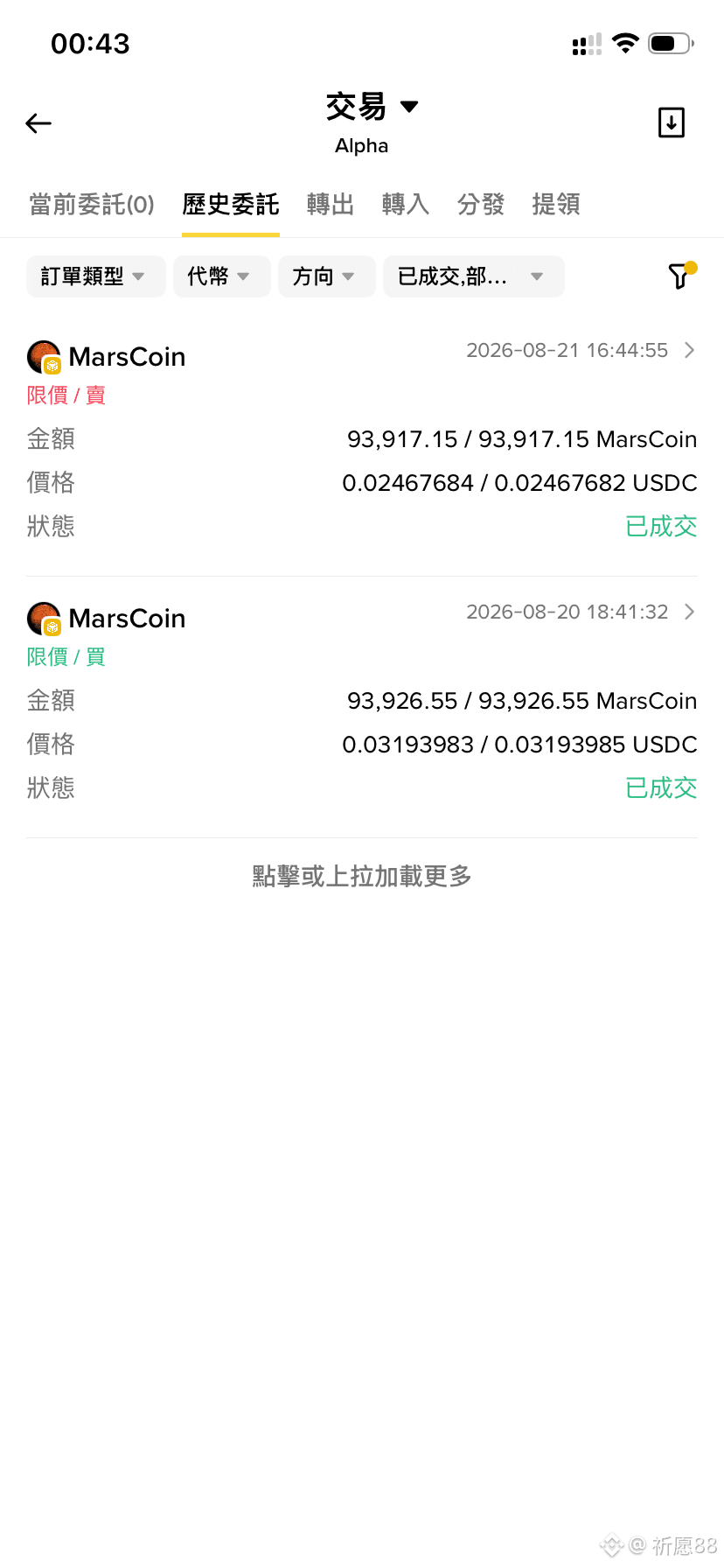
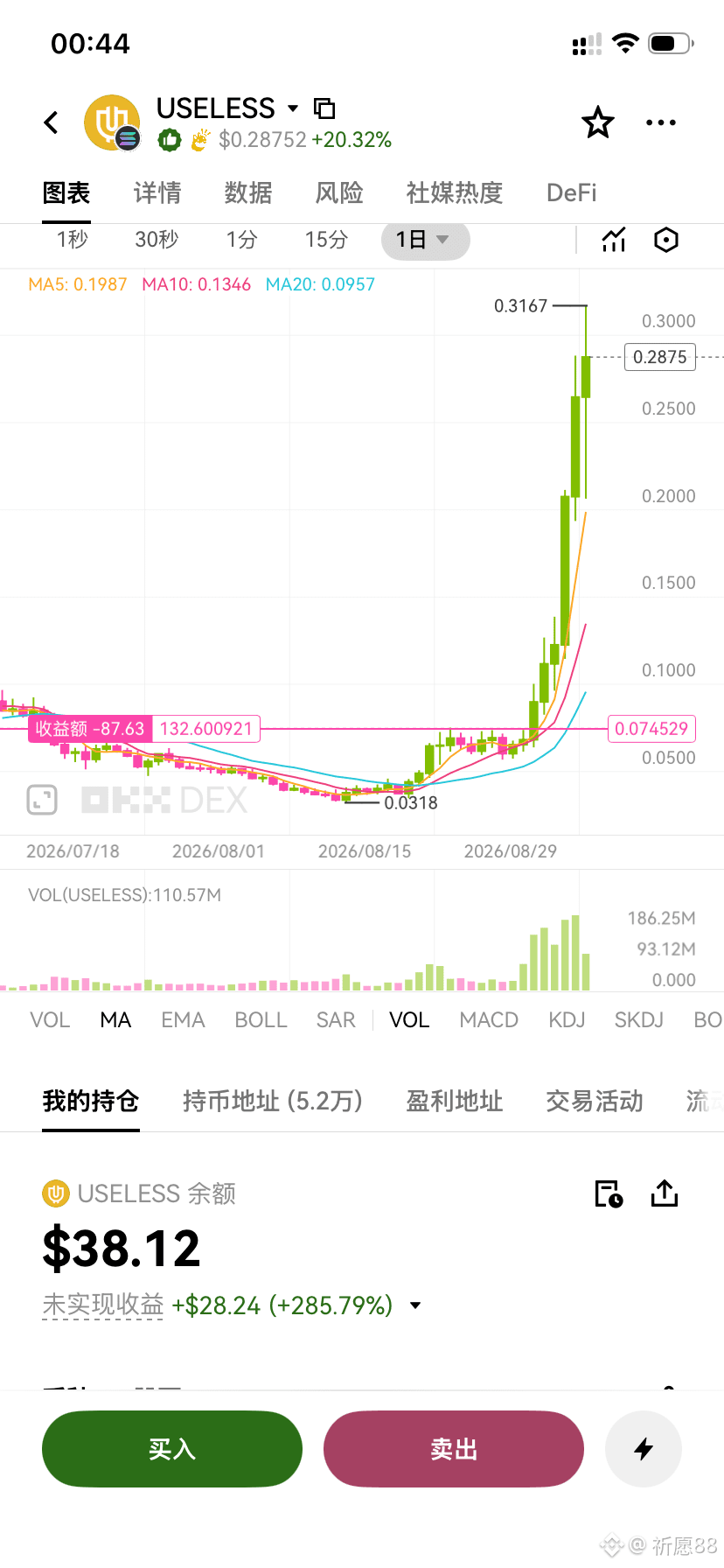
$MARSCOIN That big drop I’d been waiting for finally came, and I rushed in. Then I couldn’t hold back and even stopped out, losing 500u. $USELESS First I bought 10u and added it to my watchlist, planning to buy in at a 30 million market cap, because that BONK wave had already dumped a lot of chips out, so I didn’t dare follow in.
I was really confused. A coin I liked had the food spoon-fed right to my mouth. Damn it, but once it got right in front of me I still couldn’t hold it, and I just can’t make decisions.😭😭😭
{future}(USELESSUSDT)
$MARSCOIN That big drop I’d been waiting for finally came, and I rushed in. Then I couldn’t hold back and even stopped out, losing 500u. $USELESS First I bought 10u and added it to my watchlist, planning to buy in at a 30 million market cap, because that BONK wave had already dumped a lot of chips out, so I didn’t dare follow in.
I was really confused. A coin I liked had the food spoon-fed right to my mouth. Damn it, but once it got right in front of me I still couldn’t hold it, and I just can’t make decisions.😭😭😭
I was really confused. A coin I liked had the food spoon-fed right to my mouth. Damn it, but once it got right in front of me I still couldn’t hold it, and I just can’t make decisions.😭😭😭
423
·
--
Bullish
641
·
--
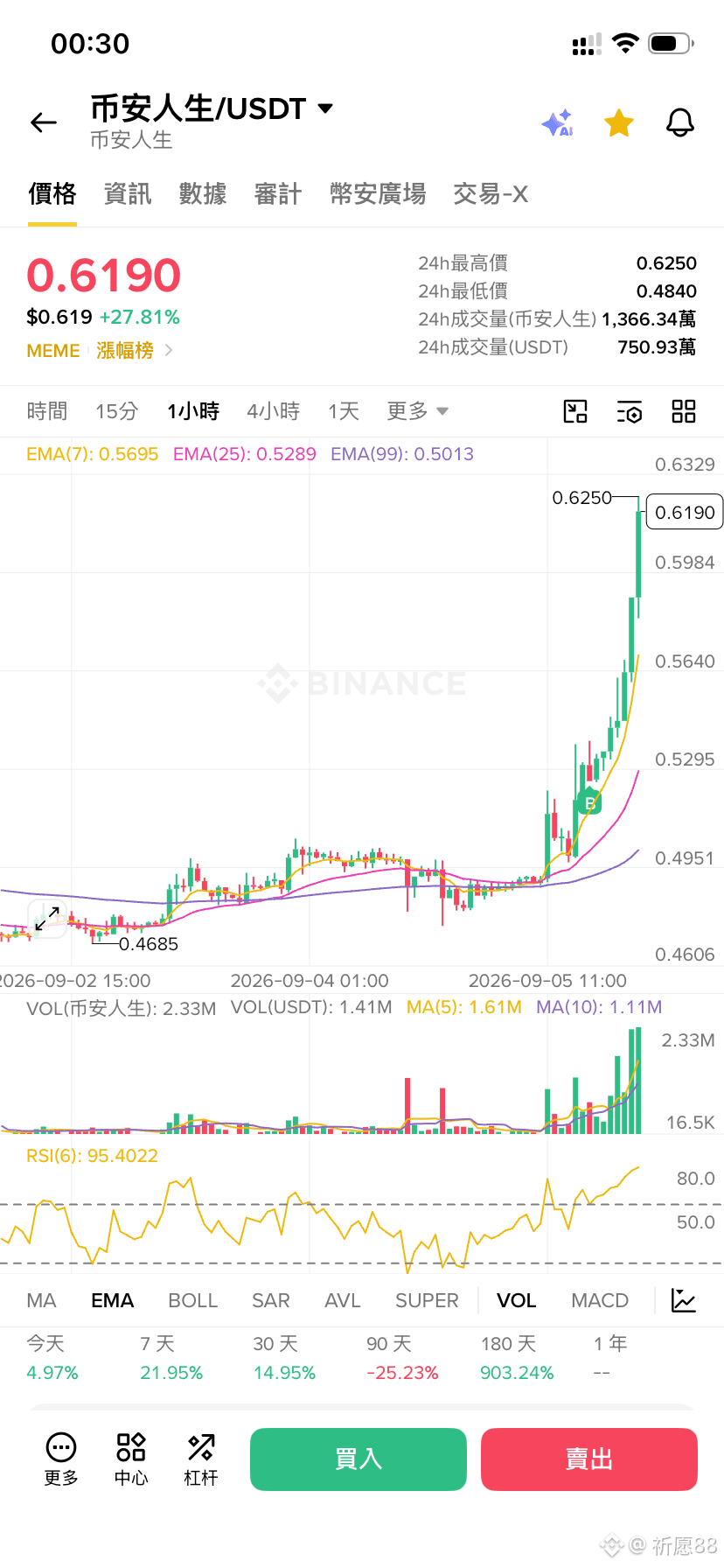
I am willing to rate $币安人生 highly, not because it has any technical innovation, but because it has accomplished something that the vast majority of Meme coins cannot do: it has made the name itself an asset.
Most Meme coins, once you take away the animal avatar and the candlestick chart, nobody remembers why they exist. Binance Life is different. It is a complete Chinese expression that needs no translation and no explanation from the project team. In just four characters it contains Binance, the wealth effect, the self-deprecating humor of the Chinese crypto community, and everyone’s imagination of “making it.”
More importantly, it has moved from a community meme into Binance spot trading, while still keeping the Chinese trading name “Binance Life.” Many people underestimate this: it means a narrative created by the Chinese community, without rebranding and without changing its name, has entered directly into one of the world’s largest crypto trading venues.
Today Binance Life rose about 14.4%, while BNB rose about 6.9% over the same period. A stronger BNB of course provided the environment, but it shows that the market is not only trading ecosystem momentum; it is also trading its unique cultural premium.
In the end, competition among Meme coins is not about whose code is more complex, but about whose name is easier to remember, to spread, and to mention again and again. Animal avatars can be copied, contracts can be copied, and even hot trends can be copied; but once the four characters “Binance Life” are bound to the Chinese crypto world, later entrants will find it very hard to take that away.
At this point, it is no longer a temporary hot topic, but one of the most recognizable Chinese cultural symbols in the BNB ecosystem. Whenever BNB strengthens and Binance again becomes the market’s focal point, capital may once again remember it. This ability to be awakened repeatedly is what gives a Meme its real vitality.
So my view is very clear: over the next 1–4 weeks, I am bullish on Binance Life.
Of course, it is not cheap, and it will not keep rising without falling. But in the world of Memes, I would rather choose a name that the whole market can remember than a hundred tokens whose stories need to be explained by the project team every day.
The strongest thing about Binance Life is that it does not need to prove who it is.
Its name has already told the whole story.
I am willing to rate $币安人生 highly, not because it has any technical innovation, but because it has accomplished something that the vast majority of Meme coins cannot do: it has made the name itself an asset.
Most Meme coins, once you take away the animal avatar and the candlestick chart, nobody remembers why they exist. Binance Life is different. It is a complete Chinese expression that needs no translation and no explanation from the project team. In just four characters it contains Binance, the wealth effect, the self-deprecating humor of the Chinese crypto community, and everyone’s imagination of “making it.”
More importantly, it has moved from a community meme into Binance spot trading, while still keeping the Chinese trading name “Binance Life.” Many people underestimate this: it means a narrative created by the Chinese community, without rebranding and without changing its name, has entered directly into one of the world’s largest crypto trading venues.
Today Binance Life rose about 14.4%, while BNB rose about 6.9% over the same period. A stronger BNB of course provided the environment, but it shows that the market is not only trading ecosystem momentum; it is also trading its unique cultural premium.
In the end, competition among Meme coins is not about whose code is more complex, but about whose name is easier to remember, to spread, and to mention again and again. Animal avatars can be copied, contracts can be copied, and even hot trends can be copied; but once the four characters “Binance Life” are bound to the Chinese crypto world, later entrants will find it very hard to take that away.
At this point, it is no longer a temporary hot topic, but one of the most recognizable Chinese cultural symbols in the BNB ecosystem. Whenever BNB strengthens and Binance again becomes the market’s focal point, capital may once again remember it. This ability to be awakened repeatedly is what gives a Meme its real vitality.
So my view is very clear: over the next 1–4 weeks, I am bullish on Binance Life.
Of course, it is not cheap, and it will not keep rising without falling. But in the world of Memes, I would rather choose a name that the whole market can remember than a hundred tokens whose stories need to be explained by the project team every day.
The strongest thing about Binance Life is that it does not need to prove who it is.
Its name has already told the whole story.
Most Meme coins, once you take away the animal avatar and the candlestick chart, nobody remembers why they exist. Binance Life is different. It is a complete Chinese expression that needs no translation and no explanation from the project team. In just four characters it contains Binance, the wealth effect, the self-deprecating humor of the Chinese crypto community, and everyone’s imagination of “making it.”
More importantly, it has moved from a community meme into Binance spot trading, while still keeping the Chinese trading name “Binance Life.” Many people underestimate this: it means a narrative created by the Chinese community, without rebranding and without changing its name, has entered directly into one of the world’s largest crypto trading venues.
Today Binance Life rose about 14.4%, while BNB rose about 6.9% over the same period. A stronger BNB of course provided the environment, but it shows that the market is not only trading ecosystem momentum; it is also trading its unique cultural premium.
In the end, competition among Meme coins is not about whose code is more complex, but about whose name is easier to remember, to spread, and to mention again and again. Animal avatars can be copied, contracts can be copied, and even hot trends can be copied; but once the four characters “Binance Life” are bound to the Chinese crypto world, later entrants will find it very hard to take that away.
At this point, it is no longer a temporary hot topic, but one of the most recognizable Chinese cultural symbols in the BNB ecosystem. Whenever BNB strengthens and Binance again becomes the market’s focal point, capital may once again remember it. This ability to be awakened repeatedly is what gives a Meme its real vitality.
So my view is very clear: over the next 1–4 weeks, I am bullish on Binance Life.
Of course, it is not cheap, and it will not keep rising without falling. But in the world of Memes, I would rather choose a name that the whole market can remember than a hundred tokens whose stories need to be explained by the project team every day.
The strongest thing about Binance Life is that it does not need to prove who it is.
Its name has already told the whole story.
1
2
938
·
--
Returning from the high and taking over Binance life
Returning from the high and taking over Binance life
1
392
·
--
Holding $币安人生 5K USDT
$币安人生 Chinese meme king with a market cap of 500 million is way too little, right? The goal is 2 billion
$币安人生 Chinese meme king with a market cap of 500 million is way too little, right? The goal is 2 billion
112
Log in to explore more content
Join global crypto users on Binance Square
⚡️ Get latest and useful information about crypto.
💬 Trusted by the world’s largest crypto exchange.
👍 Discover real insights from verified creators.
Email / Phone number