Binance Square

AroBaloch

Crypto enthusiast since 2019 | Passionate about market trends, blockchain innovation, and digital finance | Sharing insights, lessons, and real views on crypto.
Open Trade
Frequent Trader
5 Years
1.1K+ Following
235 Followers
75 Liked
1 Shared
Posts
Portfolio
·
--
HNIW30
·
--
Can digital sovereignty really scale without a shared trust layer?
Most digital infrastructure discussions focus on visible systems. Payments get attention. Identity gets attention. Compliance gets attention. But scale usually breaks much deeper than that. The real challenge begins when these systems are expected to operate together under one national framework while preserving trust across every interaction.
That is the question Sign makes hard to ignore. What happens when a country succeeds in digitizing multiple public functions, yet still lacks a reliable way to connect evidence across them? A payment can be executed. A credential can be issued. A distribution program can be launched. But if each action lives inside its own silo, trust does not compound. Complexity does.
This matters more now because governments are not experimenting at the edges anymore. They are moving toward larger digital systems with real institutional weight. CBDC pilots continue to expand globally. Digital identity initiatives remain central to public service modernization. Tokenized capital and regulated onchain distribution models are drawing more serious attention from institutions. The direction is clear. More digital infrastructure is coming. The harder question is whether the underlying systems can coordinate in a verifiable way.
For years, the default answer has been to connect fragmented systems with additional service layers. More integrations. More reporting tools. More reconciliation steps. More vendor logic sitting between systems that were never designed to share trust cleanly. That can keep operations moving for a while, but it rarely solves the structural issue. Verification gets repeated. Reporting becomes heavier. Auditability weakens once execution and documentation start drifting apart.
A similar pattern has appeared many times in technology. When systems scale without a common trust framework, complexity rises faster than confidence. At first, that looks manageable. Over time, it becomes the bottleneck. The next phase is usually not more surface level applications. It is a stronger base layer underneath them.
This is where Sign becomes interesting. The project is not framed as a narrow tool for one isolated workflow. Its architecture points to something broader: an infrastructure layer designed to make digital actions more legible, verifiable, and interoperable across systems that normally remain disconnected.

At the center of that idea is the evidence layer. Instead of treating trust as something recreated separately in each environment, Sign approaches it as a shared function. Facts can be expressed in a structured form, signed, anchored, and queried as verifiable records. That changes the discussion from building one more digital program to building a common layer that helps multiple programs coordinate with stronger integrity.
Seen from that angle, the value of Sign is not limited to one domain. A money system needs evidence that transactions and policy conditions can be verified clearly. An identity system needs evidence that credentials can be checked without exposing unnecessary information. A capital or distribution system needs evidence that allocation, eligibility, and execution can be inspected with confidence. These are different environments, but they all depend on one deeper requirement: trustworthy records that can move across processes without losing meaning.
That framing is what gives Sign strategic weight. It suggests that the real bottleneck in sovereign digital infrastructure may not be access to more applications, but access to a shared evidentiary foundation. If that thesis is right, then the project sits closer to coordination infrastructure than to a typical single purpose protocol.
Of course, important questions remain. Public sector adoption is never just about technical design. Standards alignment, institutional coordination, migration from legacy systems, and implementation timelines all matter. Even strong infrastructure ideas can move slowly when multiple stakeholders need to align around common schemas and operational practices. The strength of the framework does not remove the difficulty of deployment.
Still, the broader framing is unusually compelling. Many infrastructure narratives begin with a product and then try to expand outward into larger relevance. Sign feels closer to the opposite path. It begins with a systems level problem and positions itself at the layer where trust, coordination, and verifiability intersect. That makes it worth watching far beyond the lens of short term narrative momentum.
If digital sovereignty continues evolving from isolated services into connected national systems, shared trust infrastructure could become one of the most important layers in the stack. In that world, Sign is not interesting because it adds another feature. It is interesting because it asks whether digital systems can truly scale without a common evidentiary foundation beneath them.
@SignOfficial $SIGN #SignDigitalSovereignInfra
STABLECOINS ARE BECOMING CRYPTO’S MOST IMPORTANT STORY IN 2026$BTC $USDC $XRP For most of crypto’s history, the industry sold itself on volatility, speculation, and grand promises. That model is wearing out. In 2026, the most important trend in crypto is not another meme coin, not another exchange token, and not another recycled narrative about “the future of finance.” It is the rise of stablecoins as real payment infrastructure. The market is shifting from hype to utility, and stablecoins are at the center of that transition. The reason this matters is simple: stablecoins solve an actual problem. Traditional cross-border payments are often slow, expensive, and dependent on layers of banks and settlement intermediaries. Stablecoins allow value, usually in dollar-linked form, to move on blockchain rails around the clock. That makes them useful for remittances, treasury operations, merchant settlement, and international business transfers. Crypto has spent years searching for a mainstream use case that is not just speculation. Stablecoins may be the first part of the industry to find one at scale. The strongest signal came on March 17, 2026, when Mastercard agreed to acquire stablecoin infrastructure firm BVNK for up to $1.8 billion, including $300 million in contingent payments. That is not a vanity move. It is a direct bet by one of the world’s largest payment companies that stablecoin rails are becoming strategically important. BVNK helps businesses move between fiat and stablecoins across more than 130 countries, and Mastercard clearly decided that buying proven infrastructure was faster than building it internally. Big companies do not spend that kind of money because of social media excitement. They do it because they see a shift in how money will move. Visa is moving in the same direction. In January 2026, Visa’s crypto chief said the company’s stablecoin settlement activity had reached a $4.5 billion annualized run rate. That is still small relative to Visa’s total network, but it is large enough to matter and, more importantly, it shows growth in a part of the market that is tied to real-world settlement rather than speculative trading. Visa also pointed to demand for stablecoin-linked payment cards, which suggests the company sees a role for blockchain dollars within conventional consumer finance rather than outside it. The market size backs this up. According to CoinDesk, citing Macquarie, the combined market capitalization of major stablecoins reached about $312 billion in March 2026, up roughly 50% year over year. That is no longer niche territory. A market of that size starts to matter to banks, payment processors, regulators, and governments. It also changes the conversation. Stablecoins are no longer just a side product inside crypto exchanges. They are becoming part of a broader debate about payments, digital dollars, tokenized assets, and who controls the next layer of financial infrastructure. Regulation is accelerating the trend, even if it is also slowing parts of the broader crypto market. Reuters reported this week that stalled U.S. crypto legislation has already led Citigroup to cut its 12-month Bitcoin and Ether targets. One of the major sticking points is stablecoin regulation. That detail matters. It shows where the real policy battle is now concentrated. Lawmakers are no longer only debating whether crypto is legitimate. They are debating how digital dollars should function, whether issuers should be allowed to offer rewards or interest-like incentives, and how stablecoins should fit into the banking system. That is a much more serious stage of development than the casino-style cycles that defined earlier years. The regulatory picture also became clearer on March 17, 2026, when the U.S. Securities and Exchange Commission issued new guidance that categorized crypto tokens into several types, including stablecoins. The SEC said only digital securities fall under federal securities laws, while non-security crypto assets are treated differently unless they are promoted in a way that creates an expectation of profit. This does not eliminate uncertainty, but it is another sign that stablecoins are being treated as a core category requiring tailored rules rather than as an afterthought. Markets do not mature when everything is unregulated. They mature when the rules start getting specific. That does not mean the stablecoin story is clean. Anyone pretending there are no risks is selling garbage. Stablecoins still depend on the quality of reserves, confidence in redemption, operational resilience, and regulatory oversight. There is also a growing fear among banks that stablecoins could pull deposits away from traditional institutions, especially if issuers are allowed to offer rewards or more attractive transaction experiences. That is why the policy fight is so intense. Stablecoins are no longer threatening old finance from the outside through ideology. They are threatening it from the inside through competition. This is what makes stablecoins the most important crypto trend right now. Bitcoin still matters as the flagship asset, but Reuters reported that major institutions now expect it to trade more or less sideways unless regulation improves. Stablecoins are different. Their value proposition is not based on price appreciation. It is based on function. Faster settlement, lower transfer costs, better cross-border movement, programmable payments, and easier integration with digital assets are practical advantages. Practical advantages beat narratives when real money is on the line. The brutal truth is that most of crypto still produces noise, but stablecoins are producing infrastructure. That distinction matters. Infrastructure is boring, and boring is usually where durable value is built. If the sector continues in this direction, stablecoins could become the first major crypto product to achieve broad economic relevance outside speculation. Not because they are flashy, but because they work on a problem businesses and payment networks actually care about. Crypto spent years trying to convince the world it was revolutionary. Stablecoins may finally do it by being useful instead of loud. {spot}(BTCUSDT) {spot}(BNBUSDT) {future}(XRPUSDT) #BinanceKOLIntroductionProgram #BİNANCE #Stablecoins

STABLECOINS ARE BECOMING CRYPTO’S MOST IMPORTANT STORY IN 2026

$BTC $USDC $XRP
For most of crypto’s history, the industry sold itself on volatility, speculation,
and grand promises. That model is wearing out. In 2026, the most important
trend in crypto is not another meme coin, not another exchange token, and not
another recycled narrative about “the future of finance.” It is the rise of
stablecoins as real payment infrastructure. The market is shifting from hype to
utility, and stablecoins are at the center of that transition.
The reason this matters is simple: stablecoins solve an actual problem. Traditional
cross-border payments are often slow, expensive, and dependent on layers of
banks and settlement intermediaries. Stablecoins allow value, usually in
dollar-linked form, to move on blockchain rails around the clock. That makes
them useful for remittances, treasury operations, merchant settlement, and
international business transfers. Crypto has spent years searching for a
mainstream use case that is not just speculation. Stablecoins may be the first
part of the industry to find one at scale.
The strongest signal came on March 17, 2026, when Mastercard agreed to acquire stablecoin infrastructure firm BVNK for up to $1.8 billion, including $300
million in contingent payments. That is not a vanity move. It is a direct bet
by one of the world’s largest payment companies that stablecoin rails are
becoming strategically important. BVNK helps businesses move between fiat and stablecoins across more than 130 countries, and Mastercard clearly decided that buying proven infrastructure was faster than building it internally. Big companies do not spend that kind of money because of social media excitement. They do it because they see a shift in how money will move.
Visa is moving in the same direction. In January 2026, Visa’s crypto chief said the company’s stablecoin settlement activity had reached a $4.5 billion annualized run rate. That is still small relative to Visa’s total network, but it is large enough to matter and, more importantly, it shows growth in a part of the market that is tied to real-world settlement rather than speculative trading. Visa
also pointed to demand for stablecoin-linked payment cards, which suggests the company sees a role for blockchain dollars within conventional consumer finance rather than outside it.
The market size backs this up. According to CoinDesk, citing Macquarie, the
combined market capitalization of major stablecoins reached about $312 billion
in March 2026, up roughly 50% year over year. That is no longer niche
territory. A market of that size starts to matter to banks, payment processors,
regulators, and governments. It also changes the conversation. Stablecoins are
no longer just a side product inside crypto exchanges. They are becoming part
of a broader debate about payments, digital dollars, tokenized assets, and who
controls the next layer of financial infrastructure.
Regulation is accelerating the trend, even if it is also slowing parts of the broader
crypto market. Reuters reported this week that stalled U.S. crypto legislation
has already led Citigroup to cut its 12-month Bitcoin and Ether targets. One of
the major sticking points is stablecoin regulation. That detail matters. It
shows where the real policy battle is now concentrated. Lawmakers are no longer only debating whether crypto is legitimate. They are debating how digital
dollars should function, whether issuers should be allowed to offer rewards or
interest-like incentives, and how stablecoins should fit into the banking
system. That is a much more serious stage of development than the casino-style
cycles that defined earlier years.
The regulatory picture also became clearer on March 17, 2026, when the U.S.
Securities and Exchange Commission issued new guidance that categorized crypto tokens into several types, including stablecoins. The SEC said only digital
securities fall under federal securities laws, while non-security crypto assets
are treated differently unless they are promoted in a way that creates an
expectation of profit. This does not eliminate uncertainty, but it is another
sign that stablecoins are being treated as a core category requiring tailored
rules rather than as an afterthought. Markets do not mature when everything is
unregulated. They mature when the rules start getting specific.
That does not mean the stablecoin story is clean. Anyone pretending there are no risks is selling garbage. Stablecoins still depend on the quality of reserves,
confidence in redemption, operational resilience, and regulatory oversight.
There is also a growing fear among banks that stablecoins could pull deposits
away from traditional institutions, especially if issuers are allowed to offer
rewards or more attractive transaction experiences. That is why the policy
fight is so intense. Stablecoins are no longer threatening old finance from the
outside through ideology. They are threatening it from the inside through competition.
This is what makes stablecoins the most important crypto trend right now. Bitcoin still matters as the flagship asset, but Reuters reported that major
institutions now expect it to trade more or less sideways unless regulation
improves. Stablecoins are different. Their value proposition is not based on
price appreciation. It is based on function. Faster settlement, lower transfer
costs, better cross-border movement, programmable payments, and easier
integration with digital assets are practical advantages. Practical advantages
beat narratives when real money is on the line.
The brutal truth is that most of crypto still produces noise, but stablecoins are
producing infrastructure. That distinction matters. Infrastructure is boring,
and boring is usually where durable value is built. If the sector continues in
this direction, stablecoins could become the first major crypto product to
achieve broad economic relevance outside speculation. Not because they are
flashy, but because they work on a problem businesses and payment networks
actually care about. Crypto spent years trying to convince the world it was
revolutionary. Stablecoins may finally do it by being useful instead of loud.
#BinanceKOLIntroductionProgram #BİNANCE #Stablecoins
·
--
Bearish
$BTC $ETH 😍😍
$BTC $ETH 😍😍
Recent Trades
0 trades
ROBOUSDT
good idea
good idea
Trend Coin
·
--
Bullish
What do you think, Trendcoin fam? Should we launch a weekly meme coin? 🚀

We're considering launching a fun, weekly meme coin – and if we do, we'll launch it live on a podcast, fully transparent. But first, we need your vote!

If this poll reaches 1,000 votes, we'll take action based on the results!

📢 Help us reach more people – repost and comment!
Drop your meme coin name ideas below! 👇

Your voice matters. Let's build together. 💪

#Trendcoin #TRND #MemeCoin #CommunityVote #BinanceSquare $BTC $BNB $ETH
·
--
Bullish
Eros crypto
·
--
$BTC at $750,000, $ETH at $95,000, gold at $35,000, and silver at $200 this is what Robert Kiyosaki predicts. Here is his message:

« BIGGEST BUBBLE BUST

I do not know what pin, what event will pop the biggest bubbles in histor. What ever the event, the pin is near.

It’s not IF. It’s WHEN.

When the bubbles go bust I predict gold will hit $35,000 an ounce one year after the gold bubble goes pop..

I predict silver to hit $200 an ounce a year after the bust.

I predict Bitcoin will hit $ 750,000 a coin a year after the crash.

And i predict Ethereum to be $95000 a year after crash.

What do you think prices will be a year after the next GFC? »

What is your opinion on what Robert Kiyosaki said?
$XAU
#trading #XAU #GOLD #Silver
Recent Trades
0 trades
ROBOUSDT
Why Sign Could Power the Next Phase of Middle East Digital Economic GrowthWhen people evaluate crypto projects, many still look only at hype cycles, exchange momentum, or short-term community excitement. That is a mistake. The better question is whether a project is connected to a real economic need. In the case of @SignOfficial, I think the more compelling angle is infrastructure. The role of $SIGN becomes much clearer when you think about the future of trusted digital coordination in growth regions like the Middle East. The region is not just adopting technology for appearance. It is investing in digital public services, trade connectivity, financial innovation, and long-term economic diversification. But none of that works efficiently without trust infrastructure. Institutions need ways to validate information, formalize digital agreements, and operate across systems without excessive friction. This is where Sign’s positioning becomes relevant. If @SignOfficial helps create the rails for verifiable digital interaction, then $SIGN connects to a serious use case with regional importance. To be blunt, flashy narratives come and go, but infrastructure is what remains. If the Middle East continues building toward a more integrated and digitally capable economy, then projects focused on sovereign-grade trust layers could become far more important than many people currently assume. That is why I think @SignOfficial and $SIGN deserve a closer look in the context of long-term regional development. #SignDigitalSovereignInfra These are usable, but they will perform better if you stop sounding like a bot. Add one personal line, one opinion, and vary sentence structure before posting. Repetitive campaign-style text gets ignored fast.$BTC #BTC

Why Sign Could Power the Next Phase of Middle East Digital Economic Growth

When people evaluate crypto projects, many still look only at hype cycles, exchange momentum, or short-term community excitement. That is a mistake. The better question is whether a project is connected to a real economic need. In the case of @SignOfficial, I think the more compelling angle is infrastructure. The role of $SIGN becomes much clearer when you think about the future of trusted digital coordination in growth regions like the Middle East.
The region is not just adopting technology for appearance. It is investing in digital public services, trade connectivity, financial innovation, and long-term economic diversification. But none of that works efficiently without trust infrastructure. Institutions need ways to validate information, formalize digital agreements, and operate across systems without excessive friction. This is where Sign’s positioning becomes relevant. If @SignOfficial helps create the rails for verifiable digital interaction, then $SIGN connects to a serious use case with regional importance.
To be blunt, flashy narratives come and go, but infrastructure is what remains. If the Middle East continues building toward a more integrated and digitally capable economy, then projects focused on sovereign-grade trust layers could become far more important than many people currently assume. That is why I think @SignOfficial and $SIGN deserve a closer look in the context of long-term regional development. #SignDigitalSovereignInfra
These are usable, but they will perform better if you stop sounding like a bot. Add one personal line, one opinion, and vary sentence structure before posting. Repetitive campaign-style text gets ignored fast.$BTC
#BTC
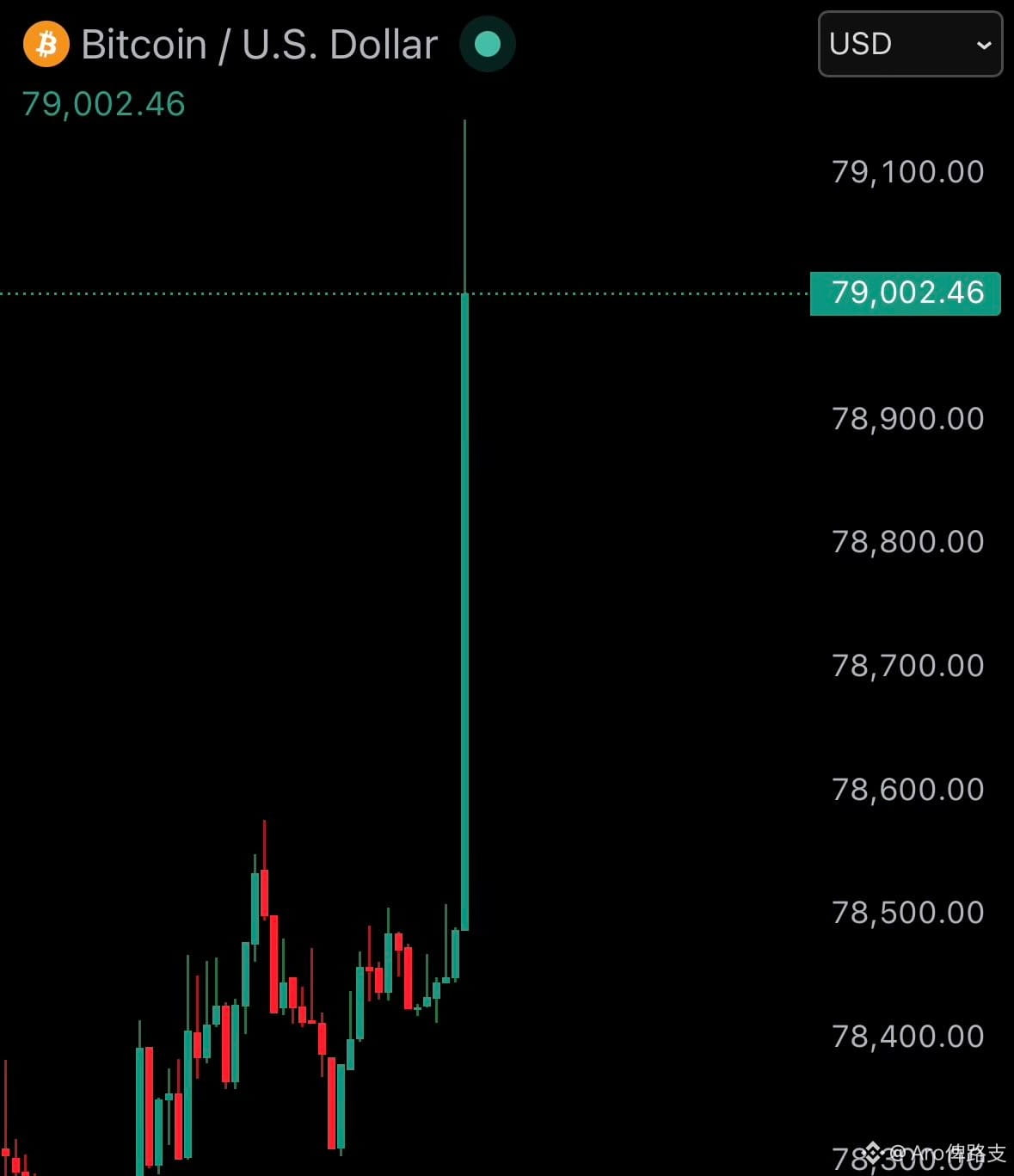
#signdigitalsovereigninfra $SIGN Real economic growth in the Middle East needs verifiable agreements, trusted credentials, and scalable digital infrastructure. @SignOfficial is positioning $SIGN at the center of that future. #SignDigitalSovereignInfra $BTC BitcoinHits$75K
ICPUSDT
Opening Long
Unrealized PNL
+0.72USDT
Mid Night
Mid Night
JEENNA
·
--
Midnight Network trying to solve one problem crypto never fully fixed privacy without breaking trust
If you’ve been around crypto long enough, you’ve probably noticed the same trade-off everywhere: either everything is transparent and visible, or everything is hidden and unusable for real-world systems. Midnight Network is built right in the middle of that gap, and with the latest updates, it’s starting to move from theory into something much more real.

The biggest shift right now is timing. Midnight is heading toward its mainnet launch in late March 2026, which is the point where it stops being just a token and becomes an actual working network. That matters more than anything else because until a network is live, everything is still just design.

Alongside that, the $NIGHT token is already live and actively trading across major exchanges, bringing liquidity and attention early. But what stands out is that the token isn’t just there for speculation—it plays a specific role inside the system.

Midnight uses a different model than most chains. Instead of using the main token directly for transactions, it separates things into two layers:

$NIGHT → the main asset (value + governance)

DUST → the actual resource used to run transactions privately

Holding NIGHT generates DUST, and that DUST is what powers private smart contracts. This design is subtle but important. It creates a system where capital and usage are separated, which can make the network more stable and predictable over time.

Now, the real core of Midnight is its technology.

It’s built around zero-knowledge proofs, but not in the usual “hide everything” way. The idea here is what they call selective disclosure—you can prove something is true without revealing all the underlying data.

So instead of:
“everything is public”
or
“everything is private”
You get:
“only what needs to be visible is visible”
That’s a big deal if you think about real-world use. Businesses, institutions, even governments can’t operate on fully public systems—but they also can’t operate on completely opaque ones. Midnight is trying to make both sides work together.

The roadmap shows this clearly. After the mainnet (Kūkolu phase), the next steps include:
Decentralizing validators through staking (mid-2026)
Launching a DUST marketplace for resource usage
Expanding cross-chain interoperability later in 2026
At the same time, partnerships and infrastructure support are starting to form around the network, including mentions of Google Cloud and other ecosystem participants helping support the rollout.

That signals something important: this isn’t being built only for crypto-native users—it’s being positioned for broader adoption.

But here’s the honest part.
Right now, Midnight still sits in that transition phase where market attention is ahead of real usage. The token has seen strong activity, listings, and volatility, but that’s normal for something pre-mainnet.

The real test hasn’t happened yet.
It happens after launch.
When developers actually deploy apps
When users interact with those apps
When DUST starts getting consumed at scale
That’s when the system either proves itself—or doesn’t.

From my perspective, Midnight is one of the more serious attempts at solving a problem that actually matters. Privacy isn’t just a feature anymore, it’s a requirement if blockchain wants to move beyond speculation into real-world systems.

What I like is the approach:
Not just privacy → but usable privacy
Not just tech → but developer accessibility (TypeScript-based tools)
Not just token → but economic design behind usage

But I also think expectations need to stay grounded.
Building a privacy network that works at scale, stays compliant, and attracts real applications is extremely hard. Most projects don’t fail because the idea is wrong—they fail because execution never catches up.

So the way I see Midnight is simple:
Right now, it’s a strong design with real momentum.
In a few months, it either becomes infrastructure—or just another narrative.
And that difference will come down to one thing:
Does anyone actually use it once it’s live?
$NIGHT #night @MidnightNetwork
·
--
Bullish
$BTC $BNB $ETH I’m more interested in infrastructure than hype, which is why @FabricFND caught my eye. Fabric is trying to build the coordination layer for robot labor, while $ROBO powers utility and governance across that system. That is at least a serious narrative. #ROBO
ICPUSDT
Opening Long
Unrealized PNL
+0.72USDT
The Real Vision Behind @FabricFND and $ROBOThe idea behind @FabricFND is more serious than the usual AI token noise. Fabric is focused on building an open system where robots and autonomous agents can operate with identity, payments, coordination, and governance instead of relying only on closed corporate platforms. That matters because the next stage of AI is not just software chatbots. It is machines participating in the real economy. In that kind of system, incentives and accountability matter just as much as intelligence. That is where $ROBO stands out to me. It is not being presented as a random meme asset, but as a core utility and governance layer for participation across the Fabric ecosystem. If the robot economy becomes real, then the infrastructure behind coordination and settlement becomes valuable too. That is why @FabricFND and $ROBO deserve serious attention from anyone watching the overlap of crypto, robotics, and AI. #ROBO $BTC #KATBinancePre-TGE

The Real Vision Behind @FabricFND and $ROBO

The idea behind @FabricFND is more serious than the usual AI token noise. Fabric is focused on building an open system where robots and autonomous agents can operate with identity, payments, coordination, and governance instead of relying only on closed corporate platforms. That matters because the next stage of AI is not just software chatbots. It is machines participating in the real economy. In that kind of system, incentives and accountability matter just as much as intelligence. That is where $ROBO stands out to me. It is not being presented as a random meme asset, but as a core utility and governance layer for participation across the Fabric ecosystem. If the robot economy becomes real, then the infrastructure behind coordination and settlement becomes valuable too. That is why @FabricFND and $ROBO deserve serious attention from anyone watching the overlap of crypto, robotics, and AI. #ROBO $BTC #KATBinancePre-TGE
#robo $ROBO @FabricFND is pushing a clear idea: robots should be able to verify identity, receive payments, and operate through open infrastructure instead of closed systems. If that model works, $ROBO becomes a serious utility layer for the robot economy. #ROBO
·
--
Bearish
#night $NIGHT What stands out about @MidnightNetwork is the balance: privacy where it matters, transparency where it counts. With ZK smart contracts and selective disclosure, the network is aiming at real-world utility, not empty hype. $NIGHT is one to track. #night$BTC #BTCReclaims70k
ICPUSDT
Opening Long
Unrealized PNL
+0.72USDT
RONO
RONO
Fukashi 深志
·
--
Building the World’s Robotic Nervous System Why I’m Watching the Fabric Protocol
I’ve spent way too much time lately thinking about why our transition into a robotic world feels so clunky and, frankly, a bit unsettling. We see these incredible videos of robots doing backflips or dancing, but then you look at the actual industry and it’s a total mess of proprietary code and secret silos. Every company is building their own walled garden, which is why the Fabric Protocol caught my attention. It’s not just another software layer or a fancy new sensor; it’s an attempt to build a literal foundation for how these machines actually live and work alongside us without it becoming a complete disaster.
The thing that really gets me is how the Fabric Foundation is handling this as a non-profit. I’ve seen so many projects get swallowed by venture capital or turned into a subscription service the second they get popular. By keeping this as a global open network, they are basically saying that the brain of general-purpose robotics shouldn't be owned by a single corporation. I like that. It feels more like the early days of the internet, where the goal was to build a protocol everyone could use, rather than a product everyone had to buy. It’s about building a collaborative evolution where the machines don't just learn in a vacuum but contribute to a shared understanding of how to move and interact safely.
When people talk about verifiable computing in this context, I think their eyes usually glaze over, but it’s actually the most practical part of the whole thing. Think about it this way: if a robot is operating in a hospital or a crowded warehouse, you can't just hope it’s following its programming. You need a way to prove that the computation happening inside its head is exactly what it’s supposed to be. Fabric uses a public ledger to coordinate this, which sounds a bit tech-heavy, but it basically means there’s a permanent, unchangeable record of what the machine is doing and why. It’s like having a flight recorder that’s constantly broadcasting to a secure network, making sure the agent is sticking to the rules.
I'm particularly interested in this idea of agent-native infrastructure. Most robots today are treated like glorified toasters where you give them a command and they execute a script. But Fabric treats them as agents. That’s a subtle but massive shift. An agent has an identity, it has a history on the ledger, and it has a set of governed behaviors that can evolve. It means the robot isn't just a piece of hardware; it’s a participant in a network. This modular approach allows for different people to build different parts of the system. One group might focus on the physical movement, another on the ethical constraints, and another on the specific task logic, and they all snap together through the protocol.
Of course, this isn't going to be easy, and I think we have to be realistic about the friction here. Getting a public ledger to handle the massive amounts of data a robot generates in real-time is a huge hurdle. I’ve seen plenty of decentralized projects struggle with latency, and in robotics, a half-second delay is the difference between a successful task and a broken machine. Fabric is trying to coordinate data, computation, and regulation all at once, which is an incredibly tall order. They’re betting that a modular infrastructure can offload the heavy lifting while the ledger keeps everything honest. It’s a gamble, but honestly, what’s the alternative? Do we just let a few massive tech giants decide how every robot on earth behaves?
There’s also the human element, which I think is where Fabric really finds its purpose. We talk a lot about human-machine collaboration, but that requires a level of trust that just doesn't exist right now. If I’m working next to a machine that weighs more than I do and has the power to move heavy steel, I want to know that its safety protocols are transparent and verified by a third party, not just buried in some company's private server. The public ledger aspect of the protocol provides that transparency. It allows for a kind of global regulation that isn't just a set of dusty laws, but active, digital guardrails that the robots literally cannot bypass.
I keep coming back to the idea of this being a global open network. It’s a bit of a dream, isn't it? The idea that a developer in a small lab somewhere can contribute a piece of code that makes a robot halfway across the world more efficient or safer. That’s the collaborative evolution part they keep mentioning. It breaks down the barriers to entry. You don't need a billion-dollar budget to participate in the robotics revolution if the underlying infrastructure is already there for you to build on. It’s about democratizing the brains of these machines so we don't end up with a monopoly on automation.
It’s definitely a work in progress, and I’m sure there will be plenty of bugs and governance disputes along the way. That’s just the nature of building something this big and this open. But as we start to see more general-purpose robots leaving the labs and entering our world, having a protocol like this feels less like an option and more like a necessity. I’d much rather live in a world where the machines are governed by a transparent, verifiable network than one where we’re all just guessing what’s going on inside their heads. It’s a messy, ambitious, and probably frustrating journey, but I think it’s the right way to go about it.
Would you like me to look into how specific hardware companies are actually starting to integrate with this protocol

#ROBO @Fabric Foundation $ROBO
{spot}(ROBOUSDT)
🎙️ 🚨 This Will Be Deleted in 10 Minutes
background
avatar
End
05 h 59 m 59 s
40.3k
133
35
·
--
Bullish
Clean and engaging Crypto doesn’t reward noise. It rewards patience, discipline, and risk management. Most people lose because they chase pumps, buy based on hype, and panic on red candles. Smart traders do the opposite: They wait for confirmation They manage risk They protect capital They think long term In this market, survival is a strategy. The goal is not to win every trade. The goal is to stay in the game long enough to catch the real opportunities. What matters more right now: hype or discipline? #Crypto #Bitcoin #Trading #BinanceSquare #Investing $BTC $ETH $BNB #BitcoinHits$75K#KATBinancePre-TGE
Clean and engaging Crypto doesn’t reward noise. It rewards patience, discipline, and risk management.
Most people lose because they chase pumps, buy based on hype, and panic on red candles.
Smart traders do the opposite:
They wait for confirmation
They manage risk
They protect capital
They think long term
In this market, survival is a strategy.
The goal is not to win every trade. The goal is to stay in the game long enough to catch the real opportunities.
What matters more right now: hype or discipline?
#Crypto #Bitcoin #Trading #BinanceSquare #Investing $BTC $ETH $BNB #BitcoinHits$75K#KATBinancePre-TGE
B
ROBOUSDT
Closed
PNL
-11.82USDT
it is a very usefull article
Binance Academy
·
--
How to Use AI for Crypto Trading
Key Takeaways

Unlike static algorithms that follow fixed rules, AI trading systems use machine learning to identify patterns and adapt to changing market conditions.

Using AI for crypto trading helps remove emotional bias, while allowing users to monitor markets 24/7 and execute trades with speed.

Traders can choose between subscription-based bot services or building custom tools, using AI to assist with research, coding, and strategy testing.

While powerful, AI trading comes with risks. Watch out for technical failures, security vulnerabilities, and "black box" scams.

Introduction

AI for crypto trading involves using computer programs to analyze market data, predict price movements, and execute trades with minimal human intervention. This article explores the fundamentals of AI in crypto trading, how it differs from standard automation, and the benefits and risks associated with these tools.

AI vs. Traditional Algorithmic Trading

People often mix up "algorithmic trading" and "AI Trading," but they are not the same thing.

Traditional algorithms are static, i.e., they follow a fixed list of instructions written by a human. For example: "If Bitcoin goes under $50,000, buy 0.10 BTC." The bot does exactly what it is told. It cannot “change its mind” or learn new tricks.

In contrast, systems that use AI and machine learning are dynamic. They are able to look at data to find patterns by themselves. Instead of following one rule, an AI model can look at history, volume, and news to come up with a potential price target. It can also learn from its past wins and losses to adapt and improve.

Common Applications of AI in Crypto

Below are some examples of common applications of AI in crypto trading. While some traders prefer to focus on a single application, others use a combination of methods to create more elaborate AI trading systems.

1. AI trading bots

These are like the traditional automated trading bots, but with AI enhancement. They can connect to your crypto exchange to buy and sell on your behalf. Some of the common strategies used by these bots are:

Arbitrage: Buying a coin on Exchange A and selling it on Exchange B to profit from the price differences.

Grid trading: Setting up automatic buy and sell orders at specific price levels.

Grid trading example.

Trend following: Checking if the market is going up or down consistently and trading in that same direction.

2. Sentiment analysis

Crypto market sentiment and prices sometimes change based on news and public opinion. Natural Language Processing (NLP) is a type of AI that can read human language. It can scan all sorts of websites, including news pages, X (formerly Twitter), and Reddit. These AI bots can check how people feel about the market and create or adapt trading strategies based on that information.

3. Predictive analytics

This basically means using past data to guess future prices. No computer can predict the future perfectly, but AI can calculate probabilities. For instance, it can be used to analyze what happened in the past to help traders develop better entry and exit strategies in the future.

4. High-frequency trading (HFT)

HFT is mostly used by big companies. It uses super-fast computers to make many trades in a fraction of a second. AI can be useful here because it can react to tiny price changes faster than any human can.

How to Use AI in Crypto

You don't need to be a coder to use AI. Here are some simple ways to get started:

AI for research: You can use tools like ChatGPT, Gemini, or Claude to summarize long crypto whitepapers or explain how a new token works.

Help with coding: If you use charting platforms like TradingView, you can ask Generative AI to write "Pine Script" code for you. For example, you can ask an AI to "Write a script that draws a line whenever the RSI goes above 70," and then copy-paste that code into your chart.

No-code platforms: Many websites let you build a bot by dragging and dropping options, so you don't need to write any code yourself. AI can also help you understand the options and find the most suitable for your trading style and strategy.

Backtesting: You can use AI to backtest strategies based on historical data to check how viable they are before taking risks.

Examples of trading bot platforms

Binance offers various automated strategies on the [Trading Bots] section, including Spot Grid, Spot DCA, Arbitrage, Rebalancing, and more. You can access these from the [Trade] menu.

Pionex, 3Commas, and Cryptohopper are other examples of crypto trading bot platforms. These services allow you to automate trading via machine learning and many support connections to your Binance account using API keys.

Build vs. Buy: Choosing Your Approach

When you want to use AI, you usually have two choices:

1. Subscription (Buy)

These are websites where you pay a monthly fee to use a bot that is already built.

Pros: Easy to use, quick to set up, and usually has a support team to help you.

Cons: You have to pay for a subscription, and often have to trust a strategy created by someone else.

2. Custom (Build)

This means writing the software yourself (usually in Python) or hiring a coder to do it.

Pros: You have total control, no monthly fees, and you know exactly how the bot works.

Cons: You need technical skills. If the code breaks or stops working, you have to fix it yourself.

Benefits of Using AI in Crypto Trading

No emotions: Fear and greed cause traders to lose money. AI only cares about data and logic. It doesn't panic when prices drop or get too excited when prices rise.

Works 24/7: Crypto markets act all day and night. AI can watch the charts while you sleep, so you don't miss an opportunity.

Speed: AI can spot a crash or a pump and react in milliseconds.

Testing: AI lets you replay your strategy on past data. For example, you could backtest a strategy to find how it would have performed last year before you risk real money today.

Risks and Limitations

Scams and "Black Box" models: Be very careful of people selling bots that promise "guaranteed income." Many of these are "Black Box" systems, which means you can't see why the bot is making trades. Some are actually scams or Ponzi schemes.

Overfitting: Sometimes, an AI studies the past too much. It might learn a pattern that only happened once in history. When the market changes, the AI might fail because it is expecting the past to repeat exactly.

Technical issues: Bugs, internet problems, or the exchange going offline can break your bot. This could make you lose money or miss a trade.

Security risks: To use a third-party bot, you have to give it access to your exchange account (using API keys). If the bot company gets hacked, your funds could be stolen. Always protect your API keys and disable the "withdrawal" permission so the bot cannot take money out of your account.

Closing Thoughts

AI is a great tool that gives regular people access to powerful trading methods. From automated bots to reading news sentiment, it offers speed and efficiency that humans can't match. However, it is not a magic button for free money.

To succeed with AI, you need balance. Think of AI as an assistant, not a replacement for your own brain. Combine these tools with your own research, good risk management, and a healthy suspicion of any system that promises impossible returns.

Further Reading

What Is Algo Trading and How Does It Work?

Binance Algo Trading: Case Studies  

Top 6 Artificial Intelligence (AI) Cryptocurrencies 

Disclaimer: This content is presented to you on an “as is” basis for general information and or educational purposes only, without representation or warranty of any kind. It should not be construed as financial, legal or other professional advice, nor is it intended to recommend the purchase of any specific product or service. You should seek your own advice from appropriate professional advisors. Where the content is contributed by a third party contributor, please note that those views expressed belong to the third party contributor, and do not necessarily reflect those of Binance Academy. Digital asset prices can be volatile. The value of your investment may go down or up and you may not get back the amount invested. You are solely responsible for your investment decisions and Binance Academy is not liable for any losses you may incur. For more information, see our Terms of Use, Risk Warning and Binance Academy Terms.

Binance can not and does not advise on your use of AI as this is solely at your own discretion and at your own risk. We encourage you to DYOR, and remind you to adhere to all applicable terms including our AI Policy.
FABRIC FOUNDATIONThe crypto space is crowded with projects that want attention but fail to build anything people remember. That is why I think @FabricFND has an opportunity if it keeps developing a clear and consistent ecosystem narrative around $ROBO. A token becomes more meaningful when it is part of something bigger than price speculation. For me, $ROBO is interesting because it sits inside the wider conversation around Fabric Foundation, community visibility, and long-term ecosystem growth. I do not judge projects only by short-term noise. I look at whether the project account is building recognition, whether the community keeps engaging, and whether the token has a clear place in the identity of the project. @FabricFND has the chance to turn $ROBO into more than just another ticker. If execution stays consistent, then #ROBO could keep gaining attention from users who care about vision as much as market action. #ROBO

FABRIC FOUNDATION

The crypto space is crowded with projects that want attention but fail to build anything people remember. That is why I think @FabricFND has an opportunity if it keeps developing a clear and consistent ecosystem narrative around $ROBO. A token becomes more meaningful when it is part of something bigger than price speculation. For me, $ROBO is interesting because it sits inside the wider conversation around Fabric Foundation, community visibility, and long-term ecosystem growth. I do not judge projects only by short-term noise. I look at whether the project account is building recognition, whether the community keeps engaging, and whether the token has a clear place in the identity of the project. @FabricFND has the chance to turn $ROBO into more than just another ticker. If execution stays consistent, then #ROBO could keep gaining attention from users who care about vision as much as market action. #ROBO
Login to explore more contents
Explore the latest crypto news
⚡️ Be a part of the latests discussions in crypto
💬 Interact with your favorite creators
👍 Enjoy content that interests you
Email / Phone number
Sitemap
Cookie Preferences
Platform T&Cs