
A NetWork 1 Deltix Network
5 Posts
A NetWork 1 Deltix Network
Report
Block User
A-Network & Deltix Network | Mobile Blockchain & Decentralized Mining
15 Following
23 Followers
5 Liked
Posts
All
Quotes
A Network ۔
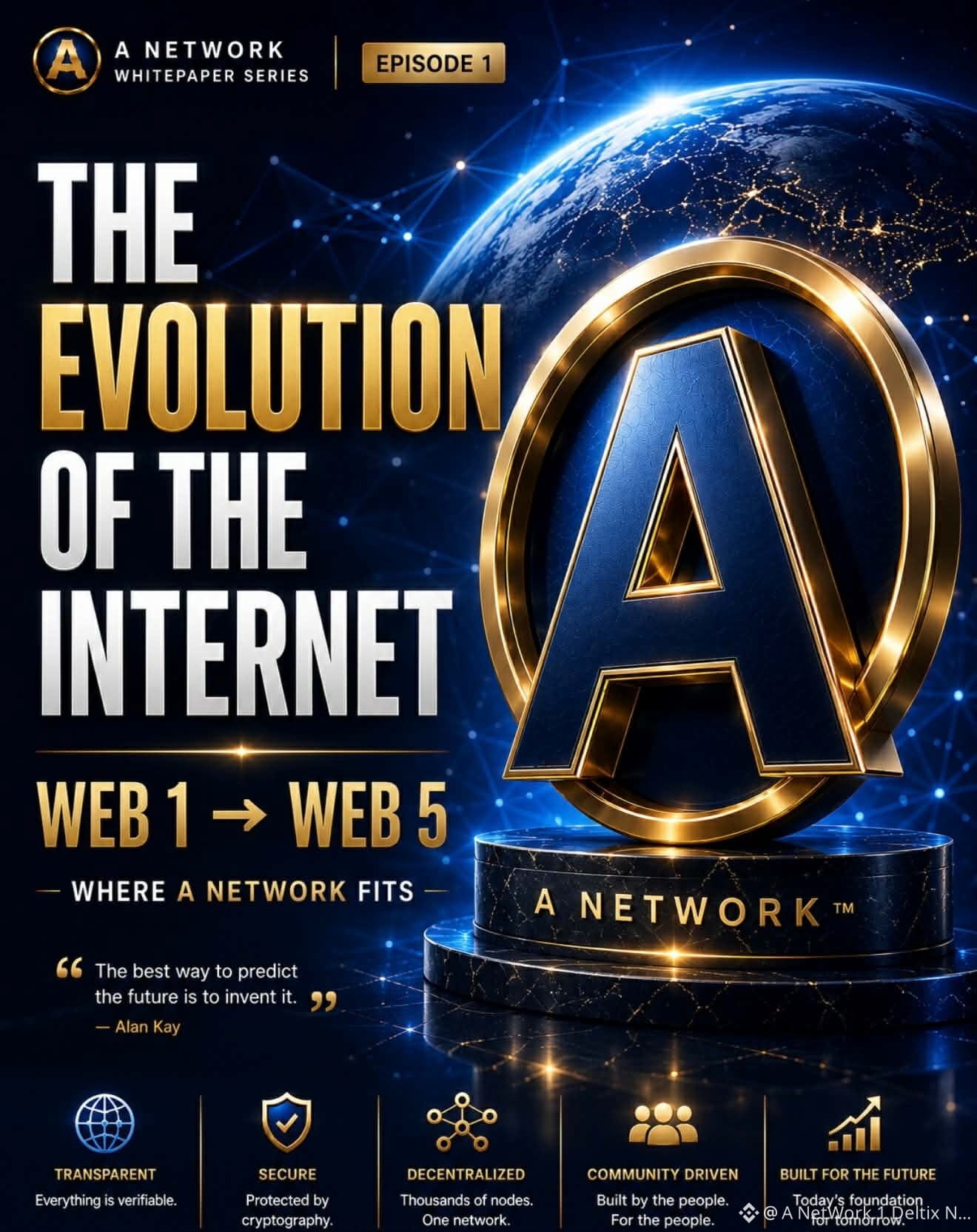
**A Network Whitepaper Series — Episode 1**
**Understanding Web 1, 2, 3, 4 & 5**
The internet has evolved through different generations:
🌍 **Web 1 — Read:** Information and websites.
📱 **Web 2 — Interact:** Social media and user-generated content.
⛓️ **Web 3 — Own:** Blockchain, digital assets and decentralization.
🤖 **Web 4 — Intelligence:** AI, automation and connected devices.
🧠 **Web 5 — Human-Centered:** Greater control over digital identity and personal data.
🐜 **Where Does A Network Fit?**
A Network is building native Layer-1 blockchain infrastructure for the next generation of the web.
Its focus includes:
✅ Decentralization
✅ Transparency
✅ Verification
✅ Digital Trust
Every participant strengthens decentralization.
Every verified transaction strengthens trust.
Every block strengthens history.
**Stronger blockchain infrastructure for the future of the internet. 🐜**
79
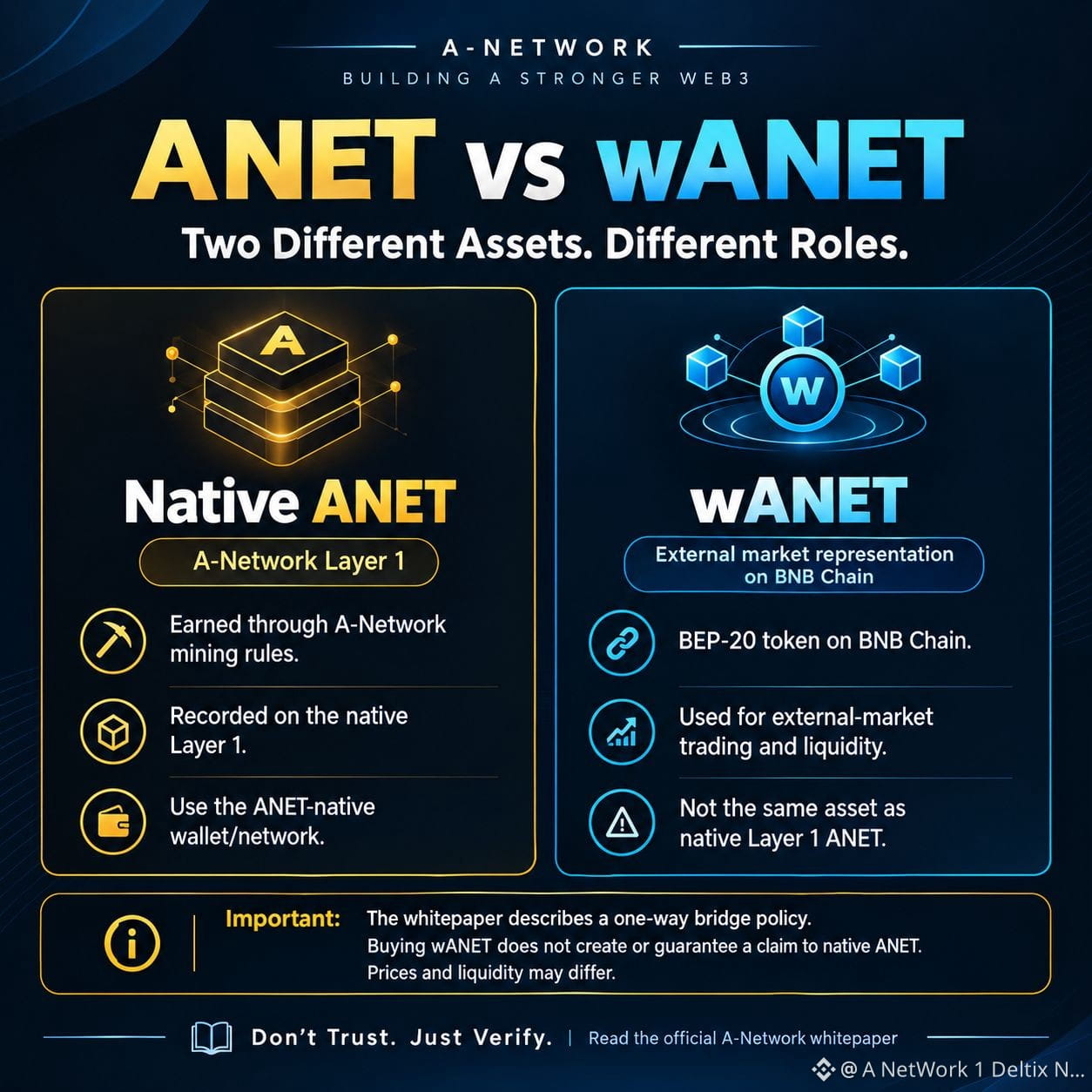
🔍 ANET vs wANET: What’s the REAL Difference?
Many people see the names ANET and wANET and assume they are exactly the same asset. But understanding the difference is essential when exploring the A-Network ecosystem.
Let’s break it down. 👇
🟡 1. Native ANET — The Layer 1 Asset
• Belongs to the native A-Network blockchain. • Earned through the network’s mining rules. • Recorded and used within its native Layer 1 system. • Requires the appropriate native wallet and network.
🔵 2. wANET — The External Market Representation
• Exists as a BEP-20 token on BNB Chain. • Supports external-market trading and liquidity. • Operates separately from native Layer 1 balances. • Can be held and traded using compatible BNB Chain wallets and platforms.
⚠️ 3. Why Does This Difference Matter?
According to the A-Network whitepaper, the bridge follows a one-way policy.
This means buying wANET on the open market does not automatically give you native ANET or a guaranteed right to redeem wANET for native ANET.
Their market prices and liquidity may also differ.
✅ 4. What Should You Verify?
Before interacting with either asset:
✔️ Confirm the correct network and token contract. ✔️ Read the official whitepaper and bridge rules. ✔️ Check on-chain records and available liquidity. ✔️ Never assume two similarly named assets are interchangeable.
📄 Official Whitepaper:
https://a-network.net/whitepaper.html
Don’t Trust. Just Verify. 🐜
💬 Community Question: Did you understand the difference between Native ANET and wANET before reading this post?
Share your thoughts below!
#ANetwork #ANET #wANET #Blockchain #Web3 #CryptoEducation
ANETUS-0.23%
1
93
A-Network: More Than Just Mobile Mining? Let's Look Beyond the App. 🐜
When people hear about mobile mining, the first question should be simple:
What is actually happening behind the app?
That’s where I believe A-Network deserves a closer look.
Inspired by Bitcoin’s principles, A-Network describes a participation-based mining model built around time rather than expensive mining hardware. Its whitepaper outlines a broader vision involving a native Layer 1, digital assets, and a growing ecosystem.
But I don't want anyone to believe something just
because I say it.
I believe in one principle:
Don't Trust. Just Verify.
So instead of relying only on posts and announcements, let's explore the project ourselves.
📄 Read the official whitepaper:
https://a-network.net/whitepaper.html
Read the documentation. Look at the records. Understand what is live today and what is still being developed.
And remember, the native Layer 1 ANET and the BNB Chain BEP-20 token are separate assets, so understanding that difference matters.
I'm starting this series to learn, share verifiable information, and have meaningful discussions with the community — not to make promises about price or returns.
Now, one question for the community:
When you explore a blockchain project,$
what do you check first — its technology, its on-chain activity, or its long-term vision?#
Let's discuss. 👇
#AnetWork #ANET #Blockchain #mobilemining #Web3
71
#FedHODL
#FedHODL


Binance Square Official
·
--
The Federal Reserve has kept interest rates steady at 4.25%-4.50%, matching market expectations in its first policy announcement of the year. Meanwhile, Bitcoin (BTC) has surged past $103K! How do you think the Fed's decision will impact the crypto market? Share your insights and predictions with the community!
Create a post with #FedHODL or the $BTC cashtag and check-in to earn Binance points.
(Press the “+” on the homepage and click on Task Center)
Activity period: 2025-01-30 08:00 (UTC) to 2025-01-31 08:00 (UTC)
Remember points rewards are first come first serve so be sure to claim your points daily!
Create a post with #FedHODL or the $BTC cashtag and check-in to earn Binance points.
(Press the “+” on the homepage and click on Task Center)
Activity period: 2025-01-30 08:00 (UTC) to 2025-01-31 08:00 (UTC)
Remember points rewards are first come first serve so be sure to claim your points daily!
146
Log in to explore more content
Join global crypto users on Binance Square
⚡️ Get latest and useful information about crypto.
💬 Trusted by the world’s largest crypto exchange.
👍 Discover real insights from verified creators.
Email / Phone number
Trending Topics
NvidiaInvestigatesAfterHuang’sAffairApology
176,304 views
1,614 Discussing
Nvidia Board Opens Probe Into Whether Huang Was Target of Foreign Intelligence Effort
Binance News
·19 Likes
·54.2k views
BitcoinFiveWeeklyLosses
203,722 views
2,070 Discussing
AIChipSlumpNasdaq
108,502 views
1,284 Discussing