
Alpha哥AI投资日记
193 Posts

Alpha哥AI投资日记
Report
Block User
2025投资收益率打败99%币安用户
High-Frequency Trader
9.1 Years
16 Following
75 Followers
59 Liked
1 Badges
Posts
All
Quotes
·
--
For stablecoins, the distribution channels are extremely important. For example, with USDC, the main partner channels are Coinbase, but Coinbase is somewhat limited to the United States.
Now that we’ve reached cooperation with international partners and Binance, I think this is a huge positive development.
In pre-market trading, I did a bit of $CRCL https://twitter.com/btcdayu/status/2102357805315523030
For stablecoins, the distribution channels are extremely important. For example, with USDC, the main partner channels are Coinbase, but Coinbase is somewhat limited to the United States.
Now that we’ve reached cooperation with international partners and Binance, I think this is a huge positive development.
In pre-market trading, I did a bit of $CRCL https://twitter.com/btcdayu/status/2102357805315523030
Now that we’ve reached cooperation with international partners and Binance, I think this is a huge positive development.
In pre-market trading, I did a bit of $CRCL https://twitter.com/btcdayu/status/2102357805315523030
223
·
--
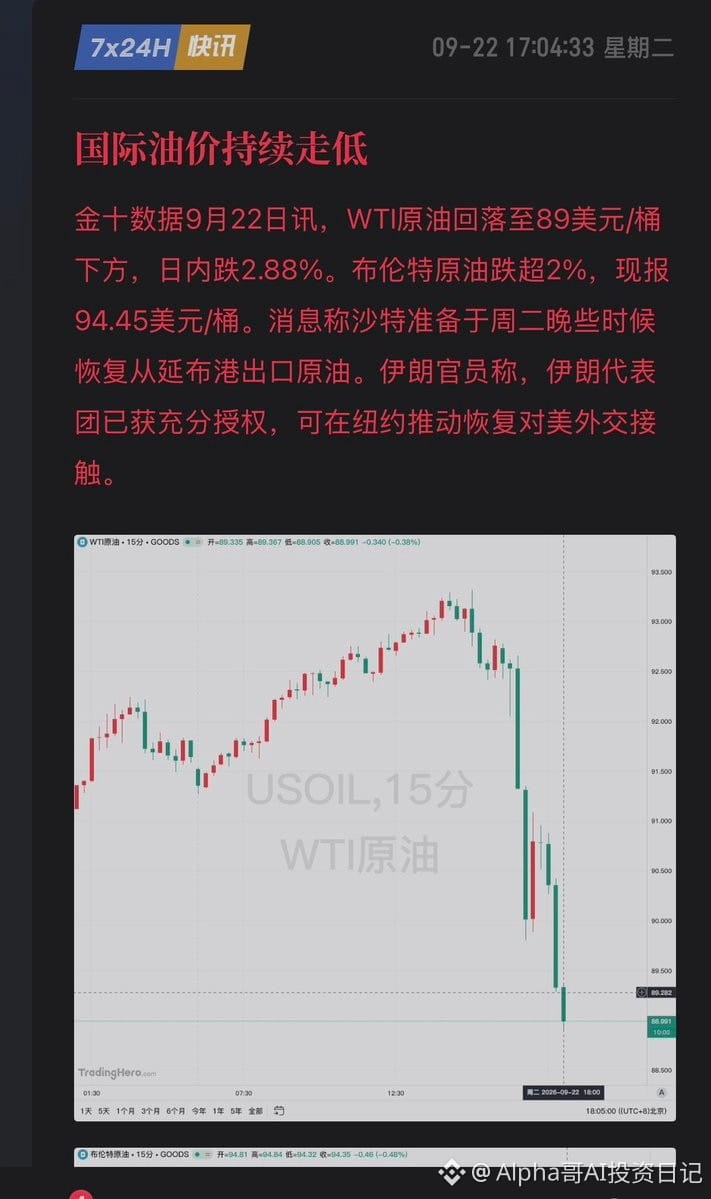
😎😎😎🫡 https://twitter.com/alphaguytrading/status/2102046322643886212
😎😎😎🫡 https://twitter.com/alphaguytrading/status/2102046322643886212
209
·
--
$META Yesterday a big bullish candle. The logic behind it is:
Xiao Zha became American Zhang Yiming from American Li Yanhong.
In the past, the market has essentially been pricing Zuckerberg as the “American Li Yanhong”: the ads business is indeed awesome, and the cash flow is fine. But each year he pours so much money into AI, builds a bunch of models, yet on the product side he hasn’t come up with anything truly eye-catching. So giving you a PE of over twenty times also seems reasonable. The core business cash flow is still pretty solid, and for now AI is treated as a cost center.
But after MUSE came out, things changed. If it ultimately turns out that Xiao Zha isn’t American Li Yanhong, but American Zhang Yiming—then not only would he keep spending money on models, he could also truly operationalize tens of billions of users, the product, distribution, and commercialization. In that case, even a PE of 24 might still be pricing Meta according to the old script.
American Li Yanhong—24x is about right.
American Zhang Yiming—24x is too cheap 😂
Went in hard yesterday $META
$META Yesterday a big bullish candle. The logic behind it is:
Xiao Zha became American Zhang Yiming from American Li Yanhong.
In the past, the market has essentially been pricing Zuckerberg as the “American Li Yanhong”: the ads business is indeed awesome, and the cash flow is fine. But each year he pours so much money into AI, builds a bunch of models, yet on the product side he hasn’t come up with anything truly eye-catching. So giving you a PE of over twenty times also seems reasonable. The core business cash flow is still pretty solid, and for now AI is treated as a cost center.
But after MUSE came out, things changed. If it ultimately turns out that Xiao Zha isn’t American Li Yanhong, but American Zhang Yiming—then not only would he keep spending money on models, he could also truly operationalize tens of billions of users, the product, distribution, and commercialization. In that case, even a PE of 24 might still be pricing Meta according to the old script.
American Li Yanhong—24x is about right.
American Zhang Yiming—24x is too cheap 😂
Went in hard yesterday $META
Xiao Zha became American Zhang Yiming from American Li Yanhong.
In the past, the market has essentially been pricing Zuckerberg as the “American Li Yanhong”: the ads business is indeed awesome, and the cash flow is fine. But each year he pours so much money into AI, builds a bunch of models, yet on the product side he hasn’t come up with anything truly eye-catching. So giving you a PE of over twenty times also seems reasonable. The core business cash flow is still pretty solid, and for now AI is treated as a cost center.
But after MUSE came out, things changed. If it ultimately turns out that Xiao Zha isn’t American Li Yanhong, but American Zhang Yiming—then not only would he keep spending money on models, he could also truly operationalize tens of billions of users, the product, distribution, and commercialization. In that case, even a PE of 24 might still be pricing Meta according to the old script.
American Li Yanhong—24x is about right.
American Zhang Yiming—24x is too cheap 😂
Went in hard yesterday $META

142
·
--
Now looking at MUSE—doesn't this just match the situation we were talking about earlier? Everyone is still comparing Anthropic’s ARR versus OpenAI’s, who’s growing faster, and whether revenue can hold up the valuation. Meanwhile, Meta has already started telling a new Agent story. It doesn’t even need to promise that ARR will surpass those two. Instead, by leveraging its advantages, it’s pitched a completely new AI narrative to the market—enough for the market to re-imagine things.
My understanding is that Muse could very well allow ordinary users to use its basic features for free in the long term. It will then make money later when you buy things, book hotels, and find services through it. Users may not necessarily need to pay dozens of dollars every month. Businesses can pay for the business it brings, and the platform may take a cut from transactions. In that case, the market won’t just be pricing how much the AI can sell in subscriptions—it’ll also be about how much consumption and how many services will go through Agents in the future.
That’s what we were saying earlier: changing the way the game is played can buy time for the whole industry. First, see how many people use it; then see whether everyone is willing to hand tasks over to it; and finally, see whether services and transactions can actually make money. This whole approach needs to be observed for half a year to a year. During that time, the model keeps improving, costs keep going down, and the narrative needs time to be disproven.
With such a huge industry ecosystem, they won’t just sit there and wait for it to collapse because the old revenue formula was questioned. Whether MUSE ultimately succeeds is another matter—once the new story is out, disproving it again takes time. The vested interests just change the playbook and keep the party going 😂
Anthropic’s IPO and the period right after it are very likely a peak moment of this party. As for what happens next, we’ll talk about that later.
Quote: https://x.com/i/web/status/2095916985800429803
Now looking at MUSE—doesn't this just match the situation we were talking about earlier? Everyone is still comparing Anthropic’s ARR versus OpenAI’s, who’s growing faster, and whether revenue can hold up the valuation. Meanwhile, Meta has already started telling a new Agent story. It doesn’t even need to promise that ARR will surpass those two. Instead, by leveraging its advantages, it’s pitched a completely new AI narrative to the market—enough for the market to re-imagine things.
My understanding is that Muse could very well allow ordinary users to use its basic features for free in the long term. It will then make money later when you buy things, book hotels, and find services through it. Users may not necessarily need to pay dozens of dollars every month. Businesses can pay for the business it brings, and the platform may take a cut from transactions. In that case, the market won’t just be pricing how much the AI can sell in subscriptions—it’ll also be about how much consumption and how many services will go through Agents in the future.
That’s what we were saying earlier: changing the way the game is played can buy time for the whole industry. First, see how many people use it; then see whether everyone is willing to hand tasks over to it; and finally, see whether services and transactions can actually make money. This whole approach needs to be observed for half a year to a year. During that time, the model keeps improving, costs keep going down, and the narrative needs time to be disproven.
With such a huge industry ecosystem, they won’t just sit there and wait for it to collapse because the old revenue formula was questioned. Whether MUSE ultimately succeeds is another matter—once the new story is out, disproving it again takes time. The vested interests just change the playbook and keep the party going 😂
Anthropic’s IPO and the period right after it are very likely a peak moment of this party. As for what happens next, we’ll talk about that later.
Quote: https://x.com/i/web/status/2095916985800429803
My understanding is that Muse could very well allow ordinary users to use its basic features for free in the long term. It will then make money later when you buy things, book hotels, and find services through it. Users may not necessarily need to pay dozens of dollars every month. Businesses can pay for the business it brings, and the platform may take a cut from transactions. In that case, the market won’t just be pricing how much the AI can sell in subscriptions—it’ll also be about how much consumption and how many services will go through Agents in the future.
That’s what we were saying earlier: changing the way the game is played can buy time for the whole industry. First, see how many people use it; then see whether everyone is willing to hand tasks over to it; and finally, see whether services and transactions can actually make money. This whole approach needs to be observed for half a year to a year. During that time, the model keeps improving, costs keep going down, and the narrative needs time to be disproven.
With such a huge industry ecosystem, they won’t just sit there and wait for it to collapse because the old revenue formula was questioned. Whether MUSE ultimately succeeds is another matter—once the new story is out, disproving it again takes time. The vested interests just change the playbook and keep the party going 😂
Anthropic’s IPO and the period right after it are very likely a peak moment of this party. As for what happens next, we’ll talk about that later.
Quote: https://x.com/i/web/status/2095916985800429803
1
35
·
--
Today, with not much news, oil prices fell, and $QQQ risk assets rallied broadly (risk on). Bitcoin:native is leading the charge.
I believe the market is right—most likely somebody knows something. The smart money moved first. Trump is very likely, ahead of the midterm election (late September or early October), under the mediation of the Eastern power, to collude with Iran. Iran is also keeping time, and at this moment reaching an agreement could likely earn a relatively good deal.
Quote: https://x.com/i/web/status/2101960072444407859
Today, with not much news, oil prices fell, and $QQQ risk assets rallied broadly (risk on). Bitcoin:native is leading the charge.
I believe the market is right—most likely somebody knows something. The smart money moved first. Trump is very likely, ahead of the midterm election (late September or early October), under the mediation of the Eastern power, to collude with Iran. Iran is also keeping time, and at this moment reaching an agreement could likely earn a relatively good deal.
Quote: https://x.com/i/web/status/2101960072444407859
I believe the market is right—most likely somebody knows something. The smart money moved first. Trump is very likely, ahead of the midterm election (late September or early October), under the mediation of the Eastern power, to collude with Iran. Iran is also keeping time, and at this moment reaching an agreement could likely earn a relatively good deal.
Quote: https://x.com/i/web/status/2101960072444407859
337
·
--
Look at Meta’s MUSE, then Tencent’s WorkBuddy—maybe a whole new round of Agent stock hype is about to begin. The market is still debating whether all the money spent on AI can actually be recouped, and now there’s something new to look forward to.
No matter whether it ultimately makes it out, refuting it takes time. Saying users are just trying it out and will be done with it in a few days; saying the costs are too high and the business model doesn’t hold—those could all be true, but we still need to wait for the product to run for a while and for data to come in before we can judge. In that process, the market can absolutely rise for a round first; it doesn’t wait until all questions have answers before it starts. Recently, expectations around macro headwinds being largely played out have already been coming through.
Add in the anticipated listing of Company A, and this round is definitely something to trade. Whether it can be fulfilled in the long term—let’s see as we go. From how the market looks right now, it’ll likely run a first leg to squeeze the shorts, and then we’ll talk further.
Enjoy the wine you have today 😅
Quote: https://x.com/i/web/status/2102044026249629900
Look at Meta’s MUSE, then Tencent’s WorkBuddy—maybe a whole new round of Agent stock hype is about to begin. The market is still debating whether all the money spent on AI can actually be recouped, and now there’s something new to look forward to.
No matter whether it ultimately makes it out, refuting it takes time. Saying users are just trying it out and will be done with it in a few days; saying the costs are too high and the business model doesn’t hold—those could all be true, but we still need to wait for the product to run for a while and for data to come in before we can judge. In that process, the market can absolutely rise for a round first; it doesn’t wait until all questions have answers before it starts. Recently, expectations around macro headwinds being largely played out have already been coming through.
Add in the anticipated listing of Company A, and this round is definitely something to trade. Whether it can be fulfilled in the long term—let’s see as we go. From how the market looks right now, it’ll likely run a first leg to squeeze the shorts, and then we’ll talk further.
Enjoy the wine you have today 😅
Quote: https://x.com/i/web/status/2102044026249629900
No matter whether it ultimately makes it out, refuting it takes time. Saying users are just trying it out and will be done with it in a few days; saying the costs are too high and the business model doesn’t hold—those could all be true, but we still need to wait for the product to run for a while and for data to come in before we can judge. In that process, the market can absolutely rise for a round first; it doesn’t wait until all questions have answers before it starts. Recently, expectations around macro headwinds being largely played out have already been coming through.
Add in the anticipated listing of Company A, and this round is definitely something to trade. Whether it can be fulfilled in the long term—let’s see as we go. From how the market looks right now, it’ll likely run a first leg to squeeze the shorts, and then we’ll talk further.
Enjoy the wine you have today 😅
Quote: https://x.com/i/web/status/2102044026249629900
120
·
--
bitcoin:native The main force needs to pull the market—best to do it now. If you drag it until the mid‑November election, it’ll be more troublesome.
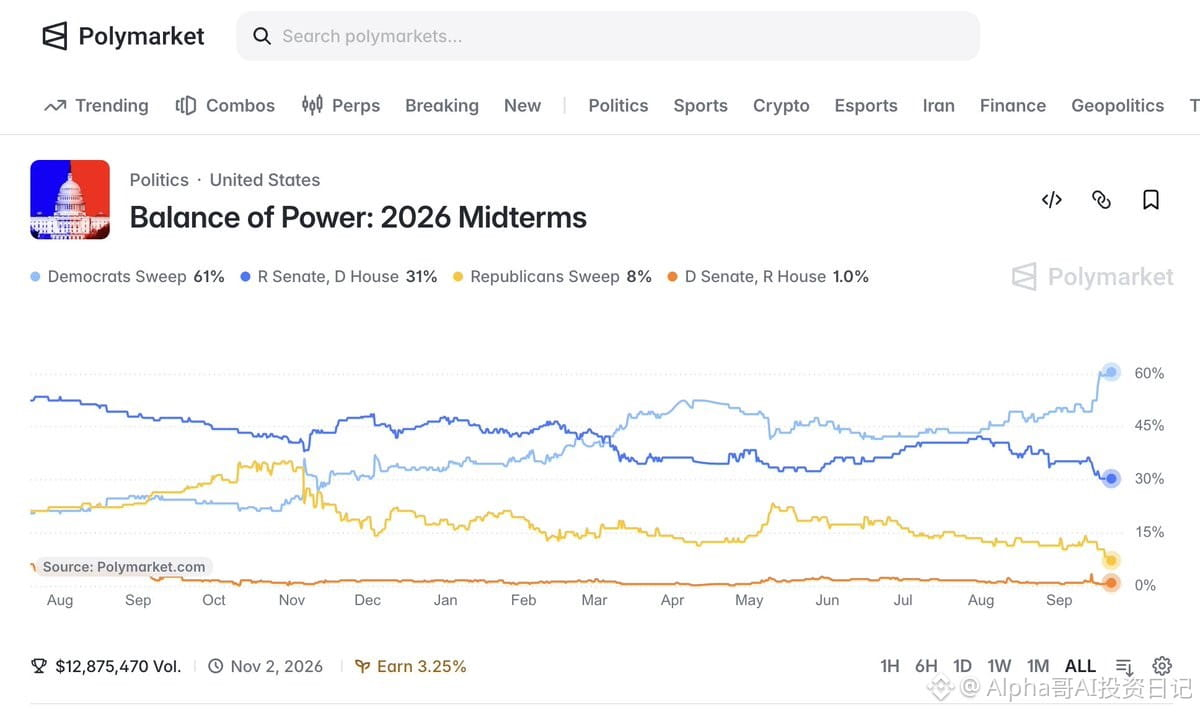
Polymarket already has the Democrats taking both chambers at 61%. The House is basically a foregone conclusion, and the Senate also really might be lost.
If it finally turns out the Democrats control both chambers, crypto will definitely be nowhere near as easy to pull up as it is now. Things like clarity are even harder to get; on top of that, later they’ll be doing little things every day involving Trump family crypto conflicts of interest—holding hearings, introducing bills—so every time the market has to shake. Even if you’re the main operator, it won’t be easy to pull.
From now until November 3—over a month—this is the best time to pull it. If you really want to make a big move, I would, too. I’m the operator, and I’d choose now.
Once the Democrats really take both chambers and you try to pump all the way up afterward, you’ll have people manufacturing bad news against you every day. It’s obviously not as comfortable as it is now.
bitcoin:native The main force needs to pull the market—best to do it now. If you drag it until the mid‑November election, it’ll be more troublesome.
Polymarket already has the Democrats taking both chambers at 61%. The House is basically a foregone conclusion, and the Senate also really might be lost.
If it finally turns out the Democrats control both chambers, crypto will definitely be nowhere near as easy to pull up as it is now. Things like clarity are even harder to get; on top of that, later they’ll be doing little things every day involving Trump family crypto conflicts of interest—holding hearings, introducing bills—so every time the market has to shake. Even if you’re the main operator, it won’t be easy to pull.
From now until November 3—over a month—this is the best time to pull it. If you really want to make a big move, I would, too. I’m the operator, and I’d choose now.
Once the Democrats really take both chambers and you try to pump all the way up afterward, you’ll have people manufacturing bad news against you every day. It’s obviously not as comfortable as it is now.
Polymarket already has the Democrats taking both chambers at 61%. The House is basically a foregone conclusion, and the Senate also really might be lost.
If it finally turns out the Democrats control both chambers, crypto will definitely be nowhere near as easy to pull up as it is now. Things like clarity are even harder to get; on top of that, later they’ll be doing little things every day involving Trump family crypto conflicts of interest—holding hearings, introducing bills—so every time the market has to shake. Even if you’re the main operator, it won’t be easy to pull.
From now until November 3—over a month—this is the best time to pull it. If you really want to make a big move, I would, too. I’m the operator, and I’d choose now.
Once the Democrats really take both chambers and you try to pump all the way up afterward, you’ll have people manufacturing bad news against you every day. It’s obviously not as comfortable as it is now.
1
996
·
--
This is interesting, oxen and horses break through the game https://twitter.com/macrotradecn/status/2101664353745580481
This is interesting, oxen and horses break through the game https://twitter.com/macrotradecn/status/2101664353745580481
91
·
--
Special interest groups are starting to change the rules of the game, creating new terminology: Supreme Intelligence https://twitter.com/TechFlowPost/status/2101597348912627870
Special interest groups are starting to change the rules of the game, creating new terminology: Supreme Intelligence https://twitter.com/TechFlowPost/status/2101597348912627870
130
·
--
I completely agree. If you look at casinos in different countries, you’ll see that in the world, only Las Vegas and Macau have truly massive gambling cities.
The Monte Carlo Casino in Monaco 🇲🇨 (Monte Carlo Casino) can’t even compare in size to a single satellite hall in Macau.
Europeans are better at enjoying life—when it comes to luxury goods and such, they do it quite well. Overall, the so-called animal spirits aren’t as strong as in China and the U.S. https://twitter.com/ivanalog_com/status/2101434511200272784
I completely agree. If you look at casinos in different countries, you’ll see that in the world, only Las Vegas and Macau have truly massive gambling cities.
The Monte Carlo Casino in Monaco 🇲🇨 (Monte Carlo Casino) can’t even compare in size to a single satellite hall in Macau.
Europeans are better at enjoying life—when it comes to luxury goods and such, they do it quite well. Overall, the so-called animal spirits aren’t as strong as in China and the U.S. https://twitter.com/ivanalog_com/status/2101434511200272784
The Monte Carlo Casino in Monaco 🇲🇨 (Monte Carlo Casino) can’t even compare in size to a single satellite hall in Macau.
Europeans are better at enjoying life—when it comes to luxury goods and such, they do it quite well. Overall, the so-called animal spirits aren’t as strong as in China and the U.S. https://twitter.com/ivanalog_com/status/2101434511200272784


3
3
20.8k
·
--
The Jev that recently went viral in the AI circle is kind of interesting. Jev basically doesn’t write anything; it only answers three types of questions: Choice (which one), Score (what score), and Noul (probability of yes/no).
Latency is about 70–500ms, input costs around $0.042 per million tokens, and output is free. The official account claims it’s 40–200x faster than generative LLMs and 40–400x cheaper.
You can think of it as an upgraded if/else for the AI world.
For example, if a user says:
“Yesterday I bought this thing, and now it doesn’t feel quite right. Can I return it?”
It’s hard for traditional code to make that call.
GPT can do it, but every time you have GPT-5.6 read it, think, and generate a sentence like:
“Classification: REFUND”
That’s a huge waste.
You don’t need it to write out a sentence at all—you only need it to return:
refund = 0.97
That’s exactly what Jev is built to do.
Another example is the Browser Use Demo:
Have Jev decide step by step directly from the webpage DOM which button to click next and what to input, only calling a traditional LLM when it truly needs to generate text.
For a Google Flights search from Zurich to London, it took only about 7.1 seconds total, costing $0.0039.
For 1,700 emails simultaneously to classify type, set priority, determine spam probability, and decide whether a reply is needed, the total cost was about 18 cents.
In the future, an agent will very likely become:
Jev → Jev → GPT → Jev → tool execution
Instead of:
GPT → GPT → GPT → GPT
The Jev that recently went viral in the AI circle is kind of interesting. Jev basically doesn’t write anything; it only answers three types of questions: Choice (which one), Score (what score), and Noul (probability of yes/no).
Latency is about 70–500ms, input costs around $0.042 per million tokens, and output is free. The official account claims it’s 40–200x faster than generative LLMs and 40–400x cheaper.
You can think of it as an upgraded if/else for the AI world.
For example, if a user says:
“Yesterday I bought this thing, and now it doesn’t feel quite right. Can I return it?”
It’s hard for traditional code to make that call.
GPT can do it, but every time you have GPT-5.6 read it, think, and generate a sentence like:
“Classification: REFUND”
That’s a huge waste.
You don’t need it to write out a sentence at all—you only need it to return:
refund = 0.97
That’s exactly what Jev is built to do.
Another example is the Browser Use Demo:
Have Jev decide step by step directly from the webpage DOM which button to click next and what to input, only calling a traditional LLM when it truly needs to generate text.
For a Google Flights search from Zurich to London, it took only about 7.1 seconds total, costing $0.0039.
For 1,700 emails simultaneously to classify type, set priority, determine spam probability, and decide whether a reply is needed, the total cost was about 18 cents.
In the future, an agent will very likely become:
Jev → Jev → GPT → Jev → tool execution
Instead of:
GPT → GPT → GPT → GPT
Latency is about 70–500ms, input costs around $0.042 per million tokens, and output is free. The official account claims it’s 40–200x faster than generative LLMs and 40–400x cheaper.
You can think of it as an upgraded if/else for the AI world.
For example, if a user says:
“Yesterday I bought this thing, and now it doesn’t feel quite right. Can I return it?”
It’s hard for traditional code to make that call.
GPT can do it, but every time you have GPT-5.6 read it, think, and generate a sentence like:
“Classification: REFUND”
That’s a huge waste.
You don’t need it to write out a sentence at all—you only need it to return:
refund = 0.97
That’s exactly what Jev is built to do.
Another example is the Browser Use Demo:
Have Jev decide step by step directly from the webpage DOM which button to click next and what to input, only calling a traditional LLM when it truly needs to generate text.
For a Google Flights search from Zurich to London, it took only about 7.1 seconds total, costing $0.0039.
For 1,700 emails simultaneously to classify type, set priority, determine spam probability, and decide whether a reply is needed, the total cost was about 18 cents.
In the future, an agent will very likely become:
Jev → Jev → GPT → Jev → tool execution
Instead of:
GPT → GPT → GPT → GPT

1
251
·
--
Today’s crypto rebound looks pretty good, $MSTR , $COIN bitcoin: native ethereum: native also surged a lot. I’m thinking about a logic: before the mid-November elections, could there be a “pre-election rally”?
The Republican Party is currently under electoral pressure. If the Democrats take control of both the House and the Senate, resistance to further pushing crypto-friendly legislation could increase significantly. For Trump’s family and crypto interest groups, while the window is still open, moving policies, products, and financing into place as quickly as possible is a strong incentive.
From an interests standpoint, the Trump camp wants to demonstrate achievements under pro-crypto policies. While both chambers are still controlled by Republicans, they may seek to cash in again. The industry wants to restore trading momentum and also wants prices to rise. When incentives align, policy releases, capital inflows, and price increases can create a positive feedback loop
Today’s crypto rebound looks pretty good, $MSTR , $COIN bitcoin: native ethereum: native also surged a lot. I’m thinking about a logic: before the mid-November elections, could there be a “pre-election rally”?
The Republican Party is currently under electoral pressure. If the Democrats take control of both the House and the Senate, resistance to further pushing crypto-friendly legislation could increase significantly. For Trump’s family and crypto interest groups, while the window is still open, moving policies, products, and financing into place as quickly as possible is a strong incentive.
From an interests standpoint, the Trump camp wants to demonstrate achievements under pro-crypto policies. While both chambers are still controlled by Republicans, they may seek to cash in again. The industry wants to restore trading momentum and also wants prices to rise. When incentives align, policy releases, capital inflows, and price increases can create a positive feedback loop
The Republican Party is currently under electoral pressure. If the Democrats take control of both the House and the Senate, resistance to further pushing crypto-friendly legislation could increase significantly. For Trump’s family and crypto interest groups, while the window is still open, moving policies, products, and financing into place as quickly as possible is a strong incentive.
From an interests standpoint, the Trump camp wants to demonstrate achievements under pro-crypto policies. While both chambers are still controlled by Republicans, they may seek to cash in again. The industry wants to restore trading momentum and also wants prices to rise. When incentives align, policy releases, capital inflows, and price increases can create a positive feedback loop
173
·
--
Pre-market quotes on September 18 compared to the increase at the time the post was made
• $PURR pre-market is about $13.84, up about +30.1% versus the close on August 24
• $CYPH pre-market is about $3.22, about 91.7% versus the close on August 24
$CYPH is truly fierce—it’s about to double fast 🫡😎 https://twitter.com/alphaguytrading/status/2091900604914561469
Pre-market quotes on September 18 compared to the increase at the time the post was made
• $PURR pre-market is about $13.84, up about +30.1% versus the close on August 24
• $CYPH pre-market is about $3.22, about 91.7% versus the close on August 24
$CYPH is truly fierce—it’s about to double fast 🫡😎 https://twitter.com/alphaguytrading/status/2091900604914561469
• $PURR pre-market is about $13.84, up about +30.1% versus the close on August 24
• $CYPH pre-market is about $3.22, about 91.7% versus the close on August 24
$CYPH is truly fierce—it’s about to double fast 🫡😎 https://twitter.com/alphaguytrading/status/2091900604914561469
291
·
--
Correction: the input method says “auto-compete”, and villa has become “village” 😅
Correction: the input method says “auto-compete”, and villa has become “village” 😅
69
·
--
Last September there was a really interesting poll:
At the time, hyperliquid:native and zcash:native were both hovering at over $50, and people were asked which one would rise higher. 71.2% chose HYPE, while only 28.8% chose ZEC.
A year later, zcash:native has already climbed to $1,475—nearly 30x.
So, is the majority’s consensus often not that accurate? https://twitter.com/inversebrah/status/1965401659288551530
Last September there was a really interesting poll:
At the time, hyperliquid:native and zcash:native were both hovering at over $50, and people were asked which one would rise higher. 71.2% chose HYPE, while only 28.8% chose ZEC.
A year later, zcash:native has already climbed to $1,475—nearly 30x.
So, is the majority’s consensus often not that accurate? https://twitter.com/inversebrah/status/1965401659288551530
At the time, hyperliquid:native and zcash:native were both hovering at over $50, and people were asked which one would rise higher. 71.2% chose HYPE, while only 28.8% chose ZEC.
A year later, zcash:native has already climbed to $1,475—nearly 30x.
So, is the majority’s consensus often not that accurate? https://twitter.com/inversebrah/status/1965401659288551530
368
·
--
$CYPH has already gone up 3 quickly 🫡 https://twitter.com/holiday78650217/status/2100594710582882498
$CYPH has already gone up 3 quickly 🫡 https://twitter.com/holiday78650217/status/2100594710582882498
61
·
--
Many assets can’t be judged solely by their intended use. Take monero:native, for example—when used on the dark web, it’s far more widely used than zcash:native, but the coins are too scattered. Even if the drug lord XMR collects the money, they still have to sell and go buy Village, buy an airplane and enjoy life, right? The secondary market just can’t get it going.
In the 2020–2021 bull market, there were way more useful coins than $DOGE . What’s Doge good for? Not much. The “pump” is driven by Musk—$Doge went up 100X+ https://twitter.com/yyyounghh/status/2100412512483377264
Many assets can’t be judged solely by their intended use. Take monero:native, for example—when used on the dark web, it’s far more widely used than zcash:native, but the coins are too scattered. Even if the drug lord XMR collects the money, they still have to sell and go buy Village, buy an airplane and enjoy life, right? The secondary market just can’t get it going.
In the 2020–2021 bull market, there were way more useful coins than $DOGE . What’s Doge good for? Not much. The “pump” is driven by Musk—$Doge went up 100X+ https://twitter.com/yyyounghh/status/2100412512483377264
In the 2020–2021 bull market, there were way more useful coins than $DOGE . What’s Doge good for? Not much. The “pump” is driven by Musk—$Doge went up 100X+ https://twitter.com/yyyounghh/status/2100412512483377264
743
·
--
Zcash:native’s main force is a bit domineering—straight up takes on the dissenting whales 🐳 https://twitter.com/embercn/status/2100388202645524832
Zcash:native’s main force is a bit domineering—straight up takes on the dissenting whales 🐳 https://twitter.com/embercn/status/2100388202645524832
204
·
--
Federal Reserve Raises Rates by 25 Basis Points
The Fed’s dot plot forecasts show that among 18 officials, 12 are expected to raise rates once more by 25 basis points this year; 4 are expected to raise rates twice; and 2 are not expected to raise rates again.
Next, look at Waller’s speech https://twitter.com/alphaguytrading/status/2099881934906446270
Federal Reserve Raises Rates by 25 Basis Points
The Fed’s dot plot forecasts show that among 18 officials, 12 are expected to raise rates once more by 25 basis points this year; 4 are expected to raise rates twice; and 2 are not expected to raise rates again.
Next, look at Waller’s speech https://twitter.com/alphaguytrading/status/2099881934906446270
The Fed’s dot plot forecasts show that among 18 officials, 12 are expected to raise rates once more by 25 basis points this year; 4 are expected to raise rates twice; and 2 are not expected to raise rates again.
Next, look at Waller’s speech https://twitter.com/alphaguytrading/status/2099881934906446270
132
·
--
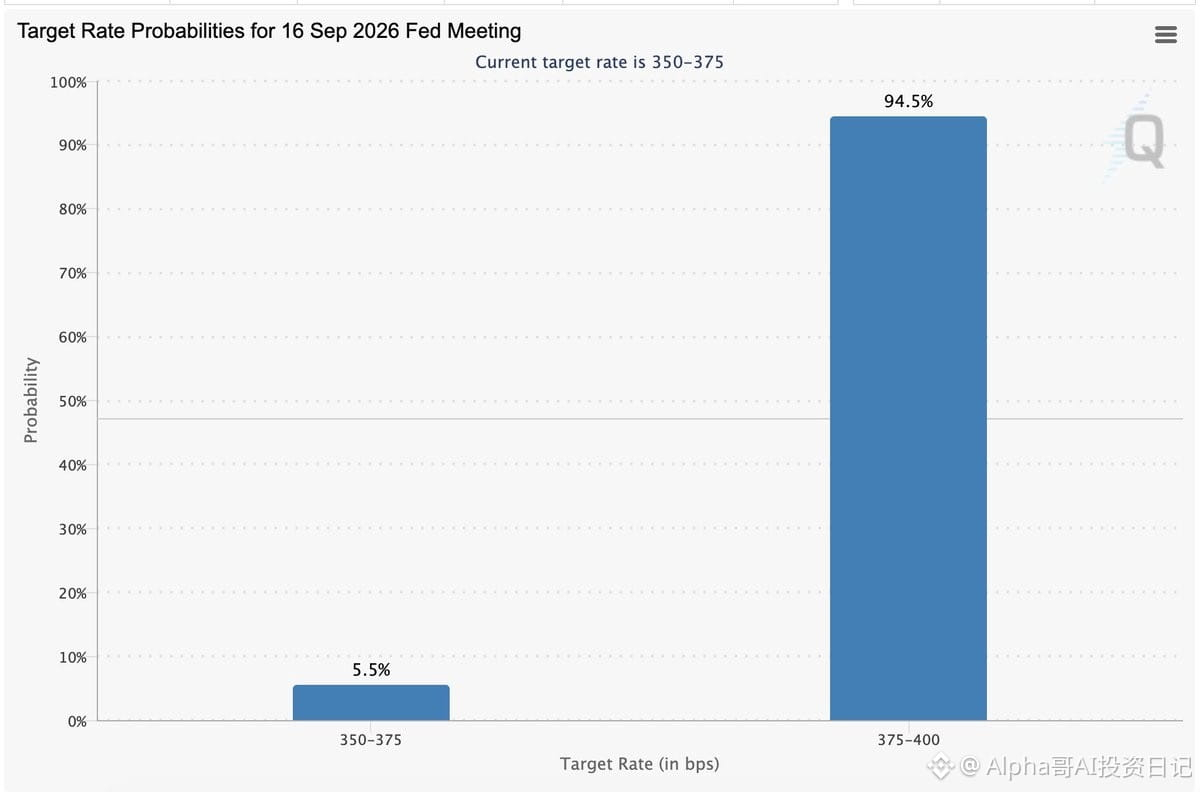
September 16 FOMC rate hike of 25bp is basically a done deal; CME is pricing a 94.5% probability of a rate hike.
But I think what the market really needs to worry about isn’t this 25bp move. It’s when the oil price will come down. WTI Oil is already above $104, and the U.S. 10-year Treasury yield has also reached 5%. If this is just a geopolitical shock lasting a few weeks, the problem is actually not that big. But if oil prices stay at $100–110—or even higher—for 1–2 more months, energy costs will gradually feed into gasoline, transportation, commodity costs, and inflation expectations. Then the Fed won’t be dealing with a one-off oil price shock anymore; it could face a second-round inflation impact (even though the probability of that is low).
I still believe that what Trump most needs to do right now is to de-escalate the Iran situation as soon as possible, bringing oil prices back down. On the one hand, he wants low interest rates, and on the other, he allows geopolitical risks to keep oil prices above $100. These two goals are inherently in conflict. Even if Warsh is dovish again, he can’t ignore inflation that’s starting to reappear.
September 16 FOMC rate hike of 25bp is basically a done deal; CME is pricing a 94.5% probability of a rate hike.
But I think what the market really needs to worry about isn’t this 25bp move. It’s when the oil price will come down. WTI Oil is already above $104, and the U.S. 10-year Treasury yield has also reached 5%. If this is just a geopolitical shock lasting a few weeks, the problem is actually not that big. But if oil prices stay at $100–110—or even higher—for 1–2 more months, energy costs will gradually feed into gasoline, transportation, commodity costs, and inflation expectations. Then the Fed won’t be dealing with a one-off oil price shock anymore; it could face a second-round inflation impact (even though the probability of that is low).
I still believe that what Trump most needs to do right now is to de-escalate the Iran situation as soon as possible, bringing oil prices back down. On the one hand, he wants low interest rates, and on the other, he allows geopolitical risks to keep oil prices above $100. These two goals are inherently in conflict. Even if Warsh is dovish again, he can’t ignore inflation that’s starting to reappear.
But I think what the market really needs to worry about isn’t this 25bp move. It’s when the oil price will come down. WTI Oil is already above $104, and the U.S. 10-year Treasury yield has also reached 5%. If this is just a geopolitical shock lasting a few weeks, the problem is actually not that big. But if oil prices stay at $100–110—or even higher—for 1–2 more months, energy costs will gradually feed into gasoline, transportation, commodity costs, and inflation expectations. Then the Fed won’t be dealing with a one-off oil price shock anymore; it could face a second-round inflation impact (even though the probability of that is low).
I still believe that what Trump most needs to do right now is to de-escalate the Iran situation as soon as possible, bringing oil prices back down. On the one hand, he wants low interest rates, and on the other, he allows geopolitical risks to keep oil prices above $100. These two goals are inherently in conflict. Even if Warsh is dovish again, he can’t ignore inflation that’s starting to reappear.
490
Log in to explore more content
Join global crypto users on Binance Square
⚡️ Get latest and useful information about crypto.
💬 Trusted by the world’s largest crypto exchange.
👍 Discover real insights from verified creators.
Email / Phone number
Trending Topics
AIStocksWhatNext
341,959 views
2,902 Discussing
Share & Win Traffic Reward in our Trending Hashtag Campaign
✨Topic: What Other Investment Opportunities Remain as AI Stocks Keep Rising?
👉How to Join:
Publish a short post or article with hashtag #AIStocksWhatNext
Share whether you’re bullish or bearish, and post your AI stock holdings or trade — using the trade widget may improve your eligibility.
You can also strengthen your post by sharing data or charts, and avoiding AI-generated images.
✍️Create content based on the below angles:
- Nvidia says chip sales will double next year, and top AI companies keep hitting record revenue, the compute spend behind it is just as staggering. Is AI demand really taking off? And how long can it last? AI stocks are up across the board. Is this a real breakout, or just a short-term bounce?
- Industry leaders are calling to slow down AI development, while Trump plans to build an “AI Force”, claiming AI could account for 25% of U.S. GDP in the future. Whose side are you on? Will state-level backing be a long-term win for AI stocks?
- Are you buying AI stocks? Share your AI-related trade/holdings with our trade sharing widget.
⏰Campaign Period:
- 2026-09-22 7:00 - 2026-09-24 4:00 UTC
🎁Reward:
- Qualified posts that comply with the above guidelines and contain more than 100 words will be reviewed and may receive a random traffic boost of 500 to 3,000 views. You will receive a notification from your feed secretary if your post is selected.
- Get a chance to have your article featured on Binance Square Official
Need ideas for your post? Visit the topic page #AIStocksWhatNext or the Square Guide on How to Post for Better Reach.
Binance Square Official
·353 Likes
·857.6k views
BitcoinBreaksAboveMayHighNears$86K
13,502 views
187 Discussing
DogecoinRises15%
42,124 views
954 Discussing