

Alejandro_Logic
82 Posts

Alejandro_Logic
Report
Block User
9 Following
13 Followers
64 Liked
Posts
All
Quotes
PINNED
Article
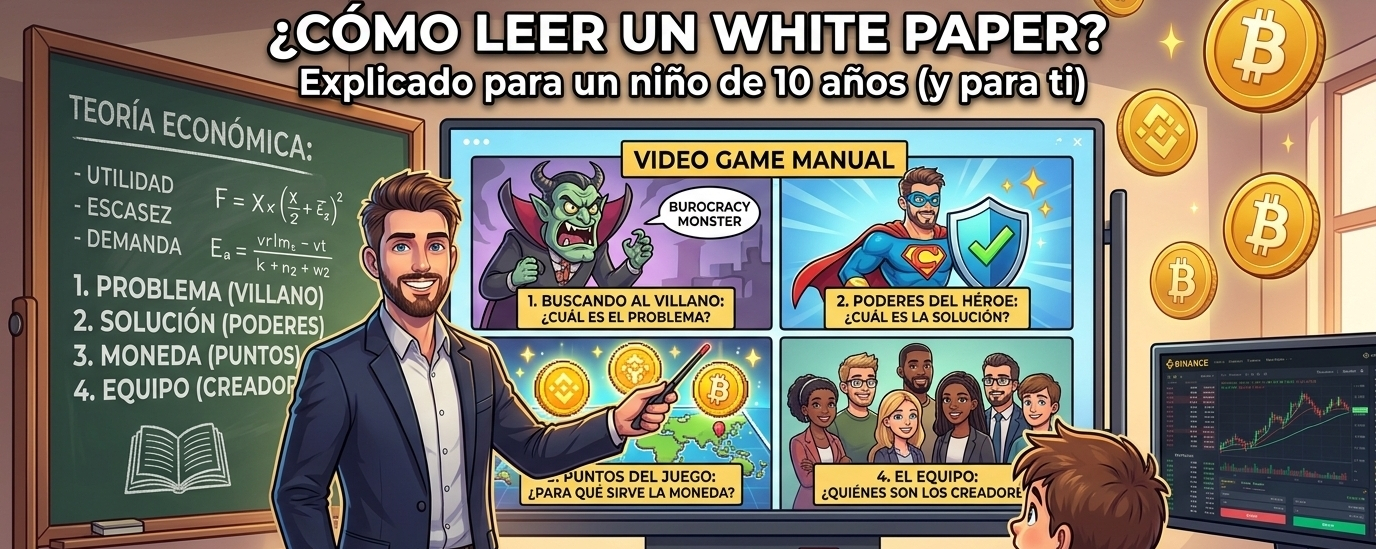
📖 How to Read a "Whitepaper" (Explained Like You're 10 Years Old)Hey class! Your professor here. In the last post, I mentioned that if you can’t explain a project to a 10-year-old, you shouldn’t invest. Today, we’re going to do just that.
Think of a "Whitepaper" as the instruction manual for a new video game they're trying to sell you. Before you throw your savings at it, you need to read the manual to understand what it's about, whether it makes sense, or if it's going to be a total snooze fest.
Here’s how to check it with an analyst mindset, but in 4 super simple steps:
📖 How to Read a "Whitepaper" (Explained Like You're 10 Years Old)
Hey class! Your professor here. In the last post, I mentioned that if you can’t explain a project to a 10-year-old, you shouldn’t invest. Today, we’re going to do just that.
Think of a "Whitepaper" as the instruction manual for a new video game they're trying to sell you. Before you throw your savings at it, you need to read the manual to understand what it's about, whether it makes sense, or if it's going to be a total snooze fest.
Here’s how to check it with an analyst mindset, but in 4 super simple steps:
Think of a "Whitepaper" as the instruction manual for a new video game they're trying to sell you. Before you throw your savings at it, you need to read the manual to understand what it's about, whether it makes sense, or if it's going to be a total snooze fest.
Here’s how to check it with an analyst mindset, but in 4 super simple steps:
5
1.5k
A gift, take it as a life incentive that pays you for just being.
by: Alejandro_Logic
USDC
A gift, take it as a life incentive that pays you for just being.
by: Alejandro_Logic
USDC
by: Alejandro_Logic
USDC

17
Article
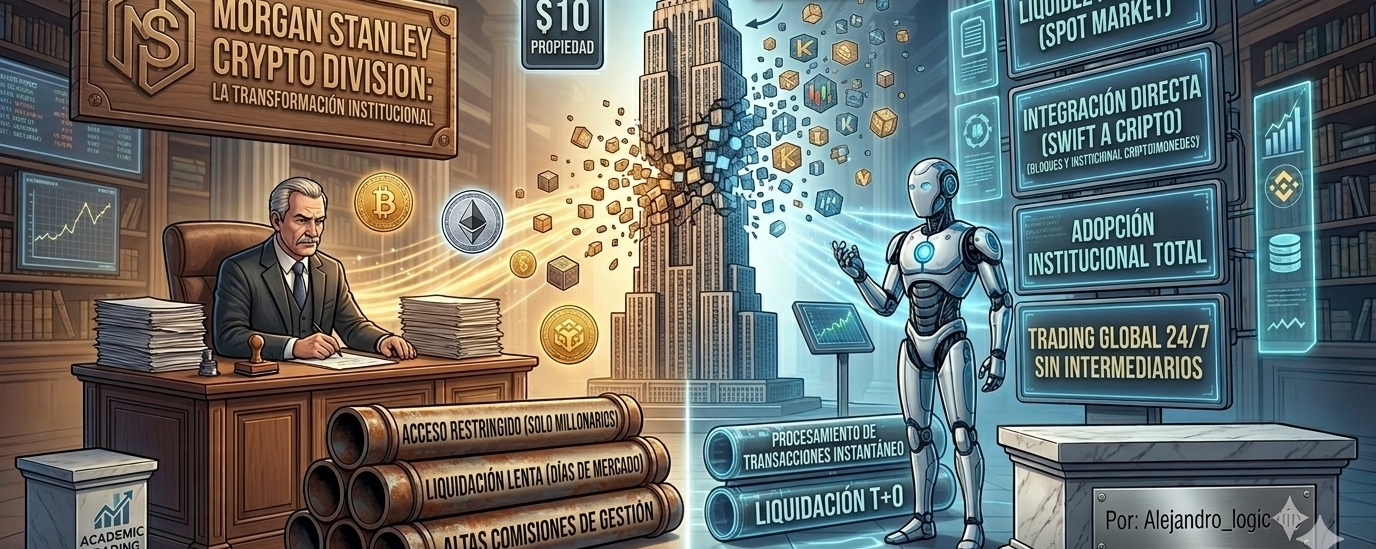
The Floodgates Open: Morgan Stanley Launches Spot Trading and the End of the Traditional Fiat SystemThe Surrender of Wall Street and the Impact of Spot Trading.
If you think the Bitcoin ETFs approved in previous years were the biggest event, get ready to grasp the true magnitude of today's news. Morgan Stanley, one of the oldest and most respected titans on Wall Street, has confirmed the launch of Spot trading for cryptocurrencies for its client portfolio in 2026.
As a strategist, I gotta say this is the exact moment when the industry transitions from being an 'alternative asset class' to the foundational layer of the new global financial system.
The Floodgates Open: Morgan Stanley Launches Spot Trading and the End of the Traditional Fiat System
The Surrender of Wall Street and the Impact of Spot Trading.
If you think the Bitcoin ETFs approved in previous years were the biggest event, get ready to grasp the true magnitude of today's news. Morgan Stanley, one of the oldest and most respected titans on Wall Street, has confirmed the launch of Spot trading for cryptocurrencies for its client portfolio in 2026.
As a strategist, I gotta say this is the exact moment when the industry transitions from being an 'alternative asset class' to the foundational layer of the new global financial system.
If you think the Bitcoin ETFs approved in previous years were the biggest event, get ready to grasp the true magnitude of today's news. Morgan Stanley, one of the oldest and most respected titans on Wall Street, has confirmed the launch of Spot trading for cryptocurrencies for its client portfolio in 2026.
As a strategist, I gotta say this is the exact moment when the industry transitions from being an 'alternative asset class' to the foundational layer of the new global financial system.
55
Topic: Morgan Stanley and Spot Adoption.
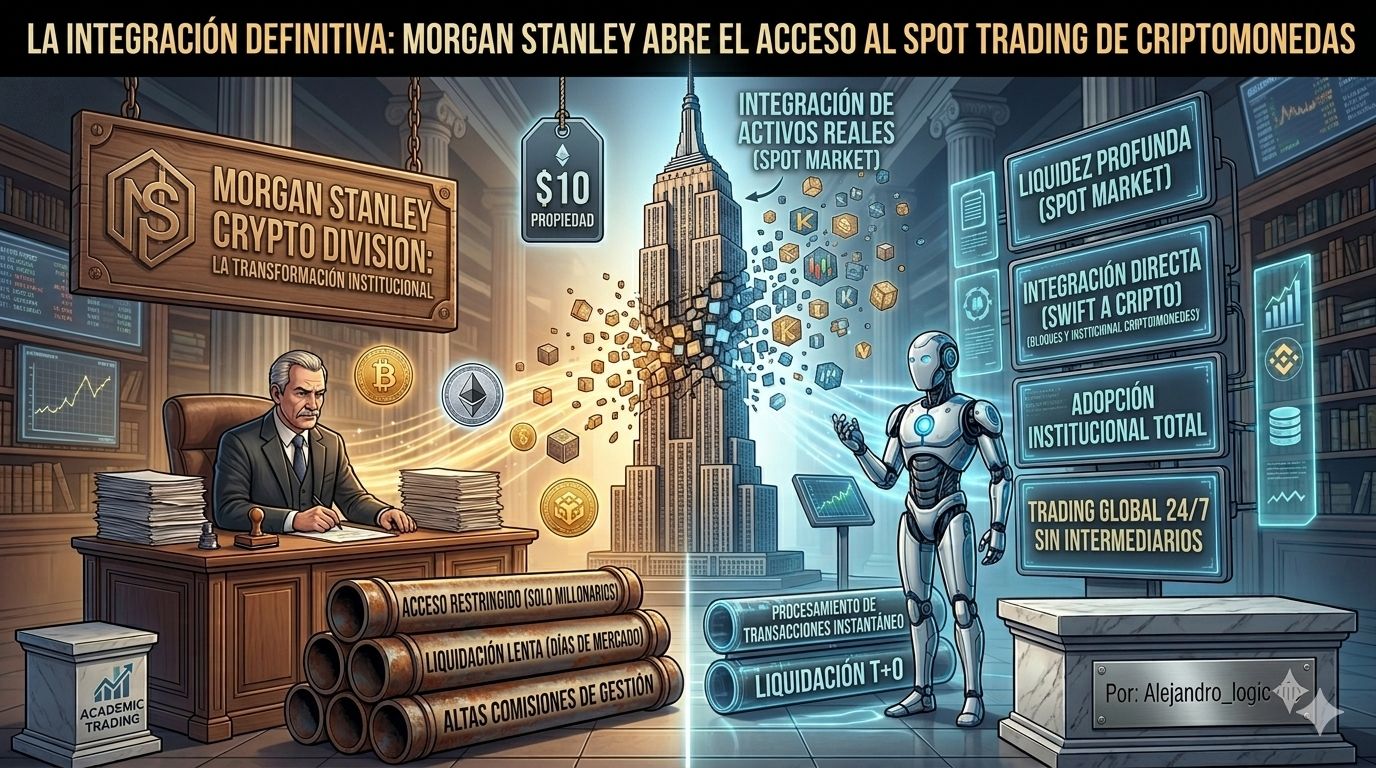
Boom time for institutions! 🏦 Morgan Stanley has officially announced the launch of Spot trading for cryptocurrencies by 2026. Fam, the floodgates have opened. We're transitioning from ETFs (paper) to actual asset ownership by the most conservative capital in the world. As a systems engineer, I see this as the final integration: the pipeline of traditional Wall Street finance just got directly connected to blockchain liquidity. This is massively BULLISH. We're not talking about retail speculators; we're talking about financial advisors managing trillions of dollars, now given the green light to buy actual Bitcoin for the retirement portfolios of the global elite. The Trojan Horse is already inside the fortress.
💡 Alejandro_logic: "Wall Street doesn't adopt technologies to lose money. If Morgan Stanley is opening Spot trading desks, it's because they know hyper-tokenization is inevitable. Your strategy now should be to hold onto your assets and not sell cheap to the same institutions that once criticized Bitcoin."
Legal note: This is an educational analysis article. Investment decisions are strictly personal, as are the profits or losses incurred.
#MorganStanleyCrypto #SpotTrading #AdopcionInstitucional #WallStreetCrypto #TendenciaAlcista
Topic: Morgan Stanley and Spot Adoption.
Boom time for institutions! 🏦 Morgan Stanley has officially announced the launch of Spot trading for cryptocurrencies by 2026. Fam, the floodgates have opened. We're transitioning from ETFs (paper) to actual asset ownership by the most conservative capital in the world. As a systems engineer, I see this as the final integration: the pipeline of traditional Wall Street finance just got directly connected to blockchain liquidity. This is massively BULLISH. We're not talking about retail speculators; we're talking about financial advisors managing trillions of dollars, now given the green light to buy actual Bitcoin for the retirement portfolios of the global elite. The Trojan Horse is already inside the fortress.
💡 Alejandro_logic: "Wall Street doesn't adopt technologies to lose money. If Morgan Stanley is opening Spot trading desks, it's because they know hyper-tokenization is inevitable. Your strategy now should be to hold onto your assets and not sell cheap to the same institutions that once criticized Bitcoin."
Legal note: This is an educational analysis article. Investment decisions are strictly personal, as are the profits or losses incurred.
#MorganStanleyCrypto #SpotTrading #AdopcionInstitucional #WallStreetCrypto #TendenciaAlcista
Boom time for institutions! 🏦 Morgan Stanley has officially announced the launch of Spot trading for cryptocurrencies by 2026. Fam, the floodgates have opened. We're transitioning from ETFs (paper) to actual asset ownership by the most conservative capital in the world. As a systems engineer, I see this as the final integration: the pipeline of traditional Wall Street finance just got directly connected to blockchain liquidity. This is massively BULLISH. We're not talking about retail speculators; we're talking about financial advisors managing trillions of dollars, now given the green light to buy actual Bitcoin for the retirement portfolios of the global elite. The Trojan Horse is already inside the fortress.
💡 Alejandro_logic: "Wall Street doesn't adopt technologies to lose money. If Morgan Stanley is opening Spot trading desks, it's because they know hyper-tokenization is inevitable. Your strategy now should be to hold onto your assets and not sell cheap to the same institutions that once criticized Bitcoin."
Legal note: This is an educational analysis article. Investment decisions are strictly personal, as are the profits or losses incurred.
#MorganStanleyCrypto #SpotTrading #AdopcionInstitucional #WallStreetCrypto #TendenciaAlcista
106
Article
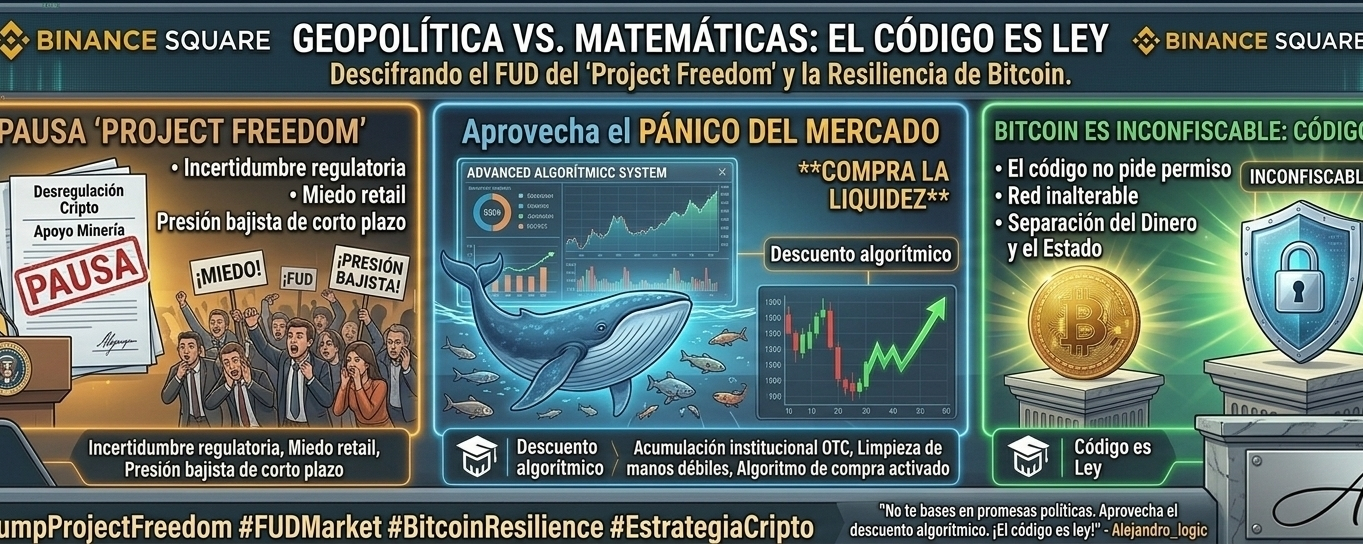
The FUD from Washington: Why Trump's Pause on 'Project Freedom' Shows Bitcoin's Power.The Illusion of State Control and the Decentralized Shield.
Fam, pay close attention to this, because this is where emotional investors get separated from the cold, calculated strategists. Trump's recent decision to pause the highly anticipated 'Project Freedom' (an initiative aimed at easing regulations on mining and trading digital assets) has shaken the markets. We're seeing red candles, cascading liquidations, and panic on social media.
But let's apply engineering logic to this geopolitical situation.
The FUD from Washington: Why Trump's Pause on 'Project Freedom' Shows Bitcoin's Power.
The Illusion of State Control and the Decentralized Shield.
Fam, pay close attention to this, because this is where emotional investors get separated from the cold, calculated strategists. Trump's recent decision to pause the highly anticipated 'Project Freedom' (an initiative aimed at easing regulations on mining and trading digital assets) has shaken the markets. We're seeing red candles, cascading liquidations, and panic on social media.
But let's apply engineering logic to this geopolitical situation.
Fam, pay close attention to this, because this is where emotional investors get separated from the cold, calculated strategists. Trump's recent decision to pause the highly anticipated 'Project Freedom' (an initiative aimed at easing regulations on mining and trading digital assets) has shaken the markets. We're seeing red candles, cascading liquidations, and panic on social media.
But let's apply engineering logic to this geopolitical situation.
2
119
Pause of 'Project Freedom' due to Trump and Geopolitics.
Attention strategists! 🚨 Geopolitical noise on the radar. Trump has just paused 'Project Freedom', a package of measures promising deregulation and support for the crypto industry. Psychologically, this injects immediate fear into the retail market, generating SHORT pressure in the short term due to regulatory uncertainty. But watch out for the trap! As analysts, we know that Bitcoin's code doesn’t care who the U.S. president is. Politicians make promises and change their minds based on polls; the math of the blockchain is inflexible. This pause reminds us exactly why a decentralized system was created: to separate money from the State. Whales will use this FUD (Fear, Uncertainty, and Doubt) to clean the market of weak hands.
💡 Alejandro_logic: "The rookie mistake is basing your portfolio on political promises. This short-term drop isn’t a fundamental change; it’s an algorithmic discount. Seize the market panic to buy the liquidity that the scared are letting go. The code is law, not the politicians!"
Legal note: This is an educational analysis article. Investment decisions are strictly personal, as are the gains or losses incurred.
#PoliticaYCripto #TrumpProjectFreedom #FUDMarket #BitcoinResilience #EstrategiaCripto
$ETH
{spot}(ETHUSDT)
$USDT
$BTC
{spot}(BTCUSDT)
Pause of 'Project Freedom' due to Trump and Geopolitics.
Attention strategists! 🚨 Geopolitical noise on the radar. Trump has just paused 'Project Freedom', a package of measures promising deregulation and support for the crypto industry. Psychologically, this injects immediate fear into the retail market, generating SHORT pressure in the short term due to regulatory uncertainty. But watch out for the trap! As analysts, we know that Bitcoin's code doesn’t care who the U.S. president is. Politicians make promises and change their minds based on polls; the math of the blockchain is inflexible. This pause reminds us exactly why a decentralized system was created: to separate money from the State. Whales will use this FUD (Fear, Uncertainty, and Doubt) to clean the market of weak hands.
💡 Alejandro_logic: "The rookie mistake is basing your portfolio on political promises. This short-term drop isn’t a fundamental change; it’s an algorithmic discount. Seize the market panic to buy the liquidity that the scared are letting go. The code is law, not the politicians!"
Legal note: This is an educational analysis article. Investment decisions are strictly personal, as are the gains or losses incurred.
#PoliticaYCripto #TrumpProjectFreedom #FUDMarket #BitcoinResilience #EstrategiaCripto
$ETH
$USDT
$BTC
Attention strategists! 🚨 Geopolitical noise on the radar. Trump has just paused 'Project Freedom', a package of measures promising deregulation and support for the crypto industry. Psychologically, this injects immediate fear into the retail market, generating SHORT pressure in the short term due to regulatory uncertainty. But watch out for the trap! As analysts, we know that Bitcoin's code doesn’t care who the U.S. president is. Politicians make promises and change their minds based on polls; the math of the blockchain is inflexible. This pause reminds us exactly why a decentralized system was created: to separate money from the State. Whales will use this FUD (Fear, Uncertainty, and Doubt) to clean the market of weak hands.
💡 Alejandro_logic: "The rookie mistake is basing your portfolio on political promises. This short-term drop isn’t a fundamental change; it’s an algorithmic discount. Seize the market panic to buy the liquidity that the scared are letting go. The code is law, not the politicians!"
Legal note: This is an educational analysis article. Investment decisions are strictly personal, as are the gains or losses incurred.
#PoliticaYCripto #TrumpProjectFreedom #FUDMarket #BitcoinResilience #EstrategiaCripto
$ETH
$USDT
$BTC
87
Article
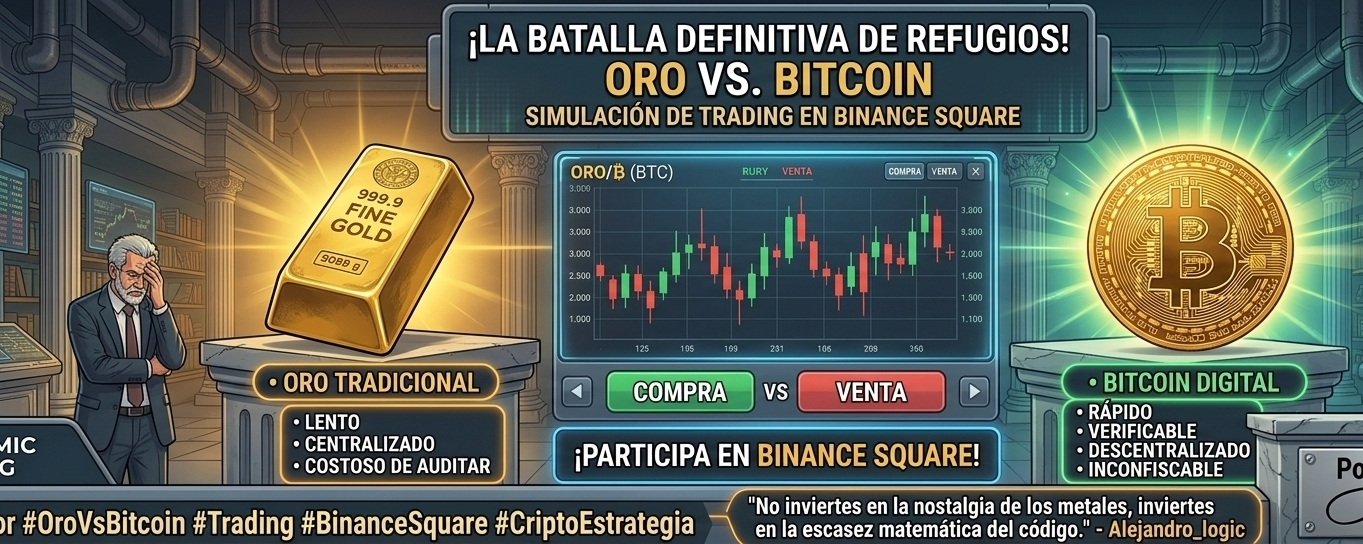
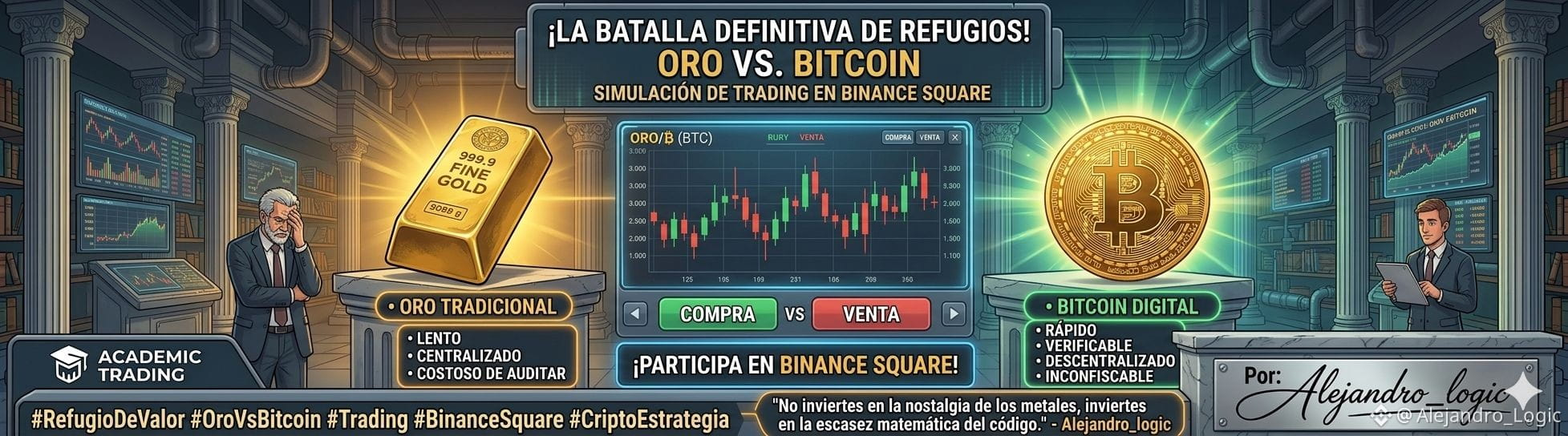
The Ultimate Battle: Why Binance's Competition Marks the End of the Analog Era.Fundamental Analysis: Gold vs. Bitcoin and the Evolution of Money.
To master this market, you need to understand the evolution of technology. Money is, at its core, a tech to store human energy (labor) across time and space. The recent competition launched by Binance, pitting physical (or tokenized) Gold against Bitcoin, isn't just a volume game; it's the arena where the old world collides with the new financial paradigm.
The Value Store Engineering
The Ultimate Battle: Why Binance's Competition Marks the End of the Analog Era.
Fundamental Analysis: Gold vs. Bitcoin and the Evolution of Money.
To master this market, you need to understand the evolution of technology. Money is, at its core, a tech to store human energy (labor) across time and space. The recent competition launched by Binance, pitting physical (or tokenized) Gold against Bitcoin, isn't just a volume game; it's the arena where the old world collides with the new financial paradigm.
The Value Store Engineering
To master this market, you need to understand the evolution of technology. Money is, at its core, a tech to store human energy (labor) across time and space. The recent competition launched by Binance, pitting physical (or tokenized) Gold against Bitcoin, isn't just a volume game; it's the arena where the old world collides with the new financial paradigm.
The Value Store Engineering
100
Binance and the Battle of Safe Havens.
Fam! ⚙️ Binance just dropped the ultimate trading competition: Gold vs. Bitcoin. As a strategist, I see this as more than just a platform event; it’s a macroeconomic statement. We’re witnessing the clash of the analog world against digital infrastructure. Gold is heavy, costly to audit, and centralized in vaults. Bitcoin is light, mathematically verifiable in seconds, and travels at the speed of light. This competition exposes traditional investors to the superiority of algorithmic scarcity. The situation is structurally BULLISH in the medium term, injecting massive liquidity and educating the market on which asset better preserves purchasing power against fiat currency devaluation. The narrative of "Digital Gold" is solidifying on the screens of millions of traders today.
💡 Alejandro_logic: "Don’t get stuck in the nostalgia of heavy metals. The winning strategy is to rotate liquidity towards mathematical efficiency. Use the volatility of this competition to stack satoshis; the future isn’t weighed in ounces, it’s measured in blocks."
Legal Note: This is an educational analysis article. Investment decisions are strictly personal, as are the gains or losses incurred.
#OroVsBitcoin #BinanceTrading #RefugioDeValor #Macroeconomia #CriptoEstrategia
Binance and the Battle of Safe Havens.
Fam! ⚙️ Binance just dropped the ultimate trading competition: Gold vs. Bitcoin. As a strategist, I see this as more than just a platform event; it’s a macroeconomic statement. We’re witnessing the clash of the analog world against digital infrastructure. Gold is heavy, costly to audit, and centralized in vaults. Bitcoin is light, mathematically verifiable in seconds, and travels at the speed of light. This competition exposes traditional investors to the superiority of algorithmic scarcity. The situation is structurally BULLISH in the medium term, injecting massive liquidity and educating the market on which asset better preserves purchasing power against fiat currency devaluation. The narrative of "Digital Gold" is solidifying on the screens of millions of traders today.
💡 Alejandro_logic: "Don’t get stuck in the nostalgia of heavy metals. The winning strategy is to rotate liquidity towards mathematical efficiency. Use the volatility of this competition to stack satoshis; the future isn’t weighed in ounces, it’s measured in blocks."
Legal Note: This is an educational analysis article. Investment decisions are strictly personal, as are the gains or losses incurred.
#OroVsBitcoin #BinanceTrading #RefugioDeValor #Macroeconomia #CriptoEstrategia
Fam! ⚙️ Binance just dropped the ultimate trading competition: Gold vs. Bitcoin. As a strategist, I see this as more than just a platform event; it’s a macroeconomic statement. We’re witnessing the clash of the analog world against digital infrastructure. Gold is heavy, costly to audit, and centralized in vaults. Bitcoin is light, mathematically verifiable in seconds, and travels at the speed of light. This competition exposes traditional investors to the superiority of algorithmic scarcity. The situation is structurally BULLISH in the medium term, injecting massive liquidity and educating the market on which asset better preserves purchasing power against fiat currency devaluation. The narrative of "Digital Gold" is solidifying on the screens of millions of traders today.
💡 Alejandro_logic: "Don’t get stuck in the nostalgia of heavy metals. The winning strategy is to rotate liquidity towards mathematical efficiency. Use the volatility of this competition to stack satoshis; the future isn’t weighed in ounces, it’s measured in blocks."
Legal Note: This is an educational analysis article. Investment decisions are strictly personal, as are the gains or losses incurred.
#OroVsBitcoin #BinanceTrading #RefugioDeValor #Macroeconomia #CriptoEstrategia
1
106
Everyone shares their strategies, but from my experience breaking through the fear of diving into the crypto world, many read trading strategies and analyses and don't understand a thing 🧅
In my latest posts, there are several essential topics to guide you, and I'll keep dropping articles today so you have relevant information to know where you stand.
Everyone shares their strategies, but from my experience breaking through the fear of diving into the crypto world, many read trading strategies and analyses and don't understand a thing 🧅
In my latest posts, there are several essential topics to guide you, and I'll keep dropping articles today so you have relevant information to know where you stand.
In my latest posts, there are several essential topics to guide you, and I'll keep dropping articles today so you have relevant information to know where you stand.
53
What is Ethereum? Unveiling the Architecture of the Future.
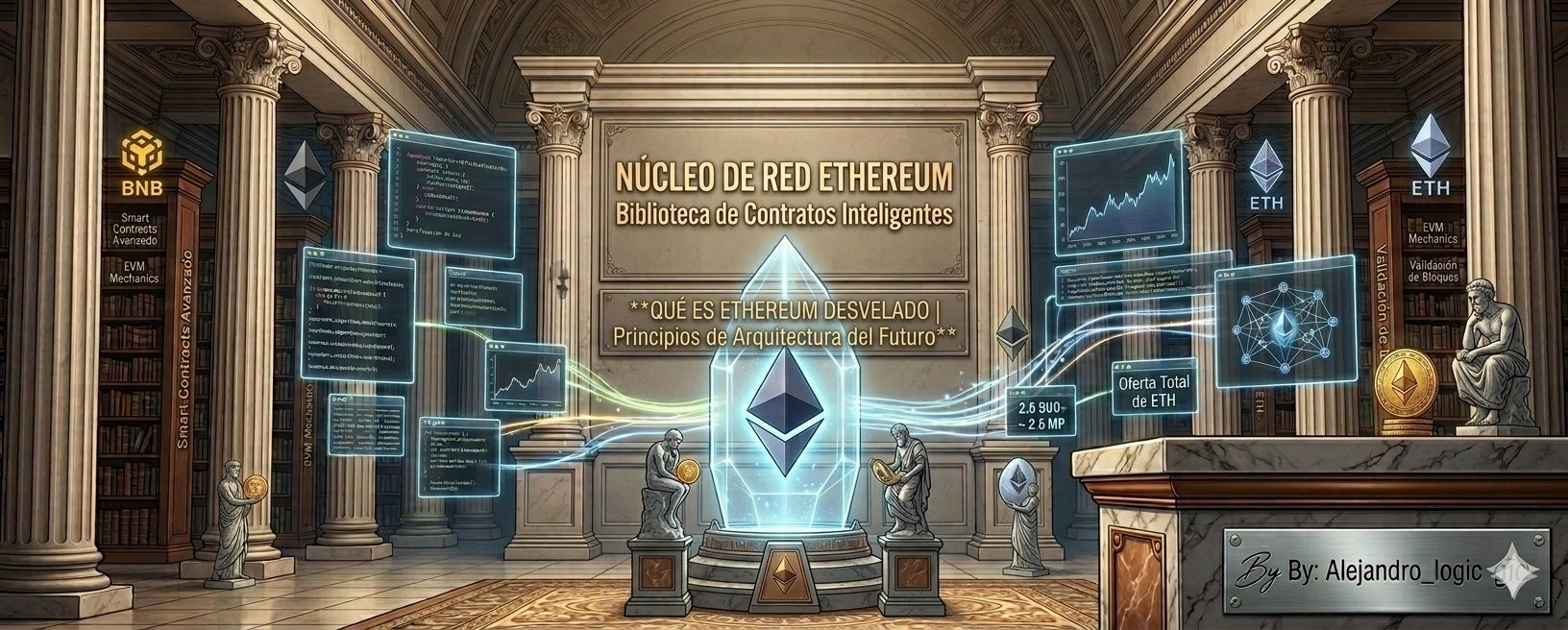
To master this market, it’s not enough to just watch green or red candlesticks; you need to understand the guts of the financial machinery. When we talk about Ethereum, we’re not just discussing a simple "digital currency" like Bitcoin. We’re talking about the engine of an industrial revolution.
As an engineer, I see Ethereum as the most beautiful and aggressive software upgrade in human history. It’s literally a bank and a computer without bankers. It’s a global ecosystem, open 24/7, where you are the sole owner of your keys and your wealth.
How does the machine work? (Simple explanation)
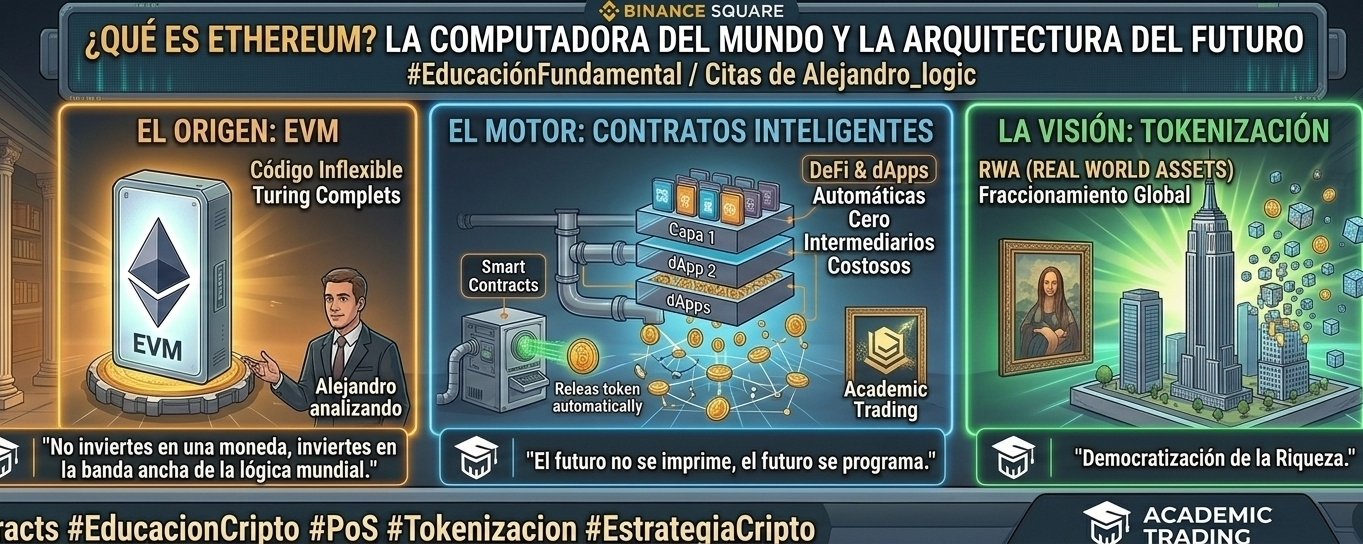
Ethereum is a decentralized platform that allows for the execution of Smart Contracts and Decentralized Applications (dApps). If Bitcoin is "digital gold" (a store of value), Ethereum is "digital oil" (the energy that drives global logic).
Imagine a vending machine for sodas. You insert a coin, press a button, and the machine automatically dispenses the drink. There’s no employee inside the machine verifying the transaction. A Smart Contract is exactly that, but made of mathematically inflexible code that runs on the blockchain.
What is Ethereum? Unveiling the Architecture of the Future.
To master this market, it’s not enough to just watch green or red candlesticks; you need to understand the guts of the financial machinery. When we talk about Ethereum, we’re not just discussing a simple "digital currency" like Bitcoin. We’re talking about the engine of an industrial revolution.
As an engineer, I see Ethereum as the most beautiful and aggressive software upgrade in human history. It’s literally a bank and a computer without bankers. It’s a global ecosystem, open 24/7, where you are the sole owner of your keys and your wealth.
How does the machine work? (Simple explanation)
Ethereum is a decentralized platform that allows for the execution of Smart Contracts and Decentralized Applications (dApps). If Bitcoin is "digital gold" (a store of value), Ethereum is "digital oil" (the energy that drives global logic).
Imagine a vending machine for sodas. You insert a coin, press a button, and the machine automatically dispenses the drink. There’s no employee inside the machine verifying the transaction. A Smart Contract is exactly that, but made of mathematically inflexible code that runs on the blockchain.
To master this market, it’s not enough to just watch green or red candlesticks; you need to understand the guts of the financial machinery. When we talk about Ethereum, we’re not just discussing a simple "digital currency" like Bitcoin. We’re talking about the engine of an industrial revolution.
As an engineer, I see Ethereum as the most beautiful and aggressive software upgrade in human history. It’s literally a bank and a computer without bankers. It’s a global ecosystem, open 24/7, where you are the sole owner of your keys and your wealth.
How does the machine work? (Simple explanation)
Ethereum is a decentralized platform that allows for the execution of Smart Contracts and Decentralized Applications (dApps). If Bitcoin is "digital gold" (a store of value), Ethereum is "digital oil" (the energy that drives global logic).
Imagine a vending machine for sodas. You insert a coin, press a button, and the machine automatically dispenses the drink. There’s no employee inside the machine verifying the transaction. A Smart Contract is exactly that, but made of mathematically inflexible code that runs on the blockchain.
11
Article
What is Ethereum? Unveiling the Architecture of the Future.To master this market, it's not enough to just watch green or red candles; you need to understand the inner workings of the financial machinery. When we talk about Ethereum, we're not just talking about a simple "digital currency" like Bitcoin. We're talking about the engine of an industrial revolution.
As an engineer, I see Ethereum as the most beautiful and aggressive software upgrade in human history. It's literally a bank and a computer without bankers. It's a global ecosystem, open 24/7, where you are the sole owner of your keys and your assets.
What is Ethereum? Unveiling the Architecture of the Future.
To master this market, it's not enough to just watch green or red candles; you need to understand the inner workings of the financial machinery. When we talk about Ethereum, we're not just talking about a simple "digital currency" like Bitcoin. We're talking about the engine of an industrial revolution.
As an engineer, I see Ethereum as the most beautiful and aggressive software upgrade in human history. It's literally a bank and a computer without bankers. It's a global ecosystem, open 24/7, where you are the sole owner of your keys and your assets.
As an engineer, I see Ethereum as the most beautiful and aggressive software upgrade in human history. It's literally a bank and a computer without bankers. It's a global ecosystem, open 24/7, where you are the sole owner of your keys and your assets.
38
#EthereumFoundationSellsETHtoBitmineAgain
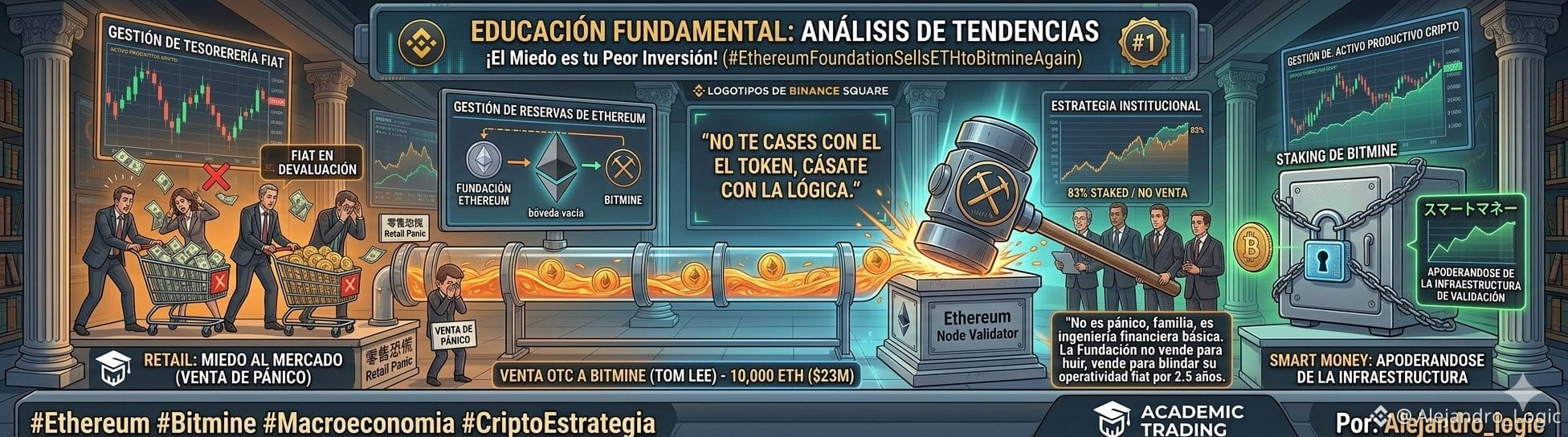
Family, my chart is on fire! ⚙️🤯 The Ethereum Foundation just dumped another 10,000 ETH ($23M) to Bitmine. That's $47 million in two weeks! As a strategist, I'm not seeing panic; I see treasury engineering and OTC liquidity management to fund grants and R&D. Psychologically, retail traders get spooked and sell; but institutional capital, like Bitmine (~Tom Lee), isn't selling, they're staking 83% of their holdings! The smart money isn't letting fiat devalue them, they're taking control of the validation infrastructure. We're colonizing the future. Don't marry the token, marry the logic. Wake up!
#Ethereum #Bitmine #Macroeconomia #CriptoEstrategia
By: Alejandro_logic
#EthereumFoundationSellsETHtoBitmineAgain
Family, my chart is on fire! ⚙️🤯 The Ethereum Foundation just dumped another 10,000 ETH ($23M) to Bitmine. That's $47 million in two weeks! As a strategist, I'm not seeing panic; I see treasury engineering and OTC liquidity management to fund grants and R&D. Psychologically, retail traders get spooked and sell; but institutional capital, like Bitmine (~Tom Lee), isn't selling, they're staking 83% of their holdings! The smart money isn't letting fiat devalue them, they're taking control of the validation infrastructure. We're colonizing the future. Don't marry the token, marry the logic. Wake up!
#Ethereum #Bitmine #Macroeconomia #CriptoEstrategia
By: Alejandro_logic
Family, my chart is on fire! ⚙️🤯 The Ethereum Foundation just dumped another 10,000 ETH ($23M) to Bitmine. That's $47 million in two weeks! As a strategist, I'm not seeing panic; I see treasury engineering and OTC liquidity management to fund grants and R&D. Psychologically, retail traders get spooked and sell; but institutional capital, like Bitmine (~Tom Lee), isn't selling, they're staking 83% of their holdings! The smart money isn't letting fiat devalue them, they're taking control of the validation infrastructure. We're colonizing the future. Don't marry the token, marry the logic. Wake up!
#Ethereum #Bitmine #Macroeconomia #CriptoEstrategia
By: Alejandro_logic
1
100
Article
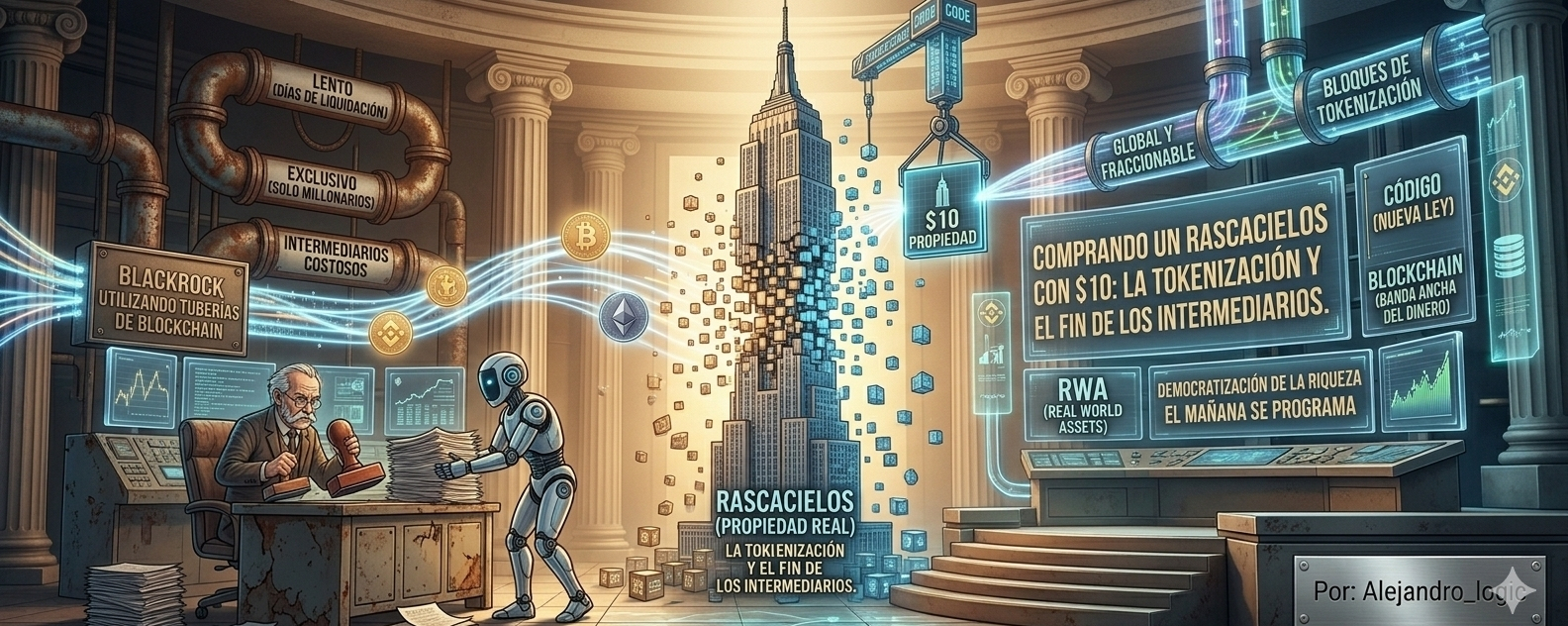
Buying a Skyscraper with $10: Tokenization and the End of Intermediaries.If you think cryptocurrencies are just "internet money," get ready to have your mind blown. We're diving into the most aggressive phase of financial evolution: The Tokenization of Real-World Assets (RWA).
As a systems engineer and strategist, I see the traditional world as outdated software. Buying a house, investing in art, or purchasing corporate stocks takes days, requires lawyers, notaries, stock exchanges, and brutal fees. It’s a system designed for the big players to keep their slice of your cash.
Buying a Skyscraper with $10: Tokenization and the End of Intermediaries.
If you think cryptocurrencies are just "internet money," get ready to have your mind blown. We're diving into the most aggressive phase of financial evolution: The Tokenization of Real-World Assets (RWA).
As a systems engineer and strategist, I see the traditional world as outdated software. Buying a house, investing in art, or purchasing corporate stocks takes days, requires lawyers, notaries, stock exchanges, and brutal fees. It’s a system designed for the big players to keep their slice of your cash.
As a systems engineer and strategist, I see the traditional world as outdated software. Buying a house, investing in art, or purchasing corporate stocks takes days, requires lawyers, notaries, stock exchanges, and brutal fees. It’s a system designed for the big players to keep their slice of your cash.
87
Article
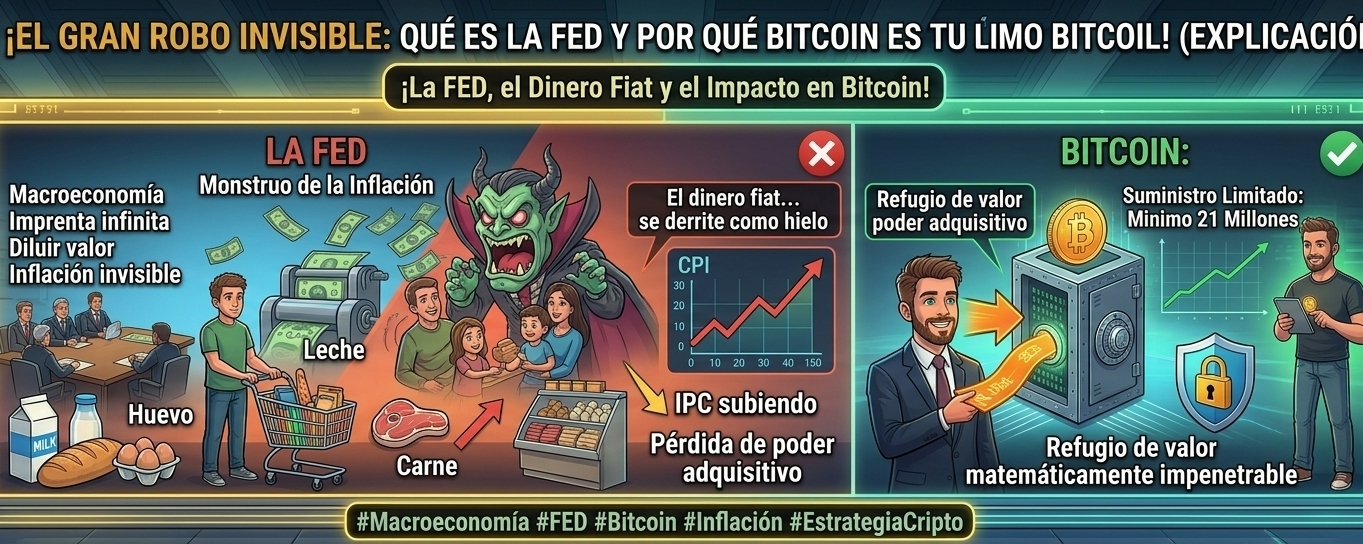
The Great Invisible Heist: What the FED Is and Why Bitcoin Is Your Only Shield.Fam, pay close attention to this, because it's the pillar of the entire global economy. In the news, we always hear about the FED (the Federal Reserve of the United States), but few understand the absolute level of control they have over the sweat of your brow.
This is just an analysis; I'm not saying the FED is bad, just that the regulatory mechanisms control the financial freedom you experience in the crypto environment.
You need to be clear about this.
The FED is the central bank of the U.S. In engineering terms, they control the pressure valve of the global financial system through two tools: printing money and manipulating interest rates.
The Great Invisible Heist: What the FED Is and Why Bitcoin Is Your Only Shield.
Fam, pay close attention to this, because it's the pillar of the entire global economy. In the news, we always hear about the FED (the Federal Reserve of the United States), but few understand the absolute level of control they have over the sweat of your brow.
This is just an analysis; I'm not saying the FED is bad, just that the regulatory mechanisms control the financial freedom you experience in the crypto environment.
You need to be clear about this.
The FED is the central bank of the U.S. In engineering terms, they control the pressure valve of the global financial system through two tools: printing money and manipulating interest rates.
This is just an analysis; I'm not saying the FED is bad, just that the regulatory mechanisms control the financial freedom you experience in the crypto environment.
You need to be clear about this.
The FED is the central bank of the U.S. In engineering terms, they control the pressure valve of the global financial system through two tools: printing money and manipulating interest rates.
7
4
1.5k
Article
The Code Rebellion: How DeFi and Smart Contracts are Firing Bankers.Family #BINANCESQUARE
The long-awaited topic, I've written an article so you can dive deep into some things.
First off,
What is DeFi and what are Smart Contracts?
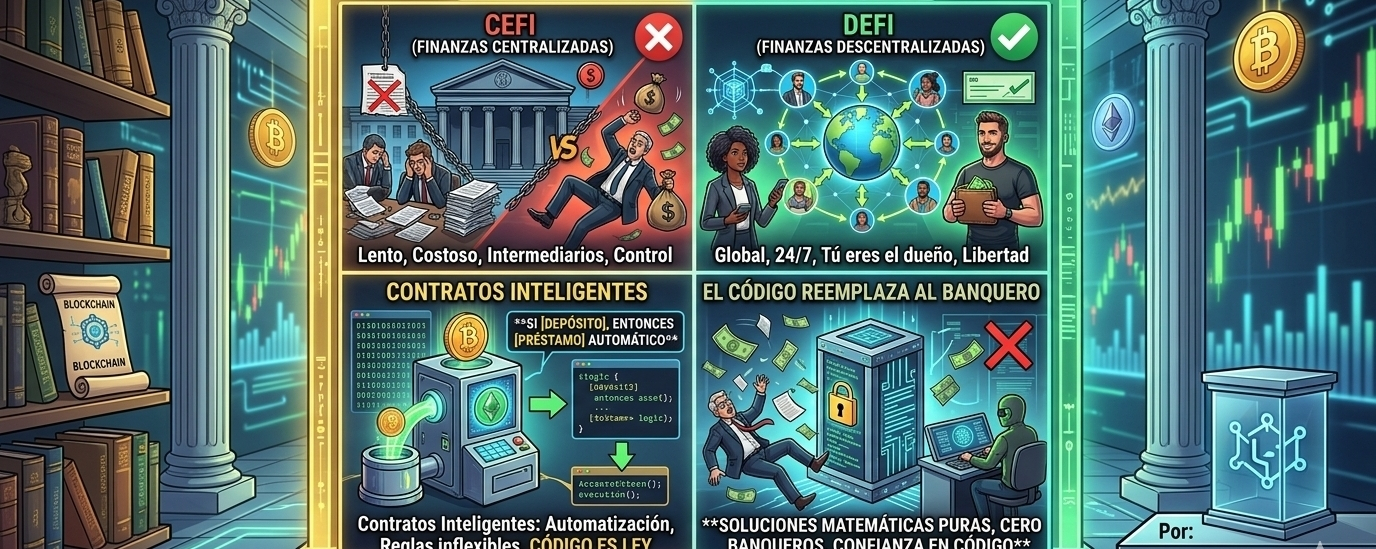
Have you ever had a transfer blocked for 'security', been hit with absurd fees for using your own money, or been made to wait days for loan approval? That's the traditional system: slow, costly, and designed to control you.
As an engineer, I see Decentralized Finance (DeFi) as the most beautiful software upgrade in human history. DeFi is literally a bank without bankers. It's a global financial ecosystem, open 24/7, where you are the sole owner of your keys and your funds.
The Code Rebellion: How DeFi and Smart Contracts are Firing Bankers.
Family #BINANCESQUARE
The long-awaited topic, I've written an article so you can dive deep into some things.
First off,
What is DeFi and what are Smart Contracts?
Have you ever had a transfer blocked for 'security', been hit with absurd fees for using your own money, or been made to wait days for loan approval? That's the traditional system: slow, costly, and designed to control you.
As an engineer, I see Decentralized Finance (DeFi) as the most beautiful software upgrade in human history. DeFi is literally a bank without bankers. It's a global financial ecosystem, open 24/7, where you are the sole owner of your keys and your funds.
The long-awaited topic, I've written an article so you can dive deep into some things.
First off,
What is DeFi and what are Smart Contracts?
Have you ever had a transfer blocked for 'security', been hit with absurd fees for using your own money, or been made to wait days for loan approval? That's the traditional system: slow, costly, and designed to control you.
As an engineer, I see Decentralized Finance (DeFi) as the most beautiful software upgrade in human history. DeFi is literally a bank without bankers. It's a global financial ecosystem, open 24/7, where you are the sole owner of your keys and your funds.
1
1
312
Article
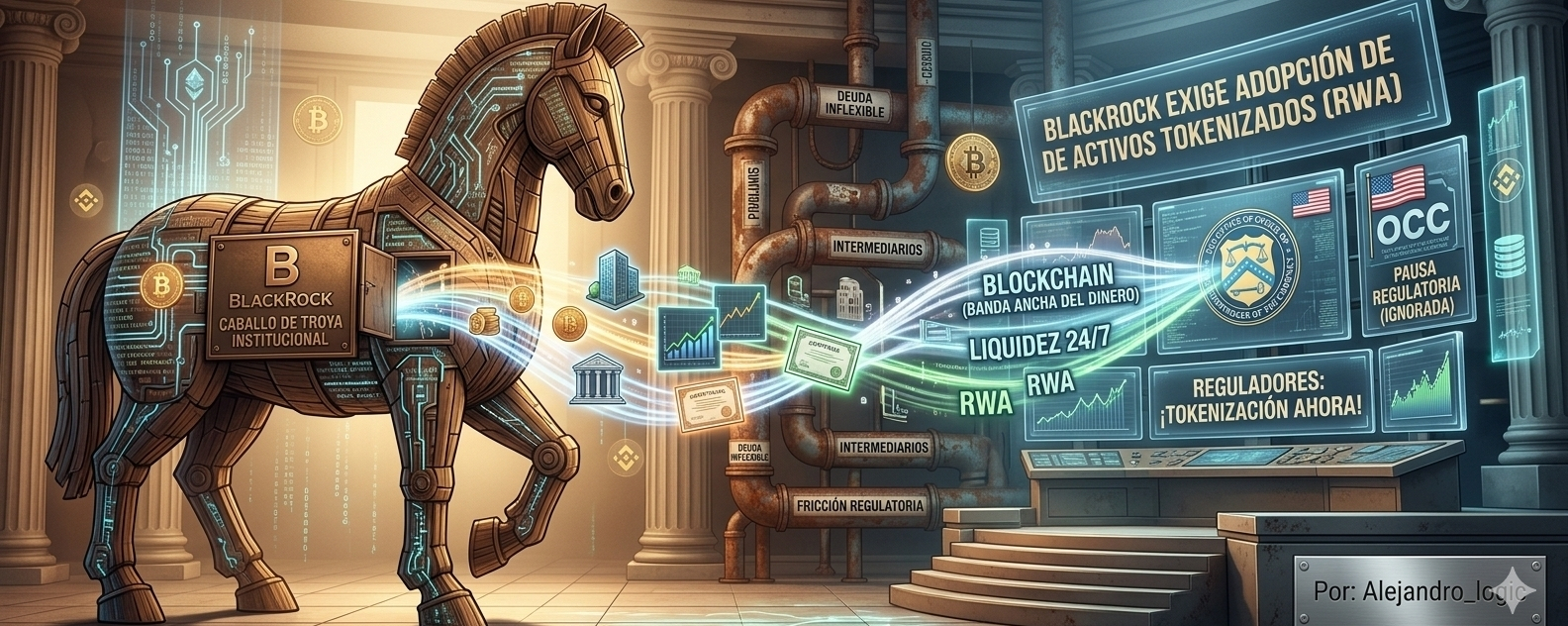
The Trojan Horse on Wall Street: When BlackRock Demands Regulators Let Us Through.Pay close attention to this trend because it's pure history! BlackRock, the largest and most powerful asset manager on the planet (handling trillions of dollars), is telling the OCC (the Office of the Comptroller of the Currency in the U.S.) to drop the restrictions on tokenized assets.
Hold up and process this. A few years back, bankers were saying crypto was a bunch of smoke. Today, the king of Wall Street is pushing regulators to adopt our tech!
The Trojan Horse on Wall Street: When BlackRock Demands Regulators Let Us Through.
Pay close attention to this trend because it's pure history! BlackRock, the largest and most powerful asset manager on the planet (handling trillions of dollars), is telling the OCC (the Office of the Comptroller of the Currency in the U.S.) to drop the restrictions on tokenized assets.
Hold up and process this. A few years back, bankers were saying crypto was a bunch of smoke. Today, the king of Wall Street is pushing regulators to adopt our tech!
Hold up and process this. A few years back, bankers were saying crypto was a bunch of smoke. Today, the king of Wall Street is pushing regulators to adopt our tech!
4
1.6k
Article
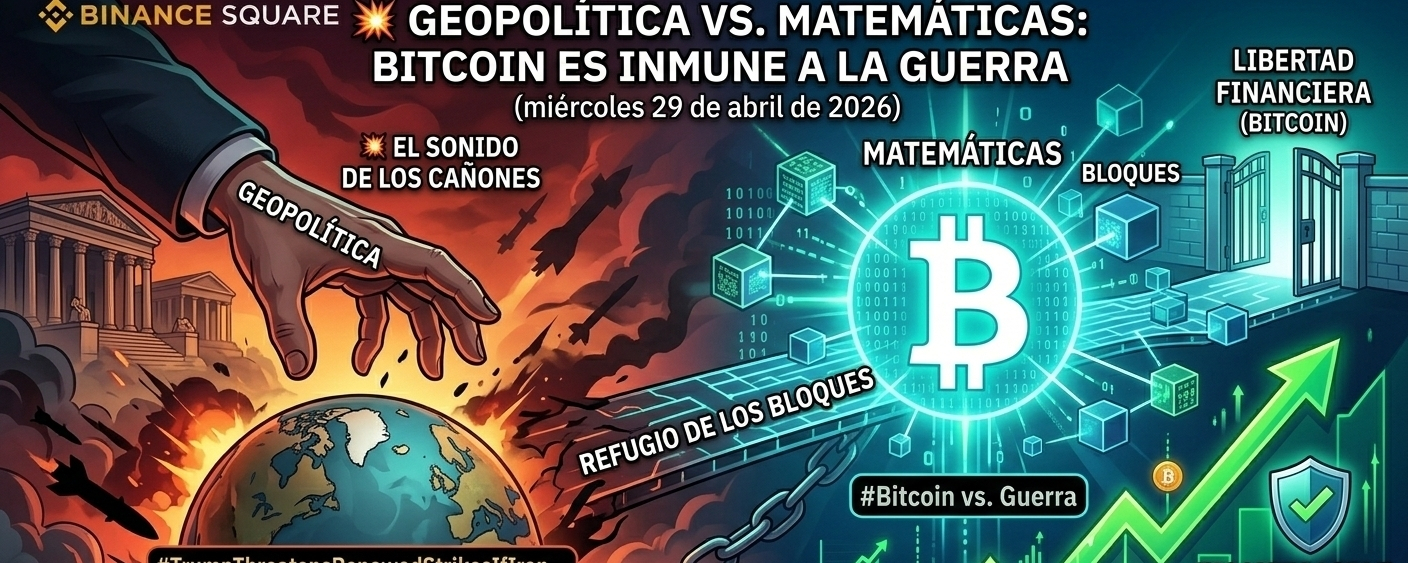
The Sound of Cannons and the Refuge of Blocks: Why Bitcoin is Immune to War.The traditional world is shaking again. Today's number one trend reflects maximum tension: threats of attacks, conflicts in the Middle East, and the ghost of geopolitical instability knocking at the door.
As an engineer, when I analyze the fiat financial system (the dollar, the euro), I see a building constructed on a tectonic fault. The value of traditional money depends on politicians playing nice and not missiles falling. The moment there's a conflict, supply chains break, governments print money to fund wars, and your purchasing power is collateral damage.
The Sound of Cannons and the Refuge of Blocks: Why Bitcoin is Immune to War.
The traditional world is shaking again. Today's number one trend reflects maximum tension: threats of attacks, conflicts in the Middle East, and the ghost of geopolitical instability knocking at the door.
As an engineer, when I analyze the fiat financial system (the dollar, the euro), I see a building constructed on a tectonic fault. The value of traditional money depends on politicians playing nice and not missiles falling. The moment there's a conflict, supply chains break, governments print money to fund wars, and your purchasing power is collateral damage.
As an engineer, when I analyze the fiat financial system (the dollar, the euro), I see a building constructed on a tectonic fault. The value of traditional money depends on politicians playing nice and not missiles falling. The moment there's a conflict, supply chains break, governments print money to fund wars, and your purchasing power is collateral damage.
134
Article
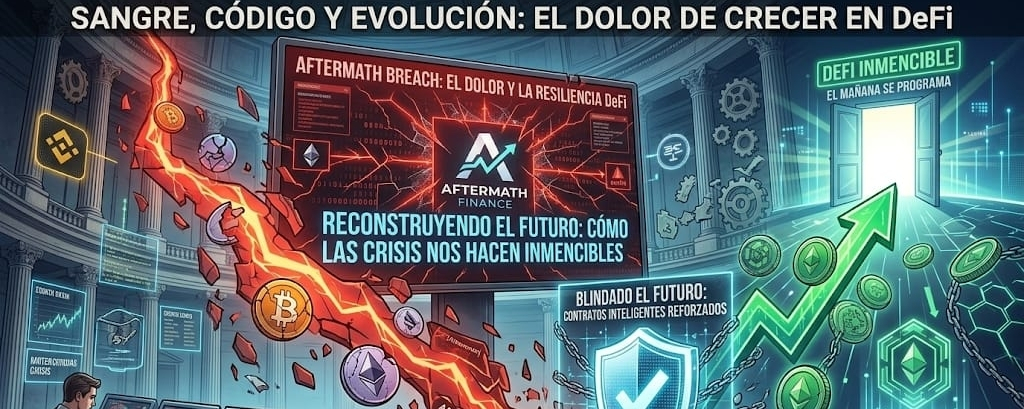
The Pain of Growing: What the Aftermath Hack Teaches Us About the Unbreakable Future of DeFi.Family. Watching the trend #AftermathFinanceBreach on the Binance Square is like watching a battle buddy fall. As a finance specialist and a die-hard crypto enthusiast, every time a DeFi protocol gets exploited, I feel a stab of frustration.
But let the engineer inside me take the wheel for a second, because panic is the worst enemy of your portfolio.
🏗️ The Engineering Behind the Chaos (Simple Explanation):
What is DeFi? It's the most beautiful ambition of our generation: building banks without bankers, using code (Smart Contracts). But the code is written by humans, and humans make mistakes. A hack like Aftermath doesn't mean the DeFi concept is flawed. It means a hacker found a tiny crack in the digital wall of the castle and slipped through.
The Pain of Growing: What the Aftermath Hack Teaches Us About the Unbreakable Future of DeFi.
Family. Watching the trend #AftermathFinanceBreach on the Binance Square is like watching a battle buddy fall. As a finance specialist and a die-hard crypto enthusiast, every time a DeFi protocol gets exploited, I feel a stab of frustration.
But let the engineer inside me take the wheel for a second, because panic is the worst enemy of your portfolio.
🏗️ The Engineering Behind the Chaos (Simple Explanation):
What is DeFi? It's the most beautiful ambition of our generation: building banks without bankers, using code (Smart Contracts). But the code is written by humans, and humans make mistakes. A hack like Aftermath doesn't mean the DeFi concept is flawed. It means a hacker found a tiny crack in the digital wall of the castle and slipped through.
But let the engineer inside me take the wheel for a second, because panic is the worst enemy of your portfolio.
🏗️ The Engineering Behind the Chaos (Simple Explanation):
What is DeFi? It's the most beautiful ambition of our generation: building banks without bankers, using code (Smart Contracts). But the code is written by humans, and humans make mistakes. A hack like Aftermath doesn't mean the DeFi concept is flawed. It means a hacker found a tiny crack in the digital wall of the castle and slipped through.
547
Article
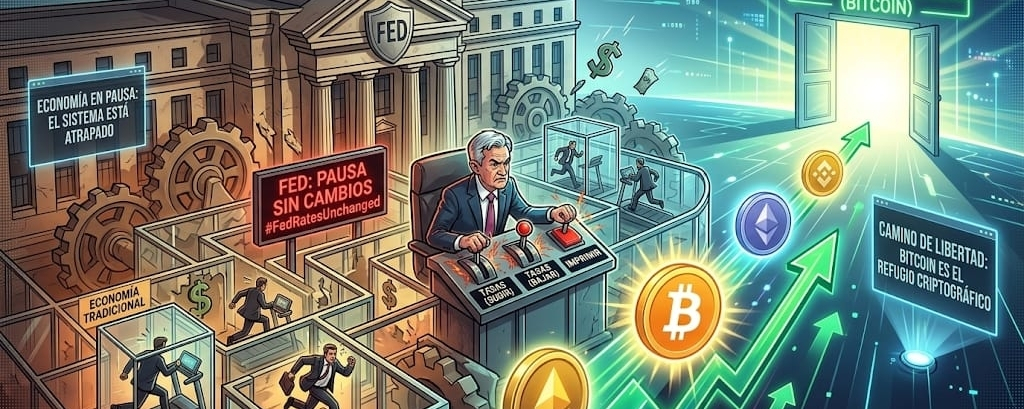
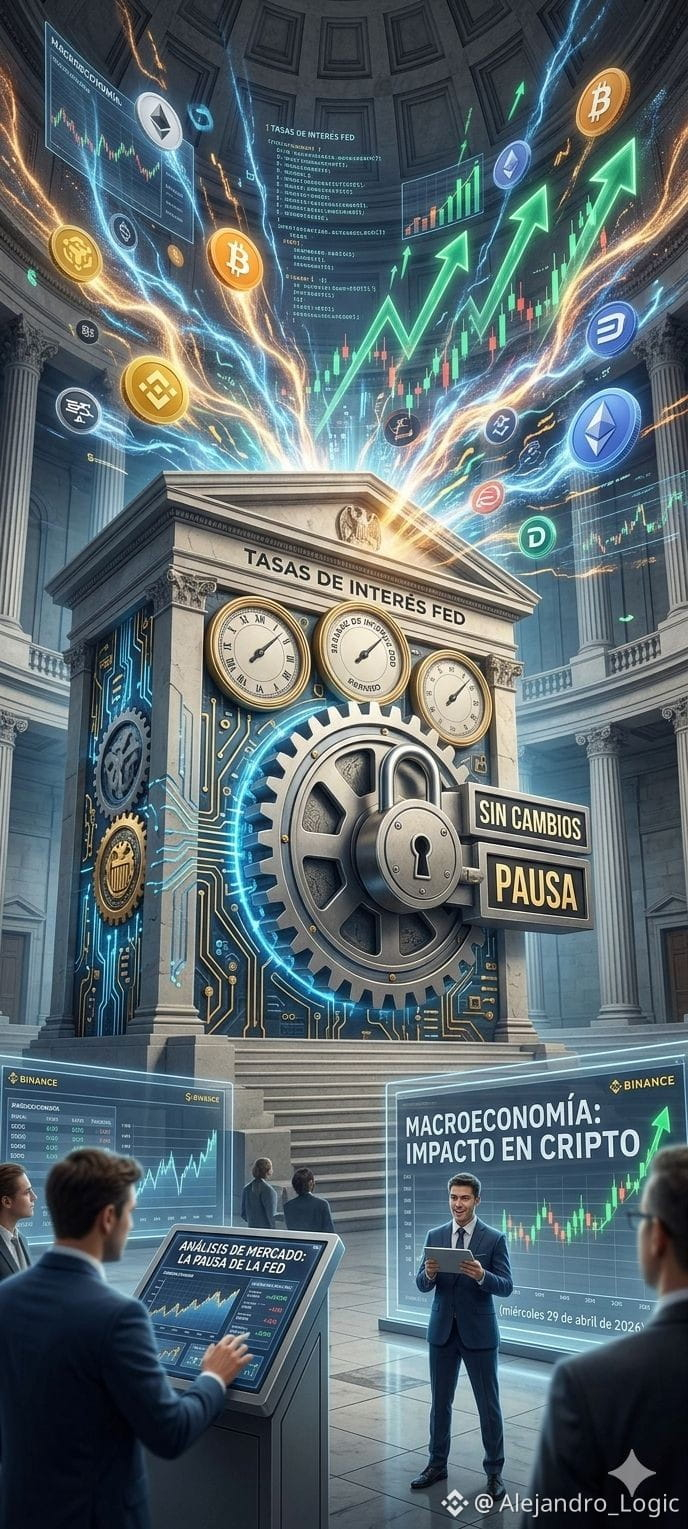
The Fed is Stuck in Its Own Maze: Why "No Change" is a Cry for Freedom for BitcoinEver felt like you're sprinting on a treadmill at full speed, but the scenery around you is stuck, and you can't catch your breath? That's exactly the psychological vibe that traditional economics is imposing on us today!
We just witnessed trend #1 explode: #FedRatesUnchanged . The Federal Reserve has decided to "pause" and keep interest rates unchanged. Traditional news outlets will tell you this is "stability." But as an engineer analyzing financial systems and structures, I'll give it to you straight: It's the signal of a engine about to collapse!
The Fed is Stuck in Its Own Maze: Why "No Change" is a Cry for Freedom for Bitcoin
Ever felt like you're sprinting on a treadmill at full speed, but the scenery around you is stuck, and you can't catch your breath? That's exactly the psychological vibe that traditional economics is imposing on us today!
We just witnessed trend #1 explode: #FedRatesUnchanged . The Federal Reserve has decided to "pause" and keep interest rates unchanged. Traditional news outlets will tell you this is "stability." But as an engineer analyzing financial systems and structures, I'll give it to you straight: It's the signal of a engine about to collapse!
We just witnessed trend #1 explode: #FedRatesUnchanged . The Federal Reserve has decided to "pause" and keep interest rates unchanged. Traditional news outlets will tell you this is "stability." But as an engineer analyzing financial systems and structures, I'll give it to you straight: It's the signal of a engine about to collapse!
148
·
--
Bullish
the FED and $BTC the Chessboard
My blood is boiling with adrenaline over this, fam! 🤯 The FED just spoke: rates remain unchanged. As an engineer and a crazy passionate about the real economy, I see the board clearly: the traditional system is cornered and has no way out!
Psychologically, the masses are doubting and feeling fear over the pause, but for us strategists, this is music. It's the tension before the league breaks. While fiat is gasping, trying not to collapse the economy, our beloved Bitcoin and the cryptos are gearing up to absorb the next wave of liquidity. 🚀
You don't invest in crypto to survive, you invest to be free! Are you positioning your portfolio or are you going to let fear steal the cycle of your life? Wake up!
#FedRatesUnchanged #CryptoStrategy #Bitcoin #Macroeconomics
By: Alejandro_logic
$ETH
{future}(ETHUSDT)
$USDC
{future}(USDCUSDT)
the FED and $BTC the Chessboard
My blood is boiling with adrenaline over this, fam! 🤯 The FED just spoke: rates remain unchanged. As an engineer and a crazy passionate about the real economy, I see the board clearly: the traditional system is cornered and has no way out!
Psychologically, the masses are doubting and feeling fear over the pause, but for us strategists, this is music. It's the tension before the league breaks. While fiat is gasping, trying not to collapse the economy, our beloved Bitcoin and the cryptos are gearing up to absorb the next wave of liquidity. 🚀
You don't invest in crypto to survive, you invest to be free! Are you positioning your portfolio or are you going to let fear steal the cycle of your life? Wake up!
#FedRatesUnchanged #CryptoStrategy #Bitcoin #Macroeconomics
By: Alejandro_logic
$ETH
$USDC
My blood is boiling with adrenaline over this, fam! 🤯 The FED just spoke: rates remain unchanged. As an engineer and a crazy passionate about the real economy, I see the board clearly: the traditional system is cornered and has no way out!
Psychologically, the masses are doubting and feeling fear over the pause, but for us strategists, this is music. It's the tension before the league breaks. While fiat is gasping, trying not to collapse the economy, our beloved Bitcoin and the cryptos are gearing up to absorb the next wave of liquidity. 🚀
You don't invest in crypto to survive, you invest to be free! Are you positioning your portfolio or are you going to let fear steal the cycle of your life? Wake up!
#FedRatesUnchanged #CryptoStrategy #Bitcoin #Macroeconomics
By: Alejandro_logic
$ETH
$USDC
1
234
Log in to explore more content
Join global crypto users on Binance Square
⚡️ Get latest and useful information about crypto.
💬 Trusted by the world’s largest crypto exchange.
👍 Discover real insights from verified creators.
Email / Phone number
Trending Topics
EtherGains70.9%InQ3
46,337 views
616 Discussing
One of the best third quarters in history 💰
September closed out last night, and with it, the quarter. For the quarter, BTC is up 42%—the second-best Q3 on record. ETH had a record-breaking Q3 overall, up 70%.
Looking at the chart, things are still looking good: we’re holding support, but we’re testing it more and more often. Plus, ETF momentum is weakening — inflows are gradually declining, and yesterday saw outflows for the first time in a long while.
Yes, historically, October has been a good month for crypto — it’s not called “Uptober” for nothing. But it’s also one of the most volatile months. Last year, for example, we managed to hit a new all-time high (ATH) and experience a flash crash.
🚀 High Accuracy Trades.
$BTC
$ETH
$SOL
#EtherGains70.9%InQ3 #DollarIndexHitsHighestSinceMay2025 #CFTCSubmitsTwoEventContractRulesToWhiteHouse #MicronBeatsEarningsLiftsGuidance
Knowledge is Power
·0 Likes
·125 views
TreasuryLetsStatesFileStablecoinCertificationsEarly
1,358 views
25 Discussing
US10YearYieldNears5.3%
81,134 views
781 Discussing