

Abo Crypto
1.3k Posts

Abo Crypto
Report
Block User
web3 creator | On-Chain Analyst | Whale Tracking | Decoding Smart Money Moves & Market behavior | Signals • Flows • Cyclrs
Open Trade
Frequent Trader
5.9 Years
45 Following
2.4K+ Followers
10.9K+ Liked
Posts
Portfolio
All
Quotes
Videos
PINNED
·
--
Bearish

13
1
34
23.6k
PINNED
·
--
Bearish
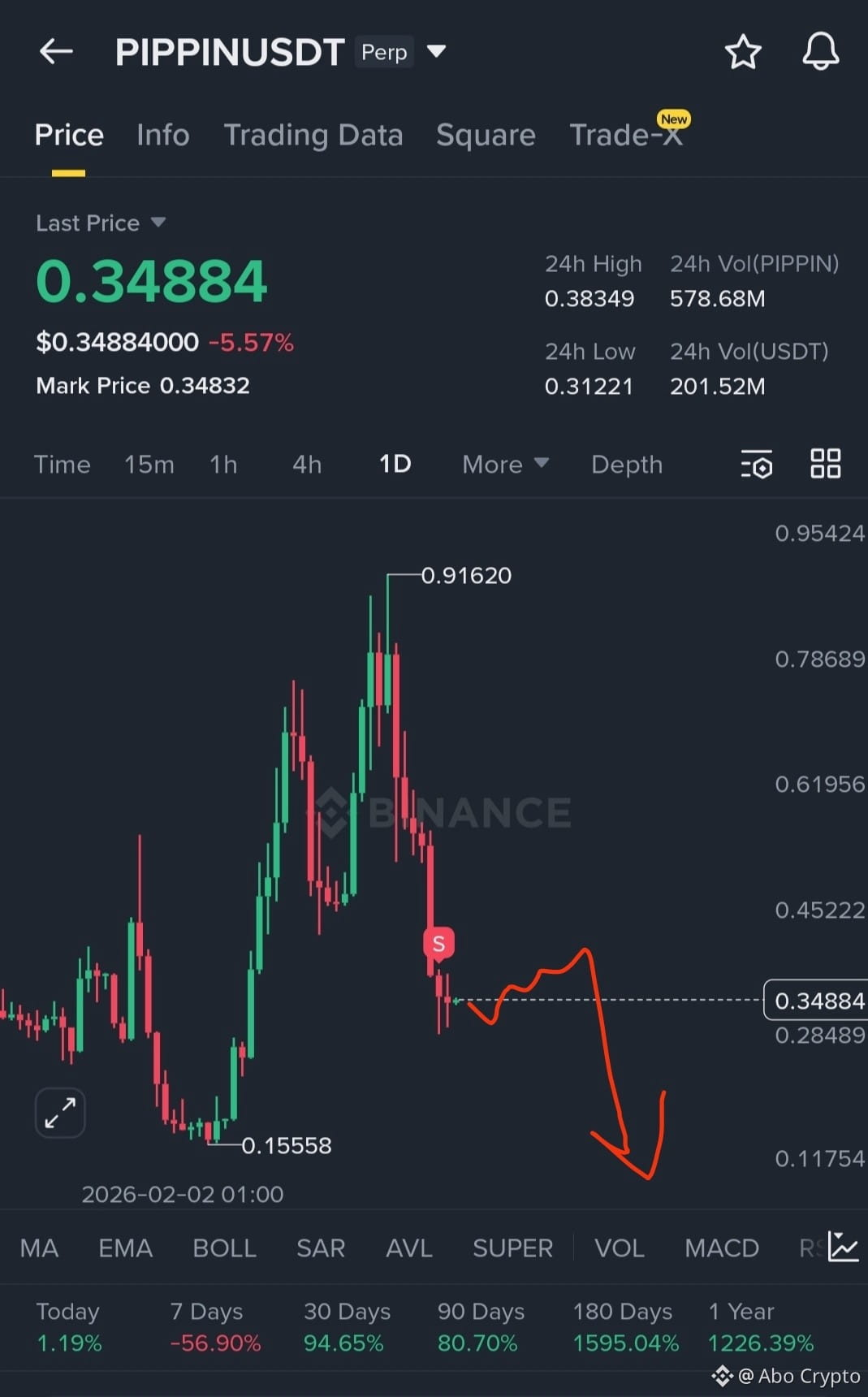
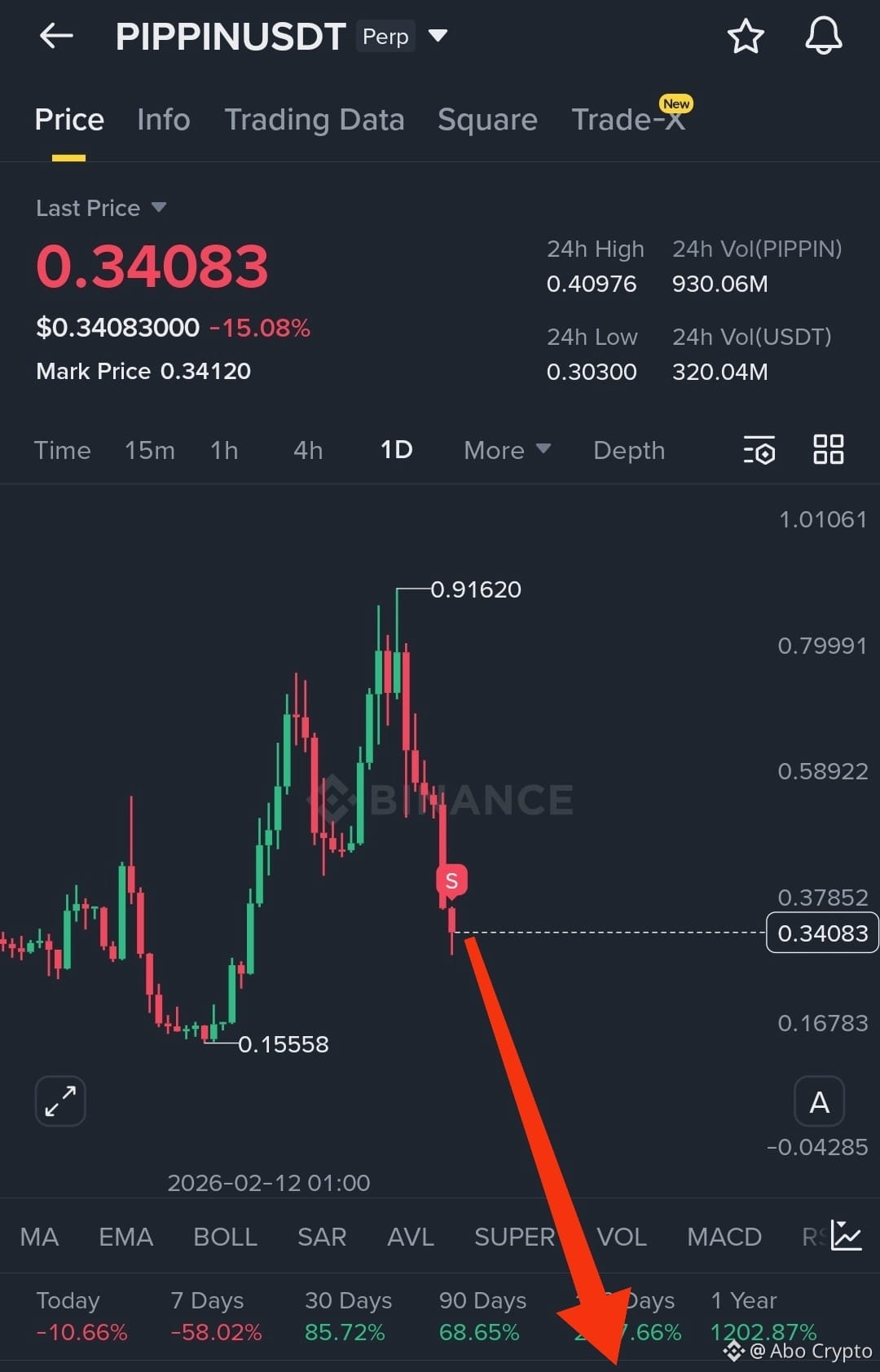
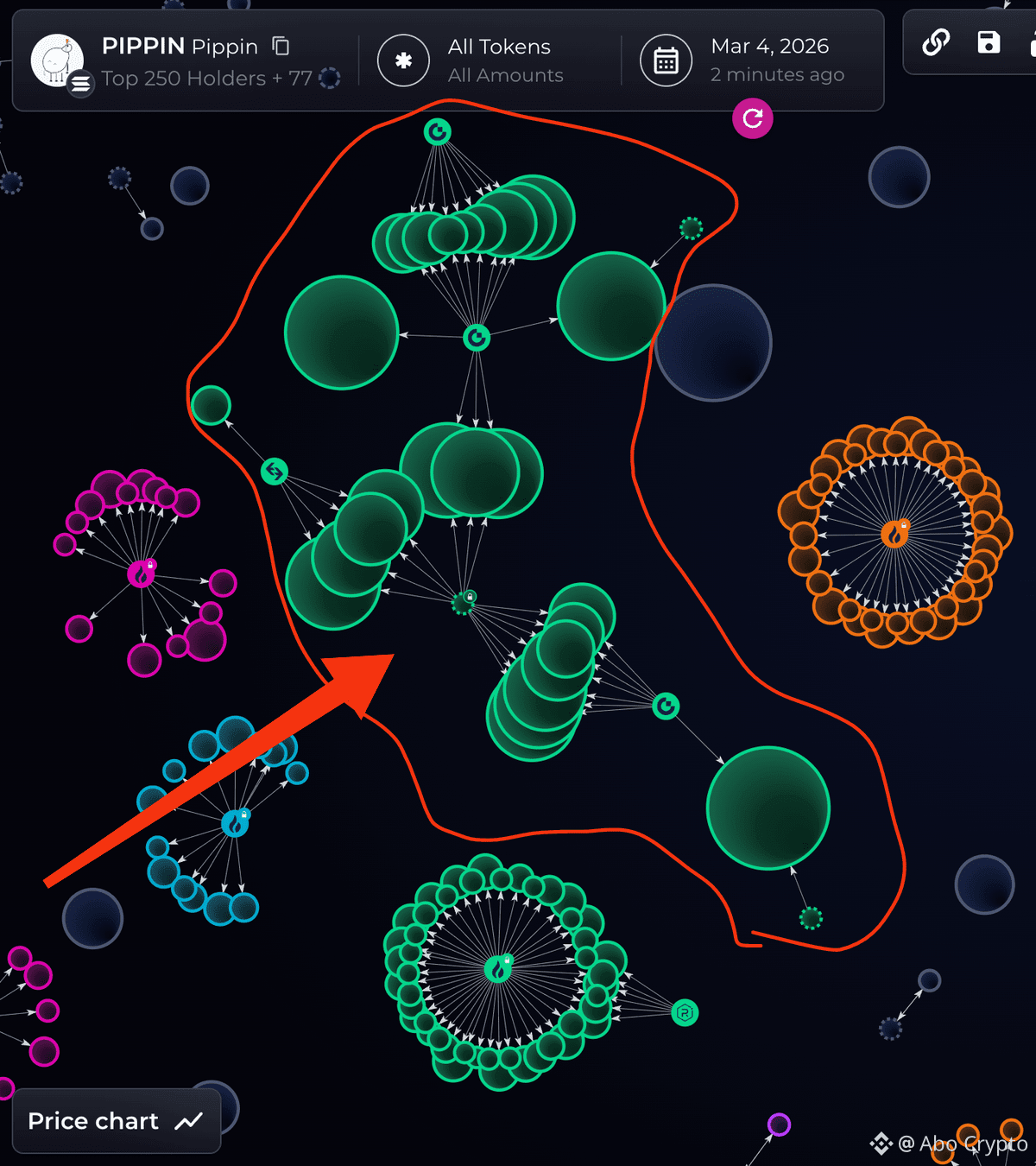
🚨$pippin 120 wallets control 80% of the supply
🤔🤔🤔
🚨$pippin 120 wallets control 80% of the supply
🤔🤔🤔
🤔🤔🤔
2
19
37k
·
--
Bullish
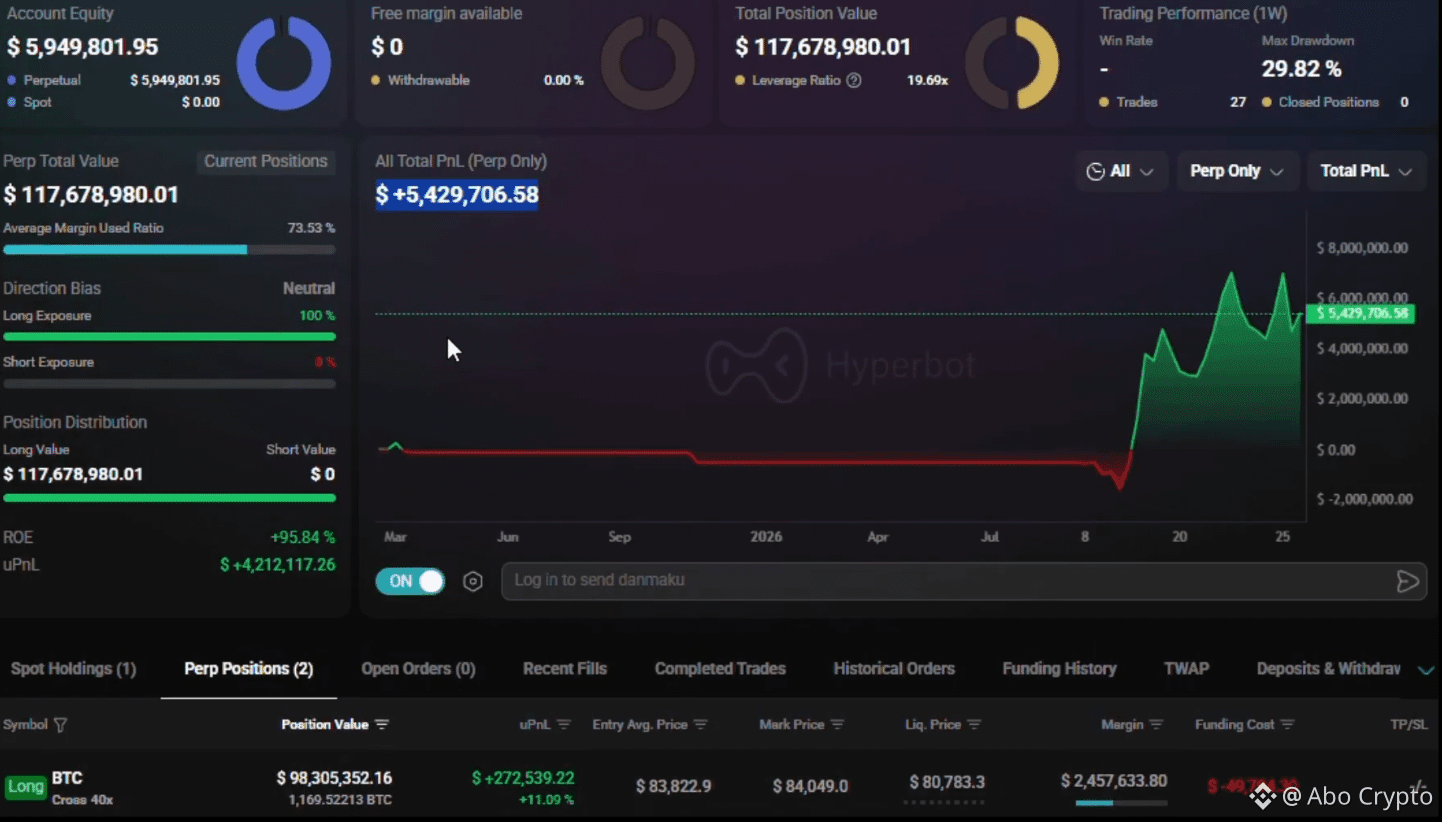
A whale returns to Bitcoin with a $98.3 million position and 40x leverage
This trader had previously made about $5.4 million in profits
And now he’s back and has opened a $98.3 million long position on $BTC
But there’s one number that makes the trade even more interesting
Liquidation price: $80, 785
This means that a position worth nearly $100 million has become extremely sensitive to any sharp movement in Bitcoin
The whale clearly doesn’t enter with small positions he puts tens of millions behind a single trend
Is this trade an attempt to capitalize on a new uptrend
Or could the 40x leverage put his previous profits
A whale returns to Bitcoin with a $98.3 million position and 40x leverage
This trader had previously made about $5.4 million in profits
And now he’s back and has opened a $98.3 million long position on $BTC
But there’s one number that makes the trade even more interesting
Liquidation price: $80, 785
This means that a position worth nearly $100 million has become extremely sensitive to any sharp movement in Bitcoin
The whale clearly doesn’t enter with small positions he puts tens of millions behind a single trend
Is this trade an attempt to capitalize on a new uptrend
Or could the 40x leverage put his previous profits
This trader had previously made about $5.4 million in profits
And now he’s back and has opened a $98.3 million long position on $BTC
But there’s one number that makes the trade even more interesting
Liquidation price: $80, 785
This means that a position worth nearly $100 million has become extremely sensitive to any sharp movement in Bitcoin
The whale clearly doesn’t enter with small positions he puts tens of millions behind a single trend
Is this trade an attempt to capitalize on a new uptrend
Or could the 40x leverage put his previous profits
1
2
187
·
--
Bullish
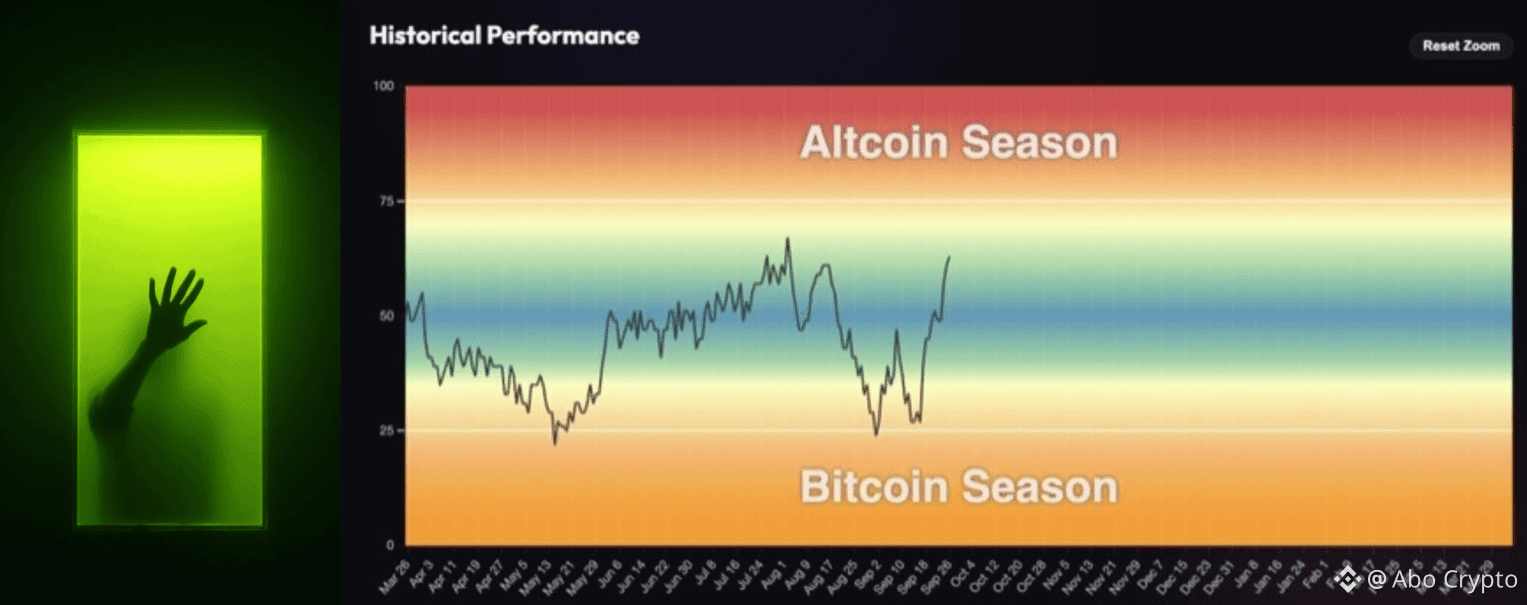
The Altseason indicator has started moving like crazy, and altcoins have begun to wake up
After a long period where most of the market revolved around Bitcoin
Now the picture is starting to change
The indicator bounced strongly from the “Bitcoin Season” zone and quickly climbed toward the “Altcoin Season” zone
And here begins the phase that many have been waiting for:
Bitcoin moves first
, then liquidity begins to shift to Ethereum
, then to the major coins
, and then funds start looking for smaller, higher-risk opportunities
. And when this cycle actually begins
, coins that have been dormant for months may turn into the wildest coins on the market
But what has me watching the index right now is the speed of the movement
The question is no longer whether altcoins are moving
The question is whether we’re facing the start of the altcoin season everyone has been waiting for
Because the last time the market started shifting this way
the numbers on the screen began changing rapidly
$FIL $DYDX $ZRO
The Altseason indicator has started moving like crazy, and altcoins have begun to wake up
After a long period where most of the market revolved around Bitcoin
Now the picture is starting to change
The indicator bounced strongly from the “Bitcoin Season” zone and quickly climbed toward the “Altcoin Season” zone
And here begins the phase that many have been waiting for:
Bitcoin moves first
, then liquidity begins to shift to Ethereum
, then to the major coins
, and then funds start looking for smaller, higher-risk opportunities
. And when this cycle actually begins
, coins that have been dormant for months may turn into the wildest coins on the market
But what has me watching the index right now is the speed of the movement
The question is no longer whether altcoins are moving
The question is whether we’re facing the start of the altcoin season everyone has been waiting for
Because the last time the market started shifting this way
the numbers on the screen began changing rapidly
$FIL $DYDX $ZRO
After a long period where most of the market revolved around Bitcoin
Now the picture is starting to change
The indicator bounced strongly from the “Bitcoin Season” zone and quickly climbed toward the “Altcoin Season” zone
And here begins the phase that many have been waiting for:
Bitcoin moves first
, then liquidity begins to shift to Ethereum
, then to the major coins
, and then funds start looking for smaller, higher-risk opportunities
. And when this cycle actually begins
, coins that have been dormant for months may turn into the wildest coins on the market
But what has me watching the index right now is the speed of the movement
The question is no longer whether altcoins are moving
The question is whether we’re facing the start of the altcoin season everyone has been waiting for
Because the last time the market started shifting this way
the numbers on the screen began changing rapidly
$FIL $DYDX $ZRO
2
767
·
--
Bullish
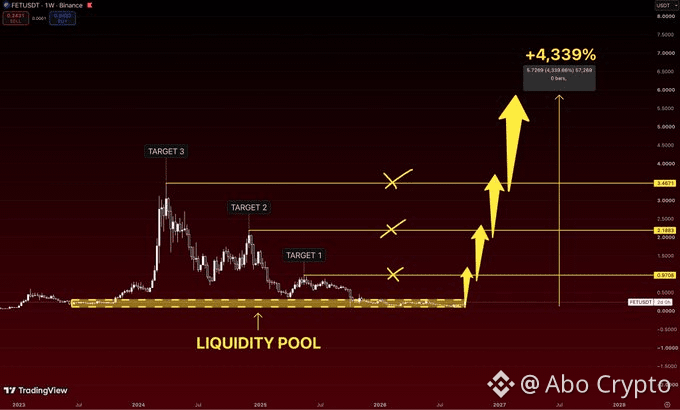
$FET is sitting in the kind of zone everyone hates buying
And that’s exactly why I’m watching it
Years of price action compressed into the same liquidity pool
while the upside levels are still sitting untouched: $0.97 $2.18 $3.46
If this structure finally expands the chart maps out a move of roughly +4,339%
Sounds ridiculous from $0.24
But so did every major altcoin run before it actually happened
I’m keeping $FET on my radar
$FET is sitting in the kind of zone everyone hates buying
And that’s exactly why I’m watching it
Years of price action compressed into the same liquidity pool
while the upside levels are still sitting untouched: $0.97 $2.18 $3.46
If this structure finally expands the chart maps out a move of roughly +4,339%
Sounds ridiculous from $0.24
But so did every major altcoin run before it actually happened
I’m keeping $FET on my radar
And that’s exactly why I’m watching it
Years of price action compressed into the same liquidity pool
while the upside levels are still sitting untouched: $0.97 $2.18 $3.46
If this structure finally expands the chart maps out a move of roughly +4,339%
Sounds ridiculous from $0.24
But so did every major altcoin run before it actually happened
I’m keeping $FET on my radar
3
312
·
--
Bullish
🚨Russia Officially Launches a New Initiative to Regulate the Crypto Market
The Bank of Russia announced that registration of cryptocurrency trading platforms and custodians will begin on October 5, 2026, after the new regulations take effect
Most importantly, the Bank of Russia says there are 27 regulatory measures under the new framework, and the remaining secondary regulations are scheduled to be finalized by the end of October
This comes at a very different time in the United States
The CLARITY Act failed to pass a procedural vote in the Senate in September with a vote of 49 to 50, even though it aimed to establish a comprehensive federal framework for the cryptocurrency market
But there is an important point:
Russia is not opening the door to crypto without restrictions
The new framework places trading platforms and custodians within a formal regulatory system, while the use of cryptocurrencies as a means of payment within Russia remains prohibited, though their use in certain cross-border payments is permitted under the new rules
This is where the comparison becomes interesting:
Russia is building the regulatory framework and setting up registries
The United States is still debating its comprehensive federal framework
The competition for the future of the crypto market is not just between currencies but between the systems that will build the infrastructure around them
Who will move faster in building a regulated crypto market the United States or Russia
$BTC $ETH $BNB
🚨Russia Officially Launches a New Initiative to Regulate the Crypto Market
The Bank of Russia announced that registration of cryptocurrency trading platforms and custodians will begin on October 5, 2026, after the new regulations take effect
Most importantly, the Bank of Russia says there are 27 regulatory measures under the new framework, and the remaining secondary regulations are scheduled to be finalized by the end of October
This comes at a very different time in the United States
The CLARITY Act failed to pass a procedural vote in the Senate in September with a vote of 49 to 50, even though it aimed to establish a comprehensive federal framework for the cryptocurrency market
But there is an important point:
Russia is not opening the door to crypto without restrictions
The new framework places trading platforms and custodians within a formal regulatory system, while the use of cryptocurrencies as a means of payment within Russia remains prohibited, though their use in certain cross-border payments is permitted under the new rules
This is where the comparison becomes interesting:
Russia is building the regulatory framework and setting up registries
The United States is still debating its comprehensive federal framework
The competition for the future of the crypto market is not just between currencies but between the systems that will build the infrastructure around them
Who will move faster in building a regulated crypto market the United States or Russia
$BTC $ETH $BNB
The Bank of Russia announced that registration of cryptocurrency trading platforms and custodians will begin on October 5, 2026, after the new regulations take effect
Most importantly, the Bank of Russia says there are 27 regulatory measures under the new framework, and the remaining secondary regulations are scheduled to be finalized by the end of October
This comes at a very different time in the United States
The CLARITY Act failed to pass a procedural vote in the Senate in September with a vote of 49 to 50, even though it aimed to establish a comprehensive federal framework for the cryptocurrency market
But there is an important point:
Russia is not opening the door to crypto without restrictions
The new framework places trading platforms and custodians within a formal regulatory system, while the use of cryptocurrencies as a means of payment within Russia remains prohibited, though their use in certain cross-border payments is permitted under the new rules
This is where the comparison becomes interesting:
Russia is building the regulatory framework and setting up registries
The United States is still debating its comprehensive federal framework
The competition for the future of the crypto market is not just between currencies but between the systems that will build the infrastructure around them
Who will move faster in building a regulated crypto market the United States or Russia
$BTC $ETH $BNB

2
249
·
--
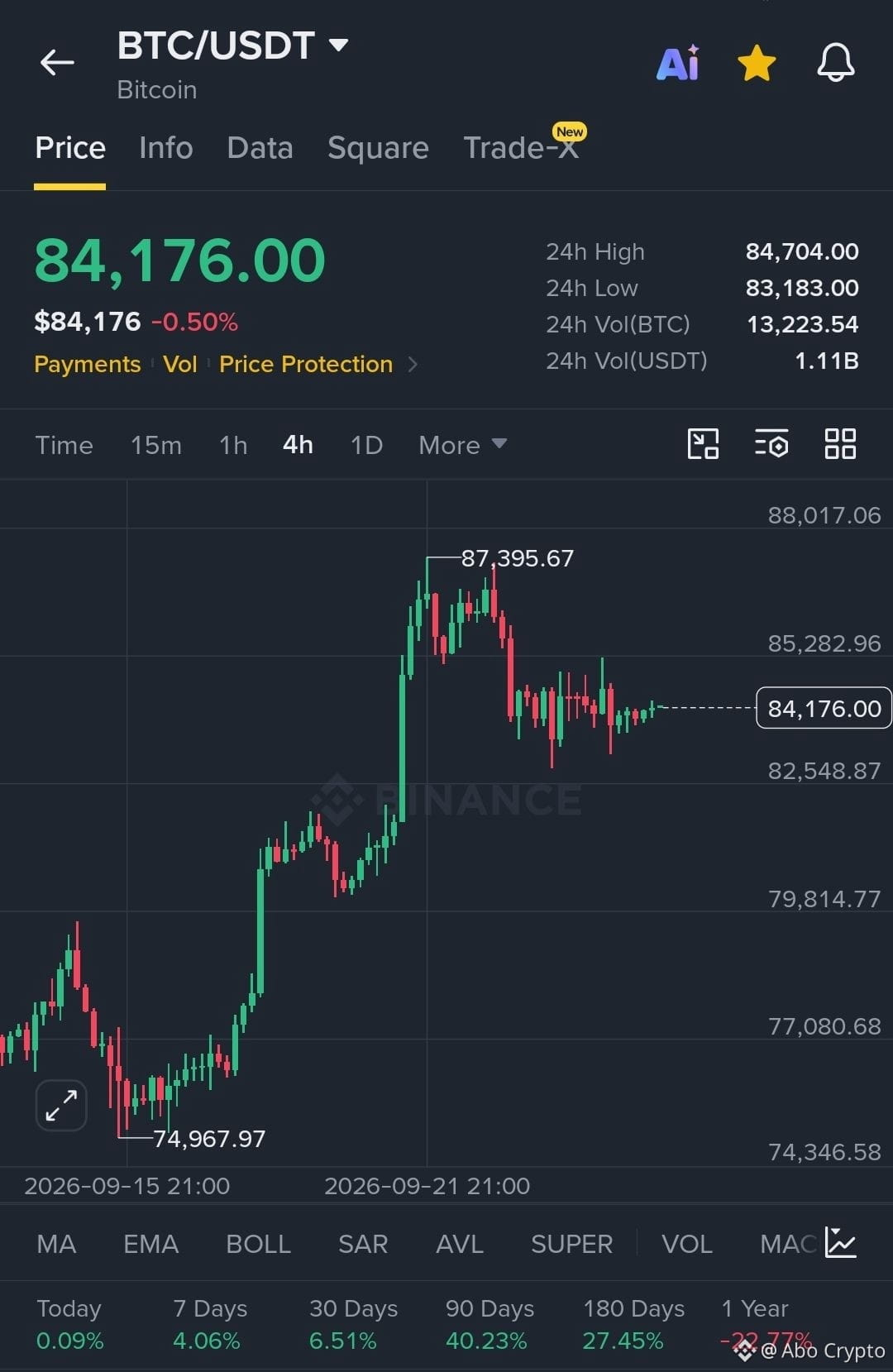
Has $BTC uptrend actually been confirmed?
Give me a clear percentage from 0% to 100%
What are the odds that we've entered a real bull market?
Has $BTC uptrend actually been confirmed?
Give me a clear percentage from 0% to 100%
What are the odds that we've entered a real bull market?
Give me a clear percentage from 0% to 100%
What are the odds that we've entered a real bull market?
1
1
227
·
--
Bullish
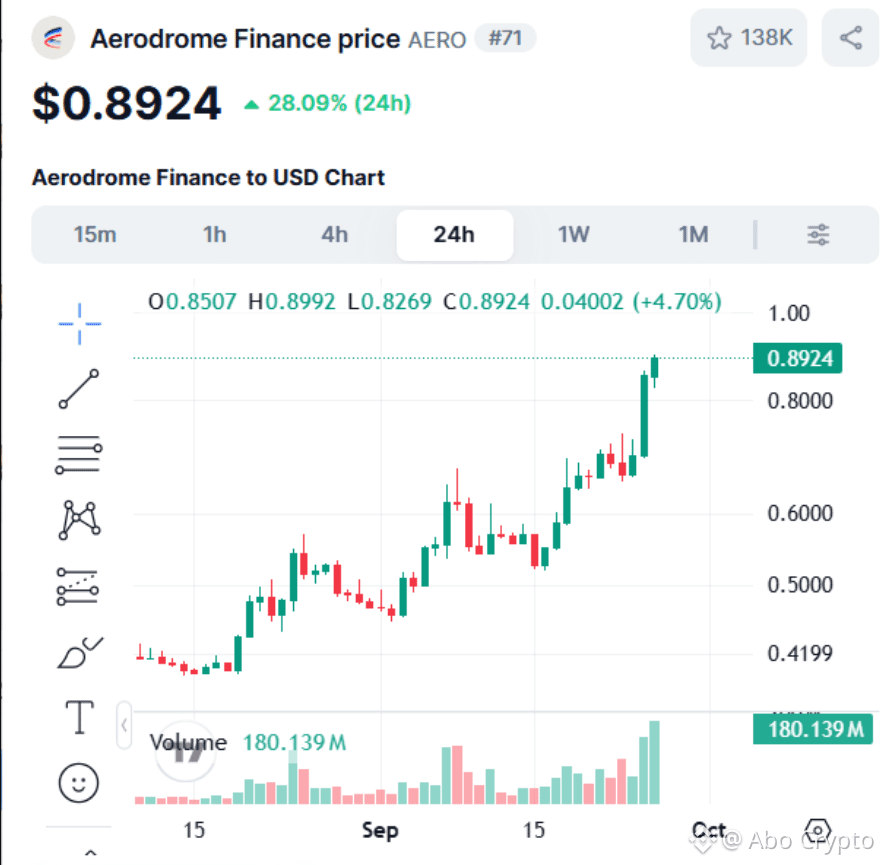
$AERO is flying high
Invest in value, not promises, hype, partnerships, or fancy tech narratives
$AERO is flying high
Invest in value, not promises, hype, partnerships, or fancy tech narratives
Invest in value, not promises, hype, partnerships, or fancy tech narratives
Abo Crypto
·
--
Bullish$AERO has already gone through the hardest part of the cycle.
The rally
The crash
The disappointment
Now the chart is starting to show something much more important
Acceptance
After printing its all time high, AERO spent months giving back nearly the entire move.
Every attempt to recover was rejected
Every bounce attracted more sellers.
Eventually, price found a floor.
Not because the project suddenly changed.
Because the market finally reached a point where selling pressure began to dry up.
That’s what makes this structure interesting.
Instead of continuing to print lower lows, $AERO has started defending the same support zone over and over again.
Markets don’t build strong trends from random price levels.
They build them from areas where buyers consistently step in.
The first level to watch is the BOS around $0.55.
Reclaiming that zone signals the market is beginning to shift back in favor of buyers.
Above that sits the major resistance near $1.56.
That’s the level where many trapped investors are likely to sell.
If demand is strong enough to absorb that supply, the path toward $2.20 becomes much cleaner.
And once previous resistance turns into support, the conversation changes completely.
What looked like an impossible recovery suddenly starts looking like the beginning of a new trend.
That’s how every major bull market unfolds.
Not with one giant candle.
But with a series of structural breakouts that slowly convince the market the bear trend is over.
Most traders won’t notice AERO while it’s sitting near support.
They’ll notice it after it doubles.
Then they’ll notice it again after it breaks the previous highs.
By then, the low-risk entries are usually gone.
If this structure continues developing the way the chart suggests, the move toward $3 isn’t just about hitting a price target.
It would represent a complete transition from accumulation back into expansion.
And those transitions are where the biggest opportunities are usually created.
$AERO
The rally
The crash
The disappointment
Now the chart is starting to show something much more important
Acceptance
After printing its all time high, AERO spent months giving back nearly the entire move.
Every attempt to recover was rejected
Every bounce attracted more sellers.
Eventually, price found a floor.
Not because the project suddenly changed.
Because the market finally reached a point where selling pressure began to dry up.
That’s what makes this structure interesting.
Instead of continuing to print lower lows, $AERO has started defending the same support zone over and over again.
Markets don’t build strong trends from random price levels.
They build them from areas where buyers consistently step in.
The first level to watch is the BOS around $0.55.
Reclaiming that zone signals the market is beginning to shift back in favor of buyers.
Above that sits the major resistance near $1.56.
That’s the level where many trapped investors are likely to sell.
If demand is strong enough to absorb that supply, the path toward $2.20 becomes much cleaner.
And once previous resistance turns into support, the conversation changes completely.
What looked like an impossible recovery suddenly starts looking like the beginning of a new trend.
That’s how every major bull market unfolds.
Not with one giant candle.
But with a series of structural breakouts that slowly convince the market the bear trend is over.
Most traders won’t notice AERO while it’s sitting near support.
They’ll notice it after it doubles.
Then they’ll notice it again after it breaks the previous highs.
By then, the low-risk entries are usually gone.
If this structure continues developing the way the chart suggests, the move toward $3 isn’t just about hitting a price target.
It would represent a complete transition from accumulation back into expansion.
And those transitions are where the biggest opportunities are usually created.
$AERO
1
293
·
--
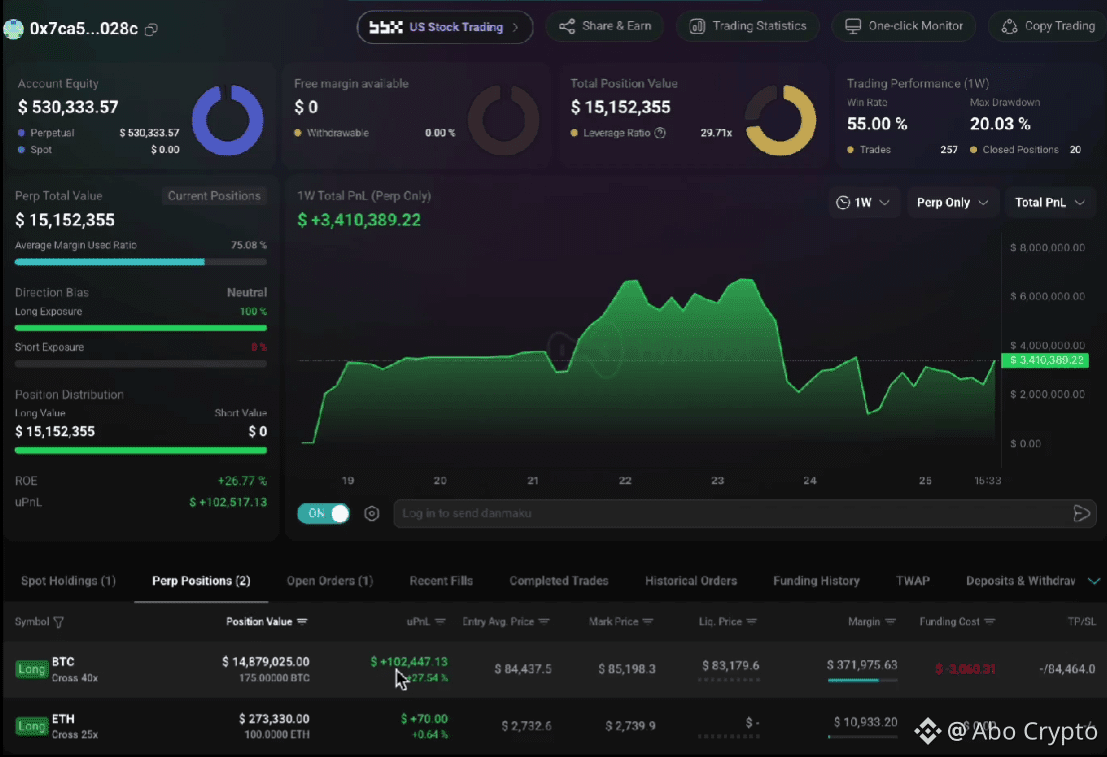
This whale opened a long position on Bitcoin when the price was near $85,000, and now his position is in a very dangerous zone
The trader has bet more than $15 million on Bitcoin’s rise
And he didn’t stop at $BTC
He also opened a $273K long position on $ETH
What’s even stranger is that this trader made about +$3.41 million
But there’s a number that deserves more attention than the profits
A liquidation price of $83,179 he only needs a drop of about $2,000 from the current price to enter the danger zone
Does this trader see a strong rally coming, or could leverage backfire on him this time?
This whale opened a long position on Bitcoin when the price was near $85,000, and now his position is in a very dangerous zone
The trader has bet more than $15 million on Bitcoin’s rise
And he didn’t stop at $BTC
He also opened a $273K long position on $ETH
What’s even stranger is that this trader made about +$3.41 million
But there’s a number that deserves more attention than the profits
A liquidation price of $83,179 he only needs a drop of about $2,000 from the current price to enter the danger zone
Does this trader see a strong rally coming, or could leverage backfire on him this time?
The trader has bet more than $15 million on Bitcoin’s rise
And he didn’t stop at $BTC
He also opened a $273K long position on $ETH
What’s even stranger is that this trader made about +$3.41 million
But there’s a number that deserves more attention than the profits
A liquidation price of $83,179 he only needs a drop of about $2,000 from the current price to enter the danger zone
Does this trader see a strong rally coming, or could leverage backfire on him this time?
1
5
577
·
--
Bullish
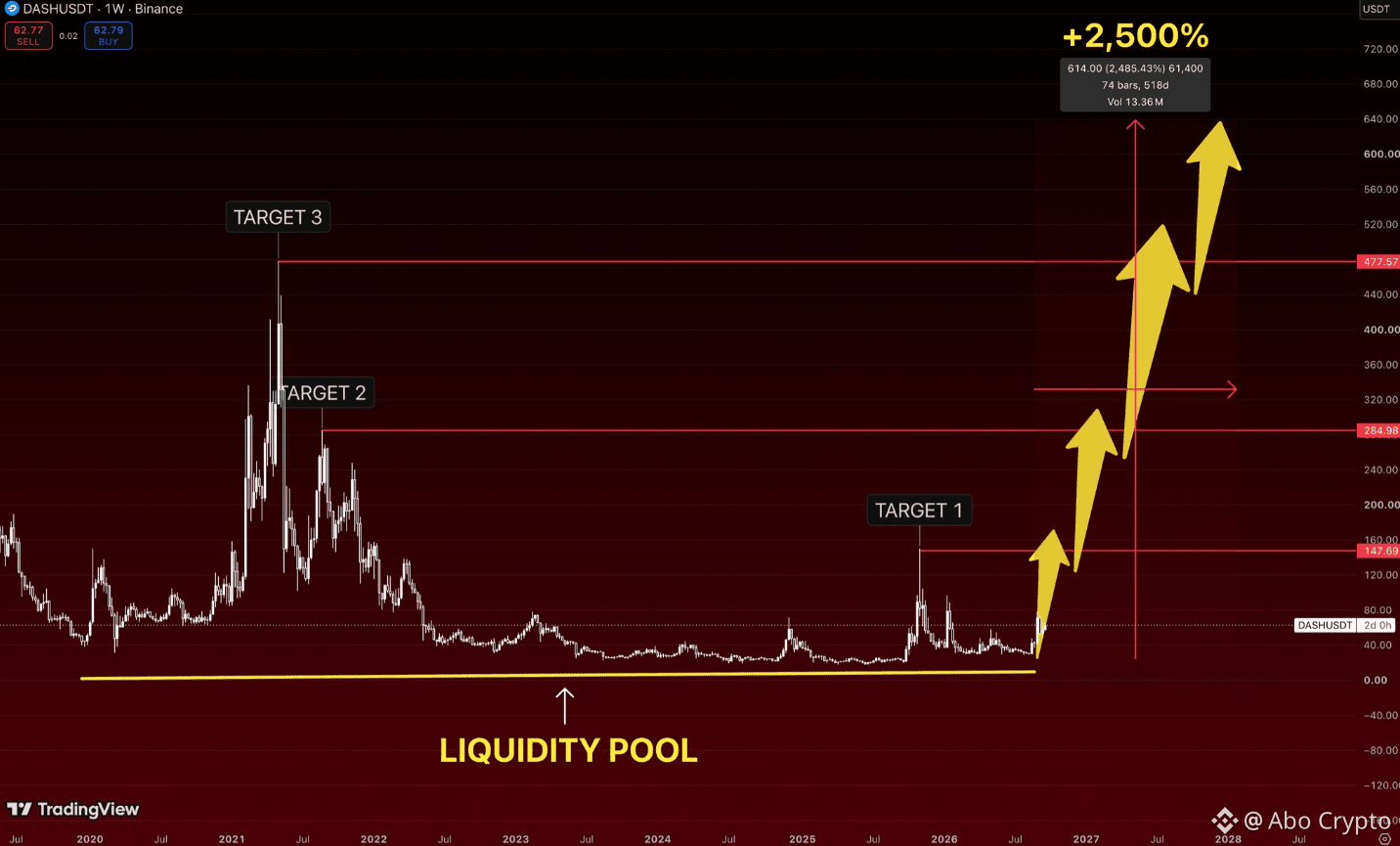
$DASH spent years being treated like a dead token
That’s usually when charts get interesting
Price has been building around the same massive liquidity pool for years
and now it’s starting to move away from it
The levels I’m watching: $147 $285 $478
And the full expansion shown on the chart reaches roughly +2,500%
The funny part?
If $DASH ever gets anywhere near those levels people who ignored it at $60 will suddenly call it “obvious”
I’d rather watch it before that happens
$DASH spent years being treated like a dead token
That’s usually when charts get interesting
Price has been building around the same massive liquidity pool for years
and now it’s starting to move away from it
The levels I’m watching: $147 $285 $478
And the full expansion shown on the chart reaches roughly +2,500%
The funny part?
If $DASH ever gets anywhere near those levels people who ignored it at $60 will suddenly call it “obvious”
I’d rather watch it before that happens
That’s usually when charts get interesting
Price has been building around the same massive liquidity pool for years
and now it’s starting to move away from it
The levels I’m watching: $147 $285 $478
And the full expansion shown on the chart reaches roughly +2,500%
The funny part?
If $DASH ever gets anywhere near those levels people who ignored it at $60 will suddenly call it “obvious”
I’d rather watch it before that happens
1
224
·
--
Bullish
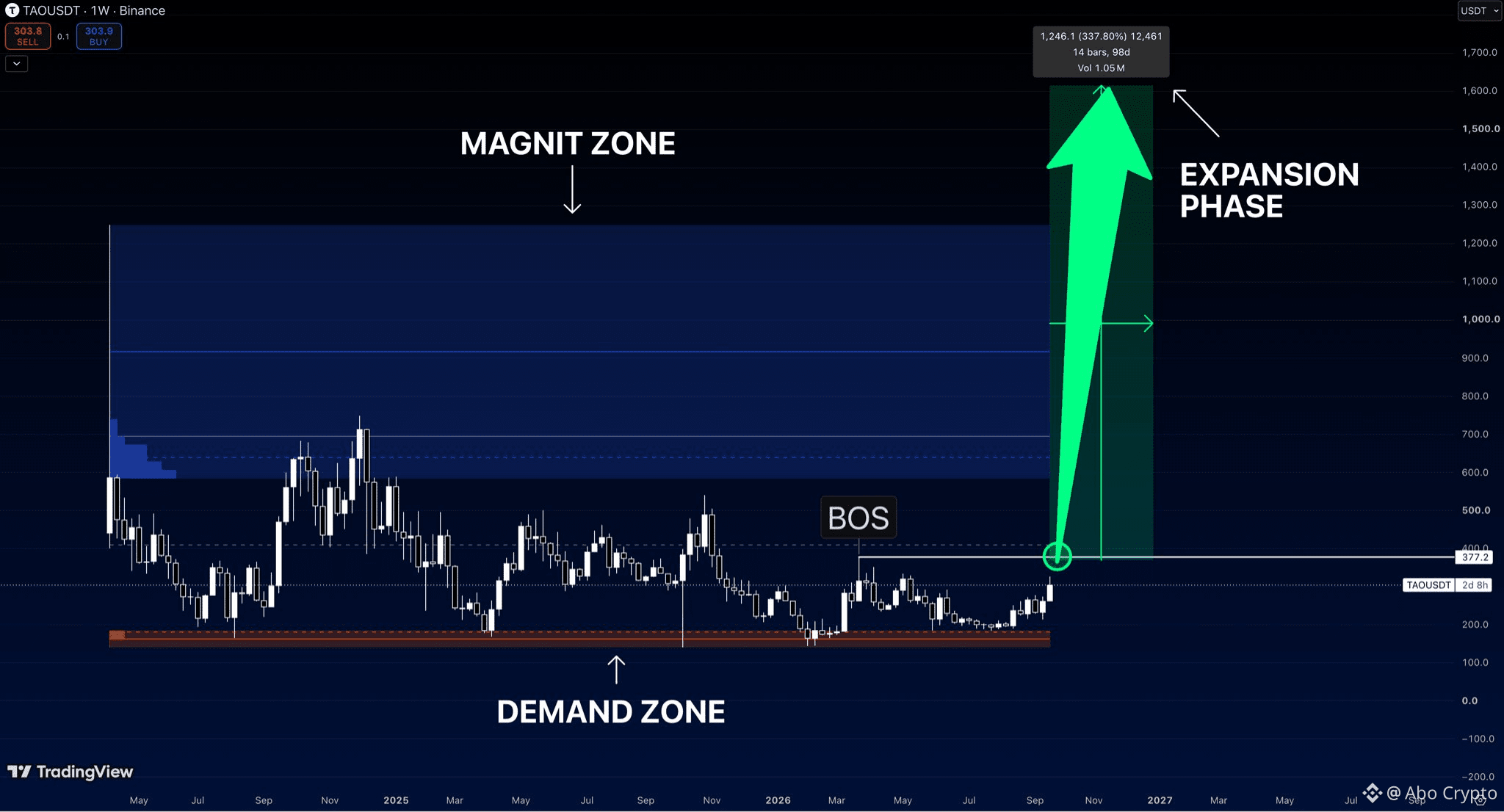
$TAO is starting to look dangerous again
For months, price kept getting absorbed near the same demand zone
Now we’re pushing into a BOS around $377
That’s the level I care about
If $TAO breaks through and holds it
the next major magnet sits around $600–$900
And above that?
The expansion on my chart points toward $1,500+
Roughly +337% from the setup.
Most people will wait until $TAO is back above $600 to become bullish
I’m watching the break before the crowd does
$TAO is starting to look dangerous again
For months, price kept getting absorbed near the same demand zone
Now we’re pushing into a BOS around $377
That’s the level I care about
If $TAO breaks through and holds it
the next major magnet sits around $600–$900
And above that?
The expansion on my chart points toward $1,500+
Roughly +337% from the setup.
Most people will wait until $TAO is back above $600 to become bullish
I’m watching the break before the crowd does
For months, price kept getting absorbed near the same demand zone
Now we’re pushing into a BOS around $377
That’s the level I care about
If $TAO breaks through and holds it
the next major magnet sits around $600–$900
And above that?
The expansion on my chart points toward $1,500+
Roughly +337% from the setup.
Most people will wait until $TAO is back above $600 to become bullish
I’m watching the break before the crowd does
1
221
·
--
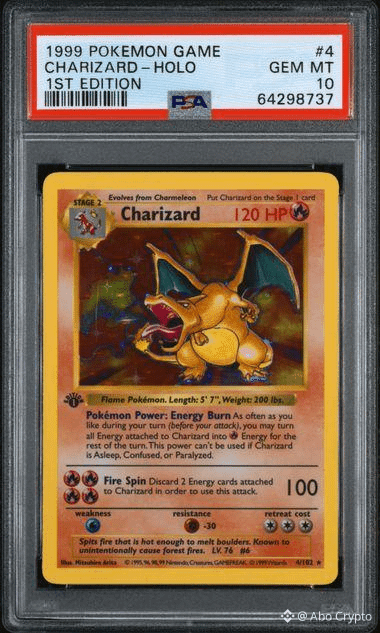
Someone paid 1 million for this Pokémon card, but the real reason is stranger than you might expect
1 million for a single Pokémon card might seem crazy at first
But when you look at the story from another angle, you’ll understand why the owner chose to pay that amount
This isn’t just any Charizard card
It’s from the 1999 Pokémon Base Set and is graded PSA 10 Gem Mint
But the real reason for the purchase wasn’t just its rarity
The man says he wants to own something today that he can look at in 10, 20, or 30 years and still feel the same sense of value
Imagine a kid in the ’90s who dreams of owning the best possible version of Charizard
Then, years later, when he’s finally able to buy it, he finds the perfect copy he’d been dreaming of right in front of him
So he pays $1,000,000 not because he needs another card
but because he sees something greater in it
a piece of his childhood that can stay with him until 2050
And this is where the story gets exciting for crypto, too
because the generation that collected Pokémon Cards as children is the same generation that later got into $BTC , NFTs, and digital currencies
The idea is the same:
something rare + a community that believes in it + a story that spans years
Someone paid 1 million for this Pokémon card, but the real reason is stranger than you might expect
1 million for a single Pokémon card might seem crazy at first
But when you look at the story from another angle, you’ll understand why the owner chose to pay that amount
This isn’t just any Charizard card
It’s from the 1999 Pokémon Base Set and is graded PSA 10 Gem Mint
But the real reason for the purchase wasn’t just its rarity
The man says he wants to own something today that he can look at in 10, 20, or 30 years and still feel the same sense of value
Imagine a kid in the ’90s who dreams of owning the best possible version of Charizard
Then, years later, when he’s finally able to buy it, he finds the perfect copy he’d been dreaming of right in front of him
So he pays $1,000,000 not because he needs another card
but because he sees something greater in it
a piece of his childhood that can stay with him until 2050
And this is where the story gets exciting for crypto, too
because the generation that collected Pokémon Cards as children is the same generation that later got into $BTC , NFTs, and digital currencies
The idea is the same:
something rare + a community that believes in it + a story that spans years
1 million for a single Pokémon card might seem crazy at first
But when you look at the story from another angle, you’ll understand why the owner chose to pay that amount
This isn’t just any Charizard card
It’s from the 1999 Pokémon Base Set and is graded PSA 10 Gem Mint
But the real reason for the purchase wasn’t just its rarity
The man says he wants to own something today that he can look at in 10, 20, or 30 years and still feel the same sense of value
Imagine a kid in the ’90s who dreams of owning the best possible version of Charizard
Then, years later, when he’s finally able to buy it, he finds the perfect copy he’d been dreaming of right in front of him
So he pays $1,000,000 not because he needs another card
but because he sees something greater in it
a piece of his childhood that can stay with him until 2050
And this is where the story gets exciting for crypto, too
because the generation that collected Pokémon Cards as children is the same generation that later got into $BTC , NFTs, and digital currencies
The idea is the same:
something rare + a community that believes in it + a story that spans years
1
4
402
·
--
Bullish
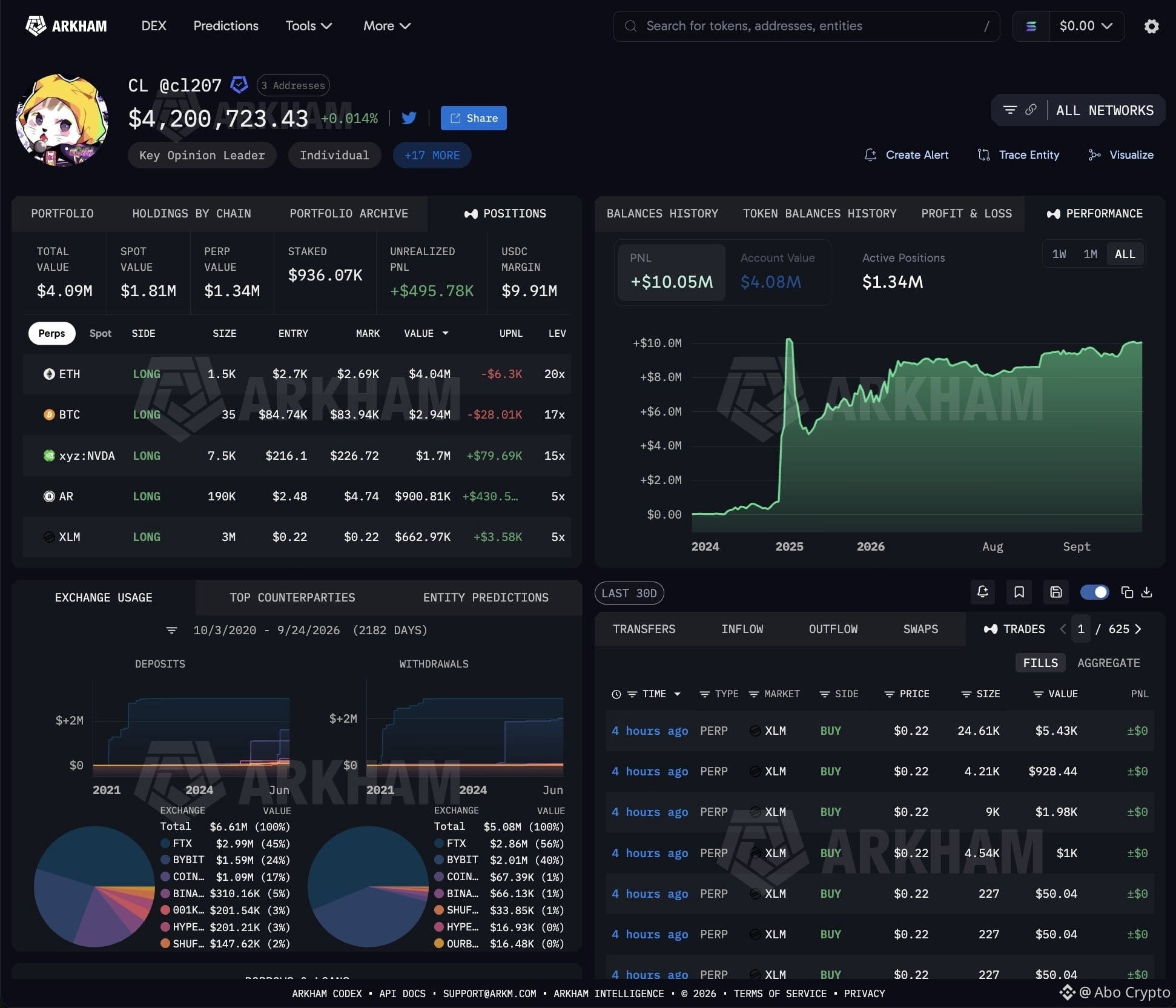
This trader has made over $10 million and is still buying
The trader known as CL just opened a $663,000 long position on $XLM
With this trade, his total positions have risen to $11.2 million across 7 positions, all of which are long
What’s even more surprising is that after making over $10 million in the market, he continues to put millions of dollars into long positions instead of cashing out and waiting for the next opportunity
This trader still sees upside potential in several cryptocurrencies
This trader has made over $10 million and is still buying
The trader known as CL just opened a $663,000 long position on $XLM
With this trade, his total positions have risen to $11.2 million across 7 positions, all of which are long
What’s even more surprising is that after making over $10 million in the market, he continues to put millions of dollars into long positions instead of cashing out and waiting for the next opportunity
This trader still sees upside potential in several cryptocurrencies
The trader known as CL just opened a $663,000 long position on $XLM
With this trade, his total positions have risen to $11.2 million across 7 positions, all of which are long
What’s even more surprising is that after making over $10 million in the market, he continues to put millions of dollars into long positions instead of cashing out and waiting for the next opportunity
This trader still sees upside potential in several cryptocurrencies
1
1
489
·
--
Bullish
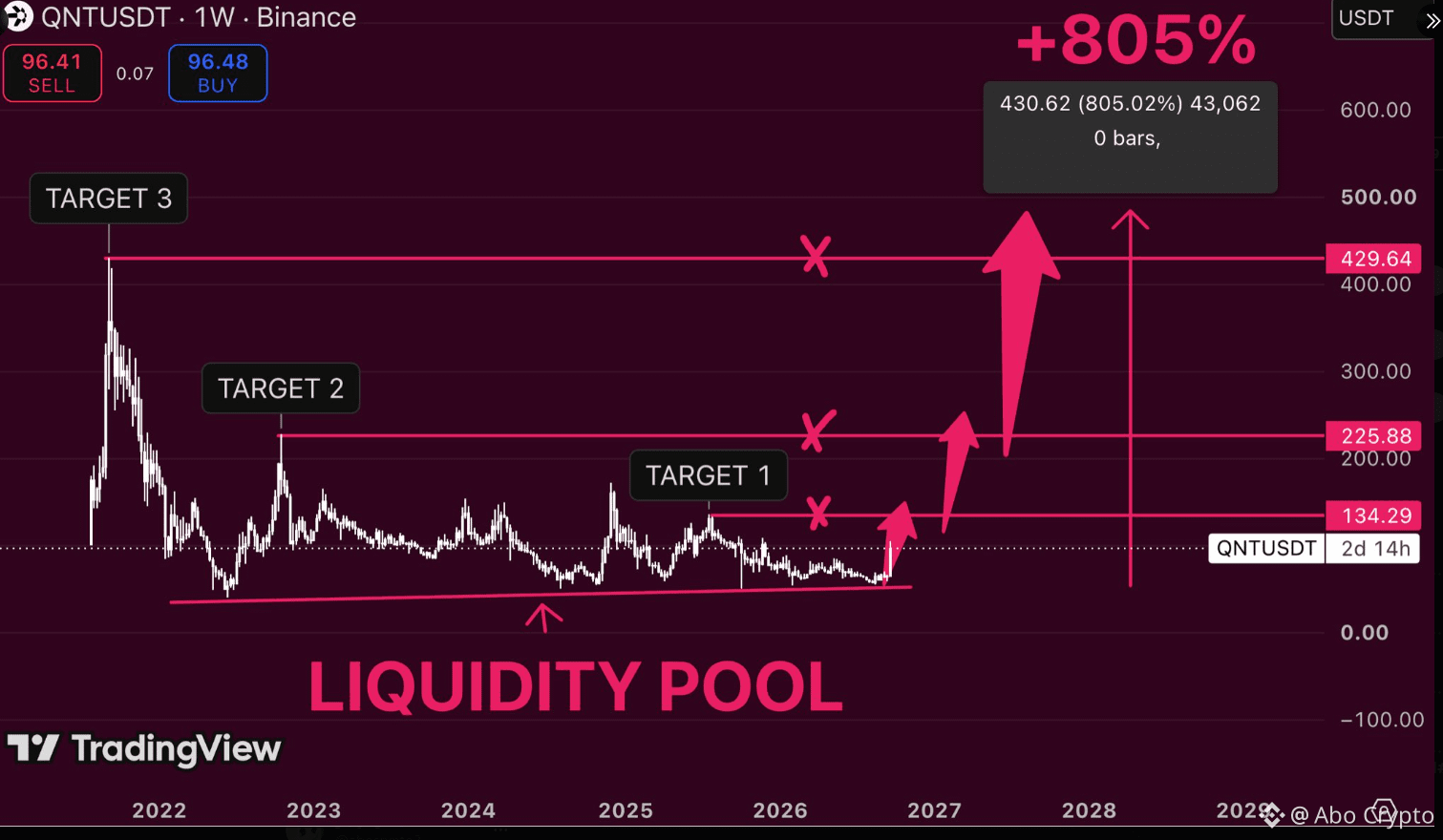
$QNT is sitting around $96 while everyone is chasing coins that already moved
I’d rather look at charts like this
Years of compression near the same liquidity zone
And the upside levels are still sitting there untouched: $134 → $225 → $429
That last target sounds ridiculous from here
But $QNT has traded above $400 before
If this structure finally expands, I’m looking at roughly +805%
Boring charts usually become interesting when it’s already too late
$QNT is sitting around $96 while everyone is chasing coins that already moved
I’d rather look at charts like this
Years of compression near the same liquidity zone
And the upside levels are still sitting there untouched: $134 → $225 → $429
That last target sounds ridiculous from here
But $QNT has traded above $400 before
If this structure finally expands, I’m looking at roughly +805%
Boring charts usually become interesting when it’s already too late
I’d rather look at charts like this
Years of compression near the same liquidity zone
And the upside levels are still sitting there untouched: $134 → $225 → $429
That last target sounds ridiculous from here
But $QNT has traded above $400 before
If this structure finally expands, I’m looking at roughly +805%
Boring charts usually become interesting when it’s already too late
1
194
·
--
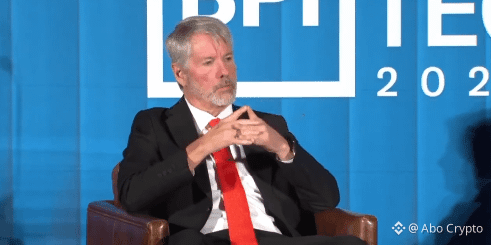
Michael Saylor lashes out at the CLARITY Act, effectively describing it as a “restrictions law” rather than a “rights law”
Saylor said the digital asset industry would be better off with supportive regulations from the SEC, CFTC, and Treasury rather than accepting the restrictions contained in the latest version of the CLARITY Act
In his view, the problem is not the existence of regulation per se but rather that certain rules could make restrictions permanent once they become law
And this is where the interesting point for $BTC comes in
Saylor believes that the best approach moving forward is to drive the adoption of digital assets and expand their use, and then build supportive regulatory frameworks around them, rather than enacting restrictions that could limit innovation
However, there is a completely different view: CLARITY supporters argue that the legislation would have provided the market with legal clarity and defined the powers of the SEC and CFTC, rather than relying more heavily on current regulatory rules
The real debate, then, is not whether there should be regulation or not
but rather whether Bitcoin and crypto need a law that clearly sets the rules, or whether certain loopholes within the law might be more dangerous than the absence of the law itself
Michael Saylor lashes out at the CLARITY Act, effectively describing it as a “restrictions law” rather than a “rights law”
Saylor said the digital asset industry would be better off with supportive regulations from the SEC, CFTC, and Treasury rather than accepting the restrictions contained in the latest version of the CLARITY Act
In his view, the problem is not the existence of regulation per se but rather that certain rules could make restrictions permanent once they become law
And this is where the interesting point for $BTC comes in
Saylor believes that the best approach moving forward is to drive the adoption of digital assets and expand their use, and then build supportive regulatory frameworks around them, rather than enacting restrictions that could limit innovation
However, there is a completely different view: CLARITY supporters argue that the legislation would have provided the market with legal clarity and defined the powers of the SEC and CFTC, rather than relying more heavily on current regulatory rules
The real debate, then, is not whether there should be regulation or not
but rather whether Bitcoin and crypto need a law that clearly sets the rules, or whether certain loopholes within the law might be more dangerous than the absence of the law itself
Saylor said the digital asset industry would be better off with supportive regulations from the SEC, CFTC, and Treasury rather than accepting the restrictions contained in the latest version of the CLARITY Act
In his view, the problem is not the existence of regulation per se but rather that certain rules could make restrictions permanent once they become law
And this is where the interesting point for $BTC comes in
Saylor believes that the best approach moving forward is to drive the adoption of digital assets and expand their use, and then build supportive regulatory frameworks around them, rather than enacting restrictions that could limit innovation
However, there is a completely different view: CLARITY supporters argue that the legislation would have provided the market with legal clarity and defined the powers of the SEC and CFTC, rather than relying more heavily on current regulatory rules
The real debate, then, is not whether there should be regulation or not
but rather whether Bitcoin and crypto need a law that clearly sets the rules, or whether certain loopholes within the law might be more dangerous than the absence of the law itself
1
226
·
--
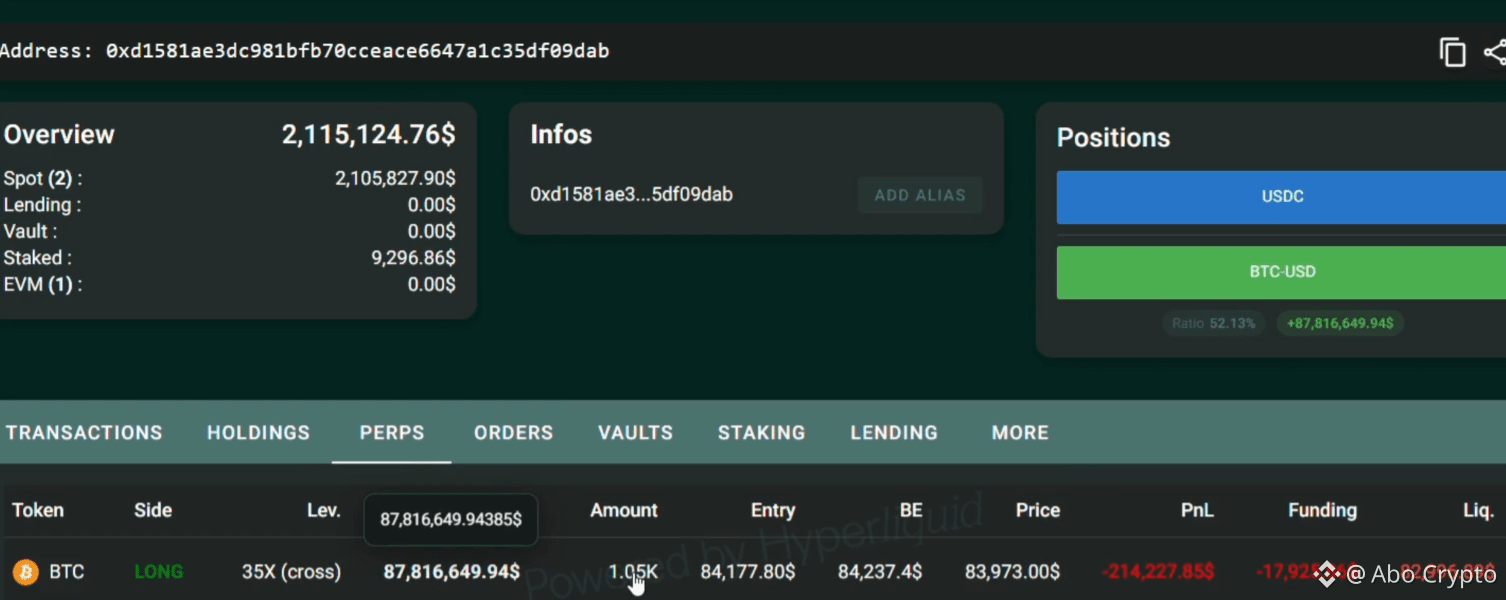
This whale is literally playing on the edge of liquidation
Opened a $87.8 million long position on $BTC using 35x leverage
And now, only about $1,600 separates him from the liquidation price
Does this whale know something for sure, or is he putting $87M just one step away from liquidation?
This whale is literally playing on the edge of liquidation
Opened a $87.8 million long position on $BTC using 35x leverage
And now, only about $1,600 separates him from the liquidation price
Does this whale know something for sure, or is he putting $87M just one step away from liquidation?
Opened a $87.8 million long position on $BTC using 35x leverage
And now, only about $1,600 separates him from the liquidation price
Does this whale know something for sure, or is he putting $87M just one step away from liquidation?
1
681
·
--
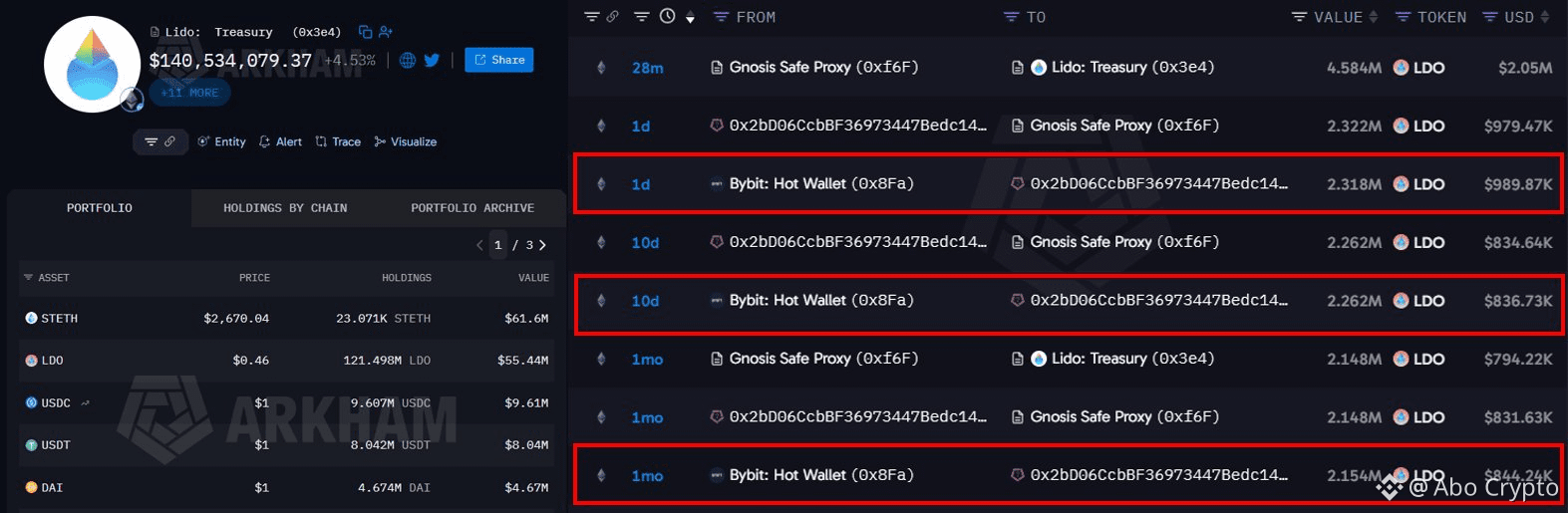
In the past 30 days, Lido DAO, through intermediary wallet 0x2bD, has made 3 purchases totaling 6.132m $LDO
The tokens were then transferred to the treasury to be held
If LDO was needed, why didn’t the project use tokens from its treasury instead of buying them directly from the spot market? Could this be related to the proposal to hire MMs?
Whatever the reason, the selling pressure from 6m+ circulating tokens has now been locked up
A very weak signal has been sent
In the past 30 days, Lido DAO, through intermediary wallet 0x2bD, has made 3 purchases totaling 6.132m $LDO
The tokens were then transferred to the treasury to be held
If LDO was needed, why didn’t the project use tokens from its treasury instead of buying them directly from the spot market? Could this be related to the proposal to hire MMs?
Whatever the reason, the selling pressure from 6m+ circulating tokens has now been locked up
A very weak signal has been sent
The tokens were then transferred to the treasury to be held
If LDO was needed, why didn’t the project use tokens from its treasury instead of buying them directly from the spot market? Could this be related to the proposal to hire MMs?
Whatever the reason, the selling pressure from 6m+ circulating tokens has now been locked up
A very weak signal has been sent
1
577
·
--
Bullish
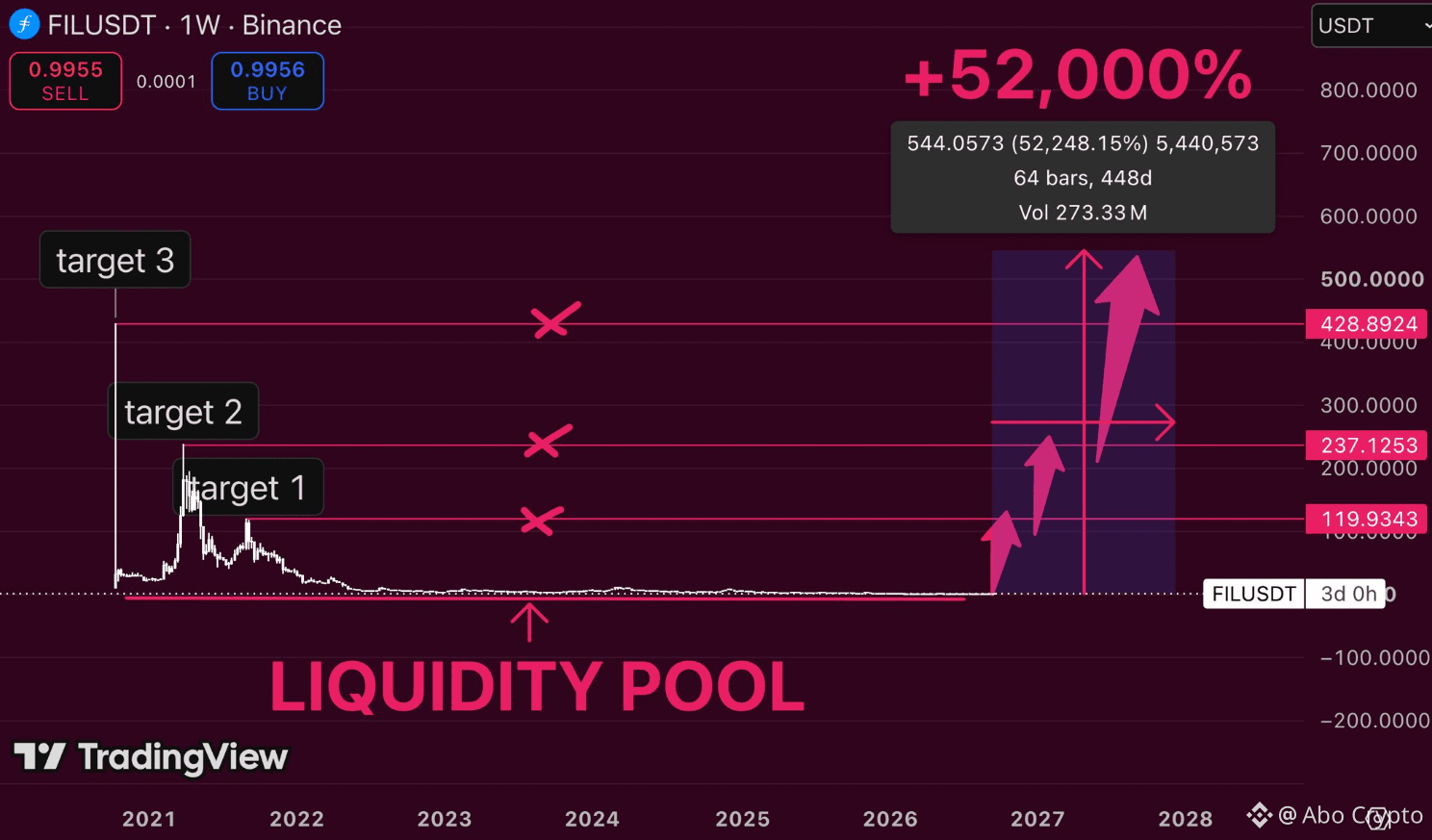
$FIL has been left for dead
And that’s exactly what makes this chart interesting
It spent years bleeding from its 2021 highs and is now sitting around the same long-term liquidity area it has respected for years
If $FIL finally leaves this floor, the upside levels get crazy fast:
$120 → $237 → $428
That last target sounds completely insane from $1
But crypto has a funny habit of making the “impossible” look obvious in hindsight
I’m watching $FIL closely here
$FIL has been left for dead
And that’s exactly what makes this chart interesting
It spent years bleeding from its 2021 highs and is now sitting around the same long-term liquidity area it has respected for years
If $FIL finally leaves this floor, the upside levels get crazy fast:
$120 → $237 → $428
That last target sounds completely insane from $1
But crypto has a funny habit of making the “impossible” look obvious in hindsight
I’m watching $FIL closely here
And that’s exactly what makes this chart interesting
It spent years bleeding from its 2021 highs and is now sitting around the same long-term liquidity area it has respected for years
If $FIL finally leaves this floor, the upside levels get crazy fast:
$120 → $237 → $428
That last target sounds completely insane from $1
But crypto has a funny habit of making the “impossible” look obvious in hindsight
I’m watching $FIL closely here
1
288
·
--
Bullish
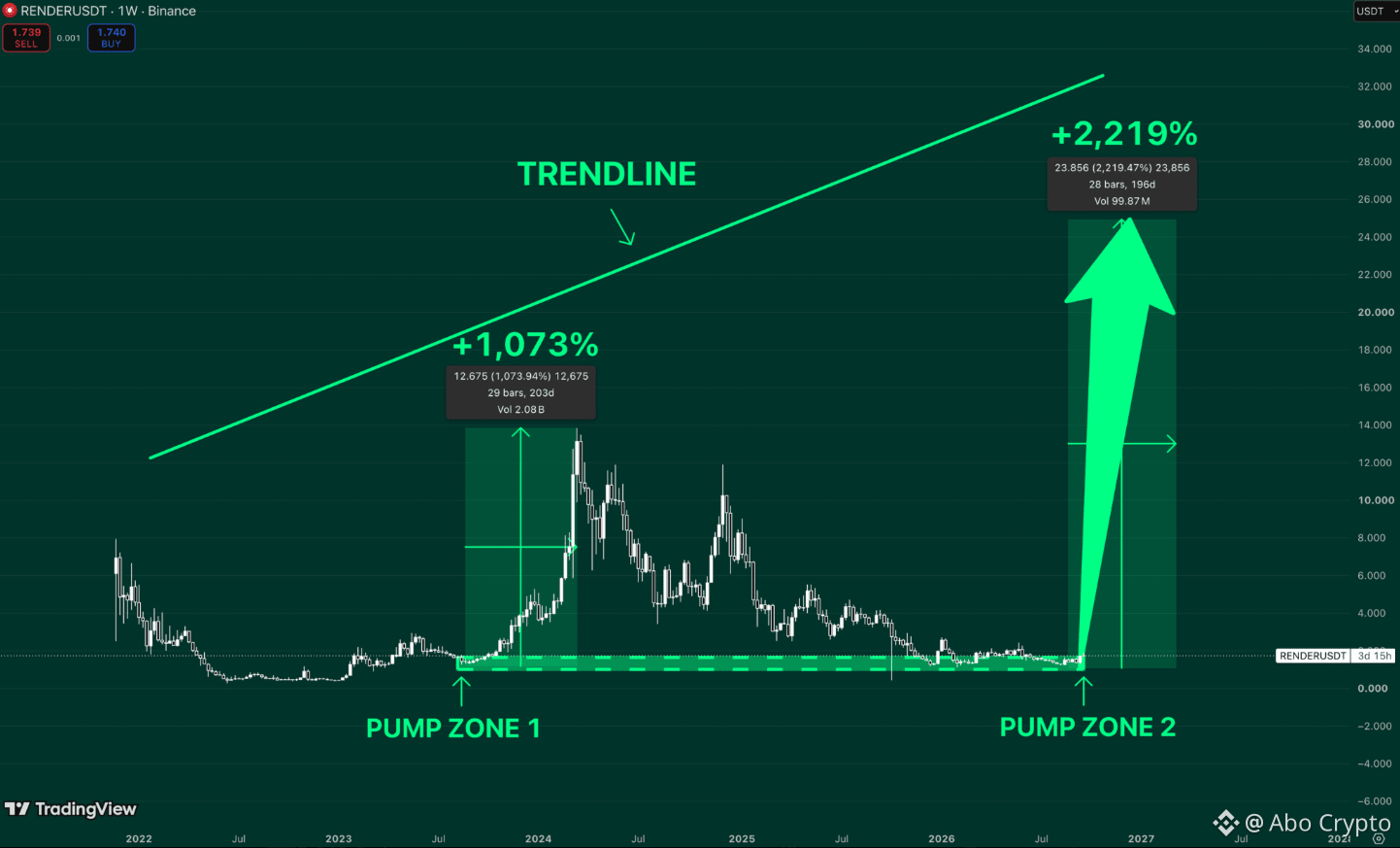
$RENDER is sitting in almost the exact same zone
where its last +1,073% expansion started
That alone has my attention
The first pump took $RENDER from the floor to roughly $13
Now price is back near the bottom and the larger trendline is still sitting way above
If history even remotely rhymes, the upside is stupid:
$13 first
$25+ after that
That’s roughly +2,200% potential from the structure shown here
Most people will notice $RENDER after the vertical candles
I’m interested while it still looks boring
$RENDER is sitting in almost the exact same zone
where its last +1,073% expansion started
That alone has my attention
The first pump took $RENDER from the floor to roughly $13
Now price is back near the bottom and the larger trendline is still sitting way above
If history even remotely rhymes, the upside is stupid:
$13 first
$25+ after that
That’s roughly +2,200% potential from the structure shown here
Most people will notice $RENDER after the vertical candles
I’m interested while it still looks boring
where its last +1,073% expansion started
That alone has my attention
The first pump took $RENDER from the floor to roughly $13
Now price is back near the bottom and the larger trendline is still sitting way above
If history even remotely rhymes, the upside is stupid:
$13 first
$25+ after that
That’s roughly +2,200% potential from the structure shown here
Most people will notice $RENDER after the vertical candles
I’m interested while it still looks boring
1
328
·
--
Bullish
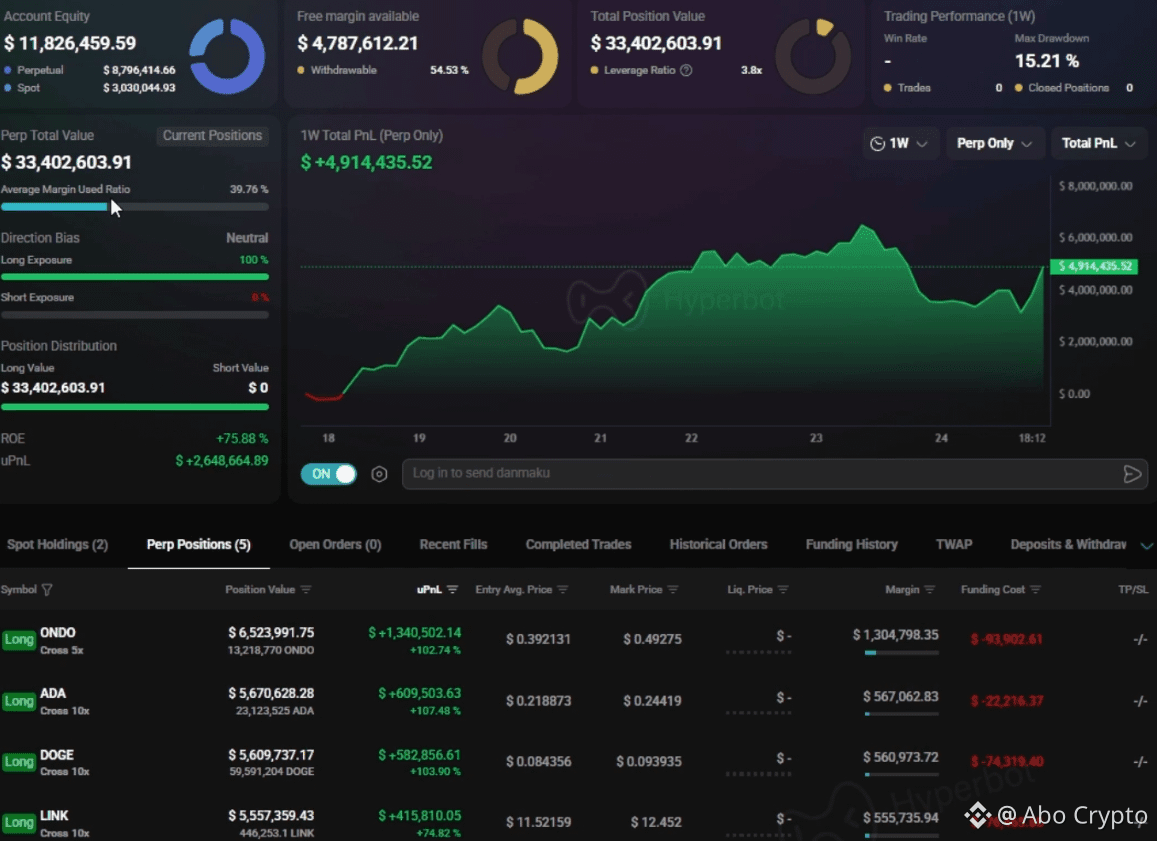
The BlackRock news didn’t come as a surprise to everyone this whale had been invested in $ONDO before the announcement
This timing raises major questions
Before news of the BlackRock-ONDO partnership broke, a whale opened a long position worth $6.54 million in ONDO
After the news broke
the unrealized profit reached $1.35 million
What’s even stranger is that the trade took place right before the news broke
Was it just a coincidence
Or was this trader monitoring ONDO’s flows and information before it reached the rest of the market
Of course, timing alone doesn’t prove the existence of insider information
But in crypto, when you see
a massive trade, sensitive timing, major news, and $1.35 million in profits it’s only natural for questions to arise
Did the whale beat the news, or is the market overinterpreting the timing?
The BlackRock news didn’t come as a surprise to everyone this whale had been invested in $ONDO before the announcement
This timing raises major questions
Before news of the BlackRock-ONDO partnership broke, a whale opened a long position worth $6.54 million in ONDO
After the news broke
the unrealized profit reached $1.35 million
What’s even stranger is that the trade took place right before the news broke
Was it just a coincidence
Or was this trader monitoring ONDO’s flows and information before it reached the rest of the market
Of course, timing alone doesn’t prove the existence of insider information
But in crypto, when you see
a massive trade, sensitive timing, major news, and $1.35 million in profits it’s only natural for questions to arise
Did the whale beat the news, or is the market overinterpreting the timing?
This timing raises major questions
Before news of the BlackRock-ONDO partnership broke, a whale opened a long position worth $6.54 million in ONDO
After the news broke
the unrealized profit reached $1.35 million
What’s even stranger is that the trade took place right before the news broke
Was it just a coincidence
Or was this trader monitoring ONDO’s flows and information before it reached the rest of the market
Of course, timing alone doesn’t prove the existence of insider information
But in crypto, when you see
a massive trade, sensitive timing, major news, and $1.35 million in profits it’s only natural for questions to arise
Did the whale beat the news, or is the market overinterpreting the timing?
1
315
Log in to explore more content
Join global crypto users on Binance Square
⚡️ Get latest and useful information about crypto.
💬 Trusted by the world’s largest crypto exchange.
👍 Discover real insights from verified creators.
Email / Phone number
Trending Topics
StrategyStriveAdd2305BitcoinThisWeek
8,038 views
358 Discussing
#strategystriveadd2305bitcointhisweek 🚨 2,305 BTC just moved into treasuries
While most traders were focused on the Bitcoin price rebound two public companies quietly made big moves. 👀
Strategy and Strive together bought 2,305 BTC for 182.7 million Dollar.
🔹 Strategy bought 950 BTC for 75.7 million dollar
🔹 Strive bought 1,355 BTC for around 107.7 million dollar
This brings their total holdings to:
📊 Strategy. 846,000 BTC
📊 Strive. 26,355 BTC
But the real story isn't the amount of Bitcoin they bought.
It's how they paid for it.
Strategy used cash it already had.
Strive used its stock financing model to fund the purchase. Meaning it’s growing its Bitcoin treasury without relying only on cash flow.
This difference matters.
For traders and investors it adds a layer of analysis: how much Bitcoin is being added, how it’s being funded and what it means for long-term value, per share.
The cost of capital BTC accumulation and share value. These factors are starting to shape the market in ways.
Corporate treasury demand is no longer a side note.
It’s becoming a part of the Bitcoin ecosystem.
💬 What do you think?
Will more companies start buying Bitcoin the way?
Will this trend grow?
#bitcoin #Khan62 #BTC #trading
$MSTR
$MARA $BMNR
Khan 62
·3 Likes
·1.6k views
TrumpRejectsIranHormuzReopening
12,951 views
392 Discussing
CircleTetherFreezeBitgetHackerWallet
35,537 views
551 Discussing