
AB ASHRAF
37 Posts
AB ASHRAF
Report
Block User
11 Following
50 Followers
49 Liked
Posts
All
Quotes
·
--
Most people only see the latest Gemini update. The real story started years before the first public launch.
Google merged Brain and DeepMind in 2023. They named the new model family Gemini because it means twins in Latin. The name also nods to NASA’s old space program that bridged early tests to bigger missions.
On December 6 2023 Google announced Gemini 1.0 with three sizes. Ultra for hard tasks, Pro for everyday work, and Nano for phones. It was built from the start to understand text, images, audio, and video together. The same day it began powering the Bard chatbot.
In February 2024 Bard became the Gemini app. Google also launched Gemini Advanced with the Ultra model for paid users. A new mobile app arrived at the same time.
The next year brought bigger changes. Gemini 1.5 added a one million token context window so it could read huge documents or full codebases in one go. Later versions added thinking modes that reason before answering and native tools for agents.
By late 2026 the family reached Gemini 4 Argon. Google now ships faster models for daily use and stronger ones for coding, agents, and long tasks. The gap between research and product keeps shrinking.
I track these shifts as a Web3 analyst. Real progress shows up in what the models can actually do, not just the version numbers.
87
·
--
Verified
Litecoin is 15 years old.
In 2011, a Google engineer named Charlie Lee decided Bitcoin needed a lighter version.
He built Litecoin. Not to kill Bitcoin, but to sit next to it as silver next to gold. Faster blocks every 2.5 minutes instead of 10. Lower fees. Scrypt mining so normal computers could participate. Max supply of 84 million. He launched it fair. Mined only about 150 coins himself, then released the code publicly. The community even voted on the exact launch time.
October 13, 2011. In the early days the price was tiny. For most of 2012 it traded under 10 cents. Sometimes under 5 cents. Almost no one was paying attention.
Then 2013 happened. It ran from a few dollars to around 50 dollars in weeks. That was the first real altcoin mania. In 2017 it went even higher. From around 4 dollars at the start of the year to over 350 dollars. Charlie Lee sold almost all of his $LTC near the top.
He said holding it while tweeting about it created a conflict of interest. He kept working on the project full time after that. In 2021 it hit its all time high around 410 dollars. Today, October 2026, Litecoin trades around 56 dollars.Fifteen years later the network is still running. No big premine. No VC allocation. Just a fair launch and consistent upgrades.Created by SatoshiLite
Official @litecoin n a Web3 analyst, this is one of the few early coins that actually delivered on its original idea instead of disappearing. #LITCOIN
Litecoin is 15 years old.
In 2011, a Google engineer named Charlie Lee decided Bitcoin needed a lighter version.
He built Litecoin. Not to kill Bitcoin, but to sit next to it as silver next to gold. Faster blocks every 2.5 minutes instead of 10. Lower fees. Scrypt mining so normal computers could participate. Max supply of 84 million. He launched it fair. Mined only about 150 coins himself, then released the code publicly. The community even voted on the exact launch time.
October 13, 2011. In the early days the price was tiny. For most of 2012 it traded under 10 cents. Sometimes under 5 cents. Almost no one was paying attention.
Then 2013 happened. It ran from a few dollars to around 50 dollars in weeks. That was the first real altcoin mania. In 2017 it went even higher. From around 4 dollars at the start of the year to over 350 dollars. Charlie Lee sold almost all of his $LTC near the top.
He said holding it while tweeting about it created a conflict of interest. He kept working on the project full time after that. In 2021 it hit its all time high around 410 dollars. Today, October 2026, Litecoin trades around 56 dollars.Fifteen years later the network is still running. No big premine. No VC allocation. Just a fair launch and consistent upgrades.Created by SatoshiLite
Official @Litecoin n a Web3 analyst, this is one of the few early coins that actually delivered on its original idea instead of disappearing. #LITCOIN
6
1.2k
·
--
Ethereum: The Revolution of Decentralized Technology
What is Ethereum?
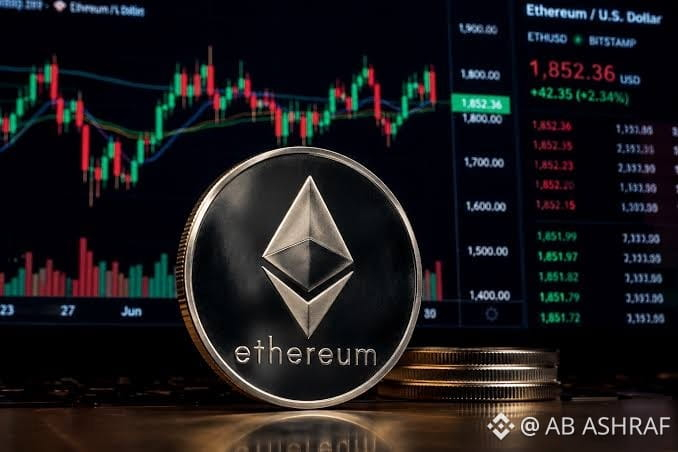
Ethereum is a decentralized, open-source blockchain platform with smart contract functionality. While Bitcoin was created primarily as a digital currency and store of value, Ethereum was designed as a global, decentralized platform for building and running smart contracts and decentralized applications (dApps) without any downtime, fraud, control, or interference from a third party.$
Concept & Whitepaper Released: November 2013
Crowdsale (ICO): July – August 2014
Official Network Launch (Genesis Block): July 30, 2015
Who created Ethereum?
Ethereum was proposed by Vitalik Buterin, a Russian-Canadian programmer and co-founder of Bitcoin Magazine, when he was just 19 years old.
Vitalik believed that Bitcoin's programming language was too limited and needed a more versatile language to build complex financial applications. When his ideas weren't implemented in Bitcoin, he decided to create a brand-new platform.
The Founding Team:
In 2014, Vitalik collaborated with a core group of co-founders to build the platform, including:
Gavin Wood (who wrote the Ethereum Yellow Paper and created the Solidity programming language)
Charles Hoskinson (who later founded Cardano)
Mihai Alisie
Anthony Di Iorio
Joseph Lubin (founder of ConsenSys)
Key Highlights of Ethereum's Journey
Smart Contracts & Programmability: Introduced automated, self-executing contracts where terms are directly written into code.
The DAO Hack (2016): An early investor-directed venture fund was hacked due to a smart contract vulnerability, leading to a hard fork that split the network into Ethereum and Ethereum Classic .
The Rise of DeFi & NFTs: Ethereum became the primary foundation for Decentralized Finance (DeFi) platforms and Non-Fungible Tokens (NFTs).
The Merge (September 2022): Ethereum executed one of the biggest upgrades in crypto history by transitioning from Proof-of-Work (PoW) to Proof-of-Stake (PoS), reducing its energy consumption by over 99.9%. $ETH
84
·
--
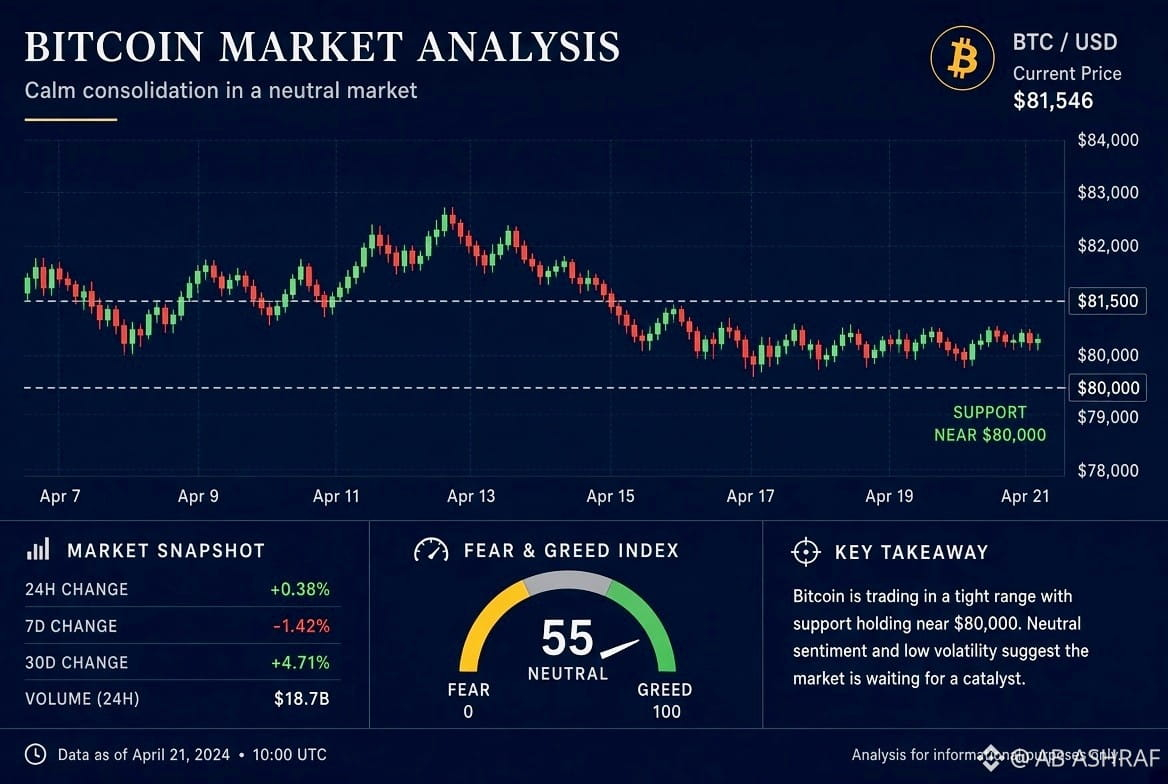
The crypto market is stuck in a quiet weekend range after a soft October so far.
Bitcoin is trading near $81,500. Ethereum sits around $2,420. Total market cap is roughly $2.75 trillion with only small daily moves. Bitcoin dominance stays near 59 to 60 percent.
October has not lived up to the usual Uptober story. Bitcoin is down about 4 percent from the start of the month. Ethereum, XRP and Solana are down more, each over 10 percent in the same window. Hotter US inflation numbers, talk of higher rates for longer, and repeated ETF outflows have kept buyers cautious. Liquidations of leveraged longs added extra pressure on the way down, but $80,000 has held as support so far.
Fear and Greed is at 55. That is still labeled Greed, yet it has cooled from higher readings earlier in the month. Volume is light over the weekend, which often means prices drift more than they trend.
This is not a panic or a breakout. It is a market waiting for the next clear macro signal, especially around the Fed later this month. Real moves come from$ actual data and flows, not from seasonal labels. I keep watching the $80k to $83k zone on Bitcoin and how altcoins behave relative to it.
$BTC $ETH $SOL #BTC #ETH #XRPUSDT🚨
92
·
--
Breaking News: 🇰🇵 Bitget crypto exchange reports that the $350 million hack is likely associated with North Korea.
Breaking News: 🇰🇵 Bitget crypto exchange reports that the $350 million hack is likely associated with North Korea.
60
·
--
ASHRAF RESEARCHER, Subject = Crypto currency use.The acceptance of cryptocurrency payment systems is steadily increasing worldwide. Many international companies and countries have incorporated them into their financial transactions.
Companies that accept crypto payments
1. Microsoft: They offer the option to add funds to online store and Xbox accounts using Bitcoin.
2. Shopify: Thousands of online merchants on the Shopify platform worldwide offer the option to accept payments in Bitcoin and other cryptocurrencies at their stores.
3. PayPal: In certain countries, PayPal users can make purchases and conduct transactions directly using cryptocurrency.
4.AMC Theatres: This largest movie theater chain in America accepts Bitcoin and other cryptocurrencies for movie tickets.
5.Travala and CheapAir: These globally popular travel platforms for flight ticket booking and hotel reservations support crypto payments.
6.Newegg: This e-commerce giant, popular for selling electronics and PC components, accepts crypto payments via BitPay.
Countries that have accepted cryptocurrency as official or legal tender.
1. El Salvador: In 2021, it became the first country in the world to officially recognize Bitcoin as "legal tender." Bitcoin can be used for everything from everyday purchases to the payment of taxes within the country.
2. Central African Republic: This African nation approved Bitcoin as its legal currency or legal tender.
Countries that have legally established payment frameworks.
Even without designating them as legal tender, several countries have authorized cryptocurrencies and stablecoins—bringing them under clear regulatory frameworks—as part of international business and payment systems:
United Arab Emirates (UAE – specifically Dubai): Under its VARA (Virtual Assets Regulatory Authority) regulations, Dubai has facilitated the use of cryptocurrencies for widespread commercial activities and transactions. Switzerland: In the Swiss cities and cantons of Zug and Lugano—known as "Crypto Valley"—municipal taxes and public service fees can be paid in Bitcoin.
European Union (EU): Under the EU's MiCA (Markets in Crypto-Assets) regulation, payment frameworks utilizing stablecoins backed by the Euro and the US Dollar have received world-class legal approval.
#BTC走势分析 #BNB_Market_Update #crypto #Web3
ASHRAF RESEARCHER, Subject = Crypto currency use.
The acceptance of cryptocurrency payment systems is steadily increasing worldwide. Many international companies and countries have incorporated them into their financial transactions.
Companies that accept crypto payments
1. Microsoft: They offer the option to add funds to online store and Xbox accounts using Bitcoin.
2. Shopify: Thousands of online merchants on the Shopify platform worldwide offer the option to accept payments in Bitcoin and other cryptocurrencies at their stores.
3. PayPal: In certain countries, PayPal users can make purchases and conduct transactions directly using cryptocurrency.
4.AMC Theatres: This largest movie theater chain in America accepts Bitcoin and other cryptocurrencies for movie tickets.
5.Travala and CheapAir: These globally popular travel platforms for flight ticket booking and hotel reservations support crypto payments.
6.Newegg: This e-commerce giant, popular for selling electronics and PC components, accepts crypto payments via BitPay.
Countries that have accepted cryptocurrency as official or legal tender.
1. El Salvador: In 2021, it became the first country in the world to officially recognize Bitcoin as "legal tender." Bitcoin can be used for everything from everyday purchases to the payment of taxes within the country.
2. Central African Republic: This African nation approved Bitcoin as its legal currency or legal tender.
Countries that have legally established payment frameworks.
Even without designating them as legal tender, several countries have authorized cryptocurrencies and stablecoins—bringing them under clear regulatory frameworks—as part of international business and payment systems:
United Arab Emirates (UAE – specifically Dubai): Under its VARA (Virtual Assets Regulatory Authority) regulations, Dubai has facilitated the use of cryptocurrencies for widespread commercial activities and transactions. Switzerland: In the Swiss cities and cantons of Zug and Lugano—known as "Crypto Valley"—municipal taxes and public service fees can be paid in Bitcoin.
European Union (EU): Under the EU's MiCA (Markets in Crypto-Assets) regulation, payment frameworks utilizing stablecoins backed by the Euro and the US Dollar have received world-class legal approval.
#BTC走势分析 #BNB_Market_Update #crypto #Web3
112
·
--
Bearish
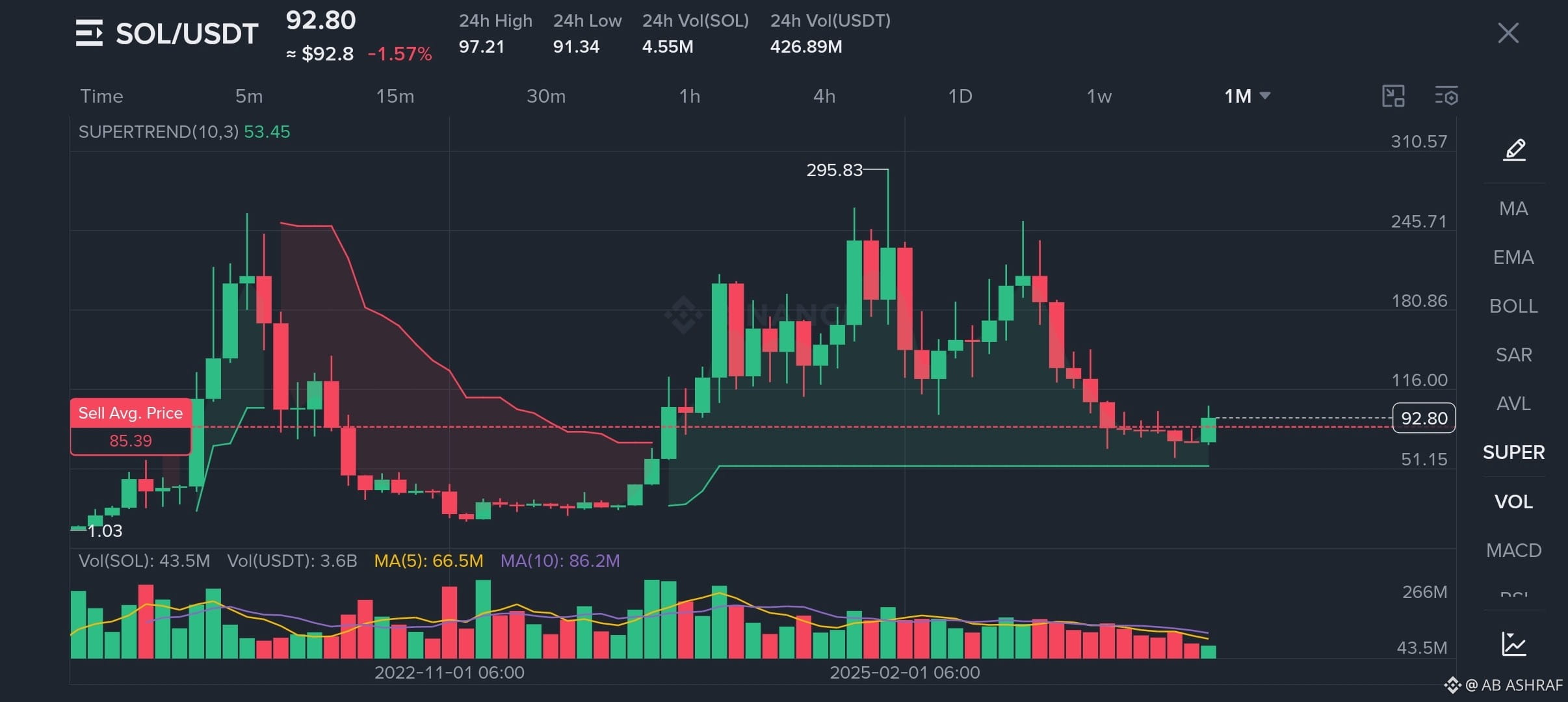
$SOL is almost everyone's favorite token, do you expect it to reach $200 again before 2027? Comment.#SolanaStrong
$SOL is almost everyone's favorite token, do you expect it to reach $200 again before 2027? Comment.#SolanaStrong
92
·
--
The market will dump again, and the $BNB price will be around $547, then spot traders will buy the token and sell it after two weeks. Hopefully there will be profit, warning, invest at your own risk, I am not responsible for profit or loss. Invest by verifying it yourself. $BNB
The market will dump again, and the $BNB price will be around $547, then spot traders will buy the token and sell it after two weeks. Hopefully there will be profit, warning, invest at your own risk, I am not responsible for profit or loss. Invest by verifying it yourself. $BNB
414
·
--
Most people see a 10-second block and immediately call it speed. I think that is too shallow for OpenGradient and OPG.
@OpenGradient
The real value of a 10-second block is not the stopwatch. It is the checkpoint. Every block is a small window where AI activity can become recorded, verified, paid for, and made accountable. That matters more than simple transaction movement because AI infrastructure does not only need fast execution. OpenGradientThe first place I noticed the cost was not on the invoice. It was in a batch that should have fit, but didn’t.
The GPU looked busy, the request queue looked normal, and still the system had that strange feeling of wasted space. At first I blamed compute. That was too easy
That is why paging-based KV-cache management feels more important to OpenGradient than it sounds at first. It does not make OPG cheaper by magic. It changes how much dead hardware weight each OPG-paid inference has to carry.
When cache memory is split into smaller pages, a node can place, release, and reuse context more cleanly. More requests can fit on the same GPU. Batches become less fragile. Long-context agents do not punish the system as heavily every time they pause, return, or stretch a conversation.
Still, I would not call this solved. Paging adds scheduling work. Bad page movement can create latency. Privacy and verification boundaries still need discipline. That makes the 10-second rhythm less like a hype metric and more like a trust rhythm.
For me, the strongest idea is verified work density. A block should not be judged only by how many transactions it contains. It should be judged by how much useful AI work it settles. Did it record real inference activity? Did it verify proofs or attestations? Did it support reliable nodes? Did OPG activity create actual service, or just movement?
Fast blocks can still be weak if they carry spam, fake demand, or low-quality automation. Useful blocks are different. They create clean settlement, better audit trails, and stronger machine coordination.
#OPG $OPG
2
2
87
·
--
While studying $OPG , three powerful ideas keep coming back to me about the future of AI.First, AI memory is becoming far more than just a convenience. Over long periods, persistent memory creates narrative continuity helping us connect our decisions, mistakes, and milestones into a personal story. With @OpenGradient
’s user-owned context and verifiable compute, AI could soon help us understand the deeper patterns in our own lives, not just answer questions.Second, as AI gets more personalized, the real challenge might not be intelligence, but perspective. Without proper safeguards, personalization can turn into an echo chamber. This is where @OpenGradient
stands out its focus on verifiable inference and decentralized model execution can enable diversity of reasoning, where conclusions come from multiple auditable sources instead of a single opaque system.Third, the next big need is verifiability. Whether it’s interpreting sleep data from wearables or analyzing our cognitive health, we need cryptographic proofs showing exactly which model produced the output and that it wasn’t altered. OpenGradient
’s approach to verifiable AI makes concepts like “Dream Auditing” not just possible, but practical.The future of AI may not only be about being smarter but about being more transparent, personal, and trustworthy. OpenGradient Chat is building exactly that foundation. $OPG #OPG
1
74
·
--
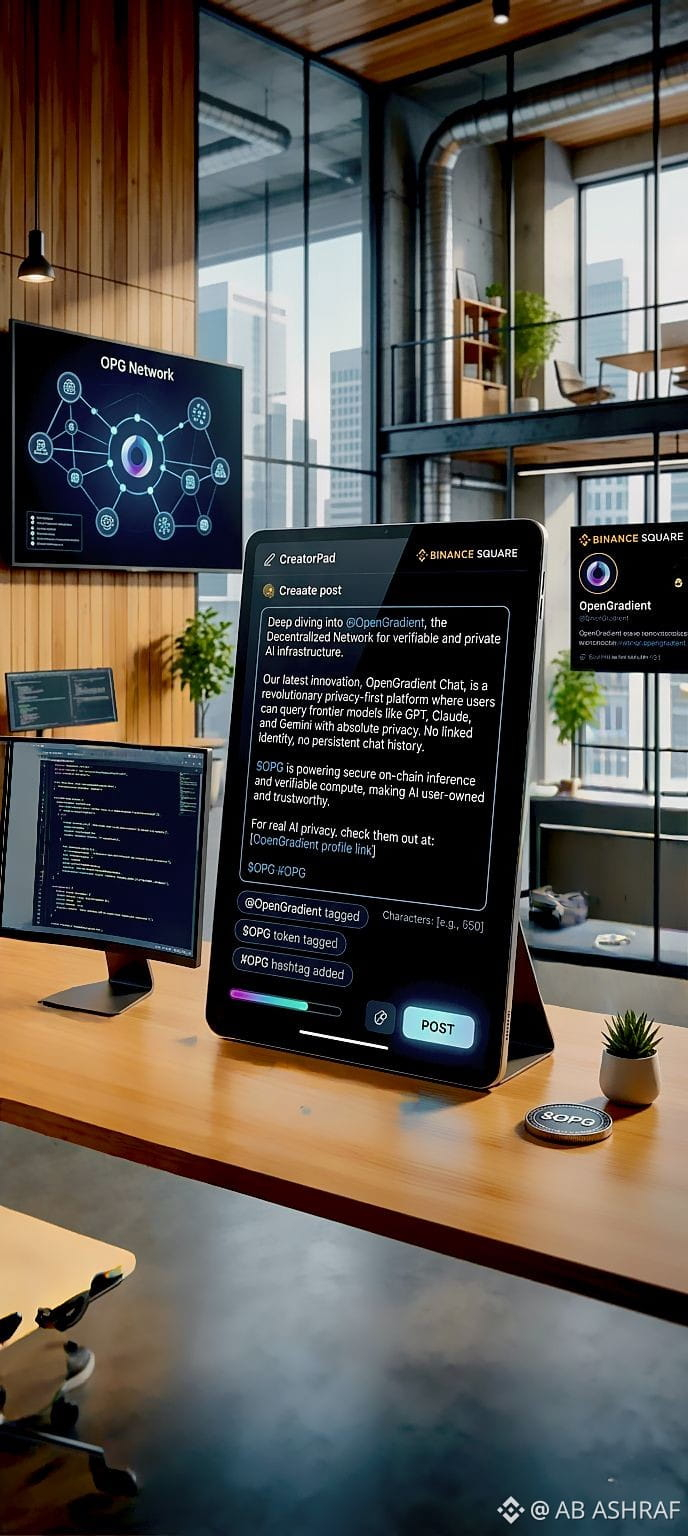
#opg $OPG The intersection of Web3 and artificial intelligence is evolving rapidly, and @OpenGradient is leading the charge by introducing a fully decentralized, verifiable, and private AI infrastructure. Their groundbreaking release, OpenGradient Chat, fundamentally changes how we interact with frontier AI models like GPT, Claude, and Gemini. It establishes a strict privacy-first platform, ensuring your sensitive queries remain entirely anonymous without any permanent chat history tracking your digital identity.
Driven by the utility of $OPG, the network delivers secure on-chain inference and cryptographic, verifiable compute. This architecture shifts data control away from centralized tech giants and places it directly into the hands of the community, creating a truly user-owned intelligence ecosystem. For anyone passionate about privacy, security, and the future of decentralized tech, keeping an eye on this project is essential.
Explore their official account to learn more: https://www.binance.com/en/square/profile/OpenGradient
#opg $OPG The intersection of Web3 and artificial intelligence is evolving rapidly, and @OpenGradient is leading the charge by introducing a fully decentralized, verifiable, and private AI infrastructure. Their groundbreaking release, OpenGradient Chat, fundamentally changes how we interact with frontier AI models like GPT, Claude, and Gemini. It establishes a strict privacy-first platform, ensuring your sensitive queries remain entirely anonymous without any permanent chat history tracking your digital identity.
Driven by the utility of $OPG , the network delivers secure on-chain inference and cryptographic, verifiable compute. This architecture shifts data control away from centralized tech giants and places it directly into the hands of the community, creating a truly user-owned intelligence ecosystem. For anyone passionate about privacy, security, and the future of decentralized tech, keeping an eye on this project is essential.
Explore their official account to learn more: https://www.binance.com/en/square/profile/OpenGradient
1
82
·
--
#opg $OPG Exploring the future of decentralized AI with @OpenGradient – a revolutionary network setting new standards for verifiable and private AI infrastructure. Their latest innovation, OpenGradient Chat, provides a complete privacy-first experience where users can interact with top-tier models like GPT, Claude, and Gemini without worrying about data tracking or compromised identities.
Powered by $OPG, the ecosystem ensures highly secure on-chain inference and fully verifiable compute, giving the ownership of AI back to the users. This infrastructure guarantees that your chat history never follows you around, offering a trustworthy and private solution for sensitive queries. If you want to support true decentralized intelligence, don't miss out on this absolute game-changer.
Check their official profile here: https://www.binance.com/en/square/profile/OpenGradient
$OPG #OPG
#opg $OPG Exploring the future of decentralized AI with @OpenGradient – a revolutionary network setting new standards for verifiable and private AI infrastructure. Their latest innovation, OpenGradient Chat, provides a complete privacy-first experience where users can interact with top-tier models like GPT, Claude, and Gemini without worrying about data tracking or compromised identities.
Powered by $OPG , the ecosystem ensures highly secure on-chain inference and fully verifiable compute, giving the ownership of AI back to the users. This infrastructure guarantees that your chat history never follows you around, offering a trustworthy and private solution for sensitive queries. If you want to support true decentralized intelligence, don't miss out on this absolute game-changer.
Check their official profile here: https://www.binance.com/en/square/profile/OpenGradient
$OPG #OPG

1
61

·
--
Midnight Topic#night $NIGHT @MidnightNetwork Topic: Midnight Network – The Future of Programmable Privacy
Are you tired of choosing between blockchain transparency and data security? Meet Midnight Network, a fourth-generation Layer 1 blockchain designed by Input Output (IOG) that brings "Rational Privacy" to the digital world.
Unlike traditional blockchains where every detail is public, Midnight uses advanced Zero-Knowledge (ZK) cryptography to let users and developers control exactly what data is shared, with whom, and when. It’s not about hiding everything; it’s about selective disclosure—proving a fact (like your age or credit score) without revealing the underlying sensitive data.
Key Highlights:
✅ Dual-Token Model: Uses NIGHT for governance and DUST for predictable transaction costs.
✅ Developer Friendly: Built with Compact, a TypeScript-based language, making ZK-app development accessible to millions.
✅ Regulatory Compliant: Designed for real-world use cases like finance and healthcare where privacy is a legal requirement.
✅ Cardano Ecosystem: Launched as a partner chain to Cardano, leveraging its security and decentralization.
Midnight is bridging the gap between Web3 freedom and enterprise-grade data protection. It’s time to own your data and build a more secure future!
Midnight Topic
#night $NIGHT @MidnightNetwork Topic: Midnight Network – The Future of Programmable Privacy
Are you tired of choosing between blockchain transparency and data security? Meet Midnight Network, a fourth-generation Layer 1 blockchain designed by Input Output (IOG) that brings "Rational Privacy" to the digital world.
Unlike traditional blockchains where every detail is public, Midnight uses advanced Zero-Knowledge (ZK) cryptography to let users and developers control exactly what data is shared, with whom, and when. It’s not about hiding everything; it’s about selective disclosure—proving a fact (like your age or credit score) without revealing the underlying sensitive data.
Key Highlights:
✅ Dual-Token Model: Uses NIGHT for governance and DUST for predictable transaction costs.
✅ Developer Friendly: Built with Compact, a TypeScript-based language, making ZK-app development accessible to millions.
✅ Regulatory Compliant: Designed for real-world use cases like finance and healthcare where privacy is a legal requirement.
✅ Cardano Ecosystem: Launched as a partner chain to Cardano, leveraging its security and decentralization.
Midnight is bridging the gap between Web3 freedom and enterprise-grade data protection. It’s time to own your data and build a more secure future!
1
2
·
--
#night $NIGHT @MidnightNetwork Topic: Midnight Network – The Future of Programmable Privacy
Are you tired of choosing between blockchain transparency and data security? Meet Midnight Network, a fourth-generation Layer 1 blockchain designed by Input Output (IOG) that brings "Rational Privacy" to the digital world.
Unlike traditional blockchains where every detail is public, Midnight uses advanced Zero-Knowledge (ZK) cryptography to let users and developers control exactly what data is shared, with whom, and when. It’s not about hiding everything; it’s about selective disclosure—proving a fact (like your age or credit score) without revealing the underlying sensitive data.
Key Highlights:
✅ Dual-Token Model: Uses NIGHT for governance and DUST for predictable transaction costs.
✅ Developer Friendly: Built with Compact, a TypeScript-based language, making ZK-app development accessible to millions.
✅ Regulatory Compliant: Designed for real-world use cases like finance and healthcare where privacy is a legal requirement.
✅ Cardano Ecosystem: Launched as a partner chain to Cardano, leveraging its security and decentralization.
Midnight is bridging the gap between Web3 freedom and enterprise-grade data protection. It’s time to own your data and build a more secure future! $NIGHT
{spot}(NIGHTUSDT)
#night $NIGHT @MidnightNetwork Topic: Midnight Network – The Future of Programmable Privacy
Are you tired of choosing between blockchain transparency and data security? Meet Midnight Network, a fourth-generation Layer 1 blockchain designed by Input Output (IOG) that brings "Rational Privacy" to the digital world.
Unlike traditional blockchains where every detail is public, Midnight uses advanced Zero-Knowledge (ZK) cryptography to let users and developers control exactly what data is shared, with whom, and when. It’s not about hiding everything; it’s about selective disclosure—proving a fact (like your age or credit score) without revealing the underlying sensitive data.
Key Highlights:
✅ Dual-Token Model: Uses NIGHT for governance and DUST for predictable transaction costs.
✅ Developer Friendly: Built with Compact, a TypeScript-based language, making ZK-app development accessible to millions.
✅ Regulatory Compliant: Designed for real-world use cases like finance and healthcare where privacy is a legal requirement.
✅ Cardano Ecosystem: Launched as a partner chain to Cardano, leveraging its security and decentralization.
Midnight is bridging the gap between Web3 freedom and enterprise-grade data protection. It’s time to own your data and build a more secure future! $NIGHT
1
3
·
--

Article
MIDNIGHT$NIGHT @MidnightNetwork #night A community built by purpose Purpose-Driven Contribution Every member is here to actively support the Midnight community and its mission of rational privacy Volunteer Foundation The program is built on the service of volunteers who are committed to the ecosystem's health Anti-Speculative Ethos It is specifically designed for long-term builders those seeking quick airdrops or rewards are not the target audience Phased Growth & Patience Operating through 2026 the program offers a structured path for advancement and rank promotion for those who demonstrate consistent commitment Collaborative Culture Success is measured by how members support and celebrate one another fostering a unified network of advocates
MIDNIGHT
$NIGHT @MidnightNetwork #night A community built by purpose Purpose-Driven Contribution Every member is here to actively support the Midnight community and its mission of rational privacy Volunteer Foundation The program is built on the service of volunteers who are committed to the ecosystem's health Anti-Speculative Ethos It is specifically designed for long-term builders those seeking quick airdrops or rewards are not the target audience Phased Growth & Patience Operating through 2026 the program offers a structured path for advancement and rank promotion for those who demonstrate consistent commitment Collaborative Culture Success is measured by how members support and celebrate one another fostering a unified network of advocates
2
21
·
--
#night $NIGHT Global Leaderboard Campaign
Follow, post and trade to earn 1,000,000 NIGHT token rewards from the global leaderboard. To qualify for the leaderboard and reward, you must complete each task type (Post: choose 1) at least once during the event to qualify. Posts involving Red Packets or giveaways will be deemed ineligible. Participants found engaging in suspicious views, interactions, or suspected use of automated bots will be disqualified from the activity. Any modification of previously published posts with high engagement to repurpose them as project submissions will result in disqualification. The project leaderboard displays data with a T+2 delay. For example, data of 2026-03-12 will be shown on the leaderboard page after 2026-03-14 9:00 (UTC). Voucher rewards will be distributed before 2026-04-14. For details, please refer to the campaign announcement.
Period: 2026-03-12 10:00 - 2026-03-25 23:59 UTC(+0)
1
1
·
--
🚨 🇪🇸 🇮🇷 BREAKING: Pro-war, regime-change Iran Freedom Index ranks Spain among “active supporters of the regime,” 8th from bottom, citing Sánchez’s condemnation of US-Israel strikes and Spain’s denial of base access/refueling.
🚨 🇪🇸 🇮🇷 BREAKING: Pro-war, regime-change Iran Freedom Index ranks Spain among “active supporters of the regime,” 8th from bottom, citing Sánchez’s condemnation of US-Israel strikes and Spain’s denial of base access/refueling.

2
1
230
·
--
@fogo, tag token $FOGO,@fogo token $FOGO
Follow, post and trade to earn 1,000,000 FOGO token rewards from the global leaderboard. To qualify for the leaderboard and reward, you must complete each task type (Post: choose 1) at least once during the event to qualify. Posts involving Red Packets or giveaways will be deemed ineligible. Participants found engaging in suspicious views, interactions, or suspected use of automated bots will be disqualified from the activity. Any modification of previously published posts with high engagement to repurpose them as project submissions will result in disqualification.
@fogo, tag token $FOGO,
@Fogo Official token $FOGO
Follow, post and trade to earn 1,000,000 FOGO token rewards from the global leaderboard. To qualify for the leaderboard and reward, you must complete each task type (Post: choose 1) at least once during the event to qualify. Posts involving Red Packets or giveaways will be deemed ineligible. Participants found engaging in suspicious views, interactions, or suspected use of automated bots will be disqualified from the activity. Any modification of previously published posts with high engagement to repurpose them as project submissions will result in disqualification.
Follow, post and trade to earn 1,000,000 FOGO token rewards from the global leaderboard. To qualify for the leaderboard and reward, you must complete each task type (Post: choose 1) at least once during the event to qualify. Posts involving Red Packets or giveaways will be deemed ineligible. Participants found engaging in suspicious views, interactions, or suspected use of automated bots will be disqualified from the activity. Any modification of previously published posts with high engagement to repurpose them as project submissions will result in disqualification.
4
Log in to explore more content
Join global crypto users on Binance Square
⚡️ Get latest and useful information about crypto.
💬 Trusted by the world’s largest crypto exchange.
👍 Discover real insights from verified creators.
Email / Phone number
Trending Topics
NvidiaBeatsEstimatesWith$130BQ4Outlook
9,106 views
138 Discussing
Nvidia Beats With $115.8 Billion in Revenue, Guides to $130 Billion and Adds $150 Billion Buyback
Binance News
·42 Likes
·39.3k views
AnthropicIPOPriceCouldExceed$80
15,114 views
128 Discussing
CanNvidia’sDataCenterGrowthContinue?
45,564 views
618 Discussing