
Crypto nonwater
478 Posts

Crypto nonwater
Report
Block User
5 Following
5 Followers
19 Liked
Posts
IBS Token plunged 100% after a $5.7 million hack
IBS Token crashed to $0.00000008 after an attack in which the hacker created 1 billion tokens and withdrew $5.71 million from the liquidity pool. The hack was carried out through a privileged project account that had the authority to issue tokens.
CertiK and BitsLab had audited the security of IBS contracts, but this did not prevent the attack. The price fell from $4.40 to nearly zero, leaving investors with nothing. Blockaid recorded two waves of sales, while Lookonchain confirmed the total losses.
POTS Money had promised decentralized governance, but one account was able to create 1,100 times more tokens than the total supply. The project has not yet commented on the situation.
$USDT $BNB $IBS
#падение #USDT #BNB #IBS

380
OpenAI accuses Apple of stealing trade secrets through former employees
OpenAI has sued Apple, accusing the company of using former employees to access confidential information. The lawsuit was filed in federal court in California and concerns plans for a new device and OpenAI’s roadmap.
Apple poached a former OpenAI employee who allegedly gained access to secret data. This is a retaliatory move following a similar lawsuit filed by Apple against OpenAI and the company’s former employees.
The legal battle between the giants is intensifying competition in the AI sector. The outcome of the case could affect OpenAI’s market prospects and partnerships. CEO Sam Altman’s statements will be key for investors.
#court
37
WLFI plunged 50% in a day after Trump project sold ETH
WLFI fell to $0.0158, losing more than 50% in 24 hours. The World Liberty Financial project’s cryptocurrency hit an all-time low after related wallets sold large amounts of ETH.
The project’s wallets sold 12,121 ETH ($20.06 million) at a loss to add collateral for a loan on Dolomite, a protocol co-founded by World Liberty’s CTO. The drop wiped $443 million off WLFI’s market value.
The token has already lost 95% from its 2025 peak of $0.33. Pressure is mounting due to a $75 million loan collateralized by 5 billion WLFI and fraud allegations made by Justin Sun. The project’s USD1 stablecoin temporarily lost its peg, falling to $0.94.
$ETH
#падение #ETH
213
Bitcoin prices in the eurozone fell by 8.25% in October
The BTCCPI in the eurozone fell by 8.25% in October, marking its second consecutive monthly decline. In September, it fell by 18.90%. This means that fewer BTC are now needed to buy the same goods.
The Samara Asset Group index uses the Eurostat basket but converts prices into bitcoin. Annual BTCCPI growth remains high at 36.96%, although it slowed from 42.07% in September. For comparison, euro inflation reached 4.0%.
Sharp fluctuations in the BTC exchange rate are the main reason for the index’s swings. The cost of living in bitcoin has fallen over the past two months, but risen over the past year. BTC’s purchasing power remains highly unstable.
$BTC $BTCCPI $HICP
#волатильность #BTC #BTCCPI #HICP
25
Ethereum could surge 28% in December
Ethereum (ETH) could reach $2,200 in December, ChatGPT predicts. The 28% rise is linked to the Glamsterdam upgrade, scheduled for December 15.
The EIP-8037 upgrade will increase the cost of creating contracts, improving the network’s scalability. However, the key trigger will be the successful launch of the testnet, which will draw attention to ETH.
Risks: the Fed’s interest rate decision on December 8–9 and outflows from ETFs. Institutional investors are reducing their holdings, which could limit gains.
$ETH $BTC $RSI
#прогноз #ETH #BTC #RSI

39
WUS forecasts AI revenue share to rise to 50% by 2027
WUS Printed Circuit said that by 2027, more than half of its revenue will come from products for artificial intelligence (AI) and high-performance computing (HPC). This segment currently accounts for 42% of total sales.
In its latest report for the third quarter of 2026, the company outlined plans to expand production of printed circuit boards for robots and autonomous vehicles. WUS can currently meet only 40–50% of demand, most of which comes from cloud service providers.
Risks are linked to customer concentration and uncertainty about when physical AI will be widely adopted, including autonomous cars and humanoid robots. The company plans to increase production capacity by 10–15% by 2027, investing more than 800 million Taiwanese dollars.
$HDI $CCL.US
#прогноз #HDI #CCL

CCLUS+0.82%
42
📉 Bitcoin fell to $55,000 amid 16 days of extreme fear
Bitcoin dropped to $55,000, testing the June 2026 lows, when the closing price was $58,559. The Fear and Greed Index fell to 9 points, remaining in the extreme fear zone for more than 16 consecutive days. Historical data shows that in 90% of cases following readings like these, BTC’s median 90-day return was -3.8%. Key factors putting pressure on the market included $2 billion in outflows from Bitcoin ETFs and an 11.6% decline in the S&P 500 from its highs. Holding the $58,559 level could establish a bottom, while a break below $55,000 would open the way to new yearly lows.
$BTC
#decline #BTC

45
Binance co-founder bought Nvidia shares during a 10–14% dip
Binance co-founder Yi He said she bought Nvidia shares during their decline in November 2026. The shares fell 10–14% intraday amid news about the company’s CEO, Jensen Huang.
Yi He called it a gesture of support for Huang, emphasizing a long-term investment strategy. The purchase has not been confirmed by independent sources, but Yi He has actively expressed solidarity with Huang on social media.
Amid the volatility, Binance recorded an increase in trading volume for Nvidia perpetual futures. This highlights the role of crypto platforms in trading traditional assets, especially outside regular market hours.
$BNB
#forecast

246
AI agents solved 1,000 math problems in 48 hours
1,000 math problems were solved in 48 hours with the help of AI agents run by around 110 people on their personal computers. The solutions were checked on the platform using Lean 4, and about 909 were confirmed. Participants used models from Anthropic, OpenAI, Google, and xAI, with Claude leading the way with 476 solutions. The platform’s founder is already considering a goal of 10,000 solutions, but achieving it will require more problems to be converted into Lean 4 format.
$BTC
#growth

56
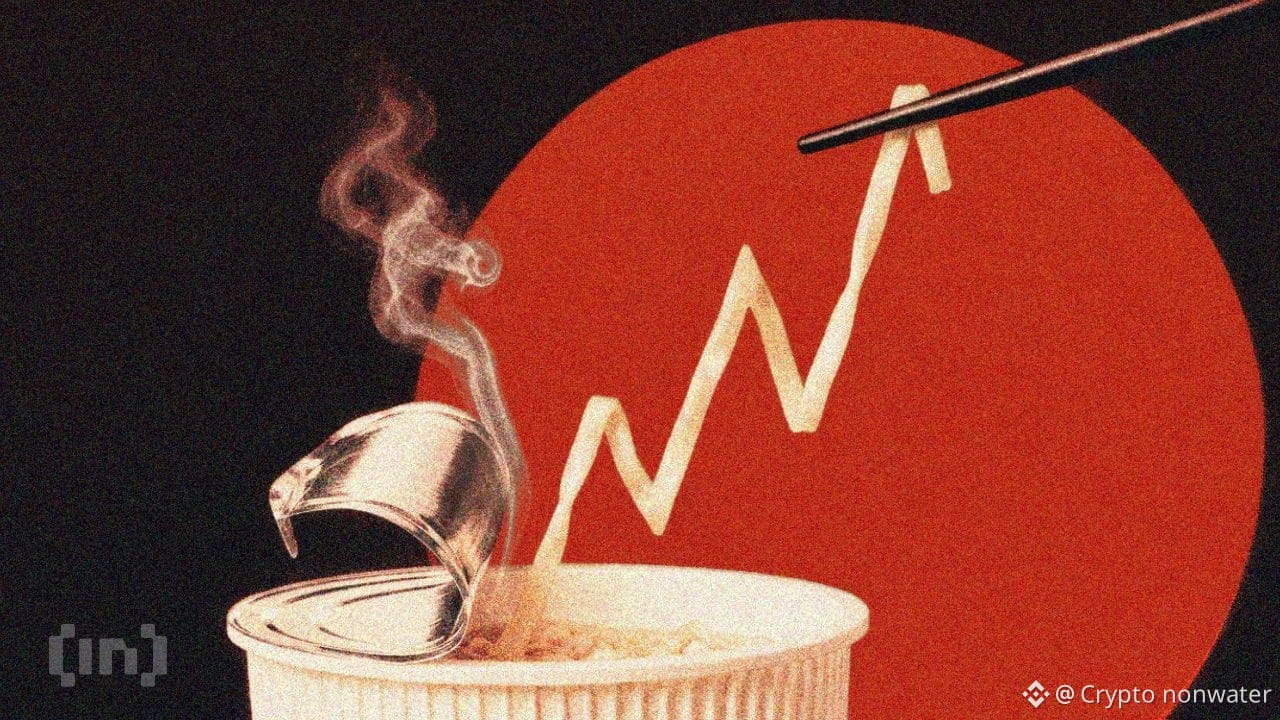
Bank of Japan warns of risk of monetary fragmentation due to stablecoins
Bank of Japan Executive Director Kazushige Kamiyama said stablecoins require strict reserve rules and a clear link to central bank money. He issued the warning at an IMF seminar in Tokyo, emphasizing the risk of fragmentation in the financial system. Japan is already preparing to launch yen-denominated stablecoins, with the country’s largest banks, including Mizuho and MUFG, participating in a pilot project. Authorities are also exploring the possibility of using such assets for tourist tax refunds.
#fraud
176
Nomura cuts forecast for Nvidia Rubin chips by 19% in 2026
Nomura cut its forecast for shipments of Nvidia Rubin and Rubin Ultra chips by 19% in 2026, from 2.02 million to 1.63 million units. The reason was production delays caused by component issues, including low yields for HBM4 chips and limited TSMC packaging capacity. However, analysts raised their forecast for 2027 to 75,000 NVL72 racks (up from 66,000), linking the increase to rising demand from SpaceX. Elon Musk’s company plans to increase its computing capacity fourfold, which could account for up to 60% of Nvidia’s sales in this segment.
$BTC
#forecast

107
Hackers drained $6.3 billion from Binance in October 2026
Hackers linked to the North Korean group TraderTraitor breached Binance on October 29, 2026, and drained around $6.3 billion from hot wallets across several blockchains. Binance founder Changpeng Zhao (CZ) acknowledged that the breach was partly the result of the exchange’s internal complacency. The losses were covered with the company’s own funds, protecting customer accounts. CZ called for an industry security alliance to share best practices and cooperate with law enforcement. He also warned that the crypto industry could face 5–10 hacks a day over the next 6–12 months as AI-powered attacks accelerate.
$BNB
#взлом #BNB
1
Nvidia shares fell 26% in November — their worst month since April 2022
Nvidia shares lost 26% in November, marking their steepest monthly drop since April 2022. Despite revenue growth of 103% year over year, investors are reassessing the company’s valuation. Historical data shows that after sharp declines, Nvidia shares often continue to fall before recovering, pointing to possible short-term volatility. The market puts the odds of November closing above $150 at 56%, but the chances of reaching higher levels, such as $160 or $170, remain low. Key factors for the stock’s future movement will be Fed policy, U.S. export restrictions, and spending forecasts from major customers on AI.
$NVDA
#decline

332
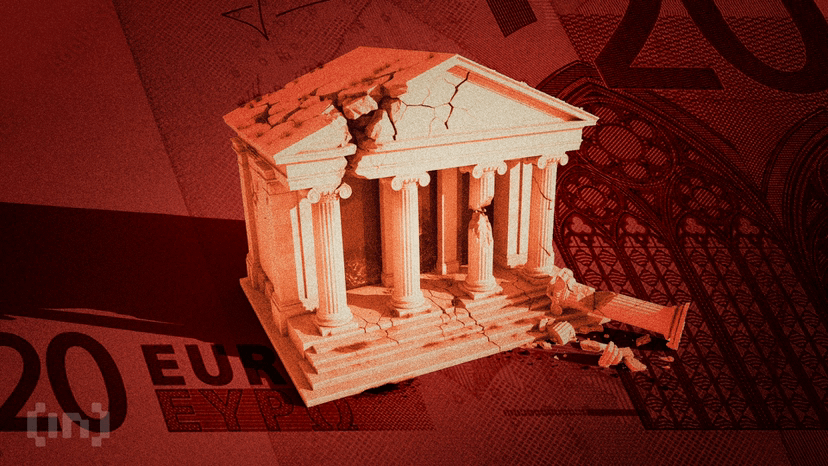
France in recession as GDP falls 0.2%, but ECB rules out a Greek scenario
France’s economy contracted by 0.2% in the third quarter, meeting the definition of a technical recession. ECB Vice President Boris Vujčić said the situation is different from the Greek crisis of 2011, as France’s public debt stands at 119% of GDP, compared with Greece’s 170.6%. However, the yield spread between 10-year French and German bonds has reached its highest level since 2010, and S&P Global has downgraded its outlook for the country’s credit rating.
$ECBK.US $EUR
#прогноз #ECB #EURUSD
Tokenized assets reached $39.3 billion in 2026
Tokenized real-world assets reached $39.3 billion in 2026, according to a CryptoRank report. The largest share is held by tokenized U.S. Treasury funds, which account for $15 billion, or 37% of the market. Tokenized commodities such as gold grew by 73% by August, while the volume of tokenized ETFs nearly tripled to $673 million. The RWA market on Solana grew by 600% over the year, reaching $4.3 billion.
$SOL
#рост #SOL

12
Cardano Founder Criticizes Claude AI for Censorship and Sabotage
Cardano founder Charles Hoskinson backed complaints about censorship and unwanted changes in Claude AI’s behavior. Developers reported that the AI adds random elements to projects, such as sealing the barrel of a tank in a 3D model, leading to financial losses. For example, a mobile studio lost tens of thousands of dollars due to glitches in ad tracking. Hoskinson has previously advocated for decentralized AI as an alternative to centralized control. Controversy surrounding Claude AI arose amid Anthropic’s recent IPO, after the company’s shares rose 10% following their Nasdaq debut.
$ADA
#взлом #ADA

2
IBM plans to launch the Starling quantum computer by 2029 with 200 logical qubits
IBM aims to build its first large-scale, fault-tolerant quantum computer, Starling, by 2029. According to the plan, the system will have 200 logical qubits capable of performing 100 million quantum operations, making it 20,000 times more powerful than the company’s current solutions. It will be based on a modular architecture with cryogenic modules and new qLDPC error-correction methods, which could reduce the number of physical qubits tenfold. The next system after Starling will be Blue Jay, with 2,000 logical qubits. IBM’s achievements already include testing modules at temperatures below 15 millikelvin and improving decoders for real-time operation.
#forecast
7
North Korean hackers moved $600 million through THORChain
North Korea-linked attackers transferred about $942 million in cryptocurrency stolen from Binance, using THORChain and the CoinJoin service. According to analysts at Chainalysis and Elliptic, more than $600 million passed through THORChain, while another $342 million went through CoinJoin, making the funds harder to trace. The total amount stolen was $6.3 billion, of which $2.85 billion was frozen by USDT and USDC issuers. THORChain refused to block the transactions, citing the absence of KYC and censorship, while CoinJoin further complicated the investigation by mixing the funds. The FBI published a list of the hackers’ wallets, but THORChain continued operating, earning $1 million by exchanging stolen assets.
$USDT $USDC $BTC
#взлом #USDT #USDC #BTC

Loan yields in the software sector reached 13% by 2028
Loan yields in the U.S. software sector rose to 13%, significantly above the market average. The main reason is the approaching maturity of $65 billion in debt due in 2028 and 2029. Most of these obligations are tied to buyouts of private companies during the low-interest-rate period from 2020 to 2022. Analysts note that $45 billion of this amount is rated B- or lower, increasing the risk of refinancing and defaults.
#growth

8
Himax forecasts a 26% revenue decline in Q4 2026
Himax Technologies reported revenue of $246.8 million for Q3 2026, up 8.5% from the previous quarter. However, the company expects revenue to decline by 22–26% in the following quarter due to inventory adjustments in the automotive segment. Year-over-year growth of 23.9% was driven by AI chips, including the WiseEye processor for Alibaba smart glasses. In 2027, Himax plans to increase the share of non-driver solutions (AI, optics) to 30% of total revenue.
#growth
HIMXUS+6.86%
26
Log in to explore more content
Join global crypto users on Binance Square
⚡️ Get latest and useful information about crypto.
💬 Trusted by the world’s largest crypto exchange.
👍 Discover real insights from verified creators.
Email / Phone number
Trending Topics
EvolveAtBinanceBlockchainWeek
2.5M views
20,816 Discussing
Binance Blockchain Week is officially underway! 🌍
On November 28–29, whether you’re in Bangkok or joining from afar, tune in to the livestreams and join the conversation on Binance Square!
Here’s what’s in store 👇
📺 Watch the main stage live
Tune in throughout both days as industry speakers share their perspectives on this year’s theme, “Evolve” From technological innovation to real-world applications, explore what’s next for crypto.
⚔️ Watch two trading competitions
The Aster Open Qualifier and the Binance Trading Master Tournament will both be streamed live. Tune in to follow the traders in action.
🏆 Watch The Blockchain 100 Awards Ceremony
The Blockchain 100 list was selected by the community. Join us in celebrating the creators and the ideas they share!
💬 Join the community conversation
Use #EvolveAtBinanceBlockchainWeek in a post with a photo to share what you’re looking forward to, your views on the industry, or your favorite moments from the event.
The event page is now live! Subscribe to all livestreams with one click so you don’t miss a moment 👏
Binance Blockchain Week
·619 Likes
·973.7k views
IBSGovAccountMints1BTokensDrains5.71M
4,617 views
69 Discussing
WorldLibertyActsToCutLiquidationRisk
43,831 views
441 Discussing