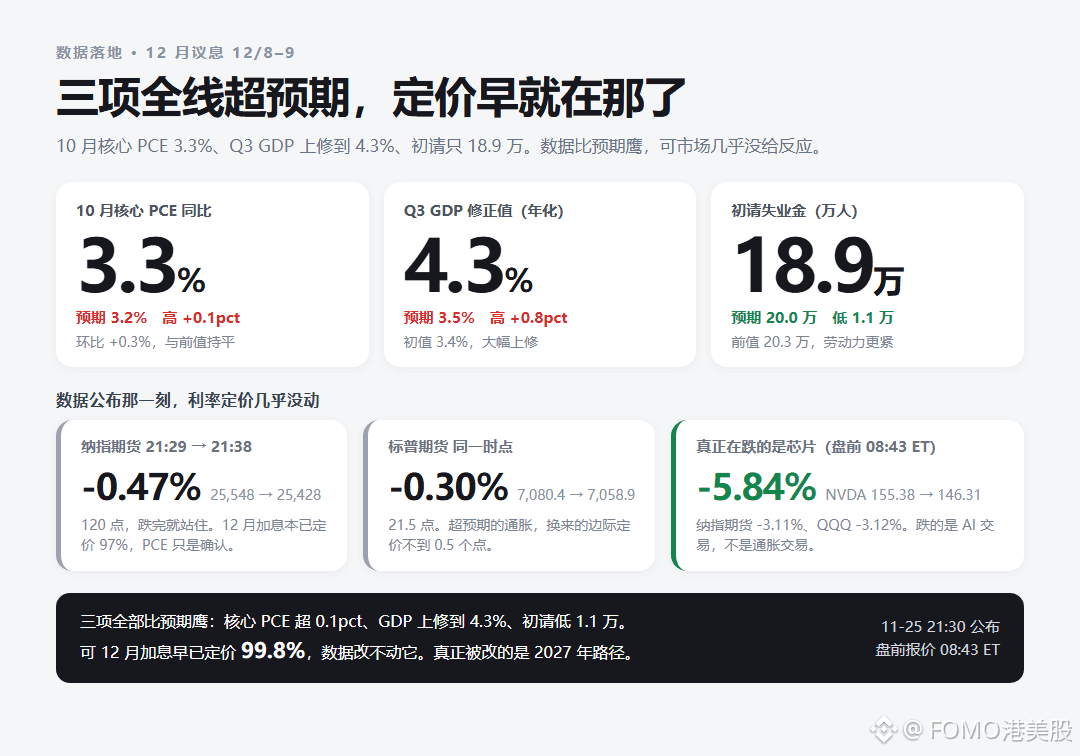
The data is out, and it was hotter than expected. October core PCE rose 3.3% year over year, versus expectations of 3.2%; headline PCE was 3.8%, up from 3.6%. That same evening, the revised Q3 GDP figure came in at 4.3%, versus expectations of just 3.5%; initial jobless claims were 189,000, versus expectations of 200,000. Normally, markets should have fallen, but at the moment the data was released, Nasdaq futures slipped only from 25,548 to 25,428, down 0.47%; S&P futures fell 0.30%. Three readings beat expectations, yet the resulting marginal repricing was less than half a percentage point.
That’s because a December rate hike had already been priced in at 99.8%. Whether PCE beat expectations or not, the December 9 decision wasn’t going to change; the data could only confirm it, not rewrite it.
What’s really falling is chip stocks. In premarket trading, NVIDIA $NVDAB fell from 155.38 to 146.31, down 5.84%, while Nasdaq futures fell 3.11%. What’s falling is the financing and valuation of the AI trade, which has little to do with inflation data.
So the significance of this report isn’t December—it’s 2027. Core PCE at 3.3%, GDP at 4.3%, and initial claims at 189,000, taken together, tell the Fed that the economy isn’t weak and inflation hasn’t eased. The key question is whether this 64.2% keeps rising early next year.
#美联储 #宏观 #美国核心PCE超预期,美联储加息预期增强