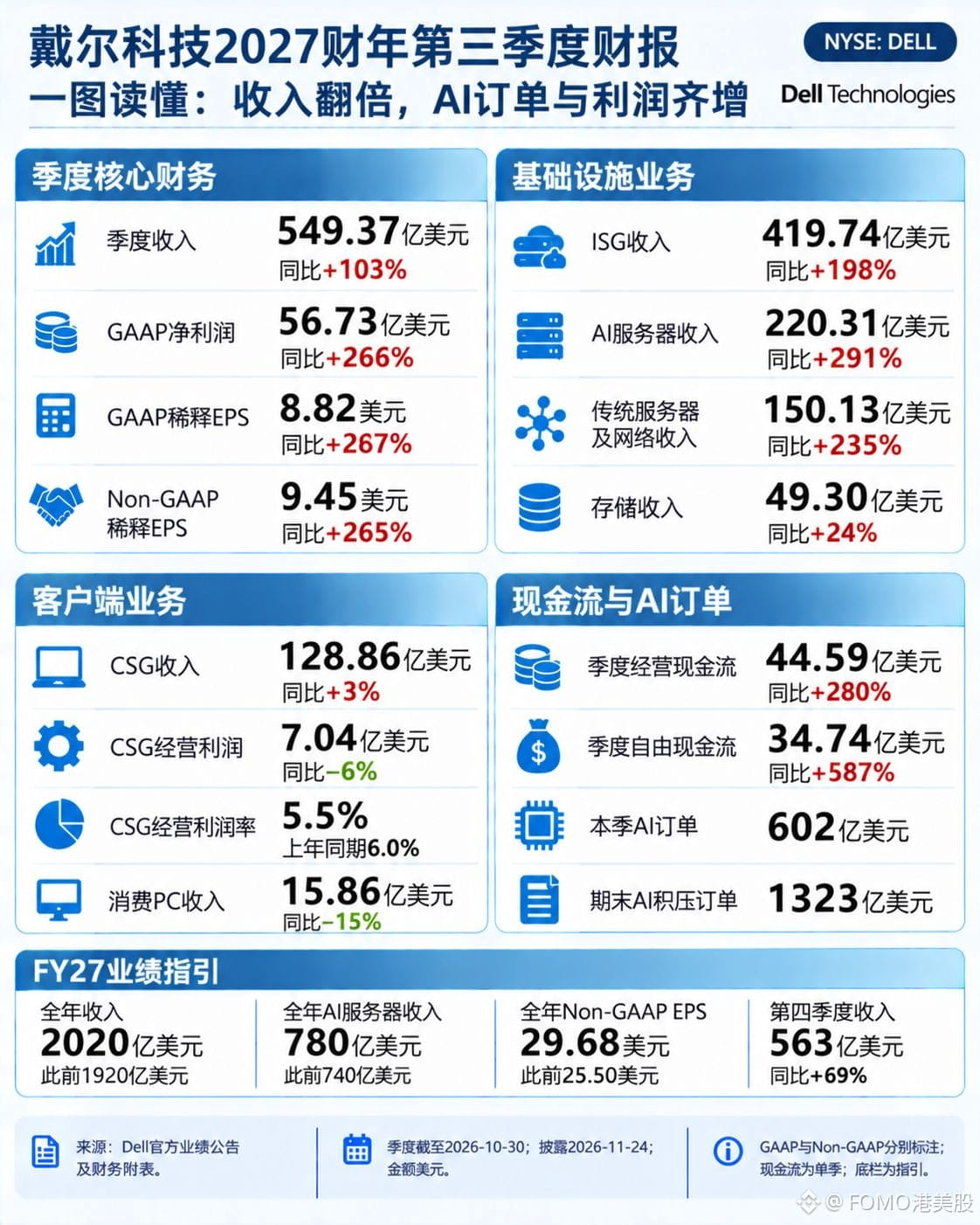
Dell Technologies $DELLB fiscal 2027 third-quarter revenue was US$54.937 billion, up 103%; GAAP net income was US$5.673 billion, up 266%; diluted EPS was US$8.82, up 287%. Growth was entirely in infrastructure: ISG revenue was US$41.974 billion, up 198%; AI server revenue was US$22.031 billion, up 291%; ISG operating profit was US$7.118 billion, up 308%; margin rose from 12.4% to 17.0%, accounting for 91% of segment profit.
Gross margin only rose from 20.7% to 21.0%; the profit doubling was not driven by price increases. Operating expenses rose only 19%, the expense ratio fell from 12.9% to 7.5%, and a 5% reduction in shares outstanding further lifted EPS. Client business was relatively weak: CSG revenue was US$12.886 billion, up only 3%; operating profit fell 6%; margin dropped from 6.0% to 5.5%; and the consumer business was US$1.586 billion, down 15%.
Orders are not the same as cash collection.
AI orders were US$60.2 billion, backlog was US$132.3 billion, full-year revenue guidance was raised from US$192 billion to US$202 billion, AI server guidance was increased to US$78 billion, and Q4 is expected to be US$56.3 billion, up 69%. Inventory rose from US$10.437 billion at the start of the fiscal year to US$29.444 billion, accounts receivable rose from US$17.585 billion to US$28.948 billion, and operating cash flow of US$4.459 billion was still below net income.
On November 24, it closed at US$295.28, down 11.83%. This was the intraday price before earnings were released; the earnings report was only published after the close, so it had not yet been priced in. It has retraced half from the 52-week high of US$594.68, while it is still more than double the year’s low of US$109.55. Revenue doubling is already in the report; now the question is whether the US$29.4 billion of inventory and US$28.9 billion of receivables can turn into cash. If they cannot, a 50% pullback would not be a false selloff.
#戴尔 #BStocks #股票财报季