Ethereum is changing the lock again this time
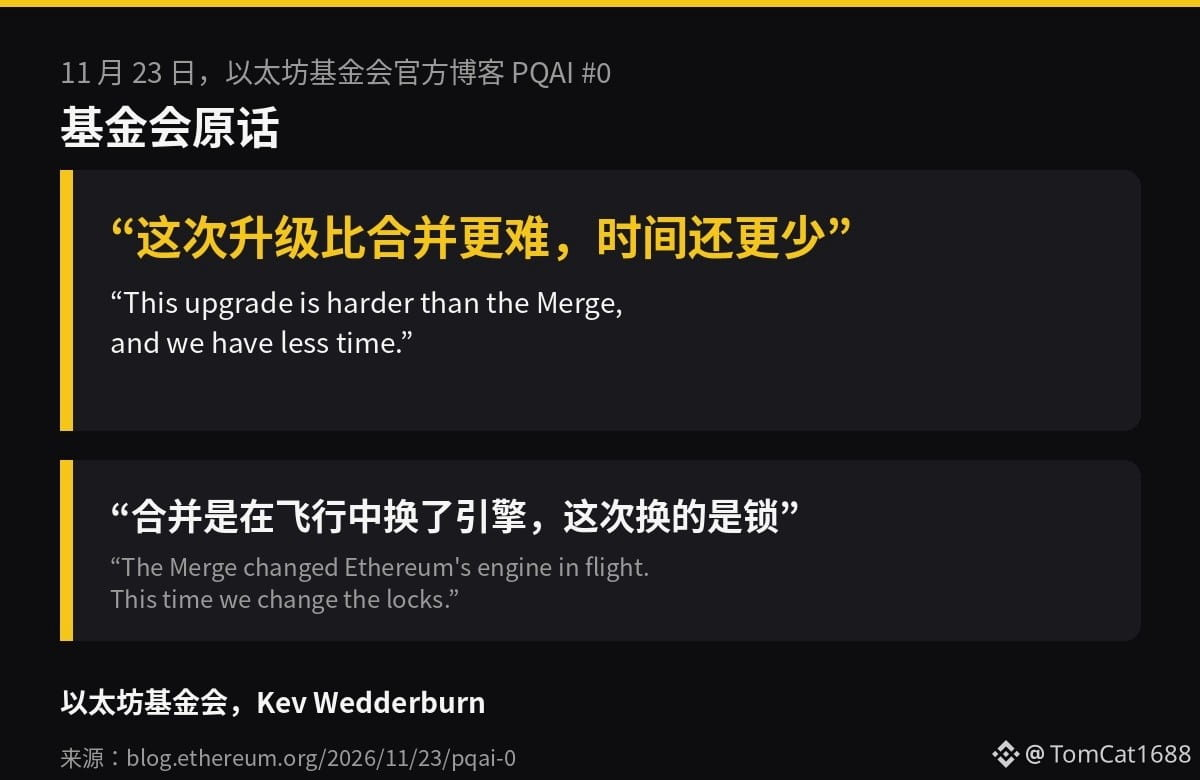
On November 23, the foundation blog’s PQAI Issue 0 set the tone in one sentence
Elliptic-curve signatures have been used for so many years
Now they’re going to be replaced with hash signatures
This has been placed at the highest priority
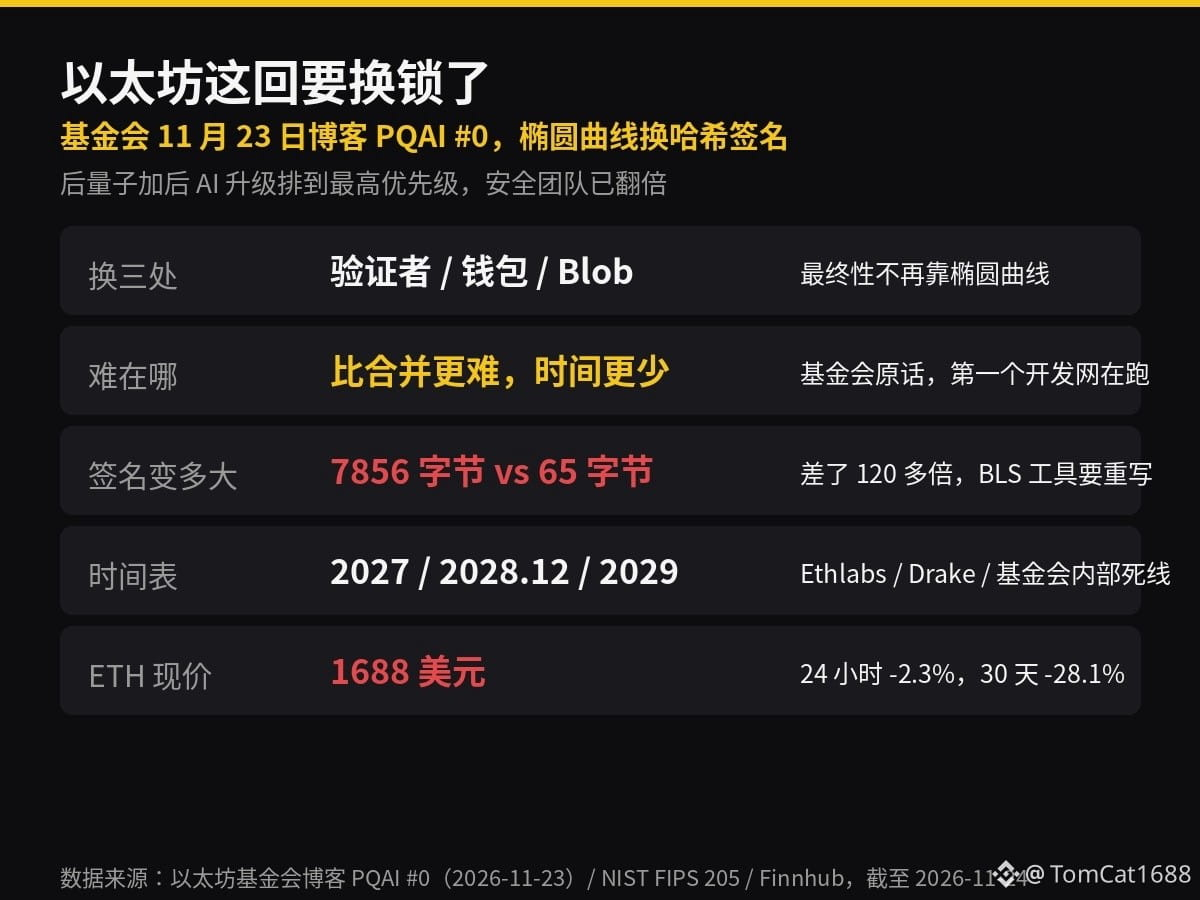
Changing the lock means changing three parts
Validators’ signatures will no longer rely on elliptic curves
Wallets need to give users a way to migrate
The blobs that supply data to Rollups also need to switch to hash commitments
Why now
Quantum has not arrived yet
AI has arrived first
Models finding vulnerabilities are already faster than manual review
Even the Linux kernel has had thousands of issues uncovered
The foundation’s view is
Rather than betting that the mathematical assumptions behind elliptic curves can withstand AI
It is better to switch earlier to a more conservative hash
The cost is also stated very plainly
The new signatures are much larger than what exists now
Under the NIST standard, the smallest hash signature is 7856 bytes
The current ECDSA signature is only 65 bytes
That is more than 120 times larger
The BLS toolchain has to be rewritten
Features that have been in progress for years will have to be pushed back
Whether home nodes can handle it still needs close watching
The timeline is given in three tiers
Ethlabs is calling for 2027
Justin Drake gave December 2028 at Devcon
The foundation’s internal hard deadline is still 2029
It will be reviewed again in January next year
In the short term
ETH is now at 1688 dollars
It has fallen 28% over 30 days
This news is not enough to save the market
Changing the lock is a three-year project
Not next week’s catalyst
In the long term
The fact that a chain can replace its lock without stopping the chain itself
That alone is valuable
The Merge in 2022 already replaced one engine
This time it is replacing a more fundamental lock
Just watch two windows
Which features get cut from the remaining ACD calls this year
And whether the January timeline review gives a clear answer
#以太坊基金会计划转向哈希签名 #以太坊 #ETH #后量子 #PQAI