
$CRCLon
Binance has set aside more than $6.3 billion to cover a hack. But the real test isn't just replacing the money.
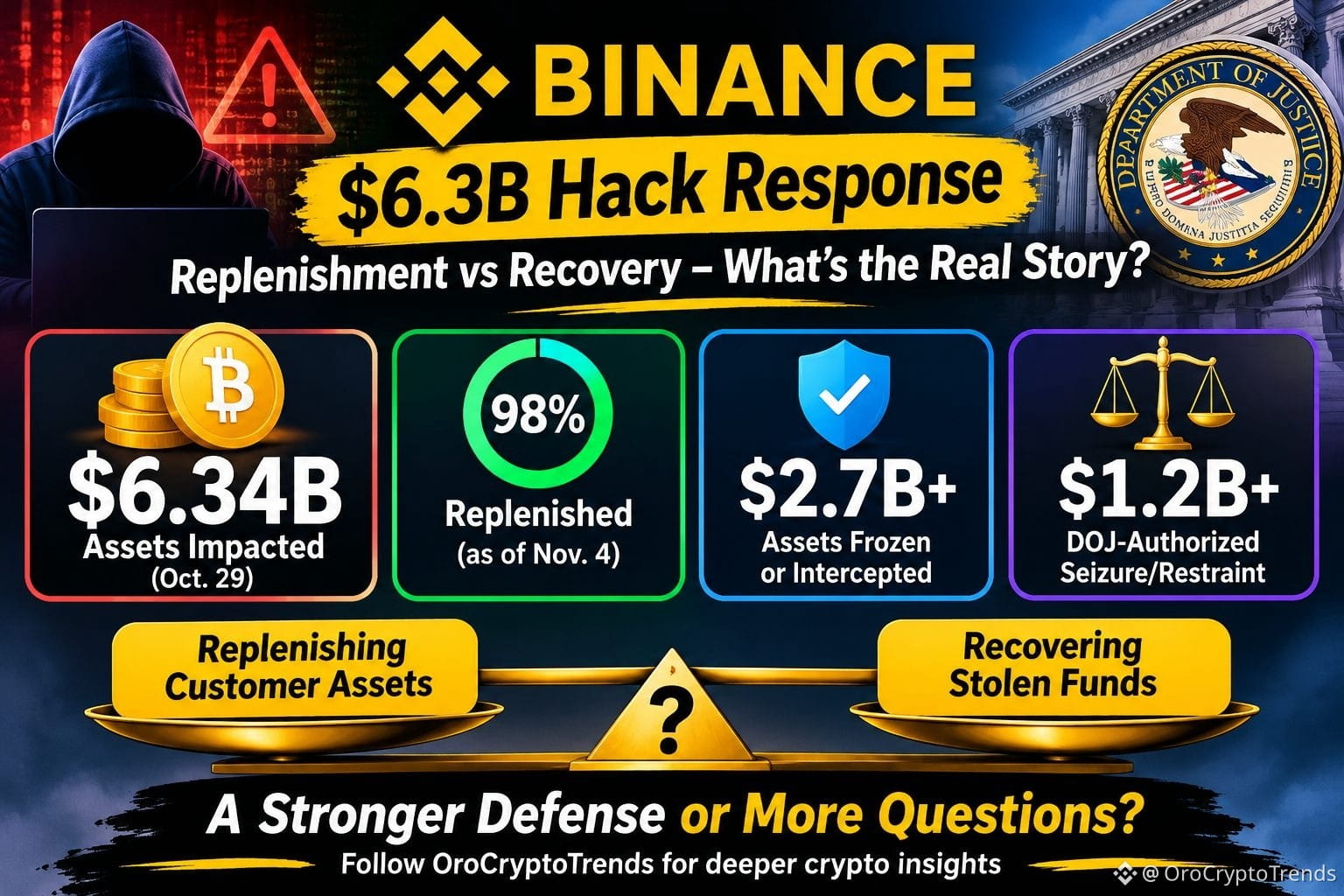
The October 29 security breach, attributed by the FBI to North Korean hackers, resulted in approximately $6.34 billion in stolen digital assets.
Binance has committed to absorbing the financial impact rather than passing the losses to users.
Here's what caught my attention.
On November 4, Binance reported that approximately 98% of the affected assets had been replenished. The remaining 2% involved less-liquid tokens that take longer to acquire. The exchange also expanded its Proof of Reserves snapshot from 10 to 44 tokens.
Meanwhile, the US Department of Justice announced on November 12 that it had obtained court authorization to seize or restrain more than $1.2 billion of the stolen assets. More than $2.7 billion had been frozen through collective government and industry efforts.
But I think there's an important distinction here.
Replenishing customer assets demonstrates financial resilience. Recovering stolen funds demonstrates the effectiveness of law enforcement and cooperation across the crypto industry. These are two different achievements.
And neither automatically proves that the security weaknesses behind the breach have been fully resolved.
For me, the next big test is transparency, independent security reviews, and verifiable proof that the improved safeguards actually work.
Does Binance's response strengthen your confidence in centralized exchanges, or does a $6.3 billion breach leave too many questions unanswered?
$CRCLon