

橙子Joyce
568 Posts
 LIVE
橙子Joyce
 Square Verified+
Report
Block User
币安广场的每天直播北京时间晚上20:00-23:00|十年以上美股市场投研策略|十年以上投资BTC.ETH.BNB.SOL|贵金属投资策略黄金.白银.铜|中长期价值投资者|WEB3项目投研|推特X:@Joyce88AI|✨星河社区联合创始人✨

SPCXB Holder
Frequent Trader
8.8 Years
1.5K+ Following
41.4K+ Followers
48.4K+ Liked
Posts
All
Videos
Live
PINNED
·
--
🎙️ #Building Binance Square and the BNB ecosystem together, connecting the future, empowering diversity, and building an interconnected world! Investment strategy analysis and live trading for U.S. stocks on Binance

 LIVE
1k listens · 1 in Live Trading

BNB
Holding
-9.34
7
6
·
--
Bullish
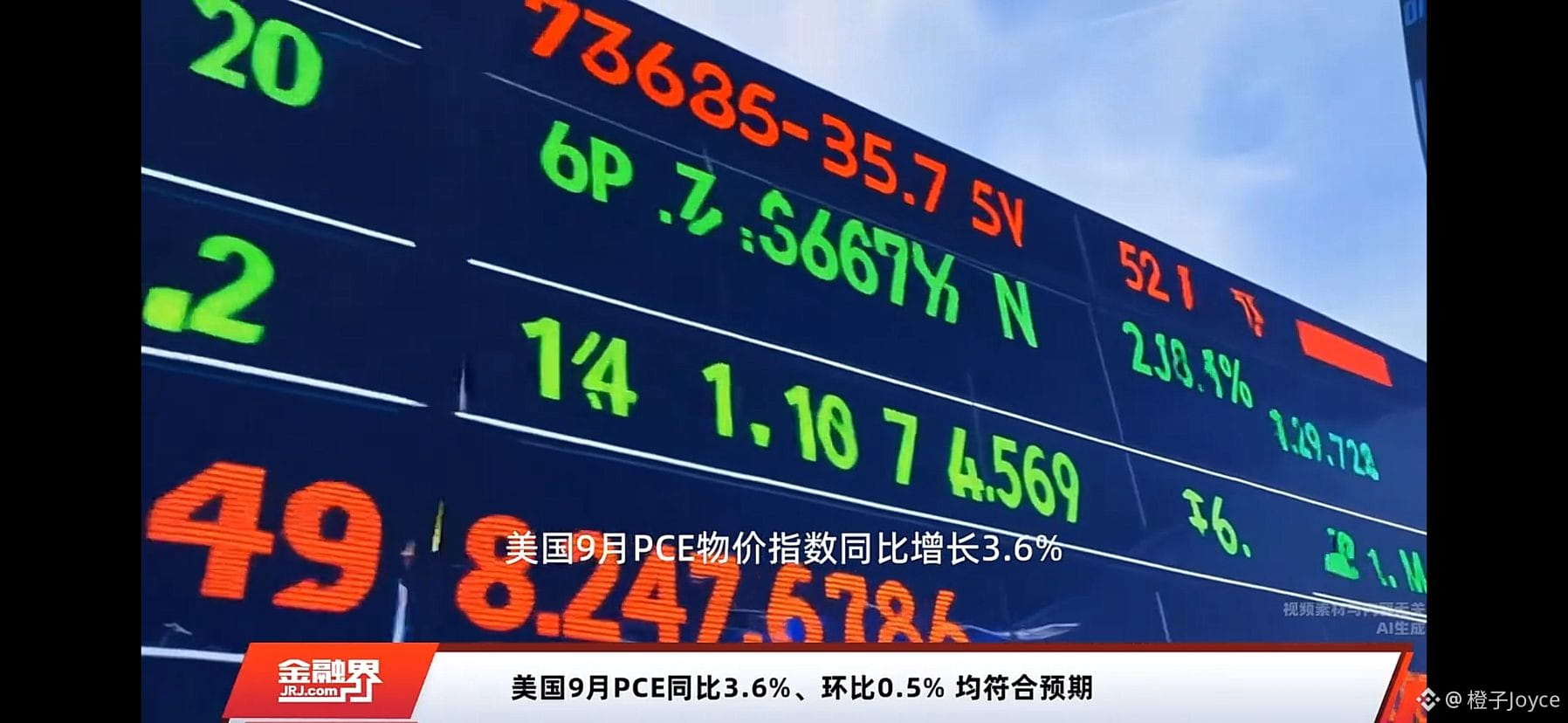
💡 U.S. September PCE inflation rebounds! Energy prices push prices higher, household savings rate hits a four-year low
The latest U.S. September PCE data show a complex mix of “rising inflation + slowing consumption + shrinking savings,” signaling growing economic pressure:
Key data points:
* Headline PCE rose to 3.6% year over year (previously 3.4%), its highest level since May this year; it increased 0.5% month over month. The rise was driven mainly by the recent rebound in crude oil and energy prices.
* Core PCE rose to 3.1% year over year (previously 3.0%), increasing 0.3% month over month. This shows inflationary pressure spreading into non-energy sectors. Elevated non-cyclical inflation could indicate that inflation risks are becoming more deeply entrenched.
* Both income and consumption fell short of expectations: personal income rose 0.2% month over month in September (forecast: 0.5%), while consumer spending rose 0.5% (forecast: 0.6%).
* The household savings rate fell sharply, reaching its lowest level since October 2022, further reducing households’ financial buffer.
📌 Market impact
Inflation has not cooled as expected. Combined with weak household income growth and dwindling savings, this puts the Federal Reserve in a difficult position on monetary policy. Macroeconomic uncertainty could put pressure on risk assets, including crypto markets, and increase volatility.
$BNB
{spot}(BNBUSDT)
$GOOG.US
{stock_us}(GOOG.US)
$SPCX.US
{stock_us}(SPCX.US)
💡 U.S. September PCE inflation rebounds! Energy prices push prices higher, household savings rate hits a four-year low
The latest U.S. September PCE data show a complex mix of “rising inflation + slowing consumption + shrinking savings,” signaling growing economic pressure:
Key data points:
* Headline PCE rose to 3.6% year over year (previously 3.4%), its highest level since May this year; it increased 0.5% month over month. The rise was driven mainly by the recent rebound in crude oil and energy prices.
* Core PCE rose to 3.1% year over year (previously 3.0%), increasing 0.3% month over month. This shows inflationary pressure spreading into non-energy sectors. Elevated non-cyclical inflation could indicate that inflation risks are becoming more deeply entrenched.
* Both income and consumption fell short of expectations: personal income rose 0.2% month over month in September (forecast: 0.5%), while consumer spending rose 0.5% (forecast: 0.6%).
* The household savings rate fell sharply, reaching its lowest level since October 2022, further reducing households’ financial buffer.
📌 Market impact
Inflation has not cooled as expected. Combined with weak household income growth and dwindling savings, this puts the Federal Reserve in a difficult position on monetary policy. Macroeconomic uncertainty could put pressure on risk assets, including crypto markets, and increase volatility.
$BNB
$GOOG.US
$SPCX.US
1
1
2.3k
·
--
Russian President Vladimir Putin praised Elon Musk as a “genius” on Wednesday, while acknowledging that Russia is only just beginning to build its own version of the Starlink satellite internet system.
The remarks were especially notable because, during the war with Russia, Ukraine’s military has relied on Starlink, developed by Musk’s SpaceX, as a key part of its drone operations and battlefield communications. Putin made the comments while listening to a briefing from Digital Development Minister Maksut Shadayev. Shadayev said Russia had launched more than 30 satellites as it worked to build its own version of Starlink. “Wait a moment. I want to point out that this is only our first step. Elon Musk is a genius. He really is a true genius,” Putin said. He was surrounded by a group of African leaders attending a summit in Moscow. In response to Putin’s question, Shadayev said Musk had more than 5,000 low-Earth-orbit satellites in operation. However, according to the independent tracking site Orbital Radar, the actual number is closer to 10,000. “More than 5,000, while we are only just getting started. But we are proud that we have already begun this work and are starting to pursue it independently,” Putin said. He added that the task now was to “shift from quality to quantity.” “We remain in close contact with our American partners—including Mr. Musk—because in orbit, it is crucial to avoid mutual interference and maintain a certain degree of discipline and order,” he said. Ukraine has relied heavily on Starlink and its military version, Starshield, but earlier this month it complained that speed restrictions were affecting its ability to intercept Russian attack drones and forcing it to cancel some operations. Over the weekend, Ukraine said Starlink and Starshield were fully operational again, but Musk accused the Ukrainian military of violating SpaceX’s terms. Neither Musk nor the U.S. government has acknowledged responsibility for imposing the speed restrictions.
The remarks were especially notable because, during the war with Russia, Ukraine’s military has relied on Starlink, developed by Musk’s SpaceX, as a key part of its drone operations and battlefield communications. Putin made the comments while listening to a briefing from Digital Development Minister Maksut Shadayev. Shadayev said Russia had launched more than 30 satellites as it worked to build its own version of Starlink. “Wait a moment. I want to point out that this is only our first step. Elon Musk is a genius. He really is a true genius,” Putin said. He was surrounded by a group of African leaders attending a summit in Moscow. In response to Putin’s question, Shadayev said Musk had more than 5,000 low-Earth-orbit satellites in operation. However, according to the independent tracking site Orbital Radar, the actual number is closer to 10,000. “More than 5,000, while we are only just getting started. But we are proud that we have already begun this work and are starting to pursue it independently,” Putin said. He added that the task now was to “shift from quality to quantity.” “We remain in close contact with our American partners—including Mr. Musk—because in orbit, it is crucial to avoid mutual interference and maintain a certain degree of discipline and order,” he said. Ukraine has relied heavily on Starlink and its military version, Starshield, but earlier this month it complained that speed restrictions were affecting its ability to intercept Russian attack drones and forcing it to cancel some operations. Over the weekend, Ukraine said Starlink and Starshield were fully operational again, but Musk accused the Ukrainian military of violating SpaceX’s terms. Neither Musk nor the U.S. government has acknowledged responsibility for imposing the speed restrictions.


5
1.1k
·
--
🧡 【To every friend who supported me】: Thank you for being here—this is a medal we share! Voting for Binance’s 2026 Top 100 Creators has officially ended. Although I didn’t make it into the final top 20, my heart is filled with gratitude and warmth.
A huge thank-you to every friend who voted for me on time each day, helped rally votes, and cheered me on in the comments during this period! Every precious vote was a sign of your recognition of my content and livestreams. Being nominated and fighting alongside all of you has already been an incredible experience.
Rankings are only temporary, but your daily support and companionship are real. We still have a long road ahead:
When it comes to trading and content creation, rankings have never been the end goal. My core mission is to share valuable insights and help everyone build a sound trading system.
I’m grateful for this nomination, which brought encouragement, support, and trust from so many new and longtime friends!
Next, let’s keep our focus on what matters most:
1️⃣ In-depth macro and market analysis: Continue tracking capital flows and emerging trends in U.S. stocks on Binance, BTC, and BNB.
2️⃣ Risk management and practical strategies: No blindly chasing prices—we’ll move forward steadily with solid data and strict discipline. With more rigorous data and trading logic, I’ll continue to help you navigate both bull and bear markets.
The competition is over, but our trading journey continues. Get ready for the market ahead! 🚀🚀🚀🚀
#BNB交易策略 #币安交易所美股投资策略分析与实盘交易
According to an official Binance announcement, Binance is launching a Refer-a-Friend rewards campaign running from 2026-10-28 16:00:00 to 2026-11-27 23:59:00 (UTC+8), with a total prize pool of $150,000. Once a friend completes registration and identity verification, the referrer can receive a random token voucher worth 1.8–3.8 USDC. If the friend’s spot buy trading volume exceeds 200 USDT, they can receive a random token voucher worth 1.8–8.8 USDC; if it exceeds 5,000 USDT, they can receive a 5 USDC token voucher. Spot or futures buy trading volume exceeding 10,000 USDT qualifies for an 8.8 USDC token voucher. Each reward can be claimed up to 5 times, and campaign rewards can be combined with referral commissions. Token vouchers will be credited to the Rewards Hub within 48 hours of claiming.

1
10
697
·
--
Bullish
Verified
🚀 [Major News] AI giant Anthropic races toward a Nasdaq IPO! A full breakdown of its S-1 filing and latest financials
Global AI frontrunner Anthropic has officially begun the process of its initial public offering (IPO)! As a “bellwether” for the commercialization of large language models, its latest S-1 filing reveals astonishing growth and financial momentum.
Here are the key highlights at a glance:
📅 I. IPO Timeline
• S-1 filing: Officially filed with the SEC on October 26, 2026.
• Ticker and exchange: Plans to list on the Nasdaq Global Select Market under the ticker “ANT.”
• Expected listing: Could go public as early as the week of November 16, 2026 (around November 19), with a goal of listing before Thanksgiving!
📊 II. Explosive Growth and Profitability
• Soaring revenue: Revenue reached $16.286 billion in the first half of 2026, up 1,300% year over year—3.55 times its full-year 2025 revenue in just six months! Revenue surged again to $16.8 billion in Q3 2026 alone.
• Extremely strong enterprise retention: More than 50% of Fortune 500 companies have adopted its services. Nearly 12,000 customers generate over $100,000 annually, and NRR (net revenue retention) is as high as ~900%!
• Adjusted profitability achieved: Operating leverage is becoming increasingly evident, and the company has delivered adjusted profits and positive cash flow for several consecutive quarters. Adjusted operating profit was approximately $1.618 billion in the first half of 2026, with a margin of around 10%.
💰 III. Massive Compute Spending and Long-Term Pressure
• To maintain its lead in large-model technology, Anthropic has committed to investing at least $518 billion in cloud services and computing capacity over the next decade. Actual net profits are likely to remain under pressure in the short term.
💡 Community Discussion:
With Anthropic going public, AI infrastructure and AI agent sectors may see another round of capital revaluation. Are you optimistic about ANT’s performance after its listing? Could the AI sector spark a new wave of interest in related AI tokens in the crypto market?
Share your thoughts in the comments! 👇
#Anthropic #IPO #ANT #AI #USStocks #BinanceSquare
We’re buying the dips in $GOOG, SPCX, META, and AMZN
$SPCX.US
{stock_us}(SPCX.US)
$META.US
{stock_us}(META.US)
$MSFT.US
{stock_us}(MSFT.US)
🚀 [Major News] AI giant Anthropic races toward a Nasdaq IPO! A full breakdown of its S-1 filing and latest financials
Global AI frontrunner Anthropic has officially begun the process of its initial public offering (IPO)! As a “bellwether” for the commercialization of large language models, its latest S-1 filing reveals astonishing growth and financial momentum.
Here are the key highlights at a glance:
📅 I. IPO Timeline
• S-1 filing: Officially filed with the SEC on October 26, 2026.
• Ticker and exchange: Plans to list on the Nasdaq Global Select Market under the ticker “ANT.”
• Expected listing: Could go public as early as the week of November 16, 2026 (around November 19), with a goal of listing before Thanksgiving!
📊 II. Explosive Growth and Profitability
• Soaring revenue: Revenue reached $16.286 billion in the first half of 2026, up 1,300% year over year—3.55 times its full-year 2025 revenue in just six months! Revenue surged again to $16.8 billion in Q3 2026 alone.
• Extremely strong enterprise retention: More than 50% of Fortune 500 companies have adopted its services. Nearly 12,000 customers generate over $100,000 annually, and NRR (net revenue retention) is as high as ~900%!
• Adjusted profitability achieved: Operating leverage is becoming increasingly evident, and the company has delivered adjusted profits and positive cash flow for several consecutive quarters. Adjusted operating profit was approximately $1.618 billion in the first half of 2026, with a margin of around 10%.
💰 III. Massive Compute Spending and Long-Term Pressure
• To maintain its lead in large-model technology, Anthropic has committed to investing at least $518 billion in cloud services and computing capacity over the next decade. Actual net profits are likely to remain under pressure in the short term.
💡 Community Discussion:
With Anthropic going public, AI infrastructure and AI agent sectors may see another round of capital revaluation. Are you optimistic about ANT’s performance after its listing? Could the AI sector spark a new wave of interest in related AI tokens in the crypto market?
Share your thoughts in the comments! 👇
#Anthropic #IPO #ANT #AI #USStocks #BinanceSquare
We’re buying the dips in $GOOG, SPCX, META, and AMZN
$SPCX.US
$META.US
$MSFT.US
3
1.5k
·
--
Bullish
Verified
--The Fed held interest rates steady as expected, saying it would wait to “accumulate more information”
The Federal Reserve held its benchmark interest rate range at 3.75%-4.00% on Wednesday, as expected, deciding not to adjust borrowing costs before the U.S. midterm elections conclude next week and to wait for more data on the path of inflation.
The Fed acknowledged that inflation “remains elevated” and suggested that any further rate hikes would depend on how inflation evolves.
The Fed upgraded its assessment of the economy from “moderate” growth at its September meeting to “strong” growth. It continued to describe investment as strong and said job growth had been roughly in line with labor force growth.
The Fed’s latest policy statement differed notably from the one issued after its September meeting, including what seemed to be a degree of forward guidance—a practice Chair Warsh had previously said he hoped to avoid. The market reaction was subdued: U.S. stocks pared their gains slightly after the policy decision was announced, while Treasury yields extended their rise.
——————————————————————————
We buy the following company stocks on dips
$AMZN.US
$SPCX.US
$GOOG.US
{stock_us}(AMZN.US)
{stock_us}(SPCX.US)
{stock_us}(GOOG.US)
--The Fed held interest rates steady as expected, saying it would wait to “accumulate more information”
The Federal Reserve held its benchmark interest rate range at 3.75%-4.00% on Wednesday, as expected, deciding not to adjust borrowing costs before the U.S. midterm elections conclude next week and to wait for more data on the path of inflation.
The Fed acknowledged that inflation “remains elevated” and suggested that any further rate hikes would depend on how inflation evolves.
The Fed upgraded its assessment of the economy from “moderate” growth at its September meeting to “strong” growth. It continued to describe investment as strong and said job growth had been roughly in line with labor force growth.
The Fed’s latest policy statement differed notably from the one issued after its September meeting, including what seemed to be a degree of forward guidance—a practice Chair Warsh had previously said he hoped to avoid. The market reaction was subdued: U.S. stocks pared their gains slightly after the policy decision was announced, while Treasury yields extended their rise.
——————————————————————————
We buy the following company stocks on dips
$AMZN.US
$SPCX.US
$GOOG.US

AMZNUS-7.64%
GOOGUS-1.19%
SPCXUS-4.36%
5
1.7k
·
--
Bullish
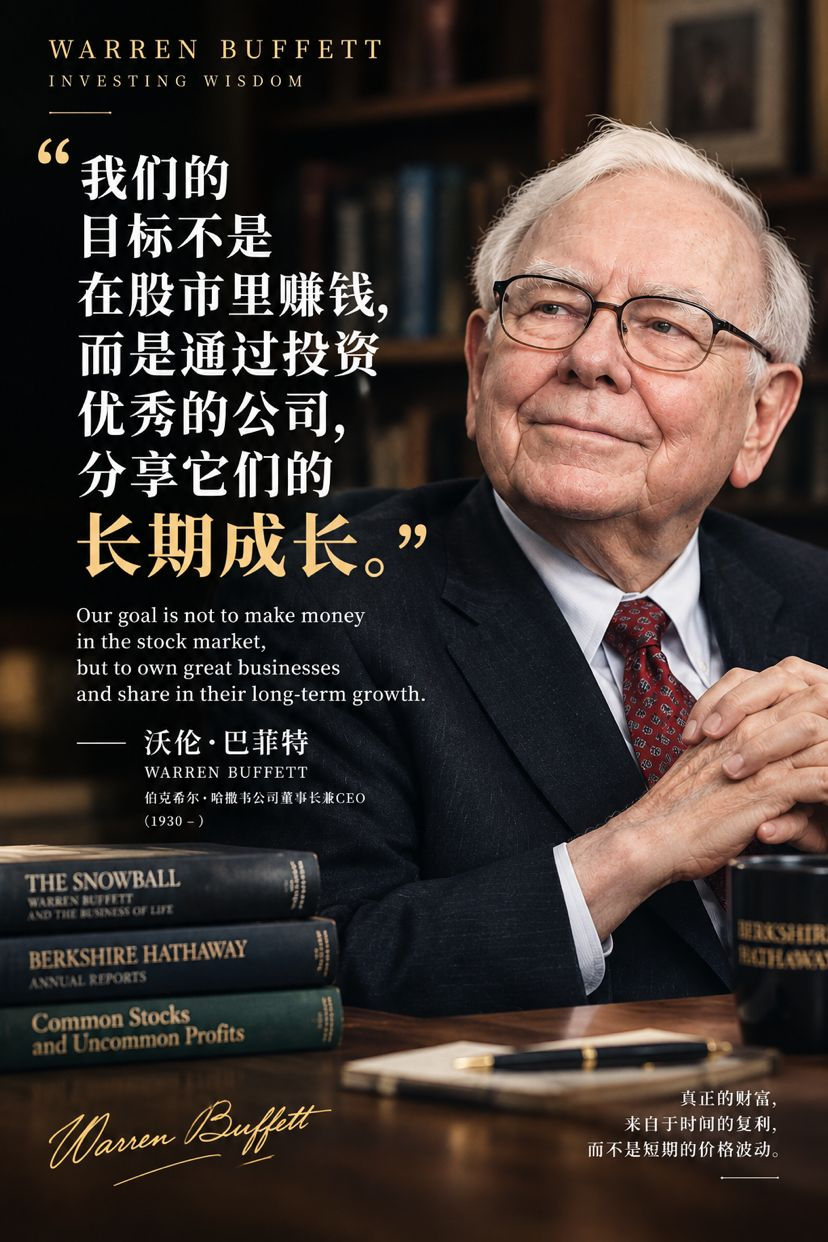
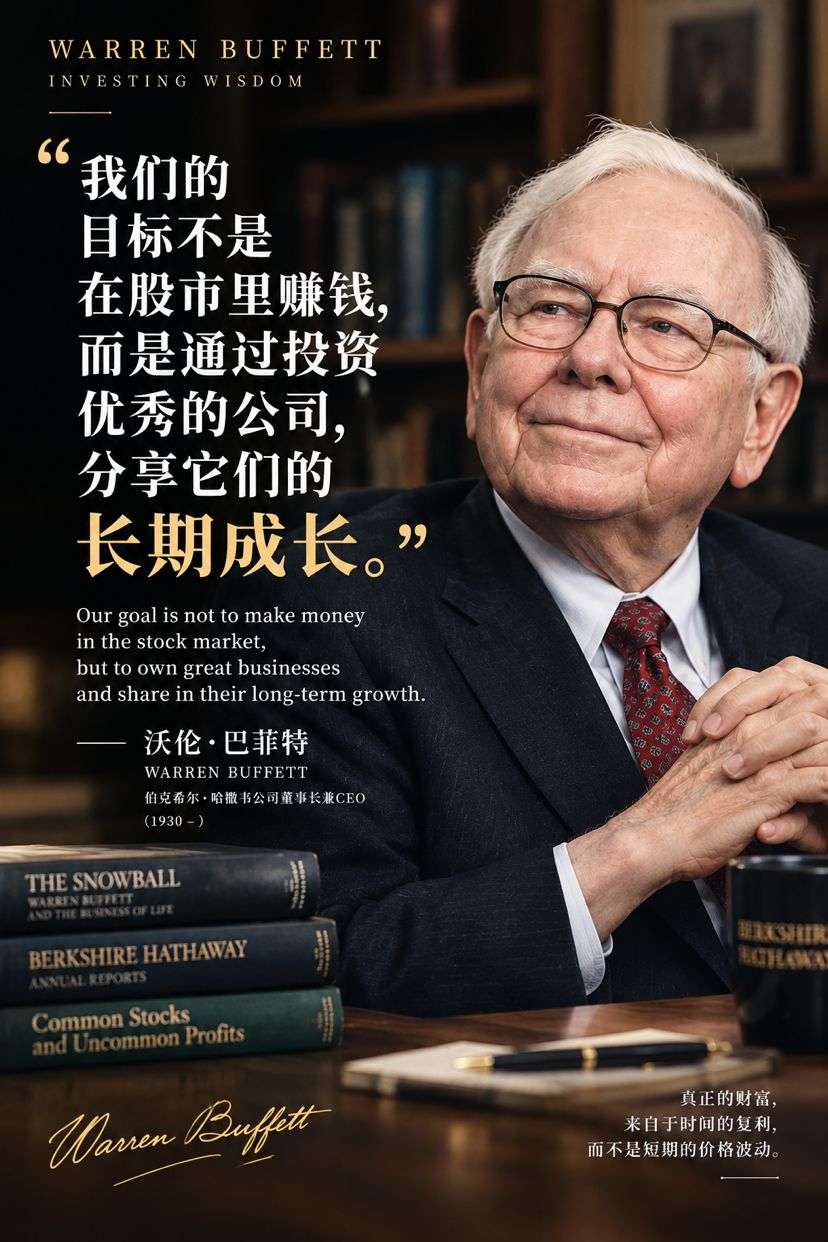
Who shaped Buffett’s investment philosophy?
Buffett wasn’t born an investment genius. His investment approach took shape through reading, discussion, and practice, evolving as he absorbed the ideas of several great thinkers. Four key figures profoundly changed the course of his investing.
Keynes: From macroeconomic forecasting to focusing on businesses
As a pragmatic economist and investor, Keynes abandoned attempts to predict macroeconomic cycles after the stock market crash of the late 1920s. Instead, he turned to studying the earnings power and long-term prospects of individual businesses, advocating concentrated investments in high-quality companies. Buffett greatly admired Keynes’s writings and adopted sayings such as “It is better to be vaguely right than precisely wrong” as guiding principles.
* Graham: Laying the foundations of value investing
Graham was Buffett’s intellectual mentor. He introduced three core concepts—“a stock is a part of a business,” “Mr. Market,” and the “margin of safety”—and reduced investing to a scientific principle: buying a dollar’s worth of assets for 40 cents. Graham gave Buffett a highly disciplined framework for valuation and a margin of safety, leading to his first major epiphany about investing.
* Fisher: Opening the door to growth stocks and business quality
Unlike Graham, who focused on undervalued assets in the present (“cigar butts”), Fisher placed greater importance on a company’s future earnings power, competitive advantages, and the quality of its management. Using his famous “scuttlebutt” method, he sought out growth companies capable of outperforming the market over the long term. Fisher’s ideas helped Buffett realize that price matters, but so does the quality of the business itself.
* Munger: The transformation from “cigar butts” to “great companies”
As Buffett’s business partner for more than six decades, Munger reshaped how he allocated capital. He urged Buffett to “forget about buying fair companies at wonderful prices; buy wonderful companies at fair prices.” In acquisitions such as See’s Candies, Munger helped Buffett move beyond his fixation on tangible assets and focus instead on brands, pricing power, and long-term returns on capital—truly laying the foundations of Berkshire Hathaway’s vast empire.
What is called value investing is, in essence, a way of thinking that continues to grow and evolve through practice.
$TSMB
{spot}(TSMBUSDT)
Who shaped Buffett’s investment philosophy?
Buffett wasn’t born an investment genius. His investment approach took shape through reading, discussion, and practice, evolving as he absorbed the ideas of several great thinkers. Four key figures profoundly changed the course of his investing.
Keynes: From macroeconomic forecasting to focusing on businesses
As a pragmatic economist and investor, Keynes abandoned attempts to predict macroeconomic cycles after the stock market crash of the late 1920s. Instead, he turned to studying the earnings power and long-term prospects of individual businesses, advocating concentrated investments in high-quality companies. Buffett greatly admired Keynes’s writings and adopted sayings such as “It is better to be vaguely right than precisely wrong” as guiding principles.
* Graham: Laying the foundations of value investing
Graham was Buffett’s intellectual mentor. He introduced three core concepts—“a stock is a part of a business,” “Mr. Market,” and the “margin of safety”—and reduced investing to a scientific principle: buying a dollar’s worth of assets for 40 cents. Graham gave Buffett a highly disciplined framework for valuation and a margin of safety, leading to his first major epiphany about investing.
* Fisher: Opening the door to growth stocks and business quality
Unlike Graham, who focused on undervalued assets in the present (“cigar butts”), Fisher placed greater importance on a company’s future earnings power, competitive advantages, and the quality of its management. Using his famous “scuttlebutt” method, he sought out growth companies capable of outperforming the market over the long term. Fisher’s ideas helped Buffett realize that price matters, but so does the quality of the business itself.
* Munger: The transformation from “cigar butts” to “great companies”
As Buffett’s business partner for more than six decades, Munger reshaped how he allocated capital. He urged Buffett to “forget about buying fair companies at wonderful prices; buy wonderful companies at fair prices.” In acquisitions such as See’s Candies, Munger helped Buffett move beyond his fixation on tangible assets and focus instead on brands, pricing power, and long-term returns on capital—truly laying the foundations of Berkshire Hathaway’s vast empire.
What is called value investing is, in essence, a way of thinking that continues to grow and evolve through practice.
$TSMB
3
836
·
--
Bullish
JPMorgan Chase has approximately $4.8 trillion in assets worldwide. Its CEO, Jamie Dimon, has publicly expressed great admiration for Elon Musk, comparing him first to “the Einstein of our time” and later to “the Edison of our time.”
1. Calling Musk “the Einstein of our time”
During an interview with CNBC at the World Economic Forum (WEF) in Davos in January 2025, Dimon discussed JPMorgan Chase and Tesla ending a long-running $162 million legal dispute and reaching a settlement. Dimon said the two had “hugged it out” and spoke highly of Musk:
> “You look at Elon—SpaceX, Tesla, Neuralink. I mean, this guy is our Einstein. We’ll help him and his companies as much as we can.”
Musk later responded on social media: “Nice of him to say.”
2. Calling Musk “the Edison of our time”
At a JPMorgan Chase executive and investor event for 3,500 of the bank’s most important clients in June 2026, Dimon again praised Musk’s contributions to cross-industry manufacturing and systems integration:
> “Elon is the Edison of our time.”
> Dimon noted that Musk had not only transformed automobile manufacturing—from vertical integration to a fundamental reshaping of production processes—but had also built vast infrastructure ecosystems in areas such as SpaceX and Starlink. He likened this to how Thomas Edison not only invented the electric light bulb, but also built an entire electrical grid and industrial research and development system.
In response to the praise on social media, Musk also shared his views on Edison and the historical debate over alternating current and direct current (AC/DC). He praised Edison as an exceptional figure and expressed confidence in the future of distributed energy and DC-based systems.
Background: From opposition to cooperation
JPMorgan Chase and Musk’s companies had been at odds in court over a warrant agreement dispute sparked by Musk’s 2018 tweet about taking Tesla private. After the parties dropped their lawsuits and settled in late 2024, JPMorgan Chase resumed extensive business cooperation with SpaceX and Tesla. Dimon has also repeatedly expressed his approval of Musk’s business and technological breakthroughs.
{stock_us}(SPCX.US)
JPMorgan Chase has approximately $4.8 trillion in assets worldwide. Its CEO, Jamie Dimon, has publicly expressed great admiration for Elon Musk, comparing him first to “the Einstein of our time” and later to “the Edison of our time.”
1. Calling Musk “the Einstein of our time”
During an interview with CNBC at the World Economic Forum (WEF) in Davos in January 2025, Dimon discussed JPMorgan Chase and Tesla ending a long-running $162 million legal dispute and reaching a settlement. Dimon said the two had “hugged it out” and spoke highly of Musk:
> “You look at Elon—SpaceX, Tesla, Neuralink. I mean, this guy is our Einstein. We’ll help him and his companies as much as we can.”
Musk later responded on social media: “Nice of him to say.”
2. Calling Musk “the Edison of our time”
At a JPMorgan Chase executive and investor event for 3,500 of the bank’s most important clients in June 2026, Dimon again praised Musk’s contributions to cross-industry manufacturing and systems integration:
> “Elon is the Edison of our time.”
> Dimon noted that Musk had not only transformed automobile manufacturing—from vertical integration to a fundamental reshaping of production processes—but had also built vast infrastructure ecosystems in areas such as SpaceX and Starlink. He likened this to how Thomas Edison not only invented the electric light bulb, but also built an entire electrical grid and industrial research and development system.
In response to the praise on social media, Musk also shared his views on Edison and the historical debate over alternating current and direct current (AC/DC). He praised Edison as an exceptional figure and expressed confidence in the future of distributed energy and DC-based systems.
Background: From opposition to cooperation
JPMorgan Chase and Musk’s companies had been at odds in court over a warrant agreement dispute sparked by Musk’s 2018 tweet about taking Tesla private. After the parties dropped their lawsuits and settled in late 2024, JPMorgan Chase resumed extensive business cooperation with SpaceX and Tesla. Dimon has also repeatedly expressed his approval of Musk’s business and technological breakthroughs.

TSLAB-2.45%
SPCXUS-4.36%
3
3
1.6k
·
--
Bullish
Anthropic holds $131.7 billion in cash, more than Nvidia and Apple combined
This astonishing figure comes from the S-1 registration statement that AI startup Anthropic recently filed with the U.S. Securities and Exchange Commission (SEC) ahead of its initial public offering (IPO).
According to the filing, as of June 30, 2026, Anthropic had a total of $131.7 billion in cash, cash equivalents, and short-term investments, including $112.4 billion in cash and $19.3 billion in short-term investments. This enormous cash reserve not only exceeds that of most U.S. nonfinancial companies (among nonbank U.S. companies, it is surpassed only by Berkshire Hathaway and Alphabet), but also exceeds the combined cash reserves of Nvidia and Apple.
Key points behind this phenomenon:
* Unprecedented fundraising capability
Since its founding six years ago, Anthropic has raised approximately $141 billion in private financing, setting a rare historical record for a tech startup accumulating such a massive cash reserve on the eve of an IPO.
* Extremely high infrastructure and computing costs
Although Anthropic has $131.7 billion in cash on its books, the prospectus also reveals substantial future commitments and costs. As demand for AI model training and computing power grows exponentially, Anthropic faces hundreds of billions of dollars in future cloud-computing and lease obligations, including leases not yet commenced and fixed spending commitments.
* Record-breaking IPO draws intense attention
As plans move forward to list its shares on the Nasdaq under the ticker symbol “ANT,” this colossal cash reserve demonstrates the company’s formidable ability to mobilize capital, while also highlighting how spending in the global AI race has reached unprecedented, astronomical levels.
$MU
{future}(MUUSDT)
$SKHY.US
{stock_us}(SKHY.US)
$SNDK.US
{stock_us}(SNDK.US)
Anthropic holds $131.7 billion in cash, more than Nvidia and Apple combined
This astonishing figure comes from the S-1 registration statement that AI startup Anthropic recently filed with the U.S. Securities and Exchange Commission (SEC) ahead of its initial public offering (IPO).
According to the filing, as of June 30, 2026, Anthropic had a total of $131.7 billion in cash, cash equivalents, and short-term investments, including $112.4 billion in cash and $19.3 billion in short-term investments. This enormous cash reserve not only exceeds that of most U.S. nonfinancial companies (among nonbank U.S. companies, it is surpassed only by Berkshire Hathaway and Alphabet), but also exceeds the combined cash reserves of Nvidia and Apple.
Key points behind this phenomenon:
* Unprecedented fundraising capability
Since its founding six years ago, Anthropic has raised approximately $141 billion in private financing, setting a rare historical record for a tech startup accumulating such a massive cash reserve on the eve of an IPO.
* Extremely high infrastructure and computing costs
Although Anthropic has $131.7 billion in cash on its books, the prospectus also reveals substantial future commitments and costs. As demand for AI model training and computing power grows exponentially, Anthropic faces hundreds of billions of dollars in future cloud-computing and lease obligations, including leases not yet commenced and fixed spending commitments.
* Record-breaking IPO draws intense attention
As plans move forward to list its shares on the Nasdaq under the ticker symbol “ANT,” this colossal cash reserve demonstrates the company’s formidable ability to mobilize capital, while also highlighting how spending in the global AI race has reached unprecedented, astronomical levels.
$MU
$SKHY.US
$SNDK.US
4
3.1k
·
--
Bullish
Verified
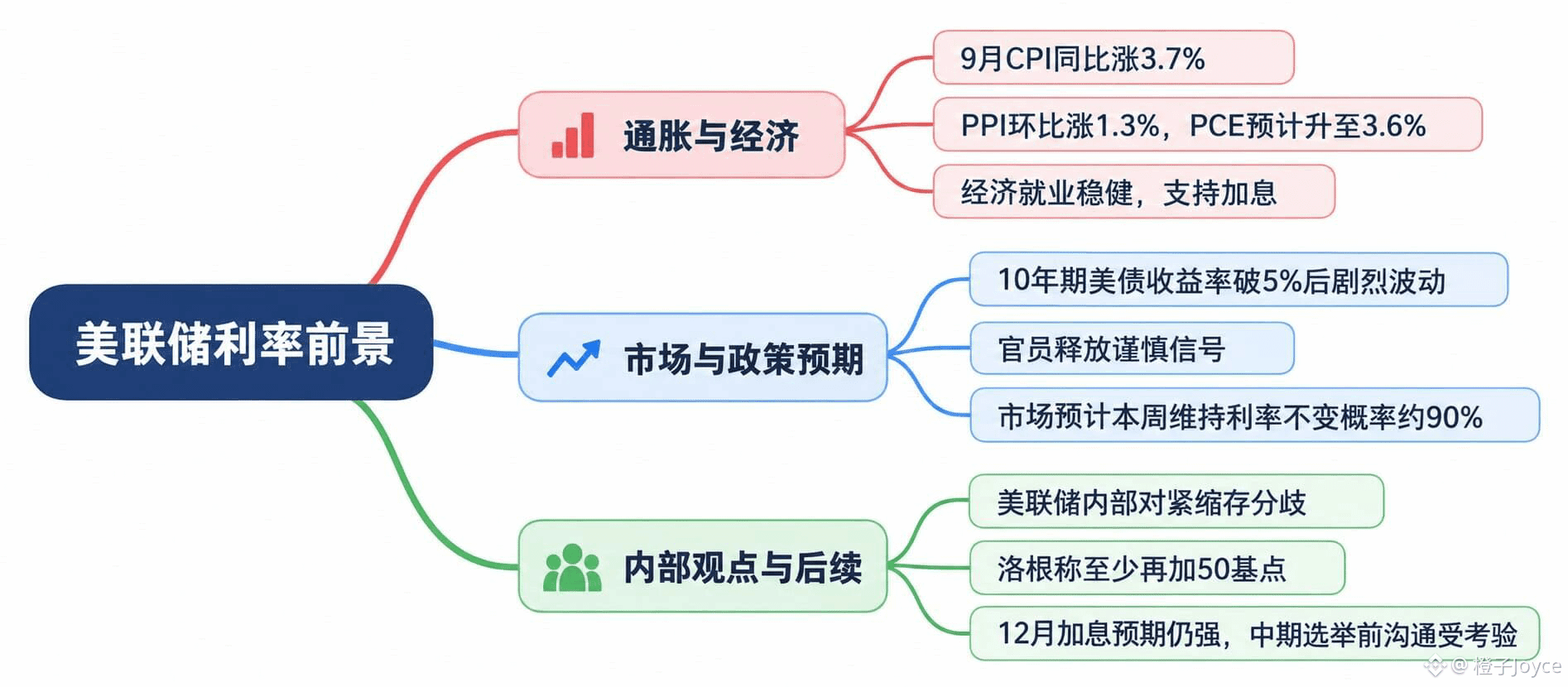
🏦 Preview of this week’s Fed decision: Rising inflation vs. bond market volatility—hold steady in October or act again in December?
According to “Fed whisperer” Nick Timiraos and the latest market data, although recent U.S. inflation and economic data support further policy tightening, the Fed is still widely expected to leave interest rates unchanged this week.
Key points at a glance:
📊 Inflation and economic performance: Fundamentals make the case for a rate hike
* Rebounding data: September CPI rose 3.7% year over year, PPI rose 1.3% month over month, and PCE is expected to climb to 3.6%, raising the risk that inflation will move further away from the 2% target.
* Economic resilience: The unemployment rate remains low at 4.2%, investment in AI infrastructure and consumer spending are strong, and GDP growth may accelerate in the third quarter.
📉 Market and policy expectations: Sharp swings in Treasury yields encourage a pause
* Pause highly likely: Interest rate futures put the odds of no change this week at around 90%. The current target range for the federal funds rate is 3.75%–4.00%.
* Higher long-term borrowing costs: The 10-year Treasury yield previously broke above 5% (peaking at over 5.3%). The drag that higher long-term borrowing costs could have on the economy is leading officials to favor a “wait and see” approach.
👥 Internal divisions and outlook: Focus shifts to December
* Hawkish voices: Dallas Fed President Logan believes at least another 50 basis points of rate hikes are needed, highlighting clear internal divisions over the degree of tightening.
* Policy window: Markets expect the Fed to hold off this week, while leaving room for a rate hike in December. With the U.S. midterm elections approaching, the Fed’s policy communications and independence will be put to the test.
💡 Market impact:
If the Fed pauses rate hikes this week, it could ease pressure on crypto markets and macro-sensitive risk assets in the short term. However, if expectations of a December hike strengthen or inflation fueled by AI investment remains persistent, liquidity could still come under pressure.
What do you think about this week’s Fed decision? Share your views in the comments! 👇
#FederalReserve #RateHikes #Macroeconomics #CPI #Treasuries #CryptoMarkets#币安交易美股投资策略与操作
—————————————————————————We buy the following stocks on dips$SPCX.US
{stock_us}(SPCX.US)
$NVDA.US
{stock_us}(NVDA.US)
$AMZN.US
{stock_us}(AMZN.US)
🏦 Preview of this week’s Fed decision: Rising inflation vs. bond market volatility—hold steady in October or act again in December?
According to “Fed whisperer” Nick Timiraos and the latest market data, although recent U.S. inflation and economic data support further policy tightening, the Fed is still widely expected to leave interest rates unchanged this week.
Key points at a glance:
📊 Inflation and economic performance: Fundamentals make the case for a rate hike
* Rebounding data: September CPI rose 3.7% year over year, PPI rose 1.3% month over month, and PCE is expected to climb to 3.6%, raising the risk that inflation will move further away from the 2% target.
* Economic resilience: The unemployment rate remains low at 4.2%, investment in AI infrastructure and consumer spending are strong, and GDP growth may accelerate in the third quarter.
📉 Market and policy expectations: Sharp swings in Treasury yields encourage a pause
* Pause highly likely: Interest rate futures put the odds of no change this week at around 90%. The current target range for the federal funds rate is 3.75%–4.00%.
* Higher long-term borrowing costs: The 10-year Treasury yield previously broke above 5% (peaking at over 5.3%). The drag that higher long-term borrowing costs could have on the economy is leading officials to favor a “wait and see” approach.
👥 Internal divisions and outlook: Focus shifts to December
* Hawkish voices: Dallas Fed President Logan believes at least another 50 basis points of rate hikes are needed, highlighting clear internal divisions over the degree of tightening.
* Policy window: Markets expect the Fed to hold off this week, while leaving room for a rate hike in December. With the U.S. midterm elections approaching, the Fed’s policy communications and independence will be put to the test.
💡 Market impact:
If the Fed pauses rate hikes this week, it could ease pressure on crypto markets and macro-sensitive risk assets in the short term. However, if expectations of a December hike strengthen or inflation fueled by AI investment remains persistent, liquidity could still come under pressure.
What do you think about this week’s Fed decision? Share your views in the comments! 👇
#FederalReserve #RateHikes #Macroeconomics #CPI #Treasuries #CryptoMarkets#币安交易美股投资策略与操作
—————————————————————————We buy the following stocks on dips$SPCX.US
$NVDA.US
$AMZN.US
AMZNUS-7.64%
NVDAUS-2.66%
SPCXUS-4.36%
4
2.2k
·
--
Bullish
Microsoft, the world’s largest software company, said on October 26 local time that it is offering a voluntary separation program to employees at the vice-president level and below in the United States, Canada, India, and the United Kingdom. About 60,000 employees accepted the offer and will receive benefits equivalent to standard severance pay.
Key details:
* Departments covered: Xbox, Windows, Copilot, and Finance are fully included; some employees in departments such as data centers, sales, cybersecurity, and quantum computing are excluded.
* Retention of executives: Microsoft is not taking “everyone who applies.” If top talent applies, the company may try to retain them in some cases.
* Transition and restructuring: Chief People Officer Amy Coleman said the move is intended to help employees who want to leave make a smooth transition, while giving departments more flexibility to adjust their teams as needs change.
💡 Behind the “downsizing”: Massive capital spending is looming, while AI is squeezing budgets for traditional businesses
Microsoft has adjusted its workforce structure several times in recent years:
* This April: It introduced its first voluntary retirement program (covering 8,750 employees), which more than 30% of employees accepted.
* This July: It laid off about 4,800 employees (2.1% of its total workforce).
As of the end of June this year, Microsoft had 223,000 employees, roughly the same as in 2022, but the allocation of funds has changed dramatically:
* Capital expenditure in Q4 of fiscal year 2026: $41 billion (up 70% year over year).
* Capital expenditure in Q1 of fiscal year 2027: Expected to rise to $50 billion, with revenue guidance of $89.85 billion to $90.95 billion (growth of 16%–17%).
Microsoft will release its latest earnings report this Wednesday (October 28). Markets will be watching closely to see whether its massive investments in AI computing power and data centers can generate real returns.
🔥 Industry trend: Tech giants are reallocating resources to make room for AI
Microsoft isn’t alone—Silicon Valley’s tech giants are all experiencing the growing pains of “AI squeezing traditional departments”:
* Amazon: Cut about 16,000 corporate jobs this January.
* Meta: Laid off about 8,000 employees this May (10% of its workforce), while more than 7,000 others were reassigned to new AI teams.
As the race for AI computing power intensifies, cutting costs and improving efficiency in traditional departments has become the new normal for tech giants. Are you optimistic about the prospects for Microsoft and other tech giants to monetize AI? Join the discussion in the comments! 👇
#AI Tech Giants #币安交易所
$MSFT.US
{stock_us}(MSFT.US)
$GOOG.US
{stock_us}(GOOG.US)
$AMZN.US
{stock_us}(AMZN.US)
Microsoft, the world’s largest software company, said on October 26 local time that it is offering a voluntary separation program to employees at the vice-president level and below in the United States, Canada, India, and the United Kingdom. About 60,000 employees accepted the offer and will receive benefits equivalent to standard severance pay.
Key details:
* Departments covered: Xbox, Windows, Copilot, and Finance are fully included; some employees in departments such as data centers, sales, cybersecurity, and quantum computing are excluded.
* Retention of executives: Microsoft is not taking “everyone who applies.” If top talent applies, the company may try to retain them in some cases.
* Transition and restructuring: Chief People Officer Amy Coleman said the move is intended to help employees who want to leave make a smooth transition, while giving departments more flexibility to adjust their teams as needs change.
💡 Behind the “downsizing”: Massive capital spending is looming, while AI is squeezing budgets for traditional businesses
Microsoft has adjusted its workforce structure several times in recent years:
* This April: It introduced its first voluntary retirement program (covering 8,750 employees), which more than 30% of employees accepted.
* This July: It laid off about 4,800 employees (2.1% of its total workforce).
As of the end of June this year, Microsoft had 223,000 employees, roughly the same as in 2022, but the allocation of funds has changed dramatically:
* Capital expenditure in Q4 of fiscal year 2026: $41 billion (up 70% year over year).
* Capital expenditure in Q1 of fiscal year 2027: Expected to rise to $50 billion, with revenue guidance of $89.85 billion to $90.95 billion (growth of 16%–17%).
Microsoft will release its latest earnings report this Wednesday (October 28). Markets will be watching closely to see whether its massive investments in AI computing power and data centers can generate real returns.
🔥 Industry trend: Tech giants are reallocating resources to make room for AI
Microsoft isn’t alone—Silicon Valley’s tech giants are all experiencing the growing pains of “AI squeezing traditional departments”:
* Amazon: Cut about 16,000 corporate jobs this January.
* Meta: Laid off about 8,000 employees this May (10% of its workforce), while more than 7,000 others were reassigned to new AI teams.
As the race for AI computing power intensifies, cutting costs and improving efficiency in traditional departments has become the new normal for tech giants. Are you optimistic about the prospects for Microsoft and other tech giants to monetize AI? Join the discussion in the comments! 👇
#AI Tech Giants #币安交易所
$MSFT.US
$GOOG.US
$AMZN.US
2
744
·
--
Bullish
$Please help me vote, everyone. Thank you so much 😍☺️ Your precious vote every day means a lot 😘🤩😍 Love you all!
Vote for Joyce now and help her become one of the Top 100 Blockchain Creators of 2026! https://app.binance.com/uni-qr/cact26user/349?uc=app_square_share_link&us=telegram
$Please help me vote, everyone. Thank you so much 😍☺️ Your precious vote every day means a lot 😘🤩😍 Love you all!
Vote for Joyce now and help her become one of the Top 100 Blockchain Creators of 2026! https://app.binance.com/uni-qr/cact26user/349?uc=app_square_share_link&us=telegram
Vote for Joyce now and help her become one of the Top 100 Blockchain Creators of 2026! https://app.binance.com/uni-qr/cact26user/349?uc=app_square_share_link&us=telegram

2.8k
8
173
2.8k
·
--
Bullish
Verified
🚀 Alphabet, Microsoft and Amazon earnings: The market’s question has shifted from “how much are they spending?” to “when will they earn it back?”
Despite pressure from Treasury yields and energy costs, strong earnings continue to support U.S. stocks. Next week brings the busiest stretch of earnings season, with S&P 500 third-quarter earnings expected to grow more than 32% year over year!
However, the market’s narrative around AI at the four cloud giants has fundamentally changed: in 2024–2025, investors rewarded companies for “spending boldly”; in the second half of 2026, they care only about “returns” and “cash flow.” The tolerance threshold is falling fast, and the giants are no longer getting a free pass!
👇 Key earnings highlights and risks for three tech giants:
🔹 1. Alphabet ($GOOGL)|After market close Wednesday, Eastern Time
* Core tension: Sacrificing short-term free cash flow (FCF) to catch up on AI compute capacity.
* Capital expenditure: 2026 full-year CAPEX guidance raised by $15 billion to $195 billion–$205 billion.
* What to watch: BofA expects Google Cloud revenue growth of 93% in the third quarter (above the market expectation of 89%), with a $514 billion order backlog providing a floor.
* Risks: Depreciation and lease costs are eroding margins; reports that compute capacity is being prioritized for internal use by DeepMind could stoke concerns about losing commercial customers.
🔹 2. Microsoft ($MSFT)|After market close Wednesday, Eastern Time
* Core tension: Azure growth is strong, but massive CAPEX is creating pressure of its own.
* Guidance: Azure revenue is expected to grow 44%–45% at constant currency in the September quarter.
* Capital expenditure: CAPEX will exceed $50 billion in the first fiscal quarter; calendar-year 2026 CAPEX is projected to reach $175 billion–$190 billion, up more than 60% year over year.
* Risks: The scale of investment is staggering. Any slight shortfall in Azure growth or enterprise AI adoption could easily trigger fears about margins.
🔹 3. Amazon ($AMZN)|After market close Thursday, Eastern Time
* Core tension: Improving AWS margins vs. a further delay in the recovery of overall free cash flow.
* What to watch: Deutsche Bank raised its forecast for AWS third-quarter revenue growth to 41% (with 44% projected for the fourth quarter). Third-quarter operating margin is expected to rise to 37.1%, up from 34.6% a year earlier.
* Risks: Deutsche Bank raised its 2027 CAPEX forecast for Amazon to about $330 billion, suggesting capital expenditure has yet to peak and the FCF inflection point has been pushed further out.
$GOOG.US
{stock_us}(GOOG.US)
$AMZN.US
{stock_us}(AMZN.US)
$MSFT.US
{stock_us}(MSFT.US)
🚀 Alphabet, Microsoft and Amazon earnings: The market’s question has shifted from “how much are they spending?” to “when will they earn it back?”
Despite pressure from Treasury yields and energy costs, strong earnings continue to support U.S. stocks. Next week brings the busiest stretch of earnings season, with S&P 500 third-quarter earnings expected to grow more than 32% year over year!
However, the market’s narrative around AI at the four cloud giants has fundamentally changed: in 2024–2025, investors rewarded companies for “spending boldly”; in the second half of 2026, they care only about “returns” and “cash flow.” The tolerance threshold is falling fast, and the giants are no longer getting a free pass!
👇 Key earnings highlights and risks for three tech giants:
🔹 1. Alphabet ($GOOGL)|After market close Wednesday, Eastern Time
* Core tension: Sacrificing short-term free cash flow (FCF) to catch up on AI compute capacity.
* Capital expenditure: 2026 full-year CAPEX guidance raised by $15 billion to $195 billion–$205 billion.
* What to watch: BofA expects Google Cloud revenue growth of 93% in the third quarter (above the market expectation of 89%), with a $514 billion order backlog providing a floor.
* Risks: Depreciation and lease costs are eroding margins; reports that compute capacity is being prioritized for internal use by DeepMind could stoke concerns about losing commercial customers.
🔹 2. Microsoft ($MSFT)|After market close Wednesday, Eastern Time
* Core tension: Azure growth is strong, but massive CAPEX is creating pressure of its own.
* Guidance: Azure revenue is expected to grow 44%–45% at constant currency in the September quarter.
* Capital expenditure: CAPEX will exceed $50 billion in the first fiscal quarter; calendar-year 2026 CAPEX is projected to reach $175 billion–$190 billion, up more than 60% year over year.
* Risks: The scale of investment is staggering. Any slight shortfall in Azure growth or enterprise AI adoption could easily trigger fears about margins.
🔹 3. Amazon ($AMZN)|After market close Thursday, Eastern Time
* Core tension: Improving AWS margins vs. a further delay in the recovery of overall free cash flow.
* What to watch: Deutsche Bank raised its forecast for AWS third-quarter revenue growth to 41% (with 44% projected for the fourth quarter). Third-quarter operating margin is expected to rise to 37.1%, up from 34.6% a year earlier.
* Risks: Deutsche Bank raised its 2027 CAPEX forecast for Amazon to about $330 billion, suggesting capital expenditure has yet to peak and the FCF inflection point has been pushed further out.
$GOOG.US
$AMZN.US
$MSFT.US

2
879
·
--
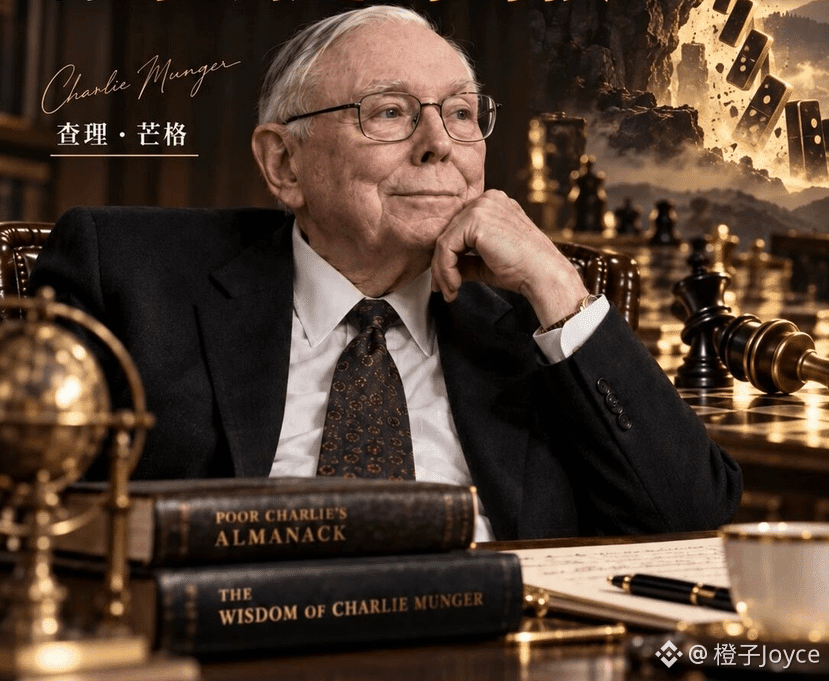
Charlie Munger: Others can give you a hand when you’re just one step from the finish line. But without a solid foundation, even the most valuable advice may have little effect; real growth still requires your own long-term effort.
#CharlieMunger #LongTermThinking #ExpandYourMind #WisdomForLife #InvestmentMindset
Sound judgment comes from long-term accumulation. Advice from others can only help those who already have a foundation.
1. **Risk**: First consider how much you could lose, then think about how much you could gain.
2. **Independence**: Judge what’s right based on facts and reasoning, rather than blindly following the crowd.
3. **Preparation**: Keep learning, and use reading and checklists to reduce oversights.
4. **Humility**: Acknowledge what you don’t know, and act only within your circle of competence.
5. **Rigorous analysis**: Distinguish price from value, and focus on long-term consequences.
6. **Allocation**: Put your time, energy, and money where they’ll create the most value.
7. **Patience**: Let compounding work its magic over time, and avoid frequent trading.
8. **Resolve**: Opportunities are rare, so act decisively when you truly understand one.
9. **Change**: Revise your views when the facts change, and proactively update your judgment.
10. **Focus**: Identify the key issue and don’t get sidetracked by irrelevant details.
4
1.6k
·
--

Article
South Korea🇰🇷 and China's🇨🇳 Taiwan are riding the AI boom to power their economies—an IPO flop exposes their vulnerabilitySouth Korea🇰🇷 and China's🇨🇳 Taiwan region have become the economies reaping the greatest benefits from AI worldwide. Their exports, investment, stock markets and even their increasingly crucial overall economic outlook all rest on one assumption: global demand for AI infrastructure will continue to grow rapidly.
If that assumption proves wrong, the fallout will extend far beyond Silicon Valley. Those hit hardest will be the 74 million people living in South Korea and China's Taiwan region. If the AI sector has a “Wile E. Coyote moment”—when investors look down and realize there is nothing beneath their portfolios to support them, then rush to sell—markets in Seoul and Taipei could well lead a brutal global market sell-off.
South Korea🇰🇷 and China's🇨🇳 Taiwan are riding the AI boom to power their economies—an IPO flop exposes their vulnerability
South Korea🇰🇷 and China's🇨🇳 Taiwan region have become the economies reaping the greatest benefits from AI worldwide. Their exports, investment, stock markets and even their increasingly crucial overall economic outlook all rest on one assumption: global demand for AI infrastructure will continue to grow rapidly.
If that assumption proves wrong, the fallout will extend far beyond Silicon Valley. Those hit hardest will be the 74 million people living in South Korea and China's Taiwan region. If the AI sector has a “Wile E. Coyote moment”—when investors look down and realize there is nothing beneath their portfolios to support them, then rush to sell—markets in Seoul and Taipei could well lead a brutal global market sell-off.
If that assumption proves wrong, the fallout will extend far beyond Silicon Valley. Those hit hardest will be the 74 million people living in South Korea and China's Taiwan region. If the AI sector has a “Wile E. Coyote moment”—when investors look down and realize there is nothing beneath their portfolios to support them, then rush to sell—markets in Seoul and Taipei could well lead a brutal global market sell-off.
3
1.4k
·
--
Bullish
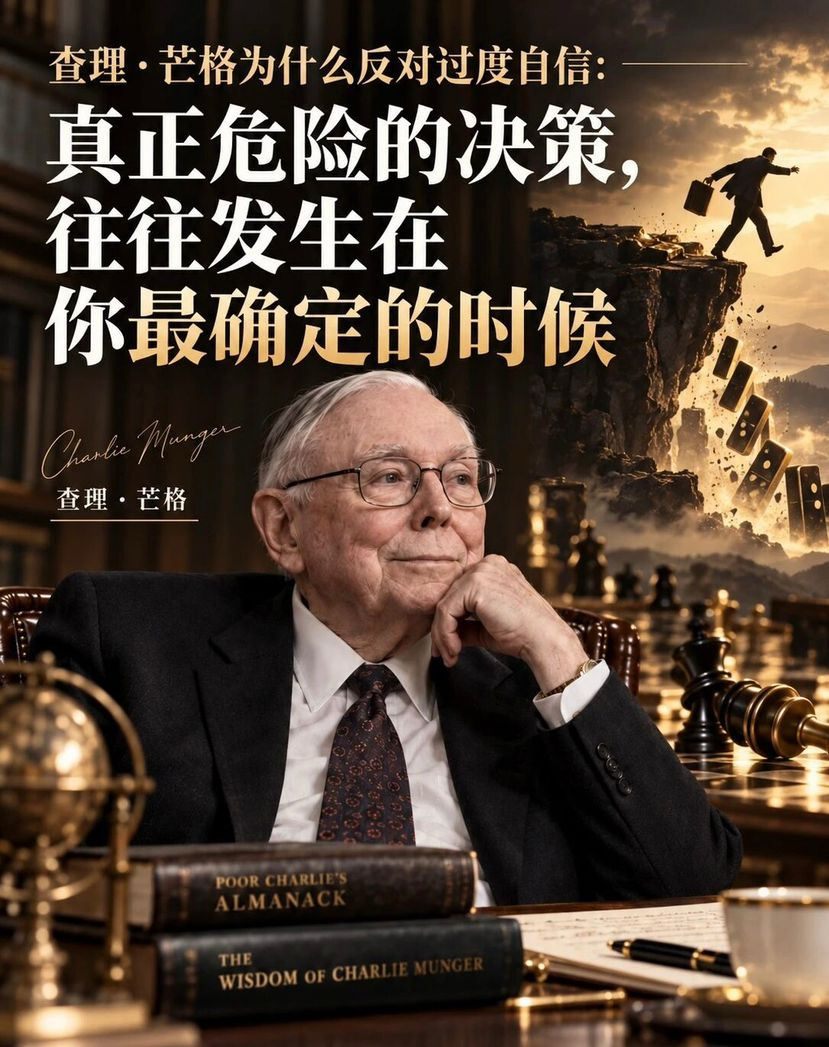
Why guard against overconfidence? The truly dangerous moments often come when you feel most certain;
The more certain you are, the more dangerous it can be. There’s an interesting phenomenon in the investment market: after losing money a few times, people usually become more cautious. But after making a lot of money several times in a row, they may actually become more and more reckless.
That’s because a string of successes can create the illusion that you’ve figured out some pattern nobody else knows about.
At first, you might just try investing part of your money. Then you start increasing your positions. Eventually, you may even think there’s nothing wrong with borrowing money to invest.
Not because the risks have really disappeared, but because you increasingly trust your own judgment.
Be on guard against this mindset.
When people feel most confident, they’re often least willing to listen to opposing views.
If you’re bullish on a company, you’ll actively seek out evidence that supports your view. When you come across information to the contrary, you may decide the market just hasn’t understood the company’s value yet.
If you’re bullish on an industry, you may keep amplifying the good news while turning a blind eye to intensifying competition, policy changes, and technological disruption.
The same applies to running a company.
If every member of the management team agrees on a major investment, that doesn’t necessarily mean the plan is excellent. It could also mean the organization has lost its ability to voice dissent.
What you should really be wary of isn’t feeling confident about a judgment—it’s being unable to think of any reason it might be wrong.
This is especially important when making decisions about leverage, major investments, career changes, and corporate strategy, where the cost of a mistake can be far greater than expected.
Smart people examine why they might be right. The more mature also carefully examine why they might be wrong.
Here’s a very practical method:
Before making a major decision, assume it has already failed. Then work backward and ask yourself: What exactly caused it to fail?
If you can’t come up with even a few plausible reasons for failure, you should be even more cautious.
Because in the real world, things are no less likely to go wrong just because someone is confident.
$AAPL.US
{stock_us}(AAPL.US)
$SPCX.US
{stock_us}(SPCX.US)
$BNB
{spot}(BNBUSDT)
Why guard against overconfidence? The truly dangerous moments often come when you feel most certain;
The more certain you are, the more dangerous it can be. There’s an interesting phenomenon in the investment market: after losing money a few times, people usually become more cautious. But after making a lot of money several times in a row, they may actually become more and more reckless.
That’s because a string of successes can create the illusion that you’ve figured out some pattern nobody else knows about.
At first, you might just try investing part of your money. Then you start increasing your positions. Eventually, you may even think there’s nothing wrong with borrowing money to invest.
Not because the risks have really disappeared, but because you increasingly trust your own judgment.
Be on guard against this mindset.
When people feel most confident, they’re often least willing to listen to opposing views.
If you’re bullish on a company, you’ll actively seek out evidence that supports your view. When you come across information to the contrary, you may decide the market just hasn’t understood the company’s value yet.
If you’re bullish on an industry, you may keep amplifying the good news while turning a blind eye to intensifying competition, policy changes, and technological disruption.
The same applies to running a company.
If every member of the management team agrees on a major investment, that doesn’t necessarily mean the plan is excellent. It could also mean the organization has lost its ability to voice dissent.
What you should really be wary of isn’t feeling confident about a judgment—it’s being unable to think of any reason it might be wrong.
This is especially important when making decisions about leverage, major investments, career changes, and corporate strategy, where the cost of a mistake can be far greater than expected.
Smart people examine why they might be right. The more mature also carefully examine why they might be wrong.
Here’s a very practical method:
Before making a major decision, assume it has already failed. Then work backward and ask yourself: What exactly caused it to fail?
If you can’t come up with even a few plausible reasons for failure, you should be even more cautious.
Because in the real world, things are no less likely to go wrong just because someone is confident.
$AAPL.US
$SPCX.US
$BNB
6
2.9k
·
--
Bullish
Ordinary investors can put this approach into practice:
- Build a safety cushion first: Set aside 6–12 months of household expenses as an emergency fund. Money you’ll need within 3 years for a home purchase, education, or other expenses is better managed conservatively.
- Set your stock-to-bond allocation: If you can tolerate larger fluctuations and have a longer investment horizon, you can increase the proportion of stock funds. If you prioritize stability, increase the proportion of bond funds and cash. A common reference point is 60% stock funds + 40% bond funds; choose a specific allocation based on your personal risk tolerance.
- Choose low-cost broad-market funds: Focus on broad-market index funds covering multiple industries, with low fees and small tracking errors. Sector funds are more volatile and are better suited to a small allocation.
- Invest in installments: If you have a steady income, invest a fixed amount on a fixed date regularly. If you already have a lump sum, you can also invest it in several installments to reduce the impact of investing everything at a single high point.
- Rebalance regularly**: Review your portfolio every six months or once a year. If an asset class deviates significantly from its target allocation, sell some of the assets that have risen more and add to those that have fallen more, bringing the portfolio back to its original allocation.
Set dividends to “reinvest.” The payouts will automatically be converted into additional units and continue to accumulate. Once you reach your target return, you can redeem part of your investment in installments while continuing to hold the remainder as your core position.
Long-term investing is about earning returns from company profits, dividends, and long-term market growth—not from frequently predicting market movements.
$SPCX.US
{stock_us}(SPCX.US)
$MU.US
{stock_us}(MU.US)
$AAPL.US
{stock_us}(AAPL.US)
Ordinary investors can put this approach into practice:
- Build a safety cushion first: Set aside 6–12 months of household expenses as an emergency fund. Money you’ll need within 3 years for a home purchase, education, or other expenses is better managed conservatively.
- Set your stock-to-bond allocation: If you can tolerate larger fluctuations and have a longer investment horizon, you can increase the proportion of stock funds. If you prioritize stability, increase the proportion of bond funds and cash. A common reference point is 60% stock funds + 40% bond funds; choose a specific allocation based on your personal risk tolerance.
- Choose low-cost broad-market funds: Focus on broad-market index funds covering multiple industries, with low fees and small tracking errors. Sector funds are more volatile and are better suited to a small allocation.
- Invest in installments: If you have a steady income, invest a fixed amount on a fixed date regularly. If you already have a lump sum, you can also invest it in several installments to reduce the impact of investing everything at a single high point.
- Rebalance regularly**: Review your portfolio every six months or once a year. If an asset class deviates significantly from its target allocation, sell some of the assets that have risen more and add to those that have fallen more, bringing the portfolio back to its original allocation.
Set dividends to “reinvest.” The payouts will automatically be converted into additional units and continue to accumulate. Once you reach your target return, you can redeem part of your investment in installments while continuing to hold the remainder as your core position.
Long-term investing is about earning returns from company profits, dividends, and long-term market growth—not from frequently predicting market movements.
$SPCX.US
$MU.US
$AAPL.US
AAPLUS-1.15%
MUUS-6.50%
SPCXUS-4.36%
2
1.9k
·
--
Bullish
【The biggest potential black swan for the AI rally? Beyond a debt crisis, keep an eye on the US midterm elections!】 💥 The US midterms could add uncertainty to the AI rally.
The current bull market in US stocks is entering its fourth year, and its core engine is still AI capital spending (AI infrastructure spending is expected to exceed $1 trillion next year). However, this frenzy is running into a new real-world obstacle: strong public opposition to data center expansion.
As large data centers proliferate, their heavy consumption of water and electricity, along with the environmental strain they cause, is fueling local residents' discontent. More importantly, this issue is colliding head-on with the US midterm elections!
📌 Key takeaways:
1️⃣ Potential impact of a Democratic “sweep” of Congress
* Prediction markets (Kalshi / Polymarket) show rising odds that Democrats will regain control of both the House and the Senate.
* A nationwide law outright banning data centers is unlikely (Trump would probably veto it), but hearings, regulatory investigations, and AI scrutiny are sure to increase significantly, disrupting the deployment plans of major companies.
2️⃣ Local elections become a new battleground
* Data center construction depends heavily on approvals from state and local governments. Polls show that 69% of Democratic voters support restrictions on data centers.
* Policy uncertainty is unlikely to overturn the long-term AI thesis, but it could drive up construction costs and delay launches, directly triggering sharp short-term market volatility.
3️⃣ The market is highly sensitive
* Recent concerns about CoreWeave's debt have already triggered a pullback in AI subsectors. For a thesis that relies heavily on capital spending (Capex) by major companies, anything that could slow expansion is a bearish signal.
💡 Summary and food for thought:
How much longer can the AI giants keep up their “buy computing power, build data centers” game? Squeezed by both energy constraints and political scrutiny, could AI stocks in the US market and AI-sector tokens in the crypto market (such as FET, NEAR, RENDER, etc.) see a sharp pullback?
👇 What do you think the midterm elections will mean for the AI sector? Join the discussion in the comments!
#AI #币安交易所美股 #加密市场 #数据中心 #大选风云
$SPCX.US
{stock_us}(SPCX.US)
$LLY.US
{stock_us}(LLY.US)
$IBM.US
{stock_us}(IBM.US)
【The biggest potential black swan for the AI rally? Beyond a debt crisis, keep an eye on the US midterm elections!】 💥 The US midterms could add uncertainty to the AI rally.
The current bull market in US stocks is entering its fourth year, and its core engine is still AI capital spending (AI infrastructure spending is expected to exceed $1 trillion next year). However, this frenzy is running into a new real-world obstacle: strong public opposition to data center expansion.
As large data centers proliferate, their heavy consumption of water and electricity, along with the environmental strain they cause, is fueling local residents' discontent. More importantly, this issue is colliding head-on with the US midterm elections!
📌 Key takeaways:
1️⃣ Potential impact of a Democratic “sweep” of Congress
* Prediction markets (Kalshi / Polymarket) show rising odds that Democrats will regain control of both the House and the Senate.
* A nationwide law outright banning data centers is unlikely (Trump would probably veto it), but hearings, regulatory investigations, and AI scrutiny are sure to increase significantly, disrupting the deployment plans of major companies.
2️⃣ Local elections become a new battleground
* Data center construction depends heavily on approvals from state and local governments. Polls show that 69% of Democratic voters support restrictions on data centers.
* Policy uncertainty is unlikely to overturn the long-term AI thesis, but it could drive up construction costs and delay launches, directly triggering sharp short-term market volatility.
3️⃣ The market is highly sensitive
* Recent concerns about CoreWeave's debt have already triggered a pullback in AI subsectors. For a thesis that relies heavily on capital spending (Capex) by major companies, anything that could slow expansion is a bearish signal.
💡 Summary and food for thought:
How much longer can the AI giants keep up their “buy computing power, build data centers” game? Squeezed by both energy constraints and political scrutiny, could AI stocks in the US market and AI-sector tokens in the crypto market (such as FET, NEAR, RENDER, etc.) see a sharp pullback?
👇 What do you think the midterm elections will mean for the AI sector? Join the discussion in the comments!
#AI #币安交易所美股 #加密市场 #数据中心 #大选风云
$SPCX.US
$LLY.US
$IBM.US

IBMUS+0.15%
LLYUS+2.57%
SPCXUS-4.36%
3
1.3k
·
--
Bullish
Verified
【Morgan Stanley’s Major Research Report】Maintains SpaceX at “Overweight,” with a $300 price target! A new narrative reshaping the Physical Intelligence Economy (PIE) 🚀🔥
Morgan Stanley’s latest report says the market still mistakes SpaceX for “a new cloud services provider with space capabilities,” and vastly underestimates its potential to transform into a “Physical Intelligence Economy” and powerhouse manufacturer!
Key highlights and a quick breakdown 👇
💡 Core framework: 4 key concepts from the report
* proentropic (anti-chaos enterprise): SpaceX is one of the few antifragile assets whose value actually rises amid macroeconomic chaos and increasing uncertainty.
* MARS (Manufacturing + Autonomy + Robots + Space):
* Manufacturing | Autonomy | Robots | Space
* Morgan Stanley asks: What other company in the world can seamlessly combine all four of these advanced capabilities?
* PIE (Physical Intelligence Economy):
* AI is more than a “digital assistant” that helps write emails and plan vacations. The real prize belongs to those who manufacture “moving atoms” (drones, humanoid robots, and space equipment).
* Vibe coding can’t conjure hardware out of thin air. Only real-world physical manufacturing can capture PIE’s enormous multiplier effect!
* DVFS (the enterprise’s high-speed flywheel):
* Dimensionality, Verticality, Flexibility, and Speed.
🔄 Tesla × SpaceX: A powerful physical AI flywheel
* Tesla: A leading physical robotics manufacturer (FSD/autonomous driving/Optimus), relentlessly collecting physical-world data.
* SpaceX: Provides infrastructure, underlying computing power, and a global space-based connectivity layer (Starlink).
* Synergy: Data feeds back into manufacturing and process know-how, creating a globally unique, recursively evolving flywheel!
💥 Major catalyst in early November: Starship Flight 15
* Historic challenge: Plans to attempt the simultaneous catch of the booster and the spacecraft (a “dual catch”) for the first time!
* Musk’s view: Success is “more likely than not.”
* Morgan Stanley’s take: This is the ultimate test of Starship’s reusability, significantly reducing total addressable market (TAM) risk. It could be one of the most important standalone catalysts in SpaceX’s more than 20-year history!
$SPCX.US
{stock_us}(SPCX.US)
【Morgan Stanley’s Major Research Report】Maintains SpaceX at “Overweight,” with a $300 price target! A new narrative reshaping the Physical Intelligence Economy (PIE) 🚀🔥
Morgan Stanley’s latest report says the market still mistakes SpaceX for “a new cloud services provider with space capabilities,” and vastly underestimates its potential to transform into a “Physical Intelligence Economy” and powerhouse manufacturer!
Key highlights and a quick breakdown 👇
💡 Core framework: 4 key concepts from the report
* proentropic (anti-chaos enterprise): SpaceX is one of the few antifragile assets whose value actually rises amid macroeconomic chaos and increasing uncertainty.
* MARS (Manufacturing + Autonomy + Robots + Space):
* Manufacturing | Autonomy | Robots | Space
* Morgan Stanley asks: What other company in the world can seamlessly combine all four of these advanced capabilities?
* PIE (Physical Intelligence Economy):
* AI is more than a “digital assistant” that helps write emails and plan vacations. The real prize belongs to those who manufacture “moving atoms” (drones, humanoid robots, and space equipment).
* Vibe coding can’t conjure hardware out of thin air. Only real-world physical manufacturing can capture PIE’s enormous multiplier effect!
* DVFS (the enterprise’s high-speed flywheel):
* Dimensionality, Verticality, Flexibility, and Speed.
🔄 Tesla × SpaceX: A powerful physical AI flywheel
* Tesla: A leading physical robotics manufacturer (FSD/autonomous driving/Optimus), relentlessly collecting physical-world data.
* SpaceX: Provides infrastructure, underlying computing power, and a global space-based connectivity layer (Starlink).
* Synergy: Data feeds back into manufacturing and process know-how, creating a globally unique, recursively evolving flywheel!
💥 Major catalyst in early November: Starship Flight 15
* Historic challenge: Plans to attempt the simultaneous catch of the booster and the spacecraft (a “dual catch”) for the first time!
* Musk’s view: Success is “more likely than not.”
* Morgan Stanley’s take: This is the ultimate test of Starship’s reusability, significantly reducing total addressable market (TAM) risk. It could be one of the most important standalone catalysts in SpaceX’s more than 20-year history!
$SPCX.US

SPCXUS-4.36%
1
723
·
--
Bullish
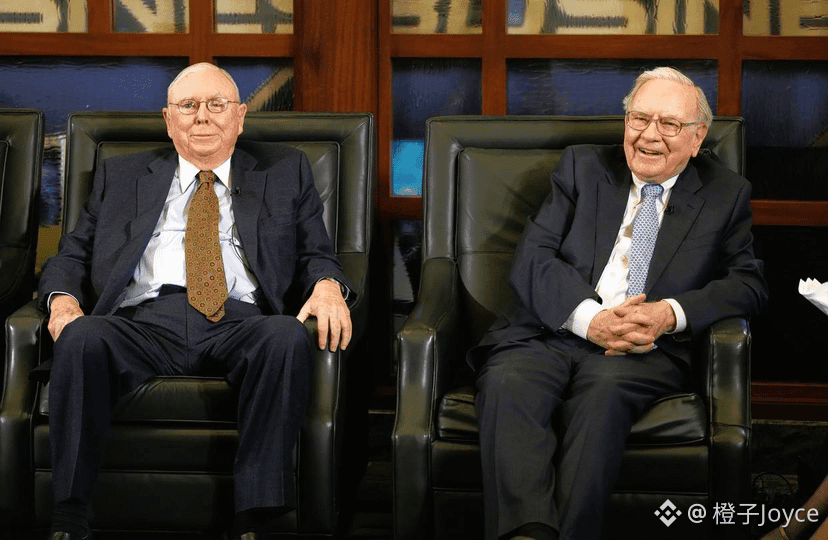
Rational investing isn’t calculus; it’s a practice in character and common sense. Charlie Munger and Warren Buffett have said time and again that successful investing doesn’t require advanced mathematics or extraordinary intelligence.
Why do so many exceptionally smart people, experts in financial engineering, end up failing in the market? The two elder statesmen offered a remarkably clear answer:
1️⃣ On “math”: All you need is elementary arithmetic and a basic understanding of probability
* Buffett: “If investing required calculus, I’d have to go back to cobbling shoes.”
👉 At its core, value investing means assessing a company’s cash flows and margin of safety. The addition, subtraction, multiplication, and division you learn in fourth grade, along with the concept of discounting, are more than enough.
* Munger: Complex mathematical models often create “false precision.” In the market, intuition about odds and compounding is far more reliable than advanced mathematical formulas.
2️⃣ On “intelligence”: Character and temperament matter far more than IQ
* Buffett: “Investing is not a game where the guy with the 160 IQ beats the guy with the 130 IQ. Once you have ordinary intelligence, what you need is the temperament to control your impulses.”
* Munger: “Smart people often fail because they’re too smart and think they can predict an unpredictable market.”
👉 Admitting what you don’t know is the beginning of wisdom. Knowing the boundaries of your circle of competence matters far more than having a huge one.
3️⃣ What does it really take to weather bull and bear markets?
💡 Know your circle of competence: Bet only in areas you understand.
🧠 Think contrarily: Be fearful when others are greedy, and greedy when others are fearful.
🧘 Be extremely patient: Most people lose money not because they aren’t smart enough, but because they’re “in a hurry to get rich.” Waiting for your “perfect pitch” beats trading constantly.
> 💬 Munger’s famous words: “The big money is not in the buying and selling, but in the waiting. Our advantage in achieving long-term success isn’t that we’re so smart, but that we keep trying not to be stupid.”
>
In a turbulent and unpredictable market, staying rational, sticking to your discipline, and overcoming emotional impulses are more powerful than any complex indicator.
#Buffett #Munger #InvestmentPhilosophy #Cryptocurrency #TradingPsychology #币安广场
$BRK.B.US
{stock_us}(BRK.B.US)
$AAPL.US
{stock_us}(AAPL.US)
$LLY.US
{stock_us}(LLY.US)
Rational investing isn’t calculus; it’s a practice in character and common sense. Charlie Munger and Warren Buffett have said time and again that successful investing doesn’t require advanced mathematics or extraordinary intelligence.
Why do so many exceptionally smart people, experts in financial engineering, end up failing in the market? The two elder statesmen offered a remarkably clear answer:
1️⃣ On “math”: All you need is elementary arithmetic and a basic understanding of probability
* Buffett: “If investing required calculus, I’d have to go back to cobbling shoes.”
👉 At its core, value investing means assessing a company’s cash flows and margin of safety. The addition, subtraction, multiplication, and division you learn in fourth grade, along with the concept of discounting, are more than enough.
* Munger: Complex mathematical models often create “false precision.” In the market, intuition about odds and compounding is far more reliable than advanced mathematical formulas.
2️⃣ On “intelligence”: Character and temperament matter far more than IQ
* Buffett: “Investing is not a game where the guy with the 160 IQ beats the guy with the 130 IQ. Once you have ordinary intelligence, what you need is the temperament to control your impulses.”
* Munger: “Smart people often fail because they’re too smart and think they can predict an unpredictable market.”
👉 Admitting what you don’t know is the beginning of wisdom. Knowing the boundaries of your circle of competence matters far more than having a huge one.
3️⃣ What does it really take to weather bull and bear markets?
💡 Know your circle of competence: Bet only in areas you understand.
🧠 Think contrarily: Be fearful when others are greedy, and greedy when others are fearful.
🧘 Be extremely patient: Most people lose money not because they aren’t smart enough, but because they’re “in a hurry to get rich.” Waiting for your “perfect pitch” beats trading constantly.
> 💬 Munger’s famous words: “The big money is not in the buying and selling, but in the waiting. Our advantage in achieving long-term success isn’t that we’re so smart, but that we keep trying not to be stupid.”
>
In a turbulent and unpredictable market, staying rational, sticking to your discipline, and overcoming emotional impulses are more powerful than any complex indicator.
#Buffett #Munger #InvestmentPhilosophy #Cryptocurrency #TradingPsychology #币安广场
$BRK.B.US
$AAPL.US
$LLY.US
AAPLUS-1.15%
BRK.BUS+1.48%
LLYUS+2.57%
4
2k
Log in to explore more content
Join global crypto users on Binance Square
⚡️ Get latest and useful information about crypto.
💬 Trusted by the world’s largest crypto exchange.
👍 Discover real insights from verified creators.
Email / Phone number