


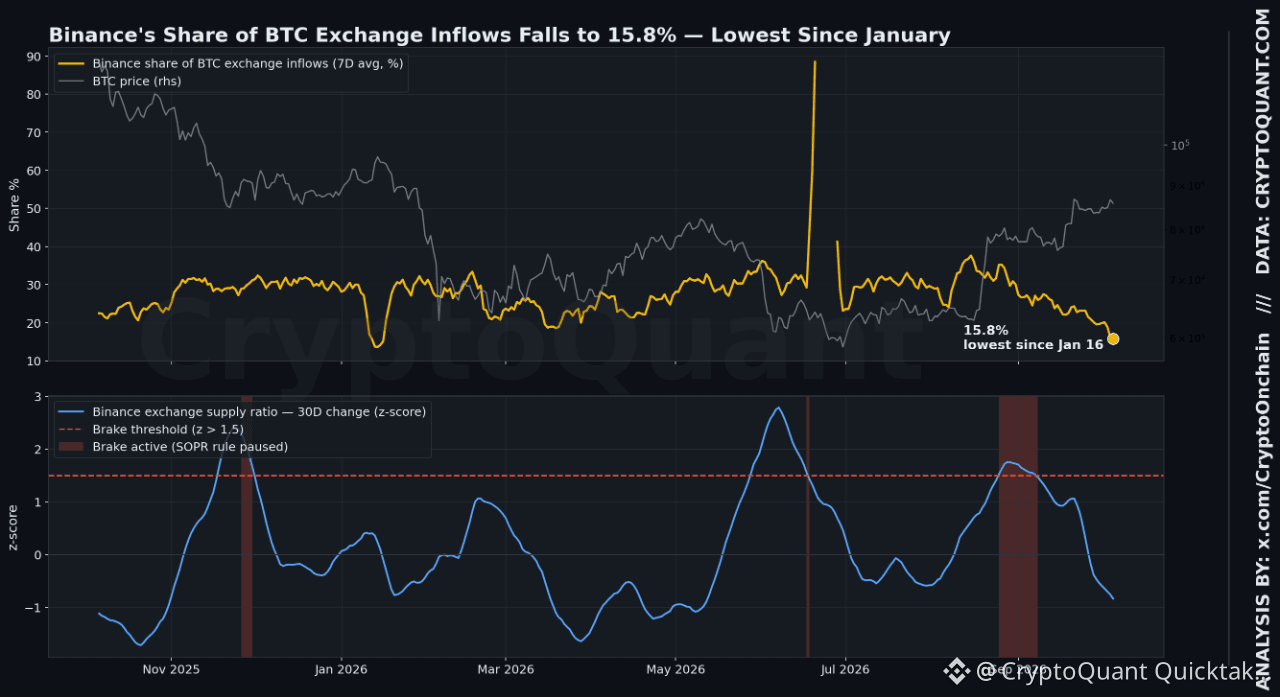
Binance's exchange supply ratio, the share of all BTC held on Binance, fell 1.3% over the 30 days to October 5, its steepest 30-day drop since August 3. On the same day, our Binance brake signal read −0.84, far below its 1.5 trigger, and it has been off since September 8. A simple SOPR rule has held BTC since August 8, and BTC has traded above its 200-day average since August 19.
The Fed's September meeting minutes come out on Wednesday, October 7, and September CPI follows on October 14. Either could quickly change rate expectations. One candidate explanation, unverified: more BTC is being withdrawn from Binance than deposited, possibly into self-custody, leaving fewer coins on the exchange ready to sell.
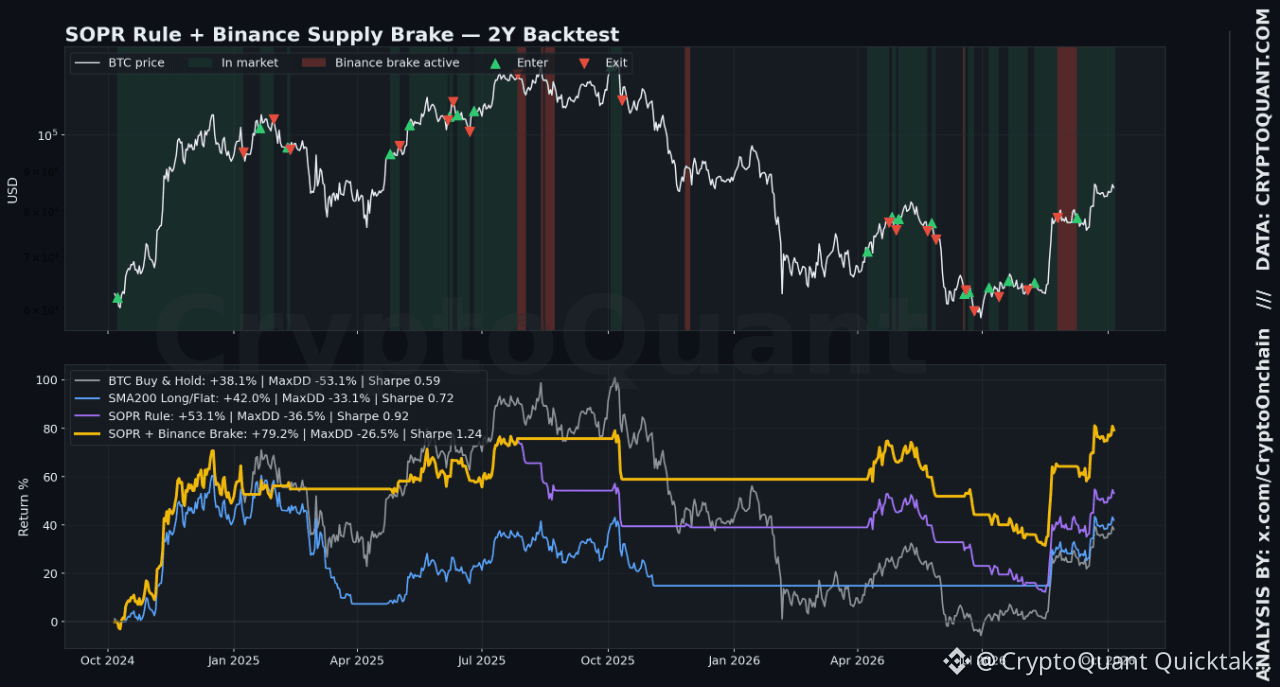
The rule: hold BTC when SOPR's 7-day average is above its 180-day average, otherwise hold cash. The Binance brake moves the rule to cash only when Binance's supply ratio rises unusually fast over 30 days, which means coins are piling onto the exchange. All settings were fixed using data from before October 2024.
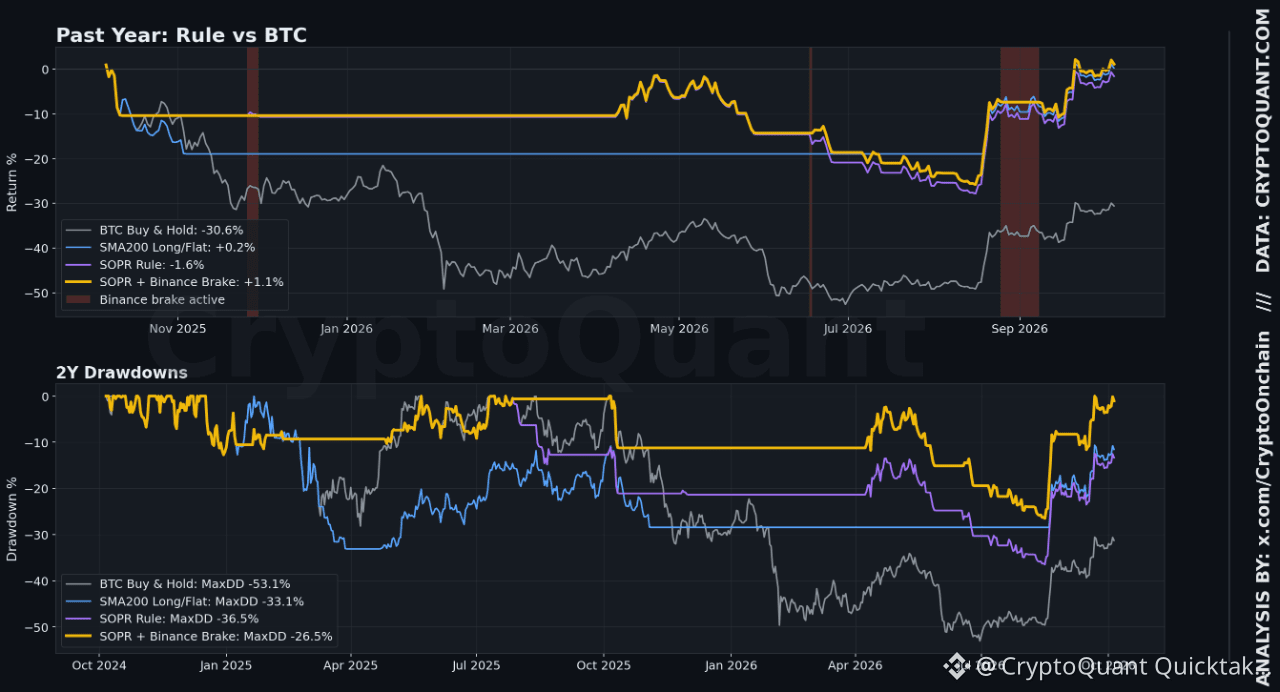
Over the past two years, the brake was active on only 34 days (about 5%), across six pauses. BTC fell during all six. The largest drops were July 27 to August 1, 2025 (−5.8%) and August 13–14, 2025 (−4.8%). Sitting out those days raised the rule's return from +53.1% to +79.2%, cut its max drawdown from −36.5% to −26.5%, and lifted its winning trades from 38% to 53%. Buy-and-hold returned +38.1% with a −53.1% drawdown. Over the past year, the brake turned a small loss (−1.6%) into a small gain (+1.1%), while BTC fell 30.6%.
Six pauses is a small sample, and four of them avoided drops smaller than 2.5%.
For now, the clearest reading is that BTC is leaving Binance rather than piling onto it, and in the backtest that is the setup in which the SOPR rule stayed invested.
Written by CryptoOnchain