

南方白龙321
2.1k Posts

南方白龙321
2.8K+ Following
23.7K+ Followers
2.7K+ Liked
Posts
All
Quotes
Videos
Live


听澜321
·
--
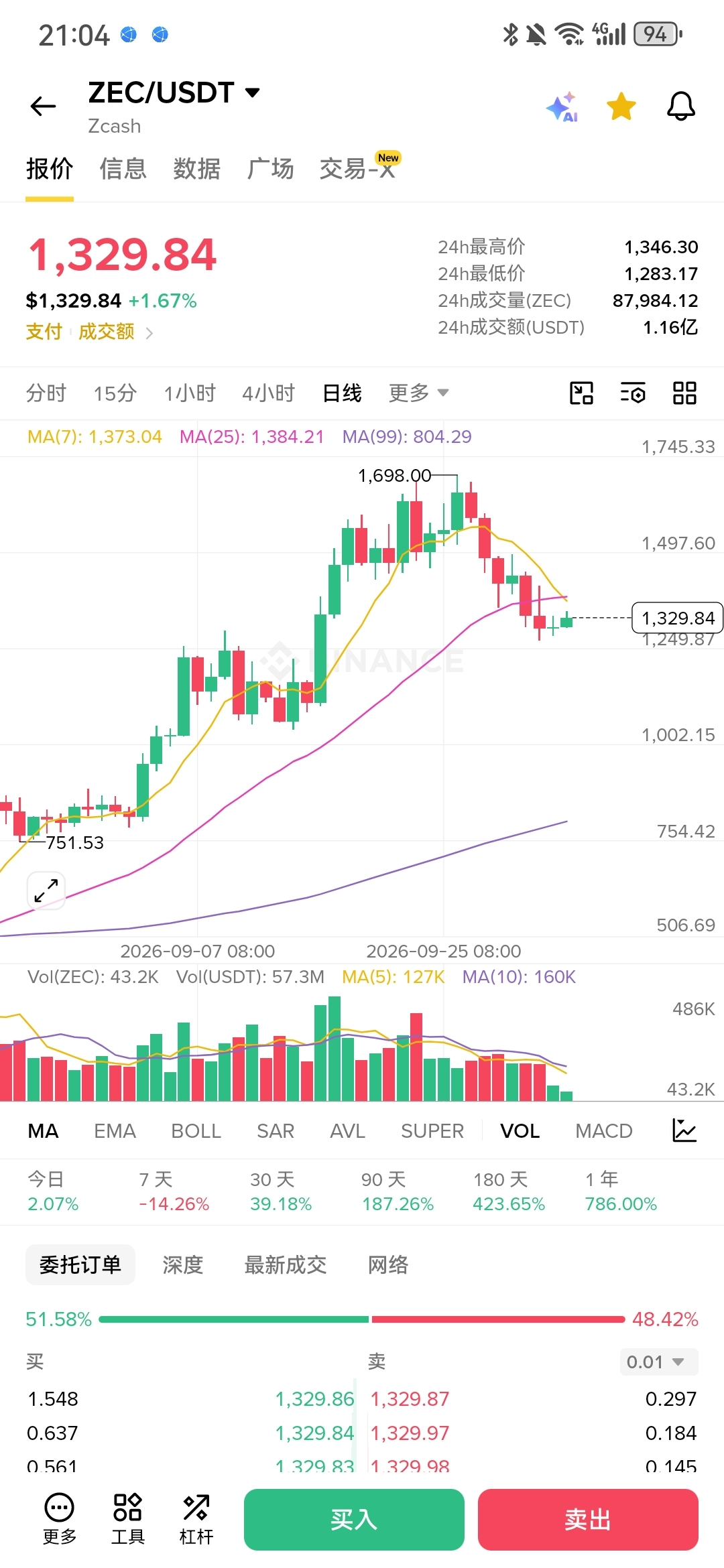
Zcash spot ETF crashed 😂 Net outflows of $93.56 million in a single week.
Grayscale’s ZCSH, which was still the “favorite child of the month” in September and had attracted $271 million, once held 3.5% of the total supply—$ZEC . But last week it completely “changed its face”: money turned around and ran. Its assets under management fell from a peak of $980 million to $751 million.
Simply put, it’s because it rallied too hard.
$ZEC surged 254% in Q3. After institutions have made enough, it’s natural to take profits—that’s a classic profit-taking move, and it’s normal. The key is to see whether redemptions narrow afterward and whether the price can hold steady. ETF launches are milestones by themselves; a healthy market is one where capital flows in and out.
Back at the start of the year, CZ publicly stated that the lack of on-chain privacy is the “missing link” for the mainstream adoption of crypto payments,
and also called for privacy features to evolve faster.
Personally, I think this outflow doesn’t change the long-term logic of the privacy track. Demand for privacy won’t disappear; it’s just being accepted by Wall Street in a more compliant form.
What other thoughts do you have? Feel free to leave a comment in the section below 🥳
#Zcash现货ETF首现周度净流出9360万美元
Grayscale’s ZCSH, which was still the “favorite child of the month” in September and had attracted $271 million, once held 3.5% of the total supply—$ZEC . But last week it completely “changed its face”: money turned around and ran. Its assets under management fell from a peak of $980 million to $751 million.
Simply put, it’s because it rallied too hard.
$ZEC surged 254% in Q3. After institutions have made enough, it’s natural to take profits—that’s a classic profit-taking move, and it’s normal. The key is to see whether redemptions narrow afterward and whether the price can hold steady. ETF launches are milestones by themselves; a healthy market is one where capital flows in and out.
Back at the start of the year, CZ publicly stated that the lack of on-chain privacy is the “missing link” for the mainstream adoption of crypto payments,
and also called for privacy features to evolve faster.
Personally, I think this outflow doesn’t change the long-term logic of the privacy track. Demand for privacy won’t disappear; it’s just being accepted by Wall Street in a more compliant form.
What other thoughts do you have? Feel free to leave a comment in the section below 🥳
#Zcash现货ETF首现周度净流出9360万美元
听澜321
·
--
Zcash spot ETF crashed 😂 Net outflows of $93.56 million in a single week.
Grayscale’s ZCSH, which was still the “favorite child of the month” in September and had attracted $271 million, once held 3.5% of the total supply—$ZEC . But last week it completely “changed its face”: money turned around and ran. Its assets under management fell from a peak of $980 million to $751 million.
Simply put, it’s because it rallied too hard.
$ZEC surged 254% in Q3. After institutions have made enough, it’s natural to take profits—that’s a classic profit-taking move, and it’s normal. The key is to see whether redemptions narrow afterward and whether the price can hold steady. ETF launches are milestones by themselves; a healthy market is one where capital flows in and out.
Back at the start of the year, CZ publicly stated that the lack of on-chain privacy is the “missing link” for the mainstream adoption of crypto payments,
and also called for privacy features to evolve faster.
Personally, I think this outflow doesn’t change the long-term logic of the privacy track. Demand for privacy won’t disappear; it’s just being accepted by Wall Street in a more compliant form.
What other thoughts do you have? Feel free to leave a comment in the section below 🥳
#Zcash现货ETF首现周度净流出9360万美元
Grayscale’s ZCSH, which was still the “favorite child of the month” in September and had attracted $271 million, once held 3.5% of the total supply—$ZEC . But last week it completely “changed its face”: money turned around and ran. Its assets under management fell from a peak of $980 million to $751 million.
Simply put, it’s because it rallied too hard.
$ZEC surged 254% in Q3. After institutions have made enough, it’s natural to take profits—that’s a classic profit-taking move, and it’s normal. The key is to see whether redemptions narrow afterward and whether the price can hold steady. ETF launches are milestones by themselves; a healthy market is one where capital flows in and out.
Back at the start of the year, CZ publicly stated that the lack of on-chain privacy is the “missing link” for the mainstream adoption of crypto payments,
and also called for privacy features to evolve faster.
Personally, I think this outflow doesn’t change the long-term logic of the privacy track. Demand for privacy won’t disappear; it’s just being accepted by Wall Street in a more compliant form.
What other thoughts do you have? Feel free to leave a comment in the section below 🥳
#Zcash现货ETF首现周度净流出9360万美元
·
--
🎙️ Build the Binance Plaza, hold BNB|On Sunday, BTC still hasn’t moved—let’s chat about topics related to the market on days with no action~

End
04 h 41 m 27 s
11.6k
45
·
--
🎙️ Build Binance Square, hold BNB|This Saturday, once the U.S. non-farm data came out, BTC briefly surged to $87,000 and then quickly pulled back. Do you think this is a one-time trade or a turning point signal? Let’s chat~

End
05 h 11 m 33 s
12.8k
51
听澜321
·
--
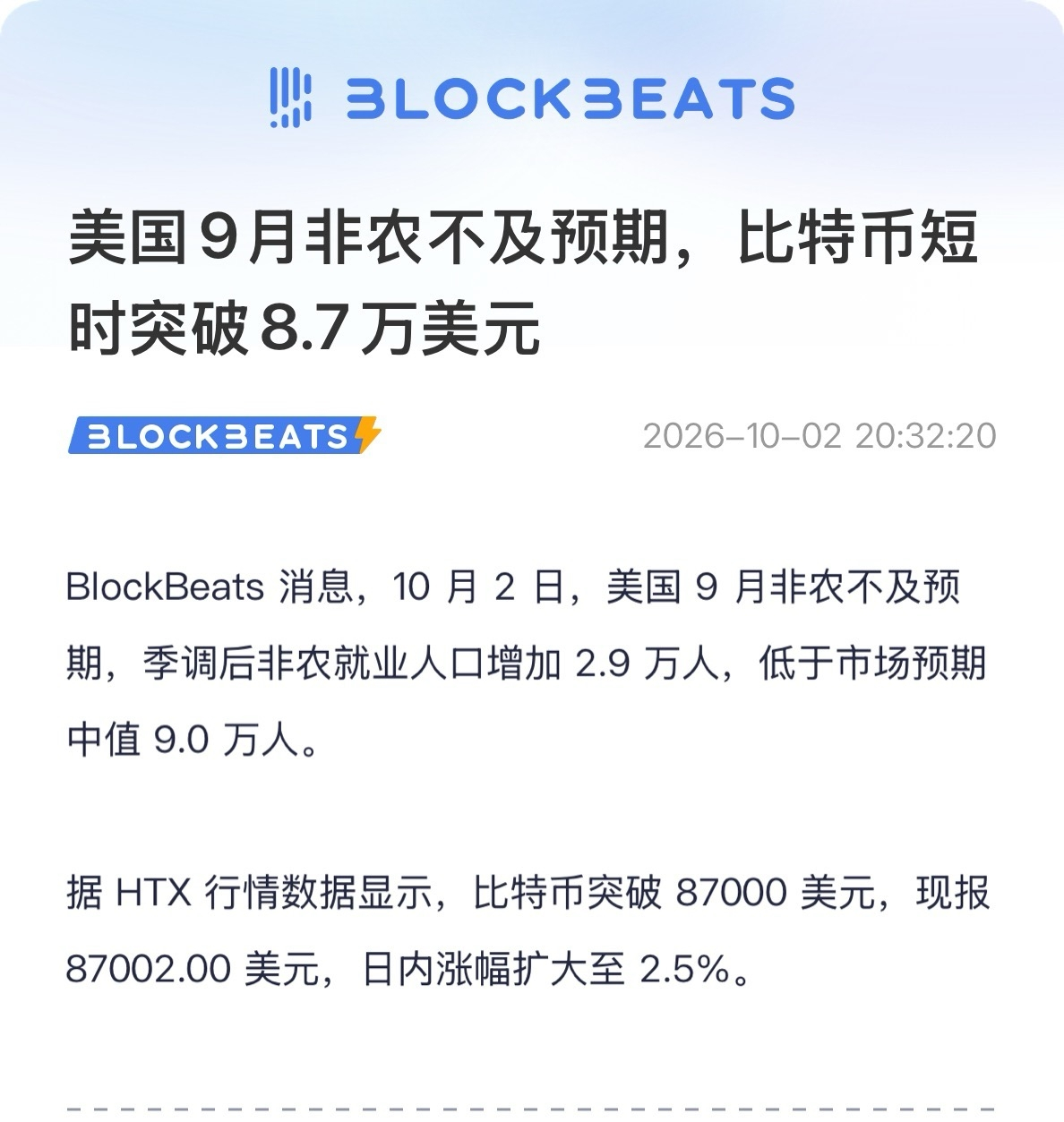
In the US, the September non-farm payrolls only added 29,000 jobs. This data has me a bit baffled 😮
The expectation was 80,000 to 90,000—yet the result came in at just 29,000!
And in the past two months, they secretly revised it downward by 60,000 😂
What really stings is that the unemployment rate rose to 4.2%, and average hourly earnings only increased by 0.1% month-over-month—wages aren’t really rising either.
Plainly put: companies aren’t hiring much, and people also don’t dare to switch jobs ~
My take is pretty straightforward: for the crypto market, this is “good news within bad news.” As rate-hike expectations cool off, the CME’s bets on a rate hike in October have dropped to just over 20%.
$BTC At the time, it directly surged from around 85k and jumped upward, even briefly breaking $87,000.
But I’ve got to pour some cold water on this:
With employment this bad, it’s no longer as simple as “not raising rates.”
Think about it—if companies really start refusing to hire on a large scale, what comes next? Layoffs. Then a downgrade in consumption. Then an economic slowdown.
By that point, the market won’t be worrying about whether rates will be raised, but whether a recession is coming.
And if it gets to that stage, the big pie will still fall along with the stock market…
My own trading idea is: don’t chase the price, and don’t go all-in,
because the first spike after this kind of data is often a sentiment-driven move—not a trend.
So if you really want to get on board, I suggest waiting until it stabilizes first ~
So what do you think— is this a “one-off buy” or a turning-point signal?
Feel free to leave your views in the comments section 🥳
#美国9月非农仅增2.9万人失业率升至4.2%
The expectation was 80,000 to 90,000—yet the result came in at just 29,000!
And in the past two months, they secretly revised it downward by 60,000 😂
What really stings is that the unemployment rate rose to 4.2%, and average hourly earnings only increased by 0.1% month-over-month—wages aren’t really rising either.
Plainly put: companies aren’t hiring much, and people also don’t dare to switch jobs ~
My take is pretty straightforward: for the crypto market, this is “good news within bad news.” As rate-hike expectations cool off, the CME’s bets on a rate hike in October have dropped to just over 20%.
$BTC At the time, it directly surged from around 85k and jumped upward, even briefly breaking $87,000.
But I’ve got to pour some cold water on this:
With employment this bad, it’s no longer as simple as “not raising rates.”
Think about it—if companies really start refusing to hire on a large scale, what comes next? Layoffs. Then a downgrade in consumption. Then an economic slowdown.
By that point, the market won’t be worrying about whether rates will be raised, but whether a recession is coming.
And if it gets to that stage, the big pie will still fall along with the stock market…
My own trading idea is: don’t chase the price, and don’t go all-in,
because the first spike after this kind of data is often a sentiment-driven move—not a trend.
So if you really want to get on board, I suggest waiting until it stabilizes first ~
So what do you think— is this a “one-off buy” or a turning-point signal?
Feel free to leave your views in the comments section 🥳
#美国9月非农仅增2.9万人失业率升至4.2%
南方白龙321
·
--
🇺🇸 TREASURIES ABOVE 5%: WHY IS THE MARKET WATCHING?
🇺🇸 TREASURIES ABOVE 5%: WHY IS THE MARKET WATCHING?
The US 10-year Treasury yields remain at elevated levels, and that matters a lot for markets.
Higher Treasury yields can make US bonds more attractive to investors, increasing competition for capital.
In the crypto market, the impact can show up through liquidity: when money becomes more expensive or seeks greater safety, risk assets may face higher volatility.
🔥 But there’s another side: expectations of changes in Fed rates can also quickly shift this picture.
The US 10-year Treasury yields remain at elevated levels, and that matters a lot for markets.
Higher Treasury yields can make US bonds more attractive to investors, increasing competition for capital.
In the crypto market, the impact can show up through liquidity: when money becomes more expensive or seeks greater safety, risk assets may face higher volatility.
🔥 But there’s another side: expectations of changes in Fed rates can also quickly shift this picture.
听澜321
·
--
🌏【Main Title】
On-chain breakthrough to reshape the landscape — SGY deflation opens a new radar era
🌏【Subtitle】
Innovate traditional ecosystem ailments — create lasting consensus through mechanism-driven benefits
📅 【Time】October 3, 2026, 13:30 (UTC+8)
🎬 【Live Stream Location】
Binance Square @听澜321 live room
🎤 Special Host
🎙Gold-credential host in the Web3 space 👉🏻 Li Qian Grace @梨浅Grace
🎙Co-host 👉🏻 Xu Hao Media @旭好传媒
👥【Featured VIP Speakers】(Speakers)
🔹MAX |Senior blockchain expert in the industry
🔹MAGGIE|Senior blockchain expert in the industry
🔹Tinglan @听澜321 |Web3 Binance Square gold-standard host
🔹Fendou @奋斗Hustle1688 |Web3 Binance Square gold-standard host
🔹Bangbang @帮帮Bonnie |Web3 Binance Square gold-standard host
🔹Mike @慢就是快Mike |Web3 Binance Square gold-standard host
#比特币升至8.5万美元附近
On-chain breakthrough to reshape the landscape — SGY deflation opens a new radar era
🌏【Subtitle】
Innovate traditional ecosystem ailments — create lasting consensus through mechanism-driven benefits
📅 【Time】October 3, 2026, 13:30 (UTC+8)
🎬 【Live Stream Location】
Binance Square @听澜321 live room
🎤 Special Host
🎙Gold-credential host in the Web3 space 👉🏻 Li Qian Grace @梨浅Grace
🎙Co-host 👉🏻 Xu Hao Media @旭好传媒
👥【Featured VIP Speakers】(Speakers)
🔹MAX |Senior blockchain expert in the industry
🔹MAGGIE|Senior blockchain expert in the industry
🔹Tinglan @听澜321 |Web3 Binance Square gold-standard host
🔹Fendou @奋斗Hustle1688 |Web3 Binance Square gold-standard host
🔹Bangbang @帮帮Bonnie |Web3 Binance Square gold-standard host
🔹Mike @慢就是快Mike |Web3 Binance Square gold-standard host
#比特币升至8.5万美元附近

听澜321
·
--
Just saw a piece of news: on September 30, the U.S. Department of the Treasury introduced a temporary rule allowing states to file preliminary applications for stablecoin certification even before their own regulations are fully in place 😂
In other words, the Treasury is giving stablecoins a “green light”—but don’t jump to conclusions and assume it’s “a good thing” just yet~
Plainly translated, it means: no matter how your state regulates stablecoins, if the rules aren’t fully written out yet, it’s fine—you can file a “letter of intent” to secure a spot and show that you’re working on it 😂
The deadline is set for January 18, 2028.
But there’s a hard threshold: only players with an issuance size of no more than $10 billion can go through this state-level oversight route. If it exceeds $10 billion, then you’ll have to behave and accept the stricter scrutiny at the federal level 🥳
However, here’s a key detail everyone shouldn’t overlook:
Submitting an “application to hold a spot” doesn’t mean you’ve been approved. Only after you submit a complete, unconditional formal certification will the 30-day approval countdown begin. In short, the Treasury opens a back door to get you in line first—but whether you actually get served, and whether you reach the front, is a whole different story.
My personal take is:
This news looks like a positive development, but the real implementation still has at least two or three years. The true watershed is in January 2027.
Following the logic of the GENIUS Act, from that point onward, stablecoin issuers in the U.S. without a license would be operating unlawfully.
The Treasury’s message seems to be: states don’t have much time left—submit something first so you’re not scrambling at the last minute 😂
For the industry, though, this is another signal that U.S. stablecoins are transitioning from “wild growth” to “licensed and compliant operations.”
That $10 billion line is quite clever: small players get managed within the states, while big players are handled by the federal government. This way, it neither leaves states with nothing to manage, nor allows systemic risk to drift outside the federal view.
But for ordinary users, there’s no immediate direct impact in the short term—you can keep using USDT and USDC as usual. Still, in the medium to long run, the deeper compliance goes, the fewer “gray-area” playbooks there will be, and stablecoins’ “payment tool” role will increasingly outweigh their “speculation tool” role—
Do you think this approach is good or bad? Feel free to leave your thoughts in the comments section ~
#美财政部允许各州提前提交稳定币认证
In other words, the Treasury is giving stablecoins a “green light”—but don’t jump to conclusions and assume it’s “a good thing” just yet~
Plainly translated, it means: no matter how your state regulates stablecoins, if the rules aren’t fully written out yet, it’s fine—you can file a “letter of intent” to secure a spot and show that you’re working on it 😂
The deadline is set for January 18, 2028.
But there’s a hard threshold: only players with an issuance size of no more than $10 billion can go through this state-level oversight route. If it exceeds $10 billion, then you’ll have to behave and accept the stricter scrutiny at the federal level 🥳
However, here’s a key detail everyone shouldn’t overlook:
Submitting an “application to hold a spot” doesn’t mean you’ve been approved. Only after you submit a complete, unconditional formal certification will the 30-day approval countdown begin. In short, the Treasury opens a back door to get you in line first—but whether you actually get served, and whether you reach the front, is a whole different story.
My personal take is:
This news looks like a positive development, but the real implementation still has at least two or three years. The true watershed is in January 2027.
Following the logic of the GENIUS Act, from that point onward, stablecoin issuers in the U.S. without a license would be operating unlawfully.
The Treasury’s message seems to be: states don’t have much time left—submit something first so you’re not scrambling at the last minute 😂
For the industry, though, this is another signal that U.S. stablecoins are transitioning from “wild growth” to “licensed and compliant operations.”
That $10 billion line is quite clever: small players get managed within the states, while big players are handled by the federal government. This way, it neither leaves states with nothing to manage, nor allows systemic risk to drift outside the federal view.
But for ordinary users, there’s no immediate direct impact in the short term—you can keep using USDT and USDC as usual. Still, in the medium to long run, the deeper compliance goes, the fewer “gray-area” playbooks there will be, and stablecoins’ “payment tool” role will increasingly outweigh their “speculation tool” role—
Do you think this approach is good or bad? Feel free to leave your thoughts in the comments section ~
#美财政部允许各州提前提交稳定币认证

Quoted content has been removed
听澜321
·
--
🌺@听澜321 Happy National Day to everyone 🎉
The first day of October
I leave the excitement to the crowd
I leave my respect in the depths of my heart
The mountains and rivers are beautiful; life is worth it
May we all live as a footnote to this glorious age~
#国庆快乐 #QNT一周涨287%
The first day of October
I leave the excitement to the crowd
I leave my respect in the depths of my heart
The mountains and rivers are beautiful; life is worth it
May we all live as a footnote to this glorious age~
#国庆快乐 #QNT一周涨287%

南方白龙321
·
--
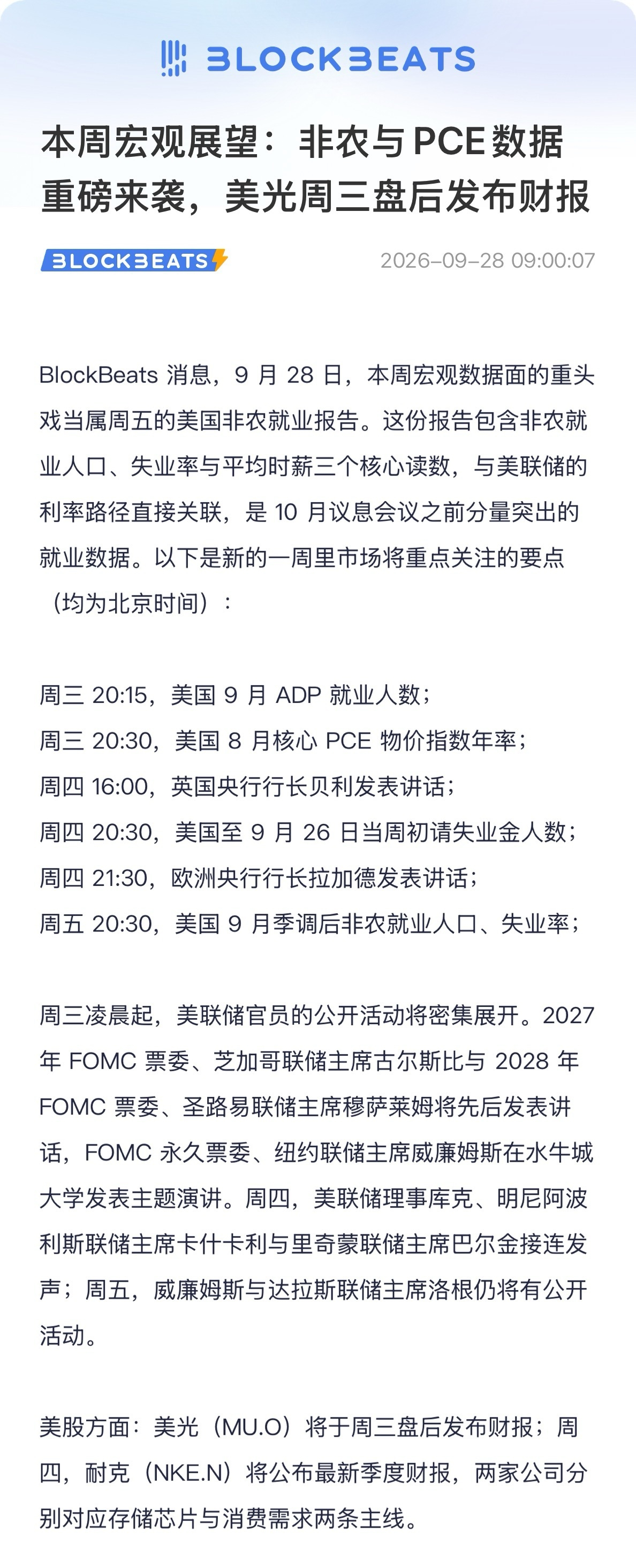
PCE: the number that can move Bitcoin! 📊
PCE is one of the main inflation indicators in the US and receives a lot of attention from the Federal Reserve.
🔥 Higher-than-expected PCE → pressure on risk assets.
🚀 Lower-than-expected PCE → may increase expectations for lower interest rates.
That’s why, when PCE is released, Bitcoin and other cryptocurrencies can show strong volatility.
👀 The market doesn’t look only at the price of the $BTC … it also follows the numbers that can affect interest rates!
PCE on the radar. Bitcoin on alert.
#PCE物价指数
PCE is one of the main inflation indicators in the US and receives a lot of attention from the Federal Reserve.
🔥 Higher-than-expected PCE → pressure on risk assets.
🚀 Lower-than-expected PCE → may increase expectations for lower interest rates.
That’s why, when PCE is released, Bitcoin and other cryptocurrencies can show strong volatility.
👀 The market doesn’t look only at the price of the $BTC … it also follows the numbers that can affect interest rates!
PCE on the radar. Bitcoin on alert.
#PCE物价指数
听澜321
·
--
The U.S. stock earnings season is about to get lively.
S&P 500 expected earnings growth is more than 23%, marking the eighth consecutive quarter of double-digit growth.
But my view is very direct: the better the data looks, the more you need to be careful.
The reason is actually simple:
NVIDIA is a “big player,” not a normal company.
It just announced an additional $150 billion share repurchase, with authorization up to $235 billion. What does a repurchase mean? It means the company thinks its stock price is “quite cheap.” Think about it—one of the giants with 70% year-over-year growth says it’s cheap…
But in my opinion, NVIDIA’s biggest risk isn’t its performance—it’s that it’s tied the entire AI ecosystem too tightly. It provides guarantees for OpenAI, insures loans for neocloud, and even wants to shift the risk of AI chip collateral loans to insurance companies🤐
This isn’t just selling chips anymore—it’s providing credit backing for the whole industry. With a scale this large, if it stumbles, it becomes a systemic risk~
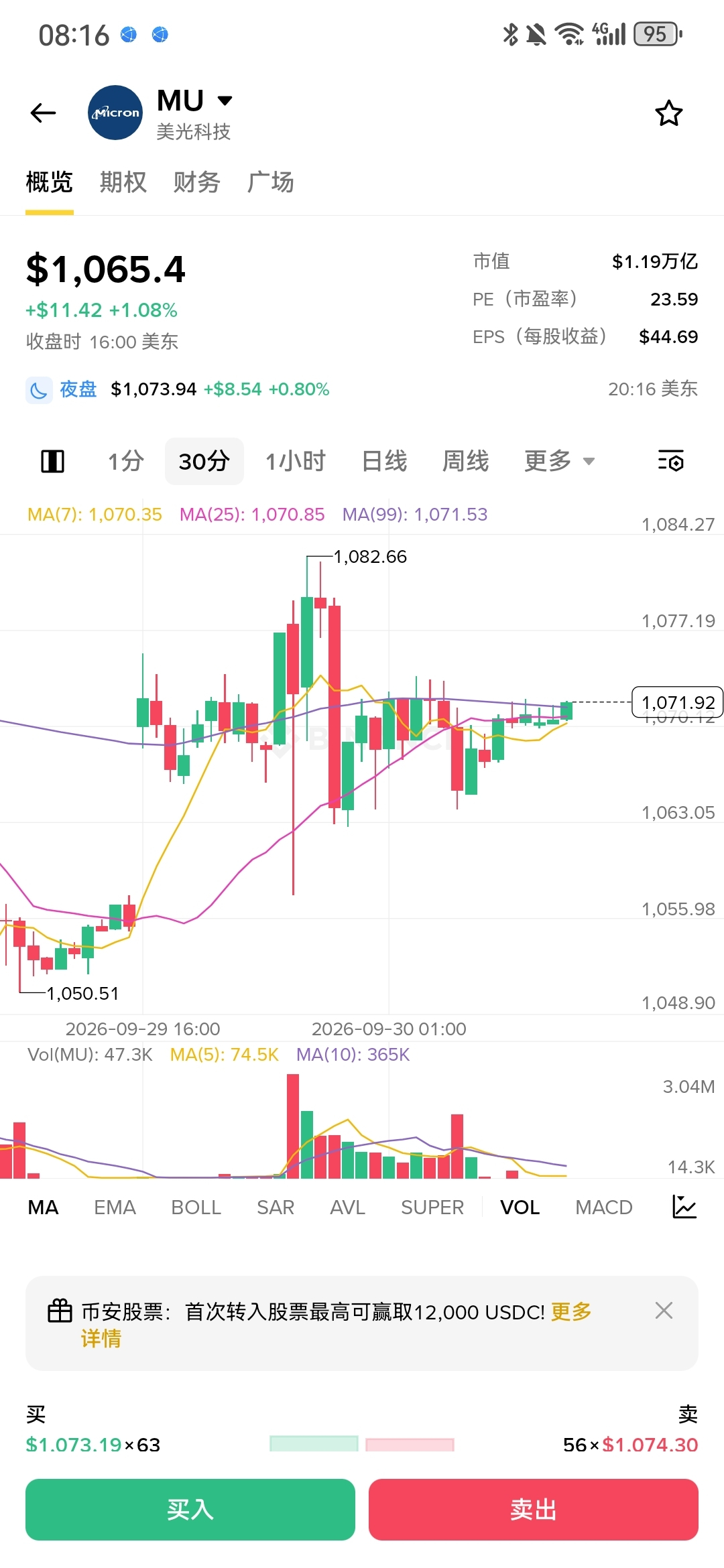
$MU is a bet that “the cycle will turn into growth,” and that’s where the biggest disagreement lies.
Tonight’s earnings: the market expects revenue of $50.9 billion and EPS of 31.49, up +342% year over year. Morgan Stanley poured cold water early, saying EPS could be only 31.2😂 But the key isn’t this quarter—it’s the fiscal 2027 guidance.
Micron is currently trading at just 6.8x earnings for 2027, which clearly suggests the market doesn’t believe this memory upcycle can last.
My personal take: if Micron’s guidance tonight proves that AI demand has turned the “cycle” into “growth,” then this is basically free money; if the guidance is average, then the good news is already priced in…
$SNDK is “the one with the most upside,” but don’t be fooled by the rally~
It’s up 1,663% in a year! Market cap went from $6.6 billion to $266 billion. It also announced a $14 billion repurchase. But SanDisk is doing NAND, and its cyclical nature is even more intense than Micron’s DRAM.
My personal view: once it’s already surged 16x and you still talk about being “bullish,” it takes a lot of courage😂 Analysts’ average target price is $2,136, and it looks like there may be more room—but if NAND prices turn around, the valuation could get slashed ruthlessly. It suits people who bet on the track, not those who want something they can hold onto~
One more thing: expectations are already stretched to the max.
The biggest trap in earnings season is “beating expectations” itself. When all the analysts keep raising their numbers and raising them, even a decent earnings report from the company is very likely to mean the good news is already exhausted~
If you have other thoughts, feel free to leave them in the comments section~
#股票财报季
S&P 500 expected earnings growth is more than 23%, marking the eighth consecutive quarter of double-digit growth.
But my view is very direct: the better the data looks, the more you need to be careful.
The reason is actually simple:
NVIDIA is a “big player,” not a normal company.
It just announced an additional $150 billion share repurchase, with authorization up to $235 billion. What does a repurchase mean? It means the company thinks its stock price is “quite cheap.” Think about it—one of the giants with 70% year-over-year growth says it’s cheap…
But in my opinion, NVIDIA’s biggest risk isn’t its performance—it’s that it’s tied the entire AI ecosystem too tightly. It provides guarantees for OpenAI, insures loans for neocloud, and even wants to shift the risk of AI chip collateral loans to insurance companies🤐
This isn’t just selling chips anymore—it’s providing credit backing for the whole industry. With a scale this large, if it stumbles, it becomes a systemic risk~
$MU is a bet that “the cycle will turn into growth,” and that’s where the biggest disagreement lies.
Tonight’s earnings: the market expects revenue of $50.9 billion and EPS of 31.49, up +342% year over year. Morgan Stanley poured cold water early, saying EPS could be only 31.2😂 But the key isn’t this quarter—it’s the fiscal 2027 guidance.
Micron is currently trading at just 6.8x earnings for 2027, which clearly suggests the market doesn’t believe this memory upcycle can last.
My personal take: if Micron’s guidance tonight proves that AI demand has turned the “cycle” into “growth,” then this is basically free money; if the guidance is average, then the good news is already priced in…
$SNDK is “the one with the most upside,” but don’t be fooled by the rally~
It’s up 1,663% in a year! Market cap went from $6.6 billion to $266 billion. It also announced a $14 billion repurchase. But SanDisk is doing NAND, and its cyclical nature is even more intense than Micron’s DRAM.
My personal view: once it’s already surged 16x and you still talk about being “bullish,” it takes a lot of courage😂 Analysts’ average target price is $2,136, and it looks like there may be more room—but if NAND prices turn around, the valuation could get slashed ruthlessly. It suits people who bet on the track, not those who want something they can hold onto~
One more thing: expectations are already stretched to the max.
The biggest trap in earnings season is “beating expectations” itself. When all the analysts keep raising their numbers and raising them, even a decent earnings report from the company is very likely to mean the good news is already exhausted~
If you have other thoughts, feel free to leave them in the comments section~
#股票财报季
听澜321
·
--
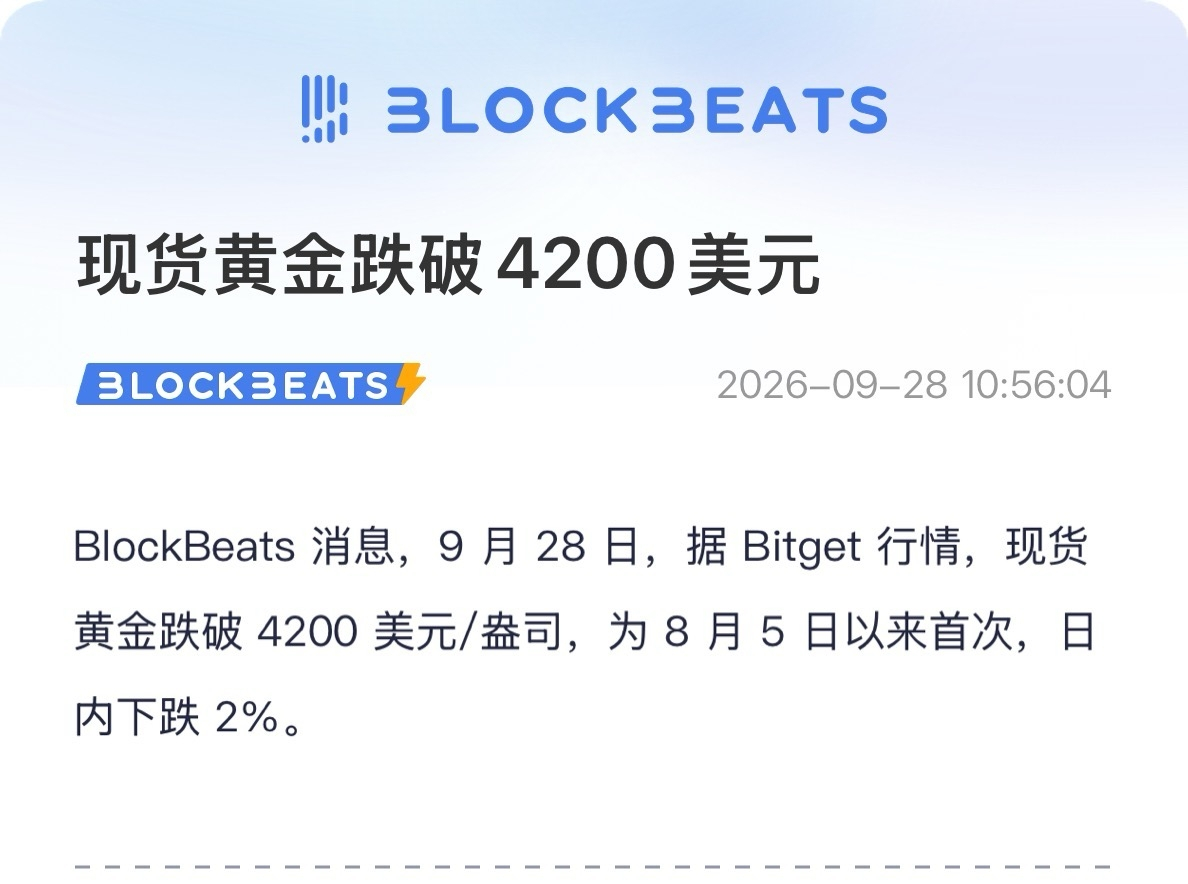
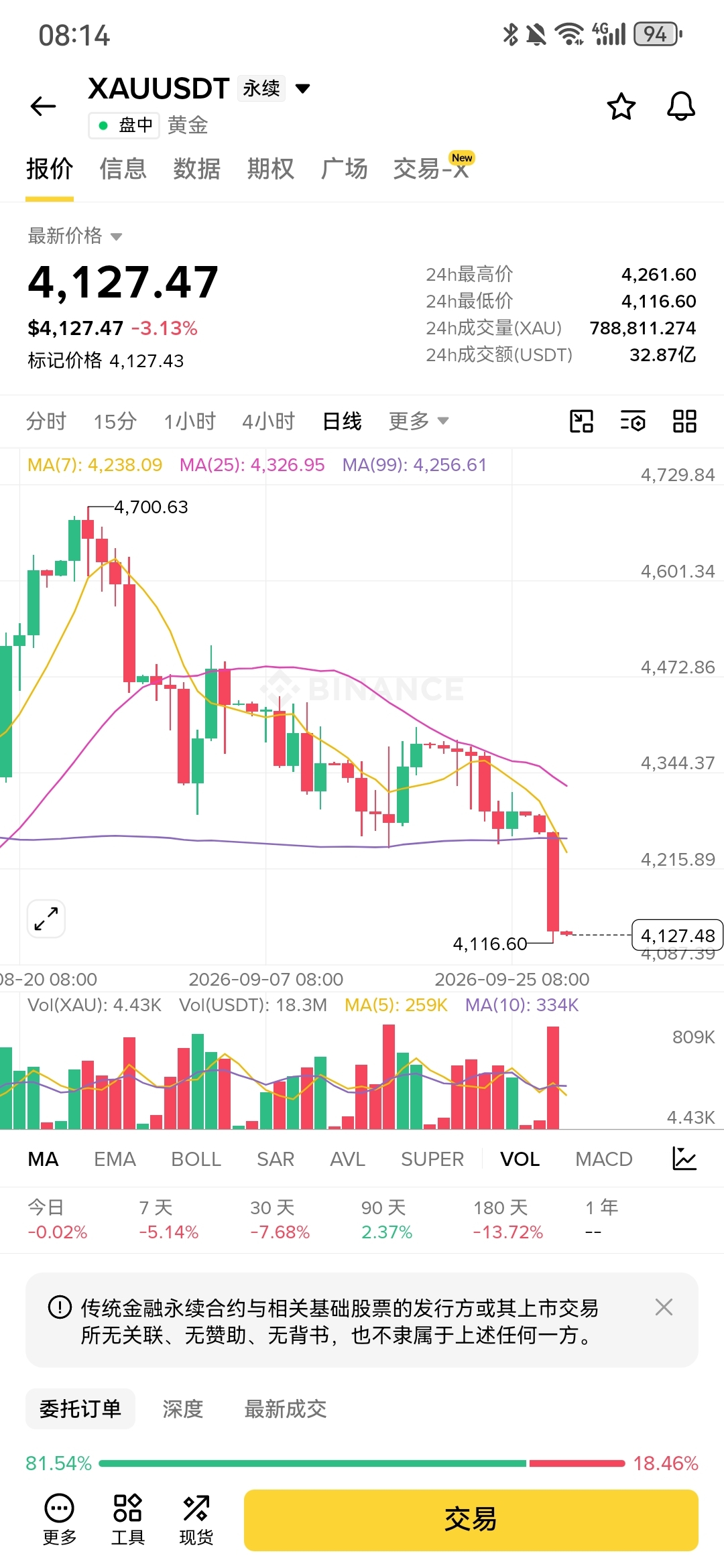
$XAU This latest dive, actually, is caused by oil prices “acting up”~
The US and Iran have stalled in the Strait of Hormuz, and Brent crude has climbed back above the $100 mark.
When oil prices rise, inflation expectations can’t cool down, so the Fed not only dares not cut rates—it may even keep hiking.
And what gold fears most is this, because gold itself doesn’t generate interest.
Even US Treasury yields are surging to above 5.2%, making the “opportunity cost” of holding gold unbelievably high.
This round of sell-off pushed gold down to $4,144, and there’s a detail that most people might overlook:
The main force behind this dump isn’t retail panic—it’s central banks themselves selling~
Isn’t that logic kind of counterintuitive?
Because in traditional thinking, central banks are gold’s “ever-bullish” side—they’ve been buying for nearly two years straight.
But once oil prices break above $100, the situation changes:
Central banks with higher reliance on energy imports need to sell gold reserves to raise dollars, stabilize the exchange rate, and buy oil.
Buying is strategic allocation; selling is a survival necessity 😂
So this drop isn’t because “faith in gold” has failed.
It’s because liquidity has been squeezed—it's not that gold is suddenly worthless; it’s that money has become more “expensive.”
My personal view is: don’t try to guess the bottom in the short term—wait until oil prices stabilize first.
Only when central banks are no longer forced to sell gold will the bottom truly be solid.
What you may be catching now could be a “flying knife” 😂—or pressure being released from central banks’ selling.
So I still recommend entering the market cautiously~
What do you think? Feel free to leave your thoughts in the comments~
#黄金跌至4144美元
The US and Iran have stalled in the Strait of Hormuz, and Brent crude has climbed back above the $100 mark.
When oil prices rise, inflation expectations can’t cool down, so the Fed not only dares not cut rates—it may even keep hiking.
And what gold fears most is this, because gold itself doesn’t generate interest.
Even US Treasury yields are surging to above 5.2%, making the “opportunity cost” of holding gold unbelievably high.
This round of sell-off pushed gold down to $4,144, and there’s a detail that most people might overlook:
The main force behind this dump isn’t retail panic—it’s central banks themselves selling~
Isn’t that logic kind of counterintuitive?
Because in traditional thinking, central banks are gold’s “ever-bullish” side—they’ve been buying for nearly two years straight.
But once oil prices break above $100, the situation changes:
Central banks with higher reliance on energy imports need to sell gold reserves to raise dollars, stabilize the exchange rate, and buy oil.
Buying is strategic allocation; selling is a survival necessity 😂
So this drop isn’t because “faith in gold” has failed.
It’s because liquidity has been squeezed—it's not that gold is suddenly worthless; it’s that money has become more “expensive.”
My personal view is: don’t try to guess the bottom in the short term—wait until oil prices stabilize first.
Only when central banks are no longer forced to sell gold will the bottom truly be solid.
What you may be catching now could be a “flying knife” 😂—or pressure being released from central banks’ selling.
So I still recommend entering the market cautiously~
What do you think? Feel free to leave your thoughts in the comments~
#黄金跌至4144美元
南方白龙321
·
--
#Bitget — update for today
The attack of September 24 drained approximately US$ 387.5–388 million in assets. According to an investigation released today, the intruder allegedly obtained high-level internal credentials through a vulnerability in a third-party security product and used those credentials to issue fraudulent withdrawal orders.
The most important development as of September 28 is that Bitget has started reopening withdrawals in stages. Withdrawals of $BTC resumed today; $ETH is scheduled for 29/9, $USDT for 30/9, and the remaining assets, fiat and P2P for 2/10, according to the published timetable.
Another important point: Bitget states that private keys and cold wallets were not compromised and that the losses will be covered by the user protection fund.
And there is an even more recent development: funds linked to the attack began moving again, according to the investigation.
#Bitget
The attack of September 24 drained approximately US$ 387.5–388 million in assets. According to an investigation released today, the intruder allegedly obtained high-level internal credentials through a vulnerability in a third-party security product and used those credentials to issue fraudulent withdrawal orders.
The most important development as of September 28 is that Bitget has started reopening withdrawals in stages. Withdrawals of $BTC resumed today; $ETH is scheduled for 29/9, $USDT for 30/9, and the remaining assets, fiat and P2P for 2/10, according to the published timetable.
Another important point: Bitget states that private keys and cold wallets were not compromised and that the losses will be covered by the user protection fund.
And there is an even more recent development: funds linked to the attack began moving again, according to the investigation.
#Bitget
听澜321
·
--
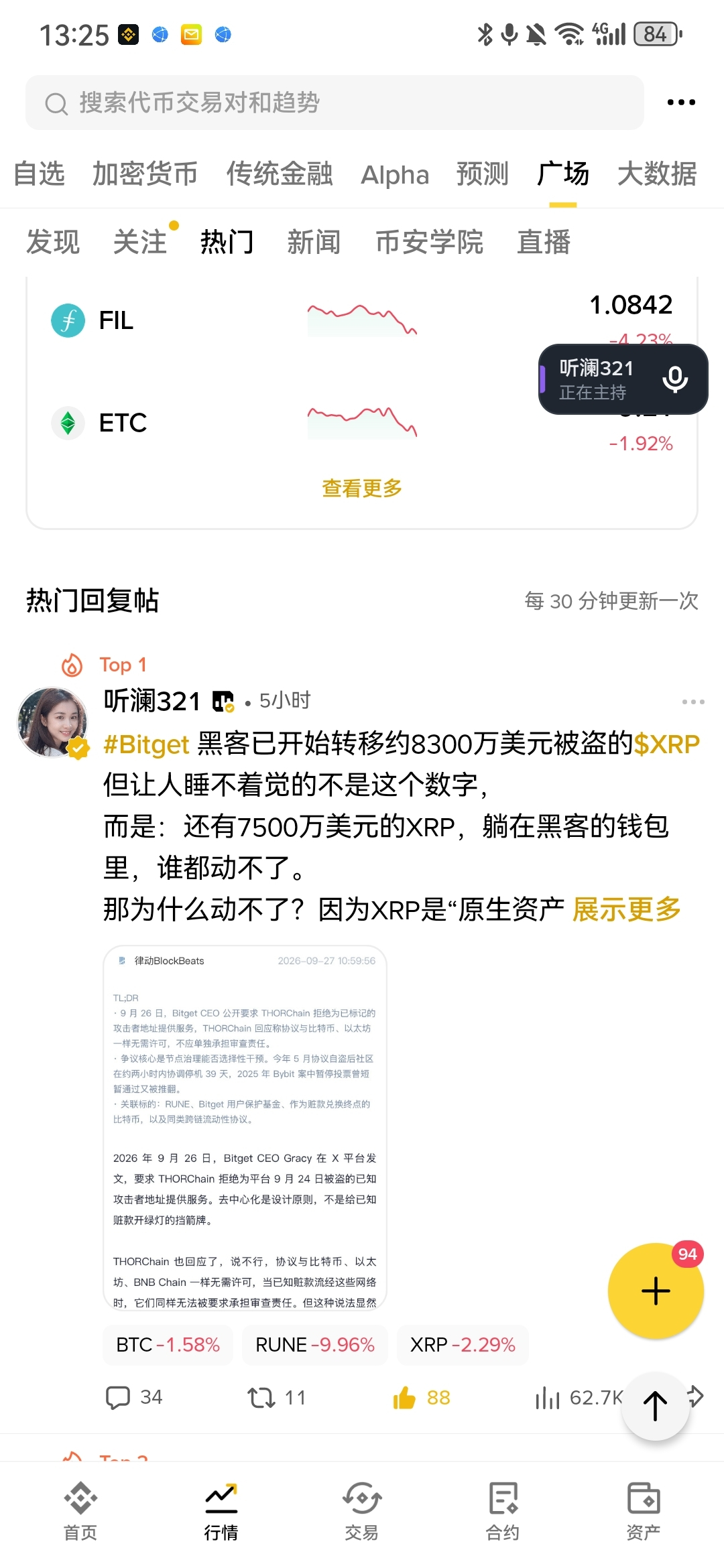
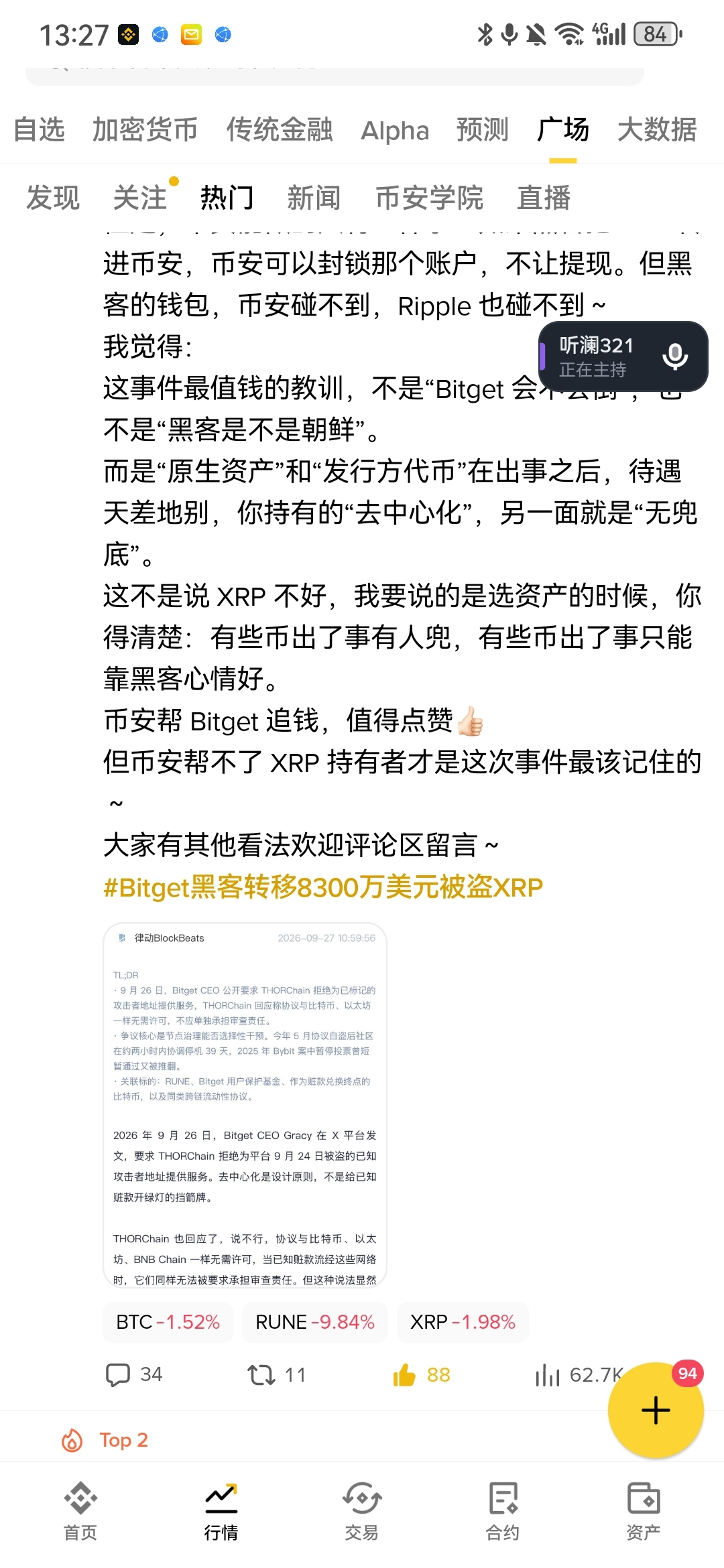
🌺The post is on the trending hot list, #1!
Thanks to #币安 Official
Maybe we can get some subsistence allowance now? Haha😃
#Bitget黑客转移8300万美元被盗XRP
Thanks to #币安 Official
Maybe we can get some subsistence allowance now? Haha😃
#Bitget黑客转移8300万美元被盗XRP
听澜321
·
--
#Bitget Hackers have started transferring about $83 million stolen $XRP
But what keeps people up at night isn’t that number.
It’s this: there are another $75 million worth of XRP sitting in the hackers’ wallet—no one can touch it.
Why can’t they move it? Because XRP is a “native asset.” The key takeaway is that, as a native asset, Ripple can’t directly freeze it the way it can freeze USDC. That’s the most important lesson from this incident.
Do you not understand what that means?
Plainly: USDT gets stolen, and Tether can freeze with one click. If USDC gets stolen, Circle can blacklist addresses. This time, the stablecoins the hacker has are only about 320k US dollars in total—and they’ve already been frozen.
But XRP is different. Ripple doesn’t have that power. In the XRP Ledger rules, there isn’t even a button for “freezing native assets.”
The hacker can take their time and move the coins to any exchange, swap them for $BTC , swap them for $ETH , or anything else.
Throughout the entire process, no one can stop them.
On the first day after the incident, Richard Teng personally posted that Binance’s security team has been sharing intelligence with Bitget since day one and tracking the funds.
CZ also publicly said he’s willing to help. Exchanges didn’t just trade jokes—this time they cooperated.
The reason is simple: when an attacker transfers funds across platforms, the freezing effect of any single exchange is limited. Today you laugh at Bitget; tomorrow the hacker might come to your place.
But what Binance can do is only one thing: if the hacker moves XRP into Binance, Binance can lock that account and prevent withdrawals. However, the hacker’s wallet itself—Binance can’t touch it, and Ripple can’t either.
I think the most valuable lesson of this incident isn’t whether “Bitget will go under,” and it isn’t whether “the hackers are North Korean.”
It’s that after something goes wrong, “native assets” and “issuer-issued tokens” receive radically different treatment. The “decentralization” you hold has another side: there’s “no safety net.”
This doesn’t mean XRP is bad. What I’m saying is: when choosing assets, you need to understand that some coins have someone to backstop them when things go wrong, while with others you can only hope for the hacker’s mood.
Binance helps Bitget track the stolen funds—credit where it’s due 👍🏻
But Binance can’t help XRP holders—that’s the part this incident is most important to remember.
If you have other views, feel free to comment in the comment section—
#Bitget黑客转移8300万美元被盗XRP
But what keeps people up at night isn’t that number.
It’s this: there are another $75 million worth of XRP sitting in the hackers’ wallet—no one can touch it.
Why can’t they move it? Because XRP is a “native asset.” The key takeaway is that, as a native asset, Ripple can’t directly freeze it the way it can freeze USDC. That’s the most important lesson from this incident.
Do you not understand what that means?
Plainly: USDT gets stolen, and Tether can freeze with one click. If USDC gets stolen, Circle can blacklist addresses. This time, the stablecoins the hacker has are only about 320k US dollars in total—and they’ve already been frozen.
But XRP is different. Ripple doesn’t have that power. In the XRP Ledger rules, there isn’t even a button for “freezing native assets.”
The hacker can take their time and move the coins to any exchange, swap them for $BTC , swap them for $ETH , or anything else.
Throughout the entire process, no one can stop them.
On the first day after the incident, Richard Teng personally posted that Binance’s security team has been sharing intelligence with Bitget since day one and tracking the funds.
CZ also publicly said he’s willing to help. Exchanges didn’t just trade jokes—this time they cooperated.
The reason is simple: when an attacker transfers funds across platforms, the freezing effect of any single exchange is limited. Today you laugh at Bitget; tomorrow the hacker might come to your place.
But what Binance can do is only one thing: if the hacker moves XRP into Binance, Binance can lock that account and prevent withdrawals. However, the hacker’s wallet itself—Binance can’t touch it, and Ripple can’t either.
I think the most valuable lesson of this incident isn’t whether “Bitget will go under,” and it isn’t whether “the hackers are North Korean.”
It’s that after something goes wrong, “native assets” and “issuer-issued tokens” receive radically different treatment. The “decentralization” you hold has another side: there’s “no safety net.”
This doesn’t mean XRP is bad. What I’m saying is: when choosing assets, you need to understand that some coins have someone to backstop them when things go wrong, while with others you can only hope for the hacker’s mood.
Binance helps Bitget track the stolen funds—credit where it’s due 👍🏻
But Binance can’t help XRP holders—that’s the part this incident is most important to remember.
If you have other views, feel free to comment in the comment section—
#Bitget黑客转移8300万美元被盗XRP

听澜321
·
--
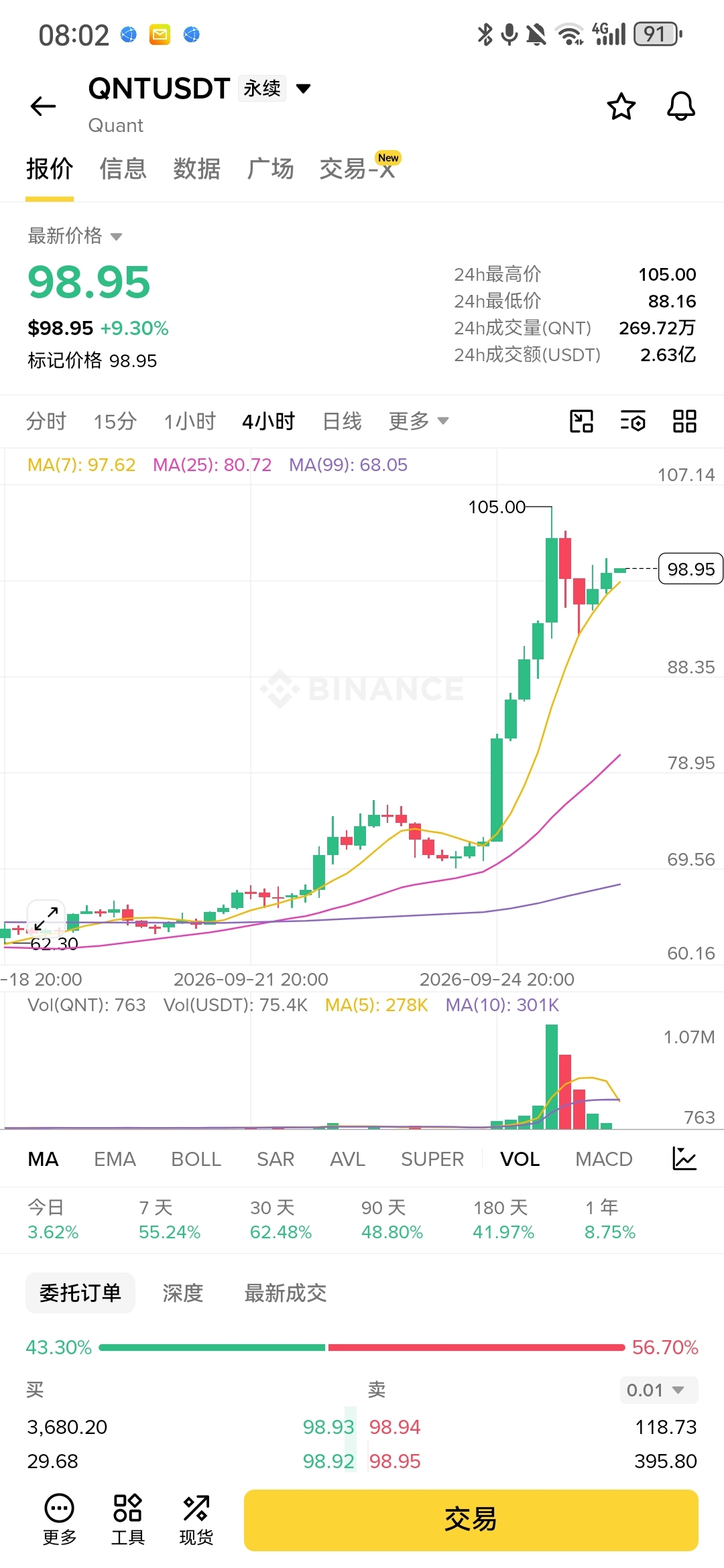
$QNT 24 hours increase exceeds 39%!
To put it simply, this rally comes down to one big “real job” it did.
The U.S. clearing organization that oversees the settlement of 25 major banks—the Clearing House—picked QNT’s technology to power the network for “tokenized deposits.” This system settles more than $2 trillion in volume per day.
In the UK as well, banks like HSBC and Barclays have just run QNT’s underlying tech to complete the first real tokenized deposit transaction.
So I think the logic behind this surge isn’t “trading a concept,”
but that QNT has genuinely been integrated into the banking system’s pipeline.
In my view, QNT is different from most cryptocurrencies. It doesn’t rely on trade signals or memes—it follows a “selling shovels to banks” strategy.
This rise happened because the shovels were truly sold, and the buyer is also “the real deal”—a legitimate player.
But I want to remind everyone of two points:
1️⃣ The technology banks use doesn’t necessarily mean the QNT coin will be bought in large quantities.
2️⃣ This network won’t officially launch until 2027. The good news is still far off. It’s already up more than 30% in the short term—chasing higher now can easily get you buried.
My personal view: QNT is worth putting on your watchlist, but don’t get carried away based on just one piece of news.
What do you think? If you have other opinions, feel free to leave them in the comments!
#QNT #QNT上涨39%
To put it simply, this rally comes down to one big “real job” it did.
The U.S. clearing organization that oversees the settlement of 25 major banks—the Clearing House—picked QNT’s technology to power the network for “tokenized deposits.” This system settles more than $2 trillion in volume per day.
In the UK as well, banks like HSBC and Barclays have just run QNT’s underlying tech to complete the first real tokenized deposit transaction.
So I think the logic behind this surge isn’t “trading a concept,”
but that QNT has genuinely been integrated into the banking system’s pipeline.
In my view, QNT is different from most cryptocurrencies. It doesn’t rely on trade signals or memes—it follows a “selling shovels to banks” strategy.
This rise happened because the shovels were truly sold, and the buyer is also “the real deal”—a legitimate player.
But I want to remind everyone of two points:
1️⃣ The technology banks use doesn’t necessarily mean the QNT coin will be bought in large quantities.
2️⃣ This network won’t officially launch until 2027. The good news is still far off. It’s already up more than 30% in the short term—chasing higher now can easily get you buried.
My personal view: QNT is worth putting on your watchlist, but don’t get carried away based on just one piece of news.
What do you think? If you have other opinions, feel free to leave them in the comments!
#QNT #QNT上涨39%
Log in to explore more content