
Bitcoin (BTC) only recorded modest growth of 2.2% last month, however, February may open a new positive phase. Statistics from 2016 show that the week ending on February 21 often yields the highest median profit, reaching 8.4%, with a probability of Bitcoin closing higher up to 60%.
The seasonal advantage of February and its impact on BTC
Economist Timothy Peterson of Network Economist notes that February is always one of the most stable growth months for Bitcoin, even outperforming the famous "Uptober" effect in Q4. According to Peterson, the primary cause stems from macroeconomic factors rather than the specifics of the cryptocurrency market.
Mid-February is when companies announce their annual financial reports and forecast upcoming business prospects, which are often optimistic. This boosts risk-taking investment sentiment, and part of the capital flows into Bitcoin. Peterson emphasizes:
"The period from February 7-21 often records a median profit of up to 7% per week!"
He also notes that the first three weeks of February play an important role in years of market correction. Bitcoin rose 4% at the beginning of 2018, dropped 3% in 2022, and fell 5% in 2025—all years that ended with lower prices than at the start of the year.
In the context of high market volatility showing signs of cooling, Peterson believes that Bitcoin has the potential for a strong recovery if macroeconomic stress indicators such as the CBOE Volatility Index (VIX) continue to decline.
The Bitcoin price outlook for 2026 remains above 200,000 USD
Bitcoin researcher Sminston With maintains an optimistic view on the long-term growth potential of BTC. Based on the Bitcoin Decay Channel model, With predicts that the peak Bitcoin price in 2026 will be between 210,000 and 300,000 USD. He states that although this model does not pinpoint a specific time, its price ranges have proven reliable in the past.
This long-term perspective is further supported by momentum data. Sina, the author of the Bitcoin Intelligence Report, notes that Bitcoin's momentum has turned positive, despite the recent significant correction.
Sina believes that the accumulation process since early January has helped maintain the overall cash flow structure. The recent sell-off coincided with the decline of the Nasdaq index after trade tension re-emerged, indicating that this is a timely reaction rather than a sign of Bitcoin's inherent weakness.
XWIN Research also agrees that Bitcoin is currently in an accumulation phase, not showing a clear downward trend.
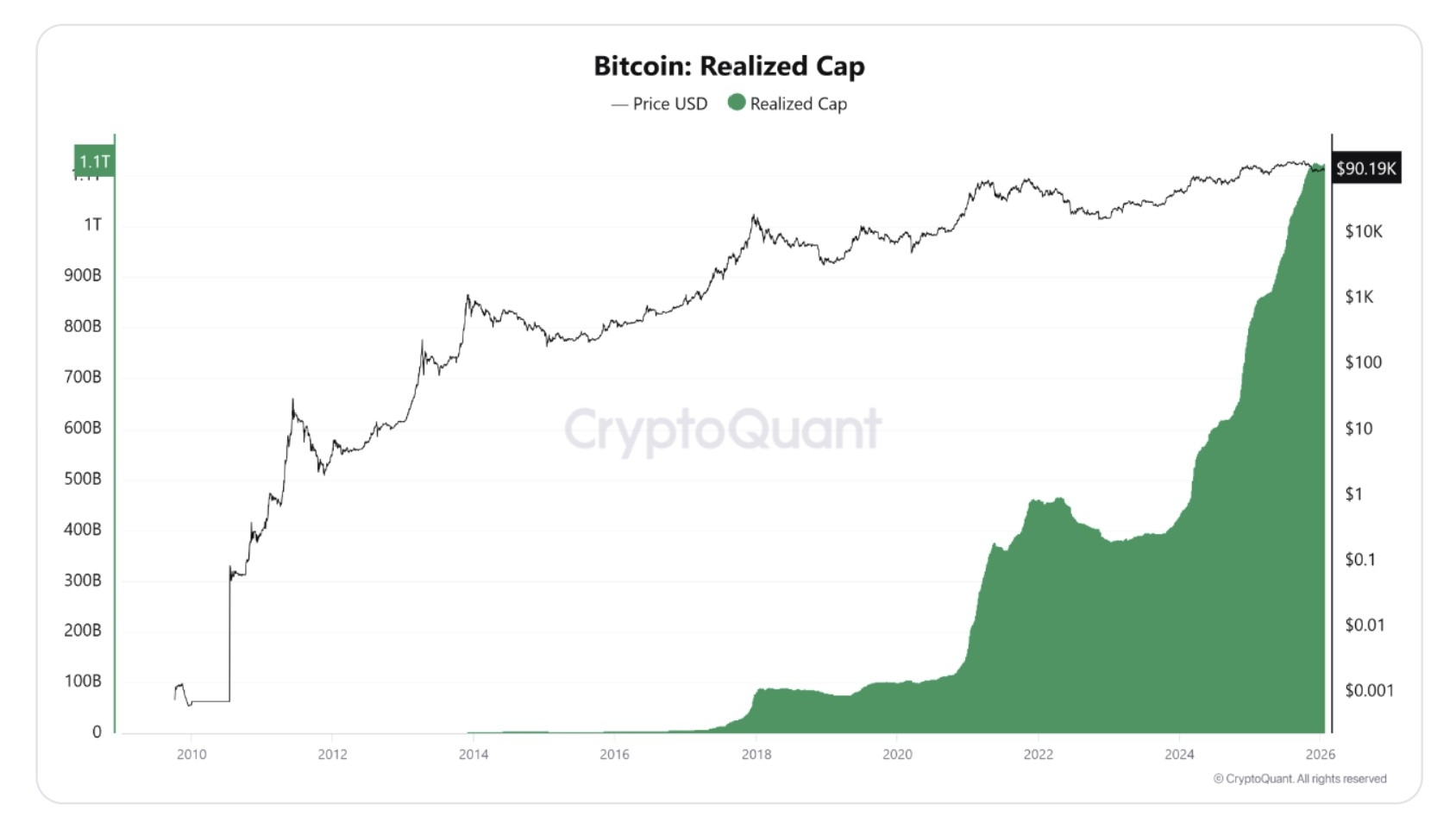 The actual market capitalization of Bitcoin | Source: CryptoQuant
Although rising long-term bond yields may limit the ability to expand valuations, the Realized Cap continues to rise, demonstrating that cash flows are still entering the system.
https://coinphoton.com/day-la-ly-do-tai-sao-khoanh-khac-uptober-thuc-su-cua-bitcoin-co-the-bat-dau-vao-thang-hai.html
