Most people assume that the main challenge in a decentralized system is preventing disputes.
I think an overlooked challenge is making disputes "affordable".
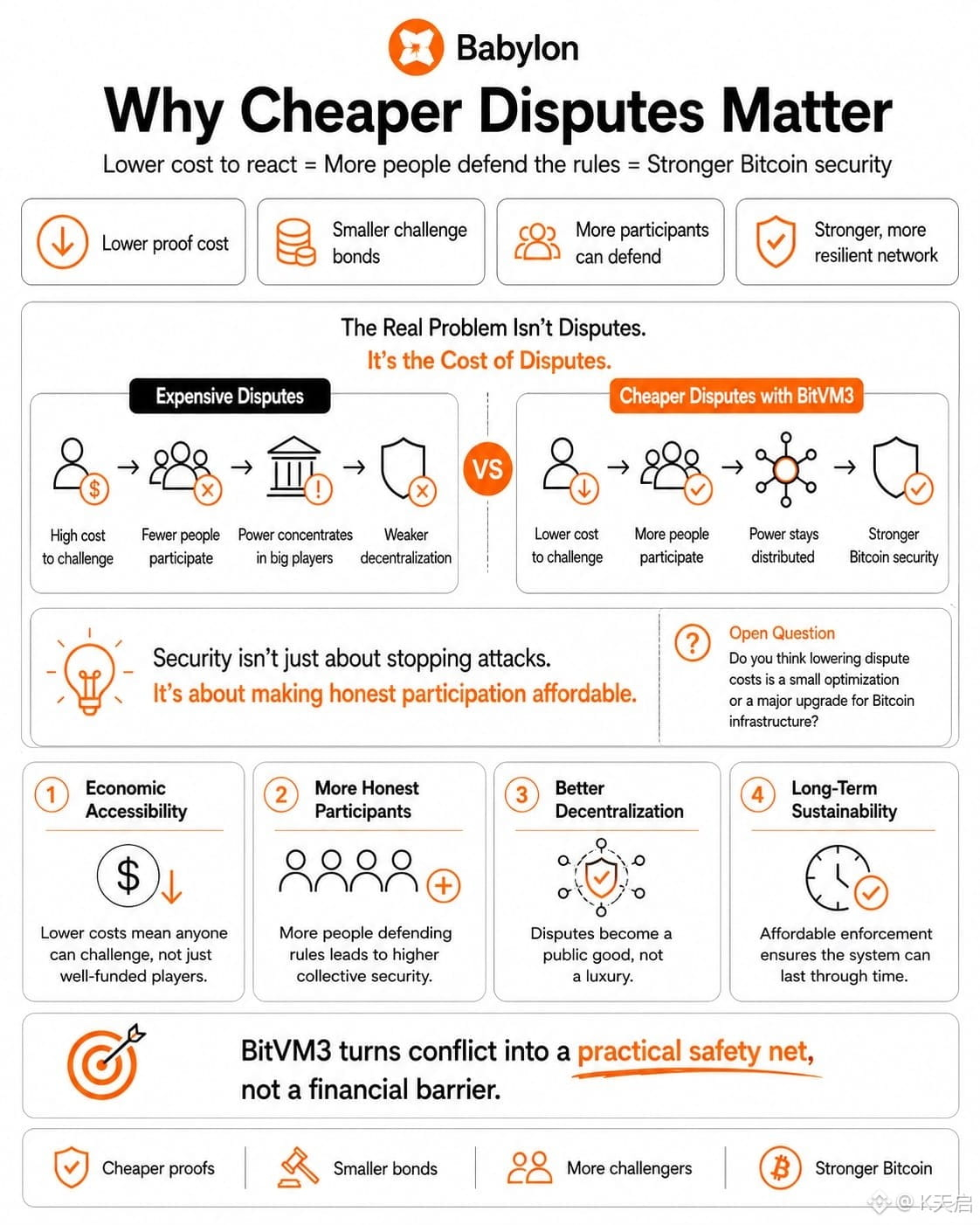
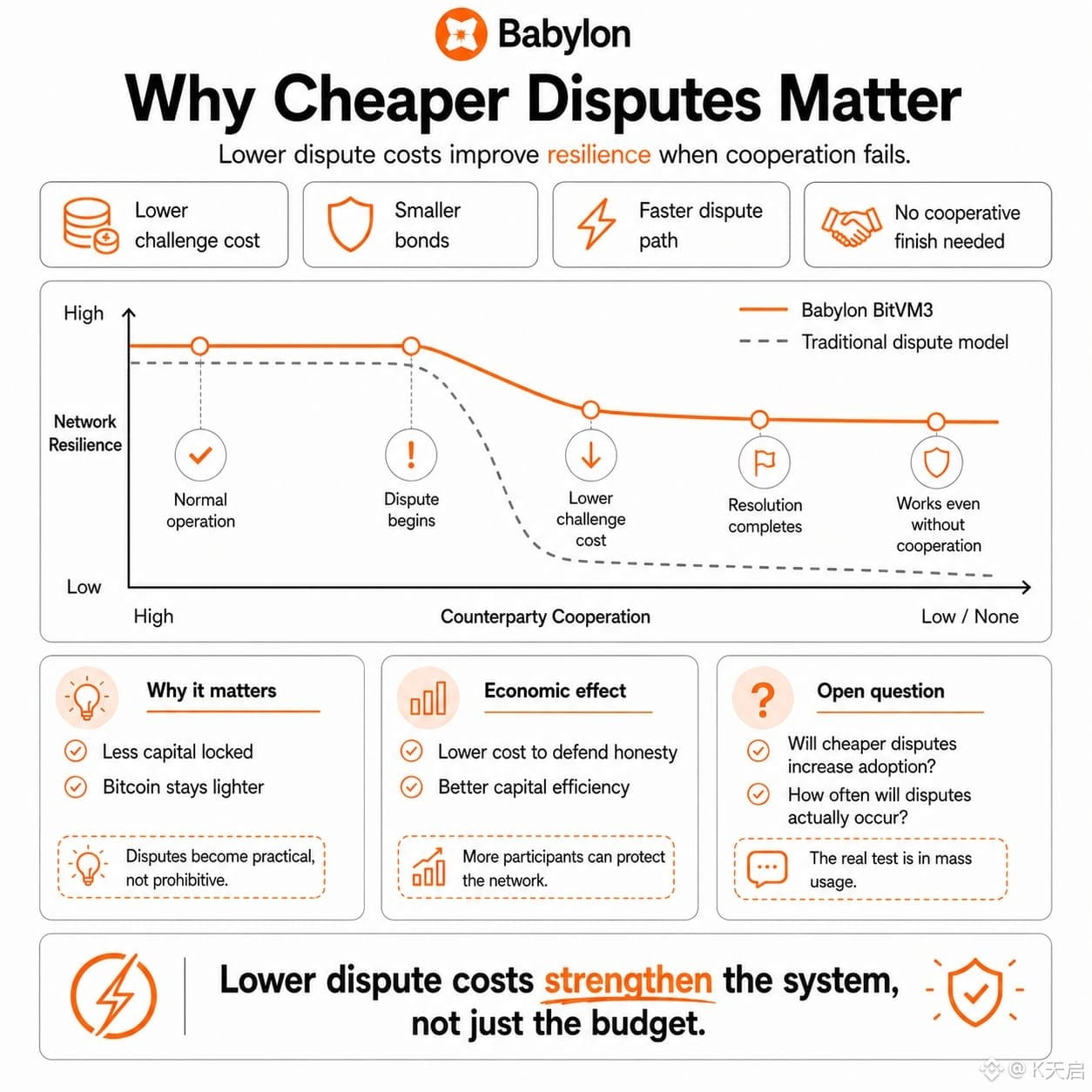
By affordable, I mean that for the smaller participant in a dispute, the expected loss from litigation is less than the potential gains from exploiting the system. If the threat of a dispute is too costly to litigate, it becomes too expensive to enforce the protocol, and the ability to enforce the protocol is effectively transferred to the party who can afford to litigate. I think this is why BitVM3 from Babylon is exciting. It focuses on reducing the costs to the disputing party and the costs of dispute resolution. By reducing the proof costs, lowering the stake of a disputing party, and eliminating the need for mutual cooperation during proof, we make disputes more "affordable", and thus more likely to happen.
In my opinion, this is where security starts to be "economic".
Not only are we making attacks more difficult, but we are making participation in the consensus-enforcing mechanism economical.
The ability to defend the protocol becomes a viable option for more participants, meaning that the system as a whole is secured better over time.
We'll see how this plays out in practice, but I think I've seen enough to be excited.
Do you think reduced costs in a dispute resolution mechanism can be considered an optimization, or is it a revolutionary upgrade for Bitcoin infrastructure as a whole?
@BabylonLabs_io
$BABY $RE $DEXE
#baby #Babylon #cryptotoken #PreLaunch #crypto
I think an overlooked challenge is making disputes "affordable".
By affordable, I mean that for the smaller participant in a dispute, the expected loss from litigation is less than the potential gains from exploiting the system. If the threat of a dispute is too costly to litigate, it becomes too expensive to enforce the protocol, and the ability to enforce the protocol is effectively transferred to the party who can afford to litigate. I think this is why BitVM3 from Babylon is exciting. It focuses on reducing the costs to the disputing party and the costs of dispute resolution. By reducing the proof costs, lowering the stake of a disputing party, and eliminating the need for mutual cooperation during proof, we make disputes more "affordable", and thus more likely to happen.
In my opinion, this is where security starts to be "economic".
Not only are we making attacks more difficult, but we are making participation in the consensus-enforcing mechanism economical.
The ability to defend the protocol becomes a viable option for more participants, meaning that the system as a whole is secured better over time.
We'll see how this plays out in practice, but I think I've seen enough to be excited.
Do you think reduced costs in a dispute resolution mechanism can be considered an optimization, or is it a revolutionary upgrade for Bitcoin infrastructure as a whole?
@BabylonLabs_io
$BABY $RE $DEXE
#baby #Babylon #cryptotoken #PreLaunch #crypto