

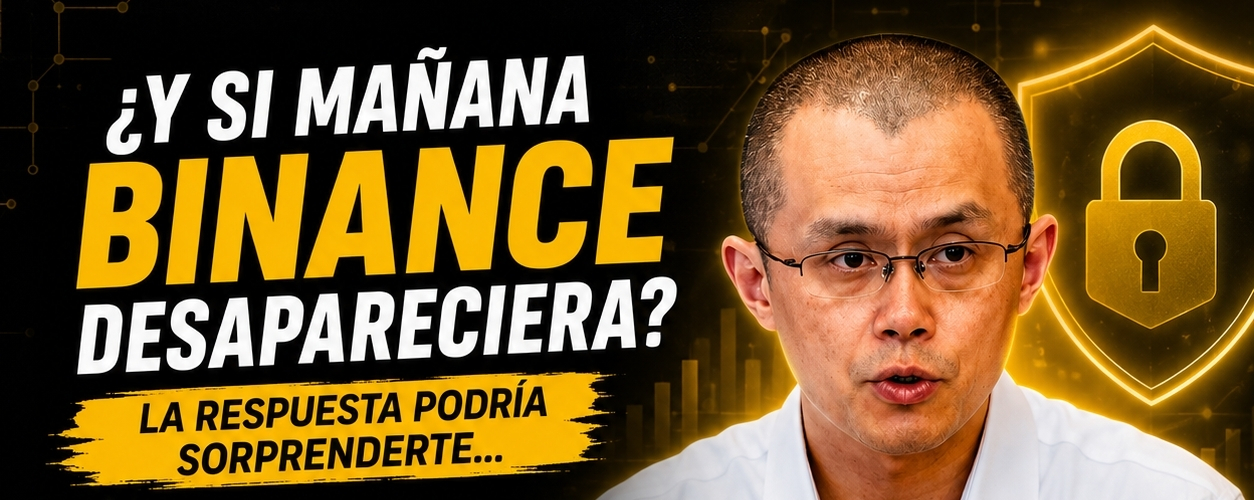

Every time someone deposits money into an exchange, the same question comes up:
Are my cryptocurrencies really there, or am I just seeing a number on the screen?
After CZ's exit, thousands of users started asking that question again.
The reality is that Binance further strengthened its transparency and protection mechanisms.
🔍 1. Proof of Reserves
Binance publishes cryptographic evidence that allows users to verify that it maintains reserves to back users' assets.
In simple terms:
✅ If users have $BTC, #ETH or $USDT deposited, Binance shows that it has reserves to back them up.
It’s a level of transparency that few traditional financial systems offer.
🛡️ 2. SAFU Fund
Since 2018, Binance created the Secure Asset Fund for Users (SAFU).
It’s an emergency fund worth around $1 billion, designed to help protect users against certain security incidents.
🔐 3. Multi-layer security
Today Binance includes:
✔️ Two-factor authentication (2FA)
✔️ Passkeys
✔️ Address whitelist
✔️ Device management
✔️ Intelligent risk monitoring
✔️ KYC controls and regulatory compliance
Security no longer depends only on Binance.
It also depends on the decisions each user makes.
💬 So...
No platform is 100% infallible.
But Binance has built one of the most robust security ecosystems in the entire industry.
And the best protection is still a combination of:
🔹 Education.
🔹 Best practices.
🔹 Security tools enabled.
❓Now I want to know your opinion:
What was the first security measure you enabled on your Binance account?
🔐 Google Authenticator
🔑 Passkey
📱 SMS
🛡️ Whitelist
💬 I’m reading you in the comments.
#BinanceSquare #Binance #Crypto #CryptoSecurity #ProofOfReserves #safu #Blockchain #Bitcoin #CryptoEducation #Binance9Years