
In the cryptocurrency circle, I made around 4 million, with a principal of 50,000. I haven't worked after graduating from college.
I have been playing in Kunming and Dali, not buying a house, not buying a car. Monthly spending is 1500.
How I make money:
1. Principal of 50,000, doing projects in college, affiliate marketing, doing tasks, delivery, APP promotion, various small tasks, saved up 50,000 yuan.
2. Entering the cryptocurrency market, I felt BTC was too expensive, so I kept playing with ETH, which has leverage, and then moved to altcoin spot trading. Selecting coins and managing positions well. Just following a simple strategy consistently, slight losses when the market is bad, and big gains when the market is good.
Why enter the circle?
If you want to change your fate, you must give the crypto circle a try. If you cannot get rich here, ordinary people will have no chance in their lifetime.
Now let me explain the logic.
Making money in investments relies on two things:
One aspect is the amount of capital; if you have 1500, making a 50% profit would yield 500,000. It's not very difficult; buying a few ETF index funds below 3000 in the A-share market can easily earn 50% in one to two years.
Secondly, volatility; when you have no capital, you can only rely on volatility to make money. Currently, the volatility in the crypto circle is still large, although it cannot be compared to the past.
You should know that the most you can lose in a downturn is everything, but in an upturn, you could gain 10x or 20x. So for ordinary people, you need to buy spot, have patience, and not be afraid when prices rise.
Many people have not experienced the feeling of a coin doubling, checking the price 50 times a day, holding on tightly during losses, but not being able to hold on during profits.
Trading coins is difficult to get rich; what makes it difficult? Desire? Patience? Goals?
This circle offers you such favorable volatility; it is the friendliest market for you because you do not have large capital.
Getting rich is difficult because it requires controlling your desires, having a firm goal, and extreme patience. The spot trading method still has the potential to make money.
Repeating simple things not only applies to trading coins but is also used in various aspects of life. Everyone knows that exercising can lead to better health, but very few people actually stick to exercising every day. Investing is the same; the principle is simple, but executing it is difficult. Many things are easy to understand but hard to practice. To get rich, you must always be prepared; when luck comes, you can take off.
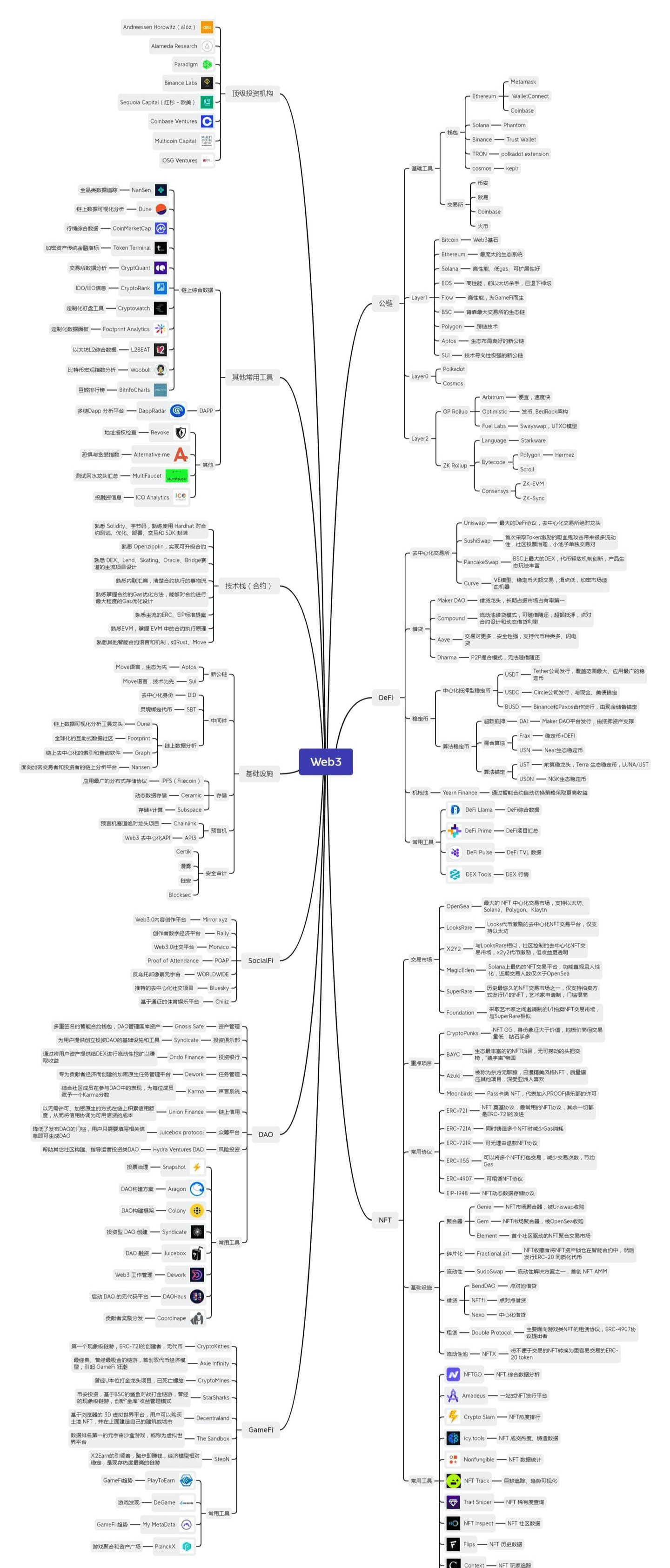
To facilitate everyone's learning, I have categorized the leading projects, commonly used tools, top investment institutions, development technology stacks, etc., of Web3 into the figure below, and summarized each project in one sentence. If you thoroughly study all the projects and tools in this figure, you will have definitely surpassed over 90% of people in Web3. While learning, you will discover your interests, find your own track, and begin to delve deeper:
2025 Coin Circle Bull Market Script Simulation
The foundation of a bull market:
External environmental factors:
The Federal Reserve's interest rate hikes have ended, and the United States has begun a new round of quantitative easing, making crypto assets one of the important reservoirs.
Internal industry factors:
The bear market washout from 2022 to 2023 was sufficient, clearing risks and eliminating obstacles.
The Ethereum ecosystem is thriving, with an ETH deflation mechanism and good fundamentals.
During a bear market, the market makers use various bad news to hammer down prices, collecting chips, while institutions follow suit, completing their layouts.
Bull market process:
The official start of the bull market is marked by April 2024, when BTC undergoes halving, a strong consensus in the four-year cycle in the crypto market.
The main force attracts external flow through various narratives and wealth effects, bringing a large number of users and capital into the market, thus driving prices up.
It is highly likely that Bitcoin and Ethereum will see a surge, followed by altcoins catching up, during which there may be a significant pullback washout.
The public chain ecosystem is thriving, with various quality applications being implemented, a continuous increase in crypto users, and the industry experiencing unprecedented explosive growth.
Key narratives:
Web3+: The most promising sector for the next bull market, also a key area attracting external funds.
L2: With the prosperity of the Ethereum ecosystem, L2 will be one of the most focused sectors in the new bull market, with significant appreciation potential in the long run.
Metaverse: The last bull market only remained at conceptual speculation, while the new bull market will see more practical applications.
DeFi: Disrupting the traditional financial industry, it is an important part of the decentralized revolution and still has a lot of room for growth.
GameFi+: The last bull market brought a wave of enthusiasm to the industry, and although the results were not ideal, it was considered a pioneering attempt.
NFT+: The future imagination space for NFTs is vast and will not be limited to the speculation of small images.
Others: AI, social, Ethereum ecosystem, decentralized concepts, etc.
Follow the market's progress. You can pay attention to the investment directions of leading institutions such as Binance and A16Z.
In the crypto circle, you need to find a way to first earn 1 million in capital. The only path from tens of thousands to 1 million is rolling positions.
When you have 1 million in capital, you will find that your entire life seems different. Even without leverage, a 20% increase in spot leads to 200,000, which is already the ceiling for the annual income of most people.
Moreover, when you can grow from tens of thousands to 1 million, you will grasp some thoughts and logic for making big money. At this point, your mindset will calm down a lot, and you can just replicate and paste.
Don't think about millions or billions all the time. Start from your actual situation; boasting is only comfortable for the bull. Trading needs the ability to discern the size of opportunities; you cannot always hold small positions, nor can you always take heavy positions. Usually, play with small guns, and when the big opportunity comes, bring out the big guns.
For instance, rolling positions are opportunities that can only be acted upon when significant chances arise. You can't always roll; missing out is not a problem because in your lifetime, you only need to roll successfully three or four times to go from zero to tens of millions, which is enough for an ordinary person to move into the ranks of the wealthy.
A few points to note when rolling positions:
1. Sufficient patience; the profits from rolling positions are enormous. As long as you can roll successfully a few times, you can earn at least tens of millions or even billions, so you can't roll easily; you need to find high-certainty opportunities.
2. High-certainty opportunities refer to horizontal consolidation after a sharp decline followed by an upward breakthrough. The probability of developing a trend is high, so you must find the point of trend reversal and get on board from the start.
3. Only roll long positions;
Rolling position risks
Let me talk about rolling position strategies; many people think this is risky, but I can tell you that the risk is very low, far less than the logic of trading futures.
If you only have 50,000, how to start with 50,000? First, this 50,000 must be your profit; if you are still losing, don't look.
If you open a position at 10,000 for Bitcoin and set a leverage of 10 times, using a gradual opening mode, only opening 10% of the position, which is only opening 5,000 as margin, it is actually equivalent to 1x leverage with a 2% stop loss. If you hit the stop loss, you only lose 2%, just 2%? 1,000. How do those who get liquidated get liquidated? Even if you get liquidated, isn't it just losing 5,000? How can you lose everything?
If you are correct and Bitcoin rises to 11,000, you continue to open 10% of the total capital, similarly setting a 2% stop loss. If you hit the stop loss, you still earn 8%. What about the risk? Isn't it said that the risk is very high? And so on...
If Bitcoin rises to 15,000, and you successfully increase your position, during this 50% market movement, you should be able to earn around 200,000. Capturing two such movements could make you around 1 million.
Compound interest does not exist; 100 times is achieved by two 10 times, three 5 times, or four 3 times profits, not by compounding 10% or 20% every day or month; that is nonsense.
This content not only has operational logic but also contains the core principles of trading, with position management; as long as you understand position management, you can never lose everything.
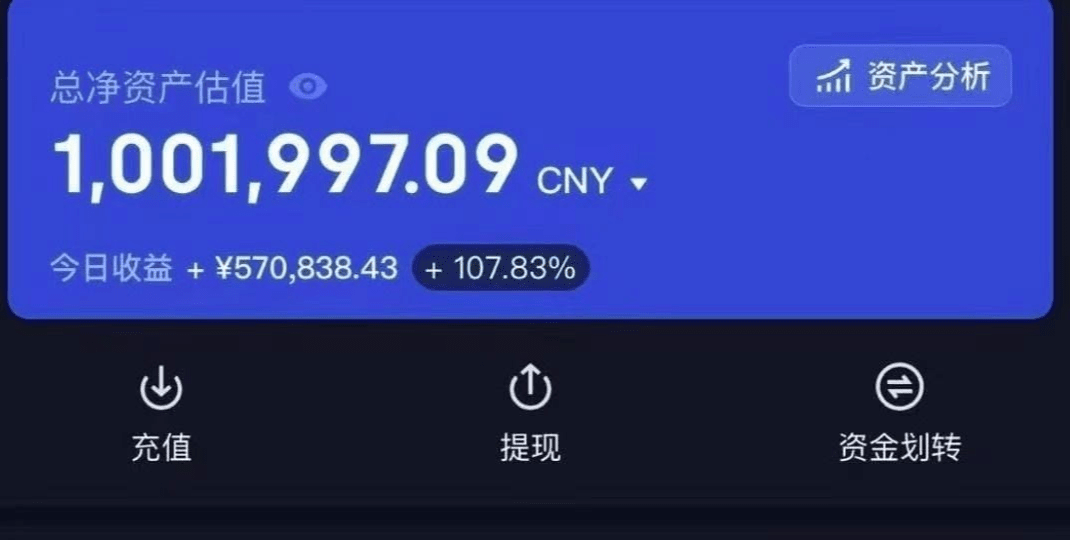
(Moving Average) is a moving average system that increases your win rate by 35%. I have gone from 50,000 to 1 million in 9 months using this moving average since January this year.
Returning to simplicity from complexity has become a trend in the development of the trading industry. Among many technical analyses, the most fundamental and practical is likely the moving average.
1. Single moving average, understanding positional relationships.
Beyond candlesticks, the first indicators most people encounter are usually moving averages.
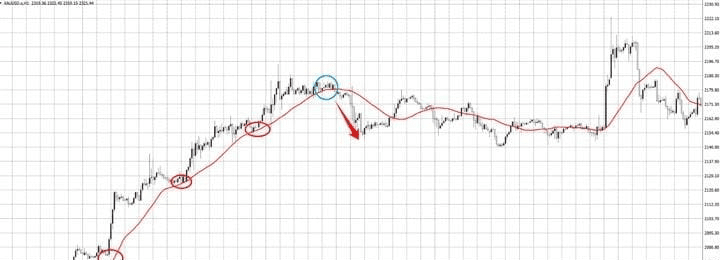
The moving average reflects the average price level over a past period of time, so the simplest usage is to observe the relationship between the moving average and the candlestick. If the candlestick remains above the moving average, it indicates that the recent trend is overall strong, and as long as it does not break below the moving average, it will continue.
When the candlestick actually breaks below the moving average, it is usually accompanied by a significant downward trend.
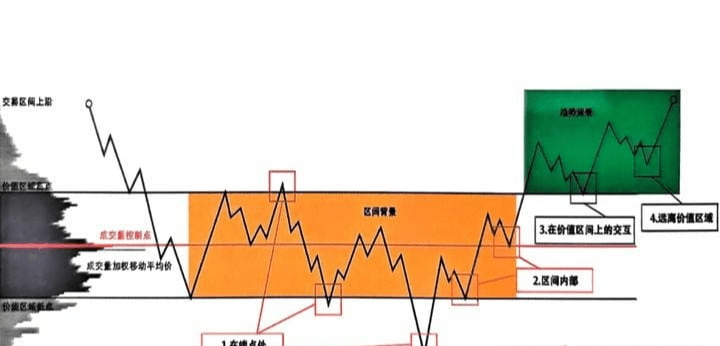
In addition to continuously running above or below the moving average, if the candlestick and moving average repeatedly intertwine, it usually indicates a consolidation market. For example, this segment is a clear box. When the market breaks, it is usually accompanied by large bullish and bearish candlesticks, followed by a slight pullback to confirm support, then further rebound.
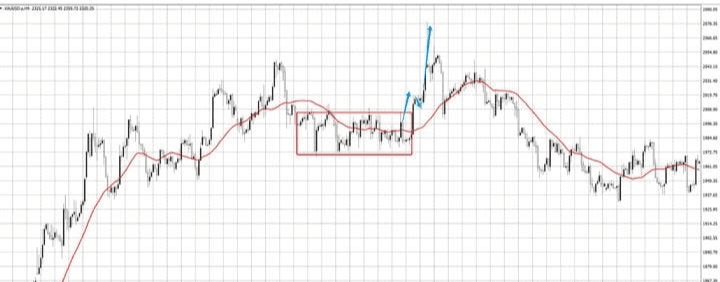
This trend is a very classic Wyckoff trading method known as crossing the creek.
In the EBC's latest introduction of (Wyckoff 2.0), the operational laws of candlesticks during the accumulation and distribution phases are detailed. Combined with the intertwining patterns of moving averages, it can help us further confirm price direction and validate trend continuity through patterns moving away from value areas.
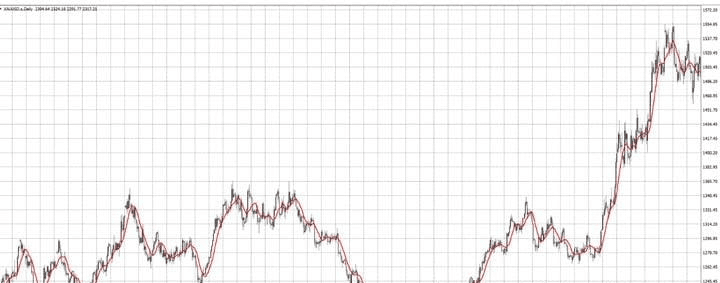
In addition to observing the positional relationships between candlesticks and moving averages, you should also be adept at using moving averages of different cycles to identify trends.
Due to the limited sample size, short-term moving averages sometimes closely match the overall trend, making it difficult to detect significant trend changes. For example, with a 10-day moving average, it's hard to determine the trend direction solely from one moving average.
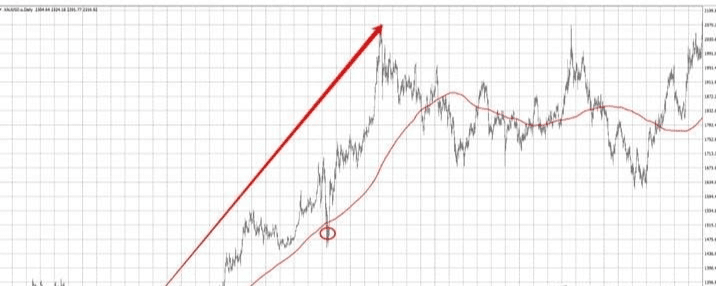
Thus, long-term moving averages hold greater representativeness.
The usage of long-term moving averages is similar to the above; as long as it is above the moving average, it has continuity. For example, during this wave of 2-3 years of market movement, if you are doing trend trading, just looking at this moving average is sufficient.
Since the long-term trend of prices will still return near the moving average, another usage of long-term moving averages is to observe the divergence level between the candlestick and moving average. If it significantly diverges from the moving average and a clear double top pattern appears, it is often a very good time to intervene.
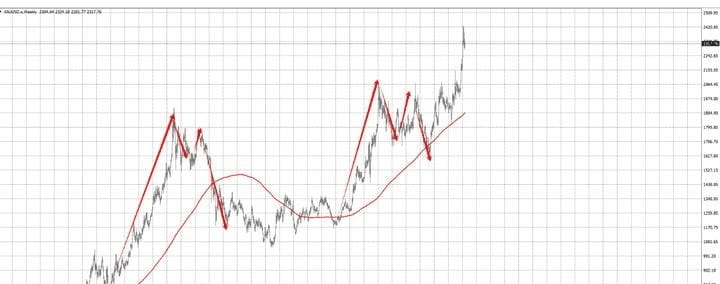
This situation also applies to finding the bottom of a range. The only downside is that this method has a long cycle, suitable only for long-term traders.
2. Multiple moving averages, understanding the cyclical relationships.
Compared to single moving averages, multiple moving averages are a more commonly used method.
When the short-term moving average crosses above the long-term moving average, it indicates that the recent price is stronger than the price within a longer cycle, greatly increasing the likelihood of an upward breakthrough. This is known as the golden cross; conversely, it is the death cross.
Before the golden cross or death cross appears, the long and short-term moving averages must flatten to create conditions for crossing. As shown in the figure, once two moving averages turn and the short-term moving average is faster than the long-term moving average, it often signals a crossover. If this occurs at the bottom of the market, it is often a very effective golden cross or death cross.
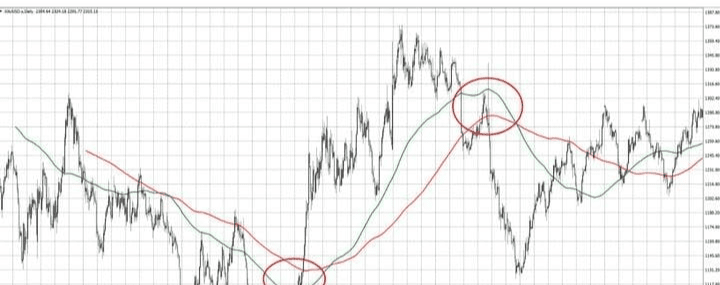
However, the golden cross and death cross are not without drawbacks, one being lagging. For rapidly declining markets, the market may have already run its course, but the death cross just begins to appear, which can sometimes lead to selling at the bottom.
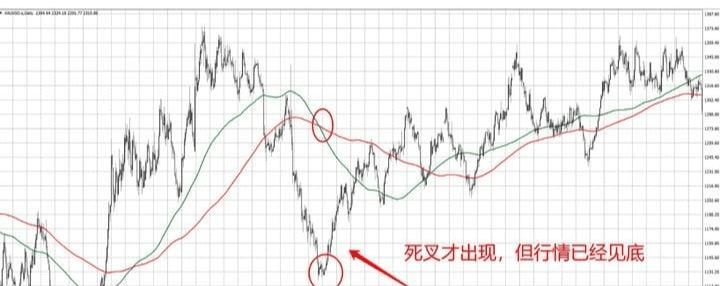
For such a market, you must combine the breakout relationship of the candlestick and moving average. When both the long and short moving averages start to turn and the candlestick simultaneously breaks through the two moving averages, it is already the time to intervene.
If the death cross has already formed, aside from managing your stop loss and betting on a downturn, you can use volume-price relationships for judgment.
For instance, in the EBC order flow tool, real-time tick market data for each order is recorded, and the price level with the largest buy-sell volume in each candlestick is recorded as POC. Meanwhile, the order flow tool also calculates the net number of buy-sell orders in each candlestick in real-time, noted as Delta, forming a cumulative chart.
As shown in the figure, when the death cross appears, the POC appears at the bottom of the market. This indicates that both sides of the market have begun to intervene at this price level, and the bulls are preventing the market from continuing to decline, forming a resistance pattern. Meanwhile, the Delta below shows a lower shadow, indicating that the bears encountered resistance below and were forced to go long.
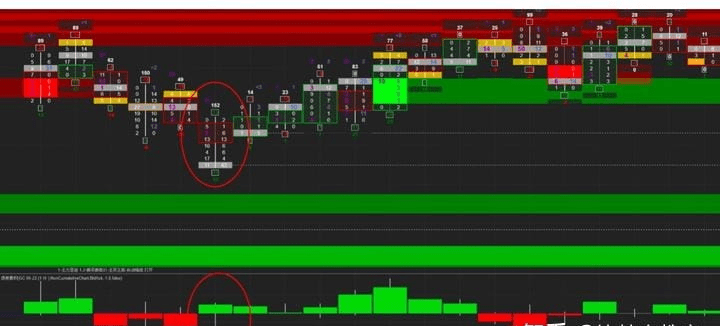
This series of signals can help us confirm that this is not a time to chase shorts.
The second usage of multiple moving averages is actually very similar to observing the relationship between moving averages and candlesticks. If the short-term moving average continues to run above the long-term moving average, it usually indicates trend continuity.
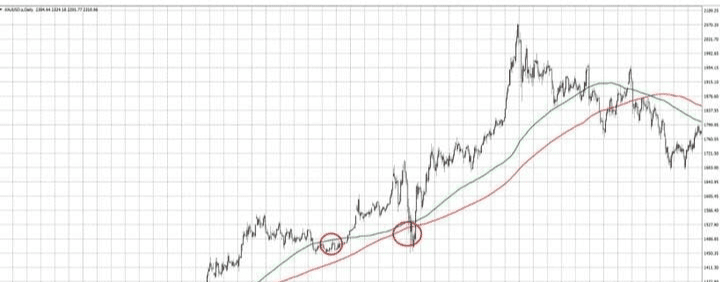
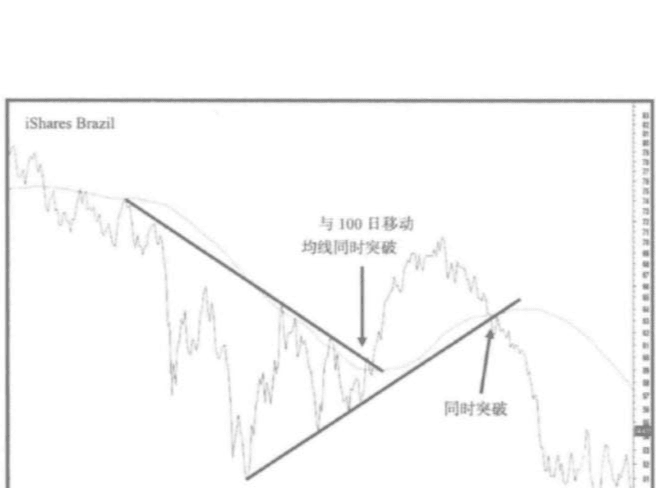
In Mr. Martin Pring's (Technical Analysis), trend lines are introduced into moving average analysis, suggesting that simultaneous breakthroughs in price trends and moving averages represent a double signal confirmation, often leading to higher accuracy.
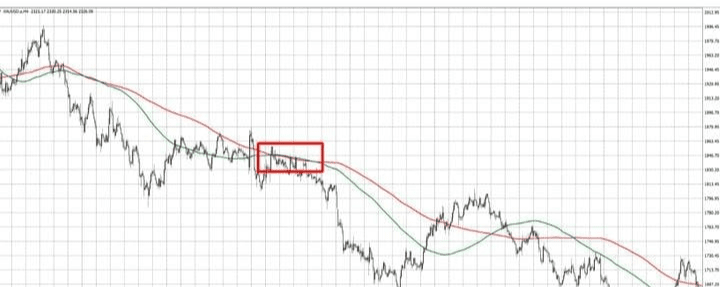
There is also a special situation where the moving average's adhesive pattern occurs. This position usually indicates that the market is making a directional choice; however, once the direction is confirmed, it often leads to a trend. Moreover, the tighter the moving averages are bound, once they open up, the trend's continuity is stronger.
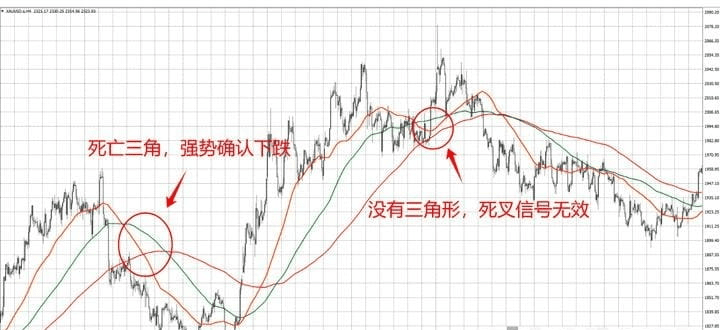
There is also a pattern formed by three moving averages, known as the death cross triangle or golden triangle.
This pattern usually consists of long, medium, and short cycles. I typically use 60, 120, and 200-day moving averages. The death triangle and golden triangle can largely avoid the impact of ineffective death crosses. When the trends of different cycles align, occurrences of sharp declines or rises are also rare, so the reliability of the signals is higher.
3. VWAP, incorporating trading volume into the moving average.
In fact, at this point, most candlestick patterns are within the realm of common knowledge.
However, moving averages have a drawback; they average all prices together without focus. In reality, large orders often have a quick and direct impact on the market. If order quantity is considered, such moving average prices become more effective.
This is the volume-weighted moving average, also called VWAP.
To provide a direct comparison, in the figure below, the 50-day VWAP is clearly higher than the regular 50-day moving average, so during actual pullbacks, you will find prices closer to the VWAP rather than the EMA price. If you hope to buy in by confirming support through pullbacks, you may never be able to buy at that price.
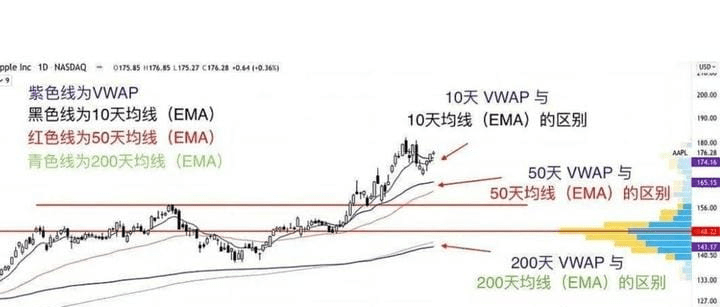
For example, in the figure below, you will find that the VWAP is almost vertical upwards. Such a situation will never occur in a smooth moving average. Here, the VWAP indicates that the market is clearly influenced by large orders, issuing an early warning signal.
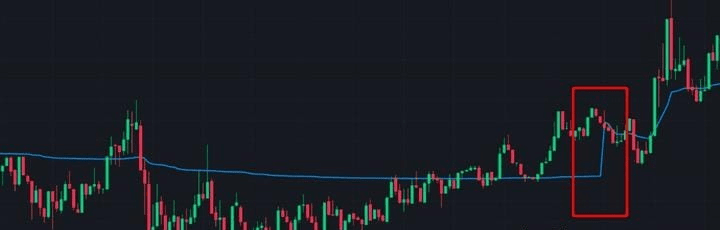
The usage of VWAP is also very simple; as long as the candlestick remains above the VWAP, it is a buy signal; conversely, it is a sell signal.
Unfortunately, VWAP is calculated based on trading volume, so this indicator can only be developed if you access a trading volume data source. For example, EBC connects directly to the Chicago Mercantile Exchange, using 10-level tick data, so EBC order flow tools can utilize this indicator.
Compared to general VWAP indicators, the EBC order flow tool also extends the VWAP to standard deviation bands.
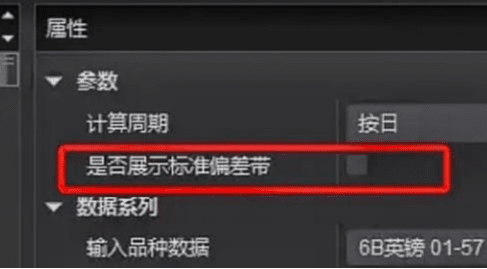
After incorporating deviations, two curves are added to each side of the VWAP. These two curves serve as strong resistance and support levels. Each time the market price touches these lines, it will encounter significant resistance and support, helping us better identify resistance zones.
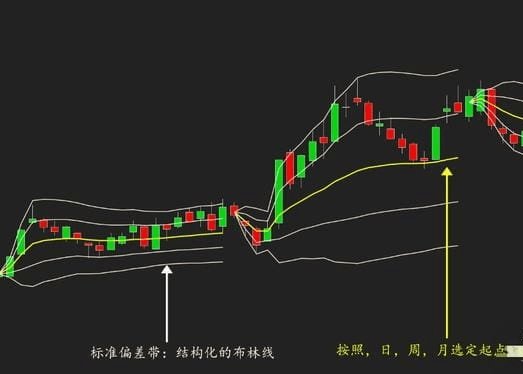
Similar to Bollinger Bands, when the deviation between these lines is too large, a correction often occurs. By analyzing the positional relationships of candlesticks, we can determine if we have entered overbought or oversold zones, thus making better decisions.
Overall, moving averages are a complete trading system. They are simple but reflect the essence of price changes, identifying market trends through the rate of change in long and short cycles. Even new entrants can handle trading with ease as long as they master the moving average system. This is what is meant by simplicity in principle.
Bull market profit rules:
1. Once an upward trend starts, it will not easily end. Therefore, do not fear the major pullbacks that occur in the early stages. Boldly enter the market; the worst thing is to continue waiting for a lower point, as you will just end up missing out.
2. In a bull market, many injections occur. If your position is not fully allocated, try to wait for a pullback to go all-in; otherwise, if the market suddenly injects, most people cannot withstand it.
3. You must manage your positions well; it's best to have several key sectors laid out because if you go all-in on one sector and it doesn't move in the short term while others are rising, it's the most uncomfortable situation. If you chase, you get trapped, and if you clear your position, it may take off again in a few days. Many people have experienced this, so either don't buy, or if you buy, hold firmly; your coins will eventually rotate. Even the worst coins in a bull market can have five or ten times the returns.
4. The market is always rising amid disagreements. What many people criticize is often an opportunity, and when everyone is optimistic, it can instead pose a risk.
5. Do not always think about doing short-term high sell low buy. Once you get off halfway, you will find that it never goes back. Playing short-term is not as profitable as lying still.
6. Every market pullback will cause panic, with everyone saying the bull has run away. The fact is, a bull market must endure at least three or four major pullbacks before it can end. So don't be afraid; you must have a broader perspective. As long as you can hold, and it's not garbage coins, even the worst can have five or ten times the return. In a bull market, making two or three times on spot is really not uncommon.
I am a little egg tart. Follow me for daily updates on the latest news and operational analysis! #ETH走势分析 $ETH

