
A high-timeframe pair trade between ZEC and ZEN offers an attractive relative-value opportunity with reduced directional risk. The core idea behind this setup is simple: lower downside exposure while maintaining similar upside potential, regardless of broader market conditions.
Pair trades are especially effective in uncertain crypto environments where narratives rotate quickly and trend continuation is inconsistent. Instead of betting on overall market direction, this strategy focuses on relative strength versus relative weakness within the same sector.
in this case, ZEC represents the stronger asset, while ZEN shows signs of structural exhaustion.
ZEN initially followed ZEC’s hype-driven momentum, but that move failed to sustain. After the initial push, ZEN formed a classic head and shoulders top on the high timeframe, followed by a complete retracement within roughly three months. This type of price behavior is typically associated with distribution rather than accumulation.
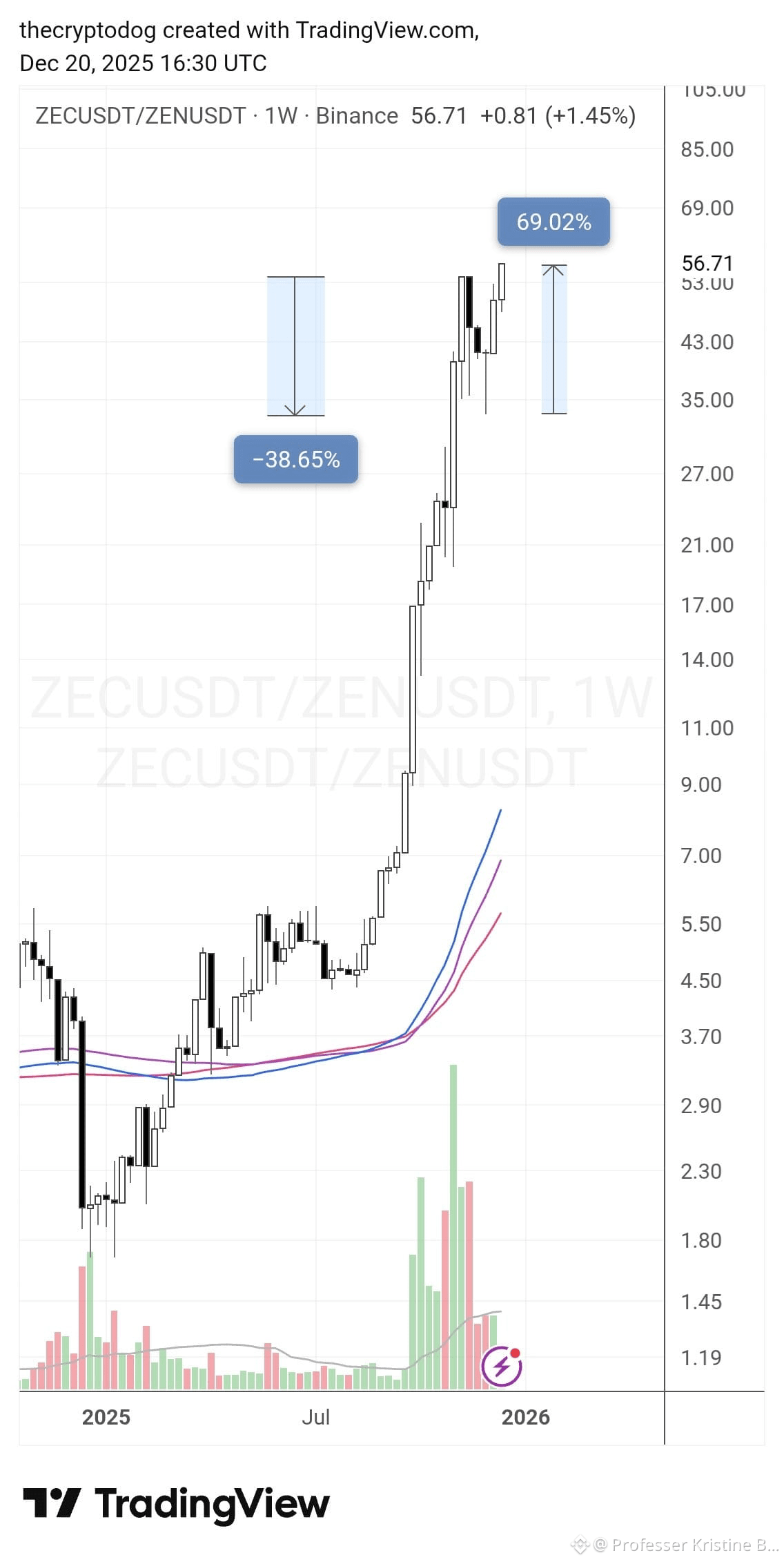
Volume did not support continuation, and subsequent price action has been defined by short-lived relief rallies rather than genuine demand. Assets that retrace fully after such structures often require months of sideways consolidation before any meaningful upside can develop. Until that happens, upside moves in ZEN are more likely to be short-term pumps or liquidity grabs rather than the start of a new trend.
ZEC, on the other hand, has shown noticeably stronger structure. Unlike ZEN, ZEC did not fully retrace its previous impulse and has held higher levels with better bid support. Pullbacks appear more controlled, suggesting real demand rather than speculative chasing.
From a relative perspective, market participants continue to treat ZEC as the primary exposure within its niche, while ZEN appears secondary and more prone to underperformance during periods of consolidation or market weakness.
The trade structure is straightforward. The idea is to hold ZEC on spot or with minimal leverage while shorting ZEN, ideally using perpetual contracts. This creates a partially hedged position where overall market volatility has less impact on performance.
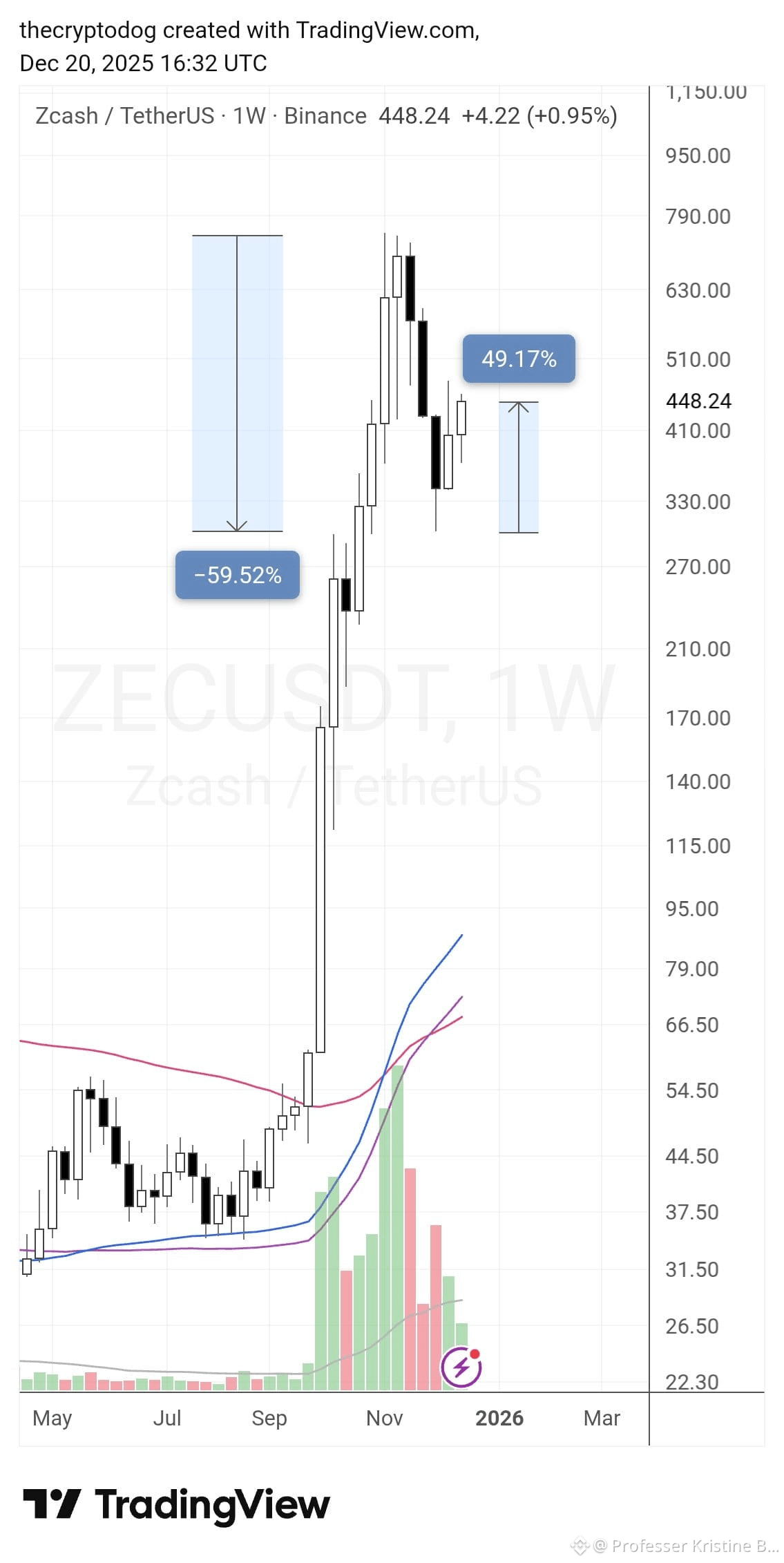
If the sector moves higher, $ZEC is expected to outperform ZEN. If the market stalls or pulls back, ZEN is likely to underperform faster due to its weaker structure. This asymmetry makes the setup appealing from a risk-adjusted standpoint.
While ZEN may still experience short-term pumps, the lack of high-timeframe confirmation suggests these moves are unlikely to sustain. ZEC remains better positioned for continuation if capital rotates back into its narrative.
In summary, the long ZEC / short ZEN high-timeframe pair trade represents a clean relative-strength play: stronger structure versus weaker structure, real demand versus hype-driven follow-through. In current market conditions, this approach prioritizes capital protection while still allowing exposure to upside opportunities.

