The UK Treasury has pointed to October 2027 as the start date for crypto regulation, while the FCA is launching a new round of rule consultations at the same time—there's only one underlying message in this kind of news: regulation is paving the way for 'stablecoins to enter payments and settlements.'
On the other hand, the Bank of England has also released a consultation document regarding 'systemic stablecoins,' with the core focus similarly centered on: backing assets, redemption mechanisms, and the potential financial stability risks that might arise in the payment system.
This brings us back to the most fundamental question about stablecoins: if you peg to 1 dollar, what is the backing for that?
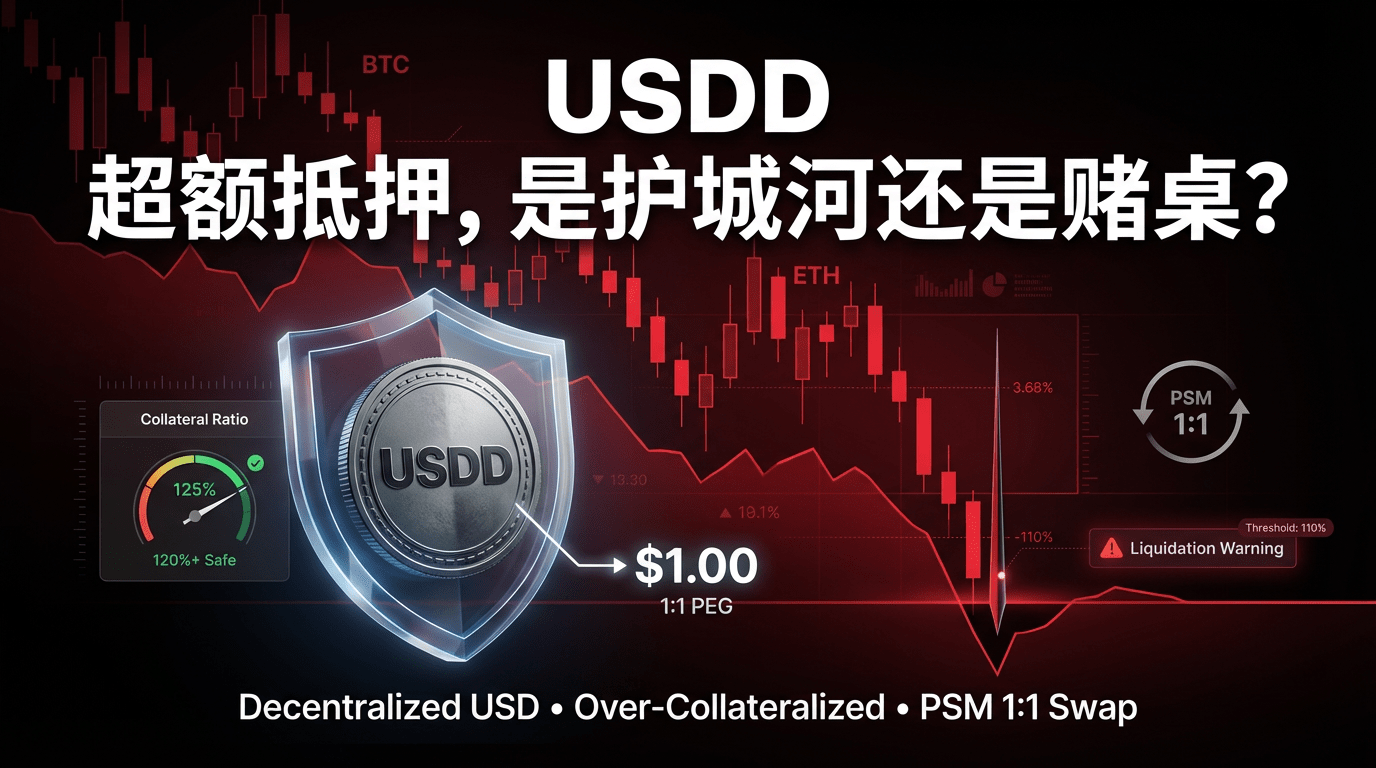
The answer for centralized stablecoins increasingly resembles financial engineering: cash, short-duration government bonds, regulated custody, and regular disclosures. The answer for decentralized stablecoins, on the other hand, looks more like on-chain engineering: collateral assets, liquidation rules, oracles, and liquidity modules. USDD (Decentralized USD) has chosen the latter, and has made the 'backing structure' clearer: the system requires that the total collateral value always exceeds USDD liabilities; collateral consists of TRX, BTC, and assets like USDT/USDC, which collectively bear the responsibilities of payment and stability with 'volatile assets + low-volatility pegged assets.'
What's truly interesting is that regulatory language emphasizes the 'composition of reserve assets', while the on-chain language of USDD emphasizes 'composition of collateral'. Though they seem different, both are addressing the same risk: in extreme market conditions, can you redeem according to the rules? USDD offers an 'executable redemption/swap window' via PSM: USDD can be swapped with USDT/USDC 1:1 without slippage, and when prices deviate, the arbitrage mechanism pulls the peg back.
Therefore, when reading USDD (Decentralized USD) during the regulatory cycle, I suggest rephrasing the question from a 'compliance perspective': instead of asking whether it will be included in some licensing framework, ask—can its collateral basket and PSM redemption window turn 'backing assets' and 'redemption rights' into verifiable on-chain facts? As regulators become increasingly concerned about the 'systemic risks of stablecoins entering the payment system', USDD's competitiveness may actually come from exposing risk boundaries transparently rather than hiding them in some report.@USDD - Decentralized USD