

Bitcoin may be entering a prolonged cooling phase after topping earlier this year, according to Fidelity Investments’ director of global macro research, Jurrien Timmer, who predicts a potential Bitcoin bottom near $65,000 in 2026, even as he maintains a long-term bullish outlook on the asset.
In a post shared on X, Timmer said Bitcoin’s rally to an all-time high near $125,000 on Oct. 6 may have marked the peak of the current four-year halving cycle, both in terms of price and timing.
“While I remain a secular bull on Bitcoin, my concern is that Bitcoin may well have ended another four-year cycle halving phase,” Timmer wrote.
“Bitcoin winters have lasted about a year historically, so my sense is that 2026 could be a year off for Bitcoin. Support is at $65,000–$75,000.”
Four-Year Cycle Thesis Faces New Scrutiny
Timmer’s outlook challenges a growing narrative among crypto analysts that regulatory clarity and institutional adoption could extend Bitcoin’s bull cycle beyond historical norms.
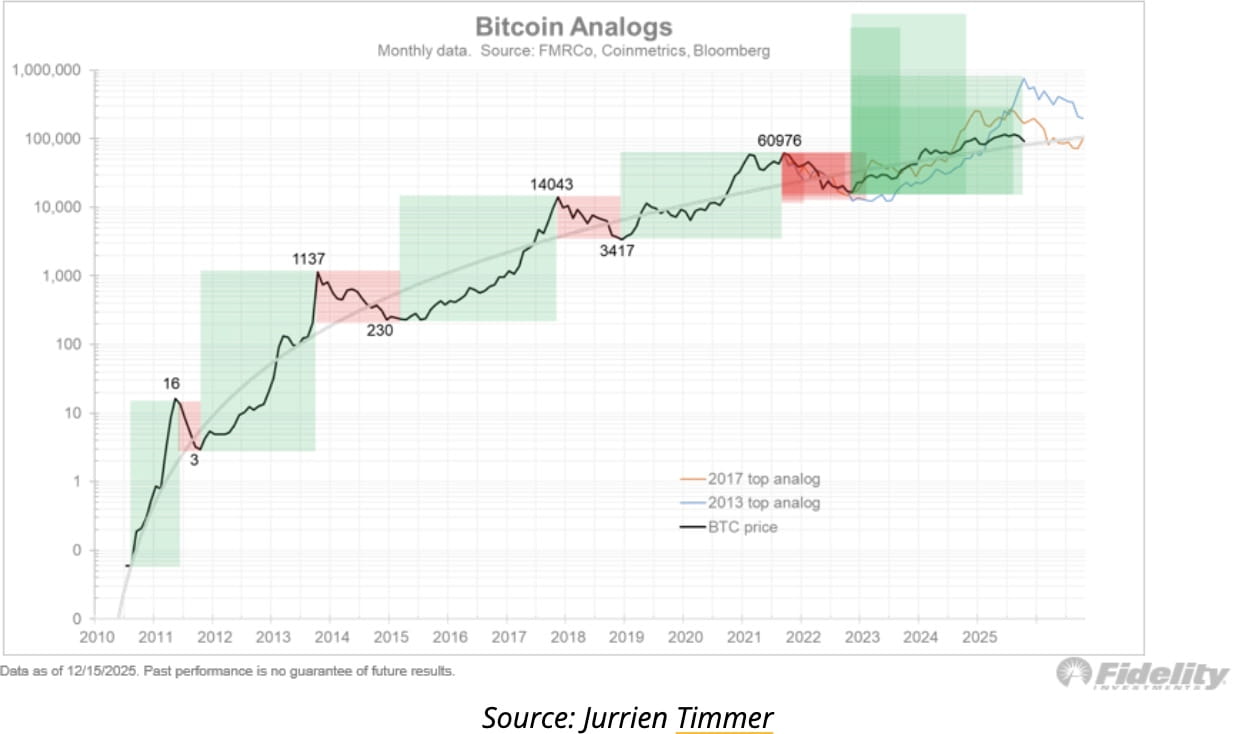
Bitcoin has traditionally followed a four-year cycle tied to halving events, with sharp drawdowns often following cycle peaks. Timmer suggests that pattern may still hold, despite structural changes in market participation and product access.
His comments come as Bitcoin trades near $88,000, following heightened volatility and a broader risk-off shift across digital assets earlier this month.
Bulls Still See Upside on Regulation and Fundamentals
Not all analysts agree with the bearish near-term outlook.
Tom Shaughnessy, co-founder of crypto research firm Delphi Digital, argues that Bitcoin could still reach new all-time highs in 2026, once the market fully digests October’s sharp liquidation event.
“We are working through a one-time disastrous liquidation event that broke the market,” Shaughnessy wrote.
“Once that’s worked through, we hit Bitcoin ATHs in 2026 as prices rubber-band to reflect the fundamental progress happening outside that event.”
Shaughnessy pointed to Wall Street adoption, expanding ETF infrastructure, and continued regulatory progress as long-term catalysts that could reassert upside momentum.
Regulation Seen as Key Variable for 2026
Policy experts also expect 2026 to be a pivotal year for crypto regulation in the United States, particularly following the passage of stablecoin legislation.
Cathy Yoon, general counsel at crypto research firm Temporal and at Solana block-building system Harmonic, said the next phase will focus less on legislation and more on execution.
“With stablecoin legislation now passed, the real impact will come from implementation — examinations, disclosures, and how these assets integrate into payments and financial infrastructure,” Yoon said.
Such developments could unlock additional institutional capital, even if price action remains muted in the near term.
Sentiment Weakens as Smart Money Turns Defensive
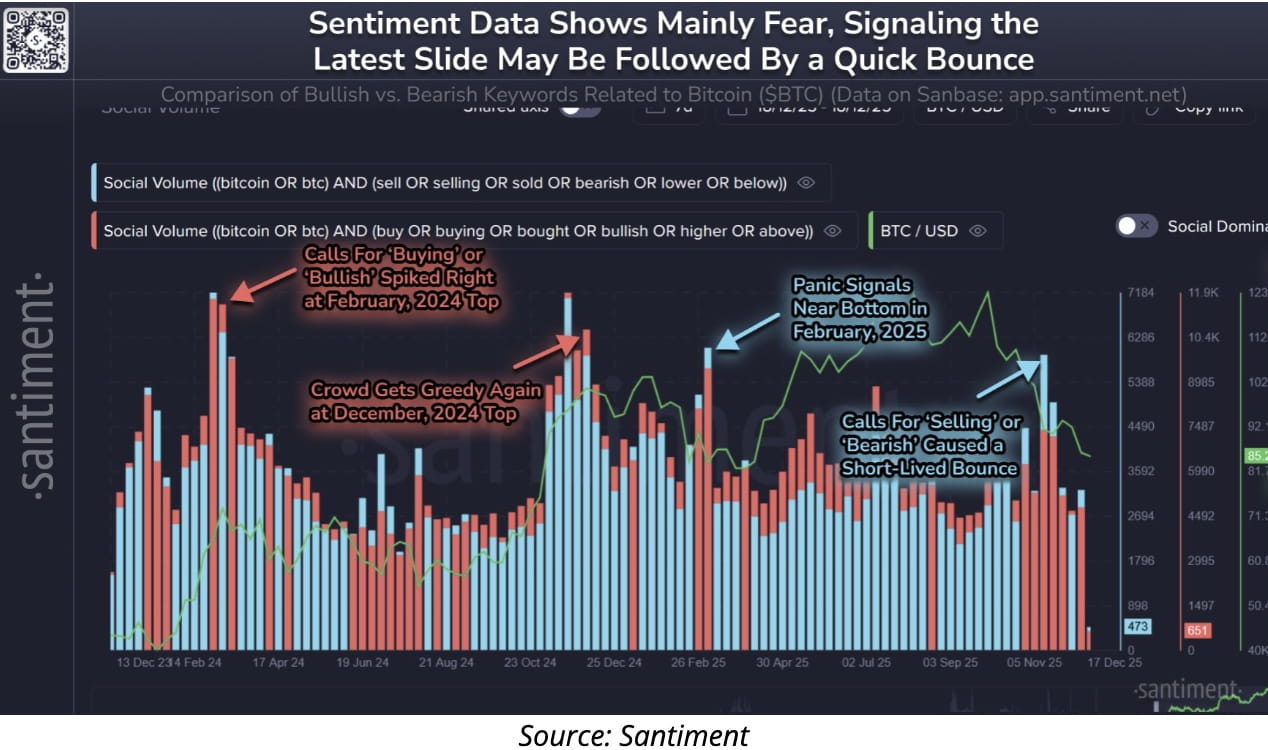
Market sentiment has deteriorated notably following Bitcoin’s dip below $85,000 earlier this week. According to Santiment, bearish commentary has dominated major social platforms including X, Reddit, and Telegram.
Data from Nansen also shows that so-called “smart money” traders have turned cautious on Bitcoin in the short term. These traders are currently net short Bitcoin by roughly $123 million, while simultaneously holding net long positions in Ether totaling about $475 million, signaling selective risk-taking rather than broad capitulation.
Secular Bull, Cyclical Pause
Despite near-term risks, Timmer emphasized that his outlook does not signal the end of Bitcoin’s long-term relevance.
Rather, the Fidelity strategist framed the potential 2026 downturn as part of Bitcoin’s cyclical maturation, not a rejection of its role as a macro asset.
If historical patterns repeat, Bitcoin could spend much of 2026 consolidating before setting the stage for its next major expansion phase.


