
As we move into the final months of 2025, the crypto market is slowly finding stability again. After a long period of price swings and uncertainty, investors are starting to shift their attention back to projects with strong fundamentals. While Bitcoin has already established itself as a reliable store of value, much of the next phase of growth often comes from well-built altcoins.
This article focuses on five cryptocurrencies that are not just popular by name, but are supported by real usage, strong development teams, and long-term vision. As we look ahead to 2026, these projects are worth watching for investors who prefer a balanced and thoughtful approach.
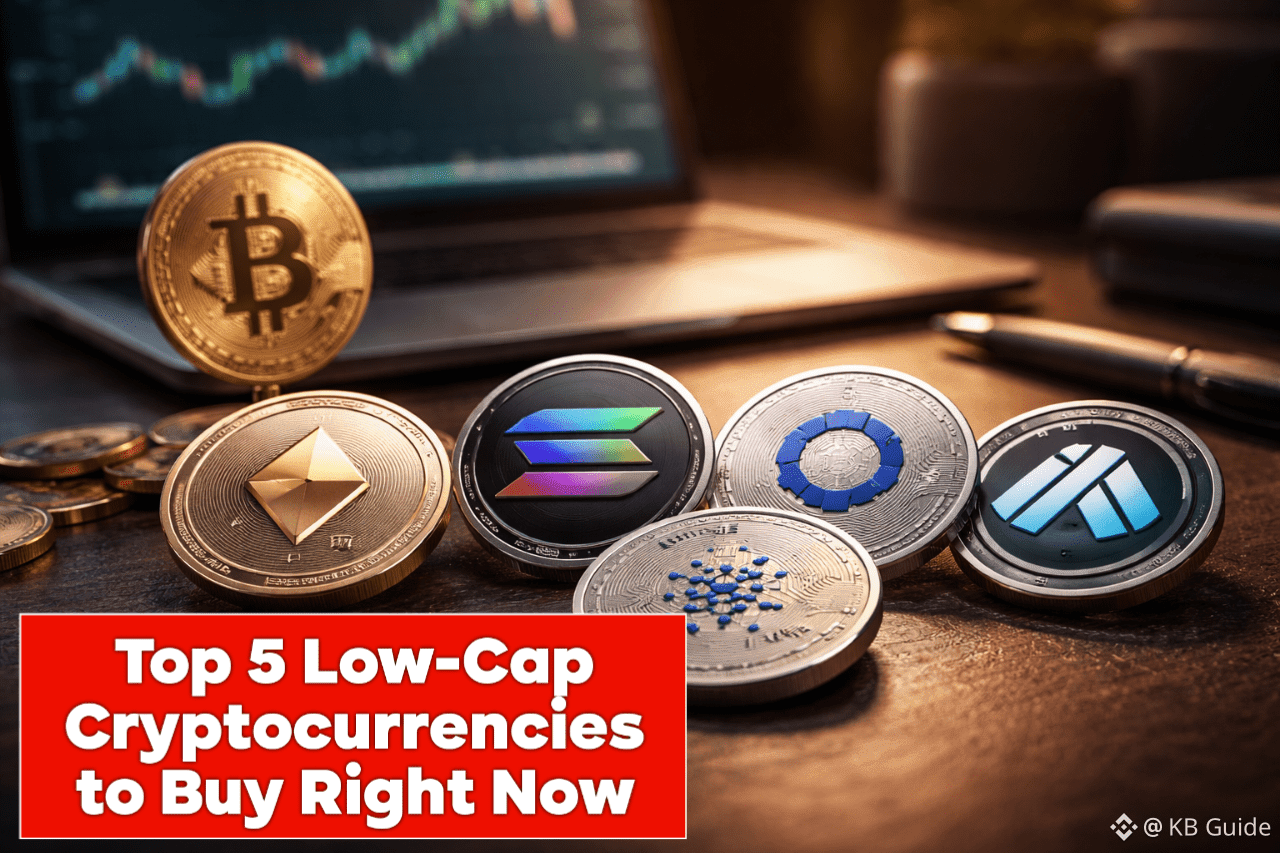
Ethereum (ETH): The Foundation of the Crypto Ecosystem
Ethereum is not just another blockchain—it is the base layer of the entire Web3 ecosystem. Most DeFi platforms, NFT marketplaces, DAOs, and even many Layer-2 networks are built on Ethereum. Because of this, Ethereum plays a central role in how the crypto industry functions.
One of Ethereum’s biggest strengths is its wide adoption. Thousands of developers are actively building on it, and millions of transactions take place on the network. Once a blockchain reaches this level of usage, it becomes very difficult to replace.
Ethereum’s supply model has also improved over time. When network activity increases, a portion of ETH is burned, meaning the total supply can decrease. If the market becomes more active again in the future, this mechanism could support ETH’s long-term value.
Instead of trying to do everything itself, Ethereum relies on Layer-2 solutions to reduce costs and improve speed. This approach allows Ethereum to remain secure while supporting large-scale use. For long-term investors looking for lower risk exposure within crypto, ETH remains one of the strongest options.
Solana (SOL): A Fast and Low-Cost Blockchain
Solana is designed for speed and affordability. Its main goal is to support applications that need fast transactions and very low fees, making it attractive for everyday users.
In the past, Solana faced technical issues that affected network stability. However, many of these problems have been addressed over time, and the network has become more reliable with recent upgrades.
Solana performs especially well in applications that require high activity, such as consumer apps, mapping services, and real-time data platforms. Projects related to decentralized physical infrastructure (DePIN) have found Solana to be a suitable choice.
Solana is also exploring mobile-focused crypto solutions, which could make blockchain technology more accessible to non-technical users. While SOL can be volatile, its growing user base and expanding ecosystem make it an important project to watch.
Chainlink (LINK): Connecting Blockchains to Real-World Data
Chainlink plays a critical role behind the scenes in the crypto industry. It allows smart contracts to access real-world information, such as price data and external events. Without Chainlink, many DeFi platforms would not function properly.
Although users may not always notice it, Chainlink acts like the infrastructure layer that supports many blockchain applications. Its services are widely used across different networks.
Beyond data feeds, Chainlink is also helping blockchains communicate with each other and with traditional financial systems. As more real-world assets like stocks, bonds, and other financial instruments move on-chain, reliable data and secure connections will become even more important.
Chainlink has introduced staking, which ties the LINK token more closely to network security. This adds long-term value to the token and strengthens its role within the ecosystem.
Cardano (ADA): Steady Growth and Long-Term Focus
Cardano takes a different approach compared to many other blockchains. Instead of moving quickly, it focuses on careful planning, research, and long-term stability.
One of Cardano’s key features is community participation. ADA holders can take part in governance decisions, including network upgrades and how funds are used. This makes the system more decentralized and transparent.
Cardano also offers a flexible staking system where users do not need to lock up their tokens. This encourages participation and helps reduce sudden selling pressure during market downturns.
While Cardano may not deliver fast price movements, it appeals to investors who value consistency, security, and long-term development.
Arbitrum (ARB): Scaling Ethereum for Everyday Use
As Ethereum grows, transaction fees and congestion can become a problem. Layer-2 solutions like Arbitrum help solve this by processing transactions faster and at lower cost, while still relying on Ethereum’s security.
Many major DeFi applications have already adopted Arbitrum because it offers a smoother and cheaper user experience. This has helped the network grow quickly.
Arbitrum is also developer-friendly, making it easier to build new applications. Its community treasury provides funding to support ecosystem growth and innovation.
As Ethereum adoption continues to expand, Arbitrum is likely to benefit directly from increased activity on the network.
Final Thoughts
Each of these five cryptocurrencies serves a different purpose within the crypto ecosystem. Together, they cover key areas such as security, speed, data access, governance, and scalability. For investors looking ahead to 2026, focusing on projects with real use cases and steady development may offer a more balanced approach than chasing short-term trends.


