
Why not think about or ask yourself this:
If I really am trial and error, and I've been wrong N times and have lost, on the N+1th time, if I enter and have a floating profit, and the price is moving in the direction I expect, can I continue to hold on? Where is my goal? Can this time cover the wrong costs of the previous N times?
If you understand clearly and can persist in doing so, then trading is a process of repeated trial and error for you!
If you don't understand, then I'm sorry, trading for you is not a trial and error process; it's a process of consuming your capital. Isn't revenge trading just like that, going head-to-head with the market?
In reality, most people cannot understand, or they understand but cannot persist.
Therefore, for most people, trading should not be a process of repeated trial and error.
Instead, it should establish self-consistent rules for the market, allowing oneself to do so
Understandable, can enter, and can hold.
Let's break it down below
First, be able to understand: throw away most of your indicators. How many moving averages are on your chart? Plus MACD, KDJ, Bollinger Bands? Doesn't it feel particularly uncomfortable? It feels like there are opportunities everywhere, and you can jump in anywhere.
Too much, not needed!
With the following 3 points:
1. EMA 30 (determining direction)
2. Candlestick patterns (finding positions)
3. Previous highs and lows (draw lines)
That's enough, really enough. Above the moving average, go long; below the moving average, go short; just don't think about bottom fishing or topping out.
Secondly, be able to enter:
Knowing the direction is not enough; you also need to know when to act, add conditions to the entry action:
1. Confirm trend direction (EMA30 filter)
2. Price retraces to key levels (moving averages/highs/lows)
3. A reversal candlestick appears (engulfing, Pin bar)
4. Enter outside the reversal candlestick high and low points
When opportunities arise, don't hesitate, act on the signals the system gives you, let profits and losses be determined by probability!
Thirdly, can hold:
The hardest part is not entering, but knowing how to exit after entering, which must also be governed by rules.
1. Stop loss: Set before entering, place outside key levels
2. Take profit: Fixed take profit of 1:1, or trailing stop loss
3. Position: Each trade's stop loss should not exceed 2% of the principal
A day trading strategy that can be used directly:
Variety: Rebar/soybean oil
Cycle: 15 minutes
Conditions for going long:
1. EMA30 upwards
2. Price retraces to EMA30
3. A reversal candlestick appears
4. Enter one level above the high point of the reversal candlestick
Stop loss: 2 levels below the engulfing low
Take profit: 2 times the stop loss
Position: Each trade should not lose more than 1% of total capital
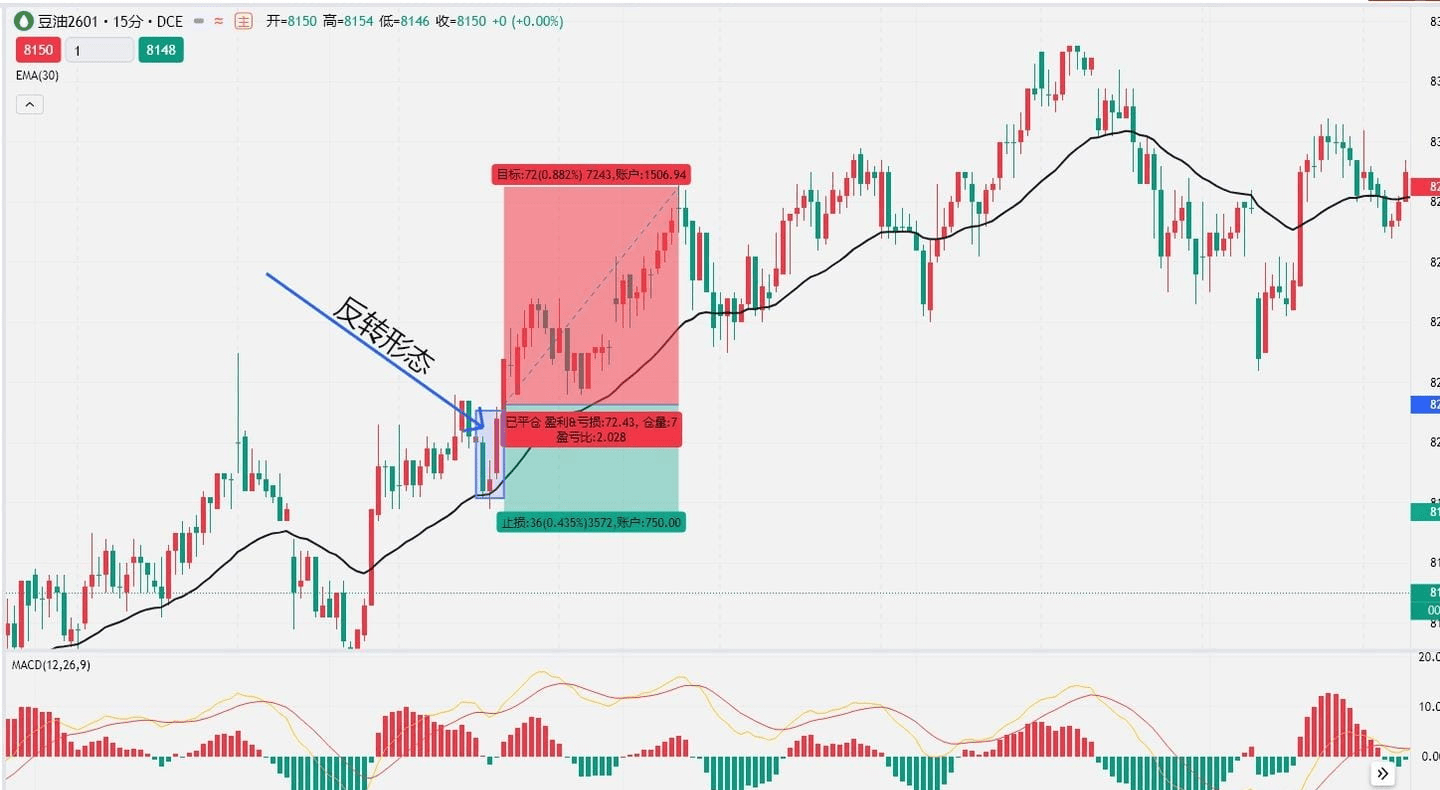
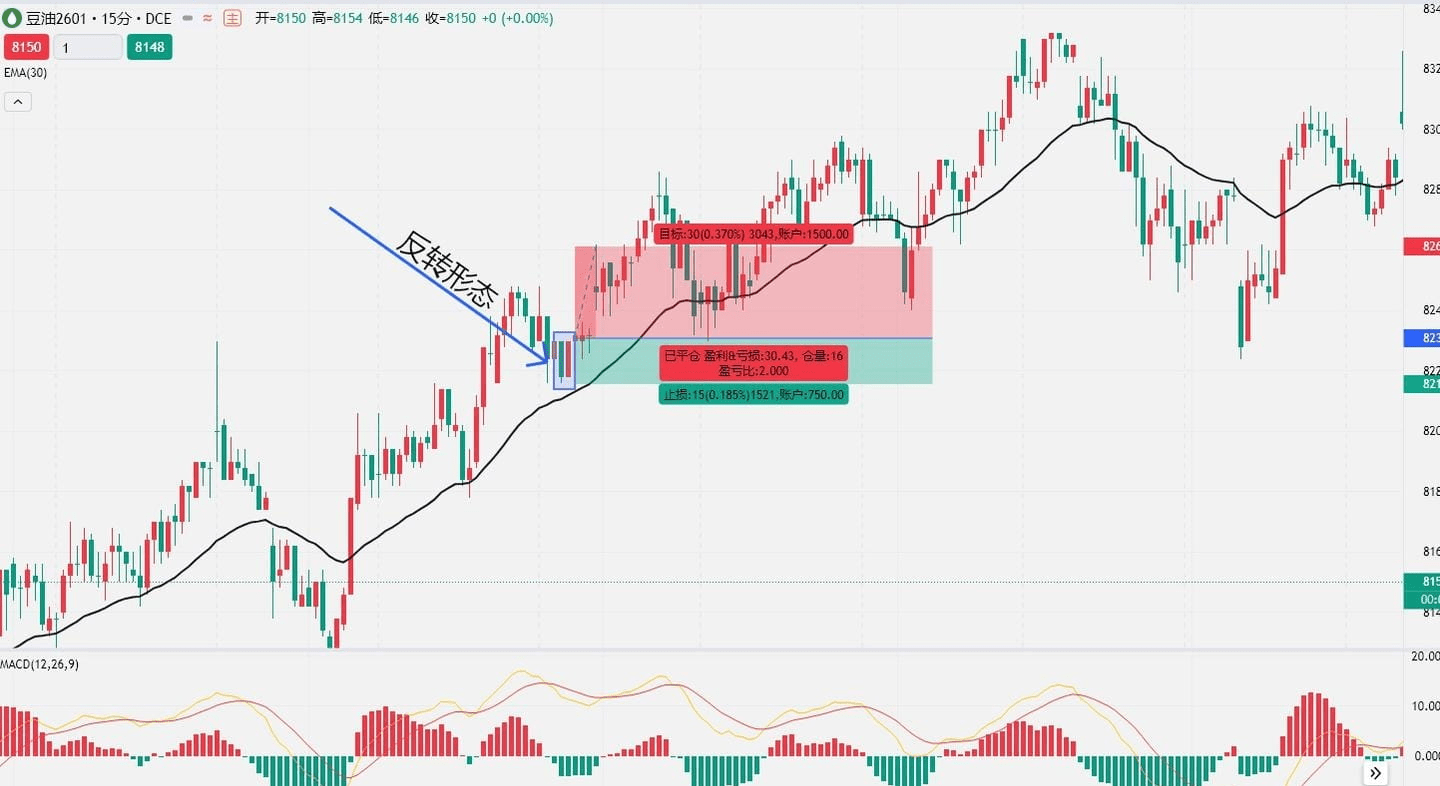
 Key: At most 3 trades per day, stop after 2 consecutive losses.
Simple, direct, effective!
There is no perfect system, only consistent execution. Practicing a simple system ten thousand times is a hundred times stronger than switching to a hundred holy grail indicators.
Money is on the ground, just bend over to pick it up, it's all about whether you can persist in using the same posture, bend over a thousand times, and by repeating simple things, you become an expert.
I am Little Egg Tart, a professional analyst and educator, a mentor and friend on your investment journey! As an analyst, the most basic thing is to help everyone make money. I will help you solve confusion, locked positions, speak with strength, and when you lose direction and don't know what to do, follow Little Egg Tart, who will guide you#加密市场观察 $BTC

