
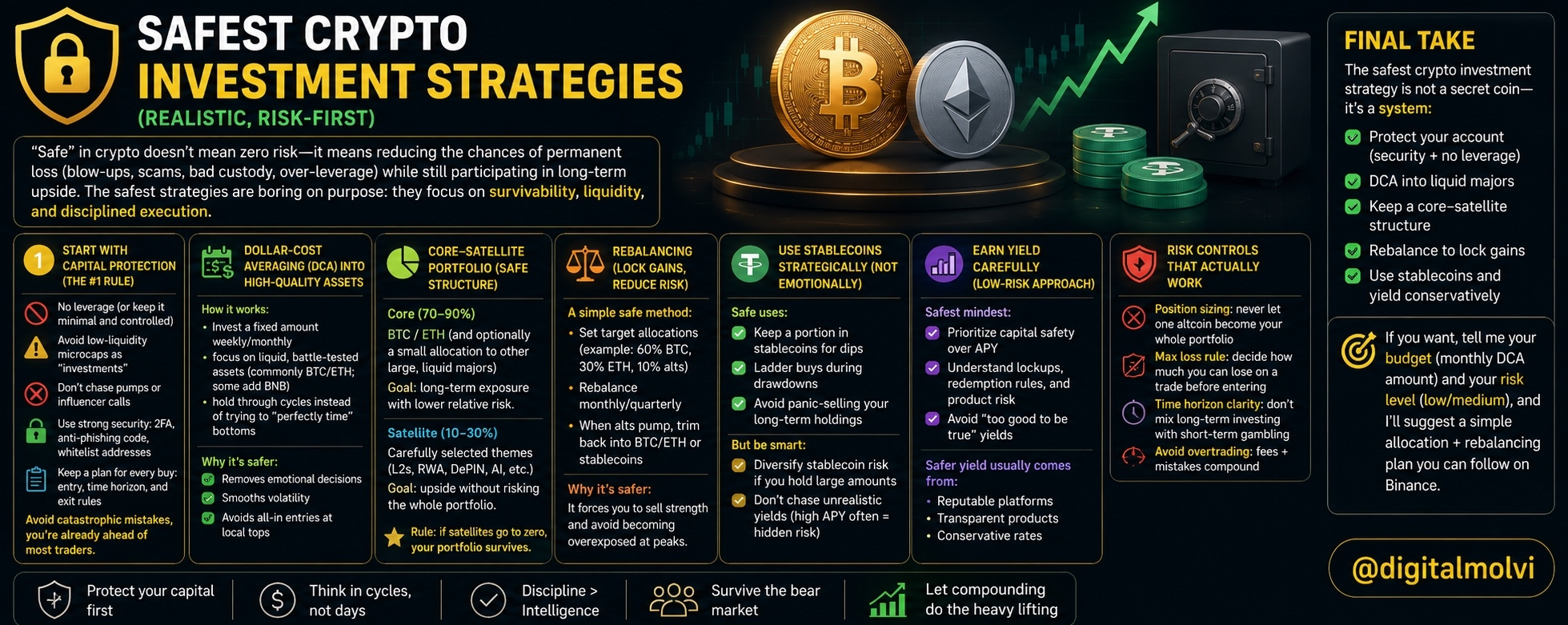
“Safe” in crypto doesn’t mean zero risk—it means reducing the chances of permanent loss (blow-ups, scams, bad custody, over-leverage) while still participating in long-term upside. The safest strategies are boring on purpose: they focus on survivability, liquidity, and disciplined execution.
Here are the most reliable, risk-first approaches.
1) Start With Capital Protection (The #1 Rule)
Before picking coins, protect your account from the common ways people lose everything:
No leverage (or keep it minimal and controlled)
Avoid low-liquidity microcaps as “investments”
Don’t chase pumps or influencer calls
Use strong security: 2FA, anti-phishing code, whitelist addresses
Keep a plan for every buy: entry, time horizon, and exit rules
If you avoid catastrophic mistakes, you’re already ahead of most traders.
2) Dollar-Cost Averaging (DCA) Into High-Quality Assets
DCA is one of the safest strategies because it reduces timing risk.
How it works:
invest a fixed amount weekly/monthly
focus on liquid, battle-tested assets (commonly BTC/ETH; some add BNB as an exchange-ecosystem bet)
hold through cycles instead of trying to “perfectly time” bottoms
Why it’s safer:
removes emotional decisions
smooths volatility
avoids all-in entries at local tops
3) Core–Satellite Portfolio (Safe Structure)
A safer crypto portfolio is usually built like this:
Core (70–90%)
BTC / ETH (and optionally a small allocation to other large, liquid majors) Goal: long-term exposure with lower relative risk.
Satellite (10–30%)
carefully selected themes (L2s, RWA, DePIN, AI, etc.) Goal: upside without risking the whole portfolio.
Rule: if satellites go to zero, your portfolio survives.
4) Rebalancing (Lock Gains, Reduce Risk)
Crypto rewards people who take profits systematically.
A simple safe method:
set target allocations (example: 60% BTC, 30% ETH, 10% alts)
rebalance monthly/quarterly
when alts pump, trim back into BTC/ETH or stablecoins
Why it’s safer: it forces you to sell strength and avoid becoming overexposed at peaks.
5) Use Stablecoins Strategically (Not Emotionally)
Stablecoins can reduce volatility and give you “dry powder.”
Safe uses:
keep a portion in stablecoins for dips
ladder buys during drawdowns
avoid panic-selling your long-term holdings
But be smart:
diversify stablecoin risk if you hold large amounts
don’t chase unrealistic yields (high APY often = hidden risk)
6) Earn Yield Carefully (Low-Risk Approach)
If you use Earn products, the safest mindset is:
prioritize capital safety over APY
understand lockups, redemption rules, and product risk
avoid “too good to be true” yields
Safer yield usually comes from:
reputable platforms
transparent products
conservative rates
7) Risk Controls That Actually Work
These are simple but powerful:
Position sizing: never let one altcoin become your whole portfolio
Max loss rule: decide how much you can lose on a trade before entering
Time horizon clarity: don’t mix long-term investing with short-term gambling
Avoid overtrading: fees + mistakes compound
8) The Safest “Behavioral Strategy”: Do Less, But Do It Consistently
Most crypto losses come from:
switching strategies every week
chasing new narratives late
revenge trading after losses
holding trash coins because of hope
The safest edge is consistency:
DCA + rebalance
keep quality high
keep risk small
stay liquid enough to survive volatility
The safest crypto investment strategy is not a secret coin—it’s a system:
protect your account (security + no leverage),
DCA into liquid majors,
keep a core–satellite structure,
rebalance to lock gains,
use stablecoins and yield conservatively.
If you want, tell me your budget (monthly DCA amount) and your risk level (low/medium), and I’ll suggest a simple allocation + rebalancing plan you can follow on Binance.
#digitalmolvi #CryptoInvesting #bitcoin #DCA #BinanceSquare
@Digital Molvi @CZ @Binance Square Official @Binance Announcement @Binance Academy @Yi He


