
It's very meaningful. If you're under 25, you must invest 10,000 to 20,000 in stocks.
Because 10,000 to 20,000 is a lot for you, when you buy a stock, you'll be very excited to see the fluctuations the next day. Chances are, if it jumps up and down a bit, you'll feel emotional; you can lose or gain.
You might brag to others that you trade stocks, and maybe you'll earn a tiny bit on one check, it's really necessary. It's great if you earn this money, but it's better to lose, ideally losing 30% to 50%.
At this point, you finally start learning some techniques and fundamentals. When others talk to you about MA and BOLL, you won't be completely clueless. You also know what a limit order and a market order are. After understanding some of it, you start researching a bit, reviewing your trades, and studying long-term holding.
You've evolved to the point where you don't need to watch the market much anymore. You just choose core stocks, hold them, and wait. Perfect. At this point, you can move your savings and increase your investment because you've figured it out. You can hold long-term without feeling anxious and don't need to stare at the screen every day.
A small amount of capital allows you to learn about various things and develop the ability to hold stocks for the long term.
This path can be taken in a few months if you progress quickly, one or two years if you progress normally, and four or five years if you progress slowly (which is roughly the length of your university years).
It's great if you don't realize it after four or five years. It's also a relief if you use ten or twenty thousand yuan to prove that you're not suited for investing and are only suited for putting your money in Yu'ebao.
Let me tell you about myself!
I've been trading stocks for 12 years now, turning 300,000 yuan into 45 million yuan. I've memorized the 12-word rule: "Buy with all your funds when the price is below 20, sell with all your funds when the price is above 80." This has allowed me to capture almost all the gains in my portfolio! Now I support my family by trading stocks.
I can say that I've used 80% of the methods and techniques in the market, but the most practical one is still the MACD method. "If you want to treat stocks as a second job to support your family, then you must study this article carefully, which will at least save you 5 years of detours."
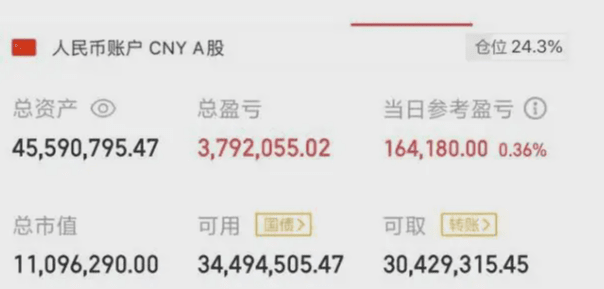 Let's get straight to the point:
1. Begin filtering after 2:30 PM. Open the gainers list and add all stocks with gains between 3-5% to your watchlist. This is because stock performance during this period reflects the day's strength or weakness.
A drop below 3% indicates weak performance that day, which is not conducive to a rise the next day. Stocks with a drop above 5% have already shown their trend, and it is not recommended to chase the high. Only do conservative operations, otherwise the risk and return will be relatively reduced.
2. After the above screening, according to the ranking method of volume ratio, all stocks with a volume ratio less than 1 are eliminated. A volume ratio less than 1 indicates that the stocks have no trading activity and insufficient popularity, which will have a significant impact on the next day's rise. We must know that the rise of individual stocks requires the driving force of funds.
3. Perform a second screening on the remaining stocks, eliminating them in order of turnover rate. Delete all stocks with a turnover rate below 5% and above 10%, because stocks with a turnover rate below 5% have relatively low attention. Short-term trading requires speed and sufficient turnover. Stocks with a turnover rate above 10% are too active and often raise suspicion of major players pumping and dumping. Reduce risk and achieve stability.
4. After screening, the remaining stocks are relatively high-quality and meet the criteria for strong performance. A third screening is then conducted based on market capitalization, eliminating stocks with market capitalization between 5 billion and 20 billion, as those below 5 billion tend to be less popular.
Some stocks are cheap and inexpensive, while others are manipulated stocks. Try to avoid them. Stocks with a market capitalization of over 20 billion are too large because they require a lot of capital to drive up the price, making it difficult to make quick profits in the short term.
5. After three rounds of careful screening, the remaining stocks are the best of the best. Then, further screening is conducted using trading volume. Click on the K-line chart of the selected stocks one by one, and keep all the stocks with continuously increasing trading volume, especially those with a stepped pattern. Stocks with fluctuating or unstable trading volume are then removed.
6. Conduct a fifth screening by examining the candlestick patterns of individual stocks. For the short term, look at the 5/10/20-day moving averages. The best pattern is when the candlestick pattern, combined with the 60-day moving average, shows an upward divergence. If the candlestick pattern appears below important moving averages, it indicates that the stock's recent trend has been one of rising and then falling back.
This indicates that the overhead resistance is too high, and the area is in a high-volume trading zone. These should be eliminated, leaving only those candlesticks with no overhead resistance. This will make it easier to trade at medium to high levels and make it more likely to succeed.
7. Through the sixth round of screening, precise selection is achieved by using intraday charts to identify the characteristics of strong stocks. Stocks that outperform the market are those that rise against the trend. In a market where the strong get stronger, only by selecting strong stocks can returns be maximized. Ideally, these stocks should also be paired with currently trending sectors to provide stronger support.
For example, the recently popular lithium battery, minor metal raw materials, and non-ferrous cyclical stocks, etc., add the remaining high-quality stocks to the intraday chart of the Shanghai Composite Index. The price trend of individual stocks must be above the intraday price for the entire day. This indicates that the individual stocks are performing well, the market atmosphere is strong, and those who are already invested can make a profit. The next day's surge will be even more powerful.
8. After six rounds of screening, the remaining stocks are all very strong and promising. Depending on market conditions, sometimes it may be impossible to find any suitable candidates, which is normal. Be patient and persistent; opportunities are for those who are prepared. Review the remaining stocks after 2:30 PM.
When a stock price hits a new high for the day, it becomes the target stock. When the stock price starts to fall back to near the moving average, the best entry point is when it doesn't break below it. The profit-taking and stop-loss points also need to be set. The essence of short-term trading is speed, accuracy, and ruthlessness. If you make a profit but the market doesn't develop as expected, you can exit the market and transfer your shares to cash.
How can small amounts of capital quickly achieve compound growth? I use the simplest method: focus on only one MACD pattern. Trade more when the market is bullish, and less when it's bearish. The method is very simple, summarized in one rule: Large before small, divergence means buy! Large before small, divergence means sell!
Because my exit point was very accurate, but my entry point was still a bit off, I improved it and am sharing it with you here in the hope that it will inspire you!
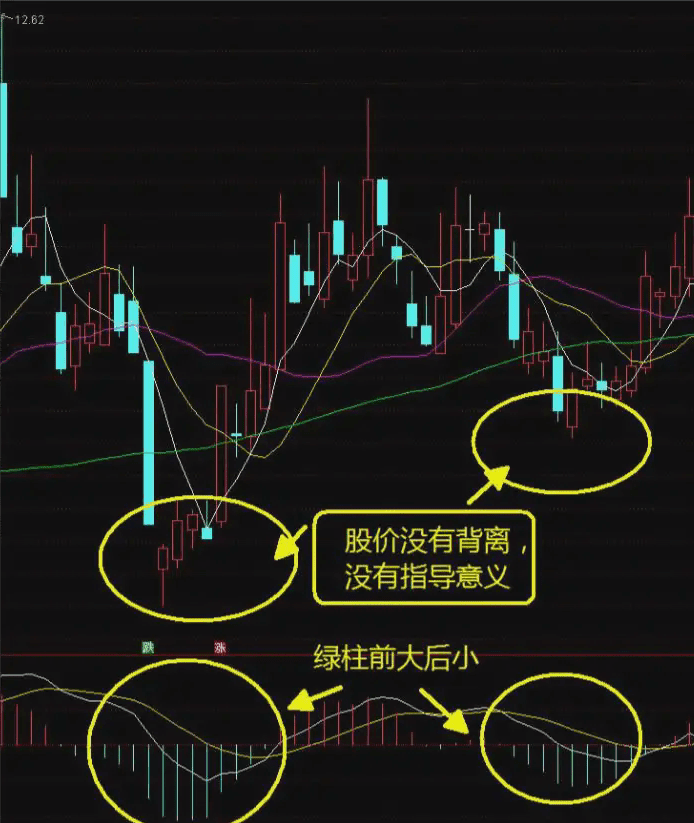
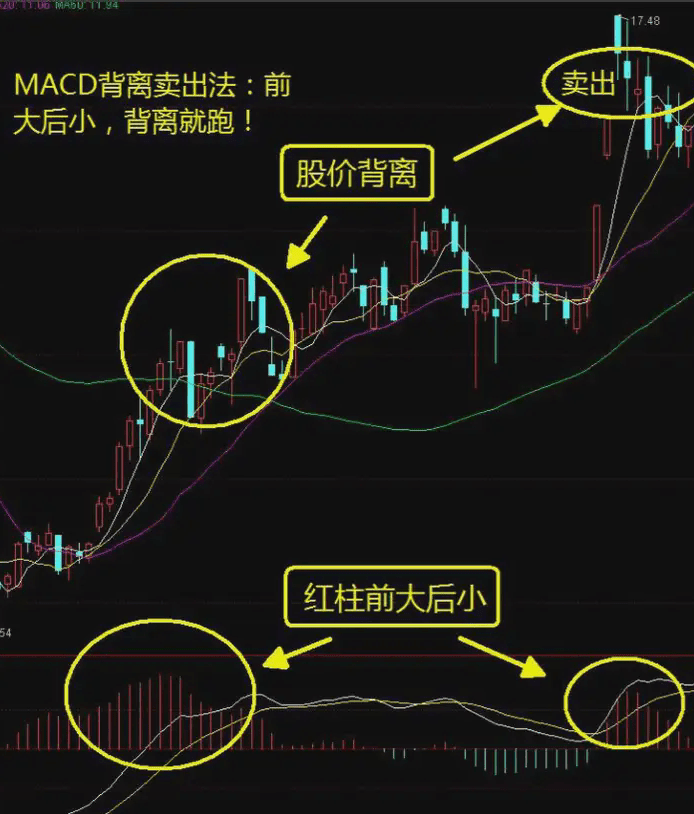
Let me first explain this rule of thumb: "Large before small after, divergence means to enter" is the entry signal issued by MACD when it is underwater; "Large before small after, divergence means to exit" is the exit signal issued by MACD when it is above water.
The detailed explanation is as follows:
First, if an entry signal appears on the MACD below the zero line, with a large initial signal followed by a smaller one, then it's a divergence signal, so go for it!
1. When the stock price is in a downtrend and the MACD green bars are expanding, after a rebound, the stock price falls again and the MACD green bars expand at the same time. However, the green bars at this time are visibly much smaller than the first green bars and are below the 0 axis. If the stock price also shows a divergence at this time, this is a confirmed buy signal.
2. If the MACD parameters are not improved, and you buy according to the above conditions, the stock price may fall again after the conditions are met, so the success rate is not very high.
3. At this point, we add entry conditions: when the MACD green bars are large at the beginning and small at the end, and the stock price diverges, we enter the market only after the short-term 5-day, 10-day, and 20-day moving averages form a golden cross. This way, we can filter out many false entry signals, avoid being trapped after entering the market, and thus improve the success rate of trading.
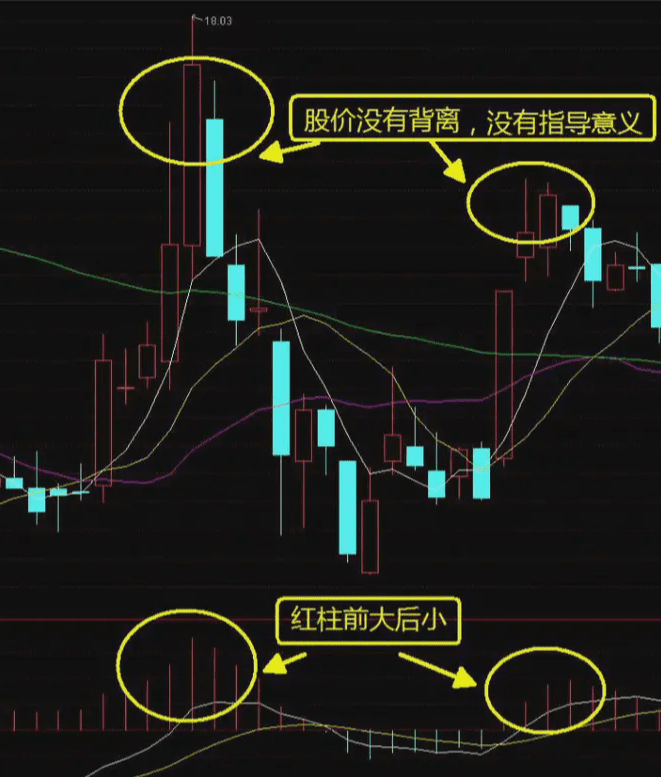
Second, if the MACD shows an exit signal above the 0 axis, with the price initially large and then decreasing, it's time to exit!
The stock price is in an uptrend, the MACD red bars are expanding, and after entering a period of consolidation, the stock price returns to the upward channel, and the MACD red bars continue to expand. However, the second red bar is visibly smaller than the first red bar. At this point, the price is larger at the beginning and smaller at the end above the zero axis. If the stock price shows divergence at this time, this is a signal to close the position and exit the market.
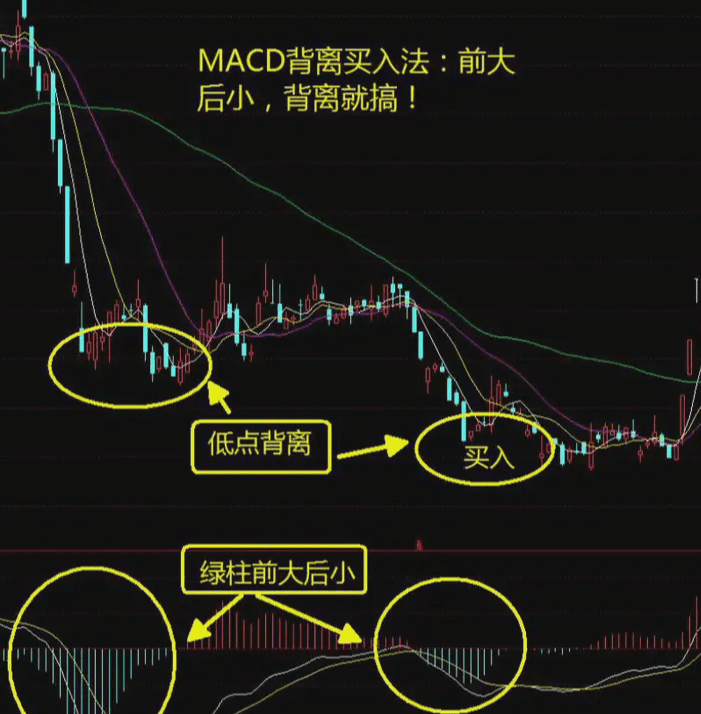
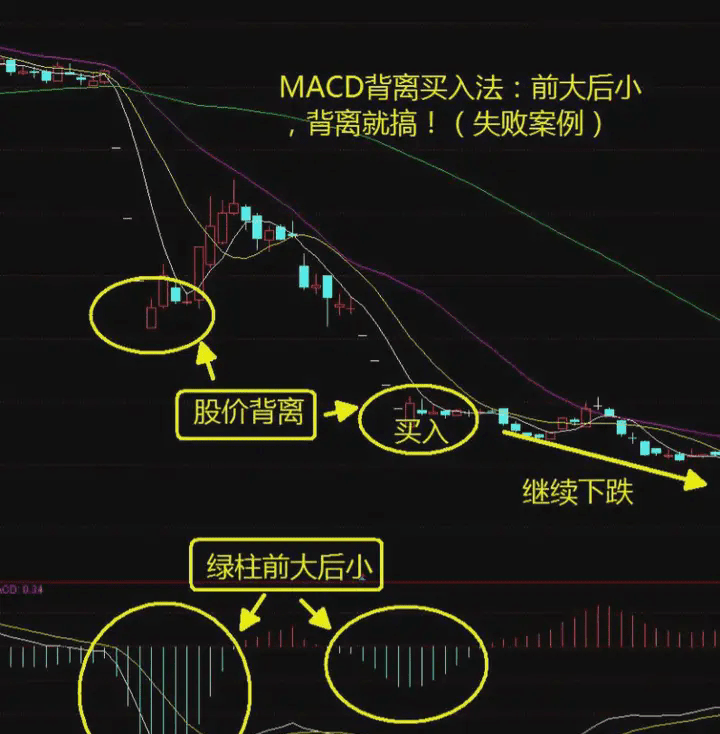
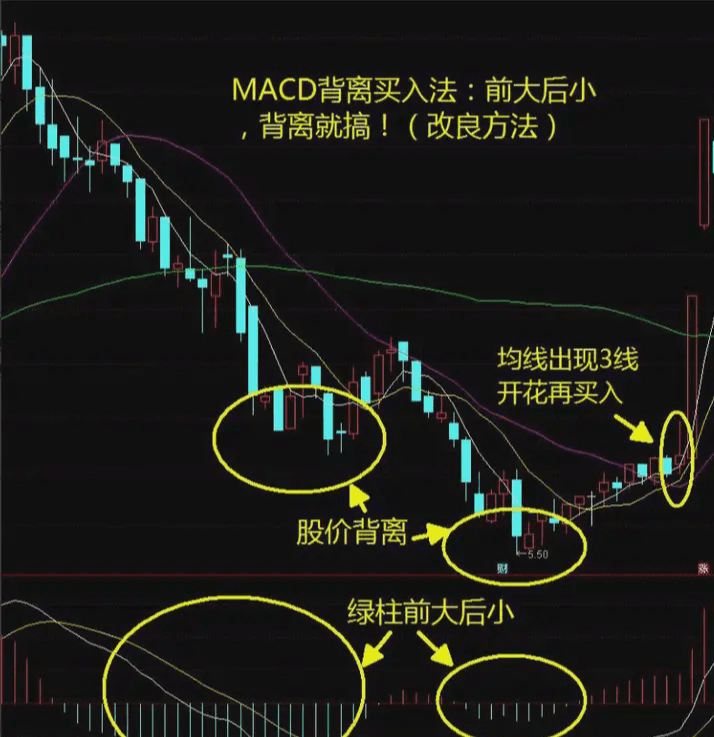
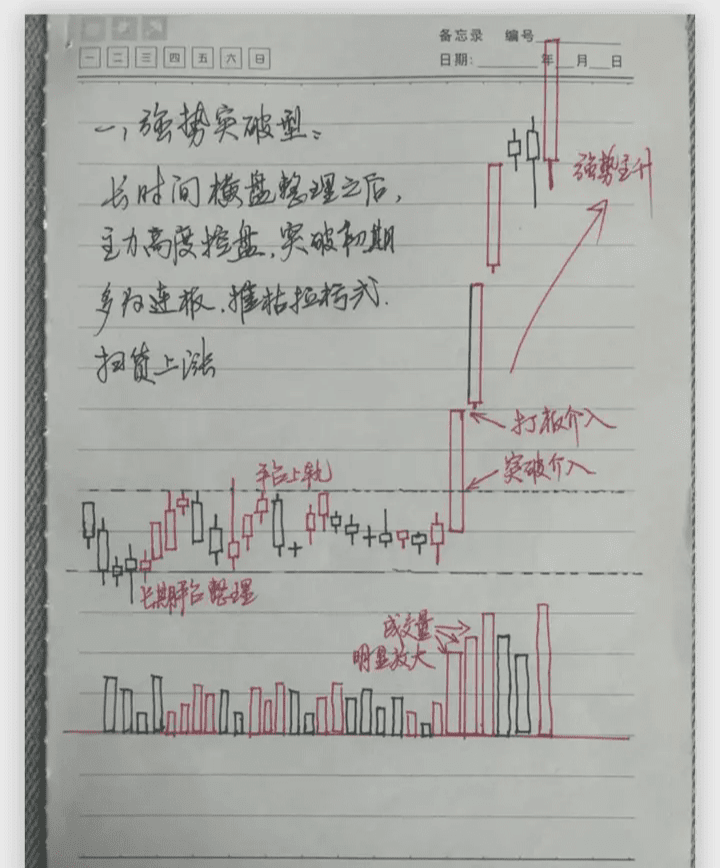
 How can you determine if a stock has broken out? You can start by analyzing four aspects: volume, price, time, and space.
1. Volume: Just as an army marches on its stomach, a surge in volume is an essential element in the early stages of a trend. In particular, the first surge in volume after a long period of sideways trading is something we need to pay close attention to. However, this is not the best entry point. Generally, our real opportunity comes after the market tests the market, pulls back, and the main force finishes its shakeout, followed by the second surge in volume and price.
2. Price: Generally, look at the closing price. No matter how volatile the price fluctuates during the process, if the closing price can hold steady, then it means that the main force is serious! This is the key to distinguishing between a true and false breakout. In summary, if the closing price can be above the resistance level, the probability of a true breakout is greatly increased.
3. Timing: Before the breakout occurs, the stock price should ideally have undergone a long period of low-volume consolidation, lasting more than 3 months, with a share concentration of less than 10%. Only in this way can the main force accumulate sufficient shares, and the subsequent rise will have stronger explosive power.
4. Short: It is important to identify key resistance levels. These resistance levels may be the starting point of a previous high-volume correction, the neckline of a W-bottom or head and shoulders bottom, or a round number of the stock price. Once the resistance level is clearly identified, the potential upside after the stock price breaks through it can be easily measured.
The above four dimensions are the foundation for judging a breakout from a sideways consolidation. To help everyone understand this better, I've decided to share nine stock trading notes that I've personally written and treasured for many years. Each of these notes is a culmination of my countless days and nights of reviewing stock market data.
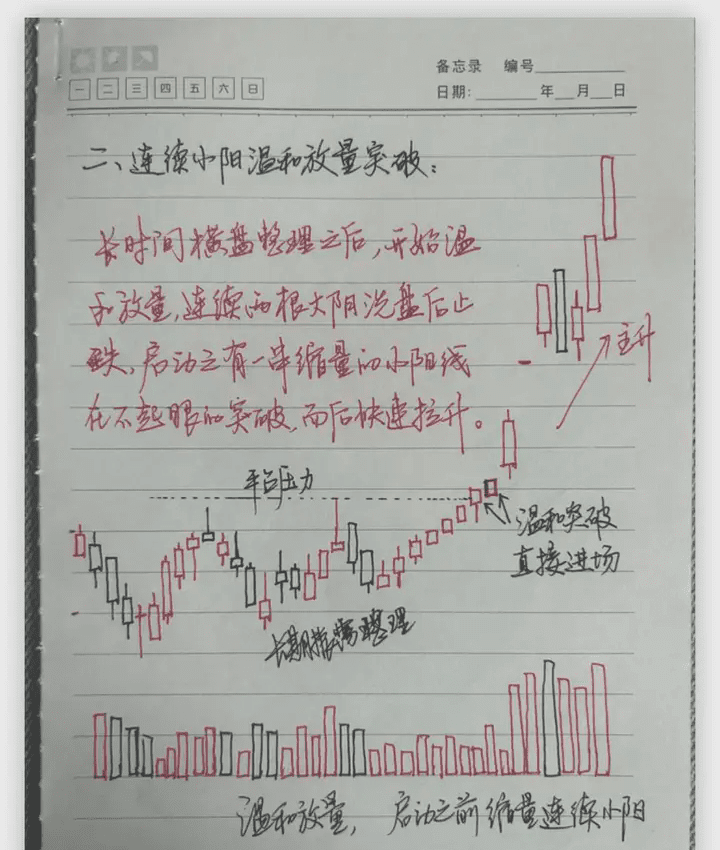
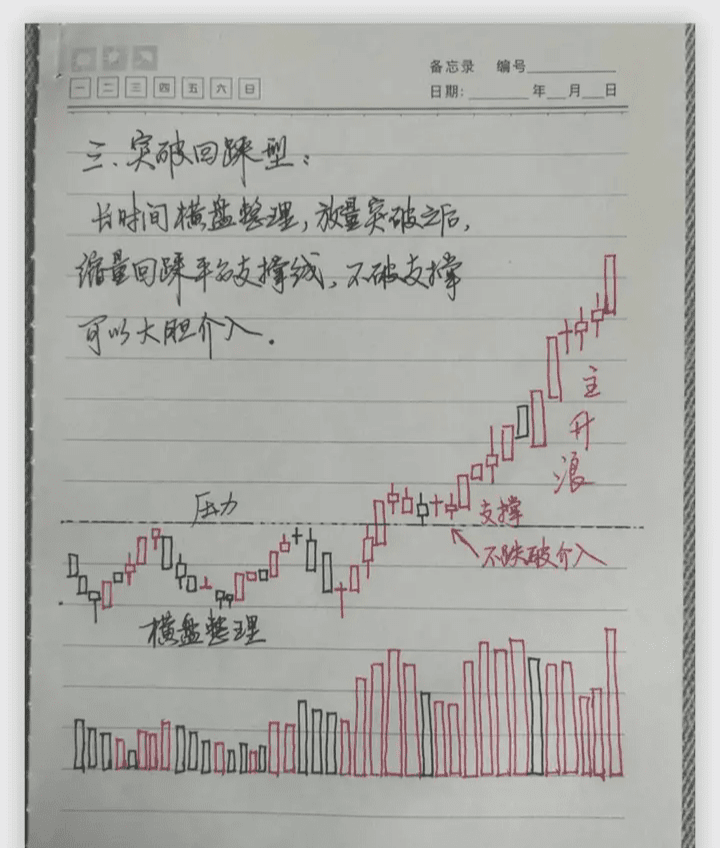
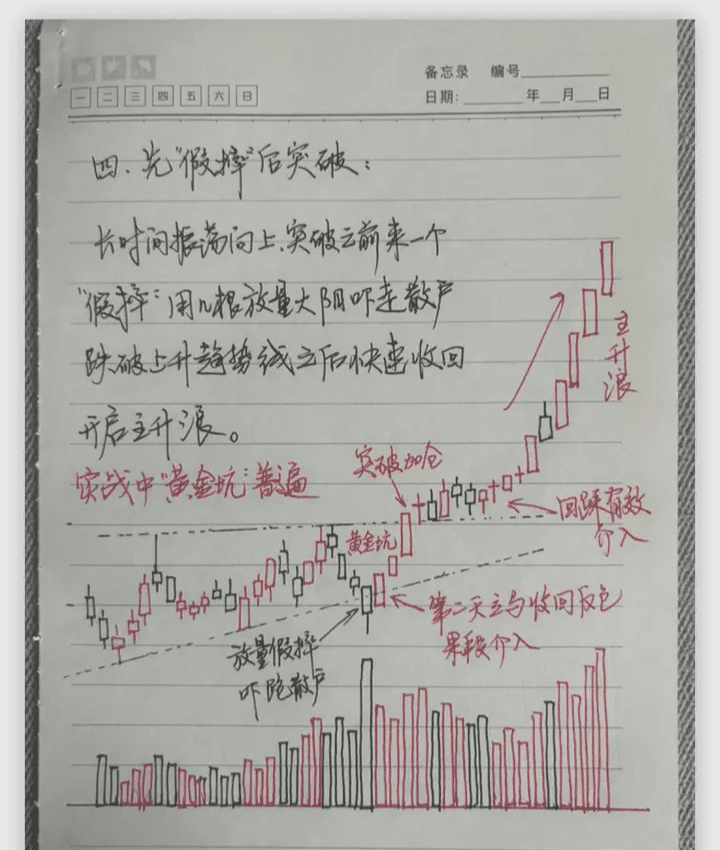
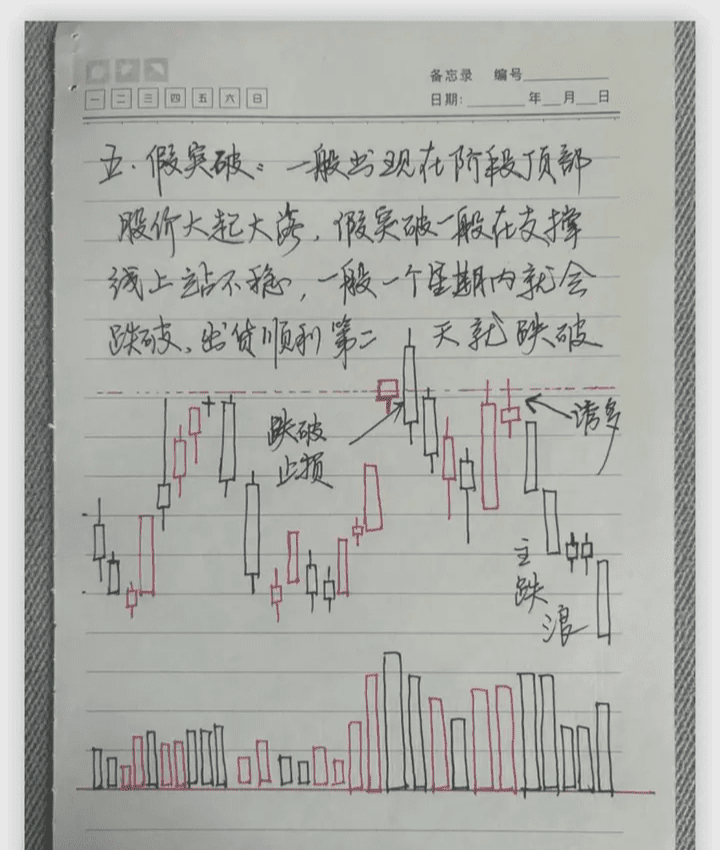
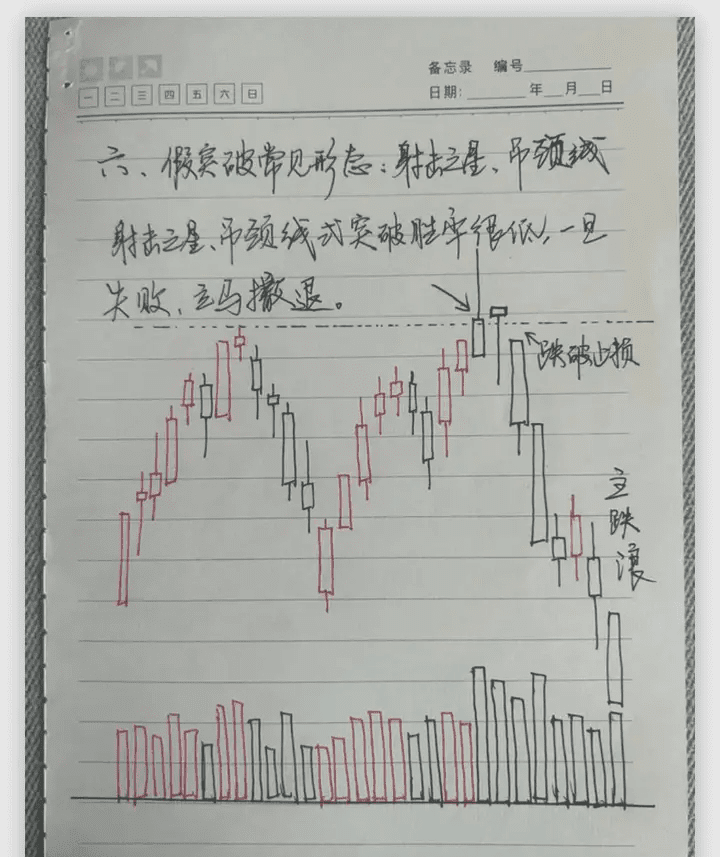
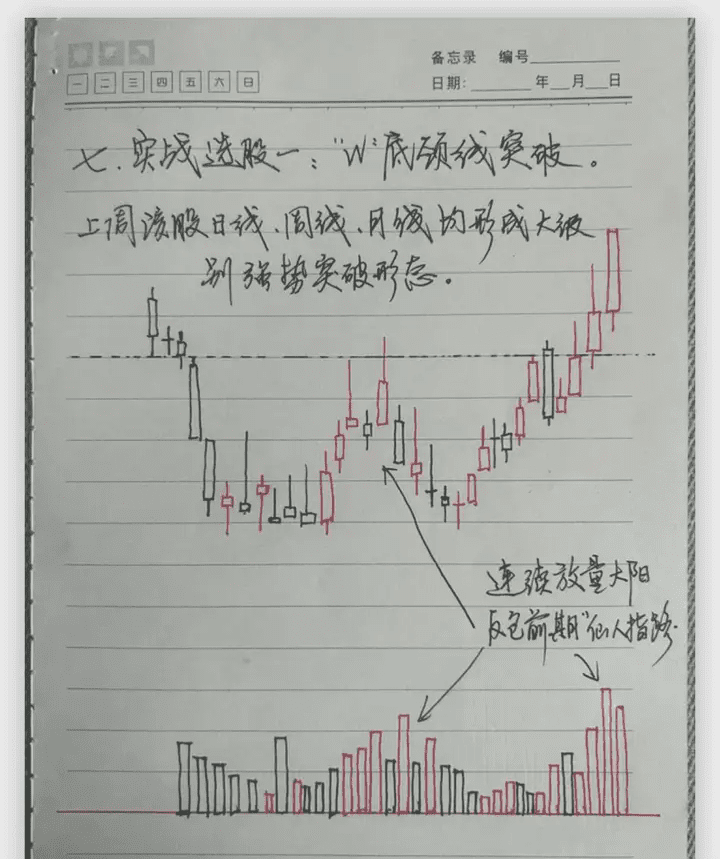
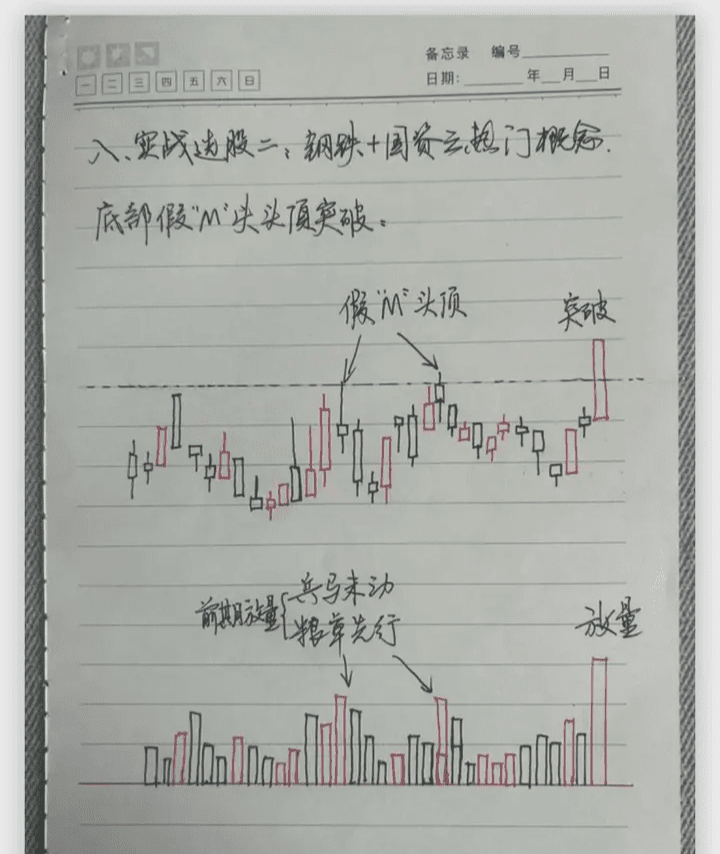
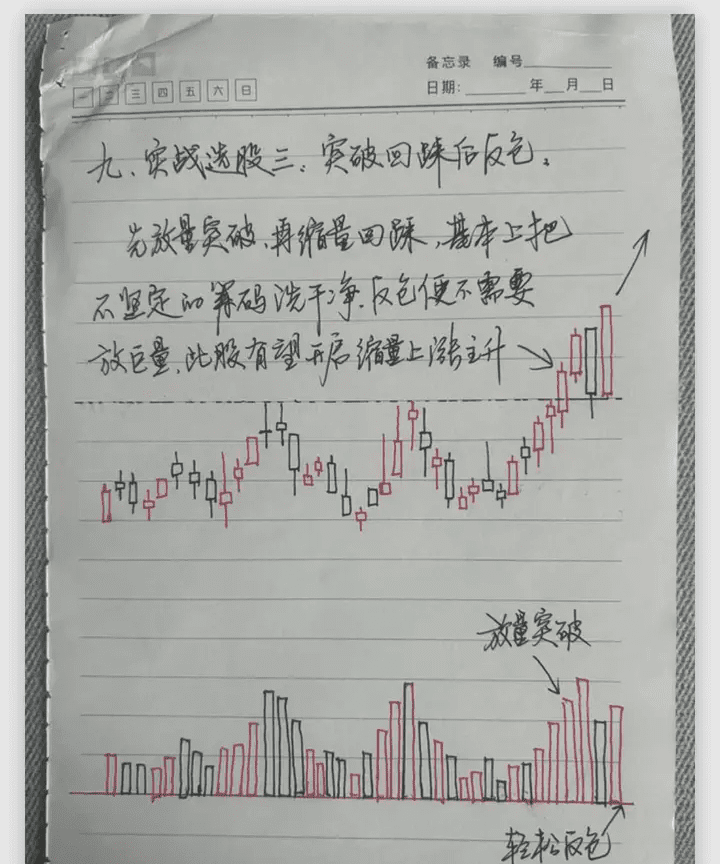 If you don't plan to leave the stock market in the next three years and are determined to make stock trading your second job, you must read these seventeen ironclad rules. Every sentence is practical advice on making a living from stocks. I suggest you save them!
One: A common problem among retail investors worldwide
Holding onto losing positions indefinitely, and selling immediately at the slightest sign of a turnaround, without considering trends or trading volume, and only focusing on the account's profit/loss ratio, will ultimately result in infinitely large losses and finitely small profits. The solution is to operate in the opposite direction: hold onto winning positions indefinitely, and cut losses at the slightest sign of trouble.
My profit-taking and stop-loss principle is to take profits when they reach 15% and then stop-loss when they drop to 10%. If they continue to rise, I hold on and let the profits run. If the price falls after purchase and the loss exceeds 5% of the principal, I stop-loss. If you can guarantee a 10% profit and a 5% stop-loss each time, then after 100 trades, even with a 50% win rate, your return will reach 800%. Is that difficult? The difficulty lies in overcoming greed and fear, and in aligning knowledge with action.
Second: I have always believed that the trading volume indicator is very important.
Mastering this will allow you to outperform 80% of traders. A ratio less than 0.5 indicates significant volume contraction. A new high achieved on low volume suggests strong control by major players, ruling out the possibility of them distributing their holdings. If this occurs during an upward trend, the probability of profiting is extremely high.
If a stock hits its daily limit and the volume ratio is less than 1, it indicates that there is still considerable room for further growth, and the probability of it hitting the daily limit again the next day is extremely high. If the volume ratio is greater than 1.5, and the stock breaks through a certain important resistance level (such as the 20-day moving average) and then pulls back with reduced volume, it is a rare buying opportunity.
Thirdly: When trading stocks, focus on the leading stocks; only trade the leading stocks.
Don't get involved in trivial matters, because leading stocks rise the most when prices are rising and are the most resistant to falling when prices are falling. Don't be afraid to get on board. Stock trading often goes against human nature. Don't buy just because prices have fallen a lot, and don't refrain from buying just because prices have risen a lot. The more you dare not buy, the more prices will rise, and the more you dare to buy, the more prices will fall. The strong will remain strong. The most important thing for short-term trading of leading stocks is to buy at high prices and sell at even higher prices!
Fourth: Embrace the trend and act accordingly.
The lowest possible price to buy stocks is not necessarily the best; the more suitable the price, the better. You will not gain an advantage because the purchase price is cheap. In a downtrend, don't assume the lowest price is possible. Abandon junk stocks and prioritize the trend.
5. If the price is below the 5-day moving average, maintain a cash position or a small position. This is in response to the recent counter-trend market.
You've probably all come to deeply understand a fundamental truth about the stock market: it's best to stay out of the market when the index is below the 5-day moving average. Investors can look at the index; when stock prices are below the 5-day moving average, it's often difficult to make a profit, and when they're above it, it's often difficult to suffer losses. Of course, this is easier said than done; the principle is simple, but in reality, very few people can truly put it into practice.
Six: I will not consider any stocks trading below the 20-day moving average. Many people like to buy on dips.
Especially for some stocks that have been adjusting to the bottom for a long time, what people don't know is that such stocks are often very weak and lack capital support. The stock price trend also confirms this. So, don't expect to make a lot of money in a trough. The big profits are definitely in strong stocks. Think about it the other way around: if you deal with weak stocks for a long time, is the probability of making money high?
Seven: Long-term thinking. Consider the long-term implications before acting in the short term.
It means that you don't necessarily have to hold a stock for a long time, but you must have this mindset. The so-called long-term mindset means that you need to have your own operating model, not follow the crowd, stick to your own ideas, and keep improving them so that you can make stable profits and strive for excellence.
8. Control position size
The biggest difference between novice and experienced investors lies in position control. Because the stock market is inherently uncertain, and anyone who walks by the water will eventually get wet, there will always be times when judgments are wrong. Therefore, proper position control allows for targeted actions and prevents being caught off guard.
Nine: Grasp the emotional low point
The market has its own sentiment every day. Most of the time, there will be some sentiment "freezing points" during the trading day. This may be at the opening, a point of divergence after the market has been open for a while, or in the afternoon or at the close. In short, there is a sentiment freezing point in the market almost every day.
Old Li often chooses to make a move when the price is at its lowest point, because the lowest point can test the strength of individual stocks. Making a move at this time can often capture panic selling caused by emotional factors and can also effectively avoid chasing high prices.
10: There are actually no secrets in the stock market!
Short-term trading, medium- to long-term trading, limit-up trading, swing trading, etc.—some people make money with every method! Even if these experts tell you how to do it, you still won't make money. In the stock market, you should focus your energy on the points where you can make money, repeating simple things repeatedly. Establish your own trading rules and consistently apply them.
11: Short-term stock selection
It's best to choose the top two stocks in currently popular sectors, especially when the MACD forms a zero-degree golden cross. The success rate is very high, and the subsequent rise will be significant. Stocks that hit the daily limit are ideal; if accompanied by increased trading volume, they often indicate a major upward trend, and getting in at that point can yield substantial profits.
12: How to determine if a stock hitting its daily limit is strong?
Here's a simple way to judge: Look at the intraday chart. Ideally, the stock should hit its daily limit before 10:30 AM and remain there throughout the day with large buy orders. If it hits its limit after this time, it indicates weak stock characteristics. Don't touch stocks that hit their limit near the close in the afternoon; any late-day surge is suspicious!
Thirteen: When trading short-term strong stocks, pay attention to trading volume and turnover rate.
When a stock surges, it must be accompanied by high trading volume, indicating that funds are entering the market and are optimistic about its future performance. In addition, the daily increase should generally be greater than 5%, and the turnover rate should not be lower than 5%, but preferably not higher than 30%. These are conclusions drawn from years of experience. If you don't believe me, you can observe the recent performance of strong stocks, and you'll give me a thumbs up.
Fourteen: The pattern of "double positive candle followed by double negative candle" is a very reliable initiation pattern for an upward trend.
What is meant by "double the volume on a bullish day followed by a double the volume on a bearish day"? It means that on the day of a big surge, the volume is doubled, and on the following day, the volume on a bearish day is reduced to half. However, it's important to note that if the pullback doesn't break the bottom of the first day's large bullish candlestick, and small bullish and bearish candlesticks appear afterward, this presents an excellent entry opportunity, with extremely high potential for a subsequent breakout!
Fifteen: As for those friends who still don't understand how to leave...
You can refer to the 5-day moving average (MA5). Since we are dealing with strong stocks, the 5-day moving average is a very good reference. If it can hold above the 5-day moving average, it means that it is very strong in the short term and you can hold it. Once it falls below the 5-day moving average, it means that there are signs of a strong to weak transition, and you can choose an opportunity to sell at a high price and leave the market!
Sixteen: Buy when there is disagreement, sell when there is consensus.
Many investors often ask Lao Li for advice on chasing rising stocks and buying at the limit up price. Based on years of practical experience, Lao Li clearly tells everyone that it is only suitable to make a move when there is disagreement, such as when the overall market sentiment is low, individual stocks are fluctuating at high levels, or new themes emerge. In calm and peaceful market conditions, so-called advancement and positioning are often the work of novices.
17. Have a broad perspective. What is a broad perspective?
Many of the excellent investors around Lao Li have a broad perspective and don't care about short-term gains or losses. Even if they are temporarily deeply trapped, they remain calm and believe that they can recover their losses. Therefore, they are not flustered or anxious. Such a mindset often leads to more composed operations and makes it easier to make profits.
The above is a summary of my 12 years of stock trading experience and techniques. It may not be applicable to everyone. Everyone needs to combine it with their own practice to use and summarize it. As a trader, the most terrible thing is not that you have technical problems, but that you lack understanding and fall into these trading traps without realizing it!
There is no invincible trading system, only invincible people who use trading systems! This is the truth; ultimately, trading systems come down to the human element!
The above content is for learning and communication purposes only and does not constitute investment advice or the basis for investment decisions. Investing in the stock market involves risks; please invest cautiously!
I'm Xiaofei, nice to meet you all. I specialize in Ethereum futures spot trading. There are still spots available in my team, so get on board quickly and I'll help you become a market maker and a winner. #美联储重启降息步伐 $ETH$BTC
