Binance Square

vanar

3.9M views
103,028 Discussing
6Seven_run
·
--
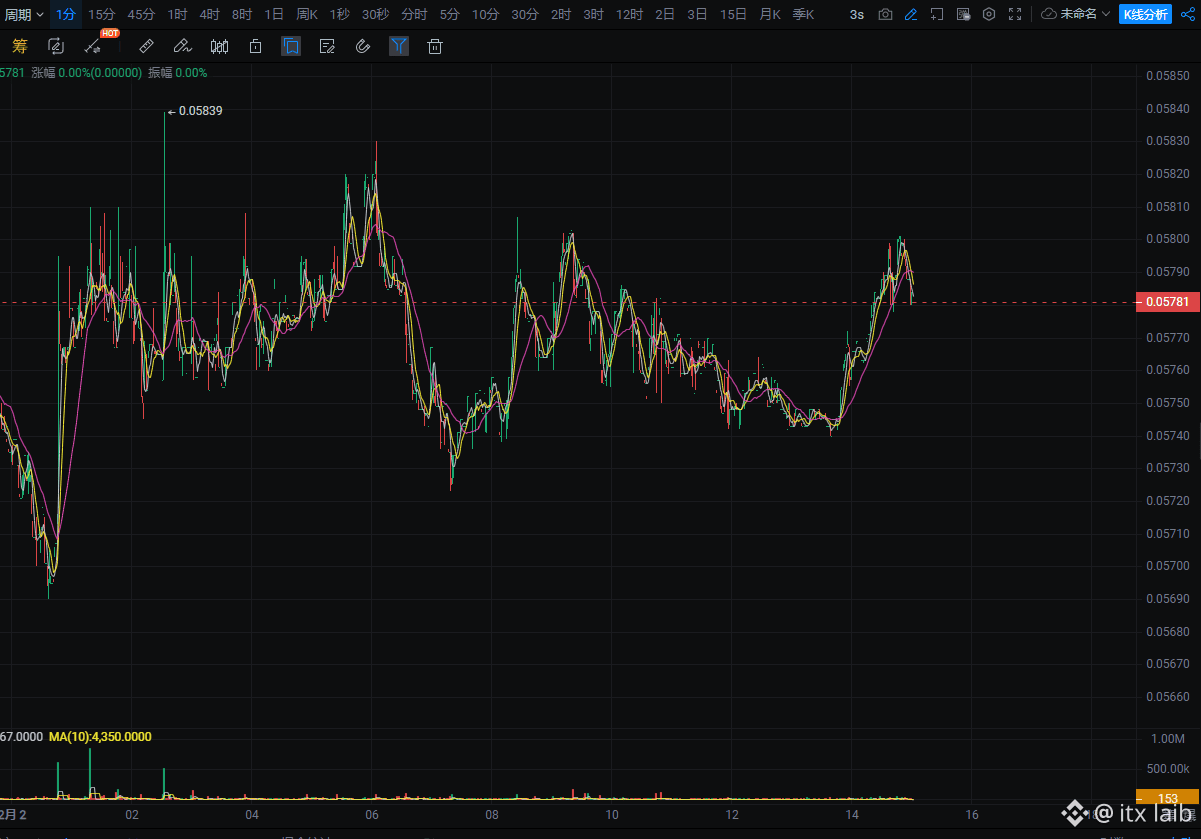
A Silent Warning ⛔️🚨 Big alert before US markets open on Feb 2. Check gold carefully. In past crisis moments, gold never stayed calm. It is like the lights flickering in a city before a blackout 🌃⚡ everything still looks normal, but smart people already know something is about to fail. ▫️During the 2007 to 2009 housing crash, gold fell from $1030 to $700. ▫️During the 2019 to 2021 Covid shock, gold dropped from $2070 to $1630. ▫️ Now in 2025 to 2026, with no official crisis yet, gold has already slipped from $5500 to $4800 😶‍🌫️ This is not normal price action. Gold behaves like this when confidence in the system starts cracking. High interest rates, rising debt, weak global growth and geopolitical stress are all building pressure 🌍 📉 Liquidity is tight and big money is repositioning quietly. Ignoring this move could be costly. Markets often signal trouble before news does. ⚠️Stay alert, watch macro flows and do not assume everything is safe this time {future}(ETHUSDT) {future}(BTCUSDT) {future}(BNBUSDT) $XPL $DUSK $VANRY @Plasma @Dusk_Foundation @Vanar #Plasma #dusk #vanar

A Silent Warning ⛔️

🚨 Big alert before US markets open on Feb 2. Check gold carefully. In past crisis moments, gold never stayed calm.
It is like the lights flickering in a city before a blackout 🌃⚡ everything still looks normal, but smart people already know something is about to fail.
▫️During the 2007 to 2009 housing crash, gold fell from $1030 to $700.
▫️During the 2019 to 2021 Covid shock, gold dropped from $2070 to $1630.
▫️ Now in 2025 to 2026, with no official crisis yet, gold has already slipped from $5500 to $4800 😶‍🌫️
This is not normal price action. Gold behaves like this when confidence in the system starts cracking.
High interest rates, rising debt, weak global growth and geopolitical stress are all building pressure 🌍
📉 Liquidity is tight and big money is repositioning quietly.
Ignoring this move could be costly. Markets often signal trouble before news does.
⚠️Stay alert, watch macro flows and do not assume everything is safe this time

$XPL $DUSK $VANRY @Plasma @Dusk @Vanarchain #Plasma #dusk #vanar
Dutch:
In the GFC gold fell 25%.
Vanar Chain: Where AI-Native Infrastructure Meets Real-World Web3If you’ve been around crypto long enough, you know most Layer 1s sound the same. Faster blocks. Cheaper fees. More TPS. Useful, sure but not exactly inspiring. That’s why Vanar Chain caught my attention. Vanar isn’t trying to win by just being faster than Ethereum or cheaper than Solana. It’s taking a different angle entirely. It’s building an AI-native blockchain, where intelligence and data understanding are part of the base layer, not bolted on later. At its core, @Vanar is an EVM-compatible Layer 1, so developers can deploy using familiar Ethereum tooling. That alone lowers friction. But the real twist is how Vanar handles data. Instead of treating on-chain information as dumb storage, Vanar introduces structures like “Seeds” compressed, semantic data objects that AI systems can actually reason over. In simple terms, this means smart contracts on Vanar don’t just execute rules. They can understand context. That opens doors to use cases most L1s struggle with: PayFi flows that adapt to user behavior, tokenized real-world assets that need compliance logic, and applications that don’t require half their logic pushed off-chain. On the market side, is still early. The token trades in the sub-cent range with a relatively modest market cap. That signals opportunity, but also risk. Liquidity can be thin, volatility is real, and adoption doesn’t happen overnight. Anyone watching Vanar should be clear-eyed about that. Development momentum, though, is hard to ignore. Vanar has been expanding builder support, rolling out ecosystem partnerships, and positioning itself right at the intersection of AI and Web3. Compare that to many Layer 1s still competing purely on throughput, and the difference in direction becomes obvious. Ethereum dominates settlement. Solana dominates speed. Vanar is aiming to dominate intelligent execution a layer where on-chain logic can reason, adapt, and automate rather than just follow static instructions. That vision isn’t guaranteed to succeed. Developers need to adopt new primitives, and the AI-on-chain narrative still has plenty of skeptics. But if intelligent applications are the next phase of Web3, Vanar feels less like a side experiment and more like early infrastructure. That’s why I’m watching #vanar closely. Not because it’s loud, but because it’s building something fundamentally different.

Vanar Chain: Where AI-Native Infrastructure Meets Real-World Web3

If you’ve been around crypto long enough, you know most Layer 1s sound the same. Faster blocks. Cheaper fees. More TPS. Useful, sure but not exactly inspiring.
That’s why Vanar Chain caught my attention.
Vanar isn’t trying to win by just being faster than Ethereum or cheaper than Solana. It’s taking a different angle entirely. It’s building an AI-native blockchain, where intelligence and data understanding are part of the base layer, not bolted on later.
At its core, @Vanarchain is an EVM-compatible Layer 1, so developers can deploy using familiar Ethereum tooling. That alone lowers friction. But the real twist is how Vanar handles data. Instead of treating on-chain information as dumb storage, Vanar introduces structures like “Seeds” compressed, semantic data objects that AI systems can actually reason over.
In simple terms, this means smart contracts on Vanar don’t just execute rules. They can understand context. That opens doors to use cases most L1s struggle with: PayFi flows that adapt to user behavior, tokenized real-world assets that need compliance logic, and applications that don’t require half their logic pushed off-chain.
On the market side, is still early. The token trades in the sub-cent range with a relatively modest market cap. That signals opportunity, but also risk. Liquidity can be thin, volatility is real, and adoption doesn’t happen overnight. Anyone watching Vanar should be clear-eyed about that.
Development momentum, though, is hard to ignore. Vanar has been expanding builder support, rolling out ecosystem partnerships, and positioning itself right at the intersection of AI and Web3. Compare that to many Layer 1s still competing purely on throughput, and the difference in direction becomes obvious.
Ethereum dominates settlement. Solana dominates speed. Vanar is aiming to dominate intelligent execution a layer where on-chain logic can reason, adapt, and automate rather than just follow static instructions.
That vision isn’t guaranteed to succeed. Developers need to adopt new primitives, and the AI-on-chain narrative still has plenty of skeptics. But if intelligent applications are the next phase of Web3, Vanar feels less like a side experiment and more like early infrastructure.
That’s why I’m watching #vanar closely. Not because it’s loud, but because it’s building something fundamentally different.
Vanar Chain: Speed, Simplicity, and ScaleEver tried using a blockchain that feels slower than your grandma’s dial-up? Yeah… Vanar Chain is here to save you from that nightmare. This Layer 1 network is designed for real-world Web3 adoption—fast, cheap, and surprisingly friendly to mere mortals. Whether you’re into gaming, AI, metaverse shenanigans, or just want to send digital assets without crying over fees, Vanar’s got your back. Why Vanar Chain Rocks: Speed Demon: Transactions settle almost instantly—blink and you’ll miss it. Low Fees: No need to sell a kidney to pay for gas. Developer-Friendly: Easy to build apps without losing your sanity. Ecosystem Fun: $VANRY token powers fees, staking, and keeps everything running smooth. In short, Vanar Chain isn’t just another blockchain—it’s the one that actually works like it should. Fast, cheap, and ready for the next big Web3 @Vanar #vanar $VANRY

Vanar Chain: Speed, Simplicity, and Scale

Ever tried using a blockchain that feels slower than your grandma’s dial-up? Yeah… Vanar Chain is here to save you from that nightmare. This Layer 1 network is designed for real-world Web3 adoption—fast, cheap, and surprisingly friendly to mere mortals. Whether you’re into gaming, AI, metaverse shenanigans, or just want to send digital assets without crying over fees, Vanar’s got your back.

Why Vanar Chain Rocks:

Speed Demon: Transactions settle almost instantly—blink and you’ll miss it.
Low Fees: No need to sell a kidney to pay for gas.
Developer-Friendly: Easy to build apps without losing your sanity.
Ecosystem Fun: $VANRY token powers fees, staking, and keeps everything running smooth.

In short, Vanar Chain isn’t just another blockchain—it’s the one that actually works like it should. Fast, cheap, and ready for the next big Web3 @Vanarchain #vanar $VANRY
RauC:
@Vanarchain Magnífico 💯🎯
·
--
Bullish
I have lived through enough cycles to know the market never pays for belief immediately, it pays for endurance, and sometimes it pays in scars. These days when I look at the price chart I feel tired, it is ironic that the louder the noise gets, the fewer things there are that feel solid enough to hold onto. With @Vanar , I think what matters is not the promise, it is how they are assembling a gaming ecosystem like a chain of linked parts. Virtua feels like an experience layer where users touch the world first, and only later learn how to hold assets. And VGN feels like the infrastructure road, so games can connect, trade, and move value without turning everything into a ritual of wallets and endless signatures. I have seen too many projects call themselves a gaming chain and stop at a few trailers and one airdrop. Maybe the difference is that VanarChain is trying to build a loop, content pulls players in, infrastructure keeps players staying, and tools so studios do not have to trade speed for safety. And if Virtua is the doorway into experience, and VGN is the highway for asset flow inside games, then are we building a game, or are we building a digital economy real enough to survive the next winter. #vanar $VANRY {future}(VANRYUSDT)
I have lived through enough cycles to know the market never pays for belief immediately, it pays for endurance, and sometimes it pays in scars. These days when I look at the price chart I feel tired, it is ironic that the louder the noise gets, the fewer things there are that feel solid enough to hold onto.

With @Vanarchain , I think what matters is not the promise, it is how they are assembling a gaming ecosystem like a chain of linked parts. Virtua feels like an experience layer where users touch the world first, and only later learn how to hold assets. And VGN feels like the infrastructure road, so games can connect, trade, and move value without turning everything into a ritual of wallets and endless signatures.

I have seen too many projects call themselves a gaming chain and stop at a few trailers and one airdrop. Maybe the difference is that VanarChain is trying to build a loop, content pulls players in, infrastructure keeps players staying, and tools so studios do not have to trade speed for safety.

And if Virtua is the doorway into experience, and VGN is the highway for asset flow inside games, then are we building a game, or are we building a digital economy real enough to survive the next winter. #vanar $VANRY
·
--
Bullish
Most blockchain games feel like spreadsheets with extra steps. World of Dypians changed that. 30,000+ daily players. Actual gameplay. Built on Vanar. Why Vanar for gaming Sub-cent transactions. No gas anxiety mid-battle. Neutron compression stores game assets directly on-chain not some IPFS link that breaks next month. Viva Games noticed. 700 million lifetime downloads. Now building on Vanar. Gaming shouldn't feel like filing taxes. Play different. @Vanar $VANRY #vanar
Most blockchain games feel like spreadsheets with extra steps.

World of Dypians changed that. 30,000+ daily players. Actual gameplay. Built on Vanar.
Why Vanar for gaming

Sub-cent transactions. No gas anxiety mid-battle.

Neutron compression stores game assets directly on-chain not some IPFS link that breaks next month.

Viva Games noticed. 700 million lifetime downloads.

Now building on Vanar.
Gaming shouldn't feel like filing taxes.
Play different.

@Vanarchain $VANRY #vanar
S
VANRYUSDT
Closed
PNL
+0.13USDT
·
--
Bullish
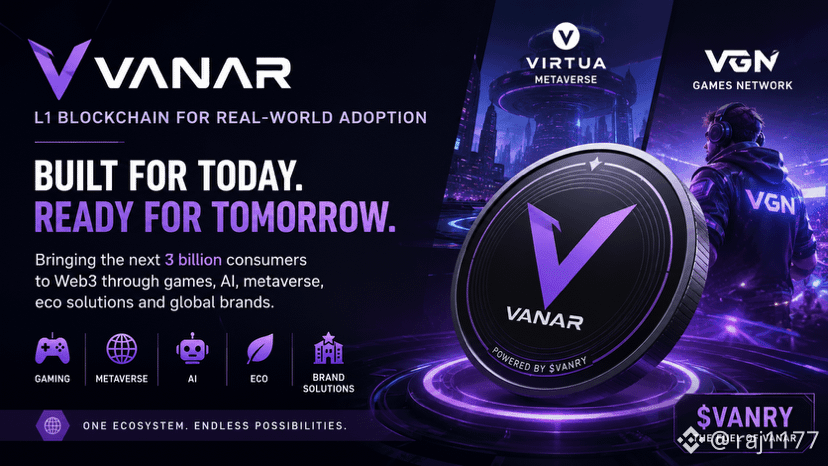
Vanar is the native token 2026 powering the Vanar blockchain, built to drive real-world Web3 adoption across gaming, entertainment metaverse, and brand solutions. The VANRY token plays a key role in network security, transactions, ecosystem incentives, and access to Vanar’s growing suite of products, including Virtua Metaverse and the VGN games network. As Vanar focuses on onboarding the next 3 billion users to Web3, VANRY’s price performance is closely tied to ecosystem growth, partnerships, and mainstream adoption. Increasing utility and real-world use cases position VANRY as a token to watch in the evolving L1 landscape. @Vanar $VANRY #vanar {future}(VANRYUSDT)
Vanar is the native token 2026 powering the Vanar blockchain, built to drive real-world Web3 adoption across gaming, entertainment metaverse, and brand solutions. The VANRY token plays a key role in network security, transactions, ecosystem incentives, and access to Vanar’s growing suite of products, including Virtua Metaverse and the VGN games network. As Vanar focuses on onboarding the next 3 billion users to Web3, VANRY’s price performance is closely tied to ecosystem growth, partnerships, and mainstream adoption. Increasing utility and real-world use cases position VANRY as a token to watch in the evolving L1 landscape.

@Vanarchain $VANRY #vanar
AI Can't Think Without Memory @Vanar #vanar Ask ChatGPT to remember your conversation from yesterday. It can't. Ask any AI agent to learn from its mistakes. It won't. Ask AI to explain why it made a decision. Silence. This is the fundamental problem: AI today processes, but it doesn't think. Thinking requires memory. Without memory, there's no learning. Without learning, there's no improvement. Without improvement, AI stays trapped as a reactive tool—fast at responding, incapable of growing. Vanar changes this with two layers most blockchains ignore: Neutron gives AI memory. Every decision, every outcome, every piece of context gets compressed (500:1 ratio) and stored on-chain permanently. Not on AWS. Not on IPFS. On the blockchain, forever. An AI managing your portfolio doesn't forget yesterday's trades. It remembers what worked, what didn't, and why. That memory compounds. The agent gets smarter over time, not reset every session. Kayon gives AI reasoning. It's not enough to remember—AI needs to analyze that memory, draw conclusions, and explain its logic. When Kayon makes a decision, it shows its work: what data it analyzed, what patterns it found, why the conclusion makes sense. Auditable. Verifiable. Trustworthy. This is what separates reactive AI from intelligent AI. Traditional chains ask: "How do we make AI faster?" Vanar asks: "How do we make AI smarter?" The answer isn't speed. It's architecture. When AI has native memory (Neutron) and native reasoning (Kayon), it stops being a tool and becomes an economic entity—capable of learning, adapting, and operating autonomously in professional environments. This isn't theoretical. myNeutron is live. Kayon is processing queries. AI agents are building knowledge on-chain right now. AI that thinks isn't the future. It's Vanar, today. $VANRY
AI Can't Think Without Memory

@Vanarchain #vanar

Ask ChatGPT to remember your conversation from yesterday. It can't.

Ask any AI agent to learn from its mistakes. It won't.

Ask AI to explain why it made a decision. Silence.

This is the fundamental problem: AI today processes, but it doesn't think.

Thinking requires memory. Without memory, there's no learning. Without learning, there's no improvement. Without improvement, AI stays trapped as a reactive tool—fast at responding, incapable of growing.

Vanar changes this with two layers most blockchains ignore:

Neutron gives AI memory. Every decision, every outcome, every piece of context gets compressed (500:1 ratio) and stored on-chain permanently. Not on AWS. Not on IPFS. On the blockchain, forever.

An AI managing your portfolio doesn't forget yesterday's trades. It remembers what worked, what didn't, and why. That memory compounds. The agent gets smarter over time, not reset every session.

Kayon gives AI reasoning. It's not enough to remember—AI needs to analyze that memory, draw conclusions, and explain its logic.

When Kayon makes a decision, it shows its work: what data it analyzed, what patterns it found, why the conclusion makes sense. Auditable. Verifiable. Trustworthy.

This is what separates reactive AI from intelligent AI.

Traditional chains ask: "How do we make AI faster?"

Vanar asks: "How do we make AI smarter?"

The answer isn't speed. It's architecture.

When AI has native memory (Neutron) and native reasoning (Kayon), it stops being a tool and becomes an economic entity—capable of learning, adapting, and operating autonomously in professional environments.

This isn't theoretical. myNeutron is live. Kayon is processing queries. AI agents are building knowledge on-chain right now.

AI that thinks isn't the future.

It's Vanar, today.

$VANRY
image
VANRY
Cumulative PNL
+0.14%
Vanar: The On-Ramp for Mainstream Immersion Mainstream adoption? Forget about fringe adoption. Vanar bursts forth as a specifically designed L1 blockchain, engineered from the ground up for mainstream merging. This is not about niche functionality; this is about effortless digital-phylum merging. The group, with extensive experience in the realm of interactive entertainment and brand-building, adopts a paradigm shift that puts the consumer first. Their goal: to bring the next three billion on board through seamless Web3 relocation. The Vanar ecosystem is a multi-vertical rich tapestry, interweaving gaming, immersive metaverse experiences, AI-driven interactivity, eco-projects, and bespoke brand solutions. It is the backbone for mainstream digital living. Its flagship developments, such as the Virtua Metaverse and the VGN gaming hub, are just a few examples of this applied tenet. This whole machine is fueled by the VANRY token – the lifeblood of a chain that not only wants to be but also wants to be adopted. The bridge has been constructed. The process has begun.#vanar $VANRY @Vanar $VANRY #vanar {future}(VANRYUSDT)
Vanar: The On-Ramp for Mainstream Immersion

Mainstream adoption? Forget about fringe adoption. Vanar bursts forth as a specifically designed L1 blockchain, engineered from the ground up for mainstream merging. This is not about niche functionality; this is about effortless digital-phylum merging.

The group, with extensive experience in the realm of interactive entertainment and brand-building, adopts a paradigm shift that puts the consumer first. Their goal: to bring the next three billion on board through seamless Web3 relocation.

The Vanar ecosystem is a multi-vertical rich tapestry, interweaving gaming, immersive metaverse experiences, AI-driven interactivity, eco-projects, and bespoke brand solutions. It is the backbone for mainstream digital living. Its flagship developments, such as the Virtua Metaverse and the VGN gaming hub, are just a few examples of this applied tenet.

This whole machine is fueled by the VANRY token – the lifeblood of a chain that not only wants to be but also wants to be adopted. The bridge has been constructed. The process has begun.#vanar $VANRY @Vanarchain $VANRY #vanar
Completed All Tasks $Vanry Big Reward Coming soon,@Vanar #vanar $VANRY The first time I talked to an Indian gamer about Vanar, it wasn’t about blockchain at all. It was about a delay — “Why does my transfer take longer than a move in-game?” That small hesitation revealed something bigger: familiarity with smooth, predictable experiences. Vanar’s strategy for the Indian gaming market doesn’t feel like hype. It feels like listening. India isn’t chasing splashy drops or big token narratives right now. Players want games that work, communities that stick, and value that doesn’t feel like a gamble. That resonates with the way Vanar quietly trades flexibility for consistency. In conversations, I noticed less buzzword talk and more focus on real constraints: latency, accessibility, and predictability. Gasless interactions matter here because they remove interruptions that kill flow. Cheap chains still feel like cost decisions. Vanar tries to make those decisions invisible. The community in India has been practical rather than tribal. Questions aren’t about price. They’re about experience. That’s a different kind of adoption pressure, and it shapes how the tech gets talked about locally. Whether this approach scales is still open — but for now, it feels grounded in actual use, not just aspiration. $VANRY @Vanar

Completed All Tasks $Vanry Big Reward Coming soon,

@Vanarchain #vanar $VANRY
The first time I talked to an Indian gamer about Vanar, it wasn’t about blockchain at all. It was about a delay — “Why does my transfer take longer than a move in-game?” That small hesitation revealed something bigger: familiarity with smooth, predictable experiences.
Vanar’s strategy for the Indian gaming market doesn’t feel like hype. It feels like listening. India isn’t chasing splashy drops or big token narratives right now. Players want games that work, communities that stick, and value that doesn’t feel like a gamble. That resonates with the way Vanar quietly trades flexibility for consistency.
In conversations, I noticed less buzzword talk and more focus on real constraints: latency, accessibility, and predictability. Gasless interactions matter here because they remove interruptions that kill flow. Cheap chains still feel like cost decisions. Vanar tries to make those decisions invisible.
The community in India has been practical rather than tribal. Questions aren’t about price. They’re about experience. That’s a different kind of adoption pressure, and it shapes how the tech gets talked about locally.
Whether this approach scales is still open — but for now, it feels grounded in actual use, not just aspiration.
$VANRY @Vanar
Vanar Chain: Preparing Blockchain Infrastructure for an AI-Driven FutureFor years, blockchain conversations have revolved around speed, low fees, and scalability. Every new network claims to be faster than the last, cheaper than the competition, and more efficient in handling transactions. But Vanar Chain approaches the problem from a completely different direction. Instead of asking how to make transactions faster for humans, Vanar asks a more forward-looking question: What happens when AI systems become the main users of blockchain networks? This shift in thinking changes everything about how infrastructure should be designed. Moving Beyond Human-Centered Blockchain Design Most existing blockchains were created with human interaction in mind. Wallets, confirmations, signatures, and dashboards are all built around people manually performing actions. But AI does not interact with networks in this way. AI systems do not click buttons or approve transactions. They operate through logic, memory, and automation. For AI to function effectively on-chain, the infrastructure must support these capabilities natively. This is where @Vanar introduces the concept of AI-first infrastructure. What AI-First Really Means AI-first does not mean adding AI tools on top of an existing blockchain. It means designing the system so that intelligence can operate as a natural part of the network. AI systems require: Memory to retain context over time Reasoning to explain decisions and actions Automation to execute tasks without human input Reliable settlement to move value globally These needs go far beyond traditional metrics like TPS and gas fees. Vanar’s architecture is built with these requirements in mind. Real Components That Show AI Readiness Vanar’s direction is not theoretical. It is demonstrated through working products inside the ecosystem. myNeutron introduces semantic memory at the infrastructure level. This allows AI to store, recall, and use context over time rather than operating in isolated actions. Kayon focuses on reasoning and explainability. It makes it possible to understand why an action was taken, bringing transparency to AI decisions on-chain. Flows turns intelligence into automated execution. Tasks can be performed safely without constant human supervision. These components together form a foundation where AI can operate independently and reliably. The Importance of Cross-Chain Reach AI systems are not limited to a single blockchain ecosystem. They need access to users, liquidity, and applications across networks. By expanding its technology across chains, including integration with ecosystems like Base, Vanar ensures that its AI-ready infrastructure is not isolated. This increases real usage opportunities and broadens the network’s reach. How VANRY Connects to Real Activity A key part of Vanar’s design is how $VANRY is positioned. The token is not only for governance or speculation. It is tied to the activity happening across memory storage, reasoning processes, automation, and settlement. As AI systems interact with the infrastructure, value flows through the network. This connects the token directly to usage. Why Payments Matter for AI Infrastructure AI agents do not use traditional wallet interfaces. They require compliant and efficient settlement rails to transact automatically. #vanar includes payments as a core part of its AI-first vision. Without the ability to move value seamlessly, intelligent systems cannot function fully on-chain. A Different Direction from Typical Blockchains While many networks compete on speed and fees, Vanar is focused on preparing infrastructure for how blockchain usage is likely to evolve. This makes it different from chains that are still designed around human-driven activity. Vanar is not trying to follow trends. It is building for a future where AI systems actively participate in the blockchain economy. $VANRY

Vanar Chain: Preparing Blockchain Infrastructure for an AI-Driven Future

For years, blockchain conversations have revolved around speed, low fees, and scalability. Every new network claims to be faster than the last, cheaper than the competition, and more efficient in handling transactions. But Vanar Chain approaches the problem from a completely different direction.
Instead of asking how to make transactions faster for humans, Vanar asks a more forward-looking question: What happens when AI systems become the main users of blockchain networks?
This shift in thinking changes everything about how infrastructure should be designed.
Moving Beyond Human-Centered Blockchain Design
Most existing blockchains were created with human interaction in mind. Wallets, confirmations, signatures, and dashboards are all built around people manually performing actions. But AI does not interact with networks in this way.
AI systems do not click buttons or approve transactions. They operate through logic, memory, and automation. For AI to function effectively on-chain, the infrastructure must support these capabilities natively.
This is where @Vanarchain introduces the concept of AI-first infrastructure.
What AI-First Really Means
AI-first does not mean adding AI tools on top of an existing blockchain. It means designing the system so that intelligence can operate as a natural part of the network.
AI systems require:
Memory to retain context over time
Reasoning to explain decisions and actions
Automation to execute tasks without human input
Reliable settlement to move value globally
These needs go far beyond traditional metrics like TPS and gas fees.
Vanar’s architecture is built with these requirements in mind.
Real Components That Show AI Readiness
Vanar’s direction is not theoretical. It is demonstrated through working products inside the ecosystem.
myNeutron introduces semantic memory at the infrastructure level. This allows AI to store, recall, and use context over time rather than operating in isolated actions.
Kayon focuses on reasoning and explainability. It makes it possible to understand why an action was taken, bringing transparency to AI decisions on-chain.
Flows turns intelligence into automated execution. Tasks can be performed safely without constant human supervision.
These components together form a foundation where AI can operate independently and reliably.
The Importance of Cross-Chain Reach
AI systems are not limited to a single blockchain ecosystem. They need access to users, liquidity, and applications across networks.
By expanding its technology across chains, including integration with ecosystems like Base, Vanar ensures that its AI-ready infrastructure is not isolated. This increases real usage opportunities and broadens the network’s reach.
How VANRY Connects to Real Activity
A key part of Vanar’s design is how $VANRY is positioned. The token is not only for governance or speculation. It is tied to the activity happening across memory storage, reasoning processes, automation, and settlement.
As AI systems interact with the infrastructure, value flows through the network. This connects the token directly to usage.
Why Payments Matter for AI Infrastructure
AI agents do not use traditional wallet interfaces. They require compliant and efficient settlement rails to transact automatically.
#vanar includes payments as a core part of its AI-first vision. Without the ability to move value seamlessly, intelligent systems cannot function fully on-chain.
A Different Direction from Typical Blockchains
While many networks compete on speed and fees, Vanar is focused on preparing infrastructure for how blockchain usage is likely to evolve. This makes it different from chains that are still designed around human-driven activity.
Vanar is not trying to follow trends. It is building for a future where AI systems actively participate in the blockchain economy.
$VANRY
·
--
Bullish
Vanar (VANRY) is an exciting Layer-1 blockchain built for the future of gaming, entertainment, AI, and mainstream Web3 adoption. Designed to be fast, eco-friendly, and extremely low-cost, it aims to remove the barriers that have kept blockchain away from everyday users. VANRY is the core token used for gas fees, staking, and powering dApps across the ecosystem. With projects like Virtua Metaverse, gaming infrastructure, and AI-driven tools such as myNeutron, Vanar is trying to create a real consumer-focused blockchain world. While still early-stage and volatile, Vanar stands out as a bold vision for bringing the next billion players and creators into Web3 @Vanar #vanar $VANRY {future}(VANRYUSDT)
Vanar (VANRY) is an exciting Layer-1 blockchain built for the future of gaming, entertainment, AI, and mainstream Web3 adoption. Designed to be fast, eco-friendly, and extremely low-cost, it aims to remove the barriers that have kept blockchain away from everyday users. VANRY is the core token used for gas fees, staking, and powering dApps across the ecosystem. With projects like Virtua Metaverse, gaming infrastructure, and AI-driven tools such as myNeutron, Vanar is trying to create a real consumer-focused blockchain world. While still early-stage and volatile, Vanar stands out as a bold vision for bringing the next billion players and creators into Web3

@Vanarchain #vanar $VANRY
AI and Blockchain Fusion: How Vanar Chain Is Redefining Decentralized IntelligenceWhen I first looked at the AI and blockchain conversation a few years ago, it felt like two worlds talking past each other. One obsessed with speed and learning, the other with certainty and records. What caught my attention with Vanar Chain is that it does not try to force those worlds together loudly. It does it quietly, underneath, by treating intelligence as something that needs infrastructure, not applause. The timing matters. AI inference costs have fallen sharply over the last two years, while on-chain activity has fragmented across dozens of ecosystems. That gap created a strange tension. Models can think faster, but blockchains still mostly remember things as flat records. Vanar’s starting point seems to be that memory is the missing layer. Instead of asking how to run AI on-chain, it asks what kind of memory an intelligent system needs if it is going to live on-chain at all. On the surface, Vanar looks like another high-throughput chain. Sub-second finality, predictable fees, an EVM-compatible environment. Those numbers matter only in context. Sub-second finality changes behavior, because AI agents do not wait patiently. If an agent has to pause several seconds for confirmation, its reasoning loop breaks. Underneath that, Vanar’s design leans into deterministic execution so that an AI action can be replayed, audited, and verified later. That is less exciting than speed, but it is the foundation that makes intelligence accountable. The more interesting layer sits below execution. Vanar’s Neutron memory layer is built around the idea that raw data is not useful to machines unless it can be recalled with meaning. Traditional blockchains store events. Neutron stores relationships. Instead of asking whether something happened, an AI system can ask why it happened or how often similar patterns appear. Early documentation suggests semantic compression ratios that reduce long-term storage costs by several multiples compared to naïve on-chain logs. If this holds, the real benefit is not cheaper storage but continuity. Models can reason across time without dragging the entire past with them. This connects directly to Kayon, Vanar’s reasoning engine. When people hear on-chain AI, they often imagine models running directly inside smart contracts. That is not realistic today. The compute costs would explode. Vanar’s approach is more restrained. Heavy inference stays off-chain, but the reasoning outputs, the assumptions, and the decision traces are committed on-chain. Think of it like showing your work in a math exam. The answer alone is not trusted. The steps are what give it weight. What that enables is subtle. An AI agent can act autonomously, but its past behavior becomes a public memory. Over time, that memory becomes a reputation layer. An agent that makes poor decisions cannot erase them. That is where decentralization starts to feel earned rather than declared. It also introduces risk. If the reasoning traces are too detailed, they can leak strategies. If they are too abstract, they become meaningless. Vanar is walking that line, and it is not obvious yet where the balance settles. The numbers hint at intent. Vanar has talked publicly about supporting thousands of AI agents per application, not per network. That distinction matters. It suggests a belief that intelligence will be local, not global. Each application carries its own memory and logic rather than sharing a single omniscient model. In market terms, this aligns with what we are seeing now. The largest AI systems are hitting scaling friction, while smaller, task-specific agents are becoming more useful. On-chain systems mirror that pattern. There is also a cultural signal in how Vanar communicates. Fewer promises about domination, more emphasis on texture and tradeoffs. When teams say they are AI-first, it usually means marketing. Here it seems to mean accepting slower growth in exchange for coherence. That choice shows up in the roadmap pacing. Features roll out in layers rather than bursts. It is less exciting, but it creates a steady surface for developers who want systems that remember. Of course, skepticism is healthy. One obvious counterargument is that AI does not belong on-chain at all. Centralized systems are cheaper and faster. That remains true. The question is not speed but trust. When an AI system controls value, or identity, or access, speed alone is not enough. You need to know how it reached a decision. You need the ability to challenge it. Blockchain provides that audit trail, but only if it is designed for reasoning, not just transactions. Another risk sits in complexity. Layering memory, reasoning, execution, and settlement creates more points of failure. Early signs suggest Vanar is aware of this and keeps each layer loosely coupled. If one component evolves, the others do not collapse. Still, this remains to be tested under real load. Thousands of agents in theory feel different from thousands of agents making mistakes at once. What makes this moment interesting is the broader pattern. Across crypto, we are seeing a shift away from spectacle toward infrastructure that supports long-lived systems. In AI, there is a similar movement toward accountability and traceability. Vanar sits at that intersection. It is not trying to outthink the biggest models. It is trying to give smaller intelligences a place to live with memory and consequences. If that direction holds, decentralized intelligence will not arrive as a single breakthrough. It will emerge as a quiet accumulation of remembered decisions, each one recorded, contextualized, and replayable. That kind of system does not shout. It listens, stores, and responds. The sharp observation that stays with me is this. Intelligence without memory is just reaction. Memory without accountability is just storage. Vanar is betting that the future sits in the narrow space where both are held steady together. @Vanar $VANRY #vanar

AI and Blockchain Fusion: How Vanar Chain Is Redefining Decentralized Intelligence

When I first looked at the AI and blockchain conversation a few years ago, it felt like two worlds talking past each other. One obsessed with speed and learning, the other with certainty and records. What caught my attention with Vanar Chain is that it does not try to force those worlds together loudly. It does it quietly, underneath, by treating intelligence as something that needs infrastructure, not applause.
The timing matters. AI inference costs have fallen sharply over the last two years, while on-chain activity has fragmented across dozens of ecosystems. That gap created a strange tension. Models can think faster, but blockchains still mostly remember things as flat records. Vanar’s starting point seems to be that memory is the missing layer. Instead of asking how to run AI on-chain, it asks what kind of memory an intelligent system needs if it is going to live on-chain at all.
On the surface, Vanar looks like another high-throughput chain. Sub-second finality, predictable fees, an EVM-compatible environment. Those numbers matter only in context. Sub-second finality changes behavior, because AI agents do not wait patiently. If an agent has to pause several seconds for confirmation, its reasoning loop breaks. Underneath that, Vanar’s design leans into deterministic execution so that an AI action can be replayed, audited, and verified later. That is less exciting than speed, but it is the foundation that makes intelligence accountable.
The more interesting layer sits below execution. Vanar’s Neutron memory layer is built around the idea that raw data is not useful to machines unless it can be recalled with meaning. Traditional blockchains store events. Neutron stores relationships. Instead of asking whether something happened, an AI system can ask why it happened or how often similar patterns appear. Early documentation suggests semantic compression ratios that reduce long-term storage costs by several multiples compared to naïve on-chain logs. If this holds, the real benefit is not cheaper storage but continuity. Models can reason across time without dragging the entire past with them.
This connects directly to Kayon, Vanar’s reasoning engine. When people hear on-chain AI, they often imagine models running directly inside smart contracts. That is not realistic today. The compute costs would explode. Vanar’s approach is more restrained. Heavy inference stays off-chain, but the reasoning outputs, the assumptions, and the decision traces are committed on-chain. Think of it like showing your work in a math exam. The answer alone is not trusted. The steps are what give it weight.
What that enables is subtle. An AI agent can act autonomously, but its past behavior becomes a public memory. Over time, that memory becomes a reputation layer. An agent that makes poor decisions cannot erase them. That is where decentralization starts to feel earned rather than declared. It also introduces risk. If the reasoning traces are too detailed, they can leak strategies. If they are too abstract, they become meaningless. Vanar is walking that line, and it is not obvious yet where the balance settles.
The numbers hint at intent. Vanar has talked publicly about supporting thousands of AI agents per application, not per network. That distinction matters. It suggests a belief that intelligence will be local, not global. Each application carries its own memory and logic rather than sharing a single omniscient model. In market terms, this aligns with what we are seeing now. The largest AI systems are hitting scaling friction, while smaller, task-specific agents are becoming more useful. On-chain systems mirror that pattern.
There is also a cultural signal in how Vanar communicates. Fewer promises about domination, more emphasis on texture and tradeoffs. When teams say they are AI-first, it usually means marketing. Here it seems to mean accepting slower growth in exchange for coherence. That choice shows up in the roadmap pacing. Features roll out in layers rather than bursts. It is less exciting, but it creates a steady surface for developers who want systems that remember.
Of course, skepticism is healthy. One obvious counterargument is that AI does not belong on-chain at all. Centralized systems are cheaper and faster. That remains true. The question is not speed but trust. When an AI system controls value, or identity, or access, speed alone is not enough. You need to know how it reached a decision. You need the ability to challenge it. Blockchain provides that audit trail, but only if it is designed for reasoning, not just transactions.
Another risk sits in complexity. Layering memory, reasoning, execution, and settlement creates more points of failure. Early signs suggest Vanar is aware of this and keeps each layer loosely coupled. If one component evolves, the others do not collapse. Still, this remains to be tested under real load. Thousands of agents in theory feel different from thousands of agents making mistakes at once.
What makes this moment interesting is the broader pattern. Across crypto, we are seeing a shift away from spectacle toward infrastructure that supports long-lived systems. In AI, there is a similar movement toward accountability and traceability. Vanar sits at that intersection. It is not trying to outthink the biggest models. It is trying to give smaller intelligences a place to live with memory and consequences.
If that direction holds, decentralized intelligence will not arrive as a single breakthrough. It will emerge as a quiet accumulation of remembered decisions, each one recorded, contextualized, and replayable. That kind of system does not shout. It listens, stores, and responds.
The sharp observation that stays with me is this. Intelligence without memory is just reaction. Memory without accountability is just storage. Vanar is betting that the future sits in the narrow space where both are held steady together.

@Vanarchain $VANRY #vanar
@Vanar Most blockchains weren’t built for tiny, frequent actions. Vanar Chain changes that. By cutting down latency and keeping fees low, it makes micro-interactions practical on-chain. Things like in-game actions, real-time AI updates, or metaverse events can happen instantly, without users worrying about cost or delays. This is what makes on-chain experiences feel natural, not forced. #vanar $VANRY
@Vanarchain Most blockchains weren’t built for tiny, frequent actions. Vanar Chain changes that. By cutting down latency and keeping fees low, it makes micro-interactions practical on-chain. Things like in-game actions, real-time AI updates, or metaverse events can happen instantly, without users worrying about cost or delays. This is what makes on-chain experiences feel natural, not forced.
#vanar $VANRY
Vanar Blockchain Designing Web3 for People Not Just Power UsersBlockchain technology has spent years promising a future where digital ownership is fairer, communities are empowered, and value flows without unnecessary intermediaries. Yet despite that promise, real-world adoption has moved slowly. For most everyday users, Web3 still feels complex, unfamiliar, and detached from practical needs. Vanar was created in response to this gap, not as another experiment chasing hype, but as a Layer 1 blockchain intentionally built to feel usable, relevant, and ready for mainstream audiences. What immediately distinguishes Vanar is where it comes from. The team behind the project did not emerge solely from crypto native backgrounds. Instead, they bring hands on experience from gaming, entertainment, and brand driven industries. These are sectors that live or die by user experience, performance, and trust. That perspective has deeply shaped Vanar’s design philosophy. Rather than forcing blockchain into places where it struggles, Vanar reshapes blockchain so it fits naturally into industries that already engage billions of people. Vanar’s mission centers on a simple but ambitious goal: bringing the next three billion users into Web3. This is not about onboarding traders or early adopters who already understand wallets and private keys. It is about building infrastructure that works for players, fans, creators, and consumers who may not even realize they are interacting with blockchain technology. In this sense, Vanar treats adoption as a design challenge rather than a marketing problem. As a Layer 1 blockchain, Vanar is built from the ground up to support real world use cases at scale. Performance, reliability, and efficiency are treated as essentials, not optional features. This matters because mainstream applications generate constant activity. Games require fast and frequent interactions. Virtual worlds need stability. Brand campaigns demand seamless experiences. Vanar’s architecture is designed to support this level of demand without compromising usability or accessibility. Gaming stands at the heart of Vanar’s ecosystem, and for good reason. Games have always been gateways to new technology, often introducing complex systems in ways that feel intuitive and fun. However, blockchain gaming has struggled to reach its potential, often hindered by clunky interfaces and infrastructure that was never designed for real time experiences. Vanar addresses these challenges through the VGN games network, which focuses on supporting developers while keeping players front and center. The philosophy behind VGN is refreshingly grounded. Blockchain elements are integrated where they add genuine value, such as ownership and interoperability, rather than being forced into every interaction. Players are not expected to become crypto experts to enjoy a game. Instead, they engage with gameplay first, discovering digital ownership and Web3 benefits organically. This approach respects the player’s time and attention, which is essential for long-term engagement. Vanar’s gaming strategy also recognizes the importance of sustainability within digital economies. Healthy in game ecosystems require balance, transparency, and thoughtful incentives. By providing a stable and scalable blockchain foundation, Vanar enables developers to experiment with new economic models without sacrificing fairness or player trust. Over time, this creates games that feel less extractive and more community driven. Beyond gaming, Vanar extends its vision into the metaverse through Virtua. While the concept of the metaverse has been heavily commercialized and often misunderstood, Virtua takes a more human centered approach. It is not about speculative land ownership or empty digital spaces. It is about creating immersive environments where people can meaningfully interact with content, brands, and each other. Virtua emphasizes experiences over abstraction. Digital collectibles are not isolated assets but parts of larger narratives and environments. Spaces are designed to feel alive, encouraging exploration, social interaction, and creativity. For users, this creates a sense of continuity between the digital and physical worlds. For brands and creators, it offers a platform to engage audiences in ways that go beyond traditional marketing. This emphasis on meaningful engagement reflects Vanar’s broader understanding of mainstream behavior. Most people are not drawn to technology for its own sake. They are drawn to experiences that resonate emotionally or culturally. By supporting platforms like Virtua, Vanar positions itself as infrastructure for digital culture rather than just digital transactions. Artificial intelligence is another area where Vanar’s long term thinking becomes clear. AI is rapidly shaping how content is created, how users interact with digital systems, and how experiences adapt in real time. Vanar sees AI not as a buzzword but as a practical tool that can enhance Web3 when combined with transparency and ownership. Blockchain and AI solve different problems, but together they create powerful possibilities. AI can drive personalization, automation, and intelligent behavior, while blockchain ensures that data, assets, and rules remain transparent and verifiable. On Vanar, this combination opens the door to experiences where users benefit from intelligent systems without losing control or trust. Whether in games, virtual environments, or brand platforms, this balance will become increasingly important as AI continues to evolve. Environmental responsibility also plays a meaningful role in Vanar’s design. As blockchain technology matures, its environmental impact has become a legitimate concern for users, regulators, and enterprises. Vanar acknowledges that widespread adoption depends on aligning with global sustainability expectations. Its eco focused initiatives reflect an understanding that long term relevance requires responsible innovation. For brands exploring Web3, sustainability is no longer optional. Consumers expect transparency not only in how products are made, but in how digital systems operate. Vanar’s approach provides a foundation that brands can build on with confidence, knowing that environmental considerations are part of the network’s broader vision rather than an afterthought. Brand solutions are an area where Vanar’s real-world experience becomes especially valuable. Many blockchains struggle to meet the standards that established brands require. Reliability, security, and user experience are non-negotiable when reputation is at stake. Vanar’s infrastructure is designed with these expectations in mind, making it easier for brands to explore digital ownership, loyalty programs, and immersive experiences without exposing users to unnecessary friction. For consumers, this means interacting with Web3 through familiar names and trusted experiences. When brands integrate blockchain thoughtfully, they can offer digital rewards, collectibles, and interactive content that feel like natural extensions of existing relationships. Vanar supports this transition by keeping the technology behind the scenes, allowing value to flow without overwhelming the user. The VANRY token underpins the Vanar ecosystem, serving as a functional element rather than a speculative centerpiece. It is designed to support transactions, participation, and alignment across the network. In a well-designed ecosystem, the token enables activity without dominating attention. VANRY’s role reflects Vanar’s broader philosophy of utility over hype. What truly defines Vanar is its focus on human centered design. The next wave of Web3 users will not arrive because they are passionate about decentralization as an ideology. They will arrive because an experience feels intuitive, enjoyable, and worthwhile. Vanar’s infrastructure is built with this reality in mind, prioritizing simplicity, performance, and relevance. Developers also benefit from this approach. Building on Vanar is intended to feel accessible, even for teams coming from traditional Web2 environments. Familiar tools, clear frameworks, and practical support reduce friction and encourage experimentation. This inclusivity is essential for creating a diverse ecosystem of applications that reflect real world interests and needs. From a broader industry perspective, Vanar represents a shift toward maturity. It does not attempt to reinvent everything at once or chase every trend. Instead, it focuses on doing a few things well, grounded in real use cases and long term thinking. This restraint is a strength in an industry often driven by short term excitement. Over time, the impact of Vanar will be measured by the experiences it enables rather than the claims it makes. Successful games, engaging virtual worlds, responsible brand integrations, and intelligent AI driven systems will speak louder than technical specifications. If users can participate without feeling confused or excluded, then the technology has done its job. Blockchain’s future depends on its ability to fade into the background, supporting digital life rather than demanding attention. Vanar is building toward that future by treating adoption as a human challenge, not just a technical one. By combining performance with empathy, and innovation with practicality, Vanar offers a vision of Web3 that feels less distant and more achievable. In a space often defined by extremes, Vanar chooses balance. It respects the ideals of decentralization while acknowledging the realities of mainstream use. It values innovation but grounds it in experience. As Web3 continues to evolve, projects like Vanar may ultimately shape how blockchain becomes part of everyday digital life, not as a novelty, but as a quietly reliable foundation. @Vanar #vanar $VANRY {spot}(VANRYUSDT)

Vanar Blockchain Designing Web3 for People Not Just Power Users

Blockchain technology has spent years promising a future where digital ownership is fairer, communities are empowered, and value flows without unnecessary intermediaries. Yet despite that promise, real-world adoption has moved slowly. For most everyday users, Web3 still feels complex, unfamiliar, and detached from practical needs. Vanar was created in response to this gap, not as another experiment chasing hype, but as a Layer 1 blockchain intentionally built to feel usable, relevant, and ready for mainstream audiences.
What immediately distinguishes Vanar is where it comes from. The team behind the project did not emerge solely from crypto native backgrounds. Instead, they bring hands on experience from gaming, entertainment, and brand driven industries. These are sectors that live or die by user experience, performance, and trust. That perspective has deeply shaped Vanar’s design philosophy. Rather than forcing blockchain into places where it struggles, Vanar reshapes blockchain so it fits naturally into industries that already engage billions of people.
Vanar’s mission centers on a simple but ambitious goal: bringing the next three billion users into Web3. This is not about onboarding traders or early adopters who already understand wallets and private keys. It is about building infrastructure that works for players, fans, creators, and consumers who may not even realize they are interacting with blockchain technology. In this sense, Vanar treats adoption as a design challenge rather than a marketing problem.
As a Layer 1 blockchain, Vanar is built from the ground up to support real world use cases at scale. Performance, reliability, and efficiency are treated as essentials, not optional features. This matters because mainstream applications generate constant activity. Games require fast and frequent interactions. Virtual worlds need stability. Brand campaigns demand seamless experiences. Vanar’s architecture is designed to support this level of demand without compromising usability or accessibility.
Gaming stands at the heart of Vanar’s ecosystem, and for good reason. Games have always been gateways to new technology, often introducing complex systems in ways that feel intuitive and fun. However, blockchain gaming has struggled to reach its potential, often hindered by clunky interfaces and infrastructure that was never designed for real time experiences. Vanar addresses these challenges through the VGN games network, which focuses on supporting developers while keeping players front and center.
The philosophy behind VGN is refreshingly grounded. Blockchain elements are integrated where they add genuine value, such as ownership and interoperability, rather than being forced into every interaction. Players are not expected to become crypto experts to enjoy a game. Instead, they engage with gameplay first, discovering digital ownership and Web3 benefits organically. This approach respects the player’s time and attention, which is essential for long-term engagement.
Vanar’s gaming strategy also recognizes the importance of sustainability within digital economies. Healthy in game ecosystems require balance, transparency, and thoughtful incentives. By providing a stable and scalable blockchain foundation, Vanar enables developers to experiment with new economic models without sacrificing fairness or player trust. Over time, this creates games that feel less extractive and more community driven.
Beyond gaming, Vanar extends its vision into the metaverse through Virtua. While the concept of the metaverse has been heavily commercialized and often misunderstood, Virtua takes a more human centered approach. It is not about speculative land ownership or empty digital spaces. It is about creating immersive environments where people can meaningfully interact with content, brands, and each other.
Virtua emphasizes experiences over abstraction. Digital collectibles are not isolated assets but parts of larger narratives and environments. Spaces are designed to feel alive, encouraging exploration, social interaction, and creativity. For users, this creates a sense of continuity between the digital and physical worlds. For brands and creators, it offers a platform to engage audiences in ways that go beyond traditional marketing.
This emphasis on meaningful engagement reflects Vanar’s broader understanding of mainstream behavior. Most people are not drawn to technology for its own sake. They are drawn to experiences that resonate emotionally or culturally. By supporting platforms like Virtua, Vanar positions itself as infrastructure for digital culture rather than just digital transactions.
Artificial intelligence is another area where Vanar’s long term thinking becomes clear. AI is rapidly shaping how content is created, how users interact with digital systems, and how experiences adapt in real time. Vanar sees AI not as a buzzword but as a practical tool that can enhance Web3 when combined with transparency and ownership.
Blockchain and AI solve different problems, but together they create powerful possibilities. AI can drive personalization, automation, and intelligent behavior, while blockchain ensures that data, assets, and rules remain transparent and verifiable. On Vanar, this combination opens the door to experiences where users benefit from intelligent systems without losing control or trust. Whether in games, virtual environments, or brand platforms, this balance will become increasingly important as AI continues to evolve.
Environmental responsibility also plays a meaningful role in Vanar’s design. As blockchain technology matures, its environmental impact has become a legitimate concern for users, regulators, and enterprises. Vanar acknowledges that widespread adoption depends on aligning with global sustainability expectations. Its eco focused initiatives reflect an understanding that long term relevance requires responsible innovation.
For brands exploring Web3, sustainability is no longer optional. Consumers expect transparency not only in how products are made, but in how digital systems operate. Vanar’s approach provides a foundation that brands can build on with confidence, knowing that environmental considerations are part of the network’s broader vision rather than an afterthought.
Brand solutions are an area where Vanar’s real-world experience becomes especially valuable. Many blockchains struggle to meet the standards that established brands require. Reliability, security, and user experience are non-negotiable when reputation is at stake. Vanar’s infrastructure is designed with these expectations in mind, making it easier for brands to explore digital ownership, loyalty programs, and immersive experiences without exposing users to unnecessary friction.
For consumers, this means interacting with Web3 through familiar names and trusted experiences. When brands integrate blockchain thoughtfully, they can offer digital rewards, collectibles, and interactive content that feel like natural extensions of existing relationships. Vanar supports this transition by keeping the technology behind the scenes, allowing value to flow without overwhelming the user.
The VANRY token underpins the Vanar ecosystem, serving as a functional element rather than a speculative centerpiece. It is designed to support transactions, participation, and alignment across the network. In a well-designed ecosystem, the token enables activity without dominating attention. VANRY’s role reflects Vanar’s broader philosophy of utility over hype.
What truly defines Vanar is its focus on human centered design. The next wave of Web3 users will not arrive because they are passionate about decentralization as an ideology. They will arrive because an experience feels intuitive, enjoyable, and worthwhile. Vanar’s infrastructure is built with this reality in mind, prioritizing simplicity, performance, and relevance.
Developers also benefit from this approach. Building on Vanar is intended to feel accessible, even for teams coming from traditional Web2 environments. Familiar tools, clear frameworks, and practical support reduce friction and encourage experimentation. This inclusivity is essential for creating a diverse ecosystem of applications that reflect real world interests and needs.
From a broader industry perspective, Vanar represents a shift toward maturity. It does not attempt to reinvent everything at once or chase every trend. Instead, it focuses on doing a few things well, grounded in real use cases and long term thinking. This restraint is a strength in an industry often driven by short term excitement.
Over time, the impact of Vanar will be measured by the experiences it enables rather than the claims it makes. Successful games, engaging virtual worlds, responsible brand integrations, and intelligent AI driven systems will speak louder than technical specifications. If users can participate without feeling confused or excluded, then the technology has done its job.
Blockchain’s future depends on its ability to fade into the background, supporting digital life rather than demanding attention. Vanar is building toward that future by treating adoption as a human challenge, not just a technical one. By combining performance with empathy, and innovation with practicality, Vanar offers a vision of Web3 that feels less distant and more achievable.
In a space often defined by extremes, Vanar chooses balance. It respects the ideals of decentralization while acknowledging the realities of mainstream use. It values innovation but grounds it in experience. As Web3 continues to evolve, projects like Vanar may ultimately shape how blockchain becomes part of everyday digital life, not as a novelty, but as a quietly reliable foundation.

@Vanarchain #vanar $VANRY
Vanar’s Developer Docs Feel Different, and That’s the PointWhen I first opened Vanar’s documentation, I expected the usual developer ritual: skim the landing page, jump to quick start, copy a snippet, move on. Instead, I found myself slowing down. Not because it was confusing, but because it was unusually quiet. The docs don’t shout at you. They don’t oversell. They feel like someone assumed you were serious about building something that might need to last. That tone matters, because the tools underneath are doing more than helping you deploy a contract. Vanar is positioning its documentation as part of the foundation, not an afterthought. The official docs for Vanar Chain are structured around how developers actually think when they’re deciding whether a stack is worth trusting. What struck me early is that the documentation doesn’t start by promising speed or cheap gas. It starts by explaining how the system fits together, and why certain tradeoffs were made. On the surface, the entry point is familiar. You have RPC endpoints, an EVM-compatible environment, and standard tooling support. If you’ve worked with Ethereum-style chains before, you’re not lost. Underneath that familiarity, though, Vanar’s docs keep circling back to memory and state. Not as marketing language, but as something you have to design around. That changes how you read the examples. A contract deployment isn’t just about execution, it’s about how data persists and how it can be reused later by other systems, including AI-driven ones. The tooling reinforces this. Vanar’s developer setup leans heavily on existing workflows. Hardhat support is there, and the examples show how to configure networks without inventing new abstractions. The practical detail is in the numbers. Block times are positioned in the low-seconds range, which in context means fast enough for interactive applications but not so aggressive that finality feels fragile. Gas fees, at least at current network usage, sit well below one US cent per simple transaction. That’s not impressive in isolation, but when you compare it to the cost of repeatedly updating state-heavy contracts on Ethereum mainnet, the difference becomes meaningful. That cost structure creates another effect. Developers are encouraged, quietly, to store richer state on-chain. The docs include examples where data is written and read multiple times within a single application flow. On many chains, you’d avoid that pattern out of fear of gas spikes. Here, the documentation treats it as normal. Underneath, that signals confidence in the network’s capacity planning. It also introduces risk. If adoption accelerates faster than infrastructure scales, those assumptions get tested. The docs don’t deny that. They just don’t dramatize it. What’s especially useful is how the documentation handles AI-related tooling. Instead of positioning AI as a feature toggle, Vanar’s docs frame it as an interface layer. You see references to semantic data handling and memory-native design, but they’re explained in plain terms. Data isn’t just stored, it’s structured so machines can reason over it later. That matters if you’re building agents or adaptive systems. Early signs suggest this approach reduces redundant computation, but it also raises questions about standardization. If every app structures semantic memory differently, interoperability becomes harder. The docs acknowledge this indirectly by encouraging consistent schemas, though the ecosystem norms are still forming. Meanwhile, the testnet tooling deserves more attention than it gets. Vanar’s testnet faucets are reliable, and more importantly, the documentation treats testnet usage as first-class. Examples explicitly differentiate between test and main environments, including RPC URLs and chain IDs. That sounds basic, but in practice it reduces the number of accidental mainnet mistakes. Developers who’ve lost funds due to misconfigured networks will recognize the value immediately. There’s also an interesting restraint in how analytics are presented. Network metrics are available, but they’re not front and center in the docs. You won’t see vanity TPS claims. Instead, you see references like sustained throughput under moderate load and validator counts that suggest decentralization without overpromising. At the time of writing, validator participation sits in the dozens, not thousands. That’s honest. It tells you where the network actually is, not where it hopes to be. If this holds, it sets expectations correctly for developers who care about liveness and governance. Documentation is also where culture leaks through. Vanar’s examples tend to focus on long-lived applications rather than short-term experiments. There’s less emphasis on meme tokens and more on persistent systems. That doesn’t mean speculation isn’t happening on the chain, but the docs don’t optimize for it. They optimize for people who plan to maintain code six months from now. In a market where many chains chase attention cycles, that choice feels earned. Of course, there are gaps. Some advanced sections assume a level of background knowledge that newer developers might not have. If you’re unfamiliar with EVM internals, certain explanations move quickly. The upside is that nothing feels intentionally obscured. You can trace each concept back to a concrete implementation detail. The downside is onboarding friction. Whether Vanar smooths that out over time remains to be seen. As you zoom out, the bigger pattern becomes clearer. Vanar’s documentation isn’t trying to sell you speed or novelty. It’s trying to teach you how to think in its environment. That’s a subtle but important distinction. Tools shape behavior. Docs shape expectations. Right now, the expectation Vanar sets is that developers should care about memory, continuity, and systems that don’t reset every hype cycle. If you’re building something that needs to remember what happened yesterday, and still make sense of it tomorrow, this approach starts to feel less like documentation and more like a quiet contract between you and the network. And those are usually the foundations that last. @undefined @Vanar @undefined #vanar $VANRY {spot}(VANRYUSDT)

Vanar’s Developer Docs Feel Different, and That’s the Point

When I first opened Vanar’s documentation, I expected the usual developer ritual: skim the landing page, jump to quick start, copy a snippet, move on. Instead, I found myself slowing down. Not because it was confusing, but because it was unusually quiet. The docs don’t shout at you. They don’t oversell. They feel like someone assumed you were serious about building something that might need to last.

That tone matters, because the tools underneath are doing more than helping you deploy a contract. Vanar is positioning its documentation as part of the foundation, not an afterthought. The official docs for Vanar Chain are structured around how developers actually think when they’re deciding whether a stack is worth trusting. What struck me early is that the documentation doesn’t start by promising speed or cheap gas. It starts by explaining how the system fits together, and why certain tradeoffs were made.

On the surface, the entry point is familiar. You have RPC endpoints, an EVM-compatible environment, and standard tooling support. If you’ve worked with Ethereum-style chains before, you’re not lost. Underneath that familiarity, though, Vanar’s docs keep circling back to memory and state. Not as marketing language, but as something you have to design around. That changes how you read the examples. A contract deployment isn’t just about execution, it’s about how data persists and how it can be reused later by other systems, including AI-driven ones.

The tooling reinforces this. Vanar’s developer setup leans heavily on existing workflows. Hardhat support is there, and the examples show how to configure networks without inventing new abstractions. The practical detail is in the numbers. Block times are positioned in the low-seconds range, which in context means fast enough for interactive applications but not so aggressive that finality feels fragile. Gas fees, at least at current network usage, sit well below one US cent per simple transaction. That’s not impressive in isolation, but when you compare it to the cost of repeatedly updating state-heavy contracts on Ethereum mainnet, the difference becomes meaningful.

That cost structure creates another effect. Developers are encouraged, quietly, to store richer state on-chain. The docs include examples where data is written and read multiple times within a single application flow. On many chains, you’d avoid that pattern out of fear of gas spikes. Here, the documentation treats it as normal. Underneath, that signals confidence in the network’s capacity planning. It also introduces risk. If adoption accelerates faster than infrastructure scales, those assumptions get tested. The docs don’t deny that. They just don’t dramatize it.

What’s especially useful is how the documentation handles AI-related tooling. Instead of positioning AI as a feature toggle, Vanar’s docs frame it as an interface layer. You see references to semantic data handling and memory-native design, but they’re explained in plain terms. Data isn’t just stored, it’s structured so machines can reason over it later. That matters if you’re building agents or adaptive systems. Early signs suggest this approach reduces redundant computation, but it also raises questions about standardization. If every app structures semantic memory differently, interoperability becomes harder. The docs acknowledge this indirectly by encouraging consistent schemas, though the ecosystem norms are still forming.

Meanwhile, the testnet tooling deserves more attention than it gets. Vanar’s testnet faucets are reliable, and more importantly, the documentation treats testnet usage as first-class. Examples explicitly differentiate between test and main environments, including RPC URLs and chain IDs. That sounds basic, but in practice it reduces the number of accidental mainnet mistakes. Developers who’ve lost funds due to misconfigured networks will recognize the value immediately.

There’s also an interesting restraint in how analytics are presented. Network metrics are available, but they’re not front and center in the docs. You won’t see vanity TPS claims. Instead, you see references like sustained throughput under moderate load and validator counts that suggest decentralization without overpromising. At the time of writing, validator participation sits in the dozens, not thousands. That’s honest. It tells you where the network actually is, not where it hopes to be. If this holds, it sets expectations correctly for developers who care about liveness and governance.

Documentation is also where culture leaks through. Vanar’s examples tend to focus on long-lived applications rather than short-term experiments. There’s less emphasis on meme tokens and more on persistent systems. That doesn’t mean speculation isn’t happening on the chain, but the docs don’t optimize for it. They optimize for people who plan to maintain code six months from now. In a market where many chains chase attention cycles, that choice feels earned.

Of course, there are gaps. Some advanced sections assume a level of background knowledge that newer developers might not have. If you’re unfamiliar with EVM internals, certain explanations move quickly. The upside is that nothing feels intentionally obscured. You can trace each concept back to a concrete implementation detail. The downside is onboarding friction. Whether Vanar smooths that out over time remains to be seen.

As you zoom out, the bigger pattern becomes clearer. Vanar’s documentation isn’t trying to sell you speed or novelty. It’s trying to teach you how to think in its environment. That’s a subtle but important distinction. Tools shape behavior. Docs shape expectations. Right now, the expectation Vanar sets is that developers should care about memory, continuity, and systems that don’t reset every hype cycle.

If you’re building something that needs to remember what happened yesterday, and still make sense of it tomorrow, this approach starts to feel less like documentation and more like a quiet contract between you and the network. And those are usually the foundations that last.
@undefined @Vanarchain @undefined #vanar $VANRY
Vanar Chains Evolution From Vision to AI Native Blockchain Powerhouse in 2026@vanar is building a new category of blockchain technology that goes far beyond the traditional idea of decentralized networks. In 2026 as AI merges with Web3 Vanar Chain stands out as the first AI native Layer 1 designed to power intelligent autonomous and context aware applications. This article explores the latest updates announcements ecosystem developments roadmap progress and economic foundations of the $VANRY ecosystem while providing a long form original and deeply detailed overview that remains fully relevant to the Vanar narrative and the rapid growth of its AI driven architecture. #Vanar Vanar Chain is not simply upgrading smart contracts but redefining what computation on a blockchain can be. Instead of limiting developers to static logic Vanar introduces an AI infused execution model that supports learning reasoning and long term memory. This vision positions Vanar as a next generation protocol where applications behave more like intelligent agents rather than traditional decentralized code. The foundation of this architecture lies in the Vanar Stack a multilayer system that includes semantic memory compression AI reasoning engines and eventually autonomous automation layers. These innovations create a blockchain that does not simply store data but understands and processes it in a way that is more advanced than the systems used across most of the Web3 space today. One of the most transformative components of the Vanar Stack is Neutron. Neutron acts as an on chain semantic memory and compression engine capable of shrinking massive data into ultra compressed seeds that can live permanently on the blockchain. Most blockchains struggle with cost and storage limits but Neutron turns Vanar into a chain capable of handling memory intensive applications AI workloads context retention and intelligent agent interactions without relying on heavy off chain systems. The compression breakthroughs demonstrated through Neutron have become one of the core narratives behind Vanars emergence in the AI blockchain sector showing a shift from storage limitations toward storage intelligence. Running alongside Neutron is Kayon the reasoning layer that gives Vanar applications the ability to interpret information process complex logic and execute automated decision flows. Instead of a simple transactional environment Vanar introduces a dynamic computational framework where applications can adapt based on historical context stored directly on chain. This combination of memory through Neutron and reasoning through Kayon forms the heart of Vanars AI native identity and transforms the blockchain into an intelligent substrate capable of powering advanced gaming brand ecosystems digital worlds entertainment experiences financial logic identity layers and autonomous agent networks. These innovations create significant implications for the role of the VANAR token. Recent updates confirm that the maximum supply of $VANRY is capped at 2.4 billion tokens which supports long term economic sustainability. The token fuels gas fees powers AI subscription usage for Neutron and Kayon and anchors the burn mechanics that activate as demand increases. Unlike many utility tokens that lack organic demand $VANRY is deeply connected to computational activity and to the usage of AI layers. As more developers agents brands and applications begin interacting with Vanars memory and reasoning engines natural demand for $VANRY increases. The fee burn tied to AI related actions introduces a long term scarcity effect that comes directly from ecosystem activity. This alignment between network utility and token economics is central to Vanars long term sustainability. Market dynamics reflect this growing interest. While broader market volatility affects short term price movement the structural interest around Vanar continues to expand. Trading volume community engagement and liquidity conditions highlight expanding attention as Vanars AI native stack continues to evolve. Each update strengthens investor and community confidence. As the ecosystem matures and more applications are built using Neutron and Kayon the long term relationship between technology and token value becomes more direct. This shift from hype driven attention to infrastructure based evaluation places Vanar in a strong position for 2026 and beyond. The ecosystem expansion underway is equally significant. The team at @vanar has advanced developer tooling improved semantic memory capabilities refined real time reasoning systems and announced progress toward an AI assisted natural language interface that will allow users to interact with blockchain functions through conversational commands. Integration progress with identity providers like Humanode supports secure on chain identity for gaming AI agents consumer onboarding and enterprise grade use cases that require user verification without compromising privacy. These developments strengthen Vanars position as a practical and developer friendly infrastructure rather than just a high level conceptual project. Interoperability initiatives have also gained momentum. A recent governance proposal supported integration of Vanar Chain into DeBank which improves visibility and multi chain access for users and developers. This addition makes it easier for the community to interact with assets track portfolios and participate in the growing Vanar ecosystem. Moves like this show Vanars commitment to building a network that is not only powerful but also highly connected to the broader Web3 environment. As 2026 continues Vanars roadmap points toward a phase of rapid activation. Global hackathons developer onboarding tracks and ecosystem challenges are being prepared to attract builders who want to create intelligent gaming projects autonomous digital worlds brand powered experiences AI enhanced financial applications and next generation agent ecosystems. These programs are designed to bring practical builder energy into the Vanar ecosystem and to create real use cases that demonstrate the power of AI native blockchain infrastructure. They support the vision of growth through real applications rather than static theory. Beyond technical development Vanar is expanding outreach to gaming studios entertainment companies digital brands identity technology firms and AI research groups. The teams deep background in entertainment and gaming gives Vanar a strong advantage when engaging with partners that require intelligent scalable and smooth infrastructure for mainstream adoption. Instead of presenting blockchain as a complicated or intimidating tool Vanar frames it as a seamless invisible technology layer that supports mass adoption. This is perfectly aligned with the mission to bring billions of people into Web3 through intelligent and intuitive user experiences. The combination of Neutron and Kayon remains at the center of everything Vanar is building. They represent the exact moment where AI and blockchain merge in a functional and scalable way. Neutron reduces storage overhead and enables long term memory. Kayon transforms on chain logic into adaptive context aware decision flows. Together they change the meaning of smart contracts and open the door for intelligent applications that can evolve improve learn and act with autonomy. This is the narrative that sets Vanar apart from traditional blockchains that rely on rigid logic with no ability to store or process deep context. As more applications integrate with Vanars memory and reasoning layers the ecosystem will naturally grow more intelligent. AI agents will be able to analyze on chain history compress knowledge into Neutron execute real time decisions through Kayon and interact autonomously with gaming environments financial protocols digital worlds and brand ecosystems. This evolution from static code to dynamic intelligence is not only a technical shift but a conceptual transformation in how developers build decentralized systems. It enables the creation of AI driven digital economies autonomous content engines intelligent gaming loops and persistent digital worlds powered by real on chain memory. Looking ahead Vanars long term position will depend on adoption ecosystem depth and the number of builders who embrace AI native development. The technology foundation is already strong the narrative is compelling and the tokenomics are intentionally designed. The next phase is ecosystem activation where creators developers brands and AI agents begin building projects that bring the Vanar vision to life. When this happens $VANRY becomes more than a token. It becomes the fuel for intelligent computation. Vanar Chain represents the start of a new era in blockchain evolution where intelligence memory context and autonomous logic become the foundation of the decentralized world. As 2026 progresses the network is positioned to become one of the most important AI native infrastructures powering future gaming entertainment digital experiences brand ecosystems and intelligent agents. With its advanced architecture visionary team and rapidly expanding ecosystem Vanar continues to establish itself as a leading force shaping the next generation of Web3. @Vanar

Vanar Chains Evolution From Vision to AI Native Blockchain Powerhouse in 2026

@vanar is building a new category of blockchain technology that goes far beyond the traditional idea of decentralized networks. In 2026 as AI merges with Web3 Vanar Chain stands out as the first AI native Layer 1 designed to power intelligent autonomous and context aware applications. This article explores the latest updates announcements ecosystem developments roadmap progress and economic foundations of the $VANRY ecosystem while providing a long form original and deeply detailed overview that remains fully relevant to the Vanar narrative and the rapid growth of its AI driven architecture. #Vanar

Vanar Chain is not simply upgrading smart contracts but redefining what computation on a blockchain can be. Instead of limiting developers to static logic Vanar introduces an AI infused execution model that supports learning reasoning and long term memory. This vision positions Vanar as a next generation protocol where applications behave more like intelligent agents rather than traditional decentralized code. The foundation of this architecture lies in the Vanar Stack a multilayer system that includes semantic memory compression AI reasoning engines and eventually autonomous automation layers. These innovations create a blockchain that does not simply store data but understands and processes it in a way that is more advanced than the systems used across most of the Web3 space today.

One of the most transformative components of the Vanar Stack is Neutron. Neutron acts as an on chain semantic memory and compression engine capable of shrinking massive data into ultra compressed seeds that can live permanently on the blockchain. Most blockchains struggle with cost and storage limits but Neutron turns Vanar into a chain capable of handling memory intensive applications AI workloads context retention and intelligent agent interactions without relying on heavy off chain systems. The compression breakthroughs demonstrated through Neutron have become one of the core narratives behind Vanars emergence in the AI blockchain sector showing a shift from storage limitations toward storage intelligence.

Running alongside Neutron is Kayon the reasoning layer that gives Vanar applications the ability to interpret information process complex logic and execute automated decision flows. Instead of a simple transactional environment Vanar introduces a dynamic computational framework where applications can adapt based on historical context stored directly on chain. This combination of memory through Neutron and reasoning through Kayon forms the heart of Vanars AI native identity and transforms the blockchain into an intelligent substrate capable of powering advanced gaming brand ecosystems digital worlds entertainment experiences financial logic identity layers and autonomous agent networks.

These innovations create significant implications for the role of the VANAR token. Recent updates confirm that the maximum supply of $VANRY is capped at 2.4 billion tokens which supports long term economic sustainability. The token fuels gas fees powers AI subscription usage for Neutron and Kayon and anchors the burn mechanics that activate as demand increases. Unlike many utility tokens that lack organic demand $VANRY is deeply connected to computational activity and to the usage of AI layers. As more developers agents brands and applications begin interacting with Vanars memory and reasoning engines natural demand for $VANRY increases. The fee burn tied to AI related actions introduces a long term scarcity effect that comes directly from ecosystem activity. This alignment between network utility and token economics is central to Vanars long term sustainability.

Market dynamics reflect this growing interest. While broader market volatility affects short term price movement the structural interest around Vanar continues to expand. Trading volume community engagement and liquidity conditions highlight expanding attention as Vanars AI native stack continues to evolve. Each update strengthens investor and community confidence. As the ecosystem matures and more applications are built using Neutron and Kayon the long term relationship between technology and token value becomes more direct. This shift from hype driven attention to infrastructure based evaluation places Vanar in a strong position for 2026 and beyond.

The ecosystem expansion underway is equally significant. The team at @vanar has advanced developer tooling improved semantic memory capabilities refined real time reasoning systems and announced progress toward an AI assisted natural language interface that will allow users to interact with blockchain functions through conversational commands. Integration progress with identity providers like Humanode supports secure on chain identity for gaming AI agents consumer onboarding and enterprise grade use cases that require user verification without compromising privacy. These developments strengthen Vanars position as a practical and developer friendly infrastructure rather than just a high level conceptual project.

Interoperability initiatives have also gained momentum. A recent governance proposal supported integration of Vanar Chain into DeBank which improves visibility and multi chain access for users and developers. This addition makes it easier for the community to interact with assets track portfolios and participate in the growing Vanar ecosystem. Moves like this show Vanars commitment to building a network that is not only powerful but also highly connected to the broader Web3 environment.

As 2026 continues Vanars roadmap points toward a phase of rapid activation. Global hackathons developer onboarding tracks and ecosystem challenges are being prepared to attract builders who want to create intelligent gaming projects autonomous digital worlds brand powered experiences AI enhanced financial applications and next generation agent ecosystems. These programs are designed to bring practical builder energy into the Vanar ecosystem and to create real use cases that demonstrate the power of AI native blockchain infrastructure. They support the vision of growth through real applications rather than static theory.

Beyond technical development Vanar is expanding outreach to gaming studios entertainment companies digital brands identity technology firms and AI research groups. The teams deep background in entertainment and gaming gives Vanar a strong advantage when engaging with partners that require intelligent scalable and smooth infrastructure for mainstream adoption. Instead of presenting blockchain as a complicated or intimidating tool Vanar frames it as a seamless invisible technology layer that supports mass adoption. This is perfectly aligned with the mission to bring billions of people into Web3 through intelligent and intuitive user experiences.

The combination of Neutron and Kayon remains at the center of everything Vanar is building. They represent the exact moment where AI and blockchain merge in a functional and scalable way. Neutron reduces storage overhead and enables long term memory. Kayon transforms on chain logic into adaptive context aware decision flows. Together they change the meaning of smart contracts and open the door for intelligent applications that can evolve improve learn and act with autonomy. This is the narrative that sets Vanar apart from traditional blockchains that rely on rigid logic with no ability to store or process deep context.

As more applications integrate with Vanars memory and reasoning layers the ecosystem will naturally grow more intelligent. AI agents will be able to analyze on chain history compress knowledge into Neutron execute real time decisions through Kayon and interact autonomously with gaming environments financial protocols digital worlds and brand ecosystems. This evolution from static code to dynamic intelligence is not only a technical shift but a conceptual transformation in how developers build decentralized systems. It enables the creation of AI driven digital economies autonomous content engines intelligent gaming loops and persistent digital worlds powered by real on chain memory.

Looking ahead Vanars long term position will depend on adoption ecosystem depth and the number of builders who embrace AI native development. The technology foundation is already strong the narrative is compelling and the tokenomics are intentionally designed. The next phase is ecosystem activation where creators developers brands and AI agents begin building projects that bring the Vanar vision to life. When this happens $VANRY becomes more than a token. It becomes the fuel for intelligent computation.

Vanar Chain represents the start of a new era in blockchain evolution where intelligence memory context and autonomous logic become the foundation of the decentralized world. As 2026 progresses the network is positioned to become one of the most important AI native infrastructures powering future gaming entertainment digital experiences brand ecosystems and intelligent agents. With its advanced architecture visionary team and rapidly expanding ecosystem Vanar continues to establish itself as a leading force shaping the next generation of Web3.

@Vanar
🚨 Why Your Binance Views Just Hit Zero (And How to Fix It)If you are posting a lot but getting no views, here is the truth: Binance changed the rules. They now hate "perfect" AI writing. If your post sounds like a textbook, the algorithm hides it. How to get views back: Write like you talk: Use "I" and "you." Stop the spam: Binance now limits you to 1 long article and 1 short post per day for points. More than that is considered spam. The 48-Hour Rule: It now takes 2 days to see your rank move. Don't panic if nothing happens today. VANRY: The Only AI Coin That Actually Does Something Most AI coins are just hype. They are "chatbots" that don't own any tech. Vanar ($VANRY ) is different because it’s the actual ground where the AI grows. Here is the simple breakdown of why VANRY matters in 2026: 1. Cheap Fees ($0.0005) Forever Most blockchains change their prices every minute. Imagine if your bread cost $1 today and $50 tomorrow because the store was busy. Businesses can't work like that. Vanar has a fixed fee. It’s always $0.0005. This is why big companies are actually choosing it. 2. It Stores Big Files (Neutron) Normal blockchains are "small." You can't put a big PDF or a video on them because it's too expensive. Vanar uses Neutron to shrink massive files until they are tiny "Seeds." This lets the chain "remember" legal papers and AI data without breaking the bank. 3. The Brain (Kayon) Vanar isn't just a digital notebook. It has an AI brain called Kayon. It can read the data stored in Neutron and make decisions. For example, it can check a contract and send a payment automatically without a human needing to click "approve." My Goal: The Top 100 We are currently Rank 140. While everyone else is getting flagged for using AI to write lazy posts, I am going to win by explaining the real tech. The event ends February 20th. Let's keep it real and keep climbing. Do you think $0.0005 fees are enough to bring in the big companies? Tell me what you think #vanar #大漠茶馆 @Vanar

🚨 Why Your Binance Views Just Hit Zero (And How to Fix It)

If you are posting a lot but getting no views, here is the truth: Binance changed the rules. They now hate "perfect" AI writing. If your post sounds like a textbook, the algorithm hides it.
How to get views back:
Write like you talk: Use "I" and "you."
Stop the spam: Binance now limits you to 1 long article and 1 short post per day for points. More than that is considered spam.
The 48-Hour Rule: It now takes 2 days to see your rank move. Don't panic if nothing happens today.
VANRY: The Only AI Coin That Actually Does Something
Most AI coins are just hype. They are "chatbots" that don't own any tech. Vanar ($VANRY ) is different because it’s the actual ground where the AI grows.
Here is the simple breakdown of why VANRY matters in 2026:
1. Cheap Fees ($0.0005) Forever
Most blockchains change their prices every minute. Imagine if your bread cost $1 today and $50 tomorrow because the store was busy. Businesses can't work like that. Vanar has a fixed fee. It’s always $0.0005. This is why big companies are actually choosing it.

2. It Stores Big Files (Neutron)
Normal blockchains are "small." You can't put a big PDF or a video on them because it's too expensive. Vanar uses Neutron to shrink massive files until they are tiny "Seeds." This lets the chain "remember" legal papers and AI data without breaking the bank.

3. The Brain (Kayon)
Vanar isn't just a digital notebook. It has an AI brain called Kayon. It can read the data stored in Neutron and make decisions. For example, it can check a contract and send a payment automatically without a human needing to click "approve."

My Goal: The Top 100
We are currently Rank 140. While everyone else is getting flagged for using AI to write lazy posts, I am going to win by explaining the real tech. The event ends February 20th. Let's keep it real and keep climbing.
Do you think $0.0005 fees are enough to bring in the big companies? Tell me what you think
#vanar #大漠茶馆 @Vanar
Vanar Keeps Showing Up in My Feed and I Finally Looked Into ItI’ll be honest, when I first heard about Vanar I kind of rolled my eyes. Another project claiming they’ll bring billions of people to Web3. I’ve heard this story so many times it’s basically white noise at this point. Every bull run brings a new wave of projects promising to bridge the gap between traditional tech and crypto. Every single one has the same deck talking about brands and enterprises and mainstream adoption. Most of them never get past the PowerPoint stage. So when Vanar started popping up more frequently, I didn’t jump on it. I just kept it on my radar and checked in occasionally. Something Felt Off But Maybe In a Good Way After a few months of casually observing, I started noticing something strange. The way people talked about Vanar was just different from typical crypto projects. Nobody was screaming about yields or talking about the next big DeFi primitive. The conversations kept circling back to entertainment, gaming, intellectual property, and actual consumer products. It felt less like a crypto project and more like something that accidentally ended up in crypto. I honestly couldn’t tell if this was brilliant positioning or a complete mismatch with what crypto users actually want. The Team Isn’t Your Typical Crypto Founders Then I dug into who’s actually building this thing. These people didn’t come from DeFi protocols or NFT projects. Their background is in working with game studios, entertainment companies, and consumer brands. The kind of companies that wouldn’t know what an AMM is and don’t care to learn. Those partners care about completely different things. Can regular people use this without a tutorial? Does it break? Can we explain it to our legal team without causing panic? When I looked at Vanar through that lens, a lot of their decisions started making more sense. They’re not building for crypto Twitter. They’re building for companies that want blockchain benefits without blockchain headaches. The Projects They’re Working With Actually Look Finished Take Virtua Metaverse for example. Most metaverse projects I’ve seen look like student demos with good marketing. Virtua actually looks like something a real entertainment company built. It’s polished, it’s focused on IP and brands, and it doesn’t feel like it’s trying to convince you the metaverse is the future. Then there’s VGN for games. They’re not pitching it as the next play to earn revolution. They’re positioning it as infrastructure that game studios can use to add Web3 features without forcing players to become crypto experts overnight. Everything I’m seeing points to the same strategy. Make Web3 invisible to the end user. But They’re Weirdly Quiet What threw me off for a long time was how quiet they are compared to other projects. No aggressive marketing campaigns. No jumping on every trending topic. No claims about being the fastest chain or having the lowest fees. In crypto, when you’re not constantly making noise, people assume you’re dead. But I’ve noticed something over the years. Projects targeting actual businesses tend to move in slow motion right up until they don’t. Entertainment deals take forever. Brand partnerships move at a glacial pace. Nobody announces anything until the lawyers have reviewed it seventeen times. If Vanar really is going after that market, then yeah, it’s going to look boring to traders for a long time. I Still Don’t Understand the Token Part Here’s what I can’t figure out yet. How much does VANRY actually matter in this whole equation? When projects focus heavily on enterprises and brands, the token often becomes this weird thing that exists for crypto people while the actual business partnerships route around it entirely. I haven’t seen Vanar clearly explain how brands will actually interact with the token versus just using the infrastructure. Maybe they’ll figure it out. Maybe they already have and I just haven’t seen it yet. But right now that’s the piece I’m still fuzzy on. The Community Vibe Is Calm But Is That Good? The community around Vanar is noticeably different too. It’s not a cult. People aren’t spamming rockets and moon memes. It feels more focused on actual development and products. Part of me appreciates that because I’m tired of the hype cycle nonsense. But another part of me wonders if they’re too quiet. Attention matters in crypto. If you’re not creating some level of excitement, people forget you exist even if you’re building good stuff. They’re Making a Specific Bet What I actually respect about Vanar is they’re not trying to appeal to everyone at once. They’re not chasing DeFi users and NFT traders and meme coin gamblers simultaneously. They picked a lane. Entertainment, gaming, brands, mainstream consumer adoption. That kind of focus is rare and honestly refreshing. But I’m not going to pretend I’m certain this works. The Bet Is Massive and Might Take Forever Saying you’ll onboard billions of people to Web3 is an absolutely massive claim. It doesn’t depend on having good technology. It depends on distribution, timing, partnerships, and flawless execution. I’ve seen great crypto infrastructure sit unused because nobody built anything on it that normal people cared about. And normal people? They’re brutal. They don’t give you credit for being early or for trying hard. It either works perfectly or they delete the app. Where I Actually Stand After spending time looking at Vanar, here’s where I landed. They’re betting that crypto eventually fades into the background and just powers stuff people already like doing. Games, entertainment, digital collectibles from brands they actually care about. Crypto stops being the product and becomes the plumbing. That might take years longer than any trader wants to wait. It might not work at all. But it feels more realistic than most of the pitches I hear. I’m not buying a huge bag and betting the farm on this. But I’m also not writing it off as vaporware. I’m just keeping it on my watchlist and seeing what actually ships over the next year. Sometimes that’s the smartest position to take.​​​​​​​​​​​​​​​​ #vanar $VANRY @Vanar

Vanar Keeps Showing Up in My Feed and I Finally Looked Into It

I’ll be honest, when I first heard about Vanar I kind of rolled my eyes. Another project claiming they’ll bring billions of people to Web3. I’ve heard this story so many times it’s basically white noise at this point.
Every bull run brings a new wave of projects promising to bridge the gap between traditional tech and crypto. Every single one has the same deck talking about brands and enterprises and mainstream adoption. Most of them never get past the PowerPoint stage.
So when Vanar started popping up more frequently, I didn’t jump on it. I just kept it on my radar and checked in occasionally.
Something Felt Off But Maybe In a Good Way
After a few months of casually observing, I started noticing something strange. The way people talked about Vanar was just different from typical crypto projects.
Nobody was screaming about yields or talking about the next big DeFi primitive. The conversations kept circling back to entertainment, gaming, intellectual property, and actual consumer products. It felt less like a crypto project and more like something that accidentally ended up in crypto.
I honestly couldn’t tell if this was brilliant positioning or a complete mismatch with what crypto users actually want.
The Team Isn’t Your Typical Crypto Founders
Then I dug into who’s actually building this thing.
These people didn’t come from DeFi protocols or NFT projects. Their background is in working with game studios, entertainment companies, and consumer brands. The kind of companies that wouldn’t know what an AMM is and don’t care to learn.
Those partners care about completely different things. Can regular people use this without a tutorial? Does it break? Can we explain it to our legal team without causing panic?
When I looked at Vanar through that lens, a lot of their decisions started making more sense. They’re not building for crypto Twitter. They’re building for companies that want blockchain benefits without blockchain headaches.
The Projects They’re Working With Actually Look Finished
Take Virtua Metaverse for example. Most metaverse projects I’ve seen look like student demos with good marketing. Virtua actually looks like something a real entertainment company built. It’s polished, it’s focused on IP and brands, and it doesn’t feel like it’s trying to convince you the metaverse is the future.
Then there’s VGN for games. They’re not pitching it as the next play to earn revolution. They’re positioning it as infrastructure that game studios can use to add Web3 features without forcing players to become crypto experts overnight.
Everything I’m seeing points to the same strategy. Make Web3 invisible to the end user.
But They’re Weirdly Quiet
What threw me off for a long time was how quiet they are compared to other projects.
No aggressive marketing campaigns. No jumping on every trending topic. No claims about being the fastest chain or having the lowest fees. In crypto, when you’re not constantly making noise, people assume you’re dead.
But I’ve noticed something over the years. Projects targeting actual businesses tend to move in slow motion right up until they don’t. Entertainment deals take forever. Brand partnerships move at a glacial pace. Nobody announces anything until the lawyers have reviewed it seventeen times.
If Vanar really is going after that market, then yeah, it’s going to look boring to traders for a long time.
I Still Don’t Understand the Token Part
Here’s what I can’t figure out yet. How much does VANRY actually matter in this whole equation?
When projects focus heavily on enterprises and brands, the token often becomes this weird thing that exists for crypto people while the actual business partnerships route around it entirely. I haven’t seen Vanar clearly explain how brands will actually interact with the token versus just using the infrastructure.
Maybe they’ll figure it out. Maybe they already have and I just haven’t seen it yet. But right now that’s the piece I’m still fuzzy on.
The Community Vibe Is Calm But Is That Good?
The community around Vanar is noticeably different too. It’s not a cult. People aren’t spamming rockets and moon memes. It feels more focused on actual development and products.
Part of me appreciates that because I’m tired of the hype cycle nonsense. But another part of me wonders if they’re too quiet. Attention matters in crypto. If you’re not creating some level of excitement, people forget you exist even if you’re building good stuff.
They’re Making a Specific Bet
What I actually respect about Vanar is they’re not trying to appeal to everyone at once.
They’re not chasing DeFi users and NFT traders and meme coin gamblers simultaneously. They picked a lane. Entertainment, gaming, brands, mainstream consumer adoption. That kind of focus is rare and honestly refreshing.
But I’m not going to pretend I’m certain this works.
The Bet Is Massive and Might Take Forever
Saying you’ll onboard billions of people to Web3 is an absolutely massive claim. It doesn’t depend on having good technology. It depends on distribution, timing, partnerships, and flawless execution. I’ve seen great crypto infrastructure sit unused because nobody built anything on it that normal people cared about.
And normal people? They’re brutal. They don’t give you credit for being early or for trying hard. It either works perfectly or they delete the app.
Where I Actually Stand
After spending time looking at Vanar, here’s where I landed.
They’re betting that crypto eventually fades into the background and just powers stuff people already like doing. Games, entertainment, digital collectibles from brands they actually care about. Crypto stops being the product and becomes the plumbing.
That might take years longer than any trader wants to wait. It might not work at all. But it feels more realistic than most of the pitches I hear.
I’m not buying a huge bag and betting the farm on this. But I’m also not writing it off as vaporware. I’m just keeping it on my watchlist and seeing what actually ships over the next year.
Sometimes that’s the smartest position to take.​​​​​​​​​​​​​​​​

#vanar $VANRY @Vanar
Vanar Chain ($VANRY): AI Native Layer 1 in Post-Mainnet Adjustment PhaseIn early February 2026, @Vanar is undergoing a post-launch adjustment phase following the activation of AI-native infrastructure on mainnet in mid-January. $VANRY is currently trading around $0.0064–0.0065, with daily volume recovering to the $3–4M range and market cap still below $15M. After a prolonged decline of over 99% from its historical high, price action has shown early signs of stabilization near recent lows. Vanar positions itself as an AI-native Layer 1, combining an EVM-compatible execution layer with Neutron semantic memory (on-chain data compression and retrieval) and Kayon, an on-chain AI inference engine designed for natural language queries and verifiable decisions. Since January 19, several AI tools have shifted to a subscription-based model, aiming to create real on-chain demand for $VANRY Ecosystem development focuses on AI + PayFi + RWA, supported by payment-related initiatives and a growing validator network now exceeding 18,000 nodes. While on-chain activity and adoption remain early-stage, the project is transitioning from concept to product validation. Market sentiment is still cautious, but key metrics to watch include AI tool usage, subscription revenue, and partner execution. $VANRY currently represents a high-risk, high-conviction AI infrastructure play rather than a momentum trade. #VanarChain #VANRY #vanar

Vanar Chain ($VANRY): AI Native Layer 1 in Post-Mainnet Adjustment Phase

In early February 2026, @Vanarchain is undergoing a post-launch adjustment phase following the activation of AI-native infrastructure on mainnet in mid-January. $VANRY is currently trading around $0.0064–0.0065, with daily volume recovering to the $3–4M range and market cap still below $15M. After a prolonged decline of over 99% from its historical high, price action has shown early signs of stabilization near recent lows. Vanar positions itself as an AI-native Layer 1, combining an EVM-compatible execution layer with Neutron semantic memory (on-chain data compression and retrieval) and Kayon, an on-chain AI inference engine designed for natural language queries and verifiable decisions. Since January 19, several AI tools have shifted to a subscription-based model, aiming to create real on-chain demand for $VANRY Ecosystem development focuses on AI + PayFi + RWA, supported by payment-related initiatives and a growing validator network now exceeding 18,000 nodes. While on-chain activity and adoption remain early-stage, the project is transitioning from concept to product validation. Market sentiment is still cautious, but key metrics to watch include AI tool usage, subscription revenue, and partner execution. $VANRY currently represents a high-risk, high-conviction AI infrastructure play rather than a momentum trade.

#VanarChain #VANRY #vanar
BoudaUser-7cade:
جميل
Vanar Chain is quietly placing itself as one of the most useful Layer 1 blockchains available for reVanar Chain is quietly placing itself as one of the most useful Layer 1 blockchains available for real-world Web3 use cases. Rather than pursuing hype trends, @Square-Creator-a16f92087a9c is committed to creating infrastructure that developers and businesses can actually utilize. As an AI-native, EVM-compatible blockchain, Vanar enables Ethereum developers to execute their existing smart contracts with faster execution times and lower costs. One of the most compelling benefits of Vanar Chain is its modular design for scalability and data management, which makes it particularly suited for gaming, metaverse projects, AI-powered dApps, and enterprise-level projects. The ecosystem is built to eliminate friction for both developers and users, providing seamless onboarding without compromising decentralization and security. The $VANRY token is an integral part of this ecosystem, fueling transactions, governance, and network rewards. As adoption increases, the $VANRY token becomes more than a utility token—it symbolizes access to a shared vision for scalable, user-friendly Web3 infrastructure.#vanar

Vanar Chain is quietly placing itself as one of the most useful Layer 1 blockchains available for re

Vanar Chain is quietly placing itself as one of the most useful Layer 1 blockchains available for real-world Web3 use cases. Rather than pursuing hype trends, @Vanar is committed to creating infrastructure that developers and businesses can actually utilize. As an AI-native, EVM-compatible blockchain, Vanar enables Ethereum developers to execute their existing smart contracts with faster execution times and lower costs.
One of the most compelling benefits of Vanar Chain is its modular design for scalability and data management, which makes it particularly suited for gaming, metaverse projects, AI-powered dApps, and enterprise-level projects. The ecosystem is built to eliminate friction for both developers and users, providing seamless onboarding without compromising decentralization and security.
The $VANRY token is an integral part of this ecosystem, fueling transactions, governance, and network rewards. As adoption increases, the $VANRY token becomes more than a utility token—it symbolizes access to a shared vision for scalable, user-friendly Web3 infrastructure.#vanar
Login to explore more contents
Explore the latest crypto news
⚡️ Be a part of the latests discussions in crypto
💬 Interact with your favorite creators
👍 Enjoy content that interests you
Email / Phone number