

#usdc
usdc
579M views
2.6M Discussing
Hot
Latest

everyone thinks $USDC is basically just t-bills you can spend, but actually the current rules make circle hold 30-60% in bank deposits that can go to zero like they did last time.
that's the real pain. you sit in stables waiting for a better entry on alts and then some bank fails, $USDC depegs hard and you're left holding the bag or panic selling at the worst time.
circle is trying to scrap those 30% / 60% bank deposit floors and swap them for a 1-5 day liquidity test. they also want the 35% cap on one country's government bonds lifted so a dollar coin like $USDC can hold mostly u.s. treasuries instead of being forced into banks.
ngl if this goes through it changes the risk profile completely. right now some of us keep a split with $USDT and $DAI just to not get wrecked by the next svb style event.
anyone else seeing this ser?
#USDC #stablecoins #crypto
everyone thinks $USDC is basically just t-bills you can spend, but actually the current rules make circle hold 30-60% in bank deposits that can go to zero like they did last time.
that's the real pain. you sit in stables waiting for a better entry on alts and then some bank fails, $USDC depegs hard and you're left holding the bag or panic selling at the worst time.
circle is trying to scrap those 30% / 60% bank deposit floors and swap them for a 1-5 day liquidity test. they also want the 35% cap on one country's government bonds lifted so a dollar coin like $USDC can hold mostly u.s. treasuries instead of being forced into banks.
ngl if this goes through it changes the risk profile completely. right now some of us keep a split with $USDT and $DAI just to not get wrecked by the next svb style event.
anyone else seeing this ser?
#USDC #stablecoins #crypto
that's the real pain. you sit in stables waiting for a better entry on alts and then some bank fails, $USDC depegs hard and you're left holding the bag or panic selling at the worst time.
circle is trying to scrap those 30% / 60% bank deposit floors and swap them for a 1-5 day liquidity test. they also want the 35% cap on one country's government bonds lifted so a dollar coin like $USDC can hold mostly u.s. treasuries instead of being forced into banks.
ngl if this goes through it changes the risk profile completely. right now some of us keep a split with $USDT and $DAI just to not get wrecked by the next svb style event.
anyone else seeing this ser?
#USDC #stablecoins #crypto

2

·
--
Picture this: a major stablecoin depegs overnight not because of a protocol exploit, but because the traditional banks holding its reserves suddenly froze their doors over the weekend.
Most traders treat stablecoins as risk-free cash equivalents, only realizing too late that regulatory guardrails and reserve structures can quietly trap their capital during market panics.
Circle is quietly pushing to overhaul how $USDC manages its backing, proposing to scrap the rigid 30% and 60% bank deposit floors in favor of a flexible 1 to 5 day liquidity stress test. At the same time, they want to lift the 35% concentration cap on single-country sovereign debt, effectively clearing the path to back the asset almost entirely with short-term U.S. Treasuries rather than split reserves across private commercial banks.
While reducing exposure to fragile banking partners makes operational sense after past liquidity scares, concentrating nearly all collateral into direct government paper brings its own hidden systemic trade-offs. If liquidity models fail during an aggressive market exit where redemptions cascade across DeFi and major pairs like $BTC and $ETH, relying on rapid secondary Treasury liquidations might introduce friction most retail holders are completely unprepared for.
Where do you think stablecoin reserve models should draw the line between banking counterparty risk and sovereign debt concentration?
#Stablecoins #USDC #CryptoRegulation
Picture this: a major stablecoin depegs overnight not because of a protocol exploit, but because the traditional banks holding its reserves suddenly froze their doors over the weekend.
Most traders treat stablecoins as risk-free cash equivalents, only realizing too late that regulatory guardrails and reserve structures can quietly trap their capital during market panics.
Circle is quietly pushing to overhaul how $USDC manages its backing, proposing to scrap the rigid 30% and 60% bank deposit floors in favor of a flexible 1 to 5 day liquidity stress test. At the same time, they want to lift the 35% concentration cap on single-country sovereign debt, effectively clearing the path to back the asset almost entirely with short-term U.S. Treasuries rather than split reserves across private commercial banks.
While reducing exposure to fragile banking partners makes operational sense after past liquidity scares, concentrating nearly all collateral into direct government paper brings its own hidden systemic trade-offs. If liquidity models fail during an aggressive market exit where redemptions cascade across DeFi and major pairs like $BTC and $ETH , relying on rapid secondary Treasury liquidations might introduce friction most retail holders are completely unprepared for.
Where do you think stablecoin reserve models should draw the line between banking counterparty risk and sovereign debt concentration?
#Stablecoins #USDC #CryptoRegulation
Most traders treat stablecoins as risk-free cash equivalents, only realizing too late that regulatory guardrails and reserve structures can quietly trap their capital during market panics.
Circle is quietly pushing to overhaul how $USDC manages its backing, proposing to scrap the rigid 30% and 60% bank deposit floors in favor of a flexible 1 to 5 day liquidity stress test. At the same time, they want to lift the 35% concentration cap on single-country sovereign debt, effectively clearing the path to back the asset almost entirely with short-term U.S. Treasuries rather than split reserves across private commercial banks.
While reducing exposure to fragile banking partners makes operational sense after past liquidity scares, concentrating nearly all collateral into direct government paper brings its own hidden systemic trade-offs. If liquidity models fail during an aggressive market exit where redemptions cascade across DeFi and major pairs like $BTC and $ETH , relying on rapid secondary Treasury liquidations might introduce friction most retail holders are completely unprepared for.
Where do you think stablecoin reserve models should draw the line between banking counterparty risk and sovereign debt concentration?
#Stablecoins #USDC #CryptoRegulation
32

$USDC *USDC (USD Coin) - Live Update - Oct 02, 2026*
- *Price: $1.00* - Pegged 1:1 to USD
- *PKR Price: Rs 277.00*
- *24H Change: +0.0012% - Fully Stable*
- *Market Cap: $74 Billion* - Rank #6
- *24H Volume: $22.4 Billion* (+3.1%)
- *24H Range: $0.9997 - $1.0003*
- *Circulating Supply: 74B tokens*
*Chart Analysis:*
The 24-hour chart shows perfect stability around the $1.00 peg with only ±0.03% movement. No volatility detected - USDC remains 100% backed by US Dollar reserves.
*Status Caption:*
`USDC Holding Strong at $1.00 | 100% Stable Peg | Market Cap $74B | Safe Haven in Crypto Volatility - Oct 02, 2026`
#SECProposesCryptoCustodyFramework
#EthereumFoundationLaunchesZkAPIOnMainnet #EvernorthPlansNasdaqListingOct8
#USDC
{spot}(USDCUSDT)
$USDC *USDC (USD Coin) - Live Update - Oct 02, 2026*
- *Price: $1.00* - Pegged 1:1 to USD
- *PKR Price: Rs 277.00*
- *24H Change: +0.0012% - Fully Stable*
- *Market Cap: $74 Billion* - Rank #6
- *24H Volume: $22.4 Billion* (+3.1%)
- *24H Range: $0.9997 - $1.0003*
- *Circulating Supply: 74B tokens*
*Chart Analysis:*
The 24-hour chart shows perfect stability around the $1.00 peg with only ±0.03% movement. No volatility detected - USDC remains 100% backed by US Dollar reserves.
*Status Caption:*
`USDC Holding Strong at $1.00 | 100% Stable Peg | Market Cap $74B | Safe Haven in Crypto Volatility - Oct 02, 2026`
#SECProposesCryptoCustodyFramework
#EthereumFoundationLaunchesZkAPIOnMainnet #EvernorthPlansNasdaqListingOct8
#USDC
- *Price: $1.00* - Pegged 1:1 to USD
- *PKR Price: Rs 277.00*
- *24H Change: +0.0012% - Fully Stable*
- *Market Cap: $74 Billion* - Rank #6
- *24H Volume: $22.4 Billion* (+3.1%)
- *24H Range: $0.9997 - $1.0003*
- *Circulating Supply: 74B tokens*
*Chart Analysis:*
The 24-hour chart shows perfect stability around the $1.00 peg with only ±0.03% movement. No volatility detected - USDC remains 100% backed by US Dollar reserves.
*Status Caption:*
`USDC Holding Strong at $1.00 | 100% Stable Peg | Market Cap $74B | Safe Haven in Crypto Volatility - Oct 02, 2026`
#SECProposesCryptoCustodyFramework
#EthereumFoundationLaunchesZkAPIOnMainnet #EvernorthPlansNasdaqListingOct8
#USDC
41

·
--
$USDC -0.03% | $BTC +2.79% | $ETH +1.75%
#USDC stays near $1.00, slipping 0.03% on a hefty $4.42 B of volume, reflecting its role as a fully collateralized stablecoin.
#BTC pushes up to $86,309.91, gaining 2.79% while $1.77 B changes hands, showing renewed buying pressure after a quiet week.
#ETH climbs to $2,745.28, up 1.75% on $871.5 M of volume, indicating steady interest in Ethereum’s dApp ecosystem.
👀 Watch how the divergent volume sizes could influence short‑term price dynamics across the trio.
#Write2Earn #Binance
$USDC -0.03% | $BTC +2.79% | $ETH +1.75%
#USDC stays near $1.00, slipping 0.03% on a hefty $4.42 B of volume, reflecting its role as a fully collateralized stablecoin.
#BTC pushes up to $86,309.91, gaining 2.79% while $1.77 B changes hands, showing renewed buying pressure after a quiet week.
#ETH climbs to $2,745.28, up 1.75% on $871.5 M of volume, indicating steady interest in Ethereum’s dApp ecosystem.
👀 Watch how the divergent volume sizes could influence short‑term price dynamics across the trio.
#Write2Earn #Binance
#USDC stays near $1.00, slipping 0.03% on a hefty $4.42 B of volume, reflecting its role as a fully collateralized stablecoin.
#BTC pushes up to $86,309.91, gaining 2.79% while $1.77 B changes hands, showing renewed buying pressure after a quiet week.
#ETH climbs to $2,745.28, up 1.75% on $871.5 M of volume, indicating steady interest in Ethereum’s dApp ecosystem.
👀 Watch how the divergent volume sizes could influence short‑term price dynamics across the trio.
#Write2Earn #Binance
12

·
--
Bearish
$NVDA.US #USDC 💵 USDC Market Update — October 2, 2026
USDC is currently trading very close to the $1.00 level, with a small -0.04% move showing mild short-term pressure.
📊 Current Price: ~$0.9999
🔻 24H Range: ~$0.9993 – $1.00
🎯 Key Level: $1.00
USDC is a stablecoin designed to maintain a 1:1 value with the U.S. dollar, so small movements around $1 can happen during market trading.
👀 Watch the $1.00 level: If buying demand returns, USDC can move back toward the $1.00 peg. A sustained move below the recent range would show slightly more selling pressure.
#USDC #Crypto #Stablecoin #BinanceSquare #CryptoUpdate #USDCPrice #CryptoMarket
$NVDA.US #USDC 💵 USDC Market Update — October 2, 2026
USDC is currently trading very close to the $1.00 level, with a small -0.04% move showing mild short-term pressure.
📊 Current Price: ~$0.9999
🔻 24H Range: ~$0.9993 – $1.00
🎯 Key Level: $1.00
USDC is a stablecoin designed to maintain a 1:1 value with the U.S. dollar, so small movements around $1 can happen during market trading.
👀 Watch the $1.00 level: If buying demand returns, USDC can move back toward the $1.00 peg. A sustained move below the recent range would show slightly more selling pressure.
#USDC #Crypto #Stablecoin #BinanceSquare #CryptoUpdate #USDCPrice #CryptoMarket
USDC is currently trading very close to the $1.00 level, with a small -0.04% move showing mild short-term pressure.
📊 Current Price: ~$0.9999
🔻 24H Range: ~$0.9993 – $1.00
🎯 Key Level: $1.00
USDC is a stablecoin designed to maintain a 1:1 value with the U.S. dollar, so small movements around $1 can happen during market trading.
👀 Watch the $1.00 level: If buying demand returns, USDC can move back toward the $1.00 peg. A sustained move below the recent range would show slightly more selling pressure.
#USDC #Crypto #Stablecoin #BinanceSquare #CryptoUpdate #USDCPrice #CryptoMarket
56
🚨 CIRCLE PUSHES MICA AMENDMENTS AS INSTITUTIONAL STABLECOIN LIQUIDITY CONSOLIDATES AROUND $USDC ! 🏦
Circle is actively lobbying EU regulators to recalibrate MiCA framework thresholds, citing that only three top-30 stablecoins currently satisfy strict compliance standards. ⚖️ This regulatory bottleneck is forcing institutional capital flow to migrate directly into compliant liquidity hubs like $USDC , effectively pricing out non-compliant issuers.
🔍 As reserve requirement parameters tighten across European markets, smart money is anticipating a structural shift in stablecoin dominance and order flow routing. 💡 Non-compliant assets risk severe order book fragmentation as regulatory pressure mounts.
💬 Will MiCA enforce a permanent liquidity moat for compliant stablecoins, or will regulators yield to industry pressure? 👇
⚠️ Not financial advice. Always manage your risk. 🛡️
🏷️ #USDC #MiCA #Stablecoins #Crypto #MarketStructure
🎯 🦈
🚨 CIRCLE PUSHES MICA AMENDMENTS AS INSTITUTIONAL STABLECOIN LIQUIDITY CONSOLIDATES AROUND $USDC ! 🏦
Circle is actively lobbying EU regulators to recalibrate MiCA framework thresholds, citing that only three top-30 stablecoins currently satisfy strict compliance standards. ⚖️ This regulatory bottleneck is forcing institutional capital flow to migrate directly into compliant liquidity hubs like $USDC , effectively pricing out non-compliant issuers.
🔍 As reserve requirement parameters tighten across European markets, smart money is anticipating a structural shift in stablecoin dominance and order flow routing. 💡 Non-compliant assets risk severe order book fragmentation as regulatory pressure mounts.
💬 Will MiCA enforce a permanent liquidity moat for compliant stablecoins, or will regulators yield to industry pressure? 👇
⚠️ Not financial advice. Always manage your risk. 🛡️
🏷️ #USDC #MiCA #Stablecoins #Crypto #MarketStructure
🎯 🦈
Circle is actively lobbying EU regulators to recalibrate MiCA framework thresholds, citing that only three top-30 stablecoins currently satisfy strict compliance standards. ⚖️ This regulatory bottleneck is forcing institutional capital flow to migrate directly into compliant liquidity hubs like $USDC , effectively pricing out non-compliant issuers.
🔍 As reserve requirement parameters tighten across European markets, smart money is anticipating a structural shift in stablecoin dominance and order flow routing. 💡 Non-compliant assets risk severe order book fragmentation as regulatory pressure mounts.
💬 Will MiCA enforce a permanent liquidity moat for compliant stablecoins, or will regulators yield to industry pressure? 👇
⚠️ Not financial advice. Always manage your risk. 🛡️
🏷️ #USDC #MiCA #Stablecoins #Crypto #MarketStructure
🎯 🦈

83

·
--
$USDC -0.01% | $BTC +1.19% | $ETH +1.04%
#USDC stays pegged at $1.00, slipping a hair at ‑0.01% while trading on $4.28 B of volume. Its fully collateralized nature keeps it a go‑to for stable‑value moves.
#BTC nudges up to $85,016.99, gaining +1.19% on $1.37 B of trade flow. The price rise on solid volume suggests renewed buying interest after a quiet stretch.
#ETH climbs to $2,707.39, up +1.04% with $685.2 M moving hands. The modest volume boost mirrors the broader bullish tilt in the market.
👀 Keep an eye on USDC’s volume relative to BTC; a shift could hint at liquidity moving between stablecoins and risk assets.
#Write2Earn #Binance
$USDC -0.01% | $BTC +1.19% | $ETH +1.04%
#USDC stays pegged at $1.00, slipping a hair at ‑0.01% while trading on $4.28 B of volume. Its fully collateralized nature keeps it a go‑to for stable‑value moves.
#BTC nudges up to $85,016.99, gaining +1.19% on $1.37 B of trade flow. The price rise on solid volume suggests renewed buying interest after a quiet stretch.
#ETH climbs to $2,707.39, up +1.04% with $685.2 M moving hands. The modest volume boost mirrors the broader bullish tilt in the market.
👀 Keep an eye on USDC’s volume relative to BTC; a shift could hint at liquidity moving between stablecoins and risk assets.
#Write2Earn #Binance
#USDC stays pegged at $1.00, slipping a hair at ‑0.01% while trading on $4.28 B of volume. Its fully collateralized nature keeps it a go‑to for stable‑value moves.
#BTC nudges up to $85,016.99, gaining +1.19% on $1.37 B of trade flow. The price rise on solid volume suggests renewed buying interest after a quiet stretch.
#ETH climbs to $2,707.39, up +1.04% with $685.2 M moving hands. The modest volume boost mirrors the broader bullish tilt in the market.
👀 Keep an eye on USDC’s volume relative to BTC; a shift could hint at liquidity moving between stablecoins and risk assets.
#Write2Earn #Binance
4

·
--
#USDC 💵 USDC — Stability in the Crypto Market
USDC continues to play a key role as one of the leading USD-pegged stablecoins in the crypto ecosystem. 🔥
🔹 Designed to stay close to $1
🔹 Useful for trading, transfers & holding digital dollars
🔹 A popular choice when traders want to reduce exposure to crypto volatility
📊 USDC isn’t about huge price moves — it’s about stability, liquidity, and utility.
What are you using USDC for today? 👇
#USDC #Circle #Stablecoin #Crypto #Binance #CryptoMarket #Trading #DigitalAssets
#USDC 💵 USDC — Stability in the Crypto Market
USDC continues to play a key role as one of the leading USD-pegged stablecoins in the crypto ecosystem. 🔥
🔹 Designed to stay close to $1
🔹 Useful for trading, transfers & holding digital dollars
🔹 A popular choice when traders want to reduce exposure to crypto volatility
📊 USDC isn’t about huge price moves — it’s about stability, liquidity, and utility.
What are you using USDC for today? 👇
#USDC #Circle #Stablecoin #Crypto #Binance #CryptoMarket #Trading #DigitalAssets
USDC continues to play a key role as one of the leading USD-pegged stablecoins in the crypto ecosystem. 🔥
🔹 Designed to stay close to $1
🔹 Useful for trading, transfers & holding digital dollars
🔹 A popular choice when traders want to reduce exposure to crypto volatility
📊 USDC isn’t about huge price moves — it’s about stability, liquidity, and utility.
What are you using USDC for today? 👇
#USDC #Circle #Stablecoin #Crypto #Binance #CryptoMarket #Trading #DigitalAssets
222


·
--
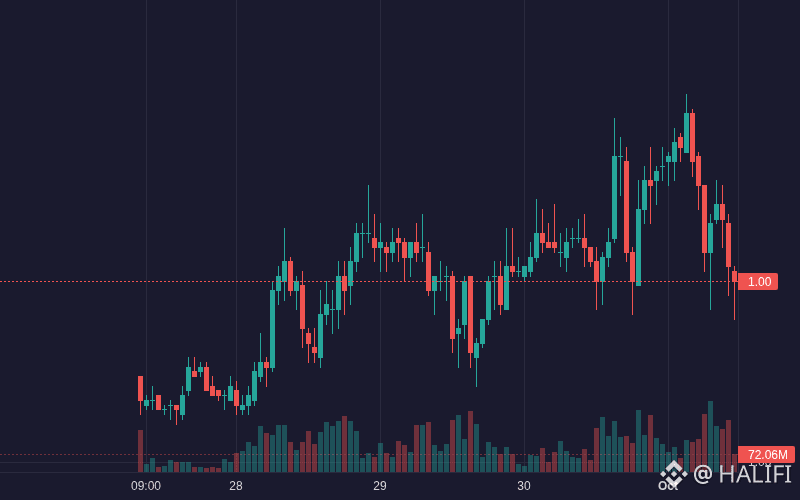
💰 Earn Steady Passive Income with ZERO Market Risk Using USDC! 🚀
Tired of crypto market volatility and sleepless nights? If you want to grow your funds without any trading risk, putting your USDC into Binance Simple Earn is the ultimate solution.
💡 Why is USDC So Safe and Stable?
USDC’s operational model is highly transparent and fully regulated:
• 1 USDC = 1 US Dollar: Its value is strictly pegged 1:1 to the USD, meaning your principal capital is 100% safe from crypto crashes.
• Fully Backed Reserves: Every single USDC token in circulation is backed 100% by cash and short-dated US government treasuries held in segregated accounts by Circle.
• Low-Risk & Regulated: Because it is tied directly to the US Dollar and backed by the safest assets in the world, your funds are heavily protected against liquidations.
🔥 Why You Should Use USDC on Binance Earn
1. High APY Rates: Binance Simple Earn consistently offers attractive Annual Percentage Yields (APY) on USDC that drastically outperform traditional bank savings accounts.
2. Flexible & Liquid: By choosing flexible terms, you can subscribe or redeem (withdraw) your funds along with the accumulated interest at any time, 24/7.
3. Zero Trading Risk: No need to stress over charts or time the market. Just sit back, relax, and watch your daily rewards accumulate automatically.
The Verdict: If you want a stress-free strategy to grow your crypto portfolio without losing your initial investment, USDC on Binance Earn is your best bet.
#USDC #Write2Earn #BianceEarn
💰 Earn Steady Passive Income with ZERO Market Risk Using USDC! 🚀
Tired of crypto market volatility and sleepless nights? If you want to grow your funds without any trading risk, putting your USDC into Binance Simple Earn is the ultimate solution.
💡 Why is USDC So Safe and Stable?
USDC’s operational model is highly transparent and fully regulated:
• 1 USDC = 1 US Dollar: Its value is strictly pegged 1:1 to the USD, meaning your principal capital is 100% safe from crypto crashes.
• Fully Backed Reserves: Every single USDC token in circulation is backed 100% by cash and short-dated US government treasuries held in segregated accounts by Circle.
• Low-Risk & Regulated: Because it is tied directly to the US Dollar and backed by the safest assets in the world, your funds are heavily protected against liquidations.
🔥 Why You Should Use USDC on Binance Earn
1. High APY Rates: Binance Simple Earn consistently offers attractive Annual Percentage Yields (APY) on USDC that drastically outperform traditional bank savings accounts.
2. Flexible & Liquid: By choosing flexible terms, you can subscribe or redeem (withdraw) your funds along with the accumulated interest at any time, 24/7.
3. Zero Trading Risk: No need to stress over charts or time the market. Just sit back, relax, and watch your daily rewards accumulate automatically.
The Verdict: If you want a stress-free strategy to grow your crypto portfolio without losing your initial investment, USDC on Binance Earn is your best bet.
#USDC #Write2Earn #BianceEarn
Tired of crypto market volatility and sleepless nights? If you want to grow your funds without any trading risk, putting your USDC into Binance Simple Earn is the ultimate solution.
💡 Why is USDC So Safe and Stable?
USDC’s operational model is highly transparent and fully regulated:
• 1 USDC = 1 US Dollar: Its value is strictly pegged 1:1 to the USD, meaning your principal capital is 100% safe from crypto crashes.
• Fully Backed Reserves: Every single USDC token in circulation is backed 100% by cash and short-dated US government treasuries held in segregated accounts by Circle.
• Low-Risk & Regulated: Because it is tied directly to the US Dollar and backed by the safest assets in the world, your funds are heavily protected against liquidations.
🔥 Why You Should Use USDC on Binance Earn
1. High APY Rates: Binance Simple Earn consistently offers attractive Annual Percentage Yields (APY) on USDC that drastically outperform traditional bank savings accounts.
2. Flexible & Liquid: By choosing flexible terms, you can subscribe or redeem (withdraw) your funds along with the accumulated interest at any time, 24/7.
3. Zero Trading Risk: No need to stress over charts or time the market. Just sit back, relax, and watch your daily rewards accumulate automatically.
The Verdict: If you want a stress-free strategy to grow your crypto portfolio without losing your initial investment, USDC on Binance Earn is your best bet.
#USDC #Write2Earn #BianceEarn
77

The crypto market continues to attract attention with Bitcoin, Ethereum, and USDC playing important roles in the digital asset ecosystem. Bitcoin remains one of the most recognized cryptocurrencies, Ethereum continues to support a wide range of blockchain applications, and USDC provides a stablecoin option designed to maintain a value close to the US dollar. Always do your own research and manage risk carefully before making any trading or investment decision.
#Bitcoin #Ethereum #USDC #Crypto #BinanceSquareTalks
The crypto market continues to attract attention with Bitcoin, Ethereum, and USDC playing important roles in the digital asset ecosystem. Bitcoin remains one of the most recognized cryptocurrencies, Ethereum continues to support a wide range of blockchain applications, and USDC provides a stablecoin option designed to maintain a value close to the US dollar. Always do your own research and manage risk carefully before making any trading or investment decision.
#Bitcoin #Ethereum #USDC #Crypto #BinanceSquareTalks
#Bitcoin #Ethereum #USDC #Crypto #BinanceSquareTalks
76

$USDC TRENDING UPDATE — October 1, 2026
💵 USD Coin (USDC) Price: $0.9999 Market Cap: ~$74.13B Circulating Supply: ~74.13B USDC 24H Volume: ~$16.95B
🔎 What’s Trending?
USDC remains closely tied to the $1 level, reinforcing its role as a major dollar-backed stablecoin. Circle states that USDC is redeemable 1:1 for USD and backed by highly liquid cash and cash-equivalent reserves.
⚡ Binance Update Binance has recently launched new USDC-related earning opportunities, including Flexible USDC products and promotional rewards. Binance’s latest Yield Arena announcement also highlights opportunities involving USDC.
🔥 Fresh USDC Activity On October 1, Circle’s USDC Treasury reportedly minted 750M USDC on Solana within 24 hours, highlighting continued on-chain stablecoin activity.
📊 Market Watch USDC is currently ranked among the largest crypto assets by market capitalization, while its price remains near $1 by design.
#USDC #USD Coin #Binance #Crypto #Stablecoin
{spot}(USDCUSDT)
$USDC TRENDING UPDATE — October 1, 2026
💵 USD Coin (USDC) Price: $0.9999 Market Cap: ~$74.13B Circulating Supply: ~74.13B USDC 24H Volume: ~$16.95B
🔎 What’s Trending?
USDC remains closely tied to the $1 level, reinforcing its role as a major dollar-backed stablecoin. Circle states that USDC is redeemable 1:1 for USD and backed by highly liquid cash and cash-equivalent reserves.
⚡ Binance Update Binance has recently launched new USDC-related earning opportunities, including Flexible USDC products and promotional rewards. Binance’s latest Yield Arena announcement also highlights opportunities involving USDC.
🔥 Fresh USDC Activity On October 1, Circle’s USDC Treasury reportedly minted 750M USDC on Solana within 24 hours, highlighting continued on-chain stablecoin activity.
📊 Market Watch USDC is currently ranked among the largest crypto assets by market capitalization, while its price remains near $1 by design.
#USDC #USD Coin #Binance #Crypto #Stablecoin
💵 USD Coin (USDC) Price: $0.9999 Market Cap: ~$74.13B Circulating Supply: ~74.13B USDC 24H Volume: ~$16.95B
🔎 What’s Trending?
USDC remains closely tied to the $1 level, reinforcing its role as a major dollar-backed stablecoin. Circle states that USDC is redeemable 1:1 for USD and backed by highly liquid cash and cash-equivalent reserves.
⚡ Binance Update Binance has recently launched new USDC-related earning opportunities, including Flexible USDC products and promotional rewards. Binance’s latest Yield Arena announcement also highlights opportunities involving USDC.
🔥 Fresh USDC Activity On October 1, Circle’s USDC Treasury reportedly minted 750M USDC on Solana within 24 hours, highlighting continued on-chain stablecoin activity.
📊 Market Watch USDC is currently ranked among the largest crypto assets by market capitalization, while its price remains near $1 by design.
#USDC #USD Coin #Binance #Crypto #Stablecoin
1
5

·
--
🚨 VISA PARTNERS WITH SHINHAN GROUP TO EXPAND STABLECOIN INFRASTRUCTURE VIA $USDC 🏦
Institutional capital is officially building out the settlement layer. South Korea's Shinhan Financial Group has finalized a strategic business agreement with Visa to leverage Visa's stablecoin platform across issuance, AI payment rails, and cross-border remittance. 🔍
This is smart money establishing deep structural liquidity and real-world utility across commercial banking channels. 🌊 By integrating bank card settlements and B2B order flow, institutional adoption is moving from speculative positioning directly into core financial infrastructure. 📊
💡 As legacy financial titans solidify digital asset settlement rails, how quickly do you expect global payment volume to shift toward on-chain stablecoin settlement? 🤔
⚠️ Not financial advice. Always manage your risk. 🛡️
🏷️ #USDC #Stablecoins #Institutional #Crypto #Fintech
🎯 🦈
🚨 VISA PARTNERS WITH SHINHAN GROUP TO EXPAND STABLECOIN INFRASTRUCTURE VIA $USDC 🏦
Institutional capital is officially building out the settlement layer. South Korea's Shinhan Financial Group has finalized a strategic business agreement with Visa to leverage Visa's stablecoin platform across issuance, AI payment rails, and cross-border remittance. 🔍
This is smart money establishing deep structural liquidity and real-world utility across commercial banking channels. 🌊 By integrating bank card settlements and B2B order flow, institutional adoption is moving from speculative positioning directly into core financial infrastructure. 📊
💡 As legacy financial titans solidify digital asset settlement rails, how quickly do you expect global payment volume to shift toward on-chain stablecoin settlement? 🤔
⚠️ Not financial advice. Always manage your risk. 🛡️
🏷️ #USDC #Stablecoins #Institutional #Crypto #Fintech
🎯 🦈
Institutional capital is officially building out the settlement layer. South Korea's Shinhan Financial Group has finalized a strategic business agreement with Visa to leverage Visa's stablecoin platform across issuance, AI payment rails, and cross-border remittance. 🔍
This is smart money establishing deep structural liquidity and real-world utility across commercial banking channels. 🌊 By integrating bank card settlements and B2B order flow, institutional adoption is moving from speculative positioning directly into core financial infrastructure. 📊
💡 As legacy financial titans solidify digital asset settlement rails, how quickly do you expect global payment volume to shift toward on-chain stablecoin settlement? 🤔
⚠️ Not financial advice. Always manage your risk. 🛡️
🏷️ #USDC #Stablecoins #Institutional #Crypto #Fintech
🎯 🦈
9
·
--
🦈 MASSIVE 5 BILLION $USDC MINT SIGNALING HEAVY INSTITUTIONAL LIQUIDITY LOADING ⚡
Circle minting 5 billion $USDC over a single seven-day window represents a massive expansion of system liquidity. 🏦 📊 This level of balance sheet growth typically signals dry powder moving into position ahead of institutional order flow accumulation.
When institutional issuers flood the market with fresh capital at this scale, it builds the structural foundation needed to absorb upper resistance pools. 🔍 We are closely tracking order book depth to see where this capital aggressively fills structural inefficiencies.
💬 Do you expect this capital injection to trigger an immediate market expansion, or will smart money wait for one more liquidity sweep? 👇
⚠️ Not financial advice. Always manage your risk. 🛡️
🏷️ #USDC #SmartMoney #CryptoLiquidity #MarketStructure #Crypto
🦈 🏦
🦈 MASSIVE 5 BILLION $USDC MINT SIGNALING HEAVY INSTITUTIONAL LIQUIDITY LOADING ⚡
Circle minting 5 billion $USDC over a single seven-day window represents a massive expansion of system liquidity. 🏦 📊 This level of balance sheet growth typically signals dry powder moving into position ahead of institutional order flow accumulation.
When institutional issuers flood the market with fresh capital at this scale, it builds the structural foundation needed to absorb upper resistance pools. 🔍 We are closely tracking order book depth to see where this capital aggressively fills structural inefficiencies.
💬 Do you expect this capital injection to trigger an immediate market expansion, or will smart money wait for one more liquidity sweep? 👇
⚠️ Not financial advice. Always manage your risk. 🛡️
🏷️ #USDC #SmartMoney #CryptoLiquidity #MarketStructure #Crypto
🦈 🏦
Circle minting 5 billion $USDC over a single seven-day window represents a massive expansion of system liquidity. 🏦 📊 This level of balance sheet growth typically signals dry powder moving into position ahead of institutional order flow accumulation.
When institutional issuers flood the market with fresh capital at this scale, it builds the structural foundation needed to absorb upper resistance pools. 🔍 We are closely tracking order book depth to see where this capital aggressively fills structural inefficiencies.
💬 Do you expect this capital injection to trigger an immediate market expansion, or will smart money wait for one more liquidity sweep? 👇
⚠️ Not financial advice. Always manage your risk. 🛡️
🏷️ #USDC #SmartMoney #CryptoLiquidity #MarketStructure #Crypto
🦈 🏦
14

🚨 OSTIUM LAUNCHES RECOVERY PORTAL WITH 90% OF WALLETS GETTING FULL $USDC REIMBURSEMENT! 🛡️
After a heavy $23.75M infrastructure exploit back in July, the Ostium team is pushing back into the light with their live recovery portal. 🔒 Out of 3,666 affected addresses, over 90% qualify for instant 100% loss coverage under Phase 1, prioritizing retail holders first.
Smaller claims up to 1,000 $USDC can exit fully intact, while larger victims balance immediate payouts against Phase 2 protocol revenue splits before the October 30 cutoff. 📊 With regular T+3 settlements active and hardened defenses running, institutional risk management is finally taking center stage. 💬 Will you claim the guaranteed payout now or play the long game on future protocol yield? 👇
⚠️ Not financial advice. Always manage your risk. 🛡️
🏷️ #USDC #DeFi #CryptoSecurity #RiskManagement #Crypto
🎯 🛡️
🚨 OSTIUM LAUNCHES RECOVERY PORTAL WITH 90% OF WALLETS GETTING FULL $USDC REIMBURSEMENT! 🛡️
After a heavy $23.75M infrastructure exploit back in July, the Ostium team is pushing back into the light with their live recovery portal. 🔒 Out of 3,666 affected addresses, over 90% qualify for instant 100% loss coverage under Phase 1, prioritizing retail holders first.
Smaller claims up to 1,000 $USDC can exit fully intact, while larger victims balance immediate payouts against Phase 2 protocol revenue splits before the October 30 cutoff. 📊 With regular T+3 settlements active and hardened defenses running, institutional risk management is finally taking center stage. 💬 Will you claim the guaranteed payout now or play the long game on future protocol yield? 👇
⚠️ Not financial advice. Always manage your risk. 🛡️
🏷️ #USDC #DeFi #CryptoSecurity #RiskManagement #Crypto
🎯 🛡️
After a heavy $23.75M infrastructure exploit back in July, the Ostium team is pushing back into the light with their live recovery portal. 🔒 Out of 3,666 affected addresses, over 90% qualify for instant 100% loss coverage under Phase 1, prioritizing retail holders first.
Smaller claims up to 1,000 $USDC can exit fully intact, while larger victims balance immediate payouts against Phase 2 protocol revenue splits before the October 30 cutoff. 📊 With regular T+3 settlements active and hardened defenses running, institutional risk management is finally taking center stage. 💬 Will you claim the guaranteed payout now or play the long game on future protocol yield? 👇
⚠️ Not financial advice. Always manage your risk. 🛡️
🏷️ #USDC #DeFi #CryptoSecurity #RiskManagement #Crypto
🎯 🛡️
9
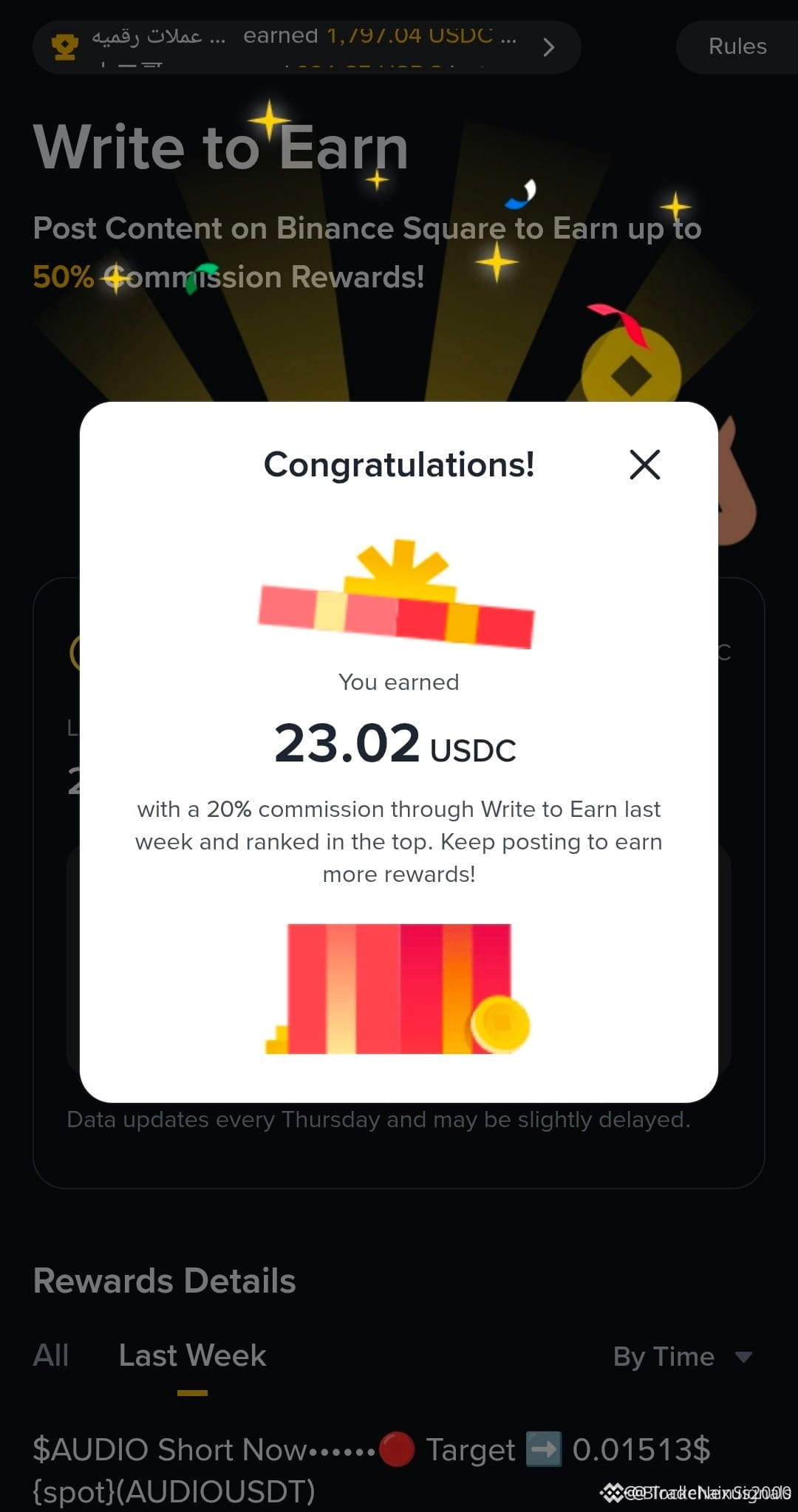
📊 $USDC YIELD RECAP: SYSTEMATIC EXECUTION CONTINUES TO COMPOUND WEEKLY RETURNS ⚡
📌 Discipline in market analysis mirrors institutional yield farming: small, systematic gains accumulate over time. Securing a $23.02 $USDC weekly payout through top-tier content engagement and a 20% commission tier confirms the power of structured performance. 📊
💡 Just as smart money targets sustained inefficiencies rather than chasing volatile noise, consistent analytical contribution yields predictable residual momentum. 🔍 Moving forward, expect deeper structural breakdowns, refined order flow setups, and sharper execution parameters. 💬 Are you building a structured, long-term yield engine, or are you still trading market noise? 👇
⚠️ Not financial advice. Always manage your risk. 🛡️
🏷️ #USDC #Trading #Crypto #Yield #MarketStructure
🎯 🦈
📊 $USDC YIELD RECAP: SYSTEMATIC EXECUTION CONTINUES TO COMPOUND WEEKLY RETURNS ⚡
📌 Discipline in market analysis mirrors institutional yield farming: small, systematic gains accumulate over time. Securing a $23.02 $USDC weekly payout through top-tier content engagement and a 20% commission tier confirms the power of structured performance. 📊
💡 Just as smart money targets sustained inefficiencies rather than chasing volatile noise, consistent analytical contribution yields predictable residual momentum. 🔍 Moving forward, expect deeper structural breakdowns, refined order flow setups, and sharper execution parameters. 💬 Are you building a structured, long-term yield engine, or are you still trading market noise? 👇
⚠️ Not financial advice. Always manage your risk. 🛡️
🏷️ #USDC #Trading #Crypto #Yield #MarketStructure
🎯 🦈
📌 Discipline in market analysis mirrors institutional yield farming: small, systematic gains accumulate over time. Securing a $23.02 $USDC weekly payout through top-tier content engagement and a 20% commission tier confirms the power of structured performance. 📊
💡 Just as smart money targets sustained inefficiencies rather than chasing volatile noise, consistent analytical contribution yields predictable residual momentum. 🔍 Moving forward, expect deeper structural breakdowns, refined order flow setups, and sharper execution parameters. 💬 Are you building a structured, long-term yield engine, or are you still trading market noise? 👇
⚠️ Not financial advice. Always manage your risk. 🛡️
🏷️ #USDC #Trading #Crypto #Yield #MarketStructure
🎯 🦈
5

·
--
Bullish
$USDC remains firmly around its $1 peg, with Circle reporting $75.2B in circulation as of Sept. 24, backed by highly liquid reserves and 1:1 redemption.
{spot}(USDCUSDT)
Today’s key development: Circle recently minted $250M $USDC on Solana, adding fresh stablecoin liquidity to the ecosystem. A mint itself does not mean $250M of immediate buying pressure, but it can signal increasing demand for on-chain dollar liquidity.
#USDC #QNTRises287% #AltcoinSeasonIndexHoldsAbove60For5Days #SECToClarifyOnChainFundraisingRules #UKFCAOpensCryptoFirmAuthorization
$USDC remains firmly around its $1 peg, with Circle reporting $75.2B in circulation as of Sept. 24, backed by highly liquid reserves and 1:1 redemption.
Today’s key development: Circle recently minted $250M $USDC on Solana, adding fresh stablecoin liquidity to the ecosystem. A mint itself does not mean $250M of immediate buying pressure, but it can signal increasing demand for on-chain dollar liquidity.
#USDC #QNTRises287% #AltcoinSeasonIndexHoldsAbove60For5Days #SECToClarifyOnChainFundraisingRules #UKFCAOpensCryptoFirmAuthorization
Today’s key development: Circle recently minted $250M $USDC on Solana, adding fresh stablecoin liquidity to the ecosystem. A mint itself does not mean $250M of immediate buying pressure, but it can signal increasing demand for on-chain dollar liquidity.
#USDC #QNTRises287% #AltcoinSeasonIndexHoldsAbove60For5Days #SECToClarifyOnChainFundraisingRules #UKFCAOpensCryptoFirmAuthorization
14
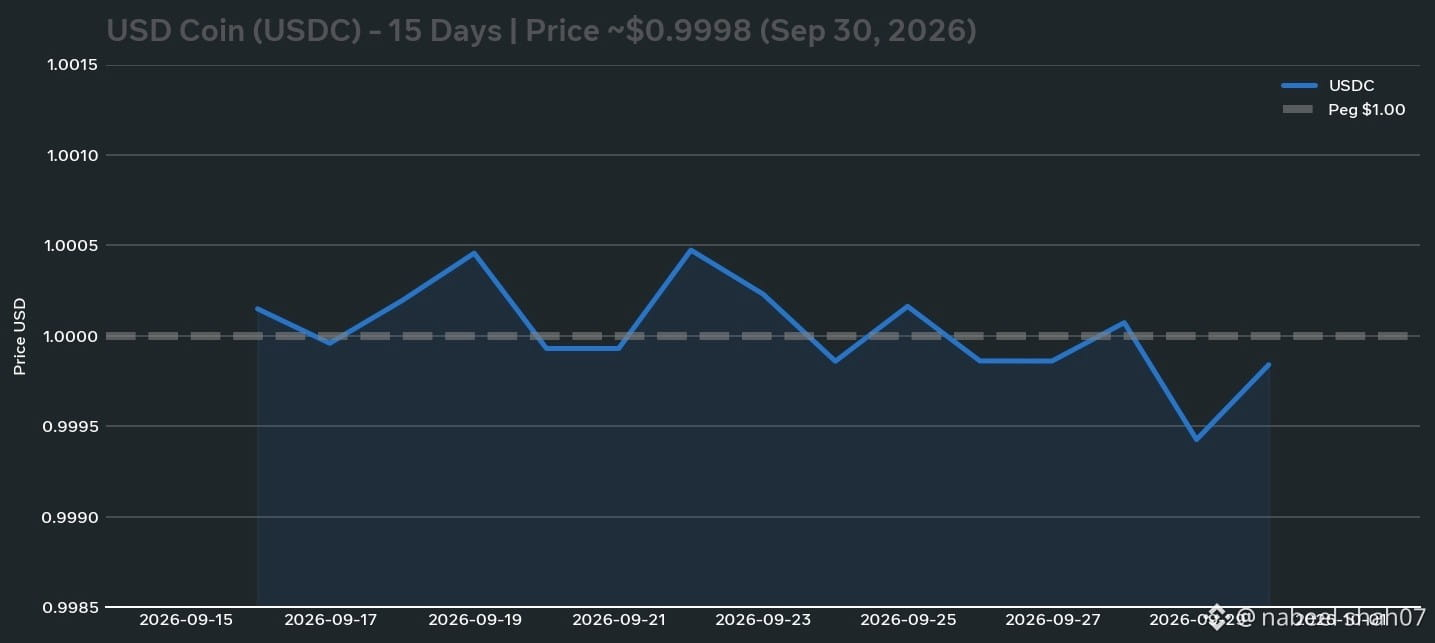
$USDC (USD Coin) - Short Latest Analysis*
*Price (Sep 30, 2026):* ∼$0.9998 - $1.0006
*24h:* -0.0045% to +0.031% | *Market Cap:* ∼$74.4B | *Rank:* #6
*Volume 24h:* ∼$18B 7e63255d
*Key Points:*
- *Peg is solid:* USDC is a fully collateralized, regulated dollar stablecoin issued by Circle, backed 1:1 by cash and cash-equivalents. Current $0.9998 is essentially $1.00.
- *Stability:* 5-day return +0.03%, 1-month +0.02%, 1-year +0.11%. Ultra-tight range $0.9994 - $1.0007 today.
- *Supply:* ∼74.4B circulating, fully backed. 015d7e63255d
*Outlook:* Neutral / Stable. Like USDT, USDC is not for speculation. Expect $0.999 - $1.001 sideways. Preferred for US-regulated on/off ramps vs USDT.
Want a side-by-side USDT vs USDC peg comparison chart?
#USDC
#JapanMOFStudyGroupOnTokenizedGovtBonds #QNTRises287%
#USDT
$USDC (USD Coin) - Short Latest Analysis*
*Price (Sep 30, 2026):* ∼$0.9998 - $1.0006
*24h:* -0.0045% to +0.031% | *Market Cap:* ∼$74.4B | *Rank:* #6
*Volume 24h:* ∼$18B 7e63255d
*Key Points:*
- *Peg is solid:* USDC is a fully collateralized, regulated dollar stablecoin issued by Circle, backed 1:1 by cash and cash-equivalents. Current $0.9998 is essentially $1.00.
- *Stability:* 5-day return +0.03%, 1-month +0.02%, 1-year +0.11%. Ultra-tight range $0.9994 - $1.0007 today.
- *Supply:* ∼74.4B circulating, fully backed. 015d7e63255d
*Outlook:* Neutral / Stable. Like USDT, USDC is not for speculation. Expect $0.999 - $1.001 sideways. Preferred for US-regulated on/off ramps vs USDT.
Want a side-by-side USDT vs USDC peg comparison chart?
#USDC
#JapanMOFStudyGroupOnTokenizedGovtBonds #QNTRises287%
#USDT
*Price (Sep 30, 2026):* ∼$0.9998 - $1.0006
*24h:* -0.0045% to +0.031% | *Market Cap:* ∼$74.4B | *Rank:* #6
*Volume 24h:* ∼$18B 7e63255d
*Key Points:*
- *Peg is solid:* USDC is a fully collateralized, regulated dollar stablecoin issued by Circle, backed 1:1 by cash and cash-equivalents. Current $0.9998 is essentially $1.00.
- *Stability:* 5-day return +0.03%, 1-month +0.02%, 1-year +0.11%. Ultra-tight range $0.9994 - $1.0007 today.
- *Supply:* ∼74.4B circulating, fully backed. 015d7e63255d
*Outlook:* Neutral / Stable. Like USDT, USDC is not for speculation. Expect $0.999 - $1.001 sideways. Preferred for US-regulated on/off ramps vs USDT.
Want a side-by-side USDT vs USDC peg comparison chart?
#USDC
#JapanMOFStudyGroupOnTokenizedGovtBonds #QNTRises287%
#USDT
User-07af2e16:
usdc increas?
1
1
1
84

·
--
⚡ Binance Offers Up to 30% APR on USDC in LATAM
🌎 Binance Earn is launching a new-user promotion for eligible LATAM users who subscribe to USDC Flexible Products.
💰 Up to 30% APR is available during the promotional period, subject to eligibility and campaign terms.
📌 Key points:
• 🪙 Asset: USDC
• 🌎 Region: Eligible LATAM new users
• 💸 Product: Flexible Products
• 📈 Promotional APR: Up to 30%
⚠️ The promotional rate is subject to eligibility, limits, and Binance’s campaign terms.
👀 Would a 30% promotional APR make you consider trying a flexible USDC product?
#BinanceEarn #USDC #CryptoRewards #Binance
⚡ Binance Offers Up to 30% APR on USDC in LATAM
🌎 Binance Earn is launching a new-user promotion for eligible LATAM users who subscribe to USDC Flexible Products.
💰 Up to 30% APR is available during the promotional period, subject to eligibility and campaign terms.
📌 Key points:
• 🪙 Asset: USDC
• 🌎 Region: Eligible LATAM new users
• 💸 Product: Flexible Products
• 📈 Promotional APR: Up to 30%
⚠️ The promotional rate is subject to eligibility, limits, and Binance’s campaign terms.
👀 Would a 30% promotional APR make you consider trying a flexible USDC product?
#BinanceEarn #USDC #CryptoRewards #Binance
🌎 Binance Earn is launching a new-user promotion for eligible LATAM users who subscribe to USDC Flexible Products.
💰 Up to 30% APR is available during the promotional period, subject to eligibility and campaign terms.
📌 Key points:
• 🪙 Asset: USDC
• 🌎 Region: Eligible LATAM new users
• 💸 Product: Flexible Products
• 📈 Promotional APR: Up to 30%
⚠️ The promotional rate is subject to eligibility, limits, and Binance’s campaign terms.
👀 Would a 30% promotional APR make you consider trying a flexible USDC product?
#BinanceEarn #USDC #CryptoRewards #Binance

2
15
Log in to explore more content
Join global crypto users on Binance Square
⚡️ Get latest and useful information about crypto.
💬 Trusted by the world’s largest crypto exchange.
👍 Discover real insights from verified creators.
Email / Phone number
Trending Topics
1
#NFPWatch
10.8M views
19,175 Discussing
2
#BitcoinFundingRateTriplesTo10%
151,540 views
1,113 Discussing
3
#BitcoinSurpasses$86KUp2.99%
48,680 views
108 Discussing
4
#ZcashFalls21%FromSeptemberPeak
82,505 views
809 Discussing
5
#USSeptemberPayrollsAdd29KUnemploymentRises4.2%
68,026 views
496 Discussing
6
#XRPPostsFirstThreeGreenMonthsInQ3
55,323 views
668 Discussing
7
#BNBChainTokenizedStocksTop$1BAt30%Share
25,377 views
38 Discussing
8
#BitcoinRisesToward$85K
118,878 views
156 Discussing
9
#AmazonPlansToSell$8BNvidiaChips
7,853 views
90 Discussing
10
#NEARFallsToAround$4.70Down14%
49,131 views
118 Discussing