

#uae
uae
1.3M views
2,341 Discussing
Hot
Latest

·
--
Bullish
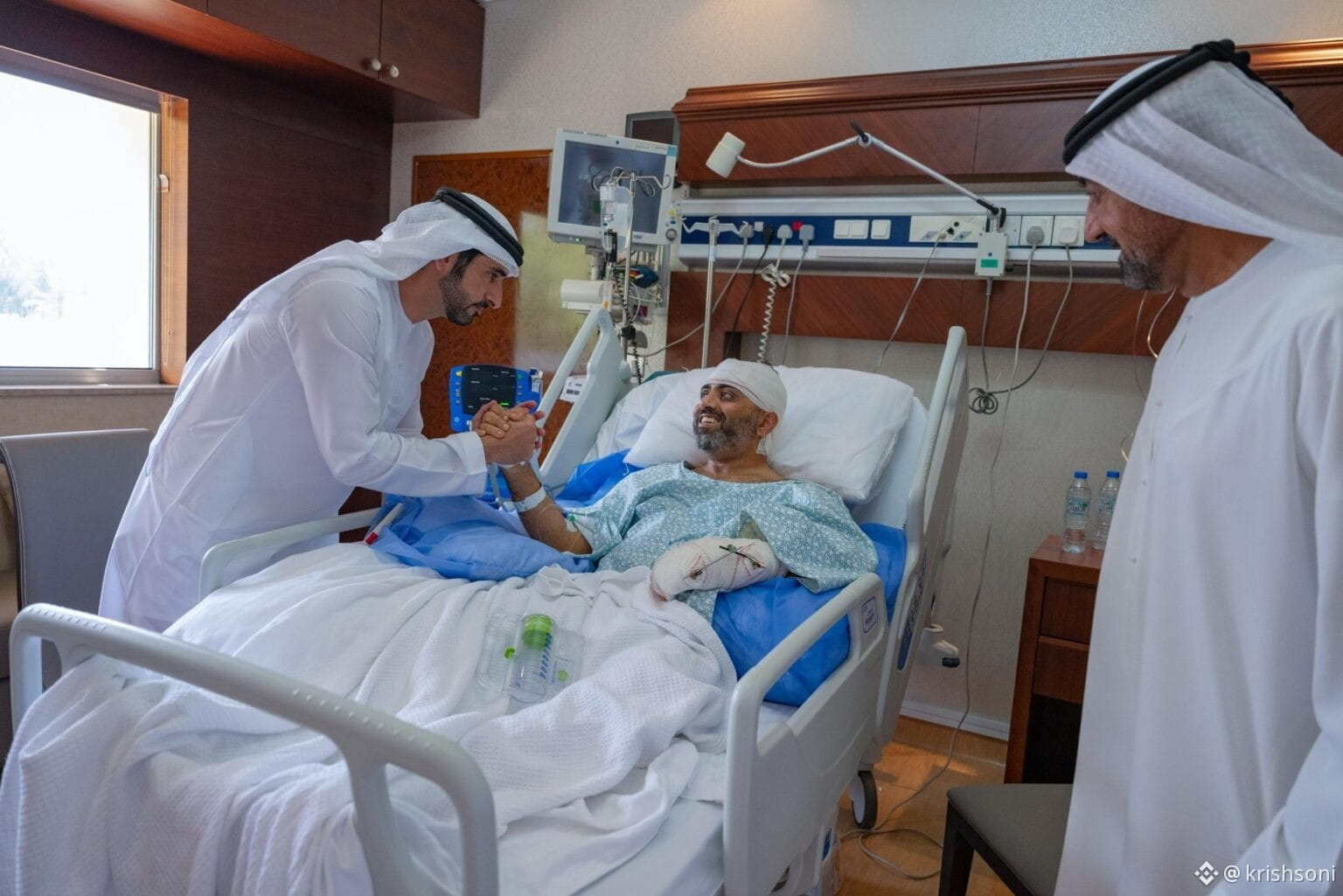
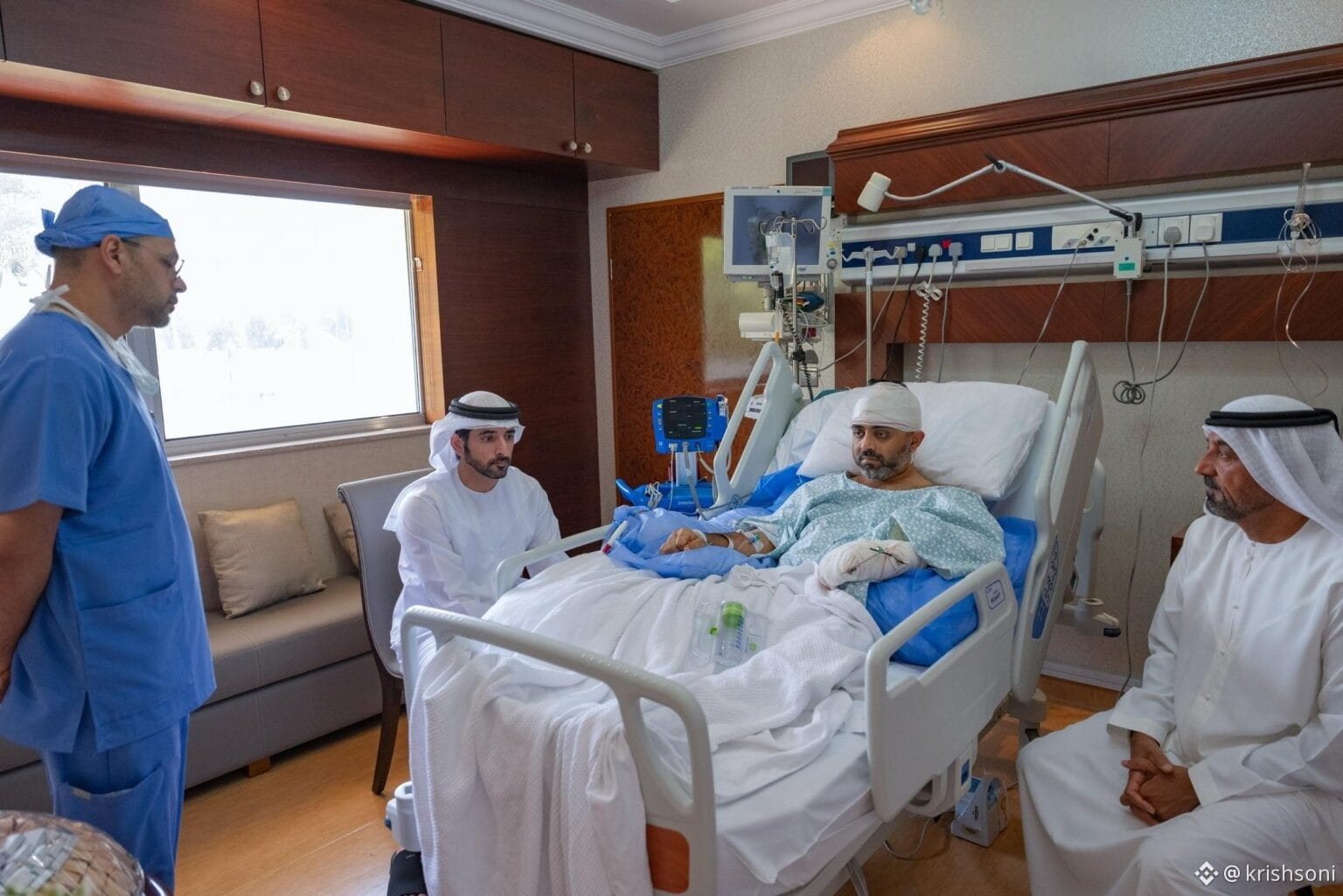
🇮🇳❤️🇦🇪 A TRUE HERO DESERVES RESPECT! 🫡
Indian pilot Captain Smit Machchhar showed incredible courage and dedication. 🇮🇳✈️
UAE Deputy Prime Minister & Crown Prince Hamdan bin Mohammed visited him in the hospital — a powerful gesture of humanity, respect and support. 🤝❤️
Heroes don’t always wear capes… sometimes they wear a pilot’s uniform. 🫡🔥
Respect to Captain Smit Machchhar! 🇮🇳❤️
#India #UAE #humanity #BinanceSquare #BTC #bnb
$AAPLB $NVDA.US $GOOGL.US
{spot}(BTCUSDT)
{spot}(PLTRBUSDT)
{spot}(NEWTUSDT)
🇮🇳❤️🇦🇪 A TRUE HERO DESERVES RESPECT! 🫡
Indian pilot Captain Smit Machchhar showed incredible courage and dedication. 🇮🇳✈️
UAE Deputy Prime Minister & Crown Prince Hamdan bin Mohammed visited him in the hospital — a powerful gesture of humanity, respect and support. 🤝❤️
Heroes don’t always wear capes… sometimes they wear a pilot’s uniform. 🫡🔥
Respect to Captain Smit Machchhar! 🇮🇳❤️
#India #UAE #humanity #BinanceSquare #BTC #bnb
$AAPLB $NVDA.US $GOOGL.US
Indian pilot Captain Smit Machchhar showed incredible courage and dedication. 🇮🇳✈️
UAE Deputy Prime Minister & Crown Prince Hamdan bin Mohammed visited him in the hospital — a powerful gesture of humanity, respect and support. 🤝❤️
Heroes don’t always wear capes… sometimes they wear a pilot’s uniform. 🫡🔥
Respect to Captain Smit Machchhar! 🇮🇳❤️
#India #UAE #humanity #BinanceSquare #BTC #bnb
$AAPLB $NVDA.US $GOOGL.US
2
203



·
--
Avalanche’s UAE PASS deal is a test of institutional adoption — Can it scale?
$AVAX
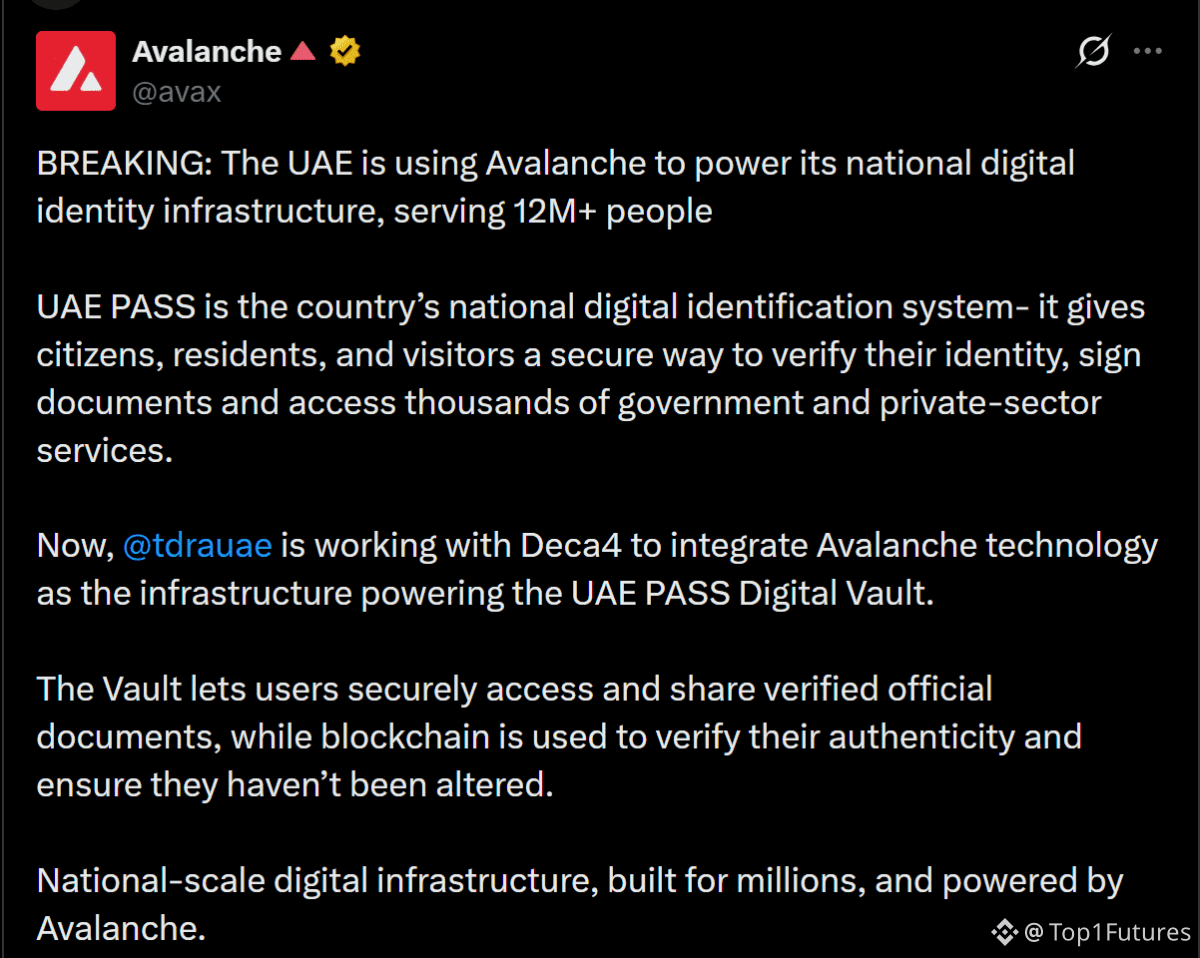
Avalanche’s UAE PASS integration brings blockchain verification into a national digital identity system.
🔹 Avalanche gains institutional exposure through UAE PASS, extending blockchain into national digital identity services.
🔹 UAE rollout strengthens Avalanche’s institutional case, but lasting impact depends on wider adoption and usage.
#avax #UAE
Avalanche’s UAE PASS deal is a test of institutional adoption — Can it scale?
$AVAX
Avalanche’s UAE PASS integration brings blockchain verification into a national digital identity system.
🔹 Avalanche gains institutional exposure through UAE PASS, extending blockchain into national digital identity services.
🔹 UAE rollout strengthens Avalanche’s institutional case, but lasting impact depends on wider adoption and usage.
#avax #UAE
$AVAX
Avalanche’s UAE PASS integration brings blockchain verification into a national digital identity system.
🔹 Avalanche gains institutional exposure through UAE PASS, extending blockchain into national digital identity services.
🔹 UAE rollout strengthens Avalanche’s institutional case, but lasting impact depends on wider adoption and usage.
#avax #UAE
1
72

#AvalancheIntegratesIntoUAEPassDigitalVault Writing
#AvalancheIntegratesIntoUAEPassDigitalVault
Avalanche’s integration with the UAE Pass Digital Vault could mark another important step toward bringing blockchain technology into everyday digital infrastructure. 🇦🇪🔺
By connecting Avalanche with a trusted digital identity and document ecosystem, the development highlights how blockchain networks can support secure, verifiable, and efficient digital services. The UAE has been rapidly expanding its digital transformation efforts, and blockchain adoption could play a major role in building the next generation of decentralized infrastructure.
For Avalanche, integrations like this can strengthen its presence in the Middle East and demonstrate practical use cases beyond crypto trading. If adoption continues, we could see more government services, businesses, and users exploring blockchain-powered solutions.
This is a development worth watching as the UAE continues positioning itself as a global hub for digital innovation. 🚀
#Avalanche #AVAX #UAE #Blockchain #Web3
$BTC
{spot}(BTCUSDT)
$XRP
{spot}(XRPUSDT)
$SOL
{spot}(SOLUSDT)
#AvalancheIntegratesIntoUAEPassDigitalVault Writing
#AvalancheIntegratesIntoUAEPassDigitalVault
Avalanche’s integration with the UAE Pass Digital Vault could mark another important step toward bringing blockchain technology into everyday digital infrastructure. 🇦🇪🔺
By connecting Avalanche with a trusted digital identity and document ecosystem, the development highlights how blockchain networks can support secure, verifiable, and efficient digital services. The UAE has been rapidly expanding its digital transformation efforts, and blockchain adoption could play a major role in building the next generation of decentralized infrastructure.
For Avalanche, integrations like this can strengthen its presence in the Middle East and demonstrate practical use cases beyond crypto trading. If adoption continues, we could see more government services, businesses, and users exploring blockchain-powered solutions.
This is a development worth watching as the UAE continues positioning itself as a global hub for digital innovation. 🚀
#Avalanche #AVAX #UAE #Blockchain #Web3
$BTC
$XRP
$SOL
#AvalancheIntegratesIntoUAEPassDigitalVault
Avalanche’s integration with the UAE Pass Digital Vault could mark another important step toward bringing blockchain technology into everyday digital infrastructure. 🇦🇪🔺
By connecting Avalanche with a trusted digital identity and document ecosystem, the development highlights how blockchain networks can support secure, verifiable, and efficient digital services. The UAE has been rapidly expanding its digital transformation efforts, and blockchain adoption could play a major role in building the next generation of decentralized infrastructure.
For Avalanche, integrations like this can strengthen its presence in the Middle East and demonstrate practical use cases beyond crypto trading. If adoption continues, we could see more government services, businesses, and users exploring blockchain-powered solutions.
This is a development worth watching as the UAE continues positioning itself as a global hub for digital innovation. 🚀
#Avalanche #AVAX #UAE #Blockchain #Web3
$BTC
$XRP
$SOL

104

·
--
🇦🇪 JUST IN:
The UAE is reportedly working to integrate Avalanche into the UAE PASS Digital Vault, which serves more than 12 million users.
If completed, this could be another major step toward real-world blockchain adoption and digital identity infrastructure. 🚀
#Avalanche #AVAX #UAE #Crypto #blockkchain
🇦🇪 JUST IN:
The UAE is reportedly working to integrate Avalanche into the UAE PASS Digital Vault, which serves more than 12 million users.
If completed, this could be another major step toward real-world blockchain adoption and digital identity infrastructure. 🚀
#Avalanche #AVAX #UAE #Crypto #blockkchain
The UAE is reportedly working to integrate Avalanche into the UAE PASS Digital Vault, which serves more than 12 million users.
If completed, this could be another major step toward real-world blockchain adoption and digital identity infrastructure. 🚀
#Avalanche #AVAX #UAE #Crypto #blockkchain

91

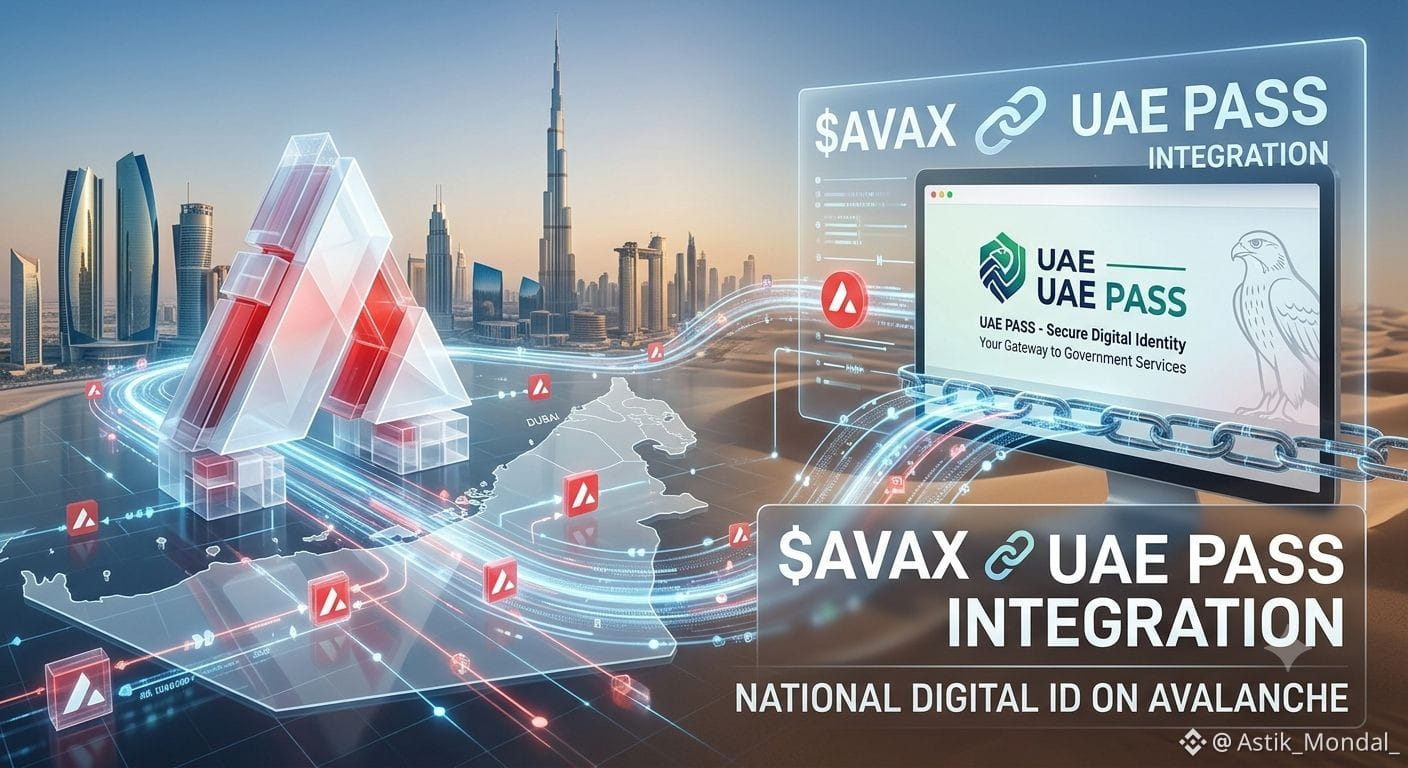
🚨 JUST IN: 🇦🇪 UAE IS BRINGING AVALANCHE INTO ITS NATIONAL DIGITAL ID SYSTEM.
The UAE is reportedly integrating Avalanche $AVAX blockchain technology into UAE PASS, the country’s national digital identity platform.
This is bigger than a simple blockchain integration.
UAE PASS is a core part of the UAE’s digital infrastructure, connecting citizens and residents with government and private-sector services.
Now blockchain is moving deeper into that ecosystem.
Avalanche has been pushing aggressively into real-world adoption, tokenization and institutional infrastructure.
And the UAE is becoming one of the most important jurisdictions for blockchain innovation.
If this integration scales, it could put Avalanche infrastructure directly in front of millions of users and potentially accelerate adoption across identity, credentials and digital services.
The bigger trend is impossible to ignore:
Governments aren’t just talking about blockchain anymore.
They’re starting to build with it.
$AVAX holders are watching this one closely.
#Avalanche #AVAX #Crypto #Blockchain #UAE $AVAX
{spot}(AVAXUSDT)
🚨 JUST IN: 🇦🇪 UAE IS BRINGING AVALANCHE INTO ITS NATIONAL DIGITAL ID SYSTEM.
The UAE is reportedly integrating Avalanche $AVAX blockchain technology into UAE PASS, the country’s national digital identity platform.
This is bigger than a simple blockchain integration.
UAE PASS is a core part of the UAE’s digital infrastructure, connecting citizens and residents with government and private-sector services.
Now blockchain is moving deeper into that ecosystem.
Avalanche has been pushing aggressively into real-world adoption, tokenization and institutional infrastructure.
And the UAE is becoming one of the most important jurisdictions for blockchain innovation.
If this integration scales, it could put Avalanche infrastructure directly in front of millions of users and potentially accelerate adoption across identity, credentials and digital services.
The bigger trend is impossible to ignore:
Governments aren’t just talking about blockchain anymore.
They’re starting to build with it.
$AVAX holders are watching this one closely.
#Avalanche #AVAX #Crypto #Blockchain #UAE $AVAX
The UAE is reportedly integrating Avalanche $AVAX blockchain technology into UAE PASS, the country’s national digital identity platform.
This is bigger than a simple blockchain integration.
UAE PASS is a core part of the UAE’s digital infrastructure, connecting citizens and residents with government and private-sector services.
Now blockchain is moving deeper into that ecosystem.
Avalanche has been pushing aggressively into real-world adoption, tokenization and institutional infrastructure.
And the UAE is becoming one of the most important jurisdictions for blockchain innovation.
If this integration scales, it could put Avalanche infrastructure directly in front of millions of users and potentially accelerate adoption across identity, credentials and digital services.
The bigger trend is impossible to ignore:
Governments aren’t just talking about blockchain anymore.
They’re starting to build with it.
$AVAX holders are watching this one closely.
#Avalanche #AVAX #Crypto #Blockchain #UAE $AVAX
1
25

🇦🇪 Abu Dhabi Investment Authority appoints new investment head for private equity
The Board of the Abu Dhabi Investment Authority, an Emirati sovereign wealth fund managing assets of $160 billion, has appointed Laurie Hall-Kim as the head of investment for its private equity activities. This appointment comes as part of efforts to strengthen the fund’s leadership team.
━━━━━━━━━━━━━━
📊 Impact: 📊 Moderate
🏷️ OTHER
#UAE #Investment #FinancialNews #AbuDhabi #PrivateEquity
📰 Source: financialpost.com
🇦🇪 Abu Dhabi Investment Authority appoints new investment head for private equity
The Board of the Abu Dhabi Investment Authority, an Emirati sovereign wealth fund managing assets of $160 billion, has appointed Laurie Hall-Kim as the head of investment for its private equity activities. This appointment comes as part of efforts to strengthen the fund’s leadership team.
━━━━━━━━━━━━━━
📊 Impact: 📊 Moderate
🏷️ OTHER
#UAE #Investment #FinancialNews #AbuDhabi #PrivateEquity
📰 Source: financialpost.com
The Board of the Abu Dhabi Investment Authority, an Emirati sovereign wealth fund managing assets of $160 billion, has appointed Laurie Hall-Kim as the head of investment for its private equity activities. This appointment comes as part of efforts to strengthen the fund’s leadership team.
━━━━━━━━━━━━━━
📊 Impact: 📊 Moderate
🏷️ OTHER
#UAE #Investment #FinancialNews #AbuDhabi #PrivateEquity
📰 Source: financialpost.com
23

·
--
Bullish
30D trade $ETH 50 USDT
🇦🇪 The UAE climbs to the world’s #2 position in adopting cryptocurrencies!
According to the Henley & Partners 2026 index, the UAE advanced 4 spots from last year, coming in just behind Singapore.
UAE: 46.4/60 points
🥇 Singapore
🥈 UAE
🥉 Hong Kong
Innovation, infrastructure, the regulatory environment, and tax advantages are factors that strengthened the UAE’s position as a global hub for digital assets.
Do you expect the UAE to take the #1 spot soon?
$BTC $ETH $BNB
#Crypto #UAE #bitcoin #Binance #Web3
🇦🇪 The UAE climbs to the world’s #2 position in adopting cryptocurrencies!
According to the Henley & Partners 2026 index, the UAE advanced 4 spots from last year, coming in just behind Singapore.
UAE: 46.4/60 points
🥇 Singapore
🥈 UAE
🥉 Hong Kong
Innovation, infrastructure, the regulatory environment, and tax advantages are factors that strengthened the UAE’s position as a global hub for digital assets.
Do you expect the UAE to take the #1 spot soon?
$BTC $ETH $BNB
#Crypto #UAE #bitcoin #Binance #Web3
According to the Henley & Partners 2026 index, the UAE advanced 4 spots from last year, coming in just behind Singapore.
UAE: 46.4/60 points
🥇 Singapore
🥈 UAE
🥉 Hong Kong
Innovation, infrastructure, the regulatory environment, and tax advantages are factors that strengthened the UAE’s position as a global hub for digital assets.
Do you expect the UAE to take the #1 spot soon?
$BTC $ETH $BNB
#Crypto #UAE #bitcoin #Binance #Web3

2
158

·
--
The UAE’s new VAT framework now treats crypto‑based payments like any other taxable service, meaning merchants must calculate and remit 5 % VAT on the value of the transaction at the point of sale. For platforms that already handle fiat VAT reporting, the shift adds a layer of compliance work: they need to capture the USD‑ or AED‑equivalent value of each crypto trade, store the tax‑relevant data, and issue proper invoices.
From a market perspective, the rule could encourage higher‑quality on‑ramping services that can prove they’re VAT‑compliant, potentially narrowing the gap between regulated exchanges and decentralized protocols. Traders may see a modest uptick in activity on Binance Spot for pairs like $BTC/$USDT and ETH/$USDT as users favour familiar, audit‑ready venues. At the same time, some DeFi‑only participants might look for jurisdictions with lighter tax treatment, reinforcing the split between centralized and permissionless liquidity sources.
How are you adjusting your tax workflow or exchange choice in response to the UAE’s new requirements?
#CryptoTax #UAE #Binance #GAMERXERO
The UAE’s new VAT framework now treats crypto‑based payments like any other taxable service, meaning merchants must calculate and remit 5 % VAT on the value of the transaction at the point of sale. For platforms that already handle fiat VAT reporting, the shift adds a layer of compliance work: they need to capture the USD‑ or AED‑equivalent value of each crypto trade, store the tax‑relevant data, and issue proper invoices.
From a market perspective, the rule could encourage higher‑quality on‑ramping services that can prove they’re VAT‑compliant, potentially narrowing the gap between regulated exchanges and decentralized protocols. Traders may see a modest uptick in activity on Binance Spot for pairs like $BTC /$USDT and ETH/$USDT as users favour familiar, audit‑ready venues. At the same time, some DeFi‑only participants might look for jurisdictions with lighter tax treatment, reinforcing the split between centralized and permissionless liquidity sources.
How are you adjusting your tax workflow or exchange choice in response to the UAE’s new requirements?
#CryptoTax #UAE #Binance #GAMERXERO
From a market perspective, the rule could encourage higher‑quality on‑ramping services that can prove they’re VAT‑compliant, potentially narrowing the gap between regulated exchanges and decentralized protocols. Traders may see a modest uptick in activity on Binance Spot for pairs like $BTC /$USDT and ETH/$USDT as users favour familiar, audit‑ready venues. At the same time, some DeFi‑only participants might look for jurisdictions with lighter tax treatment, reinforcing the split between centralized and permissionless liquidity sources.
How are you adjusting your tax workflow or exchange choice in response to the UAE’s new requirements?
#CryptoTax #UAE #Binance #GAMERXERO


66

·
--
The UAE is putting a precise compliance rule around crypto payments.
Under new Federal Tax Authority guidance, businesses declaring VAT on digital-currency transactions must convert those payments into dirhams using the average exchange rate from three approved platforms.
That detail matters more than it sounds. The exchange rate used can directly affect the taxable value reported, making consistent pricing data and timestamped records essential for merchants, payment processors and crypto-native businesses.
It is also another sign that crypto payments are being folded into everyday financial compliance—not treated as an exception outside the system.
The key thing to watch now is how authorities define the approved platforms in practice and whether businesses receive further guidance on documentation, timing and audit expectations.
Will clearer conversion rules make UAE crypto payments easier for businesses to adopt, or create a heavier operational burden?
#UAE #CryptoTax #CryptoRegulation
The UAE is putting a precise compliance rule around crypto payments.
Under new Federal Tax Authority guidance, businesses declaring VAT on digital-currency transactions must convert those payments into dirhams using the average exchange rate from three approved platforms.
That detail matters more than it sounds. The exchange rate used can directly affect the taxable value reported, making consistent pricing data and timestamped records essential for merchants, payment processors and crypto-native businesses.
It is also another sign that crypto payments are being folded into everyday financial compliance—not treated as an exception outside the system.
The key thing to watch now is how authorities define the approved platforms in practice and whether businesses receive further guidance on documentation, timing and audit expectations.
Will clearer conversion rules make UAE crypto payments easier for businesses to adopt, or create a heavier operational burden?
#UAE #CryptoTax #CryptoRegulation
Under new Federal Tax Authority guidance, businesses declaring VAT on digital-currency transactions must convert those payments into dirhams using the average exchange rate from three approved platforms.
That detail matters more than it sounds. The exchange rate used can directly affect the taxable value reported, making consistent pricing data and timestamped records essential for merchants, payment processors and crypto-native businesses.
It is also another sign that crypto payments are being folded into everyday financial compliance—not treated as an exception outside the system.
The key thing to watch now is how authorities define the approved platforms in practice and whether businesses receive further guidance on documentation, timing and audit expectations.
Will clearer conversion rules make UAE crypto payments easier for businesses to adopt, or create a heavier operational burden?
#UAE #CryptoTax #CryptoRegulation

81
·
--
Crypto payments in the UAE are getting a clearer tax rulebook.
The Federal Tax Authority has issued guidance on how businesses must convert digital-currency payments into UAE dirhams when filing VAT. That may sound technical, but it matters: the conversion method determines the taxable value reported when crypto is used in everyday commerce.
For merchants, payment providers and crypto-native businesses, clearer reporting standards can reduce uncertainty—but they also raise the bar for record-keeping. Every transaction needs a defensible dirham value at the relevant time, not just a rough estimate after the fact.
The wider signal is that crypto is being treated less like a fringe experiment and more like a payment activity that must fit into existing tax compliance systems.
Watch for further details on acceptable pricing sources, transaction timing and how businesses document conversions. Will clearer VAT rules make UAE crypto payments easier to scale—or add another compliance hurdle?
#UAE #CryptoRegulation #CryptoTax
Crypto payments in the UAE are getting a clearer tax rulebook.
The Federal Tax Authority has issued guidance on how businesses must convert digital-currency payments into UAE dirhams when filing VAT. That may sound technical, but it matters: the conversion method determines the taxable value reported when crypto is used in everyday commerce.
For merchants, payment providers and crypto-native businesses, clearer reporting standards can reduce uncertainty—but they also raise the bar for record-keeping. Every transaction needs a defensible dirham value at the relevant time, not just a rough estimate after the fact.
The wider signal is that crypto is being treated less like a fringe experiment and more like a payment activity that must fit into existing tax compliance systems.
Watch for further details on acceptable pricing sources, transaction timing and how businesses document conversions. Will clearer VAT rules make UAE crypto payments easier to scale—or add another compliance hurdle?
#UAE #CryptoRegulation #CryptoTax
The Federal Tax Authority has issued guidance on how businesses must convert digital-currency payments into UAE dirhams when filing VAT. That may sound technical, but it matters: the conversion method determines the taxable value reported when crypto is used in everyday commerce.
For merchants, payment providers and crypto-native businesses, clearer reporting standards can reduce uncertainty—but they also raise the bar for record-keeping. Every transaction needs a defensible dirham value at the relevant time, not just a rough estimate after the fact.
The wider signal is that crypto is being treated less like a fringe experiment and more like a payment activity that must fit into existing tax compliance systems.
Watch for further details on acceptable pricing sources, transaction timing and how businesses document conversions. Will clearer VAT rules make UAE crypto payments easier to scale—or add another compliance hurdle?
#UAE #CryptoRegulation #CryptoTax
61

🚨 UAE JUST TIGHTENED THE RULES FOR CRYPTO PAYMENTS 🇦🇪
The UAE Federal Tax Authority has introduced a prescribed method for businesses to convert crypto payments into AED for VAT reporting.
🏦 How it works:
1️⃣ Select 3 approved exchanges
2️⃣ Take their exchange rates at the relevant transaction time
3️⃣ Calculate the average and convert the crypto value into AED
📋 Businesses must also keep records supporting the exchange rates used.
Approved platforms include Binance, Bybit, Deribit, Bitget and Payward/Kraken.
🔥 What this signals:
The UAE is moving toward a more structured framework for real-world crypto payments and tax reporting.
Crypto adoption is growing — but so is regulatory compliance. 👀
DYOR • NFA
#UAE #Crypto #Bitcoin #CryptoRegulation
🚨 UAE JUST TIGHTENED THE RULES FOR CRYPTO PAYMENTS 🇦🇪
The UAE Federal Tax Authority has introduced a prescribed method for businesses to convert crypto payments into AED for VAT reporting.
🏦 How it works:
1️⃣ Select 3 approved exchanges
2️⃣ Take their exchange rates at the relevant transaction time
3️⃣ Calculate the average and convert the crypto value into AED
📋 Businesses must also keep records supporting the exchange rates used.
Approved platforms include Binance, Bybit, Deribit, Bitget and Payward/Kraken.
🔥 What this signals:
The UAE is moving toward a more structured framework for real-world crypto payments and tax reporting.
Crypto adoption is growing — but so is regulatory compliance. 👀
DYOR • NFA
#UAE #Crypto #Bitcoin #CryptoRegulation
The UAE Federal Tax Authority has introduced a prescribed method for businesses to convert crypto payments into AED for VAT reporting.
🏦 How it works:
1️⃣ Select 3 approved exchanges
2️⃣ Take their exchange rates at the relevant transaction time
3️⃣ Calculate the average and convert the crypto value into AED
📋 Businesses must also keep records supporting the exchange rates used.
Approved platforms include Binance, Bybit, Deribit, Bitget and Payward/Kraken.
🔥 What this signals:
The UAE is moving toward a more structured framework for real-world crypto payments and tax reporting.
Crypto adoption is growing — but so is regulatory compliance. 👀
DYOR • NFA
#UAE #Crypto #Bitcoin #CryptoRegulation

25

·
--
🇦🇪 JUST IN: Standard Chartered has launched institutional spot trading for Bitcoin and Ether in the UAE. 🚀
This is another strong sign that institutional adoption of crypto is continuing to expand across major global financial hubs. 👀
With the UAE becoming an increasingly important destination for digital assets, moves like this could bring even more traditional capital into the crypto market. 📈🔥
Institutional interest in $BTC and $ETH continues to grow. 🌍💰
#Bitcoin #Ethereum #crypto #UAE #Binance
🇦🇪 JUST IN: Standard Chartered has launched institutional spot trading for Bitcoin and Ether in the UAE. 🚀
This is another strong sign that institutional adoption of crypto is continuing to expand across major global financial hubs. 👀
With the UAE becoming an increasingly important destination for digital assets, moves like this could bring even more traditional capital into the crypto market. 📈🔥
Institutional interest in $BTC and $ETH continues to grow. 🌍💰
#Bitcoin #Ethereum #crypto #UAE #Binance
This is another strong sign that institutional adoption of crypto is continuing to expand across major global financial hubs. 👀
With the UAE becoming an increasingly important destination for digital assets, moves like this could bring even more traditional capital into the crypto market. 📈🔥
Institutional interest in $BTC and $ETH continues to grow. 🌍💰
#Bitcoin #Ethereum #crypto #UAE #Binance

75

🏦 TRADITIONAL BANKING IS MOVING DEEPER INTO CRYPTO
Standard Chartered has launched institutional spot $BTC & $ETH trading in the UAE. 🌍
This is another major sign that traditional financial institutions are building direct bridges into the crypto market.
💡 More institutional access = potentially more liquidity and attention for crypto.
#BTC #ETH #Crypto #Institutional #BinanceSquare #UAE
{spot}(ETHUSDT)
{spot}(BTCUSDT)
🏦 TRADITIONAL BANKING IS MOVING DEEPER INTO CRYPTO
Standard Chartered has launched institutional spot $BTC & $ETH trading in the UAE. 🌍
This is another major sign that traditional financial institutions are building direct bridges into the crypto market.
💡 More institutional access = potentially more liquidity and attention for crypto.
#BTC #ETH #Crypto #Institutional #BinanceSquare #UAE
Standard Chartered has launched institutional spot $BTC & $ETH trading in the UAE. 🌍
This is another major sign that traditional financial institutions are building direct bridges into the crypto market.
💡 More institutional access = potentially more liquidity and attention for crypto.
#BTC #ETH #Crypto #Institutional #BinanceSquare #UAE
79

Cashing Out Crypto in Dubai: What the Viral Posts Leave OutMost Dubai crypto content stops at the headline: no income tax, no capital gains tax, golden visa, done. That part is true. It is also the easy part.
I have been in crypto since 2019 and I run a P2P desk in Dubai. What I see every day is the layer between "I hold crypto" and "the money is in my UAE bank account." That layer is where people lose months. Here is what actually matters.
You need three things, not one
A residency visa, a UAE bank account, and a compliant way to convert. A tourist visa gives you 90 days and will not get you a bank account. Most people solve the visa and assume the bank follows. It does not.
The bank is the gate, not the tax office
Crypto is legal here, and since 15 November 2024 crypto transfers and conversions are VAT-exempt, applied retroactively to 2018. So the bank never asks whether crypto is allowed. It asks one question: where did this money come from, and can you prove it? Unexplained inbound funds get held, and holds are cleared with documents, not phone calls.
Appetite varies enormously between banks. Ask in writing what a bank wants for crypto-sourced funds before you move anything. Getting that answer first is worth more than shopping for a better rate.
Paperwork is the whole game
Keep a record of every conversion: what you sold, at what rate, on what date, to whom, and the receipt of the transfer that followed. If you later buy property, apply for a golden visa, or get a question from the tax authority you left behind, that file is your answer. People who cannot produce it wait months. The boring file is the asset.
A residence visa is not tax residency
This is the most expensive misunderstanding in the space. A visa lets you live here. Tax residency is a separate test, generally 183 days of physical presence in a 12-month period, and that is what a Tax Residency Certificate certifies. Your previous country does not stop taxing you because you received a visa. Two separate problems, both need solving, and the order matters.
"Zero tax" has an edge
For a natural person buying, holding and selling as personal investment, gains sit outside UAE direct tax. Once the activity starts to look like a business, systematic, high turnover, or managing other people's money, it can be reclassified and corporate tax applies above the profit threshold. Where your own activity sits is a question for a qualified advisor, not for a Square post. I am describing what I observe operationally. None of this is tax or legal advice.
If I were arriving today
Solve the bank before moving the money. Convert in traceable steps with receipts rather than one large unexplained wire. Keep every document. And treat rate-shopping as the last decision, not the first, because a good rate on a transfer that gets frozen is worth nothing.
$BTC $ETH $USDT
#Dubai #UAE #CryptoRegulation
Cashing Out Crypto in Dubai: What the Viral Posts Leave Out
Most Dubai crypto content stops at the headline: no income tax, no capital gains tax, golden visa, done. That part is true. It is also the easy part.
I have been in crypto since 2019 and I run a P2P desk in Dubai. What I see every day is the layer between "I hold crypto" and "the money is in my UAE bank account." That layer is where people lose months. Here is what actually matters.
You need three things, not one
A residency visa, a UAE bank account, and a compliant way to convert. A tourist visa gives you 90 days and will not get you a bank account. Most people solve the visa and assume the bank follows. It does not.
The bank is the gate, not the tax office
Crypto is legal here, and since 15 November 2024 crypto transfers and conversions are VAT-exempt, applied retroactively to 2018. So the bank never asks whether crypto is allowed. It asks one question: where did this money come from, and can you prove it? Unexplained inbound funds get held, and holds are cleared with documents, not phone calls.
Appetite varies enormously between banks. Ask in writing what a bank wants for crypto-sourced funds before you move anything. Getting that answer first is worth more than shopping for a better rate.
Paperwork is the whole game
Keep a record of every conversion: what you sold, at what rate, on what date, to whom, and the receipt of the transfer that followed. If you later buy property, apply for a golden visa, or get a question from the tax authority you left behind, that file is your answer. People who cannot produce it wait months. The boring file is the asset.
A residence visa is not tax residency
This is the most expensive misunderstanding in the space. A visa lets you live here. Tax residency is a separate test, generally 183 days of physical presence in a 12-month period, and that is what a Tax Residency Certificate certifies. Your previous country does not stop taxing you because you received a visa. Two separate problems, both need solving, and the order matters.
"Zero tax" has an edge
For a natural person buying, holding and selling as personal investment, gains sit outside UAE direct tax. Once the activity starts to look like a business, systematic, high turnover, or managing other people's money, it can be reclassified and corporate tax applies above the profit threshold. Where your own activity sits is a question for a qualified advisor, not for a Square post. I am describing what I observe operationally. None of this is tax or legal advice.
If I were arriving today
Solve the bank before moving the money. Convert in traceable steps with receipts rather than one large unexplained wire. Keep every document. And treat rate-shopping as the last decision, not the first, because a good rate on a transfer that gets frozen is worth nothing.
$BTC $ETH $USDT
#Dubai #UAE #CryptoRegulation
I have been in crypto since 2019 and I run a P2P desk in Dubai. What I see every day is the layer between "I hold crypto" and "the money is in my UAE bank account." That layer is where people lose months. Here is what actually matters.
You need three things, not one
A residency visa, a UAE bank account, and a compliant way to convert. A tourist visa gives you 90 days and will not get you a bank account. Most people solve the visa and assume the bank follows. It does not.
The bank is the gate, not the tax office
Crypto is legal here, and since 15 November 2024 crypto transfers and conversions are VAT-exempt, applied retroactively to 2018. So the bank never asks whether crypto is allowed. It asks one question: where did this money come from, and can you prove it? Unexplained inbound funds get held, and holds are cleared with documents, not phone calls.
Appetite varies enormously between banks. Ask in writing what a bank wants for crypto-sourced funds before you move anything. Getting that answer first is worth more than shopping for a better rate.
Paperwork is the whole game
Keep a record of every conversion: what you sold, at what rate, on what date, to whom, and the receipt of the transfer that followed. If you later buy property, apply for a golden visa, or get a question from the tax authority you left behind, that file is your answer. People who cannot produce it wait months. The boring file is the asset.
A residence visa is not tax residency
This is the most expensive misunderstanding in the space. A visa lets you live here. Tax residency is a separate test, generally 183 days of physical presence in a 12-month period, and that is what a Tax Residency Certificate certifies. Your previous country does not stop taxing you because you received a visa. Two separate problems, both need solving, and the order matters.
"Zero tax" has an edge
For a natural person buying, holding and selling as personal investment, gains sit outside UAE direct tax. Once the activity starts to look like a business, systematic, high turnover, or managing other people's money, it can be reclassified and corporate tax applies above the profit threshold. Where your own activity sits is a question for a qualified advisor, not for a Square post. I am describing what I observe operationally. None of this is tax or legal advice.
If I were arriving today
Solve the bank before moving the money. Convert in traceable steps with receipts rather than one large unexplained wire. Keep every document. And treat rate-shopping as the last decision, not the first, because a good rate on a transfer that gets frozen is worth nothing.
$BTC $ETH $USDT
#Dubai #UAE #CryptoRegulation
2
130
·
--
Bullish
A new step toward institutional adoption of digital assets
Standard Chartered has launched a direct, instant trading service for Bitcoin and Ethereum for institutional clients in the UAE, through its regulated entity in Dubai.
This step reflects the acceleration of global banks’ entry into the digital asset market, and strengthens the UAE’s position as a leading hub for financial innovation and cryptocurrencies.
#Bitcoin #Ethereum #crypto #UAE
A new step toward institutional adoption of digital assets
Standard Chartered has launched a direct, instant trading service for Bitcoin and Ethereum for institutional clients in the UAE, through its regulated entity in Dubai.
This step reflects the acceleration of global banks’ entry into the digital asset market, and strengthens the UAE’s position as a leading hub for financial innovation and cryptocurrencies.
#Bitcoin #Ethereum #crypto #UAE
Standard Chartered has launched a direct, instant trading service for Bitcoin and Ethereum for institutional clients in the UAE, through its regulated entity in Dubai.
This step reflects the acceleration of global banks’ entry into the digital asset market, and strengthens the UAE’s position as a leading hub for financial innovation and cryptocurrencies.
#Bitcoin #Ethereum #crypto #UAE

2
487

·
--
� Urgent | BREAKING
Standard Chartered has launched an immediate, deliverable spot trading service for the BTC and ETH currencies in the UAE 🇦🇪, making it the first G-SIB bank to offer this type of service in the region. 🚀
🏦 Through its DIFC subsidiary branch, the bank will provide institutional investors with direct access to regulated digital asset markets.
⚡ This development comes alongside the active regulatory framework for digital currencies in the UAE, despite warnings that institutional participation could also increase exposure to crypto market volatility.
📈 The launch is expected to help boost liquidity in the digital asset market across the Middle East and encourage more traditional banks to enter the sector and expand digital asset services.
🔥 A new step reflecting the acceleration of digital currency adoption by traditional financial institutions.
$MUBARAK $ARB $MARSCOIN
#BTC #ETH #Crypto #UAE #Bitcoin #Ethereu
{future}(MARSCOINUSDT)
� Urgent | BREAKING
Standard Chartered has launched an immediate, deliverable spot trading service for the BTC and ETH currencies in the UAE 🇦🇪, making it the first G-SIB bank to offer this type of service in the region. 🚀
🏦 Through its DIFC subsidiary branch, the bank will provide institutional investors with direct access to regulated digital asset markets.
⚡ This development comes alongside the active regulatory framework for digital currencies in the UAE, despite warnings that institutional participation could also increase exposure to crypto market volatility.
📈 The launch is expected to help boost liquidity in the digital asset market across the Middle East and encourage more traditional banks to enter the sector and expand digital asset services.
🔥 A new step reflecting the acceleration of digital currency adoption by traditional financial institutions.
$MUBARAK $ARB $MARSCOIN
#BTC #ETH #Crypto #UAE #Bitcoin #Ethereu
Standard Chartered has launched an immediate, deliverable spot trading service for the BTC and ETH currencies in the UAE 🇦🇪, making it the first G-SIB bank to offer this type of service in the region. 🚀
🏦 Through its DIFC subsidiary branch, the bank will provide institutional investors with direct access to regulated digital asset markets.
⚡ This development comes alongside the active regulatory framework for digital currencies in the UAE, despite warnings that institutional participation could also increase exposure to crypto market volatility.
📈 The launch is expected to help boost liquidity in the digital asset market across the Middle East and encourage more traditional banks to enter the sector and expand digital asset services.
🔥 A new step reflecting the acceleration of digital currency adoption by traditional financial institutions.
$MUBARAK $ARB $MARSCOIN
#BTC #ETH #Crypto #UAE #Bitcoin #Ethereu

78

🌐 UAE Emerging as Global Crypto Hub: Why Dubai and Abu Dhabi attract blockchain innovation
On July 16, 2026, the UAE is emerging as a premier destination for crypto innovation. Revolut receiving in-principle approval from UAE authorities for crypto services is just the latest example of the region's progressive approach.
The UAE's strategy combines clear licensing frameworks, tax advantages, and government-backed blockchain initiatives. Abu Dhabi's Global Market and Dubai's Virtual Assets Regulatory Authority have created structured paths for crypto businesses to operate legitimately.
This regulatory clarity is attracting talent and capital from jurisdictions with hostile or uncertain policies. The UAE demonstrates that clear, balanced regulation is a competitive advantage in the global race for crypto leadership.
📌 Key Takeaway:
The UAE's progressive crypto regulation is attracting global innovators. Clear licensing, tax advantages, and government support position it as a leading crypto hub.
#UAE #CryptoHub
#BinanceAlphaAlert
🌐 UAE Emerging as Global Crypto Hub: Why Dubai and Abu Dhabi attract blockchain innovation
On July 16, 2026, the UAE is emerging as a premier destination for crypto innovation. Revolut receiving in-principle approval from UAE authorities for crypto services is just the latest example of the region's progressive approach.
The UAE's strategy combines clear licensing frameworks, tax advantages, and government-backed blockchain initiatives. Abu Dhabi's Global Market and Dubai's Virtual Assets Regulatory Authority have created structured paths for crypto businesses to operate legitimately.
This regulatory clarity is attracting talent and capital from jurisdictions with hostile or uncertain policies. The UAE demonstrates that clear, balanced regulation is a competitive advantage in the global race for crypto leadership.
📌 Key Takeaway:
The UAE's progressive crypto regulation is attracting global innovators. Clear licensing, tax advantages, and government support position it as a leading crypto hub.
#UAE #CryptoHub
#BinanceAlphaAlert
On July 16, 2026, the UAE is emerging as a premier destination for crypto innovation. Revolut receiving in-principle approval from UAE authorities for crypto services is just the latest example of the region's progressive approach.
The UAE's strategy combines clear licensing frameworks, tax advantages, and government-backed blockchain initiatives. Abu Dhabi's Global Market and Dubai's Virtual Assets Regulatory Authority have created structured paths for crypto businesses to operate legitimately.
This regulatory clarity is attracting talent and capital from jurisdictions with hostile or uncertain policies. The UAE demonstrates that clear, balanced regulation is a competitive advantage in the global race for crypto leadership.
📌 Key Takeaway:
The UAE's progressive crypto regulation is attracting global innovators. Clear licensing, tax advantages, and government support position it as a leading crypto hub.
#UAE #CryptoHub
#BinanceAlphaAlert
38

·
--
Bullish
Emirates now accepts cryptocurrency for flight bookings in #UAE
now u can look up to this crypto's👇👇
$AERO
{future}(AEROUSDT)
$BTC
{future}(BTCUSDT)
$CROSS
{future}(CROSSUSDT)
#Flights #FlightsBooking
Emirates now accepts cryptocurrency for flight bookings in #UAE
now u can look up to this crypto's👇👇
$AERO
$BTC
$CROSS
#Flights #FlightsBooking
now u can look up to this crypto's👇👇
$AERO
$BTC
$CROSS
#Flights #FlightsBooking
160

·
--
Article
JUST IN: 🇦🇪🇺🇸JUST IN: 🇦🇪🇺🇸 💥
Official and direct entry into unprecedented technological horizons! The United Arab Emirates has now received an exemption and an exceptional permit granting it full access without restrictions to the latest advanced American AI chips, supercomputers, satellites, and advanced military technologies! 🛠️🛰️⚡
JUST IN: 🇦🇪🇺🇸
JUST IN: 🇦🇪🇺🇸 💥
Official and direct entry into unprecedented technological horizons! The United Arab Emirates has now received an exemption and an exceptional permit granting it full access without restrictions to the latest advanced American AI chips, supercomputers, satellites, and advanced military technologies! 🛠️🛰️⚡
Official and direct entry into unprecedented technological horizons! The United Arab Emirates has now received an exemption and an exceptional permit granting it full access without restrictions to the latest advanced American AI chips, supercomputers, satellites, and advanced military technologies! 🛠️🛰️⚡
238
Log in to explore more content
Join global crypto users on Binance Square
⚡️ Get latest and useful information about crypto.
💬 Trusted by the world’s largest crypto exchange.
👍 Discover real insights from verified creators.
Email / Phone number
Trending Topics
1
#BNBSurpasses$790
20,831 views
151 Discussing
2
#ZamaRises15.99%ToIntradayHigh$0.09
18,791 views
106 Discussing
3
#BitcoinSpotETFsDraw$6.34BInflowsInQ3
6,344 views
92 Discussing
4
#EthereumValidatorExitQueueJumps392%
103,462 views
959 Discussing
5
#IMFApprovesElSalvador$138MWithBitcoinWaiver
14,200 views
64 Discussing
6
#SECHaltsCryptoETFReviewsAmidFundingLapse
266,448 views
1,825 Discussing
7
#ZcashETFPostsFirstWeeklyOutflow$93.6M
96,471 views
254 Discussing
8
#GreekPoliceBustCryptoScamRingArrest17
385,106 views
2,458 Discussing
9
#BitcoinRejectedAt$87K
226,327 views
321 Discussing
10
#FedOctoberRateHikeOddsFallTo17%
394,461 views
2,590 Discussing