

#stablecoin
stablecoin
3.9M views
17,873 Discussing
Hot
Latest

🚨 HSBC UNVEILS REDCOIN STABLECOIN IN HONG KONG TRIGGERING INSTITUTIONAL LIQUIDITY SHIFT FOR $USDT 🏦
Institutional adoption takes another structural leap as banking titan HSBC officially names its upcoming Hong Kong stablecoin HSBC RedCoin. Designed for peer-to-peer and merchant settlement, this initiative creates an institutional bridge between legacy clearing systems and digital currency rails. 🏦
From a market structure perspective, major financial institutions building proprietary settlement tokens validates the massive demand for friction-free digital fiat. 📊 As on-chain settlement infrastructure matures, bank-backed stablecoins are poised to reshape velocity across primary Asian capital hubs. 🔍
💬 Will commercial bank stablecoins drive broader institutional adoption, or will public chain assets maintain their structural edge? 👇
⚠️ Not financial advice. Always manage your risk. 🛡️
🏷️ #USDT #Stablecoin #Crypto #Liquidity #HongKong
🏦 🎯
🚨 HSBC UNVEILS REDCOIN STABLECOIN IN HONG KONG TRIGGERING INSTITUTIONAL LIQUIDITY SHIFT FOR $USDT 🏦
Institutional adoption takes another structural leap as banking titan HSBC officially names its upcoming Hong Kong stablecoin HSBC RedCoin. Designed for peer-to-peer and merchant settlement, this initiative creates an institutional bridge between legacy clearing systems and digital currency rails. 🏦
From a market structure perspective, major financial institutions building proprietary settlement tokens validates the massive demand for friction-free digital fiat. 📊 As on-chain settlement infrastructure matures, bank-backed stablecoins are poised to reshape velocity across primary Asian capital hubs. 🔍
💬 Will commercial bank stablecoins drive broader institutional adoption, or will public chain assets maintain their structural edge? 👇
⚠️ Not financial advice. Always manage your risk. 🛡️
🏷️ #USDT #Stablecoin #Crypto #Liquidity #HongKong
🏦 🎯
Institutional adoption takes another structural leap as banking titan HSBC officially names its upcoming Hong Kong stablecoin HSBC RedCoin. Designed for peer-to-peer and merchant settlement, this initiative creates an institutional bridge between legacy clearing systems and digital currency rails. 🏦
From a market structure perspective, major financial institutions building proprietary settlement tokens validates the massive demand for friction-free digital fiat. 📊 As on-chain settlement infrastructure matures, bank-backed stablecoins are poised to reshape velocity across primary Asian capital hubs. 🔍
💬 Will commercial bank stablecoins drive broader institutional adoption, or will public chain assets maintain their structural edge? 👇
⚠️ Not financial advice. Always manage your risk. 🛡️
🏷️ #USDT #Stablecoin #Crypto #Liquidity #HongKong
🏦 🎯

4

·
--
🚨 HSBC ENTERS STABLECOIN ARENA AS INSTITUTIONAL LIQUIDITY EXPANDS ACROSS $ZRO AND $MOVR 🦈
Institutional banking capital is formally laying down infrastructure to bridge legacy settlement rails into decentralized order books. HSBC introducing a regulated peer-to-peer payment stablecoin marks a structural pivot from pure speculation toward institutional liquidity integration. 🔍
While market participants debate short-term sentiment, smart money recognizes that enterprise payment rails provide the friction-free settlement layer necessary to sustain high-volume protocol expansion. 💡 Interoperability architectures like $ZRO stand to absorb significant institutional flow as compliance framework uncertainties clear. 📊
💬 Will this banking-grade liquidity deployment catalyze the next macro expansion phase or trigger tighter regulatory boundaries? 👇
⚠️ Not financial advice. Always manage your risk. 🛡️
🏷️ #ZRO #MOVR #Stablecoin #Crypto #Liquidity
🎯 🦈
🚨 HSBC ENTERS STABLECOIN ARENA AS INSTITUTIONAL LIQUIDITY EXPANDS ACROSS $ZRO AND $MOVR 🦈
Institutional banking capital is formally laying down infrastructure to bridge legacy settlement rails into decentralized order books. HSBC introducing a regulated peer-to-peer payment stablecoin marks a structural pivot from pure speculation toward institutional liquidity integration. 🔍
While market participants debate short-term sentiment, smart money recognizes that enterprise payment rails provide the friction-free settlement layer necessary to sustain high-volume protocol expansion. 💡 Interoperability architectures like $ZRO stand to absorb significant institutional flow as compliance framework uncertainties clear. 📊
💬 Will this banking-grade liquidity deployment catalyze the next macro expansion phase or trigger tighter regulatory boundaries? 👇
⚠️ Not financial advice. Always manage your risk. 🛡️
🏷️ #ZRO #MOVR #Stablecoin #Crypto #Liquidity
🎯 🦈
Institutional banking capital is formally laying down infrastructure to bridge legacy settlement rails into decentralized order books. HSBC introducing a regulated peer-to-peer payment stablecoin marks a structural pivot from pure speculation toward institutional liquidity integration. 🔍
While market participants debate short-term sentiment, smart money recognizes that enterprise payment rails provide the friction-free settlement layer necessary to sustain high-volume protocol expansion. 💡 Interoperability architectures like $ZRO stand to absorb significant institutional flow as compliance framework uncertainties clear. 📊
💬 Will this banking-grade liquidity deployment catalyze the next macro expansion phase or trigger tighter regulatory boundaries? 👇
⚠️ Not financial advice. Always manage your risk. 🛡️
🏷️ #ZRO #MOVR #Stablecoin #Crypto #Liquidity
🎯 🦈

89

·
--
🚀 Quick Stablecoin Move | USDT ➝ USDC
Just completed a smooth conversion from $USDT to $USDC .Both are among the most widely used dollar-pegged stablecoins in crypto, often used for liquidity management and portfolio flexibility. �
The Block +1
💹 Every trade is a step toward smarter portfolio management.
📊 Small moves today can create bigger opportunities tomorrow.
🔥 Are you holding USDT or USDC right now?
👇 Share your thoughts in the comments and repost if you're following the crypto market daily.
#Crypto #USDT #USDC #Binance #CryptoTrading #Stablecoin #DigitalAssets #CryptoCommunity #TradingJourney #Blockchain
Shorter version:
🚀 Trade Update
Successfully converted USDT → USDC ✅
Smart traders know that every move matters. Staying flexible and managing liquidity is part of the game. 📈
💬 Would you choose USDT or USDC today?
#USDT #USDC #Crypto #Binance
🚀 Quick Stablecoin Move | USDT ➝ USDC
Just completed a smooth conversion from $USDT to $USDC .Both are among the most widely used dollar-pegged stablecoins in crypto, often used for liquidity management and portfolio flexibility. �
The Block +1
💹 Every trade is a step toward smarter portfolio management.
📊 Small moves today can create bigger opportunities tomorrow.
🔥 Are you holding USDT or USDC right now?
👇 Share your thoughts in the comments and repost if you're following the crypto market daily.
#Crypto #USDT #USDC #Binance #CryptoTrading #Stablecoin #DigitalAssets #CryptoCommunity #TradingJourney #Blockchain
Shorter version:
🚀 Trade Update
Successfully converted USDT → USDC ✅
Smart traders know that every move matters. Staying flexible and managing liquidity is part of the game. 📈
💬 Would you choose USDT or USDC today?
#USDT #USDC #Crypto #Binance
Just completed a smooth conversion from $USDT to $USDC .Both are among the most widely used dollar-pegged stablecoins in crypto, often used for liquidity management and portfolio flexibility. �
The Block +1
💹 Every trade is a step toward smarter portfolio management.
📊 Small moves today can create bigger opportunities tomorrow.
🔥 Are you holding USDT or USDC right now?
👇 Share your thoughts in the comments and repost if you're following the crypto market daily.
#Crypto #USDT #USDC #Binance #CryptoTrading #Stablecoin #DigitalAssets #CryptoCommunity #TradingJourney #Blockchain
Shorter version:
🚀 Trade Update
Successfully converted USDT → USDC ✅
Smart traders know that every move matters. Staying flexible and managing liquidity is part of the game. 📈
💬 Would you choose USDT or USDC today?
#USDT #USDC #Crypto #Binance
1
85

·
--
Bullish
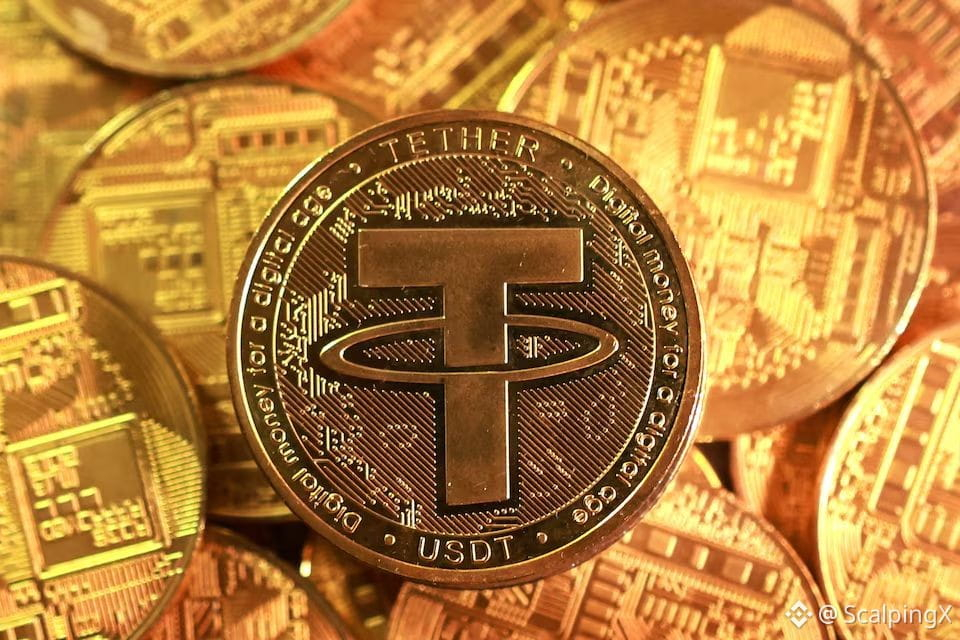
USDT moves into focus in report on Iran-linked financial networks
🧭 A report by Democratic minority staff on the U.S. Senate PSI found that 84% of a sample of 846 wallets sanctioned or targeted by U.S. or Israeli authorities for links to Iran and related groups used USDT exclusively or almost exclusively.
💵 The report argues that high liquidity, low transaction costs and 24/7 transfers outside the SWIFT system have made USDT an important dollar rail for these networks.
🛡️ Tether responded that it has supported freezes of roughly $550 million in Iran-linked USDT during 2026, while stressing that public blockchains allow authorities to trace fund flows more effectively.
📌 The two sides are measuring different things. The report focuses on USDT usage among designated wallets, while Tether highlights assets already frozen. The main implication is increased AML and stablecoin oversight pressure, rather than a direct signal of USDT depeg risk.
#Stablecoin $USDC
USDT moves into focus in report on Iran-linked financial networks
🧭 A report by Democratic minority staff on the U.S. Senate PSI found that 84% of a sample of 846 wallets sanctioned or targeted by U.S. or Israeli authorities for links to Iran and related groups used USDT exclusively or almost exclusively.
💵 The report argues that high liquidity, low transaction costs and 24/7 transfers outside the SWIFT system have made USDT an important dollar rail for these networks.
🛡️ Tether responded that it has supported freezes of roughly $550 million in Iran-linked USDT during 2026, while stressing that public blockchains allow authorities to trace fund flows more effectively.
📌 The two sides are measuring different things. The report focuses on USDT usage among designated wallets, while Tether highlights assets already frozen. The main implication is increased AML and stablecoin oversight pressure, rather than a direct signal of USDT depeg risk.
#Stablecoin $USDC
🧭 A report by Democratic minority staff on the U.S. Senate PSI found that 84% of a sample of 846 wallets sanctioned or targeted by U.S. or Israeli authorities for links to Iran and related groups used USDT exclusively or almost exclusively.
💵 The report argues that high liquidity, low transaction costs and 24/7 transfers outside the SWIFT system have made USDT an important dollar rail for these networks.
🛡️ Tether responded that it has supported freezes of roughly $550 million in Iran-linked USDT during 2026, while stressing that public blockchains allow authorities to trace fund flows more effectively.
📌 The two sides are measuring different things. The report focuses on USDT usage among designated wallets, while Tether highlights assets already frozen. The main implication is increased AML and stablecoin oversight pressure, rather than a direct signal of USDT depeg risk.
#Stablecoin $USDC
88

·
--
Bullish
#japanfsabacksfourthstablecointradesettlementpilot
🇯🇵🚨 JAPAN IS PUSHING DEEPER INTO STABLECOINS!
Japan’s Financial Services Agency (FSA) is backing a fourth stablecoin trade-settlement pilot, signaling continued experimentation with blockchain-based settlement infrastructure. 💴🔗
🏦 Financial institutions are testing stablecoin settlement
⚡ Faster on-chain transactions
🌏 Another major step toward tokenized finance
💰 Stablecoins moving beyond payments into trade settlement
Japan isn’t just watching the stablecoin revolution…
It’s testing how the financial system could run on it. 👀
And if these pilots scale?
The RWA + stablecoin narrative could get MUCH bigger. 🚀
#stablecoin #RWA #crypto
#japanfsabacksfourthstablecointradesettlementpilot
🇯🇵🚨 JAPAN IS PUSHING DEEPER INTO STABLECOINS!
Japan’s Financial Services Agency (FSA) is backing a fourth stablecoin trade-settlement pilot, signaling continued experimentation with blockchain-based settlement infrastructure. 💴🔗
🏦 Financial institutions are testing stablecoin settlement
⚡ Faster on-chain transactions
🌏 Another major step toward tokenized finance
💰 Stablecoins moving beyond payments into trade settlement
Japan isn’t just watching the stablecoin revolution…
It’s testing how the financial system could run on it. 👀
And if these pilots scale?
The RWA + stablecoin narrative could get MUCH bigger. 🚀
#stablecoin #RWA #crypto
🇯🇵🚨 JAPAN IS PUSHING DEEPER INTO STABLECOINS!
Japan’s Financial Services Agency (FSA) is backing a fourth stablecoin trade-settlement pilot, signaling continued experimentation with blockchain-based settlement infrastructure. 💴🔗
🏦 Financial institutions are testing stablecoin settlement
⚡ Faster on-chain transactions
🌏 Another major step toward tokenized finance
💰 Stablecoins moving beyond payments into trade settlement
Japan isn’t just watching the stablecoin revolution…
It’s testing how the financial system could run on it. 👀
And if these pilots scale?
The RWA + stablecoin narrative could get MUCH bigger. 🚀
#stablecoin #RWA #crypto
230

·
--
Bullish
Holding $USDC 2.1 USDT
🔥 $USDC MARKET UPDATE
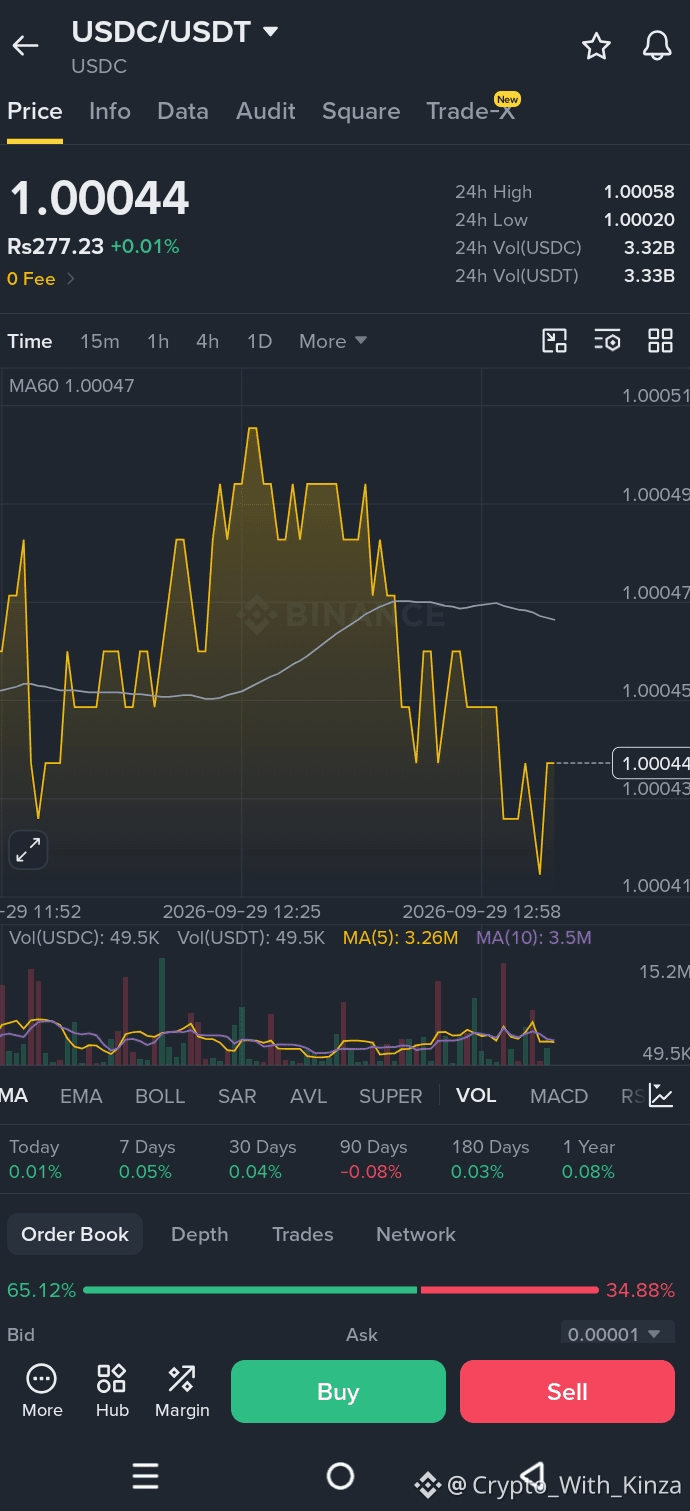
$USDC is holding close to the $1 peg at 1.00044, showing very little volatility. 📊
24H High: 1.00058
24H Low: 1.00020
24H Volume: $3.32B+
Order book snapshot also shows stronger bid-side activity. 👀
Stablecoin, but the market never sleeps. 💪🚀
#USDC #Crypto #BinanceSquare #Stablecoin $USDC
🔥 $USDC MARKET UPDATE
$USDC is holding close to the $1 peg at 1.00044, showing very little volatility. 📊
24H High: 1.00058
24H Low: 1.00020
24H Volume: $3.32B+
Order book snapshot also shows stronger bid-side activity. 👀
Stablecoin, but the market never sleeps. 💪🚀
#USDC #Crypto #BinanceSquare #Stablecoin $USDC
$USDC is holding close to the $1 peg at 1.00044, showing very little volatility. 📊
24H High: 1.00058
24H Low: 1.00020
24H Volume: $3.32B+
Order book snapshot also shows stronger bid-side activity. 👀
Stablecoin, but the market never sleeps. 💪🚀
#USDC #Crypto #BinanceSquare #Stablecoin $USDC
1
26

$USDT 💵 USDT – Market Update
USDT is designed to maintain a value close to $1, making it different from highly volatile cryptocurrencies such as BTC and ETH. Traders often use USDT as a stable asset for entering and exiting crypto positions.
For the coming days, keep an eye on the USDT/fiat exchange rate, market liquidity, and overall crypto-market conditions. Small deviations from $1 can happen due to supply, demand, and market conditions.
#USDT #Tether #Crypto #BinanceSquare #stablecoin
$USDT 💵 USDT – Market Update
USDT is designed to maintain a value close to $1, making it different from highly volatile cryptocurrencies such as BTC and ETH. Traders often use USDT as a stable asset for entering and exiting crypto positions.
For the coming days, keep an eye on the USDT/fiat exchange rate, market liquidity, and overall crypto-market conditions. Small deviations from $1 can happen due to supply, demand, and market conditions.
#USDT #Tether #Crypto #BinanceSquare #stablecoin
USDT is designed to maintain a value close to $1, making it different from highly volatile cryptocurrencies such as BTC and ETH. Traders often use USDT as a stable asset for entering and exiting crypto positions.
For the coming days, keep an eye on the USDT/fiat exchange rate, market liquidity, and overall crypto-market conditions. Small deviations from $1 can happen due to supply, demand, and market conditions.
#USDT #Tether #Crypto #BinanceSquare #stablecoin
54

·
--
Bullish
🚨 CITIBANK + COINBASE: STABLECOIN PAYMENTS
Citigroup and Coinbase are partnering to help institutional clients accept stablecoin payments from customers. Coinbase will provide the blockchain payment infrastructure, while Citi will handle the banking side of settlement.
The Wall Street Journal
🔹 Stablecoins meet traditional banking
🔹 Coinbase provides the blockchain payment rails
🔹 Citi handles the settlement as the bank of record
🔹 The partnership focuses on institutional payments
📌 Why is this interesting?
It shows another example of traditional financial institutions exploring blockchain-based payment infrastructure.
Could stablecoins become a bigger part of global payments? 👀
#Stablecoin #CryptoNews #DigitalAssets #BinanceSquare $NVDAB
🚨 CITIBANK + COINBASE: STABLECOIN PAYMENTS
Citigroup and Coinbase are partnering to help institutional clients accept stablecoin payments from customers. Coinbase will provide the blockchain payment infrastructure, while Citi will handle the banking side of settlement.
The Wall Street Journal
🔹 Stablecoins meet traditional banking
🔹 Coinbase provides the blockchain payment rails
🔹 Citi handles the settlement as the bank of record
🔹 The partnership focuses on institutional payments
📌 Why is this interesting?
It shows another example of traditional financial institutions exploring blockchain-based payment infrastructure.
Could stablecoins become a bigger part of global payments? 👀
#Stablecoin #CryptoNews #DigitalAssets #BinanceSquare $NVDAB
Citigroup and Coinbase are partnering to help institutional clients accept stablecoin payments from customers. Coinbase will provide the blockchain payment infrastructure, while Citi will handle the banking side of settlement.
The Wall Street Journal
🔹 Stablecoins meet traditional banking
🔹 Coinbase provides the blockchain payment rails
🔹 Citi handles the settlement as the bank of record
🔹 The partnership focuses on institutional payments
📌 Why is this interesting?
It shows another example of traditional financial institutions exploring blockchain-based payment infrastructure.
Could stablecoins become a bigger part of global payments? 👀
#Stablecoin #CryptoNews #DigitalAssets #BinanceSquare $NVDAB
74
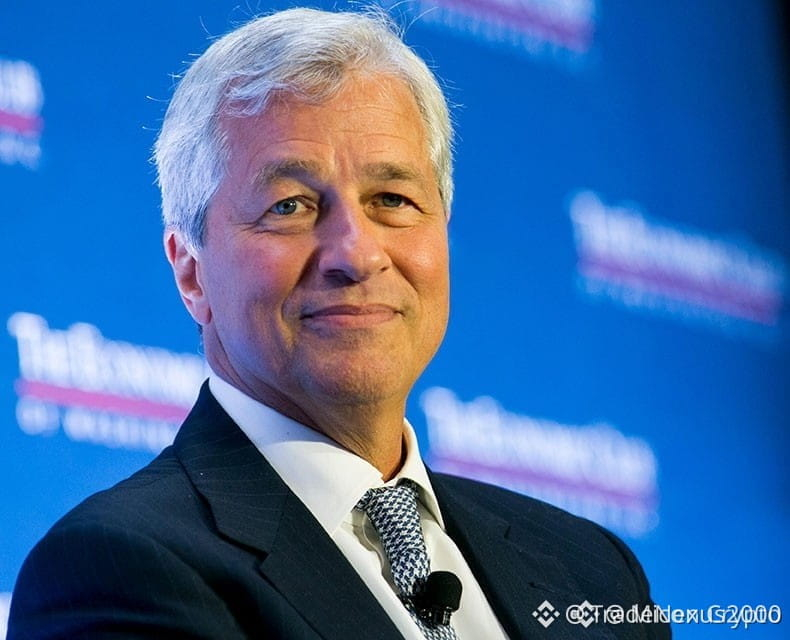
INSTITUTIONAL INFRASTRUCTURE SHIFTS AS $9.3 TRILLION GIANT PREPARES STABLECOIN RAILS FOR $BTC 🏦 ⚡
Institutional giants are moving beyond simple passive allocation and stepping directly into on-chain liquidity infrastructure. JP Morgan evaluating an in-house stablecoin represents a structural pivot, creating high-efficiency settlement rails that seamlessly bridge traditional capital reserves with crypto liquidity pools. 📊
This validation of on-chain architecture reinforces long-term market structure across foundational assets like $BTC and high-throughput networks like $SOL . 🔍 As traditional financial mega-cap balance sheets build native rails, expect institutional order flow and systemic liquidity depth to accelerate significantly. 🏦
💬 Will private banking stablecoins deepen market efficiency, or will capital cluster around decentralized settlement layers? 👇
⚠️ Not financial advice. Always manage your risk. 🛡️
🏷️ #BTC #Stablecoin #Institutional #Crypto #MarketStructure
🦈 💎
INSTITUTIONAL INFRASTRUCTURE SHIFTS AS $9.3 TRILLION GIANT PREPARES STABLECOIN RAILS FOR $BTC 🏦 ⚡
Institutional giants are moving beyond simple passive allocation and stepping directly into on-chain liquidity infrastructure. JP Morgan evaluating an in-house stablecoin represents a structural pivot, creating high-efficiency settlement rails that seamlessly bridge traditional capital reserves with crypto liquidity pools. 📊
This validation of on-chain architecture reinforces long-term market structure across foundational assets like $BTC and high-throughput networks like $SOL . 🔍 As traditional financial mega-cap balance sheets build native rails, expect institutional order flow and systemic liquidity depth to accelerate significantly. 🏦
💬 Will private banking stablecoins deepen market efficiency, or will capital cluster around decentralized settlement layers? 👇
⚠️ Not financial advice. Always manage your risk. 🛡️
🏷️ #BTC #Stablecoin #Institutional #Crypto #MarketStructure
🦈 💎
Institutional giants are moving beyond simple passive allocation and stepping directly into on-chain liquidity infrastructure. JP Morgan evaluating an in-house stablecoin represents a structural pivot, creating high-efficiency settlement rails that seamlessly bridge traditional capital reserves with crypto liquidity pools. 📊
This validation of on-chain architecture reinforces long-term market structure across foundational assets like $BTC and high-throughput networks like $SOL . 🔍 As traditional financial mega-cap balance sheets build native rails, expect institutional order flow and systemic liquidity depth to accelerate significantly. 🏦
💬 Will private banking stablecoins deepen market efficiency, or will capital cluster around decentralized settlement layers? 👇
⚠️ Not financial advice. Always manage your risk. 🛡️
🏷️ #BTC #Stablecoin #Institutional #Crypto #MarketStructure
🦈 💎

45

🚨 EVERYONE IS WATCHING THE PRICE… BUT THIS DATA CAUGHT MY ATTENTION 👀
$USDT added 845,900 holders in just 7 days.
And it wasn’t only USDT:
🔹 $USDC: +390,800
🔹 $EURC: +69,800
🔹 $USDG: +23,300
🔹 $CASH: +18,600
That’s a lot of new stablecoin holders in just one week. 👀
Are people simply moving into stablecoin while waiting for better entries?
Or is something bigger happening beneath the surface?
$USDT
$USDC
#USDT #Crypto #Stablecoin #Write2Earn #BinanceSquare
🚨 EVERYONE IS WATCHING THE PRICE… BUT THIS DATA CAUGHT MY ATTENTION 👀
$USDT added 845,900 holders in just 7 days.
And it wasn’t only USDT:
🔹 $USDC : +390,800
🔹 $EURC: +69,800
🔹 $USDG: +23,300
🔹 $CASH: +18,600
That’s a lot of new stablecoin holders in just one week. 👀
Are people simply moving into stablecoin while waiting for better entries?
Or is something bigger happening beneath the surface?
$USDT
$USDC
#USDT #Crypto #Stablecoin #Write2Earn #BinanceSquare
$USDT added 845,900 holders in just 7 days.
And it wasn’t only USDT:
🔹 $USDC : +390,800
🔹 $EURC: +69,800
🔹 $USDG: +23,300
🔹 $CASH: +18,600
That’s a lot of new stablecoin holders in just one week. 👀
Are people simply moving into stablecoin while waiting for better entries?
Or is something bigger happening beneath the surface?
$USDT
$USDC
#USDT #Crypto #Stablecoin #Write2Earn #BinanceSquare

2
54

·
--
Bullish
CRYPTO'S BANK!
Banks are starting to use crypto tools. Column, a US bank insured by the FDIC, now has stablecoins built into its core banking system. It uses Solana as the default network for these transactions. This is a real example of crypto moving into everyday finance. When banks use blockchain, payments can become faster and cheaper. It is early, and rules can change. But it shows the technology has real uses beyond trading. Follow real adoption, not only price. Not financial advice. #Stablecoin
{spot}(BTCUSDT)
CRYPTO'S BANK!
Banks are starting to use crypto tools. Column, a US bank insured by the FDIC, now has stablecoins built into its core banking system. It uses Solana as the default network for these transactions. This is a real example of crypto moving into everyday finance. When banks use blockchain, payments can become faster and cheaper. It is early, and rules can change. But it shows the technology has real uses beyond trading. Follow real adoption, not only price. Not financial advice. #Stablecoin
Banks are starting to use crypto tools. Column, a US bank insured by the FDIC, now has stablecoins built into its core banking system. It uses Solana as the default network for these transactions. This is a real example of crypto moving into everyday finance. When banks use blockchain, payments can become faster and cheaper. It is early, and rules can change. But it shows the technology has real uses beyond trading. Follow real adoption, not only price. Not financial advice. #Stablecoin
2

🔥 What is $USDT and Why is it the Backbone of Crypto? 🔥
If you are stepping into the crypto world, $USDT (Tether) is a name you will see every single day. But what makes this token so special and absolutely essential for traders? Let’s break it down!
💡 What is $USDT?
$USDT is a stablecoin, meaning its value is pegged 1:1 to the US Dollar. Unlike highly volatile cryptocurrencies like Bitcoin or Ethereum, 1 $USDT is designed to always be worth 1 USD.
🛡️ Why Traders Love $USDT:
Safe Haven: When the market gets volatile, traders quickly convert their crypto into $USDT to protect their profits and lock in their gains.
Massive Liquidity: It is supported by almost every crypto exchange, making it incredibly easy to buy, sell, and trade any pair.
Fast & Cheap Transactions: Moving fiat money across borders can take days and cost high fees. Sending $USDT takes just minutes with very low network fees.
Passive Income: On platforms like Binance, you can place your $USDT into "Earn" products to generate steady passive income through flexible or locked savings.
🚀 Pro Tip for Beginners:
Always keep a portion of your portfolio in $USDT. This ensures you have ready funds (dry powder) to "buy the dip" whenever the market drops!
What is your favorite stablecoin to use? Let me know in the comments below! 👇
#Crypto #Stablecoin #Trading #Binance #Crypto101
🔥 What is $USDT and Why is it the Backbone of Crypto? 🔥
If you are stepping into the crypto world, $USDT (Tether) is a name you will see every single day. But what makes this token so special and absolutely essential for traders? Let’s break it down!
💡 What is $USDT?
$USDT is a stablecoin, meaning its value is pegged 1:1 to the US Dollar. Unlike highly volatile cryptocurrencies like Bitcoin or Ethereum, 1 $USDT is designed to always be worth 1 USD.
🛡️ Why Traders Love $USDT:
Safe Haven: When the market gets volatile, traders quickly convert their crypto into $USDT to protect their profits and lock in their gains.
Massive Liquidity: It is supported by almost every crypto exchange, making it incredibly easy to buy, sell, and trade any pair.
Fast & Cheap Transactions: Moving fiat money across borders can take days and cost high fees. Sending $USDT takes just minutes with very low network fees.
Passive Income: On platforms like Binance, you can place your $USDT into "Earn" products to generate steady passive income through flexible or locked savings.
🚀 Pro Tip for Beginners:
Always keep a portion of your portfolio in $USDT. This ensures you have ready funds (dry powder) to "buy the dip" whenever the market drops!
What is your favorite stablecoin to use? Let me know in the comments below! 👇
#Crypto #Stablecoin #Trading #Binance #Crypto101
If you are stepping into the crypto world, $USDT (Tether) is a name you will see every single day. But what makes this token so special and absolutely essential for traders? Let’s break it down!
💡 What is $USDT?
$USDT is a stablecoin, meaning its value is pegged 1:1 to the US Dollar. Unlike highly volatile cryptocurrencies like Bitcoin or Ethereum, 1 $USDT is designed to always be worth 1 USD.
🛡️ Why Traders Love $USDT:
Safe Haven: When the market gets volatile, traders quickly convert their crypto into $USDT to protect their profits and lock in their gains.
Massive Liquidity: It is supported by almost every crypto exchange, making it incredibly easy to buy, sell, and trade any pair.
Fast & Cheap Transactions: Moving fiat money across borders can take days and cost high fees. Sending $USDT takes just minutes with very low network fees.
Passive Income: On platforms like Binance, you can place your $USDT into "Earn" products to generate steady passive income through flexible or locked savings.
🚀 Pro Tip for Beginners:
Always keep a portion of your portfolio in $USDT. This ensures you have ready funds (dry powder) to "buy the dip" whenever the market drops!
What is your favorite stablecoin to use? Let me know in the comments below! 👇
#Crypto #Stablecoin #Trading #Binance #Crypto101
1
1
1
62

·
--
🚨 INSTITUTIONAL YEN LIQUIDITY ARRIVES AS REGULATED $JPYC EXPANDS SPOT TRADING 🏦
A compliant Japanese Yen stablecoin, $JPYC , is officially unlocking institutional liquidity rails across spot and grid markets on a top-tier exchange. 🏦 Backed 1:1 by bank deposits and government bonds under Japan Payment Services Act, this asset brings transparent fiat order flow into multi-chain ecosystems.
With minting and redemption routed through strict KYC frameworks on Ethereum and Polygon, smart money gains a seamless fiat bridge for capital efficiency. 💡 Grid trading infrastructure will allow market participants to capture structural yield while hedging foreign exchange volatility directly on-chain.
💬 Will this regulated Yen inflow trigger a broader wave of sovereign fiat stablecoin adoption across global liquidity pools? 👇
⚠️ Not financial advice. Always manage your risk. 🛡️
🏷️ #JPYC #Stablecoin #DeFi #Crypto
🎯 🦈
🚨 INSTITUTIONAL YEN LIQUIDITY ARRIVES AS REGULATED $JPYC EXPANDS SPOT TRADING 🏦
A compliant Japanese Yen stablecoin, $JPYC , is officially unlocking institutional liquidity rails across spot and grid markets on a top-tier exchange. 🏦 Backed 1:1 by bank deposits and government bonds under Japan Payment Services Act, this asset brings transparent fiat order flow into multi-chain ecosystems.
With minting and redemption routed through strict KYC frameworks on Ethereum and Polygon, smart money gains a seamless fiat bridge for capital efficiency. 💡 Grid trading infrastructure will allow market participants to capture structural yield while hedging foreign exchange volatility directly on-chain.
💬 Will this regulated Yen inflow trigger a broader wave of sovereign fiat stablecoin adoption across global liquidity pools? 👇
⚠️ Not financial advice. Always manage your risk. 🛡️
🏷️ #JPYC #Stablecoin #DeFi #Crypto
🎯 🦈
A compliant Japanese Yen stablecoin, $JPYC , is officially unlocking institutional liquidity rails across spot and grid markets on a top-tier exchange. 🏦 Backed 1:1 by bank deposits and government bonds under Japan Payment Services Act, this asset brings transparent fiat order flow into multi-chain ecosystems.
With minting and redemption routed through strict KYC frameworks on Ethereum and Polygon, smart money gains a seamless fiat bridge for capital efficiency. 💡 Grid trading infrastructure will allow market participants to capture structural yield while hedging foreign exchange volatility directly on-chain.
💬 Will this regulated Yen inflow trigger a broader wave of sovereign fiat stablecoin adoption across global liquidity pools? 👇
⚠️ Not financial advice. Always manage your risk. 🛡️
🏷️ #JPYC #Stablecoin #DeFi #Crypto
🎯 🦈
5
·
--
Bullish
#fedproposespaymentstablecoinrules
🚨 THE FED IS BRINGING STABLECOINS CLOSER TO TRADITIONAL FINANCE.
The Federal Reserve has proposed new rules for payment stablecoin issuers under the GENIUS Act.
💵 Full backing with permitted reserve assets
🏦 Short-term U.S. Treasury bills could qualify as reserves
🛡️ New capital & risk-management requirements
🏛️ Fed-supervised banks could apply to issue payment stablecoins
⏳ Public comments open for 60 days
This could be another major step toward regulated stablecoins becoming part of the U.S. payments system.
👀 Stablecoins are getting serious attention from Wall Street.
#Fed #stablecoin #crypto
#fedproposespaymentstablecoinrules
🚨 THE FED IS BRINGING STABLECOINS CLOSER TO TRADITIONAL FINANCE.
The Federal Reserve has proposed new rules for payment stablecoin issuers under the GENIUS Act.
💵 Full backing with permitted reserve assets
🏦 Short-term U.S. Treasury bills could qualify as reserves
🛡️ New capital & risk-management requirements
🏛️ Fed-supervised banks could apply to issue payment stablecoins
⏳ Public comments open for 60 days
This could be another major step toward regulated stablecoins becoming part of the U.S. payments system.
👀 Stablecoins are getting serious attention from Wall Street.
#Fed #stablecoin #crypto
🚨 THE FED IS BRINGING STABLECOINS CLOSER TO TRADITIONAL FINANCE.
The Federal Reserve has proposed new rules for payment stablecoin issuers under the GENIUS Act.
💵 Full backing with permitted reserve assets
🏦 Short-term U.S. Treasury bills could qualify as reserves
🛡️ New capital & risk-management requirements
🏛️ Fed-supervised banks could apply to issue payment stablecoins
⏳ Public comments open for 60 days
This could be another major step toward regulated stablecoins becoming part of the U.S. payments system.
👀 Stablecoins are getting serious attention from Wall Street.
#Fed #stablecoin #crypto
1
143

·
--
Bullish
⚡️ Digital dollar enters a new phase.
Open USD (OUSD) is now available on 4 networks:
🔹 Ethereum
🔹 Solana
🔹 Base
🔹 Tempo
What’s notable is that the project has support from prominent names in payments and technology, including Coinbase, Mastercard, Stripe, Visa, and Shopify.
The goal? Build digital dollar infrastructure that can be used for payments, settlement, and global trade.
And as stablecoins expand, the most important question is:
Are we seeing the start of a new competitor to USDT and USDC?
#OUSD #Stablecoin #crypto
⚡️ Digital dollar enters a new phase.
Open USD (OUSD) is now available on 4 networks:
🔹 Ethereum
🔹 Solana
🔹 Base
🔹 Tempo
What’s notable is that the project has support from prominent names in payments and technology, including Coinbase, Mastercard, Stripe, Visa, and Shopify.
The goal? Build digital dollar infrastructure that can be used for payments, settlement, and global trade.
And as stablecoins expand, the most important question is:
Are we seeing the start of a new competitor to USDT and USDC?
#OUSD #Stablecoin #crypto
Open USD (OUSD) is now available on 4 networks:
🔹 Ethereum
🔹 Solana
🔹 Base
🔹 Tempo
What’s notable is that the project has support from prominent names in payments and technology, including Coinbase, Mastercard, Stripe, Visa, and Shopify.
The goal? Build digital dollar infrastructure that can be used for payments, settlement, and global trade.
And as stablecoins expand, the most important question is:
Are we seeing the start of a new competitor to USDT and USDC?
#OUSD #Stablecoin #crypto

صقر صنعاء:
كلام سليم 100% يا yosreia، تعدد الشبكات والدعم المؤسسي بدون استخدام فعلي وسيولة حقيقية ما له قيمة 👏
الاستدامة هي اللي تفرق بين المشروع القوي والمشروع المؤقت
3
3
170

·
--
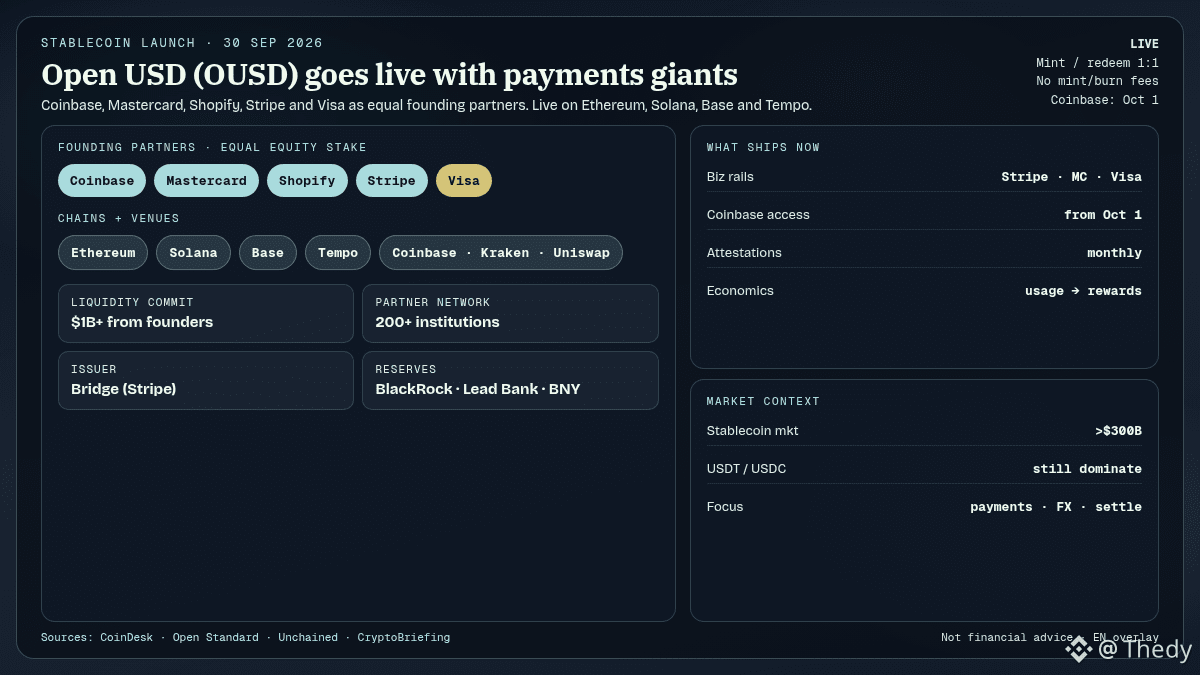
Open USD (OUSD) is live: Coinbase, Mastercard, Shopify, Stripe and Visa as 5 founding partners in equal shares.
FACTS (CoinDesk, Open Standard, Unchained, 30/09/2026)
The Open Standard dollar token runs natively on Ethereum, Solana, Base and Tempo. Issuer: Bridge (Stripe subsidiary). Reserves with BlackRock, Lead Bank and BNY, with monthly attestations planned. Mint / redeem 1:1 with no mint/burn fees. The business rails (Stripe, Mastercard, Visa Stablecoin Platform) are open now; Coinbase support announced for 1 October. Initial trading: Coinbase, Kraken, Uniswap. The founders commit more than $1B in liquidity. The partner network exceeds 200 institutions (UBS, SBI Holdings, Jeeves mentioned among the additions).
READING
This is not yet another "crypto-only" stablecoin. The pitch targets payments, FX, card settlement and banking, in a >$300B market still dominated by USDT / USDC. The economic model drives rewards (and an equity share) based on supply + activity generated, rather than a bilateral split like USDC. For $ETH et $SOL, the useful angle is multi-chain distribution + real-world usage outside DEXs, not a short-term token pump.
SCENARIOS
- Base: enterprise adoption via Stripe/Visa/MC, seeded liquidity, Coinbase expanding access from October.
- Upside: Tempo / Bridge capture large cross-border flows if fees remain competitive.
- Risk: multi-partner governance + USDT/USDC competition + real execution of the $1B liquidity commitment (engagement, not supply already on-chain verified here).
Spot (~18:51 UTC): $BTC ~83875 · $ETH ~2677 · $SOL ~118.4 · BNB ~767 (Kraken/CG). F&G 71 Greed.
Do you see OUSD more as a direct competitor to USDC, or as a TradFi payments rail that digests the stablecoin in the background?
Sources: CoinDesk (30/09), Open Standard, Unchained, CryptoBriefing
#Stablecoin #Payments #Crypto
Open USD (OUSD) is live: Coinbase, Mastercard, Shopify, Stripe and Visa as 5 founding partners in equal shares.
FACTS (CoinDesk, Open Standard, Unchained, 30/09/2026)
The Open Standard dollar token runs natively on Ethereum, Solana, Base and Tempo. Issuer: Bridge (Stripe subsidiary). Reserves with BlackRock, Lead Bank and BNY, with monthly attestations planned. Mint / redeem 1:1 with no mint/burn fees. The business rails (Stripe, Mastercard, Visa Stablecoin Platform) are open now; Coinbase support announced for 1 October. Initial trading: Coinbase, Kraken, Uniswap. The founders commit more than $1B in liquidity. The partner network exceeds 200 institutions (UBS, SBI Holdings, Jeeves mentioned among the additions).
READING
This is not yet another "crypto-only" stablecoin. The pitch targets payments, FX, card settlement and banking, in a >$300B market still dominated by USDT / USDC. The economic model drives rewards (and an equity share) based on supply + activity generated, rather than a bilateral split like USDC. For $ETH et $SOL , the useful angle is multi-chain distribution + real-world usage outside DEXs, not a short-term token pump.
SCENARIOS
- Base: enterprise adoption via Stripe/Visa/MC, seeded liquidity, Coinbase expanding access from October.
- Upside: Tempo / Bridge capture large cross-border flows if fees remain competitive.
- Risk: multi-partner governance + USDT/USDC competition + real execution of the $1B liquidity commitment (engagement, not supply already on-chain verified here).
Spot (~18:51 UTC): $BTC ~83875 · $ETH ~2677 · $SOL ~118.4 · BNB ~767 (Kraken/CG). F&G 71 Greed.
Do you see OUSD more as a direct competitor to USDC, or as a TradFi payments rail that digests the stablecoin in the background?
Sources: CoinDesk (30/09), Open Standard, Unchained, CryptoBriefing
#Stablecoin #Payments #Crypto
FACTS (CoinDesk, Open Standard, Unchained, 30/09/2026)
The Open Standard dollar token runs natively on Ethereum, Solana, Base and Tempo. Issuer: Bridge (Stripe subsidiary). Reserves with BlackRock, Lead Bank and BNY, with monthly attestations planned. Mint / redeem 1:1 with no mint/burn fees. The business rails (Stripe, Mastercard, Visa Stablecoin Platform) are open now; Coinbase support announced for 1 October. Initial trading: Coinbase, Kraken, Uniswap. The founders commit more than $1B in liquidity. The partner network exceeds 200 institutions (UBS, SBI Holdings, Jeeves mentioned among the additions).
READING
This is not yet another "crypto-only" stablecoin. The pitch targets payments, FX, card settlement and banking, in a >$300B market still dominated by USDT / USDC. The economic model drives rewards (and an equity share) based on supply + activity generated, rather than a bilateral split like USDC. For $ETH et $SOL , the useful angle is multi-chain distribution + real-world usage outside DEXs, not a short-term token pump.
SCENARIOS
- Base: enterprise adoption via Stripe/Visa/MC, seeded liquidity, Coinbase expanding access from October.
- Upside: Tempo / Bridge capture large cross-border flows if fees remain competitive.
- Risk: multi-partner governance + USDT/USDC competition + real execution of the $1B liquidity commitment (engagement, not supply already on-chain verified here).
Spot (~18:51 UTC): $BTC ~83875 · $ETH ~2677 · $SOL ~118.4 · BNB ~767 (Kraken/CG). F&G 71 Greed.
Do you see OUSD more as a direct competitor to USDC, or as a TradFi payments rail that digests the stablecoin in the background?
Sources: CoinDesk (30/09), Open Standard, Unchained, CryptoBriefing
#Stablecoin #Payments #Crypto
39

AllUnity launched a new dollar stablecoin, backed by real reserves of the currency.
It joins an ever-growing list of dollar stablecoins backed by reserves—still, by far, the most-used type of asset in crypto for payments and saving in dollars outside the U.S.
It’s no coincidence that these kinds of launches keep showing up: while Bitcoin’s price dominates the headlines, stablecoins are what drive real day-to-day volume across multiple regions, especially in Latin America, where a large part of crypto usage is precisely to stay in dollars.
It’s worth remembering the basic criteria when evaluating any new stablecoin: how transparent it is about its reserves, and who audits to confirm that the backing is real.
Are you keeping an eye on these types of launches, or is BTC price all that matters to you? 👇
#Stablecoin #AllUnity #Cripto #CreatorPad
AllUnity launched a new dollar stablecoin, backed by real reserves of the currency.
It joins an ever-growing list of dollar stablecoins backed by reserves—still, by far, the most-used type of asset in crypto for payments and saving in dollars outside the U.S.
It’s no coincidence that these kinds of launches keep showing up: while Bitcoin’s price dominates the headlines, stablecoins are what drive real day-to-day volume across multiple regions, especially in Latin America, where a large part of crypto usage is precisely to stay in dollars.
It’s worth remembering the basic criteria when evaluating any new stablecoin: how transparent it is about its reserves, and who audits to confirm that the backing is real.
Are you keeping an eye on these types of launches, or is BTC price all that matters to you? 👇
#Stablecoin #AllUnity #Cripto #CreatorPad
It joins an ever-growing list of dollar stablecoins backed by reserves—still, by far, the most-used type of asset in crypto for payments and saving in dollars outside the U.S.
It’s no coincidence that these kinds of launches keep showing up: while Bitcoin’s price dominates the headlines, stablecoins are what drive real day-to-day volume across multiple regions, especially in Latin America, where a large part of crypto usage is precisely to stay in dollars.
It’s worth remembering the basic criteria when evaluating any new stablecoin: how transparent it is about its reserves, and who audits to confirm that the backing is real.
Are you keeping an eye on these types of launches, or is BTC price all that matters to you? 👇
#Stablecoin #AllUnity #Cripto #CreatorPad

71

·
--
💵⚡ $USDC — THE DIGITAL DOLLAR IS ENTERING ITS NEXT PHASE
💛 BINANCE TAKE
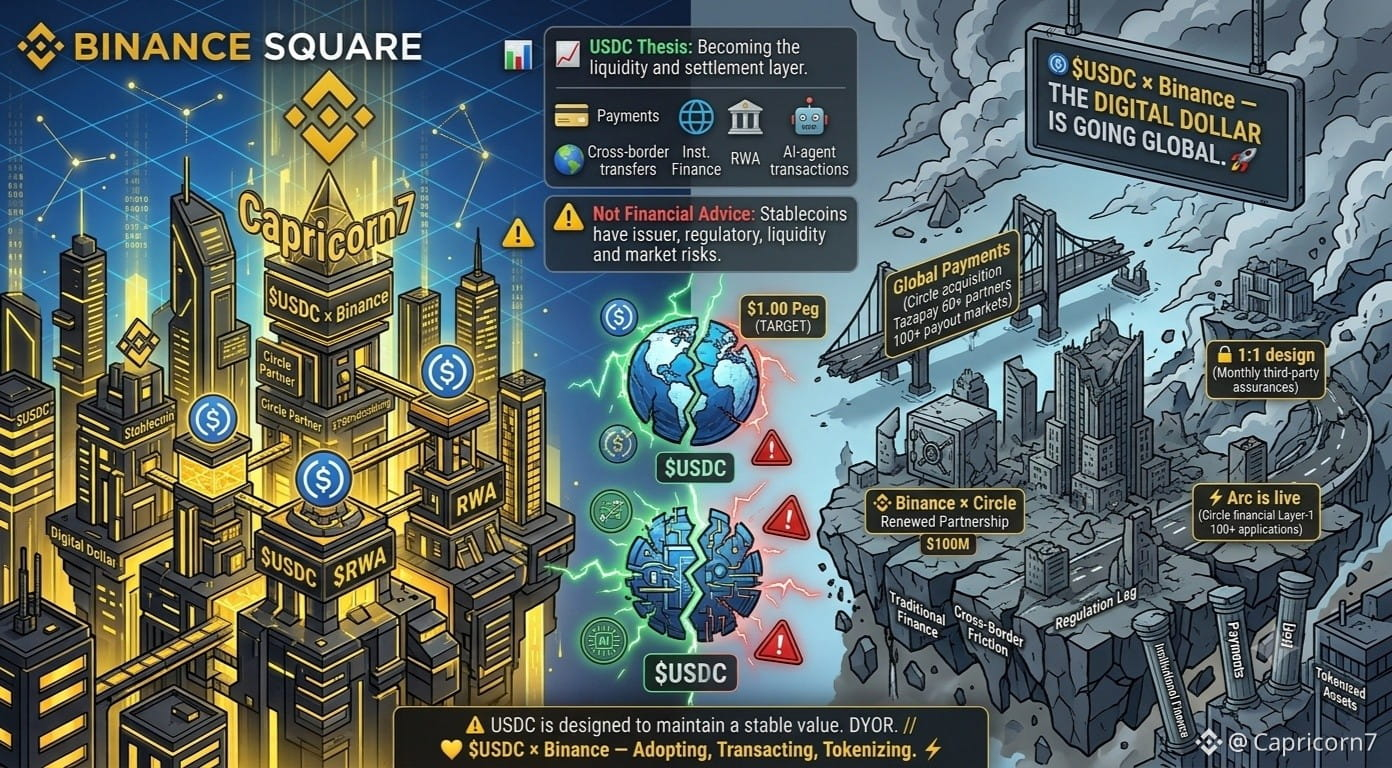
USDC × Binance — THE DIGITAL DOLLAR IS GOING GLOBAL. 🚀
USDC is holding close to its $1.0001 peg, with roughly $75.2B market cap and $8B+ in 24h volume. �
CoinMarketCap
But the bigger story isn't price. It's adoption. 👀
🌍 WHY $USDC IS GETTING SERIOUS ATTENTION
🏦 Binance × Circle: Binance recently invested $100M in Circle and renewed a 5-year partnership focused on expanding USDC globally, particularly across emerging markets. �
Binance
💵 $75B+ circulating: USDC has grown into one of crypto's largest dollar-denominated assets. �
CoinMarketCap
🔐 1:1 design: Circle says USDC is redeemable 1:1 for USD and backed by highly liquid cash and cash-equivalent reserves, with monthly third-party assurances. �
Circle
🌐 Global payments: Circle's planned acquisition of Tazapay is designed to add 60+ banking/fintech partners and 100+ payout markets to its ecosystem. �
Circle Investor Relations
⚡ Arc is live: Circle launched Arc, a financial-focused Layer-1 with USDC integrated into its economic infrastructure, alongside 100+ applications and institutional/ecosystem builders at launch. �
Circle Investor Relations
🧠 THE BIGGER THESIS
USDC isn't designed to moon.
Its potential comes from becoming the liquidity and settlement layer behind:
💳 Payments
🌍 Cross-border transfers
🏦 Institutional finance
🤖 AI-agent transactions
🔗 DeFi
📈 Tokenized assets
“Bitcoin is digital scarcity. 🟠
USDC is digital dollars. 💵
And the future of finance may need both. ⚡
The real USDC story isn't a $1 price target…
It's how many transactions can happen around that $1.” 🌎🔥
Watch adoption, circulating supply, transaction activity and regulatory developments rather than expecting price appreciation from a stablecoin.
#USDC #Circle #Binance #BinanceSquare #Stablecoin DYOR 💵⚡🌍
🧐Not financial advice. USDC is designed to maintain a stable value, but stablecoins still carry issuer, regulatory, liquidity and market risks.
{spot}(USDCUSDT)
💵⚡ $USDC — THE DIGITAL DOLLAR IS ENTERING ITS NEXT PHASE
💛 BINANCE TAKE
USDC × Binance — THE DIGITAL DOLLAR IS GOING GLOBAL. 🚀
USDC is holding close to its $1.0001 peg, with roughly $75.2B market cap and $8B+ in 24h volume. �
CoinMarketCap
But the bigger story isn't price. It's adoption. 👀
🌍 WHY $USDC IS GETTING SERIOUS ATTENTION
🏦 Binance × Circle: Binance recently invested $100M in Circle and renewed a 5-year partnership focused on expanding USDC globally, particularly across emerging markets. �
Binance
💵 $75B+ circulating: USDC has grown into one of crypto's largest dollar-denominated assets. �
CoinMarketCap
🔐 1:1 design: Circle says USDC is redeemable 1:1 for USD and backed by highly liquid cash and cash-equivalent reserves, with monthly third-party assurances. �
Circle
🌐 Global payments: Circle's planned acquisition of Tazapay is designed to add 60+ banking/fintech partners and 100+ payout markets to its ecosystem. �
Circle Investor Relations
⚡ Arc is live: Circle launched Arc, a financial-focused Layer-1 with USDC integrated into its economic infrastructure, alongside 100+ applications and institutional/ecosystem builders at launch. �
Circle Investor Relations
🧠 THE BIGGER THESIS
USDC isn't designed to moon.
Its potential comes from becoming the liquidity and settlement layer behind:
💳 Payments
🌍 Cross-border transfers
🏦 Institutional finance
🤖 AI-agent transactions
🔗 DeFi
📈 Tokenized assets
“Bitcoin is digital scarcity. 🟠
USDC is digital dollars. 💵
And the future of finance may need both. ⚡
The real USDC story isn't a $1 price target…
It's how many transactions can happen around that $1.” 🌎🔥
Watch adoption, circulating supply, transaction activity and regulatory developments rather than expecting price appreciation from a stablecoin.
#USDC #Circle #Binance #BinanceSquare #Stablecoin DYOR 💵⚡🌍
🧐Not financial advice. USDC is designed to maintain a stable value, but stablecoins still carry issuer, regulatory, liquidity and market risks.
💛 BINANCE TAKE
USDC × Binance — THE DIGITAL DOLLAR IS GOING GLOBAL. 🚀
USDC is holding close to its $1.0001 peg, with roughly $75.2B market cap and $8B+ in 24h volume. �
CoinMarketCap
But the bigger story isn't price. It's adoption. 👀
🌍 WHY $USDC IS GETTING SERIOUS ATTENTION
🏦 Binance × Circle: Binance recently invested $100M in Circle and renewed a 5-year partnership focused on expanding USDC globally, particularly across emerging markets. �
Binance
💵 $75B+ circulating: USDC has grown into one of crypto's largest dollar-denominated assets. �
CoinMarketCap
🔐 1:1 design: Circle says USDC is redeemable 1:1 for USD and backed by highly liquid cash and cash-equivalent reserves, with monthly third-party assurances. �
Circle
🌐 Global payments: Circle's planned acquisition of Tazapay is designed to add 60+ banking/fintech partners and 100+ payout markets to its ecosystem. �
Circle Investor Relations
⚡ Arc is live: Circle launched Arc, a financial-focused Layer-1 with USDC integrated into its economic infrastructure, alongside 100+ applications and institutional/ecosystem builders at launch. �
Circle Investor Relations
🧠 THE BIGGER THESIS
USDC isn't designed to moon.
Its potential comes from becoming the liquidity and settlement layer behind:
💳 Payments
🌍 Cross-border transfers
🏦 Institutional finance
🤖 AI-agent transactions
🔗 DeFi
📈 Tokenized assets
“Bitcoin is digital scarcity. 🟠
USDC is digital dollars. 💵
And the future of finance may need both. ⚡
The real USDC story isn't a $1 price target…
It's how many transactions can happen around that $1.” 🌎🔥
Watch adoption, circulating supply, transaction activity and regulatory developments rather than expecting price appreciation from a stablecoin.
#USDC #Circle #Binance #BinanceSquare #Stablecoin DYOR 💵⚡🌍
🧐Not financial advice. USDC is designed to maintain a stable value, but stablecoins still carry issuer, regulatory, liquidity and market risks.
1
3
43

·
--
Europe stablecoin issuer AllUnity launches USDAU USD stablecoin! This is their fourth fiat-backed stablecoin. The lineup already includes the euro, Swiss franc, and Swedish krona. Under MiCA regulation, it’s compliant and reliable! #稳定币 #DeFi $USDAU $USDC
AllUnity drops USDAU, their fourth fiat-backed stablecoin! Expanding their MiCA-regulated lineup with euro, Swiss franc, and Swedish krona. USD stablecoin options in Europe just got better! #stablecoin #DeFi $USDAU $USDC
Europe stablecoin issuer AllUnity launches USDAU USD stablecoin! This is their fourth fiat-backed stablecoin. The lineup already includes the euro, Swiss franc, and Swedish krona. Under MiCA regulation, it’s compliant and reliable! #稳定币 #DeFi $USDAU $USDC
AllUnity drops USDAU, their fourth fiat-backed stablecoin! Expanding their MiCA-regulated lineup with euro, Swiss franc, and Swedish krona. USD stablecoin options in Europe just got better! #stablecoin #DeFi $USDAU $USDC
AllUnity drops USDAU, their fourth fiat-backed stablecoin! Expanding their MiCA-regulated lineup with euro, Swiss franc, and Swedish krona. USD stablecoin options in Europe just got better! #stablecoin #DeFi $USDAU $USDC
4

·
--
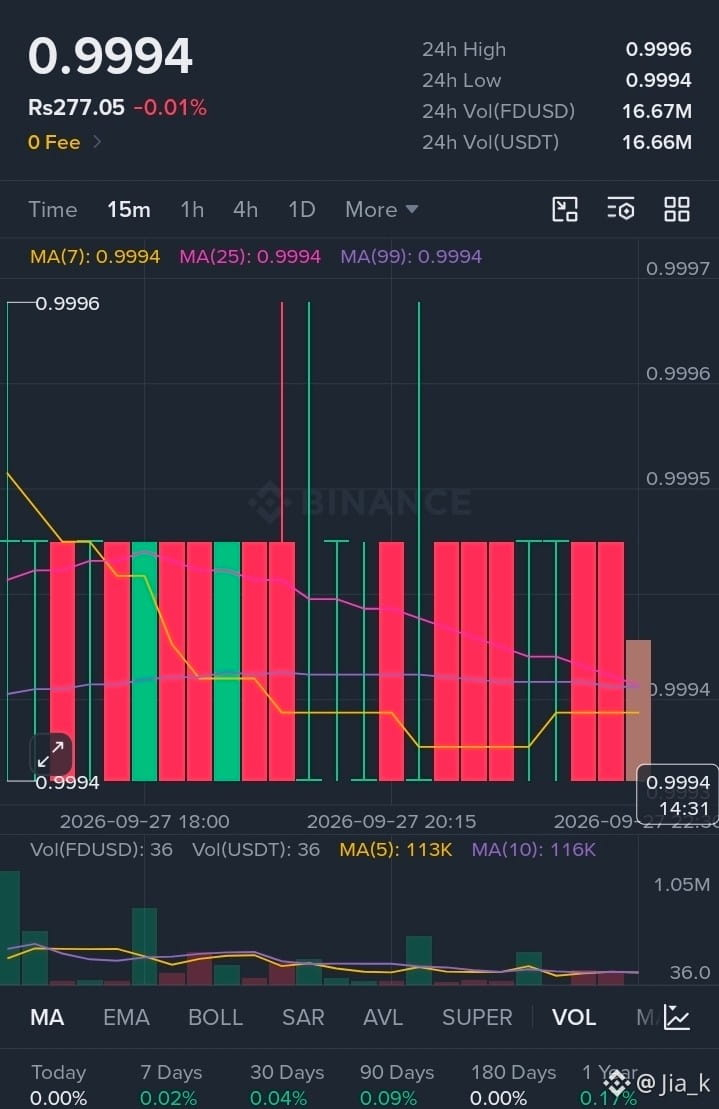
FUSD is holding around 0.9994, with tight price action and low volatility on the 15m chart.
24h range: 0.9994–0.9996 | Volume: ~16.7M FUSD
Watching for a clean breakout from this narrow range. 👀
#FUSD #Binance #Crypto #Stablecoin #trading
FUSD is holding around 0.9994, with tight price action and low volatility on the 15m chart.
24h range: 0.9994–0.9996 | Volume: ~16.7M FUSD
Watching for a clean breakout from this narrow range. 👀
#FUSD #Binance #Crypto #Stablecoin #trading
24h range: 0.9994–0.9996 | Volume: ~16.7M FUSD
Watching for a clean breakout from this narrow range. 👀
#FUSD #Binance #Crypto #Stablecoin #trading
1
134
Log in to explore more content
Join global crypto users on Binance Square
⚡️ Get latest and useful information about crypto.
💬 Trusted by the world’s largest crypto exchange.
👍 Discover real insights from verified creators.
Email / Phone number
Trending Topics
1
#MetaMaskExitsLidoValidatorsAfterSecurityIncident
0 views
0 Discussing
2
#MicronBeatsEarningsLiftsGuidance
312 views
37 Discussing
3
#CFTCSubmitsTwoEventContractRulesToWhiteHouse
1,324 views
77 Discussing
4
#BitcoinClears$85200
21,485 views
271 Discussing
5
#AltcoinSeasonIndexHoldsAbove60For5Days
111,656 views
1,516 Discussing
6
#USADPAdds90000JobsInSeptember
48,260 views
842 Discussing
7
#USCorePCEEasesTo3%InAugust
35,999 views
623 Discussing
8
#KospiPostsWorstQuarterSince2020
21,370 views
560 Discussing
9
#SECToClarifyOnChainFundraisingRules
55,095 views
751 Discussing
10
#UKFCAOpensCryptoFirmAuthorization
52,260 views
606 Discussing