

#sbi
sbi
63,367 views
247 Discussing
Hot
Latest

·
--
Bullish
🇯🇵 SBI Holdings Completes Full Acquisition of Bitbank
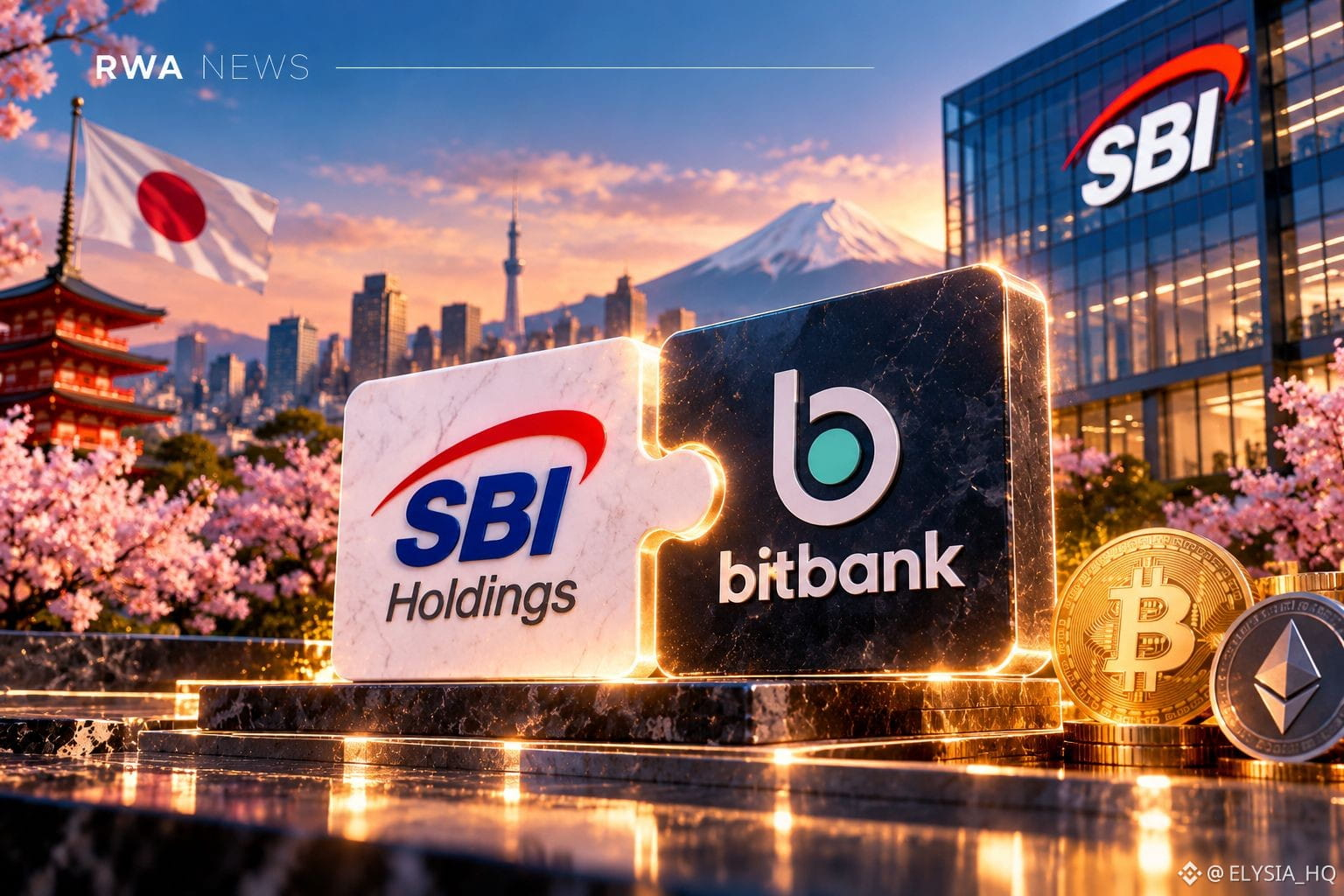
Japanese financial giant SBI Holdings has completed its acquisition of Bitbank, making the crypto exchange a wholly owned subsidiary. Bitbank says its existing exchange services will continue without changes.
The deal significantly expands SBI’s digital asset footprint. Based on April figures for SBI VC Trade and Bitbank, the combined businesses represented roughly ¥1.1T in assets under custody and 2.92M crypto accounts. SBI has also highlighted stablecoins and onchain finance as key areas for future expansion.
The bigger picture: Japan’s traditional financial giants are moving beyond crypto trading — building integrated infrastructure for digital assets, stablecoins and onchain finance.
#SBI
🇯🇵 SBI Holdings Completes Full Acquisition of Bitbank
Japanese financial giant SBI Holdings has completed its acquisition of Bitbank, making the crypto exchange a wholly owned subsidiary. Bitbank says its existing exchange services will continue without changes.
The deal significantly expands SBI’s digital asset footprint. Based on April figures for SBI VC Trade and Bitbank, the combined businesses represented roughly ¥1.1T in assets under custody and 2.92M crypto accounts. SBI has also highlighted stablecoins and onchain finance as key areas for future expansion.
The bigger picture: Japan’s traditional financial giants are moving beyond crypto trading — building integrated infrastructure for digital assets, stablecoins and onchain finance.
#SBI
Japanese financial giant SBI Holdings has completed its acquisition of Bitbank, making the crypto exchange a wholly owned subsidiary. Bitbank says its existing exchange services will continue without changes.
The deal significantly expands SBI’s digital asset footprint. Based on April figures for SBI VC Trade and Bitbank, the combined businesses represented roughly ¥1.1T in assets under custody and 2.92M crypto accounts. SBI has also highlighted stablecoins and onchain finance as key areas for future expansion.
The bigger picture: Japan’s traditional financial giants are moving beyond crypto trading — building integrated infrastructure for digital assets, stablecoins and onchain finance.
#SBI
64

·
--
🚨$XRP It sometimes feels like everything started yesterday.
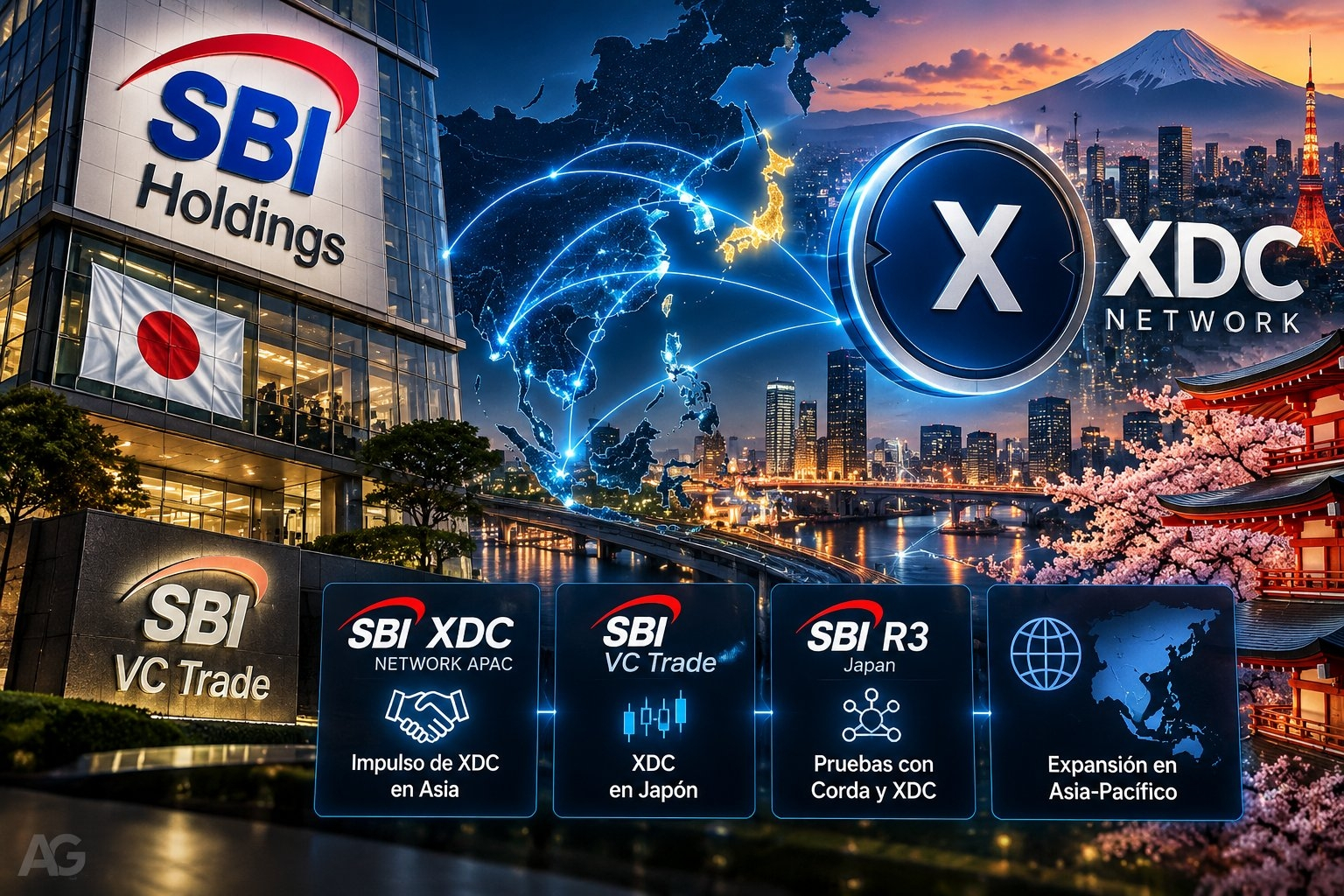
But SBI and XDC have been building in Asia for years.
🔹 SBI XDC Network APAC
🔹 XDC on SBI VC Trade
🔹 work with SBI R3 Japan
🔹 tests between XDC and Corda for B2B settlements
🔥 The question isn’t whether there’s a connection.
The question is how far that infrastructure can go.
#XDC #SBI #Asia
🚨$XRP It sometimes feels like everything started yesterday.
But SBI and XDC have been building in Asia for years.
🔹 SBI XDC Network APAC
🔹 XDC on SBI VC Trade
🔹 work with SBI R3 Japan
🔹 tests between XDC and Corda for B2B settlements
🔥 The question isn’t whether there’s a connection.
The question is how far that infrastructure can go.
#XDC #SBI #Asia
But SBI and XDC have been building in Asia for years.
🔹 SBI XDC Network APAC
🔹 XDC on SBI VC Trade
🔹 work with SBI R3 Japan
🔹 tests between XDC and Corda for B2B settlements
🔥 The question isn’t whether there’s a connection.
The question is how far that infrastructure can go.
#XDC #SBI #Asia
37

·
--
🚨 SBI Holdings now fully owns Bitbank, a major Japanese XRP exchange, after completing the takeover on Oct. 1. This consolidates Ripple’s long-standing Asian partner with one of Japan’s busiest XRP trading venues. The move may deepen liquidity and institutional access for XRP in Japan, signaling sustained regional commitment. Could this strengthen XRP’s use case in cross-border payments locally?
#SBI
$XRP #TradingSignal #CryptoAnalysis
🚨 SBI Holdings now fully owns Bitbank, a major Japanese XRP exchange, after completing the takeover on Oct. 1. This consolidates Ripple’s long-standing Asian partner with one of Japan’s busiest XRP trading venues. The move may deepen liquidity and institutional access for XRP in Japan, signaling sustained regional commitment. Could this strengthen XRP’s use case in cross-border payments locally?
#SBI
$XRP #TradingSignal #CryptoAnalysis
#SBI
$XRP #TradingSignal #CryptoAnalysis

27

·
--
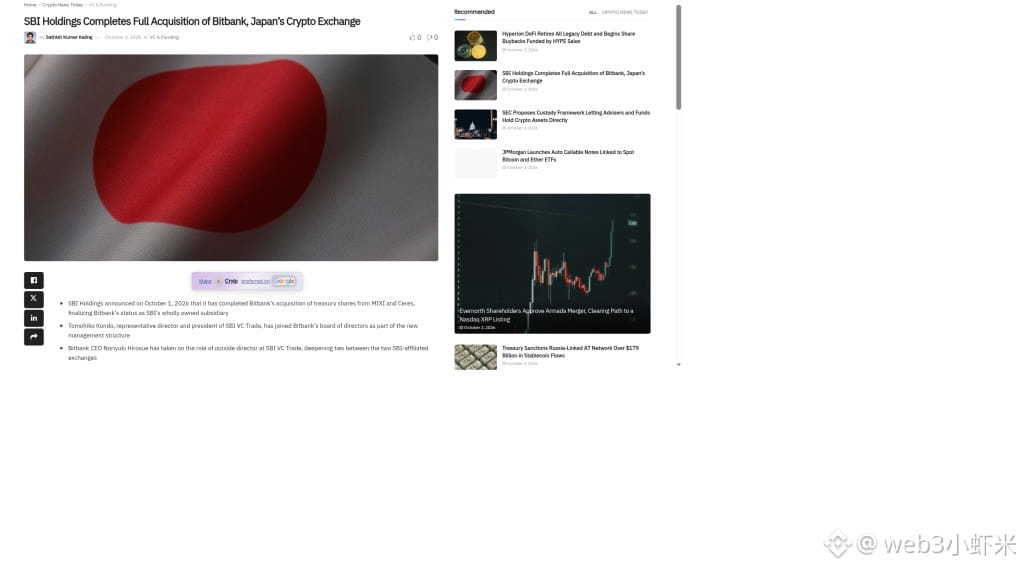
Scanned the Bitbank official website: Japanese-licensed exchange bitbank has completed its share buyback from MIXI and Ceres and officially became a wholly owned subsidiary of SBI Holdings on October 1.
The new management team is in place as well: Tomohiko Kondo, President of SBI VC Trade, has joined bitbank’s board of directors. Hiroyuki Hironobu, CEO of bitbank, will also serve as an outside director of SBI VC Trade—cross-appointments at the two exchanges under SBI.
The company says its services will not be affected, and customers can continue to use them as usual. Japan’s licensing requirements are strict and compliance-focused, and the integration of major financial groups bringing exchanges into their systems is ongoing.
#加密交易所 #日本 #SBI
Scanned the Bitbank official website: Japanese-licensed exchange bitbank has completed its share buyback from MIXI and Ceres and officially became a wholly owned subsidiary of SBI Holdings on October 1.
The new management team is in place as well: Tomohiko Kondo, President of SBI VC Trade, has joined bitbank’s board of directors. Hiroyuki Hironobu, CEO of bitbank, will also serve as an outside director of SBI VC Trade—cross-appointments at the two exchanges under SBI.
The company says its services will not be affected, and customers can continue to use them as usual. Japan’s licensing requirements are strict and compliance-focused, and the integration of major financial groups bringing exchanges into their systems is ongoing.
#加密交易所 #日本 #SBI
The new management team is in place as well: Tomohiko Kondo, President of SBI VC Trade, has joined bitbank’s board of directors. Hiroyuki Hironobu, CEO of bitbank, will also serve as an outside director of SBI VC Trade—cross-appointments at the two exchanges under SBI.
The company says its services will not be affected, and customers can continue to use them as usual. Japan’s licensing requirements are strict and compliance-focused, and the integration of major financial groups bringing exchanges into their systems is ongoing.
#加密交易所 #日本 #SBI
5

·
--
⚡ Japan’s largest crypto exchange has been bought out by a securities firm
On October 1, SBI Holdings announced that the acquisition of bitbank has been completed, and bitbank has become its 100% wholly owned subsidiary. The deal price is 46.7 billion yen, about $290 million.
The transaction is carried out in three steps. First, SBI’s wholly owned subsidiary SBICAH will buy 53,704 shares from bitbank CEO Noriyuki Hirosue and other individual shareholders, then subscribe for 48,952 newly issued shares. bitbank uses this money to complete its final move: repurchasing all shares held by MIXI and CERES. With the two long-time shareholders exiting the scene, SBI becomes the only parent company.
The price hasn’t changed—it’s still the same amount as when the agreement was signed on June 25.
With the merged platform, SBI VC Trade plus bitbank brings custody assets of about 1.1 trillion yen (around $7 billion) and 2.92 million accounts. These figures are simply the sum of the two companies’ numbers as of April 30 of this year. bitbank itself has about 960,000 registered users, and its depth in yen-quoted altcoins ranks among the best in Japan.
It’s buying a license.
bitbank holds a license from the Financial Services Agency, operates a spot exchange, supports dozens of yen trading pairs, and also offers margin lending and custody services. Architect Partners stated plainly after the deal signing: SBI is spending $290 million to buy regulatory-controlled scale. bitbank itself doesn’t make money.
This is already part of SBI’s ongoing string of moves. In 2020 it absorbed TaoTao; after DMM Bitcoin was hacked in 2024, it took over that firm’s accounts. Earlier this April, it merged Bitpoint Japan into SBI VC Trade, and in July it secured a majority stake in Singapore’s Coinhako. Japan’s licensed exchanges are being folded one by one into a larger group.
Here’s a detail. At the same time as the acquisition, SBI VC Trade president Tomohiko Kondo joined bitbank’s board of directors, while bitbank CEO Noriyuki Hirosue went to SBI VC Trade as an outside director. The boards of the two exchanges will place people in each other’s organizations. The integration intent is written very clearly.
There’s another layer, too. bitbank is one of Japan’s most active venues for XRP trading. When I wrote this, XRP/yen had 5.82 million XRP traded in the past 24 hours. SBI is also one of Ripple’s earliest partners in Asia and is pushing RLUSD and its own yen stablecoin, JPYSC. This acquisition effectively pulls Japan’s busiest XRP venue into Ripple’s camp.
Why now. Japan’s regulation is making room for consolidation among licensed firms, and the market is still discussing unifying taxation of crypto gains at 20%. Licenses are valuable, scale is valuable. Small exchanges that only have licenses aren’t worth much. SBI’s calculations are straightforward.
SBI says the impact of this deal on its fiscal performance for the year ending March next year will be minimal. Its crypto business itself isn’t small: for the fiscal year ending March of this year, crypto revenues were 89.6 billion yen (about $570 million), up 10.9% year over year.
When I wrote this, the four BTC price sources were between $84,672 and $84,689, with a drop of about 1.9% over the past 24 hours. ETH is at 2,684.
When traditional finance buys a licensed exchange, it’s aiming for the entry and exit points—accounts, licenses, and stablecoin flows. This line in Japan has just been closed up. Next, it’ll be about SBI taking bitbank’s 960,000 users and using them to promote RLUSD and the yen stablecoin.
$BTC $ETH
#中本聪国际社区Baoluo币商资本 #加密货币 #SBI
⚡ Japan’s largest crypto exchange has been bought out by a securities firm
On October 1, SBI Holdings announced that the acquisition of bitbank has been completed, and bitbank has become its 100% wholly owned subsidiary. The deal price is 46.7 billion yen, about $290 million.
The transaction is carried out in three steps. First, SBI’s wholly owned subsidiary SBICAH will buy 53,704 shares from bitbank CEO Noriyuki Hirosue and other individual shareholders, then subscribe for 48,952 newly issued shares. bitbank uses this money to complete its final move: repurchasing all shares held by MIXI and CERES. With the two long-time shareholders exiting the scene, SBI becomes the only parent company.
The price hasn’t changed—it’s still the same amount as when the agreement was signed on June 25.
With the merged platform, SBI VC Trade plus bitbank brings custody assets of about 1.1 trillion yen (around $7 billion) and 2.92 million accounts. These figures are simply the sum of the two companies’ numbers as of April 30 of this year. bitbank itself has about 960,000 registered users, and its depth in yen-quoted altcoins ranks among the best in Japan.
It’s buying a license.
bitbank holds a license from the Financial Services Agency, operates a spot exchange, supports dozens of yen trading pairs, and also offers margin lending and custody services. Architect Partners stated plainly after the deal signing: SBI is spending $290 million to buy regulatory-controlled scale. bitbank itself doesn’t make money.
This is already part of SBI’s ongoing string of moves. In 2020 it absorbed TaoTao; after DMM Bitcoin was hacked in 2024, it took over that firm’s accounts. Earlier this April, it merged Bitpoint Japan into SBI VC Trade, and in July it secured a majority stake in Singapore’s Coinhako. Japan’s licensed exchanges are being folded one by one into a larger group.
Here’s a detail. At the same time as the acquisition, SBI VC Trade president Tomohiko Kondo joined bitbank’s board of directors, while bitbank CEO Noriyuki Hirosue went to SBI VC Trade as an outside director. The boards of the two exchanges will place people in each other’s organizations. The integration intent is written very clearly.
There’s another layer, too. bitbank is one of Japan’s most active venues for XRP trading. When I wrote this, XRP/yen had 5.82 million XRP traded in the past 24 hours. SBI is also one of Ripple’s earliest partners in Asia and is pushing RLUSD and its own yen stablecoin, JPYSC. This acquisition effectively pulls Japan’s busiest XRP venue into Ripple’s camp.
Why now. Japan’s regulation is making room for consolidation among licensed firms, and the market is still discussing unifying taxation of crypto gains at 20%. Licenses are valuable, scale is valuable. Small exchanges that only have licenses aren’t worth much. SBI’s calculations are straightforward.
SBI says the impact of this deal on its fiscal performance for the year ending March next year will be minimal. Its crypto business itself isn’t small: for the fiscal year ending March of this year, crypto revenues were 89.6 billion yen (about $570 million), up 10.9% year over year.
When I wrote this, the four BTC price sources were between $84,672 and $84,689, with a drop of about 1.9% over the past 24 hours. ETH is at 2,684.
When traditional finance buys a licensed exchange, it’s aiming for the entry and exit points—accounts, licenses, and stablecoin flows. This line in Japan has just been closed up. Next, it’ll be about SBI taking bitbank’s 960,000 users and using them to promote RLUSD and the yen stablecoin.
$BTC $ETH
#中本聪国际社区Baoluo币商资本 #加密货币 #SBI
On October 1, SBI Holdings announced that the acquisition of bitbank has been completed, and bitbank has become its 100% wholly owned subsidiary. The deal price is 46.7 billion yen, about $290 million.
The transaction is carried out in three steps. First, SBI’s wholly owned subsidiary SBICAH will buy 53,704 shares from bitbank CEO Noriyuki Hirosue and other individual shareholders, then subscribe for 48,952 newly issued shares. bitbank uses this money to complete its final move: repurchasing all shares held by MIXI and CERES. With the two long-time shareholders exiting the scene, SBI becomes the only parent company.
The price hasn’t changed—it’s still the same amount as when the agreement was signed on June 25.
With the merged platform, SBI VC Trade plus bitbank brings custody assets of about 1.1 trillion yen (around $7 billion) and 2.92 million accounts. These figures are simply the sum of the two companies’ numbers as of April 30 of this year. bitbank itself has about 960,000 registered users, and its depth in yen-quoted altcoins ranks among the best in Japan.
It’s buying a license.
bitbank holds a license from the Financial Services Agency, operates a spot exchange, supports dozens of yen trading pairs, and also offers margin lending and custody services. Architect Partners stated plainly after the deal signing: SBI is spending $290 million to buy regulatory-controlled scale. bitbank itself doesn’t make money.
This is already part of SBI’s ongoing string of moves. In 2020 it absorbed TaoTao; after DMM Bitcoin was hacked in 2024, it took over that firm’s accounts. Earlier this April, it merged Bitpoint Japan into SBI VC Trade, and in July it secured a majority stake in Singapore’s Coinhako. Japan’s licensed exchanges are being folded one by one into a larger group.
Here’s a detail. At the same time as the acquisition, SBI VC Trade president Tomohiko Kondo joined bitbank’s board of directors, while bitbank CEO Noriyuki Hirosue went to SBI VC Trade as an outside director. The boards of the two exchanges will place people in each other’s organizations. The integration intent is written very clearly.
There’s another layer, too. bitbank is one of Japan’s most active venues for XRP trading. When I wrote this, XRP/yen had 5.82 million XRP traded in the past 24 hours. SBI is also one of Ripple’s earliest partners in Asia and is pushing RLUSD and its own yen stablecoin, JPYSC. This acquisition effectively pulls Japan’s busiest XRP venue into Ripple’s camp.
Why now. Japan’s regulation is making room for consolidation among licensed firms, and the market is still discussing unifying taxation of crypto gains at 20%. Licenses are valuable, scale is valuable. Small exchanges that only have licenses aren’t worth much. SBI’s calculations are straightforward.
SBI says the impact of this deal on its fiscal performance for the year ending March next year will be minimal. Its crypto business itself isn’t small: for the fiscal year ending March of this year, crypto revenues were 89.6 billion yen (about $570 million), up 10.9% year over year.
When I wrote this, the four BTC price sources were between $84,672 and $84,689, with a drop of about 1.9% over the past 24 hours. ETH is at 2,684.
When traditional finance buys a licensed exchange, it’s aiming for the entry and exit points—accounts, licenses, and stablecoin flows. This line in Japan has just been closed up. Next, it’ll be about SBI taking bitbank’s 960,000 users and using them to promote RLUSD and the yen stablecoin.
$BTC $ETH
#中本聪国际社区Baoluo币商资本 #加密货币 #SBI

117

🔥 THE FLOOD HAS STARTED as SBI moves to swallow Bitbank, turning Japan’s crypto arena into a single juggernaut.
📊 Proof: SBI’s talks come while the market roars in Greed mode (73/100) and BTC spikes to $84,402 (+1.29%) with bullish MACD crossovers, while ETH surges to $2,740 (+2.1%) on solid funding (+0.0100%). Smart money is already loading up on the wave, and the #SBI‑#Bitbank combo could lock in that momentum. #CryptoConsolidation is the buzz, and the numbers don’t lie.
💡 The stakes: a unified Japanese exchange could funnel institutional capital, tighten liquidity, and push the whole #Japan crypto market toward a new bullish regime. #Institutional
❓ Drop your take: is this the game‑changing merger that will rewrite the Asian crypto playbook?
🔥 THE FLOOD HAS STARTED as SBI moves to swallow Bitbank, turning Japan’s crypto arena into a single juggernaut.
📊 Proof: SBI’s talks come while the market roars in Greed mode (73/100) and BTC spikes to $84,402 (+1.29%) with bullish MACD crossovers, while ETH surges to $2,740 (+2.1%) on solid funding (+0.0100%). Smart money is already loading up on the wave, and the #SBI‑#Bitbank combo could lock in that momentum. #CryptoConsolidation is the buzz, and the numbers don’t lie.
💡 The stakes: a unified Japanese exchange could funnel institutional capital, tighten liquidity, and push the whole #Japan crypto market toward a new bullish regime. #Institutional
❓ Drop your take: is this the game‑changing merger that will rewrite the Asian crypto playbook?
📊 Proof: SBI’s talks come while the market roars in Greed mode (73/100) and BTC spikes to $84,402 (+1.29%) with bullish MACD crossovers, while ETH surges to $2,740 (+2.1%) on solid funding (+0.0100%). Smart money is already loading up on the wave, and the #SBI‑#Bitbank combo could lock in that momentum. #CryptoConsolidation is the buzz, and the numbers don’t lie.
💡 The stakes: a unified Japanese exchange could funnel institutional capital, tighten liquidity, and push the whole #Japan crypto market toward a new bullish regime. #Institutional
❓ Drop your take: is this the game‑changing merger that will rewrite the Asian crypto playbook?
13

·
--

Article
DTCPAY Secures $25M Series A with SBI Group – Singapore’s Payment Playbook Gets a Japanese BoostDTCPAY just landed a $25M Series A, and the investor is none other than Japan’s SBI Group. The deal not only pumps cash into Singapore’s payments space but also signals a growing appetite for cross‑border crypto‑friendly infrastructure.
**The Alpha**
DTCPAY, a Singapore‑based payments platform that blends fiat and crypto, has just closed a $25M Series A round led by SBI Group, a Japanese conglomerate with deep ties to the crypto ecosystem. The infusion will accelerate DTCPAY’s expansion into Southeast Asia, enhance its merchant‑payment solutions, and bolster its crypto‑fiat bridge. With this partnership, DTCPAY can tap into SBI’s extensive network, including its digital‑asset brokerage arm, to offer seamless fiat‑to‑crypto conversions for merchants and consumers alike. #SBI #DTCPAY #SeriesA
**The Punchline Insight**
When a Japanese giant like SBI backs a Singaporean crypto payments firm, it’s a clear sign that the region is moving from “crypto‑hype” to “crypto‑utility.” SBI’s involvement gives DTCPAY a credibility boost that can attract institutional merchants who were previously wary of crypto volatility. In short, the partnership is a strategic move to turn digital payments from a niche fad into a mainstream, cross‑border necessity.
**Engagement Bait**
If you’re a merchant in Southeast Asia, do you think a partnership like this will make you switch to crypto‑enabled payments? Drop your thoughts below and let’s see if the future of payments is already here or still in the “wait for the next meme” phase.
DTCPAY Secures $25M Series A with SBI Group – Singapore’s Payment Playbook Gets a Japanese Boost
DTCPAY just landed a $25M Series A, and the investor is none other than Japan’s SBI Group. The deal not only pumps cash into Singapore’s payments space but also signals a growing appetite for cross‑border crypto‑friendly infrastructure.
**The Alpha**
DTCPAY, a Singapore‑based payments platform that blends fiat and crypto, has just closed a $25M Series A round led by SBI Group, a Japanese conglomerate with deep ties to the crypto ecosystem. The infusion will accelerate DTCPAY’s expansion into Southeast Asia, enhance its merchant‑payment solutions, and bolster its crypto‑fiat bridge. With this partnership, DTCPAY can tap into SBI’s extensive network, including its digital‑asset brokerage arm, to offer seamless fiat‑to‑crypto conversions for merchants and consumers alike. #SBI #DTCPAY #SeriesA
**The Punchline Insight**
When a Japanese giant like SBI backs a Singaporean crypto payments firm, it’s a clear sign that the region is moving from “crypto‑hype” to “crypto‑utility.” SBI’s involvement gives DTCPAY a credibility boost that can attract institutional merchants who were previously wary of crypto volatility. In short, the partnership is a strategic move to turn digital payments from a niche fad into a mainstream, cross‑border necessity.
**Engagement Bait**
If you’re a merchant in Southeast Asia, do you think a partnership like this will make you switch to crypto‑enabled payments? Drop your thoughts below and let’s see if the future of payments is already here or still in the “wait for the next meme” phase.
**The Alpha**
DTCPAY, a Singapore‑based payments platform that blends fiat and crypto, has just closed a $25M Series A round led by SBI Group, a Japanese conglomerate with deep ties to the crypto ecosystem. The infusion will accelerate DTCPAY’s expansion into Southeast Asia, enhance its merchant‑payment solutions, and bolster its crypto‑fiat bridge. With this partnership, DTCPAY can tap into SBI’s extensive network, including its digital‑asset brokerage arm, to offer seamless fiat‑to‑crypto conversions for merchants and consumers alike. #SBI #DTCPAY #SeriesA
**The Punchline Insight**
When a Japanese giant like SBI backs a Singaporean crypto payments firm, it’s a clear sign that the region is moving from “crypto‑hype” to “crypto‑utility.” SBI’s involvement gives DTCPAY a credibility boost that can attract institutional merchants who were previously wary of crypto volatility. In short, the partnership is a strategic move to turn digital payments from a niche fad into a mainstream, cross‑border necessity.
**Engagement Bait**
If you’re a merchant in Southeast Asia, do you think a partnership like this will make you switch to crypto‑enabled payments? Drop your thoughts below and let’s see if the future of payments is already here or still in the “wait for the next meme” phase.
28

SBI’s multi-million dollar backing of a Singapore stablecoin startup highlights a major shift toward regulated digital assets in Asia. Traditional finance giants aren’t just watching anymore; they are actively funding the infrastructure for cross-border merchant payments and enterprise apps. This move proves fiat-pegged tokens are becoming essential tools for global trade, bridging the gap between legacy banking and Web3 efficiency. Expect more institutional capital to flood this sector soon. #Stablecoins #SBI #CryptoNews
SBI’s multi-million dollar backing of a Singapore stablecoin startup highlights a major shift toward regulated digital assets in Asia. Traditional finance giants aren’t just watching anymore; they are actively funding the infrastructure for cross-border merchant payments and enterprise apps. This move proves fiat-pegged tokens are becoming essential tools for global trade, bridging the gap between legacy banking and Web3 efficiency. Expect more institutional capital to flood this sector soon. #Stablecoins #SBI #CryptoNews
6

·
--
🚨 Japanese financial giant SBI steps in personally, injecting $25 million into the payments sector
Group: [点击进入玖玖的粉丝群](https://app.binance.com/uni-qr/YXXQJrPb)
👀 One-sentence rundown: The licensed stablecoin payments company dtcpay in Singapore has completed a $25 million Series A round, with Japan’s SBI Group taking a strategic equity stake through its fund.
📊 What it does: Digital asset exchange, custody, and even a Visa co-branded card—holding stablecoins lets you spend like you’re using a normal card. The business is expanding into Europe, Hong Kong, Australia, and North America.
🔥 The contrast here: On one side, market sentiment is tangled; on the other, a long-established Japanese financial giant is putting real money behind "stablecoin payments"—for institutions, it’s not the coin price, it’s about "how the money flows."
💡 What’s truly worth watching isn’t the money itself, but the direction: payments and settlement are becoming the most solid real-world use case for stablecoins.
⚠️ Cold water: dtcpay hasn’t disclosed its valuation or revenue, and whether expansion can be executed effectively still needs time to confirm.
One camp says stablecoin payments will be the next trillion-dollar track; the other says regulators could shut it down at any moment—which side are you on?
Click the avatar to watch the live stream + join the Jiujiu chat group to get daily strategy 🚀
#稳定币 #SBI #跨境支付
🚨 Japanese financial giant SBI steps in personally, injecting $25 million into the payments sector
Group: 点击进入玖玖的粉丝群
👀 One-sentence rundown: The licensed stablecoin payments company dtcpay in Singapore has completed a $25 million Series A round, with Japan’s SBI Group taking a strategic equity stake through its fund.
📊 What it does: Digital asset exchange, custody, and even a Visa co-branded card—holding stablecoins lets you spend like you’re using a normal card. The business is expanding into Europe, Hong Kong, Australia, and North America.
🔥 The contrast here: On one side, market sentiment is tangled; on the other, a long-established Japanese financial giant is putting real money behind "stablecoin payments"—for institutions, it’s not the coin price, it’s about "how the money flows."
💡 What’s truly worth watching isn’t the money itself, but the direction: payments and settlement are becoming the most solid real-world use case for stablecoins.
⚠️ Cold water: dtcpay hasn’t disclosed its valuation or revenue, and whether expansion can be executed effectively still needs time to confirm.
One camp says stablecoin payments will be the next trillion-dollar track; the other says regulators could shut it down at any moment—which side are you on?
Click the avatar to watch the live stream + join the Jiujiu chat group to get daily strategy 🚀
#稳定币 #SBI #跨境支付
Group: 点击进入玖玖的粉丝群
👀 One-sentence rundown: The licensed stablecoin payments company dtcpay in Singapore has completed a $25 million Series A round, with Japan’s SBI Group taking a strategic equity stake through its fund.
📊 What it does: Digital asset exchange, custody, and even a Visa co-branded card—holding stablecoins lets you spend like you’re using a normal card. The business is expanding into Europe, Hong Kong, Australia, and North America.
🔥 The contrast here: On one side, market sentiment is tangled; on the other, a long-established Japanese financial giant is putting real money behind "stablecoin payments"—for institutions, it’s not the coin price, it’s about "how the money flows."
💡 What’s truly worth watching isn’t the money itself, but the direction: payments and settlement are becoming the most solid real-world use case for stablecoins.
⚠️ Cold water: dtcpay hasn’t disclosed its valuation or revenue, and whether expansion can be executed effectively still needs time to confirm.
One camp says stablecoin payments will be the next trillion-dollar track; the other says regulators could shut it down at any moment—which side are you on?
Click the avatar to watch the live stream + join the Jiujiu chat group to get daily strategy 🚀
#稳定币 #SBI #跨境支付

103

·
--

Article
dtcpay’s $25M Series A with SBI Signals a Stablecoin Surge in AsiaMost traders focus on price charts, but the real play is in institutional capital flow.
dtcpay, the fintech platform that powers cross‑border stablecoin payments, just closed a $25 million Series A led by SBI Group, a Japanese banking giant. This isn’t just a funding round; it’s a strategic endorsement of stablecoins as the new conduit for global commerce.
The signal is clear: SBI’s entry brings not only capital but a vast distribution network across Japan, Korea, and Southeast Asia. On-chain data shows a 12% uptick in dtcpay’s transaction volume over the past month, and the average daily stablecoin transfer has jumped from 4 M to 7 M USDT. #Stablecoin #SBI #dtcpay
What does this mean for the market? With SBI’s backing, dtcpay can accelerate its expansion into European payment corridors, leveraging the EU’s upcoming stablecoin framework. The ripple effect could push other stablecoin issuers—USDC, BUSD, and the emerging Asian‑centric XDC—to re‑evaluate their cross‑border strategies. If dtcpay captures even 5% of the $200 B cross‑border payment market, we could see a 3–4% uptick in stablecoin liquidity, nudging $USDT and $USDC higher.
Watch list: keep an eye on the “SBI‑dtcpay partnership” ticker in the Binance Futures market. The first quarter of 2027 will be critical; any regulatory shift in Japan or the EU could either accelerate or stall this momentum. #WatchList
So, are we on the cusp of a stablecoin renaissance, or is this just a single company’s success story?
dtcpay’s $25M Series A with SBI Signals a Stablecoin Surge in Asia
Most traders focus on price charts, but the real play is in institutional capital flow.
dtcpay, the fintech platform that powers cross‑border stablecoin payments, just closed a $25 million Series A led by SBI Group, a Japanese banking giant. This isn’t just a funding round; it’s a strategic endorsement of stablecoins as the new conduit for global commerce.
The signal is clear: SBI’s entry brings not only capital but a vast distribution network across Japan, Korea, and Southeast Asia. On-chain data shows a 12% uptick in dtcpay’s transaction volume over the past month, and the average daily stablecoin transfer has jumped from 4 M to 7 M USDT. #Stablecoin #SBI #dtcpay
What does this mean for the market? With SBI’s backing, dtcpay can accelerate its expansion into European payment corridors, leveraging the EU’s upcoming stablecoin framework. The ripple effect could push other stablecoin issuers—USDC, BUSD, and the emerging Asian‑centric XDC—to re‑evaluate their cross‑border strategies. If dtcpay captures even 5% of the $200 B cross‑border payment market, we could see a 3–4% uptick in stablecoin liquidity, nudging $USDT and $USDC higher.
Watch list: keep an eye on the “SBI‑dtcpay partnership” ticker in the Binance Futures market. The first quarter of 2027 will be critical; any regulatory shift in Japan or the EU could either accelerate or stall this momentum. #WatchList
So, are we on the cusp of a stablecoin renaissance, or is this just a single company’s success story?
dtcpay, the fintech platform that powers cross‑border stablecoin payments, just closed a $25 million Series A led by SBI Group, a Japanese banking giant. This isn’t just a funding round; it’s a strategic endorsement of stablecoins as the new conduit for global commerce.
The signal is clear: SBI’s entry brings not only capital but a vast distribution network across Japan, Korea, and Southeast Asia. On-chain data shows a 12% uptick in dtcpay’s transaction volume over the past month, and the average daily stablecoin transfer has jumped from 4 M to 7 M USDT. #Stablecoin #SBI #dtcpay
What does this mean for the market? With SBI’s backing, dtcpay can accelerate its expansion into European payment corridors, leveraging the EU’s upcoming stablecoin framework. The ripple effect could push other stablecoin issuers—USDC, BUSD, and the emerging Asian‑centric XDC—to re‑evaluate their cross‑border strategies. If dtcpay captures even 5% of the $200 B cross‑border payment market, we could see a 3–4% uptick in stablecoin liquidity, nudging $USDT and $USDC higher.
Watch list: keep an eye on the “SBI‑dtcpay partnership” ticker in the Binance Futures market. The first quarter of 2027 will be critical; any regulatory shift in Japan or the EU could either accelerate or stall this momentum. #WatchList
So, are we on the cusp of a stablecoin renaissance, or is this just a single company’s success story?
14

SBI Group files application for a bond fund from Goldman Sachs ahead of BOJ decision
- SBI Group (Ripple partner) files application for a Goldman Sachs bond fund
- The filing takes place before the BOJ policy meeting
- The fund combines robo-advisory with Goldman Sachs bonds
- News related to Ripple and traditional finance
#BinanceSquare #CryptoNews #Ripple #SBI #GoldmanSachs BOJ
$btc $eth
vlikevn Titanbot
Source: CoinGape
SBI Group files application for a bond fund from Goldman Sachs ahead of BOJ decision
- SBI Group (Ripple partner) files application for a Goldman Sachs bond fund
- The filing takes place before the BOJ policy meeting
- The fund combines robo-advisory with Goldman Sachs bonds
- News related to Ripple and traditional finance
#BinanceSquare #CryptoNews #Ripple #SBI #GoldmanSachs BOJ
$btc $eth
vlikevn Titanbot
Source: CoinGape
- SBI Group (Ripple partner) files application for a Goldman Sachs bond fund
- The filing takes place before the BOJ policy meeting
- The fund combines robo-advisory with Goldman Sachs bonds
- News related to Ripple and traditional finance
#BinanceSquare #CryptoNews #Ripple #SBI #GoldmanSachs BOJ
$btc $eth
vlikevn Titanbot
Source: CoinGape
1
183

🇯🇵 Japan is bridging the gap between crypto and traditional banking.
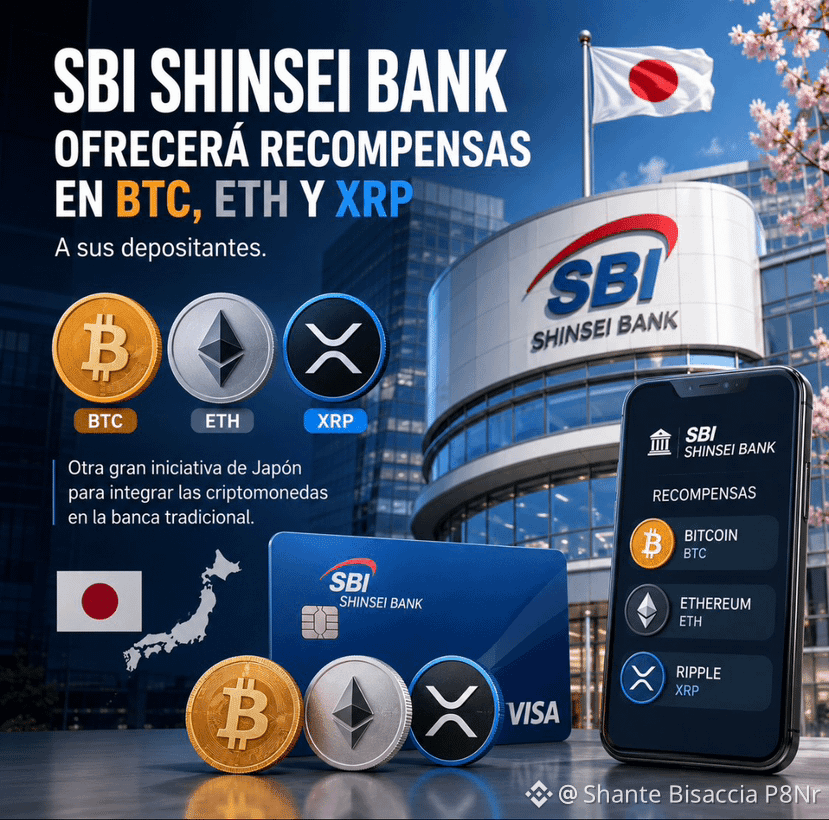
SBI Shinsei Bank, part of the SBI group, announced programs that will allow their clients to earn rewards in Bitcoin (BTC), Ethereum (ETH), and XRP. This initiative is part of the group's strategy to integrate digital assets into everyday financial products.
SBI has a long-standing relationship with Ripple and has been a key player in promoting XRP in Japan, engaging in payment projects, remittances, and blockchain-based financial solutions. If these initiatives keep expanding, they could mark another significant step towards mass adoption of cryptocurrencies in the Japanese financial system.
$BTC $XRP $ETH #SBI #Blockchain
🇯🇵 Japan is bridging the gap between crypto and traditional banking.
SBI Shinsei Bank, part of the SBI group, announced programs that will allow their clients to earn rewards in Bitcoin (BTC), Ethereum (ETH), and XRP. This initiative is part of the group's strategy to integrate digital assets into everyday financial products.
SBI has a long-standing relationship with Ripple and has been a key player in promoting XRP in Japan, engaging in payment projects, remittances, and blockchain-based financial solutions. If these initiatives keep expanding, they could mark another significant step towards mass adoption of cryptocurrencies in the Japanese financial system.
$BTC $XRP $ETH #SBI #Blockchain
SBI Shinsei Bank, part of the SBI group, announced programs that will allow their clients to earn rewards in Bitcoin (BTC), Ethereum (ETH), and XRP. This initiative is part of the group's strategy to integrate digital assets into everyday financial products.
SBI has a long-standing relationship with Ripple and has been a key player in promoting XRP in Japan, engaging in payment projects, remittances, and blockchain-based financial solutions. If these initiatives keep expanding, they could mark another significant step towards mass adoption of cryptocurrencies in the Japanese financial system.
$BTC $XRP $ETH #SBI #Blockchain
1
162

·
--
【Japan Crypto Market Shake-Up】SBI Group officially announces the acquisition of local crypto exchange Bitbank for 46.7 billion yen (about 289 million USD)! After the deal is finalized, SBI's crypto asset custody balance will surpass 1 trillion yen (approximately 6.2 billion USD), further solidifying its position as the leader in the Japanese crypto scene. The acquisition will proceed in phases: in August, SBI's subsidiary will first acquire shares from Bitbank's founders and other individual shareholders, with a buyback of shares held by existing shareholders Mixi and Ceres to be completed by the end of October, ultimately becoming a consolidated subsidiary of SBI. From initial discussions on capital partnerships to the full acquisition, the trend of consolidation among top players in the Japanese crypto market is accelerating.
#SBI #Bitbank #crypto industry
【Japan Crypto Market Shake-Up】SBI Group officially announces the acquisition of local crypto exchange Bitbank for 46.7 billion yen (about 289 million USD)! After the deal is finalized, SBI's crypto asset custody balance will surpass 1 trillion yen (approximately 6.2 billion USD), further solidifying its position as the leader in the Japanese crypto scene. The acquisition will proceed in phases: in August, SBI's subsidiary will first acquire shares from Bitbank's founders and other individual shareholders, with a buyback of shares held by existing shareholders Mixi and Ceres to be completed by the end of October, ultimately becoming a consolidated subsidiary of SBI. From initial discussions on capital partnerships to the full acquisition, the trend of consolidation among top players in the Japanese crypto market is accelerating.
#SBI #Bitbank #crypto industry
#SBI #Bitbank #crypto industry
6

·
--
⚡ Market developments: #SBI Holdings is preparing to acquire the Japanese Bitcoin exchange Bitbank of $BTC for $288.6 million
💰 The deal is valued at $288.6 million, reflecting the rapid evolution of Japan's digital currency market
📈 The acquisition is expected to strengthen SBI Holdings in the digital currency market and unlock new growth and investment opportunities
⚡ Market developments: #SBI Holdings is preparing to acquire the Japanese Bitcoin exchange Bitbank of $BTC for $288.6 million
💰 The deal is valued at $288.6 million, reflecting the rapid evolution of Japan's digital currency market
📈 The acquisition is expected to strengthen SBI Holdings in the digital currency market and unlock new growth and investment opportunities
💰 The deal is valued at $288.6 million, reflecting the rapid evolution of Japan's digital currency market
📈 The acquisition is expected to strengthen SBI Holdings in the digital currency market and unlock new growth and investment opportunities
1
12

📢 SBI Group will launch a loan service with JPYSC and offer an annual return of 3%
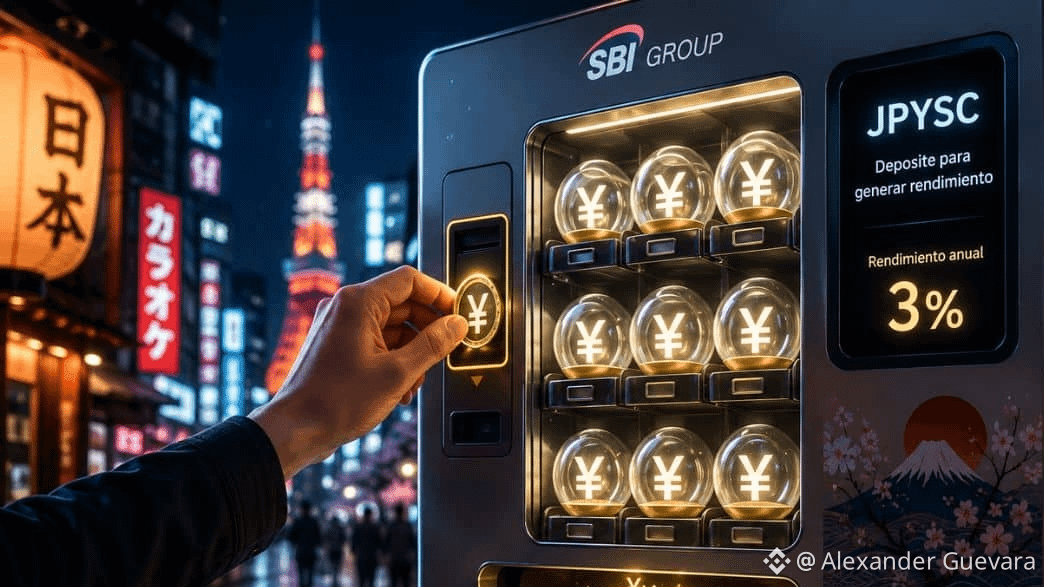
SBI Group’s strategy to further consolidate the use of stablecoins in Japan takes a new step. The financial conglomerate announced that this month it will roll out a lending service for JPYSC, its stablecoin backed by Japanese yen, allowing users to earn an annual return of 3% on deposited assets.…
#SBI #JPYSC #japon #Stablecoins #Asia $BTC
📢 SBI Group will launch a loan service with JPYSC and offer an annual return of 3%
SBI Group’s strategy to further consolidate the use of stablecoins in Japan takes a new step. The financial conglomerate announced that this month it will roll out a lending service for JPYSC, its stablecoin backed by Japanese yen, allowing users to earn an annual return of 3% on deposited assets.…
#SBI #JPYSC #japon #Stablecoins #Asia $BTC
SBI Group’s strategy to further consolidate the use of stablecoins in Japan takes a new step. The financial conglomerate announced that this month it will roll out a lending service for JPYSC, its stablecoin backed by Japanese yen, allowing users to earn an annual return of 3% on deposited assets.…
#SBI #JPYSC #japon #Stablecoins #Asia $BTC
3
32


·
--
Japan's first trust bank stablecoin JPYSC has launched!
The SBI Group today rolled out Japan's first yen stablecoin backed by a trust bank, JPYSC 💴🚀
Highlights:
✅ Issued by SBI Shinsei Trust Bank, reserves include cash and Japanese government bonds
✅ Listed as a 'third type of electronic payment tool' under the Payment Services Act, breaking the previous 1 million yen balance limit
✅ Developed in collaboration with Startale Group, tech is ready to roll
⚠️ Initially available only to SBI VC Trade users, external wallet withdrawals and DeFi integration are not yet available
What does this mean? Japan has taken another step forward in the realm of regulated stablecoins. Enterprise-grade settlements and cross-border remittances are now possible, but to truly embrace the open blockchain ecosystem, we’ll have to wait for regulatory approval.
#JPYSC #SBI #日本穩定幣 #CryptoNews
#JPYSC
Japan's first trust bank stablecoin JPYSC has launched!
The SBI Group today rolled out Japan's first yen stablecoin backed by a trust bank, JPYSC 💴🚀
Highlights:
✅ Issued by SBI Shinsei Trust Bank, reserves include cash and Japanese government bonds
✅ Listed as a 'third type of electronic payment tool' under the Payment Services Act, breaking the previous 1 million yen balance limit
✅ Developed in collaboration with Startale Group, tech is ready to roll
⚠️ Initially available only to SBI VC Trade users, external wallet withdrawals and DeFi integration are not yet available
What does this mean? Japan has taken another step forward in the realm of regulated stablecoins. Enterprise-grade settlements and cross-border remittances are now possible, but to truly embrace the open blockchain ecosystem, we’ll have to wait for regulatory approval.
#JPYSC #SBI #日本穩定幣 #CryptoNews
#JPYSC
The SBI Group today rolled out Japan's first yen stablecoin backed by a trust bank, JPYSC 💴🚀
Highlights:
✅ Issued by SBI Shinsei Trust Bank, reserves include cash and Japanese government bonds
✅ Listed as a 'third type of electronic payment tool' under the Payment Services Act, breaking the previous 1 million yen balance limit
✅ Developed in collaboration with Startale Group, tech is ready to roll
⚠️ Initially available only to SBI VC Trade users, external wallet withdrawals and DeFi integration are not yet available
What does this mean? Japan has taken another step forward in the realm of regulated stablecoins. Enterprise-grade settlements and cross-border remittances are now possible, but to truly embrace the open blockchain ecosystem, we’ll have to wait for regulatory approval.
#JPYSC #SBI #日本穩定幣 #CryptoNews
#JPYSC
13

·
--
🇯🇵 Japanese financial giant SBI Holdings acquired a crypto exchange for $289 million
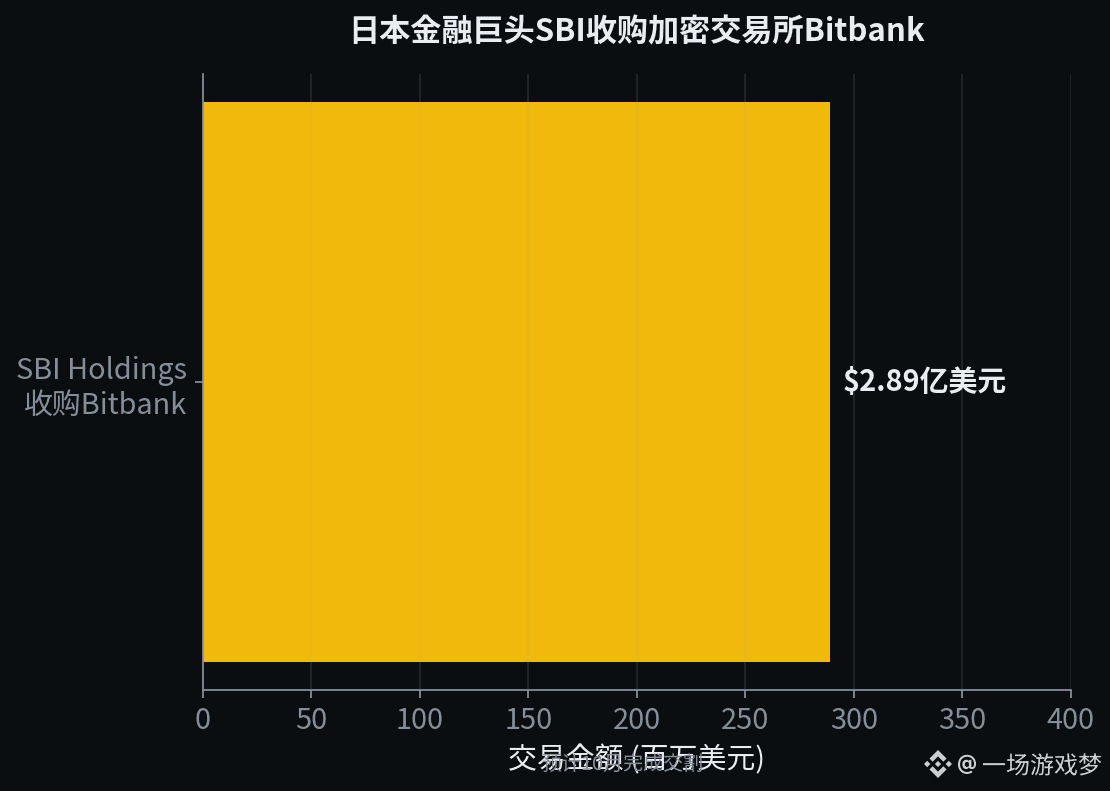
SBI Holdings announced it will acquire the Japanese crypto exchange Bitbank for approximately $289 million, with the deal expected to close in October.
Who is SBI?
One of Japan’s largest diversified financial services groups. Its business covers securities, banking, and insurance, making it a leading enterprise in Japan’s financial technology sector.
This acquisition comes when crypto market sentiment is at an extreme low—BTC has just set a new intra-year low, and the Fear Index has fallen to around single digits.
This once again confirms a pattern:
Institutional players with capital and patience often choose to complete strategic mergers and acquisitions during market downturns—not wait until the peak of a bull market to enter at a premium.
Earlier, we saw Kraken in talks to acquire Aave equity; now it’s SBI acquiring Bitbank.
In a bear market, it’s never just a “season of losing money”—it’s also a “season of industry consolidation.”
What other major institutional M&A deals do you think will happen next?👇
#SBI #Bitbank #BinanceSquare
🇯🇵 Japanese financial giant SBI Holdings acquired a crypto exchange for $289 million
SBI Holdings announced it will acquire the Japanese crypto exchange Bitbank for approximately $289 million, with the deal expected to close in October.
Who is SBI?
One of Japan’s largest diversified financial services groups. Its business covers securities, banking, and insurance, making it a leading enterprise in Japan’s financial technology sector.
This acquisition comes when crypto market sentiment is at an extreme low—BTC has just set a new intra-year low, and the Fear Index has fallen to around single digits.
This once again confirms a pattern:
Institutional players with capital and patience often choose to complete strategic mergers and acquisitions during market downturns—not wait until the peak of a bull market to enter at a premium.
Earlier, we saw Kraken in talks to acquire Aave equity; now it’s SBI acquiring Bitbank.
In a bear market, it’s never just a “season of losing money”—it’s also a “season of industry consolidation.”
What other major institutional M&A deals do you think will happen next?👇
#SBI #Bitbank #BinanceSquare
SBI Holdings announced it will acquire the Japanese crypto exchange Bitbank for approximately $289 million, with the deal expected to close in October.
Who is SBI?
One of Japan’s largest diversified financial services groups. Its business covers securities, banking, and insurance, making it a leading enterprise in Japan’s financial technology sector.
This acquisition comes when crypto market sentiment is at an extreme low—BTC has just set a new intra-year low, and the Fear Index has fallen to around single digits.
This once again confirms a pattern:
Institutional players with capital and patience often choose to complete strategic mergers and acquisitions during market downturns—not wait until the peak of a bull market to enter at a premium.
Earlier, we saw Kraken in talks to acquire Aave equity; now it’s SBI acquiring Bitbank.
In a bear market, it’s never just a “season of losing money”—it’s also a “season of industry consolidation.”
What other major institutional M&A deals do you think will happen next?👇
#SBI #Bitbank #BinanceSquare
20

·
--
SBI personally stepped in and brought traditional stock strategies onto Solana.
This isn’t a gimmick—it’s a serious on-chain move by a major Japanese asset management firm.
The RWA space finally has something real. Solana’s institutional narrative gets yet another confirmation.
Stop focusing only on memes—underlying value is quietly getting thicker. #RWA #SBI $SOL
{future}(SOLUSDT)
SBI personally stepped in and brought traditional stock strategies onto Solana.
This isn’t a gimmick—it’s a serious on-chain move by a major Japanese asset management firm.
The RWA space finally has something real. Solana’s institutional narrative gets yet another confirmation.
Stop focusing only on memes—underlying value is quietly getting thicker. #RWA #SBI $SOL
This isn’t a gimmick—it’s a serious on-chain move by a major Japanese asset management firm.
The RWA space finally has something real. Solana’s institutional narrative gets yet another confirmation.
Stop focusing only on memes—underlying value is quietly getting thicker. #RWA #SBI $SOL

104

·
--
🇯🇵 SBI Group Expands Its Digital Asset Empire Across Asia
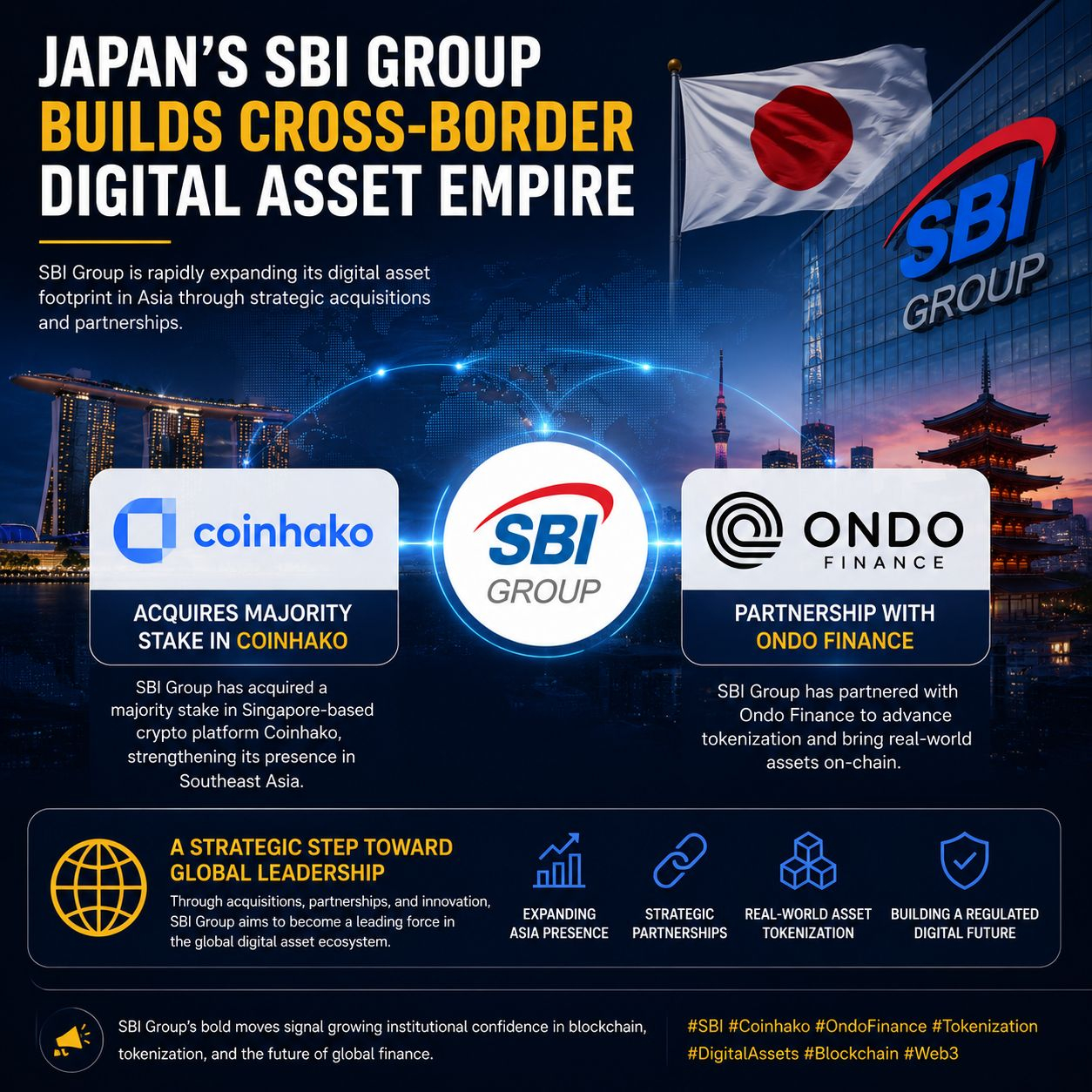
Japan's financial giant SBI Group is accelerating its crypto strategy by acquiring a majority stake in Singapore-based Coinhako while partnering with Ondo Finance to advance tokenized real-world assets.
$MU
{future}(MUUSDT)
$JST
{spot}(JSTUSDT)
$ONDO
{spot}(ONDOUSDT)
This move strengthens SBI's presence in the Asian digital asset market and reflects growing institutional confidence in blockchain, tokenization, and cross-border financial infrastructure.
🔍 Market Insight: As major financial institutions continue investing in digital assets, tokenization and regulated crypto platforms are becoming key pillars of the next generation of global finance.
#Crypto_Jobs🎯 #SBI #coinhako
🇯🇵 SBI Group Expands Its Digital Asset Empire Across Asia
Japan's financial giant SBI Group is accelerating its crypto strategy by acquiring a majority stake in Singapore-based Coinhako while partnering with Ondo Finance to advance tokenized real-world assets.
$MU
$JST
$ONDO
This move strengthens SBI's presence in the Asian digital asset market and reflects growing institutional confidence in blockchain, tokenization, and cross-border financial infrastructure.
🔍 Market Insight: As major financial institutions continue investing in digital assets, tokenization and regulated crypto platforms are becoming key pillars of the next generation of global finance.
#Crypto_Jobs🎯 #SBI #coinhako
Japan's financial giant SBI Group is accelerating its crypto strategy by acquiring a majority stake in Singapore-based Coinhako while partnering with Ondo Finance to advance tokenized real-world assets.
$MU
$JST
$ONDO
This move strengthens SBI's presence in the Asian digital asset market and reflects growing institutional confidence in blockchain, tokenization, and cross-border financial infrastructure.
🔍 Market Insight: As major financial institutions continue investing in digital assets, tokenization and regulated crypto platforms are becoming key pillars of the next generation of global finance.
#Crypto_Jobs🎯 #SBI #coinhako
247
Log in to explore more content
Join global crypto users on Binance Square
⚡️ Get latest and useful information about crypto.
💬 Trusted by the world’s largest crypto exchange.
👍 Discover real insights from verified creators.
Email / Phone number
Trending Topics
1
#ADAGains10%Above$0.27
12,598 views
171 Discussing
2
#ETHUp70%InQ3ButLiquidityFalls
140,325 views
1,000 Discussing
3
#EthStakingExitQueueHits2026High
49,259 views
724 Discussing
4
#FedOctoberHoldOdds82.3%
48,706 views
673 Discussing
5
#Nikkei225Jumps2.5%ToThreeMonthHigh
76,019 views
1,051 Discussing
6
#CircleMints$2.75BUSDCOnSolanaIn7Days
1,624 views
43 Discussing
7
#DriftHackVictimsBeginClaims
168,363 views
1,701 Discussing
8
#SolanaTokenizedStockVolumeTops$4.4BInSeptember
13,013 views
130 Discussing
9
#BitcoinSpotETFsDraw$6.34BInflowsInQ3
52,998 views
262 Discussing
10
#EthereumValidatorExitQueueJumps392%
301,005 views
2,560 Discussing