

#newtonprotocol
newtonprotocol
159,005 views
2,332 Discussing
Hot
Latest

$NEWT
{spot}(NEWTUSDT)
⚡ NEWTON PROTOCOL ($NEW) CONSOLIDATES NEAR $0.051: Breakthrough Ahead?
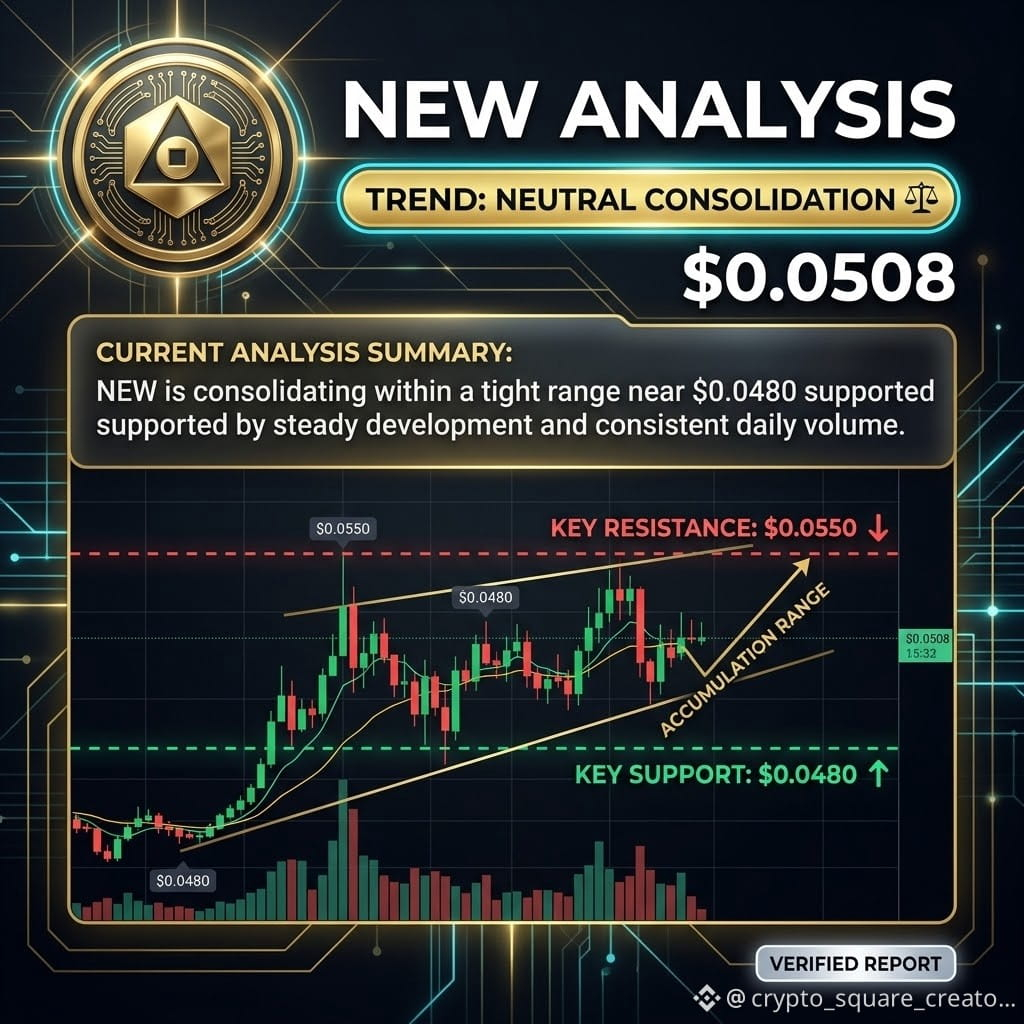
Newton Protocol ($NEW) continues to build base support, currently trading near $0.0508 as buyers absorb overhead selling pressure.
Trend: Neutral Consolidation
Key Support: $0.0480
Key Resistance: $0.0550
Why It Moves: Price stability is anchored by steady decentralized infrastructure development and consistent daily volume, preventing significant downside drift despite broader market volatility.
Can $NEW hold $0.048 support and rally to break the $0.055 resistance level? Share your targets below! 👇
#NewtonProtocol #NEW #CryptoAnalysis #BinanceSquareTalks #TechnicalAnalysiss #Altcoins #CryptoTrading
Not financial advice.
$NEWT
⚡ NEWTON PROTOCOL ($NEW) CONSOLIDATES NEAR $0.051: Breakthrough Ahead?
Newton Protocol ($NEW) continues to build base support, currently trading near $0.0508 as buyers absorb overhead selling pressure.
Trend: Neutral Consolidation
Key Support: $0.0480
Key Resistance: $0.0550
Why It Moves: Price stability is anchored by steady decentralized infrastructure development and consistent daily volume, preventing significant downside drift despite broader market volatility.
Can $NEW hold $0.048 support and rally to break the $0.055 resistance level? Share your targets below! 👇
#NewtonProtocol #NEW #CryptoAnalysis #BinanceSquareTalks #TechnicalAnalysiss #Altcoins #CryptoTrading
Not financial advice.
⚡ NEWTON PROTOCOL ($NEW) CONSOLIDATES NEAR $0.051: Breakthrough Ahead?
Newton Protocol ($NEW) continues to build base support, currently trading near $0.0508 as buyers absorb overhead selling pressure.
Trend: Neutral Consolidation
Key Support: $0.0480
Key Resistance: $0.0550
Why It Moves: Price stability is anchored by steady decentralized infrastructure development and consistent daily volume, preventing significant downside drift despite broader market volatility.
Can $NEW hold $0.048 support and rally to break the $0.055 resistance level? Share your targets below! 👇
#NewtonProtocol #NEW #CryptoAnalysis #BinanceSquareTalks #TechnicalAnalysiss #Altcoins #CryptoTrading
Not financial advice.
36


·
--
$NEWT
{spot}(NEWTUSDT)
Newton Protocol is building an onchain authorization layer for DeFi, AI agents & compliance.
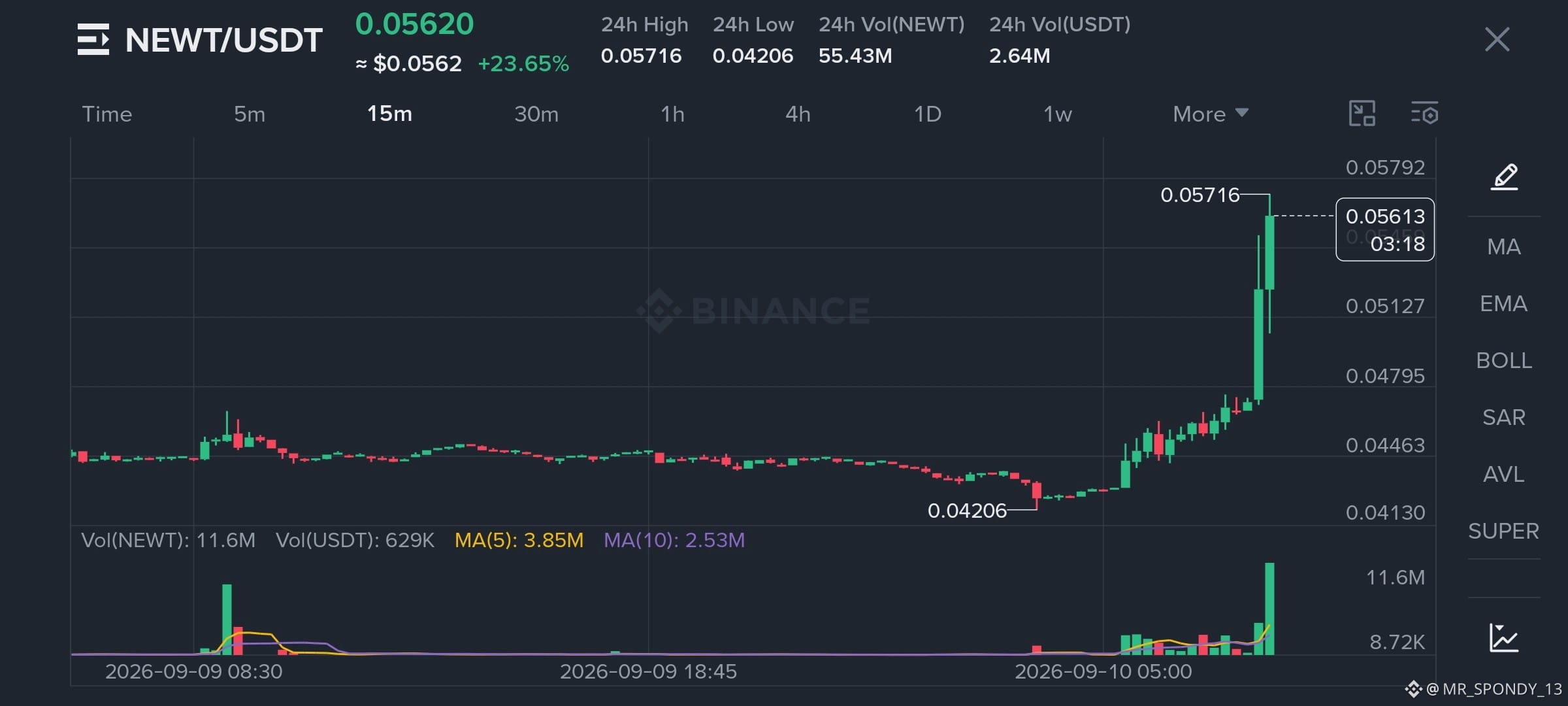
Support: $0.050–0.052
Resistance: $0.060 → $0.075
Breakout target: $0.09–0.10
Bullish case: $0.12+
Strong fundamentals, but DYOR.
#NEWT #NewtonProtocol
$NEWT
Newton Protocol is building an onchain authorization layer for DeFi, AI agents & compliance.
Support: $0.050–0.052
Resistance: $0.060 → $0.075
Breakout target: $0.09–0.10
Bullish case: $0.12+
Strong fundamentals, but DYOR.
#NEWT #NewtonProtocol
Newton Protocol is building an onchain authorization layer for DeFi, AI agents & compliance.
Support: $0.050–0.052
Resistance: $0.060 → $0.075
Breakout target: $0.09–0.10
Bullish case: $0.12+
Strong fundamentals, but DYOR.
#NEWT #NewtonProtocol
2
1
238

·
--
Article
Newton Mainnet Beta: The Future of AI-Driven Web3 is HERE🚨 Newton Just Went LIVE! 🚨
The wait is over. Newton Protocol has officially launched its Mainnet Beta.
This is not another blockchain project.
They are building the infrastructure for autonomous Web3.
**What is Newton Protocol?** 🤖
Newton is creating AI-driven agents that can perform on-chain tasks automatically.
Think of it as your personal AI assistant for crypto.
**Why $NEWT Matters:**
1. **Automation**: Agents can trade, stake, and manage assets for you
2. **AI + Web3**: First real use case of AI agents on chain
3. **Mainnet Beta**: The ecosystem is now LIVE
This is the start of a new era. AI will run the future of Web3.
Are you bullish on AI agents? Drop a comment 👇
$NEWT #Newt #NewtonProtocol #AI #Web3 #BinanceSquare #Crypto2026
Newton Mainnet Beta: The Future of AI-Driven Web3 is HERE
🚨 Newton Just Went LIVE! 🚨
The wait is over. Newton Protocol has officially launched its Mainnet Beta.
This is not another blockchain project.
They are building the infrastructure for autonomous Web3.
**What is Newton Protocol?** 🤖
Newton is creating AI-driven agents that can perform on-chain tasks automatically.
Think of it as your personal AI assistant for crypto.
**Why $NEWT Matters:**
1. **Automation**: Agents can trade, stake, and manage assets for you
2. **AI + Web3**: First real use case of AI agents on chain
3. **Mainnet Beta**: The ecosystem is now LIVE
This is the start of a new era. AI will run the future of Web3.
Are you bullish on AI agents? Drop a comment 👇
$NEWT #Newt #NewtonProtocol #AI #Web3 #BinanceSquare #Crypto2026
The wait is over. Newton Protocol has officially launched its Mainnet Beta.
This is not another blockchain project.
They are building the infrastructure for autonomous Web3.
**What is Newton Protocol?** 🤖
Newton is creating AI-driven agents that can perform on-chain tasks automatically.
Think of it as your personal AI assistant for crypto.
**Why $NEWT Matters:**
1. **Automation**: Agents can trade, stake, and manage assets for you
2. **AI + Web3**: First real use case of AI agents on chain
3. **Mainnet Beta**: The ecosystem is now LIVE
This is the start of a new era. AI will run the future of Web3.
Are you bullish on AI agents? Drop a comment 👇
$NEWT #Newt #NewtonProtocol #AI #Web3 #BinanceSquare #Crypto2026
48

·
--
Article
**WHALE ALERT: Is $NEWT Quietly Preparing for a Massive Move?** 🚨 **WHALE ALERT: Is $NEWT Quietly Preparing for a Massive Move?** 🚨
When the broader crypto market is filled with fear and uncertainty, smart money quietly goes to work. While retail traders panic during short-term price fluctuations, institutional investors and whales look at the bigger picture. If you are only judging this project by its recent daily charts, you might be missing a massive accumulation phase. Let’s dive deep into the on-chain data and market structure.
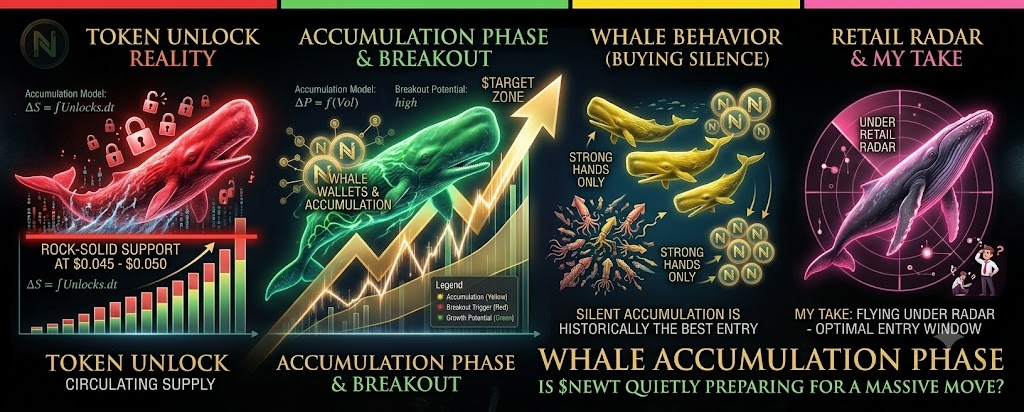
📊 **The Reality of Token Unlocks:**
Recently, Newton Protocol underwent some notable token unlocks. In crypto, a token unlock usually triggers panic-selling because retail traders fear an immediate market dump. But look at what actually happened: instead of crashing, the price found a rock-solid support floor right around the 0.045 – 0.050 zone.
Holding a tight level despite an influx of circulating supply is never an accident in Web3. It is a textbook indicator that the newly unlocked supply is being absorbed directly into strong hands and dedicated whale wallets rather than being dumped on the open market.
🐋 **The Accumulation Zone & Supply Shock:**
The order books and structural charts indicate that the asset is currently sitting deep within a classic accumulation cylinder. Sellers are hitting exhaustion levels, meaning those who wanted to exit have already sold. On the other side, silent buying pressure is steadily building up.
When a project features real, underlying utility—such as Newton's infrastructure for hardware-enforced cryptography and verifiable AI agent automation—this kind of supply absorption lays the foundation for a massive supply shock. Once the available market supply dries up, the eventual breakout is historically very aggressive.
💡 **My Take:**
Whales operate on a simple blueprint: they buy in absolute silence when the retail crowd is distracted or fearful, build up their positions, and then let the narrative drive the price up later. This project is flying completely under the average retail radar right now, which is historically the most optimal risk-to-reward window for an entry.
👇 **Let's Discuss:**
What is your personal strategy for this accumulation phase? Are you building a position right now, or are you waiting for a confirmed breakout past the immediate resistance? Let me know your thoughts and price targets in the comments below!
#Newt #NewtonProtocol #WhaleAlert
**WHALE ALERT: Is $NEWT Quietly Preparing for a Massive Move?**
🚨 **WHALE ALERT: Is $NEWT Quietly Preparing for a Massive Move?** 🚨
When the broader crypto market is filled with fear and uncertainty, smart money quietly goes to work. While retail traders panic during short-term price fluctuations, institutional investors and whales look at the bigger picture. If you are only judging this project by its recent daily charts, you might be missing a massive accumulation phase. Let’s dive deep into the on-chain data and market structure.
📊 **The Reality of Token Unlocks:**
Recently, Newton Protocol underwent some notable token unlocks. In crypto, a token unlock usually triggers panic-selling because retail traders fear an immediate market dump. But look at what actually happened: instead of crashing, the price found a rock-solid support floor right around the 0.045 – 0.050 zone.
Holding a tight level despite an influx of circulating supply is never an accident in Web3. It is a textbook indicator that the newly unlocked supply is being absorbed directly into strong hands and dedicated whale wallets rather than being dumped on the open market.
🐋 **The Accumulation Zone & Supply Shock:**
The order books and structural charts indicate that the asset is currently sitting deep within a classic accumulation cylinder. Sellers are hitting exhaustion levels, meaning those who wanted to exit have already sold. On the other side, silent buying pressure is steadily building up.
When a project features real, underlying utility—such as Newton's infrastructure for hardware-enforced cryptography and verifiable AI agent automation—this kind of supply absorption lays the foundation for a massive supply shock. Once the available market supply dries up, the eventual breakout is historically very aggressive.
💡 **My Take:**
Whales operate on a simple blueprint: they buy in absolute silence when the retail crowd is distracted or fearful, build up their positions, and then let the narrative drive the price up later. This project is flying completely under the average retail radar right now, which is historically the most optimal risk-to-reward window for an entry.
👇 **Let's Discuss:**
What is your personal strategy for this accumulation phase? Are you building a position right now, or are you waiting for a confirmed breakout past the immediate resistance? Let me know your thoughts and price targets in the comments below!
#Newt #NewtonProtocol #WhaleAlert
When the broader crypto market is filled with fear and uncertainty, smart money quietly goes to work. While retail traders panic during short-term price fluctuations, institutional investors and whales look at the bigger picture. If you are only judging this project by its recent daily charts, you might be missing a massive accumulation phase. Let’s dive deep into the on-chain data and market structure.
📊 **The Reality of Token Unlocks:**
Recently, Newton Protocol underwent some notable token unlocks. In crypto, a token unlock usually triggers panic-selling because retail traders fear an immediate market dump. But look at what actually happened: instead of crashing, the price found a rock-solid support floor right around the 0.045 – 0.050 zone.
Holding a tight level despite an influx of circulating supply is never an accident in Web3. It is a textbook indicator that the newly unlocked supply is being absorbed directly into strong hands and dedicated whale wallets rather than being dumped on the open market.
🐋 **The Accumulation Zone & Supply Shock:**
The order books and structural charts indicate that the asset is currently sitting deep within a classic accumulation cylinder. Sellers are hitting exhaustion levels, meaning those who wanted to exit have already sold. On the other side, silent buying pressure is steadily building up.
When a project features real, underlying utility—such as Newton's infrastructure for hardware-enforced cryptography and verifiable AI agent automation—this kind of supply absorption lays the foundation for a massive supply shock. Once the available market supply dries up, the eventual breakout is historically very aggressive.
💡 **My Take:**
Whales operate on a simple blueprint: they buy in absolute silence when the retail crowd is distracted or fearful, build up their positions, and then let the narrative drive the price up later. This project is flying completely under the average retail radar right now, which is historically the most optimal risk-to-reward window for an entry.
👇 **Let's Discuss:**
What is your personal strategy for this accumulation phase? Are you building a position right now, or are you waiting for a confirmed breakout past the immediate resistance? Let me know your thoughts and price targets in the comments below!
#Newt #NewtonProtocol #WhaleAlert
23
7
89

·
--
#newt $NEWT
RWAs — tokenized real-world assets, are one of the fastest growing corners of crypto right now. Tokenized treasuries, private credit, real estate. Institutions are moving real money on chain.
Here's the problem nobody's solving cleanly yet. When a tokenized asset moves onchain, the compliance rules that govern it — who can hold it, what jurisdictions allow it, what counterparty limits apply — those rules still live offchain. In documents. Enforced manually. Checked after the fact if at all.
That's the gap @NewtonProtocol is building into. Policy enforcement that runs before a transaction settles, not after. OFAC checks, identity verification, counterparty risk limits, all automatic, all verifiable, all onchain.
RWAs need an authorization layer. Newton is building exactly that.
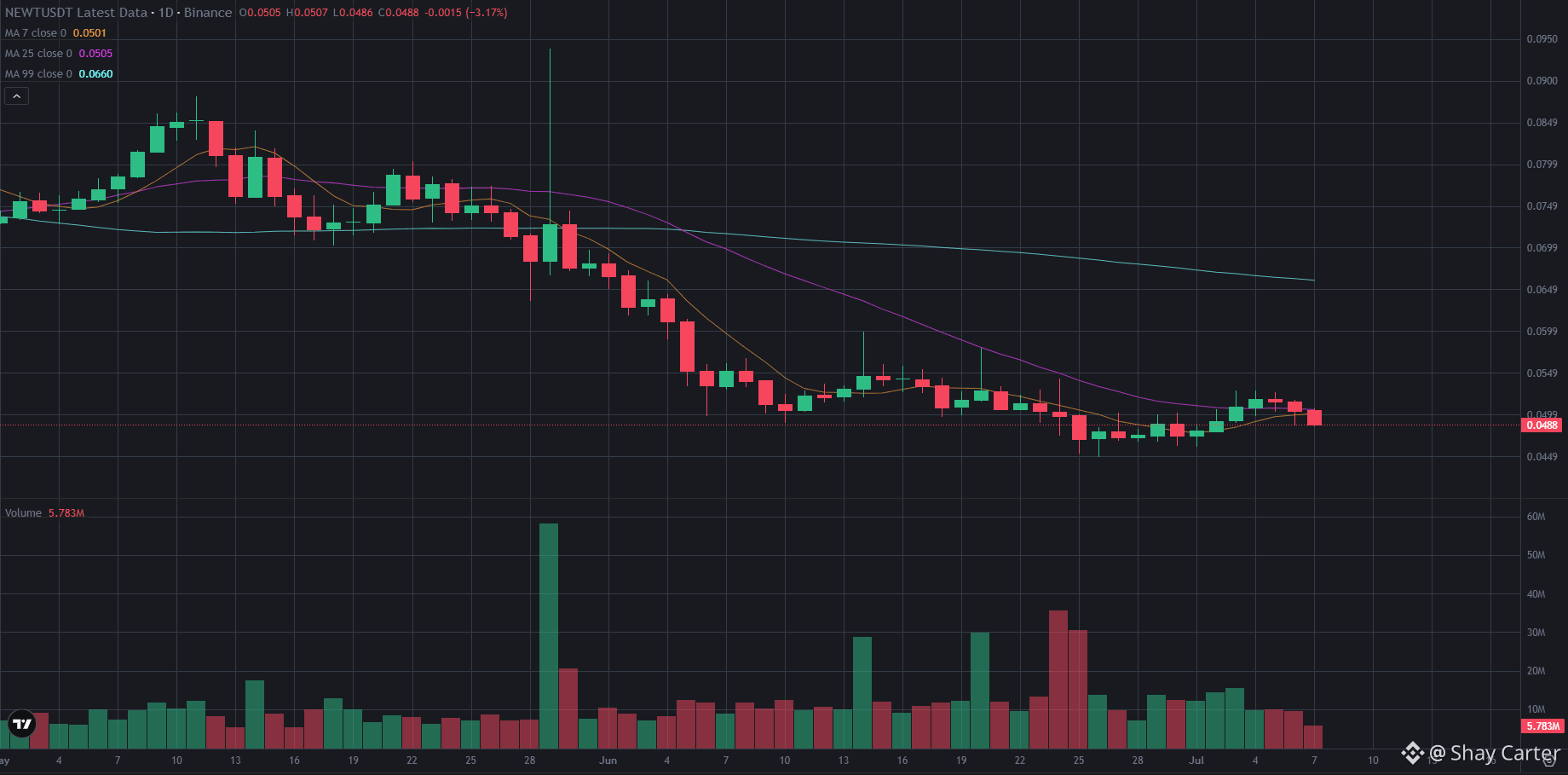
$NEWT is sitting at $0.0488 today, down just over 3%.. The RWA narrative is getting louder. The infrastructure for it is already running.
#Newt #NewtonProtocol
{spot}(NEWTUSDT)
#newt $NEWT
RWAs — tokenized real-world assets, are one of the fastest growing corners of crypto right now. Tokenized treasuries, private credit, real estate. Institutions are moving real money on chain.
Here's the problem nobody's solving cleanly yet. When a tokenized asset moves onchain, the compliance rules that govern it — who can hold it, what jurisdictions allow it, what counterparty limits apply — those rules still live offchain. In documents. Enforced manually. Checked after the fact if at all.
That's the gap @NewtonProtocol is building into. Policy enforcement that runs before a transaction settles, not after. OFAC checks, identity verification, counterparty risk limits, all automatic, all verifiable, all onchain.
RWAs need an authorization layer. Newton is building exactly that.
$NEWT is sitting at $0.0488 today, down just over 3%.. The RWA narrative is getting louder. The infrastructure for it is already running.
#Newt #NewtonProtocol
RWAs — tokenized real-world assets, are one of the fastest growing corners of crypto right now. Tokenized treasuries, private credit, real estate. Institutions are moving real money on chain.
Here's the problem nobody's solving cleanly yet. When a tokenized asset moves onchain, the compliance rules that govern it — who can hold it, what jurisdictions allow it, what counterparty limits apply — those rules still live offchain. In documents. Enforced manually. Checked after the fact if at all.
That's the gap @NewtonProtocol is building into. Policy enforcement that runs before a transaction settles, not after. OFAC checks, identity verification, counterparty risk limits, all automatic, all verifiable, all onchain.
RWAs need an authorization layer. Newton is building exactly that.
$NEWT is sitting at $0.0488 today, down just over 3%.. The RWA narrative is getting louder. The infrastructure for it is already running.
#Newt #NewtonProtocol
1
87

Newton Mainnet Beta: A Step Toward Trustworthy AI and Blockchain InnovationAs blockchain technology continues to develop alongside artificial intelligence, the demand for secure, transparent, and verifiable infrastructure is becoming increasingly important. This is one of the reasons why #NewtonProtocol has captured the attention of many Web3 enthusiasts. The launch of the Newton Mainnet Beta is an important milestone that demonstrates the project's commitment to building reliable infrastructure for decentralized AI applications.
The Newton Mainnet Beta gives developers and community members an opportunity to explore how AI and blockchain can work together in a secure environment. By focusing on verifiable execution and transparent processes, Newton Protocol aims to create greater trust between users, developers, and AI-powered applications. This approach could play a significant role in the future adoption of decentralized technologies.
I also appreciate that Newton Protocol is building with a long-term vision rather than focusing only on short-term trends. As AI continues to expand into more industries, having a blockchain network that emphasizes security, transparency, and accountability will become increasingly valuable. The Mainnet Beta is an important step toward achieving that vision.
I'm excited to follow the future development of @NewtonProtocol and see how the ecosystem grows with more developers, partners, and community participation. The combination of AI and blockchain has enormous potential, and Newton Protocol is a project worth watching.
What do you think about the future of decentralized AI infrastructure? Share your thoughts below!
$NEWT
Newton Mainnet Beta: A Step Toward Trustworthy AI and Blockchain Innovation
As blockchain technology continues to develop alongside artificial intelligence, the demand for secure, transparent, and verifiable infrastructure is becoming increasingly important. This is one of the reasons why #NewtonProtocol has captured the attention of many Web3 enthusiasts. The launch of the Newton Mainnet Beta is an important milestone that demonstrates the project's commitment to building reliable infrastructure for decentralized AI applications.
The Newton Mainnet Beta gives developers and community members an opportunity to explore how AI and blockchain can work together in a secure environment. By focusing on verifiable execution and transparent processes, Newton Protocol aims to create greater trust between users, developers, and AI-powered applications. This approach could play a significant role in the future adoption of decentralized technologies.
I also appreciate that Newton Protocol is building with a long-term vision rather than focusing only on short-term trends. As AI continues to expand into more industries, having a blockchain network that emphasizes security, transparency, and accountability will become increasingly valuable. The Mainnet Beta is an important step toward achieving that vision.
I'm excited to follow the future development of @NewtonProtocol and see how the ecosystem grows with more developers, partners, and community participation. The combination of AI and blockchain has enormous potential, and Newton Protocol is a project worth watching.
What do you think about the future of decentralized AI infrastructure? Share your thoughts below!
$NEWT
The Newton Mainnet Beta gives developers and community members an opportunity to explore how AI and blockchain can work together in a secure environment. By focusing on verifiable execution and transparent processes, Newton Protocol aims to create greater trust between users, developers, and AI-powered applications. This approach could play a significant role in the future adoption of decentralized technologies.
I also appreciate that Newton Protocol is building with a long-term vision rather than focusing only on short-term trends. As AI continues to expand into more industries, having a blockchain network that emphasizes security, transparency, and accountability will become increasingly valuable. The Mainnet Beta is an important step toward achieving that vision.
I'm excited to follow the future development of @NewtonProtocol and see how the ecosystem grows with more developers, partners, and community participation. The combination of AI and blockchain has enormous potential, and Newton Protocol is a project worth watching.
What do you think about the future of decentralized AI infrastructure? Share your thoughts below!
$NEWT
1
66

newton is future coinThe intersection of decentralized finance (DeFi) and artificial intelligence demands smarter infrastructure. $NEWT (@NewtonProtocol NEWT) aims to address this need by acting as a verifiable compliance and automation layer for on-chain finance. It enables builders to codify complex rules directly into transactions—vital for financial institutions and AI agents navigating a convoluted Web3 regulatory space.
However, despite its solid foundational premise, looking at its market data reveals a classic crypto dilemma.
The Current Market Picture
Price & Position: NEWT is currently hovering around the $0.05 mark.
Market Capitalization: Sitting at roughly $11 million to $14 million, it is firmly categorized as a low-cap micro token.
Supply Tokenomics: With a circulating supply of about 288 million out of a 1 billion maximum supply, only around 29% of the tokens are actively in circulation.
Technical and Human Analysis
From a purely human perspective, evaluating NEWT requires looking past the glossy whitepaper promises of "cryptographic guarantees" and looking directly at investor behavior.
1. The Liquidity Trap
With a 24-hour trading volume that frequently matches or heavily competes with its total market cap (often fluctuating between $6M and $8M), NEWT exhibits incredibly high turnover. For a coin of this size, high volume relative to market cap usually means short-term speculative trading rather than long-term accumulation.
2. The 24-Day Sentiment Window
Data indicates that the average holding time for NEWT investors is just 24 days. In crypto, a short holding time typically reflects a lack of deep holder conviction. Instead of treating NEWT as a foundational asset, market participants are largely treating it as a short-term trading vehicle, swinging on technical indicators and minor liquidity updates.
#NewtonProtocol
#BinanceTurns9 #TreasuryCommerceVieForBitcoinReserveControl #BTCSharpeRatioFallsToLowestSince2022
newton is future coin
The intersection of decentralized finance (DeFi) and artificial intelligence demands smarter infrastructure. $NEWT (@NewtonProtocol NEWT) aims to address this need by acting as a verifiable compliance and automation layer for on-chain finance. It enables builders to codify complex rules directly into transactions—vital for financial institutions and AI agents navigating a convoluted Web3 regulatory space.
However, despite its solid foundational premise, looking at its market data reveals a classic crypto dilemma.
The Current Market Picture
Price & Position: NEWT is currently hovering around the $0.05 mark.
Market Capitalization: Sitting at roughly $11 million to $14 million, it is firmly categorized as a low-cap micro token.
Supply Tokenomics: With a circulating supply of about 288 million out of a 1 billion maximum supply, only around 29% of the tokens are actively in circulation.
Technical and Human Analysis
From a purely human perspective, evaluating NEWT requires looking past the glossy whitepaper promises of "cryptographic guarantees" and looking directly at investor behavior.
1. The Liquidity Trap
With a 24-hour trading volume that frequently matches or heavily competes with its total market cap (often fluctuating between $6M and $8M), NEWT exhibits incredibly high turnover. For a coin of this size, high volume relative to market cap usually means short-term speculative trading rather than long-term accumulation.
2. The 24-Day Sentiment Window
Data indicates that the average holding time for NEWT investors is just 24 days. In crypto, a short holding time typically reflects a lack of deep holder conviction. Instead of treating NEWT as a foundational asset, market participants are largely treating it as a short-term trading vehicle, swinging on technical indicators and minor liquidity updates.
#NewtonProtocol
#BinanceTurns9 #TreasuryCommerceVieForBitcoinReserveControl #BTCSharpeRatioFallsToLowestSince2022
However, despite its solid foundational premise, looking at its market data reveals a classic crypto dilemma.
The Current Market Picture
Price & Position: NEWT is currently hovering around the $0.05 mark.
Market Capitalization: Sitting at roughly $11 million to $14 million, it is firmly categorized as a low-cap micro token.
Supply Tokenomics: With a circulating supply of about 288 million out of a 1 billion maximum supply, only around 29% of the tokens are actively in circulation.
Technical and Human Analysis
From a purely human perspective, evaluating NEWT requires looking past the glossy whitepaper promises of "cryptographic guarantees" and looking directly at investor behavior.
1. The Liquidity Trap
With a 24-hour trading volume that frequently matches or heavily competes with its total market cap (often fluctuating between $6M and $8M), NEWT exhibits incredibly high turnover. For a coin of this size, high volume relative to market cap usually means short-term speculative trading rather than long-term accumulation.
2. The 24-Day Sentiment Window
Data indicates that the average holding time for NEWT investors is just 24 days. In crypto, a short holding time typically reflects a lack of deep holder conviction. Instead of treating NEWT as a foundational asset, market participants are largely treating it as a short-term trading vehicle, swinging on technical indicators and minor liquidity updates.
#NewtonProtocol
#BinanceTurns9 #TreasuryCommerceVieForBitcoinReserveControl #BTCSharpeRatioFallsToLowestSince2022
1
62
·
--
Article
The GENIUS Act Just Made Newton's Thesis Unavoidable for Stablecoin Issuers#Newt $NEWT
The GENIUS Act passed the Senate in June. If it clears the House and gets signed — and the momentum is real, stablecoin issuers in the US will face something they've never had before. Actual federal compliance requirements with actual enforcement teeth.
Reserve audits. AML/KYC obligations. Sanctions screening on transactions. Redemption rights. The kind of rules that traditional financial institutions have lived under for decades, now landing on an industry that largely built itself around avoiding exactly that.
Most stablecoin issuers are not ready for this. Not because they're bad actors — most aren't, but because the infrastructure to enforce these rules automatically, at the point of every transaction, doesn't really exist yet in a form that works onchain.
That's the gap @NewtonProtocol is sitting in right now, at exactly the right moment.
Think about what a stablecoin issuer actually needs under a GENIUS Act regime. Every transaction needs to be screened against OFAC sanctions lists before it settles — not audited monthly, not checked in a report, before. Identity eligibility needs to be verified automatically. Counterparty risk needs to be evaluated in real time. And every one of those checks needs to produce a verifiable record that a regulator can audit, not just a spreadsheet someone compiled after the fact.
Newton does all of that. OFAC and sanctions screening runs through Chainalysis and Hexagate. Identity verification is built into the policy layer. Counterparty risk runs through Credora. Oracle health and price feed integrity runs through RedStone. And every check produces a cryptographic attestation written onchain, readable by anyone, auditable by a regulator, impossible to retroactively alter.
That's not a product that stablecoin issuers might find useful. That's the infrastructure they're going to need if federal compliance becomes mandatory.
Here's the part I find genuinely interesting about the timing. Newton's mainnet beta launched June 23. The GENIUS Act cleared the Senate that same month. These two things aren't related,Newton wasn't built in response to the GENIUS Act. But they landed at the same time, which means the compliance layer Newton has been building quietly is suddenly directly relevant to one of the biggest regulatory shifts in crypto history.
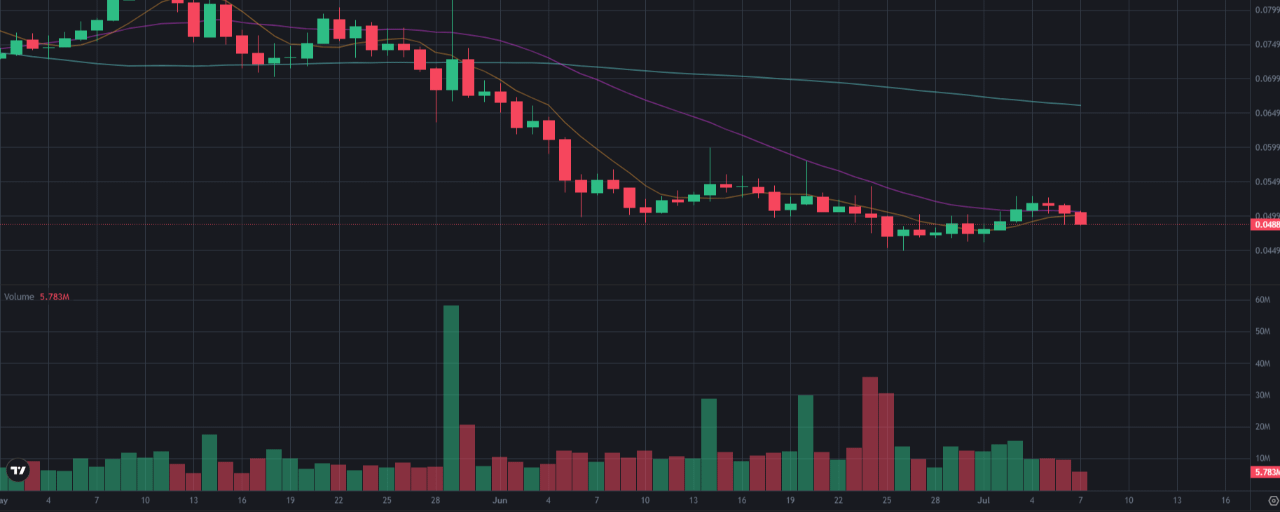
The honest picture: $NEWT is at $0.0488 today, still well below the MA levels and underperforming the broader ETH ecosystem this week. The stablecoin compliance narrative hasn't fed into price yet. The GENIUS Act still needs to clear the House. Nothing here is guaranteed.
But if you're trying to understand what Newton is actually building and why it might matter — the GENIUS Act is probably the clearest real-world forcing function for that thesis that's ever existed.
@NewtonProtocol ([https://www.binance.com/en/square/profile/newtonprotocol](https://www.binance.com/en/square/profile/newtonprotocol))
#Newt #NewtonProtocol
The GENIUS Act Just Made Newton's Thesis Unavoidable for Stablecoin Issuers
#Newt $NEWT
The GENIUS Act passed the Senate in June. If it clears the House and gets signed — and the momentum is real, stablecoin issuers in the US will face something they've never had before. Actual federal compliance requirements with actual enforcement teeth.
Reserve audits. AML/KYC obligations. Sanctions screening on transactions. Redemption rights. The kind of rules that traditional financial institutions have lived under for decades, now landing on an industry that largely built itself around avoiding exactly that.
Most stablecoin issuers are not ready for this. Not because they're bad actors — most aren't, but because the infrastructure to enforce these rules automatically, at the point of every transaction, doesn't really exist yet in a form that works onchain.
That's the gap @NewtonProtocol is sitting in right now, at exactly the right moment.
Think about what a stablecoin issuer actually needs under a GENIUS Act regime. Every transaction needs to be screened against OFAC sanctions lists before it settles — not audited monthly, not checked in a report, before. Identity eligibility needs to be verified automatically. Counterparty risk needs to be evaluated in real time. And every one of those checks needs to produce a verifiable record that a regulator can audit, not just a spreadsheet someone compiled after the fact.
Newton does all of that. OFAC and sanctions screening runs through Chainalysis and Hexagate. Identity verification is built into the policy layer. Counterparty risk runs through Credora. Oracle health and price feed integrity runs through RedStone. And every check produces a cryptographic attestation written onchain, readable by anyone, auditable by a regulator, impossible to retroactively alter.
That's not a product that stablecoin issuers might find useful. That's the infrastructure they're going to need if federal compliance becomes mandatory.
Here's the part I find genuinely interesting about the timing. Newton's mainnet beta launched June 23. The GENIUS Act cleared the Senate that same month. These two things aren't related,Newton wasn't built in response to the GENIUS Act. But they landed at the same time, which means the compliance layer Newton has been building quietly is suddenly directly relevant to one of the biggest regulatory shifts in crypto history.
The honest picture: $NEWT is at $0.0488 today, still well below the MA levels and underperforming the broader ETH ecosystem this week. The stablecoin compliance narrative hasn't fed into price yet. The GENIUS Act still needs to clear the House. Nothing here is guaranteed.
But if you're trying to understand what Newton is actually building and why it might matter — the GENIUS Act is probably the clearest real-world forcing function for that thesis that's ever existed.
@NewtonProtocol (https://www.binance.com/en/square/profile/newtonprotocol)
#Newt #NewtonProtocol
The GENIUS Act passed the Senate in June. If it clears the House and gets signed — and the momentum is real, stablecoin issuers in the US will face something they've never had before. Actual federal compliance requirements with actual enforcement teeth.
Reserve audits. AML/KYC obligations. Sanctions screening on transactions. Redemption rights. The kind of rules that traditional financial institutions have lived under for decades, now landing on an industry that largely built itself around avoiding exactly that.
Most stablecoin issuers are not ready for this. Not because they're bad actors — most aren't, but because the infrastructure to enforce these rules automatically, at the point of every transaction, doesn't really exist yet in a form that works onchain.
That's the gap @NewtonProtocol is sitting in right now, at exactly the right moment.
Think about what a stablecoin issuer actually needs under a GENIUS Act regime. Every transaction needs to be screened against OFAC sanctions lists before it settles — not audited monthly, not checked in a report, before. Identity eligibility needs to be verified automatically. Counterparty risk needs to be evaluated in real time. And every one of those checks needs to produce a verifiable record that a regulator can audit, not just a spreadsheet someone compiled after the fact.
Newton does all of that. OFAC and sanctions screening runs through Chainalysis and Hexagate. Identity verification is built into the policy layer. Counterparty risk runs through Credora. Oracle health and price feed integrity runs through RedStone. And every check produces a cryptographic attestation written onchain, readable by anyone, auditable by a regulator, impossible to retroactively alter.
That's not a product that stablecoin issuers might find useful. That's the infrastructure they're going to need if federal compliance becomes mandatory.
Here's the part I find genuinely interesting about the timing. Newton's mainnet beta launched June 23. The GENIUS Act cleared the Senate that same month. These two things aren't related,Newton wasn't built in response to the GENIUS Act. But they landed at the same time, which means the compliance layer Newton has been building quietly is suddenly directly relevant to one of the biggest regulatory shifts in crypto history.
The honest picture: $NEWT is at $0.0488 today, still well below the MA levels and underperforming the broader ETH ecosystem this week. The stablecoin compliance narrative hasn't fed into price yet. The GENIUS Act still needs to clear the House. Nothing here is guaranteed.
But if you're trying to understand what Newton is actually building and why it might matter — the GENIUS Act is probably the clearest real-world forcing function for that thesis that's ever existed.
@NewtonProtocol (https://www.binance.com/en/square/profile/newtonprotocol)
#Newt #NewtonProtocol
2
104

Article
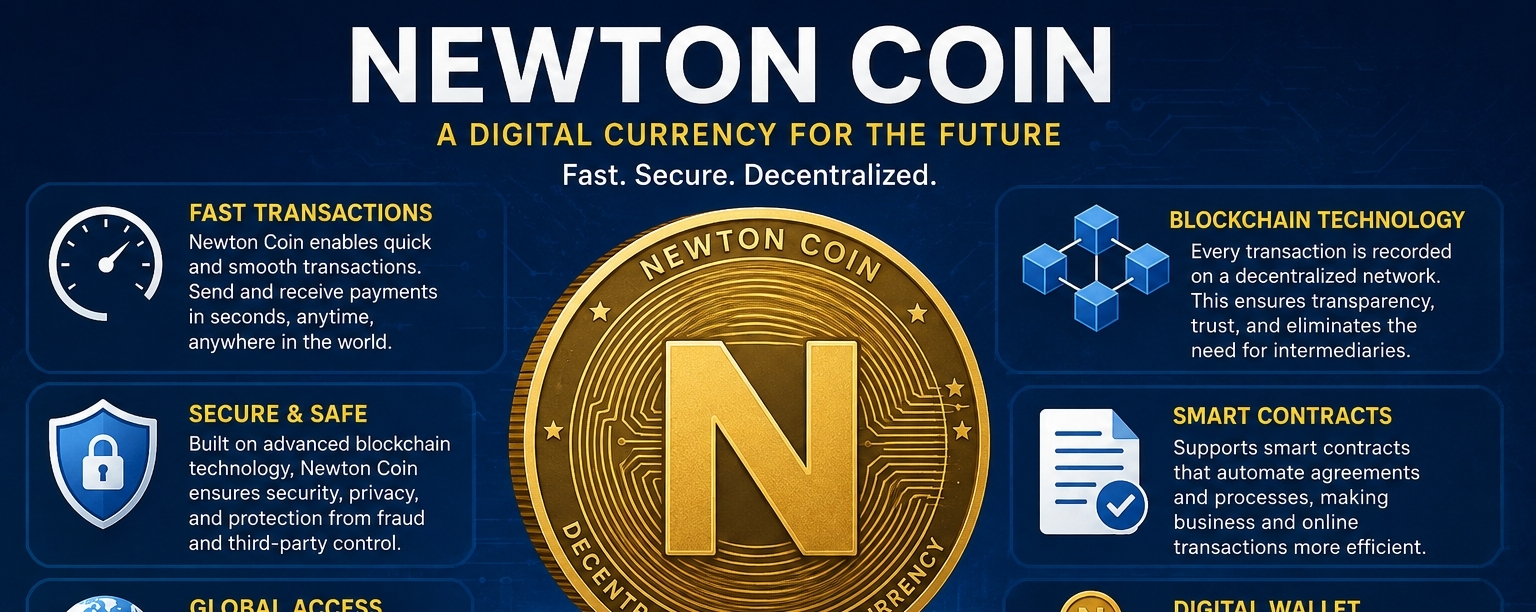
Powering the Future of BlockchainNewton Coin Newton Coin is a digital cryptocurrency created to provide fast, secure, and affordable online transactions. It is built on blockchain technology, which records every transaction in a transparent and decentralized way. Unlike traditional banking systems, blockchain does not rely on a single authority to manage data. Instead, information is stored across a network of computers, making it more secure and resistant to fraud. Newton Coin aims to make digital payments easier for individuals, businesses, and online platforms around the world.
One of the main advantages of Newton Coin is its speed. Transactions can often be completed much faster than international bank transfers, which may take several days. This makes Newton Coin useful for people who need to send money across borders quickly and at a lower cost. The reduced transaction fees also make it attractive for businesses that process many online payments.
Newton Coin can be stored in digital wallets, which are software applications or hardware devices designed to keep cryptocurrency safe. Wallets allow users to send, receive, and manage their coins securely. To protect their funds, users should keep their private keys confidential and enable additional security features such as two-factor authentication whenever possible.
Another important feature of Newton Coin is its support for smart contracts. Smart contracts are self-executing digital agreements that automatically perform specific actions when certain conditions are met. They can reduce paperwork, improve efficiency, and eliminate the need for intermediaries in many business transactions. This technology has applications in finance, e-commerce, supply chain management, and other industries.
Like many cryptocurrencies, Newton Coin operates on a decentralized network. This means no single government, bank, or organization has complete control over the system. Decentralization increases transparency and reduces the risk of a single point of failure. However, it also means users are responsible for protecting their own wallets and digital assets.
The value of Newton Coin, like other cryptocurrencies, changes according to market demand, investor sentiment, technological developments, and global economic conditions. Prices can rise significantly during periods of strong demand but can also fall rapidly during market downturns. Because of this volatility, investors should carefully research the project, understand the risks, and avoid investing more money than they can afford to lose.
Newton Coin is part of the growing digital economy, where blockchain technology continues to transform financial services and online commerce. As cryptocurrency adoption expands, projects like Newton Coin seek to provide efficient, secure, and innovative payment solutions. Whether it is used for online purchases, digital investments, or blockchain-based applications, Newton Coin represents the ongoing evolution of modern financial technology. Anyone interested in using or investing in Newton Coin should stay informed about market trends, security practices, and the project's official updates before making financial decisions.@NewtonProtocol(https://www.binance.com/en/square/profile/newtonprotocol), #NewToken #newtonprocol #NewtonProtocol
Powering the Future of Blockchain
Newton Coin Newton Coin is a digital cryptocurrency created to provide fast, secure, and affordable online transactions. It is built on blockchain technology, which records every transaction in a transparent and decentralized way. Unlike traditional banking systems, blockchain does not rely on a single authority to manage data. Instead, information is stored across a network of computers, making it more secure and resistant to fraud. Newton Coin aims to make digital payments easier for individuals, businesses, and online platforms around the world.
One of the main advantages of Newton Coin is its speed. Transactions can often be completed much faster than international bank transfers, which may take several days. This makes Newton Coin useful for people who need to send money across borders quickly and at a lower cost. The reduced transaction fees also make it attractive for businesses that process many online payments.
Newton Coin can be stored in digital wallets, which are software applications or hardware devices designed to keep cryptocurrency safe. Wallets allow users to send, receive, and manage their coins securely. To protect their funds, users should keep their private keys confidential and enable additional security features such as two-factor authentication whenever possible.
Another important feature of Newton Coin is its support for smart contracts. Smart contracts are self-executing digital agreements that automatically perform specific actions when certain conditions are met. They can reduce paperwork, improve efficiency, and eliminate the need for intermediaries in many business transactions. This technology has applications in finance, e-commerce, supply chain management, and other industries.
Like many cryptocurrencies, Newton Coin operates on a decentralized network. This means no single government, bank, or organization has complete control over the system. Decentralization increases transparency and reduces the risk of a single point of failure. However, it also means users are responsible for protecting their own wallets and digital assets.
The value of Newton Coin, like other cryptocurrencies, changes according to market demand, investor sentiment, technological developments, and global economic conditions. Prices can rise significantly during periods of strong demand but can also fall rapidly during market downturns. Because of this volatility, investors should carefully research the project, understand the risks, and avoid investing more money than they can afford to lose.
Newton Coin is part of the growing digital economy, where blockchain technology continues to transform financial services and online commerce. As cryptocurrency adoption expands, projects like Newton Coin seek to provide efficient, secure, and innovative payment solutions. Whether it is used for online purchases, digital investments, or blockchain-based applications, Newton Coin represents the ongoing evolution of modern financial technology. Anyone interested in using or investing in Newton Coin should stay informed about market trends, security practices, and the project's official updates before making financial decisions.@NewtonProtocol(https://www.binance.com/en/square/profile/newtonprotocol), #NewToken #newtonprocol #NewtonProtocol
One of the main advantages of Newton Coin is its speed. Transactions can often be completed much faster than international bank transfers, which may take several days. This makes Newton Coin useful for people who need to send money across borders quickly and at a lower cost. The reduced transaction fees also make it attractive for businesses that process many online payments.
Newton Coin can be stored in digital wallets, which are software applications or hardware devices designed to keep cryptocurrency safe. Wallets allow users to send, receive, and manage their coins securely. To protect their funds, users should keep their private keys confidential and enable additional security features such as two-factor authentication whenever possible.
Another important feature of Newton Coin is its support for smart contracts. Smart contracts are self-executing digital agreements that automatically perform specific actions when certain conditions are met. They can reduce paperwork, improve efficiency, and eliminate the need for intermediaries in many business transactions. This technology has applications in finance, e-commerce, supply chain management, and other industries.
Like many cryptocurrencies, Newton Coin operates on a decentralized network. This means no single government, bank, or organization has complete control over the system. Decentralization increases transparency and reduces the risk of a single point of failure. However, it also means users are responsible for protecting their own wallets and digital assets.
The value of Newton Coin, like other cryptocurrencies, changes according to market demand, investor sentiment, technological developments, and global economic conditions. Prices can rise significantly during periods of strong demand but can also fall rapidly during market downturns. Because of this volatility, investors should carefully research the project, understand the risks, and avoid investing more money than they can afford to lose.
Newton Coin is part of the growing digital economy, where blockchain technology continues to transform financial services and online commerce. As cryptocurrency adoption expands, projects like Newton Coin seek to provide efficient, secure, and innovative payment solutions. Whether it is used for online purchases, digital investments, or blockchain-based applications, Newton Coin represents the ongoing evolution of modern financial technology. Anyone interested in using or investing in Newton Coin should stay informed about market trends, security practices, and the project's official updates before making financial decisions.@NewtonProtocol(https://www.binance.com/en/square/profile/newtonprotocol), #NewToken #newtonprocol #NewtonProtocol
29

·
--
Bullish
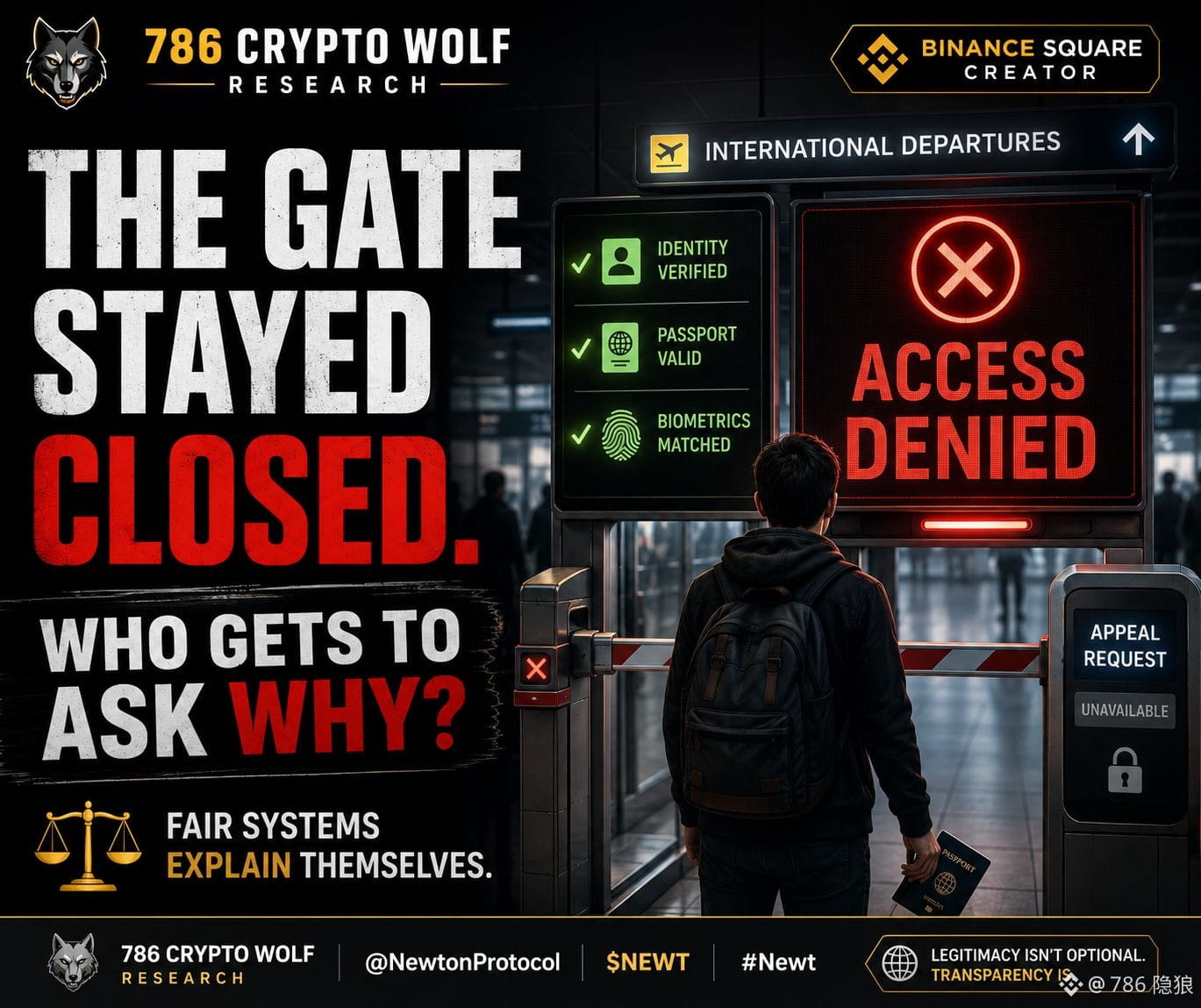
A traveler arrives at an airport.
Identity verification succeeds.
The passport is valid.
Biometric checks pass.
The gate stays closed.
The system followed the rules.
The traveler still doesn't know:
why the request was denied,
who made the decision,
or how the decision can be challenged.
As autonomous systems become more common, legitimacy may depend on more than correct execution.
People may increasingly expect something else as well:
an explanation.
Because authority without explanation eventually becomes distrust.
And decisions without appeal eventually become power without accountability.
Fair systems explain their decisions.
@NewtonProtocol $NEWT #Newt #NewtonProtocol #newt
A traveler arrives at an airport.
Identity verification succeeds.
The passport is valid.
Biometric checks pass.
The gate stays closed.
The system followed the rules.
The traveler still doesn't know:
why the request was denied,
who made the decision,
or how the decision can be challenged.
As autonomous systems become more common, legitimacy may depend on more than correct execution.
People may increasingly expect something else as well:
an explanation.
Because authority without explanation eventually becomes distrust.
And decisions without appeal eventually become power without accountability.
Fair systems explain their decisions.
@NewtonProtocol $NEWT #Newt #NewtonProtocol #newt
Identity verification succeeds.
The passport is valid.
Biometric checks pass.
The gate stays closed.
The system followed the rules.
The traveler still doesn't know:
why the request was denied,
who made the decision,
or how the decision can be challenged.
As autonomous systems become more common, legitimacy may depend on more than correct execution.
People may increasingly expect something else as well:
an explanation.
Because authority without explanation eventually becomes distrust.
And decisions without appeal eventually become power without accountability.
Fair systems explain their decisions.
@NewtonProtocol $NEWT #Newt #NewtonProtocol #newt
15
3
347

·
--
Bearish
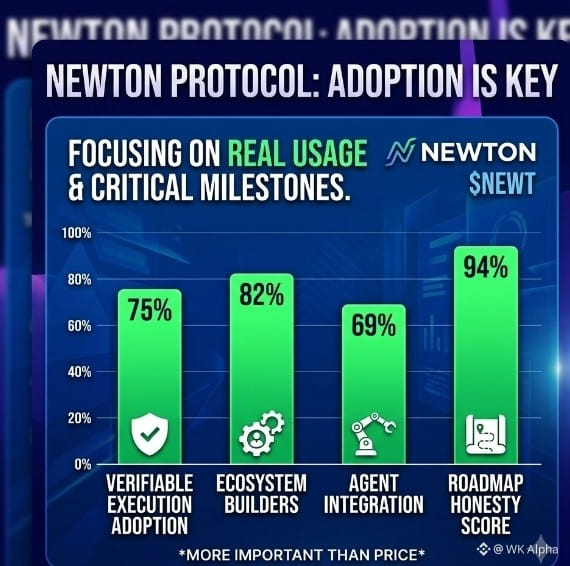
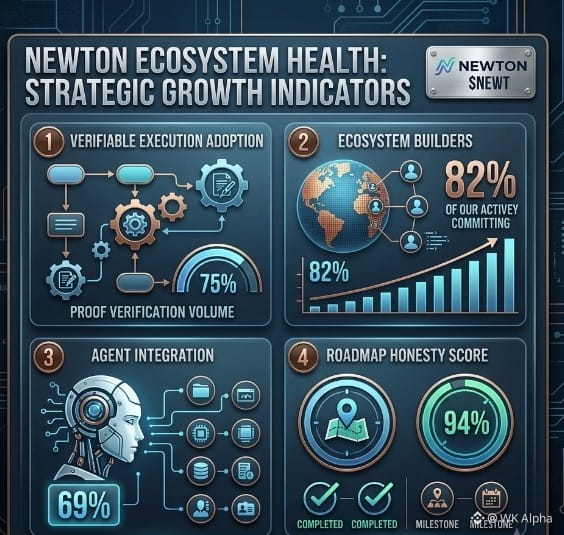
@NewtonProtocol I told the audience that sometimes the most valuable research starts with a chart that makes no sense. A sharp move drew my eyes toward NEWTONPROTOCOL but the price stopped mattering once I opened the documentation. I found a project aiming to give AI agents verifiable execution through cryptographic proofs instead of blind trust. What I also found as a roadmap where some major pieces are still ahead. That honesty matters. Strong infrastructure alone doesn't guarantee a thriving ecosystem. The real test for $NEWT will come when more builders, agents, and applications begin using what Newton is creating. Until then, I'm watching adoption more closely than price. #NewtonProtocol
@NewtonProtocol $VANRY #Newt $NEWT
{future}(NEWTUSDT)
@NewtonProtocol I told the audience that sometimes the most valuable research starts with a chart that makes no sense. A sharp move drew my eyes toward NEWTONPROTOCOL but the price stopped mattering once I opened the documentation. I found a project aiming to give AI agents verifiable execution through cryptographic proofs instead of blind trust. What I also found as a roadmap where some major pieces are still ahead. That honesty matters. Strong infrastructure alone doesn't guarantee a thriving ecosystem. The real test for $NEWT will come when more builders, agents, and applications begin using what Newton is creating. Until then, I'm watching adoption more closely than price. #NewtonProtocol
@NewtonProtocol $VANRY #Newt $NEWT
@NewtonProtocol $VANRY #Newt $NEWT
50
9
280
·
--
🚨 Punished For Being Innocent? Inside Crypto's "Last Holder Problem" & How Newton Protocol ($NEWT) Fixes It! 🛑🛡️
Imagine selling a piece of old gear—like a guitar—for $600 in USDC. Three weeks later, your exchange account is completely frozen. 🥶 You didn't do anything wrong, but it turns out that $600 passed through a stolen wallet two hops before it ever touched your hands. This is the brutal reality of crypto's "Last Holder Problem," where tracking tools punish the person holding the bag when the alarm trips, rather than the actual criminal. 💔💸
With illicit crypto activity skyrocketing from $64 billion to a massive $158 billion according to TRM Labs, traditional "reactive" security isn't cutting it anymore. 📈 Real people are losing access to their funds for weeks just trying to prove their innocence. The onchain ecosystem desperately needs a paradigm shift from fixing problems after the damage is done, to stopping them before they happen. 🛑🧠
This is exactly where Newton Protocol ($NEWT) steps in to change the game. 🛠️ Instead of letting tainted funds quietly change hands until an innocent user gets stuck with them, Newton uses a dedicated policy module called newton.source_of_funds. It turns compliance into code, scoring a wallet's background and slamming the door shut on flagged funds before a transaction can ever clear. It's a default-deny approach that keeps the taint away from your clean wallet! 🔐🦅
Of course, blocking fast-moving illicit flows that hide behind advanced cross-chain hops and mixers is an ongoing tech war. A gatekeeper is only as smart as its immediate data! 🧵 But shifting the defense line so that checks happen before settlement—rather than trapping everyday users in messy account freezes—is the upgrade Web3 infrastructure drastically needs. 🧠💪
Have you ever had an account frozen over funds you didn't know were dirty? Let's talk about onchain security below! 👇
$NEWT
#NewtonProtocol #NEWT #CryptoSecurity #OnchainCompliance #BlockchainForensics #BinanceSquare #SmartTrading
🚨 Punished For Being Innocent? Inside Crypto's "Last Holder Problem" & How Newton Protocol ($NEWT ) Fixes It! 🛑🛡️
Imagine selling a piece of old gear—like a guitar—for $600 in USDC. Three weeks later, your exchange account is completely frozen. 🥶 You didn't do anything wrong, but it turns out that $600 passed through a stolen wallet two hops before it ever touched your hands. This is the brutal reality of crypto's "Last Holder Problem," where tracking tools punish the person holding the bag when the alarm trips, rather than the actual criminal. 💔💸
With illicit crypto activity skyrocketing from $64 billion to a massive $158 billion according to TRM Labs, traditional "reactive" security isn't cutting it anymore. 📈 Real people are losing access to their funds for weeks just trying to prove their innocence. The onchain ecosystem desperately needs a paradigm shift from fixing problems after the damage is done, to stopping them before they happen. 🛑🧠
This is exactly where Newton Protocol ($NEWT ) steps in to change the game. 🛠️ Instead of letting tainted funds quietly change hands until an innocent user gets stuck with them, Newton uses a dedicated policy module called newton.source_of_funds. It turns compliance into code, scoring a wallet's background and slamming the door shut on flagged funds before a transaction can ever clear. It's a default-deny approach that keeps the taint away from your clean wallet! 🔐🦅
Of course, blocking fast-moving illicit flows that hide behind advanced cross-chain hops and mixers is an ongoing tech war. A gatekeeper is only as smart as its immediate data! 🧵 But shifting the defense line so that checks happen before settlement—rather than trapping everyday users in messy account freezes—is the upgrade Web3 infrastructure drastically needs. 🧠💪
Have you ever had an account frozen over funds you didn't know were dirty? Let's talk about onchain security below! 👇
$NEWT
#NewtonProtocol #NEWT #CryptoSecurity #OnchainCompliance #BlockchainForensics #BinanceSquare #SmartTrading
Imagine selling a piece of old gear—like a guitar—for $600 in USDC. Three weeks later, your exchange account is completely frozen. 🥶 You didn't do anything wrong, but it turns out that $600 passed through a stolen wallet two hops before it ever touched your hands. This is the brutal reality of crypto's "Last Holder Problem," where tracking tools punish the person holding the bag when the alarm trips, rather than the actual criminal. 💔💸
With illicit crypto activity skyrocketing from $64 billion to a massive $158 billion according to TRM Labs, traditional "reactive" security isn't cutting it anymore. 📈 Real people are losing access to their funds for weeks just trying to prove their innocence. The onchain ecosystem desperately needs a paradigm shift from fixing problems after the damage is done, to stopping them before they happen. 🛑🧠
This is exactly where Newton Protocol ($NEWT ) steps in to change the game. 🛠️ Instead of letting tainted funds quietly change hands until an innocent user gets stuck with them, Newton uses a dedicated policy module called newton.source_of_funds. It turns compliance into code, scoring a wallet's background and slamming the door shut on flagged funds before a transaction can ever clear. It's a default-deny approach that keeps the taint away from your clean wallet! 🔐🦅
Of course, blocking fast-moving illicit flows that hide behind advanced cross-chain hops and mixers is an ongoing tech war. A gatekeeper is only as smart as its immediate data! 🧵 But shifting the defense line so that checks happen before settlement—rather than trapping everyday users in messy account freezes—is the upgrade Web3 infrastructure drastically needs. 🧠💪
Have you ever had an account frozen over funds you didn't know were dirty? Let's talk about onchain security below! 👇
$NEWT
#NewtonProtocol #NEWT #CryptoSecurity #OnchainCompliance #BlockchainForensics #BinanceSquare #SmartTrading
14
·
--
Bullish
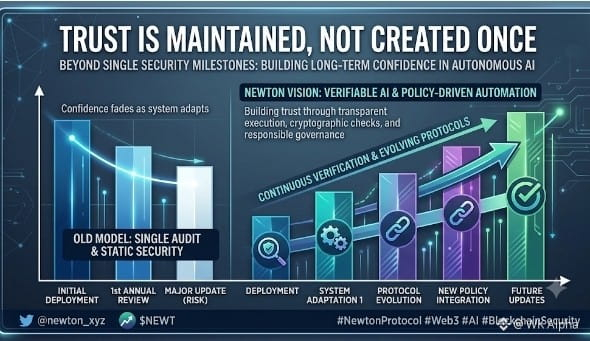
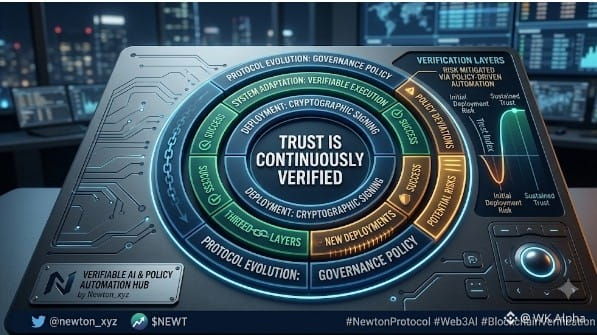
The more I study systems built for autonomous AI, the less impressed I am by a single security milestone. Standing here today, what keeps running through my mind is this: trust isn't created once, it's maintained every time a protocol evolves.
That is why @NewtonProtocol keeps me thinking. Its vision of verifiable AI and policy-driven automation acknowledges that intelligent systems will keep adapting instead of remaining static. An audit can strengthen the foundation, but long-term confidence comes from transparent execution, cryptographic verification, and responsible governance as the system changes. That balance feels more realistic than pretending software never evolves. Watching how $NEWT develops from here may reveal whether continuous verification becomes as important as the original review. #NewtonProtocol
@NewtonProtocol #Newt $NEWT
{future}(NEWTUSDT)
The more I study systems built for autonomous AI, the less impressed I am by a single security milestone. Standing here today, what keeps running through my mind is this: trust isn't created once, it's maintained every time a protocol evolves.
That is why @NewtonProtocol keeps me thinking. Its vision of verifiable AI and policy-driven automation acknowledges that intelligent systems will keep adapting instead of remaining static. An audit can strengthen the foundation, but long-term confidence comes from transparent execution, cryptographic verification, and responsible governance as the system changes. That balance feels more realistic than pretending software never evolves. Watching how $NEWT develops from here may reveal whether continuous verification becomes as important as the original review. #NewtonProtocol
@NewtonProtocol #Newt $NEWT
That is why @NewtonProtocol keeps me thinking. Its vision of verifiable AI and policy-driven automation acknowledges that intelligent systems will keep adapting instead of remaining static. An audit can strengthen the foundation, but long-term confidence comes from transparent execution, cryptographic verification, and responsible governance as the system changes. That balance feels more realistic than pretending software never evolves. Watching how $NEWT develops from here may reveal whether continuous verification becomes as important as the original review. #NewtonProtocol
@NewtonProtocol #Newt $NEWT
70
17
256

Newton Mainnet Beta: A Major Step Toward Smarter Web3 AutomationThe launch of the Newton Mainnet Beta is an exciting development for the blockchain ecosystem and a meaningful step toward making decentralized technology easier to use. @NewtonProtocol is focused on building an infrastructure that enables secure, transparent, and intelligent on-chain automation. Rather than requiring users to manually perform every blockchain action, the protocol aims to simplify interactions while keeping users in control of their assets and permissions.
One of the most promising aspects of Newton Mainnet Beta is the opportunity for developers and community members to test real-world applications, identify improvements, and help shape the future of the network. This collaborative approach is essential for building a reliable and scalable ecosystem that can support next-generation decentralized applications.
The $NEWT token is an important part of the Newton ecosystem, supporting participation and long-term ecosystem development. As the network continues to evolve, community feedback and active engagement during the beta phase will play a key role in strengthening the protocol.
I believe projects that focus on practical blockchain automation have the potential to improve the overall Web3 experience. Newton Protocol's vision of combining automation with transparency and user security makes it a project worth following. I'm looking forward to seeing how the Mainnet Beta grows and how the community contributes to its success.#NewtonProtocol
#NEWT
#Newt
Newton Mainnet Beta: A Major Step Toward Smarter Web3 Automation
The launch of the Newton Mainnet Beta is an exciting development for the blockchain ecosystem and a meaningful step toward making decentralized technology easier to use. @NewtonProtocol is focused on building an infrastructure that enables secure, transparent, and intelligent on-chain automation. Rather than requiring users to manually perform every blockchain action, the protocol aims to simplify interactions while keeping users in control of their assets and permissions.
One of the most promising aspects of Newton Mainnet Beta is the opportunity for developers and community members to test real-world applications, identify improvements, and help shape the future of the network. This collaborative approach is essential for building a reliable and scalable ecosystem that can support next-generation decentralized applications.
The $NEWT token is an important part of the Newton ecosystem, supporting participation and long-term ecosystem development. As the network continues to evolve, community feedback and active engagement during the beta phase will play a key role in strengthening the protocol.
I believe projects that focus on practical blockchain automation have the potential to improve the overall Web3 experience. Newton Protocol's vision of combining automation with transparency and user security makes it a project worth following. I'm looking forward to seeing how the Mainnet Beta grows and how the community contributes to its success.#NewtonProtocol
#NEWT
#Newt
One of the most promising aspects of Newton Mainnet Beta is the opportunity for developers and community members to test real-world applications, identify improvements, and help shape the future of the network. This collaborative approach is essential for building a reliable and scalable ecosystem that can support next-generation decentralized applications.
The $NEWT token is an important part of the Newton ecosystem, supporting participation and long-term ecosystem development. As the network continues to evolve, community feedback and active engagement during the beta phase will play a key role in strengthening the protocol.
I believe projects that focus on practical blockchain automation have the potential to improve the overall Web3 experience. Newton Protocol's vision of combining automation with transparency and user security makes it a project worth following. I'm looking forward to seeing how the Mainnet Beta grows and how the community contributes to its success.#NewtonProtocol
#NEWT
#Newt
47

·
--
#newt $NEWT #NewtonProtocol is showing steady interest from traders as the market continues to focus on blockchain projects with real-world utility. The coin's short-term direction will largely depend on overall crypto market sentiment, especially the performance of major cryptocurrencies like Bitcoin and Ethereum. If bullish momentum across the market continues, NEWT could attract additional buying pressure and test higher resistance levels. However, investors should also be prepared for volatility, as newer and lower-cap cryptocurrencies often experience larger price swings. Long-term holders may find Newton attractive if the project's development, partnerships, and ecosystem continue to grow. A cautious strategy, proper risk management, and monitoring of trading volume and key support/resistance levels remain important before making any investment decisions.
$NEWT
#Newtonportocol
#newt $NEWT #NewtonProtocol is showing steady interest from traders as the market continues to focus on blockchain projects with real-world utility. The coin's short-term direction will largely depend on overall crypto market sentiment, especially the performance of major cryptocurrencies like Bitcoin and Ethereum. If bullish momentum across the market continues, NEWT could attract additional buying pressure and test higher resistance levels. However, investors should also be prepared for volatility, as newer and lower-cap cryptocurrencies often experience larger price swings. Long-term holders may find Newton attractive if the project's development, partnerships, and ecosystem continue to grow. A cautious strategy, proper risk management, and monitoring of trading volume and key support/resistance levels remain important before making any investment decisions.
$NEWT
#Newtonportocol
$NEWT
#Newtonportocol
5
2
133

Verified
What if compliance happened before assets moved instead of after? That's the part of @NewtonProtocol I keep coming back to.
#NewtonProtocol isn't trying to make checks faster. #Newt is changing when they happen. The protocol places programmable policies in front of settlement, so a transaction is evaluated before it becomes final. That small shift changes the entire flow.
Three things stood out while I looked through Newton:
• Policies run before settlement, not after.
• Rules can cover sanctions, investor eligibility, or AI agent spending limits.
• Every operator stakes $NEWT , with a fixed supply of 1 billion tokens, creating economic accountability for policy enforcement.
The practical example is simple. An institution can require a wallet to pass identity and jurisdiction checks before moving tokenized assets. If the policy fails, the transaction never settles. No rollback. No manual review afterward.
That's why I think Newton is worth watching. Most discussions focus on throughput or fees. Newton is focused on authorization instead. Different problem. Different trade-off.
I'm still wondering how this model performs as policy complexity grows and transaction volume increases. That's probably the part that deserves the most attention next.
#NEWTtoken #NEWTUSDT $ETH $LAB
Would you use on-chain policy enforcement?
_Yes, definitely
_Depends on the use case
_Need to learn more
{future}(NEWTUSDT)
What if compliance happened before assets moved instead of after? That's the part of @NewtonProtocol I keep coming back to.
#NewtonProtocol isn't trying to make checks faster. #Newt is changing when they happen. The protocol places programmable policies in front of settlement, so a transaction is evaluated before it becomes final. That small shift changes the entire flow.
Three things stood out while I looked through Newton:
• Policies run before settlement, not after.
• Rules can cover sanctions, investor eligibility, or AI agent spending limits.
• Every operator stakes $NEWT , with a fixed supply of 1 billion tokens, creating economic accountability for policy enforcement.
The practical example is simple. An institution can require a wallet to pass identity and jurisdiction checks before moving tokenized assets. If the policy fails, the transaction never settles. No rollback. No manual review afterward.
That's why I think Newton is worth watching. Most discussions focus on throughput or fees. Newton is focused on authorization instead. Different problem. Different trade-off.
I'm still wondering how this model performs as policy complexity grows and transaction volume increases. That's probably the part that deserves the most attention next.
#NEWTtoken #NEWTUSDT $ETH $LAB
Would you use on-chain policy enforcement?
_Yes, definitely
_Depends on the use case
_Need to learn more
#NewtonProtocol isn't trying to make checks faster. #Newt is changing when they happen. The protocol places programmable policies in front of settlement, so a transaction is evaluated before it becomes final. That small shift changes the entire flow.
Three things stood out while I looked through Newton:
• Policies run before settlement, not after.
• Rules can cover sanctions, investor eligibility, or AI agent spending limits.
• Every operator stakes $NEWT , with a fixed supply of 1 billion tokens, creating economic accountability for policy enforcement.
The practical example is simple. An institution can require a wallet to pass identity and jurisdiction checks before moving tokenized assets. If the policy fails, the transaction never settles. No rollback. No manual review afterward.
That's why I think Newton is worth watching. Most discussions focus on throughput or fees. Newton is focused on authorization instead. Different problem. Different trade-off.
I'm still wondering how this model performs as policy complexity grows and transaction volume increases. That's probably the part that deserves the most attention next.
#NEWTtoken #NEWTUSDT $ETH $LAB
Would you use on-chain policy enforcement?
_Yes, definitely
_Depends on the use case
_Need to learn more


92
43
496

·
--
Article
Why Newton Protocol Mainnet Beta Could Change Web3 ForeverThe internet gave us data, but it took away ownership. @NewtonProtocol wants to give it back.
I’ve been testing the Newton Mainnet Beta and honestly, it’s different. Instead of centralized servers controlling your data, Newton Protocol builds decentralized AI infrastructure where users are in control.
Here’s why $NEWT matters:
**1. Data Ownership** - Your data stays yours. No more big tech selling your info.
**2. Decentralized AI** - Developers can build AI apps without relying on AWS or Google.
**3. Real Utility** - This isn’t just hype. Newton Mainnet Beta is live and working.
Web3 promised to decentralize everything. But AI became centralized again. Newton Protocol fixes that gap.
Projects like this are why I’m bullish on $NEWT long term. Real tech, real problem, real solution.
Have you tried anything on Newton Mainnet Beta yet? Drop your thoughts below 👇
#Newt #NewtonProtocol #Web3 #AI #Decentralized #MainnetBeta
Why Newton Protocol Mainnet Beta Could Change Web3 Forever
The internet gave us data, but it took away ownership. @NewtonProtocol wants to give it back.
I’ve been testing the Newton Mainnet Beta and honestly, it’s different. Instead of centralized servers controlling your data, Newton Protocol builds decentralized AI infrastructure where users are in control.
Here’s why $NEWT matters:
**1. Data Ownership** - Your data stays yours. No more big tech selling your info.
**2. Decentralized AI** - Developers can build AI apps without relying on AWS or Google.
**3. Real Utility** - This isn’t just hype. Newton Mainnet Beta is live and working.
Web3 promised to decentralize everything. But AI became centralized again. Newton Protocol fixes that gap.
Projects like this are why I’m bullish on $NEWT long term. Real tech, real problem, real solution.
Have you tried anything on Newton Mainnet Beta yet? Drop your thoughts below 👇
#Newt #NewtonProtocol #Web3 #AI #Decentralized #MainnetBeta
I’ve been testing the Newton Mainnet Beta and honestly, it’s different. Instead of centralized servers controlling your data, Newton Protocol builds decentralized AI infrastructure where users are in control.
Here’s why $NEWT matters:
**1. Data Ownership** - Your data stays yours. No more big tech selling your info.
**2. Decentralized AI** - Developers can build AI apps without relying on AWS or Google.
**3. Real Utility** - This isn’t just hype. Newton Mainnet Beta is live and working.
Web3 promised to decentralize everything. But AI became centralized again. Newton Protocol fixes that gap.
Projects like this are why I’m bullish on $NEWT long term. Real tech, real problem, real solution.
Have you tried anything on Newton Mainnet Beta yet? Drop your thoughts below 👇
#Newt #NewtonProtocol #Web3 #AI #Decentralized #MainnetBeta
4
65

·
--
Bullish
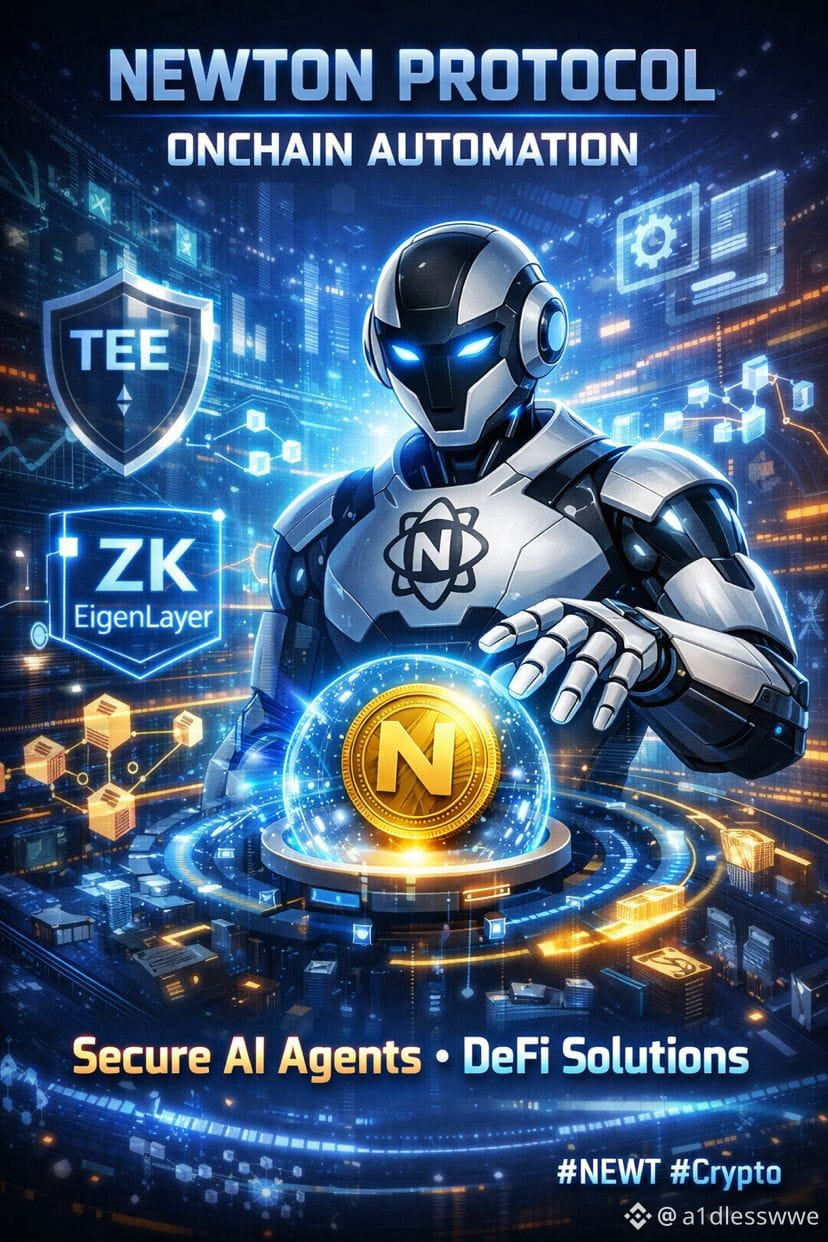
#newt $NEWT 🚀 Newton Protocol ($NEWT) — The Future of Secure Onchain Automation! A decentralized layer for verifiable AI agents. Delegate complex tasks without losing control of your funds. TEE + ZK + EigenLayer. Perfect for DeFi and agentic finance. A growing project with real utility! #Newt #NewtonProtocol #crypto
#newt $NEWT 🚀 Newton Protocol ($NEWT ) — The Future of Secure Onchain Automation! A decentralized layer for verifiable AI agents. Delegate complex tasks without losing control of your funds. TEE + ZK + EigenLayer. Perfect for DeFi and agentic finance. A growing project with real utility! #Newt #NewtonProtocol #crypto
51

·
--
Article
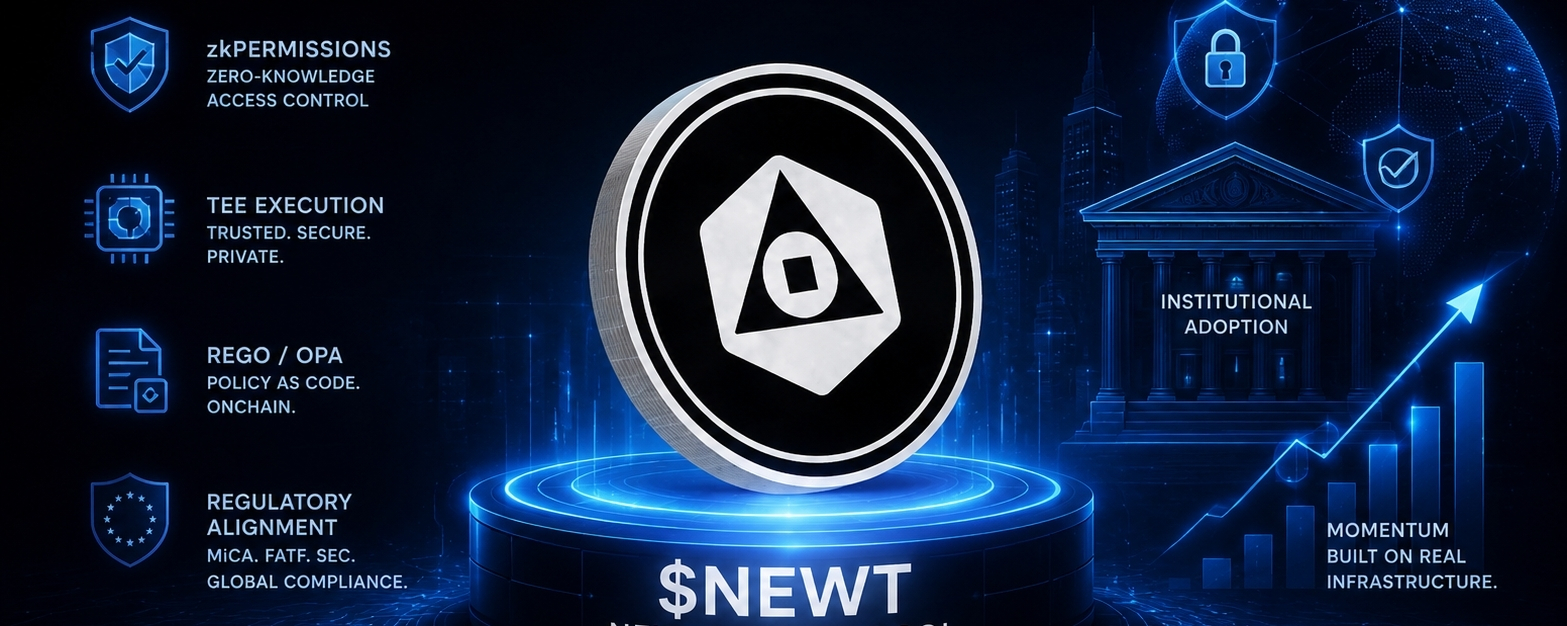
$NEWT’s Momentum and What It Signals for Participants in the Current CampaignThe more I think about momentum in crypto, the less I trust it as a signal on its own. Price movement is easy. Narrative is easy. Even community engagement, at some level, is easy to manufacture. What's harder to fake is the kind of alignment where infrastructure, regulatory timing, and institutional appetite all converge on the same point at the same time. That's a rarer thing. And when I watch what's happening around $NEWT and the @NewtonProtocol campaign right now, I find myself genuinely unsure whether I'm looking at that rare thing, or whether I'm just very good at convincing myself I am.
That's the friction I keep coming back to.
Let me start with what's actually visible. $NEWT has been gaining traction in a cycle that is, frankly, littered with noise. A thousand tokens launch monthly promising to solve "institutional adoption." Most of them are surface-level rebrandings of ideas that never needed a token in the first place. @NewtonProtocol is different in a specific way that matters to me: the actual technical architecture, namely zkPermissions, TEE-based policy execution, and native Rego/OPA integration, is doing something real. It's not just promising compliance. It's attempting to make compliance programmable and verifiable at the protocol layer. That's a genuine engineering project, not a marketing deck with a ticker.
But here's where I have to slow down and be honest with myself.
Technical merit and campaign momentum are not the same thing. The current moment for $NEWT, with its active participants, growing volume, and visible community energy, is partly a function of narrative timing. MiCA is live. FATF travel rule enforcement is tightening across Asia and Europe. The SEC's structured reluctance toward onchain assets is forcing serious capital allocators to think harder about what compliance actually means in a tokenized world. @NewtonProtocol positioned itself inside that regulatory anxiety well before most people understood the shape of the problem. And so when the campaign starts gaining momentum, a portion of that momentum is real fundamental pull, and a portion is just sentiment surfing a wave that any well-timed compliance narrative would have caught. That's not the same thing.
That's the part I can't really ignore.
What does it mean to be a participant in this campaign right now? That question is more interesting to me than the price action. Because what I see is a two-tier dynamic forming inside every momentum campaign in this space. There are participants who understand the infrastructure and are positioning around a long thesis, and there are participants who are purely chasing the signal of other participants moving. Both groups end up in the same data. Both groups get counted the same way in campaign metrics. But their relationship to risk, and to eventual outcome, is almost completely different.
The harder question is whether @NewtonProtocol's campaign structure actually creates the conditions to distinguish between those two groups, or whether it ends up rewarding engagement irrespective of depth. That matters because the long-term credibility of $NEWT depends heavily on who ends up holding it and why. A token that captures institutional compliance infrastructure as its core use case cannot afford to become dominated by a holder base with no orientation toward that use case whatsoever. There's a real tension there that I don't think gets talked about enough inside campaign communities.
And yet, the momentum itself carries a signal that I don't want to dismiss too quickly either.
In a market that is extraordinarily efficient at separating empty promises from actual traction, sustained campaign engagement around a project like @NewtonProtocol tells me something. It tells me that the specific thesis, compliant programmable infrastructure for institutional onchain participation, is landing with an audience that has some sophistication. The conversation I see in these communities is not just price speculation. People are genuinely asking about zkProof verification latency, about Rego policy complexity, about whether TEE attestation creates new vectors of centralization. That's not the kind of conversation that surrounds a pure hype cycle. That's a community beginning to do real due diligence, even if imperfectly.
That shift matters. And the momentum of $NEWT, in this specific context, partly reflects it.
But I'll be precise about my remaining skepticism. The institutional adoption thesis that underpins @NewtonProtocol 's entire value proposition has been the longest-running unfulfilled promise in crypto. We have been told, in various forms, that compliant infrastructure will unlock institutional capital for the better part of a decade. Some of it has materialized. Most of it has been slower, messier, and more politically complicated than anyone initially modeled. The technology is ready faster than the appetite, and the appetite is ready faster than the regulatory clarity, and the regulatory clarity is ready faster than the actual internal mandates at large institutions. That chain of dependencies doesn't break just because @NewtonProtocol zkPermissions architecture is genuinely elegant.
That's the friction I keep coming back to.
What gives me more optimism about the current campaign moment, specifically, is the sequencing. The projects that tended to fail the institutional adoption thesis in prior cycles were usually ahead of the regulatory moment rather than inside it. They were building compliance solutions for a regulatory environment that hadn't yet clarified what it actually demanded. @NewtonProtocol is operating in a different context. MiCA is law. Travel rule enforcement is real. The SEC is issuing guidance. The demand for programmable, verifiable compliance isn't theoretical anymore. And that changes the nature of the momentum. It makes it at least partially tethered to something structural rather than purely speculative.
For participants in the current campaign, the honest read is this: $NEWT's momentum is real, but its meaning is layered. There is a genuine infrastructure thesis underneath it that deserves serious attention. There is also narrative timing and campaign mechanics that create energy beyond what pure fundamentals would produce on their own. The question every participant has to answer for themselves is which layer they are actually engaging with.
The deeper thing I keep sitting with is what crypto needs in order to grow in the direction it claims to want. Real institutional integration requires real compliance infrastructure. Real compliance infrastructure requires the kind of programmable, verifiable policy enforcement that @NewtonProtocol is attempting to build at the protocol layer. If that build succeeds, and if institutional appetite continues to mature at its current pace, then $NEWT's current momentum will look, in retrospect, like the early signal of something that genuinely mattered. If the build encounters friction in adoption, or if the regulatory environment shifts in ways nobody modeled, then the same momentum will look like a well-timed narrative that ran ahead of the reality. The market will tell us which one it was. It usually does, eventually. The question is whether you're reading it clearly enough in the present to know which game you're actually playing.
#NewtonProtocol #Newt #newton
{future}(NEWTUSDT)
$NEWT’s Momentum and What It Signals for Participants in the Current Campaign
The more I think about momentum in crypto, the less I trust it as a signal on its own. Price movement is easy. Narrative is easy. Even community engagement, at some level, is easy to manufacture. What's harder to fake is the kind of alignment where infrastructure, regulatory timing, and institutional appetite all converge on the same point at the same time. That's a rarer thing. And when I watch what's happening around $NEWT and the @NewtonProtocol campaign right now, I find myself genuinely unsure whether I'm looking at that rare thing, or whether I'm just very good at convincing myself I am.
That's the friction I keep coming back to.
Let me start with what's actually visible. $NEWT has been gaining traction in a cycle that is, frankly, littered with noise. A thousand tokens launch monthly promising to solve "institutional adoption." Most of them are surface-level rebrandings of ideas that never needed a token in the first place. @NewtonProtocol is different in a specific way that matters to me: the actual technical architecture, namely zkPermissions, TEE-based policy execution, and native Rego/OPA integration, is doing something real. It's not just promising compliance. It's attempting to make compliance programmable and verifiable at the protocol layer. That's a genuine engineering project, not a marketing deck with a ticker.
But here's where I have to slow down and be honest with myself.
Technical merit and campaign momentum are not the same thing. The current moment for $NEWT , with its active participants, growing volume, and visible community energy, is partly a function of narrative timing. MiCA is live. FATF travel rule enforcement is tightening across Asia and Europe. The SEC's structured reluctance toward onchain assets is forcing serious capital allocators to think harder about what compliance actually means in a tokenized world. @NewtonProtocol positioned itself inside that regulatory anxiety well before most people understood the shape of the problem. And so when the campaign starts gaining momentum, a portion of that momentum is real fundamental pull, and a portion is just sentiment surfing a wave that any well-timed compliance narrative would have caught. That's not the same thing.
That's the part I can't really ignore.
What does it mean to be a participant in this campaign right now? That question is more interesting to me than the price action. Because what I see is a two-tier dynamic forming inside every momentum campaign in this space. There are participants who understand the infrastructure and are positioning around a long thesis, and there are participants who are purely chasing the signal of other participants moving. Both groups end up in the same data. Both groups get counted the same way in campaign metrics. But their relationship to risk, and to eventual outcome, is almost completely different.
The harder question is whether @NewtonProtocol's campaign structure actually creates the conditions to distinguish between those two groups, or whether it ends up rewarding engagement irrespective of depth. That matters because the long-term credibility of $NEWT depends heavily on who ends up holding it and why. A token that captures institutional compliance infrastructure as its core use case cannot afford to become dominated by a holder base with no orientation toward that use case whatsoever. There's a real tension there that I don't think gets talked about enough inside campaign communities.
And yet, the momentum itself carries a signal that I don't want to dismiss too quickly either.
In a market that is extraordinarily efficient at separating empty promises from actual traction, sustained campaign engagement around a project like @NewtonProtocol tells me something. It tells me that the specific thesis, compliant programmable infrastructure for institutional onchain participation, is landing with an audience that has some sophistication. The conversation I see in these communities is not just price speculation. People are genuinely asking about zkProof verification latency, about Rego policy complexity, about whether TEE attestation creates new vectors of centralization. That's not the kind of conversation that surrounds a pure hype cycle. That's a community beginning to do real due diligence, even if imperfectly.
That shift matters. And the momentum of $NEWT , in this specific context, partly reflects it.
But I'll be precise about my remaining skepticism. The institutional adoption thesis that underpins @NewtonProtocol 's entire value proposition has been the longest-running unfulfilled promise in crypto. We have been told, in various forms, that compliant infrastructure will unlock institutional capital for the better part of a decade. Some of it has materialized. Most of it has been slower, messier, and more politically complicated than anyone initially modeled. The technology is ready faster than the appetite, and the appetite is ready faster than the regulatory clarity, and the regulatory clarity is ready faster than the actual internal mandates at large institutions. That chain of dependencies doesn't break just because @NewtonProtocol zkPermissions architecture is genuinely elegant.
That's the friction I keep coming back to.
What gives me more optimism about the current campaign moment, specifically, is the sequencing. The projects that tended to fail the institutional adoption thesis in prior cycles were usually ahead of the regulatory moment rather than inside it. They were building compliance solutions for a regulatory environment that hadn't yet clarified what it actually demanded. @NewtonProtocol is operating in a different context. MiCA is law. Travel rule enforcement is real. The SEC is issuing guidance. The demand for programmable, verifiable compliance isn't theoretical anymore. And that changes the nature of the momentum. It makes it at least partially tethered to something structural rather than purely speculative.
For participants in the current campaign, the honest read is this: $NEWT 's momentum is real, but its meaning is layered. There is a genuine infrastructure thesis underneath it that deserves serious attention. There is also narrative timing and campaign mechanics that create energy beyond what pure fundamentals would produce on their own. The question every participant has to answer for themselves is which layer they are actually engaging with.
The deeper thing I keep sitting with is what crypto needs in order to grow in the direction it claims to want. Real institutional integration requires real compliance infrastructure. Real compliance infrastructure requires the kind of programmable, verifiable policy enforcement that @NewtonProtocol is attempting to build at the protocol layer. If that build succeeds, and if institutional appetite continues to mature at its current pace, then $NEWT 's current momentum will look, in retrospect, like the early signal of something that genuinely mattered. If the build encounters friction in adoption, or if the regulatory environment shifts in ways nobody modeled, then the same momentum will look like a well-timed narrative that ran ahead of the reality. The market will tell us which one it was. It usually does, eventually. The question is whether you're reading it clearly enough in the present to know which game you're actually playing.
#NewtonProtocol #Newt #newton
That's the friction I keep coming back to.
Let me start with what's actually visible. $NEWT has been gaining traction in a cycle that is, frankly, littered with noise. A thousand tokens launch monthly promising to solve "institutional adoption." Most of them are surface-level rebrandings of ideas that never needed a token in the first place. @NewtonProtocol is different in a specific way that matters to me: the actual technical architecture, namely zkPermissions, TEE-based policy execution, and native Rego/OPA integration, is doing something real. It's not just promising compliance. It's attempting to make compliance programmable and verifiable at the protocol layer. That's a genuine engineering project, not a marketing deck with a ticker.
But here's where I have to slow down and be honest with myself.
Technical merit and campaign momentum are not the same thing. The current moment for $NEWT , with its active participants, growing volume, and visible community energy, is partly a function of narrative timing. MiCA is live. FATF travel rule enforcement is tightening across Asia and Europe. The SEC's structured reluctance toward onchain assets is forcing serious capital allocators to think harder about what compliance actually means in a tokenized world. @NewtonProtocol positioned itself inside that regulatory anxiety well before most people understood the shape of the problem. And so when the campaign starts gaining momentum, a portion of that momentum is real fundamental pull, and a portion is just sentiment surfing a wave that any well-timed compliance narrative would have caught. That's not the same thing.
That's the part I can't really ignore.
What does it mean to be a participant in this campaign right now? That question is more interesting to me than the price action. Because what I see is a two-tier dynamic forming inside every momentum campaign in this space. There are participants who understand the infrastructure and are positioning around a long thesis, and there are participants who are purely chasing the signal of other participants moving. Both groups end up in the same data. Both groups get counted the same way in campaign metrics. But their relationship to risk, and to eventual outcome, is almost completely different.
The harder question is whether @NewtonProtocol's campaign structure actually creates the conditions to distinguish between those two groups, or whether it ends up rewarding engagement irrespective of depth. That matters because the long-term credibility of $NEWT depends heavily on who ends up holding it and why. A token that captures institutional compliance infrastructure as its core use case cannot afford to become dominated by a holder base with no orientation toward that use case whatsoever. There's a real tension there that I don't think gets talked about enough inside campaign communities.
And yet, the momentum itself carries a signal that I don't want to dismiss too quickly either.
In a market that is extraordinarily efficient at separating empty promises from actual traction, sustained campaign engagement around a project like @NewtonProtocol tells me something. It tells me that the specific thesis, compliant programmable infrastructure for institutional onchain participation, is landing with an audience that has some sophistication. The conversation I see in these communities is not just price speculation. People are genuinely asking about zkProof verification latency, about Rego policy complexity, about whether TEE attestation creates new vectors of centralization. That's not the kind of conversation that surrounds a pure hype cycle. That's a community beginning to do real due diligence, even if imperfectly.
That shift matters. And the momentum of $NEWT , in this specific context, partly reflects it.
But I'll be precise about my remaining skepticism. The institutional adoption thesis that underpins @NewtonProtocol 's entire value proposition has been the longest-running unfulfilled promise in crypto. We have been told, in various forms, that compliant infrastructure will unlock institutional capital for the better part of a decade. Some of it has materialized. Most of it has been slower, messier, and more politically complicated than anyone initially modeled. The technology is ready faster than the appetite, and the appetite is ready faster than the regulatory clarity, and the regulatory clarity is ready faster than the actual internal mandates at large institutions. That chain of dependencies doesn't break just because @NewtonProtocol zkPermissions architecture is genuinely elegant.
That's the friction I keep coming back to.
What gives me more optimism about the current campaign moment, specifically, is the sequencing. The projects that tended to fail the institutional adoption thesis in prior cycles were usually ahead of the regulatory moment rather than inside it. They were building compliance solutions for a regulatory environment that hadn't yet clarified what it actually demanded. @NewtonProtocol is operating in a different context. MiCA is law. Travel rule enforcement is real. The SEC is issuing guidance. The demand for programmable, verifiable compliance isn't theoretical anymore. And that changes the nature of the momentum. It makes it at least partially tethered to something structural rather than purely speculative.
For participants in the current campaign, the honest read is this: $NEWT 's momentum is real, but its meaning is layered. There is a genuine infrastructure thesis underneath it that deserves serious attention. There is also narrative timing and campaign mechanics that create energy beyond what pure fundamentals would produce on their own. The question every participant has to answer for themselves is which layer they are actually engaging with.
The deeper thing I keep sitting with is what crypto needs in order to grow in the direction it claims to want. Real institutional integration requires real compliance infrastructure. Real compliance infrastructure requires the kind of programmable, verifiable policy enforcement that @NewtonProtocol is attempting to build at the protocol layer. If that build succeeds, and if institutional appetite continues to mature at its current pace, then $NEWT 's current momentum will look, in retrospect, like the early signal of something that genuinely mattered. If the build encounters friction in adoption, or if the regulatory environment shifts in ways nobody modeled, then the same momentum will look like a well-timed narrative that ran ahead of the reality. The market will tell us which one it was. It usually does, eventually. The question is whether you're reading it clearly enough in the present to know which game you're actually playing.
#NewtonProtocol #Newt #newton
41
13
290

·
--
#ShareYourTrades $NEWT Every strong blockchain ecosystem starts with builders who are willing to experiment, improve, and grow together. That's why I'm following the progress of the Newton Mainnet Beta with interest.
I like seeing projects that encourage real developer participation and community feedback instead of focusing only on short-term hype. Every beta stage is an opportunity to refine the technology, strengthen the ecosystem, and prepare for broader adoption.
Looking forward to seeing what developers create next and how the ecosystem continues to evolve.
What kind of application would you like to see built on Newton Protocol?
@NewtonProtocol $NEWT #Newt #NewtonProtocol
#ShareYourTrades $NEWT Every strong blockchain ecosystem starts with builders who are willing to experiment, improve, and grow together. That's why I'm following the progress of the Newton Mainnet Beta with interest.
I like seeing projects that encourage real developer participation and community feedback instead of focusing only on short-term hype. Every beta stage is an opportunity to refine the technology, strengthen the ecosystem, and prepare for broader adoption.
Looking forward to seeing what developers create next and how the ecosystem continues to evolve.
What kind of application would you like to see built on Newton Protocol?
@NewtonProtocol $NEWT #Newt #NewtonProtocol
I like seeing projects that encourage real developer participation and community feedback instead of focusing only on short-term hype. Every beta stage is an opportunity to refine the technology, strengthen the ecosystem, and prepare for broader adoption.
Looking forward to seeing what developers create next and how the ecosystem continues to evolve.
What kind of application would you like to see built on Newton Protocol?
@NewtonProtocol $NEWT #Newt #NewtonProtocol
4
2
96
Log in to explore more content
Join global crypto users on Binance Square
⚡️ Get latest and useful information about crypto.
💬 Trusted by the world’s largest crypto exchange.
👍 Discover real insights from verified creators.
Email / Phone number
Trending Topics
1
#BinanceLaunchesBinanceIntelligence
69,026 views
883 Discussing
2
#StriveBuys2000BTCFor$169M
291 views
34 Discussing
3
#EvernorthXRPTreasuryCompletesSPACMerger
56,903 views
628 Discussing
4
#ADAGains10%Above$0.27
35,268 views
224 Discussing
5
#ETHUp70%InQ3ButLiquidityFalls
244,133 views
1,688 Discussing
6
#EthStakingExitQueueHits2026High
92,263 views
1,142 Discussing
7
#FedOctoberHoldOdds82.3%
96,332 views
1,085 Discussing
8
#Nikkei225Jumps2.5%ToThreeMonthHigh
101,371 views
1,322 Discussing
9
#CircleMints$2.75BUSDCOnSolanaIn7Days
2,681 views
58 Discussing
10
#DriftHackVictimsBeginClaims
211,226 views
1,980 Discussing