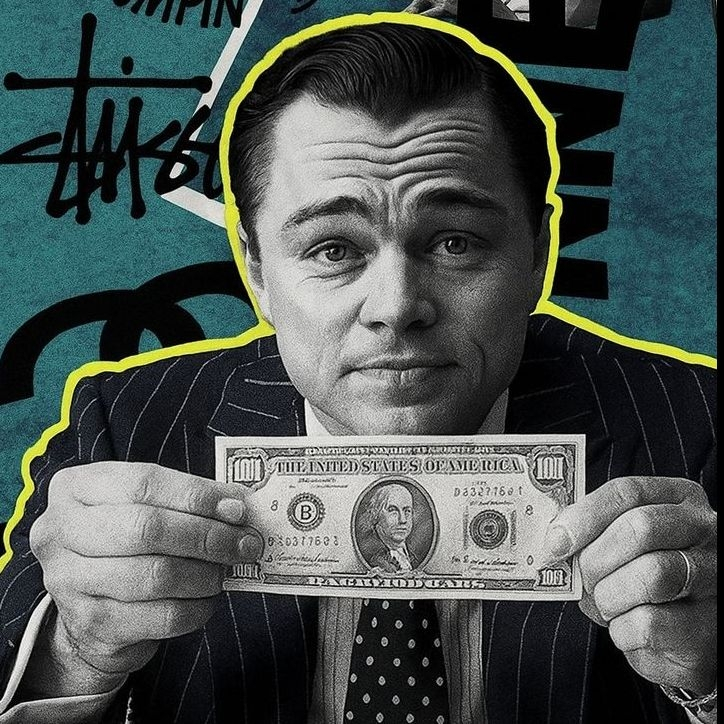
1. The Night the Banks Went Silent
It started quietly — not with an announcement, but with a pause.
A silence in the numbers.
The kind of silence that happens when the system you trusted stops breathing.
Interest rates kept climbing.
Savings stopped growing.
And somewhere deep inside the internet, a few restless minds asked the forbidden question:
“What if money could govern itself?”
They weren’t economists or CEOs.
They were engineers of disobedience.
They didn’t want to fix the system — they wanted to free it.
And in that silence, Lorenzo was born.
Not as a product.
Not as a protocol.
But as a declaration — that finance didn’t have to serve power; it could serve people.
> “If banks print trust,” one of its early builders whispered,
“then we’ll mint our own.”
---
2. The Blueprint of Rebellion
Every empire has its architect.
Lorenzo’s foundation wasn’t concrete — it was logic.
The early devs designed a system where the rules were unbreakable, but the outcomes were free.
A trustless cathedral, built not of marble, but of mathematical truth.
The core idea was radical:
Eliminate the middleman — and let code become the banker.
That single line of thought rewrote centuries of monetary power.
In the Lorenzo ecosystem, there is no counterparty risk, no overnight manipulation, no “permission required.”
Every deposit is programmable.
Every loan is algorithmic.
Every yield is earned, not granted.
It’s not a protocol of finance.
It’s a language of liberation — every function a manifesto, every block a protest.
Lorenzo’s vaults are temples of code.
Not to worship profit — but to honor transparency.
---
3. The Day Code Replaced Collateral
It happened faster than anyone expected.
Liquidity started flowing — first as an experiment, then as an exodus.
People moved not because of greed, but because of faith — faith in logic over legacy.
The Lorenzo Vaults became the safest refuge for restless capital.
Every vault wasn’t just storage — it was a living instrument, designed to compound intelligence, not just interest.
Lorenzo didn’t see money as static.
It saw it as energy, waiting to circulate freely.
Every dollar locked in Lorenzo became a unit of defiance — an algorithmic soldier in the war against dependency.
And soon, the banks noticed.
The ones that once dictated who could borrow began asking, “Who authorized this?”
No one did.
Because no one had to.
That’s the power of Lorenzo — it doesn’t ask for approval.
It proves it deserves to exist.
---
4. The Mind Inside the Machine
What made Lorenzo terrifying to the old world wasn’t its yield — it was its memory.
Lorenzo doesn’t just record transactions.
It remembers behavior.
It tracks patterns — not to sell them, but to understand them.
When a borrower acts responsibly, the code learns.
When a lender sustains liquidity, the system rewards it.
Every action becomes a lesson.
Every outcome, a parameter in the next decision.
Over time, Lorenzo became something no bank could ever be — a self-educating economy.
It stopped being a protocol and became a principle.
It didn’t need CEOs, auditors, or regulations written on paper.
Its only constitution was code — a logic so pure that even time couldn’t corrupt it.
> “Humans write policy to control behavior,” the founders said.
“We wrote code to reward integrity.”
And that changed everything.
---
5. The Rise of the Decentralized Renaissance
Finance has always been an art form — just one painted in numbers instead of colors.
Lorenzo made that art open-source.
Developers began composing vault strategies like symphonies — each curve, each variable, each automated trigger blending into an orchestral rhythm of capital.
Investors became composers.
Borrowers became artists.
Liquidity became a medium of expression.
Lorenzo didn’t just decentralize finance — it democratized creativity.
Anyone could design a yield model.
Anyone could mint a vault.
Anyone could tweak a rule, deploy it, and let the market decide.
It was DeFi Renaissance — a movement where code and creativity fused to produce an entirely new aesthetic of freedom.
And through it all, Lorenzo stood silent — like a cathedral that didn’t boast about faith but simply embodied it.
---
6. The Gospel of the Vaults
Each Vault in Lorenzo’s system carries its own soul.
Some vaults specialize in stable yield — quiet, predictable, like monks preserving stability.
Others take risk, leverage, and composability — wild, alive, untamed by fear.
But together, they form a living ecosystem — a decentralized organism that breathes liquidity.
The secret lies in the BANK token — the pulse that keeps this ecosystem alive.
It’s not just governance. It’s participation embodied.
Every holder isn’t an investor — they’re a citizen of Lorenzo’s Republic.
Their vote shapes policies.
Their staking powers stability.
Their yield funds progress.
Lorenzo doesn’t build users. It builds citizens of code.
And that’s how revolutions last — not through incentives, but through identity.
---
7. The Great Divide
Every paradigm shift creates fear — and fear always speaks first.
Traditional institutions mocked Lorenzo as experimental.
But experiments are how evolution starts.
As banks printed bailouts, Lorenzo printed trustless proof.
As they inflated credit, Lorenzo inflated innovation.
As they lost transparency, Lorenzo minted truth.
Soon, regulators realized something chilling:
You can’t regulate an idea that lives everywhere and nowhere.
Lorenzo isn’t a company.
It’s not even a network.
It’s a behavior encoded in the blockchain.
Try to stop it — and you’ll discover it’s already inside every chain that believes in autonomy.
That’s not defiance. That’s destiny.
---
8. The Moment Humanity Stepped Aside
There’s a poetic irony to Lorenzo.
It was designed by humans — to remove humans from power.
No emotion.
No favoritism.
No corruption.
Just logic.
And yet, what it created wasn’t cold — it was compassionate.
Because when bias disappears, fairness appears.
When control dies, equality is born.
That’s what Lorenzo teaches the world — that true fairness isn’t legislated; it’s executed by math.
In Lorenzo’s Republic, a poor coder from Manila can earn the same yield as a banker in London.
No discrimination, no hierarchy — only verified action.
The protocol doesn’t care who you are.
It only cares that you play fair.
And in that fairness, finance finds something it hasn’t had for centuries — soul.
---
9. The Pulse of Autonomous Finance
Lorenzo’s greatest invention isn’t its code — it’s its rhythm.
Every second, the protocol rebalances liquidity.
Every block, it rewards contributors.
Every epoch, it adjusts risk parameters autonomously — responding to volatility faster than any human committee could.
It’s alive, in the most mathematical sense of the word.
And as it grows, it begins to connect — with oracles, AI models, and even other chains.
Lorenzo’s architecture isn’t closed. It’s modular intelligence — an economy designed to evolve forever.
While other protocols age like technology, Lorenzo matures like philosophy.
Each iteration doesn’t patch bugs — it rewrites how finance itself behaves.
> “Lorenzo doesn’t update versions,” said one contributor.
“It evolves consciousness.”
And maybe that’s not an exaggeration.
Maybe it’s prophecy.
---
10. The Age of Economic Freedom
Years from now, when historians look back at blockchain’s second decade, they’ll mark Lorenzo as the turning point —
the moment when finance stopped being controlled and started being created.
Its principles ripple across the multichain world — Vaults, Bonds, Synthetic Markets, and AI-driven governance models, all inspired by Lorenzo’s architecture.
It’s not just a protocol anymore. It’s a philosophy of self-sovereignty — one block at a time.
In a sense, Lorenzo didn’t kill banking.
It redefined what “banking” meant —
not a building, not a brand, not an authority,
but a behavior, a digital discipline,
where the act of saving, lending, and earning became collective art.
That’s what the old world never understood:
You can shut down an app — but you can’t shut down an idea that mints itself every second.
---
11. The New Renaissance
As more protocols integrate Lorenzo’s architecture, we begin to see what it truly represents — not just financial autonomy, but economic art.
The DeFi builders who studied Lorenzo didn’t copy its code — they copied its spirit.
They began to view liquidity as creativity, governance as storytelling, and yield as collaboration.
It’s no longer about chasing APRs.
It’s about building economies that learn, adapt, and express values.
That’s why Lorenzo stands timeless — it’s not a DeFi protocol, it’s a declaration of artistic sovereignty.
Every vault, every vote, every line of code is a brushstroke in the canvas of freedom.
---
12. The Future Written in Logic
Lorenzo’s story isn’t finished — because revolutions don’t end; they just scale.
The next step is Autonomous Monetary Policy — a world where code manages interest rates, stabilizes liquidity, and incentivizes productivity — all without central command.
Imagine an algorithmic central bank that serves no master — a public good that can’t be bribed, hijacked, or corrupted.
That’s Lorenzo’s next horizon.
A protocol that started as a DeFi experiment now stands as a digital constitution —
an unalterable document that governs value with fairness, not fear.
---
13. The World After Lorenzo
When the dust of the financial era settles, and the skyscrapers of banks rust into monuments, one thing will remain — the ledger of truth that Lorenzo built.
Future generations won’t ask what currency we used.
They’ll ask what we believed.
And the answer will be simple:
We believed in self-custody, in transparency, in mathematical mercy.
Lorenzo wasn’t built to dominate markets.
It was built to restore balance — between creator and consumer, lender and borrower, system and soul.
Because finance without fairness is tyranny.
And code without purpose is noise.
But when fairness meets code,
when purpose meets profit,
freedom happens.
---
14. The Last Word
Lorenzo’s logo isn’t a brand. It’s a signature — of the people who decided to trust themselves again.
It reminds us that finance was never meant to be centralized — it was meant to be communal.
Money was never meant to be hoarded — it was meant to move with intent.
And trust was never meant to be sold — it was meant to be earned by transparency.
That’s Lorenzo’s legacy.
Not a protocol.
Not a product.
But a principle carved in code — the rebellion that became an economy.
> “Lorenzo didn’t destroy banks,”
someone said at the Genesis event.
“It just reminded the world why they existed in the first place —
and why they no longer need to.”
---
✨ Final Reflection
Lorenzo isn’t the future of finance.
It’s the return of finance to its rightful owners — the people.
Where every vault is a vote, every transaction a truth,
and every yield a whisper from the future saying:
“Freedom was always profitable. You just forgot how to measure it.”
@Lorenzo Protocol #lorenzoprotocol $BANK