

#federalreserve
federalreserve
5.2M views
10,456 Discussing
Hot
Latest

·
--
🟢 Bullish
🚨 Fed Rate Hike Absorbed by Crypto!
The Federal Reserve just delivered its first rate hike since 2023, increasing rates by 25 basis points to 3.75%-4.00%. $BTC initially dipped but quickly rebounded, showing incredible market resilience and a willingness to buy the dip.
📊 Market Impact: This quick recovery suggests the hike was largely priced in, or investors see this as a sign of economic stability rather than a major threat to risk assets. Bullish sentiment holds strong despite macro headwinds.
#Macro #FederalReserve
🟢 Bullish
🚨 Fed Rate Hike Absorbed by Crypto!
The Federal Reserve just delivered its first rate hike since 2023, increasing rates by 25 basis points to 3.75%-4.00%. $BTC initially dipped but quickly rebounded, showing incredible market resilience and a willingness to buy the dip.
📊 Market Impact: This quick recovery suggests the hike was largely priced in, or investors see this as a sign of economic stability rather than a major threat to risk assets. Bullish sentiment holds strong despite macro headwinds.
#Macro #FederalReserve
🚨 Fed Rate Hike Absorbed by Crypto!
The Federal Reserve just delivered its first rate hike since 2023, increasing rates by 25 basis points to 3.75%-4.00%. $BTC initially dipped but quickly rebounded, showing incredible market resilience and a willingness to buy the dip.
📊 Market Impact: This quick recovery suggests the hike was largely priced in, or investors see this as a sign of economic stability rather than a major threat to risk assets. Bullish sentiment holds strong despite macro headwinds.
#Macro #FederalReserve
4

The Fed's new stablecoin proposal changes the game entirely by treating token circulation as a direct capital cost for supervised issuers. With massive baseline operating-risk requirements kicking in early, smaller players could get squeezed out. This move heavily favors deeply capitalized traditional financial institutions over crypto-native firms, potentially reshaping who dominates the digital dollar landscape moving forward. Regulation is tightening fast. $USDC $USDT #Stablecoins #Regulation #FederalReserve
The Fed's new stablecoin proposal changes the game entirely by treating token circulation as a direct capital cost for supervised issuers. With massive baseline operating-risk requirements kicking in early, smaller players could get squeezed out. This move heavily favors deeply capitalized traditional financial institutions over crypto-native firms, potentially reshaping who dominates the digital dollar landscape moving forward. Regulation is tightening fast. $USDC $USDT #Stablecoins #Regulation #FederalReserve
4

·
--
⚡ Fed Proposes New Stablecoin Rules Under GENIUS Act
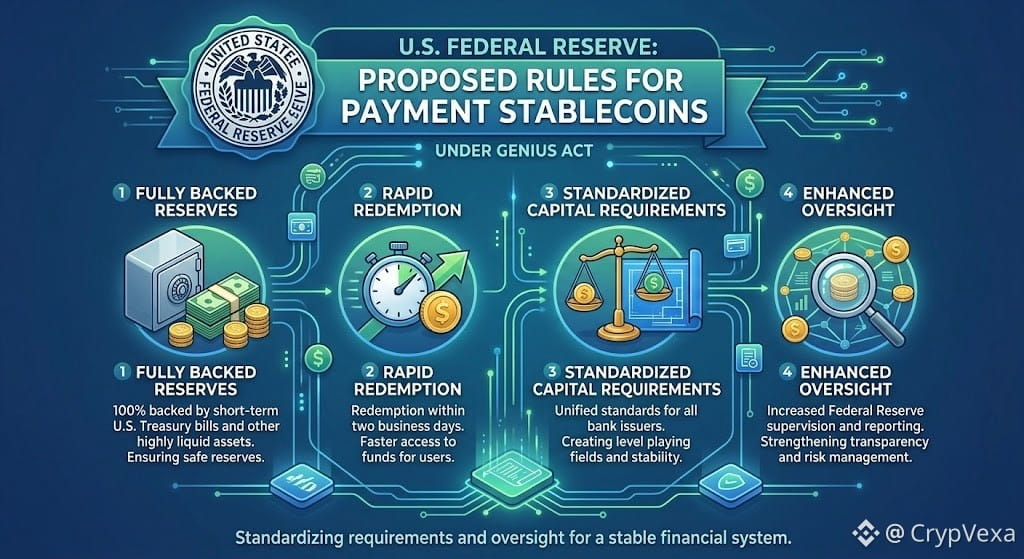
🇺🇸 The Federal Reserve has proposed rules for payment stablecoin issuers it supervises under the GENIUS Act.
💵 Stablecoins would need to be fully backed by permitted reserve assets, including short-term U.S. Treasury bills and other high-quality liquid assets.
⏱️ The proposal also includes two-business-day redemption standards, capital requirements, risk controls, and greater reserve transparency.
🏦 The framework also outlines how eligible banks could seek approval to issue payment stablecoins.
⚠️ These are proposed rules, not final regulations. Public comments are open for 60 days after Federal Register publication.
👀 Could stricter reserve and redemption rules accelerate trust in regulated stablecoins?
#Stablecoins #GENIUSAct #FederalReserve #CryptoRegulation
⚡ Fed Proposes New Stablecoin Rules Under GENIUS Act
🇺🇸 The Federal Reserve has proposed rules for payment stablecoin issuers it supervises under the GENIUS Act.
💵 Stablecoins would need to be fully backed by permitted reserve assets, including short-term U.S. Treasury bills and other high-quality liquid assets.
⏱️ The proposal also includes two-business-day redemption standards, capital requirements, risk controls, and greater reserve transparency.
🏦 The framework also outlines how eligible banks could seek approval to issue payment stablecoins.
⚠️ These are proposed rules, not final regulations. Public comments are open for 60 days after Federal Register publication.
👀 Could stricter reserve and redemption rules accelerate trust in regulated stablecoins?
#Stablecoins #GENIUSAct #FederalReserve #CryptoRegulation
🇺🇸 The Federal Reserve has proposed rules for payment stablecoin issuers it supervises under the GENIUS Act.
💵 Stablecoins would need to be fully backed by permitted reserve assets, including short-term U.S. Treasury bills and other high-quality liquid assets.
⏱️ The proposal also includes two-business-day redemption standards, capital requirements, risk controls, and greater reserve transparency.
🏦 The framework also outlines how eligible banks could seek approval to issue payment stablecoins.
⚠️ These are proposed rules, not final regulations. Public comments are open for 60 days after Federal Register publication.
👀 Could stricter reserve and redemption rules accelerate trust in regulated stablecoins?
#Stablecoins #GENIUSAct #FederalReserve #CryptoRegulation
1
55

·
--
Bullish
#fedoctoberratehikeoddsriseto69.7%
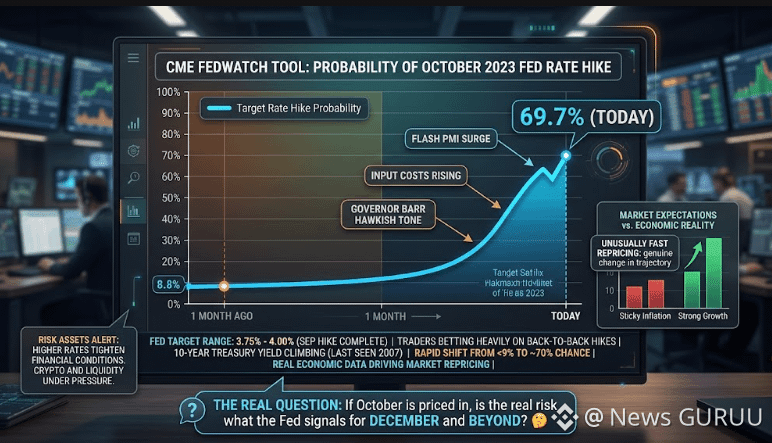
🚨 Fed’s Next Rate Hike Odds Jump to 69.7%
Just days after the Fed raised rates to 3.75%–4.00%, markets have sharply repriced the odds of another 25-bps hike in October.
CME FedWatch now shows 69.7% odds, versus just 8.8% a month ago. Strong U.S. activity and renewed price pressures, along with hawkish comments from Fed Governor Michael Barr, are driving the shift.
For crypto, the key issue is liquidity: higher-for-longer rates can keep pressure on risk assets, including Bitcoin.
👀 The October decision may already be partly priced in — the bigger market reaction could come from what the Fed signals for December and 2027.
TRADE $QI $ONDO
{spot}(ONDOUSDT)
{spot}(QIUSDT)
#bitcoin #FederalReserve
#fedoctoberratehikeoddsriseto69.7%
🚨 Fed’s Next Rate Hike Odds Jump to 69.7%
Just days after the Fed raised rates to 3.75%–4.00%, markets have sharply repriced the odds of another 25-bps hike in October.
CME FedWatch now shows 69.7% odds, versus just 8.8% a month ago. Strong U.S. activity and renewed price pressures, along with hawkish comments from Fed Governor Michael Barr, are driving the shift.
For crypto, the key issue is liquidity: higher-for-longer rates can keep pressure on risk assets, including Bitcoin.
👀 The October decision may already be partly priced in — the bigger market reaction could come from what the Fed signals for December and 2027.
TRADE $QI $ONDO
#bitcoin #FederalReserve
🚨 Fed’s Next Rate Hike Odds Jump to 69.7%
Just days after the Fed raised rates to 3.75%–4.00%, markets have sharply repriced the odds of another 25-bps hike in October.
CME FedWatch now shows 69.7% odds, versus just 8.8% a month ago. Strong U.S. activity and renewed price pressures, along with hawkish comments from Fed Governor Michael Barr, are driving the shift.
For crypto, the key issue is liquidity: higher-for-longer rates can keep pressure on risk assets, including Bitcoin.
👀 The October decision may already be partly priced in — the bigger market reaction could come from what the Fed signals for December and 2027.
TRADE $QI $ONDO
#bitcoin #FederalReserve
1
284

🔴 Fed’s New Stablecoin Framework: Can It Change the Crypto Market?
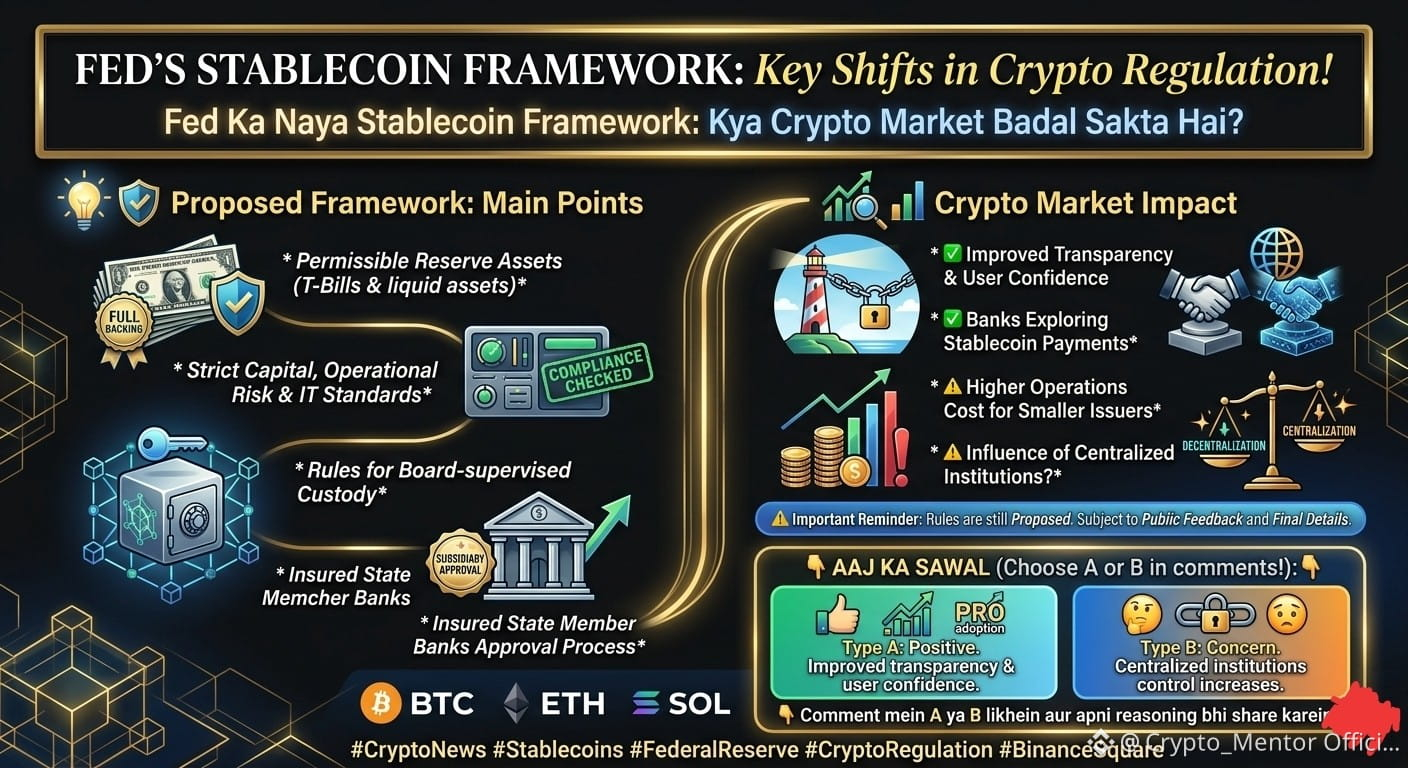
On 24 September 2026, the U.S. Federal Reserve has sought public comments on new proposed rules for board-supervised payment stablecoin issuers. The focus of this framework is to make stablecoins more transparent, resilient, and regulated.
$BTC
{spot}(BTCUSDT)
💡 Key Points of the Proposed Framework:
• Full Reserve Backing: A framework has been proposed to ensure payment stablecoins are fully backed at all times with permitted reserve assets—such as short-term U.S. Treasury securities and other high-quality liquid assets.
• Risk Management Standards: It has been proposed to strengthen standards for issuers, including capital, operational risk management, IT security, and compliance.
$ETH
{spot}(ETHUSDT)
• Custody Safeguards: Rules have also been proposed for board-supervised entities responsible for keeping stablecoin reserves safe.
• Bank Participation: Insured state member banks will need to follow a tailored approval process to issue payment stablecoins through a subsidiary.
$BNB
{spot}(BNBUSDT)
📊 What Could This Mean for the Crypto Market?
✅ More Transparency: Clear reserve and compliance standards can improve users’ confidence.
✅ Institutional Adoption: With regulatory clarity, banks and traditional financial institutions may feel more comfortable exploring stablecoin payments.
👇 QUESTION OF THE DAY:
In your view, what do these proposed Fed stablecoin rules mean for crypto?
👉 Option A: Positive — transparency and user confidence could improve.
👉 Option B: Concern — centralized institutions’ control could increase.
Share your opinion by writing A or B below! 👇
#FederalReserve #CryptoRegulation #BinanceSquare #blockchain
🔴 Fed’s New Stablecoin Framework: Can It Change the Crypto Market?
On 24 September 2026, the U.S. Federal Reserve has sought public comments on new proposed rules for board-supervised payment stablecoin issuers. The focus of this framework is to make stablecoins more transparent, resilient, and regulated.
$BTC
💡 Key Points of the Proposed Framework:
• Full Reserve Backing: A framework has been proposed to ensure payment stablecoins are fully backed at all times with permitted reserve assets—such as short-term U.S. Treasury securities and other high-quality liquid assets.
• Risk Management Standards: It has been proposed to strengthen standards for issuers, including capital, operational risk management, IT security, and compliance.
$ETH
• Custody Safeguards: Rules have also been proposed for board-supervised entities responsible for keeping stablecoin reserves safe.
• Bank Participation: Insured state member banks will need to follow a tailored approval process to issue payment stablecoins through a subsidiary.
$BNB
📊 What Could This Mean for the Crypto Market?
✅ More Transparency: Clear reserve and compliance standards can improve users’ confidence.
✅ Institutional Adoption: With regulatory clarity, banks and traditional financial institutions may feel more comfortable exploring stablecoin payments.
👇 QUESTION OF THE DAY:
In your view, what do these proposed Fed stablecoin rules mean for crypto?
👉 Option A: Positive — transparency and user confidence could improve.
👉 Option B: Concern — centralized institutions’ control could increase.
Share your opinion by writing A or B below! 👇
#FederalReserve #CryptoRegulation #BinanceSquare #blockchain
On 24 September 2026, the U.S. Federal Reserve has sought public comments on new proposed rules for board-supervised payment stablecoin issuers. The focus of this framework is to make stablecoins more transparent, resilient, and regulated.
$BTC
💡 Key Points of the Proposed Framework:
• Full Reserve Backing: A framework has been proposed to ensure payment stablecoins are fully backed at all times with permitted reserve assets—such as short-term U.S. Treasury securities and other high-quality liquid assets.
• Risk Management Standards: It has been proposed to strengthen standards for issuers, including capital, operational risk management, IT security, and compliance.
$ETH
• Custody Safeguards: Rules have also been proposed for board-supervised entities responsible for keeping stablecoin reserves safe.
• Bank Participation: Insured state member banks will need to follow a tailored approval process to issue payment stablecoins through a subsidiary.
$BNB
📊 What Could This Mean for the Crypto Market?
✅ More Transparency: Clear reserve and compliance standards can improve users’ confidence.
✅ Institutional Adoption: With regulatory clarity, banks and traditional financial institutions may feel more comfortable exploring stablecoin payments.
👇 QUESTION OF THE DAY:
In your view, what do these proposed Fed stablecoin rules mean for crypto?
👉 Option A: Positive — transparency and user confidence could improve.
👉 Option B: Concern — centralized institutions’ control could increase.
Share your opinion by writing A or B below! 👇
#FederalReserve #CryptoRegulation #BinanceSquare #blockchain
3
1
43

·
--
#fedoctoberratehikeoddsriseto69.7%
🏛️ Macro Alert: October Fed Rate Hike Odds Jump to Nearly 70%! 🏦📉🔥
Futures market pricing under the CME FedWatch Tool shows a sharp hawkish shift, with odds for a 25-basis-point Federal Reserve rate hike at the upcoming October 28 meeting climbing to 69.7%.
Following hotter-than-expected economic indicators—including a flash US Composite PMI jump to 58.4—markets are bracing for further monetary tightening following the Fed's initial September rate increase to the 3.75%–4.00% target range.
📌 Key Macro Data & Probability Breakdown
📊 October Meeting Target: According to CME FedWatch data, there is a 69.7% probability of a 25 bps rate hike to 4.00%–4.25%, leaving only a 30.3% chance of a policy pause at the current range.
🗓️ December Outlook: Looking ahead to the final meeting of the year, probability pricing assigns a 54.8% chance to a cumulative 50 bps increase, raising interest rates to 4.25%–4.50%.
📈 Yield Competition: The 10-year U.S. Treasury yield remains near multi-decade highs above 5.0%, creating heightened competition for risk assets like Bitcoin and tech equities.
💡 What Higher Rates Mean for the Crypto Rally
Short-Term Headwinds: Higher borrowing costs and a strengthening U.S. Dollar generally tighten market liquidity, squeezing speculative leverage across crypto spot and derivatives markets.
Institutional Cushion: Unlike past monetary tightening cycles, sustained institutional spot ETF inflows provide stronger underlying support, stabilizing major assets like $BTC during macro volatility.
De-Risking Strategy: Altcoins and high-beta assets typically feel stronger pressure during rate-hike expectations, prompting traders to shift capital toward BTC or cash reserves ahead of FOMC decisions.
Are you de-risk positioning ahead of the October 28 Fed decision, or taking advantage of the volatility to buy the dip? Drop your strategy below! 💬👇
#FedProposesRulesForBankIssuedStablecoins #Macro #FederalReserve
#fedoctoberratehikeoddsriseto69.7%
🏛️ Macro Alert: October Fed Rate Hike Odds Jump to Nearly 70%! 🏦📉🔥
Futures market pricing under the CME FedWatch Tool shows a sharp hawkish shift, with odds for a 25-basis-point Federal Reserve rate hike at the upcoming October 28 meeting climbing to 69.7%.
Following hotter-than-expected economic indicators—including a flash US Composite PMI jump to 58.4—markets are bracing for further monetary tightening following the Fed's initial September rate increase to the 3.75%–4.00% target range.
📌 Key Macro Data & Probability Breakdown
📊 October Meeting Target: According to CME FedWatch data, there is a 69.7% probability of a 25 bps rate hike to 4.00%–4.25%, leaving only a 30.3% chance of a policy pause at the current range.
🗓️ December Outlook: Looking ahead to the final meeting of the year, probability pricing assigns a 54.8% chance to a cumulative 50 bps increase, raising interest rates to 4.25%–4.50%.
📈 Yield Competition: The 10-year U.S. Treasury yield remains near multi-decade highs above 5.0%, creating heightened competition for risk assets like Bitcoin and tech equities.
💡 What Higher Rates Mean for the Crypto Rally
Short-Term Headwinds: Higher borrowing costs and a strengthening U.S. Dollar generally tighten market liquidity, squeezing speculative leverage across crypto spot and derivatives markets.
Institutional Cushion: Unlike past monetary tightening cycles, sustained institutional spot ETF inflows provide stronger underlying support, stabilizing major assets like $BTC during macro volatility.
De-Risking Strategy: Altcoins and high-beta assets typically feel stronger pressure during rate-hike expectations, prompting traders to shift capital toward BTC or cash reserves ahead of FOMC decisions.
Are you de-risk positioning ahead of the October 28 Fed decision, or taking advantage of the volatility to buy the dip? Drop your strategy below! 💬👇
#FedProposesRulesForBankIssuedStablecoins #Macro #FederalReserve
🏛️ Macro Alert: October Fed Rate Hike Odds Jump to Nearly 70%! 🏦📉🔥
Futures market pricing under the CME FedWatch Tool shows a sharp hawkish shift, with odds for a 25-basis-point Federal Reserve rate hike at the upcoming October 28 meeting climbing to 69.7%.
Following hotter-than-expected economic indicators—including a flash US Composite PMI jump to 58.4—markets are bracing for further monetary tightening following the Fed's initial September rate increase to the 3.75%–4.00% target range.
📌 Key Macro Data & Probability Breakdown
📊 October Meeting Target: According to CME FedWatch data, there is a 69.7% probability of a 25 bps rate hike to 4.00%–4.25%, leaving only a 30.3% chance of a policy pause at the current range.
🗓️ December Outlook: Looking ahead to the final meeting of the year, probability pricing assigns a 54.8% chance to a cumulative 50 bps increase, raising interest rates to 4.25%–4.50%.
📈 Yield Competition: The 10-year U.S. Treasury yield remains near multi-decade highs above 5.0%, creating heightened competition for risk assets like Bitcoin and tech equities.
💡 What Higher Rates Mean for the Crypto Rally
Short-Term Headwinds: Higher borrowing costs and a strengthening U.S. Dollar generally tighten market liquidity, squeezing speculative leverage across crypto spot and derivatives markets.
Institutional Cushion: Unlike past monetary tightening cycles, sustained institutional spot ETF inflows provide stronger underlying support, stabilizing major assets like $BTC during macro volatility.
De-Risking Strategy: Altcoins and high-beta assets typically feel stronger pressure during rate-hike expectations, prompting traders to shift capital toward BTC or cash reserves ahead of FOMC decisions.
Are you de-risk positioning ahead of the October 28 Fed decision, or taking advantage of the volatility to buy the dip? Drop your strategy below! 💬👇
#FedProposesRulesForBankIssuedStablecoins #Macro #FederalReserve

3
1.3k

·
--
CPI Cools, Liquidity Soars!
CPI came in cooler, signaling the Fed’s hawkish grip is loosening. Massive global liquidity injections are already underway, setting the stage for a monumental capital shift into risk assets.
🔥 Market Focus: $QNT $MUBARAK $QI
This macro tailwind is igniting Bitcoin, and the smart money is aggressively front-running with heavy rotation into high-conviction alts. Brace for epic pumps across the board!
What's your next big play after this macro data?
#QNT #USFinance #FederalReserve #PriceAction #DayTrading
CPI Cools, Liquidity Soars!
CPI came in cooler, signaling the Fed’s hawkish grip is loosening. Massive global liquidity injections are already underway, setting the stage for a monumental capital shift into risk assets.
🔥 Market Focus: $QNT $MUBARAK $QI
This macro tailwind is igniting Bitcoin, and the smart money is aggressively front-running with heavy rotation into high-conviction alts. Brace for epic pumps across the board!
What's your next big play after this macro data?
#QNT #USFinance #FederalReserve #PriceAction #DayTrading
CPI came in cooler, signaling the Fed’s hawkish grip is loosening. Massive global liquidity injections are already underway, setting the stage for a monumental capital shift into risk assets.
🔥 Market Focus: $QNT $MUBARAK $QI
This macro tailwind is igniting Bitcoin, and the smart money is aggressively front-running with heavy rotation into high-conviction alts. Brace for epic pumps across the board!
What's your next big play after this macro data?
#QNT #USFinance #FederalReserve #PriceAction #DayTrading
2
470

·
--
🚨 RECORD US PMI ACCELERATION THREATENS FED RATE CUTS AND MACRO LIQUIDITY FOR $BTC 📊
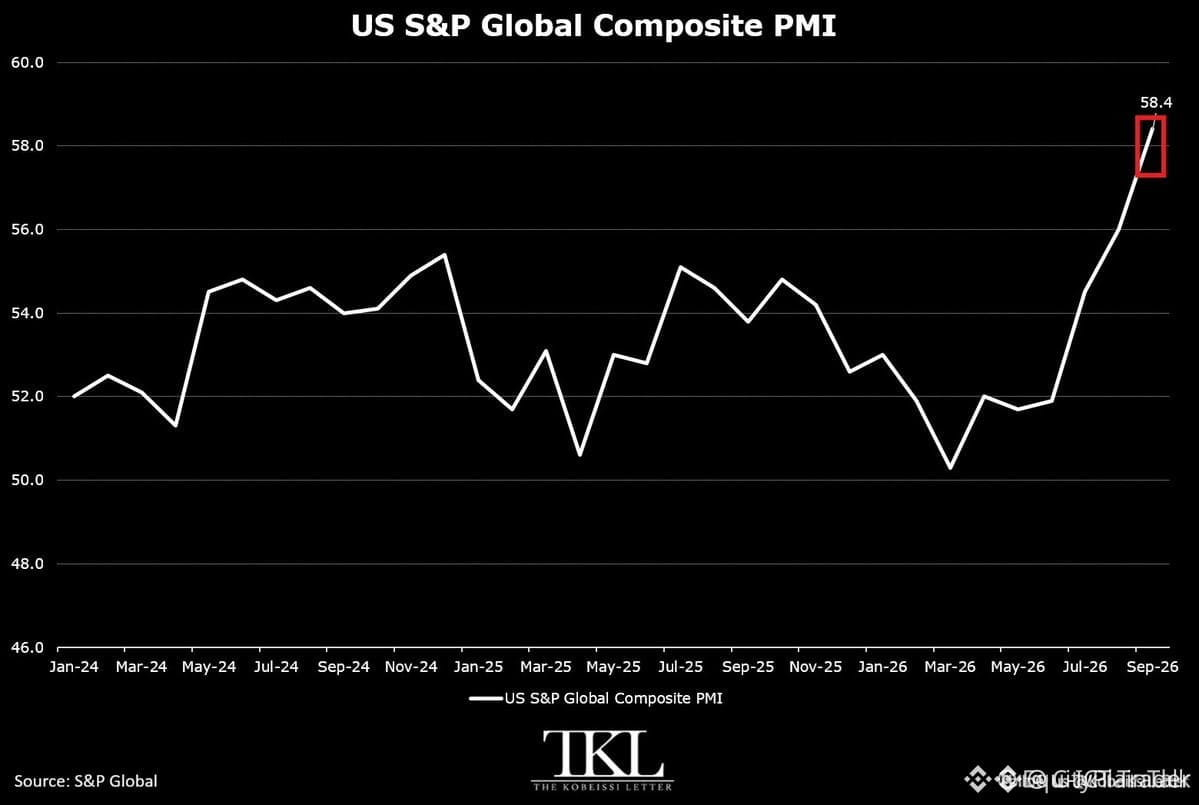
Institutional data shows US Composite PMI accelerating for four consecutive months to 58.4, driven by multi-year highs in both services and manufacturing. 🔍 While consensus prices in a soft landing, structural bottlenecks in supply chains and labor are quietly fueling persistent inflationary pressure. 📊
This underlying sticky inflation suggests the Fed may hold rates higher for longer than retail markets currently anticipate. 💡 Smart money is monitoring how this macroeconomic repricing impacts risk-asset liquidity across major market structures. 💬 Will higher-for-longer Fed rates trigger a broader market correction, or can risk assets absorb the shift? 👇
⚠️ Not financial advice. Always manage your risk. 🛡️
🏷️ #BTC #MacroEconomy #FederalReserve #Crypto
🎯 🦈
🚨 RECORD US PMI ACCELERATION THREATENS FED RATE CUTS AND MACRO LIQUIDITY FOR $BTC 📊
Institutional data shows US Composite PMI accelerating for four consecutive months to 58.4, driven by multi-year highs in both services and manufacturing. 🔍 While consensus prices in a soft landing, structural bottlenecks in supply chains and labor are quietly fueling persistent inflationary pressure. 📊
This underlying sticky inflation suggests the Fed may hold rates higher for longer than retail markets currently anticipate. 💡 Smart money is monitoring how this macroeconomic repricing impacts risk-asset liquidity across major market structures. 💬 Will higher-for-longer Fed rates trigger a broader market correction, or can risk assets absorb the shift? 👇
⚠️ Not financial advice. Always manage your risk. 🛡️
🏷️ #BTC #MacroEconomy #FederalReserve #Crypto
🎯 🦈
Institutional data shows US Composite PMI accelerating for four consecutive months to 58.4, driven by multi-year highs in both services and manufacturing. 🔍 While consensus prices in a soft landing, structural bottlenecks in supply chains and labor are quietly fueling persistent inflationary pressure. 📊
This underlying sticky inflation suggests the Fed may hold rates higher for longer than retail markets currently anticipate. 💡 Smart money is monitoring how this macroeconomic repricing impacts risk-asset liquidity across major market structures. 💬 Will higher-for-longer Fed rates trigger a broader market correction, or can risk assets absorb the shift? 👇
⚠️ Not financial advice. Always manage your risk. 🛡️
🏷️ #BTC #MacroEconomy #FederalReserve #Crypto
🎯 🦈
13

·
--
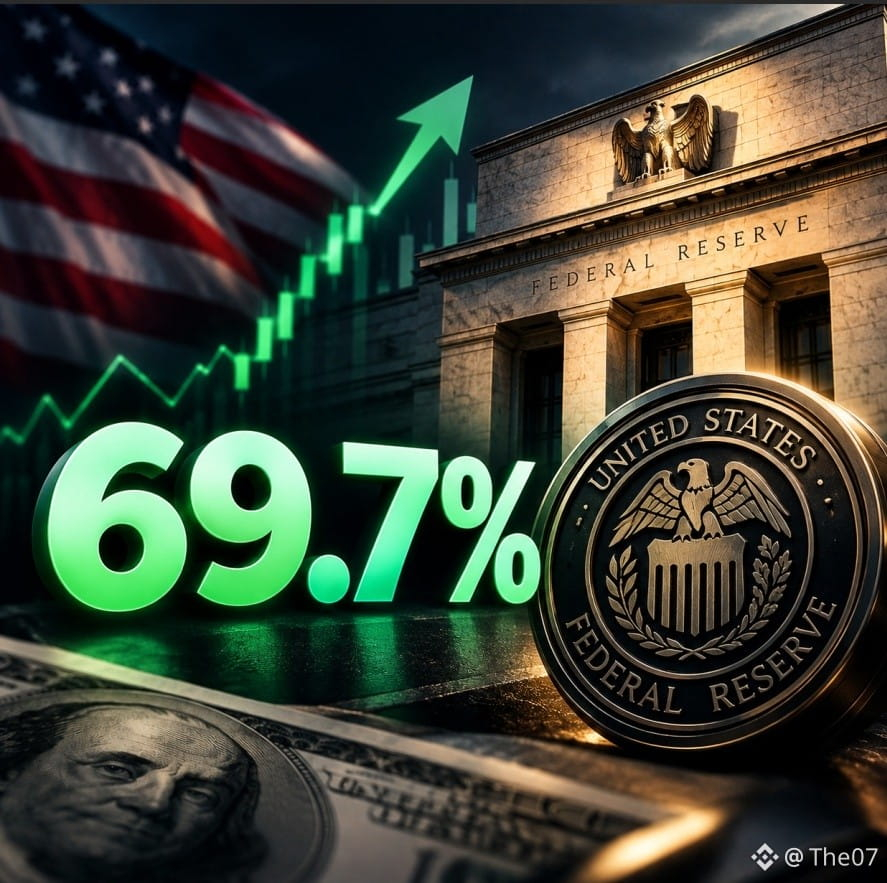
🚨 FED RATE HIKE ODDS SURGE
Markets are pricing in a 69.7% chance of a 25 bps Fed rate hike in October, according to CME FedWatch data cited by Binance News.
📈 69.7% — Rate hike
📊 30.3% — No change
💵 Current range: 3.75%–4.00%
The shift comes as markets reassess inflation and economic data ahead of the October FOMC meeting.
For crypto traders, Fed expectations remain a key market catalyst. 👀
#BTC #FederalReserve #CryptoNews
#fedoctoberratehikeoddsriseto69.7% $BTC
{spot}(BTCUSDT)
🚨 FED RATE HIKE ODDS SURGE
Markets are pricing in a 69.7% chance of a 25 bps Fed rate hike in October, according to CME FedWatch data cited by Binance News.
📈 69.7% — Rate hike
📊 30.3% — No change
💵 Current range: 3.75%–4.00%
The shift comes as markets reassess inflation and economic data ahead of the October FOMC meeting.
For crypto traders, Fed expectations remain a key market catalyst. 👀
#BTC #FederalReserve #CryptoNews
#fedoctoberratehikeoddsriseto69.7% $BTC
Markets are pricing in a 69.7% chance of a 25 bps Fed rate hike in October, according to CME FedWatch data cited by Binance News.
📈 69.7% — Rate hike
📊 30.3% — No change
💵 Current range: 3.75%–4.00%
The shift comes as markets reassess inflation and economic data ahead of the October FOMC meeting.
For crypto traders, Fed expectations remain a key market catalyst. 👀
#BTC #FederalReserve #CryptoNews
#fedoctoberratehikeoddsriseto69.7% $BTC
2
66

#FedOctoberRateHikeOddsRiseTo69.7% 📈
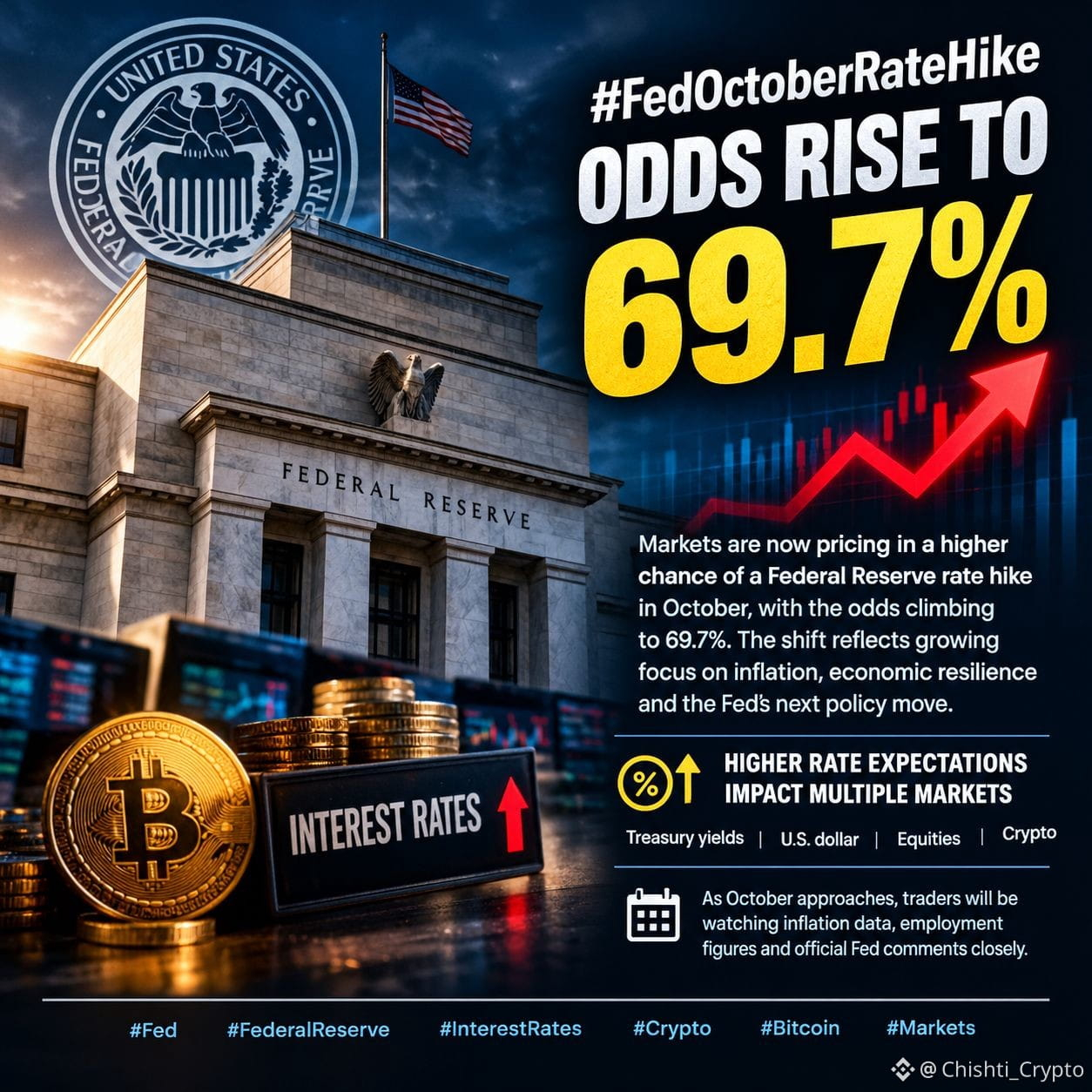
Markets are increasingly pricing in a higher chance of a Federal Reserve rate hike in October, with the odds reportedly rising to 69.7%. The shift highlights growing attention on inflation, economic resilience, and the Fed’s next policy decision.
For investors, changing rate expectations can have a major impact across markets. Higher-rate expectations may influence Treasury yields, the U.S. dollar, equities, and crypto assets as traders reassess liquidity and risk.
Bitcoin and other cryptocurrencies can be especially sensitive to changes in monetary-policy expectations, making upcoming U.S. economic data and Fed communication important market catalysts.
As October approaches, traders will be watching inflation readings, employment data, and official Fed comments closely. 📊
#Fed #FederalReserve #InterestRates #Crypto #Bitcoin #Markets
$BTC
{spot}(BTCUSDT)
$SOL
{spot}(SOLUSDT)
$XRP
{spot}(XRPUSDT)
#FedOctoberRateHikeOddsRiseTo69.7% 📈
Markets are increasingly pricing in a higher chance of a Federal Reserve rate hike in October, with the odds reportedly rising to 69.7%. The shift highlights growing attention on inflation, economic resilience, and the Fed’s next policy decision.
For investors, changing rate expectations can have a major impact across markets. Higher-rate expectations may influence Treasury yields, the U.S. dollar, equities, and crypto assets as traders reassess liquidity and risk.
Bitcoin and other cryptocurrencies can be especially sensitive to changes in monetary-policy expectations, making upcoming U.S. economic data and Fed communication important market catalysts.
As October approaches, traders will be watching inflation readings, employment data, and official Fed comments closely. 📊
#Fed #FederalReserve #InterestRates #Crypto #Bitcoin #Markets
$BTC
$SOL
$XRP
Markets are increasingly pricing in a higher chance of a Federal Reserve rate hike in October, with the odds reportedly rising to 69.7%. The shift highlights growing attention on inflation, economic resilience, and the Fed’s next policy decision.
For investors, changing rate expectations can have a major impact across markets. Higher-rate expectations may influence Treasury yields, the U.S. dollar, equities, and crypto assets as traders reassess liquidity and risk.
Bitcoin and other cryptocurrencies can be especially sensitive to changes in monetary-policy expectations, making upcoming U.S. economic data and Fed communication important market catalysts.
As October approaches, traders will be watching inflation readings, employment data, and official Fed comments closely. 📊
#Fed #FederalReserve #InterestRates #Crypto #Bitcoin #Markets
$BTC
$SOL
$XRP
1
180

Article
Fed October Rate Hike Odds Rise to 69.7%🚨
🇺🇸 Markets are increasingly pricing in a potential U.S. rate hike in October.
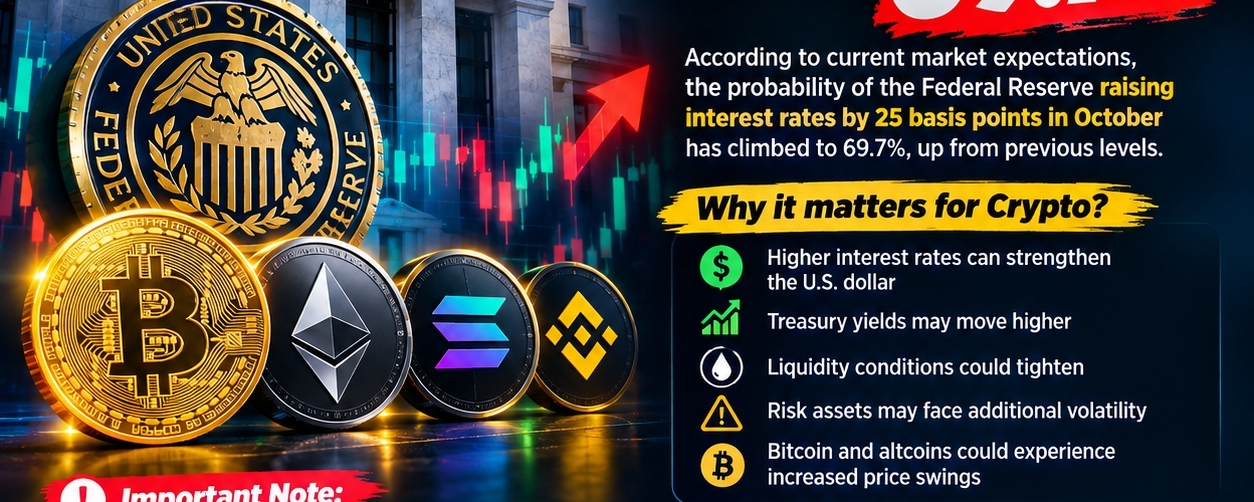
According to current market expectations, the probability of the Federal Reserve raising interest rates by 25 basis points in October has climbed to 69.7%, up significantly from previous levels.
📈 Why does this matter for crypto?
A potential Fed rate hike could have important implications for risk assets, including Bitcoin and other cryptocurrencies.
🔹 Higher interest rates can strengthen the U.S. dollar
🔹 Treasury yields may move higher
🔹 Liquidity conditions could tighten
🔹 Risk assets may face additional volatility
🔹 Bitcoin and altcoins could experience increased price swings
However, 69.7% is a market expectation — not a confirmed Fed decision.
Traders will be watching upcoming U.S. inflation data, employment data, and Federal Reserve statements closely for clues about the October decision.
₿ For crypto traders:
If expectations for a rate hike continue to increase, market volatility could remain elevated as investors adjust their positions.
The key question now is:
👉 Will the Fed actually raise rates in October, or will incoming economic data change market expectations?
What do you think? 👇
Rate Hike 📈 or No Hike 📉?
#Bitcoin #BTC #Crypto #Ethereum #ETH #Fed #FederalReserve #FOMC #interestrates s #CryptoNews #BinanceSquare #FedOctoberRateHikeOddsRiseTo69.7%
Fed October Rate Hike Odds Rise to 69.7%
🚨
🇺🇸 Markets are increasingly pricing in a potential U.S. rate hike in October.
According to current market expectations, the probability of the Federal Reserve raising interest rates by 25 basis points in October has climbed to 69.7%, up significantly from previous levels.
📈 Why does this matter for crypto?
A potential Fed rate hike could have important implications for risk assets, including Bitcoin and other cryptocurrencies.
🔹 Higher interest rates can strengthen the U.S. dollar
🔹 Treasury yields may move higher
🔹 Liquidity conditions could tighten
🔹 Risk assets may face additional volatility
🔹 Bitcoin and altcoins could experience increased price swings
However, 69.7% is a market expectation — not a confirmed Fed decision.
Traders will be watching upcoming U.S. inflation data, employment data, and Federal Reserve statements closely for clues about the October decision.
₿ For crypto traders:
If expectations for a rate hike continue to increase, market volatility could remain elevated as investors adjust their positions.
The key question now is:
👉 Will the Fed actually raise rates in October, or will incoming economic data change market expectations?
What do you think? 👇
Rate Hike 📈 or No Hike 📉?
#Bitcoin #BTC #Crypto #Ethereum #ETH #Fed #FederalReserve #FOMC #interestrates s #CryptoNews #BinanceSquare #FedOctoberRateHikeOddsRiseTo69.7%
🇺🇸 Markets are increasingly pricing in a potential U.S. rate hike in October.
According to current market expectations, the probability of the Federal Reserve raising interest rates by 25 basis points in October has climbed to 69.7%, up significantly from previous levels.
📈 Why does this matter for crypto?
A potential Fed rate hike could have important implications for risk assets, including Bitcoin and other cryptocurrencies.
🔹 Higher interest rates can strengthen the U.S. dollar
🔹 Treasury yields may move higher
🔹 Liquidity conditions could tighten
🔹 Risk assets may face additional volatility
🔹 Bitcoin and altcoins could experience increased price swings
However, 69.7% is a market expectation — not a confirmed Fed decision.
Traders will be watching upcoming U.S. inflation data, employment data, and Federal Reserve statements closely for clues about the October decision.
₿ For crypto traders:
If expectations for a rate hike continue to increase, market volatility could remain elevated as investors adjust their positions.
The key question now is:
👉 Will the Fed actually raise rates in October, or will incoming economic data change market expectations?
What do you think? 👇
Rate Hike 📈 or No Hike 📉?
#Bitcoin #BTC #Crypto #Ethereum #ETH #Fed #FederalReserve #FOMC #interestrates s #CryptoNews #BinanceSquare #FedOctoberRateHikeOddsRiseTo69.7%
1
75

🚨 FED POLICY TENSION RISES AS RATE HIKE PATH CONFLICTS WITH MACRO $BTC LIQUIDITY ⚡
📌 Institutional market structure is navigating fresh friction as political advisors clash with the Federal Reserve over recent rate hikes to 4%. 🔍 With core inflation approaching 2% while 16 of 18 Fed officials project additional tightening, smart money is closely tracking how macro rate expectations impact systemic risk assets.
💡 Shifts in central bank stance directly recalibrate institutional discount rates and global liquidity allocation across risk assets like $BTC . 📊 As discount rates adjust, watch how higher-timeframe order blocks absorb potential macro volatility driven by policy divergence. 💬 How are you hedging your risk structure against upcoming macro liquidity shifts? 👇
⚠️ Not financial advice. Always manage your risk. 🛡️
🏷️ #BTC #Macro #FederalReserve #Liquidity
🎯 🦈
🚨 FED POLICY TENSION RISES AS RATE HIKE PATH CONFLICTS WITH MACRO $BTC LIQUIDITY ⚡
📌 Institutional market structure is navigating fresh friction as political advisors clash with the Federal Reserve over recent rate hikes to 4%. 🔍 With core inflation approaching 2% while 16 of 18 Fed officials project additional tightening, smart money is closely tracking how macro rate expectations impact systemic risk assets.
💡 Shifts in central bank stance directly recalibrate institutional discount rates and global liquidity allocation across risk assets like $BTC . 📊 As discount rates adjust, watch how higher-timeframe order blocks absorb potential macro volatility driven by policy divergence. 💬 How are you hedging your risk structure against upcoming macro liquidity shifts? 👇
⚠️ Not financial advice. Always manage your risk. 🛡️
🏷️ #BTC #Macro #FederalReserve #Liquidity
🎯 🦈
📌 Institutional market structure is navigating fresh friction as political advisors clash with the Federal Reserve over recent rate hikes to 4%. 🔍 With core inflation approaching 2% while 16 of 18 Fed officials project additional tightening, smart money is closely tracking how macro rate expectations impact systemic risk assets.
💡 Shifts in central bank stance directly recalibrate institutional discount rates and global liquidity allocation across risk assets like $BTC . 📊 As discount rates adjust, watch how higher-timeframe order blocks absorb potential macro volatility driven by policy divergence. 💬 How are you hedging your risk structure against upcoming macro liquidity shifts? 👇
⚠️ Not financial advice. Always manage your risk. 🛡️
🏷️ #BTC #Macro #FederalReserve #Liquidity
🎯 🦈
10

Dollar Hits 2-Month High on Rate Hike Bets
The US dollar climbed to a two-month high on Wednesday as investors expected further interest rate hikes from the Federal Reserve. The dollar index rose 0.24% to 100.79, while the euro fell 0.25% to $1.142. Easing oil prices could still affect inflation and the global interest-rate outlook.
#dollar #Forex #FederalReserve #GlobalMarkets
Dollar Hits 2-Month High on Rate Hike Bets
The US dollar climbed to a two-month high on Wednesday as investors expected further interest rate hikes from the Federal Reserve. The dollar index rose 0.24% to 100.79, while the euro fell 0.25% to $1.142. Easing oil prices could still affect inflation and the global interest-rate outlook.
#dollar #Forex #FederalReserve #GlobalMarkets
The US dollar climbed to a two-month high on Wednesday as investors expected further interest rate hikes from the Federal Reserve. The dollar index rose 0.24% to 100.79, while the euro fell 0.25% to $1.142. Easing oil prices could still affect inflation and the global interest-rate outlook.
#dollar #Forex #FederalReserve #GlobalMarkets

64

The US Dollar Index has surged to its highest level in nearly eight weeks as financial markets sharply reprice their monetary policy expectations. According to fresh data from LSEG, traders now assign a 53% probability to a Federal Reserve interest rate hike in October, with cumulative tightening projected at 78 basis points through September 2027.
This hawkish repricing marks a notable shift in broader macroeconomic sentiment. The mounting expectation of prolonged central bank tightening has fully overshadowed the downward pressure on energy markets, where crude oil prices eased amid hopes of de-escalating tensions in the Middle East.
Across traditional financial markets, a resurgent US dollar exerts significant pressure on foreign currencies, sovereign bonds, and precious metals. Higher yields and tighter monetary conditions typically drain global dollar liquidity, raising borrowing costs across the board.
For the crypto sector, a stronger DXY creates immediate headwinds for risk assets like $BTC. As capital retreats into dollar-denominated cash yields, digital assets face compressed liquidity, making sustained bullish momentum difficult without an easing catalyst.
#FederalReserve #DXY #MacroEconomics
The US Dollar Index has surged to its highest level in nearly eight weeks as financial markets sharply reprice their monetary policy expectations. According to fresh data from LSEG, traders now assign a 53% probability to a Federal Reserve interest rate hike in October, with cumulative tightening projected at 78 basis points through September 2027.
This hawkish repricing marks a notable shift in broader macroeconomic sentiment. The mounting expectation of prolonged central bank tightening has fully overshadowed the downward pressure on energy markets, where crude oil prices eased amid hopes of de-escalating tensions in the Middle East.
Across traditional financial markets, a resurgent US dollar exerts significant pressure on foreign currencies, sovereign bonds, and precious metals. Higher yields and tighter monetary conditions typically drain global dollar liquidity, raising borrowing costs across the board.
For the crypto sector, a stronger DXY creates immediate headwinds for risk assets like $BTC . As capital retreats into dollar-denominated cash yields, digital assets face compressed liquidity, making sustained bullish momentum difficult without an easing catalyst.
#FederalReserve #DXY #MacroEconomics
This hawkish repricing marks a notable shift in broader macroeconomic sentiment. The mounting expectation of prolonged central bank tightening has fully overshadowed the downward pressure on energy markets, where crude oil prices eased amid hopes of de-escalating tensions in the Middle East.
Across traditional financial markets, a resurgent US dollar exerts significant pressure on foreign currencies, sovereign bonds, and precious metals. Higher yields and tighter monetary conditions typically drain global dollar liquidity, raising borrowing costs across the board.
For the crypto sector, a stronger DXY creates immediate headwinds for risk assets like $BTC . As capital retreats into dollar-denominated cash yields, digital assets face compressed liquidity, making sustained bullish momentum difficult without an easing catalyst.
#FederalReserve #DXY #MacroEconomics
60

The director of the U.S. National Economic Council (NEC), Kevin Hassett, has recently launched harsh criticism of the Federal Reserve’s decision-making leadership for its hawkish stance. Multiple Fed officials—including Barr, Collins, and Musalem—have recently frequently signaled tighter policy. The latest economic projections also indicate that as many as 16 officials expect at least one more rate hike within the year. In response, Hassett directly questioned why further rate hikes are still necessary when core inflation is already close to 2%. He specifically called out Powell, Barr, and others, accusing the current operations of the Fed of being highly politicized, and urged that the central bank’s independence be restored as soon as possible.
This public standoff between senior White House economic advisers and central bank officials highlights deep rifts in the U.S. macroeconomic policy path. The market had widely assumed that the rate-hiking cycle was nearing its end, but most Fed officials are far more cautious about a rebound in inflation than outsiders expected—and they have even prepared for additional tightening of liquidity. Direct political pressure at the top collides with the Fed’s strong hawkish tone from within. This not only shatters the market’s single-minded fantasy of a loosening cycle, but also sharply raises the tail risk of a hard economic landing caused by policy misjudgment.
From the perspective of macro financial markets, expectations that up to 16 officials will support another rate hike this year will directly weigh on asset pricing. Treasury yields are likely to rise rather than fall supported by tightening expectations, and the U.S. dollar index is expected to maintain high and resilient strength. This will exert direct discounting pressure on valuation models for major global assets. As long as the Fed has not officially closed the window for further rate hikes, the reality of tighter liquidity and persistently high borrowing costs will continue to have a significant suppressing effect on risk assets such as U.S. stocks and commodities.
For the cryptocurrency market, $BTC and various other risk assets face severe tests of insufficient liquidity supply. Under the shadow of high interest rates—even potential additional rate hikes—global safe-haven capital is more inclined to remain in high-yield, risk-free assets, and the appetite for incremental off-balance-sheet market inflows will be severely restrained. If the Fed ultimately chooses to validate hawkish expectations and raise rates again, extending the tightening cycle is likely to trigger another round of valuation compression and leverage unwinds. In the near term, investors will need to stay highly alert to liquidity risks at the macro level. #FederalReserve #InterestRates #MacroEconomics
The director of the U.S. National Economic Council (NEC), Kevin Hassett, has recently launched harsh criticism of the Federal Reserve’s decision-making leadership for its hawkish stance. Multiple Fed officials—including Barr, Collins, and Musalem—have recently frequently signaled tighter policy. The latest economic projections also indicate that as many as 16 officials expect at least one more rate hike within the year. In response, Hassett directly questioned why further rate hikes are still necessary when core inflation is already close to 2%. He specifically called out Powell, Barr, and others, accusing the current operations of the Fed of being highly politicized, and urged that the central bank’s independence be restored as soon as possible.
This public standoff between senior White House economic advisers and central bank officials highlights deep rifts in the U.S. macroeconomic policy path. The market had widely assumed that the rate-hiking cycle was nearing its end, but most Fed officials are far more cautious about a rebound in inflation than outsiders expected—and they have even prepared for additional tightening of liquidity. Direct political pressure at the top collides with the Fed’s strong hawkish tone from within. This not only shatters the market’s single-minded fantasy of a loosening cycle, but also sharply raises the tail risk of a hard economic landing caused by policy misjudgment.
From the perspective of macro financial markets, expectations that up to 16 officials will support another rate hike this year will directly weigh on asset pricing. Treasury yields are likely to rise rather than fall supported by tightening expectations, and the U.S. dollar index is expected to maintain high and resilient strength. This will exert direct discounting pressure on valuation models for major global assets. As long as the Fed has not officially closed the window for further rate hikes, the reality of tighter liquidity and persistently high borrowing costs will continue to have a significant suppressing effect on risk assets such as U.S. stocks and commodities.
For the cryptocurrency market, $BTC and various other risk assets face severe tests of insufficient liquidity supply. Under the shadow of high interest rates—even potential additional rate hikes—global safe-haven capital is more inclined to remain in high-yield, risk-free assets, and the appetite for incremental off-balance-sheet market inflows will be severely restrained. If the Fed ultimately chooses to validate hawkish expectations and raise rates again, extending the tightening cycle is likely to trigger another round of valuation compression and leverage unwinds. In the near term, investors will need to stay highly alert to liquidity risks at the macro level. #FederalReserve #InterestRates #MacroEconomics
This public standoff between senior White House economic advisers and central bank officials highlights deep rifts in the U.S. macroeconomic policy path. The market had widely assumed that the rate-hiking cycle was nearing its end, but most Fed officials are far more cautious about a rebound in inflation than outsiders expected—and they have even prepared for additional tightening of liquidity. Direct political pressure at the top collides with the Fed’s strong hawkish tone from within. This not only shatters the market’s single-minded fantasy of a loosening cycle, but also sharply raises the tail risk of a hard economic landing caused by policy misjudgment.
From the perspective of macro financial markets, expectations that up to 16 officials will support another rate hike this year will directly weigh on asset pricing. Treasury yields are likely to rise rather than fall supported by tightening expectations, and the U.S. dollar index is expected to maintain high and resilient strength. This will exert direct discounting pressure on valuation models for major global assets. As long as the Fed has not officially closed the window for further rate hikes, the reality of tighter liquidity and persistently high borrowing costs will continue to have a significant suppressing effect on risk assets such as U.S. stocks and commodities.
For the cryptocurrency market, $BTC and various other risk assets face severe tests of insufficient liquidity supply. Under the shadow of high interest rates—even potential additional rate hikes—global safe-haven capital is more inclined to remain in high-yield, risk-free assets, and the appetite for incremental off-balance-sheet market inflows will be severely restrained. If the Fed ultimately chooses to validate hawkish expectations and raise rates again, extending the tightening cycle is likely to trigger another round of valuation compression and leverage unwinds. In the near term, investors will need to stay highly alert to liquidity risks at the macro level. #FederalReserve #InterestRates #MacroEconomics
103
Federal Reserve Chair Jerome Powell reiterated a hawkish stance in his latest policy address, indicating that interest rates may need to rise further to rein in persistent inflation driven by supply and demand imbalances. Crucially, Powell emphasized a strategy of acting "early and gradually" rather than delaying and resorting to aggressive hikes down the road.
This deliberate guidance signals that the Fed remains committed to tightening financial conditions even as markets look for signs of a policy pivot. By preferring steady, preemptive adjustments over delayed shocks, Powell aims to anchor inflation expectations without causing sudden economic dislocation, yet pushing back against premature dovish expectations.
Across broader financial markets, this outlook keeps upward pressure on US Treasury yields and provides underlying strength to the US Dollar. Risk assets and equities may face headwinds in the near term as prolonged elevated borrowing costs compress valuation multiples and increase discount rates across corporate balance sheets.
For crypto markets, higher-for-longer policy rates typically constrain speculative liquidity and elevate borrowing costs across DeFi. However, $BTC and blue-chip digital assets could see increased volatility as capital rotates cautiously, waiting for clear signals that the peak rate environment is definitively locked in before risk appetite truly rebounds.
#FederalReserve #InterestRates #MacroEconomics
Federal Reserve Chair Jerome Powell reiterated a hawkish stance in his latest policy address, indicating that interest rates may need to rise further to rein in persistent inflation driven by supply and demand imbalances. Crucially, Powell emphasized a strategy of acting "early and gradually" rather than delaying and resorting to aggressive hikes down the road.
This deliberate guidance signals that the Fed remains committed to tightening financial conditions even as markets look for signs of a policy pivot. By preferring steady, preemptive adjustments over delayed shocks, Powell aims to anchor inflation expectations without causing sudden economic dislocation, yet pushing back against premature dovish expectations.
Across broader financial markets, this outlook keeps upward pressure on US Treasury yields and provides underlying strength to the US Dollar. Risk assets and equities may face headwinds in the near term as prolonged elevated borrowing costs compress valuation multiples and increase discount rates across corporate balance sheets.
For crypto markets, higher-for-longer policy rates typically constrain speculative liquidity and elevate borrowing costs across DeFi. However, $BTC and blue-chip digital assets could see increased volatility as capital rotates cautiously, waiting for clear signals that the peak rate environment is definitively locked in before risk appetite truly rebounds.
#FederalReserve #InterestRates #MacroEconomics
This deliberate guidance signals that the Fed remains committed to tightening financial conditions even as markets look for signs of a policy pivot. By preferring steady, preemptive adjustments over delayed shocks, Powell aims to anchor inflation expectations without causing sudden economic dislocation, yet pushing back against premature dovish expectations.
Across broader financial markets, this outlook keeps upward pressure on US Treasury yields and provides underlying strength to the US Dollar. Risk assets and equities may face headwinds in the near term as prolonged elevated borrowing costs compress valuation multiples and increase discount rates across corporate balance sheets.
For crypto markets, higher-for-longer policy rates typically constrain speculative liquidity and elevate borrowing costs across DeFi. However, $BTC and blue-chip digital assets could see increased volatility as capital rotates cautiously, waiting for clear signals that the peak rate environment is definitively locked in before risk appetite truly rebounds.
#FederalReserve #InterestRates #MacroEconomics
16
Federal Reserve Chair Jerome Powell recently cautioned that bringing inflation back down to the 2% target will be a difficult journey. He stressed that the Fed can no longer ignore repeated, long-lasting supply shocks and must respond even if it strains the broader economy, highlighting the painful trade-off between price stability and employment.
This message delivers a clear reality check to expectations of an aggressive rate-cutting cycle. By acknowledging that structural supply disruptions prevent standard policy leniency, Powell signaled that monetary conditions may need to stay restrictive for longer than optimistic market participants had anticipated.
In traditional finance, such hawkish undertones typically bolster the U.S. Dollar and put upward pressure on Treasury yields. Risk assets and equities could face valuation headwinds as the timeline for substantial liquidity easing gets pushed further out.
For the crypto sector, tighter macroeconomic liquidity suggests cautious capital flows into major digital assets like $BTC. Market participants should prepare for extended chop and range-bound volatility until macroeconomic signals clearly favor a return to monetary easing. ⚖️
#FederalReserve #Inflation #MacroEconomy
Federal Reserve Chair Jerome Powell recently cautioned that bringing inflation back down to the 2% target will be a difficult journey. He stressed that the Fed can no longer ignore repeated, long-lasting supply shocks and must respond even if it strains the broader economy, highlighting the painful trade-off between price stability and employment.
This message delivers a clear reality check to expectations of an aggressive rate-cutting cycle. By acknowledging that structural supply disruptions prevent standard policy leniency, Powell signaled that monetary conditions may need to stay restrictive for longer than optimistic market participants had anticipated.
In traditional finance, such hawkish undertones typically bolster the U.S. Dollar and put upward pressure on Treasury yields. Risk assets and equities could face valuation headwinds as the timeline for substantial liquidity easing gets pushed further out.
For the crypto sector, tighter macroeconomic liquidity suggests cautious capital flows into major digital assets like $BTC . Market participants should prepare for extended chop and range-bound volatility until macroeconomic signals clearly favor a return to monetary easing. ⚖️
#FederalReserve #Inflation #MacroEconomy
This message delivers a clear reality check to expectations of an aggressive rate-cutting cycle. By acknowledging that structural supply disruptions prevent standard policy leniency, Powell signaled that monetary conditions may need to stay restrictive for longer than optimistic market participants had anticipated.
In traditional finance, such hawkish undertones typically bolster the U.S. Dollar and put upward pressure on Treasury yields. Risk assets and equities could face valuation headwinds as the timeline for substantial liquidity easing gets pushed further out.
For the crypto sector, tighter macroeconomic liquidity suggests cautious capital flows into major digital assets like $BTC . Market participants should prepare for extended chop and range-bound volatility until macroeconomic signals clearly favor a return to monetary easing. ⚖️
#FederalReserve #Inflation #MacroEconomy
29

📰 Why did the Federal Reserve suddenly decide to “respond as situations arise”? This policy shift at Jackson Hole now hangs directly over Crypto
A recent remark by Federal Reserve official Warsh at the Jackson Hole meeting has completely changed monetary policy from “following the plan” to “going with the flow.” Now it’s entirely dependent on economic data. This is not good news for the crypto market, because it means the basis behind everyone’s interest-rate predictions has suddenly disappeared. Now traders have to watch CPI and GDP numbers every day just to stay on track, and market sentiment will almost certainly be even more volatile.
Why is this news important?
Warsh’s message is straightforward: previously, Fed rate hikes followed a set plan. Now, it will first look at how the economy performs before deciding the next step. It’s like switching from driving on the highway to taking mountain roads and backroads—you suddenly have to judge the slope and curves yourself. Crypto markets fear uncertainty in policy expectations most. With the Fed tearing up the “script,” people suddenly don’t know how to price BTC and ETH. This is different from the period in 2023. Back then, at least everyone understood the Fed was aiming for disinflation; now even the direction is wavering.
Market impact
For BTC and ETH, in the short term it’s basically a roller coaster driven by sentiment. Previously, people may have thought that as long as the Fed keeps easing, prices would have support. But that expectation has been abruptly shattered. That implies:
1. The market’s sensitivity to interest rates will spike sharply—any CPI miss or upside surprise could cause risk-avoidance capital to flee immediately
2. BTC’s value-storage narrative as “digital gold” will be tested again; if data looks bad, institutions may suddenly decide it’s “unsafe” again
3. Short-term volatility will surge, because every time data is released it could trigger a sharp run up and sudden crash. For example, if the August CPI data comes in below expectations, there’s a high probability BTC will break below the $79K level directly
For historical parallels, you can look at the 2013 “taper tantrum” period under Bernanke. Back then, the Fed unexpectedly signaled it might start shrinking its balance sheet, which directly triggered global market sell-offs.
Trading approach
🎯 Impact outlook
- Coin(s): BTC / ETH
- Bias: Neutral-to-volatile, but the likelihood of short-term downside 📉 is higher
- Duration: BTC 12 hours / ETH 24 hours
💡 Personal view: This kind of “respond as situations arise” approach from the Federal Reserve is unfavorable for crypto prices in the short term. It suggests BTC and ETH may face a choppy range between $78K and $81K next. If September employment data stays strong, $79.5K will be a key resistance level. If you get both data weakness and bearish technical signals at the same time—then after a break below $78K, it may really be necessary to look toward the $77K area. If the Fed ultimately chooses to cut rates significantly, this view is invalid.
【View invalidation conditions】If, at the September 20 FOMC meeting, the Federal Reserve clearly states it will maintain rates unchanged, this view is invalid.
This article has no project sponsorship, and the author does not hold any of the assets mentioned
$BTC $ETH #BTC #ETH
⚠️ Not investment advice
#FederalReserve'smonetarypolicyremainsuncertainafterWarsh'sremarksatJacksonHole
📰 Why did the Federal Reserve suddenly decide to “respond as situations arise”? This policy shift at Jackson Hole now hangs directly over Crypto
A recent remark by Federal Reserve official Warsh at the Jackson Hole meeting has completely changed monetary policy from “following the plan” to “going with the flow.” Now it’s entirely dependent on economic data. This is not good news for the crypto market, because it means the basis behind everyone’s interest-rate predictions has suddenly disappeared. Now traders have to watch CPI and GDP numbers every day just to stay on track, and market sentiment will almost certainly be even more volatile.
Why is this news important?
Warsh’s message is straightforward: previously, Fed rate hikes followed a set plan. Now, it will first look at how the economy performs before deciding the next step. It’s like switching from driving on the highway to taking mountain roads and backroads—you suddenly have to judge the slope and curves yourself. Crypto markets fear uncertainty in policy expectations most. With the Fed tearing up the “script,” people suddenly don’t know how to price BTC and ETH. This is different from the period in 2023. Back then, at least everyone understood the Fed was aiming for disinflation; now even the direction is wavering.
Market impact
For BTC and ETH, in the short term it’s basically a roller coaster driven by sentiment. Previously, people may have thought that as long as the Fed keeps easing, prices would have support. But that expectation has been abruptly shattered. That implies:
1. The market’s sensitivity to interest rates will spike sharply—any CPI miss or upside surprise could cause risk-avoidance capital to flee immediately
2. BTC’s value-storage narrative as “digital gold” will be tested again; if data looks bad, institutions may suddenly decide it’s “unsafe” again
3. Short-term volatility will surge, because every time data is released it could trigger a sharp run up and sudden crash. For example, if the August CPI data comes in below expectations, there’s a high probability BTC will break below the $79K level directly
For historical parallels, you can look at the 2013 “taper tantrum” period under Bernanke. Back then, the Fed unexpectedly signaled it might start shrinking its balance sheet, which directly triggered global market sell-offs.
Trading approach
🎯 Impact outlook
- Coin(s): BTC / ETH
- Bias: Neutral-to-volatile, but the likelihood of short-term downside 📉 is higher
- Duration: BTC 12 hours / ETH 24 hours
💡 Personal view: This kind of “respond as situations arise” approach from the Federal Reserve is unfavorable for crypto prices in the short term. It suggests BTC and ETH may face a choppy range between $78K and $81K next. If September employment data stays strong, $79.5K will be a key resistance level. If you get both data weakness and bearish technical signals at the same time—then after a break below $78K, it may really be necessary to look toward the $77K area. If the Fed ultimately chooses to cut rates significantly, this view is invalid.
【View invalidation conditions】If, at the September 20 FOMC meeting, the Federal Reserve clearly states it will maintain rates unchanged, this view is invalid.
This article has no project sponsorship, and the author does not hold any of the assets mentioned
$BTC $ETH #BTC #ETH
⚠️ Not investment advice
#FederalReserve'smonetarypolicyremainsuncertainafterWarsh'sremarksatJacksonHole
A recent remark by Federal Reserve official Warsh at the Jackson Hole meeting has completely changed monetary policy from “following the plan” to “going with the flow.” Now it’s entirely dependent on economic data. This is not good news for the crypto market, because it means the basis behind everyone’s interest-rate predictions has suddenly disappeared. Now traders have to watch CPI and GDP numbers every day just to stay on track, and market sentiment will almost certainly be even more volatile.
Why is this news important?
Warsh’s message is straightforward: previously, Fed rate hikes followed a set plan. Now, it will first look at how the economy performs before deciding the next step. It’s like switching from driving on the highway to taking mountain roads and backroads—you suddenly have to judge the slope and curves yourself. Crypto markets fear uncertainty in policy expectations most. With the Fed tearing up the “script,” people suddenly don’t know how to price BTC and ETH. This is different from the period in 2023. Back then, at least everyone understood the Fed was aiming for disinflation; now even the direction is wavering.
Market impact
For BTC and ETH, in the short term it’s basically a roller coaster driven by sentiment. Previously, people may have thought that as long as the Fed keeps easing, prices would have support. But that expectation has been abruptly shattered. That implies:
1. The market’s sensitivity to interest rates will spike sharply—any CPI miss or upside surprise could cause risk-avoidance capital to flee immediately
2. BTC’s value-storage narrative as “digital gold” will be tested again; if data looks bad, institutions may suddenly decide it’s “unsafe” again
3. Short-term volatility will surge, because every time data is released it could trigger a sharp run up and sudden crash. For example, if the August CPI data comes in below expectations, there’s a high probability BTC will break below the $79K level directly
For historical parallels, you can look at the 2013 “taper tantrum” period under Bernanke. Back then, the Fed unexpectedly signaled it might start shrinking its balance sheet, which directly triggered global market sell-offs.
Trading approach
🎯 Impact outlook
- Coin(s): BTC / ETH
- Bias: Neutral-to-volatile, but the likelihood of short-term downside 📉 is higher
- Duration: BTC 12 hours / ETH 24 hours
💡 Personal view: This kind of “respond as situations arise” approach from the Federal Reserve is unfavorable for crypto prices in the short term. It suggests BTC and ETH may face a choppy range between $78K and $81K next. If September employment data stays strong, $79.5K will be a key resistance level. If you get both data weakness and bearish technical signals at the same time—then after a break below $78K, it may really be necessary to look toward the $77K area. If the Fed ultimately chooses to cut rates significantly, this view is invalid.
【View invalidation conditions】If, at the September 20 FOMC meeting, the Federal Reserve clearly states it will maintain rates unchanged, this view is invalid.
This article has no project sponsorship, and the author does not hold any of the assets mentioned
$BTC $ETH #BTC #ETH
⚠️ Not investment advice
#FederalReserve'smonetarypolicyremainsuncertainafterWarsh'sremarksatJacksonHole



112

🇺🇸 FED TO MAKE BANK STRESS TESTS FAR MORE TRANSPARENT
The Federal Reserve is moving toward major changes in its bank stress-testing framework, including publishing model equations, variables, assumptions, coefficients and scenario-design details that were previously not fully disclosed.
🏦 More transparency
📊 More public scrutiny
🔎 Greater visibility into how bank capital requirements are calculated
The reforms are expected to make the stress-testing process more predictable and open to public review.
#FED #FederalReserve
🇺🇸 FED TO MAKE BANK STRESS TESTS FAR MORE TRANSPARENT
The Federal Reserve is moving toward major changes in its bank stress-testing framework, including publishing model equations, variables, assumptions, coefficients and scenario-design details that were previously not fully disclosed.
🏦 More transparency
📊 More public scrutiny
🔎 Greater visibility into how bank capital requirements are calculated
The reforms are expected to make the stress-testing process more predictable and open to public review.
#FED #FederalReserve
The Federal Reserve is moving toward major changes in its bank stress-testing framework, including publishing model equations, variables, assumptions, coefficients and scenario-design details that were previously not fully disclosed.
🏦 More transparency
📊 More public scrutiny
🔎 Greater visibility into how bank capital requirements are calculated
The reforms are expected to make the stress-testing process more predictable and open to public review.
#FED #FederalReserve


6

·
--
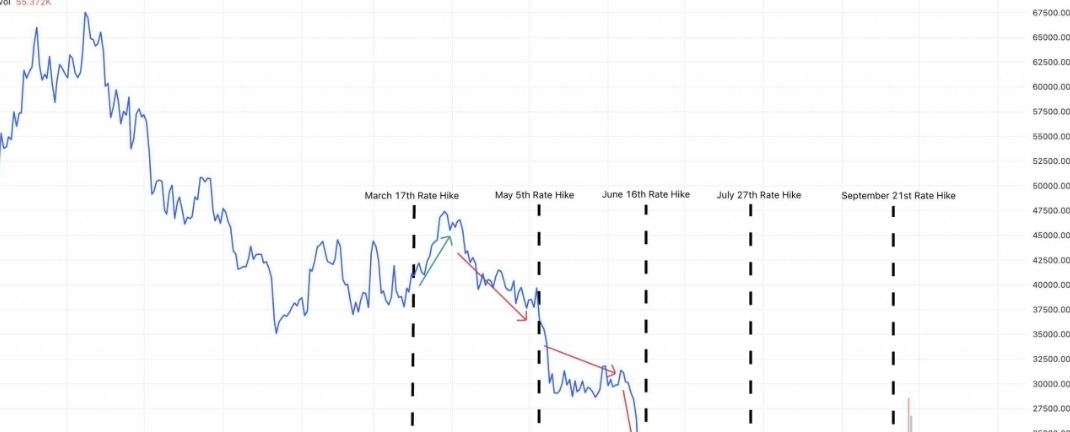
Article
Raising the interest rate hits the crypto market: what happened and why does it matter?Raising the interest rate hits the crypto market: what happened and why does it matter?
The US Federal Reserve (Fed) raised the interest rate by 25 basis points for the first time since July 2023, bringing the target range to 3.75%–4.00%. The decision was unanimous (12-0), despite repeated pressure from Trump to cut rates. The official reason is the continued inflation pressures at high levels.
Raising the interest rate hits the crypto market: what happened and why does it matter?
Raising the interest rate hits the crypto market: what happened and why does it matter?
The US Federal Reserve (Fed) raised the interest rate by 25 basis points for the first time since July 2023, bringing the target range to 3.75%–4.00%. The decision was unanimous (12-0), despite repeated pressure from Trump to cut rates. The official reason is the continued inflation pressures at high levels.
The US Federal Reserve (Fed) raised the interest rate by 25 basis points for the first time since July 2023, bringing the target range to 3.75%–4.00%. The decision was unanimous (12-0), despite repeated pressure from Trump to cut rates. The official reason is the continued inflation pressures at high levels.
57
Log in to explore more content
Join global crypto users on Binance Square
⚡️ Get latest and useful information about crypto.
💬 Trusted by the world’s largest crypto exchange.
👍 Discover real insights from verified creators.
Email / Phone number
Trending Topics
1
#TrumpRejectsAIRulesForVoluntaryAudits
221 views
49 Discussing
2
#BitgetHotWalletBreachTiedToThirdPartySecurityFlaw
154 views
35 Discussing
3
#OpenAIUnveilsAlwaysOnAgentDots
1,174 views
87 Discussing
4
#ChainlinkLaunchesBankSWIFTLedgerFramework
2,731 views
92 Discussing
5
#EarningsSeason
436,341 views
3,297 Discussing
6
#SECChairWantsStockMarketsOnChain
5,956 views
178 Discussing
7
#MulticoinInvestsInGrass
3,534 views
121 Discussing
8
#CEARenamesToBNBStandardUnderBNC
4,597 views
132 Discussing
9
#BitwiseLaunchesFirstSpotNEARETF
58,699 views
758 Discussing
10
#USJobOpeningsFallToFiveMonthLow
62,436 views
590 Discussing