

#defi
defi
56.7M views
296,875 Discussing
Hot
Latest

·
--
🔮 $PYTH — The Backbone Nobody Talks About
While everyone chases price action, Pyth is quietly powering the data behind it — real-time price feeds across 50+ blockchains, used by DeFi apps, prediction markets, and even TradFi-style commodity trading.
Recent wins: integrations with Polymarket and Kalshi bringing stocks, commodities, and prediction markets on-chain — powered by Pyth's feeds.
No oracle, no accurate prices. No accurate prices, no DeFi. Simple as that.
Underrated infrastructure play or fairly priced? 🤔
{future}(PYTHUSDT)
{future}(HBARUSDT)
{future}(INXUSDT)
#PYTH #PythNetwork #Oracle #defi #BinanceSquare
🔮 $PYTH — The Backbone Nobody Talks About
While everyone chases price action, Pyth is quietly powering the data behind it — real-time price feeds across 50+ blockchains, used by DeFi apps, prediction markets, and even TradFi-style commodity trading.
Recent wins: integrations with Polymarket and Kalshi bringing stocks, commodities, and prediction markets on-chain — powered by Pyth's feeds.
No oracle, no accurate prices. No accurate prices, no DeFi. Simple as that.
Underrated infrastructure play or fairly priced? 🤔
#PYTH #PythNetwork #Oracle #defi #BinanceSquare
While everyone chases price action, Pyth is quietly powering the data behind it — real-time price feeds across 50+ blockchains, used by DeFi apps, prediction markets, and even TradFi-style commodity trading.
Recent wins: integrations with Polymarket and Kalshi bringing stocks, commodities, and prediction markets on-chain — powered by Pyth's feeds.
No oracle, no accurate prices. No accurate prices, no DeFi. Simple as that.
Underrated infrastructure play or fairly priced? 🤔
#PYTH #PythNetwork #Oracle #defi #BinanceSquare

3
2
245

·
--
A successful swap isn't always a good swap.
A transaction can be confirmed, assets can arrive, and everything can look fine on-chain.
But you may still have lost value along the way.
This becomes especially important with cross-chain swaps.
Imagine moving $1,000 from one chain to another.
The transaction succeeds.
But then ask:
→ What price did you actually get?
→ How much value was lost to slippage?
→ What were the total fees?
→ Was there enough liquidity for your trade size?
→ How predictable was the settlement time?
→ What happens if the route fails or gets delayed?
That's the difference between transaction success and execution quality.
When I evaluate a cross-chain swap, I look beyond the confirmation screen:
1. Execution price
The quoted price is only an estimate. The final amount received matters more.
2. Slippage
Even a small difference can become meaningful on larger transactions.
3. Total execution cost
Network fees, protocol fees, and routing costs can all affect the final outcome.
4. Liquidity
A route that works for $50 doesn't necessarily work efficiently for $5,000.
5. Settlement speed
Fast is useful, but predictable execution matters just as much.
6. Reliability
How the system handles delays, failed transactions, or unexpected issues matters too.
7. Final value received
Ultimately, the question is simple: how much useful value reached the destination?
So instead of asking:
"Did my swap go through?"
I think the better question is:
"Did I get a good outcome?"
That's one reason I've been paying attention to @ston_fi.
As cross-chain infrastructure develops, simply connecting networks isn't enough.
The bigger challenge is improving the entire execution experience:
Better pricing → deeper liquidity → lower friction → more predictable outcomes
The next phase of DeFi may not be about whether cross-chain swaps are possible.
It may be about how efficiently they can be executed.
#STONfi #defi #TON
A successful swap isn't always a good swap.
A transaction can be confirmed, assets can arrive, and everything can look fine on-chain.
But you may still have lost value along the way.
This becomes especially important with cross-chain swaps.
Imagine moving $1,000 from one chain to another.
The transaction succeeds.
But then ask:
→ What price did you actually get?
→ How much value was lost to slippage?
→ What were the total fees?
→ Was there enough liquidity for your trade size?
→ How predictable was the settlement time?
→ What happens if the route fails or gets delayed?
That's the difference between transaction success and execution quality.
When I evaluate a cross-chain swap, I look beyond the confirmation screen:
1. Execution price
The quoted price is only an estimate. The final amount received matters more.
2. Slippage
Even a small difference can become meaningful on larger transactions.
3. Total execution cost
Network fees, protocol fees, and routing costs can all affect the final outcome.
4. Liquidity
A route that works for $50 doesn't necessarily work efficiently for $5,000.
5. Settlement speed
Fast is useful, but predictable execution matters just as much.
6. Reliability
How the system handles delays, failed transactions, or unexpected issues matters too.
7. Final value received
Ultimately, the question is simple: how much useful value reached the destination?
So instead of asking:
"Did my swap go through?"
I think the better question is:
"Did I get a good outcome?"
That's one reason I've been paying attention to @ston_fi.
As cross-chain infrastructure develops, simply connecting networks isn't enough.
The bigger challenge is improving the entire execution experience:
Better pricing → deeper liquidity → lower friction → more predictable outcomes
The next phase of DeFi may not be about whether cross-chain swaps are possible.
It may be about how efficiently they can be executed.
#STONfi #defi #TON
A transaction can be confirmed, assets can arrive, and everything can look fine on-chain.
But you may still have lost value along the way.
This becomes especially important with cross-chain swaps.
Imagine moving $1,000 from one chain to another.
The transaction succeeds.
But then ask:
→ What price did you actually get?
→ How much value was lost to slippage?
→ What were the total fees?
→ Was there enough liquidity for your trade size?
→ How predictable was the settlement time?
→ What happens if the route fails or gets delayed?
That's the difference between transaction success and execution quality.
When I evaluate a cross-chain swap, I look beyond the confirmation screen:
1. Execution price
The quoted price is only an estimate. The final amount received matters more.
2. Slippage
Even a small difference can become meaningful on larger transactions.
3. Total execution cost
Network fees, protocol fees, and routing costs can all affect the final outcome.
4. Liquidity
A route that works for $50 doesn't necessarily work efficiently for $5,000.
5. Settlement speed
Fast is useful, but predictable execution matters just as much.
6. Reliability
How the system handles delays, failed transactions, or unexpected issues matters too.
7. Final value received
Ultimately, the question is simple: how much useful value reached the destination?
So instead of asking:
"Did my swap go through?"
I think the better question is:
"Did I get a good outcome?"
That's one reason I've been paying attention to @ston_fi.
As cross-chain infrastructure develops, simply connecting networks isn't enough.
The bigger challenge is improving the entire execution experience:
Better pricing → deeper liquidity → lower friction → more predictable outcomes
The next phase of DeFi may not be about whether cross-chain swaps are possible.
It may be about how efficiently they can be executed.
#STONfi #defi #TON
87

·
--
CRV SURGES THROUGH RESISTANCE 🚀📈
The $CRV token ripped through the $0.39064 ceiling, closing just shy of the high at $0.39260 as Asian liquidity flooded the order book. A 17.06% 24‑hour surge backed by $12.55 M of volume signals that LPs are re‑allocating capital into Curve’s stable‑coin pools, where TVL has climbed 9% week‑over‑week amid the waning restaking boom. Smart‑contract pools are now seeing tighter slippage, and cross‑chain bridges are delivering fresh yield streams that attract both retail and institutional LPs 🚀
The next hurdle sits at the $0.415–$0.425 band, where a break would cement a higher‑high, higher‑low structure and invite algorithmic buying. Should $CRV sustain above $0.390, liquidity providers are likely to deepen positions, tightening the order block at $0.39064 and feeding a self‑reinforcing momentum loop. With DeFi TVL still expanding and Curve’s fee‑share incentives outpacing peers, the upside bias remains strong, suggesting the rally could extend into the $0.45 region if buying pressure holds 📈💎
DYOR
Follow for Updates
#CRV #DEFI #CryptoTrending #BinanceSquare
CRV SURGES THROUGH RESISTANCE 🚀📈
The $CRV token ripped through the $0.39064 ceiling, closing just shy of the high at $0.39260 as Asian liquidity flooded the order book. A 17.06% 24‑hour surge backed by $12.55 M of volume signals that LPs are re‑allocating capital into Curve’s stable‑coin pools, where TVL has climbed 9% week‑over‑week amid the waning restaking boom. Smart‑contract pools are now seeing tighter slippage, and cross‑chain bridges are delivering fresh yield streams that attract both retail and institutional LPs 🚀
The next hurdle sits at the $0.415–$0.425 band, where a break would cement a higher‑high, higher‑low structure and invite algorithmic buying. Should $CRV sustain above $0.390, liquidity providers are likely to deepen positions, tightening the order block at $0.39064 and feeding a self‑reinforcing momentum loop. With DeFi TVL still expanding and Curve’s fee‑share incentives outpacing peers, the upside bias remains strong, suggesting the rally could extend into the $0.45 region if buying pressure holds 📈💎
DYOR
Follow for Updates
#CRV #DEFI #CryptoTrending #BinanceSquare
The $CRV token ripped through the $0.39064 ceiling, closing just shy of the high at $0.39260 as Asian liquidity flooded the order book. A 17.06% 24‑hour surge backed by $12.55 M of volume signals that LPs are re‑allocating capital into Curve’s stable‑coin pools, where TVL has climbed 9% week‑over‑week amid the waning restaking boom. Smart‑contract pools are now seeing tighter slippage, and cross‑chain bridges are delivering fresh yield streams that attract both retail and institutional LPs 🚀
The next hurdle sits at the $0.415–$0.425 band, where a break would cement a higher‑high, higher‑low structure and invite algorithmic buying. Should $CRV sustain above $0.390, liquidity providers are likely to deepen positions, tightening the order block at $0.39064 and feeding a self‑reinforcing momentum loop. With DeFi TVL still expanding and Curve’s fee‑share incentives outpacing peers, the upside bias remains strong, suggesting the rally could extend into the $0.45 region if buying pressure holds 📈💎
DYOR
Follow for Updates
#CRV #DEFI #CryptoTrending #BinanceSquare
41

·
--
Bullish
Stablecoins are becoming more than a way to hold dollar value in crypto. They are increasingly becoming the liquidity layer connecting different ecosystems.
That’s why the STON.fi integration with Arc caught my attention.
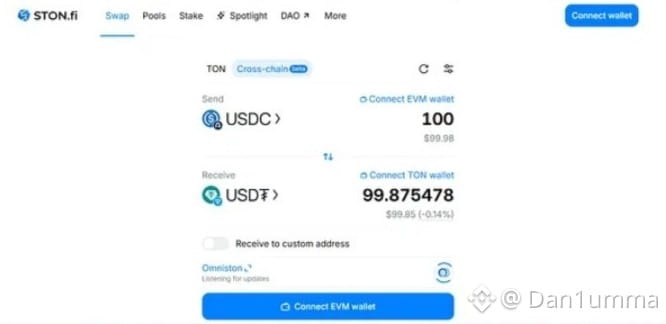
Arc is built with stablecoin finance in mind, while USDC serves as its native gas token. Bringing that environment into Omniston creates another route for stablecoin liquidity to interact with assets across supported chains.
What I find interesting is the bigger infrastructure shift.
Instead of liquidity staying isolated inside individual ecosystems, cross-chain systems can help make that liquidity more accessible without forcing users to manage every network separately.
This is where I think the real value of cross-chain infrastructure becomes clearer: not simply adding more chains, but making liquidity more connected and useful.
The initial $1,000 transaction limit on the Arc integration is also worth keeping in mind. Adoption is built through real usage, and practical limits matter alongside the technology.
@ston_fi #STONfi #Omniston #Arc #USDC #DeFi
#STONfi
Stablecoins are becoming more than a way to hold dollar value in crypto. They are increasingly becoming the liquidity layer connecting different ecosystems.
That’s why the STON.fi integration with Arc caught my attention.
Arc is built with stablecoin finance in mind, while USDC serves as its native gas token. Bringing that environment into Omniston creates another route for stablecoin liquidity to interact with assets across supported chains.
What I find interesting is the bigger infrastructure shift.
Instead of liquidity staying isolated inside individual ecosystems, cross-chain systems can help make that liquidity more accessible without forcing users to manage every network separately.
This is where I think the real value of cross-chain infrastructure becomes clearer: not simply adding more chains, but making liquidity more connected and useful.
The initial $1,000 transaction limit on the Arc integration is also worth keeping in mind. Adoption is built through real usage, and practical limits matter alongside the technology.
@ston_fi #STONfi #Omniston #Arc #USDC #DeFi
#STONfi
That’s why the STON.fi integration with Arc caught my attention.
Arc is built with stablecoin finance in mind, while USDC serves as its native gas token. Bringing that environment into Omniston creates another route for stablecoin liquidity to interact with assets across supported chains.
What I find interesting is the bigger infrastructure shift.
Instead of liquidity staying isolated inside individual ecosystems, cross-chain systems can help make that liquidity more accessible without forcing users to manage every network separately.
This is where I think the real value of cross-chain infrastructure becomes clearer: not simply adding more chains, but making liquidity more connected and useful.
The initial $1,000 transaction limit on the Arc integration is also worth keeping in mind. Adoption is built through real usage, and practical limits matter alongside the technology.
@ston_fi #STONfi #Omniston #Arc #USDC #DeFi
#STONfi

89

·
--
🚨 Compound DAO used reserves to buy $52M worth of COMP, pushing supporter votes past 50% of delegated power. Delegates call it a mandate breach; Foundation says it aligns with DAO goals. Market may see short-term volatility as governance tension rises. Is this a power move or overreach? #DeFi
$COMP #TradingSignal #CryptoAnalysis
🚨 Compound DAO used reserves to buy $52M worth of COMP, pushing supporter votes past 50% of delegated power. Delegates call it a mandate breach; Foundation says it aligns with DAO goals. Market may see short-term volatility as governance tension rises. Is this a power move or overreach? #DeFi
$COMP #TradingSignal #CryptoAnalysis
$COMP #TradingSignal #CryptoAnalysis

57


Flash update: The restaking gold rush has officially hit a wall. 📉 Top protocols are now scraping by on razor-thin margins. Here is what you need to track right now. 1. Yield farming rewards have plunged across major platforms. 2. Validator revenue fails to match last year's aggressive growth projections. 3. Smart capital is rapidly rotating out of low-fee restaking loops. $ETH #Write2Earn #CryptoNews #Restaking #DeFi
Flash update: The restaking gold rush has officially hit a wall. 📉 Top protocols are now scraping by on razor-thin margins. Here is what you need to track right now. 1. Yield farming rewards have plunged across major platforms. 2. Validator revenue fails to match last year's aggressive growth projections. 3. Smart capital is rapidly rotating out of low-fee restaking loops. $ETH #Write2Earn #CryptoNews #Restaking #DeFi
16

·
--
⚡ STANI HINTS AT AUTOMATED $AAVE TOKEN BURNS IN AAVENOMICS 3.0 OVERHAUL! 🔥
Stani Kulechov is floating a direct supply-drain mechanism for $AAVE under the upcoming Aavenomics 3.0 overhaul. 🦈 Protocol revenue is being redirected to systematic, automated on-chain buybacks, stripping governance friction out of the equation.
Transitioning from manual governance votes to a permanent programmatic buyback and burn engine creates a constant structural bid for the token. 📊 When real yield meets automated supply reduction, smart money pays attention to the shrinking float. 💬 Will this supply-side sink finally trigger a sustained re-rating for $AAVE against the wider DeFi sector? 👇
⚠️ Not financial advice. Always manage your risk. 🛡️
🏷️ #AAVE #DeFi #Altcoins #Crypto
🔥 💎
⚡ STANI HINTS AT AUTOMATED $AAVE TOKEN BURNS IN AAVENOMICS 3.0 OVERHAUL! 🔥
Stani Kulechov is floating a direct supply-drain mechanism for $AAVE under the upcoming Aavenomics 3.0 overhaul. 🦈 Protocol revenue is being redirected to systematic, automated on-chain buybacks, stripping governance friction out of the equation.
Transitioning from manual governance votes to a permanent programmatic buyback and burn engine creates a constant structural bid for the token. 📊 When real yield meets automated supply reduction, smart money pays attention to the shrinking float. 💬 Will this supply-side sink finally trigger a sustained re-rating for $AAVE against the wider DeFi sector? 👇
⚠️ Not financial advice. Always manage your risk. 🛡️
🏷️ #AAVE #DeFi #Altcoins #Crypto
🔥 💎
Stani Kulechov is floating a direct supply-drain mechanism for $AAVE under the upcoming Aavenomics 3.0 overhaul. 🦈 Protocol revenue is being redirected to systematic, automated on-chain buybacks, stripping governance friction out of the equation.
Transitioning from manual governance votes to a permanent programmatic buyback and burn engine creates a constant structural bid for the token. 📊 When real yield meets automated supply reduction, smart money pays attention to the shrinking float. 💬 Will this supply-side sink finally trigger a sustained re-rating for $AAVE against the wider DeFi sector? 👇
⚠️ Not financial advice. Always manage your risk. 🛡️
🏷️ #AAVE #DeFi #Altcoins #Crypto
🔥 💎
11
🚨 $AAVE DEMONSTRATES INSTITUTIONAL EXPANSION AS DEPOSITS AND REVENUE SURGE ACROSS V3 AND V4! 🦈
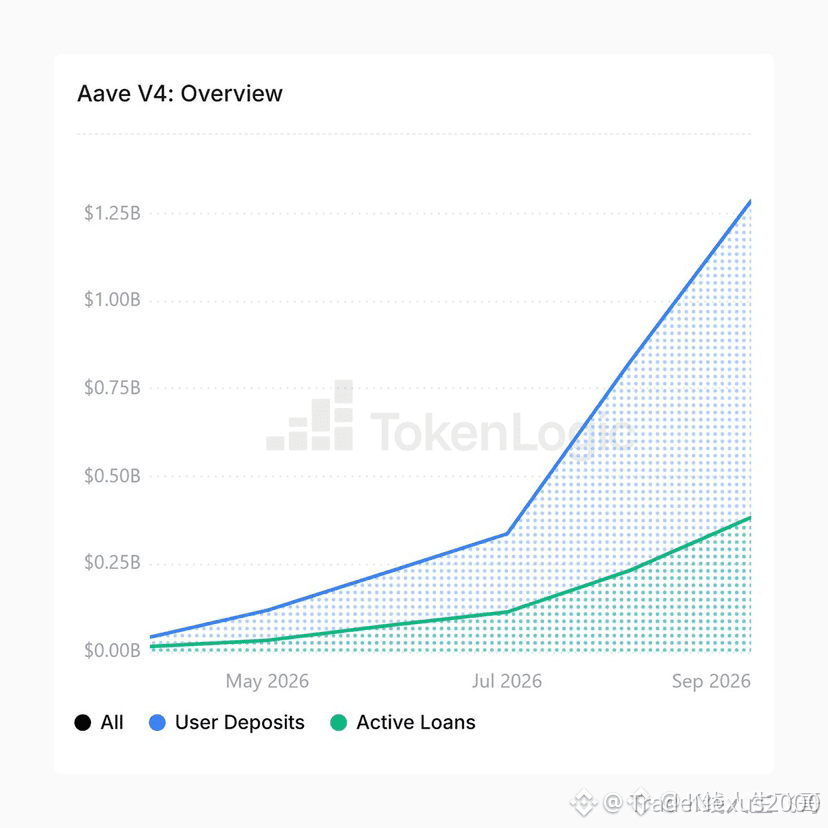
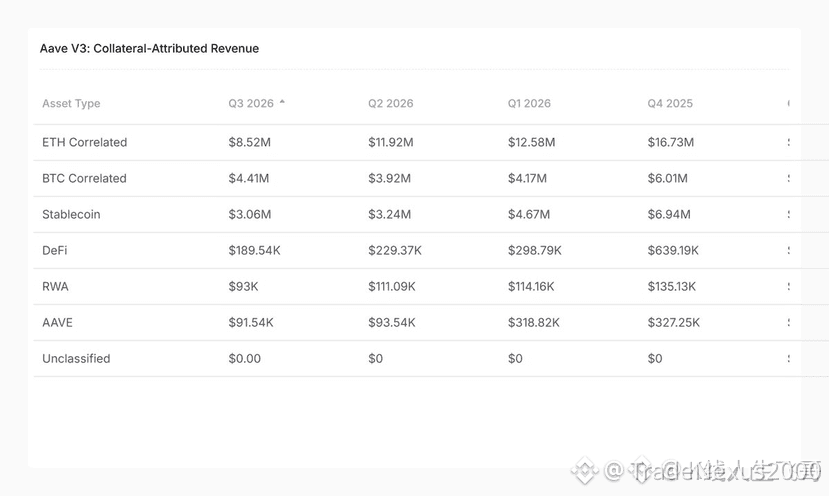
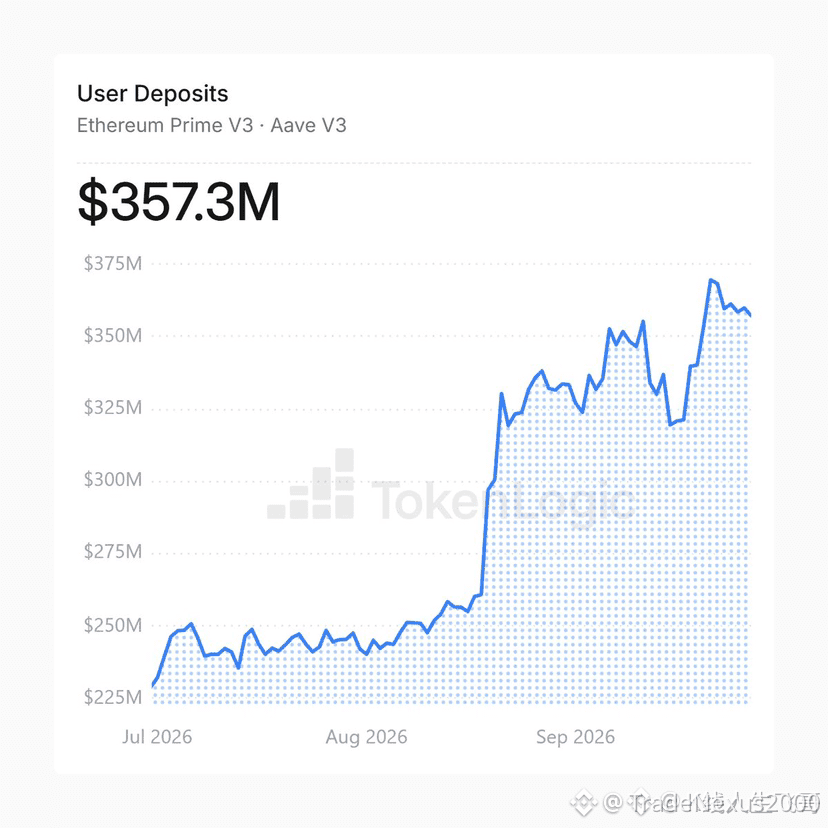
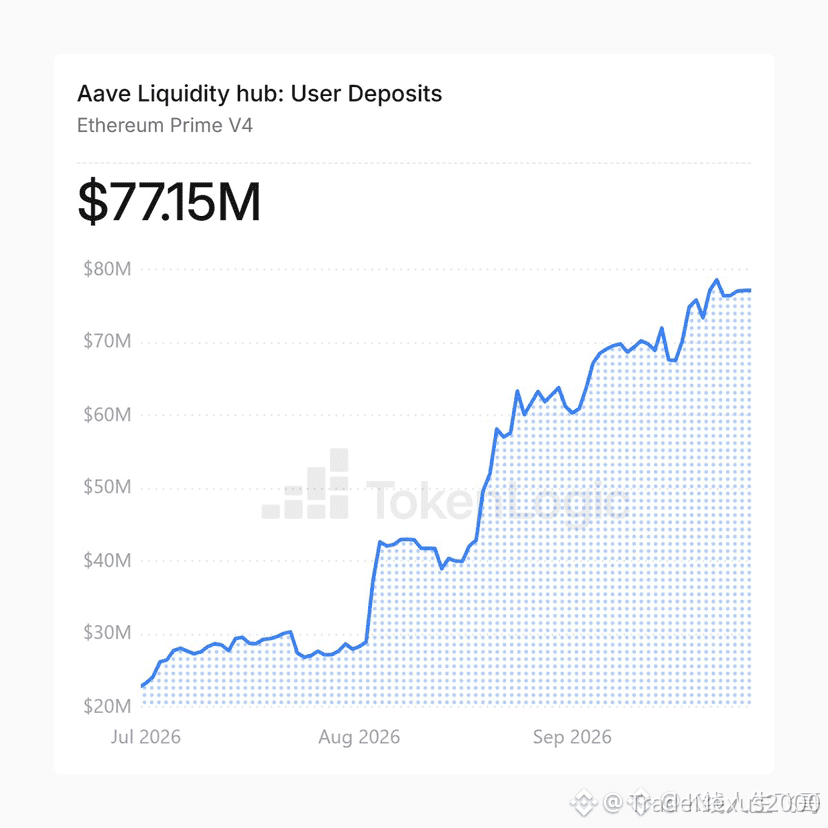
Smart money accumulation is visible in $AAVE TokenLogic Q3 metrics. V4 deposits exploded 5.6x to $1.29B while active loans reached $380M, signaling legitimate institutional borrowing demand rather than simple yield farming. 📊
Crucially, V4 expansion is not cannibalizing V3 liquidity. Prime V4 revenue surged to $77M alongside Prime V3 climbing to $357M, complemented by steady growth in BTC collateral revenue at $4.41M. 💡 This dual-engine protocol scaling builds a structural floor capable of driving long-term valuation expansion toward a $10B market cap. 💬 Is $AAVE setting up to dominate the entire DeFi lending sector this cycle? 👇
⚠️ Not financial advice. Always manage your risk. 🛡️
🏷️ #AAVE #DeFi #Crypto #MarketStructure
🎯 🦈
🚨 $AAVE DEMONSTRATES INSTITUTIONAL EXPANSION AS DEPOSITS AND REVENUE SURGE ACROSS V3 AND V4! 🦈
Smart money accumulation is visible in $AAVE TokenLogic Q3 metrics. V4 deposits exploded 5.6x to $1.29B while active loans reached $380M, signaling legitimate institutional borrowing demand rather than simple yield farming. 📊
Crucially, V4 expansion is not cannibalizing V3 liquidity. Prime V4 revenue surged to $77M alongside Prime V3 climbing to $357M, complemented by steady growth in BTC collateral revenue at $4.41M. 💡 This dual-engine protocol scaling builds a structural floor capable of driving long-term valuation expansion toward a $10B market cap. 💬 Is $AAVE setting up to dominate the entire DeFi lending sector this cycle? 👇
⚠️ Not financial advice. Always manage your risk. 🛡️
🏷️ #AAVE #DeFi #Crypto #MarketStructure
🎯 🦈
Smart money accumulation is visible in $AAVE TokenLogic Q3 metrics. V4 deposits exploded 5.6x to $1.29B while active loans reached $380M, signaling legitimate institutional borrowing demand rather than simple yield farming. 📊
Crucially, V4 expansion is not cannibalizing V3 liquidity. Prime V4 revenue surged to $77M alongside Prime V3 climbing to $357M, complemented by steady growth in BTC collateral revenue at $4.41M. 💡 This dual-engine protocol scaling builds a structural floor capable of driving long-term valuation expansion toward a $10B market cap. 💬 Is $AAVE setting up to dominate the entire DeFi lending sector this cycle? 👇
⚠️ Not financial advice. Always manage your risk. 🛡️
🏷️ #AAVE #DeFi #Crypto #MarketStructure
🎯 🦈
17

·
--
THORChain under fire for processing stolen Bitget assets.
Bitget confirmed on September 25 that $387.5 million reached attacker addresses, up from $351.6 million after Zcash and Tron assets were added.
CEO Gracy Chen asked THORChain on September 26 to refuse service to those addresses, saying “decentralization is a design principle, not a shield for facilitating known stolen funds.”
THORChain replied it is decentralized and permissionless like Bitcoin, Ethereum and BNB Chain, and asked what responsibility those networks would bear.
Bitget’s public tracker lists 2,377 attacker addresses holding $378 million, with 1,497 moving funds through THORChain for cross‑chain swaps.
Security researcher Taylor Monahan debated that screening transactions is equivalent to censorship; the discussion cited a May halt after a $10.7 million exploit that paused trading for five weeks.
Bitget offered 5 % bounties on frozen and recovered funds and announced phased withdrawals, with BTC restarting on September 28 at 08:00 UTC.
Should permissionless protocols intervene when known stolen assets flow through them?
#Crypto #DeFi #CrossChain #Security
THORChain under fire for processing stolen Bitget assets.
Bitget confirmed on September 25 that $387.5 million reached attacker addresses, up from $351.6 million after Zcash and Tron assets were added.
CEO Gracy Chen asked THORChain on September 26 to refuse service to those addresses, saying “decentralization is a design principle, not a shield for facilitating known stolen funds.”
THORChain replied it is decentralized and permissionless like Bitcoin, Ethereum and BNB Chain, and asked what responsibility those networks would bear.
Bitget’s public tracker lists 2,377 attacker addresses holding $378 million, with 1,497 moving funds through THORChain for cross‑chain swaps.
Security researcher Taylor Monahan debated that screening transactions is equivalent to censorship; the discussion cited a May halt after a $10.7 million exploit that paused trading for five weeks.
Bitget offered 5 % bounties on frozen and recovered funds and announced phased withdrawals, with BTC restarting on September 28 at 08:00 UTC.
Should permissionless protocols intervene when known stolen assets flow through them?
#Crypto #DeFi #CrossChain #Security
Bitget confirmed on September 25 that $387.5 million reached attacker addresses, up from $351.6 million after Zcash and Tron assets were added.
CEO Gracy Chen asked THORChain on September 26 to refuse service to those addresses, saying “decentralization is a design principle, not a shield for facilitating known stolen funds.”
THORChain replied it is decentralized and permissionless like Bitcoin, Ethereum and BNB Chain, and asked what responsibility those networks would bear.
Bitget’s public tracker lists 2,377 attacker addresses holding $378 million, with 1,497 moving funds through THORChain for cross‑chain swaps.
Security researcher Taylor Monahan debated that screening transactions is equivalent to censorship; the discussion cited a May halt after a $10.7 million exploit that paused trading for five weeks.
Bitget offered 5 % bounties on frozen and recovered funds and announced phased withdrawals, with BTC restarting on September 28 at 08:00 UTC.
Should permissionless protocols intervene when known stolen assets flow through them?
#Crypto #DeFi #CrossChain #Security
534

·
--
You deposit 2 tokens into a liquidity pool.But you shouldn’t think of your LP position as “those same 2 tokens sitting there.”
This is one of the easiest parts of DeFi to misunderstand.
When you provide liquidity to a STON.fi pool, your position represents a share of the pool.
And that pool keeps changing.
Traders swap.
Token balances change.
Fees accumulate.
The value and composition of your position can change.
Think about your LP position in 3 layers:
SHARE
Your percentage of the pool.
INVENTORY
The assets currently represented by your share.
VALUE
What that position is worth right now.
Share ≠ Inventory ≠ Value
That distinction matters.
When you withdraw liquidity, you aren't necessarily getting back the exact token amounts you deposited.
You're receiving the assets represented by your current share of the pool.
So LPing isn't simply:
“I deposit these tokens and get the same tokens back.”
It's:
“I own a share of a pool that changes as people trade.”
That changing pool is also why LPs need to understand fees, price movements, and impermanent loss before judging their returns.
So don't only ask:
“What am I depositing?”
Ask:
“What does my share represent as the pool changes?”
Once you understand that, LP tokens stop looking like a receipt.
They start looking like what they really are: a representation of your share in a changing pool.
What part of LPing was most confusing when you first started?
$GRAM
#DeFi #Liquidity #STONfi #DEX
You deposit 2 tokens into a liquidity pool.
But you shouldn’t think of your LP position as “those same 2 tokens sitting there.”
This is one of the easiest parts of DeFi to misunderstand.
When you provide liquidity to a STON.fi pool, your position represents a share of the pool.
And that pool keeps changing.
Traders swap.
Token balances change.
Fees accumulate.
The value and composition of your position can change.
Think about your LP position in 3 layers:
SHARE
Your percentage of the pool.
INVENTORY
The assets currently represented by your share.
VALUE
What that position is worth right now.
Share ≠ Inventory ≠ Value
That distinction matters.
When you withdraw liquidity, you aren't necessarily getting back the exact token amounts you deposited.
You're receiving the assets represented by your current share of the pool.
So LPing isn't simply:
“I deposit these tokens and get the same tokens back.”
It's:
“I own a share of a pool that changes as people trade.”
That changing pool is also why LPs need to understand fees, price movements, and impermanent loss before judging their returns.
So don't only ask:
“What am I depositing?”
Ask:
“What does my share represent as the pool changes?”
Once you understand that, LP tokens stop looking like a receipt.
They start looking like what they really are: a representation of your share in a changing pool.
What part of LPing was most confusing when you first started?
$GRAM
#DeFi #Liquidity #STONfi #DEX
This is one of the easiest parts of DeFi to misunderstand.
When you provide liquidity to a STON.fi pool, your position represents a share of the pool.
And that pool keeps changing.
Traders swap.
Token balances change.
Fees accumulate.
The value and composition of your position can change.
Think about your LP position in 3 layers:
SHARE
Your percentage of the pool.
INVENTORY
The assets currently represented by your share.
VALUE
What that position is worth right now.
Share ≠ Inventory ≠ Value
That distinction matters.
When you withdraw liquidity, you aren't necessarily getting back the exact token amounts you deposited.
You're receiving the assets represented by your current share of the pool.
So LPing isn't simply:
“I deposit these tokens and get the same tokens back.”
It's:
“I own a share of a pool that changes as people trade.”
That changing pool is also why LPs need to understand fees, price movements, and impermanent loss before judging their returns.
So don't only ask:
“What am I depositing?”
Ask:
“What does my share represent as the pool changes?”
Once you understand that, LP tokens stop looking like a receipt.
They start looking like what they really are: a representation of your share in a changing pool.
What part of LPing was most confusing when you first started?
$GRAM
#DeFi #Liquidity #STONfi #DEX
206
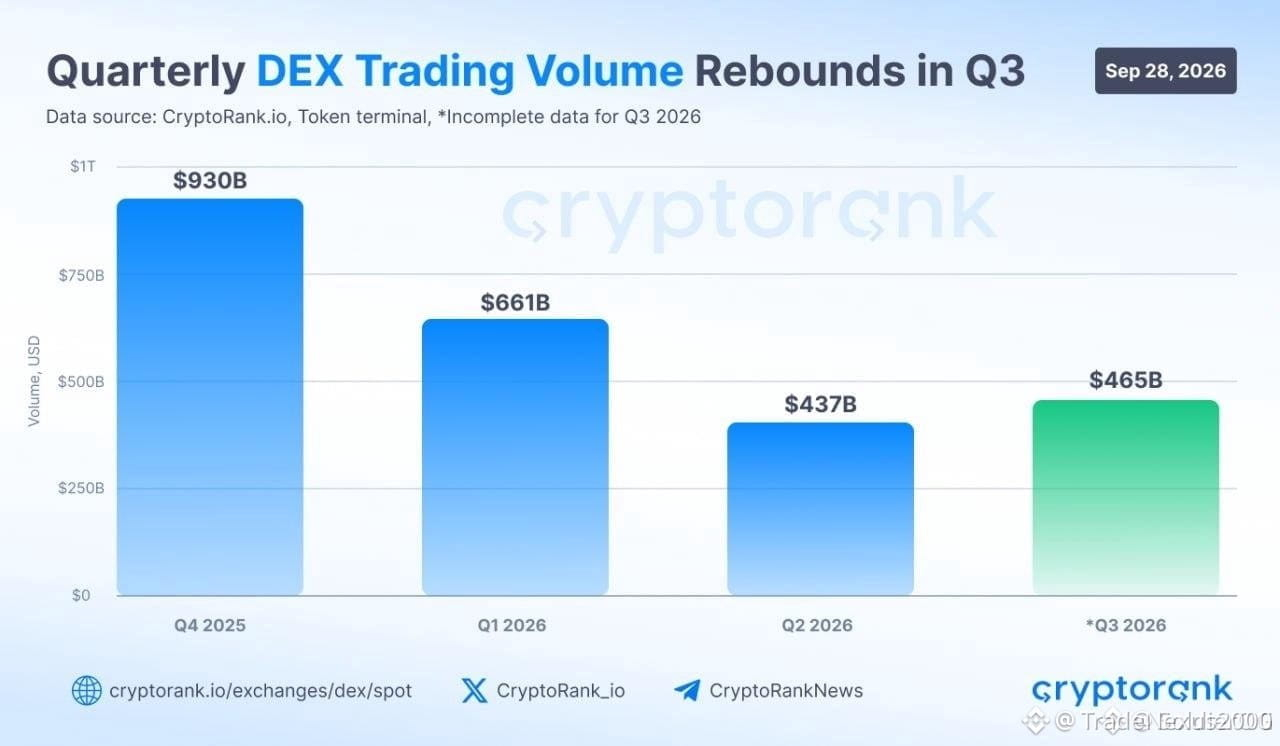
🚨 DEX SPOT VOLUME SURGES TO $465B AS LIQUIDITY SHIFTS ACROSS $QNT AND DEFI 📊
DEX spot volume printed a massive $465 billion in Q3, representing a 6% uptick driven largely by a single chain contributing $53 billion in fresh flow. 📊 Smart money observes this liquidity concentration closely to determine whether this structural influx signals broad-based DeFi accumulation or isolated order flow expansion.
When institutional volume concentrates within specific execution venues, smart money tracks whether surrounding infrastructure assets like $QNT and $HBAR absorb secondary liquidity. 🔍 If structural support holds across key order blocks, this volume spike could validate a sustained regime shift rather than a temporary liquidity sweep.
💬 Do you view this Q3 DEX volume expansion as systemic DeFi expansion or single-chain structural noise? 👇
⚠️ Not financial advice. Always manage your risk. 🛡️
🏷️ #QNT #HBAR #DeFi #MarketStructure #Crypto
🎯 🦈
🚨 DEX SPOT VOLUME SURGES TO $465B AS LIQUIDITY SHIFTS ACROSS $QNT AND DEFI 📊
DEX spot volume printed a massive $465 billion in Q3, representing a 6% uptick driven largely by a single chain contributing $53 billion in fresh flow. 📊 Smart money observes this liquidity concentration closely to determine whether this structural influx signals broad-based DeFi accumulation or isolated order flow expansion.
When institutional volume concentrates within specific execution venues, smart money tracks whether surrounding infrastructure assets like $QNT and $HBAR absorb secondary liquidity. 🔍 If structural support holds across key order blocks, this volume spike could validate a sustained regime shift rather than a temporary liquidity sweep.
💬 Do you view this Q3 DEX volume expansion as systemic DeFi expansion or single-chain structural noise? 👇
⚠️ Not financial advice. Always manage your risk. 🛡️
🏷️ #QNT #HBAR #DeFi #MarketStructure #Crypto
🎯 🦈
DEX spot volume printed a massive $465 billion in Q3, representing a 6% uptick driven largely by a single chain contributing $53 billion in fresh flow. 📊 Smart money observes this liquidity concentration closely to determine whether this structural influx signals broad-based DeFi accumulation or isolated order flow expansion.
When institutional volume concentrates within specific execution venues, smart money tracks whether surrounding infrastructure assets like $QNT and $HBAR absorb secondary liquidity. 🔍 If structural support holds across key order blocks, this volume spike could validate a sustained regime shift rather than a temporary liquidity sweep.
💬 Do you view this Q3 DEX volume expansion as systemic DeFi expansion or single-chain structural noise? 👇
⚠️ Not financial advice. Always manage your risk. 🛡️
🏷️ #QNT #HBAR #DeFi #MarketStructure #Crypto
🎯 🦈
171

·
--
Every DeFi protocol has a question nobody asks until it's too late: when losses exceed collateral, who pays?
Most people evaluate protocols by APY or TVL. The sharper question is the loss waterfall - what happens when a liquidation cascade pushes debt beyond what the collateral can cover.
TradFi solved this a century ago. Clearinghouses run layered loss waterfalls: member contributions first, then the clearing fund, then shared assessments across members. DeFi rebuilt the same machinery with code instead of committees.
The layers worth knowing:
- Insurance funds, filled by a cut of liquidation penalties and trading fees
- Safety modules and treasuries that can be tapped, or staked, as a backstop
- Socialized losses as the last resort: bad debt spread across lenders and depositors, a silent haircut nobody voted for
A perp exchange with a thin insurance fund and heavy open interest is making a promise to future depositors it may not keep. Auto-deleveraging - force-closing profitable positions when the fund runs dry - is honest, but painful.
The real tell is history, not marketing: did the protocol ever leave lenders with bad debt, and did it publish that fact?
TVL measures deposits. The loss waterfall measures whether the deposit was ever safe.
Watch insurance fund size relative to open interest, how liquidation penalties are split, and how past shortfalls were handled. In stress, "who eats the loss" is the only line that separates durable protocols from ticking ones.
$ETH $SOL $AVAX
#DeFi #Crypto #RiskManagement #OnChain #CryptoInsight
Every DeFi protocol has a question nobody asks until it's too late: when losses exceed collateral, who pays?
Most people evaluate protocols by APY or TVL. The sharper question is the loss waterfall - what happens when a liquidation cascade pushes debt beyond what the collateral can cover.
TradFi solved this a century ago. Clearinghouses run layered loss waterfalls: member contributions first, then the clearing fund, then shared assessments across members. DeFi rebuilt the same machinery with code instead of committees.
The layers worth knowing:
- Insurance funds, filled by a cut of liquidation penalties and trading fees
- Safety modules and treasuries that can be tapped, or staked, as a backstop
- Socialized losses as the last resort: bad debt spread across lenders and depositors, a silent haircut nobody voted for
A perp exchange with a thin insurance fund and heavy open interest is making a promise to future depositors it may not keep. Auto-deleveraging - force-closing profitable positions when the fund runs dry - is honest, but painful.
The real tell is history, not marketing: did the protocol ever leave lenders with bad debt, and did it publish that fact?
TVL measures deposits. The loss waterfall measures whether the deposit was ever safe.
Watch insurance fund size relative to open interest, how liquidation penalties are split, and how past shortfalls were handled. In stress, "who eats the loss" is the only line that separates durable protocols from ticking ones.
$ETH $SOL $AVAX
#DeFi #Crypto #RiskManagement #OnChain #CryptoInsight
Most people evaluate protocols by APY or TVL. The sharper question is the loss waterfall - what happens when a liquidation cascade pushes debt beyond what the collateral can cover.
TradFi solved this a century ago. Clearinghouses run layered loss waterfalls: member contributions first, then the clearing fund, then shared assessments across members. DeFi rebuilt the same machinery with code instead of committees.
The layers worth knowing:
- Insurance funds, filled by a cut of liquidation penalties and trading fees
- Safety modules and treasuries that can be tapped, or staked, as a backstop
- Socialized losses as the last resort: bad debt spread across lenders and depositors, a silent haircut nobody voted for
A perp exchange with a thin insurance fund and heavy open interest is making a promise to future depositors it may not keep. Auto-deleveraging - force-closing profitable positions when the fund runs dry - is honest, but painful.
The real tell is history, not marketing: did the protocol ever leave lenders with bad debt, and did it publish that fact?
TVL measures deposits. The loss waterfall measures whether the deposit was ever safe.
Watch insurance fund size relative to open interest, how liquidation penalties are split, and how past shortfalls were handled. In stress, "who eats the loss" is the only line that separates durable protocols from ticking ones.
$ETH $SOL $AVAX
#DeFi #Crypto #RiskManagement #OnChain #CryptoInsight
138

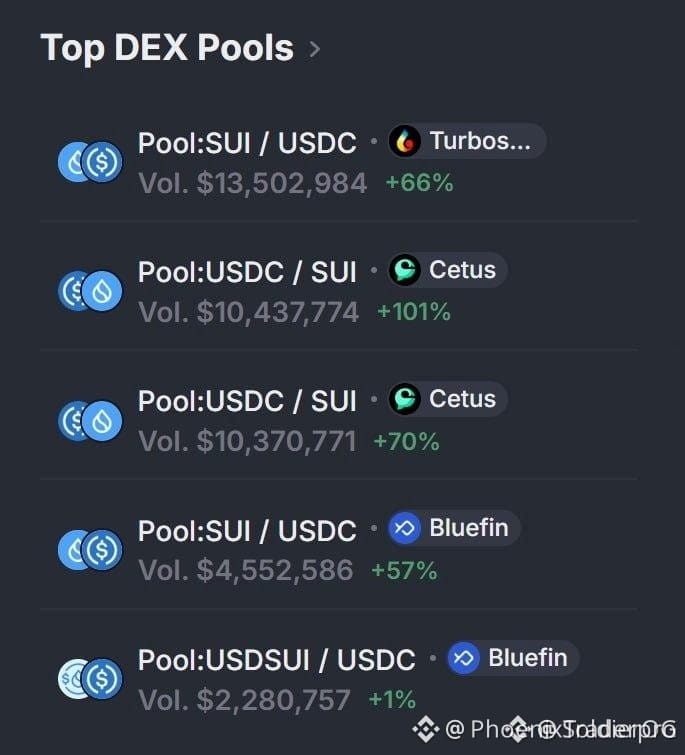
🚨 $SUI DEFI EXPLODES AS TOP DEX POOLS CROSS $41M IN DAILY VOLUME! ⚡
Order flow across $SUI protocols is heating up fast, with the top five liquidity pools pulling in over $41 million in volume today. 📊 Capital is aggressively rotating into the ecosystem as liquidity providers absorb massive trading velocity.
While momentum traders are bidding the expansion, sharp eyes are watching for volatility as short-term retests unfold. 🔍 Sustaining this volume threshold is critical to converting this liquidity surge into a multi-week continuation.
💬 Which $SUI DEX are you using to capture this yield, and how will this volume surge shape the near-term trend? 👇
⚠️ Not financial advice. Always manage your risk. 🛡️
🏷️ #SUI #DeFi #Altcoins #Crypto
🔥 💎
🚨 $SUI DEFI EXPLODES AS TOP DEX POOLS CROSS $41M IN DAILY VOLUME! ⚡
Order flow across $SUI protocols is heating up fast, with the top five liquidity pools pulling in over $41 million in volume today. 📊 Capital is aggressively rotating into the ecosystem as liquidity providers absorb massive trading velocity.
While momentum traders are bidding the expansion, sharp eyes are watching for volatility as short-term retests unfold. 🔍 Sustaining this volume threshold is critical to converting this liquidity surge into a multi-week continuation.
💬 Which $SUI DEX are you using to capture this yield, and how will this volume surge shape the near-term trend? 👇
⚠️ Not financial advice. Always manage your risk. 🛡️
🏷️ #SUI #DeFi #Altcoins #Crypto
🔥 💎
Order flow across $SUI protocols is heating up fast, with the top five liquidity pools pulling in over $41 million in volume today. 📊 Capital is aggressively rotating into the ecosystem as liquidity providers absorb massive trading velocity.
While momentum traders are bidding the expansion, sharp eyes are watching for volatility as short-term retests unfold. 🔍 Sustaining this volume threshold is critical to converting this liquidity surge into a multi-week continuation.
💬 Which $SUI DEX are you using to capture this yield, and how will this volume surge shape the near-term trend? 👇
⚠️ Not financial advice. Always manage your risk. 🛡️
🏷️ #SUI #DeFi #Altcoins #Crypto
🔥 💎
128

HYPE, ARB & AAVE: DeFi and Layer-2 Tokens Face a Risk-Off Session
HYPE is trading near $88.11, down approximately 4.0% over the latest 24-hour session. After reaching a high near $92.12, the token moved lower toward $86.80, signaling active profit-taking while trading activity remains substantial.
ARB is changing hands around $0.2033, lower by roughly 11.9% in 24 hours. The decline from its $0.2309 session high to a low near $0.1997 reflects sharper pressure across the Layer-2 segment, with ARB currently trading closer to the lower end of its range.
AAVE is trading near $148.22, down around 4.2% over the same period after moving between $144.01 and $156.35. AAVE has shown a more contained pullback than ARB, but the retreat from its intraday high indicates that DeFi sentiment remains cautious.
Overall, ARB is seeing the deepest downside move, while HYPE and AAVE are experiencing more moderate corrections. The current session points to selective risk reduction across DeFi and infrastructure-related assets, with liquidity remaining active despite the weaker price tone.
#Hyperliquid #Arbitrum #Aave #DeFi #CryptoMarket
$HYPE
{spot}(HYPEUSDT)
$ARB
{spot}(ARBUSDT)
$AAVE
{spot}(AAVEUSDT)
HYPE, ARB & AAVE: DeFi and Layer-2 Tokens Face a Risk-Off Session
HYPE is trading near $88.11, down approximately 4.0% over the latest 24-hour session. After reaching a high near $92.12, the token moved lower toward $86.80, signaling active profit-taking while trading activity remains substantial.
ARB is changing hands around $0.2033, lower by roughly 11.9% in 24 hours. The decline from its $0.2309 session high to a low near $0.1997 reflects sharper pressure across the Layer-2 segment, with ARB currently trading closer to the lower end of its range.
AAVE is trading near $148.22, down around 4.2% over the same period after moving between $144.01 and $156.35. AAVE has shown a more contained pullback than ARB, but the retreat from its intraday high indicates that DeFi sentiment remains cautious.
Overall, ARB is seeing the deepest downside move, while HYPE and AAVE are experiencing more moderate corrections. The current session points to selective risk reduction across DeFi and infrastructure-related assets, with liquidity remaining active despite the weaker price tone.
#Hyperliquid #Arbitrum #Aave #DeFi #CryptoMarket
$HYPE
$ARB
$AAVE
HYPE is trading near $88.11, down approximately 4.0% over the latest 24-hour session. After reaching a high near $92.12, the token moved lower toward $86.80, signaling active profit-taking while trading activity remains substantial.
ARB is changing hands around $0.2033, lower by roughly 11.9% in 24 hours. The decline from its $0.2309 session high to a low near $0.1997 reflects sharper pressure across the Layer-2 segment, with ARB currently trading closer to the lower end of its range.
AAVE is trading near $148.22, down around 4.2% over the same period after moving between $144.01 and $156.35. AAVE has shown a more contained pullback than ARB, but the retreat from its intraday high indicates that DeFi sentiment remains cautious.
Overall, ARB is seeing the deepest downside move, while HYPE and AAVE are experiencing more moderate corrections. The current session points to selective risk reduction across DeFi and infrastructure-related assets, with liquidity remaining active despite the weaker price tone.
#Hyperliquid #Arbitrum #Aave #DeFi #CryptoMarket
$HYPE
$ARB
$AAVE
34

·
--
Bullish
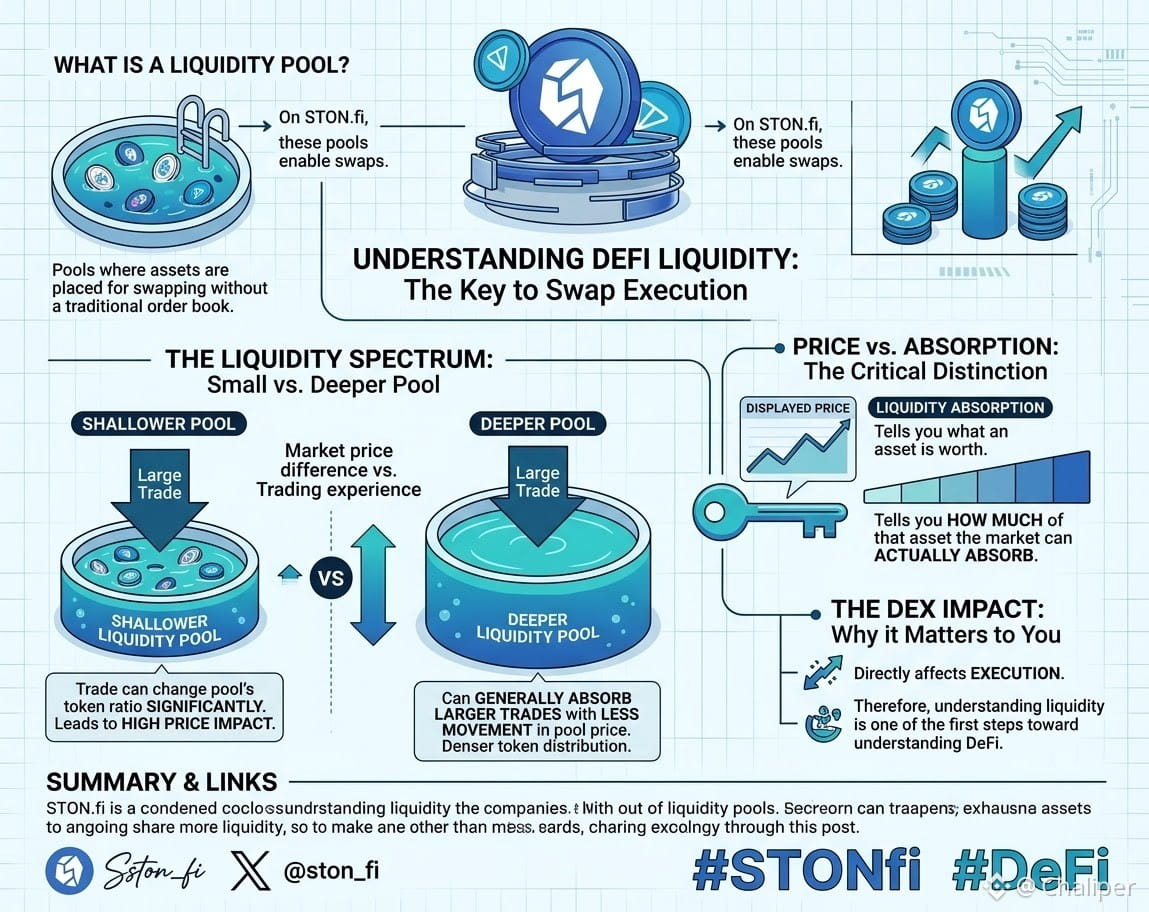
Why can a swap move the price so much?
The answer often starts with liquidity.
On an AMM, trades interact with liquidity pools instead of a traditional order book.
The deeper the pool, the more trading activity it can generally absorb before the pool price moves significantly.
When liquidity is low, even a relatively small trade can change the asset ratio inside the pool. That can create higher price impact.
This is why checking the token price alone is not enough.
Before making a swap, it is useful to understand the liquidity behind that market and how your trade could affect execution.
Liquidity is not just a number.
It is part of the market structure that determines how a DEX trade behaves.
@stonfi
#DeFi #DEX #TON #STONfi
Why can a swap move the price so much?
The answer often starts with liquidity.
On an AMM, trades interact with liquidity pools instead of a traditional order book.
The deeper the pool, the more trading activity it can generally absorb before the pool price moves significantly.
When liquidity is low, even a relatively small trade can change the asset ratio inside the pool. That can create higher price impact.
This is why checking the token price alone is not enough.
Before making a swap, it is useful to understand the liquidity behind that market and how your trade could affect execution.
Liquidity is not just a number.
It is part of the market structure that determines how a DEX trade behaves.
@STONfi DEX
#DeFi #DEX #TON #STONfi
The answer often starts with liquidity.
On an AMM, trades interact with liquidity pools instead of a traditional order book.
The deeper the pool, the more trading activity it can generally absorb before the pool price moves significantly.
When liquidity is low, even a relatively small trade can change the asset ratio inside the pool. That can create higher price impact.
This is why checking the token price alone is not enough.
Before making a swap, it is useful to understand the liquidity behind that market and how your trade could affect execution.
Liquidity is not just a number.
It is part of the market structure that determines how a DEX trade behaves.
@STONfi DEX
#DeFi #DEX #TON #STONfi
1
52

·
--
Article
To view keyboard shortcuts, press question markTo view keyboard shortcuts, press question mark
View keyboard shortcuts
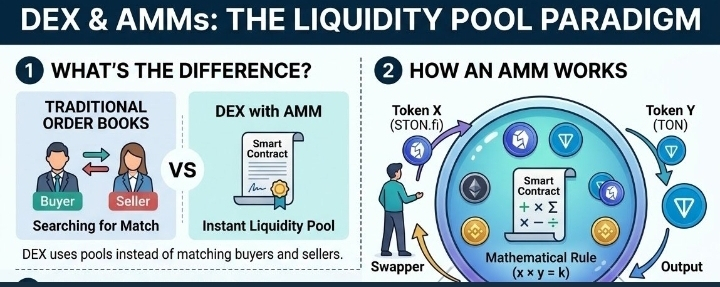
What an AMM Actually Does Behind a DEX Swap
Khalifa Bagan
@Khalifabagan
·
5h
Most people see a swap button.
They choose a token, enter an amount, check the estimated output, and confirm the transaction.
What they do not always see is the market mechanism working underneath that simple interface.
That mechanism is the Automated Market Maker, or AMM.
Why DEXs need a different market structure
Traditional exchanges commonly use order books.
A buyer places an order.
A seller places an order.
The exchange matches those orders.
A decentralized exchange can work differently.
Instead of depending on a central order book, an AMM uses liquidity pools and smart contracts to make assets available for trading.
STON.fi is built around this model as a non custodial AMM protocol on TON. Users can connect their wallets and swap through smart contracts without transferring their funds to a central custodian.
The difference is not simply where the exchange operates.
It is how liquidity is organized.
The liquidity pool is the market
Think of a liquidity pool as a smart contract holding two assets.
For example, a pool could contain Token A and Token B.
When a user swaps Token A for Token B, the quantities of both assets inside the pool change.
That changes the ratio between them.
And when the ratio changes, the price changes.
This is the core idea behind automated market making.
There is no need for another individual trader to be waiting on the opposite side of your transaction.
The liquidity is already there.
The formula behind the classic model
The classic constant product AMM can be represented as:
x × y = k
Here, x represents the quantity of one token in the pool.
y represents the quantity of the other token.
k represents the pool's constant.
When a swap happens, the quantities change while the mechanism maintains the relationship.
The formula is useful, but the bigger idea is more important.
The pool itself provides the liquidity against which users trade.
That is what allows decentralized markets to function without a traditional order book.
Why liquidity depth matters
This is where AMMs connect directly to something every trader should understand: price impact.
Imagine a small liquidity pool.
A relatively large trade enters that pool and removes a significant amount of one asset.
The balance changes substantially.
The pool price moves.
Now imagine the same trade happening against a much deeper pool.
The same transaction represents a smaller percentage of the available liquidity, so the pool can generally absorb it with less movement in price.
This is why a token's displayed price does not tell the entire story.
Liquidity matters.
A market can show an attractive price while still having insufficient depth for a large transaction.
Not every liquidity pool works the same way
Another important point is that AMMs are not limited to one pool design.
STON.fi currently supports several pool types, including Constant Product, Weighted, Stable, and WStable pools.
Constant Product pools are the classic model for general token pairs.
Stable pools are designed for assets that are expected to trade at similar prices, such as stablecoins or wrapped versions of the same asset.
Weighted pools allow custom weights between assets.
WStable combines the stable curve approach with custom weights.
The reason this matters is simple.
Different assets behave differently.
A pair of volatile assets does not necessarily need the same pricing curve as two assets designed to remain close in value.
The pool design can therefore influence how liquidity behaves during swaps.
Where liquidity providers fit in
AMMs also create another important role in the market.
Liquidity providers supply assets to the pools.
In return, they receive a share of the pool and can earn a portion of swap fees generated by activity in that pool. STON.fi documentation explains that LP positions accrue fees as users trade through the pool.
This creates a simple relationship.
Traders need liquidity.
Liquidity providers supply liquidity.
The AMM provides the mechanism connecting the two.
The bigger picture
An AMM is therefore much more than a formula.
It is a different way of organizing a market.
Instead of relying entirely on an order book and a centralized matching engine, liquidity can be placed into pools and accessed directly through smart contracts.
Once you understand that, several other DeFi concepts become easier to understand.
Liquidity.
Price impact.
Slippage.
Liquidity provision.
Swap fees.
Impermanent loss.
They are not isolated concepts.
They are connected to the way the underlying market mechanism works.
The next time you press Swap on a DEX, remember that the interface is only showing you the final step.
Behind that button is a liquidity pool.
Behind the pool is a pricing mechanism.
And behind that mechanism is the architecture that makes decentralized trading possible.
@ston_fi
#STONfi #DeFi #TON
To view keyboard shortcuts, press question mark
To view keyboard shortcuts, press question mark
View keyboard shortcuts
What an AMM Actually Does Behind a DEX Swap
Khalifa Bagan
@Khalifabagan
·
5h
Most people see a swap button.
They choose a token, enter an amount, check the estimated output, and confirm the transaction.
What they do not always see is the market mechanism working underneath that simple interface.
That mechanism is the Automated Market Maker, or AMM.
Why DEXs need a different market structure
Traditional exchanges commonly use order books.
A buyer places an order.
A seller places an order.
The exchange matches those orders.
A decentralized exchange can work differently.
Instead of depending on a central order book, an AMM uses liquidity pools and smart contracts to make assets available for trading.
STON.fi is built around this model as a non custodial AMM protocol on TON. Users can connect their wallets and swap through smart contracts without transferring their funds to a central custodian.
The difference is not simply where the exchange operates.
It is how liquidity is organized.
The liquidity pool is the market
Think of a liquidity pool as a smart contract holding two assets.
For example, a pool could contain Token A and Token B.
When a user swaps Token A for Token B, the quantities of both assets inside the pool change.
That changes the ratio between them.
And when the ratio changes, the price changes.
This is the core idea behind automated market making.
There is no need for another individual trader to be waiting on the opposite side of your transaction.
The liquidity is already there.
The formula behind the classic model
The classic constant product AMM can be represented as:
x × y = k
Here, x represents the quantity of one token in the pool.
y represents the quantity of the other token.
k represents the pool's constant.
When a swap happens, the quantities change while the mechanism maintains the relationship.
The formula is useful, but the bigger idea is more important.
The pool itself provides the liquidity against which users trade.
That is what allows decentralized markets to function without a traditional order book.
Why liquidity depth matters
This is where AMMs connect directly to something every trader should understand: price impact.
Imagine a small liquidity pool.
A relatively large trade enters that pool and removes a significant amount of one asset.
The balance changes substantially.
The pool price moves.
Now imagine the same trade happening against a much deeper pool.
The same transaction represents a smaller percentage of the available liquidity, so the pool can generally absorb it with less movement in price.
This is why a token's displayed price does not tell the entire story.
Liquidity matters.
A market can show an attractive price while still having insufficient depth for a large transaction.
Not every liquidity pool works the same way
Another important point is that AMMs are not limited to one pool design.
STON.fi currently supports several pool types, including Constant Product, Weighted, Stable, and WStable pools.
Constant Product pools are the classic model for general token pairs.
Stable pools are designed for assets that are expected to trade at similar prices, such as stablecoins or wrapped versions of the same asset.
Weighted pools allow custom weights between assets.
WStable combines the stable curve approach with custom weights.
The reason this matters is simple.
Different assets behave differently.
A pair of volatile assets does not necessarily need the same pricing curve as two assets designed to remain close in value.
The pool design can therefore influence how liquidity behaves during swaps.
Where liquidity providers fit in
AMMs also create another important role in the market.
Liquidity providers supply assets to the pools.
In return, they receive a share of the pool and can earn a portion of swap fees generated by activity in that pool. STON.fi documentation explains that LP positions accrue fees as users trade through the pool.
This creates a simple relationship.
Traders need liquidity.
Liquidity providers supply liquidity.
The AMM provides the mechanism connecting the two.
The bigger picture
An AMM is therefore much more than a formula.
It is a different way of organizing a market.
Instead of relying entirely on an order book and a centralized matching engine, liquidity can be placed into pools and accessed directly through smart contracts.
Once you understand that, several other DeFi concepts become easier to understand.
Liquidity.
Price impact.
Slippage.
Liquidity provision.
Swap fees.
Impermanent loss.
They are not isolated concepts.
They are connected to the way the underlying market mechanism works.
The next time you press Swap on a DEX, remember that the interface is only showing you the final step.
Behind that button is a liquidity pool.
Behind the pool is a pricing mechanism.
And behind that mechanism is the architecture that makes decentralized trading possible.
@ston_fi
#STONfi #DeFi #TON
View keyboard shortcuts
What an AMM Actually Does Behind a DEX Swap
Khalifa Bagan
@Khalifabagan
·
5h
Most people see a swap button.
They choose a token, enter an amount, check the estimated output, and confirm the transaction.
What they do not always see is the market mechanism working underneath that simple interface.
That mechanism is the Automated Market Maker, or AMM.
Why DEXs need a different market structure
Traditional exchanges commonly use order books.
A buyer places an order.
A seller places an order.
The exchange matches those orders.
A decentralized exchange can work differently.
Instead of depending on a central order book, an AMM uses liquidity pools and smart contracts to make assets available for trading.
STON.fi is built around this model as a non custodial AMM protocol on TON. Users can connect their wallets and swap through smart contracts without transferring their funds to a central custodian.
The difference is not simply where the exchange operates.
It is how liquidity is organized.
The liquidity pool is the market
Think of a liquidity pool as a smart contract holding two assets.
For example, a pool could contain Token A and Token B.
When a user swaps Token A for Token B, the quantities of both assets inside the pool change.
That changes the ratio between them.
And when the ratio changes, the price changes.
This is the core idea behind automated market making.
There is no need for another individual trader to be waiting on the opposite side of your transaction.
The liquidity is already there.
The formula behind the classic model
The classic constant product AMM can be represented as:
x × y = k
Here, x represents the quantity of one token in the pool.
y represents the quantity of the other token.
k represents the pool's constant.
When a swap happens, the quantities change while the mechanism maintains the relationship.
The formula is useful, but the bigger idea is more important.
The pool itself provides the liquidity against which users trade.
That is what allows decentralized markets to function without a traditional order book.
Why liquidity depth matters
This is where AMMs connect directly to something every trader should understand: price impact.
Imagine a small liquidity pool.
A relatively large trade enters that pool and removes a significant amount of one asset.
The balance changes substantially.
The pool price moves.
Now imagine the same trade happening against a much deeper pool.
The same transaction represents a smaller percentage of the available liquidity, so the pool can generally absorb it with less movement in price.
This is why a token's displayed price does not tell the entire story.
Liquidity matters.
A market can show an attractive price while still having insufficient depth for a large transaction.
Not every liquidity pool works the same way
Another important point is that AMMs are not limited to one pool design.
STON.fi currently supports several pool types, including Constant Product, Weighted, Stable, and WStable pools.
Constant Product pools are the classic model for general token pairs.
Stable pools are designed for assets that are expected to trade at similar prices, such as stablecoins or wrapped versions of the same asset.
Weighted pools allow custom weights between assets.
WStable combines the stable curve approach with custom weights.
The reason this matters is simple.
Different assets behave differently.
A pair of volatile assets does not necessarily need the same pricing curve as two assets designed to remain close in value.
The pool design can therefore influence how liquidity behaves during swaps.
Where liquidity providers fit in
AMMs also create another important role in the market.
Liquidity providers supply assets to the pools.
In return, they receive a share of the pool and can earn a portion of swap fees generated by activity in that pool. STON.fi documentation explains that LP positions accrue fees as users trade through the pool.
This creates a simple relationship.
Traders need liquidity.
Liquidity providers supply liquidity.
The AMM provides the mechanism connecting the two.
The bigger picture
An AMM is therefore much more than a formula.
It is a different way of organizing a market.
Instead of relying entirely on an order book and a centralized matching engine, liquidity can be placed into pools and accessed directly through smart contracts.
Once you understand that, several other DeFi concepts become easier to understand.
Liquidity.
Price impact.
Slippage.
Liquidity provision.
Swap fees.
Impermanent loss.
They are not isolated concepts.
They are connected to the way the underlying market mechanism works.
The next time you press Swap on a DEX, remember that the interface is only showing you the final step.
Behind that button is a liquidity pool.
Behind the pool is a pricing mechanism.
And behind that mechanism is the architecture that makes decentralized trading possible.
@ston_fi
#STONfi #DeFi #TON
63

·
--
Article
Liquidity is one of those DeFi concepts that sounds simple untilLiquidity is one of those DeFi concepts that sounds simple until you see what happens without enough of it.
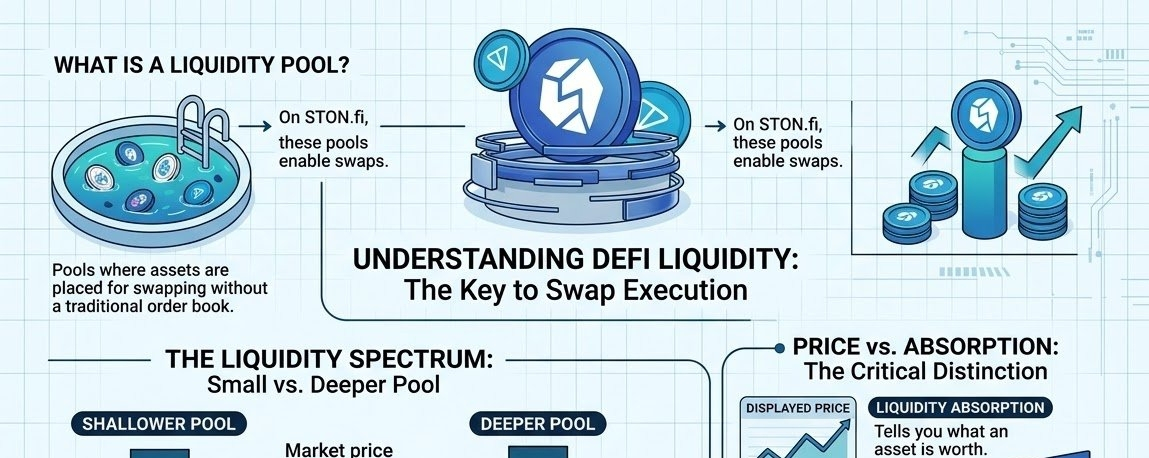
A liquidity pool is where assets are placed so users can swap between them without needing a traditional order book.
On @ston_fi, these pools provide the liquidity that makes swaps possible.
But having liquidity is not enough.
The depth of that liquidity matters.
If a pool is small and someone makes a large swap, that trade can change the pool's token ratio significantly.
That creates higher price impact.
A deeper pool can generally absorb larger trades with less movement in the pool price.
This is why two tokens can have similar market prices but very different trading experiences.
The displayed price tells you what an asset is worth.
Liquidity tells you how much of that asset the market can actually absorb.
For anyone using a DEX, liquidity is therefore not just a number on a dashboard.
It directly affects execution.
And that is why understanding liquidity is one of the first steps toward understanding DeFi.
@ston_fi
#STONfi #DeFi #TON
Liquidity is one of those DeFi concepts that sounds simple until
Liquidity is one of those DeFi concepts that sounds simple until you see what happens without enough of it.
A liquidity pool is where assets are placed so users can swap between them without needing a traditional order book.
On @ston_fi, these pools provide the liquidity that makes swaps possible.
But having liquidity is not enough.
The depth of that liquidity matters.
If a pool is small and someone makes a large swap, that trade can change the pool's token ratio significantly.
That creates higher price impact.
A deeper pool can generally absorb larger trades with less movement in the pool price.
This is why two tokens can have similar market prices but very different trading experiences.
The displayed price tells you what an asset is worth.
Liquidity tells you how much of that asset the market can actually absorb.
For anyone using a DEX, liquidity is therefore not just a number on a dashboard.
It directly affects execution.
And that is why understanding liquidity is one of the first steps toward understanding DeFi.
@ston_fi
#STONfi #DeFi #TON
A liquidity pool is where assets are placed so users can swap between them without needing a traditional order book.
On @ston_fi, these pools provide the liquidity that makes swaps possible.
But having liquidity is not enough.
The depth of that liquidity matters.
If a pool is small and someone makes a large swap, that trade can change the pool's token ratio significantly.
That creates higher price impact.
A deeper pool can generally absorb larger trades with less movement in the pool price.
This is why two tokens can have similar market prices but very different trading experiences.
The displayed price tells you what an asset is worth.
Liquidity tells you how much of that asset the market can actually absorb.
For anyone using a DEX, liquidity is therefore not just a number on a dashboard.
It directly affects execution.
And that is why understanding liquidity is one of the first steps toward understanding DeFi.
@ston_fi
#STONfi #DeFi #TON
50

·
--
Bullish
🌐 STONfi Cross-Chain: One Token In, Another Token Out
A cross-chain swap doesn’t always involve sending the same asset from one network to another.
With STONfi and Omniston, an available route may let you spend Token A on one chain and receive Token B on a different chain.
For example:
Token A → Chain 1
Token B ← Chain 2
🔎 How it works
1️⃣ Pick the source network, token and amount.
2️⃣ Select the destination network and the asset you actually want to receive.
3️⃣ Omniston asks eligible resolvers for quotes.
4️⃣ A resolver supplies liquidity on the destination side.
5️⃣ Settlement mechanisms manage execution or a refund.
💡 Why the quote matters
This is more than a transfer. It’s a cross-network exchange.
The amount you receive may depend on:
• Market prices
• Resolver liquidity
• Fees
• Quote validity
• Execution conditions
So don’t evaluate a route by token numbers alone.
Look at what actually lands in your wallet.
If there’s no quote, that particular token-and-network combination may not have an executable route right now.
The main question is pretty simple:
How much of the asset I want will actually arrive?
🔄 Confirm the destination asset first. Then check what you’ll spend.
Which different-token pair would you try first?
#STONfi #DeFi #TON
$PUMP
{spot}(PUMPUSDT)
🌐 STONfi Cross-Chain: One Token In, Another Token Out
A cross-chain swap doesn’t always involve sending the same asset from one network to another.
With STONfi and Omniston, an available route may let you spend Token A on one chain and receive Token B on a different chain.
For example:
Token A → Chain 1
Token B ← Chain 2
🔎 How it works
1️⃣ Pick the source network, token and amount.
2️⃣ Select the destination network and the asset you actually want to receive.
3️⃣ Omniston asks eligible resolvers for quotes.
4️⃣ A resolver supplies liquidity on the destination side.
5️⃣ Settlement mechanisms manage execution or a refund.
💡 Why the quote matters
This is more than a transfer. It’s a cross-network exchange.
The amount you receive may depend on:
• Market prices
• Resolver liquidity
• Fees
• Quote validity
• Execution conditions
So don’t evaluate a route by token numbers alone.
Look at what actually lands in your wallet.
If there’s no quote, that particular token-and-network combination may not have an executable route right now.
The main question is pretty simple:
How much of the asset I want will actually arrive?
🔄 Confirm the destination asset first. Then check what you’ll spend.
Which different-token pair would you try first?
#STONfi #DeFi #TON
$PUMP
A cross-chain swap doesn’t always involve sending the same asset from one network to another.
With STONfi and Omniston, an available route may let you spend Token A on one chain and receive Token B on a different chain.
For example:
Token A → Chain 1
Token B ← Chain 2
🔎 How it works
1️⃣ Pick the source network, token and amount.
2️⃣ Select the destination network and the asset you actually want to receive.
3️⃣ Omniston asks eligible resolvers for quotes.
4️⃣ A resolver supplies liquidity on the destination side.
5️⃣ Settlement mechanisms manage execution or a refund.
💡 Why the quote matters
This is more than a transfer. It’s a cross-network exchange.
The amount you receive may depend on:
• Market prices
• Resolver liquidity
• Fees
• Quote validity
• Execution conditions
So don’t evaluate a route by token numbers alone.
Look at what actually lands in your wallet.
If there’s no quote, that particular token-and-network combination may not have an executable route right now.
The main question is pretty simple:
How much of the asset I want will actually arrive?
🔄 Confirm the destination asset first. Then check what you’ll spend.
Which different-token pair would you try first?
#STONfi #DeFi #TON
$PUMP
170
·
--
🚨 Restaking yields on ETH have collapsed as top protocols pivot from liquid restaking to neobank ventures, signaling the end of the gold rush. Smart money is shifting focus as yields dry up and risks rise. Is ETH’s restaking era truly over?
#DeFi
$ETH #TradingSignal #CryptoAnalysis
🚨 Restaking yields on ETH have collapsed as top protocols pivot from liquid restaking to neobank ventures, signaling the end of the gold rush. Smart money is shifting focus as yields dry up and risks rise. Is ETH’s restaking era truly over?
#DeFi
$ETH #TradingSignal #CryptoAnalysis
#DeFi
$ETH #TradingSignal #CryptoAnalysis

10
Log in to explore more content
Join global crypto users on Binance Square
⚡️ Get latest and useful information about crypto.
💬 Trusted by the world’s largest crypto exchange.
👍 Discover real insights from verified creators.
Email / Phone number
Trending Topics
1
#NvidiaApproves$150BBuyback
1,516 views
40 Discussing
2
#OpenAIDelaysGPT6.1OverSafetyIssues
7,807 views
327 Discussing
3
#AMDToAcquireWorldLabsFor$8.2B
910 views
36 Discussing
4
#AnthropicIPOProspectusCouldValueItOver$2T
3,217 views
64 Discussing
5
#HackersDrainOver12.4MXRPFromDCENTWallets
20,701 views
469 Discussing
6
#SECSaysDecentralizedTokenBuybacksNotInvestmentContracts
1,873 views
33 Discussing
7
#UKFCAWinsCourtOrderToRecover851400Pounds
76,268 views
1,335 Discussing
8
#ChainlinkLaunchesCCIP2WithEnterpriseVerification
82,570 views
1,456 Discussing
9
#GoldFallsTo$4144
25,478 views
189 Discussing
10
#QNTFallsOver40%FromMorningHigh
136,435 views
1,811 Discussing