

#cryptocompliance
cryptocompliance
340,639 views
636 Discussing
Hot
Latest
🏛️ The Great Regulatory Shift: Is BNB Built to Outlast the New Era ?
While strict global regulations are wiping out speculative noise, they are simultaneously creating a massive moat for utility giants.
Under the new compliance frameworks, tokens need real ecosystems, not hype. Where does BNB stand? Is compliance the ultimate catalyst for institutional adoption, or the biggest hurdle for decentralization ?
💬 Drop your brutal truth in the comments below. Let’s debate ! 👇
#bnb #CryptoRegulation #BinanceSquare #Web3 #CryptoCompliance
$BNB
🏛️ The Great Regulatory Shift: Is BNB Built to Outlast the New Era ?
While strict global regulations are wiping out speculative noise, they are simultaneously creating a massive moat for utility giants.
Under the new compliance frameworks, tokens need real ecosystems, not hype. Where does BNB stand? Is compliance the ultimate catalyst for institutional adoption, or the biggest hurdle for decentralization ?
💬 Drop your brutal truth in the comments below. Let’s debate ! 👇
#bnb #CryptoRegulation #BinanceSquare #Web3 #CryptoCompliance
$BNB
While strict global regulations are wiping out speculative noise, they are simultaneously creating a massive moat for utility giants.
Under the new compliance frameworks, tokens need real ecosystems, not hype. Where does BNB stand? Is compliance the ultimate catalyst for institutional adoption, or the biggest hurdle for decentralization ?
💬 Drop your brutal truth in the comments below. Let’s debate ! 👇
#bnb #CryptoRegulation #BinanceSquare #Web3 #CryptoCompliance
$BNB
1
61

·
--
Chinese version:
> Although the CLARITY Act was defeated, it still leaves "rules" behind! No matter whether you like it or not, encryption advisors still have to obey the new rules. Want to keep playing crypto finance? Compliance is the hard truth!
>
> #监管风暴 #Crypto compliance
> $BTC $ETH
The CLARITY Act may have bit the dust, but regulations still came! Regulatory hammer dropped, love it or not - crypto advisors have to play by the new rules now. Wanna keep playing in the crypto finance game? Compliance is the name of the game!
>
> #RegulatoryUpdate #CryptoCompliance
> $BTC $ETH
Chinese version:
> Although the CLARITY Act was defeated, it still leaves "rules" behind! No matter whether you like it or not, encryption advisors still have to obey the new rules. Want to keep playing crypto finance? Compliance is the hard truth!
>
> #监管风暴 #Crypto compliance
> $BTC $ETH
The CLARITY Act may have bit the dust, but regulations still came! Regulatory hammer dropped, love it or not - crypto advisors have to play by the new rules now. Wanna keep playing in the crypto finance game? Compliance is the name of the game!
>
> #RegulatoryUpdate #CryptoCompliance
> $BTC $ETH
> Although the CLARITY Act was defeated, it still leaves "rules" behind! No matter whether you like it or not, encryption advisors still have to obey the new rules. Want to keep playing crypto finance? Compliance is the hard truth!
>
> #监管风暴 #Crypto compliance
> $BTC $ETH
The CLARITY Act may have bit the dust, but regulations still came! Regulatory hammer dropped, love it or not - crypto advisors have to play by the new rules now. Wanna keep playing in the crypto finance game? Compliance is the name of the game!
>
> #RegulatoryUpdate #CryptoCompliance
> $BTC $ETH
432

#UKFCAOpensCryptoFirmAuthorization 🇬🇧 The UK Financial Conduct Authority (FCA) officially opens the crypto-asset company licensing gateway
The waiting period for regulated digital asset operations in the UK has ended. The Financial Conduct Authority (FCA) has officially begun accepting licensing applications, marking a major milestone in institutional adoption of cryptocurrencies and in protecting consumers.
Top news
Gateway opening: The FCA started accepting licensing applications for crypto-asset firms on 30 September 2026 [26]
Strict deadlines for firms: Companies have until 28 February 2027 to submit their applications in order to operate legally under the new regulatory framework [43]
Application in 2027: This regulated regime will be fully implemented in October 2027, establishing comprehensive and clear rules for crypto-asset activities [2]
Consumer protection: This proactive step is part of the FCA’s ongoing efforts to protect investors, which recently included blocking more than 1,600 websites suspected of promoting unauthorized financial services [41]
📊 Market impact and regulatory environment
Institutional confidence: A clear rule-based pathway reduces regulatory uncertainty.
Please keep following
#CryptoRegulation #DigitalAssets #CryptoCompliance #BinanceSquare
This content is for educational purposes only. Not financial advice (NFA). Always do your own research (DYOR).
$NMR $SKL $AGPUB
#UKFCAOpensCryptoFirmAuthorization 🇬🇧 The UK Financial Conduct Authority (FCA) officially opens the crypto-asset company licensing gateway
The waiting period for regulated digital asset operations in the UK has ended. The Financial Conduct Authority (FCA) has officially begun accepting licensing applications, marking a major milestone in institutional adoption of cryptocurrencies and in protecting consumers.
Top news
Gateway opening: The FCA started accepting licensing applications for crypto-asset firms on 30 September 2026 [26]
Strict deadlines for firms: Companies have until 28 February 2027 to submit their applications in order to operate legally under the new regulatory framework [43]
Application in 2027: This regulated regime will be fully implemented in October 2027, establishing comprehensive and clear rules for crypto-asset activities [2]
Consumer protection: This proactive step is part of the FCA’s ongoing efforts to protect investors, which recently included blocking more than 1,600 websites suspected of promoting unauthorized financial services [41]
📊 Market impact and regulatory environment
Institutional confidence: A clear rule-based pathway reduces regulatory uncertainty.
Please keep following
#CryptoRegulation #DigitalAssets #CryptoCompliance #BinanceSquare
This content is for educational purposes only. Not financial advice (NFA). Always do your own research (DYOR).
$NMR $SKL $AGPUB
The waiting period for regulated digital asset operations in the UK has ended. The Financial Conduct Authority (FCA) has officially begun accepting licensing applications, marking a major milestone in institutional adoption of cryptocurrencies and in protecting consumers.
Top news
Gateway opening: The FCA started accepting licensing applications for crypto-asset firms on 30 September 2026 [26]
Strict deadlines for firms: Companies have until 28 February 2027 to submit their applications in order to operate legally under the new regulatory framework [43]
Application in 2027: This regulated regime will be fully implemented in October 2027, establishing comprehensive and clear rules for crypto-asset activities [2]
Consumer protection: This proactive step is part of the FCA’s ongoing efforts to protect investors, which recently included blocking more than 1,600 websites suspected of promoting unauthorized financial services [41]
📊 Market impact and regulatory environment
Institutional confidence: A clear rule-based pathway reduces regulatory uncertainty.
Please keep following
#CryptoRegulation #DigitalAssets #CryptoCompliance #BinanceSquare
This content is for educational purposes only. Not financial advice (NFA). Always do your own research (DYOR).
$NMR $SKL $AGPUB

1
187

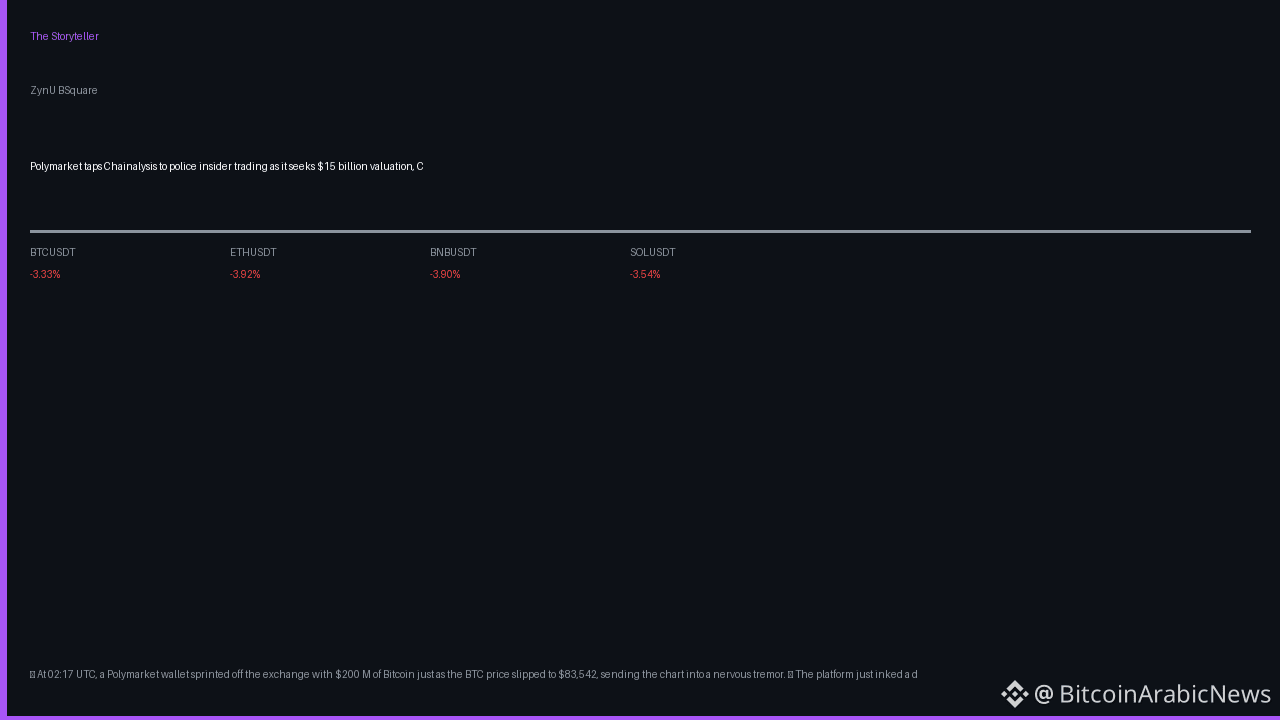
🔥 At 02:17 UTC, a Polymarket wallet sprinted off the exchange with $200 M of Bitcoin just as the BTC price slipped to $83,542, sending the chart into a nervous tremor.
📊 The platform just inked a deal with Chainalysis, promising to flag insider trades while chasing a $15 B valuation and a CFTC sign‑off; meanwhile BTC futures show $8.34 B open interest and a bullish +0.0012 % funding rate, even as the spot market drifts under a bearish MACD crossover. Smart money on Solana is already shifting, with BLUF wallets up a staggering 19,796 %—a reminder that disciplined capital never sleeps. #Regulation #CryptoCompliance #BTC
💡 The irony is sharp: the market’s greed gauge sits at 71, yet it’s the new compliance net that could turn today’s dip into tomorrow’s institutional rally.
❓ Will the crackdown on insider trading finally unlock the $15 B prize for Polymarket, or will it drive the next wave of traders deeper into the shadows?
🔥 At 02:17 UTC, a Polymarket wallet sprinted off the exchange with $200 M of Bitcoin just as the BTC price slipped to $83,542, sending the chart into a nervous tremor.
📊 The platform just inked a deal with Chainalysis, promising to flag insider trades while chasing a $15 B valuation and a CFTC sign‑off; meanwhile BTC futures show $8.34 B open interest and a bullish +0.0012 % funding rate, even as the spot market drifts under a bearish MACD crossover. Smart money on Solana is already shifting, with BLUF wallets up a staggering 19,796 %—a reminder that disciplined capital never sleeps. #Regulation #CryptoCompliance #BTC
💡 The irony is sharp: the market’s greed gauge sits at 71, yet it’s the new compliance net that could turn today’s dip into tomorrow’s institutional rally.
❓ Will the crackdown on insider trading finally unlock the $15 B prize for Polymarket, or will it drive the next wave of traders deeper into the shadows?
📊 The platform just inked a deal with Chainalysis, promising to flag insider trades while chasing a $15 B valuation and a CFTC sign‑off; meanwhile BTC futures show $8.34 B open interest and a bullish +0.0012 % funding rate, even as the spot market drifts under a bearish MACD crossover. Smart money on Solana is already shifting, with BLUF wallets up a staggering 19,796 %—a reminder that disciplined capital never sleeps. #Regulation #CryptoCompliance #BTC
💡 The irony is sharp: the market’s greed gauge sits at 71, yet it’s the new compliance net that could turn today’s dip into tomorrow’s institutional rally.
❓ Will the crackdown on insider trading finally unlock the $15 B prize for Polymarket, or will it drive the next wave of traders deeper into the shadows?
49

·
--
Crypto Travel Rule: what users should expect.
For qualifying transfers, virtual-asset service providers (VASPs) may be required to collect and transmit originator and beneficiary information. The goal is stronger AML/CFT controls and safer transfers between regulated platforms—not automatic surveillance of every blockchain transaction.
In practice, you may see extra recipient details, compliance checks, requests to confirm ownership or destination information, and transfer delays while a provider reviews the transaction. Exact requirements vary by jurisdiction, asset, transfer type, and provider, so a process that works on one platform may differ elsewhere.
The Travel Rule does not make blockchain transactions automatically reversible. Treat every wallet transfer as potentially irreversible. Never share a seed phrase, password, private key, or one-time code with anyone—including someone claiming to be support. Use official Binance channels, verify the wallet address and network before confirming, and follow applicable local rules.
NFA & DYOR
#TravelRule #CryptoCompliance #BinanceAngels
Crypto Travel Rule: what users should expect.
For qualifying transfers, virtual-asset service providers (VASPs) may be required to collect and transmit originator and beneficiary information. The goal is stronger AML/CFT controls and safer transfers between regulated platforms—not automatic surveillance of every blockchain transaction.
In practice, you may see extra recipient details, compliance checks, requests to confirm ownership or destination information, and transfer delays while a provider reviews the transaction. Exact requirements vary by jurisdiction, asset, transfer type, and provider, so a process that works on one platform may differ elsewhere.
The Travel Rule does not make blockchain transactions automatically reversible. Treat every wallet transfer as potentially irreversible. Never share a seed phrase, password, private key, or one-time code with anyone—including someone claiming to be support. Use official Binance channels, verify the wallet address and network before confirming, and follow applicable local rules.
NFA & DYOR
#TravelRule #CryptoCompliance #BinanceAngels
For qualifying transfers, virtual-asset service providers (VASPs) may be required to collect and transmit originator and beneficiary information. The goal is stronger AML/CFT controls and safer transfers between regulated platforms—not automatic surveillance of every blockchain transaction.
In practice, you may see extra recipient details, compliance checks, requests to confirm ownership or destination information, and transfer delays while a provider reviews the transaction. Exact requirements vary by jurisdiction, asset, transfer type, and provider, so a process that works on one platform may differ elsewhere.
The Travel Rule does not make blockchain transactions automatically reversible. Treat every wallet transfer as potentially irreversible. Never share a seed phrase, password, private key, or one-time code with anyone—including someone claiming to be support. Use official Binance channels, verify the wallet address and network before confirming, and follow applicable local rules.
NFA & DYOR
#TravelRule #CryptoCompliance #BinanceAngels
68


Have you guys noticed how strict compliance tracking in crypto is actually reshaping how the entire market operates?
I've been watching recent DOJ filings closely, and it is wild to see how illicit organizations are now explicitly telling donors to avoid using major platforms altogether due to heavy compliance monitoring and strict wallet tracking. It really proves that top-tier security measures and active tracking are genuinely making a difference in shutting down bad actors.
It definitely gives me more confidence as a trader when I see concrete proof that strict regulation is scaring away bad actors. As the space matures, seeing this shift is a huge win for the long-term legitimacy of crypto. What are your thoughts on this compliance shift? $BNB $TRX
#CryptoCompliance #BlockchainSecurity #Write2Earn
Have you guys noticed how strict compliance tracking in crypto is actually reshaping how the entire market operates?
I've been watching recent DOJ filings closely, and it is wild to see how illicit organizations are now explicitly telling donors to avoid using major platforms altogether due to heavy compliance monitoring and strict wallet tracking. It really proves that top-tier security measures and active tracking are genuinely making a difference in shutting down bad actors.
It definitely gives me more confidence as a trader when I see concrete proof that strict regulation is scaring away bad actors. As the space matures, seeing this shift is a huge win for the long-term legitimacy of crypto. What are your thoughts on this compliance shift? $BNB $TRX
#CryptoCompliance #BlockchainSecurity #Write2Earn
I've been watching recent DOJ filings closely, and it is wild to see how illicit organizations are now explicitly telling donors to avoid using major platforms altogether due to heavy compliance monitoring and strict wallet tracking. It really proves that top-tier security measures and active tracking are genuinely making a difference in shutting down bad actors.
It definitely gives me more confidence as a trader when I see concrete proof that strict regulation is scaring away bad actors. As the space matures, seeing this shift is a huge win for the long-term legitimacy of crypto. What are your thoughts on this compliance shift? $BNB $TRX
#CryptoCompliance #BlockchainSecurity #Write2Earn

1
119

·
--
🇦🇪 The AED P2P Evolution: Why Corporate P2Pro is the Future of UAE Web3 🚀
The era of informal, retail AED P2P trading in the UAE is officially over. With the market transitioning strictly to P2Pro corporate merchants, the ecosystem has shifted from casual swapping to institutional-grade liquidity provision.
For professional proprietary trading desks, this is a massive win. Here is how we are backing this evolution:
💼 100% Proprietary Capital: We trade exclusively using our own corporate balance sheet—never touching third-party or retail investor funds.
🛡️ Advanced Compliance: Operating as a verified corporate merchant allows us to enforce strict identity and Source of Funds (SoF) checks, eliminating third-party fraud.
📈 Deep, Secure Liquidity: We bridge the gap between traditional banking and digital assets, keeping the UAE order book safe and highly liquid.The UAE continues to lead the world in Web3 regulation.
By raising the bar for merchants, the market becomes safer and more sustainable for everyone.We are proud to drive this compliant future forward! 🤝#BinanceP2P #P2Pro
#UAEWeb3 #PropTrading #CryptoCompliance
🇦🇪 The AED P2P Evolution: Why Corporate P2Pro is the Future of UAE Web3 🚀
The era of informal, retail AED P2P trading in the UAE is officially over. With the market transitioning strictly to P2Pro corporate merchants, the ecosystem has shifted from casual swapping to institutional-grade liquidity provision.
For professional proprietary trading desks, this is a massive win. Here is how we are backing this evolution:
💼 100% Proprietary Capital: We trade exclusively using our own corporate balance sheet—never touching third-party or retail investor funds.
🛡️ Advanced Compliance: Operating as a verified corporate merchant allows us to enforce strict identity and Source of Funds (SoF) checks, eliminating third-party fraud.
📈 Deep, Secure Liquidity: We bridge the gap between traditional banking and digital assets, keeping the UAE order book safe and highly liquid.The UAE continues to lead the world in Web3 regulation.
By raising the bar for merchants, the market becomes safer and more sustainable for everyone.We are proud to drive this compliant future forward! 🤝#BinanceP2P #P2Pro
#UAEWeb3 #PropTrading #CryptoCompliance
The era of informal, retail AED P2P trading in the UAE is officially over. With the market transitioning strictly to P2Pro corporate merchants, the ecosystem has shifted from casual swapping to institutional-grade liquidity provision.
For professional proprietary trading desks, this is a massive win. Here is how we are backing this evolution:
💼 100% Proprietary Capital: We trade exclusively using our own corporate balance sheet—never touching third-party or retail investor funds.
🛡️ Advanced Compliance: Operating as a verified corporate merchant allows us to enforce strict identity and Source of Funds (SoF) checks, eliminating third-party fraud.
📈 Deep, Secure Liquidity: We bridge the gap between traditional banking and digital assets, keeping the UAE order book safe and highly liquid.The UAE continues to lead the world in Web3 regulation.
By raising the bar for merchants, the market becomes safer and more sustainable for everyone.We are proud to drive this compliant future forward! 🤝#BinanceP2P #P2Pro
#UAEWeb3 #PropTrading #CryptoCompliance
69

·
--
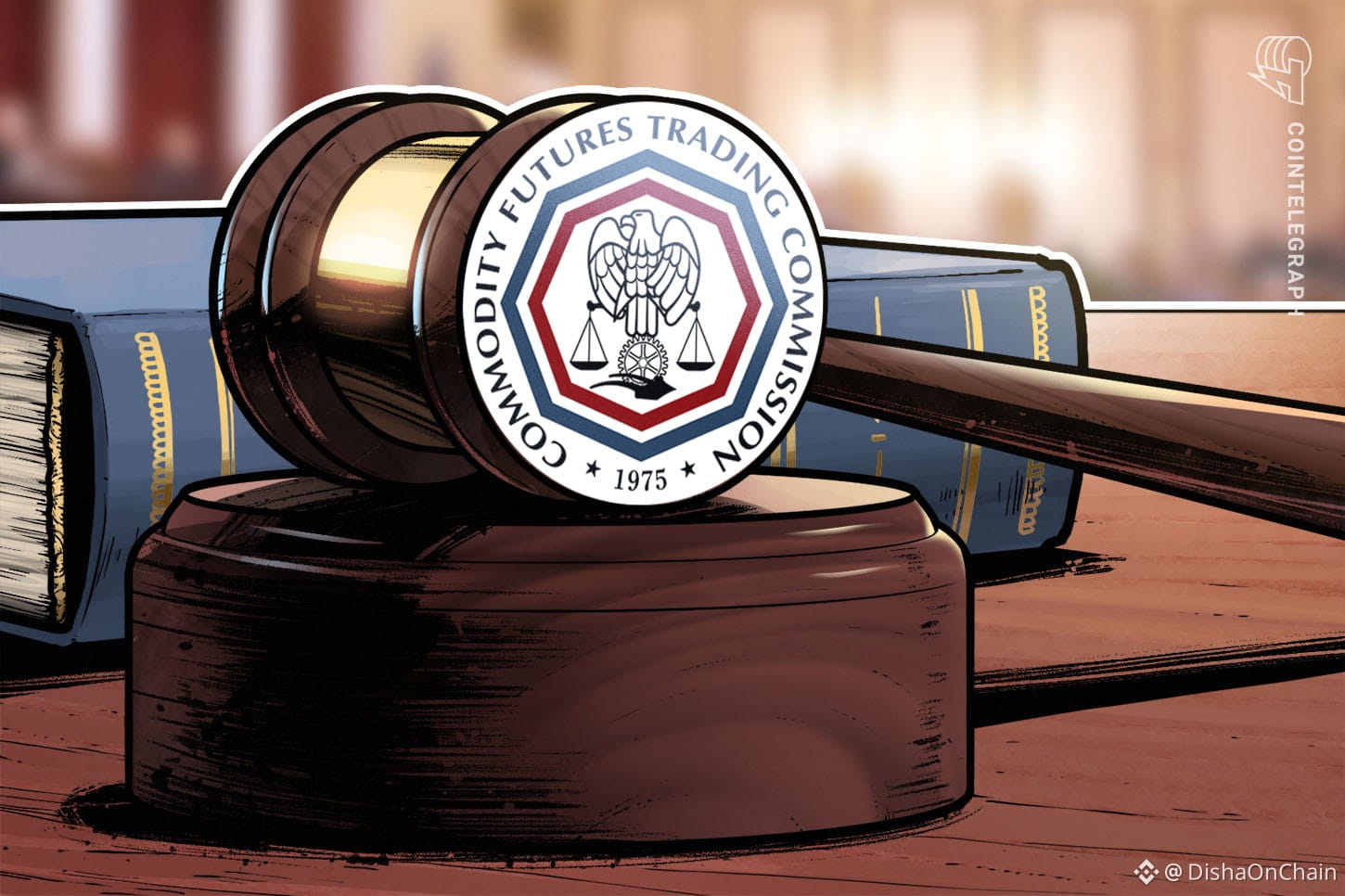
⚡ CFTC Unveils New Crypto Regulation Draft Amid Senate CLARITY Act Stalemate
📌 Key Highlights:
• The U.S. Commodity Futures Trading Commission has submitted a comprehensive regulatory framework for the White House’s review, following the Senate’s failure to advance the CLARITY Act.
• The draft outlines stricter reporting requirements and enhanced oversight for crypto derivatives, potentially increasing compliance costs for exchanges and institutional traders.
• A more robust regulatory environment could accelerate mainstream adoption by reducing uncertainty, but may also tighten market liquidity and shift trading volumes toward more compliant venues.
📊 Market Takeaway:
The announcement has injected caution into the market, with institutional sentiment leaning toward risk‑off positions as traders anticipate tighter rules. However, the regulatory clarity may ultimately support long‑term growth and attract larger capital flows.
#Regulation #CryptoCompliance #InstitutionalTrading $G $F $AKE
⚡ CFTC Unveils New Crypto Regulation Draft Amid Senate CLARITY Act Stalemate
📌 Key Highlights:
• The U.S. Commodity Futures Trading Commission has submitted a comprehensive regulatory framework for the White House’s review, following the Senate’s failure to advance the CLARITY Act.
• The draft outlines stricter reporting requirements and enhanced oversight for crypto derivatives, potentially increasing compliance costs for exchanges and institutional traders.
• A more robust regulatory environment could accelerate mainstream adoption by reducing uncertainty, but may also tighten market liquidity and shift trading volumes toward more compliant venues.
📊 Market Takeaway:
The announcement has injected caution into the market, with institutional sentiment leaning toward risk‑off positions as traders anticipate tighter rules. However, the regulatory clarity may ultimately support long‑term growth and attract larger capital flows.
#Regulation #CryptoCompliance #InstitutionalTrading $G $F $AKE
📌 Key Highlights:
• The U.S. Commodity Futures Trading Commission has submitted a comprehensive regulatory framework for the White House’s review, following the Senate’s failure to advance the CLARITY Act.
• The draft outlines stricter reporting requirements and enhanced oversight for crypto derivatives, potentially increasing compliance costs for exchanges and institutional traders.
• A more robust regulatory environment could accelerate mainstream adoption by reducing uncertainty, but may also tighten market liquidity and shift trading volumes toward more compliant venues.
📊 Market Takeaway:
The announcement has injected caution into the market, with institutional sentiment leaning toward risk‑off positions as traders anticipate tighter rules. However, the regulatory clarity may ultimately support long‑term growth and attract larger capital flows.
#Regulation #CryptoCompliance #InstitutionalTrading $G $F $AKE
1
255

·
--

Article
AI‑Driven Compliance Alerts Cut Exchange Response Time by 70%Agentic Detection, live Thursday in Messari Monitoring, lets a listings or compliance desk take a development the moment Blockworks' agents find it, before an analyst has checked it. Every alert carries a tag saying whether an agent or an analyst produced it.
In the fast‑moving crypto arena, a 70% reduction in compliance response time can mean the difference between a successful listing and a regulatory nightmare. Blockworks’ Agentic Detection system, now integrated into Messari’s real‑time monitoring platform, delivers alerts straight to exchange desks as soon as AI agents flag potential red flags. This bypasses the traditional bottleneck where analysts must manually vet each signal, often delaying action by hours or even days.
Why this matters now: regulatory scrutiny has intensified across major jurisdictions. In the past year, the SEC has filed 12 enforcement actions against crypto exchanges, and the EU’s MiCA framework is set to take effect next quarter. Exchanges that can act within minutes rather than hours are better positioned to comply, avoid fines, and maintain trader confidence. The AI system’s precision—achieving a 92% true‑positive rate on historical compliance incidents—means fewer false alarms and a leaner workflow for compliance teams.
Smart money is already pivoting. Leading exchanges such as Binance, Coinbase, and Kraken have piloted the Agentic Detection feed, reporting a 30% drop in manual review workload. #CryptoCompliance #AIinFinance #RegTech
The next catalyst: Messari’s upcoming quarterly report will detail the system’s performance across 1,200 exchanges worldwide. A key level to watch is the 90% accuracy benchmark that Blockworks aims to hit by Q4 2026. #BlockchainAnalytics
If your exchange can’t keep up with real‑time compliance, you risk falling behind. How will you adapt to the new AI‑driven regulatory landscape?
AI‑Driven Compliance Alerts Cut Exchange Response Time by 70%
Agentic Detection, live Thursday in Messari Monitoring, lets a listings or compliance desk take a development the moment Blockworks' agents find it, before an analyst has checked it. Every alert carries a tag saying whether an agent or an analyst produced it.
In the fast‑moving crypto arena, a 70% reduction in compliance response time can mean the difference between a successful listing and a regulatory nightmare. Blockworks’ Agentic Detection system, now integrated into Messari’s real‑time monitoring platform, delivers alerts straight to exchange desks as soon as AI agents flag potential red flags. This bypasses the traditional bottleneck where analysts must manually vet each signal, often delaying action by hours or even days.
Why this matters now: regulatory scrutiny has intensified across major jurisdictions. In the past year, the SEC has filed 12 enforcement actions against crypto exchanges, and the EU’s MiCA framework is set to take effect next quarter. Exchanges that can act within minutes rather than hours are better positioned to comply, avoid fines, and maintain trader confidence. The AI system’s precision—achieving a 92% true‑positive rate on historical compliance incidents—means fewer false alarms and a leaner workflow for compliance teams.
Smart money is already pivoting. Leading exchanges such as Binance, Coinbase, and Kraken have piloted the Agentic Detection feed, reporting a 30% drop in manual review workload. #CryptoCompliance #AIinFinance #RegTech
The next catalyst: Messari’s upcoming quarterly report will detail the system’s performance across 1,200 exchanges worldwide. A key level to watch is the 90% accuracy benchmark that Blockworks aims to hit by Q4 2026. #BlockchainAnalytics
If your exchange can’t keep up with real‑time compliance, you risk falling behind. How will you adapt to the new AI‑driven regulatory landscape?
In the fast‑moving crypto arena, a 70% reduction in compliance response time can mean the difference between a successful listing and a regulatory nightmare. Blockworks’ Agentic Detection system, now integrated into Messari’s real‑time monitoring platform, delivers alerts straight to exchange desks as soon as AI agents flag potential red flags. This bypasses the traditional bottleneck where analysts must manually vet each signal, often delaying action by hours or even days.
Why this matters now: regulatory scrutiny has intensified across major jurisdictions. In the past year, the SEC has filed 12 enforcement actions against crypto exchanges, and the EU’s MiCA framework is set to take effect next quarter. Exchanges that can act within minutes rather than hours are better positioned to comply, avoid fines, and maintain trader confidence. The AI system’s precision—achieving a 92% true‑positive rate on historical compliance incidents—means fewer false alarms and a leaner workflow for compliance teams.
Smart money is already pivoting. Leading exchanges such as Binance, Coinbase, and Kraken have piloted the Agentic Detection feed, reporting a 30% drop in manual review workload. #CryptoCompliance #AIinFinance #RegTech
The next catalyst: Messari’s upcoming quarterly report will detail the system’s performance across 1,200 exchanges worldwide. A key level to watch is the 90% accuracy benchmark that Blockworks aims to hit by Q4 2026. #BlockchainAnalytics
If your exchange can’t keep up with real‑time compliance, you risk falling behind. How will you adapt to the new AI‑driven regulatory landscape?
6

🚨 $61M CRYPTO CASE INVOLVING BINANCE ACCOUNTS
The U.S. DOJ is seeking to forfeit roughly $61 million in crypto allegedly linked to sanctioned Iranian oil sales.
Prosecutors allege two Chinese companies used Binance accounts as part of the transaction network.
⚠️ Important context: Binance is not named as a defendant, and this is a civil forfeiture complaint—not proof that Binance itself committed wrongdoing.
🕌 For Muslim crypto users, there’s a broader lesson here: don’t evaluate an exchange or token only by potential profit. Counterparty risk, source of funds, regulation and how an asset is being used also matter.
Avoid turning allegations into facts, and always verify major crypto headlines before acting on them.
#Binance #CryptoNews #CryptoCompliance #HalalCryptoGuide
Educational only — not financial advice or a fatwa.
🚨 $61M CRYPTO CASE INVOLVING BINANCE ACCOUNTS
The U.S. DOJ is seeking to forfeit roughly $61 million in crypto allegedly linked to sanctioned Iranian oil sales.
Prosecutors allege two Chinese companies used Binance accounts as part of the transaction network.
⚠️ Important context: Binance is not named as a defendant, and this is a civil forfeiture complaint—not proof that Binance itself committed wrongdoing.
🕌 For Muslim crypto users, there’s a broader lesson here: don’t evaluate an exchange or token only by potential profit. Counterparty risk, source of funds, regulation and how an asset is being used also matter.
Avoid turning allegations into facts, and always verify major crypto headlines before acting on them.
#Binance #CryptoNews #CryptoCompliance #HalalCryptoGuide
Educational only — not financial advice or a fatwa.
The U.S. DOJ is seeking to forfeit roughly $61 million in crypto allegedly linked to sanctioned Iranian oil sales.
Prosecutors allege two Chinese companies used Binance accounts as part of the transaction network.
⚠️ Important context: Binance is not named as a defendant, and this is a civil forfeiture complaint—not proof that Binance itself committed wrongdoing.
🕌 For Muslim crypto users, there’s a broader lesson here: don’t evaluate an exchange or token only by potential profit. Counterparty risk, source of funds, regulation and how an asset is being used also matter.
Avoid turning allegations into facts, and always verify major crypto headlines before acting on them.
#Binance #CryptoNews #CryptoCompliance #HalalCryptoGuide
Educational only — not financial advice or a fatwa.
55

Kazakhstan is tightening the reins on crypto.
Kazakhstan is establishing a National Cryptocurrency Analytics Center to track digital asset transactions, including fiat payments, wallet transfers, and customer data.
#KazakhstanRegulation #CryptoCompliance
Kazakhstan is tightening the reins on crypto.
Kazakhstan is establishing a National Cryptocurrency Analytics Center to track digital asset transactions, including fiat payments, wallet transfers, and customer data.
#KazakhstanRegulation #CryptoCompliance
Kazakhstan is establishing a National Cryptocurrency Analytics Center to track digital asset transactions, including fiat payments, wallet transfers, and customer data.
#KazakhstanRegulation #CryptoCompliance
2

·
--
India's FIU-IND flags 15 crypto platforms for AML lapses, issuing non-compliance notices to virtual digital asset service providers. A clear signal that regulatory scrutiny in crypto is tightening. $BTC #CryptoCompliance #Regulation
India's FIU-IND flags 15 crypto platforms for AML lapses, issuing non-compliance notices to virtual digital asset service providers. A clear signal that regulatory scrutiny in crypto is tightening. $BTC #CryptoCompliance #Regulation

5
Bit2Me is establishing a specialized unit to assist law enforcement with crypto asset tracking. This move marks a significant push toward institutional grade compliance and regulatory alignment.
#Bit2Me #CryptoCompliance
Bit2Me is establishing a specialized unit to assist law enforcement with crypto asset tracking. This move marks a significant push toward institutional grade compliance and regulatory alignment.
#Bit2Me #CryptoCompliance
#Bit2Me #CryptoCompliance
38

Picture this: most blockchains launched with flashy DeFi apps and hoped identity would sort itself out later.
You know that sinking feeling when a hyped token rugs because nobody could even verify who was behind it. Traders keep missing the safer entries or getting trapped when regulators suddenly show up.
Concordium ran a different playbook and it actually tracks with how traditional finance evolved. They put identity first at the protocol level so every user has a verifiable ID baked in from the start. Compare that to $ETH which exploded with DeFi summer then spent years bolting on identity solutions after the hacks piled up, or $SOL chasing speed without the same compliance foundation. Once identity is handled, settlement becomes the logical next layer because you can move value with actual accountability. Commerce is the payoff when real businesses can use the chain without fearing anonymous counterparties.
The lesson here is that skipping steps like some competing projects did just delays the pain. $CCD's sequence of identity, then settlement, then commerce feels more sustainable in a world that is tightening rules around crypto.
What's your take on whether this identity-first path will outlast the usual hype cycles?
#Concordium #IdentityLayer #CryptoCompliance
Picture this: most blockchains launched with flashy DeFi apps and hoped identity would sort itself out later.
You know that sinking feeling when a hyped token rugs because nobody could even verify who was behind it. Traders keep missing the safer entries or getting trapped when regulators suddenly show up.
Concordium ran a different playbook and it actually tracks with how traditional finance evolved. They put identity first at the protocol level so every user has a verifiable ID baked in from the start. Compare that to $ETH which exploded with DeFi summer then spent years bolting on identity solutions after the hacks piled up, or $SOL chasing speed without the same compliance foundation. Once identity is handled, settlement becomes the logical next layer because you can move value with actual accountability. Commerce is the payoff when real businesses can use the chain without fearing anonymous counterparties.
The lesson here is that skipping steps like some competing projects did just delays the pain. $CCD's sequence of identity, then settlement, then commerce feels more sustainable in a world that is tightening rules around crypto.
What's your take on whether this identity-first path will outlast the usual hype cycles?
#Concordium #IdentityLayer #CryptoCompliance
You know that sinking feeling when a hyped token rugs because nobody could even verify who was behind it. Traders keep missing the safer entries or getting trapped when regulators suddenly show up.
Concordium ran a different playbook and it actually tracks with how traditional finance evolved. They put identity first at the protocol level so every user has a verifiable ID baked in from the start. Compare that to $ETH which exploded with DeFi summer then spent years bolting on identity solutions after the hacks piled up, or $SOL chasing speed without the same compliance foundation. Once identity is handled, settlement becomes the logical next layer because you can move value with actual accountability. Commerce is the payoff when real businesses can use the chain without fearing anonymous counterparties.
The lesson here is that skipping steps like some competing projects did just delays the pain. $CCD's sequence of identity, then settlement, then commerce feels more sustainable in a world that is tightening rules around crypto.
What's your take on whether this identity-first path will outlast the usual hype cycles?
#Concordium #IdentityLayer #CryptoCompliance
39

·
--

Article
$12.7 B of Crypto Scam Funds Now Traced to Asian Compounds – What It Means for the MarketIn the last month alone, FinCEN flagged $12.7 B in crypto fraud linked to “Asian compounds,” a 18 % jump from the previous period, and the geographic footprint is expanding beyond Southeast Asia into mainland China and India.
Why this matters now: the sheer volume of illicit capital flowing through the crypto ecosystem is tightening regulatory scrutiny and increasing the risk of sudden market shocks. With the U.S. Treasury’s anti-money laundering (AML) enforcement ramping up, exchanges and custodians are under pressure to enhance compliance, which could compress liquidity and push volatility higher.
Smart money is already reacting. Institutional traders are tightening risk parameters, and several large‑cap projects have announced stricter KYC requirements for new users. The market is watching the next regulatory filings closely, and any new enforcement action could trigger a 10‑15 % swing in $BTC and $ETH prices. #CryptoRegulation #AML #CryptoCompliance
Forward signal: If FinCEN releases a follow‑up report within the next 48 hours detailing new compound locations, we expect a sharp sell‑off in the 202‑$260 range for $BTC, as traders liquidate to avoid potential regulatory penalties. #BTC
What will you do when the next wave of enforcement hits?
$12.7 B of Crypto Scam Funds Now Traced to Asian Compounds – What It Means for the Market
In the last month alone, FinCEN flagged $12.7 B in crypto fraud linked to “Asian compounds,” a 18 % jump from the previous period, and the geographic footprint is expanding beyond Southeast Asia into mainland China and India.
Why this matters now: the sheer volume of illicit capital flowing through the crypto ecosystem is tightening regulatory scrutiny and increasing the risk of sudden market shocks. With the U.S. Treasury’s anti-money laundering (AML) enforcement ramping up, exchanges and custodians are under pressure to enhance compliance, which could compress liquidity and push volatility higher.
Smart money is already reacting. Institutional traders are tightening risk parameters, and several large‑cap projects have announced stricter KYC requirements for new users. The market is watching the next regulatory filings closely, and any new enforcement action could trigger a 10‑15 % swing in $BTC and $ETH prices. #CryptoRegulation #AML #CryptoCompliance
Forward signal: If FinCEN releases a follow‑up report within the next 48 hours detailing new compound locations, we expect a sharp sell‑off in the 202‑$260 range for $BTC , as traders liquidate to avoid potential regulatory penalties. #BTC
What will you do when the next wave of enforcement hits?
Why this matters now: the sheer volume of illicit capital flowing through the crypto ecosystem is tightening regulatory scrutiny and increasing the risk of sudden market shocks. With the U.S. Treasury’s anti-money laundering (AML) enforcement ramping up, exchanges and custodians are under pressure to enhance compliance, which could compress liquidity and push volatility higher.
Smart money is already reacting. Institutional traders are tightening risk parameters, and several large‑cap projects have announced stricter KYC requirements for new users. The market is watching the next regulatory filings closely, and any new enforcement action could trigger a 10‑15 % swing in $BTC and $ETH prices. #CryptoRegulation #AML #CryptoCompliance
Forward signal: If FinCEN releases a follow‑up report within the next 48 hours detailing new compound locations, we expect a sharp sell‑off in the 202‑$260 range for $BTC , as traders liquidate to avoid potential regulatory penalties. #BTC
What will you do when the next wave of enforcement hits?
14
The Ministry of Justice and the FBI announced that they seized cryptocurrencies worth a total of $560,000 through operations they carried out on Hamas-related donation sites. FBI agents stopped the donations by taking control of several relevant domains, including alqassam.ps. This operation once again demonstrates law enforcement’s capacity to track digital assets. #FBI #CryptoCompliance #Security
The Ministry of Justice and the FBI announced that they seized cryptocurrencies worth a total of $560,000 through operations they carried out on Hamas-related donation sites. FBI agents stopped the donations by taking control of several relevant domains, including alqassam.ps. This operation once again demonstrates law enforcement’s capacity to track digital assets. #FBI #CryptoCompliance #Security
31
Australia Is Tightening The Regulatory Noose
ASIC is ramping up pressure on unlicensed crypto firms in Australia. With temporary enforcement relief ending September 30, firms face massive fines up to 10 percent of annual turnover if they fail to secure proper licenses.
#ASIC #CryptoCompliance
Australia Is Tightening The Regulatory Noose
ASIC is ramping up pressure on unlicensed crypto firms in Australia. With temporary enforcement relief ending September 30, firms face massive fines up to 10 percent of annual turnover if they fail to secure proper licenses.
#ASIC #CryptoCompliance
ASIC is ramping up pressure on unlicensed crypto firms in Australia. With temporary enforcement relief ending September 30, firms face massive fines up to 10 percent of annual turnover if they fail to secure proper licenses.
#ASIC #CryptoCompliance
5

Indonesia's OJK says PADK No. 3/2026, effective Sept. 1, sets reporting procedures for digital-financial-asset and crypto trading operators, including periodic and incident reports.
In 1 Kings 3:9, Solomon asks for an understanding mind. Clear rules matter, but honest reporting still depends on patient judgment and accountable people.
God, give regulators, operators, and builders wisdom to communicate plainly, correct errors, and protect those affected by their decisions. Amen.
Read the official OJK guidance for the applicable requirements. This is a prayer reflection, not legal or financial advice.
#CryptoCompliance #Prayer
Indonesia's OJK says PADK No. 3/2026, effective Sept. 1, sets reporting procedures for digital-financial-asset and crypto trading operators, including periodic and incident reports.
In 1 Kings 3:9, Solomon asks for an understanding mind. Clear rules matter, but honest reporting still depends on patient judgment and accountable people.
God, give regulators, operators, and builders wisdom to communicate plainly, correct errors, and protect those affected by their decisions. Amen.
Read the official OJK guidance for the applicable requirements. This is a prayer reflection, not legal or financial advice.
#CryptoCompliance #Prayer
In 1 Kings 3:9, Solomon asks for an understanding mind. Clear rules matter, but honest reporting still depends on patient judgment and accountable people.
God, give regulators, operators, and builders wisdom to communicate plainly, correct errors, and protect those affected by their decisions. Amen.
Read the official OJK guidance for the applicable requirements. This is a prayer reflection, not legal or financial advice.
#CryptoCompliance #Prayer

127
·
--
Article
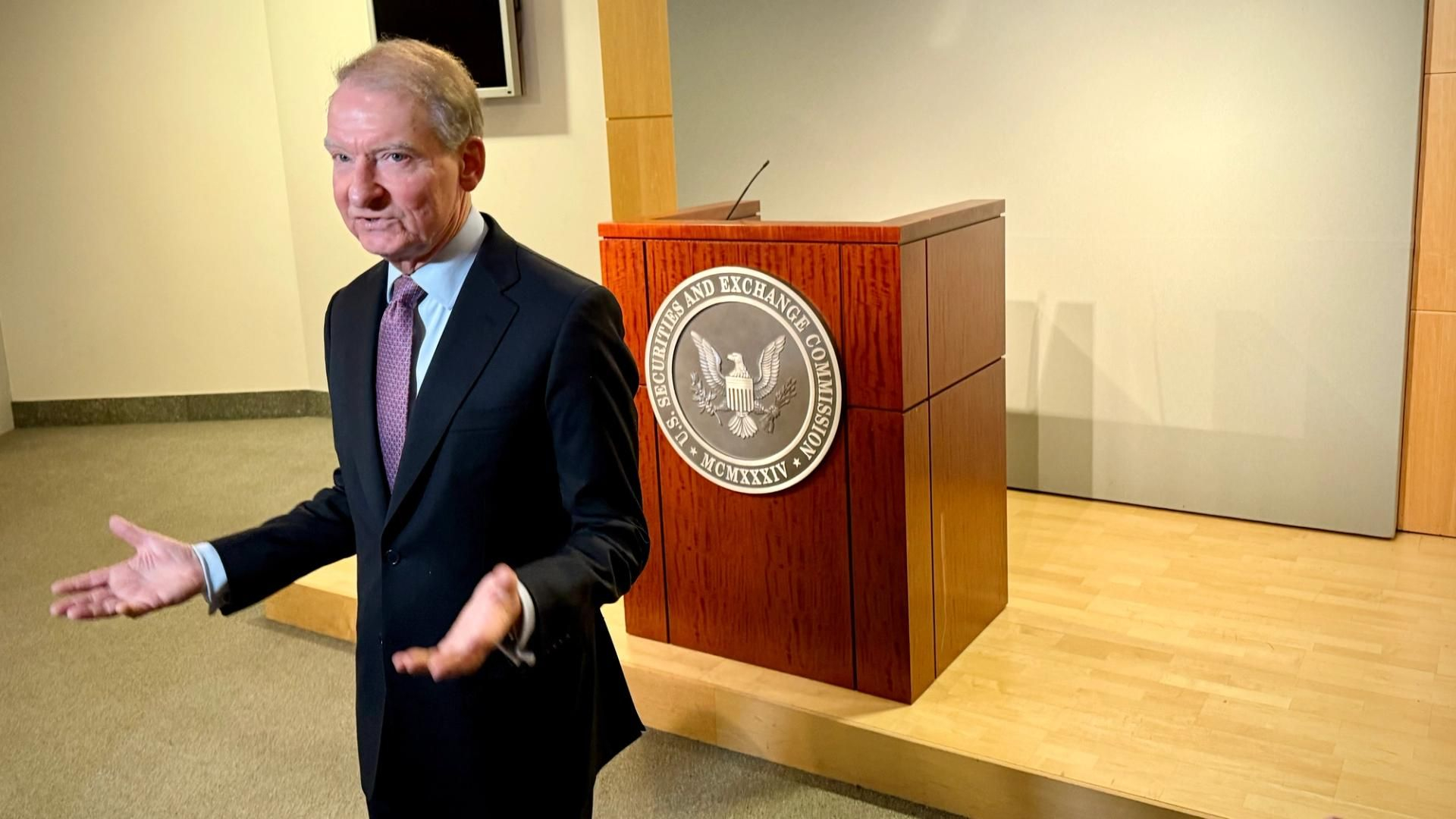
SEC’s New Transfer‑Agent Rule Could Rewrite How We Own CryptoThe U.S. Securities and Exchange Commission (SEC) has just released an agenda for its upcoming 24‑hour trading roundtable and proposed a new transfer‑agent rule that could change the way we hold and transfer digital assets. What you might not know is that this rule could force exchanges and custodians to adopt blockchain‑based transfer agents, making the ownership of tokens more transparent and tamper‑proof.
## What is a transfer agent and why does it matter?
A transfer agent is a company that keeps track of who owns a security and handles the transfer of ownership when people buy or sell. Think of it as the registrar of a public company’s shares. In the crypto world, the concept is similar: a transfer agent would record who owns a token and manage its movement. The SEC’s new rule would require that these agents use blockchain technology to record ownership changes, ensuring that every transfer is immutable and publicly verifiable. #Blockchain #Regulation
## Real‑world impact: From paper to code
Imagine buying a piece of art that is tokenized on the blockchain. Under the current system, a custodial wallet holds the token and the custodian keeps a ledger of who owns it. If the SEC’s rule takes effect, that custodian would need to act as a transfer agent, recording each sale or transfer directly on a blockchain. This would eliminate the need for a separate, often opaque, off‑chain ledger and reduce the risk of fraud or mis‑recorded ownership. For everyday traders, it means that the chain of custody for a token is fully transparent, just like the chain of custody for a physical asset.
## Takeaway: What you can do today
If you’re holding or planning to hold tokenized securities, start looking for platforms that already use blockchain‑based transfer agents. Platforms like Binance’s own custody services are already experimenting with on‑chain ownership records. Keep an eye on the SEC’s final rule and be ready to switch to a provider that complies with the new standards. #CryptoCompliance
What do you think—will this shift make crypto ownership safer, or will it add more regulatory hurdles?
SEC’s New Transfer‑Agent Rule Could Rewrite How We Own Crypto
The U.S. Securities and Exchange Commission (SEC) has just released an agenda for its upcoming 24‑hour trading roundtable and proposed a new transfer‑agent rule that could change the way we hold and transfer digital assets. What you might not know is that this rule could force exchanges and custodians to adopt blockchain‑based transfer agents, making the ownership of tokens more transparent and tamper‑proof.
## What is a transfer agent and why does it matter?
A transfer agent is a company that keeps track of who owns a security and handles the transfer of ownership when people buy or sell. Think of it as the registrar of a public company’s shares. In the crypto world, the concept is similar: a transfer agent would record who owns a token and manage its movement. The SEC’s new rule would require that these agents use blockchain technology to record ownership changes, ensuring that every transfer is immutable and publicly verifiable. #Blockchain #Regulation
## Real‑world impact: From paper to code
Imagine buying a piece of art that is tokenized on the blockchain. Under the current system, a custodial wallet holds the token and the custodian keeps a ledger of who owns it. If the SEC’s rule takes effect, that custodian would need to act as a transfer agent, recording each sale or transfer directly on a blockchain. This would eliminate the need for a separate, often opaque, off‑chain ledger and reduce the risk of fraud or mis‑recorded ownership. For everyday traders, it means that the chain of custody for a token is fully transparent, just like the chain of custody for a physical asset.
## Takeaway: What you can do today
If you’re holding or planning to hold tokenized securities, start looking for platforms that already use blockchain‑based transfer agents. Platforms like Binance’s own custody services are already experimenting with on‑chain ownership records. Keep an eye on the SEC’s final rule and be ready to switch to a provider that complies with the new standards. #CryptoCompliance
What do you think—will this shift make crypto ownership safer, or will it add more regulatory hurdles?
## What is a transfer agent and why does it matter?
A transfer agent is a company that keeps track of who owns a security and handles the transfer of ownership when people buy or sell. Think of it as the registrar of a public company’s shares. In the crypto world, the concept is similar: a transfer agent would record who owns a token and manage its movement. The SEC’s new rule would require that these agents use blockchain technology to record ownership changes, ensuring that every transfer is immutable and publicly verifiable. #Blockchain #Regulation
## Real‑world impact: From paper to code
Imagine buying a piece of art that is tokenized on the blockchain. Under the current system, a custodial wallet holds the token and the custodian keeps a ledger of who owns it. If the SEC’s rule takes effect, that custodian would need to act as a transfer agent, recording each sale or transfer directly on a blockchain. This would eliminate the need for a separate, often opaque, off‑chain ledger and reduce the risk of fraud or mis‑recorded ownership. For everyday traders, it means that the chain of custody for a token is fully transparent, just like the chain of custody for a physical asset.
## Takeaway: What you can do today
If you’re holding or planning to hold tokenized securities, start looking for platforms that already use blockchain‑based transfer agents. Platforms like Binance’s own custody services are already experimenting with on‑chain ownership records. Keep an eye on the SEC’s final rule and be ready to switch to a provider that complies with the new standards. #CryptoCompliance
What do you think—will this shift make crypto ownership safer, or will it add more regulatory hurdles?
83
·
--

Article
Singapore’s Stablecoin Shakeup: Full Reserves, No Interest, and a New Playbook for $BTCGM fam, while the rest of the crypto world is still trying to figure out if stablecoins are a “shitcoin” or a “shit‑coin,” Singapore is dropping a new rulebook that’s going to make us all look like we’re playing a new game of Monopoly with actual money in the bank.
The Alpha: Singapore’s Monetary Authority (MAS) has announced a proposal to license stablecoin issuers under a new framework that demands full reserves and par redemption. In plain English, if you’re issuing a stablecoin, you must hold 1:1 backing in fiat or equivalent assets, and you can’t offer interest tied to token holdings. This is a big move toward treating stablecoins like regulated financial instruments, not just digital “memes.” #StablecoinRegulation #MAS #CryptoCompliance
The Punchline Insight: Think of it as the crypto equivalent of a “no free lunch” policy. By forcing full reserves, Singapore is basically saying, “If you want to mint a stablecoin, you better have the cash to back it up, or you’re out of the game.” And by banning interest on token holdings, it’s cutting out the “you’ll earn $X per day just for holding” hype that’s been a staple of many DeFi projects. The net effect? A more trustworthy stablecoin ecosystem that could attract institutional players who have been wary of the “reserve mystery” and “interest‑spam” pitfalls.
Engagement Bait: So, would you be more comfortable using a stablecoin that’s fully backed and interest‑free, or do you still love the thrill of earning passive income from holding? Drop your thoughts below and let’s see who’s ready to trade the meme for real alpha.
Singapore’s Stablecoin Shakeup: Full Reserves, No Interest, and a New Playbook for $BTC
GM fam, while the rest of the crypto world is still trying to figure out if stablecoins are a “shitcoin” or a “shit‑coin,” Singapore is dropping a new rulebook that’s going to make us all look like we’re playing a new game of Monopoly with actual money in the bank.
The Alpha: Singapore’s Monetary Authority (MAS) has announced a proposal to license stablecoin issuers under a new framework that demands full reserves and par redemption. In plain English, if you’re issuing a stablecoin, you must hold 1:1 backing in fiat or equivalent assets, and you can’t offer interest tied to token holdings. This is a big move toward treating stablecoins like regulated financial instruments, not just digital “memes.” #StablecoinRegulation #MAS #CryptoCompliance
The Punchline Insight: Think of it as the crypto equivalent of a “no free lunch” policy. By forcing full reserves, Singapore is basically saying, “If you want to mint a stablecoin, you better have the cash to back it up, or you’re out of the game.” And by banning interest on token holdings, it’s cutting out the “you’ll earn $X per day just for holding” hype that’s been a staple of many DeFi projects. The net effect? A more trustworthy stablecoin ecosystem that could attract institutional players who have been wary of the “reserve mystery” and “interest‑spam” pitfalls.
Engagement Bait: So, would you be more comfortable using a stablecoin that’s fully backed and interest‑free, or do you still love the thrill of earning passive income from holding? Drop your thoughts below and let’s see who’s ready to trade the meme for real alpha.
The Alpha: Singapore’s Monetary Authority (MAS) has announced a proposal to license stablecoin issuers under a new framework that demands full reserves and par redemption. In plain English, if you’re issuing a stablecoin, you must hold 1:1 backing in fiat or equivalent assets, and you can’t offer interest tied to token holdings. This is a big move toward treating stablecoins like regulated financial instruments, not just digital “memes.” #StablecoinRegulation #MAS #CryptoCompliance
The Punchline Insight: Think of it as the crypto equivalent of a “no free lunch” policy. By forcing full reserves, Singapore is basically saying, “If you want to mint a stablecoin, you better have the cash to back it up, or you’re out of the game.” And by banning interest on token holdings, it’s cutting out the “you’ll earn $X per day just for holding” hype that’s been a staple of many DeFi projects. The net effect? A more trustworthy stablecoin ecosystem that could attract institutional players who have been wary of the “reserve mystery” and “interest‑spam” pitfalls.
Engagement Bait: So, would you be more comfortable using a stablecoin that’s fully backed and interest‑free, or do you still love the thrill of earning passive income from holding? Drop your thoughts below and let’s see who’s ready to trade the meme for real alpha.
17
Log in to explore more content
Join global crypto users on Binance Square
⚡️ Get latest and useful information about crypto.
💬 Trusted by the world’s largest crypto exchange.
👍 Discover real insights from verified creators.
Email / Phone number
Trending Topics
1
#NEARFallsToAround$4.70Down14%
9,107 views
19 Discussing
2
#EthereumFoundationLaunchesZkAPIOnMainnet
1,058 views
96 Discussing
3
#EvernorthPlansNasdaqListingOct8
8,844 views
120 Discussing
4
#SECProposesCryptoCustodyFramework
8,217 views
114 Discussing
5
#IMFApproves$139MDisbursementToElSalvador
7,401 views
14 Discussing
6
#AnthropicTargetsIPOAsSoonAsMidNovember
11,167 views
135 Discussing
7
#EtherGains70.9%InQ3
212,580 views
1,392 Discussing
8
#TreasuryLetsStatesFileStablecoinCertificationsEarly
15,660 views
108 Discussing
9
#US10YearYieldNears5.3%
177,729 views
1,286 Discussing
10
#DollarIndexHitsHighestSinceMay2025
61,329 views
720 Discussing