

#bnb
bnb
2G views
24.9M Discussing
Hot
Latest

·
--
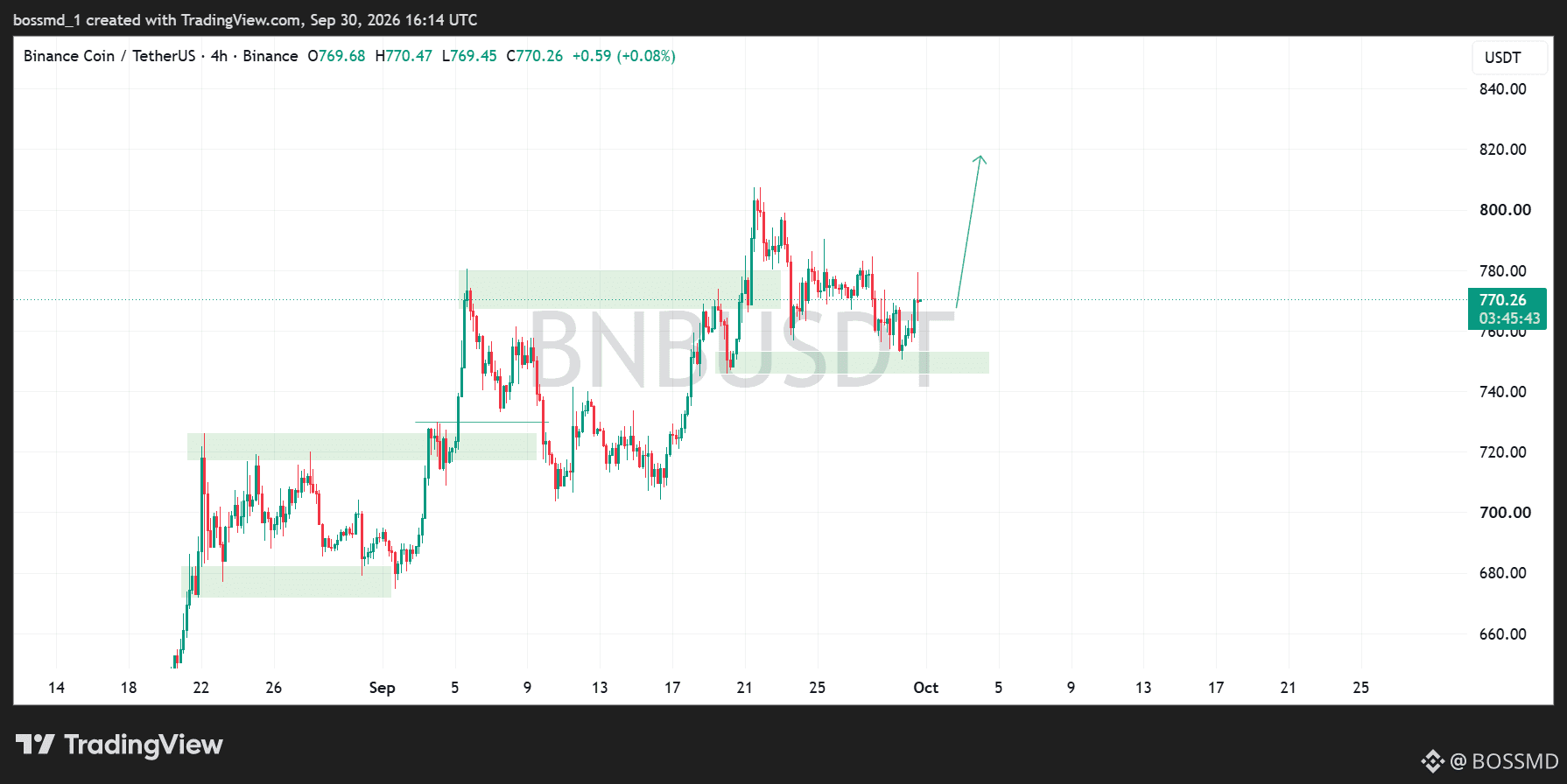
$BNB is holding above a key support zone.
#bnb is currently around $770, with the chart showing a strong support area around $750–$760. Price has been consolidating after the recent move higher, and a clean reaction from this zone could give the bulls another opportunity.
If support holds, I’m watching the $800–$820 area next. The key is how price reacts around $750–$760 before expecting the next move.
$BNB is holding above a key support zone.
#bnb is currently around $770, with the chart showing a strong support area around $750–$760. Price has been consolidating after the recent move higher, and a clean reaction from this zone could give the bulls another opportunity.
If support holds, I’m watching the $800–$820 area next. The key is how price reacts around $750–$760 before expecting the next move.
#bnb is currently around $770, with the chart showing a strong support area around $750–$760. Price has been consolidating after the recent move higher, and a clean reaction from this zone could give the bulls another opportunity.
If support holds, I’m watching the $800–$820 area next. The key is how price reacts around $750–$760 before expecting the next move.
AngelOfCrypto_-:
nice
1
2
769

·
--
Bearish
🔴 SHORT
#bnb /USDT
Entry :
1) 775.570
2) 798.837
Targets :
1) 771.027
2) 754.655
3) 738.284
4) 721.912
🛑 Stop : 824.430
Leverage : 10x (isolated)$BNB
{future}(BNBUSDT)
🔴 SHORT
#bnb /USDT
Entry :
1) 775.570
2) 798.837
Targets :
1) 771.027
2) 754.655
3) 738.284
4) 721.912
🛑 Stop : 824.430
Leverage : 10x (isolated)$BNB
#bnb /USDT
Entry :
1) 775.570
2) 798.837
Targets :
1) 771.027
2) 754.655
3) 738.284
4) 721.912
🛑 Stop : 824.430
Leverage : 10x (isolated)$BNB
1
23

#$🚀 $BNB — Is BNB Ready for Another Move?
$BNB is showing interesting price action, and the market is watching closely. 📊
The key question now is whether BNB can maintain its current momentum and continue the uptrend.
I’ll be watching: 📌 Price action
📌 Key support and resistance levels
📌 Trading volume
📌 Overall crypto market sentiment
What do you think about $BNB?
Bullish 📈 or Bearish 📉? Tell me your opinion below! 👇
⚠️ This post is for educational purposes only. DYOR. Not Financial Advice.
#bnb #crypt #Binance #CryptoMarket
#$🚀 $BNB — Is BNB Ready for Another Move?
$BNB is showing interesting price action, and the market is watching closely. 📊
The key question now is whether BNB can maintain its current momentum and continue the uptrend.
I’ll be watching: 📌 Price action
📌 Key support and resistance levels
📌 Trading volume
📌 Overall crypto market sentiment
What do you think about $BNB?
Bullish 📈 or Bearish 📉? Tell me your opinion below! 👇
⚠️ This post is for educational purposes only. DYOR. Not Financial Advice.
#bnb #crypt #Binance #CryptoMarket
$BNB is showing interesting price action, and the market is watching closely. 📊
The key question now is whether BNB can maintain its current momentum and continue the uptrend.
I’ll be watching: 📌 Price action
📌 Key support and resistance levels
📌 Trading volume
📌 Overall crypto market sentiment
What do you think about $BNB?
Bullish 📈 or Bearish 📉? Tell me your opinion below! 👇
⚠️ This post is for educational purposes only. DYOR. Not Financial Advice.
#bnb #crypt #Binance #CryptoMarket
123

·
--
🟡 DON'T SLEEP ON $BNB 👀
While everyone is watching BTC and ETH...
$BNB is quietly sitting on the watchlist.
The broader market is still volatile, so I'm watching how BNB reacts when BTC makes its next major move.
📌 My BNB checklist:
• Price strength vs BTC
• Trading volume
• Market-wide momentum
• Whether buyers step in during dips
I'm not chasing candles.
I'm watching the reaction.
Because sometimes the most interesting move comes AFTER the market decides its direction. 👀
Are you watching $BNB today?
🔥 YES
👀 WATCHLIST
❌ NOT INTERESTED
#BNB #Binance #Crypto #BinanceSquare
{spot}(BNBUSDT)
🟡 DON'T SLEEP ON $BNB 👀
While everyone is watching BTC and ETH...
$BNB is quietly sitting on the watchlist.
The broader market is still volatile, so I'm watching how BNB reacts when BTC makes its next major move.
📌 My BNB checklist:
• Price strength vs BTC
• Trading volume
• Market-wide momentum
• Whether buyers step in during dips
I'm not chasing candles.
I'm watching the reaction.
Because sometimes the most interesting move comes AFTER the market decides its direction. 👀
Are you watching $BNB today?
🔥 YES
👀 WATCHLIST
❌ NOT INTERESTED
#BNB #Binance #Crypto #BinanceSquare
While everyone is watching BTC and ETH...
$BNB is quietly sitting on the watchlist.
The broader market is still volatile, so I'm watching how BNB reacts when BTC makes its next major move.
📌 My BNB checklist:
• Price strength vs BTC
• Trading volume
• Market-wide momentum
• Whether buyers step in during dips
I'm not chasing candles.
I'm watching the reaction.
Because sometimes the most interesting move comes AFTER the market decides its direction. 👀
Are you watching $BNB today?
🔥 YES
👀 WATCHLIST
❌ NOT INTERESTED
#BNB #Binance #Crypto #BinanceSquare
75

·
--
Bullish
🔥This is the time for $BNB 💥
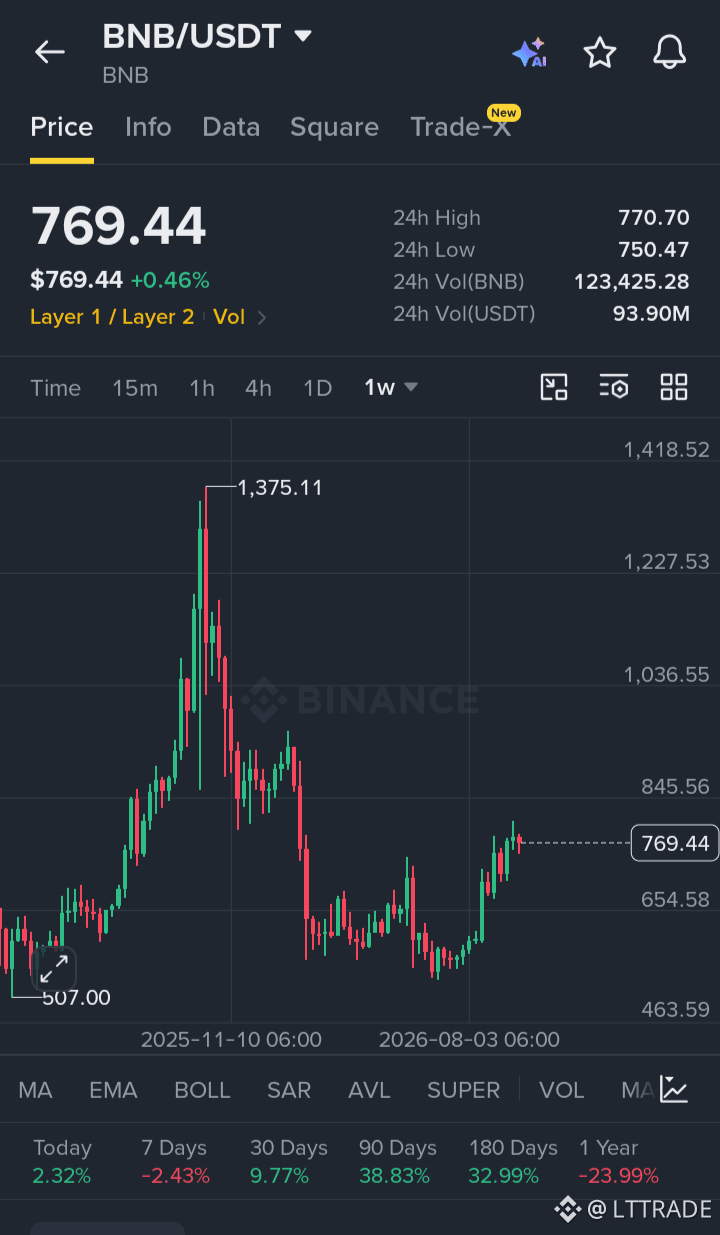
#bnb is making a breakout, and the key level of $1,300 could be coming very soon.
A strong long-term investment opportunity.
{spot}(BNBUSDT)
🔥This is the time for $BNB 💥
#bnb is making a breakout, and the key level of $1,300 could be coming very soon.
A strong long-term investment opportunity.
#bnb is making a breakout, and the key level of $1,300 could be coming very soon.
A strong long-term investment opportunity.
10

·
--
Bullish
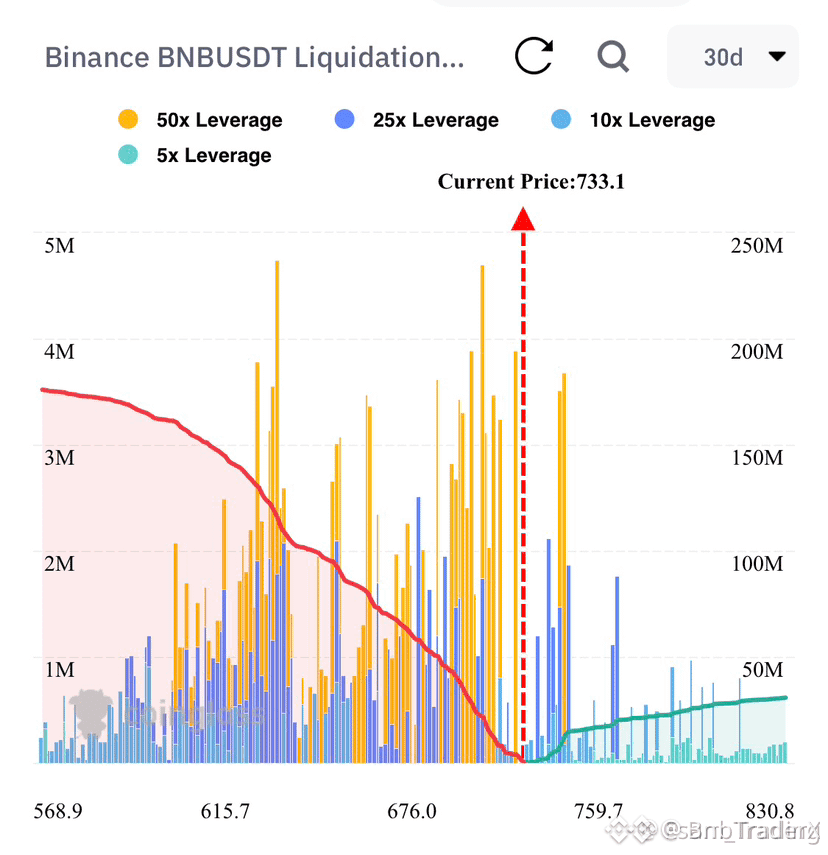
$BNB is demonstrating steady upward momentum on the short-term chart, rebounding strongly from local support near 756.00 to push toward intraday highs around 769.65. The current bullish price action indicates persistent buying pressure, setting up a potential test of major overhead resistance near 780.00 if price sustains above immediate higher-low support levels.
Target 1: 769.65 Target 2: 776.00 Target 3: 785.00
#BNB #Crypto #Trading
{spot}(BNBUSDT)
$QNT
{spot}(QNTUSDT)
$PHA
{spot}(PHAUSDT)
$BNB is demonstrating steady upward momentum on the short-term chart, rebounding strongly from local support near 756.00 to push toward intraday highs around 769.65. The current bullish price action indicates persistent buying pressure, setting up a potential test of major overhead resistance near 780.00 if price sustains above immediate higher-low support levels.
Target 1: 769.65 Target 2: 776.00 Target 3: 785.00
#BNB #Crypto #Trading
$QNT
$PHA
Target 1: 769.65 Target 2: 776.00 Target 3: 785.00
#BNB #Crypto #Trading
$QNT
$PHA
giveme pl onsausage:
BNB go go 🚀
1
2
111

·
--
🚨 BTC & BNB MARKET UPDATE 🚨
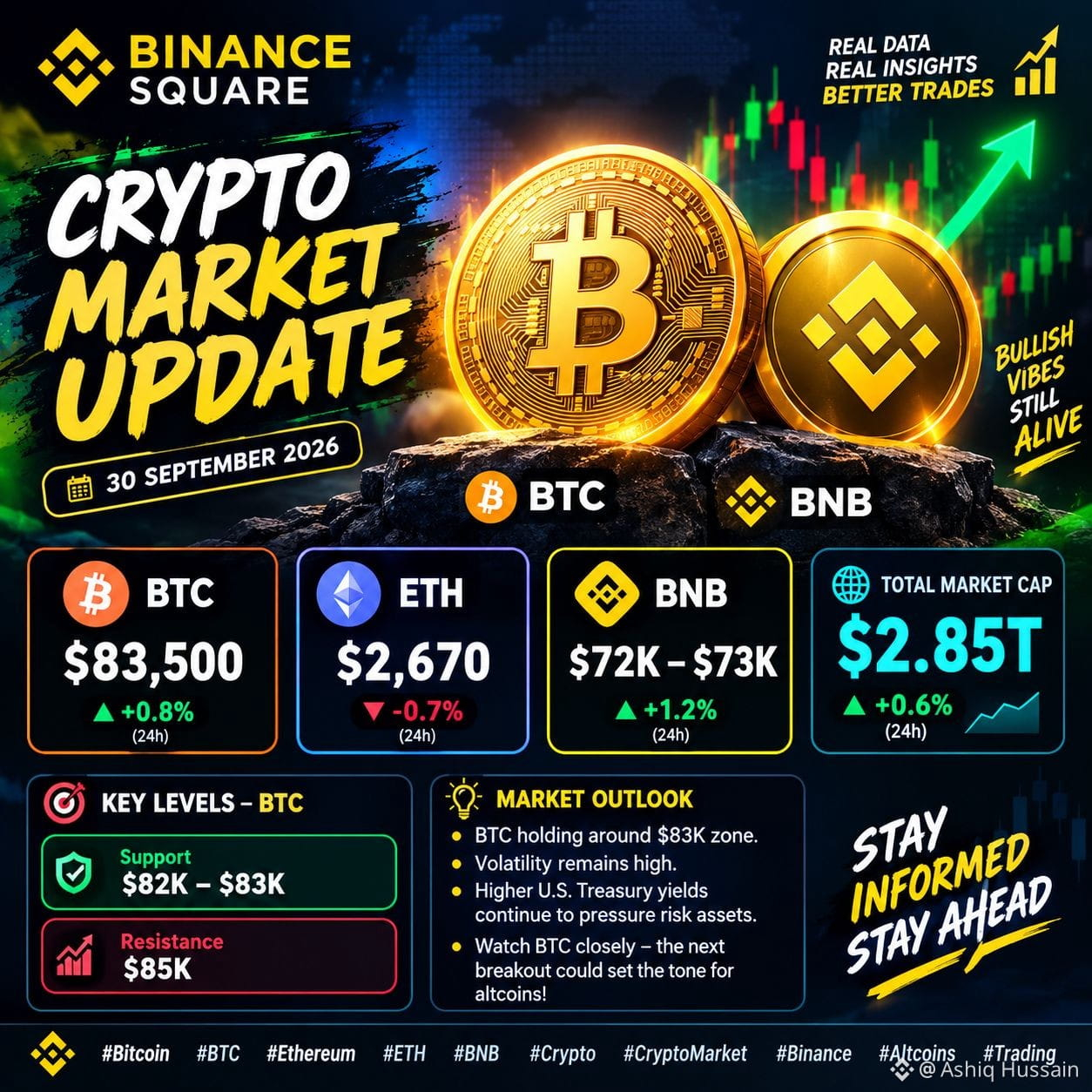
🔥 Bitcoin is holding around the $83K zone, while BNB remains in focus as the crypto market watches for the next big move.
🟠 $BTC : ~$83.5K
🟡 $BNB : ~$72K–$73K
🔵 $ETH : ~$2.67K
🌐 Total Market Cap: ~$2.85T
📊 BTC Key Levels
🟢 Support: $82K–$83K
🔴 Resistance: $85K
Volatility is still high — keep an eye on BTC and BNB for the next breakout or rejection. 👀📈
What are you watching today — BTC or BNB? 🔥
#Bitcoin #BNB #CryptoMarket #Ethereum #Altcoins
{spot}(BTCUSDT)
{spot}(ETHUSDT)
{spot}(BNBUSDT)
🚨 BTC & BNB MARKET UPDATE 🚨
🔥 Bitcoin is holding around the $83K zone, while BNB remains in focus as the crypto market watches for the next big move.
🟠 $BTC : ~$83.5K
🟡 $BNB : ~$72K–$73K
🔵 $ETH : ~$2.67K
🌐 Total Market Cap: ~$2.85T
📊 BTC Key Levels
🟢 Support: $82K–$83K
🔴 Resistance: $85K
Volatility is still high — keep an eye on BTC and BNB for the next breakout or rejection. 👀📈
What are you watching today — BTC or BNB? 🔥
#Bitcoin #BNB #CryptoMarket #Ethereum #Altcoins
🔥 Bitcoin is holding around the $83K zone, while BNB remains in focus as the crypto market watches for the next big move.
🟠 $BTC : ~$83.5K
🟡 $BNB : ~$72K–$73K
🔵 $ETH : ~$2.67K
🌐 Total Market Cap: ~$2.85T
📊 BTC Key Levels
🟢 Support: $82K–$83K
🔴 Resistance: $85K
Volatility is still high — keep an eye on BTC and BNB for the next breakout or rejection. 👀📈
What are you watching today — BTC or BNB? 🔥
#Bitcoin #BNB #CryptoMarket #Ethereum #Altcoins
83

·
--
Article
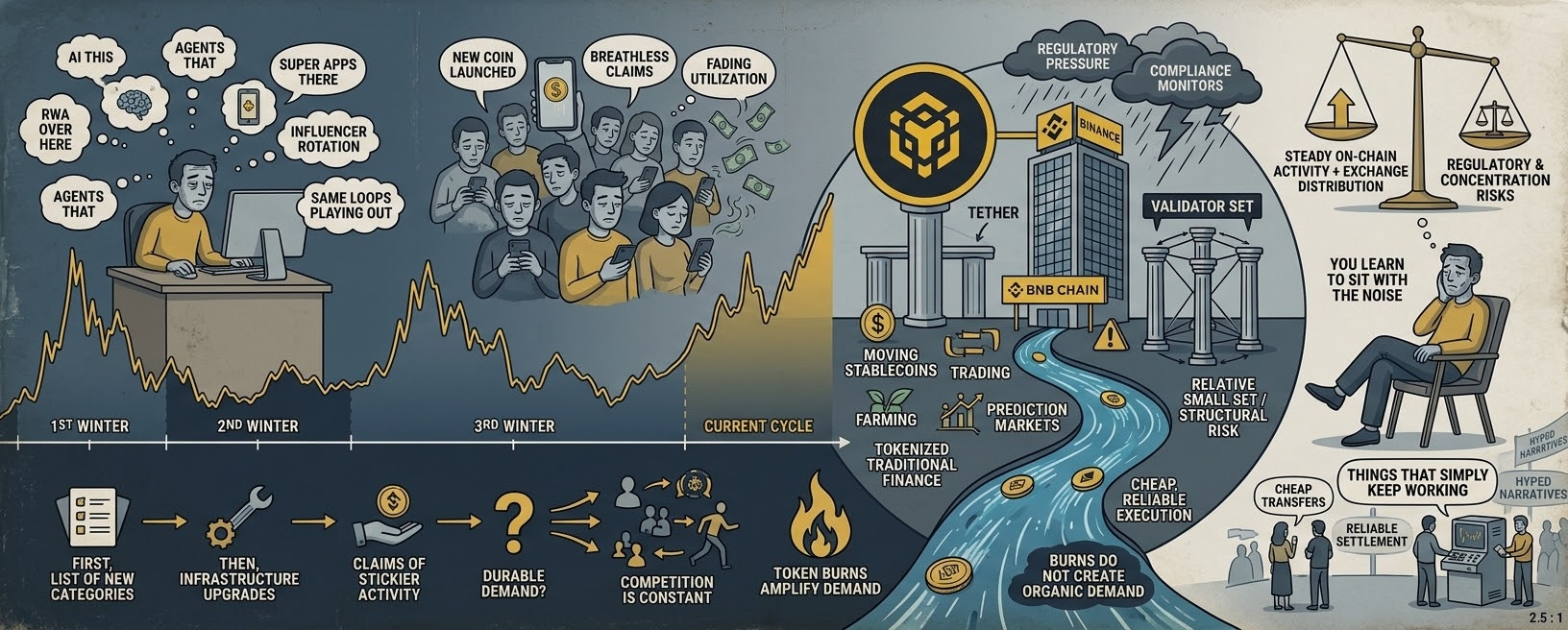
BNB and the Quiet Exhaustion of Watching Another Ecosystem ExpandI keep opening the charts out of habit more than hope these days. It’s not that I’ve given up on crypto. It’s that the same loop has played out so many times that the excitement feels like a muscle that atrophied somewhere around the third or fourth major winter. You learn to sit with the noise instead of chasing it. Too many coins get launched with the same breathless claims. Influencers rotate through the same talking points with slightly different branding. AI this, agents that, real-world assets over here, super apps over there. Every cycle invents a fresh reason why this time the utility will stick, and every cycle a large percentage of those reasons quietly fade when the speculative capital moves on. Honestly, the fatigue is less about losing money and more about watching the same patterns repeat while the underlying problems of actual sustained usage remain stubbornly familiar.
Somewhere in the middle of that background tiredness sits BNB. I didn’t arrive at it through some pure ideological conviction about decentralization. Most of us who’ve been around long enough didn’t. It started as something practical and a little unsexy. An exchange token that shaved fees and gave you a seat at the table for whatever Binance was launching next. Over the years it became the gas for a chain that made a clear trade-off: speed and low cost over the kind of maximal decentralization that looks good in whitepapers but often struggles to keep everyday users. That choice was never pure. It was pragmatic. And pragmatism in this space has always carried its own set of quiet costs.
What still catches my attention is how consistently the chain has been used for the boring stuff. People move stablecoins. They trade. They farm. They experiment with whatever the current narrative is, whether that’s prediction markets or early versions of autonomous agents or tokenized pieces of traditional finance. The fees stay low enough that the activity doesn’t feel punishing. That’s not a small thing. Most users still abandon chains the moment gas becomes an obstacle. BNB Chain has spent years solving for that particular friction while a lot of other networks spent the same years optimizing for narratives that looked better in pitch decks. The problem of cheap, reliable execution is real. It doesn’t generate the same dopamine as the latest AI wrapper or the newest restaking story, but it is the kind of problem that keeps showing up long after the hype accounts move on to the next shiny object.
Still, let’s be real about the tether. You cannot talk about BNB without talking about Binance, and you cannot talk about Binance without remembering the settlements, the compliance monitors, the jurisdictional fights that never fully go away. The token’s demand has always been heavily influenced by the health and reach of that one company. When the exchange is expanding and distributing access, the token benefits. When regulatory pressure tightens or market share shifts, the price feels it faster than many pure protocol tokens ever would. That single-entity exposure is not theoretical. It’s structural. The validator set remains relatively small. The chain prioritizes performance in ways that leave it more concentrated than the maximalists would prefer. Those are not secret risks. They are the cost of the design decisions that made the network usable for the people who actually show up day after day.
I’ve watched enough cycles to know how the expansion stories usually go. First comes the list of new categories the chain is “winning.” Then the announcements about infrastructure upgrades and partnerships. Then the claims that this time the activity is stickier because the use cases have matured. Sometimes pieces of that story hold. Sometimes they turn out to be temporary liquidity chasing the latest incentive program. Token burns reduce supply in a transparent way, which helps the math on paper, but burns do not create organic demand. They only amplify whatever demand already exists. If users and builders start preferring other environments for reasons of tooling, liquidity depth, or simply fresher incentives, the fee pressure that underpins the token does not magically remain. Competition is constant. Other high-throughput chains and layered systems keep improving. The question is never whether BNB Chain can process transactions. It can. The harder question is whether the combination of exchange distribution and on-chain activity creates a durable enough base to matter when the broader market turns quiet again.
There is a particular kind of cautious curiosity that comes after enough disappointments. You stop looking for the thing that will change everything and start looking for the things that simply keep working when the noise dies down. Cheap transfers and reliable settlement fall into that category for a certain kind of user. The attempt to pull traditional assets and more complex financial products onto the same rails is interesting in theory, though I have seen enough half-finished versions of that idea to remain skeptical about how cleanly it will land. AI agents generating real transaction volume is another experiment worth watching without getting emotionally invested. Most of these experiments will fail or plateau. A few might find product-market fit in ways that are quieter and more useful than the marketing ever suggested. That is usually how it goes.
I don’t know where this particular version of the story ends. Maybe the steady activity and the exchange distribution create something more resilient than the average L1 narrative. Maybe the regulatory and concentration risks eventually dominate and the token’s value remains more tightly bound to one company’s fortunes than many holders prefer to admit. Both possibilities feel plausible. That uncertainty is the part I keep coming back to. Crypto rewards the people who can sit with incomplete information without needing to force a clean narrative onto it. The market will keep inventing new reasons to get excited about BNB or whatever replaces it in the conversation. Most of those reasons will look smaller in hindsight. The only thing that feels relatively clear is that the exhaustion does not disappear. You just learn to carry it while you watch which pieces of the infrastructure still get used when the influencers have moved on and the charts have gone quiet again.
#BNB
{future}(GRVTUSDT)
{future}(AKEUSDT)
$BNB $GRVT $AKE
{future}(BNBUSDT)
BNB and the Quiet Exhaustion of Watching Another Ecosystem Expand
I keep opening the charts out of habit more than hope these days. It’s not that I’ve given up on crypto. It’s that the same loop has played out so many times that the excitement feels like a muscle that atrophied somewhere around the third or fourth major winter. You learn to sit with the noise instead of chasing it. Too many coins get launched with the same breathless claims. Influencers rotate through the same talking points with slightly different branding. AI this, agents that, real-world assets over here, super apps over there. Every cycle invents a fresh reason why this time the utility will stick, and every cycle a large percentage of those reasons quietly fade when the speculative capital moves on. Honestly, the fatigue is less about losing money and more about watching the same patterns repeat while the underlying problems of actual sustained usage remain stubbornly familiar.
Somewhere in the middle of that background tiredness sits BNB. I didn’t arrive at it through some pure ideological conviction about decentralization. Most of us who’ve been around long enough didn’t. It started as something practical and a little unsexy. An exchange token that shaved fees and gave you a seat at the table for whatever Binance was launching next. Over the years it became the gas for a chain that made a clear trade-off: speed and low cost over the kind of maximal decentralization that looks good in whitepapers but often struggles to keep everyday users. That choice was never pure. It was pragmatic. And pragmatism in this space has always carried its own set of quiet costs.
What still catches my attention is how consistently the chain has been used for the boring stuff. People move stablecoins. They trade. They farm. They experiment with whatever the current narrative is, whether that’s prediction markets or early versions of autonomous agents or tokenized pieces of traditional finance. The fees stay low enough that the activity doesn’t feel punishing. That’s not a small thing. Most users still abandon chains the moment gas becomes an obstacle. BNB Chain has spent years solving for that particular friction while a lot of other networks spent the same years optimizing for narratives that looked better in pitch decks. The problem of cheap, reliable execution is real. It doesn’t generate the same dopamine as the latest AI wrapper or the newest restaking story, but it is the kind of problem that keeps showing up long after the hype accounts move on to the next shiny object.
Still, let’s be real about the tether. You cannot talk about BNB without talking about Binance, and you cannot talk about Binance without remembering the settlements, the compliance monitors, the jurisdictional fights that never fully go away. The token’s demand has always been heavily influenced by the health and reach of that one company. When the exchange is expanding and distributing access, the token benefits. When regulatory pressure tightens or market share shifts, the price feels it faster than many pure protocol tokens ever would. That single-entity exposure is not theoretical. It’s structural. The validator set remains relatively small. The chain prioritizes performance in ways that leave it more concentrated than the maximalists would prefer. Those are not secret risks. They are the cost of the design decisions that made the network usable for the people who actually show up day after day.
I’ve watched enough cycles to know how the expansion stories usually go. First comes the list of new categories the chain is “winning.” Then the announcements about infrastructure upgrades and partnerships. Then the claims that this time the activity is stickier because the use cases have matured. Sometimes pieces of that story hold. Sometimes they turn out to be temporary liquidity chasing the latest incentive program. Token burns reduce supply in a transparent way, which helps the math on paper, but burns do not create organic demand. They only amplify whatever demand already exists. If users and builders start preferring other environments for reasons of tooling, liquidity depth, or simply fresher incentives, the fee pressure that underpins the token does not magically remain. Competition is constant. Other high-throughput chains and layered systems keep improving. The question is never whether BNB Chain can process transactions. It can. The harder question is whether the combination of exchange distribution and on-chain activity creates a durable enough base to matter when the broader market turns quiet again.
There is a particular kind of cautious curiosity that comes after enough disappointments. You stop looking for the thing that will change everything and start looking for the things that simply keep working when the noise dies down. Cheap transfers and reliable settlement fall into that category for a certain kind of user. The attempt to pull traditional assets and more complex financial products onto the same rails is interesting in theory, though I have seen enough half-finished versions of that idea to remain skeptical about how cleanly it will land. AI agents generating real transaction volume is another experiment worth watching without getting emotionally invested. Most of these experiments will fail or plateau. A few might find product-market fit in ways that are quieter and more useful than the marketing ever suggested. That is usually how it goes.
I don’t know where this particular version of the story ends. Maybe the steady activity and the exchange distribution create something more resilient than the average L1 narrative. Maybe the regulatory and concentration risks eventually dominate and the token’s value remains more tightly bound to one company’s fortunes than many holders prefer to admit. Both possibilities feel plausible. That uncertainty is the part I keep coming back to. Crypto rewards the people who can sit with incomplete information without needing to force a clean narrative onto it. The market will keep inventing new reasons to get excited about BNB or whatever replaces it in the conversation. Most of those reasons will look smaller in hindsight. The only thing that feels relatively clear is that the exhaustion does not disappear. You just learn to carry it while you watch which pieces of the infrastructure still get used when the influencers have moved on and the charts have gone quiet again.
#BNB
$BNB $GRVT $AKE
Somewhere in the middle of that background tiredness sits BNB. I didn’t arrive at it through some pure ideological conviction about decentralization. Most of us who’ve been around long enough didn’t. It started as something practical and a little unsexy. An exchange token that shaved fees and gave you a seat at the table for whatever Binance was launching next. Over the years it became the gas for a chain that made a clear trade-off: speed and low cost over the kind of maximal decentralization that looks good in whitepapers but often struggles to keep everyday users. That choice was never pure. It was pragmatic. And pragmatism in this space has always carried its own set of quiet costs.
What still catches my attention is how consistently the chain has been used for the boring stuff. People move stablecoins. They trade. They farm. They experiment with whatever the current narrative is, whether that’s prediction markets or early versions of autonomous agents or tokenized pieces of traditional finance. The fees stay low enough that the activity doesn’t feel punishing. That’s not a small thing. Most users still abandon chains the moment gas becomes an obstacle. BNB Chain has spent years solving for that particular friction while a lot of other networks spent the same years optimizing for narratives that looked better in pitch decks. The problem of cheap, reliable execution is real. It doesn’t generate the same dopamine as the latest AI wrapper or the newest restaking story, but it is the kind of problem that keeps showing up long after the hype accounts move on to the next shiny object.
Still, let’s be real about the tether. You cannot talk about BNB without talking about Binance, and you cannot talk about Binance without remembering the settlements, the compliance monitors, the jurisdictional fights that never fully go away. The token’s demand has always been heavily influenced by the health and reach of that one company. When the exchange is expanding and distributing access, the token benefits. When regulatory pressure tightens or market share shifts, the price feels it faster than many pure protocol tokens ever would. That single-entity exposure is not theoretical. It’s structural. The validator set remains relatively small. The chain prioritizes performance in ways that leave it more concentrated than the maximalists would prefer. Those are not secret risks. They are the cost of the design decisions that made the network usable for the people who actually show up day after day.
I’ve watched enough cycles to know how the expansion stories usually go. First comes the list of new categories the chain is “winning.” Then the announcements about infrastructure upgrades and partnerships. Then the claims that this time the activity is stickier because the use cases have matured. Sometimes pieces of that story hold. Sometimes they turn out to be temporary liquidity chasing the latest incentive program. Token burns reduce supply in a transparent way, which helps the math on paper, but burns do not create organic demand. They only amplify whatever demand already exists. If users and builders start preferring other environments for reasons of tooling, liquidity depth, or simply fresher incentives, the fee pressure that underpins the token does not magically remain. Competition is constant. Other high-throughput chains and layered systems keep improving. The question is never whether BNB Chain can process transactions. It can. The harder question is whether the combination of exchange distribution and on-chain activity creates a durable enough base to matter when the broader market turns quiet again.
There is a particular kind of cautious curiosity that comes after enough disappointments. You stop looking for the thing that will change everything and start looking for the things that simply keep working when the noise dies down. Cheap transfers and reliable settlement fall into that category for a certain kind of user. The attempt to pull traditional assets and more complex financial products onto the same rails is interesting in theory, though I have seen enough half-finished versions of that idea to remain skeptical about how cleanly it will land. AI agents generating real transaction volume is another experiment worth watching without getting emotionally invested. Most of these experiments will fail or plateau. A few might find product-market fit in ways that are quieter and more useful than the marketing ever suggested. That is usually how it goes.
I don’t know where this particular version of the story ends. Maybe the steady activity and the exchange distribution create something more resilient than the average L1 narrative. Maybe the regulatory and concentration risks eventually dominate and the token’s value remains more tightly bound to one company’s fortunes than many holders prefer to admit. Both possibilities feel plausible. That uncertainty is the part I keep coming back to. Crypto rewards the people who can sit with incomplete information without needing to force a clean narrative onto it. The market will keep inventing new reasons to get excited about BNB or whatever replaces it in the conversation. Most of those reasons will look smaller in hindsight. The only thing that feels relatively clear is that the exhaustion does not disappear. You just learn to carry it while you watch which pieces of the infrastructure still get used when the influencers have moved on and the charts have gone quiet again.
#BNB
$BNB $GRVT $AKE
670

·
--
🟡 BNB — powering the Binance ecosystem and beyond.
BNB is the native asset of the BNB Chain ecosystem and is used for transaction fees, applications, and various blockchain-based activities. As the ecosystem continues to develop, BNB remains an important part of the Web3 landscape.
What do you think about the future of BNB? 👇
#BNB #Binance #BNBChain #Crypto #Blockchain
🟡 BNB — powering the Binance ecosystem and beyond.
BNB is the native asset of the BNB Chain ecosystem and is used for transaction fees, applications, and various blockchain-based activities. As the ecosystem continues to develop, BNB remains an important part of the Web3 landscape.
What do you think about the future of BNB? 👇
#BNB #Binance #BNBChain #Crypto #Blockchain
BNB is the native asset of the BNB Chain ecosystem and is used for transaction fees, applications, and various blockchain-based activities. As the ecosystem continues to develop, BNB remains an important part of the Web3 landscape.
What do you think about the future of BNB? 👇
#BNB #Binance #BNBChain #Crypto #Blockchain
AngelOfCrypto_-:
nice
2
1
272

·
--
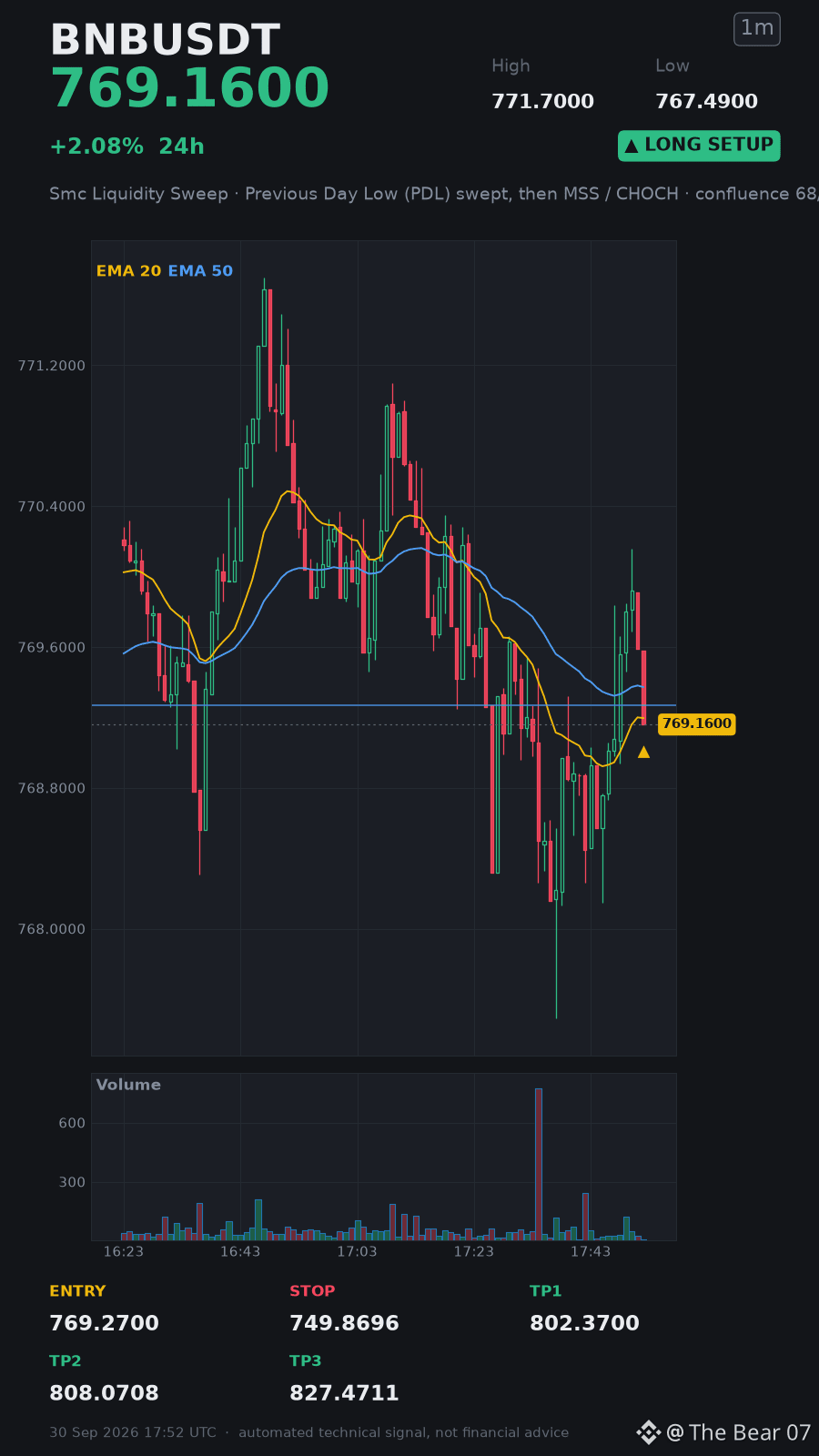
🚨 #BNB SMC SWEEP IGNITES A MAJOR LONG! 🤯🚀
I’m taking this trade now $BNB 👇
Long..... Sweep..... Watch the wave..... Boom.....‼️‼️‼️
Entry: 768.3200 – 769.2700
Stop-loss: 749.8696
🟢 TP1: 802.3700
🟢 TP2: 808.0708
🟢 TP3: 827.4711
Join me, trade the wave together 👇⬇️⬇️ Long.. With meee...👇⬇️ $BNB
🚨 #BNB SMC SWEEP IGNITES A MAJOR LONG! 🤯🚀
I’m taking this trade now $BNB 👇
Long..... Sweep..... Watch the wave..... Boom.....‼️‼️‼️
Entry: 768.3200 – 769.2700
Stop-loss: 749.8696
🟢 TP1: 802.3700
🟢 TP2: 808.0708
🟢 TP3: 827.4711
Join me, trade the wave together 👇⬇️⬇️ Long.. With meee...👇⬇️ $BNB
I’m taking this trade now $BNB 👇
Long..... Sweep..... Watch the wave..... Boom.....‼️‼️‼️
Entry: 768.3200 – 769.2700
Stop-loss: 749.8696
🟢 TP1: 802.3700
🟢 TP2: 808.0708
🟢 TP3: 827.4711
Join me, trade the wave together 👇⬇️⬇️ Long.. With meee...👇⬇️ $BNB


·
--
Bullish
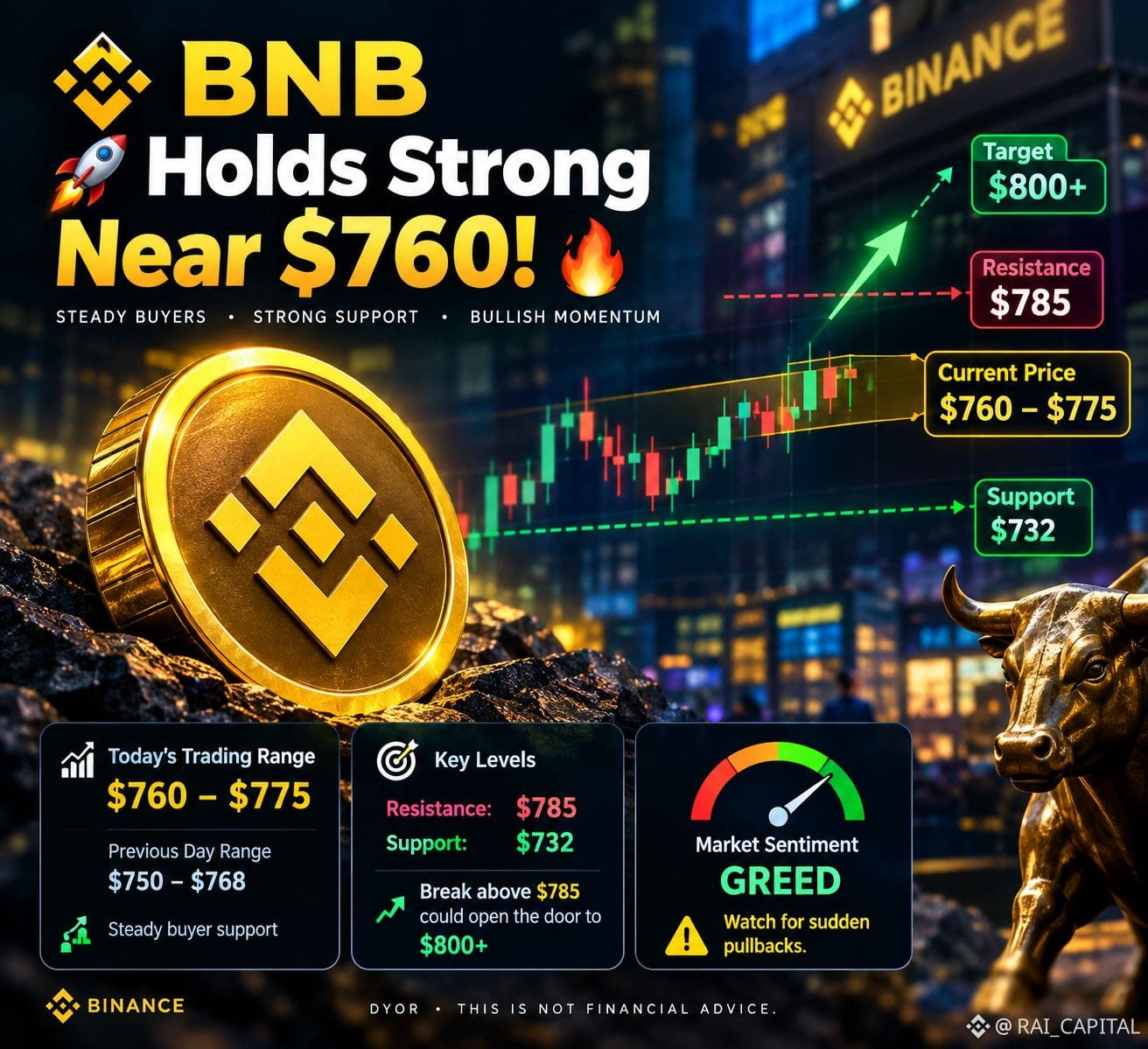
🚀 $BNB Holds Strong Near $760! 🔥
📊 BNB is trading around $760–$775 today, with the previous day's range between $750 and $768 showing steady buyer support. 💪
🎯 Key levels: resistance at $785, support near $732; a break above $785 could open the door to $800+. 📈
⚠️ Sentiment is greedy, so watch for sudden pullbacks. This is not financial advice.
#BNB_Market_Update #bnb
Trade here for Coin $BNB here 👇
{future}(BNBUSDT)
🚀 $BNB Holds Strong Near $760! 🔥
📊 BNB is trading around $760–$775 today, with the previous day's range between $750 and $768 showing steady buyer support. 💪
🎯 Key levels: resistance at $785, support near $732; a break above $785 could open the door to $800+. 📈
⚠️ Sentiment is greedy, so watch for sudden pullbacks. This is not financial advice.
#BNB_Market_Update #bnb
Trade here for Coin $BNB here 👇
📊 BNB is trading around $760–$775 today, with the previous day's range between $750 and $768 showing steady buyer support. 💪
🎯 Key levels: resistance at $785, support near $732; a break above $785 could open the door to $800+. 📈
⚠️ Sentiment is greedy, so watch for sudden pullbacks. This is not financial advice.
#BNB_Market_Update #bnb
Trade here for Coin $BNB here 👇
25

·
--
Bullish
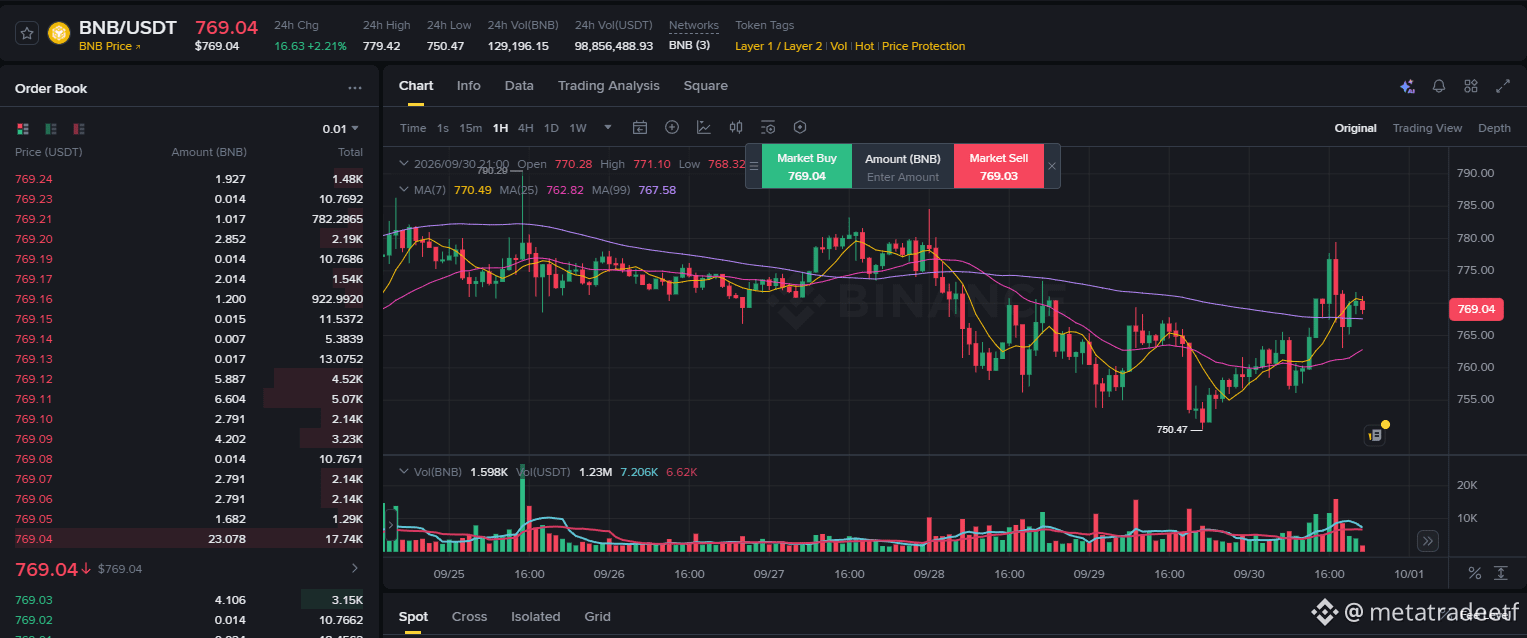
$BNB Consolidating Near $769! Is Binance Coin Preparing for an Explosive Push Higher? 🚀
BNB exhibits strong structural resilience on the 1H chart this Wednesday, trading firmly at 769.04 (+2.21%). The price action is tightly compressed, successfully holding above the immediate MA(25) at 762.82 and the macro dynamic floor MA(99) at 767.58.
After bouncing hard from the 750.47 local bottom, bulls are accumulating heavy volume to smash past the overhead barriers.
👇 Are you buying this consolidation dip or waiting for sub-$750? Vote below!
#bnb #Binance #crypto #trading #TradingSignals
{spot}(BNBUSDT)
$BNB Consolidating Near $769! Is Binance Coin Preparing for an Explosive Push Higher? 🚀
BNB exhibits strong structural resilience on the 1H chart this Wednesday, trading firmly at 769.04 (+2.21%). The price action is tightly compressed, successfully holding above the immediate MA(25) at 762.82 and the macro dynamic floor MA(99) at 767.58.
After bouncing hard from the 750.47 local bottom, bulls are accumulating heavy volume to smash past the overhead barriers.
👇 Are you buying this consolidation dip or waiting for sub-$750? Vote below!
#bnb #Binance #crypto #trading #TradingSignals
BNB exhibits strong structural resilience on the 1H chart this Wednesday, trading firmly at 769.04 (+2.21%). The price action is tightly compressed, successfully holding above the immediate MA(25) at 762.82 and the macro dynamic floor MA(99) at 767.58.
After bouncing hard from the 750.47 local bottom, bulls are accumulating heavy volume to smash past the overhead barriers.
👇 Are you buying this consolidation dip or waiting for sub-$750? Vote below!
#bnb #Binance #crypto #trading #TradingSignals
7

30D trade $BTC 10.1 USDT
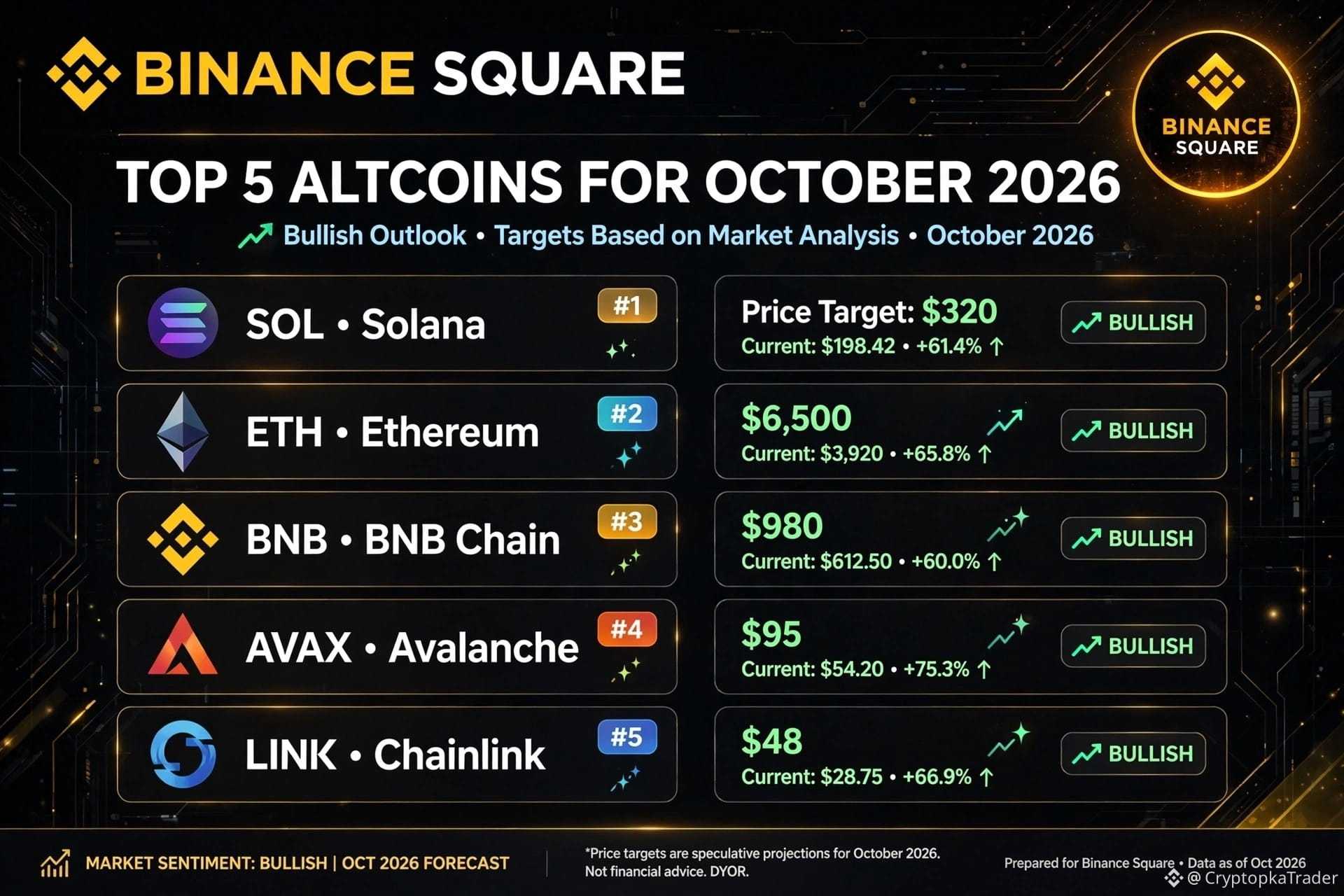
Top 5 Altcoins For October 2026 🚀 My Bullish List!
$BTC is at $110K and altseason is loading. Here are my Top 5 picks for October 2026:
1. $SOL - Solana - Target $320
Reason: Strong ecosystem, meme coins pumping on SOL. Currently $198.
2. $ETH - Ethereum - Target $6,500
Reason: ETH ETF inflows + staking. Most undervalued right now.
3. #BNB - BNB Chain - Target $980
Reason: Binance Traders League + BNB burn. BNB always pumps in Q4.
4. #AVAX - Avalanche - Target $95
Reason: Gaming tokens on AVAX are exploding. Huge potential.
5. #LINK - Chainlink - Target $48
Reason: Every blockchain needs LINK. Real utility.
My Strategy: 50% in BTC $ETH, 50% in these 5 alts. Holding till end of October.
Which one is your favorite? I am most bullish on SOL 🚀
Comment your top pick 👇
Top 5 Altcoins For October 2026 🚀 My Bullish List!
$BTC is at $110K and altseason is loading. Here are my Top 5 picks for October 2026:
1. $SOL - Solana - Target $320
Reason: Strong ecosystem, meme coins pumping on SOL. Currently $198.
2. $ETH - Ethereum - Target $6,500
Reason: ETH ETF inflows + staking. Most undervalued right now.
3. #BNB - BNB Chain - Target $980
Reason: Binance Traders League + BNB burn. BNB always pumps in Q4.
4. #AVAX - Avalanche - Target $95
Reason: Gaming tokens on AVAX are exploding. Huge potential.
5. #LINK - Chainlink - Target $48
Reason: Every blockchain needs LINK. Real utility.
My Strategy: 50% in BTC $ETH , 50% in these 5 alts. Holding till end of October.
Which one is your favorite? I am most bullish on SOL 🚀
Comment your top pick 👇
$BTC is at $110K and altseason is loading. Here are my Top 5 picks for October 2026:
1. $SOL - Solana - Target $320
Reason: Strong ecosystem, meme coins pumping on SOL. Currently $198.
2. $ETH - Ethereum - Target $6,500
Reason: ETH ETF inflows + staking. Most undervalued right now.
3. #BNB - BNB Chain - Target $980
Reason: Binance Traders League + BNB burn. BNB always pumps in Q4.
4. #AVAX - Avalanche - Target $95
Reason: Gaming tokens on AVAX are exploding. Huge potential.
5. #LINK - Chainlink - Target $48
Reason: Every blockchain needs LINK. Real utility.
My Strategy: 50% in BTC $ETH , 50% in these 5 alts. Holding till end of October.
Which one is your favorite? I am most bullish on SOL 🚀
Comment your top pick 👇
42

·
--
Bullish
$AAPL.US $BNB
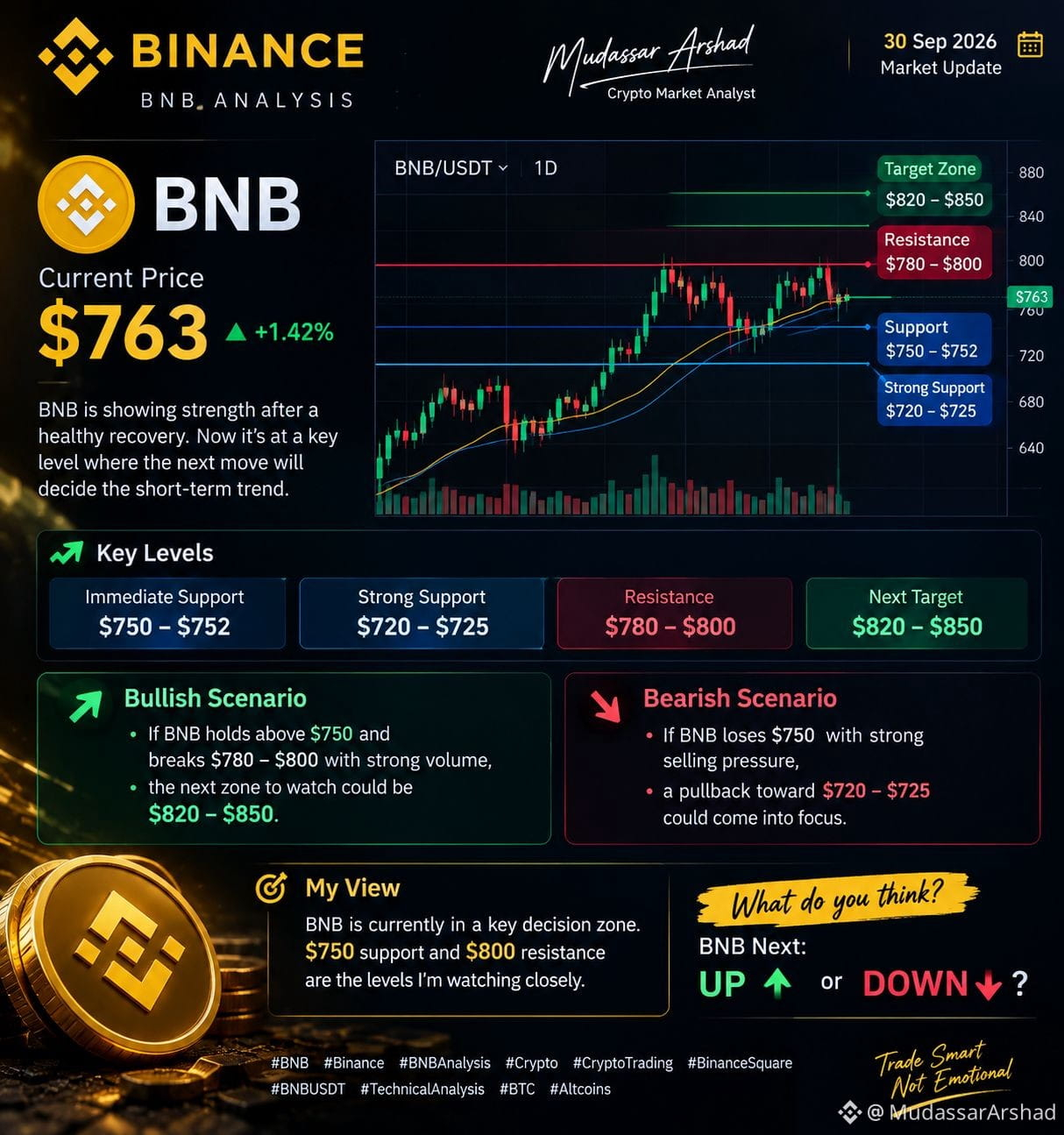
MARKET UPDATE | KEY LEVELS TO WATCH
BNB is currently trading around $763 and sitting at an important decision zone. 📊
🔹 Support: $750–$752
🔹 Strong Support: $720–$725
🔸 Resistance: $780–$800
📈 Bullish Scenario:
If BNB holds above $750 and breaks $780–$800 with strong volume, the next zone to watch could be $820–$850.
📉 Bearish Scenario:
If BNB loses $750 with strong selling pressure, we could see a pullback toward $720–$725.
🎯 My View:
For now, I’m watching $750 support and $800 resistance closely. The next move may depend on which level breaks first.
🔥 What do you think?
BNB next move: UP 🚀 or DOWN 📉?
⚠️ Not financial advice. Do your own research (DYOR).
#BNB #Binance ance #BNBAnalysis alysis #crypto #Cryptotown_live rading #BinanceSquare
#bnb USDT #TechnicalAnalysis #Altcoins
$AAPL.US $BNB
MARKET UPDATE | KEY LEVELS TO WATCH
BNB is currently trading around $763 and sitting at an important decision zone. 📊
🔹 Support: $750–$752
🔹 Strong Support: $720–$725
🔸 Resistance: $780–$800
📈 Bullish Scenario:
If BNB holds above $750 and breaks $780–$800 with strong volume, the next zone to watch could be $820–$850.
📉 Bearish Scenario:
If BNB loses $750 with strong selling pressure, we could see a pullback toward $720–$725.
🎯 My View:
For now, I’m watching $750 support and $800 resistance closely. The next move may depend on which level breaks first.
🔥 What do you think?
BNB next move: UP 🚀 or DOWN 📉?
⚠️ Not financial advice. Do your own research (DYOR).
#BNB #Binance ance #BNBAnalysis alysis #crypto #Cryptotown_live rading #BinanceSquare
#bnb USDT #TechnicalAnalysis #Altcoins
MARKET UPDATE | KEY LEVELS TO WATCH
BNB is currently trading around $763 and sitting at an important decision zone. 📊
🔹 Support: $750–$752
🔹 Strong Support: $720–$725
🔸 Resistance: $780–$800
📈 Bullish Scenario:
If BNB holds above $750 and breaks $780–$800 with strong volume, the next zone to watch could be $820–$850.
📉 Bearish Scenario:
If BNB loses $750 with strong selling pressure, we could see a pullback toward $720–$725.
🎯 My View:
For now, I’m watching $750 support and $800 resistance closely. The next move may depend on which level breaks first.
🔥 What do you think?
BNB next move: UP 🚀 or DOWN 📉?
⚠️ Not financial advice. Do your own research (DYOR).
#BNB #Binance ance #BNBAnalysis alysis #crypto #Cryptotown_live rading #BinanceSquare
#bnb USDT #TechnicalAnalysis #Altcoins
BNB+2.05%
AAPLUS+2.06%
83


·
--
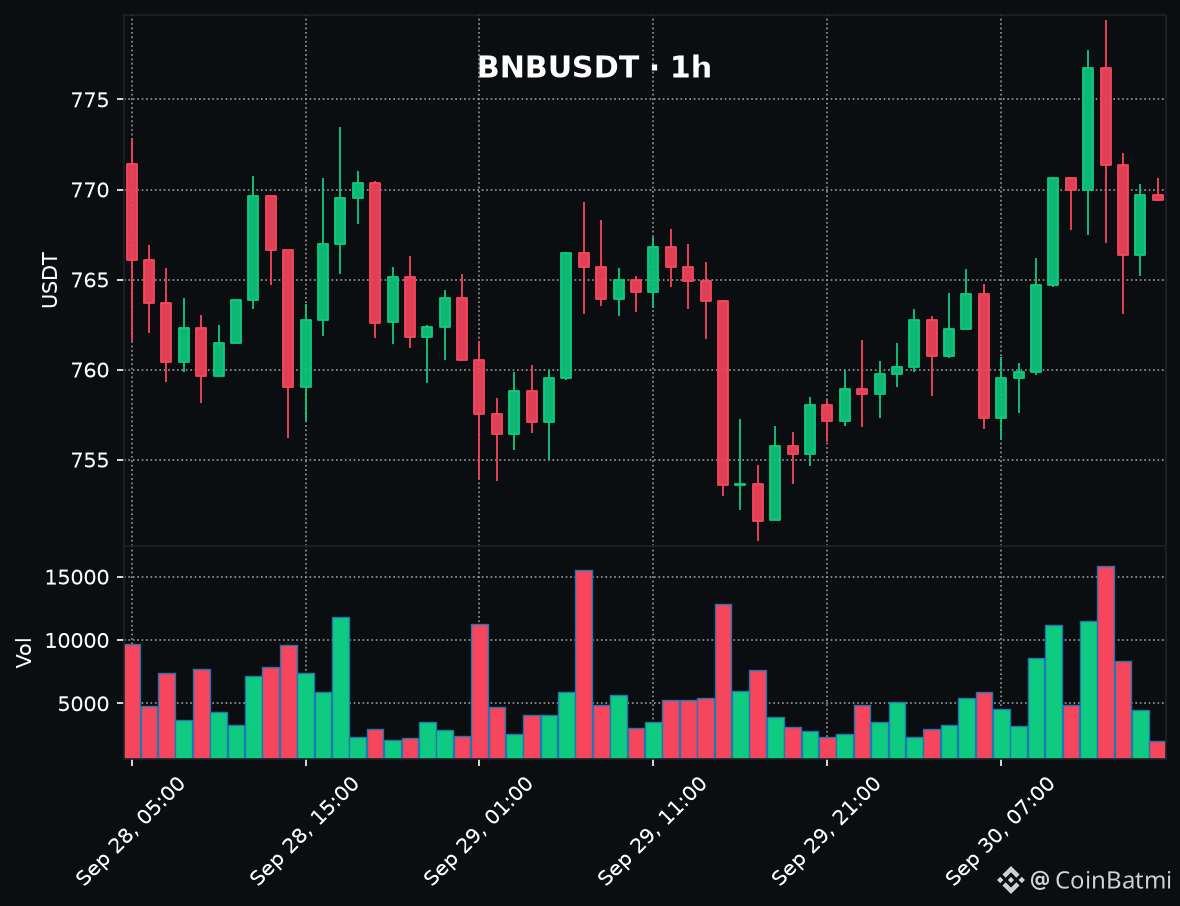
$BNB - Testing the top of the range on light volume
1h · RSI 57.2 · price 769.48 (2.10%)
Support 756.17
Resistance 779.42
24h range 750.47-779.42
Invalidation: 1h close below 756
Price holding above 756 keeps the bull bias intact but a clean break of 779 needs volume confirmation
$BTC
#TechnicalAnalysis #BNB
$BNB - Testing the top of the range on light volume
1h · RSI 57.2 · price 769.48 (2.10%)
Support 756.17
Resistance 779.42
24h range 750.47-779.42
Invalidation: 1h close below 756
Price holding above 756 keeps the bull bias intact but a clean break of 779 needs volume confirmation
$BTC
#TechnicalAnalysis #BNB
1h · RSI 57.2 · price 769.48 (2.10%)
Support 756.17
Resistance 779.42
24h range 750.47-779.42
Invalidation: 1h close below 756
Price holding above 756 keeps the bull bias intact but a clean break of 779 needs volume confirmation
$BTC
#TechnicalAnalysis #BNB
1
56

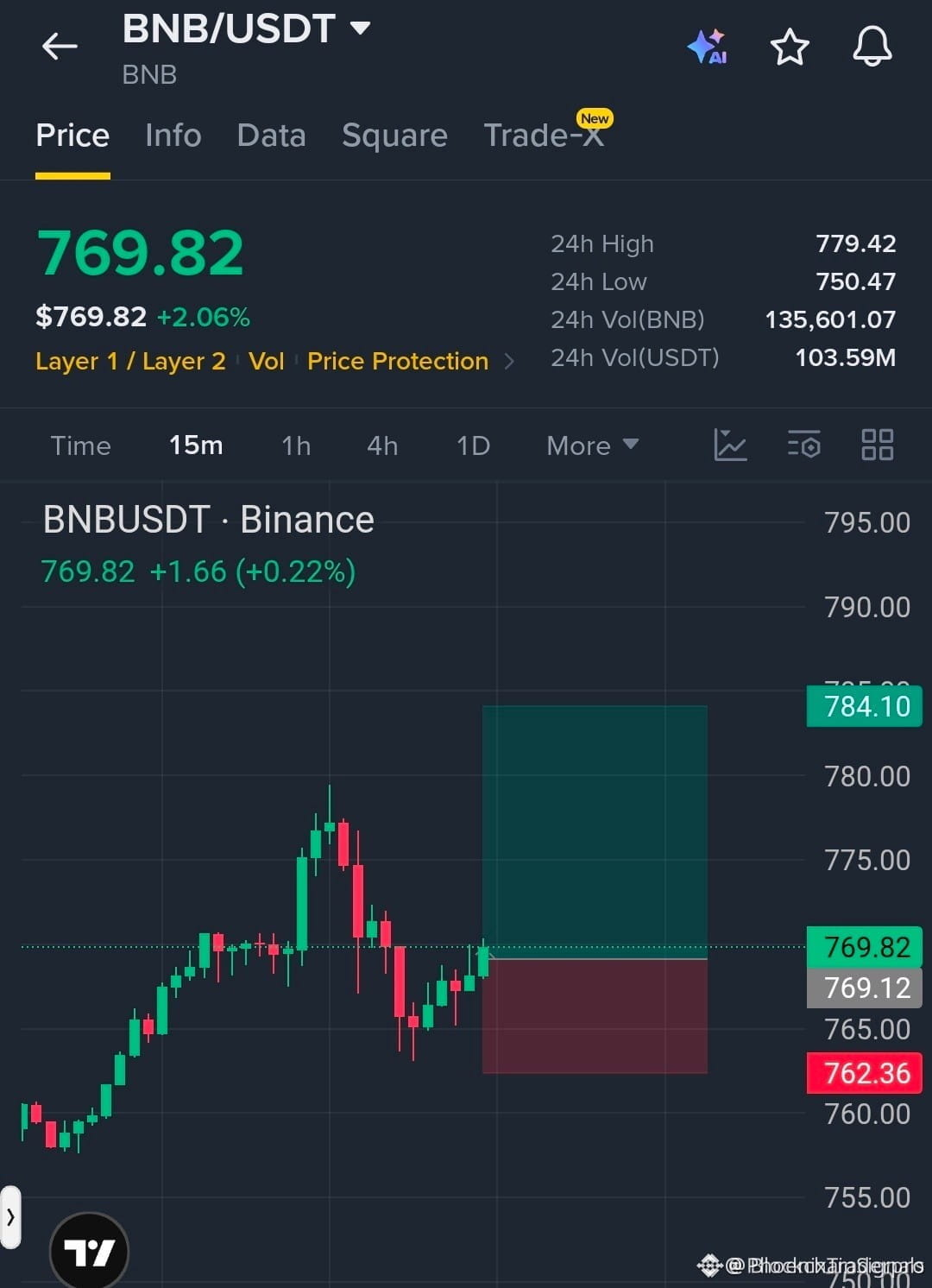
💥 $BNB ABSORBING SELLER PRESSURE AS BUYERS PREPARE FOR REBOUND ABOVE 770! 📈
Entry: 769.12 - 769.82 ⚡
Target: 775.00 / 780.00 / 784.10 🚀
Stop Loss: 762.36 ⚠️
📌 $BNB is crafting a textbook recovery structure, carving out a firm base around the 765–770 floor while aggressive bids step in to absorb the recent pullback. 📊 Candle bodies are stacking higher, signaling smart money accumulation before the next momentum leg.
💡 A sustained reclaim above the 770 pivot opens a clean corridor directly toward upper liquidity targets up to 784.10. 💬 Are you front-running this rebound or waiting for resistance to flip first? 👇
⚠️ Not financial advice. Always manage your risk. 🛡️
🏷️ #BNB #LongSetup #Crypto #Breakout
🎯 ⚡
💥 $BNB ABSORBING SELLER PRESSURE AS BUYERS PREPARE FOR REBOUND ABOVE 770! 📈
Entry: 769.12 - 769.82 ⚡
Target: 775.00 / 780.00 / 784.10 🚀
Stop Loss: 762.36 ⚠️
📌 $BNB is crafting a textbook recovery structure, carving out a firm base around the 765–770 floor while aggressive bids step in to absorb the recent pullback. 📊 Candle bodies are stacking higher, signaling smart money accumulation before the next momentum leg.
💡 A sustained reclaim above the 770 pivot opens a clean corridor directly toward upper liquidity targets up to 784.10. 💬 Are you front-running this rebound or waiting for resistance to flip first? 👇
⚠️ Not financial advice. Always manage your risk. 🛡️
🏷️ #BNB #LongSetup #Crypto #Breakout
🎯 ⚡
Entry: 769.12 - 769.82 ⚡
Target: 775.00 / 780.00 / 784.10 🚀
Stop Loss: 762.36 ⚠️
📌 $BNB is crafting a textbook recovery structure, carving out a firm base around the 765–770 floor while aggressive bids step in to absorb the recent pullback. 📊 Candle bodies are stacking higher, signaling smart money accumulation before the next momentum leg.
💡 A sustained reclaim above the 770 pivot opens a clean corridor directly toward upper liquidity targets up to 784.10. 💬 Are you front-running this rebound or waiting for resistance to flip first? 👇
⚠️ Not financial advice. Always manage your risk. 🛡️
🏷️ #BNB #LongSetup #Crypto #Breakout
🎯 ⚡
5

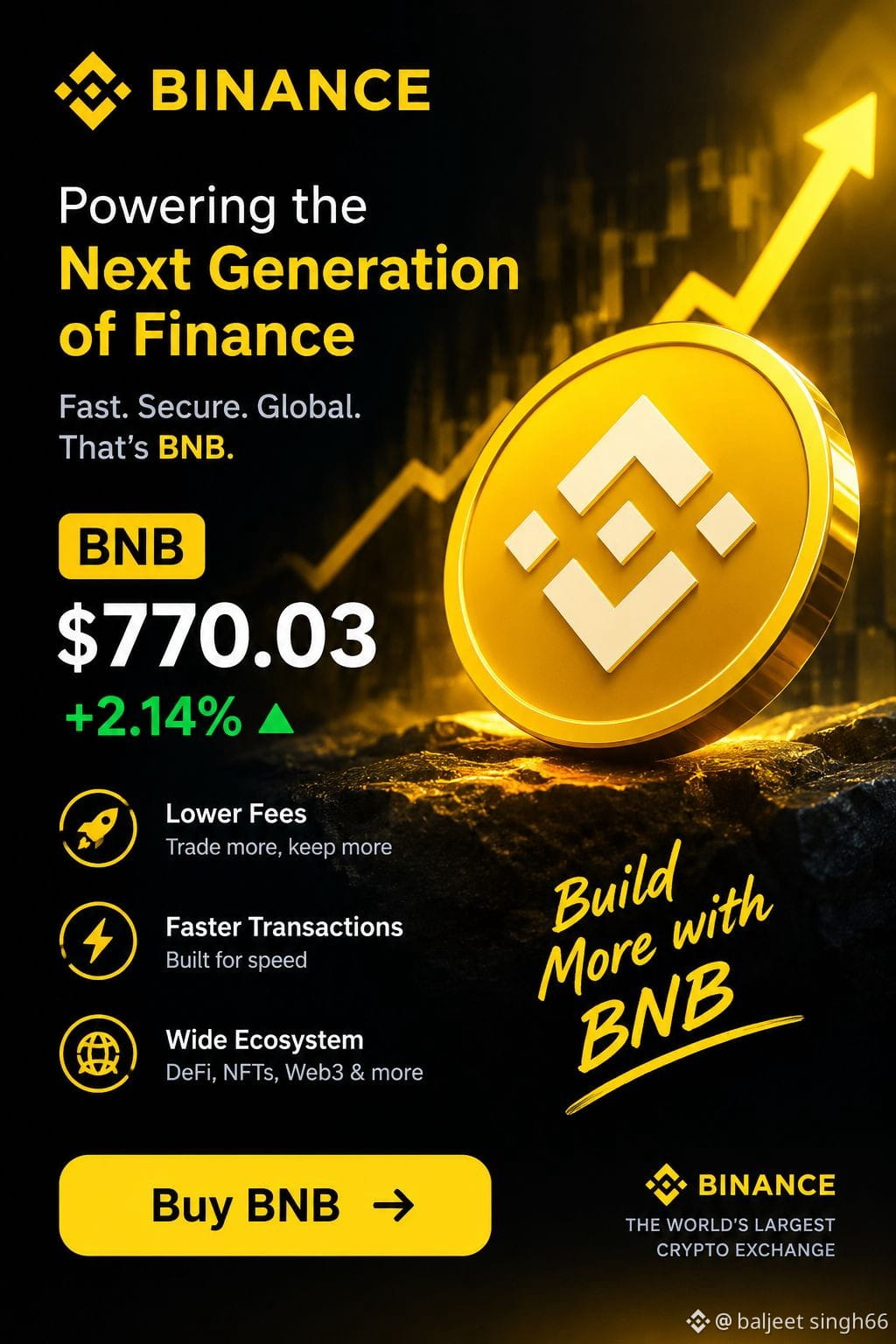
$BNB — Strength in Momentum
BNB is holding around $770, up 2.14%, with price staying above the short-term moving average. Momentum remains constructive as buyers continue to defend the higher range.
Key levels: $768–$770 is the immediate area to watch, while $779.42 marks the visible 24H high. Volume is active, so sustained participation around these levels matters.
Market
#bnb
#TrendingPredictions
#TrenddingTopic
$BNB — Strength in Momentum
BNB is holding around $770, up 2.14%, with price staying above the short-term moving average. Momentum remains constructive as buyers continue to defend the higher range.
Key levels: $768–$770 is the immediate area to watch, while $779.42 marks the visible 24H high. Volume is active, so sustained participation around these levels matters.
Market
#bnb
#TrendingPredictions
#TrenddingTopic
BNB is holding around $770, up 2.14%, with price staying above the short-term moving average. Momentum remains constructive as buyers continue to defend the higher range.
Key levels: $768–$770 is the immediate area to watch, while $779.42 marks the visible 24H high. Volume is active, so sustained participation around these levels matters.
Market
#bnb
#TrendingPredictions
#TrenddingTopic
1
53

TOKENIZED EQUITIES CLAIM 11 PERCENT DEX SHARE AS INSTITUTIONAL FLOW PIVOTS TO $BNB 🏦 ⚡
Smart money positioning is executing a massive structural migration on-chain. Tokenized equities just captured 11% of total DEX volume in September, rapidly absorbing market share from speculative memecoins as Q3 transfer volume surged past $100B. 📊
With over $1B of these real-world assets settled directly on $BNB chain, institutional order flow is building permanent liquidity rails on 24/7 decentralized infrastructure. 🔍 This represents a fundamental repricing of RWA utility rather than short-term retail rotation. 💬 Do you expect tokenized traditional equities to permanently flip speculative memecoin volume by 2026? 👇
⚠️ Not financial advice. Always manage your risk. 🛡️
🏷️ #BNB #RWA #DeFi #MarketStructure #Crypto
🎯 🦈
TOKENIZED EQUITIES CLAIM 11 PERCENT DEX SHARE AS INSTITUTIONAL FLOW PIVOTS TO $BNB 🏦 ⚡
Smart money positioning is executing a massive structural migration on-chain. Tokenized equities just captured 11% of total DEX volume in September, rapidly absorbing market share from speculative memecoins as Q3 transfer volume surged past $100B. 📊
With over $1B of these real-world assets settled directly on $BNB chain, institutional order flow is building permanent liquidity rails on 24/7 decentralized infrastructure. 🔍 This represents a fundamental repricing of RWA utility rather than short-term retail rotation. 💬 Do you expect tokenized traditional equities to permanently flip speculative memecoin volume by 2026? 👇
⚠️ Not financial advice. Always manage your risk. 🛡️
🏷️ #BNB #RWA #DeFi #MarketStructure #Crypto
🎯 🦈
Smart money positioning is executing a massive structural migration on-chain. Tokenized equities just captured 11% of total DEX volume in September, rapidly absorbing market share from speculative memecoins as Q3 transfer volume surged past $100B. 📊
With over $1B of these real-world assets settled directly on $BNB chain, institutional order flow is building permanent liquidity rails on 24/7 decentralized infrastructure. 🔍 This represents a fundamental repricing of RWA utility rather than short-term retail rotation. 💬 Do you expect tokenized traditional equities to permanently flip speculative memecoin volume by 2026? 👇
⚠️ Not financial advice. Always manage your risk. 🛡️
🏷️ #BNB #RWA #DeFi #MarketStructure #Crypto
🎯 🦈
20

·
--
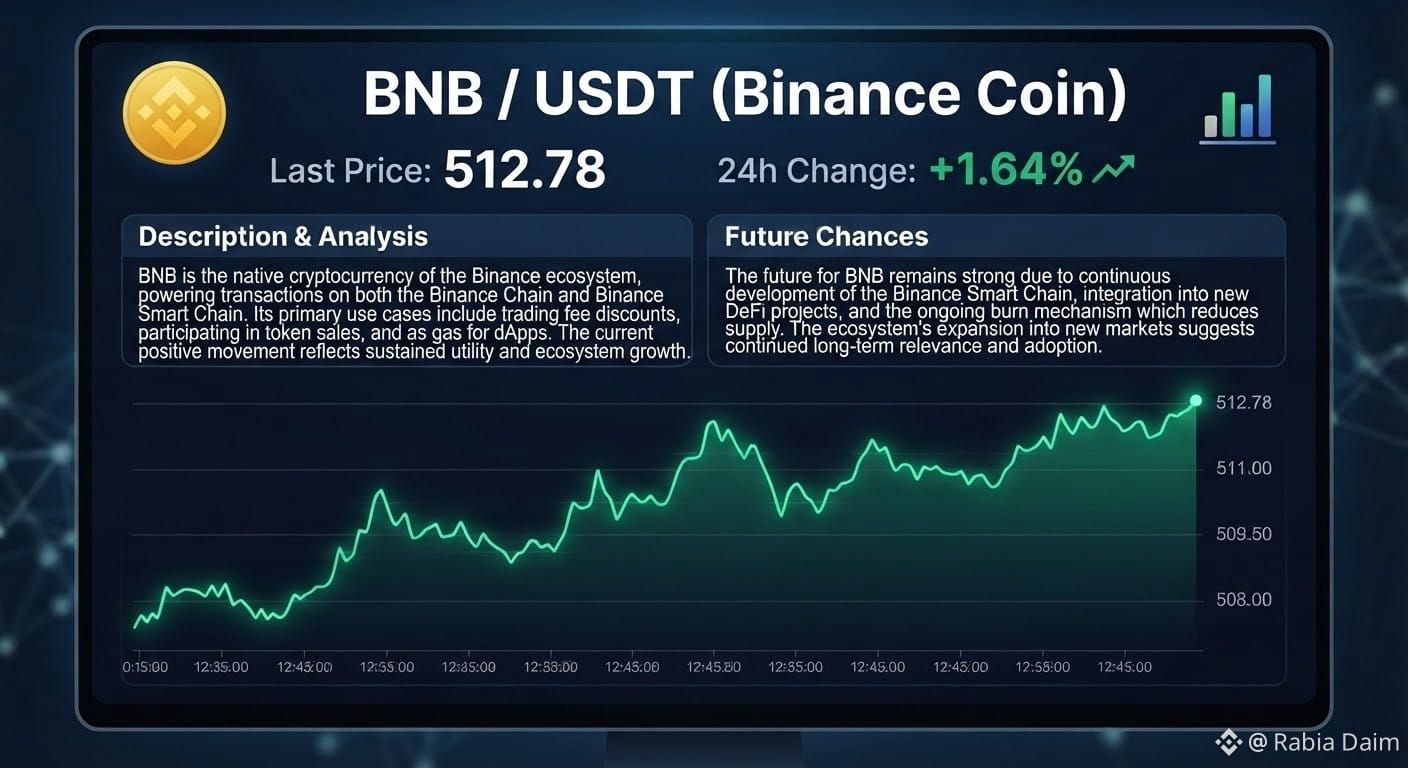
$BNB / USDT (Binance Coin)
Current Status: Last price 512.78 (24h change: +1.64%).
Description & Analysis: BNB is the native cryptocurrency of the Binance ecosystem, powering transactions on both the Binance Chain and Binance Smart Chain. Its primary use cases include trading fee discounts, participating in token sales, and as gas for dApps. The current positive movement reflects sustained utility and ecosystem growth.
Future Chances: The future for BNB remains strong due to continuous development of the Binance Smart Chain, integration into new DeFi projects, and the ongoing burn mechanism which reduces supply. The ecosystem's expansion into new markets suggests continued long-term relevance and adoption.
#bnb #BNB_Market_Update #BNB走势
{future}(BNBUSDT)
$BNB / USDT (Binance Coin)
Current Status: Last price 512.78 (24h change: +1.64%).
Description & Analysis: BNB is the native cryptocurrency of the Binance ecosystem, powering transactions on both the Binance Chain and Binance Smart Chain. Its primary use cases include trading fee discounts, participating in token sales, and as gas for dApps. The current positive movement reflects sustained utility and ecosystem growth.
Future Chances: The future for BNB remains strong due to continuous development of the Binance Smart Chain, integration into new DeFi projects, and the ongoing burn mechanism which reduces supply. The ecosystem's expansion into new markets suggests continued long-term relevance and adoption.
#bnb #BNB_Market_Update #BNB走势
Current Status: Last price 512.78 (24h change: +1.64%).
Description & Analysis: BNB is the native cryptocurrency of the Binance ecosystem, powering transactions on both the Binance Chain and Binance Smart Chain. Its primary use cases include trading fee discounts, participating in token sales, and as gas for dApps. The current positive movement reflects sustained utility and ecosystem growth.
Future Chances: The future for BNB remains strong due to continuous development of the Binance Smart Chain, integration into new DeFi projects, and the ongoing burn mechanism which reduces supply. The ecosystem's expansion into new markets suggests continued long-term relevance and adoption.
#bnb #BNB_Market_Update #BNB走势
1
47
Log in to explore more content
Join global crypto users on Binance Square
⚡️ Get latest and useful information about crypto.
💬 Trusted by the world’s largest crypto exchange.
👍 Discover real insights from verified creators.
Email / Phone number
Trending Topics
1
#BitcoinClears$85200
4,210 views
127 Discussing
2
#AltcoinSeasonIndexHoldsAbove60For5Days
24,533 views
824 Discussing
3
#USADPAdds90000JobsInSeptember
9,673 views
470 Discussing
4
#USCorePCEEasesTo3%InAugust
8,022 views
389 Discussing
5
#KospiPostsWorstQuarterSince2020
6,597 views
400 Discussing
6
#SECToClarifyOnChainFundraisingRules
17,055 views
569 Discussing
7
#UKFCAOpensCryptoFirmAuthorization
18,298 views
491 Discussing
8
#JapanMOFStudyGroupOnTokenizedGovtBonds
15,905 views
396 Discussing
9
#QNTRises287%
70,072 views
829 Discussing
10
#TrumpRejectsAIRulesForVoluntaryAudits
42,695 views
731 Discussing