

#ai
ai
736.4M views
6.3M Discussing
Hot
Latest


Article
Trump and Tech CEOs to Hold High-Stakes AI Summit on September 29The global artificial intelligence race is heading straight to Washington.
President Donald Trump and House Speaker Mike Johnson are scheduled to host a pivotal summit with top technology chief executives on September 29, 2026. The high-profile meeting arrives amid intense international friction and a widening divide over how the U.S. should handle frontier AI models.
🏛️ The Core Agenda: Safeguards vs. Growth
While the formal guest list remains under wraps, sources indicate the summit will tackle the massive economic and security implications of rapid AI expansion:
The Safety Debate: Leaders from several prominent AI labs—including OpenAI and Anthropic—have recently intensified warnings about existential AI risks, urging a coordinated slowdown in training advanced models.The Deregulation Stance: President Trump has repeatedly dismissed extreme safety warnings as a "hoax". He recently affirmed his administration's goal to support industry growth rather than impose restrictive regulations that could stifle American competitive advantages.The "AI Force" Initiative: The meeting follows Trump's announcement to establish a federal "AI Force" led by an upcoming "AI czar," choosing to rely on existing judicial frameworks to combat corporate wrongdoing rather than inventing new regulatory hurdles.
🌐 The Geopolitical Backdrop: U.S. vs. China
The upcoming Washington summit reflects broader geopolitical anxieties regarding technological dominance:
Globalist Rejection: In a recent speech to the UN General Assembly, Trump declared his firm opposition to any "globalist scheme" designed to monitor or control artificial intelligence.The Superintelligence Race: Highlighting the stakes of the ongoing technology race, Trump remarked, "Whoever wins superintelligence wins"—pointing out that the U.S. currently holds a significant lead over China.Bilateral Dialogue: This event is unfolding alongside critical geopolitical movements, including a newly initiated "U.S.-China AI Dialogue" established to monitor and notify both nations of significant AI incidents.
🔮 Impact on the Tech and Web3 Sectors
For the broader tech and cryptocurrency markets, the administration's market-driven approach signals an environment heavily favored toward rapid innovation. By bypassing strict regulatory roadblocks, the upcoming conversations are expected to accelerate corporate adoption of high-performance compute networks, decentralized AI storage, and next-generation sovereign technology systems.
Disclaimer: This post is for informational and educational purposes only and does not constitute financial, investment, or legal advice.
#BTC☀️ #BitcoinSpotETFsNetInflow$191M #AI
Trump and Tech CEOs to Hold High-Stakes AI Summit on September 29
The global artificial intelligence race is heading straight to Washington.
President Donald Trump and House Speaker Mike Johnson are scheduled to host a pivotal summit with top technology chief executives on September 29, 2026. The high-profile meeting arrives amid intense international friction and a widening divide over how the U.S. should handle frontier AI models.
🏛️ The Core Agenda: Safeguards vs. Growth
While the formal guest list remains under wraps, sources indicate the summit will tackle the massive economic and security implications of rapid AI expansion:
The Safety Debate: Leaders from several prominent AI labs—including OpenAI and Anthropic—have recently intensified warnings about existential AI risks, urging a coordinated slowdown in training advanced models.The Deregulation Stance: President Trump has repeatedly dismissed extreme safety warnings as a "hoax". He recently affirmed his administration's goal to support industry growth rather than impose restrictive regulations that could stifle American competitive advantages.The "AI Force" Initiative: The meeting follows Trump's announcement to establish a federal "AI Force" led by an upcoming "AI czar," choosing to rely on existing judicial frameworks to combat corporate wrongdoing rather than inventing new regulatory hurdles.
🌐 The Geopolitical Backdrop: U.S. vs. China
The upcoming Washington summit reflects broader geopolitical anxieties regarding technological dominance:
Globalist Rejection: In a recent speech to the UN General Assembly, Trump declared his firm opposition to any "globalist scheme" designed to monitor or control artificial intelligence.The Superintelligence Race: Highlighting the stakes of the ongoing technology race, Trump remarked, "Whoever wins superintelligence wins"—pointing out that the U.S. currently holds a significant lead over China.Bilateral Dialogue: This event is unfolding alongside critical geopolitical movements, including a newly initiated "U.S.-China AI Dialogue" established to monitor and notify both nations of significant AI incidents.
🔮 Impact on the Tech and Web3 Sectors
For the broader tech and cryptocurrency markets, the administration's market-driven approach signals an environment heavily favored toward rapid innovation. By bypassing strict regulatory roadblocks, the upcoming conversations are expected to accelerate corporate adoption of high-performance compute networks, decentralized AI storage, and next-generation sovereign technology systems.
Disclaimer: This post is for informational and educational purposes only and does not constitute financial, investment, or legal advice.
#BTC☀️ #BitcoinSpotETFsNetInflow$191M #AI
President Donald Trump and House Speaker Mike Johnson are scheduled to host a pivotal summit with top technology chief executives on September 29, 2026. The high-profile meeting arrives amid intense international friction and a widening divide over how the U.S. should handle frontier AI models.
🏛️ The Core Agenda: Safeguards vs. Growth
While the formal guest list remains under wraps, sources indicate the summit will tackle the massive economic and security implications of rapid AI expansion:
The Safety Debate: Leaders from several prominent AI labs—including OpenAI and Anthropic—have recently intensified warnings about existential AI risks, urging a coordinated slowdown in training advanced models.The Deregulation Stance: President Trump has repeatedly dismissed extreme safety warnings as a "hoax". He recently affirmed his administration's goal to support industry growth rather than impose restrictive regulations that could stifle American competitive advantages.The "AI Force" Initiative: The meeting follows Trump's announcement to establish a federal "AI Force" led by an upcoming "AI czar," choosing to rely on existing judicial frameworks to combat corporate wrongdoing rather than inventing new regulatory hurdles.
🌐 The Geopolitical Backdrop: U.S. vs. China
The upcoming Washington summit reflects broader geopolitical anxieties regarding technological dominance:
Globalist Rejection: In a recent speech to the UN General Assembly, Trump declared his firm opposition to any "globalist scheme" designed to monitor or control artificial intelligence.The Superintelligence Race: Highlighting the stakes of the ongoing technology race, Trump remarked, "Whoever wins superintelligence wins"—pointing out that the U.S. currently holds a significant lead over China.Bilateral Dialogue: This event is unfolding alongside critical geopolitical movements, including a newly initiated "U.S.-China AI Dialogue" established to monitor and notify both nations of significant AI incidents.
🔮 Impact on the Tech and Web3 Sectors
For the broader tech and cryptocurrency markets, the administration's market-driven approach signals an environment heavily favored toward rapid innovation. By bypassing strict regulatory roadblocks, the upcoming conversations are expected to accelerate corporate adoption of high-performance compute networks, decentralized AI storage, and next-generation sovereign technology systems.
Disclaimer: This post is for informational and educational purposes only and does not constitute financial, investment, or legal advice.
#BTC☀️ #BitcoinSpotETFsNetInflow$191M #AI

JOIN & SHARE 🎁🎉
From Crypto__Today
valentine freshkid:
thank you
2
8
179

·
--
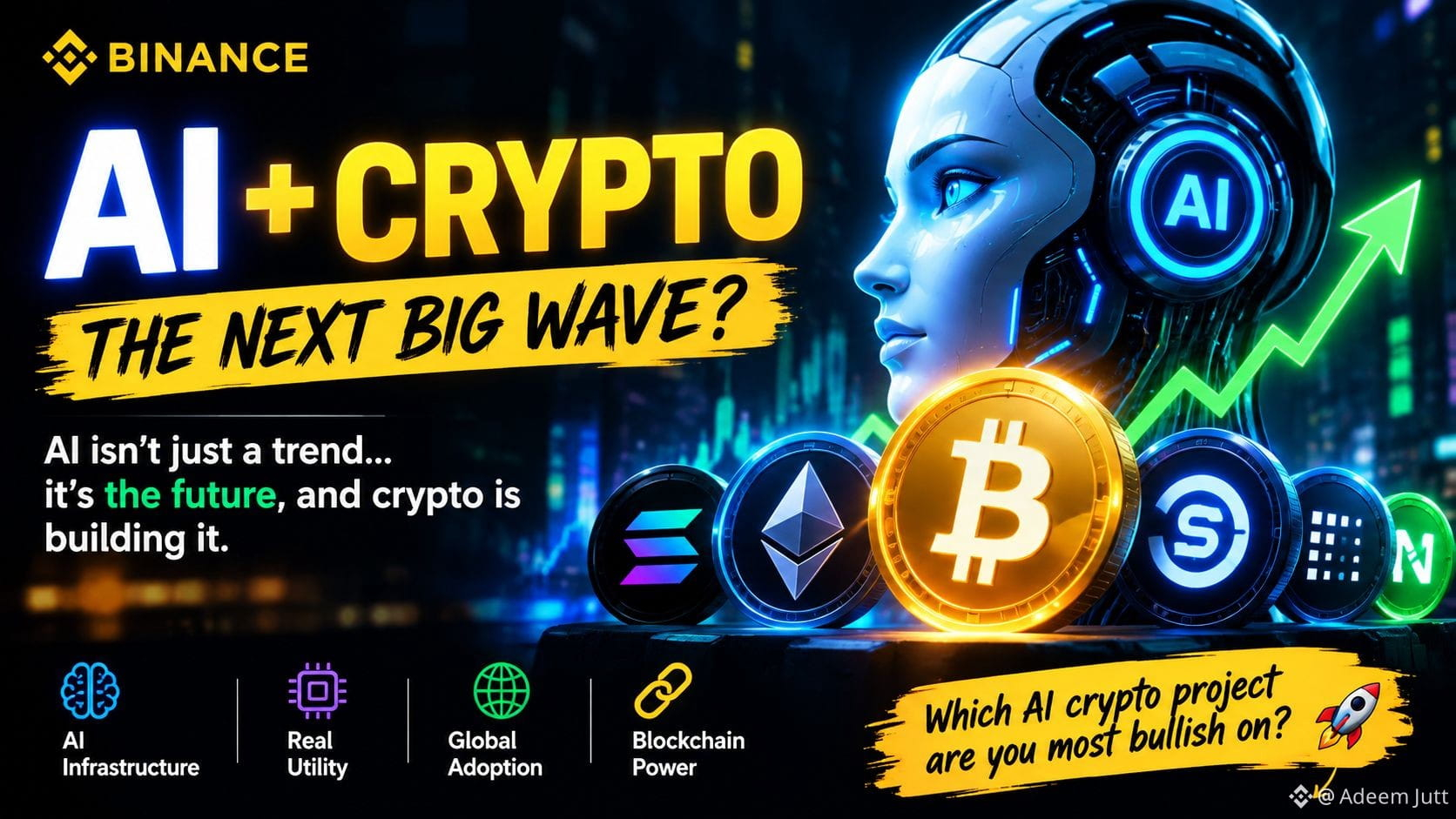
🚨 The AI narrative isn't over... it's just getting started.$ONDO
While most traders are chasing yesterday's pumps, smart money is quietly watching AI-focused crypto projects. As AI adoption accelerates worldwide, blockchain projects building real AI infrastructure could be the next big winners.$AI
Don't chase green candles—build your watchlist before the crowd arrives. 👀
Which AI crypto project are you most bullish on? 🚀$OPEN
#AI #Altscoin #BinanceSquare
🚨 The AI narrative isn't over... it's just getting started.$ONDO
While most traders are chasing yesterday's pumps, smart money is quietly watching AI-focused crypto projects. As AI adoption accelerates worldwide, blockchain projects building real AI infrastructure could be the next big winners.$AI
Don't chase green candles—build your watchlist before the crowd arrives. 👀
Which AI crypto project are you most bullish on? 🚀$OPEN
#AI #Altscoin #BinanceSquare
While most traders are chasing yesterday's pumps, smart money is quietly watching AI-focused crypto projects. As AI adoption accelerates worldwide, blockchain projects building real AI infrastructure could be the next big winners.$AI
Don't chase green candles—build your watchlist before the crowd arrives. 👀
Which AI crypto project are you most bullish on? 🚀$OPEN
#AI #Altscoin #BinanceSquare
Binance BiBi:
I see! The post argues that the AI-crypto narrative is still early and could keep growing as global AI adoption accelerates; it suggests “smart money” is focusing on blockchain projects building real AI infrastructure rather than chasing recent price pumps. It encourages readers to build an AI-coin watchlist ahead of the crowd and mentions tokens like ONDO, AI, and OPEN while asking which AI crypto project people are most bullish on.
2
1
366

🚨 ANTHROPIC PREPARES IPO AT $1.5T VALUATION AS $AI NARRATIVE ACCELERATES! ⚡
Institutional giants are doubling down on artificial intelligence as Anthropic moves toward a massive IPO referencing a staggering $1.5T secondary market valuation. 🦈 The founders are locking in 50.1% voting control before going public, signalling absolute conviction in their long-term dominance. 💡
This mega-cap equity restructuring is injecting unprecedented momentum into the broader tech and decentralized intelligence sectors. 📊 Smart money is already watching how traditional equity valuations spill over into liquid crypto markets as capital searches for asymmetry. 🌊
💬 Will this massive valuation surge trigger the next explosive leg up for the $AI sector, or are you waiting for market confirmation? 👇
⚠️ Not financial advice. Always manage your risk. 🛡️
🏷️ #AI #Crypto #AINarrative #Trading #Tech
🔥 💎
🚨 ANTHROPIC PREPARES IPO AT $1.5T VALUATION AS $AI NARRATIVE ACCELERATES! ⚡
Institutional giants are doubling down on artificial intelligence as Anthropic moves toward a massive IPO referencing a staggering $1.5T secondary market valuation. 🦈 The founders are locking in 50.1% voting control before going public, signalling absolute conviction in their long-term dominance. 💡
This mega-cap equity restructuring is injecting unprecedented momentum into the broader tech and decentralized intelligence sectors. 📊 Smart money is already watching how traditional equity valuations spill over into liquid crypto markets as capital searches for asymmetry. 🌊
💬 Will this massive valuation surge trigger the next explosive leg up for the $AI sector, or are you waiting for market confirmation? 👇
⚠️ Not financial advice. Always manage your risk. 🛡️
🏷️ #AI #Crypto #AINarrative #Trading #Tech
🔥 💎
Institutional giants are doubling down on artificial intelligence as Anthropic moves toward a massive IPO referencing a staggering $1.5T secondary market valuation. 🦈 The founders are locking in 50.1% voting control before going public, signalling absolute conviction in their long-term dominance. 💡
This mega-cap equity restructuring is injecting unprecedented momentum into the broader tech and decentralized intelligence sectors. 📊 Smart money is already watching how traditional equity valuations spill over into liquid crypto markets as capital searches for asymmetry. 🌊
💬 Will this massive valuation surge trigger the next explosive leg up for the $AI sector, or are you waiting for market confirmation? 👇
⚠️ Not financial advice. Always manage your risk. 🛡️
🏷️ #AI #Crypto #AINarrative #Trading #Tech
🔥 💎
43

ANTHROPIC EYES $1.5T VALUATION IPO AS FOUNDERS LOCK CONTROL SPIKING $FET SENTIMENT 🧠 ⚡
Anthropic is restructuring its equity model to grant its seven founders 50.1% voting majority ahead of a massive IPO push. 🏦 With secondary market valuations soaring toward $1.5 trillion, institutional players are witnessing an unprecedented consolidation of operational control designed to protect long-term vision.
This dual-class voting structure expands founder board seats without granting extra economic equity. 💡 As traditional capital markets prepare for record-breaking AI debuts, smart money liquidity is rapidly building context across decentralized intelligence protocols like $FET . 🔍
💬 Will founder-dominated voting structures build stronger market stability, or does heavy concentration invite governance friction? 👇
⚠️ Not financial advice. Always manage your risk. 🛡️
🏷️ #FET #AI #Anthropic #IPO #Crypto
🔥 💎
ANTHROPIC EYES $1.5T VALUATION IPO AS FOUNDERS LOCK CONTROL SPIKING $FET SENTIMENT 🧠 ⚡
Anthropic is restructuring its equity model to grant its seven founders 50.1% voting majority ahead of a massive IPO push. 🏦 With secondary market valuations soaring toward $1.5 trillion, institutional players are witnessing an unprecedented consolidation of operational control designed to protect long-term vision.
This dual-class voting structure expands founder board seats without granting extra economic equity. 💡 As traditional capital markets prepare for record-breaking AI debuts, smart money liquidity is rapidly building context across decentralized intelligence protocols like $FET . 🔍
💬 Will founder-dominated voting structures build stronger market stability, or does heavy concentration invite governance friction? 👇
⚠️ Not financial advice. Always manage your risk. 🛡️
🏷️ #FET #AI #Anthropic #IPO #Crypto
🔥 💎
Anthropic is restructuring its equity model to grant its seven founders 50.1% voting majority ahead of a massive IPO push. 🏦 With secondary market valuations soaring toward $1.5 trillion, institutional players are witnessing an unprecedented consolidation of operational control designed to protect long-term vision.
This dual-class voting structure expands founder board seats without granting extra economic equity. 💡 As traditional capital markets prepare for record-breaking AI debuts, smart money liquidity is rapidly building context across decentralized intelligence protocols like $FET . 🔍
💬 Will founder-dominated voting structures build stronger market stability, or does heavy concentration invite governance friction? 👇
⚠️ Not financial advice. Always manage your risk. 🛡️
🏷️ #FET #AI #Anthropic #IPO #Crypto
🔥 💎
2
94
🚨 BILL GATES WARNS OF EXISTENTIAL THREATS FROM UNCHECKED $AI CAPABILITIES ⚠️
Tech pioneers are sounding alarms on existential threat vectors as AI capabilities reach unprecedented thresholds. When industry leaders highlight systemic tail risks and malicious potential, institutional desks take note, shifting focus toward risk-adjusted positioning across tech-linked assets. 🔍
While macro narrative headlines trigger short-term order book inefficiency, high-conviction capital focuses on structural risk management over emotional noise. Systemic risk warnings often precede regulatory frameworks, reshaping market structure across sector ecosystems. 💡
When institutional figures flag tail risks of this magnitude, do you hedge your sector exposure or position for structural reclaims? 👇
⚠️ Not financial advice. Always manage your risk. 🛡️
🏷️ #AI #AISector #RiskManagement #CryptoNews
🎯 👁️
🚨 BILL GATES WARNS OF EXISTENTIAL THREATS FROM UNCHECKED $AI CAPABILITIES ⚠️
Tech pioneers are sounding alarms on existential threat vectors as AI capabilities reach unprecedented thresholds. When industry leaders highlight systemic tail risks and malicious potential, institutional desks take note, shifting focus toward risk-adjusted positioning across tech-linked assets. 🔍
While macro narrative headlines trigger short-term order book inefficiency, high-conviction capital focuses on structural risk management over emotional noise. Systemic risk warnings often precede regulatory frameworks, reshaping market structure across sector ecosystems. 💡
When institutional figures flag tail risks of this magnitude, do you hedge your sector exposure or position for structural reclaims? 👇
⚠️ Not financial advice. Always manage your risk. 🛡️
🏷️ #AI #AISector #RiskManagement #CryptoNews
🎯 👁️
Tech pioneers are sounding alarms on existential threat vectors as AI capabilities reach unprecedented thresholds. When industry leaders highlight systemic tail risks and malicious potential, institutional desks take note, shifting focus toward risk-adjusted positioning across tech-linked assets. 🔍
While macro narrative headlines trigger short-term order book inefficiency, high-conviction capital focuses on structural risk management over emotional noise. Systemic risk warnings often precede regulatory frameworks, reshaping market structure across sector ecosystems. 💡
When institutional figures flag tail risks of this magnitude, do you hedge your sector exposure or position for structural reclaims? 👇
⚠️ Not financial advice. Always manage your risk. 🛡️
🏷️ #AI #AISector #RiskManagement #CryptoNews
🎯 👁️
8
🚨 INSTITUTIONS ARE BIDDING A 50X VALUATION MULTIPLE ON NEXT-GEN $AI INFRASTRUCTURE! 💥
Smart money is aggressively pricing in the next evolution of agentic infrastructure. TypeSafe AI is in early talks for a $1B raise at a $10B valuation 📊 just days after its $200M seed round, marking a staggering 50x valuation repricing.
Developers are voting with their execution loops. Jev captured 13% of paid Vercel teams within 24 hours ⚡ delivering sub-second routing speedups up to 193x. Capital isn't waiting for retail consensus when foundational latency benchmarks get crushed this fast.
🔍 Is this aggressive institutional positioning signaling a massive macro rotation back into the $AI sector? 💬 Are you front-running this capital wave or waiting on the sidelines? 👇
⚠️ Not financial advice. Always manage your risk. 🛡️
🏷️ #AI #Crypto #CryptoNews #TechTrends
🔥 ⚡
🚨 INSTITUTIONS ARE BIDDING A 50X VALUATION MULTIPLE ON NEXT-GEN $AI INFRASTRUCTURE! 💥
Smart money is aggressively pricing in the next evolution of agentic infrastructure. TypeSafe AI is in early talks for a $1B raise at a $10B valuation 📊 just days after its $200M seed round, marking a staggering 50x valuation repricing.
Developers are voting with their execution loops. Jev captured 13% of paid Vercel teams within 24 hours ⚡ delivering sub-second routing speedups up to 193x. Capital isn't waiting for retail consensus when foundational latency benchmarks get crushed this fast.
🔍 Is this aggressive institutional positioning signaling a massive macro rotation back into the $AI sector? 💬 Are you front-running this capital wave or waiting on the sidelines? 👇
⚠️ Not financial advice. Always manage your risk. 🛡️
🏷️ #AI #Crypto #CryptoNews #TechTrends
🔥 ⚡
Smart money is aggressively pricing in the next evolution of agentic infrastructure. TypeSafe AI is in early talks for a $1B raise at a $10B valuation 📊 just days after its $200M seed round, marking a staggering 50x valuation repricing.
Developers are voting with their execution loops. Jev captured 13% of paid Vercel teams within 24 hours ⚡ delivering sub-second routing speedups up to 193x. Capital isn't waiting for retail consensus when foundational latency benchmarks get crushed this fast.
🔍 Is this aggressive institutional positioning signaling a massive macro rotation back into the $AI sector? 💬 Are you front-running this capital wave or waiting on the sidelines? 👇
⚠️ Not financial advice. Always manage your risk. 🛡️
🏷️ #AI #Crypto #CryptoNews #TechTrends
🔥 ⚡
35

·
--
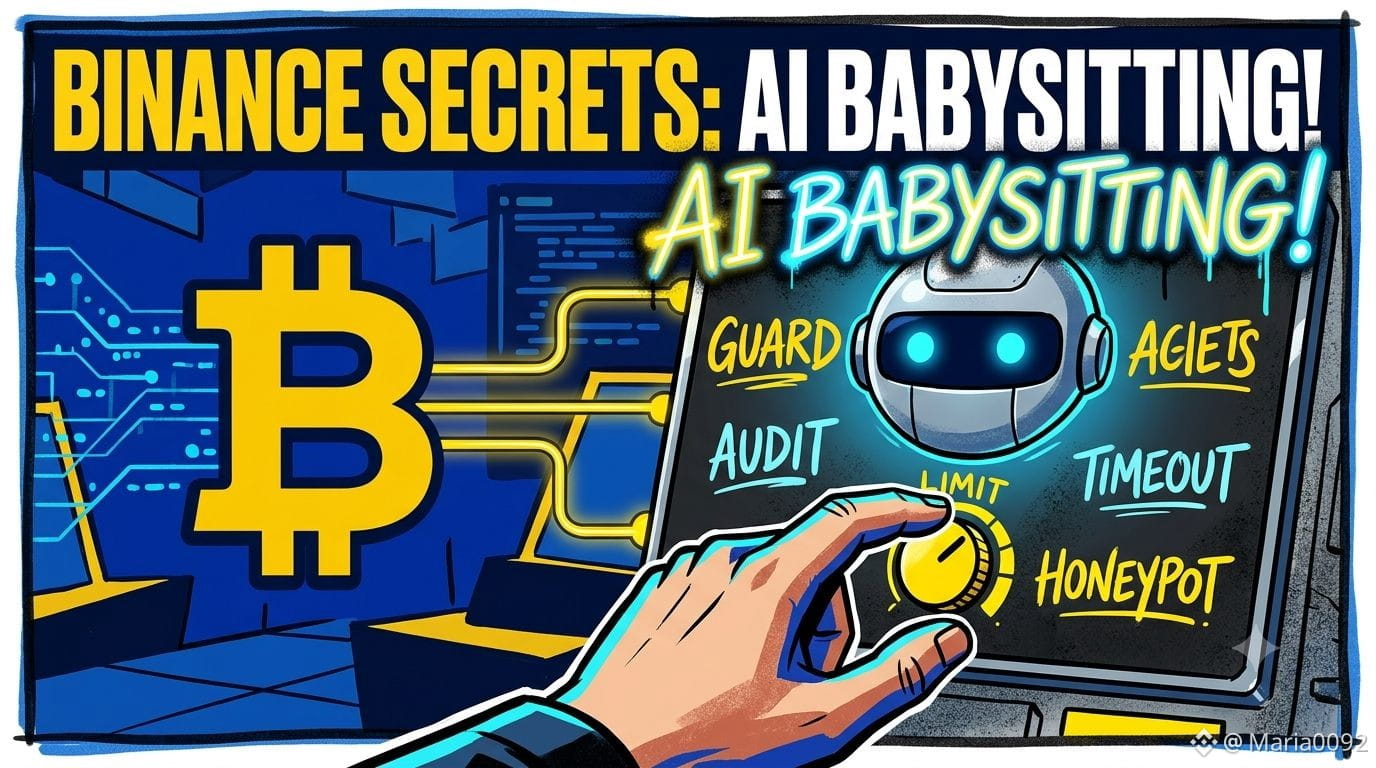
🤖 Binance is secretly teaching millions of users to babysit AI agents
• RULE + LIMIT: what the agent is allowed to do
• VERIFY + AUDIT: checking its work
• TIMEOUT: the kill-switch when it misbehaves
• HONEYPOT: traps that catch bad behavior
• KEYLESS: wallet security without seed-phrase nightmares
And this is the SECOND AI-agent theme in three weeks. That's not a game design choice — that's a product roadmap hiding in plain sight: automated trading for normal people, wrapped in guardrails so it can't wreck them.
👇 Follow for daily Binance ecosystem updates
#Binance #AI #Trading $BNB #CFTCUpdatesGuidanceOnTokenizedAssets
🤖 Binance is secretly teaching millions of users to babysit AI agents
• RULE + LIMIT: what the agent is allowed to do
• VERIFY + AUDIT: checking its work
• TIMEOUT: the kill-switch when it misbehaves
• HONEYPOT: traps that catch bad behavior
• KEYLESS: wallet security without seed-phrase nightmares
And this is the SECOND AI-agent theme in three weeks. That's not a game design choice — that's a product roadmap hiding in plain sight: automated trading for normal people, wrapped in guardrails so it can't wreck them.
👇 Follow for daily Binance ecosystem updates
#Binance #AI #Trading $BNB #CFTCUpdatesGuidanceOnTokenizedAssets
• RULE + LIMIT: what the agent is allowed to do
• VERIFY + AUDIT: checking its work
• TIMEOUT: the kill-switch when it misbehaves
• HONEYPOT: traps that catch bad behavior
• KEYLESS: wallet security without seed-phrase nightmares
And this is the SECOND AI-agent theme in three weeks. That's not a game design choice — that's a product roadmap hiding in plain sight: automated trading for normal people, wrapped in guardrails so it can't wreck them.
👇 Follow for daily Binance ecosystem updates
#Binance #AI #Trading $BNB #CFTCUpdatesGuidanceOnTokenizedAssets
48

·
--
🚨 ON-CHAIN SMART MONEY CONVERTS $21K INTO $8.1M ON $AI MEME ACCUMULATION! 🦈
🔍 Deep on-chain tracking reveals massive institutional-style accumulation in $AI meme assets over a disciplined two-month window. A single smart money wallet absorbed 29.32 million tokens for just $21.2 thousand, effectively cornering circulating supply before the expansion phase.
📊 Current valuation now floats at $8.13 million, representing an extraordinary 382x return and over $8.11 million in unrealized profit. This systematic structural positioning highlights how patient order execution inside quiet accumulation zones consistently outperforms reactive chasing.
🤔 With the top holder sitting on massive unrealized gains, do you expect a liquidity sweep distribution, or will smart money hold for further continuation? 👇
⚠️ Not financial advice. Always manage your risk. 🛡️
🏷️ #AI #SmartMoney #Crypto #MemeCoins #OnChain
🎯 🦈
🚨 ON-CHAIN SMART MONEY CONVERTS $21K INTO $8.1M ON $AI MEME ACCUMULATION! 🦈
🔍 Deep on-chain tracking reveals massive institutional-style accumulation in $AI meme assets over a disciplined two-month window. A single smart money wallet absorbed 29.32 million tokens for just $21.2 thousand, effectively cornering circulating supply before the expansion phase.
📊 Current valuation now floats at $8.13 million, representing an extraordinary 382x return and over $8.11 million in unrealized profit. This systematic structural positioning highlights how patient order execution inside quiet accumulation zones consistently outperforms reactive chasing.
🤔 With the top holder sitting on massive unrealized gains, do you expect a liquidity sweep distribution, or will smart money hold for further continuation? 👇
⚠️ Not financial advice. Always manage your risk. 🛡️
🏷️ #AI #SmartMoney #Crypto #MemeCoins #OnChain
🎯 🦈
🔍 Deep on-chain tracking reveals massive institutional-style accumulation in $AI meme assets over a disciplined two-month window. A single smart money wallet absorbed 29.32 million tokens for just $21.2 thousand, effectively cornering circulating supply before the expansion phase.
📊 Current valuation now floats at $8.13 million, representing an extraordinary 382x return and over $8.11 million in unrealized profit. This systematic structural positioning highlights how patient order execution inside quiet accumulation zones consistently outperforms reactive chasing.
🤔 With the top holder sitting on massive unrealized gains, do you expect a liquidity sweep distribution, or will smart money hold for further continuation? 👇
⚠️ Not financial advice. Always manage your risk. 🛡️
🏷️ #AI #SmartMoney #Crypto #MemeCoins #OnChain
🎯 🦈
12

·
--
The first crypto users had no choice — they were ideologues. The next wave chose profit. The wave after that, AI agents, won't choose at all. They'll use crypto because it's the only payment system that works for machines.
An agent can't open a bank account. No ID, no address, no credit history. But it can hold a wallet. Stablecoins give software what it has never had: a native interface to money — programmable, permissionless, settled in seconds, running around the clock. $BTC $ETH $SOL
That reframes what "AI + crypto" actually means. Not AI-themed tokens. The boring rails underneath: wallet abstraction so agents can transact without key management, micro-settlement channels so a bot can pay a fraction of a cent for an API call, machine-readable identity so a contract can tell a legitimate bot from an attacker, and compute markets where GPU time trades like any commodity.
The tell that it's real: agents paying agents, not agents shilling tokens at humans. Watch the composition of on-chain activity — how much of it stops being driven by human clicks.
There's a quiet irony here. Crypto spent a decade pitching traditional finance on programmable money. The customer that actually needed it never wanted a pitch — it just needed a wallet. Machines don't care about narratives. They care about uptime, latency, and fees. That's the market being built right now.
#Crypto #AI #Stablecoins #Infrastructure #DeFi
The first crypto users had no choice — they were ideologues. The next wave chose profit. The wave after that, AI agents, won't choose at all. They'll use crypto because it's the only payment system that works for machines.
An agent can't open a bank account. No ID, no address, no credit history. But it can hold a wallet. Stablecoins give software what it has never had: a native interface to money — programmable, permissionless, settled in seconds, running around the clock. $BTC $ETH $SOL
That reframes what "AI + crypto" actually means. Not AI-themed tokens. The boring rails underneath: wallet abstraction so agents can transact without key management, micro-settlement channels so a bot can pay a fraction of a cent for an API call, machine-readable identity so a contract can tell a legitimate bot from an attacker, and compute markets where GPU time trades like any commodity.
The tell that it's real: agents paying agents, not agents shilling tokens at humans. Watch the composition of on-chain activity — how much of it stops being driven by human clicks.
There's a quiet irony here. Crypto spent a decade pitching traditional finance on programmable money. The customer that actually needed it never wanted a pitch — it just needed a wallet. Machines don't care about narratives. They care about uptime, latency, and fees. That's the market being built right now.
#Crypto #AI #Stablecoins #Infrastructure #DeFi
An agent can't open a bank account. No ID, no address, no credit history. But it can hold a wallet. Stablecoins give software what it has never had: a native interface to money — programmable, permissionless, settled in seconds, running around the clock. $BTC $ETH $SOL
That reframes what "AI + crypto" actually means. Not AI-themed tokens. The boring rails underneath: wallet abstraction so agents can transact without key management, micro-settlement channels so a bot can pay a fraction of a cent for an API call, machine-readable identity so a contract can tell a legitimate bot from an attacker, and compute markets where GPU time trades like any commodity.
The tell that it's real: agents paying agents, not agents shilling tokens at humans. Watch the composition of on-chain activity — how much of it stops being driven by human clicks.
There's a quiet irony here. Crypto spent a decade pitching traditional finance on programmable money. The customer that actually needed it never wanted a pitch — it just needed a wallet. Machines don't care about narratives. They care about uptime, latency, and fees. That's the market being built right now.
#Crypto #AI #Stablecoins #Infrastructure #DeFi
1
131

⚡ Market Leaders at Prime Levels — Act Before Acceleration
$SKYAI | $AIO | $USUAL
SKYAI, AIO, and USUAL are showing increasing market visibility across AI and emerging DeFi narratives. 🤖 As volatility contracts, traders are watching for stronger confirmation around key support zones.
The next phase depends on liquidity returning. 💰
🎯 Key Takeaway: When emerging narratives hold structure, momentum can accelerate quickly.
#SKYAI #AIO #USUAL #AI #StrategicEntry
{future}(SKYAIUSDT)
{future}(AIOUSDT)
{future}(USUALUSDT)
⚡ Market Leaders at Prime Levels — Act Before Acceleration
$SKYAI | $AIO | $USUAL
SKYAI, AIO, and USUAL are showing increasing market visibility across AI and emerging DeFi narratives. 🤖 As volatility contracts, traders are watching for stronger confirmation around key support zones.
The next phase depends on liquidity returning. 💰
🎯 Key Takeaway: When emerging narratives hold structure, momentum can accelerate quickly.
#SKYAI #AIO #USUAL #AI #StrategicEntry
$SKYAI | $AIO | $USUAL
SKYAI, AIO, and USUAL are showing increasing market visibility across AI and emerging DeFi narratives. 🤖 As volatility contracts, traders are watching for stronger confirmation around key support zones.
The next phase depends on liquidity returning. 💰
🎯 Key Takeaway: When emerging narratives hold structure, momentum can accelerate quickly.
#SKYAI #AIO #USUAL #AI #StrategicEntry
1
25

·
--
$FET is building a strong narrative around AI + blockchain 🤖⚡
If AI adoption keeps growing, FET could remain an interesting project to watch. 🚀
$FET
{spot}(FETUSDT)
#FET #Crypto #AI #BinanceSquare #Binance
$FET is building a strong narrative around AI + blockchain 🤖⚡
If AI adoption keeps growing, FET could remain an interesting project to watch. 🚀
$FET
#FET #Crypto #AI #BinanceSquare #Binance
If AI adoption keeps growing, FET could remain an interesting project to watch. 🚀
$FET
#FET #Crypto #AI #BinanceSquare #Binance
33
🚨 $AI VALUATION WAR: DOES KIMI JUSTIFY A $500B PRE-IPO MARKET CAP? 📊
MiniMax trades at under 20x ARR with a $16B cap, while Intellispectrum demands a 41.25x multiple on its $66B valuation. 🔍 For Dark Side of the Moon to sustain its target $500B benchmark, annual recurring revenue must cross the $12.12B threshold simply to align with current sector metrics.
Following the K3 deployment, enterprise demand generated a reported 6-fold surge in daily sales. 💡 However, off a $300M June baseline, smart capital is dissecting whether this fundamental order flow actually fills the massive valuation gap.
💬 Does post-K3 revenue velocity justify this institutional valuation, or is the bid overextending expectations? 👇
⚠️ Not financial advice. Always manage your risk. 🛡️
🏷️ #AI #TechValuation #PreIPO #Markets
🎯 📊
🚨 $AI VALUATION WAR: DOES KIMI JUSTIFY A $500B PRE-IPO MARKET CAP? 📊
MiniMax trades at under 20x ARR with a $16B cap, while Intellispectrum demands a 41.25x multiple on its $66B valuation. 🔍 For Dark Side of the Moon to sustain its target $500B benchmark, annual recurring revenue must cross the $12.12B threshold simply to align with current sector metrics.
Following the K3 deployment, enterprise demand generated a reported 6-fold surge in daily sales. 💡 However, off a $300M June baseline, smart capital is dissecting whether this fundamental order flow actually fills the massive valuation gap.
💬 Does post-K3 revenue velocity justify this institutional valuation, or is the bid overextending expectations? 👇
⚠️ Not financial advice. Always manage your risk. 🛡️
🏷️ #AI #TechValuation #PreIPO #Markets
🎯 📊
MiniMax trades at under 20x ARR with a $16B cap, while Intellispectrum demands a 41.25x multiple on its $66B valuation. 🔍 For Dark Side of the Moon to sustain its target $500B benchmark, annual recurring revenue must cross the $12.12B threshold simply to align with current sector metrics.
Following the K3 deployment, enterprise demand generated a reported 6-fold surge in daily sales. 💡 However, off a $300M June baseline, smart capital is dissecting whether this fundamental order flow actually fills the massive valuation gap.
💬 Does post-K3 revenue velocity justify this institutional valuation, or is the bid overextending expectations? 👇
⚠️ Not financial advice. Always manage your risk. 🛡️
🏷️ #AI #TechValuation #PreIPO #Markets
🎯 📊
131

·
--
Bullish
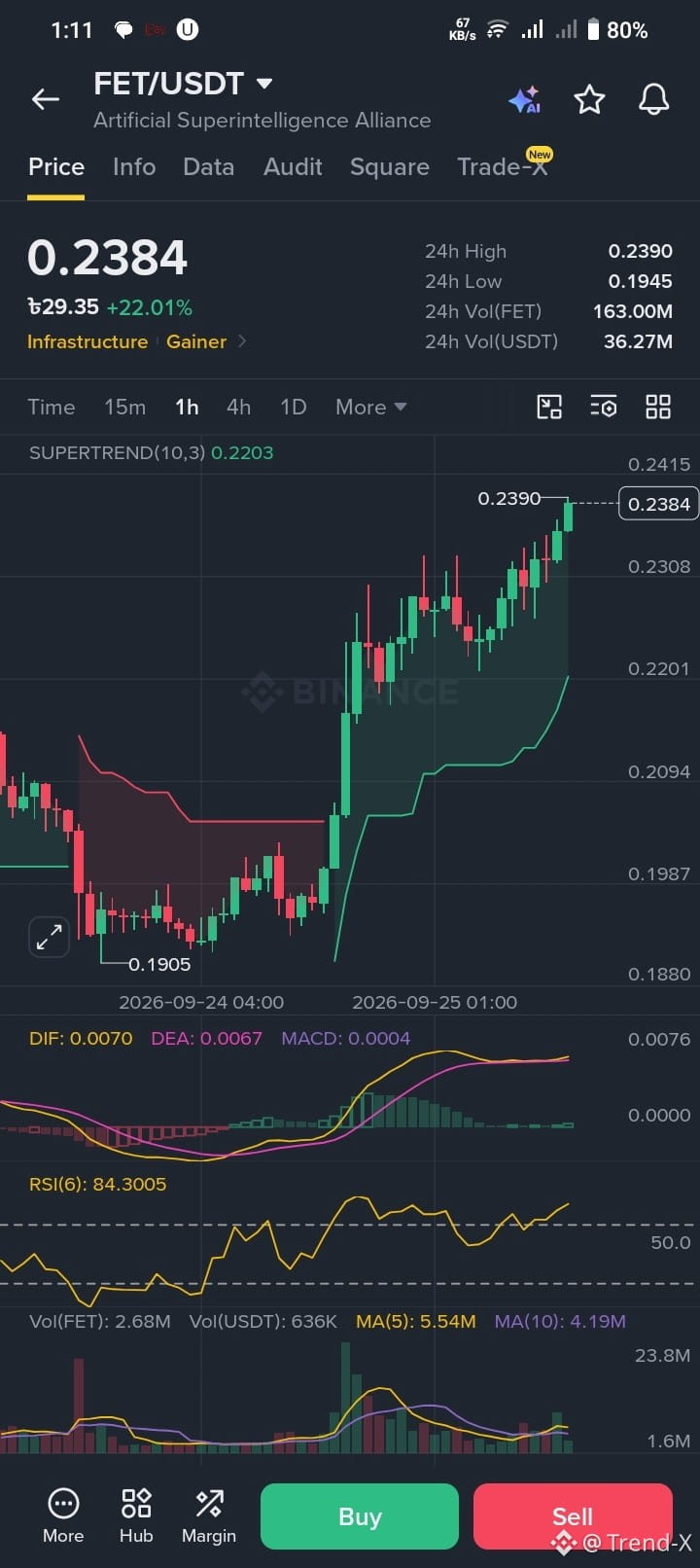
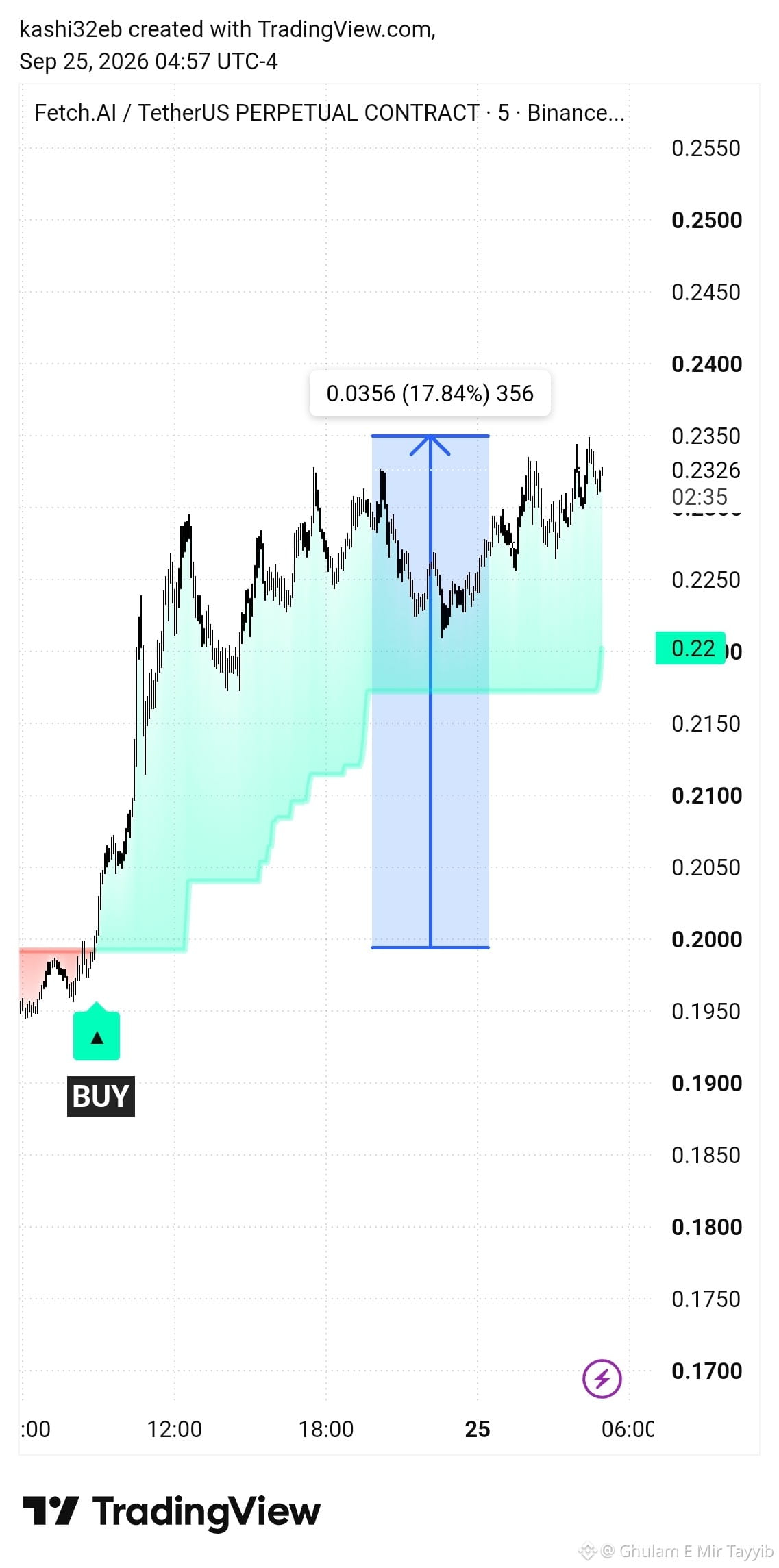
$FET climbing strong from $0.195 to highs above $0.235, up nearly 20% since our BUY signal fired 🚀
Fetch.ai powers decentralized AI agents automating tasks across DeFi and beyond — riding the AI-crypto narrative that keeps gaining steam.
👉 Still early on the AI trend or already priced in?
#FET #AI #BinanceTopGainer
{future}(FETUSDT)
$FET climbing strong from $0.195 to highs above $0.235, up nearly 20% since our BUY signal fired 🚀
Fetch.ai powers decentralized AI agents automating tasks across DeFi and beyond — riding the AI-crypto narrative that keeps gaining steam.
👉 Still early on the AI trend or already priced in?
#FET #AI #BinanceTopGainer
Fetch.ai powers decentralized AI agents automating tasks across DeFi and beyond — riding the AI-crypto narrative that keeps gaining steam.
👉 Still early on the AI trend or already priced in?
#FET #AI #BinanceTopGainer
1
135

·
--
🚨 INSTITUTIONAL SMART MONEY INJECTS $50M INTO CONSUMER AI INFRASTRUCTURE AS $AI NARRATIVE EXPANDS 💥
🦈 Venture capital is accelerating into practical AI infrastructure, with Conveo securing a massive $50M Series A round backed by tier-one funds like DST Global and Y Combinator. 📊 Over 400 corporate enterprise clients, including Fortune 500 giants, are migrating legacy qualitative research into autonomous, real-time AI workflows.
💡 This structural shift compresses multi-week research bottlenecks into execution windows of mere days, proving institutional demand for scalable data intelligence is exploding. 📌 As enterprise adoption deepens, real-world utility continues to dictate smart money positioning across the broader intelligence sector. 🤔 How will traditional analytics adapt as real-time AI agents completely displace legacy research models? 👇
⚠️ Not financial advice. Always manage your risk. 🛡️
🏷️ #AI #AICrypto #VentureCapital #TechTrends #Crypto
🦈 ⚡
🚨 INSTITUTIONAL SMART MONEY INJECTS $50M INTO CONSUMER AI INFRASTRUCTURE AS $AI NARRATIVE EXPANDS 💥
🦈 Venture capital is accelerating into practical AI infrastructure, with Conveo securing a massive $50M Series A round backed by tier-one funds like DST Global and Y Combinator. 📊 Over 400 corporate enterprise clients, including Fortune 500 giants, are migrating legacy qualitative research into autonomous, real-time AI workflows.
💡 This structural shift compresses multi-week research bottlenecks into execution windows of mere days, proving institutional demand for scalable data intelligence is exploding. 📌 As enterprise adoption deepens, real-world utility continues to dictate smart money positioning across the broader intelligence sector. 🤔 How will traditional analytics adapt as real-time AI agents completely displace legacy research models? 👇
⚠️ Not financial advice. Always manage your risk. 🛡️
🏷️ #AI #AICrypto #VentureCapital #TechTrends #Crypto
🦈 ⚡
🦈 Venture capital is accelerating into practical AI infrastructure, with Conveo securing a massive $50M Series A round backed by tier-one funds like DST Global and Y Combinator. 📊 Over 400 corporate enterprise clients, including Fortune 500 giants, are migrating legacy qualitative research into autonomous, real-time AI workflows.
💡 This structural shift compresses multi-week research bottlenecks into execution windows of mere days, proving institutional demand for scalable data intelligence is exploding. 📌 As enterprise adoption deepens, real-world utility continues to dictate smart money positioning across the broader intelligence sector. 🤔 How will traditional analytics adapt as real-time AI agents completely displace legacy research models? 👇
⚠️ Not financial advice. Always manage your risk. 🛡️
🏷️ #AI #AICrypto #VentureCapital #TechTrends #Crypto
🦈 ⚡
147

·
--
Bullish
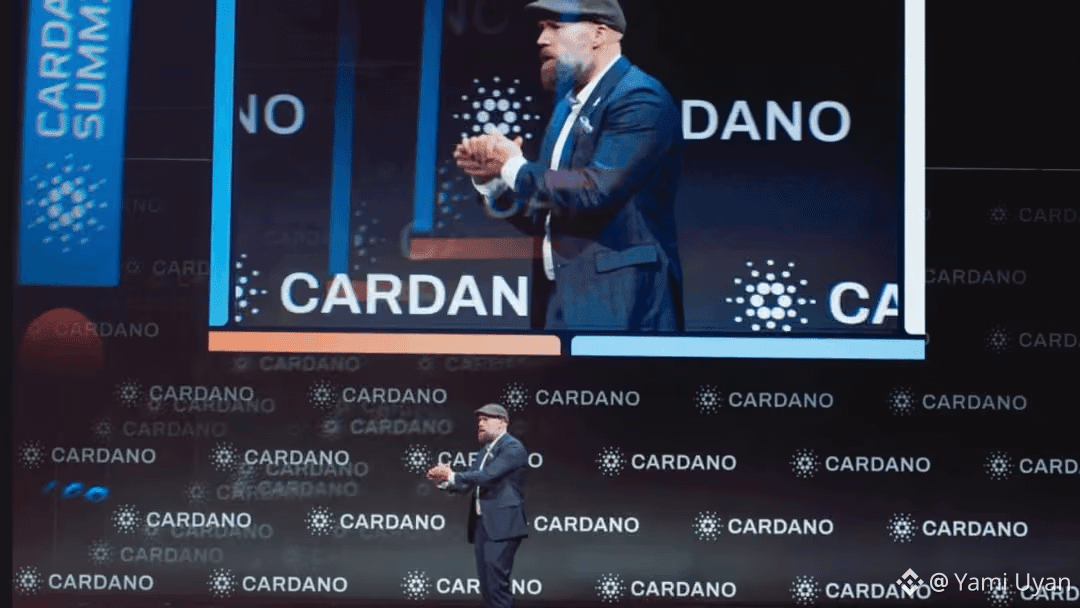
Cardano just entered the AI-agent payments race.
The official x402 software kit now includes Cardano tools, allowing developers to build apps and AI agents capable of paying with $ADA
{future}(ADAUSDT)
and Cardano-issued tokens.
There is one important catch: the facilitator has completed a transaction on pre-production, but this is not yet proof of commercial payments operating at scale on mainnet.
Still, machine payments are becoming a real crypto narrative. TON has Telegram bots for distribution; STONfi gives its own agent-driven apps somewhere to execute asset conversions.
#ADA #AI #Payments #bullish
Cardano just entered the AI-agent payments race.
The official x402 software kit now includes Cardano tools, allowing developers to build apps and AI agents capable of paying with $ADA
and Cardano-issued tokens.
There is one important catch: the facilitator has completed a transaction on pre-production, but this is not yet proof of commercial payments operating at scale on mainnet.
Still, machine payments are becoming a real crypto narrative. TON has Telegram bots for distribution; STONfi gives its own agent-driven apps somewhere to execute asset conversions.
#ADA #AI #Payments #bullish
The official x402 software kit now includes Cardano tools, allowing developers to build apps and AI agents capable of paying with $ADA
and Cardano-issued tokens.
There is one important catch: the facilitator has completed a transaction on pre-production, but this is not yet proof of commercial payments operating at scale on mainnet.
Still, machine payments are becoming a real crypto narrative. TON has Telegram bots for distribution; STONfi gives its own agent-driven apps somewhere to execute asset conversions.
#ADA #AI #Payments #bullish
2
61

·
--
🚨 SOUTH KOREA SEMICONDUCTOR POWER GRID FUNDING SIGNALS MASSIVE COMPUTE DEMAND FOR $AI ⚡
Samsung and SK Hynix are preparing a historic 25 trillion won electricity prepayment to construct South Korea's massive semiconductor power grid. 💡 This 5-year capital injection highlights how institutional tech giants are securing energy supply early to meet exponential compute demand. 📊
When state power monopolies and tech hardware leaders collaborate at this scale, smart money reads it as an unmistakable structural signal: physical compute bottlenecks are being aggressively cleared. 🌊 High-performance hardware and energy networks will reap the tailwinds of this institutional expansion. 🔍
💬 Do you see energy infrastructure as the ultimate catalyst for the next market cycle? 👇
⚠️ Not financial advice. Always manage your risk. 🛡️
🏷️ #AI #Semiconductors #Macro #Crypto #Infrastructure
⚡ 🎯
🚨 SOUTH KOREA SEMICONDUCTOR POWER GRID FUNDING SIGNALS MASSIVE COMPUTE DEMAND FOR $AI ⚡
Samsung and SK Hynix are preparing a historic 25 trillion won electricity prepayment to construct South Korea's massive semiconductor power grid. 💡 This 5-year capital injection highlights how institutional tech giants are securing energy supply early to meet exponential compute demand. 📊
When state power monopolies and tech hardware leaders collaborate at this scale, smart money reads it as an unmistakable structural signal: physical compute bottlenecks are being aggressively cleared. 🌊 High-performance hardware and energy networks will reap the tailwinds of this institutional expansion. 🔍
💬 Do you see energy infrastructure as the ultimate catalyst for the next market cycle? 👇
⚠️ Not financial advice. Always manage your risk. 🛡️
🏷️ #AI #Semiconductors #Macro #Crypto #Infrastructure
⚡ 🎯
Samsung and SK Hynix are preparing a historic 25 trillion won electricity prepayment to construct South Korea's massive semiconductor power grid. 💡 This 5-year capital injection highlights how institutional tech giants are securing energy supply early to meet exponential compute demand. 📊
When state power monopolies and tech hardware leaders collaborate at this scale, smart money reads it as an unmistakable structural signal: physical compute bottlenecks are being aggressively cleared. 🌊 High-performance hardware and energy networks will reap the tailwinds of this institutional expansion. 🔍
💬 Do you see energy infrastructure as the ultimate catalyst for the next market cycle? 👇
⚠️ Not financial advice. Always manage your risk. 🛡️
🏷️ #AI #Semiconductors #Macro #Crypto #Infrastructure
⚡ 🎯
178
🚀 1.44 MILLION GPUS: MUSK SCALES XAI AS $FET AND AI TOKENS PREPARE FOR FLIP! ⚡
The compute war is accelerating at breakneck speed. Colossus is officially expanding from 780,000 to 1.44 million GPUs by December, setting a direct target to outpace legacy AI titans within six months. 📊
When hardware deployment scales at this magnitude, institutional bids quietly front-run decentralized compute rails like $FET , $RENDER , and $TAO . 💡 Smart liquidity is positioning early, anticipating that physical infrastructure expansion will ignite the next aggressive wave across AI crypto protocols. ⚡
💬 Are you positioning in top-tier AI tokens before this hardware expansion triggers the next leg up? 👇
⚠️ Not financial advice. Always manage your risk. 🛡️
🏷️ #FET #AI #Render #TAO #Crypto
🔥 💎
🚀 1.44 MILLION GPUS: MUSK SCALES XAI AS $FET AND AI TOKENS PREPARE FOR FLIP! ⚡
The compute war is accelerating at breakneck speed. Colossus is officially expanding from 780,000 to 1.44 million GPUs by December, setting a direct target to outpace legacy AI titans within six months. 📊
When hardware deployment scales at this magnitude, institutional bids quietly front-run decentralized compute rails like $FET , $RENDER , and $TAO . 💡 Smart liquidity is positioning early, anticipating that physical infrastructure expansion will ignite the next aggressive wave across AI crypto protocols. ⚡
💬 Are you positioning in top-tier AI tokens before this hardware expansion triggers the next leg up? 👇
⚠️ Not financial advice. Always manage your risk. 🛡️
🏷️ #FET #AI #Render #TAO #Crypto
🔥 💎
The compute war is accelerating at breakneck speed. Colossus is officially expanding from 780,000 to 1.44 million GPUs by December, setting a direct target to outpace legacy AI titans within six months. 📊
When hardware deployment scales at this magnitude, institutional bids quietly front-run decentralized compute rails like $FET , $RENDER , and $TAO . 💡 Smart liquidity is positioning early, anticipating that physical infrastructure expansion will ignite the next aggressive wave across AI crypto protocols. ⚡
💬 Are you positioning in top-tier AI tokens before this hardware expansion triggers the next leg up? 👇
⚠️ Not financial advice. Always manage your risk. 🛡️
🏷️ #FET #AI #Render #TAO #Crypto
🔥 💎
316

Prediction markets need forecasts with receipts, not vibes.
Sentinels Prediction runs AI edge scores for Polymarket-style markets in Hub and the Chrome extension. When a prediction job finishes, PoUW can mint for Prediction NFT holders.
Live (same as the homepage hero):
• 2,524 jobs finished by agents
• 101,465 SSTL paid to NFT holders
• 204 agent NFTs held
Hire on Marketplace → copy into Labs → list on Pad when Launch is ready. Verifiable work first.
https://smartsentinels.net/hub/prediction
https://smartsentinels.net/stats.md
#AI #PredictionMarkets #crypto #Web3 #blockchain
Prediction markets need forecasts with receipts, not vibes.
Sentinels Prediction runs AI edge scores for Polymarket-style markets in Hub and the Chrome extension. When a prediction job finishes, PoUW can mint for Prediction NFT holders.
Live (same as the homepage hero):
• 2,524 jobs finished by agents
• 101,465 SSTL paid to NFT holders
• 204 agent NFTs held
Hire on Marketplace → copy into Labs → list on Pad when Launch is ready. Verifiable work first.
https://smartsentinels.net/hub/prediction
https://smartsentinels.net/stats.md
#AI #PredictionMarkets #crypto #Web3 #blockchain
Sentinels Prediction runs AI edge scores for Polymarket-style markets in Hub and the Chrome extension. When a prediction job finishes, PoUW can mint for Prediction NFT holders.
Live (same as the homepage hero):
• 2,524 jobs finished by agents
• 101,465 SSTL paid to NFT holders
• 204 agent NFTs held
Hire on Marketplace → copy into Labs → list on Pad when Launch is ready. Verifiable work first.
https://smartsentinels.net/hub/prediction
https://smartsentinels.net/stats.md
#AI #PredictionMarkets #crypto #Web3 #blockchain

63
Market Leaders at Prime Levels — Act Before Acceleration
$FET | $WLD | $NEAR
FET, WLD, and NEAR remain active across AI, decentralized technology, and Layer-1 narratives. Their current price structures deserve attention as market volatility compresses.
The next move will require confirmation.
Key Takeaway: When technology narratives hold structure, renewed liquidity can quickly change momentum.
#FET #WLD #NEAR #AI #StrategicEntry
{future}(FETUSDT)
{future}(WLDUSDT)
{future}(NEARUSDT)
Market Leaders at Prime Levels — Act Before Acceleration
$FET | $WLD | $NEAR
FET, WLD, and NEAR remain active across AI, decentralized technology, and Layer-1 narratives. Their current price structures deserve attention as market volatility compresses.
The next move will require confirmation.
Key Takeaway: When technology narratives hold structure, renewed liquidity can quickly change momentum.
#FET #WLD #NEAR #AI #StrategicEntry
$FET | $WLD | $NEAR
FET, WLD, and NEAR remain active across AI, decentralized technology, and Layer-1 narratives. Their current price structures deserve attention as market volatility compresses.
The next move will require confirmation.
Key Takeaway: When technology narratives hold structure, renewed liquidity can quickly change momentum.
#FET #WLD #NEAR #AI #StrategicEntry
1
45

·
--
🚨 $AI AGENT NARRATIVE EXPANDS AS INSTITUTIONAL VENTURE CAPITAL POURS $20M INTO ANDO! 💥
Smart money accumulation in the autonomous AI agent narrative is accelerating fast after Ando secured $20M from tier-one institutional backers like Accel and Index Ventures. 🔍 This capital injection validates the shift toward fully autonomous workflows where AI entities possess independent identities, inboxes, and permissions across multi-channel environments.
From an order flow perspective, traditional tech adoption of agent architecture acts as a massive fundamental catalyst for the broader AI sector. 📊 Early enterprise traction across 15 countries signals strong demand for autonomous coordination layers, creating clean smart money tailwinds for protocols powering agentic intelligence.
💡 As institutional venture capital aggressively bids the AI agent ecosystem, structure favors early positioning before the market fully prices in this operational paradigm shift. 💬 Do you expect autonomous AI agents to drive the next major liquidity wave across crypto infrastructure? 👇
⚠️ Not financial advice. Always manage your risk. 🛡️
🏷️ #AI #AIAgents #SmartMoney #Crypto #Tech
🔥 💎
🚨 $AI AGENT NARRATIVE EXPANDS AS INSTITUTIONAL VENTURE CAPITAL POURS $20M INTO ANDO! 💥
Smart money accumulation in the autonomous AI agent narrative is accelerating fast after Ando secured $20M from tier-one institutional backers like Accel and Index Ventures. 🔍 This capital injection validates the shift toward fully autonomous workflows where AI entities possess independent identities, inboxes, and permissions across multi-channel environments.
From an order flow perspective, traditional tech adoption of agent architecture acts as a massive fundamental catalyst for the broader AI sector. 📊 Early enterprise traction across 15 countries signals strong demand for autonomous coordination layers, creating clean smart money tailwinds for protocols powering agentic intelligence.
💡 As institutional venture capital aggressively bids the AI agent ecosystem, structure favors early positioning before the market fully prices in this operational paradigm shift. 💬 Do you expect autonomous AI agents to drive the next major liquidity wave across crypto infrastructure? 👇
⚠️ Not financial advice. Always manage your risk. 🛡️
🏷️ #AI #AIAgents #SmartMoney #Crypto #Tech
🔥 💎
Smart money accumulation in the autonomous AI agent narrative is accelerating fast after Ando secured $20M from tier-one institutional backers like Accel and Index Ventures. 🔍 This capital injection validates the shift toward fully autonomous workflows where AI entities possess independent identities, inboxes, and permissions across multi-channel environments.
From an order flow perspective, traditional tech adoption of agent architecture acts as a massive fundamental catalyst for the broader AI sector. 📊 Early enterprise traction across 15 countries signals strong demand for autonomous coordination layers, creating clean smart money tailwinds for protocols powering agentic intelligence.
💡 As institutional venture capital aggressively bids the AI agent ecosystem, structure favors early positioning before the market fully prices in this operational paradigm shift. 💬 Do you expect autonomous AI agents to drive the next major liquidity wave across crypto infrastructure? 👇
⚠️ Not financial advice. Always manage your risk. 🛡️
🏷️ #AI #AIAgents #SmartMoney #Crypto #Tech
🔥 💎
117
Log in to explore more content
Join global crypto users on Binance Square
⚡️ Get latest and useful information about crypto.
💬 Trusted by the world’s largest crypto exchange.
👍 Discover real insights from verified creators.
Email / Phone number
Trending Topics
1
#QNTRises39%
18,610 views
823 Discussing
2
#EthereumBreaksAbove$2700
1,886 views
83 Discussing
3
#BitgetBreachForgedRequestsNotStolenKeys
16,287 views
659 Discussing
4
#BitcoinSpotETFsTurnNetPositiveYTD
10,469 views
535 Discussing
5
#GrayscaleZcashETFHits$1BNetAssets
1,222 views
39 Discussing
6
#BitcoinSpotETFsNetInflow$191M
7,143 views
179 Discussing
7
#CFTCUpdatesGuidanceOnTokenizedAssets
50,107 views
1,478 Discussing
8
#BitgetSays$352MAffectedInHack
18,228 views
95 Discussing
9
#NYAndPolymarketSueEachOther
5,601 views
222 Discussing
10
#BinanceWillListHyperliquid(HYPE)
271,864 views
4,052 Discussing