
#tradfiforbeginners
tradfiforbeginners
1.2M views
6,516 Discussing
Hot
Latest


Article
TradFi 101: How to Buy Your First Stock$Bought crypto before? You're one step away from owning your first share.
1. What's TradFi? You Use It Every Day
TradFi = Traditional Finance
If you’ve ever put money in a savings account or just downloaded a brokerage app, that already makes you a TradFi user.
If you trade crypto, you've already accessed the three core mechanisms of stock trading:
Asset ownership — What am I actually holding?Price discovery — What does the market think this stock is worth?Placing orders — How do I buy and sell?
2. What's a Stock? Become an "Owner"
A stock (also called a share) is a small piece of ownership in a company.
Think of the chips that run many AI models today: they’re likely from Nvidia (NVDA).
Nvidia is divided into more than 24 billion shares.
With owning each share comes a fraction of Nvidia's earnings and its future, and you stand to gain three things:
📈 Capital gains: If the company’s value grows, your shares can be worth more than what you paid.
🗳️ Shareholder rights: Shareholders can vote on some company decisions.
💵 Dividends: Some companies pay part of their profit out to shareholders.
3. Buying Stocks on Binance: Two Routes, Your Pick
Don’t confuse Binance Stocks and bStocks! Here’s a quick look at how they’re different:
What you get
Binance Stocks: Beneficial ownership of real sharesbStocks: A 1:1-backed tokenized stock
When you can trade
Binance Stocks: Regular market sessionsbStocks: 24/7
Where to trade
Binance Stocks: Binance Stocks platformbStocks: Binance Spot
🔸 Route A: Binance Stocks
You can get started in 3 steps:
Account: You’ll need a Binance accountFunds: At least 5 USD, held in your Funding or Spot AccountOrder: Pay mainly with USDC. BNB, USDT, U and USD1 also work
After you tap “Buy”, your order is matched with a seller and the exchange fills it accordingly.
🔸 Route B: bStocks
bStocks are issued by BTech Holdings Limited, a Binance group affiliate.
Note: bStocks do not give you direct ownership of shares in the underlying company.
They give you exposure to the stock's price performance and economic benefits, such as dividend reinvestment.
4. What Does Stock Trading Cost?
There are two main costs:
🔸 Commission fees: paid to the brokerage firm.
🔸 The bid-ask spread: also known as the buy-sell gap.
Say Nvidia is quoted at $180.05 to buy from a seller and $180.00 to sell to a buyer.
This 5-cent gap is the spread.
Note: Stock prices can be volatile. Only invest what you can afford to lose.
Want to learn more before you decide?
Learn about how exchanges and brokers work, using diversification to manage risk, and more.
👉 It's all in the Binance Academy course [Understanding Stocks: From Shares to Markets](https://www.binance.com/en/academy/track/understanding-stocks).
TradFi 101: How to Buy Your First Stock
$Bought crypto before? You're one step away from owning your first share.
1. What's TradFi? You Use It Every Day
TradFi = Traditional Finance
If you’ve ever put money in a savings account or just downloaded a brokerage app, that already makes you a TradFi user.
If you trade crypto, you've already accessed the three core mechanisms of stock trading:
Asset ownership — What am I actually holding?Price discovery — What does the market think this stock is worth?Placing orders — How do I buy and sell?
2. What's a Stock? Become an "Owner"
A stock (also called a share) is a small piece of ownership in a company.
Think of the chips that run many AI models today: they’re likely from Nvidia (NVDA).
Nvidia is divided into more than 24 billion shares.
With owning each share comes a fraction of Nvidia's earnings and its future, and you stand to gain three things:
📈 Capital gains: If the company’s value grows, your shares can be worth more than what you paid.
🗳️ Shareholder rights: Shareholders can vote on some company decisions.
💵 Dividends: Some companies pay part of their profit out to shareholders.
3. Buying Stocks on Binance: Two Routes, Your Pick
Don’t confuse Binance Stocks and bStocks! Here’s a quick look at how they’re different:
What you get
Binance Stocks: Beneficial ownership of real sharesbStocks: A 1:1-backed tokenized stock
When you can trade
Binance Stocks: Regular market sessionsbStocks: 24/7
Where to trade
Binance Stocks: Binance Stocks platformbStocks: Binance Spot
🔸 Route A: Binance Stocks
You can get started in 3 steps:
Account: You’ll need a Binance accountFunds: At least 5 USD, held in your Funding or Spot AccountOrder: Pay mainly with USDC. BNB, USDT, U and USD1 also work
After you tap “Buy”, your order is matched with a seller and the exchange fills it accordingly.
🔸 Route B: bStocks
bStocks are issued by BTech Holdings Limited, a Binance group affiliate.
Note: bStocks do not give you direct ownership of shares in the underlying company.
They give you exposure to the stock's price performance and economic benefits, such as dividend reinvestment.
4. What Does Stock Trading Cost?
There are two main costs:
🔸 Commission fees: paid to the brokerage firm.
🔸 The bid-ask spread: also known as the buy-sell gap.
Say Nvidia is quoted at $180.05 to buy from a seller and $180.00 to sell to a buyer.
This 5-cent gap is the spread.
Note: Stock prices can be volatile. Only invest what you can afford to lose.
Want to learn more before you decide?
Learn about how exchanges and brokers work, using diversification to manage risk, and more.
👉 It's all in the Binance Academy course Understanding Stocks: From Shares to Markets.
9
2
62
152.5k

⚠️ Three Beginner Mistakes Worth Avoiding!
Trading without research, risking too much capital and following random social media predictions can lead to poor decisions.
A simple plan and proper risk management are better than chasing excitement.
Learn first, act carefully.
Which mistake do you think beginners make most often?
$BTC $ETH $XRP
#tradfiforbeginners

·
--
Last week a former bank trader told me he was running his $BTC book with the same risk rules he used on the Nasdaq.
That's how a lot of TradFi beginners get hurt. They assume the ETF wrapper made crypto behave like an equity, then they have no idea when to exit once fear takes over and the tape doesn't stop.
Here's the case. After spot ETFs went live, traditional capital showed up and plenty of people treated that as confirmation it was now a normal asset. Same position size. Same stops. Then Fear and Greed dropped to 11. Those stops got run in hours. $USDT became the only place that felt safe while $ETH flushed with New York still asleep. Their models never had a field for weekend liquidations or 24/7 sentiment.
What most people missed is the mismatch in time and structure. Circuit breakers exist on the Nasdaq. They do not exist here. Copying a hedge fund's IBIT position does not give you their capital or their ability to sit through a 40 percent drawdown. Extreme fear is when that difference becomes expensive.
The wrapper changed. The volatility did not.
Where do you think this goes from here?
#TradFiForBeginners #Nasdaq100FiveDayAvgIntradayVolatilityHits3 #CanMarketsReboundAfterThanksgiving

1
🧠 Spot Trading Explained for Beginners!
Spot trading means buying a cryptocurrency directly at its current market price or through a limit order.
You own the purchased asset, unlike leveraged positions that involve borrowed exposure.
Understanding the difference is an important first step.
Are you learning spot trading or already practicing it?
$BTC $BNB $SOL
#tradfiforbeginners
📊 Learn These Three Things Before Your First Trade!
Understanding support and resistance, trading volume and market trends can help beginners read price action more confidently.
You don't need complicated strategies to start learning.
Build knowledge before increasing your exposure.
Which trading concept should every beginner learn first?
$BTC $BNB $ETH
#tradfiforbeginners
💡 Beginners: Don't Chase Every Green Candle!
Seeing a coin rise quickly can create excitement, but entering without a plan can be risky.
Study the project, understand market conditions and decide your entry and exit before trading.
Patience is a valuable skill.
Do you prefer long-term holding or short-term spot trading?
$BTC $SOL $XRP
#tradfiforbeginners
📚 Trading Starts With Learning, Not Guessing!
Every successful trading journey begins with understanding the basics.
Learn how markets work, study price movements and understand risk before placing your first order.
Small steps and consistent learning can make a big difference.
What was the first thing you learned about trading?
$BTC $ETH $BNB
#tradfiforbeginners
3

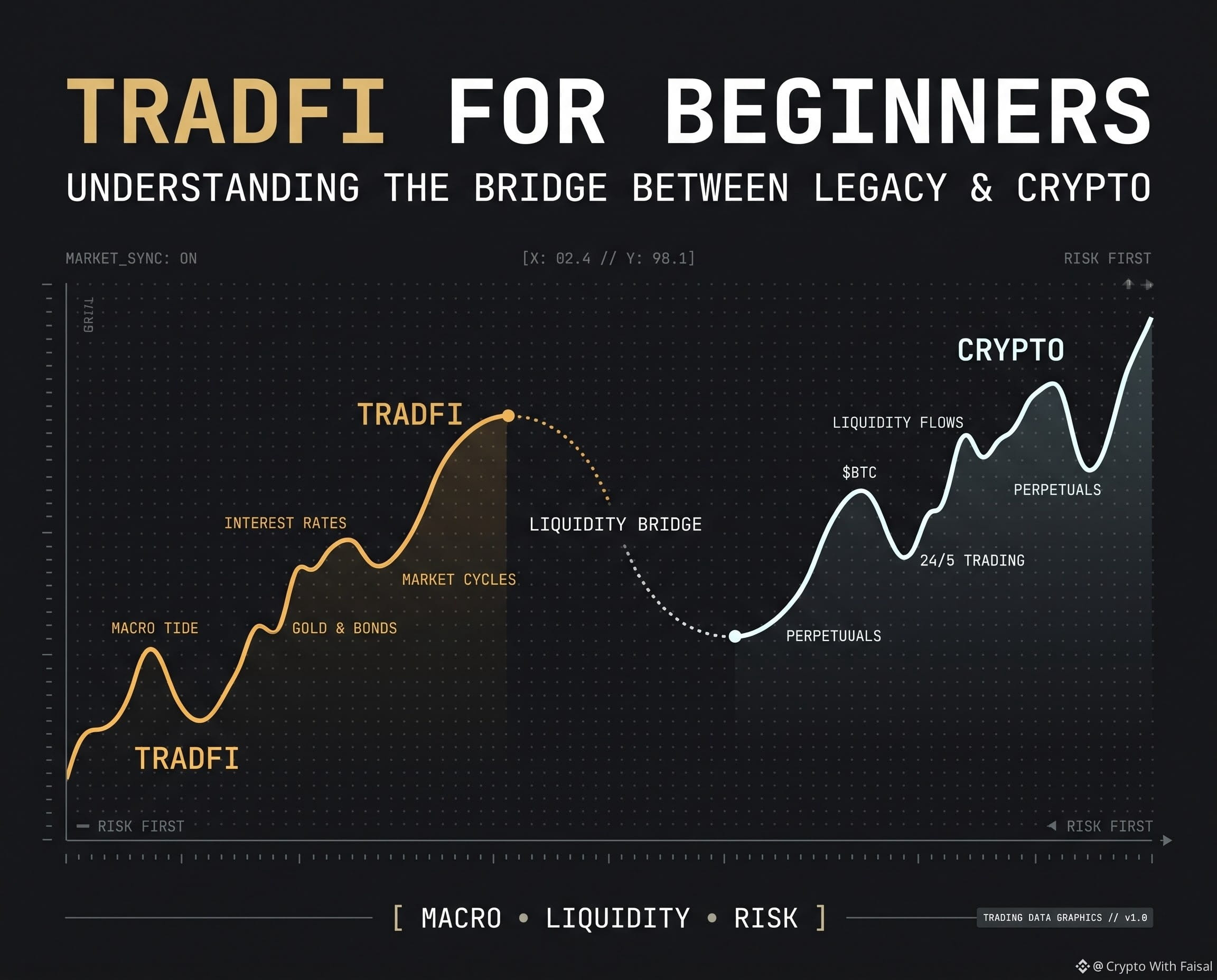
Still treating crypto and Traditional Finance like two separate worlds? That mindset costs beginners money. 📊
TradFi covers the legacy pillars—stocks, bonds, commodities, and FX. In 2026, those markets don't just sit in the background; they steer crypto liquidity and trade right alongside digital assets.
Three rules every beginner should know:
⚡ Macro sets the tide: Interest rates, Treasury yields, and equity swings dictate when capital flows into BTC or pulls back to safety.
⚡ TradFi meets crypto rails: USDT-margined perpetuals now bring gold, silver, and major global stocks onto crypto screens—with commodity contracts running 24/5.
⚡ Know your contract: A price-tracking perpetual isn't physical gold or direct stock ownership. Always check funding rates and leverage limits first.
🎯 Trader edge: Check the macro calendar before sizing up, respect weekend liquidity shifts, and manage risk first.
Which TradFi market are you watching closest right now—Gold, Tech stocks, or indices? 👇
$BTC
{future}(BTCUSDT)
$XAUT
{future}(XAUTUSDT)
$NVDA
{future}(NVDAUSDT)
#tradfiforbeginners #BTC #XAUT #NVDA
Still treating crypto and Traditional Finance like two separate worlds? That mindset costs beginners money. 📊
TradFi covers the legacy pillars—stocks, bonds, commodities, and FX. In 2026, those markets don't just sit in the background; they steer crypto liquidity and trade right alongside digital assets.
Three rules every beginner should know:
⚡ Macro sets the tide: Interest rates, Treasury yields, and equity swings dictate when capital flows into BTC or pulls back to safety.
⚡ TradFi meets crypto rails: USDT-margined perpetuals now bring gold, silver, and major global stocks onto crypto screens—with commodity contracts running 24/5.
⚡ Know your contract: A price-tracking perpetual isn't physical gold or direct stock ownership. Always check funding rates and leverage limits first.
🎯 Trader edge: Check the macro calendar before sizing up, respect weekend liquidity shifts, and manage risk first.
Which TradFi market are you watching closest right now—Gold, Tech stocks, or indices? 👇
$BTC
$XAUT
$NVDA
#tradfiforbeginners #BTC #XAUT #NVDA
1
439

#tradfiforbeginners
Traditional Finance (TradFi) Explained: What Beginners Need to Know! 📊
You hear the word TradFi everywhere in crypto—but what does it actually mean?
TradFi stands for Traditional Finance. It refers to the financial system we have used for decades, including banks, stock markets, insurance companies, brokers, and government bonds.
Think about your everyday financial activities:
Depositing money into a bank
Buying shares through a stockbroker
Taking a loan from a financial institution
Investing in gold or government bonds
All of these are part of TradFi.
Now compare it with DeFi (Decentralized Finance), where blockchain technology and smart contracts can provide financial services without relying entirely on traditional intermediaries.
The exciting part? These two worlds are increasingly coming together.
Tokenized stocks, blockchain-based bonds, and tokenized money-market funds are bringing traditional financial assets onto blockchain networks.
For crypto investors, understanding TradFi is becoming more important because institutional money and traditional financial products are playing a growing role in the digital asset market.
The future of finance may not be TradFi versus DeFi—it could be both working together.
#TradFi #defi #CryptoEducation

119

·
--
🚀 NEW TO TRADFI? LET'S LEARN TOGETHER!
💰 Ever wondered how traditional finance (TradFi) actually works?
If you're new to finance, this is the perfect place to start!
Let's understand the basics: 📈 What are stocks? 🏦 How do banks work? 💵 What are bonds? 🌍 How does the traditional financial market work? 🔄 What's the difference between TradFi and DeFi?
You don't need to be an expert to join this discussion. Everyone starts as a beginner!
Let's share knowledge, ask questions, and grow together. 🤝
🔥 The goal isn't to know everything. It's to learn something new every day!
👇 Are you a beginner in TradFi or already have some experience? Let's talk in the comments!
#TradFiForBeginners #TradFi #Finance #Crypto #BinanceSquare
108
·
--
#TradFiForBeginners
> If you want to understand Crypto, you MUST understand TradFi first.
> TradFi = Traditional Finance. The old system run by banks, stock markets, and governments.
> *Learn it in 60 seconds:*
> - *Stocks:* Buy a piece of a company. If the company grows, you grow.
> - *Bonds:* Lend money to government / company. Get interest back. Low risk, low return.
> - *Banks:* Save money, borrow money. Bank is the middleman.
> - *Forex:* Trade currencies. Dollar vs Euro, Pound vs Yen.
> *TradFi vs Crypto — The BIG Difference:*
> - *TradFi:* Monday to Friday, 9 to 5. Bank closed = money closed.
> - *Crypto:* 24/7. No bank. No permission. YOU are your own bank.
> TradFi is slow but regulated.
> Crypto is fast but risky.
> Smart investors don't choose one. They understand BOTH.
> Save this post if you are a beginner. Share it with someone who still thinks Stocks and Crypto are the same thing.
> What did you start with first — Stocks, Crypto, or Gold? Comment below 👇
> ✦ ArsalVirk Alpha ✦
#TradFiForBeginners #TradFi #learncrypto #CryptoForBeginners #BinanceSquare #ArsalVirkAlpha #Stocks #Bonds #Forex #CryptoEducation $BTC $BNB $ETH

1
158

·
--
After doing some research, I found that traditional financial institutions (TradFi) are actively embracing digital transformation, attracting beginner investors by offering more user-friendly interfaces and accessible financial products. For example, Citigroup and JPMorgan Chase have both launched investment platforms for beginners that offer simulated trading and personalized advice. I think this is good news for beginners, since TradFi’s strict regulation can provide greater security, while digital tools make the learning curve less steep. Of course, the complexity of traditional finance remains a challenge, but rather than relying entirely on DeFi, it’s better to learn about TradFi gradually. After all, starting steadily is the key to going the distance. #TradFiForBeginners
$BTC
$BTC
66
·
--
Bearish
#tradfiforbeginners
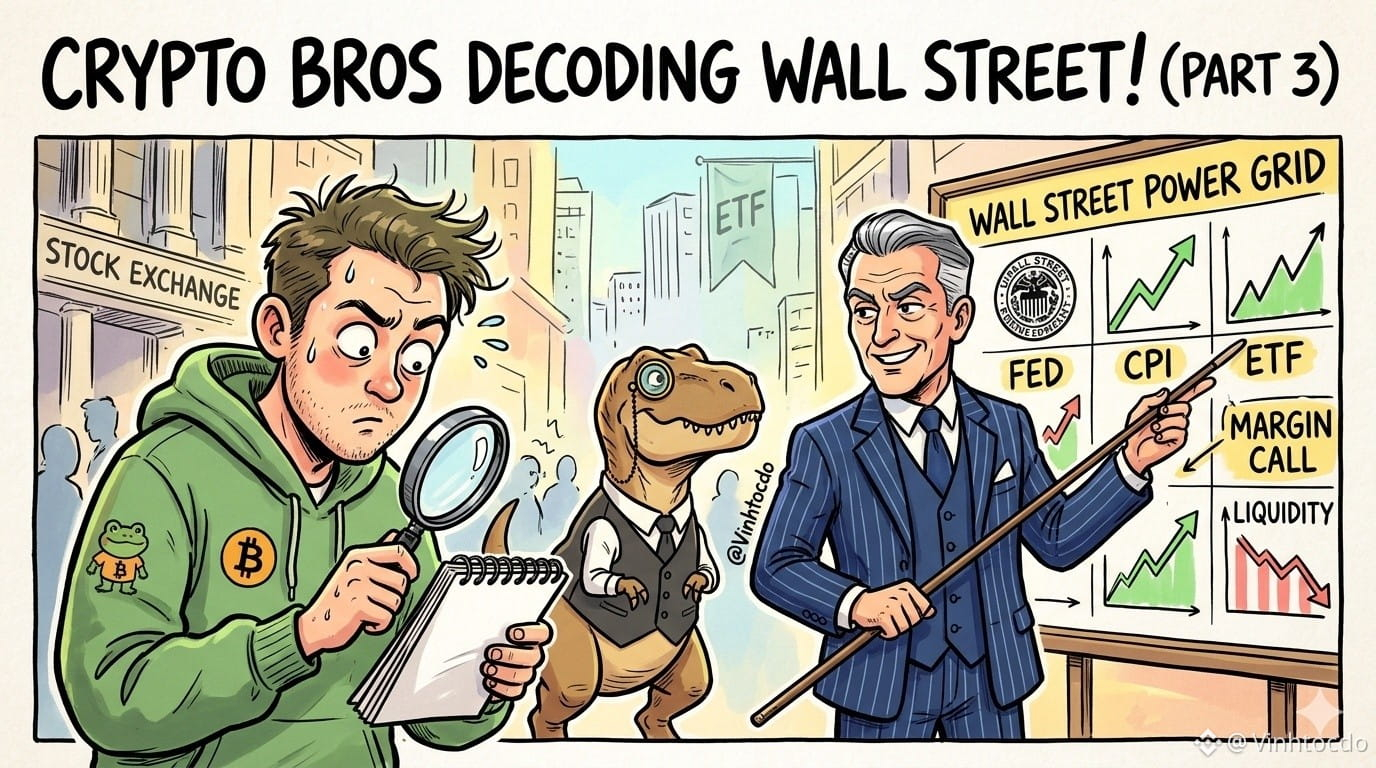
CRYPTO FOLKS CRASH-COURSE IN TRADFI (PART 3): DECODING WALL STREET'S "POWER PLAYBOOK"! 🦖💼
Following Parts 1 & 2 of our #tradfiforbeginners series, after the IPO crash set the whole market ablaze, today we're unpacking 8 more "supreme power" terms that keep both Wall Street and crypto traders up all night!
What exactly are they?
🔸 Fed (Federal Reserve): The "big boss" that regulates U.S. monetary policy. All it takes is one sneeze and BTC starts dancing.
🔸 Interest Rate: The price of renting money. When rates rise, money flows back to banks, leaving the crypto market "bone dry."
🔸 Inflation: Money losing value—the reason people rush to stock up on gold and Bitcoin as safe havens.
🔸 CPI (Consumer Price Index): A monthly measure of inflation. Whenever it's announced, charts jerk around like they've been electrocuted.
🔸 Liquidity: How easy it is to buy and sell. When liquidity is thin, whales can sweep the order book and torch your account in the blink of an eye!
🔸 ETF: An exchange-traded fund, a "bridge" that lets Wall Street bigwigs legally buy crypto without having to remember 12 wallet characters.
🔸 AUM (Assets Under Management): The total amount of money held by large funds—a measure of how "hungry" institutional whales are.
🔸 Margin Call: A demand to add margin—the classic Wall Street "death sentence," equivalent to getting a liquidation alert on our Futures trades!
What should traders do now? Don't trade blindly by looking only at green and red candles! Keep an eye on the CPI release calendar, Fed interest rates, and ETF flows each week to stay in sync with macro trends, manage leverage carefully, and avoid getting unfairly stopped out.
*Note: This is not financial advice.*
👉 Click the trade button below to support me:
$BTC
{spot}(BTCUSDT)
$ETH
{spot}(ETHUSDT)
$MMT
{future}(MMTUSDT)
#TradFi #CryptoEducation #macroeconomic #Bitcoin #TradingTips #VINHTOCDO
#tradfiforbeginners
CRYPTO FOLKS CRASH-COURSE IN TRADFI (PART 3): DECODING WALL STREET'S "POWER PLAYBOOK"! 🦖💼
Following Parts 1 & 2 of our #tradfiforbeginners series, after the IPO crash set the whole market ablaze, today we're unpacking 8 more "supreme power" terms that keep both Wall Street and crypto traders up all night!
What exactly are they?
🔸 Fed (Federal Reserve): The "big boss" that regulates U.S. monetary policy. All it takes is one sneeze and BTC starts dancing.
🔸 Interest Rate: The price of renting money. When rates rise, money flows back to banks, leaving the crypto market "bone dry."
🔸 Inflation: Money losing value—the reason people rush to stock up on gold and Bitcoin as safe havens.
🔸 CPI (Consumer Price Index): A monthly measure of inflation. Whenever it's announced, charts jerk around like they've been electrocuted.
🔸 Liquidity: How easy it is to buy and sell. When liquidity is thin, whales can sweep the order book and torch your account in the blink of an eye!
🔸 ETF: An exchange-traded fund, a "bridge" that lets Wall Street bigwigs legally buy crypto without having to remember 12 wallet characters.
🔸 AUM (Assets Under Management): The total amount of money held by large funds—a measure of how "hungry" institutional whales are.
🔸 Margin Call: A demand to add margin—the classic Wall Street "death sentence," equivalent to getting a liquidation alert on our Futures trades!
What should traders do now? Don't trade blindly by looking only at green and red candles! Keep an eye on the CPI release calendar, Fed interest rates, and ETF flows each week to stay in sync with macro trends, manage leverage carefully, and avoid getting unfairly stopped out.
*Note: This is not financial advice.*
👉 Click the trade button below to support me:
$BTC
$ETH
$MMT
#TradFi #CryptoEducation #macroeconomic #Bitcoin #TradingTips #VINHTOCDO
2
908
💡 5 GOLDEN RULES EVERY SPOT TRADER SHOULD KNOW!
You don't need leverage to learn how crypto markets work.
Here are five important beginner rules:
📌 Understand the project before buying.
📌 Use limit orders when appropriate.
📌 Avoid investing your entire balance in one coin.
📌 Calculate trading fees and potential profit.
📌 Have an exit strategy before entering.
Consistency and patience can be more valuable than chasing quick gains.
$BTC $ETH $BNB
#tradfiforbeginners
53
🚀 BEGINNER MISTAKE: BUYING JUST BECAUSE A COIN IS RISING!
Seeing a coin pump can create excitement, but chasing green candles is a risky habit.
Before buying, ask yourself:
What does this project actually do?
Is the current price reasonable?
Where would you exit if the market falls?
Does the project have real utility?
Smart spot trading begins with research, not FOMO.
$SOL $ADA $LINK
Have you ever bought a coin just because its price was rising?
#tradfiforbeginners
58
🚨 BREAKING: YOUR FIRST CRYPTO TRADE COULD TEACH YOU THE BIGGEST LESSON!
Thousands of beginners enter crypto hoping for quick profits.
But the first lesson isn't how to make money. It's how NOT to lose it!
Understand market orders, limit orders, trading fees and price volatility before buying.
Start small. Research first. Never let excitement control your decisions.
$BTC $ETH $BNB
What's the biggest mistake you made when you started trading?
#tradfiforbeginners
62
🔥 STOP FOLLOWING EVERY SIGNAL — LEARN TO READ THE MARKET!
A beginner who understands the market has an advantage over someone who blindly follows every prediction.
Learn these basics:
📈 Support and resistance
📊 Trading volume
🕯️ Candlestick patterns
💰 Market capitalization
🔍 Project fundamentals
Knowledge helps you make independent decisions instead of depending on strangers' predictions.
Start with spot trading and build your skills step by step.
$BTC $ETH $BNB
{spot}(BNBUSDT)
#tradfiforbeginners
🔥 STOP FOLLOWING EVERY SIGNAL — LEARN TO READ THE MARKET!
A beginner who understands the market has an advantage over someone who blindly follows every prediction.
Learn these basics:
📈 Support and resistance
📊 Trading volume
🕯️ Candlestick patterns
💰 Market capitalization
🔍 Project fundamentals
Knowledge helps you make independent decisions instead of depending on strangers' predictions.
Start with spot trading and build your skills step by step.
$BTC $ETH $BNB
#tradfiforbeginners
52
🌱 NEW TO CRYPTO? START WITH KNOWLEDGE, NOT MONEY!
Every successful investor starts somewhere.
You don't need expensive strategies or complicated indicators to begin learning crypto.
Start by understanding:
📊 How spot trading works
💰 How to manage your budget
🔍 How to research a coin
🎯 How to set realistic profit targets
Learn before investing. Never risk money you cannot afford to lose.
$BTC $ETH $BNB
What's the first crypto lesson every beginner should learn?
#tradfiforbeginners
30

Most people assume bringing Wall Street mechanisms into crypto stabilizes the market, but historical data shows traditional financial plumbing actually triggers deeper, more chaotic deleveraging spirals than transparent on-chain code.
Traders getting caught off guard by sudden weekend sell-offs usually blame mysterious whales, without realizing they are actually getting crushed by legacy settlement lags. It is agonizing to watch a spot portfolio bleed out simply because an offshore fund had to meet a margin call in an entirely different asset class.
Here is the core difference beginners need to understand. On-chain liquidations for assets like $BTC or $ETH are programmatic, instant, and visible in real time on the ledger. TradFi operates on rehypothecation, where the exact same collateral gets pledged multiple times across private broker networks. When macro credit conditions tighten and interest rate expectations shift, institutions do not wait for an automated auction. They pull liquidity indiscriminately across every book they run to protect their legacy balance sheets.
This creates an invisible liquidity trap for everyday crypto investors. Even if you sit in cash or park profits into $USDT, the market depth around you evaporates because institutional market makers remain tethered to traditional banking hours and centralized clearing houses. When those TradFi rails close for the weekend while crypto trades continuously, thin order books turn ordinary rebalancing into severe flash crashes.
Are you factoring institutional settlement rails into your risk management yet, or are you still trading like it is 2020?
#TradFiForBeginners #TradersPriceOut50bpDecemberFedHike #WillOctCorePCEShiftFedHikeExpectations

44


·
--
#TradFiForBeginners
*TradFi For Beginners: What Is TradFi Actually? 💡*
If you're new to crypto, you've probably seen the word *TradFi* everywhere. Let me explain it in 30 seconds:
*TradFi = Traditional Finance*
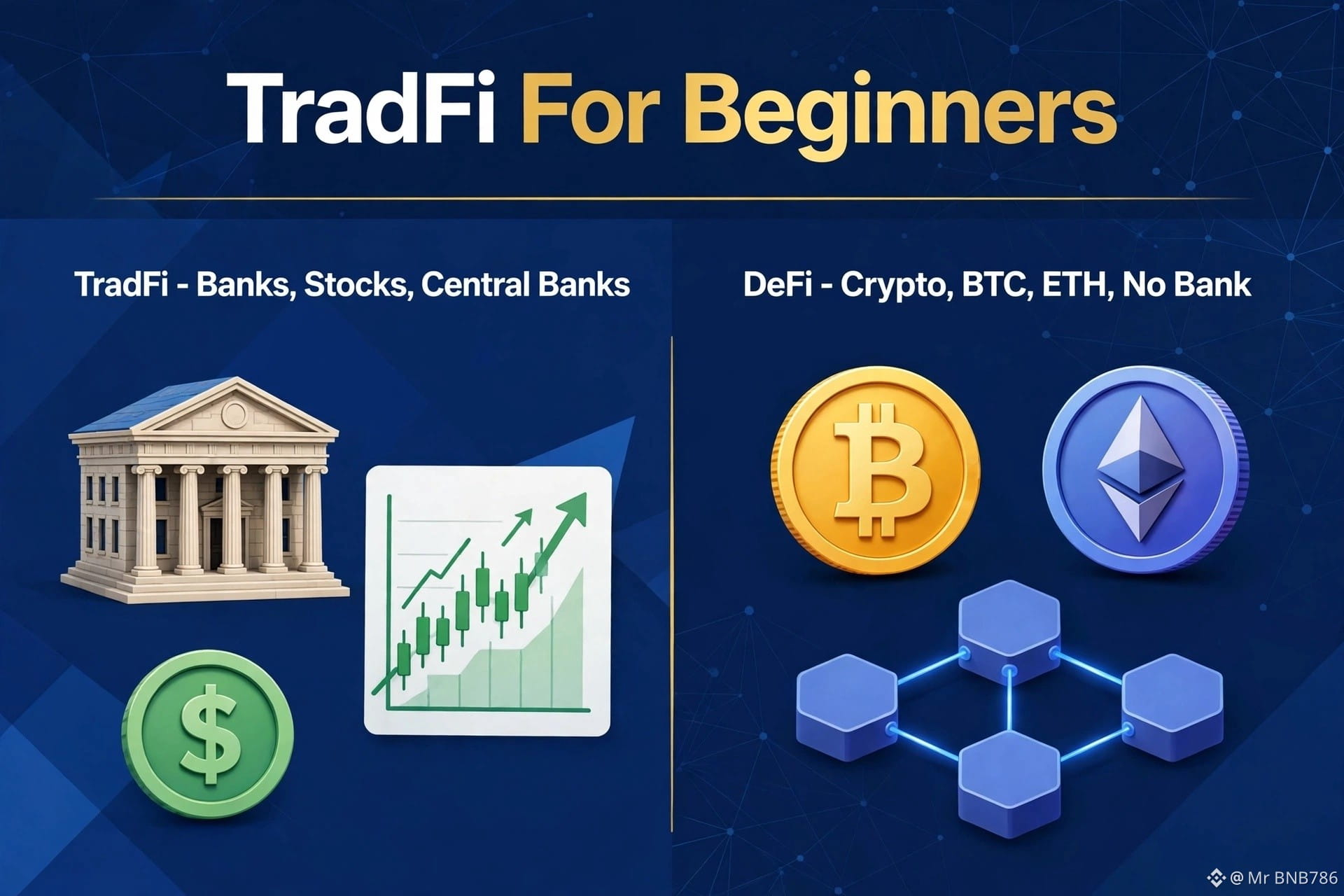
Banks, Stock Market, Central Banks, Visa, PayPal - all of this is TradFi.
*DeFi = Decentralized Finance*
Crypto, $BTC, $ETH, DEX, Staking - no bank in the middle, you control your money.
So why is everyone talking about TradFi now?
Because TradFi is coming INTO crypto:
- Banks are buying $BTC
- ETFs are here
- Governments are making crypto rules
- Big companies are using blockchain
This is NOT TradFi vs Crypto anymore.
This is TradFi + Crypto = The Future.
*My Simple Advice For Beginners:*
1. Don't ignore TradFi news - it moves crypto prices
2. Learn how interest rates, Fed, and PCE affect $BTC
3. Don't FOMO, learn first, invest small
Are you a TradFi person who just entered crypto, or a crypto native?
Comment below 👇
$BTC $ETH #TradFiForBeginners #Write2Earn #CryptoForBeginners #TradFi #DeFi #Bitcoin #Ethereum #CryptoNews #BinanceSquare
170
Log in to explore more content
Join global crypto users on Binance Square
⚡️ Get latest and useful information about crypto.
💬 Trusted by the world’s largest crypto exchange.
👍 Discover real insights from verified creators.
Email / Phone number
Trending Topics
1
#EvolveAtBinanceBlockchainWeek
2.7M views
21,623 Discussing
2
#IBSGovAccountMints1BTokensDrains5.71M
28,539 views
318 Discussing
3
#OPECReportedlyKeepsOilQuotasUnchangedForQ1
3,824 views
93 Discussing
4
#SunReportedlyOffered4BToRescueFTX
2,438 views
33 Discussing
5
#XRPLAmendmentsEnterActivationWindow
10,425 views
106 Discussing
6
#WorldLibertyActsToCutLiquidationRisk
78,752 views
645 Discussing
7
#LiquidHackerMoves598BTC
56,712 views
403 Discussing
8
#TrumpMediaCouldFace883.5MRepaymentDemand
30,574 views
160 Discussing
9
#BitcoinETFsExtendOutflowStreakToEightDays
124,968 views
947 Discussing
10
#BitcoinETFsSee$5.39BNetOutflowRecord
3,887 views
18 Discussing