

#luna2
luna2
792,565 views
2,080 Discussing
Hot
Latest

·
--
🔥 Survived the Binance crash? Now it's time to look ahead! 🚀
After all the turbulence in the crypto market, we're still standing strong. 💎 Now all eyes are on Luna 2.0 and the rest of the altcoin market! 🌕
Patience, determination, and nerves of steel – that's what it takes to survive the crypto rollercoaster.
📈 New chapter. New opportunities. New goals.
Who's still on board? $LUNA2 2.0 and the rest of crypto – let's go! 🚀🔥
#crypto #LUNA2 #Binance #altcoins #bitcoin
{future}(LUNA2USDT)
{spot}(LUNCUSDT)
🔥 Survived the Binance crash? Now it's time to look ahead! 🚀
After all the turbulence in the crypto market, we're still standing strong. 💎 Now all eyes are on Luna 2.0 and the rest of the altcoin market! 🌕
Patience, determination, and nerves of steel – that's what it takes to survive the crypto rollercoaster.
📈 New chapter. New opportunities. New goals.
Who's still on board? $LUNA2 2.0 and the rest of crypto – let's go! 🚀🔥
#crypto #LUNA2 #Binance #altcoins #bitcoin

1
22
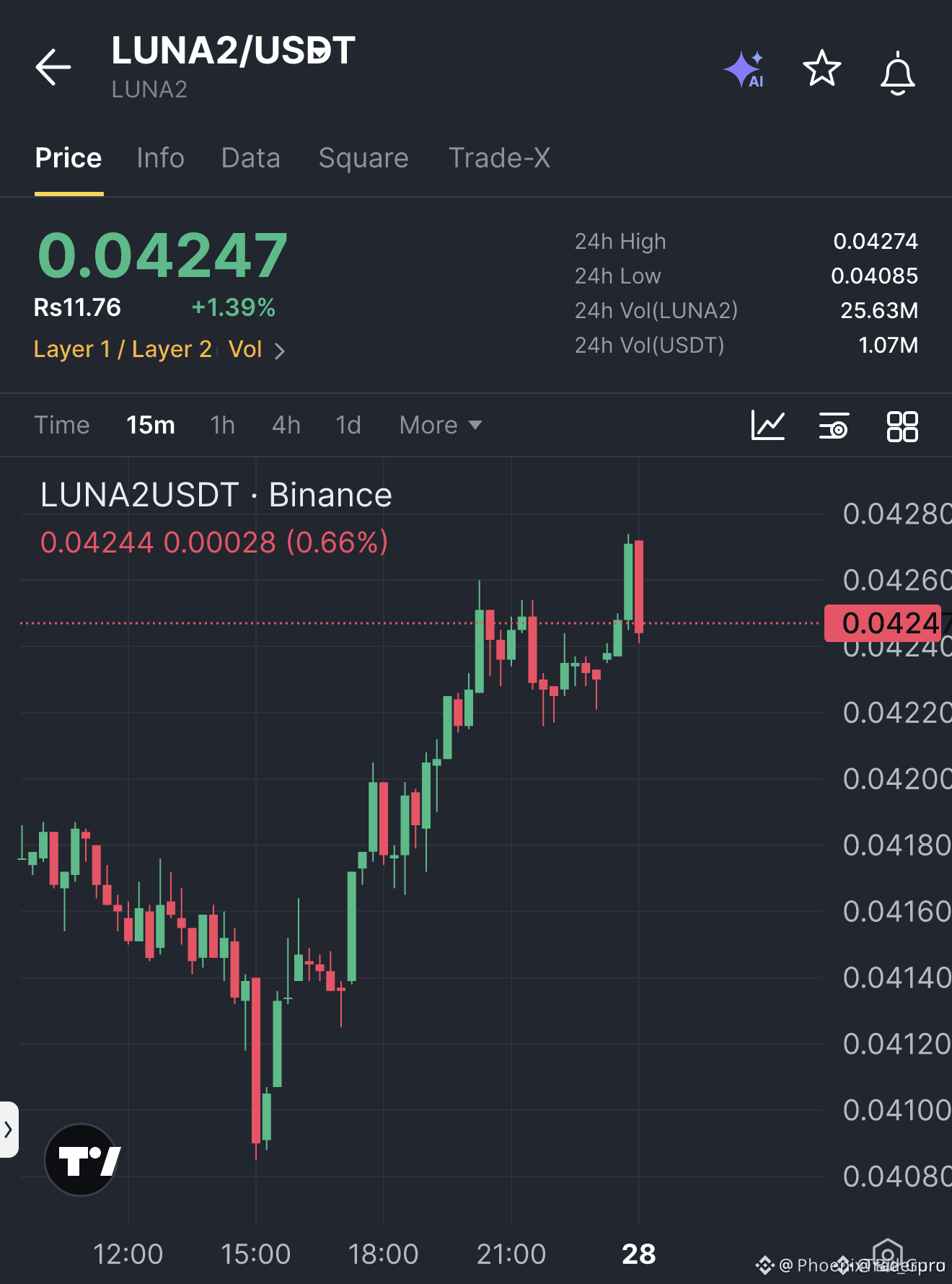
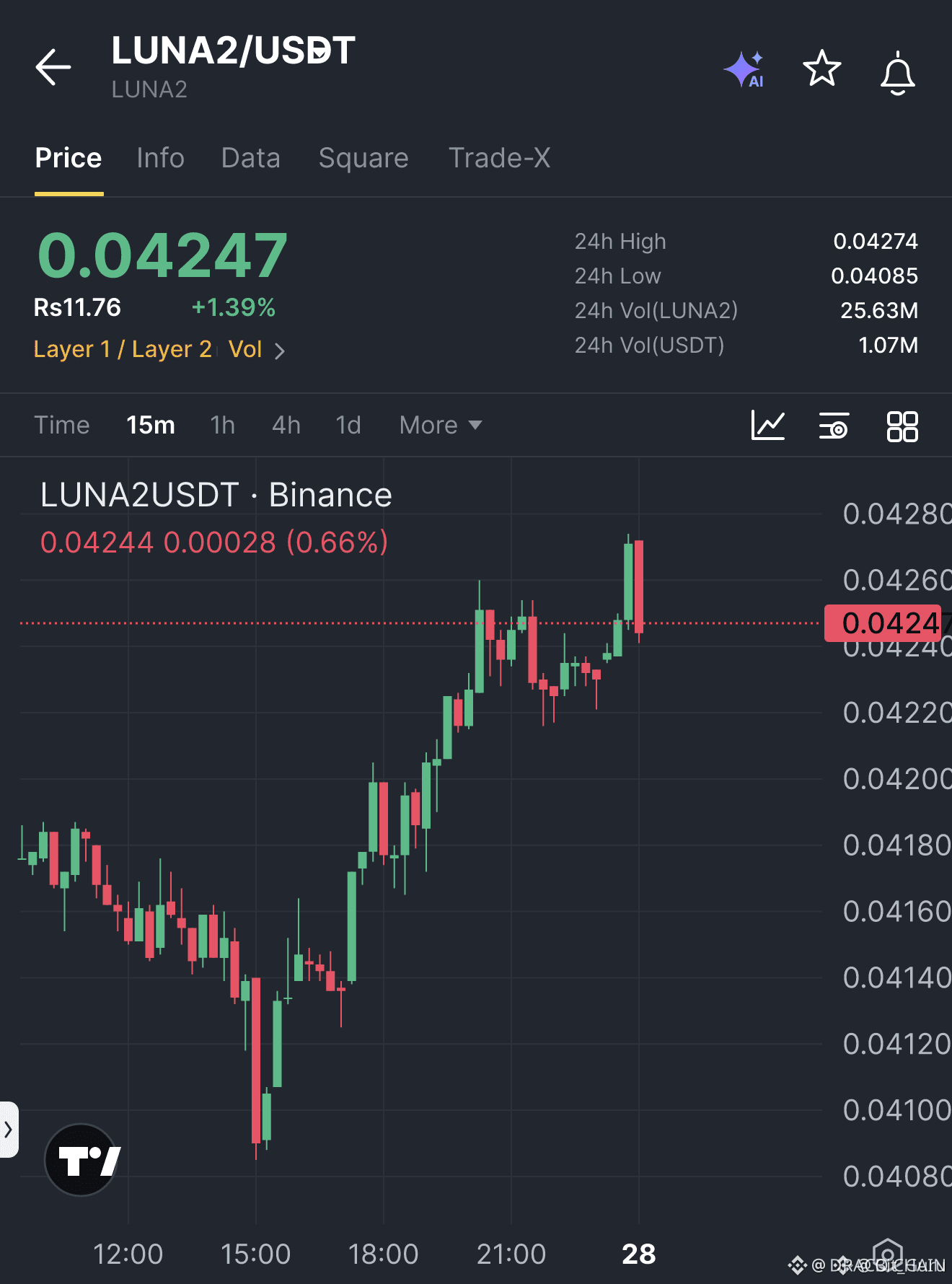
🚀 $LUNA2 SURGES PAST TP1, EYES NEXT TARGET! 🟢
Entry: 0.04199 ⚡
Target: 0.04324 🚀
Stop Loss: 0.04149 ⚠️
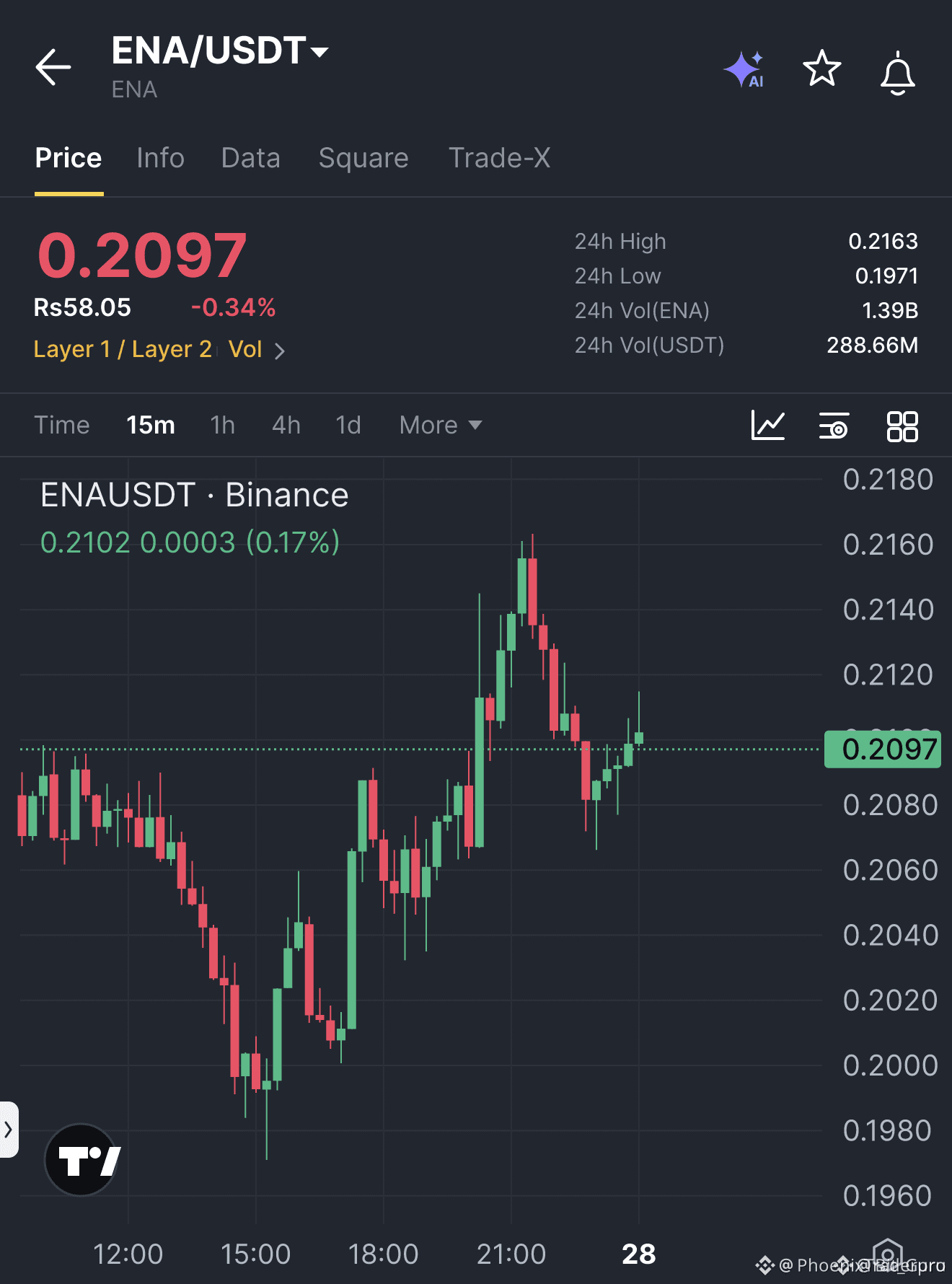
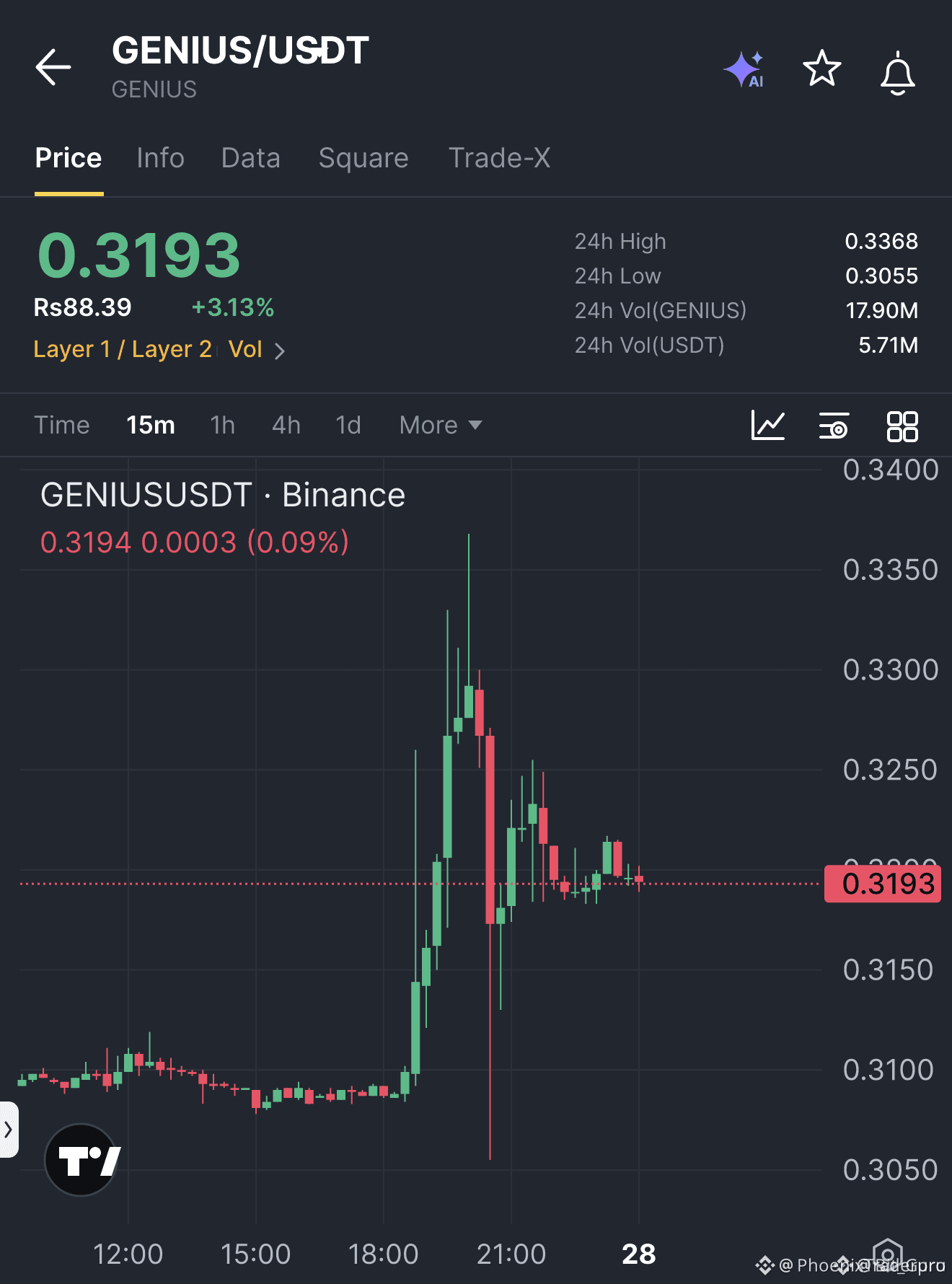
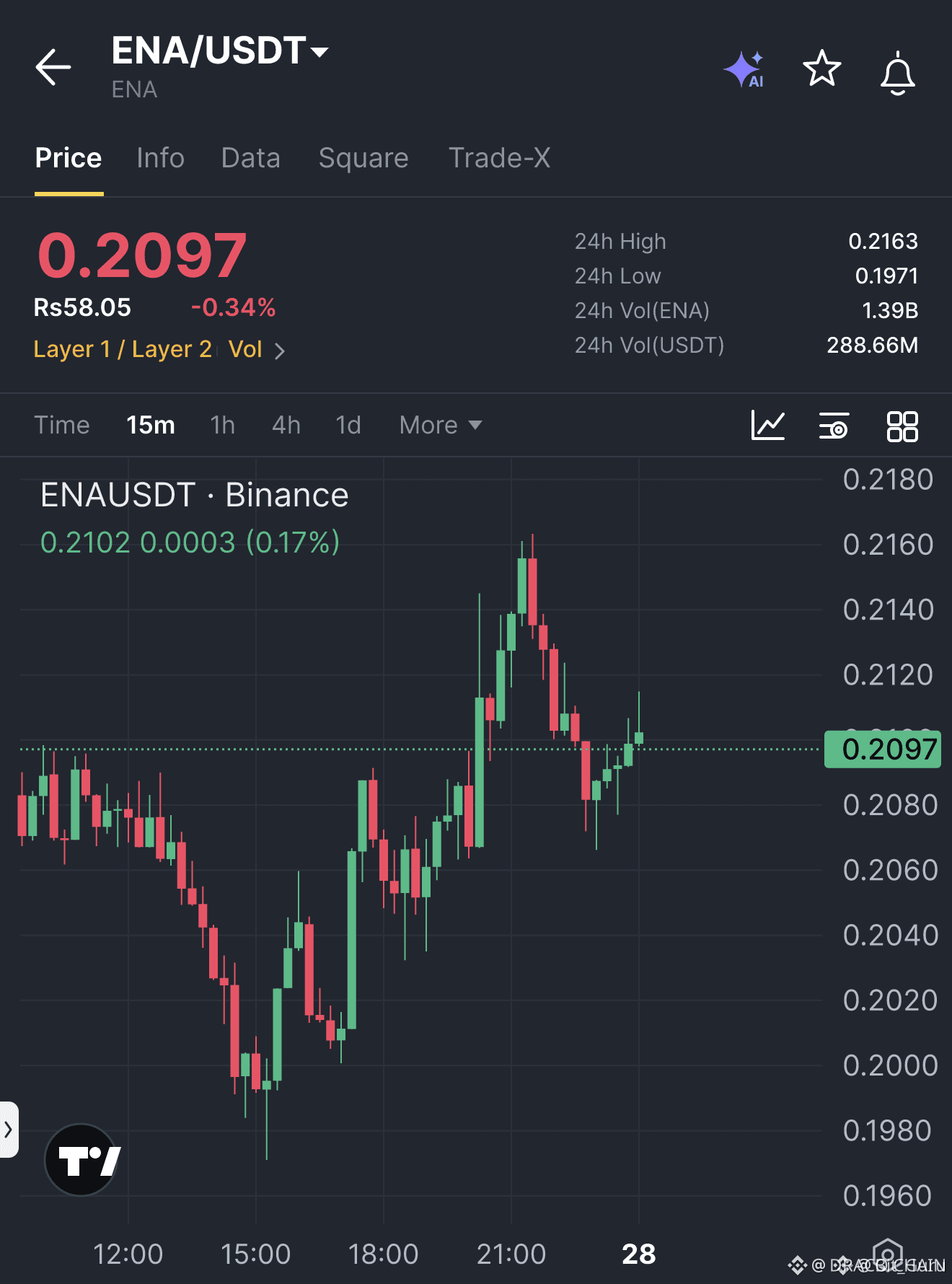
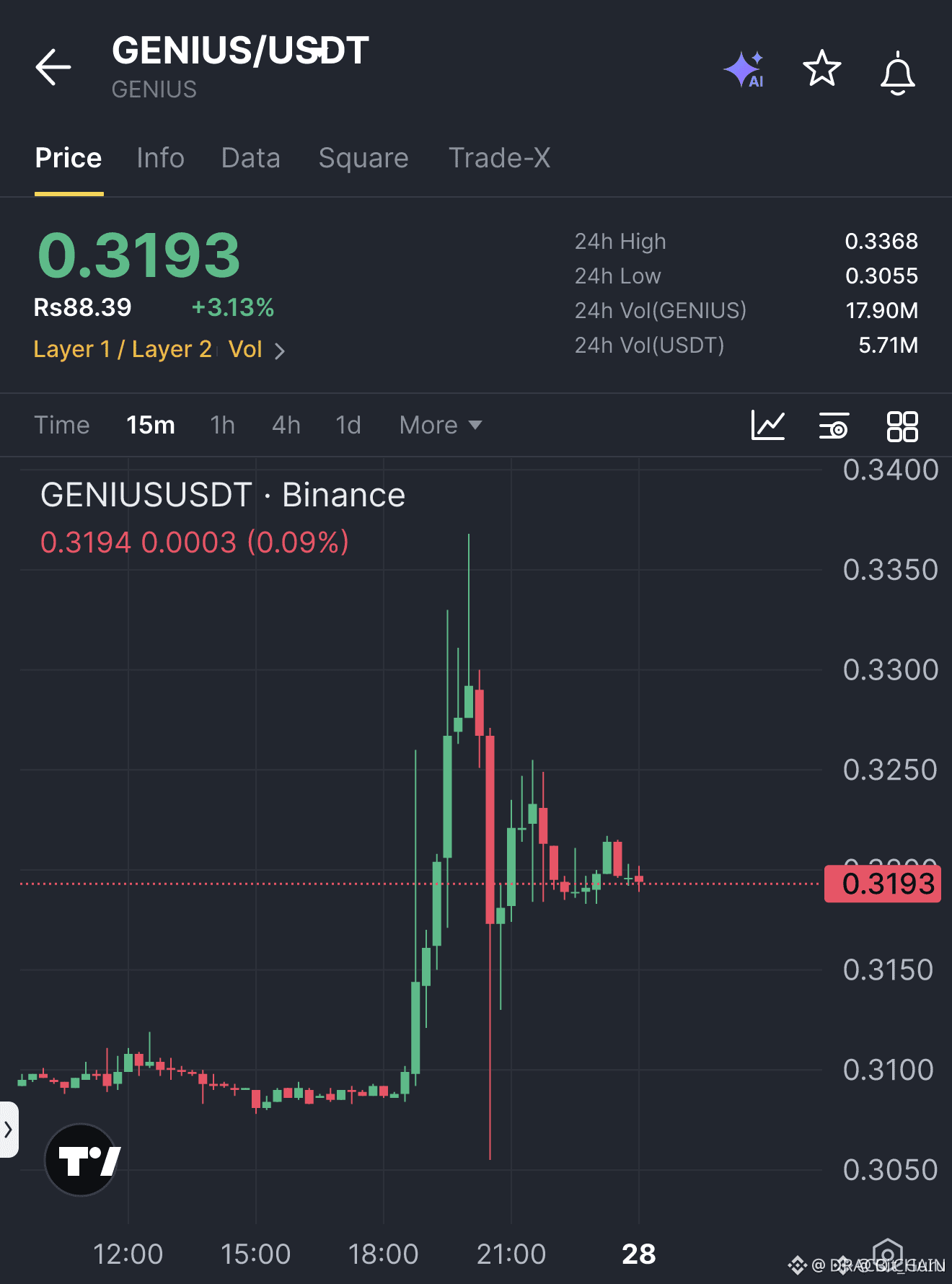
📊 $LUNA2 just punched through TP1, flashing a crisp +1.79% on the board. The order block at 0.04199 is holding tight, and the liquidity sweep below 0.04149 is already priced in. ⚡ Meanwhile, $ENA ’s stop‑loss hit, and $GENIUS rode a clean 2.84% swing to TP3, proving smart‑money is rotating across the sector. 🌊 The next push to 0.04324 could lock in another sweet swing if buyers keep the pressure alive.
💬 Who’s stacking bids for the next wave, and which token will ride the liquidity tide next? 👇
⚠️ Not financial advice. Always manage your risk. 🛡️
🏷️ #LUNA2 #LongSetup #Momentum #Crypto
🔥 💎
16

·
--
🚨 $LUNA2 SURGES THROUGH LIQUIDITY ZONE TO NEW TARGET! 📈
Entry: 0.04199 ⚡
Target: 0.04324 🚀
Stop Loss: 0.04149 ⚠️
📊 The 0.04199 demand block has acted as a smart‑money anchor, swallowing sell pressure three times since the last swing. 🦈 A clean liquidity sweep sent price into the 0.04274 zone, confirming the institutional push.
⚡ Volume on the 4‑hour chart is expanding, and the next resistance at 0.04324 aligns with the prior swing high, offering a tidy continuation path. 📌 How are you positioning for the next liquidity grab? 💬
⚠️ Not financial advice. Always manage your risk. 🛡️
🏷️ #LUNA2 #LongSetup #LiquiditySweep #SmartMoney #Crypto
🔥 💎
3

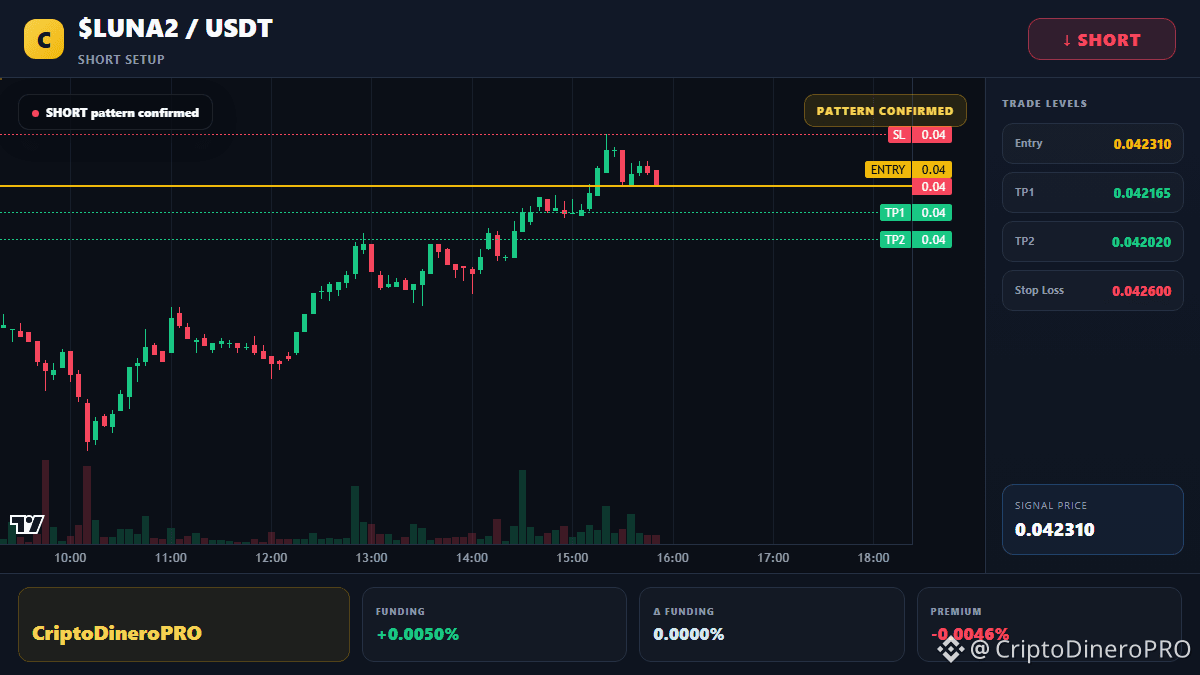
$LUNA2 - Downside Momentum 📉
{future}(LUNA2USDT)
📍 Entry: 0.042310
🛑 Stop Loss: Above 0.042600
🎯 Targets:
• TP1: 0.042165
• TP2: Below 0.042020
DYOR.
#LUNA2 #LUNA2USDT
$LUNA2 - Downside Momentum 📉
📍 Entry: 0.042310
🛑 Stop Loss: Above 0.042600
🎯 Targets:
• TP1: 0.042165
• TP2: Below 0.042020
DYOR.
#LUNA2 #LUNA2USDT
📍 Entry: 0.042310
🛑 Stop Loss: Above 0.042600
🎯 Targets:
• TP1: 0.042165
• TP2: Below 0.042020
DYOR.
#LUNA2 #LUNA2USDT
20

·
--
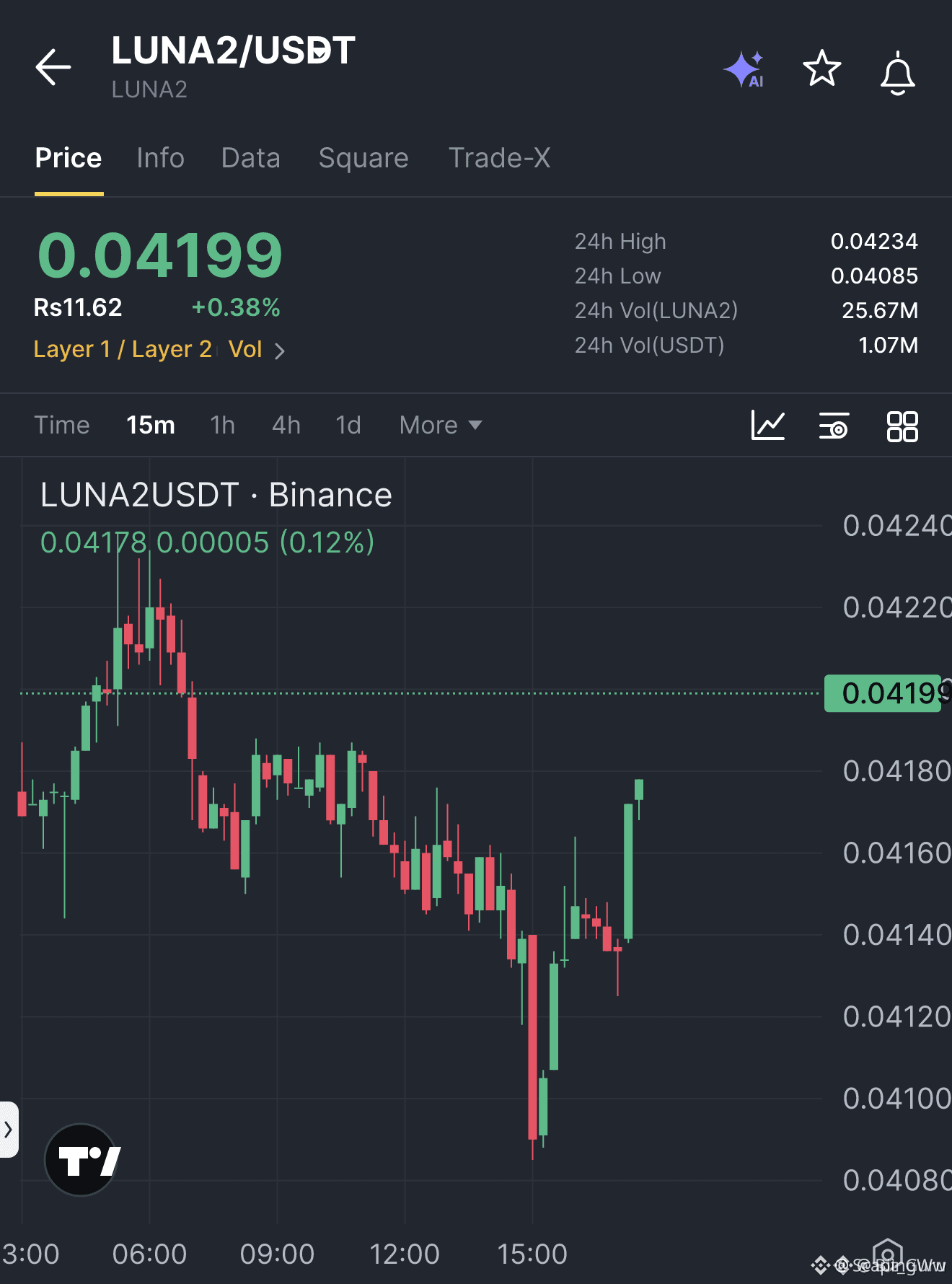
🚀 $LUNA2 SMASHES THE BULLISH RANGE BREAK 🚨
Entry: 0.04199 ⚡
Target: 0.04274, 0.04324, 0.04399 🚀
Stop Loss: 0.04149 ⚠️
📊 Volume exploded to 12.45× the 20‑candle average, confirming aggressive buying pressure on the 5‑minute frame. The candle closing above 0.04184 flips the order block, and smart money is now hunting liquidity deeper up the ladder. 🦈 Each TP rides a fresh wave of demand, while the SL guards the last absorption zone. 💡 This setup blends raw momentum with clear risk parameters.
💬 Who’s ready to ride the next liquidity sweep? 👇
⚠️ Not financial advice. Always manage your risk. 🛡️
🏷️ #LUNA2 #LongSetup #BullishBreakout #Crypto
🔥 🚀
31

·
--
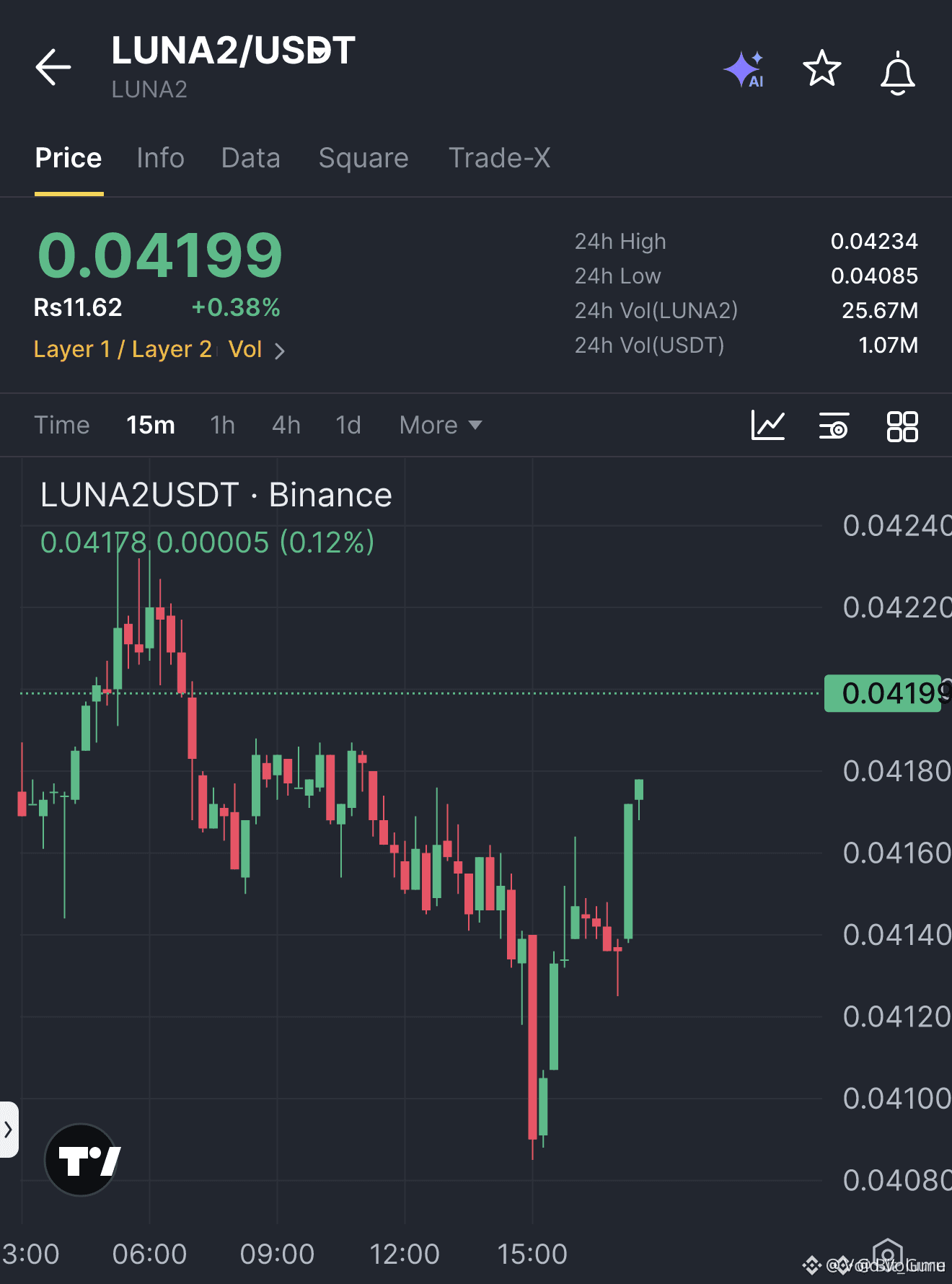
🚀 $LUNA2 BREAKS BULLISH RANGE ON 12X VOLUME SURGE! 📈
Entry: 0.04199 ⚡
Target: 0.04274, 0.04324, 0.04399 🚀
Stop Loss: 0.04149 ⚠️
📊 The 5‑minute candle closed decisively above 0.04184, confirming the demand block’s integrity. ⚡ Volume spiked to 12.45× the 20‑candle average, a classic liquidity absorption signal that smart money rarely fumbles. 📌 With each incremental TP aligned to the next resistance tier, the risk‑reward profile sharpens as the market reclaims the bullish range.
💬 How are you positioning for the next liquidity sweep as price eyes the final target? 👇
⚠️ Not financial advice. Always manage your risk. 🛡️
🏷️ #LUNA2 #LongSetup #BullishBreakout #Crypto
🔥 💎
5

·
--
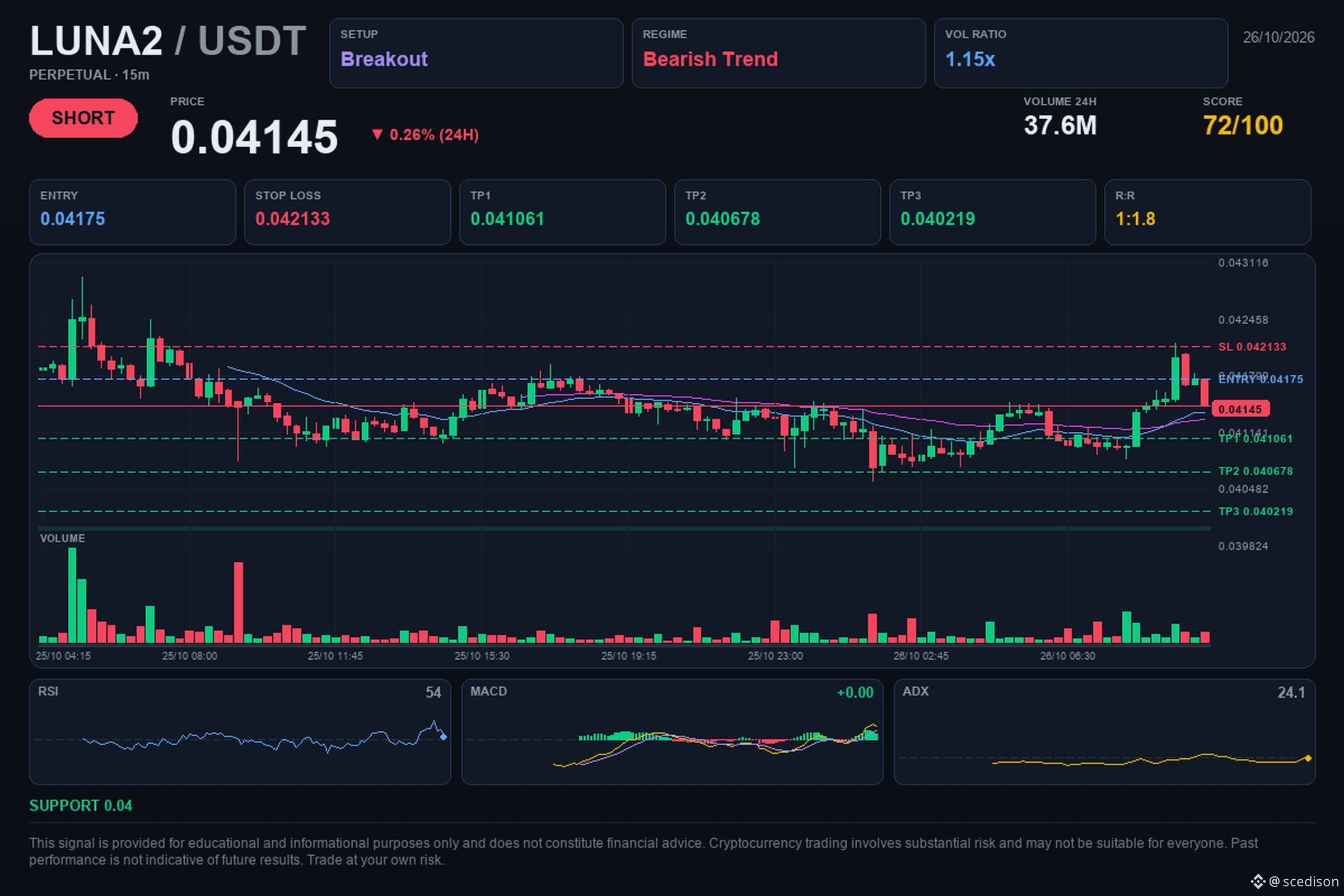
📢 $LUNA2 / USDT | 🔴 SHORT | ⭐ 73%
🎯 Target: $0.04106102. Will it get there?
🎯 Trading levels:
🔴 Entry: $0.04175
🛑 Stop Loss: $0.042133
🏁 TP1: $0.041061
🏁 TP2: $0.040678
🏁 TP3: $0.040219
📈 Analysis:
The market structure shows a well-established downtrend across multiple timeframes, confirmed by the formation of lower highs. We observe a bearish break below a key support level, accompanied by an increase in trading volume that supports the current selling pressure. The structural weakness is reinforced by a liquidity imbalance, indicating greater seller interest at this point.
⚖️ Risk/Reward: 1:1.8
⏱️ Timeframe: 15M
💭 A breakout occurs when the price moves through an important technical level, which often indicates an increase in the strength of the current trend.
#crypto #LUNA2 #trading #Bearish
💡 This analysis is for educational purposes and does not constitute financial advice. Do your own research and make your decision carefully.
1
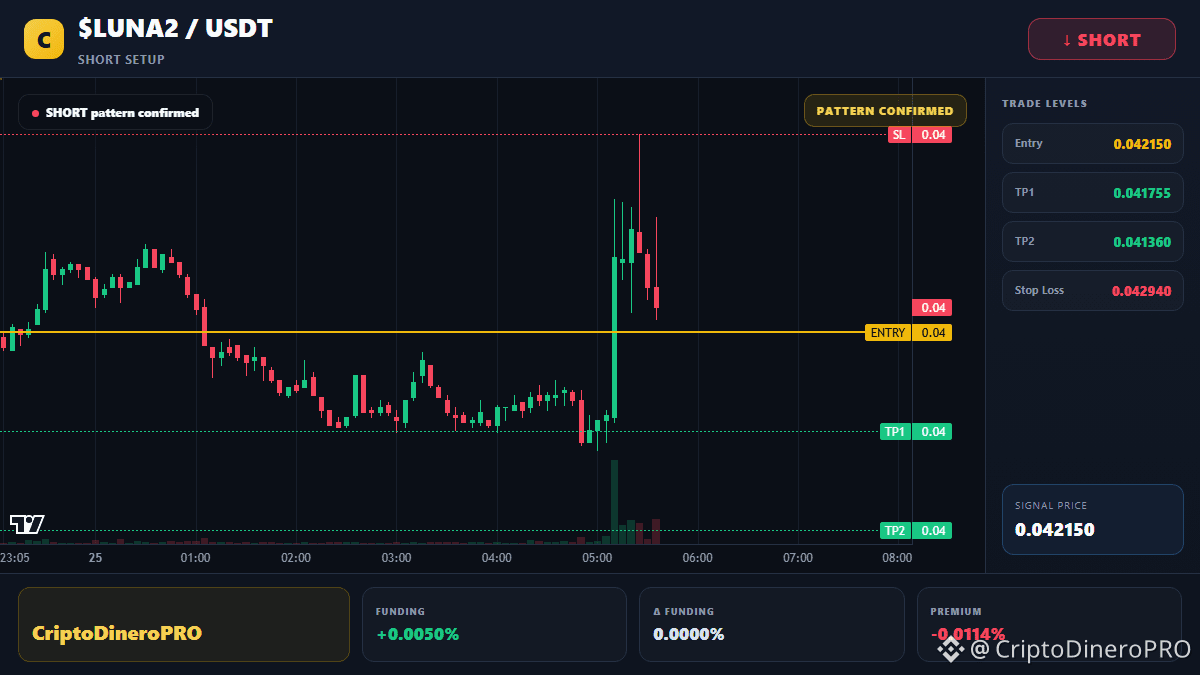
$LUNA2 - Short Opportunity 💎
{future}(LUNA2USDT)
📍 Entry: 0.042150
🛑 Stop Loss: Above 0.042940
🎯 Targets:
• TP1: 0.041755
• TP2: Below 0.041360
DYOR.
#LUNA2 #LUNA2USDT
$LUNA2 - Short Opportunity 💎
📍 Entry: 0.042150
🛑 Stop Loss: Above 0.042940
🎯 Targets:
• TP1: 0.041755
• TP2: Below 0.041360
DYOR.
#LUNA2 #LUNA2USDT
📍 Entry: 0.042150
🛑 Stop Loss: Above 0.042940
🎯 Targets:
• TP1: 0.041755
• TP2: Below 0.041360
DYOR.
#LUNA2 #LUNA2USDT
28

·
--
🟢 $LUNA2 SMASHES THROUGH RESISTANCE TO DELIVER A MASSIVE PROFIT RUN! 💥
That setup on $LUNA2 just printed clean green as buyers took total control of the order flow. When momentum builds off the lower timeframe base, smart money shifts into high gear and clears out the overhead sell walls with zero hesitation. 📊
Patience in executing high-probability structures always pays off when the market expands. ⚡ Risk management was tight, and the trajectory unfolded exactly as anticipated as volume surged through key resistance. 💡
💬 Did you lock in your gains on this expansion wave or are you letting a trailing piece run higher? 👇
⚠️ Not financial advice. Always manage your risk. 🛡️
🏷️ #LUNA2 #Altcoins #Profit #Breakout #Crypto
🔥 💎
3

🚀 $LUNA2 ON THE VERGE OF AN ULTRA PUMP? 📈
The recent spike to $0.24 acted like a teaser, a pre‑pump that just burned through thin liquidity, leaving a fresh order block hungry for the next wave. 📊 Smart money already stacked on the buy side, and the depth chart shows a widening gap ready to be filled.
If the sellers get swept, we could see a rapid thrust toward the next resistance, and volume should roar as the whales flip the script. ⚡ Keep your eyes on the order flow and be ready to ride the surge when the breakout fires. 💡
💬 Are you positioned to catch the next LUNA2 surge or waiting for the liquidity sweep to confirm? 👇
⚠️ Not financial advice. Always manage your risk. 🛡️
🏷️ #LUNA2 #LongSetup #Momentum #Crypto
🔥 💎
9

$LUNA2 LONG
Can this setup hold at the average as the price moves upward, or will the risk of a reversal prove stronger?
The trajectory is based on calculating successive upward steps, with a protective level as a safeguard. If the market begins to follow a positive scenario, the first take-profit can be considered at the nearest level, leaving room for further upside potential closer to the upper boundary, while the protective barrier helps control a possible drawdown.
➡️Entry point: 0.04474
🎯Take profit 1: 0.04540961 (+1.50%)
🎯Take profit 2: 0.04615922 (+3.17%)
🎯Take profit 3: 0.04728363 (+5.69%)
🛡Protection: 0.04353559 (-2.69%)
⚠️ This is not financial advice. Trade at your own risk. DYOR.
#LUNA2 #altcoins #cryptotrading 📈
$LUNA2
21
·
--
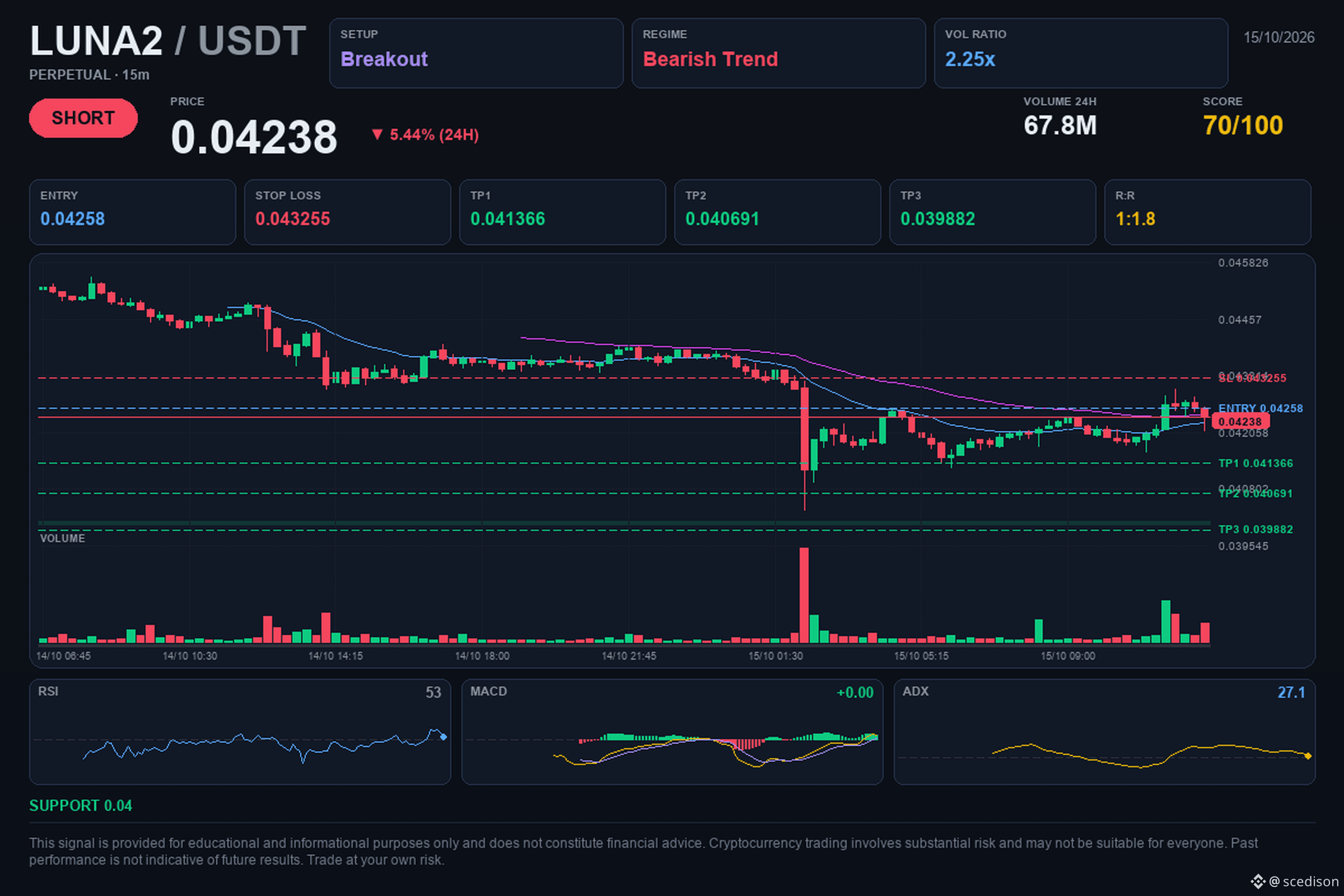
📢 $LUNA2 / USDT | 🔴 SHORT | ⭐ 71%
🎯 Target: $0.04136582. Will it reach it?
🎯 Trading levels:
🔴 Entry: $0.04258
🛑 Stop Loss: $0.043255
🏁 TP1: $0.041366
🏁 TP2: $0.040691
🏁 TP3: $0.039882
📈 Analysis:
The asset shows a consolidated bearish structure on daily and four-hour timeframes, marked by the formation of lower highs. A significant increase in trading volume, above average, is evident, along with a break of key levels that reinforces the current selling pressure. Volatility is in an expansion phase, suggesting a stronger market move.
⚖️ Risk/Reward: 1:1.8
⏱️ Timeframe: 15M
💭 The bearish structure is confirmed when the price breaks previous support levels, indicating that sellers are in control of the move.
#crypto #LUNA2 #trading #Bearish
💡 This analysis is for educational purposes and does not constitute financial advice. Do your own research and make decisions calmly.
14
·
--
⚡ $LUNA2 COMPRESSING ABOVE DEMAND AFTER IMPULSE EXPANSION 📈
Entry: 0.05616 🟢
Target: 0.0578432 🚀
Stop Loss: 0.0544768 ⚠️
Price is currently consolidating following an impulsive expansion, allowing institutional order flow to rebalance above the key demand block. 📊 Disciplined operators wait for execution inside the retest zone rather than chasing breakout momentum directly into immediate resistance.
🔍 Scenario invalidation sits clearly below 0.0544768, establishing a high-convexity setup toward upper structural efficiency zones. 💡 Position sizing and patient entry execution remain critical while liquidity builds across the range. 💬 Are you setting limit orders at the retest level or waiting for secondary market structure confirmation? 👇
⚠️ Not financial advice. Always manage your risk. 🛡️
🏷️ #LUNA2 #Crypto #SmartMoney #Altcoins #MarketStructure
🎯 🦈
15

·
--
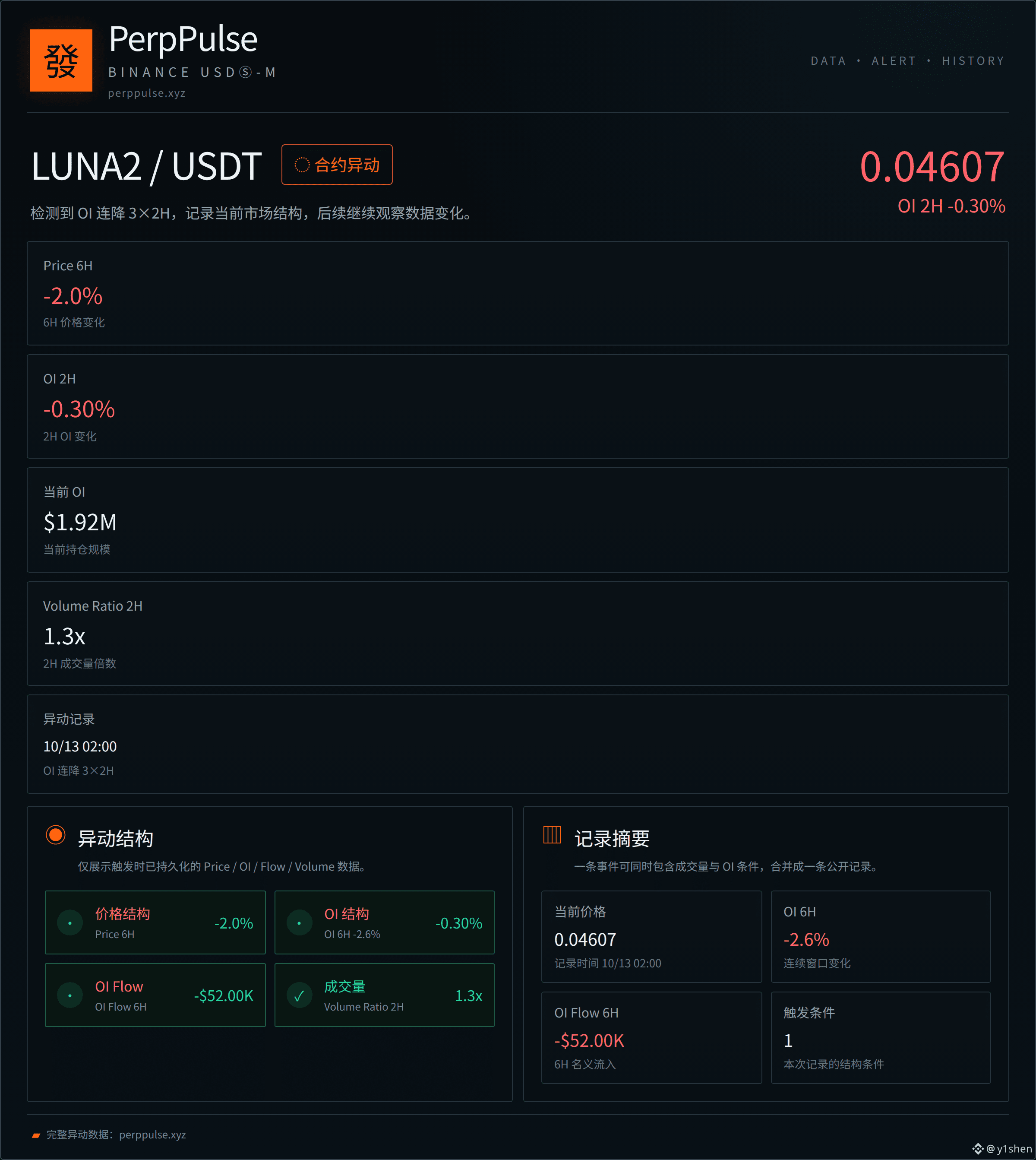
A few hours ago, the system first recorded a contract structure change at $LUNA2 : OI declined for 3×2H.
The only actual condition recorded this time was one: open interest fell continuously across three 2-hour windows. On the same timeline, the 2H volume ratio was about 1.3, OI 6-hour change was -2.6%, price 6-hour change was -2.0%, and the current observation level was 0.04607. No stronger OI Flow condition was confirmed, and no continuous 3×2H OI Flow condition was recorded either.
What is worth noticing is that price and open interest weakened together; this was the objectively recorded combination in this segment, rather than a simple fluctuation in trading volume. It shows that during this period, the exit of leveraged positions and the price pullback happened at the same time.
As for whether this is a phase adjustment or a longer structural shift, the current data is still not enough to draw a conclusion. For now, place this recorded level and the 6-hour magnitude of change on the watchlist and wait for more signals from subsequent windows.
$LUNA2 #LUNA2 #Crypto
📌 Verifiable record
Type: OI declined for 3×2H
Record time: 2026-10-13 02:00 +0800
Record level: 0.04607
Price 6H: -2.0%
OI 2H: -0.3%
OI 6H: -2.6%
OI Flow 6H: -52456.98
Vol 2H: 1.3x
Full anomaly data: perppulse.xyz
5
$LUNA2 LONG
1. If the scenario continues upward, consider the specified trade boundary as a protective stop.
2. The initial target marks the first specified target, while the subsequent targets extend the move.
➡️Entry point: 0.04802
🎯Take profit 1: 0.04893372 (+1.90%)
🎯Take profit 2: 0.04986744 (+3.85%)
🎯Take profit 3: 0.05126802 (+6.76%)
❌Stop-loss: 0.04659942 (-2.96%)
⚠️ This is not financial advice. Trade at your own risk. DYOR.
#LUNA2 #WLD #Worldcoin 📈
$LUNA2
34

·
--
Bearish
LUNA2 longs lost $3K around $0.05078.
This downside sweep keeps lower liquidity in play.
$LUNA2
{future}(LUNA2USDT)
$GTC
{future}(GTCUSDT)
$RLC
{future}(RLCUSDT)
🔴 LIQUIDITY ZONE HIT 🔴
Long liquidation spotted 🧨
$3.0033K cleared at $0.05078
Downside liquidity swept — watch reaction 👀
🎯 TP Targets:
TP1: ~$0.05027
TP2: ~$0.04976
TP3: ~$0.04926
#LUNA2
LUNA2 longs lost $3K around $0.05078.
This downside sweep keeps lower liquidity in play.
$LUNA2
$GTC
$RLC
🔴 LIQUIDITY ZONE HIT 🔴
Long liquidation spotted 🧨
$3.0033K cleared at $0.05078
Downside liquidity swept — watch reaction 👀
🎯 TP Targets:
TP1: ~$0.05027
TP2: ~$0.04976
TP3: ~$0.04926
#LUNA2
This downside sweep keeps lower liquidity in play.
$LUNA2
$GTC
$RLC
🔴 LIQUIDITY ZONE HIT 🔴
Long liquidation spotted 🧨
$3.0033K cleared at $0.05078
Downside liquidity swept — watch reaction 👀
🎯 TP Targets:
TP1: ~$0.05027
TP2: ~$0.04976
TP3: ~$0.04926
#LUNA2
129
$LUNA2 LONG
1. Buyers are focused on developing an upward movement, maintaining control over price action near the key position-building zone.
2. A consistent upward move increases the chances of overcoming intermediate targets without deep pullbacks.
3. The bullish sentiment remains as long as the quotes are above the protective levels.
🏁Entry: 0.05201
💰Target 1: 0.05278191 (+1.48%)
💰Target 2: 0.05363382 (+3.12%)
💰Target 3: 0.05491168 (+5.58%)
⛔️Stop: 0.05065214 (-2.61%)
⚠️ This is not financial advice. Trade at your own risk. DYOR.
#LUNA2 #CryptoNews #BTC 📈
$LUNA2
16

# From $40 Billion to Zero: LUNA’s Epic-Scale Collapse and LUNA2’s Difficult Rebirth Path
## The Fall of an Empire: May 2022
In May 2022, the cryptocurrency market witnessed one of the most devastating crashes in history.
UST was once one of the most successful algorithmic stablecoins on the market. It maintained its peg to the U.S. dollar through an arbitrage mechanism with LUNA. During the bull market, Anchor Protocol’s lofty returns—up to 20% annualized—lured massive capital inflows, pushing TVL (total value locked) to exceed $14 billion at its peak. LUNA’s market capitalization also surged to more than $40 billion. Founder Do Kwon was regarded as a genius developer, and the Terra ecosystem was seen as a benchmark for blockchain innovation.
However, when the market turned and funds began to leave, this seemingly precise mechanism instantly failed. On May 9, UST started to de-peg. Despite the team’s attempts to save the situation—including using foreign exchange reserves to buy UST—everything was already too late. A cycle of panicked sell-offs took hold, and LUNA’s price plummeted in just one week from nearly $120 to less than one cent. With that, a $40 billion empire vanished.
This crash not only destroyed countless investors’ wealth, but also dealt a major blow to confidence across the entire cryptocurrency market. Post-event estimates suggest investors lost more than $40 billion, and countless families suffered significant financial losses as a result.
## A Rebirth Amid Controversy: The Birth of LUNA2
After the crash, the Terra community faced a difficult choice. On May 25, 2022, the community voted to split and launch a new chain, issuing a new token, LUNA (to distinguish it, it later became known as LUNA2), while the original chain’s token was renamed LUNA Classic (LUNC).
The new LUNA distribution plan was as follows:
- Original LUNA holders received new tokens in a 1:1.034 ratio
- UST holders received compensation in a 1:0.023 ratio (roughly down to zero)
- The community treasury received a certain proportion of new tokens for ecosystem development
At the time, this plan sparked intense controversy. Many investors believed the distribution mechanism heavily favored institutions and large holders, while ordinary investors lost heavily yet received only minimal compensation. Do Kwon later stepped down, and the new team began the difficult work of rebuilding.
## Current Situation and Challenges: Can LUNA2 Really Stand Firm?
After more than two years of development, the LUNA2 ecosystem has made some progress:
**Ecosystem building**: The new chain focuses on payments, DeFi, and Web3 applications, attracting some developers back.
**Tokenomics adjustments**: It removed the original UST mechanism and adopted a more conservative stablecoin strategy. The assets pegged to the U.S. dollar were changed to an asset-collateral model.
**Community governance**: A more decentralized governance structure was established in an effort to prevent power from becoming overly concentrated.
However, the challenges remain just as severe:
1. **The trust gap**: The shadow of the crash is hard to erase, and investors are generally cautious toward Terra-related projects
2. **Regulatory pressure**: Do Kwon is currently wanted by South Korean judicial authorities. If he is captured, it could trigger further legal issues
3. **Intense competition**: With Layer1 and Layer2 networks competing ever more fiercely, Terra needs to find a differentiated positioning
4. **Market sentiment**: The overall crypto market is still in a period of adjustment, and narrative-driven capital has limited interest in “old stories”
## Conclusion
LUNA’s collapse is a landmark event in the history of cryptocurrencies. It exposed fundamental flaws in algorithmic stablecoins, and served as a wake-up call for the entire industry. Although LUNA2’s rebirth has been difficult, it also demonstrates the resilience of the blockchain community and its ability to rebuild.
This time, can it truly stand firm? Time will tell. But regardless of the outcome, the LUNA event will remain one of the most important lessons in crypto history—that innovation must be built on prudent risk management, and no narrative is worth causing investors to suffer massive losses.
---
*Investing involves risk. Be cautious when entering the market. This article does not constitute investment advice.*
#LUNA2 #Terra #LunaClassic #加密货币 #Blockchain
281
# LUNA’s Resurgence: Can the Former King of Crashes Rebuild Its Glory?
In May 2022, the cryptocurrency market witnessed one of the most brutal crashes in history—Terra’s UST stablecoin de-pegged, triggering an epic flash collapse of the LUNA price. In just one week, LUNA’s market cap went from nearly $40 billion to zero, leaving millions of investors with nothing. However, the story didn’t end there. In September 2022, the Terra community passed a rebuilding plan with overwhelming votes, and LUNA 2.0 was born. This was not only Terra’s self-redemption, but also a profound test for the entire DeFi industry.
## The Collapse: From Root Cause to Perfect Storm
To understand the significance of LUNA 2.0, you must look back at the origins of the disaster. UST is Terra’s algorithmic stablecoin, which maintains a $1 peg through an arbitrage mechanism with LUNA. When demand for UST surged, users would burn LUNA to mint UST; conversely, they would burn UST to redeem LUNA. This design worked well in a bull market, but when the market turned bearish and UST faced large-scale redemptions, the death spiral became inevitable.
On May 9, 2022, UST briefly de-pegged for the first time. Even though founder Do Kwon tried to stabilize the situation by deploying more capital, panic spread like wildfire. The LUNA price plummeted from its peak of $119 to less than $0.0001, and nearly $40 billion in market value evaporated in just days. This was not only a failure of a single project—it shook the entire crypto market’s confidence in algorithmic stablecoins.
## The Road to Rebuilding: The Birth of LUNA 2.0
After the crash, the Terra team proposed a revival plan. In September 2022, the new LUNA (code name LUNA 2.0) went live, while keeping the original chain and renaming it to Luna Classic (LUNC). This rebuild introduced several key changes:
**Token Allocation Mechanism Rebuilt**: The new LUNA’s total supply was set to 1 billion coins, with 30% allocated to LUNA holders from before the crash via a snapshot, and the remainder used for ecosystem development, the community treasury, and the development team. This allocation both compensates existing holders and ensures funding needs for future project development.
**Governance Model Upgraded**: The new LUNA enhanced community governance features, allowing token holders to vote on protocol parameters, fund usage, and other matters. This directly addresses the issue that community voice was insufficient in the original project.
**Technical Architecture Optimized**: While the core Tendermint consensus and UST mechanism were preserved, improvements were made in areas such as stablecoin reserves and risk control.
## Current Ecosystem: Challenges and Opportunities Coexist
Over more than a year since launch, LUNA 2.0’s performance has been fairly average. As of now, its market cap has stabilized in the tens-of-billions range—far below the glory of its peak era. In terms of ecosystem building, multiple DeFi protocols have emerged on the Terra chain, including lending and DEX infrastructure.
But the challenges remain just as severe:
**Deficit of Trust**: The shadow of the collapse is hard to shake off. Many investors still harbor reservations about the Terra team, and new users are less willing to enter.
**Regulatory Pressure**: Regulations on stablecoins are tightening across countries, and algorithmic stablecoins are among the first targets. The cautionary tale of UST makes regulators especially wary.
**Competitive Landscape**: During the two years in which LUNA declined, other projects in the Cosmos ecosystem flourished. Projects such as Celestia and Osmosis diverted a large amount of attention and liquidity.
## Looking Ahead: Can It Truly Rebuild Its Glory?
Objectively speaking, it is extremely difficult for LUNA 2.0 to recapture its former glory, but it’s not entirely impossible.
On the positive side, Terra’s accumulated brand recognition and developer community have not completely disappeared. Cosmos ecosystem interoperability provides foundational infrastructure support for Terra’s future development. If the team can build the ecosystem diligently and provide sufficient transparency, trust rebuilding is only a matter of time.
On the negative side, the fundamental flaw of algorithmic stablecoins has not been solved. If the market experiences major volatility again, history could repeat itself. In addition, Do Kwon’s imprisonment (arrested in Montenegro in 2023) casts a legal shadow over the project.
## Conclusion
The story of LUNA 2.0, at its core, is an example of how the crypto industry learns from failure. It reminds us of the importance of boundaries for innovation and risk-control, and it also shows the crucial role of community power during crises. For investors, LUNA 2.0 may be worth watching, but it’s essential to stay clear-eyed about its high-risk nature. In the crypto market, nothing is eternal—including rebirth.
---
*The above are personal views only and do not constitute investment advice. Cryptocurrency investments carry extremely high risk—please be sure to DYOR.*
---
#LUNA2 #Terra #LunaClassic #加密货币 #DeFi
18
·
--
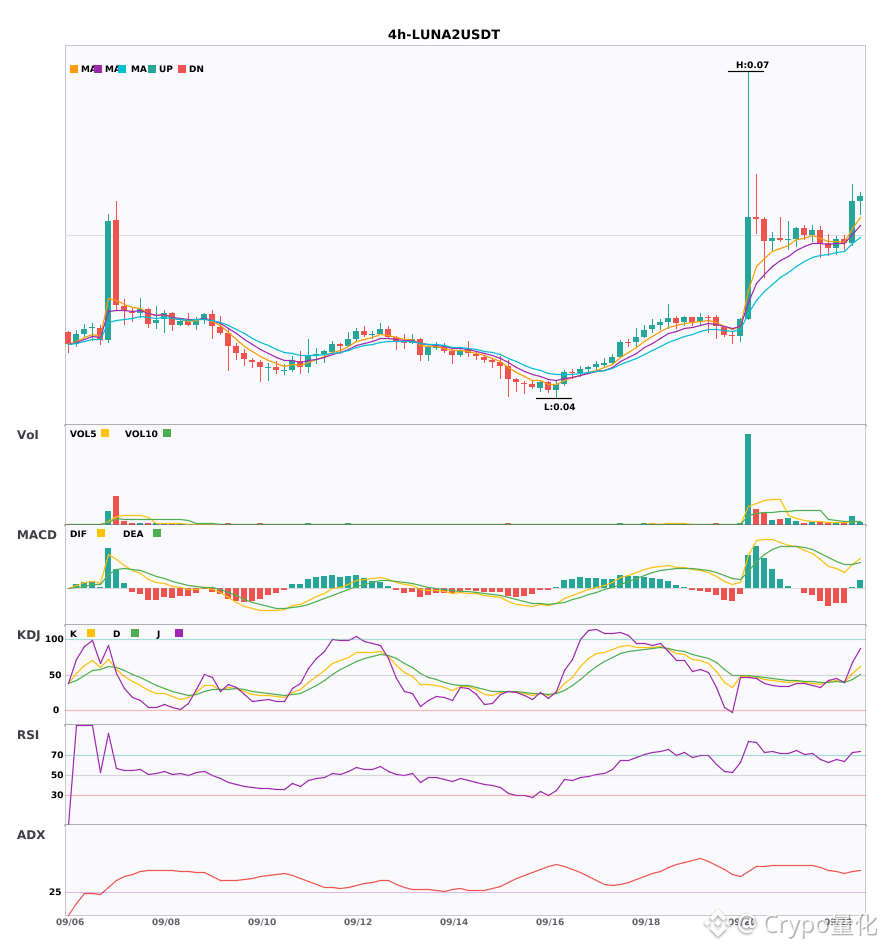
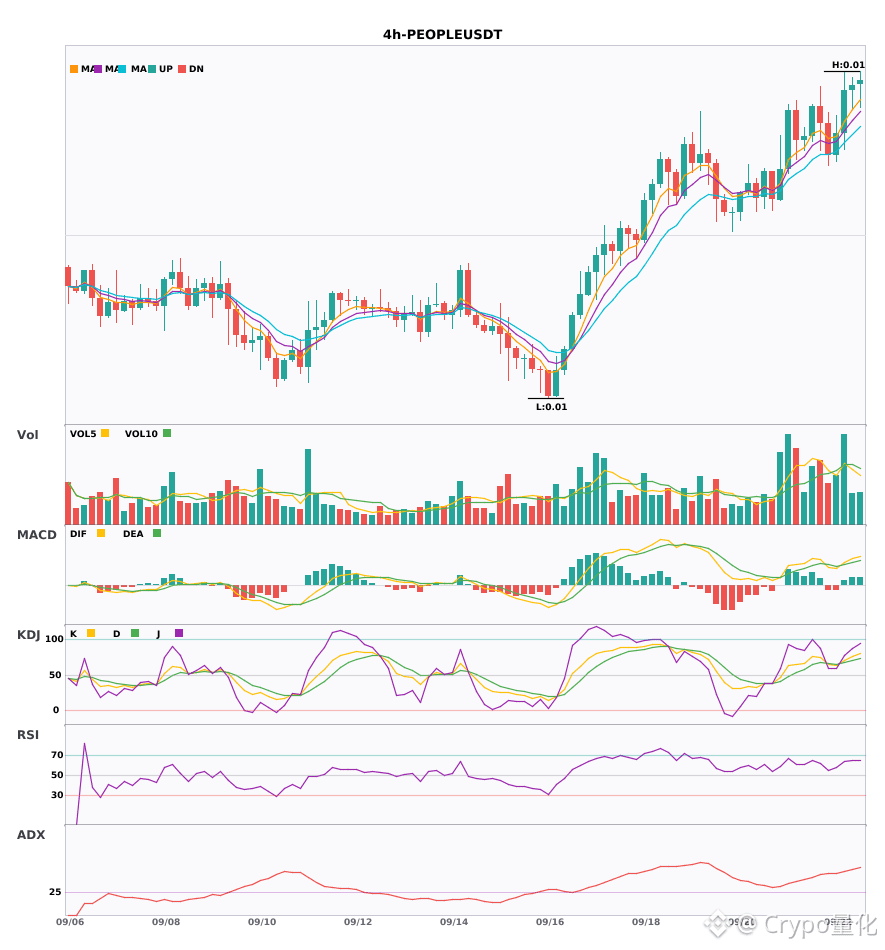
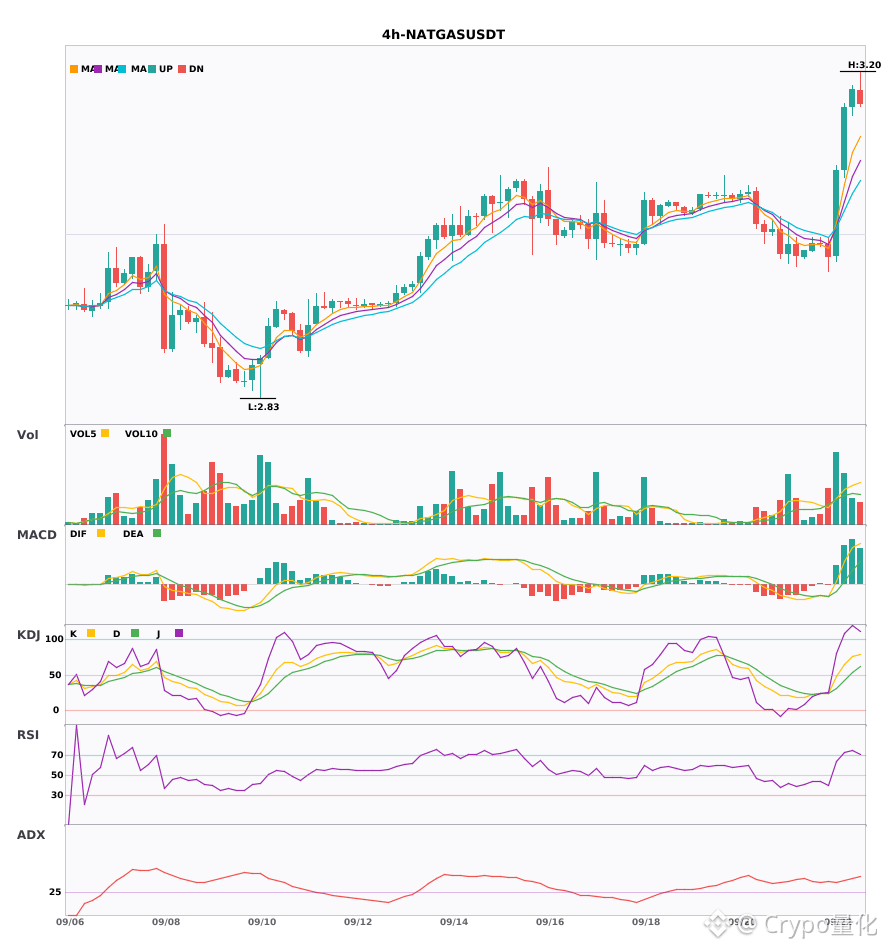
$LUNA2 / $PEOPLE / $NATGAS 4 hours resonance breakout into a bullish move: long signals appear at the same time 🔥
════════════════════
🔴 $LUNA2 4 hours bullish signals
⚠️ Technicals: ADX(45) shows a clear trending market | MACD forms an above-zero golden cross; bullish momentum is released | EMA5 > EMA8 > EMA13 with a bullish alignment | KDJ golden cross; short-term bullish (K=52.2, D=44.2) | Trading volume expands (2.4x)
════════════════════
🔴 $PEOPLE 4 hours bullish signals
⚠️ Technicals: ADX(50) is an extremely strong trend (watch out for a possible overheated pullback) | MACD forms an above-zero golden cross; bullish momentum is released | EMA5 > EMA8 > EMA13 with a bullish alignment | KDJ golden cross; short-term bullish (K=70.6, D=67.1) | Trading volume expands (1.5x)
════════════════════
🔴 $NATGAS 4 hours bullish signals
⚠️ Technicals: ADX is at 42—clearly a trending market. The MACD red histogram enlarges, indicating strong momentum. EMA5/8/13 are in bullish alignment, and volume surges to 2.8x.
════════════════════
🔔 Watch for first-hand alerts on sudden market moves 🔔
#技术分析 #LUNA2 #PEOPLE #NATGAS
📌 When trading, pay attention to whether the candlestick patterns match
════════════════════
🔴 $LUNA2 4 hours bullish signals
⚠️ Technicals: ADX(45) shows a clear trending market | MACD forms an above-zero golden cross; bullish momentum is released | EMA5 > EMA8 > EMA13 with a bullish alignment | KDJ golden cross; short-term bullish (K=52.2, D=44.2) | Trading volume expands (2.4x)
════════════════════
🔴 $PEOPLE 4 hours bullish signals
⚠️ Technicals: ADX(50) is an extremely strong trend (watch out for a possible overheated pullback) | MACD forms an above-zero golden cross; bullish momentum is released | EMA5 > EMA8 > EMA13 with a bullish alignment | KDJ golden cross; short-term bullish (K=70.6, D=67.1) | Trading volume expands (1.5x)
════════════════════
🔴 $NATGAS 4 hours bullish signals
⚠️ Technicals: ADX is at 42—clearly a trending market. The MACD red histogram enlarges, indicating strong momentum. EMA5/8/13 are in bullish alignment, and volume surges to 2.8x.
════════════════════
🔔 Watch for first-hand alerts on sudden market moves 🔔
#技术分析 #LUNA2 #PEOPLE #NATGAS
📌 When trading, pay attention to whether the candlestick patterns match
23
Log in to explore more content
Join global crypto users on Binance Square
⚡️ Get latest and useful information about crypto.
💬 Trusted by the world’s largest crypto exchange.
👍 Discover real insights from verified creators.
Email / Phone number
Trending Topics
1
#UniswapA16zSeekDeFiExemptionFromIllinoisCryptoTax
17,701 views
645 Discussing
2
#HKDollarStablecoinHKDAPToLaunchOnSolana
11,884 views
387 Discussing
3
#$1.5BInLeveragedCryptoBetsLiquidated
29,978 views
231 Discussing
4
#TrezorSaysCryptoBilisSoldWalletMayContainMaliciousComponents
1,893 views
58 Discussing
5
#KOSPIFalls3.53%BackBelow6000
55,473 views
1,028 Discussing
6
#AmazonSharesFallAbout7%InPremarketTrading
24,911 views
544 Discussing
7
#USMidtermElections
221,252 views
2,294 Discussing
8
#StrategySTRCReaches$99.95ForFirstTimeIn165Days
18,488 views
93 Discussing
9
#BinanceWillListPredictPREDICT
82,602 views
1,339 Discussing
10
#SwitzerlandFirstSpotBitcoinETFExpectedToTradeInNovember
2,822 views
105 Discussing