
#greglens
greglens
1.8M views
3,789 Discussing
Hot
Latest


·
--
Hemi: A New Chapter in Blockchain EvolutionThe world of blockchain is constantly changing. Every few years, a new idea comes along that makes the technology faster, safer, and easier to use. Today, that new idea is Hemi a modular Layer-2 blockchain built to connect the power of Bitcoin and Ethereum into one strong and flexible system. Hemi is not just another crypto project; it’s a complete ecosystem designed to fix real problems that users and developers face every day. It brings together security, speed, and simplicity in a way that could reshape how people use blockchain in the future.
The Vision Behind Hemi
The main goal of Hemi is to make blockchain more efficient and accessible. Many people find crypto too slow, too expensive, or too complex to use. Hemi aims to change that. By combining Bitcoin’s unmatched security with Ethereum’s flexibility, it creates a platform where transactions are safe, fast, and affordable. This idea gives users and builders a better way to interact with blockchain technology without worrying about high gas fees or technical barriers.
In simple words, Hemi wants to make blockchain work for everyone from beginners to experts, from traders to developers. It is designed as an open system where anyone can build, trade, and grow without limits.
Why Modular Design Matters
One of the key things that make Hemi stand out is its modular structure. In traditional blockchains, everything happens on one layer. This setup works fine at first, but as more people use the network, it becomes crowded and slow. Hemi solves this by separating different tasks into layers.
Each layer focuses on a specific job one for transaction processing, another for data storage, and one for security. Because of this design, Hemi doesn’t get overloaded when activity increases. It can scale easily, just like building blocks that can be added or adjusted anytime. This makes it more flexible than old-style blockchains and allows developers to customize their projects depending on what they need.
Speed, Cost, and Efficiency
One of the biggest challenges in crypto today is scalability. When too many users try to send transactions at once, fees rise, and the network slows down. Hemi’s modular design uses rollup technology to fix this issue. Rollups bundle thousands of transactions together and record them on Bitcoin and Ethereum in a single batch.
This method reduces congestion, lowers transaction costs, and speeds up confirmation times. It means users can swap tokens, make payments, or trade assets without long waits or high costs. Whether you are sending crypto across borders or interacting with a DeFi platform, Hemi ensures the process is smooth and efficient.
The Power of Bitcoin and Ethereum
Hemi’s biggest strength lies in the way it connects two of the world’s most powerful blockchains. Bitcoin is known for its strong proof-of-work security, while Ethereum is famous for its advanced smart contracts. Hemi brings both together.
By anchoring its transactions to Bitcoin’s network, Hemi inherits Bitcoin’s unbeatable security. Once a transaction is finalized, it becomes practically impossible to change. At the same time, it uses Ethereum’s contract system to make the platform programmable and flexible. This dual connection makes Hemi both secure and adaptable something few projects have managed to achieve.
Breaking Barriers with Interoperability
In the blockchain world, one of the biggest problems has always been the lack of connection between different chains. Moving assets from one network to another often requires bridges or complex processes. Hemi changes this by focusing on interoperability the ability for different blockchains to communicate smoothly.
With Hemi, users can transfer tokens, liquidity, and data across chains without difficulty. It connects Bitcoin, Ethereum, and other major networks into a single environment where assets move freely and securely. This not only increases efficiency but also brings the crypto community closer together. Projects can now reach more users, and investors can access more opportunities without being limited to one chain.
A Developer-Friendly Platform
For developers, Hemi is a platform that feels both familiar and exciting. It supports tools that are already widely used in Ethereum, which means builders can easily move their projects to Hemi without needing to start from scratch. The modular SDKs also give developers more control over how their applications work.
They can adjust performance, security, and scalability depending on what they are building whether it’s a DeFi app, a game, or an NFT marketplace. This flexibility encourages creativity and helps new ideas grow faster. Developers can focus on building great products instead of worrying about technical bottlenecks.
Connecting Bitcoin Liquidity to DeFi
From a market perspective, Hemi arrives at the perfect time. Bitcoin still holds the largest amount of liquidity in crypto, but much of it remains idle because it can’t easily interact with decentralized finance platforms. Hemi bridges that gap.
By safely connecting Bitcoin liquidity to Ethereum-based DeFi systems, Hemi allows users to unlock new earning opportunities. It opens the door to yield farming, staking, and lending with Bitcoin-backed assets, all within a secure Layer-2 environment. This could create a huge wave of innovation and liquidity flow across the entire crypto space.
Earning and Staking Opportunities
Hemi also provides users with ways to earn from their digital assets. Through decentralized staking and liquidity programs, users can contribute to the network and earn rewards in return. Because Hemi’s system is designed for transparency and safety, users can earn confidently without worrying about centralized control or hidden risks.
This setup benefits everyone traders can enjoy lower fees, investors can generate passive income, and new users can start exploring crypto without facing major risks.
Community-Driven Growth
Another key part of Hemi’s approach is governance. Instead of leaving all decisions in the hands of a small team, Hemi gives its community a real voice. Token holders can vote on upgrades, proposals, and new developments.
This democratic system ensures that the platform grows in a fair and transparent way. It also builds trust among users, making them feel part of something bigger. When people know their opinions matter, they are more likely to support the project long-term.
Simplicity and User Experience
Many blockchain systems are hard to use for newcomers. Complicated interfaces, confusing terms, and technical processes keep regular people away. Hemi wants to change that by keeping things simple.
Its interface is designed to be user-friendly, with clear instructions and smooth steps for every action. Whether you are moving tokens across chains or joining a liquidity pool, the process is made simple enough for anyone to understand. This focus on simplicity is what will help bring more people into crypto not just developers or traders, but everyday users as well.
Why Hemi Matters in Today’s Market
The crypto world is entering a new phase. With global events like Bitcoin halving, increased institutional interest, and growing regulation, the demand for secure and scalable solutions is rising. Hemi fits perfectly into this environment.
It provides the tools and infrastructure that both users and companies need to operate safely in the next era of digital finance. As more projects start connecting across chains, Hemi’s modular and interoperable system will become even more valuable.
Real-World Potential
Beyond trading and DeFi, Hemi’s architecture opens the door to real-world applications. It can support tokenized assets, digital identity systems, and even blockchain-based gaming platforms. Institutions can use Hemi to connect traditional finance with decentralized systems, allowing faster cross-border settlements and safer transactions.
As tokenization becomes a global trend, Hemi’s infrastructure could play a vital role in linking digital and real-world economies.
Looking Ahead
The future of Hemi looks strong. It has a clear mission, powerful technology, and a structure that can grow with the market. By combining Bitcoin’s trust, Ethereum’s flexibility, and a modular design that makes everything run smoother, Hemi is positioned to lead the next generation of blockchain innovation.
Its focus on simplicity, security, and connection gives it a major advantage in a crowded market. While many blockchains compete to stand out, Hemi does something different it brings everything together.
Final Thoughts
Hemi represents a major step forward for blockchain technology. It takes what works best from existing systems and improves it through smart design and strong community values. The result is a network that is faster, cheaper, safer, and easier to use a true reflection of how blockchain should be.
In a world where every second counts and every transaction matters, Hemi offers a path toward a more connected and intelligent blockchain future. It’s not just a Layer-2 solution it’s a movement toward making crypto more practical and powerful for everyone.
The rise of Hemi marks the start of a new era one where blockchain is not only innovative but truly inclusive, connecting the power of technology with the simplicity people deserve.
#Hemi #GregLens @Hemi $HEMI
{spot}(HEMIUSDT)
Hemi: A New Chapter in Blockchain Evolution
The world of blockchain is constantly changing. Every few years, a new idea comes along that makes the technology faster, safer, and easier to use. Today, that new idea is Hemi a modular Layer-2 blockchain built to connect the power of Bitcoin and Ethereum into one strong and flexible system. Hemi is not just another crypto project; it’s a complete ecosystem designed to fix real problems that users and developers face every day. It brings together security, speed, and simplicity in a way that could reshape how people use blockchain in the future.
The Vision Behind Hemi
The main goal of Hemi is to make blockchain more efficient and accessible. Many people find crypto too slow, too expensive, or too complex to use. Hemi aims to change that. By combining Bitcoin’s unmatched security with Ethereum’s flexibility, it creates a platform where transactions are safe, fast, and affordable. This idea gives users and builders a better way to interact with blockchain technology without worrying about high gas fees or technical barriers.
In simple words, Hemi wants to make blockchain work for everyone from beginners to experts, from traders to developers. It is designed as an open system where anyone can build, trade, and grow without limits.
Why Modular Design Matters
One of the key things that make Hemi stand out is its modular structure. In traditional blockchains, everything happens on one layer. This setup works fine at first, but as more people use the network, it becomes crowded and slow. Hemi solves this by separating different tasks into layers.
Each layer focuses on a specific job one for transaction processing, another for data storage, and one for security. Because of this design, Hemi doesn’t get overloaded when activity increases. It can scale easily, just like building blocks that can be added or adjusted anytime. This makes it more flexible than old-style blockchains and allows developers to customize their projects depending on what they need.
Speed, Cost, and Efficiency
One of the biggest challenges in crypto today is scalability. When too many users try to send transactions at once, fees rise, and the network slows down. Hemi’s modular design uses rollup technology to fix this issue. Rollups bundle thousands of transactions together and record them on Bitcoin and Ethereum in a single batch.
This method reduces congestion, lowers transaction costs, and speeds up confirmation times. It means users can swap tokens, make payments, or trade assets without long waits or high costs. Whether you are sending crypto across borders or interacting with a DeFi platform, Hemi ensures the process is smooth and efficient.
The Power of Bitcoin and Ethereum
Hemi’s biggest strength lies in the way it connects two of the world’s most powerful blockchains. Bitcoin is known for its strong proof-of-work security, while Ethereum is famous for its advanced smart contracts. Hemi brings both together.
By anchoring its transactions to Bitcoin’s network, Hemi inherits Bitcoin’s unbeatable security. Once a transaction is finalized, it becomes practically impossible to change. At the same time, it uses Ethereum’s contract system to make the platform programmable and flexible. This dual connection makes Hemi both secure and adaptable something few projects have managed to achieve.
Breaking Barriers with Interoperability
In the blockchain world, one of the biggest problems has always been the lack of connection between different chains. Moving assets from one network to another often requires bridges or complex processes. Hemi changes this by focusing on interoperability the ability for different blockchains to communicate smoothly.
With Hemi, users can transfer tokens, liquidity, and data across chains without difficulty. It connects Bitcoin, Ethereum, and other major networks into a single environment where assets move freely and securely. This not only increases efficiency but also brings the crypto community closer together. Projects can now reach more users, and investors can access more opportunities without being limited to one chain.
A Developer-Friendly Platform
For developers, Hemi is a platform that feels both familiar and exciting. It supports tools that are already widely used in Ethereum, which means builders can easily move their projects to Hemi without needing to start from scratch. The modular SDKs also give developers more control over how their applications work.
They can adjust performance, security, and scalability depending on what they are building whether it’s a DeFi app, a game, or an NFT marketplace. This flexibility encourages creativity and helps new ideas grow faster. Developers can focus on building great products instead of worrying about technical bottlenecks.
Connecting Bitcoin Liquidity to DeFi
From a market perspective, Hemi arrives at the perfect time. Bitcoin still holds the largest amount of liquidity in crypto, but much of it remains idle because it can’t easily interact with decentralized finance platforms. Hemi bridges that gap.
By safely connecting Bitcoin liquidity to Ethereum-based DeFi systems, Hemi allows users to unlock new earning opportunities. It opens the door to yield farming, staking, and lending with Bitcoin-backed assets, all within a secure Layer-2 environment. This could create a huge wave of innovation and liquidity flow across the entire crypto space.
Earning and Staking Opportunities
Hemi also provides users with ways to earn from their digital assets. Through decentralized staking and liquidity programs, users can contribute to the network and earn rewards in return. Because Hemi’s system is designed for transparency and safety, users can earn confidently without worrying about centralized control or hidden risks.
This setup benefits everyone traders can enjoy lower fees, investors can generate passive income, and new users can start exploring crypto without facing major risks.
Community-Driven Growth
Another key part of Hemi’s approach is governance. Instead of leaving all decisions in the hands of a small team, Hemi gives its community a real voice. Token holders can vote on upgrades, proposals, and new developments.
This democratic system ensures that the platform grows in a fair and transparent way. It also builds trust among users, making them feel part of something bigger. When people know their opinions matter, they are more likely to support the project long-term.
Simplicity and User Experience
Many blockchain systems are hard to use for newcomers. Complicated interfaces, confusing terms, and technical processes keep regular people away. Hemi wants to change that by keeping things simple.
Its interface is designed to be user-friendly, with clear instructions and smooth steps for every action. Whether you are moving tokens across chains or joining a liquidity pool, the process is made simple enough for anyone to understand. This focus on simplicity is what will help bring more people into crypto not just developers or traders, but everyday users as well.
Why Hemi Matters in Today’s Market
The crypto world is entering a new phase. With global events like Bitcoin halving, increased institutional interest, and growing regulation, the demand for secure and scalable solutions is rising. Hemi fits perfectly into this environment.
It provides the tools and infrastructure that both users and companies need to operate safely in the next era of digital finance. As more projects start connecting across chains, Hemi’s modular and interoperable system will become even more valuable.
Real-World Potential
Beyond trading and DeFi, Hemi’s architecture opens the door to real-world applications. It can support tokenized assets, digital identity systems, and even blockchain-based gaming platforms. Institutions can use Hemi to connect traditional finance with decentralized systems, allowing faster cross-border settlements and safer transactions.
As tokenization becomes a global trend, Hemi’s infrastructure could play a vital role in linking digital and real-world economies.
Looking Ahead
The future of Hemi looks strong. It has a clear mission, powerful technology, and a structure that can grow with the market. By combining Bitcoin’s trust, Ethereum’s flexibility, and a modular design that makes everything run smoother, Hemi is positioned to lead the next generation of blockchain innovation.
Its focus on simplicity, security, and connection gives it a major advantage in a crowded market. While many blockchains compete to stand out, Hemi does something different it brings everything together.
Final Thoughts
Hemi represents a major step forward for blockchain technology. It takes what works best from existing systems and improves it through smart design and strong community values. The result is a network that is faster, cheaper, safer, and easier to use a true reflection of how blockchain should be.
In a world where every second counts and every transaction matters, Hemi offers a path toward a more connected and intelligent blockchain future. It’s not just a Layer-2 solution it’s a movement toward making crypto more practical and powerful for everyone.
The rise of Hemi marks the start of a new era one where blockchain is not only innovative but truly inclusive, connecting the power of technology with the simplicity people deserve.
#Hemi #GregLens @Hemi $HEMI
The Vision Behind Hemi
The main goal of Hemi is to make blockchain more efficient and accessible. Many people find crypto too slow, too expensive, or too complex to use. Hemi aims to change that. By combining Bitcoin’s unmatched security with Ethereum’s flexibility, it creates a platform where transactions are safe, fast, and affordable. This idea gives users and builders a better way to interact with blockchain technology without worrying about high gas fees or technical barriers.
In simple words, Hemi wants to make blockchain work for everyone from beginners to experts, from traders to developers. It is designed as an open system where anyone can build, trade, and grow without limits.
Why Modular Design Matters
One of the key things that make Hemi stand out is its modular structure. In traditional blockchains, everything happens on one layer. This setup works fine at first, but as more people use the network, it becomes crowded and slow. Hemi solves this by separating different tasks into layers.
Each layer focuses on a specific job one for transaction processing, another for data storage, and one for security. Because of this design, Hemi doesn’t get overloaded when activity increases. It can scale easily, just like building blocks that can be added or adjusted anytime. This makes it more flexible than old-style blockchains and allows developers to customize their projects depending on what they need.
Speed, Cost, and Efficiency
One of the biggest challenges in crypto today is scalability. When too many users try to send transactions at once, fees rise, and the network slows down. Hemi’s modular design uses rollup technology to fix this issue. Rollups bundle thousands of transactions together and record them on Bitcoin and Ethereum in a single batch.
This method reduces congestion, lowers transaction costs, and speeds up confirmation times. It means users can swap tokens, make payments, or trade assets without long waits or high costs. Whether you are sending crypto across borders or interacting with a DeFi platform, Hemi ensures the process is smooth and efficient.
The Power of Bitcoin and Ethereum
Hemi’s biggest strength lies in the way it connects two of the world’s most powerful blockchains. Bitcoin is known for its strong proof-of-work security, while Ethereum is famous for its advanced smart contracts. Hemi brings both together.
By anchoring its transactions to Bitcoin’s network, Hemi inherits Bitcoin’s unbeatable security. Once a transaction is finalized, it becomes practically impossible to change. At the same time, it uses Ethereum’s contract system to make the platform programmable and flexible. This dual connection makes Hemi both secure and adaptable something few projects have managed to achieve.
Breaking Barriers with Interoperability
In the blockchain world, one of the biggest problems has always been the lack of connection between different chains. Moving assets from one network to another often requires bridges or complex processes. Hemi changes this by focusing on interoperability the ability for different blockchains to communicate smoothly.
With Hemi, users can transfer tokens, liquidity, and data across chains without difficulty. It connects Bitcoin, Ethereum, and other major networks into a single environment where assets move freely and securely. This not only increases efficiency but also brings the crypto community closer together. Projects can now reach more users, and investors can access more opportunities without being limited to one chain.
A Developer-Friendly Platform
For developers, Hemi is a platform that feels both familiar and exciting. It supports tools that are already widely used in Ethereum, which means builders can easily move their projects to Hemi without needing to start from scratch. The modular SDKs also give developers more control over how their applications work.
They can adjust performance, security, and scalability depending on what they are building whether it’s a DeFi app, a game, or an NFT marketplace. This flexibility encourages creativity and helps new ideas grow faster. Developers can focus on building great products instead of worrying about technical bottlenecks.
Connecting Bitcoin Liquidity to DeFi
From a market perspective, Hemi arrives at the perfect time. Bitcoin still holds the largest amount of liquidity in crypto, but much of it remains idle because it can’t easily interact with decentralized finance platforms. Hemi bridges that gap.
By safely connecting Bitcoin liquidity to Ethereum-based DeFi systems, Hemi allows users to unlock new earning opportunities. It opens the door to yield farming, staking, and lending with Bitcoin-backed assets, all within a secure Layer-2 environment. This could create a huge wave of innovation and liquidity flow across the entire crypto space.
Earning and Staking Opportunities
Hemi also provides users with ways to earn from their digital assets. Through decentralized staking and liquidity programs, users can contribute to the network and earn rewards in return. Because Hemi’s system is designed for transparency and safety, users can earn confidently without worrying about centralized control or hidden risks.
This setup benefits everyone traders can enjoy lower fees, investors can generate passive income, and new users can start exploring crypto without facing major risks.
Community-Driven Growth
Another key part of Hemi’s approach is governance. Instead of leaving all decisions in the hands of a small team, Hemi gives its community a real voice. Token holders can vote on upgrades, proposals, and new developments.
This democratic system ensures that the platform grows in a fair and transparent way. It also builds trust among users, making them feel part of something bigger. When people know their opinions matter, they are more likely to support the project long-term.
Simplicity and User Experience
Many blockchain systems are hard to use for newcomers. Complicated interfaces, confusing terms, and technical processes keep regular people away. Hemi wants to change that by keeping things simple.
Its interface is designed to be user-friendly, with clear instructions and smooth steps for every action. Whether you are moving tokens across chains or joining a liquidity pool, the process is made simple enough for anyone to understand. This focus on simplicity is what will help bring more people into crypto not just developers or traders, but everyday users as well.
Why Hemi Matters in Today’s Market
The crypto world is entering a new phase. With global events like Bitcoin halving, increased institutional interest, and growing regulation, the demand for secure and scalable solutions is rising. Hemi fits perfectly into this environment.
It provides the tools and infrastructure that both users and companies need to operate safely in the next era of digital finance. As more projects start connecting across chains, Hemi’s modular and interoperable system will become even more valuable.
Real-World Potential
Beyond trading and DeFi, Hemi’s architecture opens the door to real-world applications. It can support tokenized assets, digital identity systems, and even blockchain-based gaming platforms. Institutions can use Hemi to connect traditional finance with decentralized systems, allowing faster cross-border settlements and safer transactions.
As tokenization becomes a global trend, Hemi’s infrastructure could play a vital role in linking digital and real-world economies.
Looking Ahead
The future of Hemi looks strong. It has a clear mission, powerful technology, and a structure that can grow with the market. By combining Bitcoin’s trust, Ethereum’s flexibility, and a modular design that makes everything run smoother, Hemi is positioned to lead the next generation of blockchain innovation.
Its focus on simplicity, security, and connection gives it a major advantage in a crowded market. While many blockchains compete to stand out, Hemi does something different it brings everything together.
Final Thoughts
Hemi represents a major step forward for blockchain technology. It takes what works best from existing systems and improves it through smart design and strong community values. The result is a network that is faster, cheaper, safer, and easier to use a true reflection of how blockchain should be.
In a world where every second counts and every transaction matters, Hemi offers a path toward a more connected and intelligent blockchain future. It’s not just a Layer-2 solution it’s a movement toward making crypto more practical and powerful for everyone.
The rise of Hemi marks the start of a new era one where blockchain is not only innovative but truly inclusive, connecting the power of technology with the simplicity people deserve.
#Hemi #GregLens @Hemi $HEMI
9
8
14
10.9k
·
--
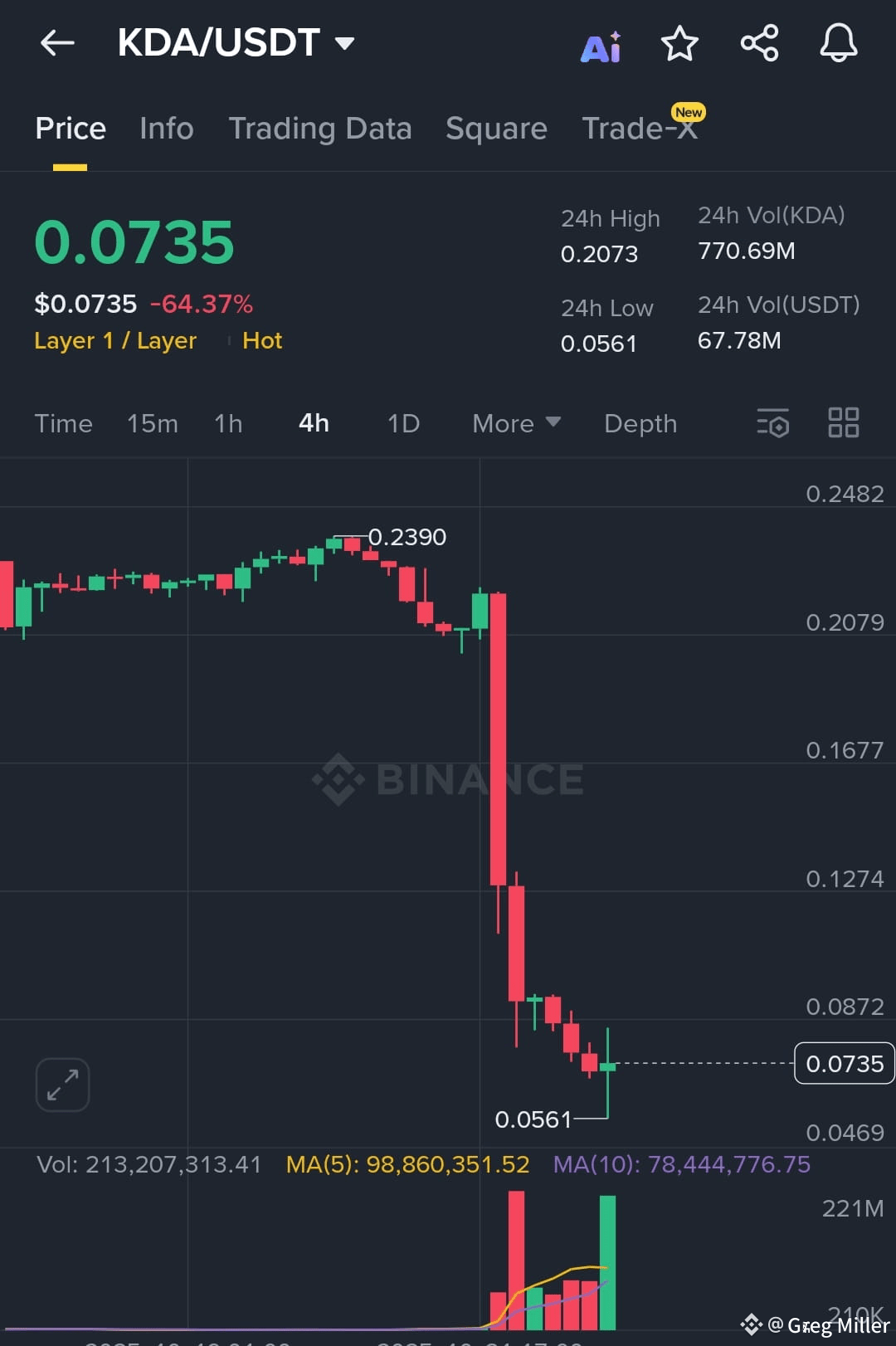
The $KDA is a Layer 1 token, has experienced a severe and immediate price crash, trading down -64.37% to its current price of $0.0735.
The 24-hour trading range saw an extreme high of $0.2073 before collapsing to a low of $0.0561, indicating a period of massive volatility and dominant selling pressure.
This steep decline is primarily attributed to the news that the company supporting the Kadena network has announced it is ceasing all business operations and network maintenance, citing unfavorable market conditions and financial unsustainability.
The price action on the chart shows a sharp sell-off from the prior price level, dropping near its all-time low.
Despite the news of the company's closure, the KDA token remains tradable on exchanges, with a significant 24-hour volume of 770.69M KDA ($67.78M USDT) as the market digests the fundamental change in the project's backing.
$KDA #KDA #GregLens
{spot}(KDAUSDT)
The $KDA is a Layer 1 token, has experienced a severe and immediate price crash, trading down -64.37% to its current price of $0.0735.
The 24-hour trading range saw an extreme high of $0.2073 before collapsing to a low of $0.0561, indicating a period of massive volatility and dominant selling pressure.
This steep decline is primarily attributed to the news that the company supporting the Kadena network has announced it is ceasing all business operations and network maintenance, citing unfavorable market conditions and financial unsustainability.
The price action on the chart shows a sharp sell-off from the prior price level, dropping near its all-time low.
Despite the news of the company's closure, the KDA token remains tradable on exchanges, with a significant 24-hour volume of 770.69M KDA ($67.78M USDT) as the market digests the fundamental change in the project's backing.
$KDA #KDA #GregLens
The 24-hour trading range saw an extreme high of $0.2073 before collapsing to a low of $0.0561, indicating a period of massive volatility and dominant selling pressure.
This steep decline is primarily attributed to the news that the company supporting the Kadena network has announced it is ceasing all business operations and network maintenance, citing unfavorable market conditions and financial unsustainability.
The price action on the chart shows a sharp sell-off from the prior price level, dropping near its all-time low.
Despite the news of the company's closure, the KDA token remains tradable on exchanges, with a significant 24-hour volume of 770.69M KDA ($67.78M USDT) as the market digests the fundamental change in the project's backing.
$KDA #KDA #GregLens
20
14
27
17.4k

·
--
Article
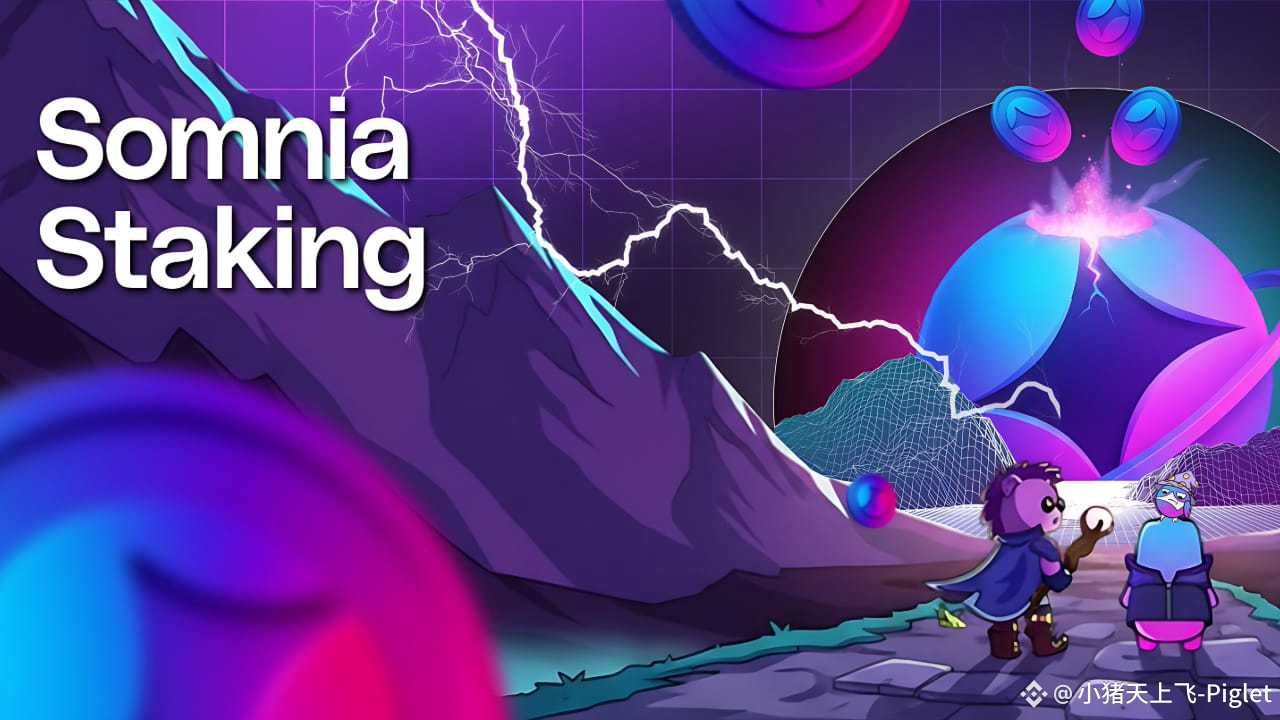
Shocking! Somnia Network aims to create digital civilization with blockchain, and culture and creativity will never fade!Somnia Network, the waves of emotion rise and fall in the heart. When it comes to blockchain, people often focus on the cold, hard numbers—transactions per second, latency, costs, consensus design. While these are indeed important, they are just the tip of the iceberg of the story. The soul of the internet is not just data exchange, but the intersection of memes, social networks, YouTube, music streaming, and digital art. Somnia's ambition is not merely to pursue speed, but to create an ecosystem where creativity, culture, and community coexist eternally on the chain, transcending the financial realm and stepping into a new era of cultural infrastructure. Imagine a world where art, music, games, and stories no longer rely on centralized servers that can be turned off at any moment, but instead, permanently reside on the chain, owned collectively by creators and the community. This is the vision of Somnia—a blockchain where culture is not hosted, but rooted. Games will not vanish due to server shutdowns; social identities and friendships can migrate with users; the metaverse will no longer be a closed wall but an open interconnected stage, where the creator economy breaks free from algorithms and monopolies, replaced by decentralized autonomy. This is not an extension of financial speculation but a blueprint for the construction of digital civilization. Why does culture urgently need new infrastructure? Today's online culture is fragile, Twitter accounts can be suspended, YouTube videos may face limited exposure, and games may be abandoned after a few years. We create in rented spaces, making culture difficult to sustain. To let digital culture thrive, three elements are necessary: ownership, permanence, and interoperability—creators and communities own the results, works and identities remain ever-fresh, and assets flow freely across ecosystems. Somnia's design directly addresses these needs, providing a solid foundation for culture. Cultural experiences rely on fluidity; friction can stifle their vitality. Imagine an immersive game where every step is hindered by 'waiting for block confirmation,' or metaverse chat requiring a $20 gas fee; the experience would vanish. Somnia's technological architecture—MultiStream consensus, IceDB storage, compression and signature aggregation—removes these barriers, aiming to inject liquidity into culture: sub-second confirmations support real-time worlds, real-time updates drive interactive avatars, and a million TPS can support large multiplayer games. The testnet data is astonishing: over 10 billion transactions, 118 million independent wallets, 2 billion transactions in a single day, and games like Chunked generating 250 million transactions in five days. This is not just stress testing; it is empirical evidence of cultural possibilities. The economic design of the SOMI token further emphasizes a cultural orientation. With a total supply of 1 billion SOMI for staking, gas, delegation, and governance, 50% of gas fees are burned to create deflationary pressure, and 55% is allocated to the community and ecosystem. This ensures that the tokens benefit creators, builders, and the community, rather than being an internal money-making scheme. The Dream Catalyst accelerator, Dreamathon incubator, and grants for artists, game developers, and social builders reflect the merging of economy and culture, incentivizing cultural production rather than capital accumulation. The Somnia ecosystem has already nurtured cultural sparks. Virtual worlds like Playground create a full-chain metaverse where users can build, explore, and govern; games like Maelstrom, YOM, and Lucky Adventurer's Gambit evolve into narrative-driven immersive worlds; AI tools like ForU AI and Sogni AI support digital agency and identity evolution; creator platforms like Dream Builder offer 3D construction and virtual asset design. These projects provide tools, funding, and expression spaces for culture, becoming fertile ground for growth. Culture originates from the collective, and Somnia sees community as its core. Airdrops and tasks attract active participants, hackathons and sprint events stimulate collective creativity, and avatars, collectibles, and community assets deepen the sense of belonging. When users own avatars, collectibles, or governance rights, they are more inclined to stay, contribute, and build. Culture thus forms: through shared ownership and shared narratives. However, the vision is not without obstacles. Entry must be smooth; complex wallets or high gas fees will shatter the magic; creator tools must be abundant, or else imagination will be limited; decentralization and trust are crucial; if governance becomes centralized, it will shake the cultural foundation; economic viability must be ensured; if the cost of creation exceeds returns, culture will be stifled; peak scalability requires the network to remain stable during NFT booms or gaming surges; if interoperability is lacking, walled gardens may easily reappear. These are not technical details but the key to the survival of digital culture. If the vision comes true, Somnia will present a magnificent picture. Artists' works will grow in an interactive world, games will evolve like ecosystems, and social identities will migrate across applications. On-chain concerts, festival celebrations, and exhibitions will be governed by the community, and AI-driven performances or user federated worlds may emerge. Culture will become unpredictable and full of surprises. Somnia not only expands blockchain but also expands possibilities. People often ask about TPS or token prices, but the core questions are: Are creators free? Does the community belong? Is the infrastructure trustworthy? Is culture expressive and sustainable? Culture is measured by moments, memories, and meanings, not by output. Somnia's experiment lies in how culture, creativity, and community leap on the chain and reshape civilization. Somnia transcends speed competition; it is an experiment exploring the possibilities of digital culture. Its million TPS, sub-second confirmations, and low-fee technology are top-notch, and SOMI economics empower creators and communities, with ecological sparks beginning to emerge. Success or failure does not depend on scale but on whether it can carry culture. If successful, Somnia will leap from blockchain to become a part of digital civilization, where art, identity, and community thrive.
Shocking! Somnia Network aims to create digital civilization with blockchain, and culture and creativity will never fade!
Somnia Network, the waves of emotion rise and fall in the heart. When it comes to blockchain, people often focus on the cold, hard numbers—transactions per second, latency, costs, consensus design. While these are indeed important, they are just the tip of the iceberg of the story. The soul of the internet is not just data exchange, but the intersection of memes, social networks, YouTube, music streaming, and digital art. Somnia's ambition is not merely to pursue speed, but to create an ecosystem where creativity, culture, and community coexist eternally on the chain, transcending the financial realm and stepping into a new era of cultural infrastructure. Imagine a world where art, music, games, and stories no longer rely on centralized servers that can be turned off at any moment, but instead, permanently reside on the chain, owned collectively by creators and the community. This is the vision of Somnia—a blockchain where culture is not hosted, but rooted. Games will not vanish due to server shutdowns; social identities and friendships can migrate with users; the metaverse will no longer be a closed wall but an open interconnected stage, where the creator economy breaks free from algorithms and monopolies, replaced by decentralized autonomy. This is not an extension of financial speculation but a blueprint for the construction of digital civilization. Why does culture urgently need new infrastructure? Today's online culture is fragile, Twitter accounts can be suspended, YouTube videos may face limited exposure, and games may be abandoned after a few years. We create in rented spaces, making culture difficult to sustain. To let digital culture thrive, three elements are necessary: ownership, permanence, and interoperability—creators and communities own the results, works and identities remain ever-fresh, and assets flow freely across ecosystems. Somnia's design directly addresses these needs, providing a solid foundation for culture. Cultural experiences rely on fluidity; friction can stifle their vitality. Imagine an immersive game where every step is hindered by 'waiting for block confirmation,' or metaverse chat requiring a $20 gas fee; the experience would vanish. Somnia's technological architecture—MultiStream consensus, IceDB storage, compression and signature aggregation—removes these barriers, aiming to inject liquidity into culture: sub-second confirmations support real-time worlds, real-time updates drive interactive avatars, and a million TPS can support large multiplayer games. The testnet data is astonishing: over 10 billion transactions, 118 million independent wallets, 2 billion transactions in a single day, and games like Chunked generating 250 million transactions in five days. This is not just stress testing; it is empirical evidence of cultural possibilities. The economic design of the SOMI token further emphasizes a cultural orientation. With a total supply of 1 billion SOMI for staking, gas, delegation, and governance, 50% of gas fees are burned to create deflationary pressure, and 55% is allocated to the community and ecosystem. This ensures that the tokens benefit creators, builders, and the community, rather than being an internal money-making scheme. The Dream Catalyst accelerator, Dreamathon incubator, and grants for artists, game developers, and social builders reflect the merging of economy and culture, incentivizing cultural production rather than capital accumulation. The Somnia ecosystem has already nurtured cultural sparks. Virtual worlds like Playground create a full-chain metaverse where users can build, explore, and govern; games like Maelstrom, YOM, and Lucky Adventurer's Gambit evolve into narrative-driven immersive worlds; AI tools like ForU AI and Sogni AI support digital agency and identity evolution; creator platforms like Dream Builder offer 3D construction and virtual asset design. These projects provide tools, funding, and expression spaces for culture, becoming fertile ground for growth. Culture originates from the collective, and Somnia sees community as its core. Airdrops and tasks attract active participants, hackathons and sprint events stimulate collective creativity, and avatars, collectibles, and community assets deepen the sense of belonging. When users own avatars, collectibles, or governance rights, they are more inclined to stay, contribute, and build. Culture thus forms: through shared ownership and shared narratives. However, the vision is not without obstacles. Entry must be smooth; complex wallets or high gas fees will shatter the magic; creator tools must be abundant, or else imagination will be limited; decentralization and trust are crucial; if governance becomes centralized, it will shake the cultural foundation; economic viability must be ensured; if the cost of creation exceeds returns, culture will be stifled; peak scalability requires the network to remain stable during NFT booms or gaming surges; if interoperability is lacking, walled gardens may easily reappear. These are not technical details but the key to the survival of digital culture. If the vision comes true, Somnia will present a magnificent picture. Artists' works will grow in an interactive world, games will evolve like ecosystems, and social identities will migrate across applications. On-chain concerts, festival celebrations, and exhibitions will be governed by the community, and AI-driven performances or user federated worlds may emerge. Culture will become unpredictable and full of surprises. Somnia not only expands blockchain but also expands possibilities. People often ask about TPS or token prices, but the core questions are: Are creators free? Does the community belong? Is the infrastructure trustworthy? Is culture expressive and sustainable? Culture is measured by moments, memories, and meanings, not by output. Somnia's experiment lies in how culture, creativity, and community leap on the chain and reshape civilization. Somnia transcends speed competition; it is an experiment exploring the possibilities of digital culture. Its million TPS, sub-second confirmations, and low-fee technology are top-notch, and SOMI economics empower creators and communities, with ecological sparks beginning to emerge. Success or failure does not depend on scale but on whether it can carry culture. If successful, Somnia will leap from blockchain to become a part of digital civilization, where art, identity, and community thrive.
2
765
·
--
Hemi: The Future of Modular Layer-2 Scalability
The blockchain industry has come a long way since the days of simple transactions and digital currency experiments. Yet, even today, it faces some of its oldest challengesscalability, security, and interoperability. As the world moves toward Web3 and decentralized finance, these challenges have only grown more important. That’s where Hemi steps ina modular Layer-2 network designed to redefine how blockchains scale and communicate.
Hemi is more than just another Layer-2 project. It is a bridge between two of the most powerful networks in the world Bitcoin and Ethereum. By merging the security of Bitcoin with the flexibility of Ethereum, Hemi creates a unified ecosystem where transactions are faster, cheaper, and more secure. It’s built for the next generation of decentralized applications that need high performance without compromising trust.
A New Era of Modularity
One of the most exciting things about Hemi is its modular design. Unlike traditional blockchains that handle all processes in one chain, Hemi breaks them into independent modules. Each module has a clear purposeexecution, settlement, and data availability. This separation allows for much greater flexibility. Developers can mix and match components to create networks tailored to their needs.
This design means faster transactions, higher throughput, and more freedom to innovate. For example, a gaming platform might focus on speed and low fees, while a DeFi protocol might prioritize security and transparency. Hemi gives developers the power to choose what works best for them.
The Best of Bitcoin and Ethereum
Hemi’s foundation is built on a simple yet powerful idea combine the strongest parts of Bitcoin and Ethereum. Bitcoin remains unmatched when it comes to decentralization and security. Ethereum, on the other hand, introduced smart contracts and programmability to the world. Hemi unites both.
It uses Bitcoin’s Proof of Work layer as the base of security, ensuring every transaction has the same protection that secures the largest cryptocurrency on earth. At the same time, it supports Ethereum’s virtual machine (EVM), allowing developers to easily deploy smart contracts and applications without starting from scratch. This means existing Ethereum projects can move to Hemi without changing their code while enjoying faster speeds and lower fees.
Solving Scalability Once and For All
Scalability has always been the toughest challenge for blockchains. As networks grow, they tend to slow down and become more expensive. Hemi’s modular rollup technology changes that. By handling transactions in parallel and using an independent data layer, Hemi can process thousands of transactions per second.
Unlike traditional rollups that depend on Ethereum’s mainnet for data posting, Hemi uses its own optimized layer. This keeps fees low and confirmation times short. Whether you’re sending tokens, minting NFTs, or using a DeFi protocol, transactions feel instant and seamless.
Seamless Cross-Chain Interoperability
In today’s crypto landscape, each blockchain often operates like a separate island. Hemi wants to connect these islands into one thriving ecosystem. Its cross-chain bridge allows assets and data to move freely between Bitcoin, Ethereum, and other compatible networks.
Imagine trading Bitcoin-based assets in an Ethereum-style DeFi platform or using NFTs across multiple chains without manual swapping. That’s the level of interoperability Hemi brings to the table. This smooth communication between networks opens doors to entirely new financial products and user experiences.
A Security Model Built on Trust
Security remains at the heart of Hemi’s philosophy. By using Bitcoin’s base layer as the final settlement point, it ensures transactions are anchored to the most secure network ever built. Every block finalized on Hemi carries Bitcoin’s proof-of-work strength behind it.
At the same time, Ethereum’s rollup verification system ensures transparency. Every transaction can be audited and verified, giving both users and institutions confidence in the data. This hybrid approach makes Hemi one of the safest environments for building decentralized systems.
A Developer-Friendly Environment
For developers, Hemi offers a familiar experience with a powerful upgrade. Since it’s fully compatible with the Ethereum Virtual Machine, developers can use popular tools like MetaMask, Remix, or Hardhat to deploy contracts. There’s no need to learn new programming languages or frameworks.
Hemi’s lower fees and high speed make it ideal for startups looking to scale quickly and cost-effectively. Projects that once struggled with Ethereum gas fees can now grow without worrying about network congestion.
User Experience Comes First
For end users, Hemi feels like the next level of blockchain performance. Transactions are confirmed in seconds, and fees are nearly negligible. Whether interacting with decentralized exchanges, NFT platforms, or gaming dApps, users enjoy a smooth and responsive experience.
This focus on speed and reliability makes Hemi suitable for real-world applications. Businesses and developers can finally deliver products that compete with traditional digital platforms in both performance and convenience.
Designed for Institutional and Real-World Use
Hemi isn’t just built for crypto enthusiasts it’s also designed with institutions in mind. Many banks, corporations, and financial firms are exploring blockchain but hesitate due to scalability and security concerns. Hemi’s hybrid model solves both issues, offering a safe and efficient platform for tokenized assets, stablecoins, and enterprise-grade DeFi.
By combining Bitcoin-level trust with Ethereum-style programmability, Hemi opens the door for regulated institutions to enter Web3 confidently.
Eco-Friendly and Sustainable
As the world shifts toward greener technology, sustainability matters more than ever. Hemi’s Layer-2 design is energy efficient because it reduces the heavy computational load of traditional proof-of-work systems. By processing transactions off-chain and settling them securely later, Hemi minimizes energy use without sacrificing performance.
This makes Hemi an environmentally responsible choice for the future of decentralized finance.
Governance and Community Ownership
A big part of Hemi’s strength lies in its community-driven governance. Token holders have the power to shape the network’s direction by voting on proposals, upgrades, and reward systems. This democratic structure ensures that no central entity controls the platform’s future.
Over time, this governance will evolve into a fully decentralized autonomous organization (DAO), giving users full control of how Hemi grows and adapts.
Competitive Edge in the Layer-2 Market
Hemi stands out in a crowded field. While projects like Arbitrum or Optimism focus only on Ethereum scaling, Hemi connects multiple ecosystems at once. Its integration of both Bitcoin and Ethereum gives it a unique advantage in liquidity, flexibility, and utility.
It’s not just a Layer-2 solution it’s a bridge that unites the crypto world.
Powerful Technology Under the Hood
Hemi’s architecture uses an Optimized Modular Rollup Engine that batches transactions efficiently and relies on zk-proofs for rapid validation. These zero-knowledge proofs improve privacy, reduce latency, and eliminate dependence on third-party validators.
Its parallel execution system allows smart contracts to run simultaneously, increasing overall speed and lowering computational costs. The result is a network that can handle massive transaction volumes while remaining lightweight and efficient.
Tokenomics That Support Growth
Hemi’s native token is the heartbeat of its ecosystem. It powers governance, staking, and transaction fees while also rewarding validators and contributors. The tokenomics model is designed to encourage long-term growth through controlled inflation and deflationary burn mechanisms.
This ensures token stability while promoting active participation and value creation within the community.
Real-World Asset Integration
The tokenization of real-world assets is one of the most exciting frontiers in blockchain. Hemi’s infrastructure is ready for it. With high throughput and secure cross-chain settlement, Hemi can handle tokenized versions of equities, bonds, and commodities.
This means users can trade or move traditional assets within DeFi ecosystems, bridging the gap between traditional finance and decentralized systems.
A Growing Community and Global Vision
Hemi’s community is rapidly expanding, with strong engagement from developers, traders, and investors. Its educational programs, developer grants, and testnet participation initiatives encourage learning and innovation.
The vision is clear to build an interconnected blockchain world where speed, scalability, and security coexist. Hemi envisions a future where every blockchain can communicate freely and every user can access the best of both Bitcoin and Ethereum.
The Path Ahead
Hemi’s roadmap includes expanding compatibility with other major chains like Solana, building advanced developer tools, and launching a native data layer for enterprise adoption. The team’s long-term mission is to become the universal modular Layer-2 standard for both public and institutional use.
By solving the most critical challenges in blockchain infrastructure, Hemi is paving the way for a more unified and efficient decentralized world.
Final Thoughts
Hemi isn’t just another Layer-2 it’s a movement toward a smarter, faster, and more connected blockchain ecosystem. By merging Bitcoin’s security with Ethereum’s creativity, Hemi delivers a balance that the industry has been seeking for years.
Its modular approach, eco-friendly design, and community-driven governance mark it as a leader in the next wave of blockchain innovation. As real-world adoption accelerates and multi-chain interoperability becomes essential, Hemi is perfectly positioned to lead the modular revolution.
In simple terms, Hemi brings the best of every world together speed, security, and freedom all in one place. It’s not just building a network; it’s building the future of blockchain.
@Hemi #Hemi #GregLens $HEMI
{spot}(HEMIUSDT)
Hemi: The Future of Modular Layer-2 Scalability
The blockchain industry has come a long way since the days of simple transactions and digital currency experiments. Yet, even today, it faces some of its oldest challengesscalability, security, and interoperability. As the world moves toward Web3 and decentralized finance, these challenges have only grown more important. That’s where Hemi steps ina modular Layer-2 network designed to redefine how blockchains scale and communicate.
Hemi is more than just another Layer-2 project. It is a bridge between two of the most powerful networks in the world Bitcoin and Ethereum. By merging the security of Bitcoin with the flexibility of Ethereum, Hemi creates a unified ecosystem where transactions are faster, cheaper, and more secure. It’s built for the next generation of decentralized applications that need high performance without compromising trust.
A New Era of Modularity
One of the most exciting things about Hemi is its modular design. Unlike traditional blockchains that handle all processes in one chain, Hemi breaks them into independent modules. Each module has a clear purposeexecution, settlement, and data availability. This separation allows for much greater flexibility. Developers can mix and match components to create networks tailored to their needs.
This design means faster transactions, higher throughput, and more freedom to innovate. For example, a gaming platform might focus on speed and low fees, while a DeFi protocol might prioritize security and transparency. Hemi gives developers the power to choose what works best for them.
The Best of Bitcoin and Ethereum
Hemi’s foundation is built on a simple yet powerful idea combine the strongest parts of Bitcoin and Ethereum. Bitcoin remains unmatched when it comes to decentralization and security. Ethereum, on the other hand, introduced smart contracts and programmability to the world. Hemi unites both.
It uses Bitcoin’s Proof of Work layer as the base of security, ensuring every transaction has the same protection that secures the largest cryptocurrency on earth. At the same time, it supports Ethereum’s virtual machine (EVM), allowing developers to easily deploy smart contracts and applications without starting from scratch. This means existing Ethereum projects can move to Hemi without changing their code while enjoying faster speeds and lower fees.
Solving Scalability Once and For All
Scalability has always been the toughest challenge for blockchains. As networks grow, they tend to slow down and become more expensive. Hemi’s modular rollup technology changes that. By handling transactions in parallel and using an independent data layer, Hemi can process thousands of transactions per second.
Unlike traditional rollups that depend on Ethereum’s mainnet for data posting, Hemi uses its own optimized layer. This keeps fees low and confirmation times short. Whether you’re sending tokens, minting NFTs, or using a DeFi protocol, transactions feel instant and seamless.
Seamless Cross-Chain Interoperability
In today’s crypto landscape, each blockchain often operates like a separate island. Hemi wants to connect these islands into one thriving ecosystem. Its cross-chain bridge allows assets and data to move freely between Bitcoin, Ethereum, and other compatible networks.
Imagine trading Bitcoin-based assets in an Ethereum-style DeFi platform or using NFTs across multiple chains without manual swapping. That’s the level of interoperability Hemi brings to the table. This smooth communication between networks opens doors to entirely new financial products and user experiences.
A Security Model Built on Trust
Security remains at the heart of Hemi’s philosophy. By using Bitcoin’s base layer as the final settlement point, it ensures transactions are anchored to the most secure network ever built. Every block finalized on Hemi carries Bitcoin’s proof-of-work strength behind it.
At the same time, Ethereum’s rollup verification system ensures transparency. Every transaction can be audited and verified, giving both users and institutions confidence in the data. This hybrid approach makes Hemi one of the safest environments for building decentralized systems.
A Developer-Friendly Environment
For developers, Hemi offers a familiar experience with a powerful upgrade. Since it’s fully compatible with the Ethereum Virtual Machine, developers can use popular tools like MetaMask, Remix, or Hardhat to deploy contracts. There’s no need to learn new programming languages or frameworks.
Hemi’s lower fees and high speed make it ideal for startups looking to scale quickly and cost-effectively. Projects that once struggled with Ethereum gas fees can now grow without worrying about network congestion.
User Experience Comes First
For end users, Hemi feels like the next level of blockchain performance. Transactions are confirmed in seconds, and fees are nearly negligible. Whether interacting with decentralized exchanges, NFT platforms, or gaming dApps, users enjoy a smooth and responsive experience.
This focus on speed and reliability makes Hemi suitable for real-world applications. Businesses and developers can finally deliver products that compete with traditional digital platforms in both performance and convenience.
Designed for Institutional and Real-World Use
Hemi isn’t just built for crypto enthusiasts it’s also designed with institutions in mind. Many banks, corporations, and financial firms are exploring blockchain but hesitate due to scalability and security concerns. Hemi’s hybrid model solves both issues, offering a safe and efficient platform for tokenized assets, stablecoins, and enterprise-grade DeFi.
By combining Bitcoin-level trust with Ethereum-style programmability, Hemi opens the door for regulated institutions to enter Web3 confidently.
Eco-Friendly and Sustainable
As the world shifts toward greener technology, sustainability matters more than ever. Hemi’s Layer-2 design is energy efficient because it reduces the heavy computational load of traditional proof-of-work systems. By processing transactions off-chain and settling them securely later, Hemi minimizes energy use without sacrificing performance.
This makes Hemi an environmentally responsible choice for the future of decentralized finance.
Governance and Community Ownership
A big part of Hemi’s strength lies in its community-driven governance. Token holders have the power to shape the network’s direction by voting on proposals, upgrades, and reward systems. This democratic structure ensures that no central entity controls the platform’s future.
Over time, this governance will evolve into a fully decentralized autonomous organization (DAO), giving users full control of how Hemi grows and adapts.
Competitive Edge in the Layer-2 Market
Hemi stands out in a crowded field. While projects like Arbitrum or Optimism focus only on Ethereum scaling, Hemi connects multiple ecosystems at once. Its integration of both Bitcoin and Ethereum gives it a unique advantage in liquidity, flexibility, and utility.
It’s not just a Layer-2 solution it’s a bridge that unites the crypto world.
Powerful Technology Under the Hood
Hemi’s architecture uses an Optimized Modular Rollup Engine that batches transactions efficiently and relies on zk-proofs for rapid validation. These zero-knowledge proofs improve privacy, reduce latency, and eliminate dependence on third-party validators.
Its parallel execution system allows smart contracts to run simultaneously, increasing overall speed and lowering computational costs. The result is a network that can handle massive transaction volumes while remaining lightweight and efficient.
Tokenomics That Support Growth
Hemi’s native token is the heartbeat of its ecosystem. It powers governance, staking, and transaction fees while also rewarding validators and contributors. The tokenomics model is designed to encourage long-term growth through controlled inflation and deflationary burn mechanisms.
This ensures token stability while promoting active participation and value creation within the community.
Real-World Asset Integration
The tokenization of real-world assets is one of the most exciting frontiers in blockchain. Hemi’s infrastructure is ready for it. With high throughput and secure cross-chain settlement, Hemi can handle tokenized versions of equities, bonds, and commodities.
This means users can trade or move traditional assets within DeFi ecosystems, bridging the gap between traditional finance and decentralized systems.
A Growing Community and Global Vision
Hemi’s community is rapidly expanding, with strong engagement from developers, traders, and investors. Its educational programs, developer grants, and testnet participation initiatives encourage learning and innovation.
The vision is clear to build an interconnected blockchain world where speed, scalability, and security coexist. Hemi envisions a future where every blockchain can communicate freely and every user can access the best of both Bitcoin and Ethereum.
The Path Ahead
Hemi’s roadmap includes expanding compatibility with other major chains like Solana, building advanced developer tools, and launching a native data layer for enterprise adoption. The team’s long-term mission is to become the universal modular Layer-2 standard for both public and institutional use.
By solving the most critical challenges in blockchain infrastructure, Hemi is paving the way for a more unified and efficient decentralized world.
Final Thoughts
Hemi isn’t just another Layer-2 it’s a movement toward a smarter, faster, and more connected blockchain ecosystem. By merging Bitcoin’s security with Ethereum’s creativity, Hemi delivers a balance that the industry has been seeking for years.
Its modular approach, eco-friendly design, and community-driven governance mark it as a leader in the next wave of blockchain innovation. As real-world adoption accelerates and multi-chain interoperability becomes essential, Hemi is perfectly positioned to lead the modular revolution.
In simple terms, Hemi brings the best of every world together speed, security, and freedom all in one place. It’s not just building a network; it’s building the future of blockchain.
@Hemi #Hemi #GregLens $HEMI
Hemi is more than just another Layer-2 project. It is a bridge between two of the most powerful networks in the world Bitcoin and Ethereum. By merging the security of Bitcoin with the flexibility of Ethereum, Hemi creates a unified ecosystem where transactions are faster, cheaper, and more secure. It’s built for the next generation of decentralized applications that need high performance without compromising trust.
A New Era of Modularity
One of the most exciting things about Hemi is its modular design. Unlike traditional blockchains that handle all processes in one chain, Hemi breaks them into independent modules. Each module has a clear purposeexecution, settlement, and data availability. This separation allows for much greater flexibility. Developers can mix and match components to create networks tailored to their needs.
This design means faster transactions, higher throughput, and more freedom to innovate. For example, a gaming platform might focus on speed and low fees, while a DeFi protocol might prioritize security and transparency. Hemi gives developers the power to choose what works best for them.
The Best of Bitcoin and Ethereum
Hemi’s foundation is built on a simple yet powerful idea combine the strongest parts of Bitcoin and Ethereum. Bitcoin remains unmatched when it comes to decentralization and security. Ethereum, on the other hand, introduced smart contracts and programmability to the world. Hemi unites both.
It uses Bitcoin’s Proof of Work layer as the base of security, ensuring every transaction has the same protection that secures the largest cryptocurrency on earth. At the same time, it supports Ethereum’s virtual machine (EVM), allowing developers to easily deploy smart contracts and applications without starting from scratch. This means existing Ethereum projects can move to Hemi without changing their code while enjoying faster speeds and lower fees.
Solving Scalability Once and For All
Scalability has always been the toughest challenge for blockchains. As networks grow, they tend to slow down and become more expensive. Hemi’s modular rollup technology changes that. By handling transactions in parallel and using an independent data layer, Hemi can process thousands of transactions per second.
Unlike traditional rollups that depend on Ethereum’s mainnet for data posting, Hemi uses its own optimized layer. This keeps fees low and confirmation times short. Whether you’re sending tokens, minting NFTs, or using a DeFi protocol, transactions feel instant and seamless.
Seamless Cross-Chain Interoperability
In today’s crypto landscape, each blockchain often operates like a separate island. Hemi wants to connect these islands into one thriving ecosystem. Its cross-chain bridge allows assets and data to move freely between Bitcoin, Ethereum, and other compatible networks.
Imagine trading Bitcoin-based assets in an Ethereum-style DeFi platform or using NFTs across multiple chains without manual swapping. That’s the level of interoperability Hemi brings to the table. This smooth communication between networks opens doors to entirely new financial products and user experiences.
A Security Model Built on Trust
Security remains at the heart of Hemi’s philosophy. By using Bitcoin’s base layer as the final settlement point, it ensures transactions are anchored to the most secure network ever built. Every block finalized on Hemi carries Bitcoin’s proof-of-work strength behind it.
At the same time, Ethereum’s rollup verification system ensures transparency. Every transaction can be audited and verified, giving both users and institutions confidence in the data. This hybrid approach makes Hemi one of the safest environments for building decentralized systems.
A Developer-Friendly Environment
For developers, Hemi offers a familiar experience with a powerful upgrade. Since it’s fully compatible with the Ethereum Virtual Machine, developers can use popular tools like MetaMask, Remix, or Hardhat to deploy contracts. There’s no need to learn new programming languages or frameworks.
Hemi’s lower fees and high speed make it ideal for startups looking to scale quickly and cost-effectively. Projects that once struggled with Ethereum gas fees can now grow without worrying about network congestion.
User Experience Comes First
For end users, Hemi feels like the next level of blockchain performance. Transactions are confirmed in seconds, and fees are nearly negligible. Whether interacting with decentralized exchanges, NFT platforms, or gaming dApps, users enjoy a smooth and responsive experience.
This focus on speed and reliability makes Hemi suitable for real-world applications. Businesses and developers can finally deliver products that compete with traditional digital platforms in both performance and convenience.
Designed for Institutional and Real-World Use
Hemi isn’t just built for crypto enthusiasts it’s also designed with institutions in mind. Many banks, corporations, and financial firms are exploring blockchain but hesitate due to scalability and security concerns. Hemi’s hybrid model solves both issues, offering a safe and efficient platform for tokenized assets, stablecoins, and enterprise-grade DeFi.
By combining Bitcoin-level trust with Ethereum-style programmability, Hemi opens the door for regulated institutions to enter Web3 confidently.
Eco-Friendly and Sustainable
As the world shifts toward greener technology, sustainability matters more than ever. Hemi’s Layer-2 design is energy efficient because it reduces the heavy computational load of traditional proof-of-work systems. By processing transactions off-chain and settling them securely later, Hemi minimizes energy use without sacrificing performance.
This makes Hemi an environmentally responsible choice for the future of decentralized finance.
Governance and Community Ownership
A big part of Hemi’s strength lies in its community-driven governance. Token holders have the power to shape the network’s direction by voting on proposals, upgrades, and reward systems. This democratic structure ensures that no central entity controls the platform’s future.
Over time, this governance will evolve into a fully decentralized autonomous organization (DAO), giving users full control of how Hemi grows and adapts.
Competitive Edge in the Layer-2 Market
Hemi stands out in a crowded field. While projects like Arbitrum or Optimism focus only on Ethereum scaling, Hemi connects multiple ecosystems at once. Its integration of both Bitcoin and Ethereum gives it a unique advantage in liquidity, flexibility, and utility.
It’s not just a Layer-2 solution it’s a bridge that unites the crypto world.
Powerful Technology Under the Hood
Hemi’s architecture uses an Optimized Modular Rollup Engine that batches transactions efficiently and relies on zk-proofs for rapid validation. These zero-knowledge proofs improve privacy, reduce latency, and eliminate dependence on third-party validators.
Its parallel execution system allows smart contracts to run simultaneously, increasing overall speed and lowering computational costs. The result is a network that can handle massive transaction volumes while remaining lightweight and efficient.
Tokenomics That Support Growth
Hemi’s native token is the heartbeat of its ecosystem. It powers governance, staking, and transaction fees while also rewarding validators and contributors. The tokenomics model is designed to encourage long-term growth through controlled inflation and deflationary burn mechanisms.
This ensures token stability while promoting active participation and value creation within the community.
Real-World Asset Integration
The tokenization of real-world assets is one of the most exciting frontiers in blockchain. Hemi’s infrastructure is ready for it. With high throughput and secure cross-chain settlement, Hemi can handle tokenized versions of equities, bonds, and commodities.
This means users can trade or move traditional assets within DeFi ecosystems, bridging the gap between traditional finance and decentralized systems.
A Growing Community and Global Vision
Hemi’s community is rapidly expanding, with strong engagement from developers, traders, and investors. Its educational programs, developer grants, and testnet participation initiatives encourage learning and innovation.
The vision is clear to build an interconnected blockchain world where speed, scalability, and security coexist. Hemi envisions a future where every blockchain can communicate freely and every user can access the best of both Bitcoin and Ethereum.
The Path Ahead
Hemi’s roadmap includes expanding compatibility with other major chains like Solana, building advanced developer tools, and launching a native data layer for enterprise adoption. The team’s long-term mission is to become the universal modular Layer-2 standard for both public and institutional use.
By solving the most critical challenges in blockchain infrastructure, Hemi is paving the way for a more unified and efficient decentralized world.
Final Thoughts
Hemi isn’t just another Layer-2 it’s a movement toward a smarter, faster, and more connected blockchain ecosystem. By merging Bitcoin’s security with Ethereum’s creativity, Hemi delivers a balance that the industry has been seeking for years.
Its modular approach, eco-friendly design, and community-driven governance mark it as a leader in the next wave of blockchain innovation. As real-world adoption accelerates and multi-chain interoperability becomes essential, Hemi is perfectly positioned to lead the modular revolution.
In simple terms, Hemi brings the best of every world together speed, security, and freedom all in one place. It’s not just building a network; it’s building the future of blockchain.
@Hemi #Hemi #GregLens $HEMI
8
7
14
525
·
--
Mitosis: Liquidity as a Living Force in the Future of DeFiIn every financial system, liquidity is the heartbeat. It determines whether markets move smoothly or get stuck, whether traders can act quickly or are forced to wait, and whether innovation thrives or stalls. In decentralized finance, liquidity has always been described as the lifeblood that keeps protocols alive. But what if this lifeblood is not flowing as freely as it could? What if the way liquidity is structured is holding back DeFi from its full potential?
This is the problem that Mitosis sets out to solve. At its core, Mitosis asks a simple but powerful question: why should liquidity remain rigid when everything else in DeFi is designed to be flexible and programmable? Instead of treating liquidity as static pools locked inside narrow use cases, Mitosis reimagines it as a dynamic and programmable resource. In doing so, it transforms liquidity into building blocks that can be combined, reshaped, and reused across the ecosystem — much like Lego pieces that can be assembled into countless designs.
This shift changes everything. It moves liquidity from being passive capital trapped in silos to an active participant in innovation. It turns liquidity into infrastructure, unlocking a new era of financial creativity and efficiency.
The Problem with Liquidity Today
DeFi has grown into a multi-billion-dollar industry. Lending protocols, decentralized exchanges, stablecoins, and derivatives all depend on liquidity. But despite all this growth, liquidity itself has remained surprisingly inflexible.
Here are some of the key challenges:
Fragmentation: Liquidity is scattered across countless pools and protocols, each serving a narrow function.Inaccessibility: A user may have assets locked in lending, staking, and yield farming at the same time, but those positions rarely interact with one another.Inefficiency: Once liquidity is locked, it cannot easily be reused or redirected. This leaves capital underutilized.Limited innovation: Because liquidity is stuck in rigid frameworks, developers cannot freely design new strategies.
These issues have created a patchwork of isolated capital flows. Even though DeFi is technically composable, liquidity itself is not. And this is where Mitosis steps in.
Liquidity as Programmable Infrastructure
Mitosis does not just optimize liquidity — it redefines it. The protocol abstracts liquidity into programmable positions, which can then flow across protocols and interact with one another.
Instead of depositing tokens into a pool and leaving them there, users can deploy liquidity into modules. These modules can connect to lending, derivatives, insurance, or other primitives. Developers can then compose these modules into sophisticated structures, creating strategies that were previously impossible.
Think of it like cloud computing. In the early days of IT, companies had to buy rigid infrastructure and build everything themselves. Then cloud platforms arrived, abstracting resources into flexible, on-demand services. This made it possible to scale, experiment, and innovate at a pace never seen before.
Mitosis is applying this same idea to DeFi liquidity. By making liquidity programmable, it creates a financial “cloud” where capital is no longer trapped in silos but can be dynamically allocated to where it is needed most.
Why Programmability Matters
The implications of this are profound.
Capital efficiency: Users can deploy liquidity once but use it across multiple strategies. No more wasteful duplication.Innovation: Developers can treat liquidity as building blocks, stacking and combining them into creative designs.Accessibility: Advanced strategies become embedded in the system, allowing everyday users to benefit without needing deep technical expertise.Flexibility: Liquidity can adapt to changing market conditions, moving where it is most productive.
For professional traders and institutions, this programmability provides the flexibility they need to deploy capital at scale. For retail users, it democratizes access to sophisticated financial tools that were once reserved for experts.
Beyond Pools and Farms: A Philosophical Shift
Most DeFi protocols were built with narrow functions in mind. A decentralized exchange exists to swap. A lending protocol exists to lend. A yield farm exists to farm. These functions are composable at the application layer, but liquidity itself is not.
Mitosis inverts this logic. Instead of protocols defining how liquidity is used, liquidity becomes the starting point. Developers and communities can then decide how to shape it. This is not just a technical change; it is a philosophical one.
By treating liquidity as a creative resource rather than a rigid input, Mitosis opens the door to a wave of experimentation. It allows finance to evolve in the same way software evolved once computing became programmable — fast, diverse, and user-driven.
Standing Out in the Competitive Landscape
Plenty of protocols have tried to solve liquidity inefficiencies, but most work within narrow contexts. Liquidity mining campaigns attempt to attract more capital but do not make it programmable. Aggregators optimize trade routing but still treat liquidity as static. Derivative protocols build new tools on top of liquidity but cannot reshape it at the foundation.
Mitosis is different because it focuses on liquidity itself. It does not just move liquidity around; it changes what liquidity is. By making it modular and programmable, Mitosis creates a deeper innovation than surface-level optimizations.
This is why many see it as a potential backbone for the next wave of DeFi. It is not just another protocol — it is infrastructure for everything that comes after.
Community and Governance
Programmable liquidity is powerful, but its true potential depends on how communities use it. Mitosis embraces a governance model where token holders influence how modules are built, deployed, and interconnected.
This ensures that different communities can apply programmability in different ways. Some may prioritize safer, risk-averse strategies. Others may chase high-yield, experimental ones. By embedding governance into the infrastructure, Mitosis makes sure its ecosystem reflects the diversity of the DeFi community.
This pluralism is key. Programmable liquidity is not about forcing everyone into the same mold — it is about giving everyone the tools to create their own strategies.
Changing the Culture of DeFi
DeFi has often been criticized for being too complex. New users are overwhelmed by jargon, endless protocols, and complicated strategies. Even seasoned users can feel trapped by the rigidity of liquidity systems.
Mitosis has the potential to change that. By embedding programmability into liquidity itself, it makes advanced strategies more intuitive and customizable. Instead of jumping between protocols or manually piecing together strategies, users can interact with liquidity directly, tailoring it to their needs.
This democratization of liquidity could expand DeFi adoption far beyond today’s boundaries, bringing in new participants who want empowerment without complexity.
The Road Ahead
The vision of Mitosis is ambitious, but so is the opportunity. As DeFi matures, the demand for capital efficiency and adaptability will only grow. Protocols that keep liquidity rigid will be left behind. Protocols that make liquidity programmable will thrive.
The success of Mitosis will depend on security, execution, and adoption. But its foundation is strong. It offers a solution to one of DeFi’s deepest inefficiencies while opening doors to entirely new possibilities.
Conclusion
Mitosis is not just another protocol chasing yields or optimizing swaps. It is a reimagining of liquidity itself. By transforming liquidity into programmable components, it empowers users, developers, and communities to do more with less. It creates a foundation where liquidity is not passive but active, not rigid but flexible, not a constraint but a catalyst.
If liquidity is the lifeblood of decentralized markets, then Mitosis provides the structure to make that lifeblood flow freely, adaptively, and creatively. It is more than infrastructure — it is an invitation to reimagine finance itself.
As DeFi enters its next chapter, Mitosis stands ready to guide it into a world where liquidity is no longer just capital but a living, programmable force driving the future of decentralized markets.
@MitosisOrg #Mitosis #GregLens $MITO
{spot}(MITOUSDT)
Mitosis: Liquidity as a Living Force in the Future of DeFi
In every financial system, liquidity is the heartbeat. It determines whether markets move smoothly or get stuck, whether traders can act quickly or are forced to wait, and whether innovation thrives or stalls. In decentralized finance, liquidity has always been described as the lifeblood that keeps protocols alive. But what if this lifeblood is not flowing as freely as it could? What if the way liquidity is structured is holding back DeFi from its full potential?
This is the problem that Mitosis sets out to solve. At its core, Mitosis asks a simple but powerful question: why should liquidity remain rigid when everything else in DeFi is designed to be flexible and programmable? Instead of treating liquidity as static pools locked inside narrow use cases, Mitosis reimagines it as a dynamic and programmable resource. In doing so, it transforms liquidity into building blocks that can be combined, reshaped, and reused across the ecosystem — much like Lego pieces that can be assembled into countless designs.
This shift changes everything. It moves liquidity from being passive capital trapped in silos to an active participant in innovation. It turns liquidity into infrastructure, unlocking a new era of financial creativity and efficiency.
The Problem with Liquidity Today
DeFi has grown into a multi-billion-dollar industry. Lending protocols, decentralized exchanges, stablecoins, and derivatives all depend on liquidity. But despite all this growth, liquidity itself has remained surprisingly inflexible.
Here are some of the key challenges:
Fragmentation: Liquidity is scattered across countless pools and protocols, each serving a narrow function.Inaccessibility: A user may have assets locked in lending, staking, and yield farming at the same time, but those positions rarely interact with one another.Inefficiency: Once liquidity is locked, it cannot easily be reused or redirected. This leaves capital underutilized.Limited innovation: Because liquidity is stuck in rigid frameworks, developers cannot freely design new strategies.
These issues have created a patchwork of isolated capital flows. Even though DeFi is technically composable, liquidity itself is not. And this is where Mitosis steps in.
Liquidity as Programmable Infrastructure
Mitosis does not just optimize liquidity — it redefines it. The protocol abstracts liquidity into programmable positions, which can then flow across protocols and interact with one another.
Instead of depositing tokens into a pool and leaving them there, users can deploy liquidity into modules. These modules can connect to lending, derivatives, insurance, or other primitives. Developers can then compose these modules into sophisticated structures, creating strategies that were previously impossible.
Think of it like cloud computing. In the early days of IT, companies had to buy rigid infrastructure and build everything themselves. Then cloud platforms arrived, abstracting resources into flexible, on-demand services. This made it possible to scale, experiment, and innovate at a pace never seen before.
Mitosis is applying this same idea to DeFi liquidity. By making liquidity programmable, it creates a financial “cloud” where capital is no longer trapped in silos but can be dynamically allocated to where it is needed most.
Why Programmability Matters
The implications of this are profound.
Capital efficiency: Users can deploy liquidity once but use it across multiple strategies. No more wasteful duplication.Innovation: Developers can treat liquidity as building blocks, stacking and combining them into creative designs.Accessibility: Advanced strategies become embedded in the system, allowing everyday users to benefit without needing deep technical expertise.Flexibility: Liquidity can adapt to changing market conditions, moving where it is most productive.
For professional traders and institutions, this programmability provides the flexibility they need to deploy capital at scale. For retail users, it democratizes access to sophisticated financial tools that were once reserved for experts.
Beyond Pools and Farms: A Philosophical Shift
Most DeFi protocols were built with narrow functions in mind. A decentralized exchange exists to swap. A lending protocol exists to lend. A yield farm exists to farm. These functions are composable at the application layer, but liquidity itself is not.
Mitosis inverts this logic. Instead of protocols defining how liquidity is used, liquidity becomes the starting point. Developers and communities can then decide how to shape it. This is not just a technical change; it is a philosophical one.
By treating liquidity as a creative resource rather than a rigid input, Mitosis opens the door to a wave of experimentation. It allows finance to evolve in the same way software evolved once computing became programmable — fast, diverse, and user-driven.
Standing Out in the Competitive Landscape
Plenty of protocols have tried to solve liquidity inefficiencies, but most work within narrow contexts. Liquidity mining campaigns attempt to attract more capital but do not make it programmable. Aggregators optimize trade routing but still treat liquidity as static. Derivative protocols build new tools on top of liquidity but cannot reshape it at the foundation.
Mitosis is different because it focuses on liquidity itself. It does not just move liquidity around; it changes what liquidity is. By making it modular and programmable, Mitosis creates a deeper innovation than surface-level optimizations.
This is why many see it as a potential backbone for the next wave of DeFi. It is not just another protocol — it is infrastructure for everything that comes after.
Community and Governance
Programmable liquidity is powerful, but its true potential depends on how communities use it. Mitosis embraces a governance model where token holders influence how modules are built, deployed, and interconnected.
This ensures that different communities can apply programmability in different ways. Some may prioritize safer, risk-averse strategies. Others may chase high-yield, experimental ones. By embedding governance into the infrastructure, Mitosis makes sure its ecosystem reflects the diversity of the DeFi community.
This pluralism is key. Programmable liquidity is not about forcing everyone into the same mold — it is about giving everyone the tools to create their own strategies.
Changing the Culture of DeFi
DeFi has often been criticized for being too complex. New users are overwhelmed by jargon, endless protocols, and complicated strategies. Even seasoned users can feel trapped by the rigidity of liquidity systems.
Mitosis has the potential to change that. By embedding programmability into liquidity itself, it makes advanced strategies more intuitive and customizable. Instead of jumping between protocols or manually piecing together strategies, users can interact with liquidity directly, tailoring it to their needs.
This democratization of liquidity could expand DeFi adoption far beyond today’s boundaries, bringing in new participants who want empowerment without complexity.
The Road Ahead
The vision of Mitosis is ambitious, but so is the opportunity. As DeFi matures, the demand for capital efficiency and adaptability will only grow. Protocols that keep liquidity rigid will be left behind. Protocols that make liquidity programmable will thrive.
The success of Mitosis will depend on security, execution, and adoption. But its foundation is strong. It offers a solution to one of DeFi’s deepest inefficiencies while opening doors to entirely new possibilities.
Conclusion
Mitosis is not just another protocol chasing yields or optimizing swaps. It is a reimagining of liquidity itself. By transforming liquidity into programmable components, it empowers users, developers, and communities to do more with less. It creates a foundation where liquidity is not passive but active, not rigid but flexible, not a constraint but a catalyst.
If liquidity is the lifeblood of decentralized markets, then Mitosis provides the structure to make that lifeblood flow freely, adaptively, and creatively. It is more than infrastructure — it is an invitation to reimagine finance itself.
As DeFi enters its next chapter, Mitosis stands ready to guide it into a world where liquidity is no longer just capital but a living, programmable force driving the future of decentralized markets.
@Mitosis Official #Mitosis #GregLens $MITO
This is the problem that Mitosis sets out to solve. At its core, Mitosis asks a simple but powerful question: why should liquidity remain rigid when everything else in DeFi is designed to be flexible and programmable? Instead of treating liquidity as static pools locked inside narrow use cases, Mitosis reimagines it as a dynamic and programmable resource. In doing so, it transforms liquidity into building blocks that can be combined, reshaped, and reused across the ecosystem — much like Lego pieces that can be assembled into countless designs.
This shift changes everything. It moves liquidity from being passive capital trapped in silos to an active participant in innovation. It turns liquidity into infrastructure, unlocking a new era of financial creativity and efficiency.
The Problem with Liquidity Today
DeFi has grown into a multi-billion-dollar industry. Lending protocols, decentralized exchanges, stablecoins, and derivatives all depend on liquidity. But despite all this growth, liquidity itself has remained surprisingly inflexible.
Here are some of the key challenges:
Fragmentation: Liquidity is scattered across countless pools and protocols, each serving a narrow function.Inaccessibility: A user may have assets locked in lending, staking, and yield farming at the same time, but those positions rarely interact with one another.Inefficiency: Once liquidity is locked, it cannot easily be reused or redirected. This leaves capital underutilized.Limited innovation: Because liquidity is stuck in rigid frameworks, developers cannot freely design new strategies.
These issues have created a patchwork of isolated capital flows. Even though DeFi is technically composable, liquidity itself is not. And this is where Mitosis steps in.
Liquidity as Programmable Infrastructure
Mitosis does not just optimize liquidity — it redefines it. The protocol abstracts liquidity into programmable positions, which can then flow across protocols and interact with one another.
Instead of depositing tokens into a pool and leaving them there, users can deploy liquidity into modules. These modules can connect to lending, derivatives, insurance, or other primitives. Developers can then compose these modules into sophisticated structures, creating strategies that were previously impossible.
Think of it like cloud computing. In the early days of IT, companies had to buy rigid infrastructure and build everything themselves. Then cloud platforms arrived, abstracting resources into flexible, on-demand services. This made it possible to scale, experiment, and innovate at a pace never seen before.
Mitosis is applying this same idea to DeFi liquidity. By making liquidity programmable, it creates a financial “cloud” where capital is no longer trapped in silos but can be dynamically allocated to where it is needed most.
Why Programmability Matters
The implications of this are profound.
Capital efficiency: Users can deploy liquidity once but use it across multiple strategies. No more wasteful duplication.Innovation: Developers can treat liquidity as building blocks, stacking and combining them into creative designs.Accessibility: Advanced strategies become embedded in the system, allowing everyday users to benefit without needing deep technical expertise.Flexibility: Liquidity can adapt to changing market conditions, moving where it is most productive.
For professional traders and institutions, this programmability provides the flexibility they need to deploy capital at scale. For retail users, it democratizes access to sophisticated financial tools that were once reserved for experts.
Beyond Pools and Farms: A Philosophical Shift
Most DeFi protocols were built with narrow functions in mind. A decentralized exchange exists to swap. A lending protocol exists to lend. A yield farm exists to farm. These functions are composable at the application layer, but liquidity itself is not.
Mitosis inverts this logic. Instead of protocols defining how liquidity is used, liquidity becomes the starting point. Developers and communities can then decide how to shape it. This is not just a technical change; it is a philosophical one.
By treating liquidity as a creative resource rather than a rigid input, Mitosis opens the door to a wave of experimentation. It allows finance to evolve in the same way software evolved once computing became programmable — fast, diverse, and user-driven.
Standing Out in the Competitive Landscape
Plenty of protocols have tried to solve liquidity inefficiencies, but most work within narrow contexts. Liquidity mining campaigns attempt to attract more capital but do not make it programmable. Aggregators optimize trade routing but still treat liquidity as static. Derivative protocols build new tools on top of liquidity but cannot reshape it at the foundation.
Mitosis is different because it focuses on liquidity itself. It does not just move liquidity around; it changes what liquidity is. By making it modular and programmable, Mitosis creates a deeper innovation than surface-level optimizations.
This is why many see it as a potential backbone for the next wave of DeFi. It is not just another protocol — it is infrastructure for everything that comes after.
Community and Governance
Programmable liquidity is powerful, but its true potential depends on how communities use it. Mitosis embraces a governance model where token holders influence how modules are built, deployed, and interconnected.
This ensures that different communities can apply programmability in different ways. Some may prioritize safer, risk-averse strategies. Others may chase high-yield, experimental ones. By embedding governance into the infrastructure, Mitosis makes sure its ecosystem reflects the diversity of the DeFi community.
This pluralism is key. Programmable liquidity is not about forcing everyone into the same mold — it is about giving everyone the tools to create their own strategies.
Changing the Culture of DeFi
DeFi has often been criticized for being too complex. New users are overwhelmed by jargon, endless protocols, and complicated strategies. Even seasoned users can feel trapped by the rigidity of liquidity systems.
Mitosis has the potential to change that. By embedding programmability into liquidity itself, it makes advanced strategies more intuitive and customizable. Instead of jumping between protocols or manually piecing together strategies, users can interact with liquidity directly, tailoring it to their needs.
This democratization of liquidity could expand DeFi adoption far beyond today’s boundaries, bringing in new participants who want empowerment without complexity.
The Road Ahead
The vision of Mitosis is ambitious, but so is the opportunity. As DeFi matures, the demand for capital efficiency and adaptability will only grow. Protocols that keep liquidity rigid will be left behind. Protocols that make liquidity programmable will thrive.
The success of Mitosis will depend on security, execution, and adoption. But its foundation is strong. It offers a solution to one of DeFi’s deepest inefficiencies while opening doors to entirely new possibilities.
Conclusion
Mitosis is not just another protocol chasing yields or optimizing swaps. It is a reimagining of liquidity itself. By transforming liquidity into programmable components, it empowers users, developers, and communities to do more with less. It creates a foundation where liquidity is not passive but active, not rigid but flexible, not a constraint but a catalyst.
If liquidity is the lifeblood of decentralized markets, then Mitosis provides the structure to make that lifeblood flow freely, adaptively, and creatively. It is more than infrastructure — it is an invitation to reimagine finance itself.
As DeFi enters its next chapter, Mitosis stands ready to guide it into a world where liquidity is no longer just capital but a living, programmable force driving the future of decentralized markets.
@Mitosis Official #Mitosis #GregLens $MITO
2
680
·
--
BREAKING:
🇺🇸 The U.S. Government has just transferred $219,000 worth of $ETH to Coinbase.
Is this a routine move or a signal of upcoming sell pressure?
Either way, we're watching closely.
Mr. President, you said we’d be winning.
#USGovernment #coinbase #GregLens
BREAKING:
🇺🇸 The U.S. Government has just transferred $219,000 worth of $ETH to Coinbase.
Is this a routine move or a signal of upcoming sell pressure?
Either way, we're watching closely.
Mr. President, you said we’d be winning.
#USGovernment #coinbase #GregLens
🇺🇸 The U.S. Government has just transferred $219,000 worth of $ETH to Coinbase.
Is this a routine move or a signal of upcoming sell pressure?
Either way, we're watching closely.
Mr. President, you said we’d be winning.
#USGovernment #coinbase #GregLens
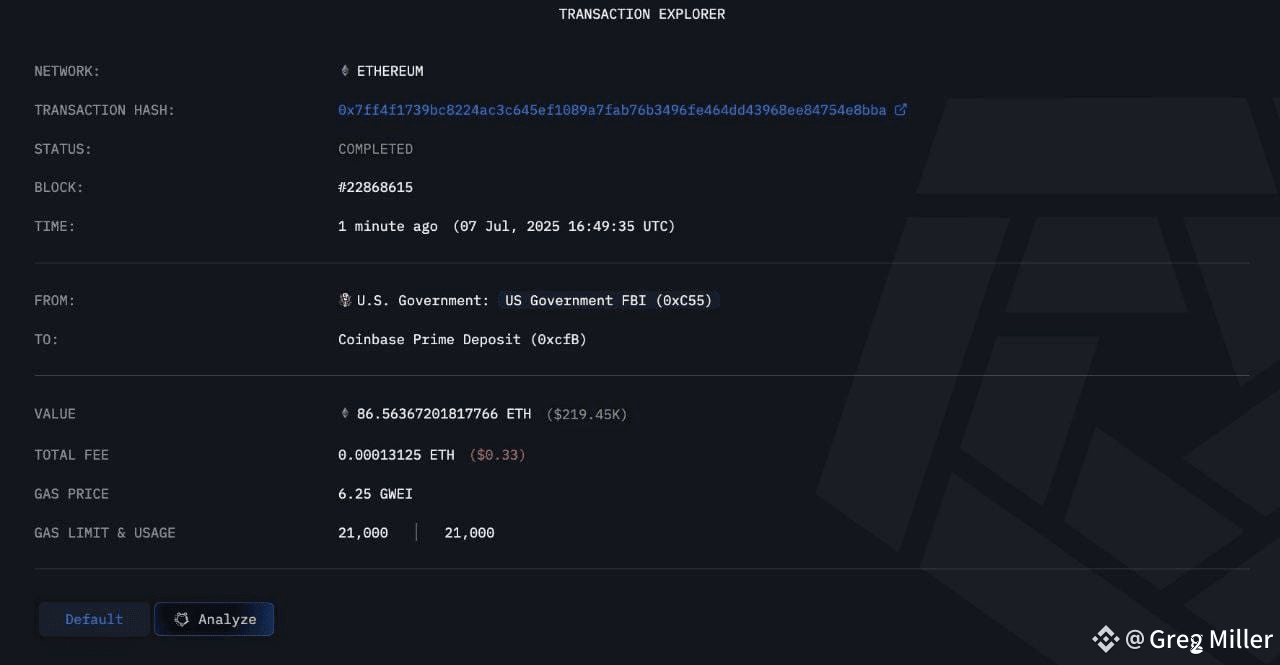
115
51
21
479
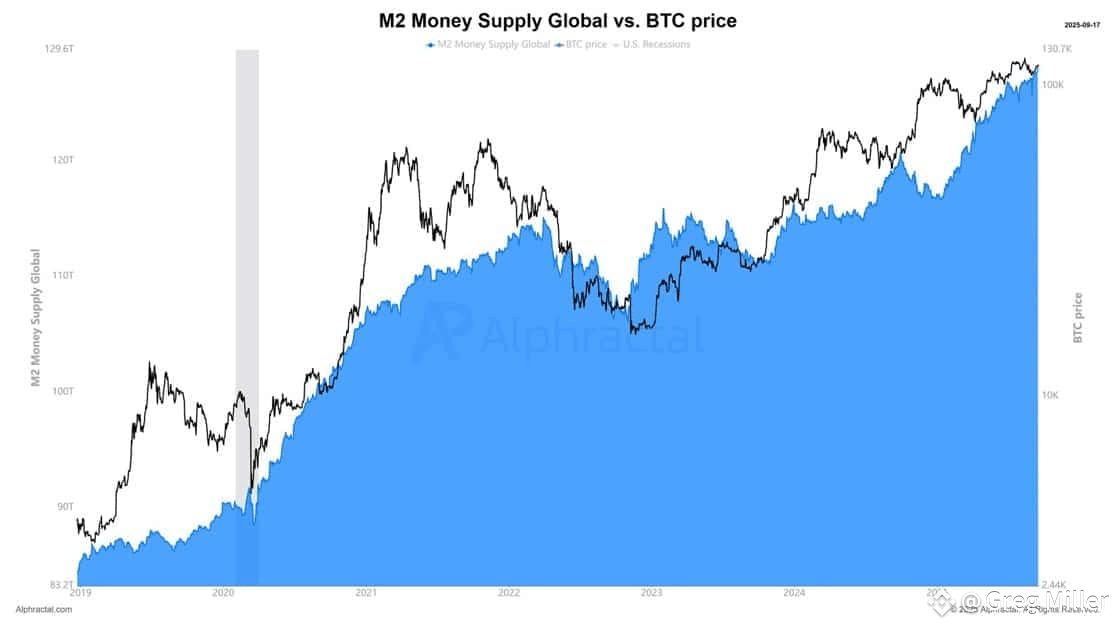
·
--
🚨 New on #BinanceWallet : Alpha Earn Hub is LIVE!
💧 Add liquidity to eligible Alpha token pairs via PancakeSwap V3
💰 Earn high APR rewards + Alpha Points
🎯 Boost your eligibility for:
🔹 TGEs (Token Generation Events)
🔹 Exclusive Airdrops
3 Smart Liquidity Strategies:
🔸 Wide – Set & forget
🔸 Medium – Balanced
🔸 Narrow – Max fees, active management
✅ Alpha LPs now count toward your Alpha Points
#DeFi #BinanceAlpha #GregLens
🚨 New on #BinanceWallet : Alpha Earn Hub is LIVE!
💧 Add liquidity to eligible Alpha token pairs via PancakeSwap V3
💰 Earn high APR rewards + Alpha Points
🎯 Boost your eligibility for:
🔹 TGEs (Token Generation Events)
🔹 Exclusive Airdrops
3 Smart Liquidity Strategies:
🔸 Wide – Set & forget
🔸 Medium – Balanced
🔸 Narrow – Max fees, active management
✅ Alpha LPs now count toward your Alpha Points
#DeFi #BinanceAlpha #GregLens
💧 Add liquidity to eligible Alpha token pairs via PancakeSwap V3
💰 Earn high APR rewards + Alpha Points
🎯 Boost your eligibility for:
🔹 TGEs (Token Generation Events)
🔹 Exclusive Airdrops
3 Smart Liquidity Strategies:
🔸 Wide – Set & forget
🔸 Medium – Balanced
🔸 Narrow – Max fees, active management
✅ Alpha LPs now count toward your Alpha Points
#DeFi #BinanceAlpha #GregLens
2k
992
94
2k
·
--
I'm really impressed with how Morpho is smartening up DeFi lending. It’s a simple, elegant idea that fixes a core inefficiency in the system.
🔹Morpho cleverly sits on top of major protocols like Aave and Compound, but it attempts to match lenders and borrowers peer-to-peer.
🔹This direct matching means lenders get higher yields and borrowers pay less a true win-win!
* Crucially, any funds that aren't matched immediately flow back into the underlying pools, so your capital is never idle.
🔹It maintains the security and decentralization we value, all while making lending more efficient and user-friendly.
Morpho is proving that sustainable DeFi growth comes from better engineering, not just temporary incentives. It’s creating a much more balanced lending environment.
#Morpho #GregLens @MorphoLabs $MORPHO
{spot}(MORPHOUSDT)
I'm really impressed with how Morpho is smartening up DeFi lending. It’s a simple, elegant idea that fixes a core inefficiency in the system.
🔹Morpho cleverly sits on top of major protocols like Aave and Compound, but it attempts to match lenders and borrowers peer-to-peer.
🔹This direct matching means lenders get higher yields and borrowers pay less a true win-win!
* Crucially, any funds that aren't matched immediately flow back into the underlying pools, so your capital is never idle.
🔹It maintains the security and decentralization we value, all while making lending more efficient and user-friendly.
Morpho is proving that sustainable DeFi growth comes from better engineering, not just temporary incentives. It’s creating a much more balanced lending environment.
#Morpho #GregLens @Morpho Labs 🦋 $MORPHO
🔹Morpho cleverly sits on top of major protocols like Aave and Compound, but it attempts to match lenders and borrowers peer-to-peer.
🔹This direct matching means lenders get higher yields and borrowers pay less a true win-win!
* Crucially, any funds that aren't matched immediately flow back into the underlying pools, so your capital is never idle.
🔹It maintains the security and decentralization we value, all while making lending more efficient and user-friendly.
Morpho is proving that sustainable DeFi growth comes from better engineering, not just temporary incentives. It’s creating a much more balanced lending environment.
#Morpho #GregLens @Morpho Labs 🦋 $MORPHO
17
14
19
489
·
--
Linea: The Continuous Fabric Powering a New Digital Age
The digital world is evolving faster than ever, and networks like Linea are quietly shaping the infrastructure that will support tomorrow’s applications, communities, and economies. Linea does not aim to be just another blockchain or a conventional layer-two solution. Instead, it positions itself as a continuous fabric of computation a living, adaptive environment that connects scattered digital systems into a unified, efficient, and scalable network. Unlike other networks that rely on rigid structures or fixed chains, Linea grows and adapts alongside its users, creating a seamless foundation for the next era of digital civilization.
Breaking the Fragmentation of State
One of the biggest challenges in blockchain today is fragmentation. Each network holds its own data, transaction history, and memory, making interoperability difficult. Linea introduces a new approach: state consolidation. Instead of locking data into a single environment, Linea allows state to be compressed, verified, and reproduced across different networks in a cryptographically secure way.
This portability transforms state from a static ledger into a transferable resource. Applications no longer need to anchor themselves to a specific chain. Instead, Linea acts as a conductor, moving state where it’s needed while maintaining integrity. This subtle architectural shift lays the groundwork for digital systems to coordinate at unprecedented scales.
Computational Diplomacy: Cooperation Without Conflict
Blockchain has long been a fragmented space filled with competing networks. Linea introduces what can be called computational diplomacy. It provides a neutral, cryptographically secure middle ground where protocols can interoperate without sacrificing their internal rules.
Through this system, cross-chain bridges, liquidity migration, identity verification, and application interoperability can function efficiently and predictably. Cooperation is guided by mathematics and verifiable proofs, not politics or subjective agreements. Linea’s role as a diplomatic layer ensures that different ecosystems can work together without conflict, unlocking opportunities for collaboration that were previously impossible.
Becoming the Center of Gravity for Developers
In the early days of blockchain, the most established networks attracted talent through hype and incentives. Today, developers are drawn to networks that reduce friction and expand creative possibilities. Linea sits at this new center of gravity.
By combining zero-knowledge (zk) technology with the familiar Ethereum Virtual Machine (EVM) environment, Linea provides scalability without compromising accessibility. Developers can build ambitious applications without worrying about cost or performance bottlenecks. The network allows real-time, high-volume applications to flourish, making it a magnet for those who want to innovate without limits.
Hosting Autonomous Digital Organisms
Beyond traditional applications, Linea enables the creation of autonomous digital organisms self-maintaining computational entities that operate continuously without human input. These systems can manage assets, make decisions, generate revenue, and even evolve their logic over time.
Such digital organisms require a reliable, adaptive, and low-cost execution environment. Linea provides all of these elements, offering a habitat for artificial digital life that goes beyond simple DAOs or smart contracts. With Linea, blockchain becomes more than a coordination tool; it becomes a platform for autonomous, self-sustaining digital systems.
Redefining On-Chain Time
Time in blockchain has traditionally been misaligned with real-world or computational time. Transactions often wait for network congestion or block confirmations, creating delays. Linea redefines this dynamic through proof-based synchronization, aligning operations more closely with the way humans and machines perceive time.
This allows transactions to resolve almost instantly, enabling applications in finance, gaming, communications, and automation to function smoothly. Users experience blockchain as a responsive medium, not a slow ledger, opening the door for a new level of interactivity and digital efficiency.
Empowering a Global Workforce of Applications
Applications today are limited by the networks they run on, which can restrict performance and scalability. Linea changes that by removing friction at every level. Real-time bidding systems, social networks, micropayment platforms, and analytics engines can now operate efficiently across millions of users.
This transforms applications into a global workforce of digital workers, capable of serving entire communities without latency or downtime. Linea is not just a network it is the engine that enables hyper-scalable, high-performance applications to grow without constraints.
A New Culture of User Empowerment
Many blockchains claim decentralization, but few deliver a truly empowering experience for users. Linea achieves this by combining zk privacy, predictable execution, and cost efficiency. Users can interact with high-volume applications, experiment safely, participate in governance, and expand their digital identity portfolios without unexpected costs or delays.
In this environment, users collaborate with the network rather than fight it. The result is a subtle but profound cultural shift from survival mode in unpredictable networks to empowerment mode in a predictable and efficient ecosystem.
Trust-Minimized Economies and Real-World Impact
Zero-knowledge technology enables trust-minimized economies, where transactions rely on mathematical guarantees instead of reputation or intermediaries. Linea strengthens this frontier by making proof generation cost-efficient, enabling complex on-chain economic activity.
From credit markets to global settlement systems, from supply chain tracking to programmable trade agreements, Linea provides the infrastructure for large-scale economic coordination. Its capacity to handle high-demand applications without breaking makes it a foundational layer for global financial and operational systems.
Linea: The Invisible Backbone of Digital Civilization
Looking ahead, networks like Linea will act as invisible forces that structure the future of digital civilization. Just as electricity powers modern cities and the internet enables global communication, Linea enables decentralized computation at a scale that will support tomorrow’s digital societies.
Most people may never see Linea or even know its name, but their daily applications finance, communications, entertainment, logistics will rely on it. Linea quietly powers the world, executing transactions, synchronizing data, and supporting autonomous systems across continents. Its role is subtle but essential, serving as the backbone of a new digital civilization.
In essence, Linea is not just a network it is an adaptive environment, a platform for digital life, and a foundation for the next generation of decentralized systems. By unifying state, enabling autonomous computation, redefining time, and empowering users and applications alike, Linea is quietly shaping the future of the digital age.
#Linea #GregLens @LineaEth $LINEA
Linea: The Continuous Fabric Powering a New Digital Age
The digital world is evolving faster than ever, and networks like Linea are quietly shaping the infrastructure that will support tomorrow’s applications, communities, and economies. Linea does not aim to be just another blockchain or a conventional layer-two solution. Instead, it positions itself as a continuous fabric of computation a living, adaptive environment that connects scattered digital systems into a unified, efficient, and scalable network. Unlike other networks that rely on rigid structures or fixed chains, Linea grows and adapts alongside its users, creating a seamless foundation for the next era of digital civilization.
Breaking the Fragmentation of State
One of the biggest challenges in blockchain today is fragmentation. Each network holds its own data, transaction history, and memory, making interoperability difficult. Linea introduces a new approach: state consolidation. Instead of locking data into a single environment, Linea allows state to be compressed, verified, and reproduced across different networks in a cryptographically secure way.
This portability transforms state from a static ledger into a transferable resource. Applications no longer need to anchor themselves to a specific chain. Instead, Linea acts as a conductor, moving state where it’s needed while maintaining integrity. This subtle architectural shift lays the groundwork for digital systems to coordinate at unprecedented scales.
Computational Diplomacy: Cooperation Without Conflict
Blockchain has long been a fragmented space filled with competing networks. Linea introduces what can be called computational diplomacy. It provides a neutral, cryptographically secure middle ground where protocols can interoperate without sacrificing their internal rules.
Through this system, cross-chain bridges, liquidity migration, identity verification, and application interoperability can function efficiently and predictably. Cooperation is guided by mathematics and verifiable proofs, not politics or subjective agreements. Linea’s role as a diplomatic layer ensures that different ecosystems can work together without conflict, unlocking opportunities for collaboration that were previously impossible.
Becoming the Center of Gravity for Developers
In the early days of blockchain, the most established networks attracted talent through hype and incentives. Today, developers are drawn to networks that reduce friction and expand creative possibilities. Linea sits at this new center of gravity.
By combining zero-knowledge (zk) technology with the familiar Ethereum Virtual Machine (EVM) environment, Linea provides scalability without compromising accessibility. Developers can build ambitious applications without worrying about cost or performance bottlenecks. The network allows real-time, high-volume applications to flourish, making it a magnet for those who want to innovate without limits.
Hosting Autonomous Digital Organisms
Beyond traditional applications, Linea enables the creation of autonomous digital organisms self-maintaining computational entities that operate continuously without human input. These systems can manage assets, make decisions, generate revenue, and even evolve their logic over time.
Such digital organisms require a reliable, adaptive, and low-cost execution environment. Linea provides all of these elements, offering a habitat for artificial digital life that goes beyond simple DAOs or smart contracts. With Linea, blockchain becomes more than a coordination tool; it becomes a platform for autonomous, self-sustaining digital systems.
Redefining On-Chain Time
Time in blockchain has traditionally been misaligned with real-world or computational time. Transactions often wait for network congestion or block confirmations, creating delays. Linea redefines this dynamic through proof-based synchronization, aligning operations more closely with the way humans and machines perceive time.
This allows transactions to resolve almost instantly, enabling applications in finance, gaming, communications, and automation to function smoothly. Users experience blockchain as a responsive medium, not a slow ledger, opening the door for a new level of interactivity and digital efficiency.
Empowering a Global Workforce of Applications
Applications today are limited by the networks they run on, which can restrict performance and scalability. Linea changes that by removing friction at every level. Real-time bidding systems, social networks, micropayment platforms, and analytics engines can now operate efficiently across millions of users.
This transforms applications into a global workforce of digital workers, capable of serving entire communities without latency or downtime. Linea is not just a network it is the engine that enables hyper-scalable, high-performance applications to grow without constraints.
A New Culture of User Empowerment
Many blockchains claim decentralization, but few deliver a truly empowering experience for users. Linea achieves this by combining zk privacy, predictable execution, and cost efficiency. Users can interact with high-volume applications, experiment safely, participate in governance, and expand their digital identity portfolios without unexpected costs or delays.
In this environment, users collaborate with the network rather than fight it. The result is a subtle but profound cultural shift from survival mode in unpredictable networks to empowerment mode in a predictable and efficient ecosystem.
Trust-Minimized Economies and Real-World Impact
Zero-knowledge technology enables trust-minimized economies, where transactions rely on mathematical guarantees instead of reputation or intermediaries. Linea strengthens this frontier by making proof generation cost-efficient, enabling complex on-chain economic activity.
From credit markets to global settlement systems, from supply chain tracking to programmable trade agreements, Linea provides the infrastructure for large-scale economic coordination. Its capacity to handle high-demand applications without breaking makes it a foundational layer for global financial and operational systems.
Linea: The Invisible Backbone of Digital Civilization
Looking ahead, networks like Linea will act as invisible forces that structure the future of digital civilization. Just as electricity powers modern cities and the internet enables global communication, Linea enables decentralized computation at a scale that will support tomorrow’s digital societies.
Most people may never see Linea or even know its name, but their daily applications finance, communications, entertainment, logistics will rely on it. Linea quietly powers the world, executing transactions, synchronizing data, and supporting autonomous systems across continents. Its role is subtle but essential, serving as the backbone of a new digital civilization.
In essence, Linea is not just a network it is an adaptive environment, a platform for digital life, and a foundation for the next generation of decentralized systems. By unifying state, enabling autonomous computation, redefining time, and empowering users and applications alike, Linea is quietly shaping the future of the digital age.
#Linea #GregLens @Linea.eth $LINEA
Breaking the Fragmentation of State
One of the biggest challenges in blockchain today is fragmentation. Each network holds its own data, transaction history, and memory, making interoperability difficult. Linea introduces a new approach: state consolidation. Instead of locking data into a single environment, Linea allows state to be compressed, verified, and reproduced across different networks in a cryptographically secure way.
This portability transforms state from a static ledger into a transferable resource. Applications no longer need to anchor themselves to a specific chain. Instead, Linea acts as a conductor, moving state where it’s needed while maintaining integrity. This subtle architectural shift lays the groundwork for digital systems to coordinate at unprecedented scales.
Computational Diplomacy: Cooperation Without Conflict
Blockchain has long been a fragmented space filled with competing networks. Linea introduces what can be called computational diplomacy. It provides a neutral, cryptographically secure middle ground where protocols can interoperate without sacrificing their internal rules.
Through this system, cross-chain bridges, liquidity migration, identity verification, and application interoperability can function efficiently and predictably. Cooperation is guided by mathematics and verifiable proofs, not politics or subjective agreements. Linea’s role as a diplomatic layer ensures that different ecosystems can work together without conflict, unlocking opportunities for collaboration that were previously impossible.
Becoming the Center of Gravity for Developers
In the early days of blockchain, the most established networks attracted talent through hype and incentives. Today, developers are drawn to networks that reduce friction and expand creative possibilities. Linea sits at this new center of gravity.
By combining zero-knowledge (zk) technology with the familiar Ethereum Virtual Machine (EVM) environment, Linea provides scalability without compromising accessibility. Developers can build ambitious applications without worrying about cost or performance bottlenecks. The network allows real-time, high-volume applications to flourish, making it a magnet for those who want to innovate without limits.
Hosting Autonomous Digital Organisms
Beyond traditional applications, Linea enables the creation of autonomous digital organisms self-maintaining computational entities that operate continuously without human input. These systems can manage assets, make decisions, generate revenue, and even evolve their logic over time.
Such digital organisms require a reliable, adaptive, and low-cost execution environment. Linea provides all of these elements, offering a habitat for artificial digital life that goes beyond simple DAOs or smart contracts. With Linea, blockchain becomes more than a coordination tool; it becomes a platform for autonomous, self-sustaining digital systems.
Redefining On-Chain Time
Time in blockchain has traditionally been misaligned with real-world or computational time. Transactions often wait for network congestion or block confirmations, creating delays. Linea redefines this dynamic through proof-based synchronization, aligning operations more closely with the way humans and machines perceive time.
This allows transactions to resolve almost instantly, enabling applications in finance, gaming, communications, and automation to function smoothly. Users experience blockchain as a responsive medium, not a slow ledger, opening the door for a new level of interactivity and digital efficiency.
Empowering a Global Workforce of Applications
Applications today are limited by the networks they run on, which can restrict performance and scalability. Linea changes that by removing friction at every level. Real-time bidding systems, social networks, micropayment platforms, and analytics engines can now operate efficiently across millions of users.
This transforms applications into a global workforce of digital workers, capable of serving entire communities without latency or downtime. Linea is not just a network it is the engine that enables hyper-scalable, high-performance applications to grow without constraints.
A New Culture of User Empowerment
Many blockchains claim decentralization, but few deliver a truly empowering experience for users. Linea achieves this by combining zk privacy, predictable execution, and cost efficiency. Users can interact with high-volume applications, experiment safely, participate in governance, and expand their digital identity portfolios without unexpected costs or delays.
In this environment, users collaborate with the network rather than fight it. The result is a subtle but profound cultural shift from survival mode in unpredictable networks to empowerment mode in a predictable and efficient ecosystem.
Trust-Minimized Economies and Real-World Impact
Zero-knowledge technology enables trust-minimized economies, where transactions rely on mathematical guarantees instead of reputation or intermediaries. Linea strengthens this frontier by making proof generation cost-efficient, enabling complex on-chain economic activity.
From credit markets to global settlement systems, from supply chain tracking to programmable trade agreements, Linea provides the infrastructure for large-scale economic coordination. Its capacity to handle high-demand applications without breaking makes it a foundational layer for global financial and operational systems.
Linea: The Invisible Backbone of Digital Civilization
Looking ahead, networks like Linea will act as invisible forces that structure the future of digital civilization. Just as electricity powers modern cities and the internet enables global communication, Linea enables decentralized computation at a scale that will support tomorrow’s digital societies.
Most people may never see Linea or even know its name, but their daily applications finance, communications, entertainment, logistics will rely on it. Linea quietly powers the world, executing transactions, synchronizing data, and supporting autonomous systems across continents. Its role is subtle but essential, serving as the backbone of a new digital civilization.
In essence, Linea is not just a network it is an adaptive environment, a platform for digital life, and a foundation for the next generation of decentralized systems. By unifying state, enabling autonomous computation, redefining time, and empowering users and applications alike, Linea is quietly shaping the future of the digital age.
#Linea #GregLens @Linea.eth $LINEA
16
13
23
6.2k
·
--
The Rise of the Player-Driven Multiverse: How Yield Guild Games is Redefining Web3 Gaming
Yield Guild Games (YGG) has quietly evolved from a simple concept a guild sharing gaming assets into one of the most powerful and influential forces in web3 gaming. For those of us who have watched this space grow, the most remarkable thing about YGG is its unwavering commitment to a single, simple principle: empower the player.
This philosophy isn't just marketing; it's the foundation of their entire structure. The recent launch of YGG Play marks the next major leap, transforming the often-confusing landscape of web3 game discovery and progression into a unified, rewarding experience that celebrates curiosity, effort, and consistency. It’s a shift that moves the power away from platforms and squarely into the hands of the gaming community.
From Guild to Global Network
YGG’s initial model was straightforward: give a decentralized community shared ownership of expensive gaming assets (like NFTs) and allow members to earn a living playing games. This structure was an instant success, providing access to digital economies for players across the globe, especially in developing nations.
But YGG didn't stop there. It evolved into a massive, expansive network composed of SubDAOs (Sub-Decentralized Autonomous Organizations), regional groups, and secure vault systems. What makes this architecture so brilliant is that it mirrors the natural human instinct of gamers: forming squads, alliances, and specialized communities around shared interests. YGG didn't invent collaboration; it simply provided the decentralized economic infrastructure to make that collaboration scalable, sustainable, and rewarding. Every player can find a home, whether they are focused on a specific game, a region, or a particular genre.
Redefining Game Discovery with YGG Play
If you’ve ever tried to navigate the world of web3 gaming, you know the pain points: endless hype, confusing tokenomics, and the constant fear of investing time or money into a project that fizzles out. YGG Play is the antidote to this chaos.
The biggest shift it introduces is the removal of the guesswork in finding quality web3 games. Instead of relying on random social media threads or paid endorsements, the platform guides players through hands-on quests and missions. You don’t just read about a game; you live the experience. You test mechanics, learn gameplay loops, and understand the token models organically.
This approach makes discovery authentic because real engagement becomes the doorway to deeper opportunities. I found myself genuinely trying new genres and projects I would have completely ignored otherwise. The process felt natural, guided, and informative not forced or overwhelming. It’s a return to the pure joy of exploration, but with meaningful on-chain benefits tied to your efforts.
A New Path from Player to Early Contributor
This is perhaps the most exciting part of the YGG Play mechanism: it turns exploration into measurable, rewarded progression. Every completed quest, every mission finished, and every event attended adds to a player's contribution score. This score unlocks tangible benefits within the YGG ecosystem.
For too long, the barrier to entry for early web3 game participation was primarily financial. You needed to be wealthy or lucky to get in early on token sales or exclusive NFT drops. YGG Play democratizes this. It rewards the behaviors that genuinely build strong game communities: showing interest and consistency.
With this model, even newcomers who don't have large sums of money can gain early access to opportunities simply by proving their engagement. This shift from prioritizing capital to valuing contribution is a defining feature of the kind of open, democratic system web3 gaming has needed for years.
The Launchpad: A Milestone for Web3 Gaming
The Launchpad inside YGG Play is a true game-changer. Traditionally, token launches heavily favored capital, leading to speculative communities that often hurt a game’s long-term health. The YGG Play Launchpad introduces balance.
Players earn their place in the Launchpad not by spending, but by participating, exploring, and contributing to the ecosystem. Their eligibility is directly tied to their activity score their proof of engagement. This ensures that the earliest supporters of a new game are actually engaged players, not speculators hunting for a quick return. It creates a healthier, more dedicated community foundation for every title YGG supports. In a crowded space, this player-centric mechanism is why YGG Play stands out. It feels like the first truly merit-based launch system in GameFi.
SubDAOs: The Specialized Hubs of the Multiverse
The SubDAOs have always been an ingenious component of YGG. They allow large, global communities to segment themselves around specific games, regions, or interests. Each SubDAO develops its own culture, strategies, and internal leadership, creating a rich tapestry across the network.
The integration of YGG Play strengthens these specialized hubs immensely. Now, each SubDAO can act as a localized guide, creating tailored quests, events, and discovery journeys built around their favorite titles. Whether you're into strategy RPGs, fast-paced shooters, or deep simulation games, there is a SubDAO ready to welcome, train, organize, and reward you. This synergy between the community hubs and the discovery platform is designed for long-term sustainability and deep player immersion.
The Future is a Digital Nation
Looking ahead, YGG is rapidly cementing its role as the economic and social layer of web3 gaming. The combination of structured SubDAOs, secure Vaults, and the new YGG Play platform creates a complete ecosystem where players are not just users; they are stakeholders who actively influence the growth of every connected digital world.
The $YGG token, which enables governance, rewards, and access, serves as the unifying backbone of this player-built multiverse. The vision isn't about isolated game economies anymore; it’s about interconnected digital nations. YGG is one of the earliest and strongest examples of this shift, proving that the future of digital worlds will be shaped by collaborative communities, not centralized studios.
Yield Guild Games continues to prove that web3 gaming is not fundamentally about speculation, but about community ownership and shared progression. From the earliest days of sharing assets to the new era of YGG Play missions, the project has consistently stayed true to its purpose: giving players power, identity, and opportunity.
Whether you are discovering your next favorite game through a quest or joining a specialized SubDAO to sharpen your skills, YGG makes participation meaningful and accessible. This is the kind of foundation that can support generations of on-chain gamers. The launch of YGG Play signifies that the next era of truly player-driven gaming has already begun.
#YGGPlay #GregLens @YieldGuildGames $YGG
{spot}(YGGUSDT)
The Rise of the Player-Driven Multiverse: How Yield Guild Games is Redefining Web3 Gaming
Yield Guild Games (YGG) has quietly evolved from a simple concept a guild sharing gaming assets into one of the most powerful and influential forces in web3 gaming. For those of us who have watched this space grow, the most remarkable thing about YGG is its unwavering commitment to a single, simple principle: empower the player.
This philosophy isn't just marketing; it's the foundation of their entire structure. The recent launch of YGG Play marks the next major leap, transforming the often-confusing landscape of web3 game discovery and progression into a unified, rewarding experience that celebrates curiosity, effort, and consistency. It’s a shift that moves the power away from platforms and squarely into the hands of the gaming community.
From Guild to Global Network
YGG’s initial model was straightforward: give a decentralized community shared ownership of expensive gaming assets (like NFTs) and allow members to earn a living playing games. This structure was an instant success, providing access to digital economies for players across the globe, especially in developing nations.
But YGG didn't stop there. It evolved into a massive, expansive network composed of SubDAOs (Sub-Decentralized Autonomous Organizations), regional groups, and secure vault systems. What makes this architecture so brilliant is that it mirrors the natural human instinct of gamers: forming squads, alliances, and specialized communities around shared interests. YGG didn't invent collaboration; it simply provided the decentralized economic infrastructure to make that collaboration scalable, sustainable, and rewarding. Every player can find a home, whether they are focused on a specific game, a region, or a particular genre.
Redefining Game Discovery with YGG Play
If you’ve ever tried to navigate the world of web3 gaming, you know the pain points: endless hype, confusing tokenomics, and the constant fear of investing time or money into a project that fizzles out. YGG Play is the antidote to this chaos.
The biggest shift it introduces is the removal of the guesswork in finding quality web3 games. Instead of relying on random social media threads or paid endorsements, the platform guides players through hands-on quests and missions. You don’t just read about a game; you live the experience. You test mechanics, learn gameplay loops, and understand the token models organically.
This approach makes discovery authentic because real engagement becomes the doorway to deeper opportunities. I found myself genuinely trying new genres and projects I would have completely ignored otherwise. The process felt natural, guided, and informative not forced or overwhelming. It’s a return to the pure joy of exploration, but with meaningful on-chain benefits tied to your efforts.
A New Path from Player to Early Contributor
This is perhaps the most exciting part of the YGG Play mechanism: it turns exploration into measurable, rewarded progression. Every completed quest, every mission finished, and every event attended adds to a player's contribution score. This score unlocks tangible benefits within the YGG ecosystem.
For too long, the barrier to entry for early web3 game participation was primarily financial. You needed to be wealthy or lucky to get in early on token sales or exclusive NFT drops. YGG Play democratizes this. It rewards the behaviors that genuinely build strong game communities: showing interest and consistency.
With this model, even newcomers who don't have large sums of money can gain early access to opportunities simply by proving their engagement. This shift from prioritizing capital to valuing contribution is a defining feature of the kind of open, democratic system web3 gaming has needed for years.
The Launchpad: A Milestone for Web3 Gaming
The Launchpad inside YGG Play is a true game-changer. Traditionally, token launches heavily favored capital, leading to speculative communities that often hurt a game’s long-term health. The YGG Play Launchpad introduces balance.
Players earn their place in the Launchpad not by spending, but by participating, exploring, and contributing to the ecosystem. Their eligibility is directly tied to their activity score their proof of engagement. This ensures that the earliest supporters of a new game are actually engaged players, not speculators hunting for a quick return. It creates a healthier, more dedicated community foundation for every title YGG supports. In a crowded space, this player-centric mechanism is why YGG Play stands out. It feels like the first truly merit-based launch system in GameFi.
SubDAOs: The Specialized Hubs of the Multiverse
The SubDAOs have always been an ingenious component of YGG. They allow large, global communities to segment themselves around specific games, regions, or interests. Each SubDAO develops its own culture, strategies, and internal leadership, creating a rich tapestry across the network.
The integration of YGG Play strengthens these specialized hubs immensely. Now, each SubDAO can act as a localized guide, creating tailored quests, events, and discovery journeys built around their favorite titles. Whether you're into strategy RPGs, fast-paced shooters, or deep simulation games, there is a SubDAO ready to welcome, train, organize, and reward you. This synergy between the community hubs and the discovery platform is designed for long-term sustainability and deep player immersion.
The Future is a Digital Nation
Looking ahead, YGG is rapidly cementing its role as the economic and social layer of web3 gaming. The combination of structured SubDAOs, secure Vaults, and the new YGG Play platform creates a complete ecosystem where players are not just users; they are stakeholders who actively influence the growth of every connected digital world.
The $YGG token, which enables governance, rewards, and access, serves as the unifying backbone of this player-built multiverse. The vision isn't about isolated game economies anymore; it’s about interconnected digital nations. YGG is one of the earliest and strongest examples of this shift, proving that the future of digital worlds will be shaped by collaborative communities, not centralized studios.
Yield Guild Games continues to prove that web3 gaming is not fundamentally about speculation, but about community ownership and shared progression. From the earliest days of sharing assets to the new era of YGG Play missions, the project has consistently stayed true to its purpose: giving players power, identity, and opportunity.
Whether you are discovering your next favorite game through a quest or joining a specialized SubDAO to sharpen your skills, YGG makes participation meaningful and accessible. This is the kind of foundation that can support generations of on-chain gamers. The launch of YGG Play signifies that the next era of truly player-driven gaming has already begun.
#YGGPlay #GregLens @Yield Guild Games $YGG
This philosophy isn't just marketing; it's the foundation of their entire structure. The recent launch of YGG Play marks the next major leap, transforming the often-confusing landscape of web3 game discovery and progression into a unified, rewarding experience that celebrates curiosity, effort, and consistency. It’s a shift that moves the power away from platforms and squarely into the hands of the gaming community.
From Guild to Global Network
YGG’s initial model was straightforward: give a decentralized community shared ownership of expensive gaming assets (like NFTs) and allow members to earn a living playing games. This structure was an instant success, providing access to digital economies for players across the globe, especially in developing nations.
But YGG didn't stop there. It evolved into a massive, expansive network composed of SubDAOs (Sub-Decentralized Autonomous Organizations), regional groups, and secure vault systems. What makes this architecture so brilliant is that it mirrors the natural human instinct of gamers: forming squads, alliances, and specialized communities around shared interests. YGG didn't invent collaboration; it simply provided the decentralized economic infrastructure to make that collaboration scalable, sustainable, and rewarding. Every player can find a home, whether they are focused on a specific game, a region, or a particular genre.
Redefining Game Discovery with YGG Play
If you’ve ever tried to navigate the world of web3 gaming, you know the pain points: endless hype, confusing tokenomics, and the constant fear of investing time or money into a project that fizzles out. YGG Play is the antidote to this chaos.
The biggest shift it introduces is the removal of the guesswork in finding quality web3 games. Instead of relying on random social media threads or paid endorsements, the platform guides players through hands-on quests and missions. You don’t just read about a game; you live the experience. You test mechanics, learn gameplay loops, and understand the token models organically.
This approach makes discovery authentic because real engagement becomes the doorway to deeper opportunities. I found myself genuinely trying new genres and projects I would have completely ignored otherwise. The process felt natural, guided, and informative not forced or overwhelming. It’s a return to the pure joy of exploration, but with meaningful on-chain benefits tied to your efforts.
A New Path from Player to Early Contributor
This is perhaps the most exciting part of the YGG Play mechanism: it turns exploration into measurable, rewarded progression. Every completed quest, every mission finished, and every event attended adds to a player's contribution score. This score unlocks tangible benefits within the YGG ecosystem.
For too long, the barrier to entry for early web3 game participation was primarily financial. You needed to be wealthy or lucky to get in early on token sales or exclusive NFT drops. YGG Play democratizes this. It rewards the behaviors that genuinely build strong game communities: showing interest and consistency.
With this model, even newcomers who don't have large sums of money can gain early access to opportunities simply by proving their engagement. This shift from prioritizing capital to valuing contribution is a defining feature of the kind of open, democratic system web3 gaming has needed for years.
The Launchpad: A Milestone for Web3 Gaming
The Launchpad inside YGG Play is a true game-changer. Traditionally, token launches heavily favored capital, leading to speculative communities that often hurt a game’s long-term health. The YGG Play Launchpad introduces balance.
Players earn their place in the Launchpad not by spending, but by participating, exploring, and contributing to the ecosystem. Their eligibility is directly tied to their activity score their proof of engagement. This ensures that the earliest supporters of a new game are actually engaged players, not speculators hunting for a quick return. It creates a healthier, more dedicated community foundation for every title YGG supports. In a crowded space, this player-centric mechanism is why YGG Play stands out. It feels like the first truly merit-based launch system in GameFi.
SubDAOs: The Specialized Hubs of the Multiverse
The SubDAOs have always been an ingenious component of YGG. They allow large, global communities to segment themselves around specific games, regions, or interests. Each SubDAO develops its own culture, strategies, and internal leadership, creating a rich tapestry across the network.
The integration of YGG Play strengthens these specialized hubs immensely. Now, each SubDAO can act as a localized guide, creating tailored quests, events, and discovery journeys built around their favorite titles. Whether you're into strategy RPGs, fast-paced shooters, or deep simulation games, there is a SubDAO ready to welcome, train, organize, and reward you. This synergy between the community hubs and the discovery platform is designed for long-term sustainability and deep player immersion.
The Future is a Digital Nation
Looking ahead, YGG is rapidly cementing its role as the economic and social layer of web3 gaming. The combination of structured SubDAOs, secure Vaults, and the new YGG Play platform creates a complete ecosystem where players are not just users; they are stakeholders who actively influence the growth of every connected digital world.
The $YGG token, which enables governance, rewards, and access, serves as the unifying backbone of this player-built multiverse. The vision isn't about isolated game economies anymore; it’s about interconnected digital nations. YGG is one of the earliest and strongest examples of this shift, proving that the future of digital worlds will be shaped by collaborative communities, not centralized studios.
Yield Guild Games continues to prove that web3 gaming is not fundamentally about speculation, but about community ownership and shared progression. From the earliest days of sharing assets to the new era of YGG Play missions, the project has consistently stayed true to its purpose: giving players power, identity, and opportunity.
Whether you are discovering your next favorite game through a quest or joining a specialized SubDAO to sharpen your skills, YGG makes participation meaningful and accessible. This is the kind of foundation that can support generations of on-chain gamers. The launch of YGG Play signifies that the next era of truly player-driven gaming has already begun.
#YGGPlay #GregLens @Yield Guild Games $YGG
19
17
21
254
·
--
Yield Guild Games and the Ascent of Digital Labor NetworksOver the last ten years, the internet has changed the ways of working, communication and value creation. And that is what the development of the metaverse is currently doing, bringing virtual participation to a new level, making it a synchronized economic process. Yield Guild Games (YGG) are leading the charge in this new type of digital labor network, and one of the first organizations where players, time, coordination, and ownership of assets are merged to produce actual Economic output. As opposed to the old fashioned form of gaming where the value is usually locked into the systems of centralized publishers, YGG turns the move of the player to productive capital, the emergence of a worldwide, decentralized labor force based on verifiable ownership and open protocols.
Introducing Value Creation in Virtual Worlds
In the past, online games would have placed value in centralized organizations: the players would make their contributions of labor and creativity, but the fruits of their effort profits, assets, influence would be inaccessible. YGG breaks this model by considering NFTs, in-game items, and characters productive. Every donation made by a member of the gild goes directly to the common treasury, and does not drain value out of the community.
This model turns gaming into the living economy, according to which the activity of a player is a growth driver. People put in time, work out plans and maximize their contributions and the guild as a whole enjoys the benefits of such synchronized initiatives. In this perspective, gaming is not only entertainment, but an organized economic framework in which the value is distributed naturally, as is the case in the labor markets of real life.
Economic Intelligence and Strategic Asset Flow
YGG is a financial organism, continually performing a cost-benefit analysis of which assets are the most valuable, which games can be played sustainably, and which virtual economies have some long-term potential. This strategic intelligence is used to inform the asset purchases, resource distribution, and risk exposure across games and worlds. Decision making is shaped by the common good and not speculation by individuals making the guild resilient to the up and down of certain game ecosystems.
This systematic circulation of funds allows YGG to become a coordinated engine of the economy, transforming the input of players into systematic, quantifiable value. It is a good example of how decentralized organizations can use data-driven strategies to maximize utility in virtual labor markets.
Dispersed Education and Talent Recruitment
In addition to asset management, YGG is an asset training and skill mobilization machine. New users get access to mentorship, tutorials and community-based instructions and can instantly contribute significantly despite lack of any pre-existing experience in the field of gaming. Senior players not only transfer knowledge, but also guide the novice players on the finer points of the game, and they make sure that talent is being nurtured on a large scale.
The training system of the guild makes sure that human capital development and deployment in various virtual economies is continuously created which forms a capable and scalable work force. YGG shows that the process of arranging digital work can be efficient and opens the potential of thousands of people at the same time.
The Power of SubDAOs
The key characteristic of the YGG ecosystem is the network of SubDAOs. They are semi-autonomous communities, which run local sovereignty and global alignment in the control of their strategies, community culture and operations but which are connected with the overall economy of the guild.
This structure enables the guild to expand to a nebular network of connected cities, each having its identity, rule, and managerial priorities, to share a common treasury and objectives. SubDAOs are also associated with a sense of belonging where players could join groups that reflect their language, choice of game or cultural background. Such independence and unity enhance interaction and consolidate long-term sustainability.
Culture as an Economic Force
Culture is not just a building block of the success of YGG, but also assets or strategic intelligence. Engagement and loyalty are generated through social interaction in the guild, in the form of Discord channels, community events, storytelling, and joint missions. Economic participation is strengthened through emotional investment, which promotes retention, cooperation, and the use of new virtual worlds.
The fact that culture is incorporated in its structure shows that social cohesion is a fundamental element of sustainable digital economies at YGG. A luminous community increases the output of digital labor structures and makes the guild flexible when responding to the evolving virtual environments.
Moving towards Open, Interoperable Networks
Prior to YGG, virtual economies were mostly walled gardens: players could not cross-game value transfer and monetize their output well. YGG presents the opportunity of open and interoperable virtual assets. An NFT/object utilized in a certain metaverse has the potential to be useful or potentially generate something in a different one, which forms a web of assets circulated between different spaces.
This openness makes gaming a playground of economic experimentation, which provides the same opportunities as early internet marketplaces but with much more freedom to individuals. The players have also become agency holders with their own economies that are not run by publishers but by participants themselves.
What Work Will Be Like in the Future With YGG
Whereas remote work characterized the last ten years, the current one is being influenced by metaverse work. In YGG, guild members perform activities in an asynchronous, global and very creative form: traversing quests, managing assets, taking part in governance, and coordinating strategies across time zones.
It is a type of work that is geographically independent and not limited by the conventional employment. With the growth of digital economies, contribution-based models of earning, such as YGG, might become a viable primary source of revenue, particularly in places where more traditional labor sources are scarce. Using the work of players to produce real-life economic value, YGG is an example of how digital labor networks can transform the definition of work.
YGG as an Economic Amplifier
What is important about the guild is that it acts as an economic magnifier:
• It enhances the capacity of the players by offering tools, guidance, and resources that otherwise would have been unavailable to a single player.
• It intensifies the virtual worlds as it provides ready-made liquidity, player interaction and social activity.
• It enhances the bigger Web3 by showing that large-scale virtual economies can be coordinated by means of decentralization.
This triad takes YGG as a central experiment in the working of the virtual societies. The guild demonstrates that the metaverse is not just the playground, but an active economic layer that provides a community between participation and wealth.
Final remark: YGG and Digital Labor Revolution
The example of Yield Guild Games can illustrate the further development of work, economics and society in the virtual world. With a combination of strategic management of assets, organized training, the governance of SubDAOs, and cultural unity, YGG will turn gaming into an efficient, coordinated economic system.
The model of the guild demonstrates how digital labor networks can operate on a large scale and the player can translate the skill, time, and involvement into a concrete economic product. With the growth of virtual worlds and the increasing number of open economies, the blueprint created by YGG gives a very clear picture of the future of digital work and decentralized economic systems.
With its new model, YGG is not only creating a guild; it is establishing a worldwide workforce in the metaverse where opportunity, cooperation, and value creation meet.
#YGGPlay #Greglens $YGG @YieldGuildGames
{spot}(YGGUSDT)
Yield Guild Games and the Ascent of Digital Labor Networks
Over the last ten years, the internet has changed the ways of working, communication and value creation. And that is what the development of the metaverse is currently doing, bringing virtual participation to a new level, making it a synchronized economic process. Yield Guild Games (YGG) are leading the charge in this new type of digital labor network, and one of the first organizations where players, time, coordination, and ownership of assets are merged to produce actual Economic output. As opposed to the old fashioned form of gaming where the value is usually locked into the systems of centralized publishers, YGG turns the move of the player to productive capital, the emergence of a worldwide, decentralized labor force based on verifiable ownership and open protocols.
Introducing Value Creation in Virtual Worlds
In the past, online games would have placed value in centralized organizations: the players would make their contributions of labor and creativity, but the fruits of their effort profits, assets, influence would be inaccessible. YGG breaks this model by considering NFTs, in-game items, and characters productive. Every donation made by a member of the gild goes directly to the common treasury, and does not drain value out of the community.
This model turns gaming into the living economy, according to which the activity of a player is a growth driver. People put in time, work out plans and maximize their contributions and the guild as a whole enjoys the benefits of such synchronized initiatives. In this perspective, gaming is not only entertainment, but an organized economic framework in which the value is distributed naturally, as is the case in the labor markets of real life.
Economic Intelligence and Strategic Asset Flow
YGG is a financial organism, continually performing a cost-benefit analysis of which assets are the most valuable, which games can be played sustainably, and which virtual economies have some long-term potential. This strategic intelligence is used to inform the asset purchases, resource distribution, and risk exposure across games and worlds. Decision making is shaped by the common good and not speculation by individuals making the guild resilient to the up and down of certain game ecosystems.
This systematic circulation of funds allows YGG to become a coordinated engine of the economy, transforming the input of players into systematic, quantifiable value. It is a good example of how decentralized organizations can use data-driven strategies to maximize utility in virtual labor markets.
Dispersed Education and Talent Recruitment
In addition to asset management, YGG is an asset training and skill mobilization machine. New users get access to mentorship, tutorials and community-based instructions and can instantly contribute significantly despite lack of any pre-existing experience in the field of gaming. Senior players not only transfer knowledge, but also guide the novice players on the finer points of the game, and they make sure that talent is being nurtured on a large scale.
The training system of the guild makes sure that human capital development and deployment in various virtual economies is continuously created which forms a capable and scalable work force. YGG shows that the process of arranging digital work can be efficient and opens the potential of thousands of people at the same time.
The Power of SubDAOs
The key characteristic of the YGG ecosystem is the network of SubDAOs. They are semi-autonomous communities, which run local sovereignty and global alignment in the control of their strategies, community culture and operations but which are connected with the overall economy of the guild.
This structure enables the guild to expand to a nebular network of connected cities, each having its identity, rule, and managerial priorities, to share a common treasury and objectives. SubDAOs are also associated with a sense of belonging where players could join groups that reflect their language, choice of game or cultural background. Such independence and unity enhance interaction and consolidate long-term sustainability.
Culture as an Economic Force
Culture is not just a building block of the success of YGG, but also assets or strategic intelligence. Engagement and loyalty are generated through social interaction in the guild, in the form of Discord channels, community events, storytelling, and joint missions. Economic participation is strengthened through emotional investment, which promotes retention, cooperation, and the use of new virtual worlds.
The fact that culture is incorporated in its structure shows that social cohesion is a fundamental element of sustainable digital economies at YGG. A luminous community increases the output of digital labor structures and makes the guild flexible when responding to the evolving virtual environments.
Moving towards Open, Interoperable Networks
Prior to YGG, virtual economies were mostly walled gardens: players could not cross-game value transfer and monetize their output well. YGG presents the opportunity of open and interoperable virtual assets. An NFT/object utilized in a certain metaverse has the potential to be useful or potentially generate something in a different one, which forms a web of assets circulated between different spaces.
This openness makes gaming a playground of economic experimentation, which provides the same opportunities as early internet marketplaces but with much more freedom to individuals. The players have also become agency holders with their own economies that are not run by publishers but by participants themselves.
What Work Will Be Like in the Future With YGG
Whereas remote work characterized the last ten years, the current one is being influenced by metaverse work. In YGG, guild members perform activities in an asynchronous, global and very creative form: traversing quests, managing assets, taking part in governance, and coordinating strategies across time zones.
It is a type of work that is geographically independent and not limited by the conventional employment. With the growth of digital economies, contribution-based models of earning, such as YGG, might become a viable primary source of revenue, particularly in places where more traditional labor sources are scarce. Using the work of players to produce real-life economic value, YGG is an example of how digital labor networks can transform the definition of work.
YGG as an Economic Amplifier
What is important about the guild is that it acts as an economic magnifier:
• It enhances the capacity of the players by offering tools, guidance, and resources that otherwise would have been unavailable to a single player.
• It intensifies the virtual worlds as it provides ready-made liquidity, player interaction and social activity.
• It enhances the bigger Web3 by showing that large-scale virtual economies can be coordinated by means of decentralization.
This triad takes YGG as a central experiment in the working of the virtual societies. The guild demonstrates that the metaverse is not just the playground, but an active economic layer that provides a community between participation and wealth.
Final remark: YGG and Digital Labor Revolution
The example of Yield Guild Games can illustrate the further development of work, economics and society in the virtual world. With a combination of strategic management of assets, organized training, the governance of SubDAOs, and cultural unity, YGG will turn gaming into an efficient, coordinated economic system.
The model of the guild demonstrates how digital labor networks can operate on a large scale and the player can translate the skill, time, and involvement into a concrete economic product. With the growth of virtual worlds and the increasing number of open economies, the blueprint created by YGG gives a very clear picture of the future of digital work and decentralized economic systems.
With its new model, YGG is not only creating a guild; it is establishing a worldwide workforce in the metaverse where opportunity, cooperation, and value creation meet.
#YGGPlay #Greglens $YGG @Yield Guild Games
Introducing Value Creation in Virtual Worlds
In the past, online games would have placed value in centralized organizations: the players would make their contributions of labor and creativity, but the fruits of their effort profits, assets, influence would be inaccessible. YGG breaks this model by considering NFTs, in-game items, and characters productive. Every donation made by a member of the gild goes directly to the common treasury, and does not drain value out of the community.
This model turns gaming into the living economy, according to which the activity of a player is a growth driver. People put in time, work out plans and maximize their contributions and the guild as a whole enjoys the benefits of such synchronized initiatives. In this perspective, gaming is not only entertainment, but an organized economic framework in which the value is distributed naturally, as is the case in the labor markets of real life.
Economic Intelligence and Strategic Asset Flow
YGG is a financial organism, continually performing a cost-benefit analysis of which assets are the most valuable, which games can be played sustainably, and which virtual economies have some long-term potential. This strategic intelligence is used to inform the asset purchases, resource distribution, and risk exposure across games and worlds. Decision making is shaped by the common good and not speculation by individuals making the guild resilient to the up and down of certain game ecosystems.
This systematic circulation of funds allows YGG to become a coordinated engine of the economy, transforming the input of players into systematic, quantifiable value. It is a good example of how decentralized organizations can use data-driven strategies to maximize utility in virtual labor markets.
Dispersed Education and Talent Recruitment
In addition to asset management, YGG is an asset training and skill mobilization machine. New users get access to mentorship, tutorials and community-based instructions and can instantly contribute significantly despite lack of any pre-existing experience in the field of gaming. Senior players not only transfer knowledge, but also guide the novice players on the finer points of the game, and they make sure that talent is being nurtured on a large scale.
The training system of the guild makes sure that human capital development and deployment in various virtual economies is continuously created which forms a capable and scalable work force. YGG shows that the process of arranging digital work can be efficient and opens the potential of thousands of people at the same time.
The Power of SubDAOs
The key characteristic of the YGG ecosystem is the network of SubDAOs. They are semi-autonomous communities, which run local sovereignty and global alignment in the control of their strategies, community culture and operations but which are connected with the overall economy of the guild.
This structure enables the guild to expand to a nebular network of connected cities, each having its identity, rule, and managerial priorities, to share a common treasury and objectives. SubDAOs are also associated with a sense of belonging where players could join groups that reflect their language, choice of game or cultural background. Such independence and unity enhance interaction and consolidate long-term sustainability.
Culture as an Economic Force
Culture is not just a building block of the success of YGG, but also assets or strategic intelligence. Engagement and loyalty are generated through social interaction in the guild, in the form of Discord channels, community events, storytelling, and joint missions. Economic participation is strengthened through emotional investment, which promotes retention, cooperation, and the use of new virtual worlds.
The fact that culture is incorporated in its structure shows that social cohesion is a fundamental element of sustainable digital economies at YGG. A luminous community increases the output of digital labor structures and makes the guild flexible when responding to the evolving virtual environments.
Moving towards Open, Interoperable Networks
Prior to YGG, virtual economies were mostly walled gardens: players could not cross-game value transfer and monetize their output well. YGG presents the opportunity of open and interoperable virtual assets. An NFT/object utilized in a certain metaverse has the potential to be useful or potentially generate something in a different one, which forms a web of assets circulated between different spaces.
This openness makes gaming a playground of economic experimentation, which provides the same opportunities as early internet marketplaces but with much more freedom to individuals. The players have also become agency holders with their own economies that are not run by publishers but by participants themselves.
What Work Will Be Like in the Future With YGG
Whereas remote work characterized the last ten years, the current one is being influenced by metaverse work. In YGG, guild members perform activities in an asynchronous, global and very creative form: traversing quests, managing assets, taking part in governance, and coordinating strategies across time zones.
It is a type of work that is geographically independent and not limited by the conventional employment. With the growth of digital economies, contribution-based models of earning, such as YGG, might become a viable primary source of revenue, particularly in places where more traditional labor sources are scarce. Using the work of players to produce real-life economic value, YGG is an example of how digital labor networks can transform the definition of work.
YGG as an Economic Amplifier
What is important about the guild is that it acts as an economic magnifier:
• It enhances the capacity of the players by offering tools, guidance, and resources that otherwise would have been unavailable to a single player.
• It intensifies the virtual worlds as it provides ready-made liquidity, player interaction and social activity.
• It enhances the bigger Web3 by showing that large-scale virtual economies can be coordinated by means of decentralization.
This triad takes YGG as a central experiment in the working of the virtual societies. The guild demonstrates that the metaverse is not just the playground, but an active economic layer that provides a community between participation and wealth.
Final remark: YGG and Digital Labor Revolution
The example of Yield Guild Games can illustrate the further development of work, economics and society in the virtual world. With a combination of strategic management of assets, organized training, the governance of SubDAOs, and cultural unity, YGG will turn gaming into an efficient, coordinated economic system.
The model of the guild demonstrates how digital labor networks can operate on a large scale and the player can translate the skill, time, and involvement into a concrete economic product. With the growth of virtual worlds and the increasing number of open economies, the blueprint created by YGG gives a very clear picture of the future of digital work and decentralized economic systems.
With its new model, YGG is not only creating a guild; it is establishing a worldwide workforce in the metaverse where opportunity, cooperation, and value creation meet.
#YGGPlay #Greglens $YGG @Yield Guild Games
14
10
23
8.8k
·
--
Kite: Developing the History of Autonomous Digital EconomiesThe digital system world is evolving rapidly. We are heading to the future where AI-driven software agents will become key participants in onchain ecosystems. These agents will negotiate, trade, coordinate and make decisions on behalf of people, companies and even other machines. It is not merely an adjustment to existing blockchain technology it is a novel method of organising digital relationships. Kite is in the center of such a transformation.
Kite is not another blockchain. It is a platform that was designed in a world where autonomous agents are the order of the day. Its design allows smart software agents to work twenty-four hours, take their own calls, and check it all in the same manner each time. Concisely Kite is setting the foundation of a world where machines will dominate the economy.
Revisiting Blockchain in Machines Coordination
The blockchains that we use today are mostly human-oriented. Transactions are manual, infrequent and human actions. This works well with the traditional DeFi and NFTs and smart contracts, but not with a world operated by AI agents.
Kite is built differently. It is made to process millions of real-time decisions. Agents must be fast, stable and predictable to be productive. Their operations can be disrupted by any hiccup or lag. Kite aims at providing that reliability and low-latency performance in a way that autonomous agents will be able to communicate and complete tasks with a seamless flow.
Simultaneously, Kite is compatible with EVM. Devs can continue working with well-known Ethereum tools and smart contracts and create systems that are much more sensitive to machine-level interaction. The combination of those two allows easily importing the current projects and providing an environment of brand-new and entirely autonomous applications.
A Framework of Layered Identity of Agents
The identity in a machine-based economy. Kite deploys a three part identity system to ensure the safety, flexibility, and precision of the agent interactions.
1. Creator Identity: This is the creator of the agent and determines its action.
2. Identity of Agents: It is the independent identity onchain. Agents do not take orders, make choices, and communicate with fellow agents.
3. Session Identity: This is a disposable compute sandbox. It can be revoked, reset or spin up when required, without disturbing the core identity of the agent.
This combined strategy allows the agents to develop, modify permissions, and acquire new strategies without risk. It also contributes to multifaceted patterns of governance in which various identities have different levels of authority in the course of life of an agent.
The use of robotic agents may also be implemented to control the governance of programs and their operation into the future.<|human|>Robotic agents can also be used to govern the programs and abide by them in future.
Governance on Kite is not an exercise in token voting or community selections. It also allows devs to add rule sets directly into agent logic and informs them how they should behave, authenticate and interact.
You can lock down the rigid guardrails of sensitive use cases or go open and exploratory. That is, agents are allowed to exercise free-ranges within given limits. This type of governance is important in those case where AI decisions affect real money. It is all completely traceable, auditable and verifiable onchain.
The KITE Token: The Deepest Core of the Ecosystem
The entire thing is powered by the KITE token. It is not just a token of utility but it is at the heart of the development of Kite and its day-to-day operations.
KITE encourages devs, researchers and early adopters in the early days to expand the network. With the maturity of the ecosystem, KITE acquires additional work: staking, governance, and settling transaction fees.
The token plugs all into the actions since autonomous agents operate continuously. Each verify, transfer, and vote enhances the network and inherently increases the utility of KITE. Such a design causes the adoption of token use to increase straight in sync with network adoption.
The Future of the machine-driven economy is ready to happen
The AI agents are driving a massive change in the manner of work of economies. Kite is constructed on the ground towards that future. Kite provides a machine-friendly playground instead of translating human platforms to machines.
This background promotes intelligent decision cycles, multi-player discussions, and independent negotiation cycles. Agents are able to control resources, trade trades, organize logistics and communicate with one another- all within a provable blockchain structure. Human oversight? Optional, not a must.
Concisely, Kite pre-empts self-sustaining AI-driven economic systems in which digital agents possess the stage.
There are numerous applications of autonomous agents, which are being broadened.
With increasing agent economy, Kite will open new app categories. Imagine armies of agents whipping about on market signals and running predictive models and making onchain moves without human intervention.
Supply chains will be able to send agents to check provenance, organize shipping, and make payments when the conditions are met. AI characters can have permanent onchain identities in gaming worlds. Businesses are able to automate finance, compliance and data analysis processes, all without any hidden evidence.
Kite provides the model upon which agents can be independent economic actors, developing confidence and responsibility as an entirely automated process.
The Future of Autonomous Networks
Kite is not just a blockchain. It is a shift towards machine-centric operations as opposed to human-centric systems. It ties together designed identity, high-perf execution, programmable governance, and a progressive token economy into an AI agent network.
With the rise in AI and its increased autonomy, we will need a correspondingly scaling infra. Kite is rising as the next generation of autonomous economies, which can provide shape and freedom to intelligent agents running smoothly.
Self-directed Agents as Principal Economic Actors
Kite is where classic blockchains are replaced by machine-native areas. In that future, AI agents will:
* Negotiate prices
* Settle trades
* Fulfill agreements
* Verify data
* Manage logistics
* Enforce complex contracts
The economy will be working 24/7 rather than on/off and autonomous rather than hand-rolled. Kite provides the architecture required in the switch and incorporates transparency, accountability, and intelligent automation into a single network.
Why Kite Matters
Kite is setting the stage to a world where machines are not merely a tool meant to be used to achieve something, but the primary participants of the economy. Kite is developing the foundations of the future digital economies by creating a blockchain that is sensitive to autonomous agents, programmable identities, and governance, as well as being token-aware.
The project demonstrates how AI and blockchain would become one and the same to build self-sustaining markets, automate workflows, and completely autonomous digital societies. Trading, logistics, gaming, enterprise ops will all be governed by agents in the years to come- and Kite will be helping to propel the machine-carrying revolution.
Kite is not any other blockchain project. It is an image of the future in which AI, autonomy, and onchain proof redefine the way economic systems work.
#KITE #kite #Greglens $KITE @GoKiteAI
Kite: Developing the History of Autonomous Digital Economies
The digital system world is evolving rapidly. We are heading to the future where AI-driven software agents will become key participants in onchain ecosystems. These agents will negotiate, trade, coordinate and make decisions on behalf of people, companies and even other machines. It is not merely an adjustment to existing blockchain technology it is a novel method of organising digital relationships. Kite is in the center of such a transformation.
Kite is not another blockchain. It is a platform that was designed in a world where autonomous agents are the order of the day. Its design allows smart software agents to work twenty-four hours, take their own calls, and check it all in the same manner each time. Concisely Kite is setting the foundation of a world where machines will dominate the economy.
Revisiting Blockchain in Machines Coordination
The blockchains that we use today are mostly human-oriented. Transactions are manual, infrequent and human actions. This works well with the traditional DeFi and NFTs and smart contracts, but not with a world operated by AI agents.
Kite is built differently. It is made to process millions of real-time decisions. Agents must be fast, stable and predictable to be productive. Their operations can be disrupted by any hiccup or lag. Kite aims at providing that reliability and low-latency performance in a way that autonomous agents will be able to communicate and complete tasks with a seamless flow.
Simultaneously, Kite is compatible with EVM. Devs can continue working with well-known Ethereum tools and smart contracts and create systems that are much more sensitive to machine-level interaction. The combination of those two allows easily importing the current projects and providing an environment of brand-new and entirely autonomous applications.
A Framework of Layered Identity of Agents
The identity in a machine-based economy. Kite deploys a three part identity system to ensure the safety, flexibility, and precision of the agent interactions.
1. Creator Identity: This is the creator of the agent and determines its action.
2. Identity of Agents: It is the independent identity onchain. Agents do not take orders, make choices, and communicate with fellow agents.
3. Session Identity: This is a disposable compute sandbox. It can be revoked, reset or spin up when required, without disturbing the core identity of the agent.
This combined strategy allows the agents to develop, modify permissions, and acquire new strategies without risk. It also contributes to multifaceted patterns of governance in which various identities have different levels of authority in the course of life of an agent.
The use of robotic agents may also be implemented to control the governance of programs and their operation into the future.<|human|>Robotic agents can also be used to govern the programs and abide by them in future.
Governance on Kite is not an exercise in token voting or community selections. It also allows devs to add rule sets directly into agent logic and informs them how they should behave, authenticate and interact.
You can lock down the rigid guardrails of sensitive use cases or go open and exploratory. That is, agents are allowed to exercise free-ranges within given limits. This type of governance is important in those case where AI decisions affect real money. It is all completely traceable, auditable and verifiable onchain.
The KITE Token: The Deepest Core of the Ecosystem
The entire thing is powered by the KITE token. It is not just a token of utility but it is at the heart of the development of Kite and its day-to-day operations.
KITE encourages devs, researchers and early adopters in the early days to expand the network. With the maturity of the ecosystem, KITE acquires additional work: staking, governance, and settling transaction fees.
The token plugs all into the actions since autonomous agents operate continuously. Each verify, transfer, and vote enhances the network and inherently increases the utility of KITE. Such a design causes the adoption of token use to increase straight in sync with network adoption.
The Future of the machine-driven economy is ready to happen
The AI agents are driving a massive change in the manner of work of economies. Kite is constructed on the ground towards that future. Kite provides a machine-friendly playground instead of translating human platforms to machines.
This background promotes intelligent decision cycles, multi-player discussions, and independent negotiation cycles. Agents are able to control resources, trade trades, organize logistics and communicate with one another- all within a provable blockchain structure. Human oversight? Optional, not a must.
Concisely, Kite pre-empts self-sustaining AI-driven economic systems in which digital agents possess the stage.
There are numerous applications of autonomous agents, which are being broadened.
With increasing agent economy, Kite will open new app categories. Imagine armies of agents whipping about on market signals and running predictive models and making onchain moves without human intervention.
Supply chains will be able to send agents to check provenance, organize shipping, and make payments when the conditions are met. AI characters can have permanent onchain identities in gaming worlds. Businesses are able to automate finance, compliance and data analysis processes, all without any hidden evidence.
Kite provides the model upon which agents can be independent economic actors, developing confidence and responsibility as an entirely automated process.
The Future of Autonomous Networks
Kite is not just a blockchain. It is a shift towards machine-centric operations as opposed to human-centric systems. It ties together designed identity, high-perf execution, programmable governance, and a progressive token economy into an AI agent network.
With the rise in AI and its increased autonomy, we will need a correspondingly scaling infra. Kite is rising as the next generation of autonomous economies, which can provide shape and freedom to intelligent agents running smoothly.
Self-directed Agents as Principal Economic Actors
Kite is where classic blockchains are replaced by machine-native areas. In that future, AI agents will:
* Negotiate prices
* Settle trades
* Fulfill agreements
* Verify data
* Manage logistics
* Enforce complex contracts
The economy will be working 24/7 rather than on/off and autonomous rather than hand-rolled. Kite provides the architecture required in the switch and incorporates transparency, accountability, and intelligent automation into a single network.
Why Kite Matters
Kite is setting the stage to a world where machines are not merely a tool meant to be used to achieve something, but the primary participants of the economy. Kite is developing the foundations of the future digital economies by creating a blockchain that is sensitive to autonomous agents, programmable identities, and governance, as well as being token-aware.
The project demonstrates how AI and blockchain would become one and the same to build self-sustaining markets, automate workflows, and completely autonomous digital societies. Trading, logistics, gaming, enterprise ops will all be governed by agents in the years to come- and Kite will be helping to propel the machine-carrying revolution.
Kite is not any other blockchain project. It is an image of the future in which AI, autonomy, and onchain proof redefine the way economic systems work.
#KITE #kite #Greglens $KITE @GoKiteAI
Kite is not another blockchain. It is a platform that was designed in a world where autonomous agents are the order of the day. Its design allows smart software agents to work twenty-four hours, take their own calls, and check it all in the same manner each time. Concisely Kite is setting the foundation of a world where machines will dominate the economy.
Revisiting Blockchain in Machines Coordination
The blockchains that we use today are mostly human-oriented. Transactions are manual, infrequent and human actions. This works well with the traditional DeFi and NFTs and smart contracts, but not with a world operated by AI agents.
Kite is built differently. It is made to process millions of real-time decisions. Agents must be fast, stable and predictable to be productive. Their operations can be disrupted by any hiccup or lag. Kite aims at providing that reliability and low-latency performance in a way that autonomous agents will be able to communicate and complete tasks with a seamless flow.
Simultaneously, Kite is compatible with EVM. Devs can continue working with well-known Ethereum tools and smart contracts and create systems that are much more sensitive to machine-level interaction. The combination of those two allows easily importing the current projects and providing an environment of brand-new and entirely autonomous applications.
A Framework of Layered Identity of Agents
The identity in a machine-based economy. Kite deploys a three part identity system to ensure the safety, flexibility, and precision of the agent interactions.
1. Creator Identity: This is the creator of the agent and determines its action.
2. Identity of Agents: It is the independent identity onchain. Agents do not take orders, make choices, and communicate with fellow agents.
3. Session Identity: This is a disposable compute sandbox. It can be revoked, reset or spin up when required, without disturbing the core identity of the agent.
This combined strategy allows the agents to develop, modify permissions, and acquire new strategies without risk. It also contributes to multifaceted patterns of governance in which various identities have different levels of authority in the course of life of an agent.
The use of robotic agents may also be implemented to control the governance of programs and their operation into the future.<|human|>Robotic agents can also be used to govern the programs and abide by them in future.
Governance on Kite is not an exercise in token voting or community selections. It also allows devs to add rule sets directly into agent logic and informs them how they should behave, authenticate and interact.
You can lock down the rigid guardrails of sensitive use cases or go open and exploratory. That is, agents are allowed to exercise free-ranges within given limits. This type of governance is important in those case where AI decisions affect real money. It is all completely traceable, auditable and verifiable onchain.
The KITE Token: The Deepest Core of the Ecosystem
The entire thing is powered by the KITE token. It is not just a token of utility but it is at the heart of the development of Kite and its day-to-day operations.
KITE encourages devs, researchers and early adopters in the early days to expand the network. With the maturity of the ecosystem, KITE acquires additional work: staking, governance, and settling transaction fees.
The token plugs all into the actions since autonomous agents operate continuously. Each verify, transfer, and vote enhances the network and inherently increases the utility of KITE. Such a design causes the adoption of token use to increase straight in sync with network adoption.
The Future of the machine-driven economy is ready to happen
The AI agents are driving a massive change in the manner of work of economies. Kite is constructed on the ground towards that future. Kite provides a machine-friendly playground instead of translating human platforms to machines.
This background promotes intelligent decision cycles, multi-player discussions, and independent negotiation cycles. Agents are able to control resources, trade trades, organize logistics and communicate with one another- all within a provable blockchain structure. Human oversight? Optional, not a must.
Concisely, Kite pre-empts self-sustaining AI-driven economic systems in which digital agents possess the stage.
There are numerous applications of autonomous agents, which are being broadened.
With increasing agent economy, Kite will open new app categories. Imagine armies of agents whipping about on market signals and running predictive models and making onchain moves without human intervention.
Supply chains will be able to send agents to check provenance, organize shipping, and make payments when the conditions are met. AI characters can have permanent onchain identities in gaming worlds. Businesses are able to automate finance, compliance and data analysis processes, all without any hidden evidence.
Kite provides the model upon which agents can be independent economic actors, developing confidence and responsibility as an entirely automated process.
The Future of Autonomous Networks
Kite is not just a blockchain. It is a shift towards machine-centric operations as opposed to human-centric systems. It ties together designed identity, high-perf execution, programmable governance, and a progressive token economy into an AI agent network.
With the rise in AI and its increased autonomy, we will need a correspondingly scaling infra. Kite is rising as the next generation of autonomous economies, which can provide shape and freedom to intelligent agents running smoothly.
Self-directed Agents as Principal Economic Actors
Kite is where classic blockchains are replaced by machine-native areas. In that future, AI agents will:
* Negotiate prices
* Settle trades
* Fulfill agreements
* Verify data
* Manage logistics
* Enforce complex contracts
The economy will be working 24/7 rather than on/off and autonomous rather than hand-rolled. Kite provides the architecture required in the switch and incorporates transparency, accountability, and intelligent automation into a single network.
Why Kite Matters
Kite is setting the stage to a world where machines are not merely a tool meant to be used to achieve something, but the primary participants of the economy. Kite is developing the foundations of the future digital economies by creating a blockchain that is sensitive to autonomous agents, programmable identities, and governance, as well as being token-aware.
The project demonstrates how AI and blockchain would become one and the same to build self-sustaining markets, automate workflows, and completely autonomous digital societies. Trading, logistics, gaming, enterprise ops will all be governed by agents in the years to come- and Kite will be helping to propel the machine-carrying revolution.
Kite is not any other blockchain project. It is an image of the future in which AI, autonomy, and onchain proof redefine the way economic systems work.
#KITE #kite #Greglens $KITE @GoKiteAI
9
7
20
4.7k
·
--
BounceBit Prime: The CeDeFi Chain Bringing Institutional Yield to Bitcoin Holders
The world of digital finance is changing fast. Once, there was a clear line between traditional finance and decentralized finance. Banks, institutions, and regulated funds operated on one side, while DeFi offered a new world of open, permissionless innovation. But today, these two worlds are starting to merge, giving rise to a new concept called CeDeFi a blend of Centralized and Decentralized Finance. At the center of this evolution stands BounceBit Prime, a groundbreaking platform built to help Bitcoin holders unlock real, sustainable yield.
A New Chapter for Bitcoin
For more than a decade, Bitcoin has been known as digital gold a store of value and a hedge against inflation. It dominates the market in value and recognition, yet one thing has always limited its potential: it doesn’t generate yield. While Ethereum and other blockchains built large DeFi ecosystems, Bitcoin mostly stayed passive, sitting in wallets or exchanges.
BounceBit is changing that story. It introduces a new model where Bitcoin becomes more than just a dormant asset. Through a hybrid approach that combines the structure of traditional finance with the creativity of DeFi, BounceBit allows BTC to work, earn, and grow. It gives Bitcoin holders access to yield opportunities that were once reserved for institutions or DeFi-native users but in a secure, transparent, and regulated way.
The Idea Behind BounceBit
The idea behind BounceBit is simple yet powerful: to turn Bitcoin into a productive asset. It does this by using a restaking mechanism supported by both centralized custodians and decentralized protocols. This allows Bitcoin holders to deposit their BTC, restake it, and earn rewards from different sources including on-chain staking, liquidity pools, and even tokenized real-world assets (RWAs).
BounceBit’s ecosystem merges two critical elements the compliance and safety of centralized finance with the innovation and composability of DeFi. This balance ensures that users’ assets are protected under trusted custodians while still benefiting from decentralized yield strategies.
Introducing BounceBit Prime
At the heart of this ecosystem lies BounceBit Prime, the institutional yield layer that brings professional-grade financial strategies directly on-chain. Prime is built in collaboration with leading global financial names such as BlackRock and Franklin Templeton, who manage trillions in assets worldwide. This partnership alone highlights the seriousness of BounceBit’s mission to merge the trust of traditional finance with the innovation of crypto.
Through Prime, Bitcoin holders can gain exposure to tokenized real-world assets like government bonds, treasuries, and other stable-yield financial instruments. Normally, access to these assets is limited to institutional investors, but BounceBit makes them available to everyone on-chain.
In simpler words, BounceBit Prime lets your Bitcoin earn yield backed by real-world value. Your BTC isn’t just sitting idle; it’s working across multiple financial strategies to generate consistent, secure returns.
The Power of Restaking
Restaking is a concept that started gaining traction in the Ethereum world through protocols like EigenLayer. It allows staked assets to secure multiple networks and earn layered rewards. BounceBit takes this idea to the Bitcoin ecosystem. When users restake their BTC on BounceBit, it becomes part of a broader system that helps secure the network while also earning yield.
Here’s how it works: users deposit BTC, which is held safely under regulated custodians. The same BTC is then restaked across various yield-generating strategies from DeFi liquidity pools to institutional yield sources like tokenized treasuries. The result is a steady, diversified stream of rewards.
This system allows users to enjoy the benefits of both worlds the regulatory safety of custodial finance and the innovation-driven returns of DeFi.
Why CeDeFi Matters
Pure DeFi platforms often face two main problems: regulatory uncertainty and custodial risks. On the other hand, centralized platforms can offer safety but lack transparency. CeDeFi bridges this gap perfectly. It introduces a framework where both trust and innovation coexist.
In BounceBit’s case, regulated custodians manage user assets following international compliance standards. Meanwhile, decentralized protocols handle yield optimization and liquidity management. This layered setup ensures that every BTC is both secure and actively generating value.
For users, it means less risk and more opportunity. They don’t need to choose between safety and profit they can have both.
Real Yield, Not Hype
The crypto market has seen many projects promising high annual yields that eventually collapsed because those returns weren’t based on real economic activity. BounceBit takes a more responsible approach. Its yield structure is built on genuine income sources such as:
Tokenized real-world assets like treasury yieldsOn-chain staking rewards from network validatorsDeFi incentives through liquidity pools and vaultsInstitutional fund management return.
This mix of sources ensures that the yield is sustainable and backed by actual performance not speculation or token inflation.
Security Comes First
Security is at the center of BounceBit’s design. The network operates on a dual-layer trust framework. First, regulated custodians like Mainnet Digital handle asset protection under strict financial compliance. Second, the decentralized validator network maintains the system’s transparency and decentralization through staking and restaking.
This dual approach significantly reduces risks and creates one of the safest environments for Bitcoin-based yield generation.
Interoperability and Modularity
Another major strength of BounceBit is its modular design. The network connects easily with other blockchains like Ethereum, BNB Chain, and future Layer-2 solutions. This means Bitcoin liquidity can move freely across ecosystems to find the best yield opportunities.
BounceBit’s modularity also makes it a foundation for future innovations in CeDeFi. As new protocols emerge, they can integrate directly with BounceBit’s infrastructure, using Bitcoin as the primary liquidity layer.
The Role of the BB Token
The native token of the ecosystem, BB, plays several important roles. It is used for staking, transaction fees, governance, and validator rewards. Holders can vote on decisions like yield strategies, partnerships, and network upgrades.
The token’s demand naturally grows as more BTC is restaked in the system and as Prime’s yield products attract more users. This makes BB not just a governance token but also a reflection of the network’s real economic activity.
Institutional Credibility
The involvement of global giants like BlackRock and Franklin Templeton adds immense credibility to BounceBit. Their participation signals that institutional finance is ready to embrace blockchain-based yield infrastructure. It also opens doors for more partnerships between crypto and traditional markets a step that could drive trillions in liquidity toward the blockchain space in the coming years.
Simplified User Experience
Despite its complex backend, BounceBit keeps the user experience smooth and simple. The platform’s interface allows users to easily deposit BTC, choose yield strategies, and monitor performance. Everything from staking to yield tracking happens seamlessly.
This simplicity makes BounceBit approachable not only for seasoned crypto users but also for newcomers and institutional clients exploring blockchain-based investments.
The Bigger Picture
BounceBit Prime is not just a platform it’s part of a larger movement to make Bitcoin an active player in decentralized finance. By turning BTC into a yield-bearing asset, BounceBit unlocks massive dormant liquidity. Even if a small fraction of global Bitcoin supply joins BounceBit, the impact on liquidity, yield markets, and network value could be enormous.
It also sets a new standard for compliance-focused DeFi one where transparency and regulation coexist. This model could inspire the next generation of financial protocols that aim to bring institutions and retail investors under one decentralized umbrella.
Looking Ahead
BounceBit’s vision goes far beyond yield. The long-term goal is to make it the universal liquidity and security layer for Bitcoin in a multi-chain world. It aims to connect Bitcoin with every major blockchain ecosystem, enabling BTC to secure, support, and interact with thousands of decentralized applications.
As the tokenization of real-world assets continues to grow, BounceBit’s integration with RWA infrastructure could expand into new areas like equities, commodities, and structured financial products making it a core part of the future financial internet.
Final Thoughts
BounceBit Prime represents a new phase in Bitcoin’s journey. It’s the bridge that connects the old world of finance with the new world of decentralization. By merging restaking, tokenized assets, and institutional collaboration, it gives Bitcoin holders something they never had before the ability to earn trusted, diversified yield without leaving the blockchain.
In an era where capital efficiency and transparency define success, BounceBit stands out as a project that delivers both. It doesn’t rely on hype or inflated promises. Instead, it builds trust through real value, real yield, and real partnerships.
For the crypto industry, BounceBit is more than just another chain. It’s a blueprint for how Bitcoin can evolve from passive storage to active participation in the global financial system.
In every market cycle, there’s a defining innovation. BounceBit Prime might just be that for the CeDeFi era where Bitcoin finally becomes what it was always meant to be: sound money that truly works for its holders.
@bounce_bit #BounceBitPrime #bouncebit #GregLens $BB
{spot}(BBUSDT)
BounceBit Prime: The CeDeFi Chain Bringing Institutional Yield to Bitcoin Holders
The world of digital finance is changing fast. Once, there was a clear line between traditional finance and decentralized finance. Banks, institutions, and regulated funds operated on one side, while DeFi offered a new world of open, permissionless innovation. But today, these two worlds are starting to merge, giving rise to a new concept called CeDeFi a blend of Centralized and Decentralized Finance. At the center of this evolution stands BounceBit Prime, a groundbreaking platform built to help Bitcoin holders unlock real, sustainable yield.
A New Chapter for Bitcoin
For more than a decade, Bitcoin has been known as digital gold a store of value and a hedge against inflation. It dominates the market in value and recognition, yet one thing has always limited its potential: it doesn’t generate yield. While Ethereum and other blockchains built large DeFi ecosystems, Bitcoin mostly stayed passive, sitting in wallets or exchanges.
BounceBit is changing that story. It introduces a new model where Bitcoin becomes more than just a dormant asset. Through a hybrid approach that combines the structure of traditional finance with the creativity of DeFi, BounceBit allows BTC to work, earn, and grow. It gives Bitcoin holders access to yield opportunities that were once reserved for institutions or DeFi-native users but in a secure, transparent, and regulated way.
The Idea Behind BounceBit
The idea behind BounceBit is simple yet powerful: to turn Bitcoin into a productive asset. It does this by using a restaking mechanism supported by both centralized custodians and decentralized protocols. This allows Bitcoin holders to deposit their BTC, restake it, and earn rewards from different sources including on-chain staking, liquidity pools, and even tokenized real-world assets (RWAs).
BounceBit’s ecosystem merges two critical elements the compliance and safety of centralized finance with the innovation and composability of DeFi. This balance ensures that users’ assets are protected under trusted custodians while still benefiting from decentralized yield strategies.
Introducing BounceBit Prime
At the heart of this ecosystem lies BounceBit Prime, the institutional yield layer that brings professional-grade financial strategies directly on-chain. Prime is built in collaboration with leading global financial names such as BlackRock and Franklin Templeton, who manage trillions in assets worldwide. This partnership alone highlights the seriousness of BounceBit’s mission to merge the trust of traditional finance with the innovation of crypto.
Through Prime, Bitcoin holders can gain exposure to tokenized real-world assets like government bonds, treasuries, and other stable-yield financial instruments. Normally, access to these assets is limited to institutional investors, but BounceBit makes them available to everyone on-chain.
In simpler words, BounceBit Prime lets your Bitcoin earn yield backed by real-world value. Your BTC isn’t just sitting idle; it’s working across multiple financial strategies to generate consistent, secure returns.
The Power of Restaking
Restaking is a concept that started gaining traction in the Ethereum world through protocols like EigenLayer. It allows staked assets to secure multiple networks and earn layered rewards. BounceBit takes this idea to the Bitcoin ecosystem. When users restake their BTC on BounceBit, it becomes part of a broader system that helps secure the network while also earning yield.
Here’s how it works: users deposit BTC, which is held safely under regulated custodians. The same BTC is then restaked across various yield-generating strategies from DeFi liquidity pools to institutional yield sources like tokenized treasuries. The result is a steady, diversified stream of rewards.
This system allows users to enjoy the benefits of both worlds the regulatory safety of custodial finance and the innovation-driven returns of DeFi.
Why CeDeFi Matters
Pure DeFi platforms often face two main problems: regulatory uncertainty and custodial risks. On the other hand, centralized platforms can offer safety but lack transparency. CeDeFi bridges this gap perfectly. It introduces a framework where both trust and innovation coexist.
In BounceBit’s case, regulated custodians manage user assets following international compliance standards. Meanwhile, decentralized protocols handle yield optimization and liquidity management. This layered setup ensures that every BTC is both secure and actively generating value.
For users, it means less risk and more opportunity. They don’t need to choose between safety and profit they can have both.
Real Yield, Not Hype
The crypto market has seen many projects promising high annual yields that eventually collapsed because those returns weren’t based on real economic activity. BounceBit takes a more responsible approach. Its yield structure is built on genuine income sources such as:
Tokenized real-world assets like treasury yieldsOn-chain staking rewards from network validatorsDeFi incentives through liquidity pools and vaultsInstitutional fund management return.
This mix of sources ensures that the yield is sustainable and backed by actual performance not speculation or token inflation.
Security Comes First
Security is at the center of BounceBit’s design. The network operates on a dual-layer trust framework. First, regulated custodians like Mainnet Digital handle asset protection under strict financial compliance. Second, the decentralized validator network maintains the system’s transparency and decentralization through staking and restaking.
This dual approach significantly reduces risks and creates one of the safest environments for Bitcoin-based yield generation.
Interoperability and Modularity
Another major strength of BounceBit is its modular design. The network connects easily with other blockchains like Ethereum, BNB Chain, and future Layer-2 solutions. This means Bitcoin liquidity can move freely across ecosystems to find the best yield opportunities.
BounceBit’s modularity also makes it a foundation for future innovations in CeDeFi. As new protocols emerge, they can integrate directly with BounceBit’s infrastructure, using Bitcoin as the primary liquidity layer.
The Role of the BB Token
The native token of the ecosystem, BB, plays several important roles. It is used for staking, transaction fees, governance, and validator rewards. Holders can vote on decisions like yield strategies, partnerships, and network upgrades.
The token’s demand naturally grows as more BTC is restaked in the system and as Prime’s yield products attract more users. This makes BB not just a governance token but also a reflection of the network’s real economic activity.
Institutional Credibility
The involvement of global giants like BlackRock and Franklin Templeton adds immense credibility to BounceBit. Their participation signals that institutional finance is ready to embrace blockchain-based yield infrastructure. It also opens doors for more partnerships between crypto and traditional markets a step that could drive trillions in liquidity toward the blockchain space in the coming years.
Simplified User Experience
Despite its complex backend, BounceBit keeps the user experience smooth and simple. The platform’s interface allows users to easily deposit BTC, choose yield strategies, and monitor performance. Everything from staking to yield tracking happens seamlessly.
This simplicity makes BounceBit approachable not only for seasoned crypto users but also for newcomers and institutional clients exploring blockchain-based investments.
The Bigger Picture
BounceBit Prime is not just a platform it’s part of a larger movement to make Bitcoin an active player in decentralized finance. By turning BTC into a yield-bearing asset, BounceBit unlocks massive dormant liquidity. Even if a small fraction of global Bitcoin supply joins BounceBit, the impact on liquidity, yield markets, and network value could be enormous.
It also sets a new standard for compliance-focused DeFi one where transparency and regulation coexist. This model could inspire the next generation of financial protocols that aim to bring institutions and retail investors under one decentralized umbrella.
Looking Ahead
BounceBit’s vision goes far beyond yield. The long-term goal is to make it the universal liquidity and security layer for Bitcoin in a multi-chain world. It aims to connect Bitcoin with every major blockchain ecosystem, enabling BTC to secure, support, and interact with thousands of decentralized applications.
As the tokenization of real-world assets continues to grow, BounceBit’s integration with RWA infrastructure could expand into new areas like equities, commodities, and structured financial products making it a core part of the future financial internet.
Final Thoughts
BounceBit Prime represents a new phase in Bitcoin’s journey. It’s the bridge that connects the old world of finance with the new world of decentralization. By merging restaking, tokenized assets, and institutional collaboration, it gives Bitcoin holders something they never had before the ability to earn trusted, diversified yield without leaving the blockchain.
In an era where capital efficiency and transparency define success, BounceBit stands out as a project that delivers both. It doesn’t rely on hype or inflated promises. Instead, it builds trust through real value, real yield, and real partnerships.
For the crypto industry, BounceBit is more than just another chain. It’s a blueprint for how Bitcoin can evolve from passive storage to active participation in the global financial system.
In every market cycle, there’s a defining innovation. BounceBit Prime might just be that for the CeDeFi era where Bitcoin finally becomes what it was always meant to be: sound money that truly works for its holders.
@BounceBit #BounceBitPrime #bouncebit #GregLens $BB
A New Chapter for Bitcoin
For more than a decade, Bitcoin has been known as digital gold a store of value and a hedge against inflation. It dominates the market in value and recognition, yet one thing has always limited its potential: it doesn’t generate yield. While Ethereum and other blockchains built large DeFi ecosystems, Bitcoin mostly stayed passive, sitting in wallets or exchanges.
BounceBit is changing that story. It introduces a new model where Bitcoin becomes more than just a dormant asset. Through a hybrid approach that combines the structure of traditional finance with the creativity of DeFi, BounceBit allows BTC to work, earn, and grow. It gives Bitcoin holders access to yield opportunities that were once reserved for institutions or DeFi-native users but in a secure, transparent, and regulated way.
The Idea Behind BounceBit
The idea behind BounceBit is simple yet powerful: to turn Bitcoin into a productive asset. It does this by using a restaking mechanism supported by both centralized custodians and decentralized protocols. This allows Bitcoin holders to deposit their BTC, restake it, and earn rewards from different sources including on-chain staking, liquidity pools, and even tokenized real-world assets (RWAs).
BounceBit’s ecosystem merges two critical elements the compliance and safety of centralized finance with the innovation and composability of DeFi. This balance ensures that users’ assets are protected under trusted custodians while still benefiting from decentralized yield strategies.
Introducing BounceBit Prime
At the heart of this ecosystem lies BounceBit Prime, the institutional yield layer that brings professional-grade financial strategies directly on-chain. Prime is built in collaboration with leading global financial names such as BlackRock and Franklin Templeton, who manage trillions in assets worldwide. This partnership alone highlights the seriousness of BounceBit’s mission to merge the trust of traditional finance with the innovation of crypto.
Through Prime, Bitcoin holders can gain exposure to tokenized real-world assets like government bonds, treasuries, and other stable-yield financial instruments. Normally, access to these assets is limited to institutional investors, but BounceBit makes them available to everyone on-chain.
In simpler words, BounceBit Prime lets your Bitcoin earn yield backed by real-world value. Your BTC isn’t just sitting idle; it’s working across multiple financial strategies to generate consistent, secure returns.
The Power of Restaking
Restaking is a concept that started gaining traction in the Ethereum world through protocols like EigenLayer. It allows staked assets to secure multiple networks and earn layered rewards. BounceBit takes this idea to the Bitcoin ecosystem. When users restake their BTC on BounceBit, it becomes part of a broader system that helps secure the network while also earning yield.
Here’s how it works: users deposit BTC, which is held safely under regulated custodians. The same BTC is then restaked across various yield-generating strategies from DeFi liquidity pools to institutional yield sources like tokenized treasuries. The result is a steady, diversified stream of rewards.
This system allows users to enjoy the benefits of both worlds the regulatory safety of custodial finance and the innovation-driven returns of DeFi.
Why CeDeFi Matters
Pure DeFi platforms often face two main problems: regulatory uncertainty and custodial risks. On the other hand, centralized platforms can offer safety but lack transparency. CeDeFi bridges this gap perfectly. It introduces a framework where both trust and innovation coexist.
In BounceBit’s case, regulated custodians manage user assets following international compliance standards. Meanwhile, decentralized protocols handle yield optimization and liquidity management. This layered setup ensures that every BTC is both secure and actively generating value.
For users, it means less risk and more opportunity. They don’t need to choose between safety and profit they can have both.
Real Yield, Not Hype
The crypto market has seen many projects promising high annual yields that eventually collapsed because those returns weren’t based on real economic activity. BounceBit takes a more responsible approach. Its yield structure is built on genuine income sources such as:
Tokenized real-world assets like treasury yieldsOn-chain staking rewards from network validatorsDeFi incentives through liquidity pools and vaultsInstitutional fund management return.
This mix of sources ensures that the yield is sustainable and backed by actual performance not speculation or token inflation.
Security Comes First
Security is at the center of BounceBit’s design. The network operates on a dual-layer trust framework. First, regulated custodians like Mainnet Digital handle asset protection under strict financial compliance. Second, the decentralized validator network maintains the system’s transparency and decentralization through staking and restaking.
This dual approach significantly reduces risks and creates one of the safest environments for Bitcoin-based yield generation.
Interoperability and Modularity
Another major strength of BounceBit is its modular design. The network connects easily with other blockchains like Ethereum, BNB Chain, and future Layer-2 solutions. This means Bitcoin liquidity can move freely across ecosystems to find the best yield opportunities.
BounceBit’s modularity also makes it a foundation for future innovations in CeDeFi. As new protocols emerge, they can integrate directly with BounceBit’s infrastructure, using Bitcoin as the primary liquidity layer.
The Role of the BB Token
The native token of the ecosystem, BB, plays several important roles. It is used for staking, transaction fees, governance, and validator rewards. Holders can vote on decisions like yield strategies, partnerships, and network upgrades.
The token’s demand naturally grows as more BTC is restaked in the system and as Prime’s yield products attract more users. This makes BB not just a governance token but also a reflection of the network’s real economic activity.
Institutional Credibility
The involvement of global giants like BlackRock and Franklin Templeton adds immense credibility to BounceBit. Their participation signals that institutional finance is ready to embrace blockchain-based yield infrastructure. It also opens doors for more partnerships between crypto and traditional markets a step that could drive trillions in liquidity toward the blockchain space in the coming years.
Simplified User Experience
Despite its complex backend, BounceBit keeps the user experience smooth and simple. The platform’s interface allows users to easily deposit BTC, choose yield strategies, and monitor performance. Everything from staking to yield tracking happens seamlessly.
This simplicity makes BounceBit approachable not only for seasoned crypto users but also for newcomers and institutional clients exploring blockchain-based investments.
The Bigger Picture
BounceBit Prime is not just a platform it’s part of a larger movement to make Bitcoin an active player in decentralized finance. By turning BTC into a yield-bearing asset, BounceBit unlocks massive dormant liquidity. Even if a small fraction of global Bitcoin supply joins BounceBit, the impact on liquidity, yield markets, and network value could be enormous.
It also sets a new standard for compliance-focused DeFi one where transparency and regulation coexist. This model could inspire the next generation of financial protocols that aim to bring institutions and retail investors under one decentralized umbrella.
Looking Ahead
BounceBit’s vision goes far beyond yield. The long-term goal is to make it the universal liquidity and security layer for Bitcoin in a multi-chain world. It aims to connect Bitcoin with every major blockchain ecosystem, enabling BTC to secure, support, and interact with thousands of decentralized applications.
As the tokenization of real-world assets continues to grow, BounceBit’s integration with RWA infrastructure could expand into new areas like equities, commodities, and structured financial products making it a core part of the future financial internet.
Final Thoughts
BounceBit Prime represents a new phase in Bitcoin’s journey. It’s the bridge that connects the old world of finance with the new world of decentralization. By merging restaking, tokenized assets, and institutional collaboration, it gives Bitcoin holders something they never had before the ability to earn trusted, diversified yield without leaving the blockchain.
In an era where capital efficiency and transparency define success, BounceBit stands out as a project that delivers both. It doesn’t rely on hype or inflated promises. Instead, it builds trust through real value, real yield, and real partnerships.
For the crypto industry, BounceBit is more than just another chain. It’s a blueprint for how Bitcoin can evolve from passive storage to active participation in the global financial system.
In every market cycle, there’s a defining innovation. BounceBit Prime might just be that for the CeDeFi era where Bitcoin finally becomes what it was always meant to be: sound money that truly works for its holders.
@BounceBit #BounceBitPrime #bouncebit #GregLens $BB
9
7
19
1.1k
·
--
Polygon – Building the Future of Global Finance
Polygon has become one of the most important names in blockchain because of one simple idea: to make digital transactions fast, cheap, and accessible to everyone. It is more than just a blockchain it is an entire ecosystem built to power the future of finance, gaming, tokenization, and decentralized innovation. Polygon’s main goal is to make blockchain technology practical for real-world use. With its native token POL, it provides the security, scalability, and flexibility needed for millions of users and developers around the world.
At its core, Polygon solves one of the biggest problems in blockchainscalability. Traditional blockchains like Ethereum are powerful but often face high gas fees and slow transaction times when traffic increases. Polygon addresses this by offering a system where transactions happen almost instantly and at a fraction of the cost. This makes it possible for businesses and individuals to use blockchain for everyday payments, digital assets, and cross-border settlements without worrying about delays or high costs.
A Foundation for Global Payments
Polygon is built to support a new generation of global finance. Its infrastructure allows users to send and receive digital payments across borders in seconds. Unlike traditional financial systems that rely on intermediaries, Polygon enables peer-to-peer transactions with complete transparency. This means lower costs, faster settlements, and greater financial freedom. For businesses, it offers a secure and efficient way to operate internationally. For individuals, it makes remittances and digital transfers simple, quick, and affordable.
The network’s design focuses on reliability. Every transaction is verified through a proof-of-stake mechanism, where validators stake POL tokens to confirm and secure transactions. This model ensures that the network remains decentralized and tamper-proof. It also creates a system where participants are rewarded for maintaining security and efficiency.
The Power of Interoperability
One of Polygon’s greatest achievements is its ability to connect different blockchains. Its AgLayer technology acts as a bridge between multiple networks, allowing data and value to move smoothly across systems. For example, an application built on one blockchain can communicate with another without technical barriers. This cross-chain capability eliminates fragmentation in the blockchain world and allows users to move assets freely between different platforms.
AgLayer not only connects chainsit also enhances transaction speed and reliability. It provides instant finality, meaning once a transaction is confirmed, it cannot be reversed. This feature is crucial for financial systems, where certainty and trust are essential. By linking various networks under one framework, Polygon has positioned itself as the backbone of a unified decentralized economy.
POL – The Token That Powers the Ecosystem
The POL token is the lifeblood of the Polygon network. It plays multiple roles, from securing the blockchain to powering transactions and governance. Validators stake POL to help maintain the network’s security, and in return, they earn rewards. Users pay fees in POL when they make transactions or interact with decentralized applications.
Beyond these basic functions, POL also allows the community to take part in decision-making. Holders can vote on important upgrades, new integrations, or changes to the ecosystem. This ensures that Polygon remains a community-driven project rather than a centralized organization. Over time, the utility of POL is expected to expand further as more features and financial tools are added to the Polygon ecosystem.
A Network Built for Developers
Polygon’s strength lies not just in its technology but in how easy it is for developers to use. It offers tools and frameworks that allow anyone to build decentralized applications quickly. Developers who have already built on Ethereum can easily migrate to Polygon without rewriting their code. The network’s compatibility with the Ethereum Virtual Machine (EVM) makes this process seamless.
With solutions like Polygon PoS, Polygon zkEVM, and Polygon Miden, developers can choose the best system for their specific needswhether they prioritize speed, security, or decentralization. This modular approach makes Polygon extremely flexible. It can adapt to different industries and use cases, from gaming and NFTs to decentralized finance (DeFi) and real-world asset tokenization.
Zero-Knowledge Technology – The Next Step in Blockchain Privacy
Polygon’s use of zero-knowledge (ZK) technology is one of its most innovative features. ZK proofs allow transactions to be verified without revealing private information. This means users can maintain privacy while still ensuring that all actions are valid and secure. With Polygon zkEVM, developers and users get the best of both worlds: Ethereum compatibility with faster speeds and lower costs.
This technology also improves scalability, enabling Polygon to handle thousands of transactions per second without congestion. It is a game-changer for industries that require both privacy and efficiency, such as financial services, identity systems, and corporate transactions.
Tokenization of Real-World Assets
Polygon is also leading the way in real-world asset tokenizationthe process of turning physical or traditional financial assets into digital tokens. These tokens can represent anything from real estate and commodities to government bonds. Tokenization makes assets easier to trade, transfer, and fractionalize.
With Polygon’s low fees and high speed, institutions and startups can tokenize assets securely and efficiently. This not only brings liquidity to traditional markets but also opens new opportunities for investors around the world. By blending traditional finance with blockchain technology, Polygon is helping create a more inclusive and transparent global economy.
Sustainability and Green Blockchain Innovation
Polygon has made environmental responsibility a key part of its mission. Unlike traditional proof-of-work systems that consume large amounts of energy, Polygon’s proof-of-stake model is highly energy-efficient. The network has also pledged to achieve carbon neutrality, ensuring that blockchain growth does not come at the expense of the planet.
This focus on sustainability aligns Polygon with the broader goals of modern finance and technology building systems that are not only innovative but also responsible and future-friendly.
A Global Ecosystem of Innovation
Polygon’s ecosystem has expanded rapidly across industries. In DeFi, it supports lending platforms, exchanges, and stablecoin systems that serve millions of users. In gaming, Polygon powers blockchain-based games where players truly own their in-game assets. In the NFT sector, it hosts marketplaces where creators can mint and sell digital collectibles with minimal fees.
Enterprises are also adopting Polygon for supply chain management, digital identity, and payment systems. The network’s combination of scalability, low cost, and regulatory compatibility makes it suitable for both startups and large organizations.
Financial Inclusion Through Decentralization
A large part of the world’s population still lacks access to reliable financial services. Polygon aims to change that by providing a global network where anyone with an internet connection can participate. Through decentralized banking applications, micro-payments, and digital wallets, Polygon brings financial freedom to people in developing regions. Its low transaction costs make it practical even for small payments, helping millions gain access to the digital economy.
Security and Trust
Security remains a top priority for Polygon. The network uses multiple layers of protection, including staking, cryptographic proofs, and regular audits of its smart contracts. This ensures that funds remain safe and that every transaction is verifiable. Users can trust the system because all operations are transparent and recorded on the blockchain.
For institutions managing large sums of money or tokenized assets, this transparency provides an additional layer of trust. Polygon combines the openness of decentralized systems with the dependability that financial markets require.
Education, Community, and Growth
Polygon’s success also comes from its strong community and commitment to education. The team regularly hosts developer bootcamps, publishes tutorials, and supports open-source projects. By empowering developers and creators, Polygon helps expand the ecosystem and encourage new innovations.
Community members play an active role in governance and marketing, spreading awareness about the network’s capabilities. This global community spirit keeps Polygon growing and evolving faster than most other projects in the blockchain space.
Looking Toward the Future
Polygon’s vision goes beyond just being a blockchain it aims to become the infrastructure for a new financial era. With its cross-chain architecture, advanced scaling solutions, and eco-friendly design, Polygon is shaping how money, data, and digital ownership will move in the coming years.
Future updates will bring even greater integration of zero-knowledge technology, deeper institutional partnerships, and broader AgLayer adoption. These improvements will help Polygon stay ahead in a rapidly evolving blockchain landscape.
Conclusion
Polygon represents the future of decentralized technology and global finance. It combines speed, affordability, and security with a clear focus on real-world applications. By connecting multiple blockchains and enabling instant transactions, it creates a foundation for a truly interconnected digital economy.
Whether it’s payments, gaming, NFTs, or tokenized assets, Polygon provides the tools to make blockchain usable for everyone. With its innovative AgLayer technology, sustainable design, and growing community, Polygon is not just a network it’s a movement toward a more efficient, inclusive, and decentralized world.
@0xPolygon #Polygon #GregLens $POL
{spot}(POLUSDT)
Polygon – Building the Future of Global Finance
Polygon has become one of the most important names in blockchain because of one simple idea: to make digital transactions fast, cheap, and accessible to everyone. It is more than just a blockchain it is an entire ecosystem built to power the future of finance, gaming, tokenization, and decentralized innovation. Polygon’s main goal is to make blockchain technology practical for real-world use. With its native token POL, it provides the security, scalability, and flexibility needed for millions of users and developers around the world.
At its core, Polygon solves one of the biggest problems in blockchainscalability. Traditional blockchains like Ethereum are powerful but often face high gas fees and slow transaction times when traffic increases. Polygon addresses this by offering a system where transactions happen almost instantly and at a fraction of the cost. This makes it possible for businesses and individuals to use blockchain for everyday payments, digital assets, and cross-border settlements without worrying about delays or high costs.
A Foundation for Global Payments
Polygon is built to support a new generation of global finance. Its infrastructure allows users to send and receive digital payments across borders in seconds. Unlike traditional financial systems that rely on intermediaries, Polygon enables peer-to-peer transactions with complete transparency. This means lower costs, faster settlements, and greater financial freedom. For businesses, it offers a secure and efficient way to operate internationally. For individuals, it makes remittances and digital transfers simple, quick, and affordable.
The network’s design focuses on reliability. Every transaction is verified through a proof-of-stake mechanism, where validators stake POL tokens to confirm and secure transactions. This model ensures that the network remains decentralized and tamper-proof. It also creates a system where participants are rewarded for maintaining security and efficiency.
The Power of Interoperability
One of Polygon’s greatest achievements is its ability to connect different blockchains. Its AgLayer technology acts as a bridge between multiple networks, allowing data and value to move smoothly across systems. For example, an application built on one blockchain can communicate with another without technical barriers. This cross-chain capability eliminates fragmentation in the blockchain world and allows users to move assets freely between different platforms.
AgLayer not only connects chainsit also enhances transaction speed and reliability. It provides instant finality, meaning once a transaction is confirmed, it cannot be reversed. This feature is crucial for financial systems, where certainty and trust are essential. By linking various networks under one framework, Polygon has positioned itself as the backbone of a unified decentralized economy.
POL – The Token That Powers the Ecosystem
The POL token is the lifeblood of the Polygon network. It plays multiple roles, from securing the blockchain to powering transactions and governance. Validators stake POL to help maintain the network’s security, and in return, they earn rewards. Users pay fees in POL when they make transactions or interact with decentralized applications.
Beyond these basic functions, POL also allows the community to take part in decision-making. Holders can vote on important upgrades, new integrations, or changes to the ecosystem. This ensures that Polygon remains a community-driven project rather than a centralized organization. Over time, the utility of POL is expected to expand further as more features and financial tools are added to the Polygon ecosystem.
A Network Built for Developers
Polygon’s strength lies not just in its technology but in how easy it is for developers to use. It offers tools and frameworks that allow anyone to build decentralized applications quickly. Developers who have already built on Ethereum can easily migrate to Polygon without rewriting their code. The network’s compatibility with the Ethereum Virtual Machine (EVM) makes this process seamless.
With solutions like Polygon PoS, Polygon zkEVM, and Polygon Miden, developers can choose the best system for their specific needswhether they prioritize speed, security, or decentralization. This modular approach makes Polygon extremely flexible. It can adapt to different industries and use cases, from gaming and NFTs to decentralized finance (DeFi) and real-world asset tokenization.
Zero-Knowledge Technology – The Next Step in Blockchain Privacy
Polygon’s use of zero-knowledge (ZK) technology is one of its most innovative features. ZK proofs allow transactions to be verified without revealing private information. This means users can maintain privacy while still ensuring that all actions are valid and secure. With Polygon zkEVM, developers and users get the best of both worlds: Ethereum compatibility with faster speeds and lower costs.
This technology also improves scalability, enabling Polygon to handle thousands of transactions per second without congestion. It is a game-changer for industries that require both privacy and efficiency, such as financial services, identity systems, and corporate transactions.
Tokenization of Real-World Assets
Polygon is also leading the way in real-world asset tokenizationthe process of turning physical or traditional financial assets into digital tokens. These tokens can represent anything from real estate and commodities to government bonds. Tokenization makes assets easier to trade, transfer, and fractionalize.
With Polygon’s low fees and high speed, institutions and startups can tokenize assets securely and efficiently. This not only brings liquidity to traditional markets but also opens new opportunities for investors around the world. By blending traditional finance with blockchain technology, Polygon is helping create a more inclusive and transparent global economy.
Sustainability and Green Blockchain Innovation
Polygon has made environmental responsibility a key part of its mission. Unlike traditional proof-of-work systems that consume large amounts of energy, Polygon’s proof-of-stake model is highly energy-efficient. The network has also pledged to achieve carbon neutrality, ensuring that blockchain growth does not come at the expense of the planet.
This focus on sustainability aligns Polygon with the broader goals of modern finance and technology building systems that are not only innovative but also responsible and future-friendly.
A Global Ecosystem of Innovation
Polygon’s ecosystem has expanded rapidly across industries. In DeFi, it supports lending platforms, exchanges, and stablecoin systems that serve millions of users. In gaming, Polygon powers blockchain-based games where players truly own their in-game assets. In the NFT sector, it hosts marketplaces where creators can mint and sell digital collectibles with minimal fees.
Enterprises are also adopting Polygon for supply chain management, digital identity, and payment systems. The network’s combination of scalability, low cost, and regulatory compatibility makes it suitable for both startups and large organizations.
Financial Inclusion Through Decentralization
A large part of the world’s population still lacks access to reliable financial services. Polygon aims to change that by providing a global network where anyone with an internet connection can participate. Through decentralized banking applications, micro-payments, and digital wallets, Polygon brings financial freedom to people in developing regions. Its low transaction costs make it practical even for small payments, helping millions gain access to the digital economy.
Security and Trust
Security remains a top priority for Polygon. The network uses multiple layers of protection, including staking, cryptographic proofs, and regular audits of its smart contracts. This ensures that funds remain safe and that every transaction is verifiable. Users can trust the system because all operations are transparent and recorded on the blockchain.
For institutions managing large sums of money or tokenized assets, this transparency provides an additional layer of trust. Polygon combines the openness of decentralized systems with the dependability that financial markets require.
Education, Community, and Growth
Polygon’s success also comes from its strong community and commitment to education. The team regularly hosts developer bootcamps, publishes tutorials, and supports open-source projects. By empowering developers and creators, Polygon helps expand the ecosystem and encourage new innovations.
Community members play an active role in governance and marketing, spreading awareness about the network’s capabilities. This global community spirit keeps Polygon growing and evolving faster than most other projects in the blockchain space.
Looking Toward the Future
Polygon’s vision goes beyond just being a blockchain it aims to become the infrastructure for a new financial era. With its cross-chain architecture, advanced scaling solutions, and eco-friendly design, Polygon is shaping how money, data, and digital ownership will move in the coming years.
Future updates will bring even greater integration of zero-knowledge technology, deeper institutional partnerships, and broader AgLayer adoption. These improvements will help Polygon stay ahead in a rapidly evolving blockchain landscape.
Conclusion
Polygon represents the future of decentralized technology and global finance. It combines speed, affordability, and security with a clear focus on real-world applications. By connecting multiple blockchains and enabling instant transactions, it creates a foundation for a truly interconnected digital economy.
Whether it’s payments, gaming, NFTs, or tokenized assets, Polygon provides the tools to make blockchain usable for everyone. With its innovative AgLayer technology, sustainable design, and growing community, Polygon is not just a network it’s a movement toward a more efficient, inclusive, and decentralized world.
@Polygon #Polygon #GregLens $POL
At its core, Polygon solves one of the biggest problems in blockchainscalability. Traditional blockchains like Ethereum are powerful but often face high gas fees and slow transaction times when traffic increases. Polygon addresses this by offering a system where transactions happen almost instantly and at a fraction of the cost. This makes it possible for businesses and individuals to use blockchain for everyday payments, digital assets, and cross-border settlements without worrying about delays or high costs.
A Foundation for Global Payments
Polygon is built to support a new generation of global finance. Its infrastructure allows users to send and receive digital payments across borders in seconds. Unlike traditional financial systems that rely on intermediaries, Polygon enables peer-to-peer transactions with complete transparency. This means lower costs, faster settlements, and greater financial freedom. For businesses, it offers a secure and efficient way to operate internationally. For individuals, it makes remittances and digital transfers simple, quick, and affordable.
The network’s design focuses on reliability. Every transaction is verified through a proof-of-stake mechanism, where validators stake POL tokens to confirm and secure transactions. This model ensures that the network remains decentralized and tamper-proof. It also creates a system where participants are rewarded for maintaining security and efficiency.
The Power of Interoperability
One of Polygon’s greatest achievements is its ability to connect different blockchains. Its AgLayer technology acts as a bridge between multiple networks, allowing data and value to move smoothly across systems. For example, an application built on one blockchain can communicate with another without technical barriers. This cross-chain capability eliminates fragmentation in the blockchain world and allows users to move assets freely between different platforms.
AgLayer not only connects chainsit also enhances transaction speed and reliability. It provides instant finality, meaning once a transaction is confirmed, it cannot be reversed. This feature is crucial for financial systems, where certainty and trust are essential. By linking various networks under one framework, Polygon has positioned itself as the backbone of a unified decentralized economy.
POL – The Token That Powers the Ecosystem
The POL token is the lifeblood of the Polygon network. It plays multiple roles, from securing the blockchain to powering transactions and governance. Validators stake POL to help maintain the network’s security, and in return, they earn rewards. Users pay fees in POL when they make transactions or interact with decentralized applications.
Beyond these basic functions, POL also allows the community to take part in decision-making. Holders can vote on important upgrades, new integrations, or changes to the ecosystem. This ensures that Polygon remains a community-driven project rather than a centralized organization. Over time, the utility of POL is expected to expand further as more features and financial tools are added to the Polygon ecosystem.
A Network Built for Developers
Polygon’s strength lies not just in its technology but in how easy it is for developers to use. It offers tools and frameworks that allow anyone to build decentralized applications quickly. Developers who have already built on Ethereum can easily migrate to Polygon without rewriting their code. The network’s compatibility with the Ethereum Virtual Machine (EVM) makes this process seamless.
With solutions like Polygon PoS, Polygon zkEVM, and Polygon Miden, developers can choose the best system for their specific needswhether they prioritize speed, security, or decentralization. This modular approach makes Polygon extremely flexible. It can adapt to different industries and use cases, from gaming and NFTs to decentralized finance (DeFi) and real-world asset tokenization.
Zero-Knowledge Technology – The Next Step in Blockchain Privacy
Polygon’s use of zero-knowledge (ZK) technology is one of its most innovative features. ZK proofs allow transactions to be verified without revealing private information. This means users can maintain privacy while still ensuring that all actions are valid and secure. With Polygon zkEVM, developers and users get the best of both worlds: Ethereum compatibility with faster speeds and lower costs.
This technology also improves scalability, enabling Polygon to handle thousands of transactions per second without congestion. It is a game-changer for industries that require both privacy and efficiency, such as financial services, identity systems, and corporate transactions.
Tokenization of Real-World Assets
Polygon is also leading the way in real-world asset tokenizationthe process of turning physical or traditional financial assets into digital tokens. These tokens can represent anything from real estate and commodities to government bonds. Tokenization makes assets easier to trade, transfer, and fractionalize.
With Polygon’s low fees and high speed, institutions and startups can tokenize assets securely and efficiently. This not only brings liquidity to traditional markets but also opens new opportunities for investors around the world. By blending traditional finance with blockchain technology, Polygon is helping create a more inclusive and transparent global economy.
Sustainability and Green Blockchain Innovation
Polygon has made environmental responsibility a key part of its mission. Unlike traditional proof-of-work systems that consume large amounts of energy, Polygon’s proof-of-stake model is highly energy-efficient. The network has also pledged to achieve carbon neutrality, ensuring that blockchain growth does not come at the expense of the planet.
This focus on sustainability aligns Polygon with the broader goals of modern finance and technology building systems that are not only innovative but also responsible and future-friendly.
A Global Ecosystem of Innovation
Polygon’s ecosystem has expanded rapidly across industries. In DeFi, it supports lending platforms, exchanges, and stablecoin systems that serve millions of users. In gaming, Polygon powers blockchain-based games where players truly own their in-game assets. In the NFT sector, it hosts marketplaces where creators can mint and sell digital collectibles with minimal fees.
Enterprises are also adopting Polygon for supply chain management, digital identity, and payment systems. The network’s combination of scalability, low cost, and regulatory compatibility makes it suitable for both startups and large organizations.
Financial Inclusion Through Decentralization
A large part of the world’s population still lacks access to reliable financial services. Polygon aims to change that by providing a global network where anyone with an internet connection can participate. Through decentralized banking applications, micro-payments, and digital wallets, Polygon brings financial freedom to people in developing regions. Its low transaction costs make it practical even for small payments, helping millions gain access to the digital economy.
Security and Trust
Security remains a top priority for Polygon. The network uses multiple layers of protection, including staking, cryptographic proofs, and regular audits of its smart contracts. This ensures that funds remain safe and that every transaction is verifiable. Users can trust the system because all operations are transparent and recorded on the blockchain.
For institutions managing large sums of money or tokenized assets, this transparency provides an additional layer of trust. Polygon combines the openness of decentralized systems with the dependability that financial markets require.
Education, Community, and Growth
Polygon’s success also comes from its strong community and commitment to education. The team regularly hosts developer bootcamps, publishes tutorials, and supports open-source projects. By empowering developers and creators, Polygon helps expand the ecosystem and encourage new innovations.
Community members play an active role in governance and marketing, spreading awareness about the network’s capabilities. This global community spirit keeps Polygon growing and evolving faster than most other projects in the blockchain space.
Looking Toward the Future
Polygon’s vision goes beyond just being a blockchain it aims to become the infrastructure for a new financial era. With its cross-chain architecture, advanced scaling solutions, and eco-friendly design, Polygon is shaping how money, data, and digital ownership will move in the coming years.
Future updates will bring even greater integration of zero-knowledge technology, deeper institutional partnerships, and broader AgLayer adoption. These improvements will help Polygon stay ahead in a rapidly evolving blockchain landscape.
Conclusion
Polygon represents the future of decentralized technology and global finance. It combines speed, affordability, and security with a clear focus on real-world applications. By connecting multiple blockchains and enabling instant transactions, it creates a foundation for a truly interconnected digital economy.
Whether it’s payments, gaming, NFTs, or tokenized assets, Polygon provides the tools to make blockchain usable for everyone. With its innovative AgLayer technology, sustainable design, and growing community, Polygon is not just a network it’s a movement toward a more efficient, inclusive, and decentralized world.
@Polygon #Polygon #GregLens $POL
8
9
15
1.9k
·
--
Hemi – Building the Modular Layer-2 Future of Blockchain
The blockchain world is changing faster than ever, and with every new wave of innovation, one goal remains constant making the technology faster, safer, and easier to connect. Among the next-generation projects leading this transformation, Hemi stands out as one of the most promising. Built on top of both Bitcoin and Ethereum, Hemi is designed to bridge two of the most powerful blockchains in existence. It introduces a modular Layer-2 architecture that blends scalability, security, and interoperability into one powerful ecosystem.
In simpler terms, Hemi is building a digital highway where assets, data, and smart contracts can move freely between Bitcoin and Ethereum without friction, delays, or high costs. It’s a big step toward a unified blockchain world where users don’t have to choose between networks; instead, they can enjoy the best of both.
A New Approach to Blockchain Design
Most traditional blockchains operate in a monolithic structure meaning that all functions like transaction execution, data storage, and consensus happen on the same layer. While this model provides strong security, it limits how fast and flexible the system can be. Congestion, high fees, and slower transaction times are common problems.
Hemi reimagines this structure through modularity. It separates different functions into specialized layers that can operate independently but still work together seamlessly. In Hemi’s architecture:
The execution layer handles transactions and smart contracts quickly.
The settlement layer connects to Bitcoin and Ethereum for final verification and security.The interoperability layer ensures that assets and information can move smoothly between networks.
This modular setup gives Hemi both the agility of a fast Layer-2 system and the strength of the world’s most secure blockchains.
Why Hemi Matters
The crypto industry has long struggled with three main challenges scalability, interoperability, and security. Many blockchains can handle one or two of these, but very few manage to combine all three effectively. Hemi does exactly that.
It scales easily, allowing thousands of transactions per second without burdening the base chains. It remains secure by anchoring itself to Bitcoin’s proof-of-work and Ethereum’s proof-of-stake structures. And most importantly, it enables true interoperability, allowing users and developers to bridge assets across ecosystems effortlessly.
Hemi isn’t just another blockchain; it’s an entire framework for connectivity. By linking Bitcoin and Ethereum, Hemi is creating a unified network where liquidity, smart contracts, and decentralized applications can operate together.
Bridging Bitcoin and Ethereum
One of the most powerful things about Hemi is its ability to bring Bitcoin and Ethereum together. These two blockchains dominate the industry, yet they’ve always existed in isolation. Bitcoin is known for its unmatched security and value preservation, while Ethereum is celebrated for its flexibility and innovation.
Hemi bridges the gap by connecting Bitcoin’s reliability with Ethereum’s programmability. Imagine being able to use your Bitcoin in decentralized finance (DeFi) apps or smart contracts without converting it into wrapped tokens. Or imagine Ethereum-based tokens enjoying Bitcoin-level protection. Hemi makes both possible.
This bridge opens countless opportunities:
Bitcoin-backed DeFi platforms where BTC can earn yield securely.Cross-chain NFT markets where digital assets move freely between ecosystems.Instant payments where Bitcoin and Ethereum liquidity flow together in seconds.
By linking these two powerhouses, Hemi sets the stage for a new era of cross-chain collaboration.
Security Through Dual Anchoring
In blockchain, security is everything, and Hemi takes it to another level. The network is protected by both Bitcoin and Ethereum a concept known as dual anchoring. This means that every transaction processed on Hemi is backed by the strength of two of the most secure blockchains in existence.
Bitcoin’s proof-of-work mechanism ensures immutability and decentralization, while Ethereum provides programmable security through its smart contracts. Together, they form an impenetrable defense against fraud and manipulation.
Hemi’s design also uses cryptographic proofs to verify off-chain transactions. Instead of recording every detail on the base chain, Hemi sends only compact proofs, which keeps fees low while maintaining full transparency. The result is a network that is fast, affordable, and as trustworthy as the giants it builds upon.
The Power of Modularity
Hemi’s modular structure gives it an edge over older blockchain models. Since each part of the system focuses on a specific role, upgrades can happen faster and more efficiently. For example, if the execution layer needs optimization, it can be improved without affecting security or settlement processes.
This flexibility makes Hemi future-proof. As blockchain technology evolves, new components like advanced rollups or zero-knowledge systems can be integrated easily. It ensures that Hemi will stay ahead of the curve and adapt to market needs without requiring complete network overhauls.
Interoperability – The Heart of Hemi
Blockchain’s biggest promise is decentralization, but the current landscape is fragmented. Thousands of blockchains exist, each operating in isolation. Hemi solves this through true interoperability the ability to communicate, share data, and move assets across different chains.
Its advanced bridge protocols and proof systems eliminate the need for centralized exchanges or risky manual transfers. A user can send tokens from Ethereum to Bitcoin or vice versa directly through Hemi, with transactions completing securely in seconds.
For developers, this interoperability means a simpler, more connected environment. A single app built on Hemi can reach users across multiple chains, reducing time, costs, and complexity. This unified experience is what makes Hemi so powerful in the emerging multi-chain world.
Expanding Bitcoin’s Utility
Bitcoin has long been the backbone of the crypto world, but its functionality has been limited. It’s great for storing value but not ideal for complex applications. Hemi changes that by integrating Bitcoin into a broader financial ecosystem.
Through Hemi’s secure bridges, Bitcoin holders can use their assets in DeFi, lending, or staking all without sacrificing security. They keep control of their Bitcoin while gaining access to the dynamic opportunities found on smart contract networks.
This move not only increases Bitcoin’s liquidity but also strengthens the overall crypto economy. It brings billions in idle capital into active circulation, fueling innovation and growth across the industry.
Ethereum’s Role and Developer Advantage
While Bitcoin brings security, Ethereum adds flexibility. Hemi integrates Ethereum’s smart contract capabilities and EVM compatibility, making it easy for developers to build decentralized apps (dApps) that run faster and cost less.
Existing Ethereum projects can migrate to Hemi without rewriting code. Developers can use familiar tools like Solidity and the same frameworks they already know. This ease of transition encourages rapid ecosystem growth and ensures strong developer adoption.
From DeFi platforms to gaming apps and NFT markets, projects on Hemi enjoy the speed and affordability of a modern Layer-2 network without giving up the trust of Ethereum’s ecosystem.
The Role of the Hemi Token
Every ecosystem needs a heartbeat, and in Hemi’s case, that comes from its native token. The Hemi token fuels transactions, staking, and governance across the network. Validators who secure the chain are rewarded in tokens, while users pay minimal fees for fast and smooth transactions.
Holders also get a voice in the network’s evolution. Through decentralized governance, they can vote on proposals, protocol upgrades, and development directions. This ensures that Hemi grows in a way that reflects the interests of its community not a centralized authority.
Real-World Use Cases
Hemi’s modular architecture opens the door for countless real-world applications.
Finance: Secure, fast, and low-cost payments, lending, and trading.Gaming: High-speed interactions without lag or costly fees.Supply Chains: Transparent tracking systems for global logistics.Asset Tokenization: Real-world assets like real estate or commodities can be digitized and traded across chains.
Because of its speed, security, and interoperability, Hemi can serve industries far beyond crypto from fintech to enterprise-level solutions.
Simplicity for the Next Billion Users
One of Hemi’s greatest strengths is its focus on user experience. Many blockchain platforms are powerful but complex. Hemi aims to simplify this by making everything intuitive from wallet interactions to dApp usage. Transactions confirm in seconds, costs are predictable, and users never have to worry about technical barriers.
This commitment to simplicity is what makes Hemi accessible to the next wave of blockchain adopters people and businesses who want blockchain benefits without the complexity.
Looking Ahead
As blockchain continues to mature, Layer-2 solutions like Hemi will play a leading role in driving mainstream adoption. Its modular design, dual security foundation, and interoperability give it the strength and flexibility needed for the decentralized future.
Hemi isn’t trying to replace existing blockchains it’s connecting them. By merging the power of Bitcoin and Ethereum, it’s creating a stronger, faster, and more unified Web3 landscape.
In a world moving toward decentralization, Hemi stands as a symbol of what’s next a network where scalability meets security, and innovation meets simplicity.
Hemi is not just another blockchain. It’s the bridge to the future of global connectivity.
@Hemi #Hemi i #GregLens $HEMI
{spot}(HEMIUSDT)
Hemi – Building the Modular Layer-2 Future of Blockchain
The blockchain world is changing faster than ever, and with every new wave of innovation, one goal remains constant making the technology faster, safer, and easier to connect. Among the next-generation projects leading this transformation, Hemi stands out as one of the most promising. Built on top of both Bitcoin and Ethereum, Hemi is designed to bridge two of the most powerful blockchains in existence. It introduces a modular Layer-2 architecture that blends scalability, security, and interoperability into one powerful ecosystem.
In simpler terms, Hemi is building a digital highway where assets, data, and smart contracts can move freely between Bitcoin and Ethereum without friction, delays, or high costs. It’s a big step toward a unified blockchain world where users don’t have to choose between networks; instead, they can enjoy the best of both.
A New Approach to Blockchain Design
Most traditional blockchains operate in a monolithic structure meaning that all functions like transaction execution, data storage, and consensus happen on the same layer. While this model provides strong security, it limits how fast and flexible the system can be. Congestion, high fees, and slower transaction times are common problems.
Hemi reimagines this structure through modularity. It separates different functions into specialized layers that can operate independently but still work together seamlessly. In Hemi’s architecture:
The execution layer handles transactions and smart contracts quickly.
The settlement layer connects to Bitcoin and Ethereum for final verification and security.The interoperability layer ensures that assets and information can move smoothly between networks.
This modular setup gives Hemi both the agility of a fast Layer-2 system and the strength of the world’s most secure blockchains.
Why Hemi Matters
The crypto industry has long struggled with three main challenges scalability, interoperability, and security. Many blockchains can handle one or two of these, but very few manage to combine all three effectively. Hemi does exactly that.
It scales easily, allowing thousands of transactions per second without burdening the base chains. It remains secure by anchoring itself to Bitcoin’s proof-of-work and Ethereum’s proof-of-stake structures. And most importantly, it enables true interoperability, allowing users and developers to bridge assets across ecosystems effortlessly.
Hemi isn’t just another blockchain; it’s an entire framework for connectivity. By linking Bitcoin and Ethereum, Hemi is creating a unified network where liquidity, smart contracts, and decentralized applications can operate together.
Bridging Bitcoin and Ethereum
One of the most powerful things about Hemi is its ability to bring Bitcoin and Ethereum together. These two blockchains dominate the industry, yet they’ve always existed in isolation. Bitcoin is known for its unmatched security and value preservation, while Ethereum is celebrated for its flexibility and innovation.
Hemi bridges the gap by connecting Bitcoin’s reliability with Ethereum’s programmability. Imagine being able to use your Bitcoin in decentralized finance (DeFi) apps or smart contracts without converting it into wrapped tokens. Or imagine Ethereum-based tokens enjoying Bitcoin-level protection. Hemi makes both possible.
This bridge opens countless opportunities:
Bitcoin-backed DeFi platforms where BTC can earn yield securely.Cross-chain NFT markets where digital assets move freely between ecosystems.Instant payments where Bitcoin and Ethereum liquidity flow together in seconds.
By linking these two powerhouses, Hemi sets the stage for a new era of cross-chain collaboration.
Security Through Dual Anchoring
In blockchain, security is everything, and Hemi takes it to another level. The network is protected by both Bitcoin and Ethereum a concept known as dual anchoring. This means that every transaction processed on Hemi is backed by the strength of two of the most secure blockchains in existence.
Bitcoin’s proof-of-work mechanism ensures immutability and decentralization, while Ethereum provides programmable security through its smart contracts. Together, they form an impenetrable defense against fraud and manipulation.
Hemi’s design also uses cryptographic proofs to verify off-chain transactions. Instead of recording every detail on the base chain, Hemi sends only compact proofs, which keeps fees low while maintaining full transparency. The result is a network that is fast, affordable, and as trustworthy as the giants it builds upon.
The Power of Modularity
Hemi’s modular structure gives it an edge over older blockchain models. Since each part of the system focuses on a specific role, upgrades can happen faster and more efficiently. For example, if the execution layer needs optimization, it can be improved without affecting security or settlement processes.
This flexibility makes Hemi future-proof. As blockchain technology evolves, new components like advanced rollups or zero-knowledge systems can be integrated easily. It ensures that Hemi will stay ahead of the curve and adapt to market needs without requiring complete network overhauls.
Interoperability – The Heart of Hemi
Blockchain’s biggest promise is decentralization, but the current landscape is fragmented. Thousands of blockchains exist, each operating in isolation. Hemi solves this through true interoperability the ability to communicate, share data, and move assets across different chains.
Its advanced bridge protocols and proof systems eliminate the need for centralized exchanges or risky manual transfers. A user can send tokens from Ethereum to Bitcoin or vice versa directly through Hemi, with transactions completing securely in seconds.
For developers, this interoperability means a simpler, more connected environment. A single app built on Hemi can reach users across multiple chains, reducing time, costs, and complexity. This unified experience is what makes Hemi so powerful in the emerging multi-chain world.
Expanding Bitcoin’s Utility
Bitcoin has long been the backbone of the crypto world, but its functionality has been limited. It’s great for storing value but not ideal for complex applications. Hemi changes that by integrating Bitcoin into a broader financial ecosystem.
Through Hemi’s secure bridges, Bitcoin holders can use their assets in DeFi, lending, or staking all without sacrificing security. They keep control of their Bitcoin while gaining access to the dynamic opportunities found on smart contract networks.
This move not only increases Bitcoin’s liquidity but also strengthens the overall crypto economy. It brings billions in idle capital into active circulation, fueling innovation and growth across the industry.
Ethereum’s Role and Developer Advantage
While Bitcoin brings security, Ethereum adds flexibility. Hemi integrates Ethereum’s smart contract capabilities and EVM compatibility, making it easy for developers to build decentralized apps (dApps) that run faster and cost less.
Existing Ethereum projects can migrate to Hemi without rewriting code. Developers can use familiar tools like Solidity and the same frameworks they already know. This ease of transition encourages rapid ecosystem growth and ensures strong developer adoption.
From DeFi platforms to gaming apps and NFT markets, projects on Hemi enjoy the speed and affordability of a modern Layer-2 network without giving up the trust of Ethereum’s ecosystem.
The Role of the Hemi Token
Every ecosystem needs a heartbeat, and in Hemi’s case, that comes from its native token. The Hemi token fuels transactions, staking, and governance across the network. Validators who secure the chain are rewarded in tokens, while users pay minimal fees for fast and smooth transactions.
Holders also get a voice in the network’s evolution. Through decentralized governance, they can vote on proposals, protocol upgrades, and development directions. This ensures that Hemi grows in a way that reflects the interests of its community not a centralized authority.
Real-World Use Cases
Hemi’s modular architecture opens the door for countless real-world applications.
Finance: Secure, fast, and low-cost payments, lending, and trading.Gaming: High-speed interactions without lag or costly fees.Supply Chains: Transparent tracking systems for global logistics.Asset Tokenization: Real-world assets like real estate or commodities can be digitized and traded across chains.
Because of its speed, security, and interoperability, Hemi can serve industries far beyond crypto from fintech to enterprise-level solutions.
Simplicity for the Next Billion Users
One of Hemi’s greatest strengths is its focus on user experience. Many blockchain platforms are powerful but complex. Hemi aims to simplify this by making everything intuitive from wallet interactions to dApp usage. Transactions confirm in seconds, costs are predictable, and users never have to worry about technical barriers.
This commitment to simplicity is what makes Hemi accessible to the next wave of blockchain adopters people and businesses who want blockchain benefits without the complexity.
Looking Ahead
As blockchain continues to mature, Layer-2 solutions like Hemi will play a leading role in driving mainstream adoption. Its modular design, dual security foundation, and interoperability give it the strength and flexibility needed for the decentralized future.
Hemi isn’t trying to replace existing blockchains it’s connecting them. By merging the power of Bitcoin and Ethereum, it’s creating a stronger, faster, and more unified Web3 landscape.
In a world moving toward decentralization, Hemi stands as a symbol of what’s next a network where scalability meets security, and innovation meets simplicity.
Hemi is not just another blockchain. It’s the bridge to the future of global connectivity.
@Hemi #Hemi i #GregLens $HEMI
In simpler terms, Hemi is building a digital highway where assets, data, and smart contracts can move freely between Bitcoin and Ethereum without friction, delays, or high costs. It’s a big step toward a unified blockchain world where users don’t have to choose between networks; instead, they can enjoy the best of both.
A New Approach to Blockchain Design
Most traditional blockchains operate in a monolithic structure meaning that all functions like transaction execution, data storage, and consensus happen on the same layer. While this model provides strong security, it limits how fast and flexible the system can be. Congestion, high fees, and slower transaction times are common problems.
Hemi reimagines this structure through modularity. It separates different functions into specialized layers that can operate independently but still work together seamlessly. In Hemi’s architecture:
The execution layer handles transactions and smart contracts quickly.
The settlement layer connects to Bitcoin and Ethereum for final verification and security.The interoperability layer ensures that assets and information can move smoothly between networks.
This modular setup gives Hemi both the agility of a fast Layer-2 system and the strength of the world’s most secure blockchains.
Why Hemi Matters
The crypto industry has long struggled with three main challenges scalability, interoperability, and security. Many blockchains can handle one or two of these, but very few manage to combine all three effectively. Hemi does exactly that.
It scales easily, allowing thousands of transactions per second without burdening the base chains. It remains secure by anchoring itself to Bitcoin’s proof-of-work and Ethereum’s proof-of-stake structures. And most importantly, it enables true interoperability, allowing users and developers to bridge assets across ecosystems effortlessly.
Hemi isn’t just another blockchain; it’s an entire framework for connectivity. By linking Bitcoin and Ethereum, Hemi is creating a unified network where liquidity, smart contracts, and decentralized applications can operate together.
Bridging Bitcoin and Ethereum
One of the most powerful things about Hemi is its ability to bring Bitcoin and Ethereum together. These two blockchains dominate the industry, yet they’ve always existed in isolation. Bitcoin is known for its unmatched security and value preservation, while Ethereum is celebrated for its flexibility and innovation.
Hemi bridges the gap by connecting Bitcoin’s reliability with Ethereum’s programmability. Imagine being able to use your Bitcoin in decentralized finance (DeFi) apps or smart contracts without converting it into wrapped tokens. Or imagine Ethereum-based tokens enjoying Bitcoin-level protection. Hemi makes both possible.
This bridge opens countless opportunities:
Bitcoin-backed DeFi platforms where BTC can earn yield securely.Cross-chain NFT markets where digital assets move freely between ecosystems.Instant payments where Bitcoin and Ethereum liquidity flow together in seconds.
By linking these two powerhouses, Hemi sets the stage for a new era of cross-chain collaboration.
Security Through Dual Anchoring
In blockchain, security is everything, and Hemi takes it to another level. The network is protected by both Bitcoin and Ethereum a concept known as dual anchoring. This means that every transaction processed on Hemi is backed by the strength of two of the most secure blockchains in existence.
Bitcoin’s proof-of-work mechanism ensures immutability and decentralization, while Ethereum provides programmable security through its smart contracts. Together, they form an impenetrable defense against fraud and manipulation.
Hemi’s design also uses cryptographic proofs to verify off-chain transactions. Instead of recording every detail on the base chain, Hemi sends only compact proofs, which keeps fees low while maintaining full transparency. The result is a network that is fast, affordable, and as trustworthy as the giants it builds upon.
The Power of Modularity
Hemi’s modular structure gives it an edge over older blockchain models. Since each part of the system focuses on a specific role, upgrades can happen faster and more efficiently. For example, if the execution layer needs optimization, it can be improved without affecting security or settlement processes.
This flexibility makes Hemi future-proof. As blockchain technology evolves, new components like advanced rollups or zero-knowledge systems can be integrated easily. It ensures that Hemi will stay ahead of the curve and adapt to market needs without requiring complete network overhauls.
Interoperability – The Heart of Hemi
Blockchain’s biggest promise is decentralization, but the current landscape is fragmented. Thousands of blockchains exist, each operating in isolation. Hemi solves this through true interoperability the ability to communicate, share data, and move assets across different chains.
Its advanced bridge protocols and proof systems eliminate the need for centralized exchanges or risky manual transfers. A user can send tokens from Ethereum to Bitcoin or vice versa directly through Hemi, with transactions completing securely in seconds.
For developers, this interoperability means a simpler, more connected environment. A single app built on Hemi can reach users across multiple chains, reducing time, costs, and complexity. This unified experience is what makes Hemi so powerful in the emerging multi-chain world.
Expanding Bitcoin’s Utility
Bitcoin has long been the backbone of the crypto world, but its functionality has been limited. It’s great for storing value but not ideal for complex applications. Hemi changes that by integrating Bitcoin into a broader financial ecosystem.
Through Hemi’s secure bridges, Bitcoin holders can use their assets in DeFi, lending, or staking all without sacrificing security. They keep control of their Bitcoin while gaining access to the dynamic opportunities found on smart contract networks.
This move not only increases Bitcoin’s liquidity but also strengthens the overall crypto economy. It brings billions in idle capital into active circulation, fueling innovation and growth across the industry.
Ethereum’s Role and Developer Advantage
While Bitcoin brings security, Ethereum adds flexibility. Hemi integrates Ethereum’s smart contract capabilities and EVM compatibility, making it easy for developers to build decentralized apps (dApps) that run faster and cost less.
Existing Ethereum projects can migrate to Hemi without rewriting code. Developers can use familiar tools like Solidity and the same frameworks they already know. This ease of transition encourages rapid ecosystem growth and ensures strong developer adoption.
From DeFi platforms to gaming apps and NFT markets, projects on Hemi enjoy the speed and affordability of a modern Layer-2 network without giving up the trust of Ethereum’s ecosystem.
The Role of the Hemi Token
Every ecosystem needs a heartbeat, and in Hemi’s case, that comes from its native token. The Hemi token fuels transactions, staking, and governance across the network. Validators who secure the chain are rewarded in tokens, while users pay minimal fees for fast and smooth transactions.
Holders also get a voice in the network’s evolution. Through decentralized governance, they can vote on proposals, protocol upgrades, and development directions. This ensures that Hemi grows in a way that reflects the interests of its community not a centralized authority.
Real-World Use Cases
Hemi’s modular architecture opens the door for countless real-world applications.
Finance: Secure, fast, and low-cost payments, lending, and trading.Gaming: High-speed interactions without lag or costly fees.Supply Chains: Transparent tracking systems for global logistics.Asset Tokenization: Real-world assets like real estate or commodities can be digitized and traded across chains.
Because of its speed, security, and interoperability, Hemi can serve industries far beyond crypto from fintech to enterprise-level solutions.
Simplicity for the Next Billion Users
One of Hemi’s greatest strengths is its focus on user experience. Many blockchain platforms are powerful but complex. Hemi aims to simplify this by making everything intuitive from wallet interactions to dApp usage. Transactions confirm in seconds, costs are predictable, and users never have to worry about technical barriers.
This commitment to simplicity is what makes Hemi accessible to the next wave of blockchain adopters people and businesses who want blockchain benefits without the complexity.
Looking Ahead
As blockchain continues to mature, Layer-2 solutions like Hemi will play a leading role in driving mainstream adoption. Its modular design, dual security foundation, and interoperability give it the strength and flexibility needed for the decentralized future.
Hemi isn’t trying to replace existing blockchains it’s connecting them. By merging the power of Bitcoin and Ethereum, it’s creating a stronger, faster, and more unified Web3 landscape.
In a world moving toward decentralization, Hemi stands as a symbol of what’s next a network where scalability meets security, and innovation meets simplicity.
Hemi is not just another blockchain. It’s the bridge to the future of global connectivity.
@Hemi #Hemi i #GregLens $HEMI
10
5
22
1.1k
·
--
Market Turmoil Hits Crypto HardBitcoin dropped over 2.5% to $114,322 after the U.S. announced new tariffs on Canada and dozens of other countries. This came just hours after the Fed kept interest rates unchanged, a decision that initially gave $BTC a short-lived bounce.
What followed?
Dow Jones closed down 330 pointsAsian markets opened in the redBTC lost momentum and tumbledEthereum also dropped 4.4% to $3,686XRP dipped but recovered to $2.99
Over $1B in long positions liquidated
Coinglass data shows:
$925M in long liquidations$142M from BTC$166M from ETH
Most traders were expecting a breakout, but got caught in a sharp correction instead.
As global tensions and trade policies tighten, risk assets are taking a hit. Stay cautious.
#Ethereum #ETH #BTC走势分析 #Liquidations #GregLens
Market Turmoil Hits Crypto Hard
Bitcoin dropped over 2.5% to $114,322 after the U.S. announced new tariffs on Canada and dozens of other countries. This came just hours after the Fed kept interest rates unchanged, a decision that initially gave $BTC a short-lived bounce.
What followed?
Dow Jones closed down 330 pointsAsian markets opened in the redBTC lost momentum and tumbledEthereum also dropped 4.4% to $3,686XRP dipped but recovered to $2.99
Over $1B in long positions liquidated
Coinglass data shows:
$925M in long liquidations$142M from BTC$166M from ETH
Most traders were expecting a breakout, but got caught in a sharp correction instead.
As global tensions and trade policies tighten, risk assets are taking a hit. Stay cautious.
#Ethereum #ETH #BTC走势分析 #Liquidations #GregLens
What followed?
Dow Jones closed down 330 pointsAsian markets opened in the redBTC lost momentum and tumbledEthereum also dropped 4.4% to $3,686XRP dipped but recovered to $2.99
Over $1B in long positions liquidated
Coinglass data shows:
$925M in long liquidations$142M from BTC$166M from ETH
Most traders were expecting a breakout, but got caught in a sharp correction instead.
As global tensions and trade policies tighten, risk assets are taking a hit. Stay cautious.
#Ethereum #ETH #BTC走势分析 #Liquidations #GregLens
75
37
11
762
·
--
Bullish
The stablecoin market has just reached $250 BILLION — that’s a quarter of a trillion dollars ready to move into the crypto space.
Are you ready for what’s coming next?
#AltSeasonComing #GregLens #BinanceSquareFamily
The stablecoin market has just reached $250 BILLION — that’s a quarter of a trillion dollars ready to move into the crypto space.
Are you ready for what’s coming next?
#AltSeasonComing #GregLens #BinanceSquareFamily
Are you ready for what’s coming next?
#AltSeasonComing #GregLens #BinanceSquareFamily
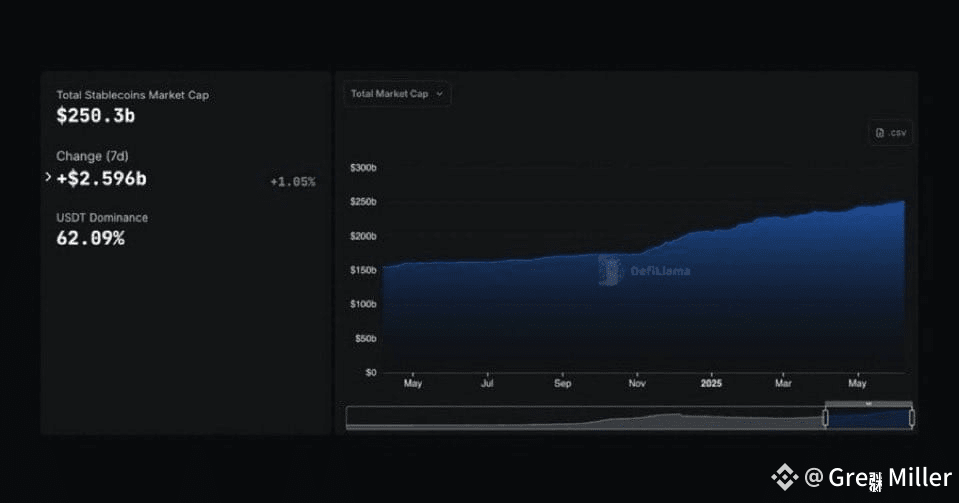
792
404
69
792
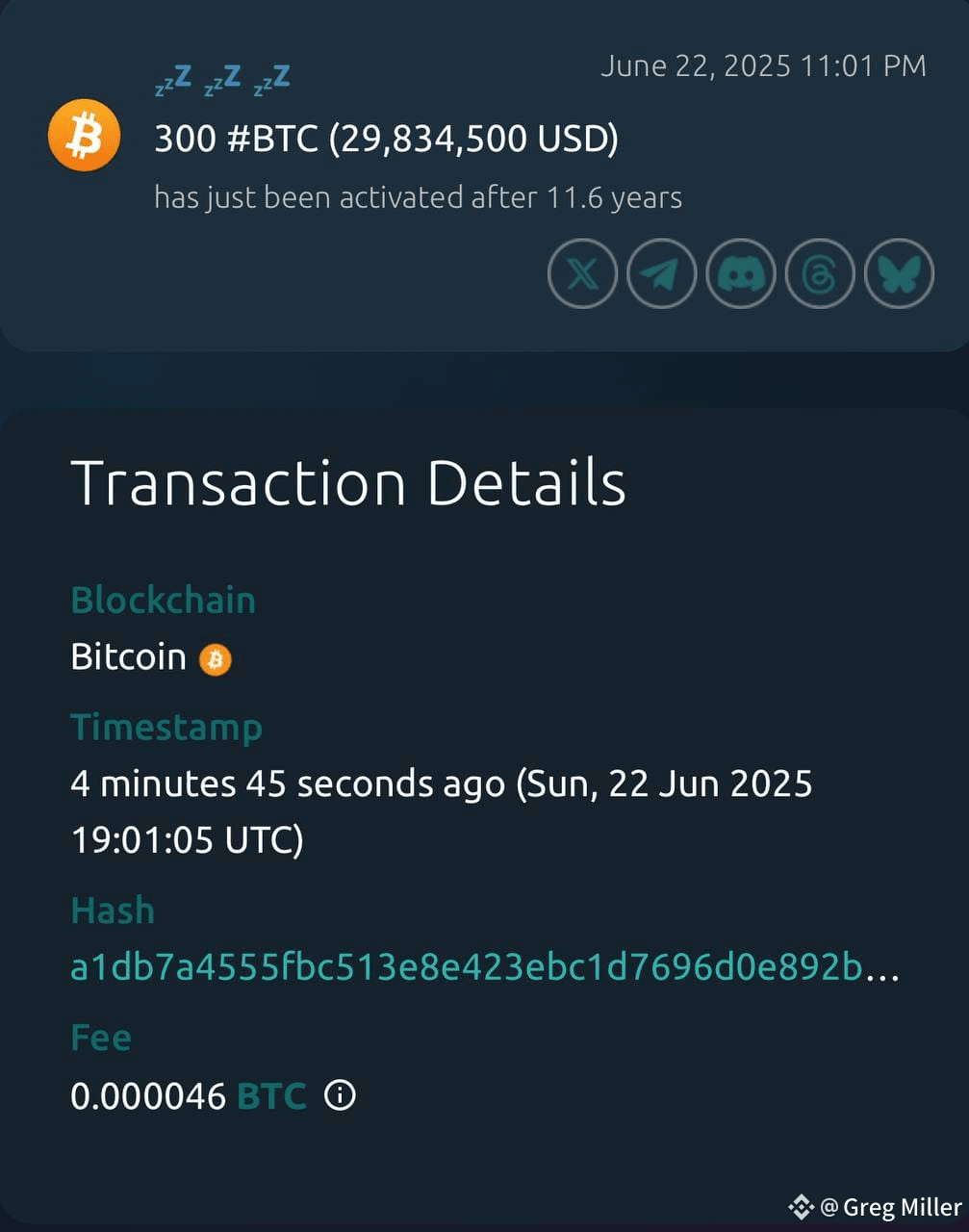
·
--
Hey crypto family, Getting tired of slow speeds and crazy high fees on Ethereum?
Meet Linea, a zk rollup that's making things fast and affordable again.
Why is everyone excited?
🔹It uses zkEVM for awesome security and super-fast, trustless transaction settling.
🔹For developers, it's a dream! All your favorite Ethereum tools work instantly, so no need to start from scratch.
🔹For us users, it means smooth, low-cost transfers and a familiar wallet experience, all while keeping that strong Ethereum security we love.
Linea is seriously leveling up the Ethereum scaling game! Check it out.
$LINEA #Linea #GregLens @LineaEth
{spot}(LINEAUSDT)
Hey crypto family, Getting tired of slow speeds and crazy high fees on Ethereum?
Meet Linea, a zk rollup that's making things fast and affordable again.
Why is everyone excited?
🔹It uses zkEVM for awesome security and super-fast, trustless transaction settling.
🔹For developers, it's a dream! All your favorite Ethereum tools work instantly, so no need to start from scratch.
🔹For us users, it means smooth, low-cost transfers and a familiar wallet experience, all while keeping that strong Ethereum security we love.
Linea is seriously leveling up the Ethereum scaling game! Check it out.
$LINEA #Linea #GregLens @Linea.eth
Meet Linea, a zk rollup that's making things fast and affordable again.
Why is everyone excited?
🔹It uses zkEVM for awesome security and super-fast, trustless transaction settling.
🔹For developers, it's a dream! All your favorite Ethereum tools work instantly, so no need to start from scratch.
🔹For us users, it means smooth, low-cost transfers and a familiar wallet experience, all while keeping that strong Ethereum security we love.
Linea is seriously leveling up the Ethereum scaling game! Check it out.
$LINEA #Linea #GregLens @Linea.eth
15
13
16
400
Log in to explore more content
Join global crypto users on Binance Square
⚡️ Get latest and useful information about crypto.
💬 Trusted by the world’s largest crypto exchange.
👍 Discover real insights from verified creators.
Email / Phone number
Trending Topics
1
#AIStocksWhatNext
898,610 views
6,692 Discussing
2
#BitcoinRejectedAt$87,300Twice
0 views
0 Discussing
3
#BCHJumps28%OnCMEFuturesListing
12,688 views
555 Discussing
4
#WallStreetEarningsRevisionsTurnBearish
9,675 views
405 Discussing
5
#DollarIndexReclaims101
7,825 views
350 Discussing
6
#21SharesLaunchesEuropesFirstZcashETP
43,281 views
1,136 Discussing
7
#CardanoJoinsX402PaymentStandard
27,312 views
801 Discussing
8
#BitcoinTops$87KAtEightMonthHigh
12,846 views
134 Discussing
9
#ZECBreaksAbove$1600AtRecordHigh
9,041 views
108 Discussing
10
#BitwiseNEARStakingETPAssetsTop$100M
43,381 views
108 Discussing