
#pancakeswap's
pancakeswap's
67,610 views
53 Discussing
Hot
Latest

·
--
Article
Is Binance Still the King of Crypto? Exploring BNB, BNB Chain and Top Listed TokensIntroduction: The Crypto Market Is Bigger Than Trading
{spot}(BNBUSDT)
The cryptocurrency industry is evolving beyond $BTC speculation and short-term trading. Today, exchanges are becoming complete digital asset ecosystems, combining trading, payments, decentralized finance (DeFi), staking, blockchain infrastructure, and Web3 applications.
One company that has played a major role in this transformation is #Binance.
Since launching in 2017, #Binance has grown from a cryptocurrency exchange into a global blockchain and digital finance ecosystem. Its influence extends across centralized trading, blockchain development, decentralized applications, token launches, and digital payments.
But an important question remains: Is Binance's ecosystem still positioned for long-term growth, and which tokens deserve investors' attention?
Let's explore Binance's business model, $BNB tokenomics, notable ecosystem assets, opportunities, and potential risks.
1. Binance: From Cryptocurrency Exchange to Global Ecosystem
Founded in July 2017 by Changpeng Zhao (CZ) and Yi He, Binance quickly established itself as one of the world's largest cryptocurrency exchanges.
Its growth was driven by competitive trading fees, a broad selection of digital assets, international accessibility, and continuous product development.
Over time, Binance expanded into several interconnected business segments.
According to Binance's July 2026 anniversary announcement, the platform had surpassed 323 million registered users worldwide and reported approximately $156.4 trillion in cumulative trading volume across its products. These are company-reported figures, not independently verified measures of active users or current trading activity.
Major Binance Products
1.1. Spot Trading: Binance Spot allows users to purchase and sell cryptocurrencies such as Bitcoin, Ethereum, BNB, and numerous other listed assets.
It supports different trading pairs and order types, making it suitable for beginners and experienced traders.
1.2. Futures Trading: Binance Futures provides derivatives trading, including perpetual contracts.
Traders can gain exposure to price movements without directly owning the underlying cryptocurrency. However, leverage introduces significant liquidation risk.
1.3. Binance Earn: Binance Earn offers products through which eligible users can earn rewards on supported digital assets.
Depending on the product, these may include flexible or locked arrangements, staking-related products, and other yield opportunities.
Returns are not guaranteed, and some products carry liquidity, market, and counterparty risks.
1.4. Binance Launchpool: Launchpool gives eligible users opportunities to receive new project tokens by locking designated assets, including BNB and certain stablecoins.
It connects Binance's existing user base with emerging cryptocurrency projects.
1.5. BNB Chain: BNB Chain is an important part of Binance's broader blockchain ecosystem.
Its infrastructure supports smart contracts, decentralized exchanges, DeFi applications, gaming projects, token issuance, and other Web3 services.
Importantly, BNB Chain and the centralized Binance exchange are separate systems.
1.6. Binance Pay: Binance Pay provides supported users with cryptocurrency payment and transfer functionality.
Its broader objective is to make digital assets useful beyond investment and trading.
Together, these products create an interconnected ecosystem that extends Binance's influence beyond conventional exchange services.
2. BNB: The Most Important Token in the Binance Ecosystem
$BNB , originally known as Binance Coin, is the native cryptocurrency of the BNB ecosystem.
Initially launched in 2017, BNB has evolved considerably from its original exchange-focused utility.
Major BNB Use Cases
BNB serves several purposes:
- Trading fee benefits: Eligible Binance users can receive trading fee discounts through BNB.- Transaction fees: BNB pays gas fees on BNB Smart Chain.- DeFi participation: Users can utilize BNB in supported decentralized applications and liquidity markets.- Launchpool participation: BNB can be used in eligible token distribution campaigns.- Staking and delegation: BNB holders can participate in supported staking and network validation arrangements.- Payments: BNB can be used in supported payment services and merchant integrations.
This broad utility gives BNB exposure to multiple areas of cryptocurrency activity.
BNB Tokenomics: Understanding the Burn Mechanism
One of BNB's most interesting characteristics is its supply-reduction mechanism.
BNB originally had a maximum supply of 200 million tokens. Its tokenomics include mechanisms designed to reduce total supply toward a target of 100 million BNB.
Two important mechanisms are:
Quarterly Auto-Burn: The Auto-Burn mechanism permanently removes a calculated quantity of BNB from circulation each quarter.Its formula considers BNB's market price and the number of blocks produced by BNB Smart Chain.Real-Time Gas Fee Burning: BNB Smart Chain also implements a mechanism that burns a portion of transaction fees through BEP-95.These mechanisms reduce the available supply over time.
In the 37th quarterly burn, announced on October 19, 2026, approximately 1.646 million BNB was burned, leaving a reported total supply of approximately 131.51 million BNB.
The figures are historical snapshots and will change as additional burns occur.
However, investors should understand one important distinction: Token burning does not automatically guarantee price appreciation. Demand, network activity, market sentiment, and broader economic conditions remain important.
3. Notable Tokens in the Binance Ecosystem and Listed Markets
BNB is not the only cryptocurrency worth examining.
Binance supports trading in numerous digital assets, while BNB Chain hosts a separate ecosystem of decentralized applications and tokens.
Here are some notable examples.
A. BNB – Binance Ecosystem Asset: BNB remains the central asset of the BNB ecosystem.
Its value proposition is connected to exchange utility, blockchain transaction demand, DeFi participation, and tokenomics.
Opportunity: Continued adoption of BNB Chain and demand for network services could support its long-term utility.
Risk: Its market performance remains exposed to centralized exchange sentiment, regulatory developments, and cryptocurrency market volatility.
B. CAKE – PancakeSwap: CAKE is the token associated with PancakeSwap, one of the major decentralized exchange protocols operating on BNB Smart Chain.
Its ecosystem includes:
- Decentralized token swapping.- Liquidity provision.- Yield farming.- Perpetual trading.- Governance-related participation.
#PancakeSwap's CAKE Tokenomics 3.0 introduces buyback-and-burn mechanisms and a maximum supply target of 400 million CAKE.
Opportunity: Growth in decentralized trading and DeFi activity could increase demand for PancakeSwap services.
Risk: Competition from other decentralized exchanges, smart contract vulnerabilities, and changes in token emissions can affect its long-term performance.
C. TWT – Trust Wallet Token
Trust Wallet Token is associated with the Trust Wallet ecosystem.
TWT provides governance-related functionality and certain utility benefits within supported Trust Wallet services.
It is particularly relevant to the broader self-custody and Web3 wallet market.
Opportunity: Increasing adoption of self-custody wallets and decentralized applications could strengthen the relevance of wallet-related services.
Risk: Competition between cryptocurrency wallets, changes in product utility, and token demand may affect TWT's market position.
D. ETH – Ethereum
Ethereum is one of the most important digital assets available across major centralized exchanges, including Binance.
Its blockchain supports smart contracts, decentralized finance, stablecoins, tokenization, and thousands of applications.
ETH is used for transaction fees, staking, and participation in the Ethereum ecosystem.
Opportunity: Growth in tokenization, institutional adoption, and decentralized applications could strengthen Ethereum's position.
Risk: Competition from alternative blockchains, network scaling challenges, and market volatility remain important considerations.
E. SOL – Solana
Solana has established itself as a major smart-contract blockchain.
Its ecosystem includes decentralized exchanges, NFT applications, payment-related projects, and blockchain-based consumer applications.
SOL is used for transaction fees, staking, and network participation.
Opportunity: Increasing demand for fast, relatively low-cost blockchain applications could support Solana's ecosystem.
Risk: Network reliability, competition, token supply dynamics, and speculative activity deserve attention.
F. XRP – XRP Ledger
XRP is a digital asset associated with the XRP Ledger.
Its ecosystem focuses on payments, transfers, and other financial applications.
XRP is also listed on major cryptocurrency trading platforms, including Binance.
Opportunity: Growth in blockchain-based financial infrastructure and payment applications could create additional demand.
Risk: Regulatory uncertainty, competition in payment infrastructure, and dependence on ecosystem adoption remain relevant.
Note: Being listed on Binance does not mean Binance owns, controls, or endorses these projects. Their underlying technologies, governance structures, and token economics are different.
4. What Makes Binance Competitive?
Several factors help Binance maintain its position in the cryptocurrency industry.
Large Global User Base: Its extensive international reach creates a significant trading and distribution network.
Broad Product Selection: Spot, futures, Earn, Launchpool, and payment services offer multiple ways to interact with digital assets.
BNB Chain Infrastructure: Its blockchain ecosystem supports developers, DeFi protocols, and decentralized applications.
Token Launch Opportunities: Launchpool and related initiatives connect emerging projects with an established user community.
Educational Resources: Binance Academy and Binance Research provide learning materials and market analysis.
Another important development came in late 2025, when Binance announced that its exchange had secured full authorization under Abu Dhabi Global Market's regulatory framework.
This represented a significant milestone in its efforts to expand its regulated operations.
5. Risks and Challenges Investors Should Understand
Despite its scale, Binance faces several important challenges.
Regulatory Scrutiny
Cryptocurrency exchanges operate in a complex regulatory environment.
Binance previously reached a $4.3 billion US settlement in 2023 involving violations of anti-money-laundering and related financial requirements.
More recently, Reuters reported in September 2026 that US authorities were investigating possible sanctions-related transactions involving the platform.
Binance stated that it maintains a zero-tolerance policy toward sanctions violations and cooperates with law enforcement.
These developments demonstrate why regulatory compliance remains an important factor when evaluating centralized exchanges.
Centralization Concerns
Binance operates a centralized exchange, meaning users depend on the company for custody and access to exchange services when keeping assets on the platform.
This creates counterparty, operational, and withdrawal risks.
BNB Chain also uses a validator-based consensus model, which raises ongoing discussions about validator concentration and decentralization.
Competition
Binance faces competition from several directions:
- Coinbase and Kraken in centralized exchange services.- Decentralized exchanges such as Uniswap and PancakeSwap.- Blockchain ecosystems such as Ethereum and Solana.- Emerging payment and financial technology platforms.
Maintaining market leadership requires continuous innovation.
Cryptocurrency Market Volatility
Even strong projects can experience substantial price declines.
BNB, CAKE, TWT, ETH, SOL, and XRP are all exposed to market volatility, although their underlying risks differ.
Investors should avoid assuming that ecosystem popularity automatically translates into token appreciation.
6. Future Opportunities: Where Could Binance Grow?
Several developments could influence Binance's long-term position.
1. Real-World Asset Tokenization: The tokenization of financial instruments and real-world assets could expand the use of blockchain infrastructure.
2. Stablecoin Adoption: Stablecoins could play an increasingly important role in payments, trading, and cross-border transfers.
3. DeFi Expansion: More decentralized applications, lending protocols, and blockchain-based financial products could increase BNB Chain activity.
4. Institutional Cryptocurrency Adoption: Greater institutional participation could expand demand for regulated digital asset infrastructure and custody services.
5. Web3 and Consumer Applications: Gaming, decentralized identity, digital ownership, and blockchain-based applications could introduce cryptocurrency to new users.
However, these are potential growth areas, not guaranteed outcomes.
Key Takeaways
- Binance has evolved from a cryptocurrency exchange into a broad digital asset ecosystem.- BNB is central to the ecosystem, with exchange utility, blockchain fees, and supply-reduction mechanisms.- CAKE and TWT represent different opportunities within the wider BNB-related ecosystem.- ETH, SOL, and XRP are notable listed digital assets with independent ecosystems.- Regulatory compliance, decentralization, competition, and market volatility remain significant risks.- Token burns and exchange listings do not guarantee future price increases.
Final Thoughts: Is Binance Still Worth Watching?
Binance remains one of the most influential companies in the cryptocurrency industry.
Its combination of exchange infrastructure, BNB Chain, token distribution services, digital payments, and educational resources gives it a competitive position in the evolving Web3 market.
BNB stands out because of its multiple use cases and structured supply-reduction mechanisms. Meanwhile, CAKE, TWT, ETH, SOL, and XRP provide exposure to different blockchain and cryptocurrency sectors.
Nevertheless, investors should evaluate each project independently rather than treating the Binance ecosystem as a single investment opportunity.
The most important factors to watch are actual adoption, network activity, token utility, regulatory developments, and sustainable economic models.
The future of cryptocurrency will not be determined by exchange popularity alone. It will depend on which platforms and blockchain networks deliver lasting real-world value.
Let's Discuss!
1. Do you believe BNB has the potential to remain one of the strongest exchange-related cryptocurrencies over the next five years?
2. Which ecosystem interests you more: BNB Chain, Ethereum, or Solana?
3. Is Binance's biggest advantage its exchange business, its blockchain ecosystem, or its global user community?
Share your thoughts in the comments. If you found this analysis useful, share it with other crypto enthusiasts and join the discussion.
Disclaimer: This article is for educational and informational purposes only and does not constitute financial or investment advice. Cryptocurrency investments involve substantial risks, including the possibility of losing your entire investment. Always conduct independent research (DYOR), verify current market information, and assess your risk tolerance before making investment decisions.
Is Binance Still the King of Crypto? Exploring BNB, BNB Chain and Top Listed Tokens
Introduction: The Crypto Market Is Bigger Than Trading
The cryptocurrency industry is evolving beyond $BTC speculation and short-term trading. Today, exchanges are becoming complete digital asset ecosystems, combining trading, payments, decentralized finance (DeFi), staking, blockchain infrastructure, and Web3 applications.
One company that has played a major role in this transformation is #Binance.
Since launching in 2017, #Binance has grown from a cryptocurrency exchange into a global blockchain and digital finance ecosystem. Its influence extends across centralized trading, blockchain development, decentralized applications, token launches, and digital payments.
But an important question remains: Is Binance's ecosystem still positioned for long-term growth, and which tokens deserve investors' attention?
Let's explore Binance's business model, $BNB tokenomics, notable ecosystem assets, opportunities, and potential risks.
1. Binance: From Cryptocurrency Exchange to Global Ecosystem
Founded in July 2017 by Changpeng Zhao (CZ) and Yi He, Binance quickly established itself as one of the world's largest cryptocurrency exchanges.
Its growth was driven by competitive trading fees, a broad selection of digital assets, international accessibility, and continuous product development.
Over time, Binance expanded into several interconnected business segments.
According to Binance's July 2026 anniversary announcement, the platform had surpassed 323 million registered users worldwide and reported approximately $156.4 trillion in cumulative trading volume across its products. These are company-reported figures, not independently verified measures of active users or current trading activity.
Major Binance Products
1.1. Spot Trading: Binance Spot allows users to purchase and sell cryptocurrencies such as Bitcoin, Ethereum, BNB, and numerous other listed assets.
It supports different trading pairs and order types, making it suitable for beginners and experienced traders.
1.2. Futures Trading: Binance Futures provides derivatives trading, including perpetual contracts.
Traders can gain exposure to price movements without directly owning the underlying cryptocurrency. However, leverage introduces significant liquidation risk.
1.3. Binance Earn: Binance Earn offers products through which eligible users can earn rewards on supported digital assets.
Depending on the product, these may include flexible or locked arrangements, staking-related products, and other yield opportunities.
Returns are not guaranteed, and some products carry liquidity, market, and counterparty risks.
1.4. Binance Launchpool: Launchpool gives eligible users opportunities to receive new project tokens by locking designated assets, including BNB and certain stablecoins.
It connects Binance's existing user base with emerging cryptocurrency projects.
1.5. BNB Chain: BNB Chain is an important part of Binance's broader blockchain ecosystem.
Its infrastructure supports smart contracts, decentralized exchanges, DeFi applications, gaming projects, token issuance, and other Web3 services.
Importantly, BNB Chain and the centralized Binance exchange are separate systems.
1.6. Binance Pay: Binance Pay provides supported users with cryptocurrency payment and transfer functionality.
Its broader objective is to make digital assets useful beyond investment and trading.
Together, these products create an interconnected ecosystem that extends Binance's influence beyond conventional exchange services.
2. BNB: The Most Important Token in the Binance Ecosystem
$BNB , originally known as Binance Coin, is the native cryptocurrency of the BNB ecosystem.
Initially launched in 2017, BNB has evolved considerably from its original exchange-focused utility.
Major BNB Use Cases
BNB serves several purposes:
- Trading fee benefits: Eligible Binance users can receive trading fee discounts through BNB.- Transaction fees: BNB pays gas fees on BNB Smart Chain.- DeFi participation: Users can utilize BNB in supported decentralized applications and liquidity markets.- Launchpool participation: BNB can be used in eligible token distribution campaigns.- Staking and delegation: BNB holders can participate in supported staking and network validation arrangements.- Payments: BNB can be used in supported payment services and merchant integrations.
This broad utility gives BNB exposure to multiple areas of cryptocurrency activity.
BNB Tokenomics: Understanding the Burn Mechanism
One of BNB's most interesting characteristics is its supply-reduction mechanism.
BNB originally had a maximum supply of 200 million tokens. Its tokenomics include mechanisms designed to reduce total supply toward a target of 100 million BNB.
Two important mechanisms are:
Quarterly Auto-Burn: The Auto-Burn mechanism permanently removes a calculated quantity of BNB from circulation each quarter.Its formula considers BNB's market price and the number of blocks produced by BNB Smart Chain.Real-Time Gas Fee Burning: BNB Smart Chain also implements a mechanism that burns a portion of transaction fees through BEP-95.These mechanisms reduce the available supply over time.
In the 37th quarterly burn, announced on October 19, 2026, approximately 1.646 million BNB was burned, leaving a reported total supply of approximately 131.51 million BNB.
The figures are historical snapshots and will change as additional burns occur.
However, investors should understand one important distinction: Token burning does not automatically guarantee price appreciation. Demand, network activity, market sentiment, and broader economic conditions remain important.
3. Notable Tokens in the Binance Ecosystem and Listed Markets
BNB is not the only cryptocurrency worth examining.
Binance supports trading in numerous digital assets, while BNB Chain hosts a separate ecosystem of decentralized applications and tokens.
Here are some notable examples.
A. BNB – Binance Ecosystem Asset: BNB remains the central asset of the BNB ecosystem.
Its value proposition is connected to exchange utility, blockchain transaction demand, DeFi participation, and tokenomics.
Opportunity: Continued adoption of BNB Chain and demand for network services could support its long-term utility.
Risk: Its market performance remains exposed to centralized exchange sentiment, regulatory developments, and cryptocurrency market volatility.
B. CAKE – PancakeSwap: CAKE is the token associated with PancakeSwap, one of the major decentralized exchange protocols operating on BNB Smart Chain.
Its ecosystem includes:
- Decentralized token swapping.- Liquidity provision.- Yield farming.- Perpetual trading.- Governance-related participation.
#PancakeSwap's CAKE Tokenomics 3.0 introduces buyback-and-burn mechanisms and a maximum supply target of 400 million CAKE.
Opportunity: Growth in decentralized trading and DeFi activity could increase demand for PancakeSwap services.
Risk: Competition from other decentralized exchanges, smart contract vulnerabilities, and changes in token emissions can affect its long-term performance.
C. TWT – Trust Wallet Token
Trust Wallet Token is associated with the Trust Wallet ecosystem.
TWT provides governance-related functionality and certain utility benefits within supported Trust Wallet services.
It is particularly relevant to the broader self-custody and Web3 wallet market.
Opportunity: Increasing adoption of self-custody wallets and decentralized applications could strengthen the relevance of wallet-related services.
Risk: Competition between cryptocurrency wallets, changes in product utility, and token demand may affect TWT's market position.
D. ETH – Ethereum
Ethereum is one of the most important digital assets available across major centralized exchanges, including Binance.
Its blockchain supports smart contracts, decentralized finance, stablecoins, tokenization, and thousands of applications.
ETH is used for transaction fees, staking, and participation in the Ethereum ecosystem.
Opportunity: Growth in tokenization, institutional adoption, and decentralized applications could strengthen Ethereum's position.
Risk: Competition from alternative blockchains, network scaling challenges, and market volatility remain important considerations.
E. SOL – Solana
Solana has established itself as a major smart-contract blockchain.
Its ecosystem includes decentralized exchanges, NFT applications, payment-related projects, and blockchain-based consumer applications.
SOL is used for transaction fees, staking, and network participation.
Opportunity: Increasing demand for fast, relatively low-cost blockchain applications could support Solana's ecosystem.
Risk: Network reliability, competition, token supply dynamics, and speculative activity deserve attention.
F. XRP – XRP Ledger
XRP is a digital asset associated with the XRP Ledger.
Its ecosystem focuses on payments, transfers, and other financial applications.
XRP is also listed on major cryptocurrency trading platforms, including Binance.
Opportunity: Growth in blockchain-based financial infrastructure and payment applications could create additional demand.
Risk: Regulatory uncertainty, competition in payment infrastructure, and dependence on ecosystem adoption remain relevant.
Note: Being listed on Binance does not mean Binance owns, controls, or endorses these projects. Their underlying technologies, governance structures, and token economics are different.
4. What Makes Binance Competitive?
Several factors help Binance maintain its position in the cryptocurrency industry.
Large Global User Base: Its extensive international reach creates a significant trading and distribution network.
Broad Product Selection: Spot, futures, Earn, Launchpool, and payment services offer multiple ways to interact with digital assets.
BNB Chain Infrastructure: Its blockchain ecosystem supports developers, DeFi protocols, and decentralized applications.
Token Launch Opportunities: Launchpool and related initiatives connect emerging projects with an established user community.
Educational Resources: Binance Academy and Binance Research provide learning materials and market analysis.
Another important development came in late 2025, when Binance announced that its exchange had secured full authorization under Abu Dhabi Global Market's regulatory framework.
This represented a significant milestone in its efforts to expand its regulated operations.
5. Risks and Challenges Investors Should Understand
Despite its scale, Binance faces several important challenges.
Regulatory Scrutiny
Cryptocurrency exchanges operate in a complex regulatory environment.
Binance previously reached a $4.3 billion US settlement in 2023 involving violations of anti-money-laundering and related financial requirements.
More recently, Reuters reported in September 2026 that US authorities were investigating possible sanctions-related transactions involving the platform.
Binance stated that it maintains a zero-tolerance policy toward sanctions violations and cooperates with law enforcement.
These developments demonstrate why regulatory compliance remains an important factor when evaluating centralized exchanges.
Centralization Concerns
Binance operates a centralized exchange, meaning users depend on the company for custody and access to exchange services when keeping assets on the platform.
This creates counterparty, operational, and withdrawal risks.
BNB Chain also uses a validator-based consensus model, which raises ongoing discussions about validator concentration and decentralization.
Competition
Binance faces competition from several directions:
- Coinbase and Kraken in centralized exchange services.- Decentralized exchanges such as Uniswap and PancakeSwap.- Blockchain ecosystems such as Ethereum and Solana.- Emerging payment and financial technology platforms.
Maintaining market leadership requires continuous innovation.
Cryptocurrency Market Volatility
Even strong projects can experience substantial price declines.
BNB, CAKE, TWT, ETH, SOL, and XRP are all exposed to market volatility, although their underlying risks differ.
Investors should avoid assuming that ecosystem popularity automatically translates into token appreciation.
6. Future Opportunities: Where Could Binance Grow?
Several developments could influence Binance's long-term position.
1. Real-World Asset Tokenization: The tokenization of financial instruments and real-world assets could expand the use of blockchain infrastructure.
2. Stablecoin Adoption: Stablecoins could play an increasingly important role in payments, trading, and cross-border transfers.
3. DeFi Expansion: More decentralized applications, lending protocols, and blockchain-based financial products could increase BNB Chain activity.
4. Institutional Cryptocurrency Adoption: Greater institutional participation could expand demand for regulated digital asset infrastructure and custody services.
5. Web3 and Consumer Applications: Gaming, decentralized identity, digital ownership, and blockchain-based applications could introduce cryptocurrency to new users.
However, these are potential growth areas, not guaranteed outcomes.
Key Takeaways
- Binance has evolved from a cryptocurrency exchange into a broad digital asset ecosystem.- BNB is central to the ecosystem, with exchange utility, blockchain fees, and supply-reduction mechanisms.- CAKE and TWT represent different opportunities within the wider BNB-related ecosystem.- ETH, SOL, and XRP are notable listed digital assets with independent ecosystems.- Regulatory compliance, decentralization, competition, and market volatility remain significant risks.- Token burns and exchange listings do not guarantee future price increases.
Final Thoughts: Is Binance Still Worth Watching?
Binance remains one of the most influential companies in the cryptocurrency industry.
Its combination of exchange infrastructure, BNB Chain, token distribution services, digital payments, and educational resources gives it a competitive position in the evolving Web3 market.
BNB stands out because of its multiple use cases and structured supply-reduction mechanisms. Meanwhile, CAKE, TWT, ETH, SOL, and XRP provide exposure to different blockchain and cryptocurrency sectors.
Nevertheless, investors should evaluate each project independently rather than treating the Binance ecosystem as a single investment opportunity.
The most important factors to watch are actual adoption, network activity, token utility, regulatory developments, and sustainable economic models.
The future of cryptocurrency will not be determined by exchange popularity alone. It will depend on which platforms and blockchain networks deliver lasting real-world value.
Let's Discuss!
1. Do you believe BNB has the potential to remain one of the strongest exchange-related cryptocurrencies over the next five years?
2. Which ecosystem interests you more: BNB Chain, Ethereum, or Solana?
3. Is Binance's biggest advantage its exchange business, its blockchain ecosystem, or its global user community?
Share your thoughts in the comments. If you found this analysis useful, share it with other crypto enthusiasts and join the discussion.
Disclaimer: This article is for educational and informational purposes only and does not constitute financial or investment advice. Cryptocurrency investments involve substantial risks, including the possibility of losing your entire investment. Always conduct independent research (DYOR), verify current market information, and assess your risk tolerance before making investment decisions.
160

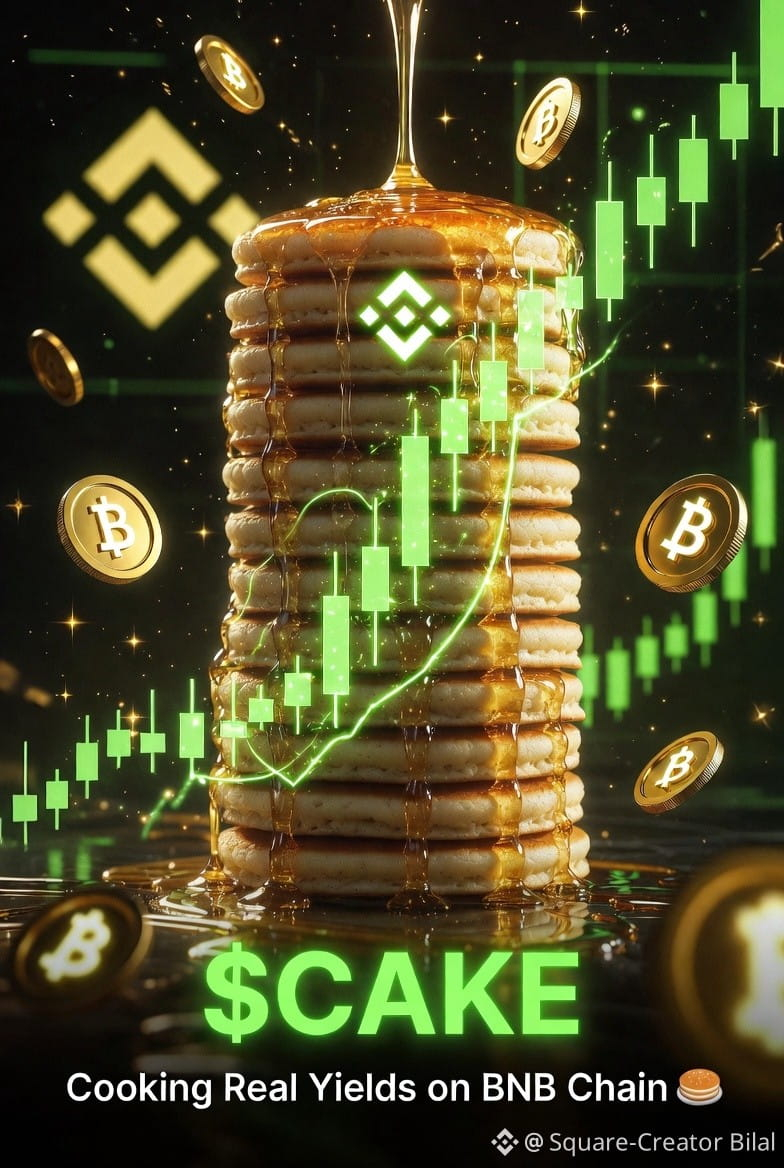
$CAKE
{spot}(CAKEUSDT)
"While BNB burns billions 🔥
$CAKE is busy cooking real yields on BNB Chain! 🍰💰
The #1 DEX on Binance Smart Chain — Swap, Farm, Stake & Earn with ultra-low fees.
Real utility + massive volume = Sweet opportunity.
Who’s stacking $CAKE while BNB ecosystem grows?
#CAKE #PancakeSwap's #BNBChain. #DeFi:
$CAKE
"While BNB burns billions 🔥
$CAKE is busy cooking real yields on BNB Chain! 🍰💰
The #1 DEX on Binance Smart Chain — Swap, Farm, Stake & Earn with ultra-low fees.
Real utility + massive volume = Sweet opportunity.
Who’s stacking $CAKE while BNB ecosystem grows?
#CAKE #PancakeSwap's #BNBChain. #DeFi:
"While BNB burns billions 🔥
$CAKE is busy cooking real yields on BNB Chain! 🍰💰
The #1 DEX on Binance Smart Chain — Swap, Farm, Stake & Earn with ultra-low fees.
Real utility + massive volume = Sweet opportunity.
Who’s stacking $CAKE while BNB ecosystem grows?
#CAKE #PancakeSwap's #BNBChain. #DeFi:
1
249

$TUT *The most important developments that happened:*
*1- The legendary pump and the collapse:*
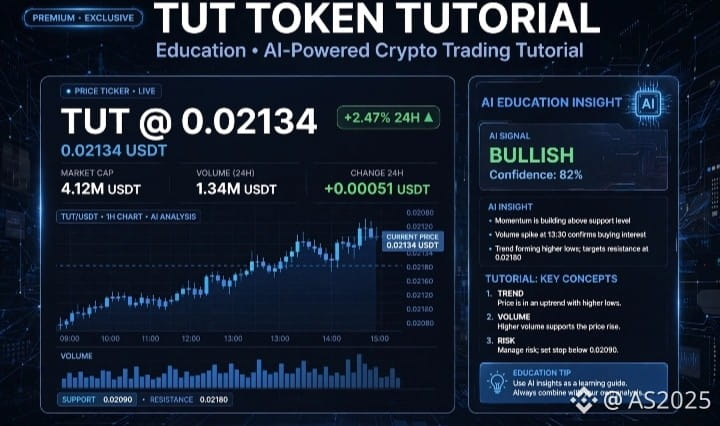
In August 2026, it flew from the bottom to *$0.2903 ATH* — up *+1101% in 30 days and +652% in 7 days*, then it dropped *-43.24% in one day* with liquidations of *more than $42M in 24 hours*. Now you’re at 0.02134 which means *-92% from the peak* — a full washout phase.
*2- Why it pumped:*
- Launch of perpetual Perps contracts on Aster DEX with leverage *5x* on August 6 — thin liquidity + leverage created a Positive feedback loop.
- PancakeSwap recognized it as an asset to provide liquidity for + added *2,260 new holders* within days
*3- Current situation:*
Market cap 4.12M and volume 1.34M — a very small token after the crash. Risks: a Binance wallet holding *~39% of the supply (~328M TUT)* + high volume/market-cap ratio means pure speculation. 6989
*Technical analysis - up or down?*
*Current picture:* slight rebound *+2.47%* with higher lows from 09:00 to 15:00 — it’s trying to build a bottom above *0.02090*
*Bullish scenario (my viewpoint):*
If it holds above 0.02090 and buying volume remains strong:
- *Entry:* 0.0210 - 0.02134
- *TP1:* 0.02180 (chart resistance)
- *TP2:* 0.025$ - 0.03$ (an old accumulation zone before the pump)
- *The catalyst:* return of the AI Agent narrative + new listing or a burn
$TUT
{future}(TUTUSDT)
$BANK
{future}(BANKUSDT)
#TUT #TUTUSDT #TutorialToken ken #BNBGems #AIcrypto #MemeCoin #CryptoArabic #DigitalCurrencies #Trading #Binance #PancakeSwap's Swap #LowCapGem #100xCalls oin #CryptoPumps #AltcoinSeason
`#TUT #Tutorial #AI #BNBSmartChain #CryptoGem #MemeSeason eason #PUMP`
$TUT *The most important developments that happened:*
*1- The legendary pump and the collapse:*
In August 2026, it flew from the bottom to *$0.2903 ATH* — up *+1101% in 30 days and +652% in 7 days*, then it dropped *-43.24% in one day* with liquidations of *more than $42M in 24 hours*. Now you’re at 0.02134 which means *-92% from the peak* — a full washout phase.
*2- Why it pumped:*
- Launch of perpetual Perps contracts on Aster DEX with leverage *5x* on August 6 — thin liquidity + leverage created a Positive feedback loop.
- PancakeSwap recognized it as an asset to provide liquidity for + added *2,260 new holders* within days
*3- Current situation:*
Market cap 4.12M and volume 1.34M — a very small token after the crash. Risks: a Binance wallet holding *~39% of the supply (~328M TUT)* + high volume/market-cap ratio means pure speculation. 6989
*Technical analysis - up or down?*
*Current picture:* slight rebound *+2.47%* with higher lows from 09:00 to 15:00 — it’s trying to build a bottom above *0.02090*
*Bullish scenario (my viewpoint):*
If it holds above 0.02090 and buying volume remains strong:
- *Entry:* 0.0210 - 0.02134
- *TP1:* 0.02180 (chart resistance)
- *TP2:* 0.025$ - 0.03$ (an old accumulation zone before the pump)
- *The catalyst:* return of the AI Agent narrative + new listing or a burn
$TUT
$BANK
#TUT #TUTUSDT #TutorialToken ken #BNBGems #AIcrypto #MemeCoin #CryptoArabic #DigitalCurrencies #Trading #Binance #PancakeSwap's Swap #LowCapGem #100xCalls oin #CryptoPumps #AltcoinSeason
`#TUT #Tutorial #AI #BNBSmartChain #CryptoGem #MemeSeason eason #PUMP`
1
276
Log in to explore more content
Join global crypto users on Binance Square
⚡️ Get latest and useful information about crypto.
💬 Trusted by the world’s largest crypto exchange.
👍 Discover real insights from verified creators.
Email / Phone number
Trending Topics
1
#A Packed Week of Earnings and Data Tests Markets
62,645 views
397 Discussing
2
#AnthropicIPOTestsInvestorAppetiteForAI
116,406 views
1,359 Discussing
3
#BitcoinExtendsLosingStreakToSixWeeks
90,421 views
723 Discussing
4
#XRPFallsTo$0.89LowestSinceNovember2024
14,400 views
74 Discussing
5
#HuangReportedlyConsidersReturnToNvidia
123,037 views
1,236 Discussing
6
#SP500AndNasdaqFuturesHitQuarterlyLows
25,971 views
238 Discussing
7
#CaliforniaVotersBackProp42BarringNewCryptoTaxes
18,170 views
224 Discussing
8
#HKPlansDigitalAssetRegulatoryBillByYearEnd
16,595 views
164 Discussing
9
#MUFGSMFGMizuhoPlanYenBackedStablecoin
32,347 views
294 Discussing
10
#HKMAAndSwiftExploreTokenizedDepositInteroperability
2,520 views
19 Discussing