


Privacy on blockchain is mistakenly viewed as a security barrier - that is, people employ it to conceal information. In conventional finance, privacy does not relate at all to secrecy in an adversarial sense: it is a natural market safety mechanism that prohibits unfair advantages, front-running or unintentional strategic information leakage.
The technology of Dusk is consistent with this market-structural point of view. On its settlement layer, it provides Moonlight and Phoenix modes by the dual transaction models. Moonlight works in a similar way to those of other chains where you have public account models that are observable. Being more shielded, Phoenix is a note-based model which relies on zero-knowledge proofs to ensure that both the amount of sender, receiver and value remain private, unless it is necessary to disclose this information.
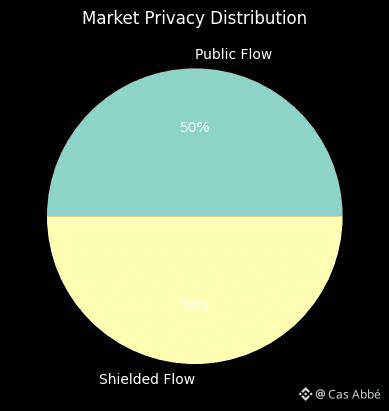
This arrangement is not concerned with the establishment of two parallel universes. It is concerned with providing real-life use-case semantics of transactions. Transparency is beneficial to some of the activities, including regulatory reporting, market announcements or very broad issuance metadata. Other operations such as institutional secondary trading or treasury operations must be confidential since the disclosure of the size of the order or counterparties is a competitive strategy or risk posture. The architecture of Dusk is compatible with both paradigms on a common settlement layer.
More importantly, privacy is not an invisibility cloak of Phoenix. The chain is based on cryptographic proofs which can verify the validity of transactions without any details being known, and the protocols can be made in such a manner that authorized parties (such as auditors or regulators) have viewing keys to obtain certain information when it is legally necessary. This is what embodies privacy with accountability and it is much closer to the way real markets work as opposed to the hide everything model that many privacy tokens are full of.
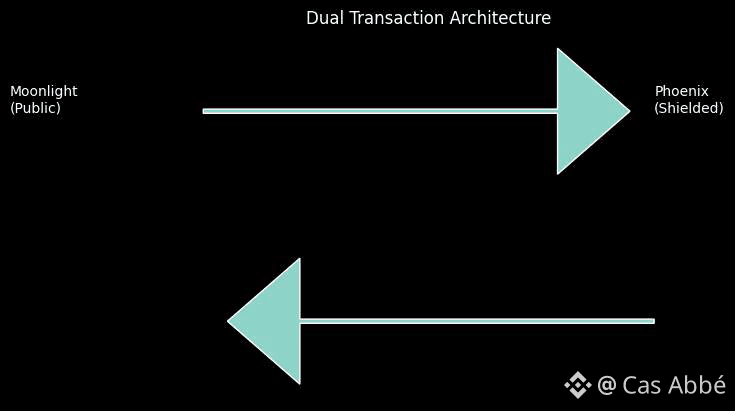
Generally, Dusk views privacy as a rule of a market rather than an ideology. Confidentiality with trust lowers the risk and carries out the competitive behavior without compromising the reporting requirements. This is a fundamental differentiation to institutional actors: privacy is a means of facilitating unbiased competition and regulatory adherence and not anonymity.
