


First it is important to understand what Vanar is!
VANAR is a Layer-1 blockchain that is attempting to address one of the largest issues in crypto today, namely the inability of regular applications to scale when fees are not predictable and the user experience itself is slow. Most blockchains perform well when the price is low, but when there is an upsurge in the activity or the value of the tokens, the fees are costly and confusing to users. The key point that Vanar brings is the following: in case people will indeed use blockchain like any other application, the cost should remain low and predictable.
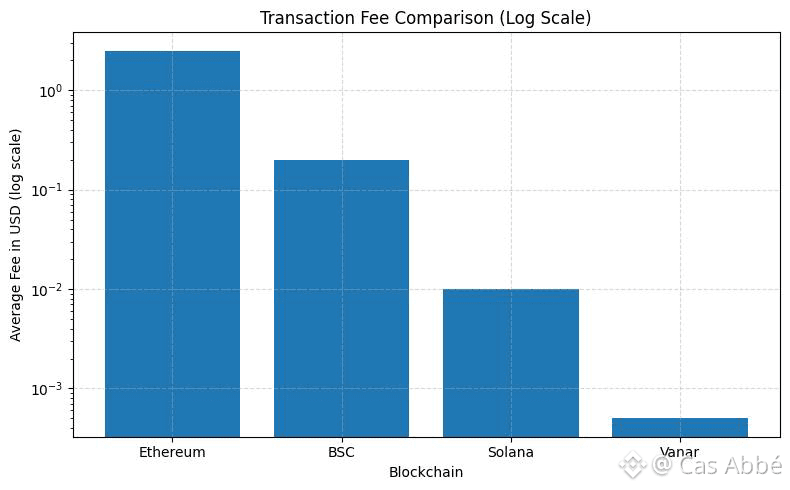
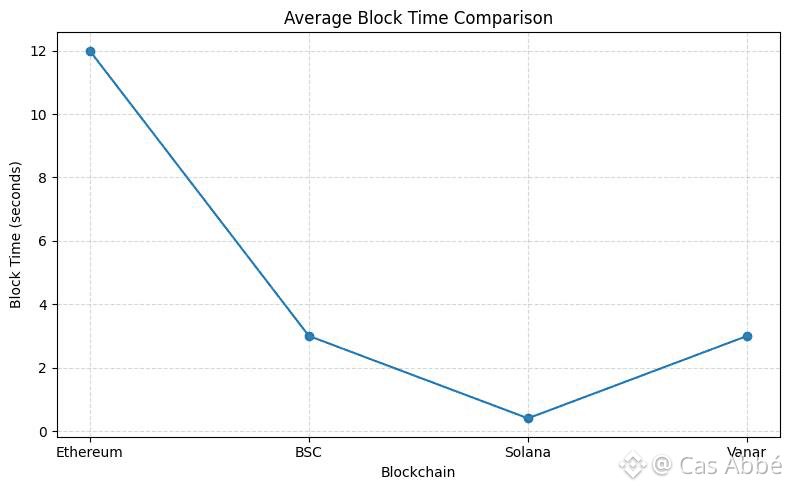
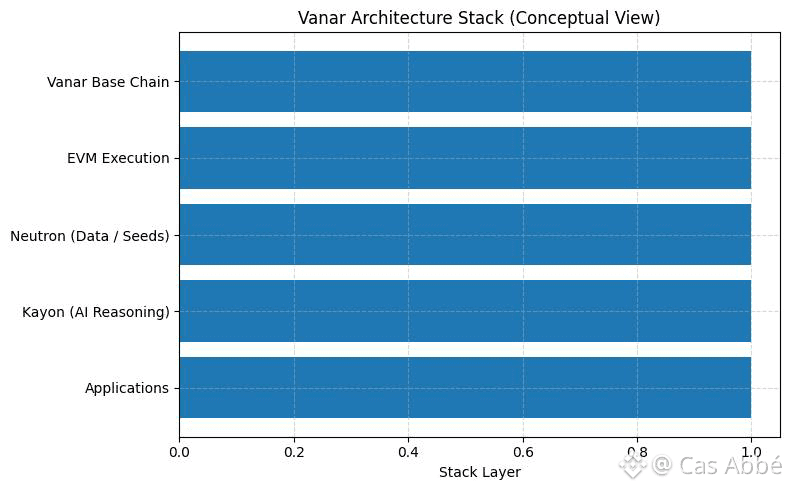
Vanar guarantees quick confirmations, the block time is approximately three seconds and transaction fees are very low which will target to remain at around $0.0005 on most operations. It is also EVM friendly, i.e. developers do not have to learn a new system; they can utilize Ethereum-like smart contracts, wallets and tools. Vanar also positions itself as an AI-native infrastructure stack, i.e. in addition to making payments and contracts, Venar can also support data and AI-like applications via additional layers known as Neutron and Kayon.
The project was initially launched by a different name. Vanar had been referred to as Virtua and token TVK. The team rebranded and released a new token, VANRY, later, in a 1:1 swap, one TVK was swapped out to one VANRY. It is a type of rebrand that is worth a closer look. Changing the name in itself is nothing without the technology, ecosystem, and actual usage being enhanced as the years go by.
In its simplest form Vanar is attempting to be a low-cost and standardized blockchain to use. The objective of the onboarding, according to its whitepaper, is to ensure that users and developers of the onboarding experience have an easy time because of certainty over the fees. Rather than increasing and decreasing charge according to the market, Vanar is attempting to maintain transaction charges constant in dollar terms, particularly effective in games, micro-transactions as well as consumer applications that require steady pricing.
Vanar does not treat fixed fees in the way that most chains do. In general, when the native token is paid as a fee, the actual cost of using the network is also increased when the price of the token increases. Vanar tries to maintain the fees constant by reconfiguring VANRY on a protocol level. It is a price that is determined by using information that is provided by various sources including centralized exchanges, decentralized exchanges, and market data providers. Big price movements are disregarded to minimize the risk of manipulation and the system updates the fee data periodically, approximately once every 100 blocks. In case of any malfunction in which the data cannot be updated, the network returns to the previous value. The interesting part about this design is that costs are predictable, but at the same time, the system is at the mercy of sound governance and predictable price feeds.
Tiered fees are also discussed in Vanar in order to minimize spam and abuse. Normal transactions remain very inexpensive, however very large or heavy transactions may be more expensive. The point is, to prevent bypass of the network by the attackers nearly free of charge, and at the same time, to make the usage of the network affordable to ordinary users.
In addition to speed and charges, Vanar attempts to differentiate itself using the so-called AI-native stack. The blockchain itself serves as the base layer, and above it, there are other layers that provide the blockchain with some intelligence. Among them is Neutron that is said to be a semantic memory system. Neutron extracts unstructured data (documents, email, or pictures) and converts it into structured units known as a Seed. These Seeds are typically off-chain stored for performance reasons, though they can be anchored on-chain in case proof, ownership, or auditability is required.
The other layer is the Kayon that is sold as an AI reasoning layer. Kayon is designed to enable users and applications to communicate with stored data in a natural language and automatic processes. Simply put, Vanar is not merely stating that it is fast and inexpensive but that it also is going to be the location where data can be arranged, requested, and utilized by applications and AI systems. This vision can only be actualized by actual adoption by the developers and users.
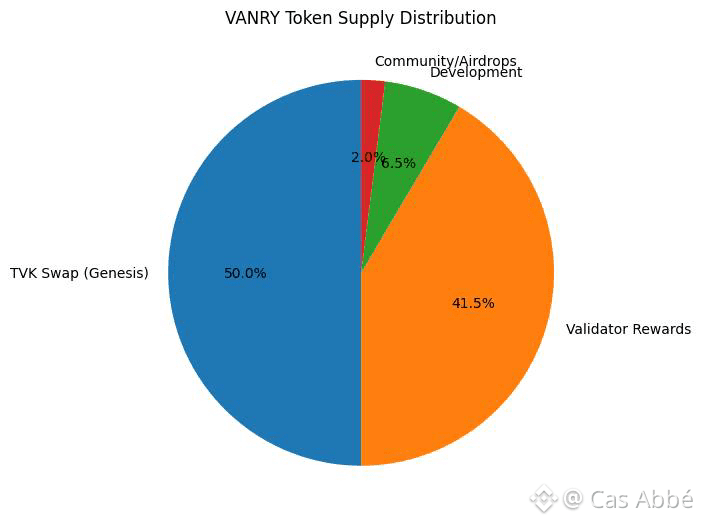
The VANRY token is in the center of the network. It can be used to pay transaction fees, to stake and secure the network with validation as well as to run smart contracts. As per the published information, the upper limit of the supply of VANRY is limited to about 2.4 billion tokens. The tokens that are added to the stock are issued as block rewards in the long run. The original allocation was generously proportioned to the TVK to VANRY swap, huge amounts to be allocated to the development, a fraction to the community incentives and airdrops. Like any blockchain, it is worth knowing how much is emitted and how much it grows since this may impact on long term value.
Vanar is easy to use as long as the user knows EVM chains. It has its own chain ID, public RPC endpoint and block explorer, with the help of which a user can use wallets, transfer operations and track the activity. The explorer demonstrates that the network has already transacted many transactions and wallets, which can be handy to view the activity, but the trends throughout the time are more significant than the absolute numbers.
Vanar defines its consensus mechanism on the security front as proof of Reputation. Validators are not only selected based on the credibility and trust factor but also not just on the basis of the stake or the computing power. The project also has the documentation of the running of validator nodes. The questions to consider when assessing this model include the number of active validators, who they are controlled by, open or permissioned participation, and upgrades and governance decisions. These queries are essential in evaluating decentralization and security of any Layer-1 chain.
Risks also should be taken into consideration. The rivalry between Layer-1 blockchains is intensely high, particularly in such fields as gaming and entertainment. Price feed-based fixed-fee systems require good operational habits, transparency and good governance to prevent issues. Lastly, the AI-centric products such as Neutron and Kayon look so promising, though it remains to be seen whether they will be developed upon and used by users as opposed to being kept as a story.
