

In today evening, a robotics teacher gave his class an unusual homework assignment. There was no coding involved and no machines to build. Instead, she asked every student to answer one question on a single sheet of paper:
How are humans supposed to monitor the activities of robots in case they are included in the work force?
Initially, the students believed that it was a simple question. Majority of them answered in regard to sensors, cameras or software logs. Those are available tools, anyway. However, something interesting occurred when the students were discussing their answers with the next day. The more they probed into the question the more complicated it appeared.
One of the students has mentioned that it is easy to monitor one robot. However, what will occur when thousands of robots are working in various companies, cities, and industries? Who certifies that jobs were done right? What is the communication between various systems? And what about the collaboration of machines of other manufacturers?
The discussion gradually shifted out of robotics per se. The students came to understand that the actual task of the project may not be assembling the machines, but getting them to work together. Similar to humans who require schedules, contracts, payment networks, and other systems to structure work, robots will also need job regulation, results confirmation, and the establishment of trust among actors.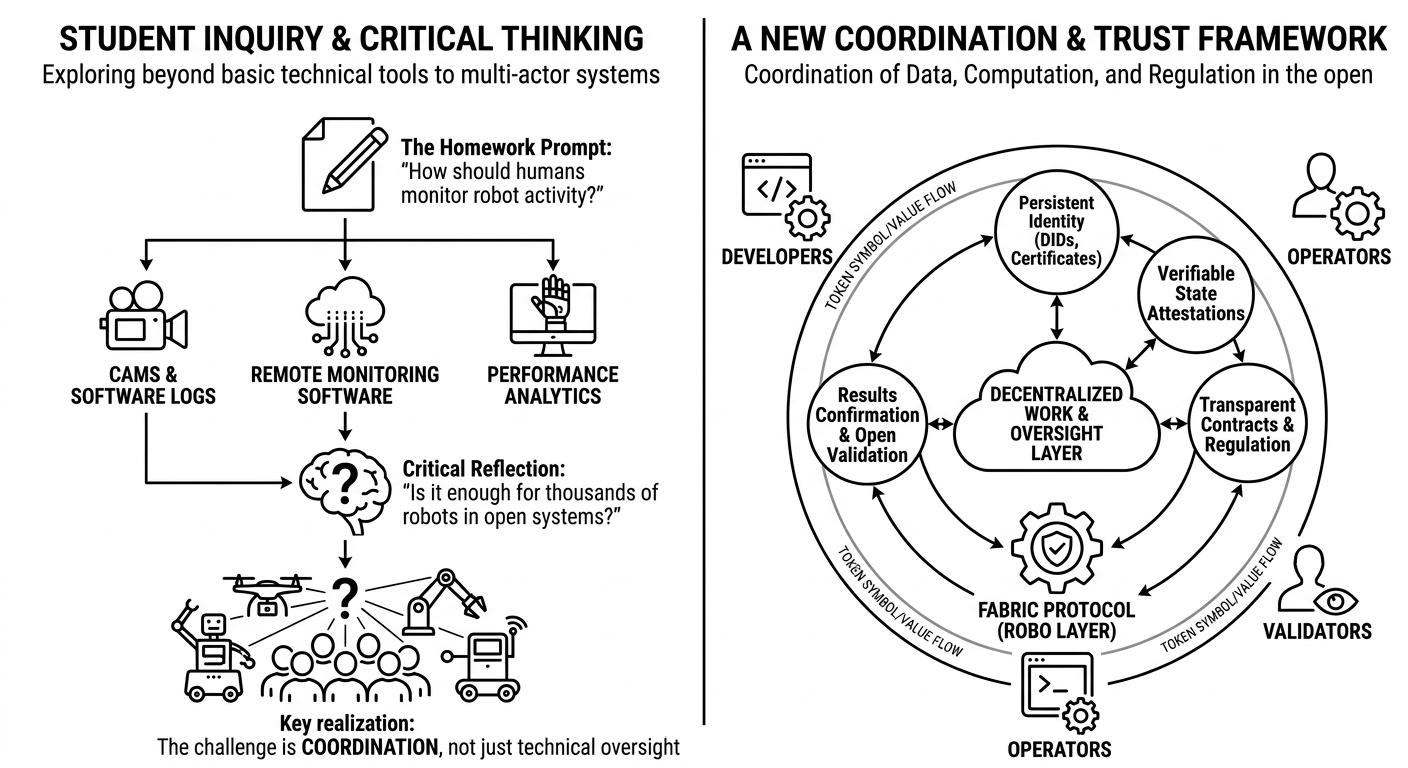
This concept is related to ideas examined by Fabric Foundation. The project does not concentrate solely on the design of robots, but how the machine might be used in the same coordination systems. The idea is to investigate how robots could be able to check, share and engage in open networks, as opposed to being contained within closed systems.
This view is an effective teaching point to students of robotics today. It indicates that technology is not a vacuum. All inventions made in the future will always need mechanisms that can make people cope with them in a responsible manner. The future of automation will probably not rely only on the accomplishments of the capabilities of robots, but on the efficiency with which the actions performed may be explained and justified.
On the layer that Fabric is experimenting with, there are mechanisms such as ROBO that assist in coordinating that layer in balancing incentives among various participants in the network. Contributions to viable systems with robotic activity that is observable and responsible can be made by developers, operators and validators.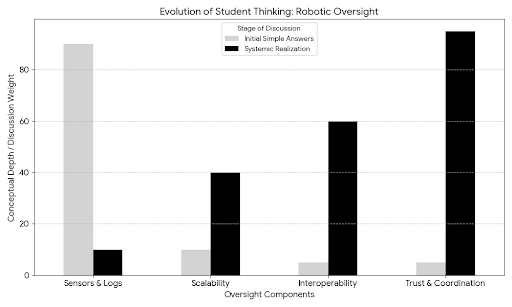
At the conclusion of the talk, the teacher reminded the students that technological advancement is usually made through posing more intelligent questions and not merely constructing quicker machines. The homework was initiated with a simple prompt, but it showed something significant about the future.
It is possible that in the surrounding world robots will do most tasks in the future. However, it is the systems that humans create to organize them which will decide how safely and fairly that future will occur.
@Fabric Foundation #ROBO $ROBO
