Why Reliable Data Is the New Gold
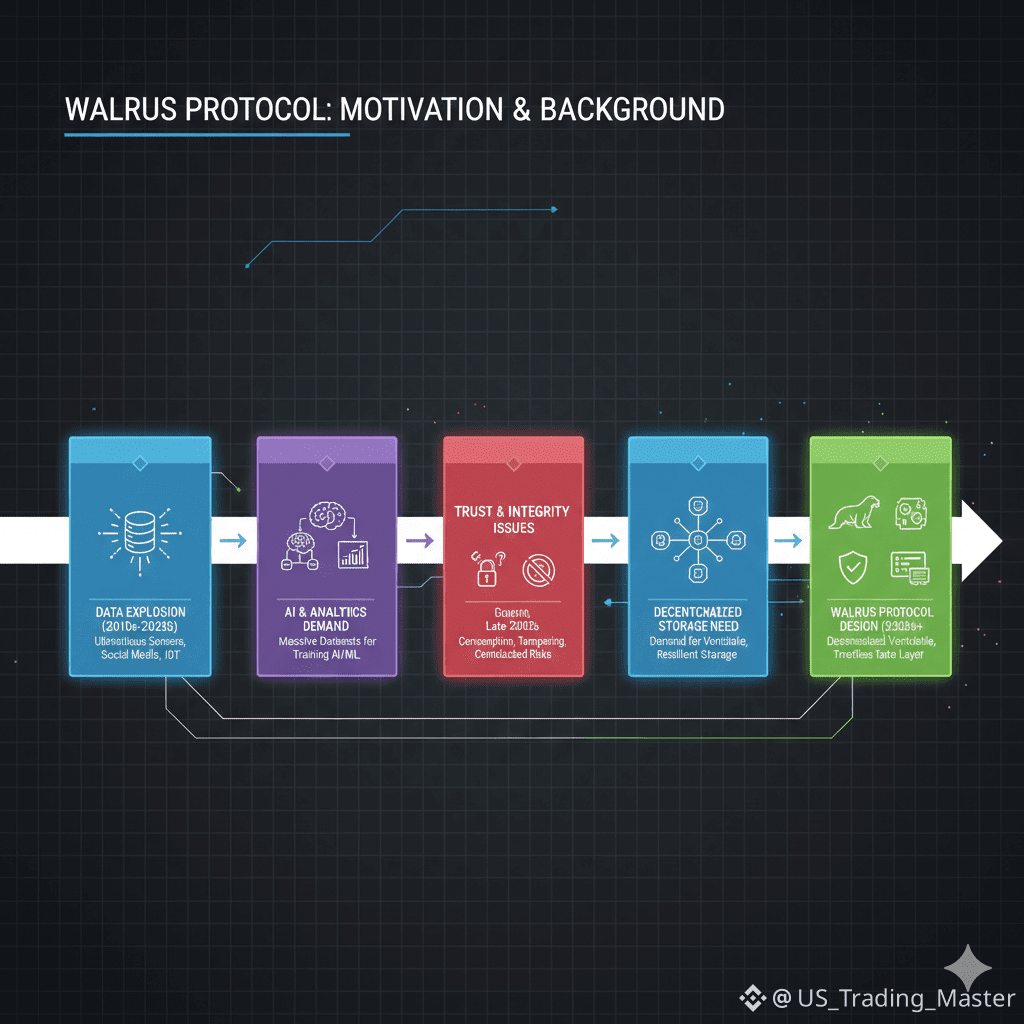
In today’s crypto and blockchain ecosystem, everyone talks about tokens, yield, and NFTs—but very few conversations focus on the quality and reliability of the data powering these systems. Yet, as AI models, DeFi contracts, and real-world asset platforms expand, data becomes the limiting factor for scalability and trust.
From an investor’s perspective, this is crucial. A protocol might promise high yields or innovative functionality, but if its underlying data is unreliable or inaccessible, the applications built on it are exposed to hidden risks. In this context, Walrus emerges as a protocol that addresses the foundational problem: how to make data verifiable, resilient, and economically valuable.
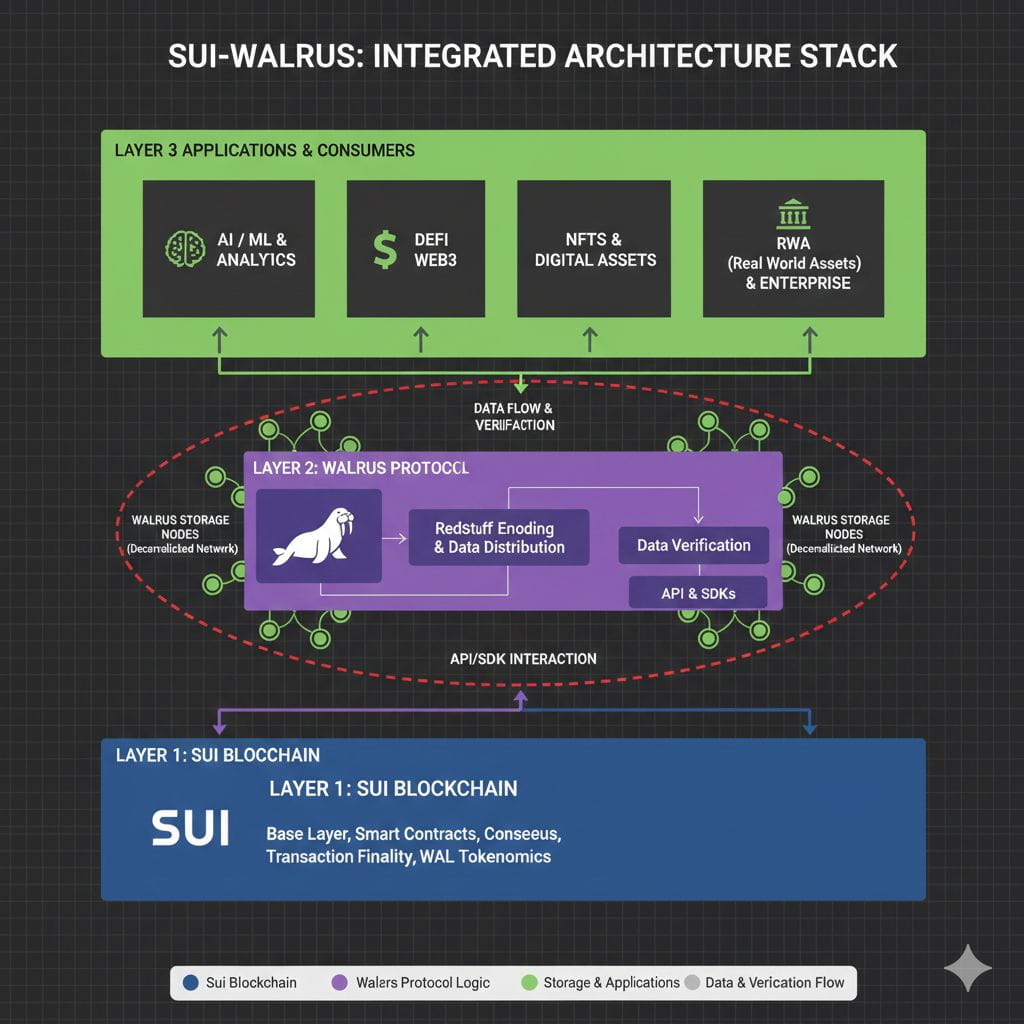
Walrus is built on Sui, a high-performance blockchain optimized for scalable and object-oriented applications. It is designed not only to store data but to transform it into a verifiable infrastructure layer, capable of supporting markets, AI models, and smart contracts securely and efficiently.
How Walrus Works: RedStuff Erasure Coding
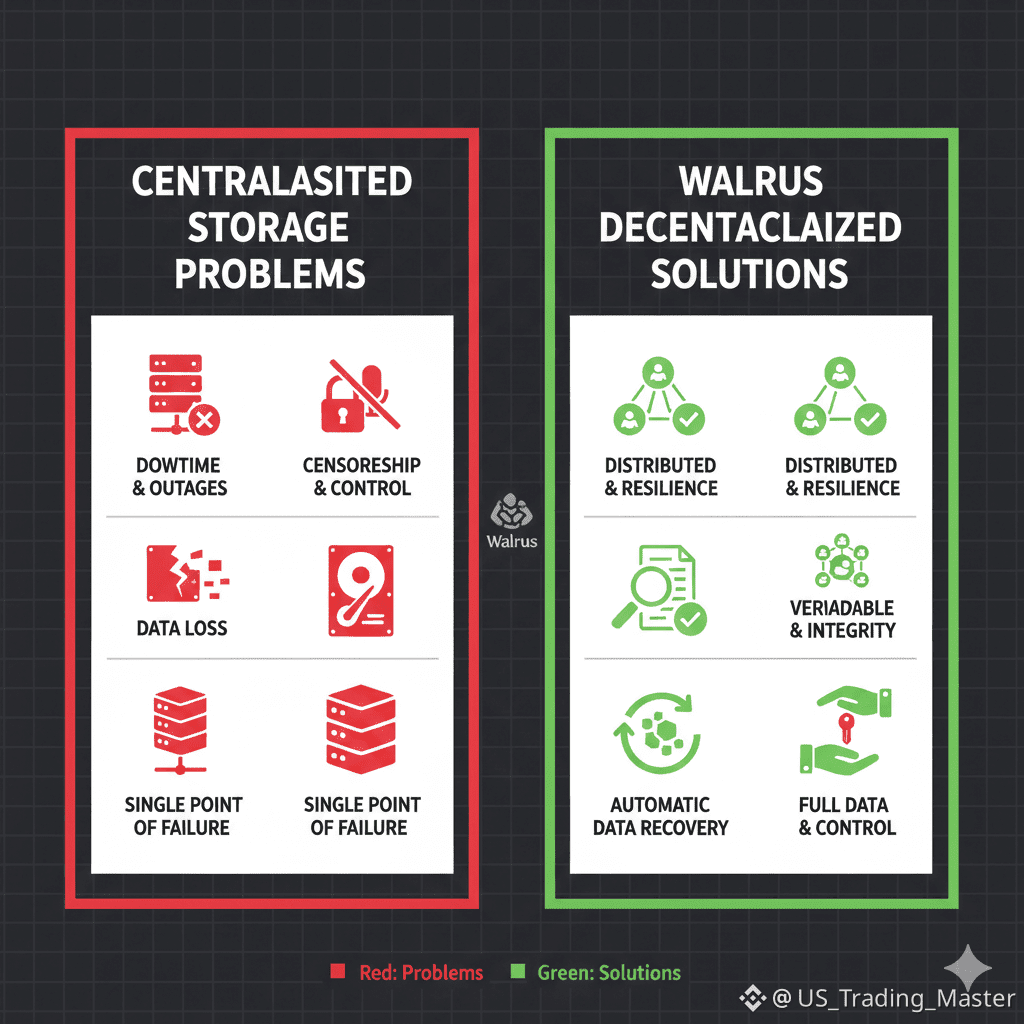
At the heart of Walrus is RedStuff erasure coding, a method that slices large datasets into fragments, encodes them with redundancy, and distributes them across a decentralized network of nodes. Unlike traditional storage networks that fully replicate every dataset, RedStuff requires only a subset of fragments to reconstruct the original data.
This approach has several advantages:
Efficiency: Storage costs are lower because replication is minimized.
Fault Tolerance: Even if nodes go offline, the data remains fully recoverable.
Scalability: Large datasets, including AI training files or NFT metadata, can be handled without exponential growth in storage costs.
From a market perspective, RedStuff transforms storage from a simple utility into a cost-efficient, market-ready asset. Data can now be stored, retrieved, and verified with measurable guarantees, creating a foundation for economic activity around data itself.
Proof of Availability: Trust Without Intermediaries
Storage is only half the equation. How do users and applications know that data is truly available? This is where Walrus’s Proof of Availability (PoA) comes in.
Nodes generate cryptographic proofs demonstrating that stored data is retrievable. These proofs are verified on the Sui blockchain, creating a transparent, auditable record of availability. Applications, AI models, or DeFi protocols consuming this data can trust it without relying on intermediaries or centralized servers.
For investors, PoA adds a layer of transparency and security previously unavailable in decentralized storage. It transforms data from an abstract resource into a verifiable asset, enabling new types of data markets, AI pipelines, and tokenized infrastructure.
Enabling Real-World Data Markets
Walrus’s architecture allows data to become economically actionable. By combining RedStuff and PoA, datasets gain measurable value:
AI: Training datasets can be verified and monetized.
DeFi: Oracles and on-chain data providers can prove their data integrity, enabling more sophisticated financial contracts.
NFTs & RWAs: Metadata can be persistent, auditable, and tied to verifiable on-chain proofs.
Enterprise Applications: Companies can store critical datasets with confidence and participate in secondary data markets.
This effectively transforms storage from a cost center into a market-driven asset, opening new investment and development opportunities.
Why Sui Matters
Walrus’s choice of Sui blockchain is strategic. Sui’s parallel execution, object-centric architecture, and low-latency design enable high-throughput verification without compromising decentralization. For developers, this means PoA checks are fast, predictable, and scalable. For investors, it reduces network-level risk and ensures the protocol can support real-world adoption at scale.
The Forward-Looking Perspective
Imagine a world where:
AI models train only on verifiable, accessible datasets.
DeFi protocols reference on-chain verified oracles.
NFTs and RWAs anchor auditable, immutable metadata.
Enterprises trade and monetize data with built-in proofs of availability.
Walrus is building the infrastructure for that world. $WAL is not just a token; it represents participation in a system that converts data into an economic asset. For traders, developers, and investors, it offers exposure to a future where data integrity is as critical as liquidity or yield.
Conclusion
Walrus is more than a storage network. It is a foundational layer for decentralized data markets, combining efficiency, verifiability, and economic utility in one platform. By leveraging RedStuff erasure coding and Proof of Availability, it turns data into a truly tradable, auditable, and composable infrastructure asset.
For anyone looking to participate in the next wave of crypto innovation, $WAL provides a strategic entry point into a data-driven, trust-minimized economy.