Most people seem to file pixels under “farming game with a token,” which isn’t totally wrong, but it misses the part that actually matters: the game is trying to keep a loop alive where play produces assets, assets produce value, and the token sits somewhere in the middle making that movement feel real. that sounds clean on paper. in practice, it’s a bit messy.
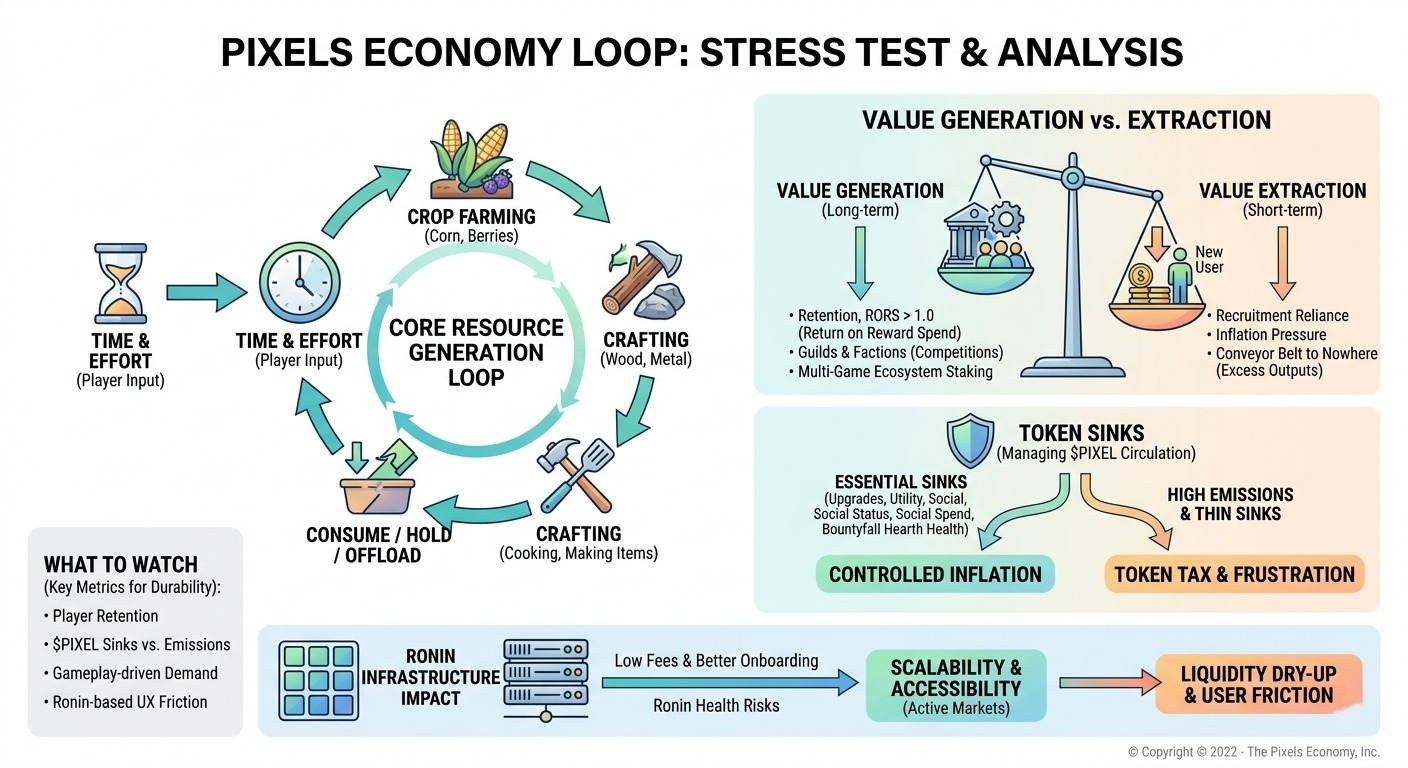
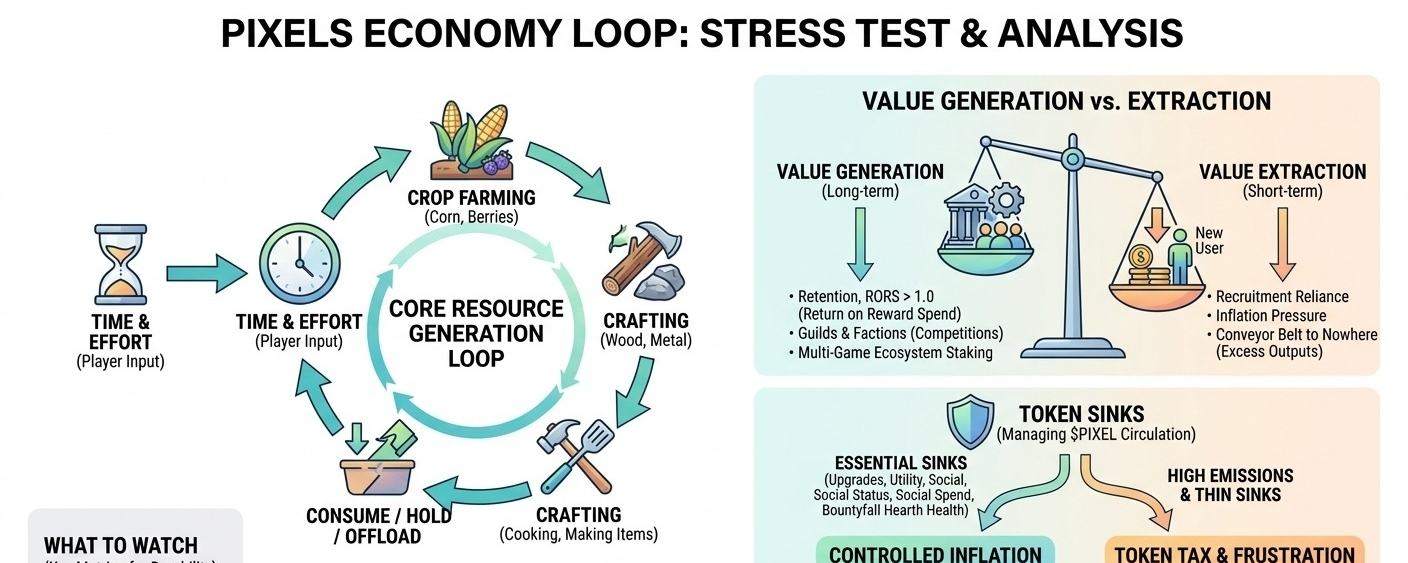
what stands out first is the resource generation loop. you farm, gather, craft, sell, repeat. that’s the basic engine. a player isn’t just clicking for fun — they’re turning time into crops, materials, and crafted items, and then deciding whether to consume, hold, or offload them. the interesting part is that the game can create multiple layers of scarcity at once. raw resources are cheap, processed items take effort, and some items probably only matter because they unlock progress, convenience, or status. a simple farming → crafting → selling loop can look self-contained, but it really depends on whether crafted goods are actually needed by other players, or whether they’re mostly there to absorb labor.
and here’s the part i’m thinking about: value generation only really works if the outputs have somewhere to go. if players are just producing endless crops and goods with no meaningful sinks, then the economy becomes a conveyor belt to nowhere. so pixels needs sinks that feel like part of the game, not just an economic patch. $pixels has to leave circulation through spending on upgrades, utility, access, convenience, maybe social or cosmetic stuff, and probably friction points that make players keep using it instead of cashing out immediately. if emissions are high and sinks are thin, inflation pressure shows up fast. if sinks are too strong, then the token starts to feel like a tax rather than a reward. that balance is hard, and i’m not sure it stays balanced once the easy growth phase passes.
the infrastructure layer matters more than it first seems too. ronin is not just a background detail here; it shapes the whole experience. lower fees and better onboarding make a game like pixels even possible at scale, because the loop depends on a lot of small actions — trading, claiming, moving assets, probably a fair amount of wallet interaction. if those actions were on a clunky chain, the economy would probably collapse into user frustration before it even got interesting. ronin helps make assets feel tradable without making every move expensive. but that also means the system is tightly linked to the health of the ronin ecosystem itself. if wallet friction rises, if liquidity dries up, or if the broader chain narrative weakens, pixels doesn’t just lose infrastructure — it loses part of its usability story.
what i keep coming back to is whether players are actually generating value or mostly extracting it. maybe both. early on, a lot of the value comes from new users entering, buying in, and absorbing token emissions. that can work for a while because growth masks weak fundamentals. but long-term, the loop has to survive on retention, not recruitment. players need a reason to stay even when the token chart is boring. otherwise the economy starts depending on a constant stream of newcomers to support exits, pricing, and demand.
so yeah, i’m not fully convinced one way or the other. pixels does have a pretty coherent resource system, and the ronin setup gives it a practical base that a lot of web3 games don’t have. but the real test is whether the game can keep its own economy circulating after the novelty fades.
watching:
- player retention after the first few weeks, especially around farming and crafting repetition
- whether $pixels sinks actually keep up with emissions
- how much trading volume is real gameplay-driven demand versus token churn
- whether ronin-based UX keeps lowering friction, or if wallet/economy complexity starts scaring people off
so the question is still open: is pixels building a durable in-game economy, or just a pretty efficient short-term loop that needs fresh players to keep breathing?