
CapitalWraith
137 Publicaciones

CapitalWraith
Denunciar
Bloquear usuario
Systematic Crypto Trader on Binance Futures & Spot. Quantifying macro trends via technical analysis. Risk management over hype. NFA. DYOR.
45 Siguiendo
11 Seguidores
12 Me gusta
Publicaciones
Ver traducción
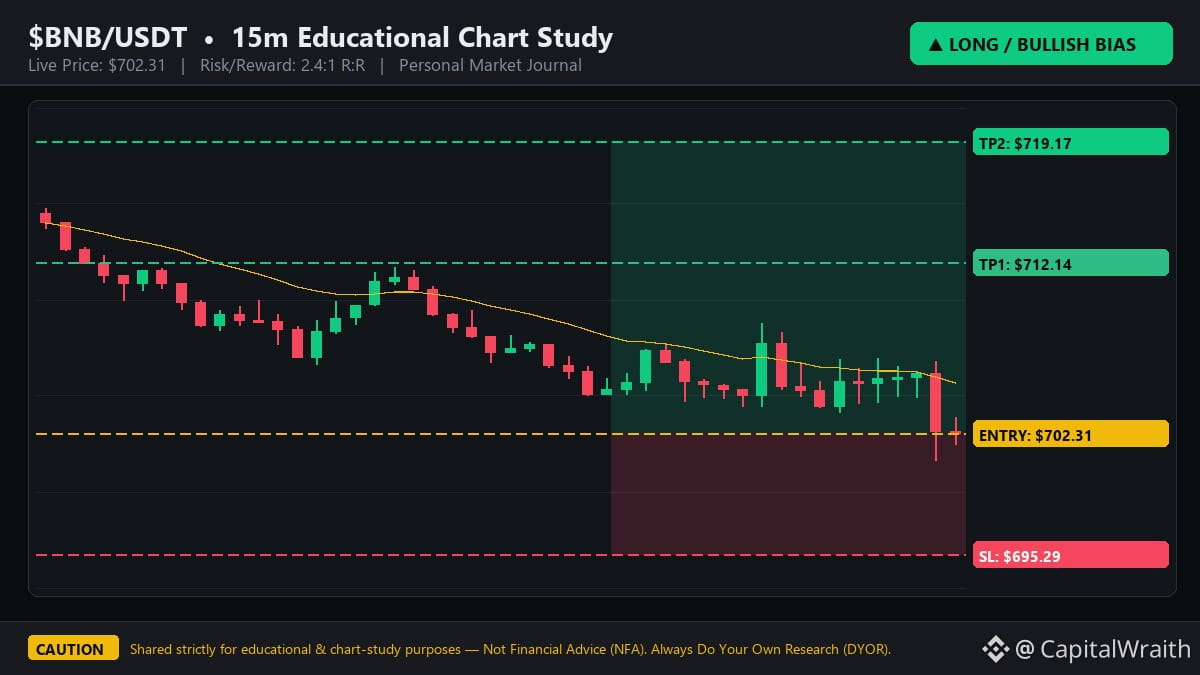
Let’s talk $BNB. The chart is at a critical inflection point, and I’m seeing a lot of conflicting signals on the lower timeframes.
Personally, I’m leaning toward a cautious bullish outlook, provided we don't lose the current local support level. If that floor gives way, the structure shifts entirely. I’m curious to see how the rest of the community is positioning for the next leg.
Where do you think we are headed next?
A) Bullish breakout above the resistance band
B) Endless sideways chop to torture both bulls and bears
C) Quick sweep of liquidity below the lows before bouncing
D) Deep breakdown toward major support
Drop your pick (A, B, C, or D) and let me know your invalidation price in the comments. I’m looking for confluence—if you’re bearish, what level needs to break to confirm your thesis? If you’re bullish, what’s the target for the breakout?
Let’s keep the discussion technical. I’m watching the order flow closely to see if the bulls have enough gas to reclaim the range high or if we’re just setting up for another liquidity grab.
⚠️ Caution: This is an educational community poll only. Not Financial Advice (NFA). Always Do Your Own Research (DYOR).
#BNB #DYOR #CryptoEducation #BinanceSquare
Artículo
Por qué el 90 % de los traders pierde su ventaja en un mercado lateral: una historia sincera sobre $ARB, el impacto de las noticias y una clase magistral sobre gestión del riesgo1. Una historia sincera sobre paciencia, café y operar en exceso
Todo trader tiene dos versiones de sí mismo. La versión A es el estratega zen que el domingo por la noche traza un plan claro y lógico. La versión B es el gremlin con exceso de cafeína que el martes por la tarde mira la pantalla, ve que $ARB sube un 0,8 % y ronda los $0.15977, y de pronto decide lanzarse a una posición larga con apalancamiento de 10x sin confirmación alguna. A todos nos ha pasado, y normalmente acaba en una lección que enseña el mercado.
Dato curioso: se estima que los 1,1 millones de $BTC de Satoshi Nakamoto no han movido ni un solo satoshi desde 2009. Esa es la máxima expresión de tener manos de diamante.
Por qué el 90 % de los traders pierde su ventaja en un mercado lateral: una historia sincera sobre $ARB, el impacto de las noticias y una clase magistral sobre gestión del riesgo
1. Una historia sincera sobre paciencia, café y operar en exceso
Todo trader tiene dos versiones de sí mismo. La versión A es el estratega zen que el domingo por la noche traza un plan claro y lógico. La versión B es el gremlin con exceso de cafeína que el martes por la tarde mira la pantalla, ve que $ARB sube un 0,8 % y ronda los $0.15977, y de pronto decide lanzarse a una posición larga con apalancamiento de 10x sin confirmación alguna. A todos nos ha pasado, y normalmente acaba en una lección que enseña el mercado.
Dato curioso: se estima que los 1,1 millones de $BTC de Satoshi Nakamoto no han movido ni un solo satoshi desde 2009. Esa es la máxima expresión de tener manos de diamante.
Ver traducción
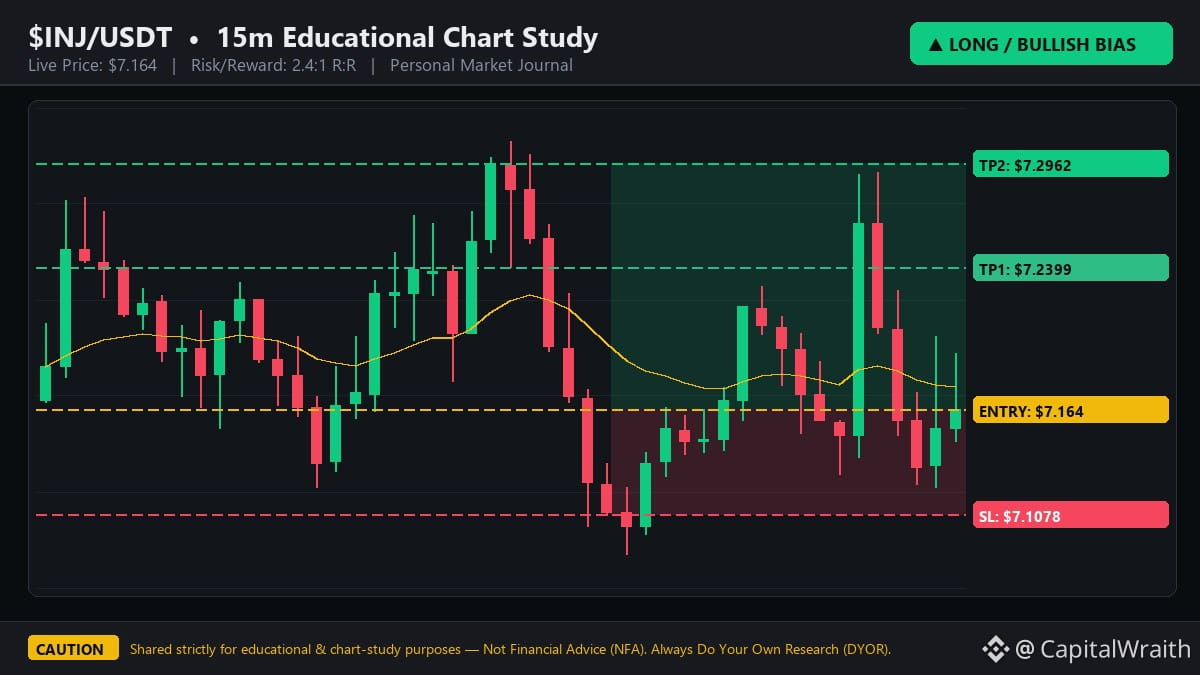
Educational $INJ LONG Chart Setup on my radar (2.4:1 R:R):
I am feeling bullish on $INJ here. Structure on the 15m/1h chart is lining up cleanly around $7.164, and order flow shows solid absorption near key support ($7.122).
My Personal Chart Study for $INJ:
• Bias: LONG (Bullish structure)
• Key Entry Zone Watched: $7.164
• Target Zone 1 (TP1): $7.2399 (lock partial & trail SL to breakeven)
• Target Zone 2 (TP2): $7.2962
• Technical Invalidation / Stop-Loss: $7.1078
I share 1–10 educational chart breakdowns like this every day (1 per coin). How are you charting $INJ here — leaning LONG or waiting on the sidelines? Drop your view below & follow for daily chart studies!
⚠️ Caution: Shared strictly for educational & chart-study purposes — Not Financial Advice (NFA). Crypto futures carry high volatility risk; always Do Your Own Research (DYOR) and manage your own risk.
#INJ #DYOR #CryptoEducation #BinanceSquare
Ver traducción
Live Trade Execution Update — Entering $APT LONG (5x Isolated):
I just opened a LONG position on $APT around $0.62991 after our AUTO Multi-Engine engine confirmed bullish order-flow absorption and 15m structure confluence.
My Active Trade Parameters on $APT:
• Status: ENTERING / ACTIVE LONG (5x)
• Entry Price: $0.62991
• Primary Target (TP): $0.64578
• Hard Invalidation Stop-Loss (SL): $0.62235
• Risk Management Plan: Move stop-loss to breakeven at +0.85R and scale out partials into strength.
Vote in the poll below — How are you playing $APT from $0.62991?
A) Riding LONG toward $0.64578
B) Taking opposite side / fading the move
C) Waiting for a deeper pullback near $0.62235
D) Watching from the sidelines
⚠️ Caution: This is my personal trading journal shared strictly for educational purposes — Not Financial Advice (NFA). Always Do Your Own Research (DYOR) and manage your own risk.
#APT #DYOR #CryptoEducation #BinanceSquare
Live Trade Execution Update — Entering $APT LONG (5x Isolated):
I just opened a LONG position on $APT around $0.62991 after our AUTO Multi-Engine engine confirmed bullish order-flow absorption and 15m structure confluence.
My Active Trade Parameters on $APT :
• Status: ENTERING / ACTIVE LONG (5x)
• Entry Price: $0.62991
• Primary Target (TP): $0.64578
• Hard Invalidation Stop-Loss (SL): $0.62235
• Risk Management Plan: Move stop-loss to breakeven at +0.85R and scale out partials into strength.
Vote in the poll below — How are you playing $APT from $0.62991?
A) Riding LONG toward $0.64578
B) Taking opposite side / fading the move
C) Waiting for a deeper pullback near $0.62235
D) Watching from the sidelines
⚠️ Caution: This is my personal trading journal shared strictly for educational purposes — Not Financial Advice (NFA). Always Do Your Own Research (DYOR) and manage your own risk.
#APT #DYOR #CryptoEducation #BinanceSquare
6
Ver traducción
Keeping a very close eye on $OP with token unlocks on the radar.
I am feeling cautious here. When large cliff unlocks hit the calendar, markets often push price higher beforehand to drum up retail excitement and create exit liquidity.
Upcoming contributor distribution. Watch the futures funding rate; if everyone tries to front-run the unlock by shorting, expect a quick short squeeze wick first.
When the entire timeline agrees on a trade direction, the market usually takes personal offense.
If you're trading $OP this week, keep your position sizes modest and don't get trapped holding bags without an exit plan.
Are you trading the unlock swings or sitting in cash on $OP? Let's discuss in the replies.
⚠️ Caution: Educational tokenomics study only — Not Financial Advice (NFA). Always Do Your Own Research (DYOR).
#OP #DYOR #CryptoEducation #BinanceSquare
Short / fade pre-unlock pump
Buy post-unlock dip
Scalp both ways
Staying in cash
21 hora(s) restante(s)
6
Ver traducción
Closed out a quick SHORT trade on $ONE: entered at $0.0011 and exited at $0.0011 (+9.50% ROI).
I was feeling bullish on this setup as buyers defended the support zone. Always prioritizing capital preservation and trailing stops into profit.
How are you trading $ONE today? What are your key levels? Let's discuss below.
⚠️ Caution: Personal trade journal shared for educational purposes only — Not Financial Advice (NFA). Always Do Your Own Research (DYOR).
#ONE #DYOR #CryptoEducation #BinanceSquare
Closed out a quick SHORT trade on $ONE : entered at $0.0011 and exited at $0.0011 (+9.50% ROI).
I was feeling bullish on this setup as buyers defended the support zone. Always prioritizing capital preservation and trailing stops into profit.
How are you trading $ONE today? What are your key levels? Let's discuss below.
⚠️ Caution: Personal trade journal shared for educational purposes only — Not Financial Advice (NFA). Always Do Your Own Research (DYOR).
#ONE #DYOR #CryptoEducation #BinanceSquare
Ver traducción
Closed out a quick SHORT trade on $TIA: entered at $0.4626 and exited at $0.4573 (+5.29% ROI).
I was feeling bullish on this setup as buyers defended the support zone. Always prioritizing capital preservation and trailing stops into profit.
How are you trading $TIA today? What are your key levels? Let's discuss below.
⚠️ Caution: Personal trade journal shared for educational purposes only — Not Financial Advice (NFA). Always Do Your Own Research (DYOR).
#TIA #DYOR #CryptoEducation #BinanceSquare
Closed out a quick SHORT trade on $TIA : entered at $0.4626 and exited at $0.4573 (+5.29% ROI).
I was feeling bullish on this setup as buyers defended the support zone. Always prioritizing capital preservation and trailing stops into profit.
How are you trading $TIA today? What are your key levels? Let's discuss below.
⚠️ Caution: Personal trade journal shared for educational purposes only — Not Financial Advice (NFA). Always Do Your Own Research (DYOR).
#TIA #DYOR #CryptoEducation #BinanceSquare
12
Artículo
La psicología de $SUI a $0.8847: una historia de velas a las 3 a. m., noticias de última hora y niveles de dinero inteligente1. La confesión de un trader a las 3:00 a. m.: a todos nos ha pasado
Vamos al grano. Si llevas más de seis meses en las trincheras de las criptomonedas, conoces esa sensación tan particular, casi vacía, de mirar fijamente $SUI a las 3:00 a. m. Te dices que estás «analizando la microestructura del mercado», pero, en realidad, solo estás regateando con una vela de 5 minutos mientras se te enfría el café. Esta es la ley no escrita del mercado: puede moverse lateralmente durante 72 horas seguidas, pero justo en el segundo en que te alejas para ir a buscar un sándwich, dibuja una vela del 10 %.
La psicología de $SUI a $0.8847: una historia de velas a las 3 a. m., noticias de última hora y niveles de dinero inteligente
1. La confesión de un trader a las 3:00 a. m.: a todos nos ha pasado
Vamos al grano. Si llevas más de seis meses en las trincheras de las criptomonedas, conoces esa sensación tan particular, casi vacía, de mirar fijamente $SUI a las 3:00 a. m. Te dices que estás «analizando la microestructura del mercado», pero, en realidad, solo estás regateando con una vela de 5 minutos mientras se te enfría el café. Esta es la ley no escrita del mercado: puede moverse lateralmente durante 72 horas seguidas, pero justo en el segundo en que te alejas para ir a buscar un sándwich, dibuja una vela del 10 %.
Vamos al grano. Si llevas más de seis meses en las trincheras de las criptomonedas, conoces esa sensación tan particular, casi vacía, de mirar fijamente $SUI a las 3:00 a. m. Te dices que estás «analizando la microestructura del mercado», pero, en realidad, solo estás regateando con una vela de 5 minutos mientras se te enfría el café. Esta es la ley no escrita del mercado: puede moverse lateralmente durante 72 horas seguidas, pero justo en el segundo en que te alejas para ir a buscar un sándwich, dibuja una vela del 10 %.
8
Ver traducción
Relatable trading law: The market will chop sideways for 72 straight hours, but the exact minute you walk away to grab food, it prints a 10% candle.
Now here is today's trading question:
If a coin is approaching a massive cliff unlock and everyone on Twitter is shorting it, what almost always happens first?
A) A sudden, vicious short squeeze that liquidates late shorters before the dump
B) An immediate straight drop to zero with no pullbacks
C) The exchange disables the sell button
D) Absolutely nothing happens
Think you know the right answer? Drop your pick below and let's see who gets it.
#DYOR #CryptoEducation #CryptoQuiz #BinanceSquare
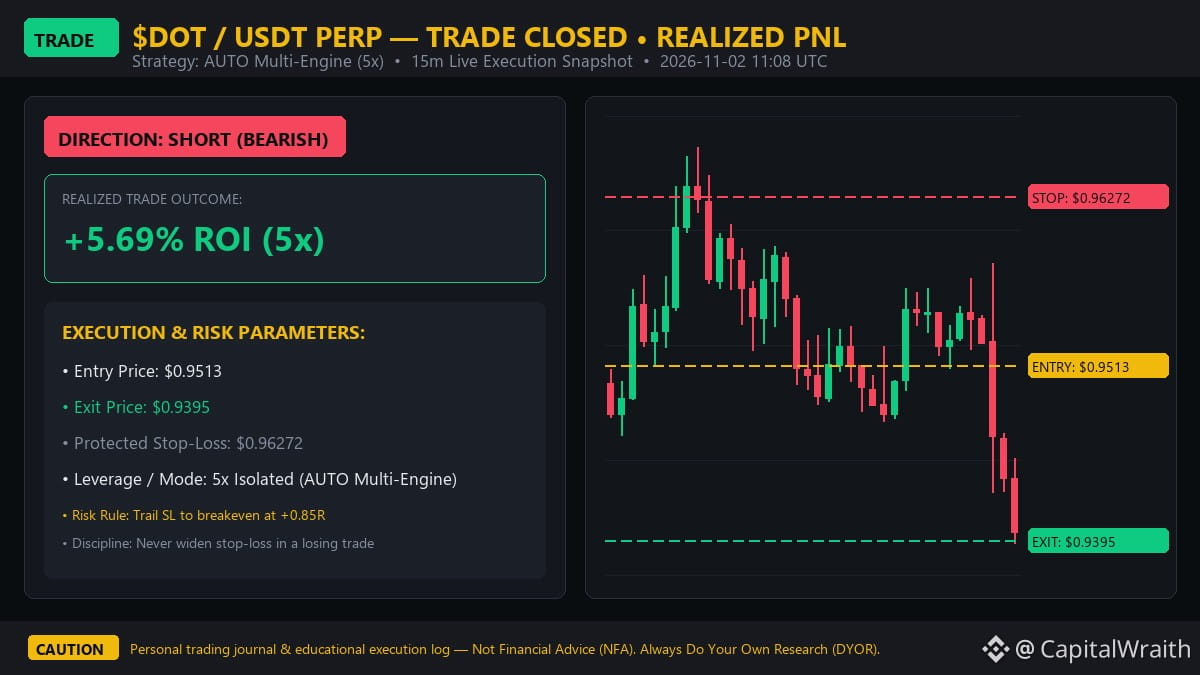
Ver traducción
Closed out a quick LONG trade on $SIREN: entered at $0.0249 and exited at $0.0263 (+27.22% ROI).
I was feeling bullish on this setup as buyers defended the support zone. Always prioritizing capital preservation and trailing stops into profit.
How are you trading $SIREN today? What are your key levels? Let's discuss below.
⚠️ Caution: Personal trade journal shared for educational purposes only — Not Financial Advice (NFA). Always Do Your Own Research (DYOR).
#SIREN #DYOR #CryptoEducation #BinanceSquare
Closed out a quick LONG trade on $SIREN : entered at $0.0249 and exited at $0.0263 (+27.22% ROI).
I was feeling bullish on this setup as buyers defended the support zone. Always prioritizing capital preservation and trailing stops into profit.
How are you trading $SIREN today? What are your key levels? Let's discuss below.
⚠️ Caution: Personal trade journal shared for educational purposes only — Not Financial Advice (NFA). Always Do Your Own Research (DYOR).
#SIREN #DYOR #CryptoEducation #BinanceSquare
Ver traducción
Closed out a quick SHORT trade on $AVA: entered at $0.3092 and exited at $0.2982 (+17.40% ROI).
I was feeling bullish on this setup as buyers defended the support zone. Always prioritizing capital preservation and trailing stops into profit.
How are you trading $AVA today? What are your key levels? Let's discuss below.
⚠️ Caution: Personal trade journal shared for educational purposes only — Not Financial Advice (NFA). Always Do Your Own Research (DYOR).
#AVA #DYOR #CryptoEducation #BinanceSquare
Closed out a quick SHORT trade on $AVA : entered at $0.3092 and exited at $0.2982 (+17.40% ROI).
I was feeling bullish on this setup as buyers defended the support zone. Always prioritizing capital preservation and trailing stops into profit.
How are you trading $AVA today? What are your key levels? Let's discuss below.
⚠️ Caution: Personal trade journal shared for educational purposes only — Not Financial Advice (NFA). Always Do Your Own Research (DYOR).
#AVA #DYOR #CryptoEducation #BinanceSquare
14
Ver traducción
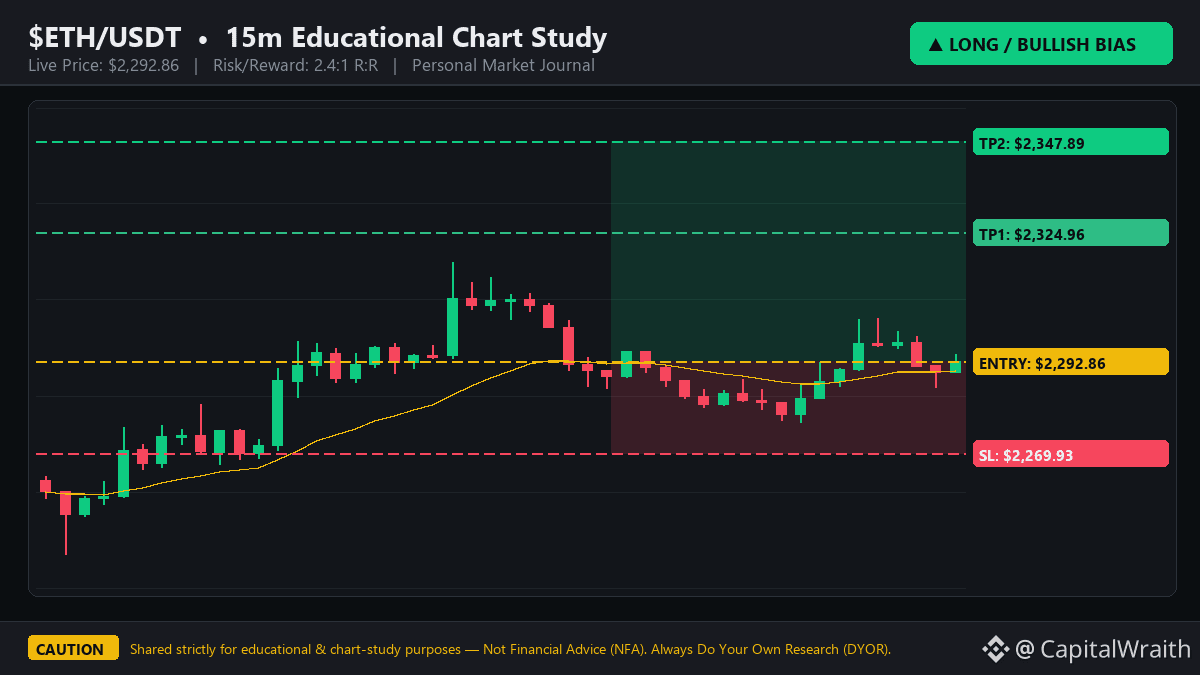
Time for a quick temperature check on $ETH. The charts are currently screaming 'indecision' as we grind through this compression zone.
Be honest—what is your actual bias right now?
A) Full bull mode (targeting new highs)
B) Pure range chop (scalping both directions with tight stops)
C) Fake dump first to shake out retail, then a massive reversal
D) Bearish (waiting in cash for a cheaper entry)
Personally, I’m sitting on my hands. I refuse to chase the noise until we see a clean breakout or a definitive breakdown of this range. Trading the middle of a consolidation box is how accounts get chopped up.
Which camp are you in? Drop your letter below so we can see who actually nails the next move.
⚠️ Caution: For educational discussion only (NFA). Always Do Your Own Research (DYOR).
#ETH #DYOR #CryptoEducation #BinanceSquare
4
Ver traducción
Closed out a quick SHORT trade on $ONE: entered at $0.0011 and exited at $0.0011 (+7.32% ROI).
I was feeling bullish on this setup as buyers defended the support zone. Always prioritizing capital preservation and trailing stops into profit.
How are you trading $ONE today? What are your key levels? Let's discuss below.
⚠️ Caution: Personal trade journal shared for educational purposes only — Not Financial Advice (NFA). Always Do Your Own Research (DYOR).
#ONE #DYOR #CryptoEducation #BinanceSquare
Closed out a quick SHORT trade on $ONE : entered at $0.0011 and exited at $0.0011 (+7.32% ROI).
I was feeling bullish on this setup as buyers defended the support zone. Always prioritizing capital preservation and trailing stops into profit.
How are you trading $ONE today? What are your key levels? Let's discuss below.
⚠️ Caution: Personal trade journal shared for educational purposes only — Not Financial Advice (NFA). Always Do Your Own Research (DYOR).
#ONE #DYOR #CryptoEducation #BinanceSquare
1
Ver traducción
$TIA update:
The 'Bathroom Break' Law of Trading is undefeated: The market will chop sideways for 72 straight hours, but the exact minute you walk away to grab food, it prints a 10% candle. It’s not bad luck; it’s just the market testing your patience.
Let’s talk about market psychology. If a coin is approaching a massive cliff unlock and everyone on Twitter is piling into shorts, what almost always happens first?
A) A sudden, vicious short squeeze that liquidates late shorters before the dump
B) An immediate straight drop to zero with no pullbacks
C) The exchange disables the sell button
D) Absolutely nothing happens
Think you know the right answer? Drop your pick below. If you chose A, you’ve likely been on the wrong side of a 'liquidity hunt' before. Market makers love to hunt the high-leverage retail shorts before letting the price trend toward the unlock event.
Remember: Markets are designed to inflict the maximum amount of pain on the maximum amount of people. Don't be the liquidity.
Caution: This is not financial advice. Always manage your risk and DYOR.
⚠️ Caution: Shared strictly for educational & informational purposes — Not Financial Advice (NFA). Always Do Your Own Research (DYOR) and manage your own risk.
#TIA #DYOR #CryptoEducation #BinanceSquare
12
Ver traducción
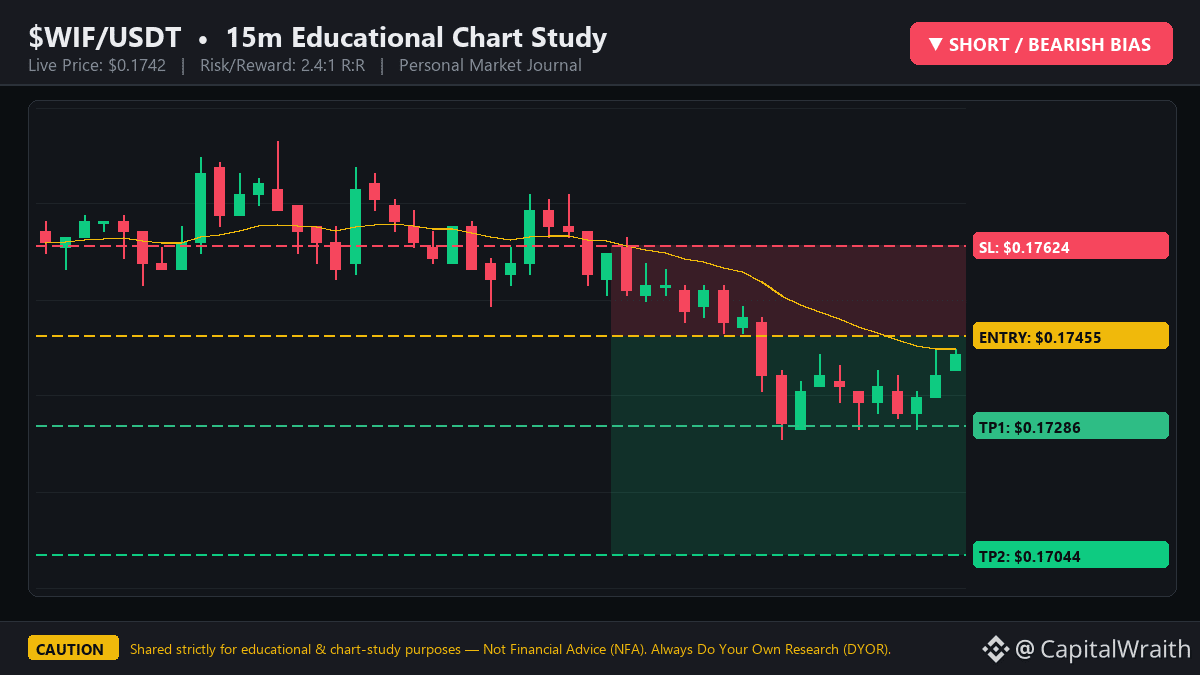
I’ve been tracking $WIF closely today, and the price action near $0.17455 is telling a specific story. With liquidity pools building up around $0.1758, I’m looking for a potential rejection here to test the lower support shelf.
Here is how I’m mapping out this short setup for my journal:
• Entry Zone: $0.17455
• Target 1: $0.17286
• Target 2: $0.17044
• Stop-Loss / Invalidation: $0.17624
This gives us a clean 2.4:1 risk-to-reward ratio if the thesis holds. I’m watching to see if the $0.1726 support level can hold or if we see a sweep of that liquidity.
Save this setup to your watchlist and let’s see how the session plays out. Are you leaning bearish on $WIF here, or do you think the bulls have enough gas to push through that $0.1758 liquidity? Drop your thoughts below.
⚠️ Caution: Strictly for educational purposes — Not Financial Advice (NFA). Market conditions change rapidly; always Do Your Own Research (DYOR).
#WIF #DYOR #CryptoEducation #BinanceSquare
1
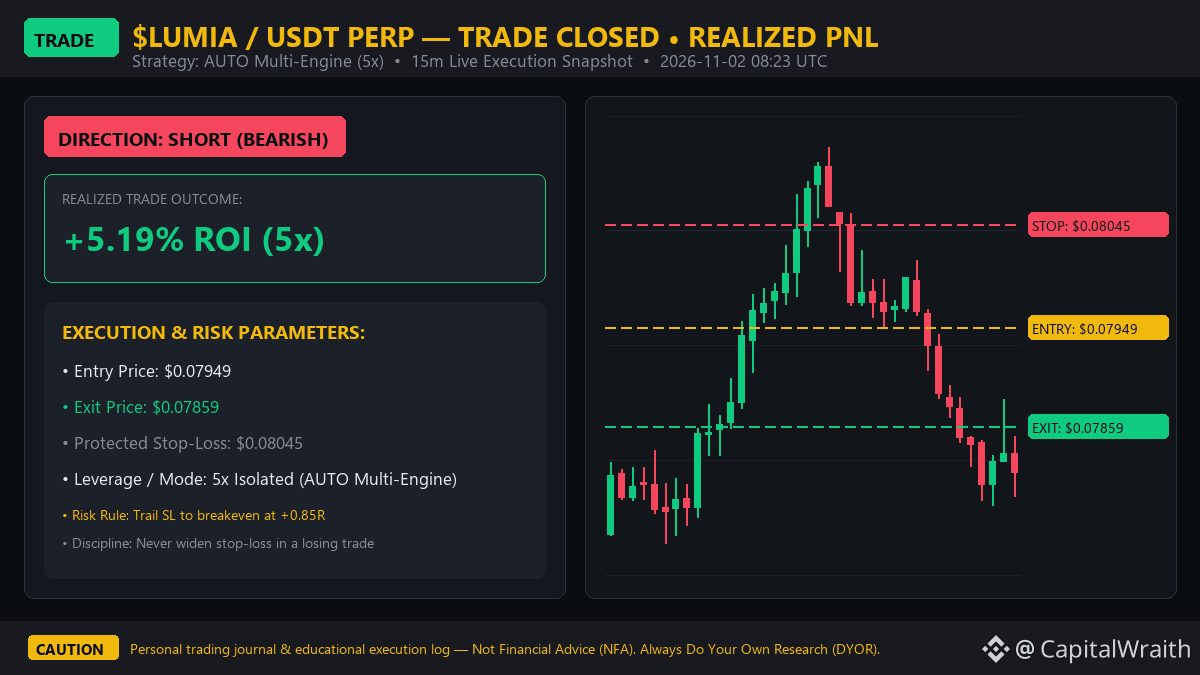
Resumen del cierre de operación — ROI asegurado de +5.19% en SHORT de $LUMIA (5x):
Acabamos de cerrar la posición corta en $LUMIA. Entramos a $0.07949 y tomamos ganancias a $0.07859, con un ROI neto de +5.19%. El mercado puso a prueba mi paciencia en la zona de entrada, pero cuando cambió el impulso, ajustar el stop-loss a $0.08045 mantuvo la operación libre de riesgo mientras aprovechábamos la caída.
Resumen de la operación completada ($LUMIA):
• Acción: OPERACIÓN CERRADA (SHORT 5x)
• Precio de entrada: $0.07949
• Precio de salida: $0.07859
• Resultado obtenido: ROI de +5.19%
• Stop-loss de protección utilizado: $0.08045
Aprendizaje: Lo más difícil al operar no es encontrar el punto de entrada, sino resistir la tentación de «dejar correr» la operación cuando alcanzas tu objetivo. Tomar ganancias a $0.07859 ayuda a que tu cuenta siga creciendo y evita que una operación ganadora se convierta en un dolor de cabeza y quede en punto de equilibrio.
Vota abajo: ¿Aprovechaste este movimiento de $LUMIA hoy?
A) Aproveché el movimiento y aseguré ganancias
B) Sigo manteniendo la posición; espero objetivos más altos
C) Me lo perdí; espero la próxima oportunidad
D) Hoy estoy pendiente de otra moneda
⚠️ Precaución: Se comparte únicamente como resumen educativo de un diario de operaciones. No es asesoramiento financiero (NFA). El rendimiento pasado no garantiza resultados futuros; haz siempre tu propia investigación (DYOR).
#LUMIA #DYOR #CryptoEducation #BinanceSquare
6
Cerré rápidamente una operación SHORT en $LUMIA: entré a $0.0789 y salí a $0.0780 (ROI de +5.14%).
Me sentía optimista con esta configuración, ya que los compradores defendieron la zona de soporte. Siempre priorizo la preservación del capital y ajusto los stops dinámicos para asegurar ganancias.
¿Cómo están operando $LUMIA hoy? ¿Cuáles son sus niveles clave? Hablemos en los comentarios.
⚠️ Precaución: este diario personal de operaciones se comparte únicamente con fines educativos; no constituye asesoramiento financiero (NFA). Siempre hagan su propia investigación (DYOR).
#LUMIA #DYOR #CryptoEducation #BinanceSquare
Cerré rápidamente una operación SHORT en $LUMIA : entré a $0.0789 y salí a $0.0780 (ROI de +5.14%).
Me sentía optimista con esta configuración, ya que los compradores defendieron la zona de soporte. Siempre priorizo la preservación del capital y ajusto los stops dinámicos para asegurar ganancias.
¿Cómo están operando $LUMIA hoy? ¿Cuáles son sus niveles clave? Hablemos en los comentarios.
⚠️ Precaución: este diario personal de operaciones se comparte únicamente con fines educativos; no constituye asesoramiento financiero (NFA). Siempre hagan su propia investigación (DYOR).
#LUMIA #DYOR #CryptoEducation #BinanceSquare
Cerré una operación SHORT rápida en $ICNT: entré a $0.1710 y salí a $0.1653 (ROI de +16.06%).
Tenía una perspectiva alcista sobre esta configuración, ya que los compradores defendieron la zona de soporte. Siempre priorizo la preservación del capital y ajusto los stops de seguimiento para asegurar ganancias.
¿Cómo están operando $ICNT hoy? ¿Cuáles son sus niveles clave? Hablemos abajo.
⚠️ Precaución: Este diario personal de operaciones se comparte únicamente con fines educativos; no constituye asesoramiento financiero (NFA). Siempre hagan su propia investigación (DYOR).
#ICNT #DYOR #CryptoEducation #BinanceSquare
Cerré una operación SHORT rápida en $ICNT : entré a $0.1710 y salí a $0.1653 (ROI de +16.06%).
Tenía una perspectiva alcista sobre esta configuración, ya que los compradores defendieron la zona de soporte. Siempre priorizo la preservación del capital y ajusto los stops de seguimiento para asegurar ganancias.
¿Cómo están operando $ICNT hoy? ¿Cuáles son sus niveles clave? Hablemos abajo.
⚠️ Precaución: Este diario personal de operaciones se comparte únicamente con fines educativos; no constituye asesoramiento financiero (NFA). Siempre hagan su propia investigación (DYOR).
#ICNT #DYOR #CryptoEducation #BinanceSquare
17
Siguiendo de cerca a $BNB mientras se acerca el próximo desbloqueo tipo cliff.
Aquí tienes el desglose:
1. La noticia: Está previsto que se libere mediante vesting una parte significativa de $BNB, lo que aumentará la oferta circulante esta semana.
2. Evaluación del impacto: 7/10. Históricamente, los mercados suelen anticiparse a estos eventos. A menudo vemos un «repunte previo al desbloqueo» para crear liquidez de salida para los primeros inversores. Se espera una mayor volatilidad a medida que se acerque la fecha de distribución.
3. Conclusión y precaución al operar: No te dejes atrapar por la euforia previa al desbloqueo. Si vas a operar con la volatilidad, mantén pequeñas tus posiciones y ajustados tus límites de pérdidas. Si no eres un operador activo, mantenerte en efectivo es una estrategia válida para evitar los vaivenes del mercado.
4. Sugerencia educativa: Consulta el «Calendario de desbloqueos» en TokenUnlocks o en paneles similares. Entender la diferencia entre los desbloqueos tipo «cliff» y las liberaciones «lineales» es clave para gestionar el riesgo durante estos periodos.
5. Votación de la comunidad:
A) Comprar la caída después del desbloqueo
B) Vender durante el repunte previo al desbloqueo
C) Mantenerse en efectivo o stablecoins
D) Mantener a largo plazo independientemente de los desbloqueos
Cuéntame tu plan en los comentarios.
⚠️ Precaución: Solo con fines educativos sobre tokenómica; no constituye asesoramiento financiero (NFA). Investiga siempre por tu cuenta (DYOR).
#BNB #DYOR #CryptoEducation #BinanceSquare
2
Inicia sesión para explorar más contenidos
Únete a usuarios de criptomonedas de todo el mundo en Binance Square
⚡️ Obtén la información más reciente y útil sobre criptomonedas.
💬 Confía en el mayor exchange de criptomonedas del mundo.
👍 Descubre opiniones reales de creadores verificados.
Correo electrónico/número de teléfono
Temas en tendencia
BinanceWithdrawalScamWarning
4,045 visualizaciones
220 participa(n) en el debate
Binance advierte a los usuarios sobre estafas relacionadas con los retiros mientras reanuda sus servicios: nunca cobrará comisiones, venderá puestos en la cola ni pedirá que traslades fondos a una «bóveda»
Binance News
·4 «Me gusta»
·2.8k visualizaciones
USMidtermElections
548,772 visualizaciones
2,796 participa(n) en el debate
USOctoberNFP-AreRateCutsStillPossible
11,878 visualizaciones
306 participa(n) en el debate