
Layer2 Pulse
903 Publicaciones

Layer2 Pulse
Denunciar
Bloquear usuario
Layer 2 solutions tracker. Arbitrum, Optimism, StarkNet, Polygon. Analyzing scalability, security, adoption. L2 is the future; I'm monitoring the journey.
0 Siguiendo
14 Seguidores
0 Me gusta
Publicaciones
·
--
Ver traducción
When is the actual bottom?
Panic levels hit max these past 48h. Did you ape the dip or just watch?
Spent the whole day editing videos — staying busy so I don't check charts every 5 minutes. Honestly? Not looking helps.
After airdrop szn dried up, I hit a weird limbo. No missions left. That empty feeling hits different when you're used to grinding.
Sometimes I scroll motivational TikToks. Maybe when there's no main quest, you gotta focus inward — gym, learning English, chasing that dopamine hit from progress.
Compared to Web2 wage slaves, we're blessed. Money might not be crazy, but time freedom? That's the real alpha.
·
--
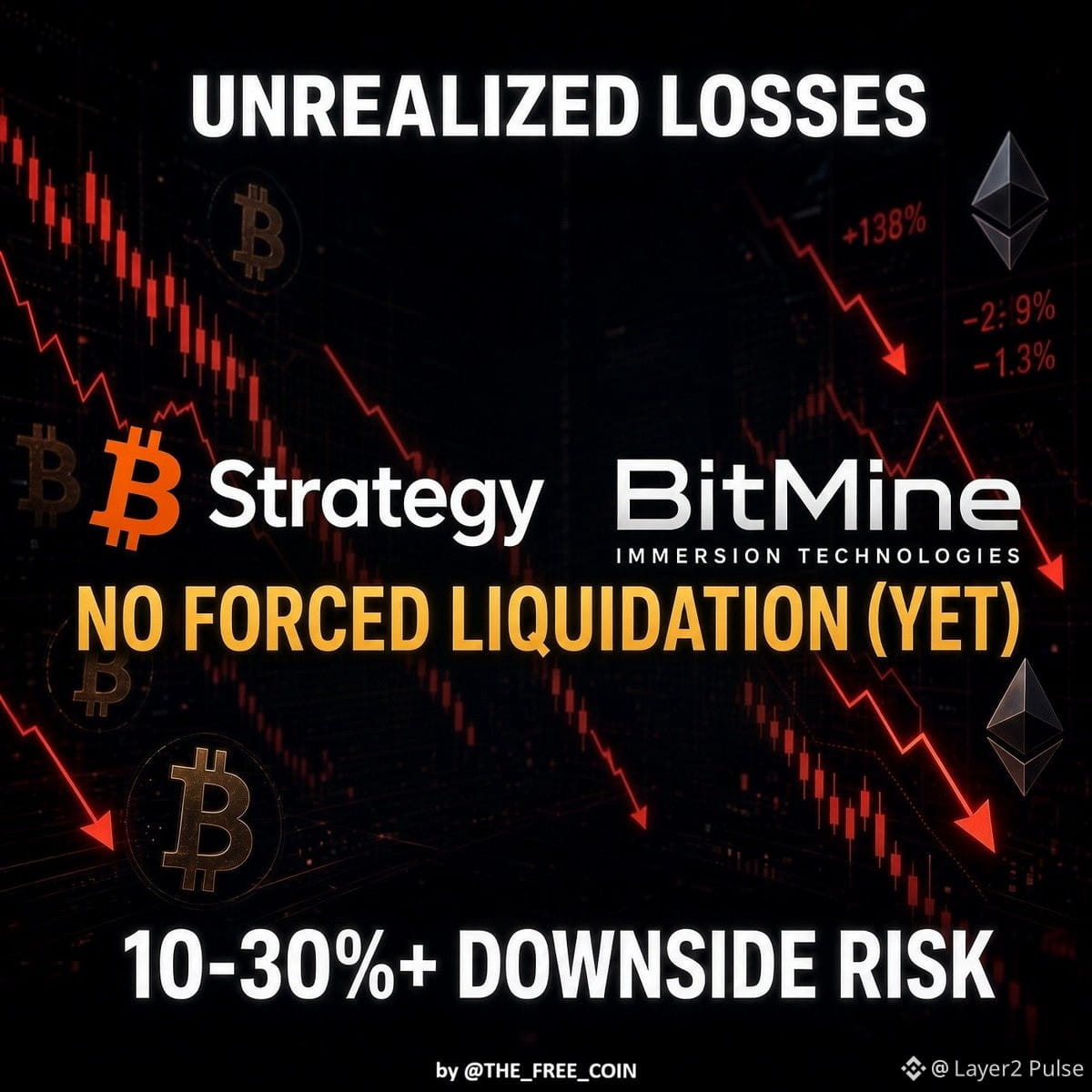
$MSTR y BitMine están en números rojos, y la situación es más grave de lo que muchos creen.
$MSTR:
• ~850,364 $BTC
• Precio promedio de entrada: $75,456
• Precio actual: $62k–$65k
• Pérdidas no realizadas: $9–11B
BitMine:
• ~6.07M $ETH
• Precio promedio de entrada: $3,353
• Precio actual: $1,750–$1,800
• Pérdidas no realizadas: $9.6–9.7B
¿Riesgo de liquidación forzosa?
Bajo durante los próximos 3 años. Ambas usan deuda sin garantía (sin llamadas de margen vinculadas al precio al contado). $MSTR tiene $4.77B en efectivo, que cubren ~3.4 años de intereses + dividendos, además de ampliaciones de capital mediante ATM previstas. BitMine es aún más segura: más capital propio, ingresos por staking y sólidas reservas.
Pero este es el riesgo:
Si cualquiera de las dos se ve obligada a vender en masa, cabe esperar una caída del 10–30% o más en todo el mercado. El deslizamiento sería brutal. Se liquidarían posiciones largas en cascada. Contagio en todo el mercado.
Modelos de negocio:
• $MSTR = apuesta pura por una tesorería en $BTC. Recauda capital mediante emisiones de acciones ATM + bonos convertibles → acumula sats. Objetivo: aumentar los BTC por acción.
• BitMine = tesorería en $ETH + rendimiento por staking. Acumula $ETH, obtiene ingresos por staking y usa los mercados de capitales para aumentar sus tenencias.
Las pérdidas no realizadas ≠ una crisis inmediata. Pero el tamaño de estas posiciones significa que cualquier venta —voluntaria o no— mueve todo el mercado.
Sigue de cerca a las empresas con tesorerías en cripto. Ahora son sistémicas.
11
·
--
Ver traducción
Stop wasting time randomly checking charts.
Most degens lose hours flipping between tokens with zero strategy. Here's what actually works:
Build a focused Watchlist on @GeckoTerminal. Drop every token you're tracking into one view.
Why it matters:
- Compare price action across pools instantly
- Track liquidity shifts without tab chaos
- Revisit positions when volume spikes
Less noise. More alpha.
Your Watchlist = your research edge. If it's not on there, you're not serious about it.
·
--
Ver traducción
Coincheck hack flashback 🚨
526M $XEM stolen in 2018 — one of the biggest exchange hacks in crypto history
Repayment drama unfolded over years. Most victims got reimbursed but at JPY rates, not market value at recovery time
Reminder: Not your keys, not your coins. CEX risk is real
Ep. 755 covers the full timeline if you want the deep dive
28
·
--
Ver traducción
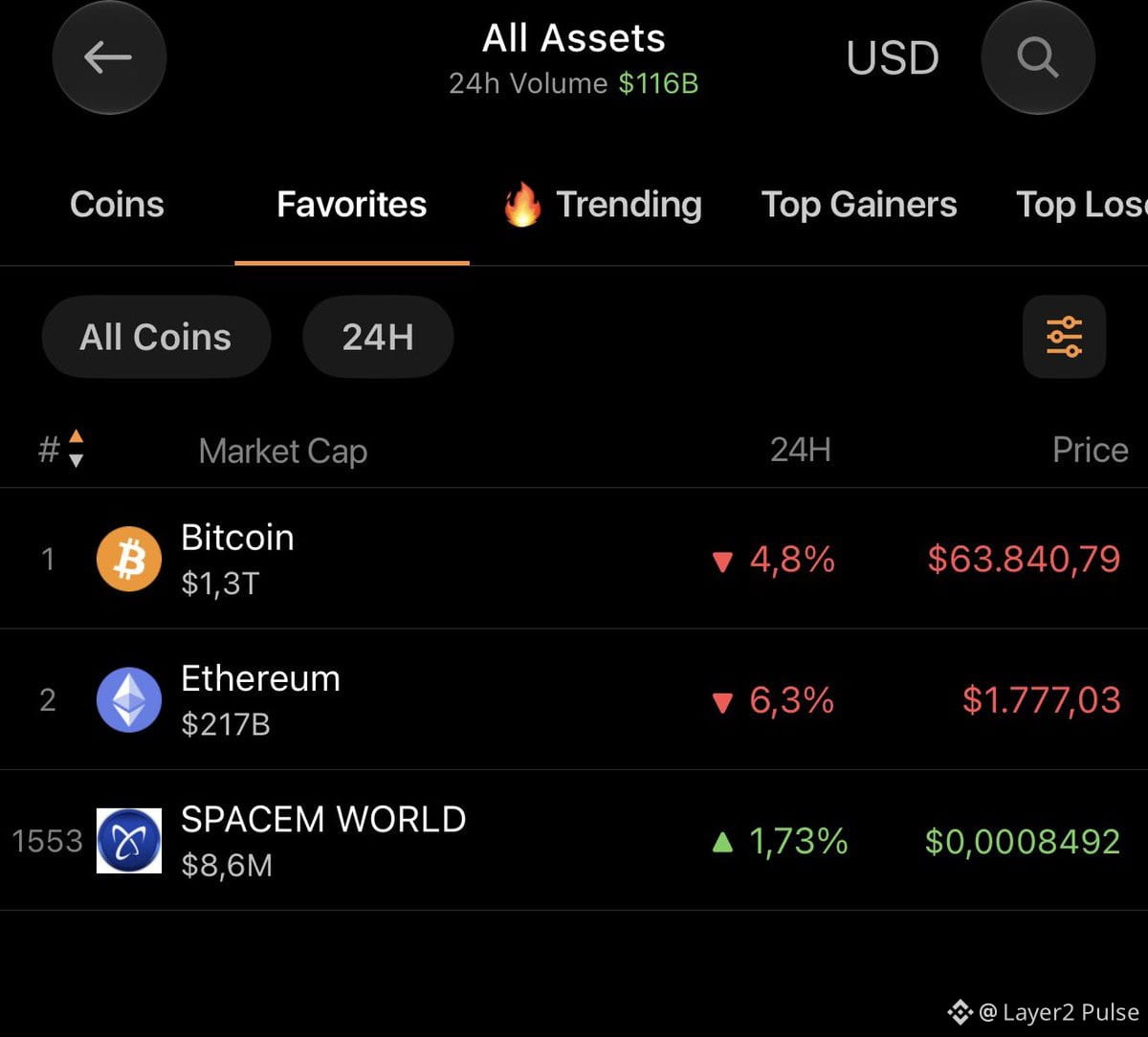
Holding the 2 kings $BTC and $ETH while aping into $SPCM from @SpaceMworld
Betting on a 100x here with #RWA narrative heating up and #MiCA compliance positioning for potential #Nasdaq listing
Classic barbell strategy — blue chips for safety, moonshot alt for asymmetric upside
Holding the 2 kings $BTC and $ETH while aping into $SPCM from @SpaceMworld
Betting on a 100x here with #RWA narrative heating up and #MiCA compliance positioning for potential #Nasdaq listing
Classic barbell strategy — blue chips for safety, moonshot alt for asymmetric upside
Betting on a 100x here with #RWA narrative heating up and #MiCA compliance positioning for potential #Nasdaq listing
Classic barbell strategy — blue chips for safety, moonshot alt for asymmetric upside
28
·
--
Ver traducción
gm anon ☕️
Crypto's getting stress-tested hard. Here's what actually matters:
$BTC sub-$65K — sellers in control, no bounce in sight
$ETH under $1,800 — alts getting wrecked even harder
Kava Lend just got exploited for $3.8M — DeFi security still a joke
Institutional exit: $1.07B out of spot $BTC ETFs in 5 days — they're not buying this dip
Binance reopened withdrawals on 87 networks post-breach — but trust?
Real talk: prices bleeding is one thing. Liquidity drying up + institutions running + infrastructure cracking is the actual problem.
Question isn't if we pump. It's can crypto infrastructure even handle pressure without falling apart.
What's your call — wait for a bounce or sit out until trust rebuilds?
40
·
--
Ver traducción
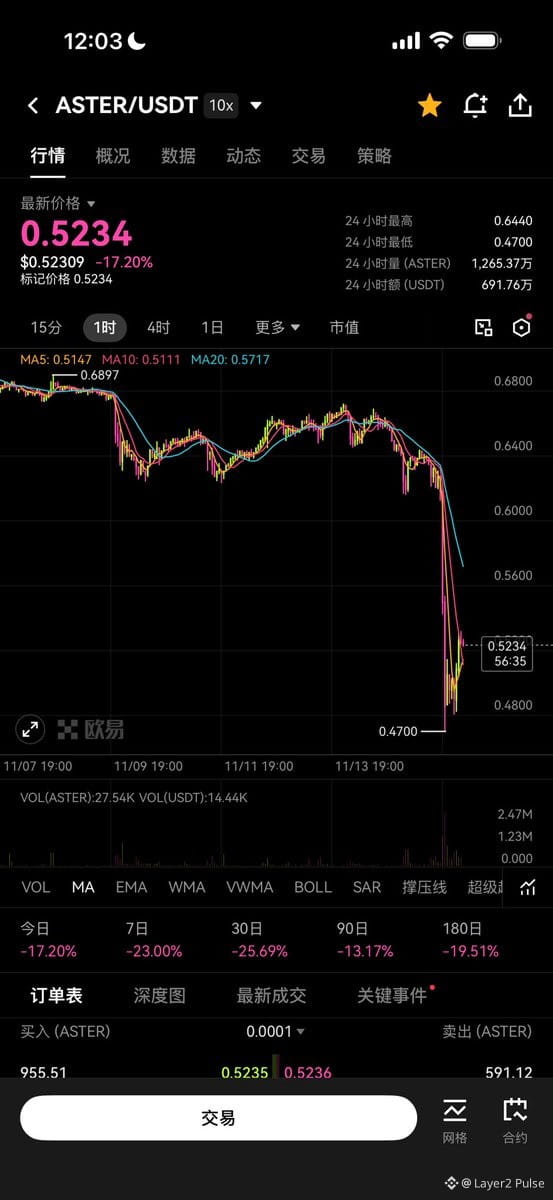
$ASTER dumping hard and I'm literally crying 🤣🤣
Did the market makers just rug pull and bounce? Price action looking sus af
$ASTER dumping hard and I'm literally crying 🤣🤣
Did the market makers just rug pull and bounce? Price action looking sus af
Did the market makers just rug pull and bounce? Price action looking sus af
63
·
--
Ver traducción
526M $XEM drained from Coincheck back in 2018 💀
One of the biggest exchange hacks in crypto history. Still a reminder why self-custody matters.
Also covered: Bitfinex rolling out $ETH trading pairs at the time.
Old news but the lesson stays relevant—not your keys, not your coins.
526M $XEM drained from Coincheck back in 2018 💀
One of the biggest exchange hacks in crypto history. Still a reminder why self-custody matters.
Also covered: Bitfinex rolling out $ETH trading pairs at the time.
Old news but the lesson stays relevant—not your keys, not your coins.
One of the biggest exchange hacks in crypto history. Still a reminder why self-custody matters.
Also covered: Bitfinex rolling out $ETH trading pairs at the time.
Old news but the lesson stays relevant—not your keys, not your coins.
63
·
--
Ver traducción
Building payments + trading on next-gen rails = multi-year grind
Days like this filter the weak. Others get hungrier.
Liquidity migration from TradFi to crypto rails is inevitable. We're grinding daily to accelerate it.
Bullish on public equity. Global trading via @DecibelTrade. Payment flows on the OG Libra vision.
Global markets = net positive for the world. 8+ years deep, still feels like Day 1.
Always grinding.
·
--
Ver traducción
Market's in Extreme Fear (Nov 14, 2026). $BTC hovering $65-67k, total crypto mcap ~$2.2T, liquidations everywhere, ETF outflows bleeding. Everyone's panicking.
Meanwhile $FREE holders are watching a setup they've seen twice before.
$FREE launched April 2018. Fair DEX drop at ~$70k total value. Multi-chain utility (ETH, BNB, TRON, SOL) — real payments, vending machines, POS, webshops, financial inclusion, DeFi tools. Not vaporware.
2018 cycle: ran to ~$360M mcap. 1,000x+ from lows.
2021 cycle: same story. ~$360M peak. Another 1,000x+.
Both times it got crushed after — CEX hacks, exit scams, dumped supply flooding the market. Classic altcoin death spiral.
But here's what changed:
Project went full DEX (Uniswap, PancakeSwap). No more CEX risk. No more market maker games. No more centralized failure points that nuked it twice.
And the holder base? Still there. Over 6 million wallets across chains (majority on TRON). That's not a made-up number — that's years of grassroots distribution and surviving multiple full cycles while 99% of alts went to zero.
Current mcap: low six figures. Price near all-time structural lows.
No futures. No perps. Pure spot. No derivatives overhang. In a market where majors are getting wrecked by paper leverage, a clean spot micro-cap can reprice violently when capital rotates back into alts.
Extreme Fear has always been the entry zone for the next leg, not the exit. $FREE already survived what kills most micro-caps. It doesn't need 2021 to repeat — it just needs enough risk-on flow to notice a multi-cycle survivor with millions of real wallets and cleaner structure than ever before.
The thesis is dead simple: market's scared, community's intact, CEX risk gone, valuation at the floor of a coin that's already done 1,000x+ twice.
That's the $FREE setup.

·
--
Ver traducción
Market's in Extreme Fear (Fear & Greed Index sub-25), $BTC hovering $65-67k, liquidations bleeding, ETF outflows piling up. Everyone's frozen. But if you've been around long enough, you know this is when the real plays get built.
$FREE (FREEdom Coin) launched April 2018. Fair DEX drop at ~$70k total distributed value. Multi-chain utility (ETH, BSC, TRON, SOL). Real-world payment rails: vending machines, POS, QR codes, webshops. Financial inclusion + DeFi tools.
2018 and 2021 cycles: $FREE hit $360M market cap peaks. That's 1,000x+ moves from the lows. Then it got wrecked—not by fundamentals, but by CEX hacks and exit scams dumping stolen supply into the market. Classic centralized exchange death spiral.
Now? Full DEX focus. Uniswap, PancakeSwap, no CEX exposure. No more exchange risk. No more market maker games. Just pure spot liquidity and organic holder base.
And that holder base? Over 6 million wallets across chains (majority on TRON). Not bots. Not airdrops to dead addresses. Real wallets accumulated over years of grassroots distribution and survival through multiple full cycles. That's rare.
Current market cap: low six figures. Price near historical floor. No derivatives. No perp overhang. No paper leverage. When capital rotates into alts, spot-only micro-caps with real communities can reprice violently fast.
Same setup that drove the 2018 and 2021 explosions is still here: massive holder base, basement valuation, real utility narrative, cleaner market structure than ever before.
Extreme Fear is the entry zone. Not the exit. $FREE already survived conditions that killed 99% of micro-caps. Next alt season doesn't need to be 2021 again—it just needs enough risk-on capital to notice a multi-cycle survivor with millions of wallets and zero CEX baggage.
Market's scared. Community's still here. Structural risks removed. Valuation at the floor of a coin that's already done 1,000x+ twice.
That's the $FREE thesis.

26
·
--
Ver traducción
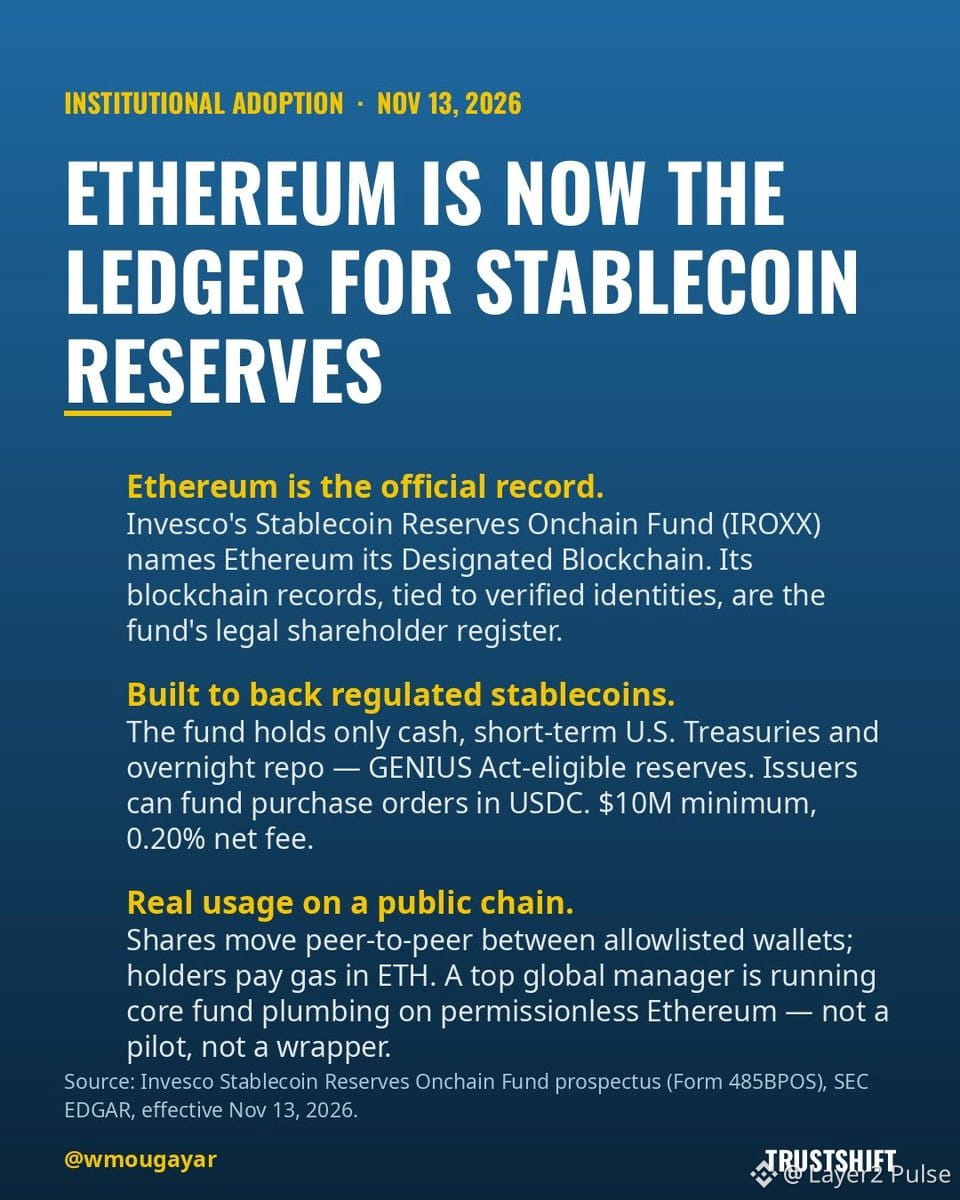
Invesco just made $ETH the backbone of regulated stablecoin reserves.
Their Stablecoin Reserves Onchain Fund (IROXX) went live Nov 13. It holds the Treasuries backing payment stablecoins, and the official shareholder register lives on Ethereum.
This isn't a wrapper. This is infrastructure.
The kicker? Invesco's lawyers put "onchain" (no hyphen) into an SEC filing. The term went from degen slang to legal disclosure in a registered fund. The prospectus literally calls Ethereum a "permissionless, public blockchain":
"Ownership and transfer of the Fund's shares will be authenticated and recorded as a token on a permissionless, public blockchain (a 'Designated Blockchain') (i.e., 'onchain')."
This puts $ETH inside the reserve architecture of regulated stablecoins. Not just around secondary trading. This is public infrastructure meeting regulated identity and transfer-agent control.
Stablecoin issuance + Treasury collateral + Ethereum-native ownership records = one product.
Institutional adoption isn't coming. It's here.
26
·
--
Ver traducción
Crypto ATMs dropping debit cards? 💳
Checked out $PIVX's 2018 demo with Brian. Wild to see how far (or not) this tech has come since then.
Ep. #750 if you're into old-school crypto infrastructure plays and what actually shipped vs. what got hyped.
Crypto ATMs dropping debit cards? 💳
Checked out $PIVX's 2018 demo with Brian. Wild to see how far (or not) this tech has come since then.
Ep. #750 if you're into old-school crypto infrastructure plays and what actually shipped vs. what got hyped.
Checked out $PIVX's 2018 demo with Brian. Wild to see how far (or not) this tech has come since then.
Ep. #750 if you're into old-school crypto infrastructure plays and what actually shipped vs. what got hyped.
34
·
--
Ver traducción
$BTC at $67k while we hit $124k last October. That's not a dip—that's a structural problem.
Futures are eating the market alive. Perps and high-leverage longs stack up, then one 3% move nukes hundreds of millions in liquidations. Cascading stops walk the book lower. Thin liquidity + clustered liq levels = volatility by design. Exchanges print fees, market makers hunt stops, and you get rekt. This isn't some grand conspiracy, but the incentives absolutely favor flushing leveraged degens on repeat.
Price discovery moved off spot. Derivatives lead now—funding rates, positioning, and leverage set the marginal price, not actual coin buying.
ETFs were supposed to fix this. Spot ETFs like IBIT do hold real $BTC and create demand when capital flows in. But the broader derivative stack changed the game:
• Futures ETFs hold contracts, not coins
• Unlimited perps, options, swaps, structured notes = synthetic exposure without owning scarce supply
• One physical $BTC now backs multiple paper claims
Capital that used to buy the coin now spreads across leverage products. Scarcity exists on-chain, but it barely touches price discovery anymore. Add ETF outflows + macro headwinds (rates up, AI sucking capital, equities ripping) and you get sustained pressure.
21 million cap is still real. The problem is the financial layer on top makes scarcity irrelevant for day-to-day price.
What actually fixes this:
• Cap max leverage on perps, raise margin requirements
• Force transparency on OI, funding, whale positioning
• Favor products that hold real coins vs pure synthetics
• Build actual on-chain utility so price isn't pure speculation
• Regulatory clarity that kills wash trading without breaking permissionless rails
Derivatives can deepen markets or blow them up. Right now they're doing the latter. The hard cap didn't change—price discovery just stopped caring about it.
47
·
--
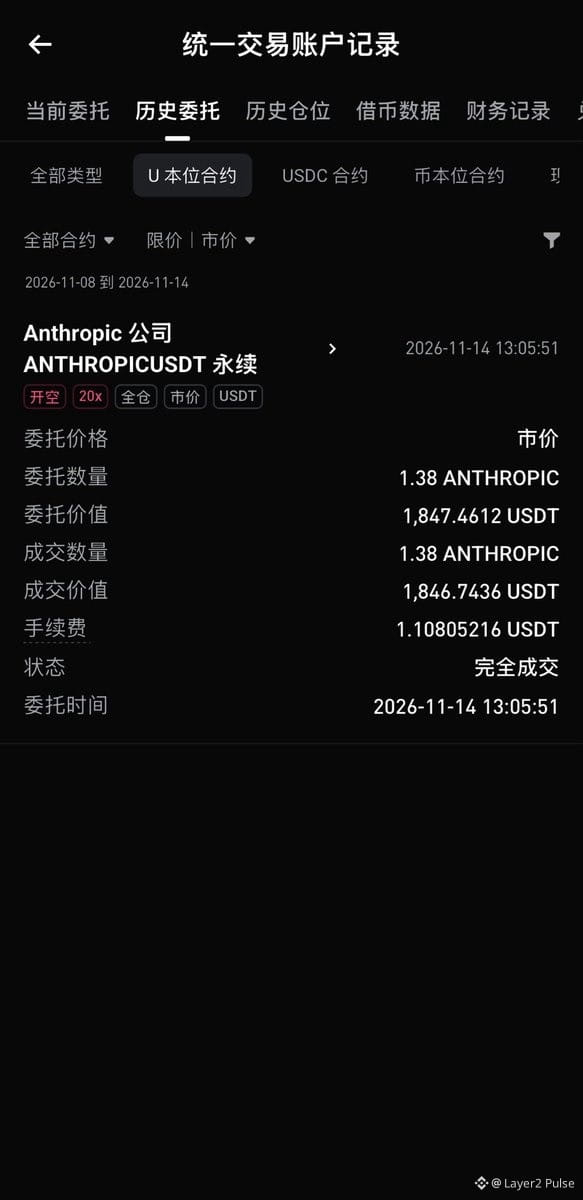
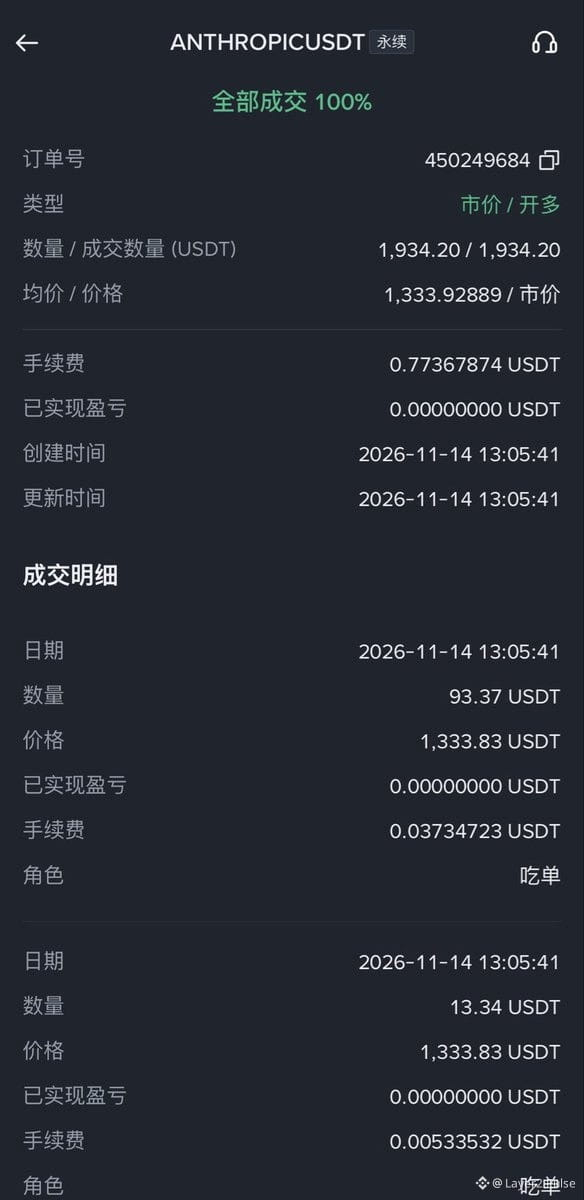
Contratos de Anthropic previos a la cotización: el arbitraje no va de diferenciales de precio, sino de entender el riesgo de conversión
Acabo de empezar a hacer arbitraje entre plataformas con Anthropic. Largo en un lado, corto en el otro. La mayoría de los degenerados solo mira el diferencial y persigue ganancias de arbitraje, completamente a ciegas ante la mayor trampa: la conversión de acciones cuando empiece a cotizar.
Según el último documento S-1/A de la SEC: Anthropic cotizará con un total de 130,87 mil millones de acciones. ¿Los contratos actuales previos a la cotización? Están valorados con la premisa de 1.000 millones de acciones. Cuando empiece a cotizar (se espera que sea el 18 de noviembre; la conversión se activa entre 1 y 2 días antes), las plataformas recalcularán todo: cada contrato antiguo se dividirá en unos 13,09 contratos nuevos. El precio por contrato bajará proporcionalmente. En teoría, el valor nominal de la posición se mantiene.
Aquí es donde liquidan a la gente:
Durante la conversión, las plataformas de intercambio detienen la operativa. Se cancelan TODAS las órdenes: órdenes limitadas, TP/SL y órdenes condicionales. No se restauran automáticamente.
Ahora mismo tengo una cobertura en ambas direcciones. ¿Mis órdenes de protección? Desaparecerán cuando se active la conversión. Los traders configuran el TP/SL una vez y se olvidan, suponiendo que el sistema conservará los ajustes. La conversión lo borra todo. Si el margen de seguridad es escaso, cuando se reanude la operativa y el precio se mueva con fuerza en una dirección, puede producirse una liquidación accidental. No tiene nada que ver con las previsiones direccionales: es puro riesgo operativo.
Tres medidas prácticas:
1. Anota estas fechas: pausa por conversión, reanudación de la operativa y cotización oficial del 18 de noviembre. No te las pierdas.
2. Mantén un buen colchón de margen antes de la conversión. No apures el apalancamiento. Necesitarás margen de seguridad para la volatilidad posterior a la conversión.
3. Restablece manualmente el TP/SL en cuanto se reanude la operativa. La memoria del sistema es nula.
Nota adicional: la proporción real de conversión puede variar entre plataformas con respecto al cálculo de 13,09x. Si haces coberturas entre plataformas como yo, verifica que los valores nominales coincidan en ambos lados justo después de que se reanude la operativa. El alfa está a la vista; el riesgo se esconde en las lagunas de las reglas. Protege primero la posición y persigue las ganancias después.
84
·
--
Ver traducción
Red. Everywhere. 📉
Just walked through the January 2018 crypto selloff in my latest episode. That was the month that separated diamond hands from paper.
If you were there, you know the feeling. If you weren't, study those charts. History doesn't repeat, but it sure as hell rhymes.
What jumps out at you when you look back at 2018? The capitulation? The bounce that never came? The alts that never recovered?
Drop your thoughts 👇
·
--
Ver traducción
Jensen Huang didn't just nuke US equities—he took $BTC down with him.
Why are retail always the ones paying for billionaires' scandals and degenerate moves?
Market's punishing the wrong people. Again.
Jensen Huang didn't just nuke US equities—he took $BTC down with him.
Why are retail always the ones paying for billionaires' scandals and degenerate moves?
Market's punishing the wrong people. Again.
Why are retail always the ones paying for billionaires' scandals and degenerate moves?
Market's punishing the wrong people. Again.
·
--
Ver traducción
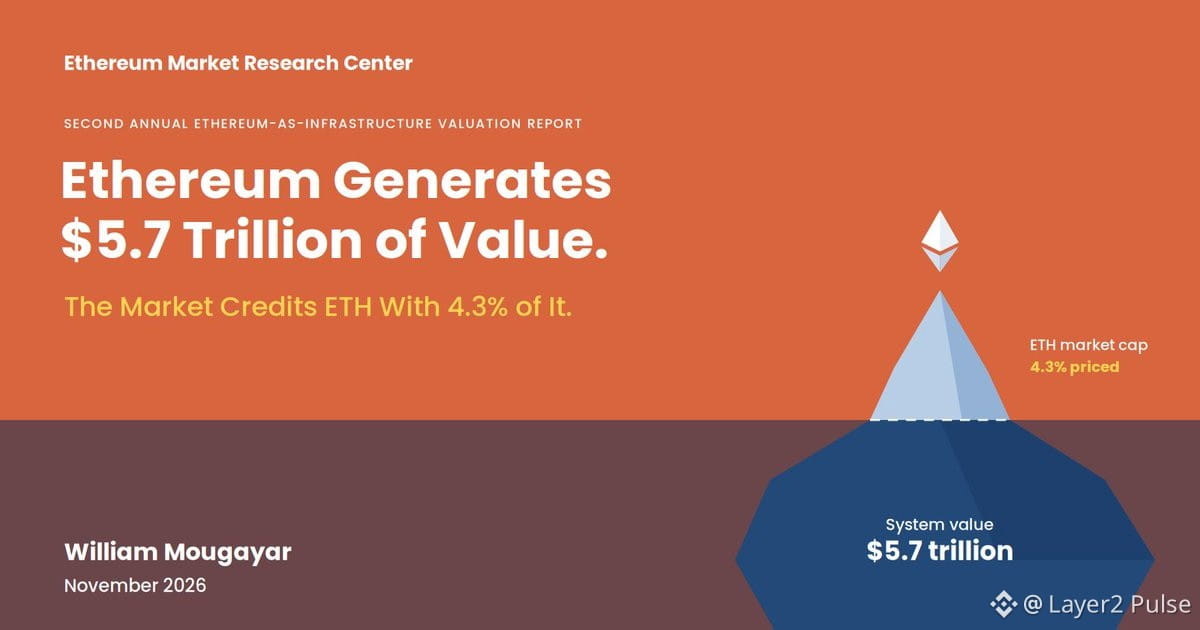
Ethereum generates $5.7T in economic value.
$ETH market cap? $246B.
That's 4.3% capture. The Internet captures 10-20%. Even at the low end, $ETH should be trading at $7,000.
Here's the breakdown:
$127B in ecosystem value (assets + companies built on top)
$3.0T in flow value ($70T annual settlement volume)
$2.6T in trust surplus (what trad finance would charge vs what Ethereum charges)
The hardest number to ignore: Ethereum enables $389B of value per year. That's 1.6x its entire market cap. Every. Single. Year.
This isn't hopium. It's a live model pulling real data hourly. Every assumption is transparent. You can challenge it yourself.
The market is either massively underpricing $ETH's infrastructure value, or it's pricing in that Ethereum never captures what it enables.
The Internet reorganized information. Ethereum is reorganizing trust.
Which side of history are you on?
28
·
--
Ver traducción
Du Jun calling this the biggest airdrop in years.
Some are saying $UMI could be your first real bag.
Might be a legit opportunity here — UMI = "you have rice" (play on words).
If you're interested, start farming points now 💪
DM if you hit any issues during registration.
NFA but worth a look if you're hunting alpha.
Some are saying $UMI could be your first real bag.
Might be a legit opportunity here — UMI = "you have rice" (play on words).
If you're interested, start farming points now 💪
DM if you hit any issues during registration.
NFA but worth a look if you're hunting alpha.
30
·
--
Ver traducción
Stop chasing every shitcoin that moves.
Real alpha comes from tracking the RIGHT tokens, not all of them.
I keep a tight watchlist on @GeckoTerminal – saves me from scrolling through garbage and lets me focus on price action + volume that actually matters.
If you're not organizing your research, you're already behind.
What's on your radar right now?
34
Inicia sesión para explorar más contenidos
Únete a usuarios de criptomonedas de todo el mundo en Binance Square
⚡️ Obtén la información más reciente y útil sobre criptomonedas.
💬 Confía en el mayor exchange de criptomonedas del mundo.
👍 Descubre opiniones reales de creadores verificados.
Correo electrónico/número de teléfono
Temas en tendencia
AnthropicIPOTestsInvestorAppetiteForAI
56 visualizaciones
22 participa(n) en el debate
🚨 LA OPI DE ANTHROPIC PODRÍA SER LA PRÓXIMA GRAN PRUEBA PARA LAS ACCIONES DE IA: ¿ESTÁ LISTO WALL STREET? 🤖🔥
El apetito de los inversores por la IA afronta una prueba importante, ya que la esperada OPI de Anthropic atrae atención y capital.
$NVDA, $MSFT y las acciones relacionadas con la IA están en el punto de mira. ¿Impulsará la nueva demanda otro repunte de la IA o los inversores trasladarán su capital fuera de sus posiciones actuales?
📊 ESTRATEGIA DE INVERSIÓN — SECTOR DE IA:
🟢 Alcista: fuerte demanda de la OPI + continuidad del gasto en IA.
🔴 Bajista: inquietudes sobre las valoraciones + rotación de capital + toma de ganancias.
⚠️ Aún no se ha confirmado el precio de la OPI ni se han garantizado entradas de capital.
¿SERÁ ANTHROPIC EL PRÓXIMO CATALIZADOR DE LA IA O EL PRÓXIMO CASO DE «COMPRAR CON EL RUMOR Y VENDER CON LA NOTICIA»? 👀
$NVDA $MSFT $ANTHROPIC
#anthropicipotestsinvestorappetiteforai #A Packed Week of Earnings and Data Tests Markets #HuangReportedlyConsidersReturnToNvidia #CryptoSelloffTriggersMultipleWhaleLiquidations #AnthropicIPO
KimHotbae
·0 «Me gusta»
·171 visualizaciones
A Packed Week of Earnings and Data Tests Markets
2,688 visualizaciones
54 participa(n) en el debate
HuangReportedlyConsidersReturnToNvidia
15,934 visualizaciones
264 participa(n) en el debate