


TON processed approximately 4.26 million transactions in 24 hours, yet only about $863 worth of network fees were burned.
That's a surprisingly small figure for a blockchain with such an active user base. It also helps explain why growing network activity hasn't necessarily translated into stronger demand for GRAM.
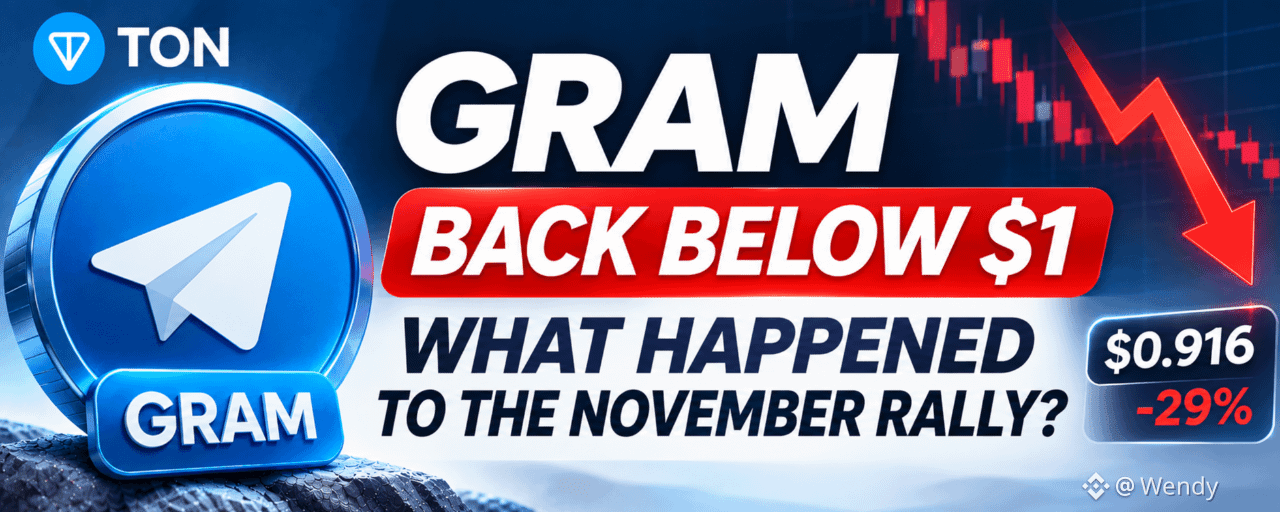
On November 25, 2026, $GRAM traded near $0.916 on Binance, down 3.78% over 24 hours, with roughly $5.65 million in GRAM/USDT spot trading volume.
The token has lost approximately 29% from its November 12 intraday high of $1.29.
Millions of transactions, limited fee generation
According to DefiLlama's November 25 data, TON recorded approximately 4.26 million transactions and 188,269 active addresses over 24 hours.
Those numbers show that the network is being used.
However, DefiLlama reported only $1,725 in network transaction fees during the same period, with approximately $863 attributed to fee burning.
This distinction is important because GRAM, formerly known as Toncoin, serves as the native asset used for network fees and staking.
More transactions create additional opportunities for GRAM usage, but they don't automatically generate substantial buying pressure.
TON was designed to keep transaction costs extremely low. Its official website lists a typical GRAM transfer fee of approximately 0.00039 GRAM.
That's attractive for payments and everyday applications. It also means the network needs significant activity to generate meaningful fee revenue.
Where is the economic activity going?
The picture changes when looking beyond network transaction fees.
DefiLlama recorded approximately $1.17 million in application-level fees on TON over 24 hours on November 25.
Telegram-related services such as Fragment contribute to this activity through digital collectibles, advertising, usernames and other services.
These figures demonstrate that commercial activity exists on TON.
But application fees, network fees and value returned to GRAM holders are different things.
Revenue collected by an application doesn't automatically become GRAM buybacks or distributions to token holders. Even network fee burning must be considered alongside newly issued tokens before concluding that supply is declining.
For investors, that makes transaction count alone an incomplete measure of token demand.
The DeFi numbers raise another question
DefiLlama also reported approximately $37.72 million in TON DeFi total value locked and $3.54 million in daily decentralized exchange volume on November 25.
Meanwhile, the network's stablecoin market capitalization stood near $570.17 million.
Those figures suggest TON has meaningful stablecoin activity, although relatively little capital is currently committed to the DeFi protocols included in DefiLlama's TVL calculation.
A growing stablecoin market is encouraging. It provides infrastructure for payments, transfers and trading.
The challenge is determining how much of that activity creates sustained demand for GRAM itself.
What could change the picture?
GRAM still has a significant advantage through TON's integration with Telegram. Few blockchains have such a direct route to mainstream users.
And low transaction fees shouldn't be mistaken for a lack of utility. Affordable transactions are part of what makes the network practical for everyday payments.
The question is whether that accessibility can eventually support stronger economic demand for the native asset.
For now, I would pay closer attention to sustained DEX activity, capital entering DeFi and the amount of GRAM actually burned relative to new issuance.
TON has demonstrated that people are using its blockchain. The harder question is how much of that usage ultimately benefits GRAM holders.
Have you actually used TON for payments or mini-apps, or do you mainly hold GRAM as an investment?